Archive Page 68


Community Connection: Eye-opening, Enlightening, and Fabulous

Some of our devoted Go van Gogh volunteers have participated for many years, so we design special workshops for them with the goal of making connections – with works of art, with fellow volunteers, and with personal teaching experiences – in fun and fresh ways.  These themed workshops often feature guest speakers, such as local artists or our colleagues in the education department.   

Our last workshop focused on the theme “PLAY”; you can view pictures from the workshop in our intern Karen’s photo post.  We invited Leticia Salinas, the 2009-2010 McDermott Intern for Family Experiences, to lead conversations and activities with volunteers in front of works of art entirely in Spanish.  Volunteers commented after the workshop that their experience with Leticia was “eye-opening”, “very valuable”, “helpful”, “enlightening”, and “fabulous”.
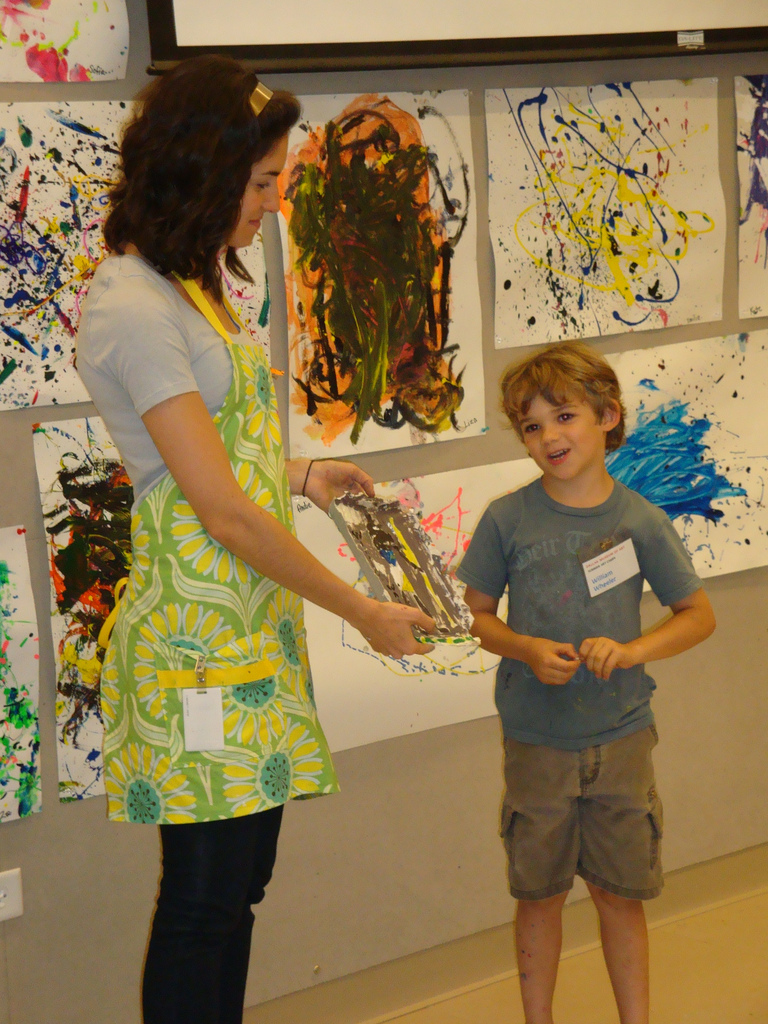
Leticia leads the Paint the Town DMA Summer Art Camp.

Tell us about your connection with the DMA.

I’ve been in Dallas for about ten years, and during college I visited the DMA every now and then and attended Late Nights.  Last year, I was the McDermott Intern in the Family Experiences department.  I continue to help during Late Nights and other special Family Experiences programs. 

What are you doing now?

I am a Special Education Bilingual Teaching Assistant at Thomas Elementary in Plano ISD.  I help teachers in classrooms with special education and/or bilingual students, primarily kindergarten through second grade. 

Describe your session with Go van Gogh volunteers.

I gave two tours in Spanish focusing on Jackson Pollock’s Cathedral and three hats in the African collection.  This helped volunteers put themselves in the position of ESL students and also showed them effective ways of teaching these learners.  Hopefully, the volunteers were able to gauge how these students feel and will be able to use that knowledge as a tool when they teach.  It was a really great experience, and I enjoyed it.  The volunteers were all very willing to participate even though it was a different language and they may have felt uncomfortable.

What do you consider important when working with ESL students, and how does this apply to teaching with works of art?

When working with ESL students, there has to be something more than language.  You have to be really creative and think of different ways to teach a subject.  This applies to all subjects.  I think art is a great way to teach ESL learners because they have a visual picture of what you’re talking about.  You can get creative and lead activities that are more hands-on and fun, playing with color and lines and movement.  All of those concepts are easy to teach to students who don’t speak English fluently.

Finish this sentence: In ten years, I’d like to be…

I hope to be at a place where I’m happy with my job and I love what I do, whether it be working in a museum or with kids or doing something totally different that I never thought I would do.  Hopefully, in ten years I’ll have it all figured out.
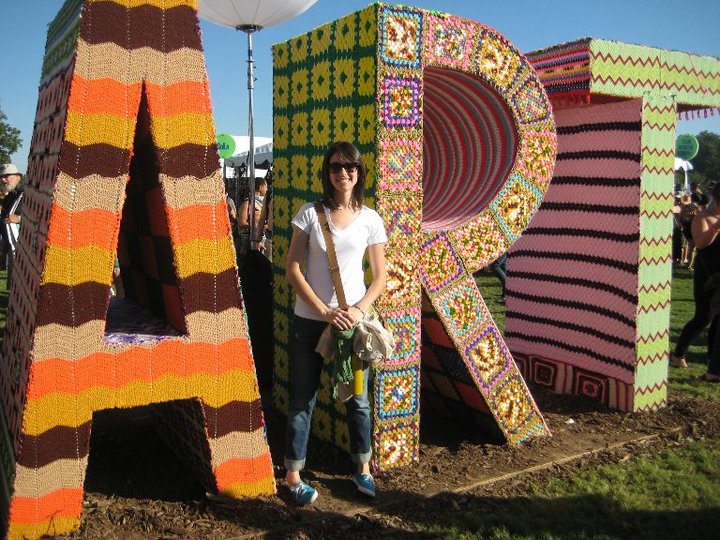
Community Connection: Nasher Sculpture Center

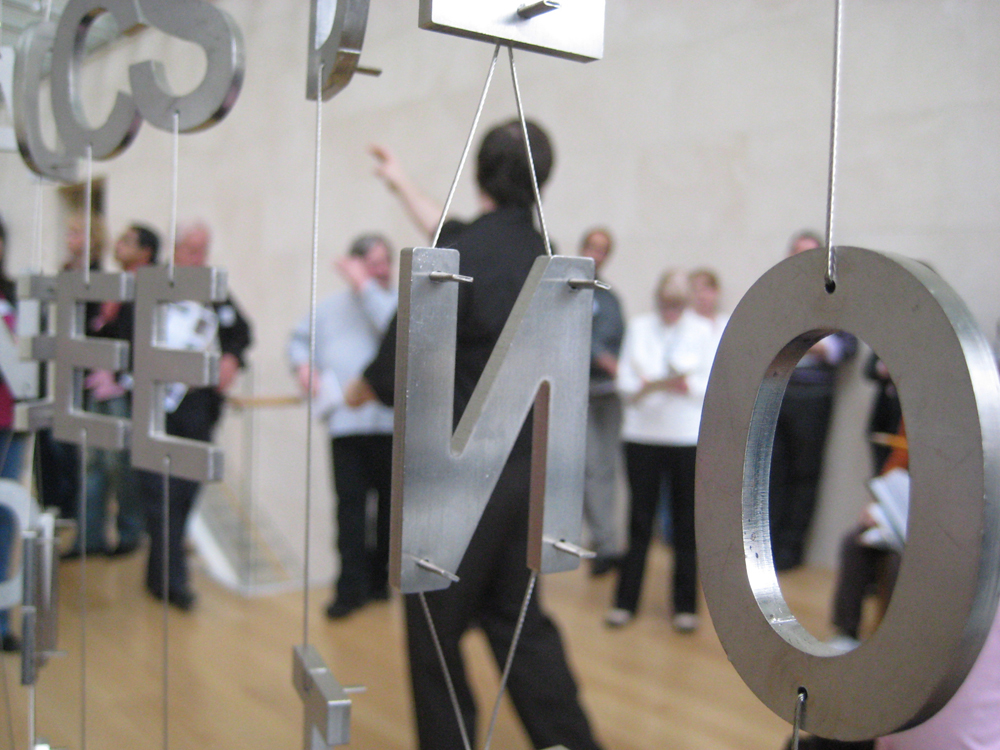
This past weekend marked the kick-off of Art in October, a celebration of the Dallas Arts District that features a variety of performances, exhibitions, programs, and events throughout the month.  In honor of this celebration, I walked across the street to the Nasher Sculpture Center for a coffee break with Stephen Ross.  Stephen began working in Admissions at the Nasher months after it opened in 2003.  Since then, he has held the title of Education Coordinator, Assistant Curator of Education, and for the last two years, Curator of Education.  See if you can find Stephen in this picture (hint: you can often identify a museum educator by his/her all-black outfit).

Stephen Ross seen through Jaume Plensa’s Twenty-nine Palms, 2007

What sparked your interest in museum education?
I think you have two choices coming out of graduate school – stay in school and become a curator (even though you don’t know what that is) or get a job at a museum.  I like museum education because I get to work with the public.

What has been the most enjoyable, challenging, or surprising aspect of your work with the Nasher?

I really like our Education Department.  It is limited because of our small staff, which is a total of three people.  I work with two really good people, and together we reach a wide spectrum from young children to adults.  We do a lot – we reach different audiences with different types of learning – so we all get to do a variety of things.

If you could take home any work of art from the Nasher, what would you choose?

I would take home Alberto Giacometti’s Two Figurines (Deux figurines sur socles) because they’re wonderful and tiny.  I love their size and portability – each figurine is less than two inches tall.  Giacometti would carry them around in matchboxes and put up small “exhibitions” on café tables.  They are the smallest pieces in the Nasher collection.

Tell us about your relationship with the DMA.

I work with the Museum Forum for Teachers, a five-day summer program for teachers that occurs at the Nasher, the DMA, The Rachofsky House, the Kimbell Art Museum and the Modern Art Museum of Fort Worth.  We also collaborate on the docent program, which is a big help.  A small museum like ours could never have its own docent program, and we are thankful that DMA docents also lead tours at the Nasher. 

I love the sense of collaboration, in general.  I feel I can pick up the phone and call anyone in the DMA Education department to talk about program ideas, ask questions, etc.

Describe your idea of a perfect day.

Reading Beckett.  Listening to the Rudy Van Gelder sound.

Check out the Nasher and other Arts District venues during Art in October.

Melissa Nelson
Manager of Teaching in the Community

Community Connection: We Heart Volunteers

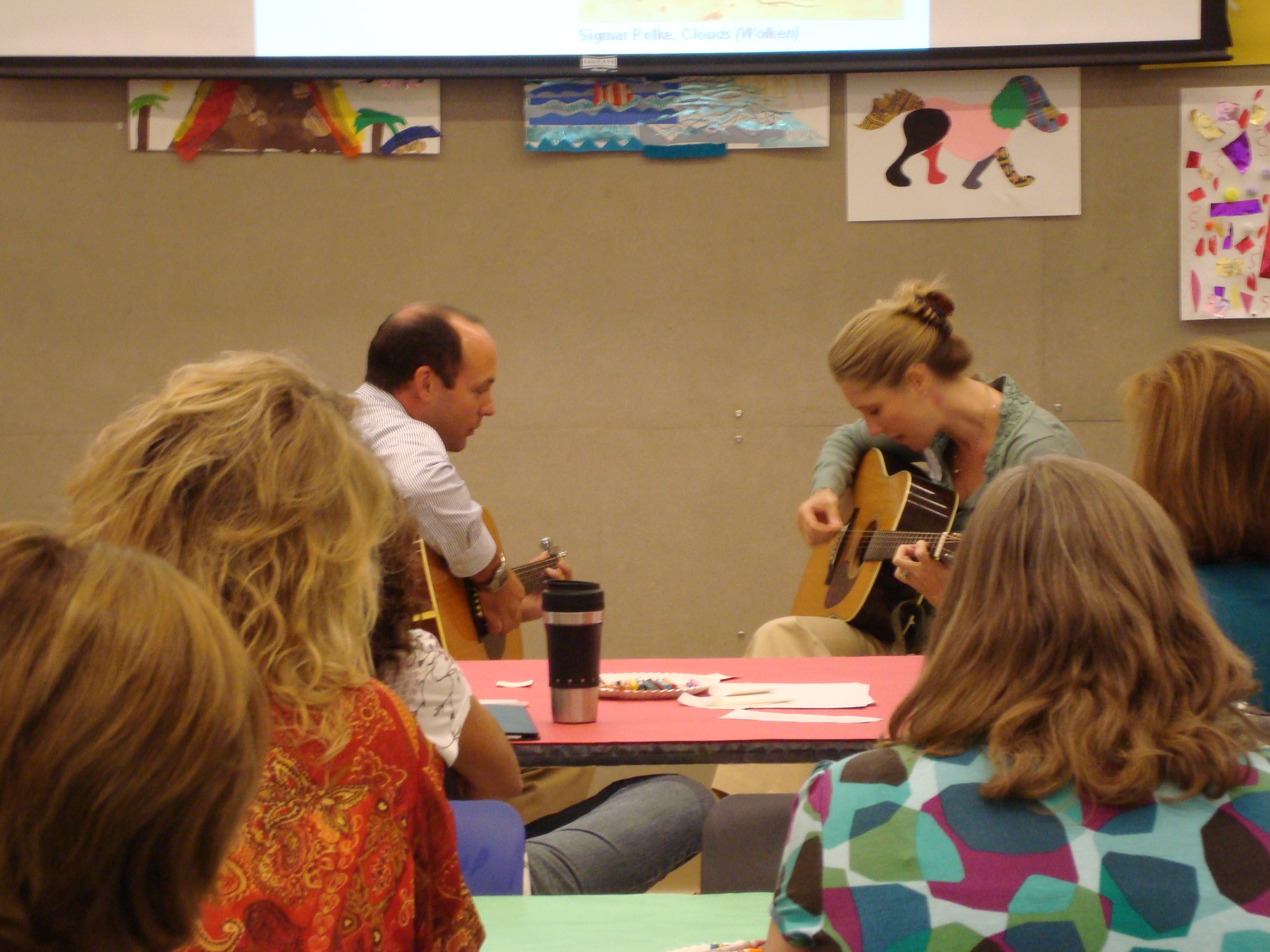
Meet Deborah Harvey, who is starting her fourth year as a Go van Gogh volunteer.  We can always count on Deborah for her positive and fun attitude and for her willingness to try new things.  For example,  Deborah bravely volunteered for an unknown task during a volunteer training focused on the different ways that people learn.  Little did she know that our guest speaker was a musician, and as part of his demonstration, he taught Deborah to play a song on the guitar in a mere thirty minutes.  You can see a picture of Deborah performing below.

Deborah plays a newly-learned song at volunteer training.

Tell us a little about yourself. 

I’m a former teacher.  Most of my teaching experience is with younger elementary students.  I’m also married and have a sixteen year-old son and a twelve year-old daughter.

What motivated you to join the Go van Gogh volunteer program?

I wanted to stay in the realm of teaching once I retired.  I like the opportunity to have a whole classroom experience as opposed to one-on-one interactions with students. The subject matter among all the Go van Gogh programs is varied, which keeps things interesting for me.

Share a memorable experience from your time as a volunteer.

Just today, I visited a fourth grade classroom at J. Erik Jonsson Community School with a program about Texas art.  The children shared a lot about their vacation experiences and things that felt like Texas to them.  I really enjoyed the wide variety of responses.  One student talked about going to the beach, and another student’s family owns a ranch with longhorn cattle.

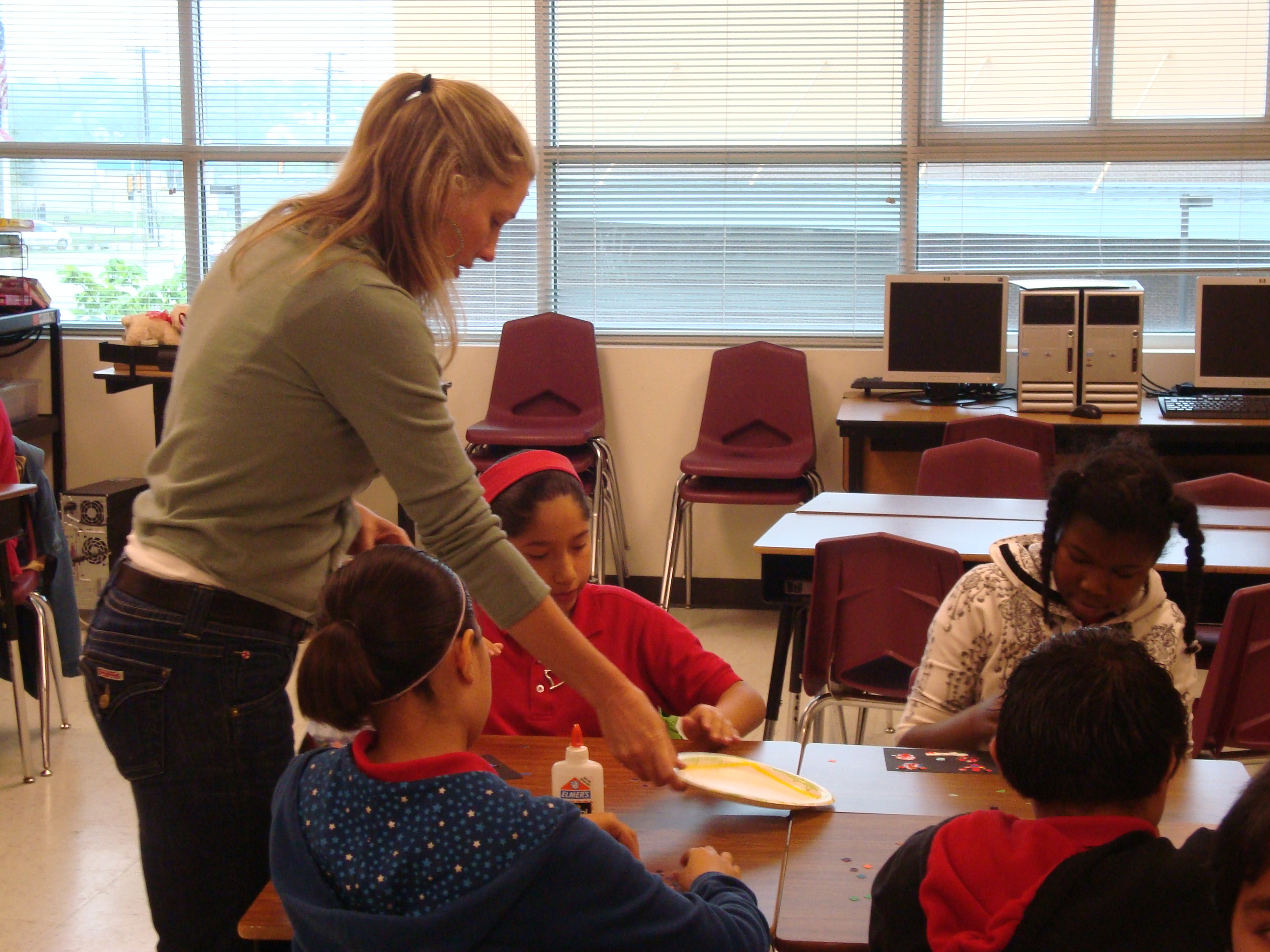
Deborah visits a fifth grade classroom at Felix Botello Elementary.

Has anything surprised you about teaching with works of art, visiting classrooms, or student responses to the programs?

At times, I’m surprised that the older children are still very engaged.  Sometimes it can be hard to find a common ground or things that interest them.  The programs are so age-appropriate that the kids get really engaged.

Outside of volunteering with Go van Gogh, how do you spend your time?

I volunteer as a board member at both of my kids’ schools, and I volunteer with Meals on Wheels.  I also like to travel; I’m going to San Francisco tomorrow for my husband’s birthday, and our family is taking a trip to Vail for Christmas.

Thanks to volunteers like Deborah, 430 classrooms throughout Dallas – approximately 8,800 students – experienced Go van Gogh programs during the 2009-2010 school year.  Request a program now for the 2010-2011 school year!

Melissa Nelson
Manager of Teaching in the Community

Relax, Recharge, Retreat!

Earlier this week, we set aside a few hours for a staff retreat.  Though one goal was to discuss work-related topics, we also wanted to get outside of the Museum and spend time doing something different. 

Luckily, our retreat coincided perfectly with the opening of Oil and Cotton.  Business and creative partners Shannon Driscoll and Kayli House graciously opened their doors to us, despite the fact that they had just moved into their new space days before.  During the first half of our retreat, Shannon and Kayli helped us personalize small books by screenprinting the cover with designs of our choice.

Some of us brought designs to use for their covers, while others drew their cover designs.  First, we traced our designs onto a piece of mesh fabric held taut by an embroidery loop.  Next, we painted all areas of our design that we did not want to print with regular school glue.  The glue was mixed with blue paint so we could see which areas had been covered. Last, we used a small piece of matboard to push acrylic paint through the areas of fabric not coated with glue.

[slideshow]

Melissa Nelson
Manager of Teaching in the Community 

Community Connection: The Best of Both Worlds

It is just me, or is anyone else shocked that we are already in the second week of August?  As we look forward to the 2010-2011 school year, it only makes sense to feature a classroom teacher in our monthly Community Connection blog post.  Meet Michelle Alcala, who begins her fifth year as art teacher at Salazar Elementary School in Dallas ISD.

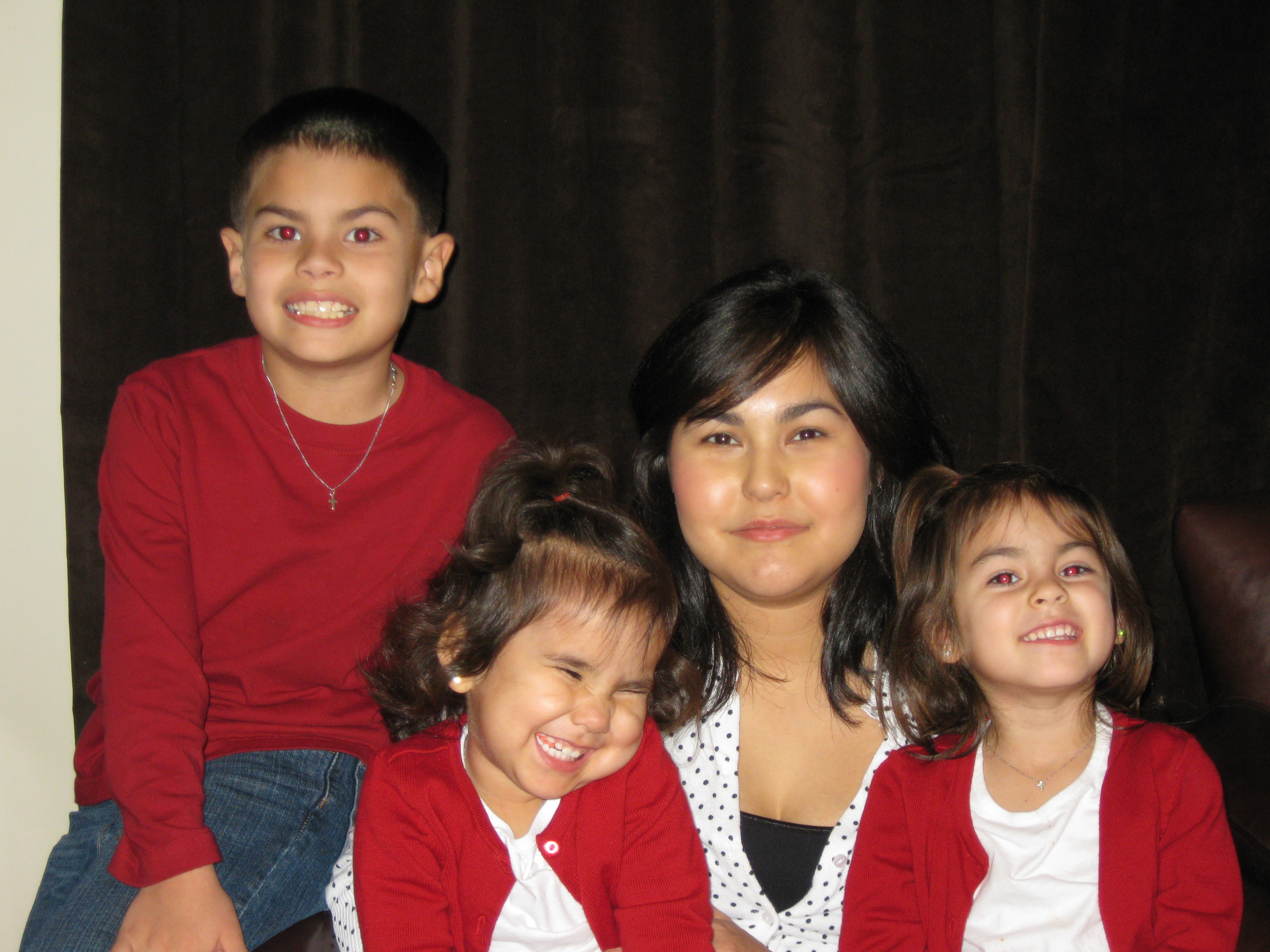
Michelle and her children

What are some ways you’ve worked with the DMA?

I began by bringing my students here for visits.  My 4th-graders come every year and really enjoy the experience.  Another teacher and I started Saturday programs with our students, and we bring a group of fifteen to twenty students from all grade levels and their families to the Museum once a month. 

Last year, I was invited to create artwork with students for the Art Ball, the DMA’s annual black-tie fundraiser event.  My students were so excited to see their work in a real museum setting, which is unbelievable for an elementary school student.  They brought their families to see their work and dressed up; the pride they had was great.

I’m also a part of the teacher panel and am hoping my insights help with the new online resources for teachers.  Before, I did not use the DMA online teaching materials very often, and I’m hoping my contribution will help art teachers and other teachers.  [Michelle is part of a select group of teachers collaborating with Museum education staff on an IMLS grant focused on redesigning the DMA’s online teaching materials.]

How has your work with the DMA affected your approach to teaching?

I’m always trying to find things that I can tell my students about that will help them make connections to the Museum and encourage them to visit with their families.

Do you consider yourself an artist?  What are your creative outlets?

Initially, I intended to go to art school.  I ended up having children and realized they were more my passion than becoming an artist.  I tried to find the best of both worlds, and that’s when I came up with teaching art.  I still sketch and paint sometimes, but not in the volume that I used to before I started teaching.  I also love to read.

How do you spend your summer months?

I spend my summers with my children at my home in Oak Cliff.  We play and read and go to the zoo and go to museums and as many different free things as we can find.  We just got back from a trip to Florida and Disney World.  I also went to Chicago with my mother.  It was wonderful.  I visited the Art Institute and went on a tour of the new wing.  It was just incredible, seeing so many pieces of art. 

What do you most look forward to in the 2010-2011 school year?

To my new art lessons, both my own that I’ve created and ideas from the DMA.  I also look forward to seeing the kids again.  It’s been a long time since I’ve seen all of their little faces, and I’m ready to get back into it.

Melissa Nelson
Manager of Teaching in the Community

Community Connection: It's All About the Kids

Even though school is not in session, we work with many children through tours and outreach programs during the summer months.  We partner with YMCA of Metropolitan Dallas and Boys & Girls Clubs of Greater Dallas in a weeklong program that includes two interactive Museum tours along with three art-making visits to the branches.  Town North YMCA and Oak Cliff Boys & Girls Club have participated in this partnerhip for several years, and their staff (Katherine from Town North YMCA and Cherri from Oak Cliff Boys & Girls Club) participated in planning sessions for this summer’s program.


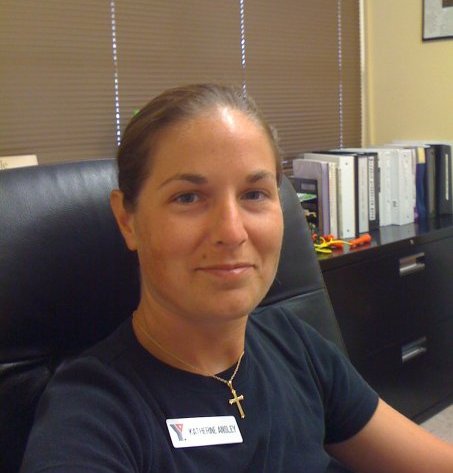
Katherine Ansley, Child Care Director of Town North YMCA

What do you enjoy most about your job?

Katherine:  The best thing about it is working with the kids.  When everything on the administrative side is crazy, I know I can go and play a game of Battleship and relax for a bit.  Spending time with the kids reminds me that everything is not as bad as I think it is.  It helps you forget about yourself for a second, which is really great.

Cherri:  The kids. I get paid to be around kids every day.

You have been a strong supporter of the DMA partnership program.  What motivates you to make sure your students have this experience?

Katherine:  I think it’s valuable. I always remember a field trip to a museum in elementary school.  I saw a piece of art and I just wanted to sit there and look at it.  I was fortunate to have a teacher who let me do that, and I want to make sure other kids can have that moment.

Cherri:  I want the kids to be exposed to everything.  I don’t want them to be limited. We live in an urban area, and I want to expose them to as much as possible.  Art is for everyone, and that is my belief.  Plus, I love art.


Cherri Rowe, Program Coordinator at Oak Cliff Boys & Girls Club

The YMCAs and Boys & Girls Clubs are very busy places during the summer.  How do you unwind after a full day or week of work?

Katherine:  When it’s been a real stressful day, my best friend usually takes me for sushi.  That is the best way for me to chill out.  Sushi is fun because you can try new things.

Cherri:  I love to read and I love to bowl – I’m crazy about bowling.  I go to the movies.  I sleep.  I’ll go outside and sit on my porch and write. Sometimes I have to get out of the house and relax, and sometimes I want to stay in. I love to hang out with my sisters or my mom.

One of our summer tours is called Summer Vacation, and we ask the students where they would most like to travel during the summer.  If you could go anywhere in the world, where would you go?

Katherine:  I would love to go to Rome, because I want to see the ruins and architecture there.  It’s fascinating to see how they did all that stuff without modern technology.

 Cherri:  Italy. I would take two months off work and tour the entire country.  I would stay two or three days in each city.  Italy seems so beautiful and has so much history.

Melissa Nelson
Manager of Teaching in the Community

Teens and Technology

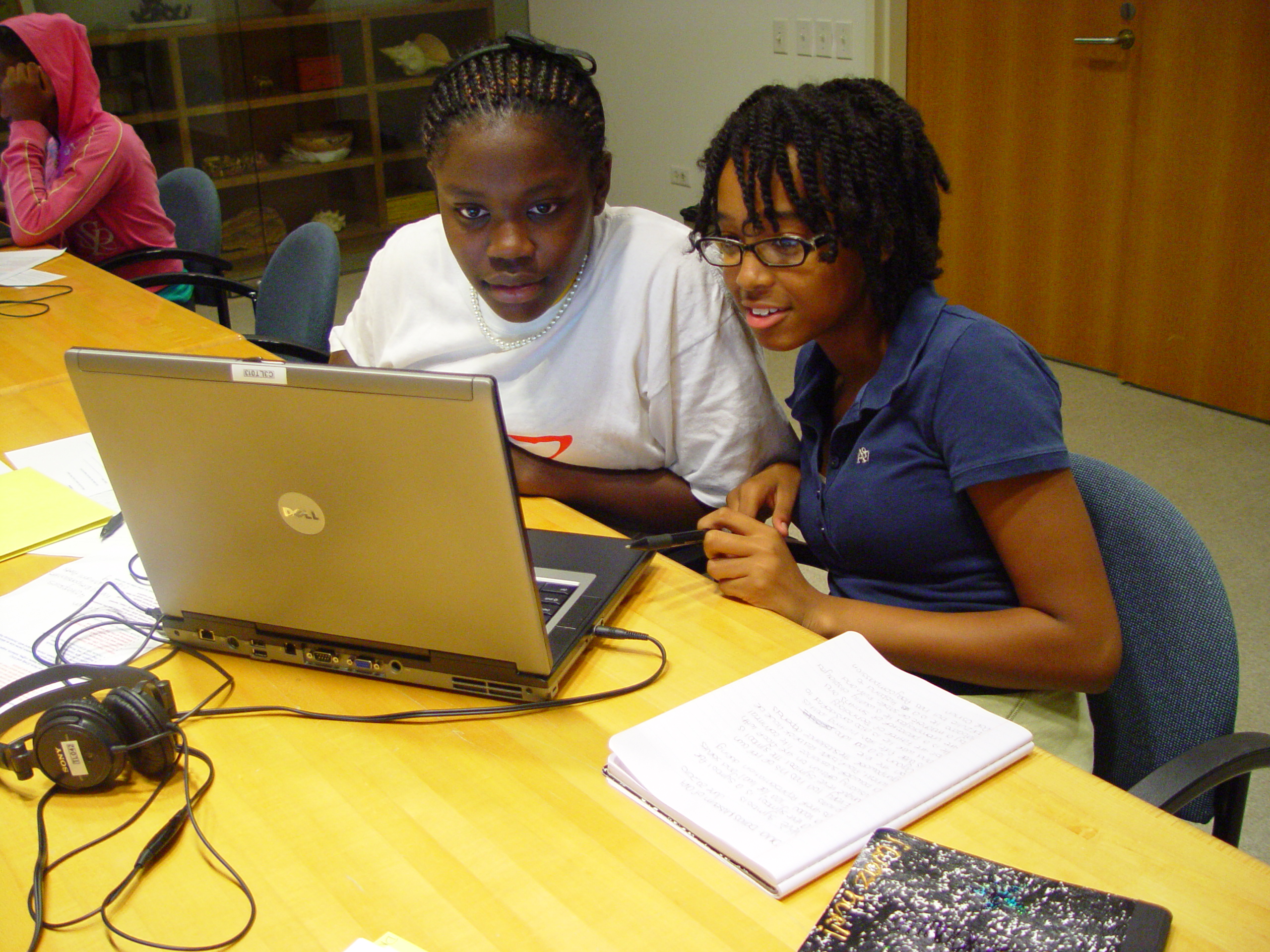
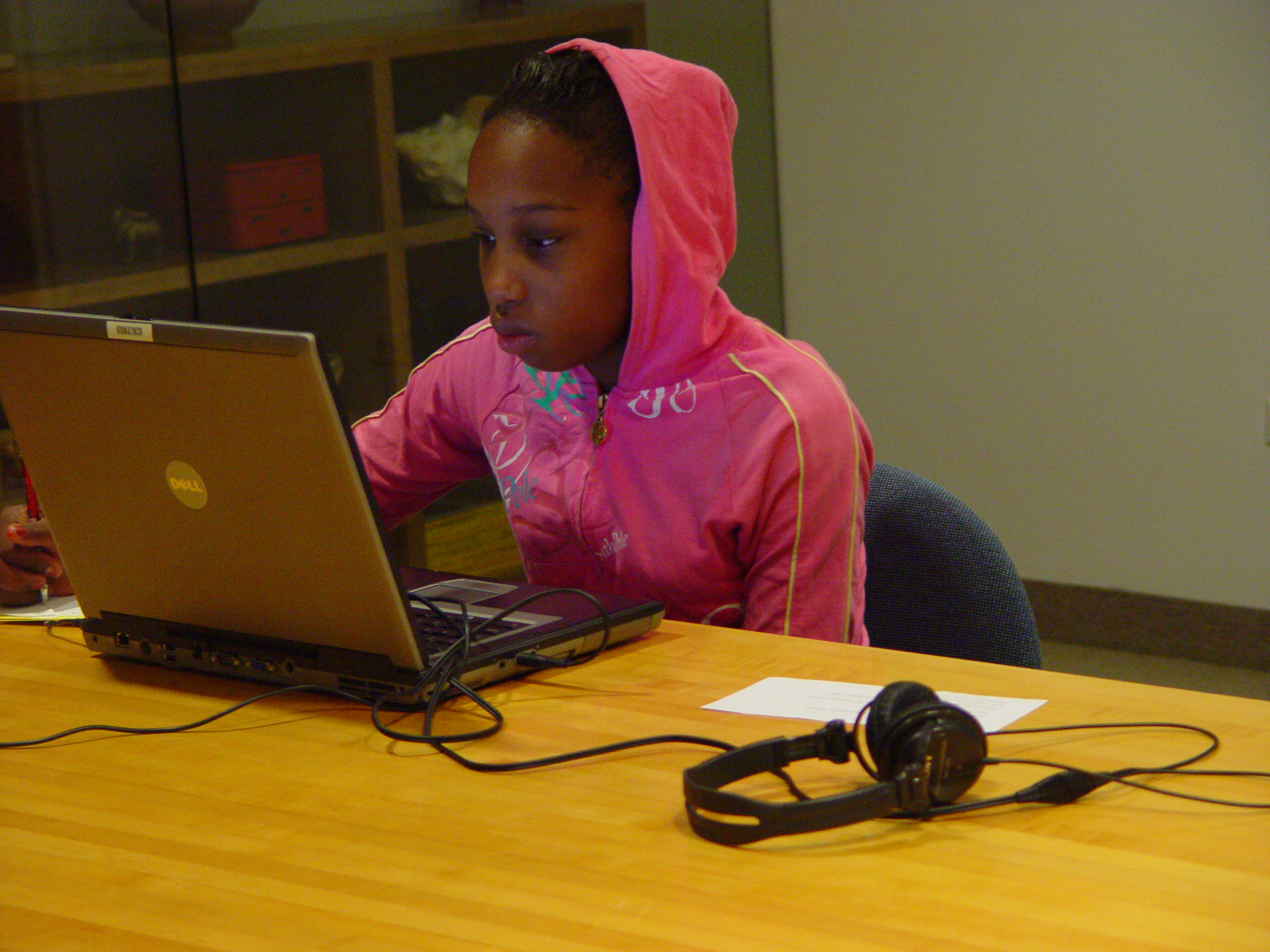
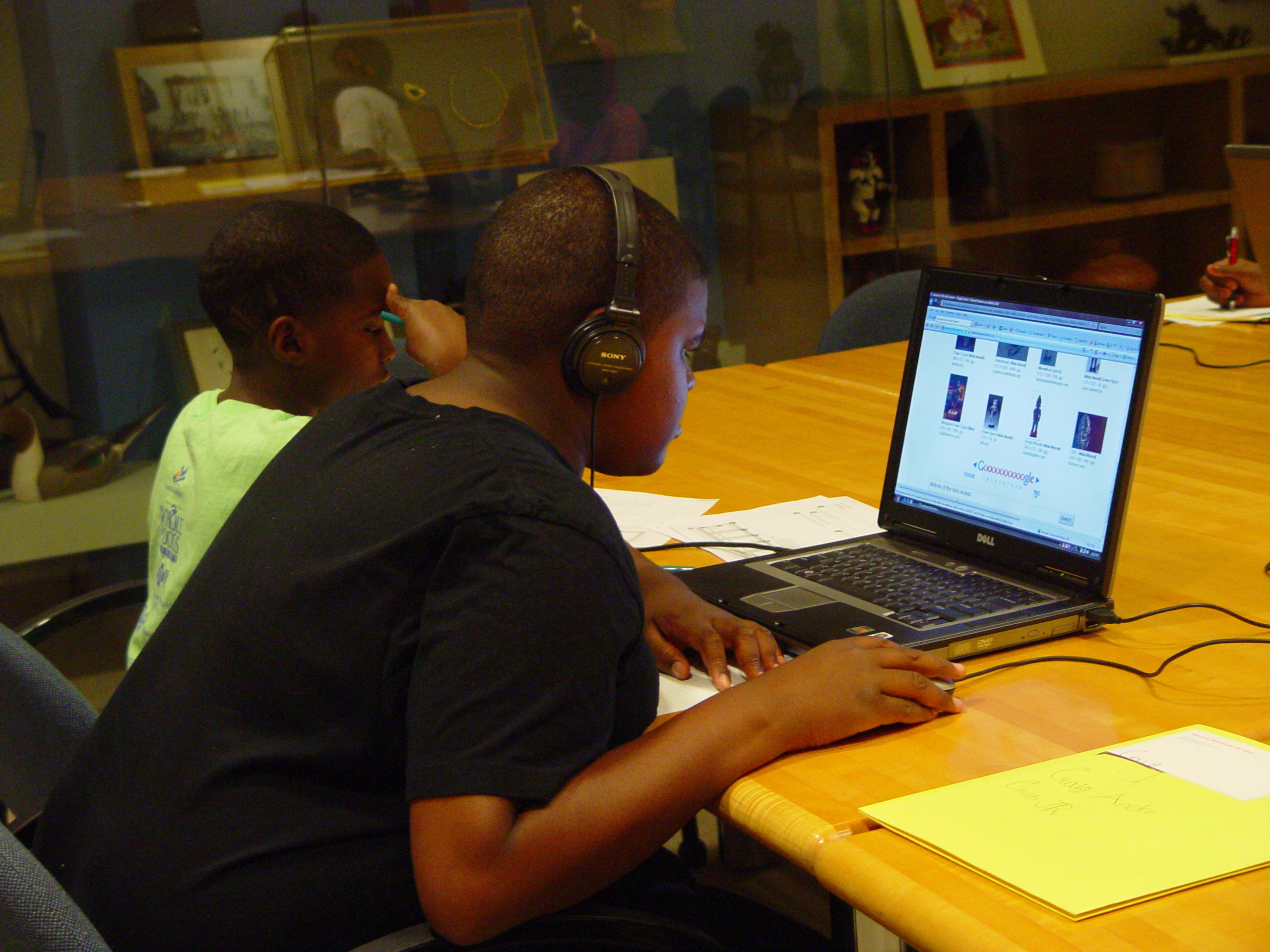
Every summer, we partner with the South Dallas Cultural Center during their five-week Summer Arts at the Center.  The students, ages six to fourteen, learn about African history through a broad array of classes such as creative writing, digital photography, printmaking, sculpture, mural-painting, and dance.  Programs with the DMA have included artmaking workshops and tours of the Museum’s African galleries and special exhibitions.  Last summer, the teens created an interactive presentation on the summer’s topic, the Middle Passage.  This summer, a different group of teens is developing a new interactive presentation on their topic, African gateway communities in the Americas, with an emphasis on Haiti.

The teens meet twice a week with DMA staff for two hours, both at the Center and at the DMA.  Their presentation is shaped by what they have learned in their classes, and they determine as a group the content and layout.  With one week left in the program, they have gathered all of their research, selected artworks from the DMA’s collection, and chosen the layout.  Next week will be spent building their presentation.  Check our Web site next month to view their completed project!

Dominique and Sasha research Haitian traditions.

Takaziah reads about the Haitian Revolution. Her partner, Renicia, is traveling this week.

Eric writes Fun Facts about Haiti while Craig searches for images to include in the presentation.

Melissa Nelson
Manager of Teaching in the Community

Community Connection: Our Friends and Neighbors

Dear loyal blog readers,

We have a new summer blog post schedule.  Look for new posts on Wednesdays and Fridays.  Have a fabulous summer!

The opening of the AT&T Performing Arts Center last fall brought our friends at the Dallas Theater Center (DTC) to the ever-growing Dallas Arts District.  Having comfortably settled into their new home at the Dee and Charles Wyly Theatre, the DTC has developed programs and collaborations as innovative as the building itself.  Lisa Holland, Director of Education and Community Programs at the DTC, gives us a peek behind the scenes.

Tell us about your new home at the Wyly Theatre.
The Wyly Theatre is remarkable – there’s not another theater like it in the entire world.  The flexibility that it affords is unparalleled and I think that we, as the primary tenants, are going to learn about this building as time goes on.  I think the possibilities are going to be limitless in this building.  I also think our patrons are going to be the lucky beneficiaries of seeing what this building can do.  It’s like a giant transformer.  What that provides to the patron in terms of the audience to artist relationship is going to be powerful and immediate. There’s nothing like it.  

Also, the synergy between other organizations in the Arts District and the potential collaborations that exist now is so thrilling.  I think about how we can collaborate with our friends and family at the Arts District in ways that will be really engaging and exciting.  To walk down the street and see who you’ll run into, or walk down the street and have a meeting at the DMA – it’s exciting. 

Do you ever consider integrating or thinking about works of art related to your programs?
Absolutely.  In the past, we’ve incorporated a visual arts component in our SummerStage program.  I believe that whatever kind of artist you are, you need to “feed your hopper”.  In other words, you pour into yourself different experiences, whether it’s a trip to the zoo or going for a walk and looking at leaves.  You never know what will inform your work as an artist.  

Also, we deal with a lot of visual arts formal elements like color, line, and composition in the theater.  And, we have had collaborative events with the DMA in the past, such as sending artists to the DMA and working with Arts & Letters Live.

Tell us about the Shannon and Ted Skokos Learning Lab, your new partnership with Booker T. Washington High School for the Performing and Visual Arts.
It was brand new this year, and it was a resounding mutual success. Last spring, we auditioned the rising juniors and from that group chose eighteen seniors.  The Learning Lab has three components.  Kevin Moriarty (DTC Artistic Director), Charlton Gavitt (Booker T. Washington High School Theater Cluster Faculty), and I team-taught the class component, which occurred every other day, all year long.  The second component is a twenty-hour internship that students complete outside of class hours.  The final component is a performance project, in which we paired the students with our professional acting company, and they performed ten scenes in the Wyly Theatre with the professional actors.  The students also came to every single show we produced this year, free of charge.  This is a super exciting program, and I don’t think anywhere else has that sort of integrated relationship between a school and a professional theater with that kind of access.  The program is a great example of the kind of collaboration that can happen in the Arts District – it was so simple to walk across the street, teach, and walk back to my office.

How did you come to your position as Director of Education & Community Programs?
I grew up in the theater.  My parents took me to theater and I’ve been a theater student my whole life.  After I earned my graduate degree in directing, I was hired as one of two artistic directing interns at the Dallas Theater Center thirteen years ago.  I was hired to work in the artistic office after my internship year, and I basically never left.  I defected into the education department about halfway through my tenure, but that made sense because my undergraduate degree is in theater education.

What program/performance are you most looking forward to this summer?
We have a program called SUPERStage (SummerStage’s alter ego), where we have theater day camps for kids ages 4-14. I’m also looking forward to our summer production It’s a Bird…It’s a Plane…It’s SupermanI’m so excited about having a mainstage show running concurrently with our SUPERtage program.  Our SUPERStage students will have access to what we do in a primary way, and we’re going to enfold into the curriculum what is happening on stage so it becomes a learning lab of sorts.  It’s going to be awesome.  Superman – what can you say – there’s flying  –  it’s Superman!

Melissa Nelson
Manager of Teaching in the Community

Community Connection: Close Collaborations

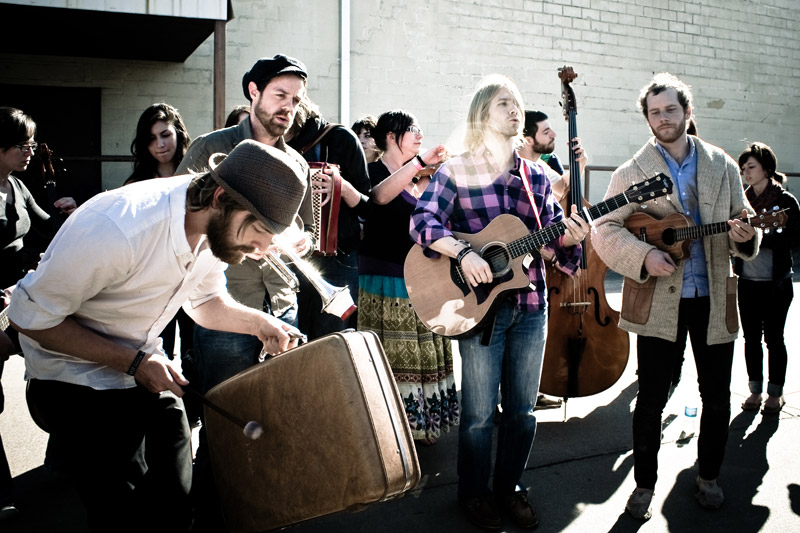
One of my favorite things about my job at the DMA is the opportunity to work closely with teachers and students over an extended period of time.  Over the last three months, I’ve worked with Shawna Bateman and Daniel Hall through the Thriving Minds After School Program.  During this process, I gained valuable knowledge about the after school environment, which is immensly different than during-school hours.  An extra bonus for me was getting to know these two very interesting people: Daniel performs regularly with a variety of musicians and bands who collaborate in The Dallas Family Band, and Shawna shared an incredible found object sculpture she had made years ago to connect with one of the after school program activities.
 
What are you learning from your experiences in the Thriving Minds After School Program?

Daniel:  I’ve learned that when working with kids, things don’t always go as you planned.  That’s not always a bad thing –  you’re able to see art and teaching in different ways than you would have normally imagined, based on the responses of the kids and the way things flow in the classroom.

Shawna:  The biggest thing I’ve learned is how important arts education is for children.  We have a great need for arts education, and the arts are often the first thing that goes with budget cuts.

What do you do outside of the after school program, and how does that inform your work with students?

Daniel:  I’m a performing musician and artist, so I’m teaching kids about things I know and actually do.  I spend just as much – if not more – time practicing the discipline I teach, as opposed to a chemistry teacher who might spend all their time in classroom and little time working directly with chemicals.

Daniel, far left, performs with The Dallas Family Band outside the Flaming Lips concert during NX35 Conferette in March 2010.

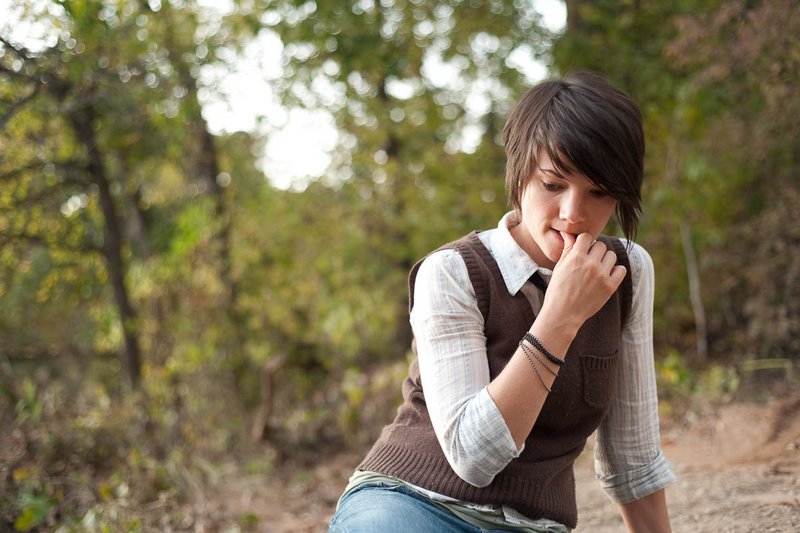
Shawna:  I hike, read, and catch dragonflies.  I also paint and make jewelry, which allows me to talk with students about creating things on a level they can relate to.  A lot of times, kids think of art as something that someone else does. 

Shawna sits in her favorite park, thinking.

Where do you see yourself in 5 years?

Daniel:  I don’t typically like to think in concrete terms for the future, but I will say that I’ll be playing music for the rest of my life. Five years from now, I’ll still be a practicing musician and artist.  The way that will work itself out is entirely unknown, and I’m not going to worry about that.

Shawna:  On the top of a mountain with a lovely hat.

Do you want to share any memorable experiences with the after school program this year?

Daniel:  There are always funny things that kids say that make for hours of conversations with my friends later.

Shawna: I really loved hearing that the kids would not stop talking about the artist.  Not only did they absorb what I taught them, but they were excited to use that information.  [Shawna’s students visited the DMA and viewed the artworks they discussed in the classroom.  The group leader told Shawna that she had to adjust the timing of their visit because the students wanted to tell her everything they remembered about the artist.]

Community Connection: Bringing the Very Best

Dave Herman has partnered with the DMA’s Education divison in a variety of ways.   As President and Creative Director of Preservation LINK, Inc., Dave initiated a partnership with the DMA that resulted in an annual exhibition of photographs by participants in Preservation LINK’s Point of View program.  He was invited to serve on an advisory board for the development of a new type of Go van Gogh outreach program, based on his perspective as a professional photographer and his teaching experiences with students.  Dave also led several workshops as the February Visiting Artist in the Center for Creative Connections as well as a Summer Art Camp during 2009.  In summary, we enjoy partnering with Dave and take every opportunity to work with him. 

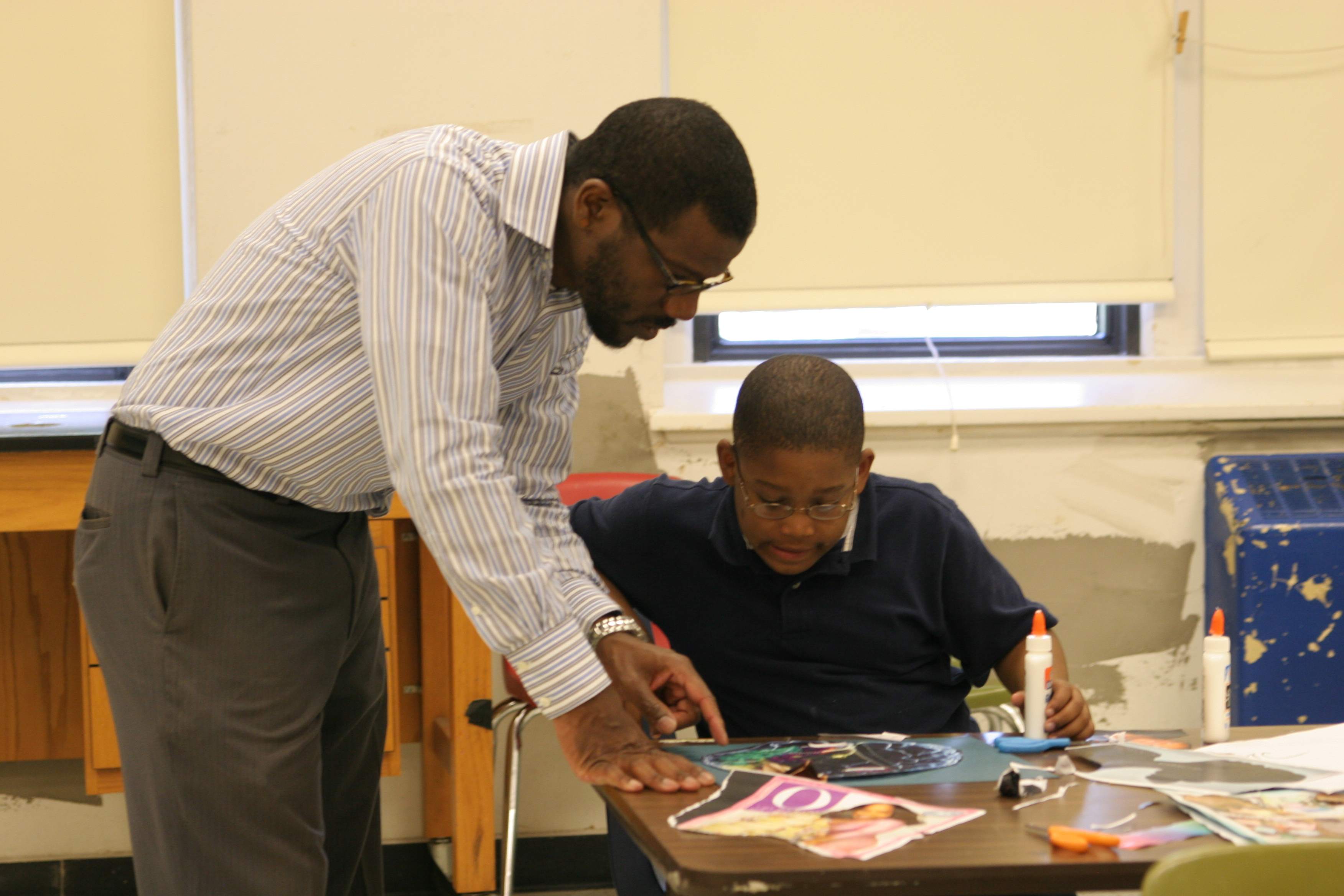
Dave Herman coaches a student through an art project.

You describe yourself as a visual sociologist.  Can you tell us what that means to you?

Visual sociology is, in a lot of ways, documentary in nature. It is almost as if you put out a hypothesis or investigative question, and then you document what you find out and share some of those answers visually. It lends itself to a different kind of attention, because you’re trying to put pieces of puzzles together and understand what that all looks like.  Visual sociology is also about how people interact with each other and how they respond to things.

Was there a defining experience or person in your life that led you to where you are today?

I first associate my mom and dad with helping to shape me and my values.  A lot of what I do is based on my background and what I believe in.  My work with students through Preservation LINK comes from a passion to help kids understand themselves, understand their potential, and to be confident that they can reach their goals. One thing that motivates me now, even as an artist, is that I didn’t necessarily have that growing up.  This is something really important – for students to have guidance and the opportunity to grow, to have ownership, and to eventually have a sense of “I’ve got this now”.

Over the six years that I’ve known you, I’ve witnessed exciting growth with Preservation LINK.  Do you have any advice for others who are interested in starting a non-profit organization with the goal of educating youth through literacy, art, and technology?

Budding photographers

I would say the first thing as an initiator, dealing with kids, is to make sure you’re reaching for the sky. Make sure that you’re bringing the very best to young folks. I say that because sometimes when we talk about equipment, for instance, some people say “let’s just get this (lesser value) equipment because they’re kids and they don’t need a big camera”. In reality, that is what they need. For them to grab onto something real at a certain level, you’re able to push your message and your lesson a little bit further.

Also, believe in your vision. Know how or learn how to manage it.

How does research and evaluation factor into your program development and implementation?

In a big way. Evaluation and research impacts and informs how we move forward.  It informs how we deliver programs and how we assess our accomplishments.  We are able to see what the impacts of our programs are on the community, students, parents, and the adults that supports kids’ learning. We wouldn’t be the same organization that we are now if it wasn’t for the evaluation and research that is a part of Preservation LINK.

What do you most hope students who participate in your programs will walk away with from their experiences?

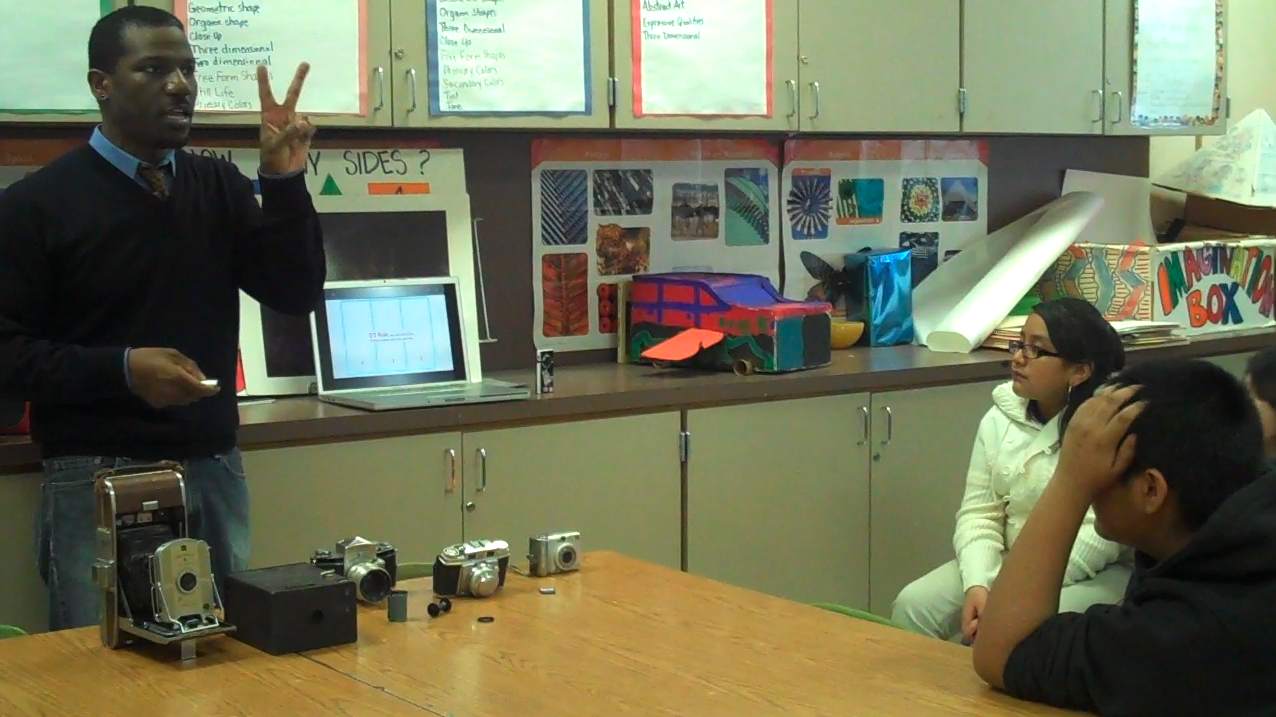
Students learn about the history of photography during a Preservation LINK program.

I want the students to know that people care about who they are, what they learn, and what they want to become.  I hope they’re motivated to take even more ownership in their lives.

See photographs taken by elementary students during Presevation LINK’s Point of View Program at the Dallas Museum of Art.  The exhibition, titled Through the Eyes of Our Children: Something Beautiful, will be on view from May 14-August 29 on the M2 level of the Museum, adjacent to the Mayer Library.  View images from past Preservation LINK programs here.


Archives

Categories