Archive Page 60


Friday Photos: Mystery Artwork Series

Last Friday, I started off our Mystery Artwork Series with this rhyme and scrambled image:

His paintings reference color theory,
and his color palette is seldom dreary,
with three layers of squares,
this painting hangs across from a chair.

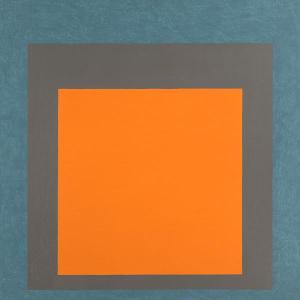
Are you ready for me to reveal the answer?  The painting is—Josef Alber’s “Homage to the Square: Straight.”   If you would like to find this work in the Museum, it is located on the second floor in the European Gallery. 

Josef Albers, "Homage to the Square:Straight," 1962, Bequest of Louise W. Kahn and Edmund J. Kahn.

If bright colored squares and layering is your thing, you might want to check out the upcoming Mark Bradford exhibition this fall.  Also, don’t miss out on a great teacher workshop in October—Layered Materials, Layered Meanings: Mark Bradford.

We will now commence the second round.  The next object in our Mystery Artwork Series is one of my favorite works in the DMA’s collection.  I will post an altered photograph of the mystery artwork and give you a clue in the form of a rhyme.  It is up to you to visit the Museum and search our galleries or practice your good research skills by searching on our online collections page. 

The cryptic artwork will be revealed the following Friday, with the presentation of a new mystery artwork.  Here is this week’s puzzler:

Press the button to turn on the light,
and you’ll see many birds in flight.
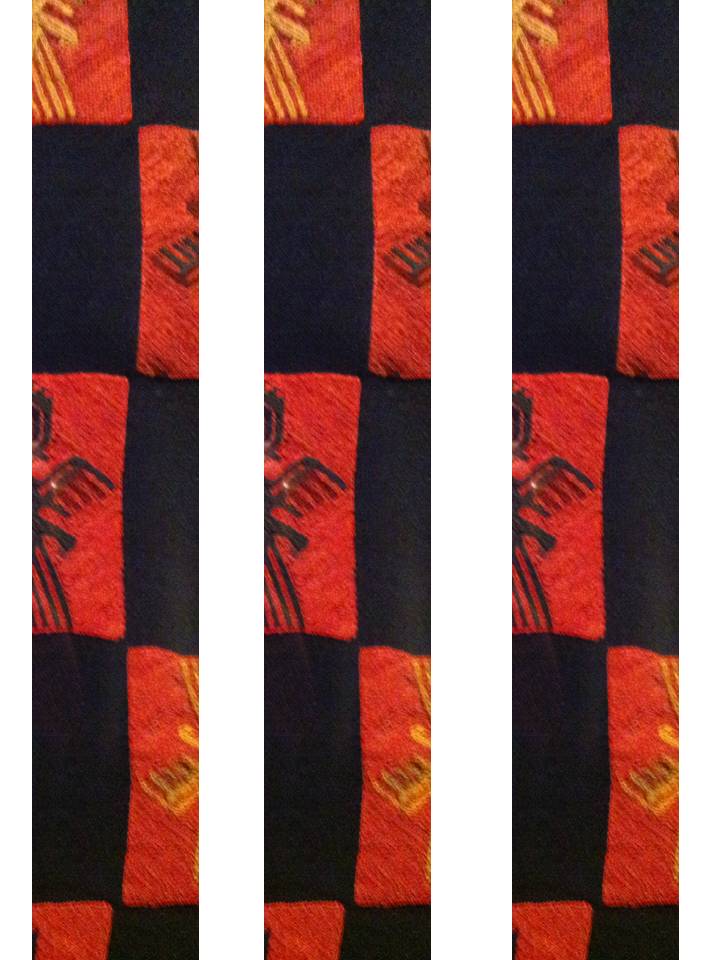
Woven checkers of red and black,
this textile once covered a man’s back.

Helpful hint: this object can be found on the 4th floor.

Happy hunting,

Loryn Leonard
Coordinator of Museum Visits

Getting to Know the New Docents

The desire to communicate the power of art to others is the main requirement to become a docent at the Dallas Museum of Art.  This year, we have twelve candidates in our New Docent class, and they begin their training next Monday.  The next nine months will be jam-packed with training sessions that will help them prepare for giving tours to visitors of all ages.  We’ll spend a lot of time talking about how to teach in the galleries, and a majority of their time will be spent getting to know the over 23,000 works of art in the DMA’s collection (not an easy feat).

The members of the new docent class of 2011-2012 come from a variety of backgrounds: we have artists, retired teachers, lawyers, and bankers.  One thing they all have in common is a passion for art and enriching students’ lives.  I asked all of them why they want to become a docent at the DMA and what they hope to gain from the experience.  Below are responses from some of the new docents in their own words.

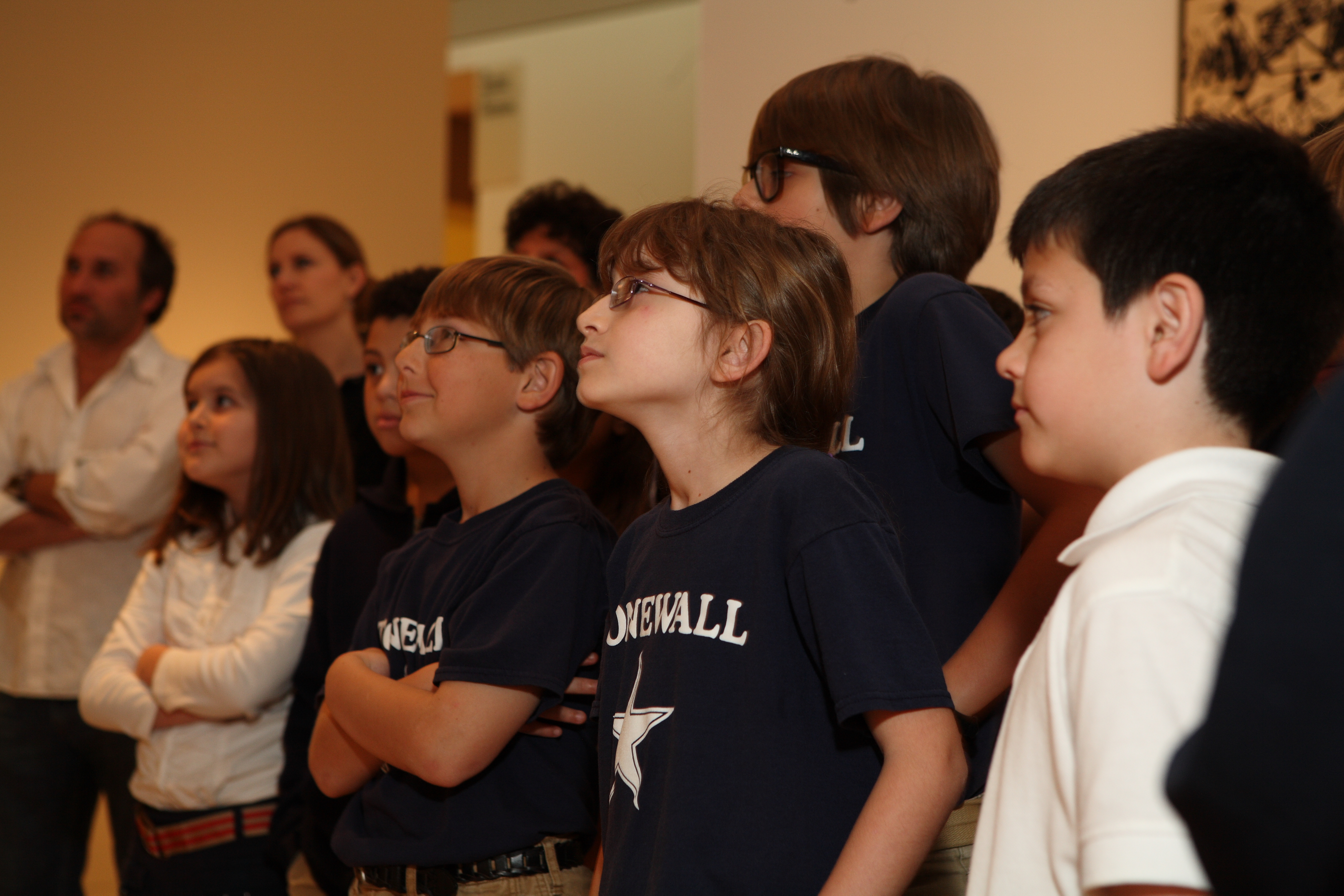
Students on a docent-guided tour of the DMA

  • “As a student of the arts my entire life, I would love nothing more than to share this love and understanding with others of all ages and knowledge levels.  I think it’s fascinating to see art through the eyes of a child; they often point out things that I have never noticed; fresh eyes are essential to keeping artworks alive.  I cannot imagine anything more rewarding than a child’s face lighting up as they explore a new piece, learn something new, and go home with excitement about art.” —Suzie Curnes
  • “I would like to help young people understand that to fully appreciate a work of art, you have to know its history, you have to look at it very carefully and, ideally, even sketch it.  You also need to think about how it makes you feel.  Then you have formed a relationship with it, and you won’t ever forget it.” —Sanlyn Kent
  • “I enjoy standing in front of a group of people, young or old, and explaining the topic, asking them questions, helping the group get involved in the discussion…There is nothing more exciting and fun than talking about and teaching about something that you love.” —Cynthia Camuel
  • “I have a strong emotional connection to the DMA.  After the Museum moved downtown, I would frequently go to the DMA and walk through the galleries during my lunch hour.  Spending time at the Dallas Museum of Art gave me a great education.  Being a docent will give me an opportunity to make a modest payment for those great experiences.” —Bill Bounds
  • “As a native Dallasite, I have enjoyed the DMA for many years, and have always seen the Museum as a vibrant learning environment.  As a docent, I believe I can expand my experiences, while passing on my knowledge to others.  I’m truly excited about the possibility!” —Harriet Stoneham

This will be my first year to train a new group of docents, and I’m also excited about all of the possibilities we will discover together.  The new docents will begin touring in early 2012, so you and your students may just have a chance to meet them when you visit the DMA during the coming year!

Shannon Karol
Manager of Docent Programs and Gallery Teaching

Teaching for Creativity: Chairs, Frank Gehry, and Combinatorial Thinking

Time to nurture your creativity!  Try this fun activity involving associative and combinatorial thinking by yourself or with a friend.

Step 1: Draw a chair. (any chair that comes to your mind)
Step 2: Interview this chair that you have drawn.  What questions would you ask this chair?
Step 3: Imagine this chair that you’ve drawn has a GIANT ego.  Look a second time at the interview questions you wrote.  Which of the questions best fit an egotistical chair?
Step 4: Place the word “chair” in the middle of a piece of paper.   Build a chain of associations, starting with chair.  For instance: chair – leg – foot – walk – path – journey.  Get it?  Each word in the chain is an association with the word before it.  Try to make one, two, or three more chains of association.  Let your mind open up and flow with ideas!
Step 5: Circle the last word in each of your chains.  For instance, I would circle the word “journey” in my chain above.
Step 6: Test your combinatorial thinking abilities.  Take one of the circled words (example: journey) and combine it with chair.  The goal is to make something new through the combination of two words/ideas.  In this example, we are combining JOURNEY + CHAIR to create something new, and maybe even improved.  What new associations, ideas, and creations can emerge from mixing together two seemingly different ideas?
Step 7: Draw the new object or idea that you created from the two words.  Write an advertising slogan or jingle for this new product.

[slideshow]

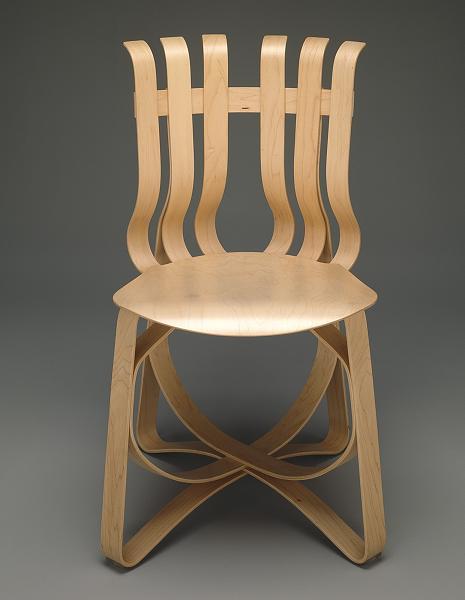
Last night, I got my creativity on by participating in the DMA’s Thursday evening C3 Artistic Encounters program with creativity expert Dr. Magdalena Grohman and architect Peter Goldstein.  After Magda led us through the thinking and drawing exercise presented above, Peter shared with us some provocative connections to the work of Pritzker Prize-winning architect Frank Gehry through a PowerPoint of Gehry’s ideas, drawings, chair designs, and architectural structures.  Encouraging us to think about “collisions of spaces,” “forms crashing together,” and “the space between” when viewing Gehry’s work, Peter also highlighted an example of combinatorial thinking in Gehry’s work.  Bentwood chairs created by Gehry are an exploration of forms inspired by bushel baskets.  Gehry even took it a step further, adding notions of hockey and the flow of players’ movements on the ice to the combination of ideas reflected in these chairs.  CHAIR + BUSHEL BASKET + HOCKEY = “HAT TRICK” SIDE CHAIR

"Hat Trick" side chair, Frank Gehry (American, born 1929), designed 1992, manufactured by Knoll International, wood and bentwood, Dallas Museum of Art, Gift of the Knoll Group

A viewing of Sculpting Space: 299 Chairs was next on the agenda.  This installation of chair clusters, created by Peter’s architecture students at Skyline High School in Dallas ISD, invited a long look for collisions of spaces and forms.  Just as he asked his students to think about the space between, Peter asked us to explore spatial intersections through sketching exercises emphasizing loose, flowing lines.

Throughout September, join us for more spatial explorations of art and architecture on Thursday evenings with  C3 Artistic Encounters.  Peter Goldstein will be back on September 15, and his Skyline High School colleague Tom Cox will be the visiting artist on September 8 and 22.  These programs, which are FREE with paid admission, occur on Thursdays from 6:30 – 8:30 p.m.  And guess what?  Educators receive FREE general admission to the DMA on Thursday evenings when they show their school ID at the visitor services desk.  What are you waiting for?  It’s time to get your creativity on!

Nicole Stutzman
Director of Teaching Programs and Partnerships


Friday Photos: Mystery Artwork

How well do you know the collection?

Earlier this year, our intern Karen Colbert introduced the Mystery Artwork Photo Series, a three week series that presented a detail of an artwork and encouraged our readers to visit the Museum or go online with a handful of clues to find the mysterious object.

This September, I challenge you to explore our galleries and investigate the clues given with each work in our new Mystery Artwork series.  For the next four Fridays, I will post an altered photograph of the mystery artwork and give you a clue in the form of a rhyme.  It is up to you to visit the Museum and search our galleries or practice your good research skills by searching on our online collections page. 

The cryptic artwork will be revealed the following Friday, with the presentation of a new a mystery artwork.  The winner will receive the best non-prize ever: complete bragging rights that you know the DMA’s collections. 

Remember, Thursday Night Live offers free admission to Texas educators with their ID, or you could visit anytime with a teacher membership.

Ready, set, go!

His paintings reference color theory,
and his color palette is seldom dreary,
with three layers of squares,
this painting hangs across from a chair.

Best of luck,
Loryn Leonard
Coordinator of Museum Visits

How I Spent My Summer Vacation

Back when I was in grade school, classes began after Labor Day weekend.  I am still getting accustomed to the fact that students and teachers now return to school before the holiday.  And, with temperatures still well into the 100’s, it is difficult to believe that summer is over.

Amy:

This has been a summer of unexpected things and exciting moments.  A highlight for me is definitely the Mavericks winning the NBA title—go Mavs!  I also got to see my kid brother graduate from college, scored some tickets to the Colonial in Fort Worth, and recently took a fun river trip in Austin with friends from college.  Summer was great, but I’m definitely ready for some cool(er)  temperatures.

Amy & her brother, after a very long day moving out of the dorms!

Loryn:

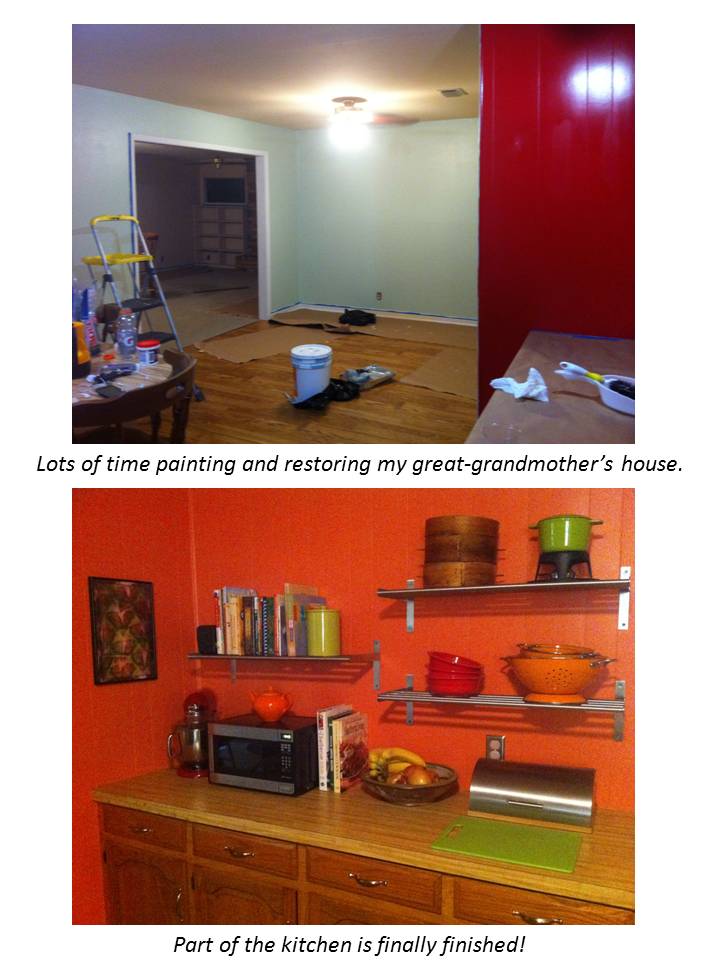
Despite the sweltering heat, this summer has been a monumental milestone in my life.  Not only did I achieve a life-long goal and land my dream job here at the DMA, but my husband and I also bought our first house, which was the very home my great-grandmother lived in.  Best of all, I spent most of my time in the galleries with students, teaching and learning about art.
Melissa:

I escaped the Dallas heat and spent ten days in the Pacific Northwest.  Over five of those days, my friends and I hiked 47 kilometers (29 miles) along the Juan de Fuca Trail on Vancouver Island, British Columbia.  We walked through lush rainforests with huge ferns, scrambled over the roots of enormous fir trees, waded through muddy bogs, and climbed up and down rocky cliffs along the coast.  Some of the scariest moments were crossing over bridges hewn out of logs and expansive suspension bridges.  Afterward, we treated ourselves to a three-day weekend in Victoria and Vancouver, where we visited Granville Island Public Market and enjoyed the deliciously famous JapaDog!


Nicole:

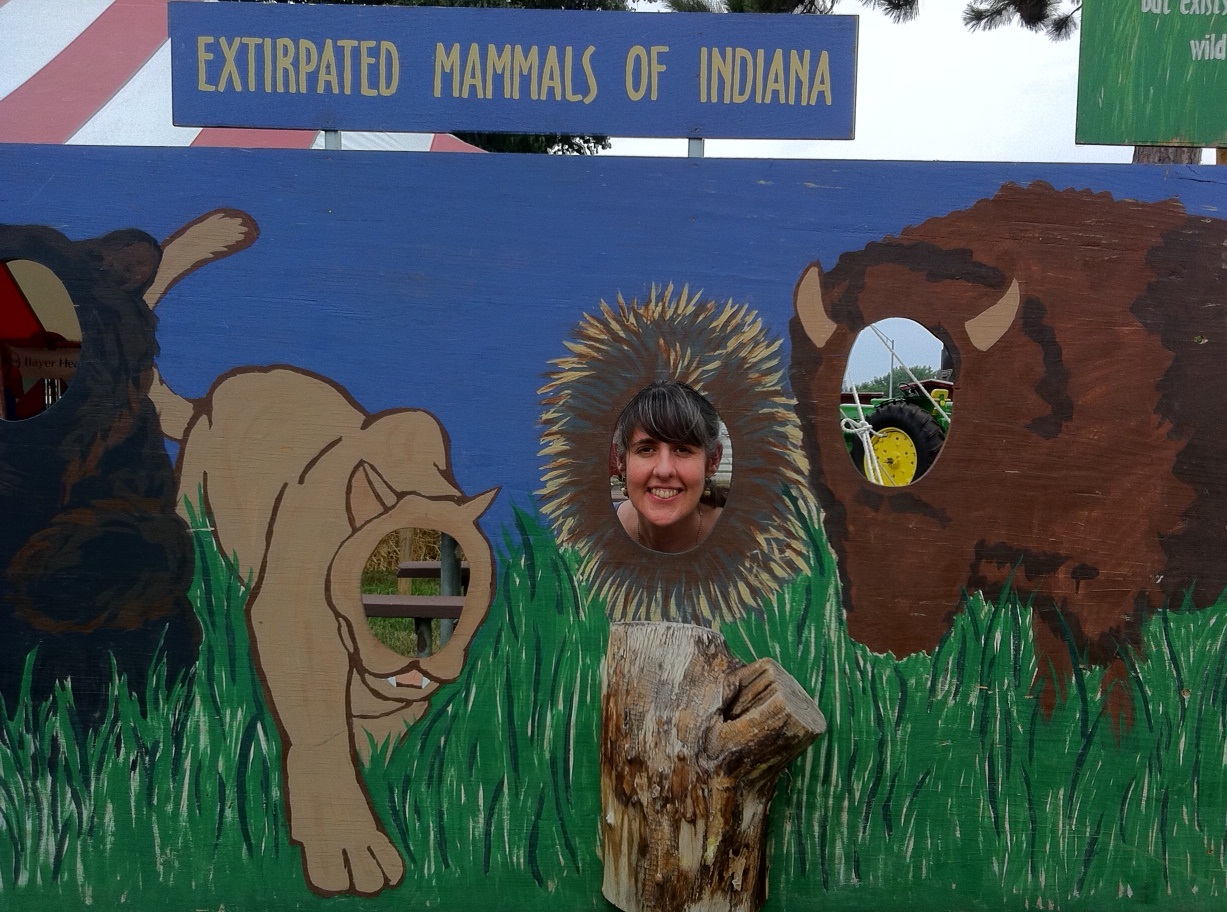
This Summer I Learned a New Word…“extirpate.”  It means to pull up by the roots; to totally destroy.  Extirpated animals are those that no longer exist in the wild in a certain area, but may exist
elsewhere in the world.  I learned this new word during my summer vacation trip to the Elkhart County 4-H Fair.  It’s one of the largest county fairs in the world and it’s held in my Indiana hometown.  I LOVED going to the fair as a kid and hadn’t been back in quite some time to see the chickens, rabbits, and goats; watch the harness horse races; check out the new tractors and other complex farm machinery; and sink my teeth into a sugary, fried-dough concoction called an elephant ear.  I don’t remember what extirpated animal I am in this picture.  Turkey?  Hedgehog?  I’ll have to return next summer to be sure.
 

Shannon:

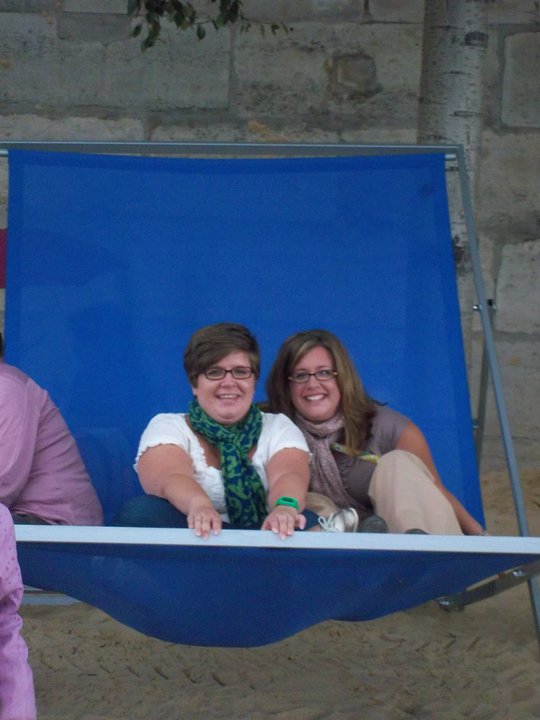
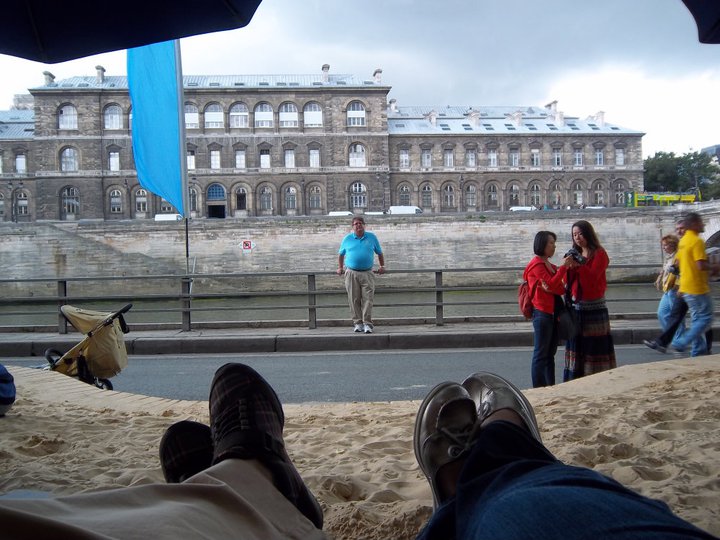
Although I didn’t make it to the beach during my summer vacation, I did visit the Paris Plages.  Each summer, sand is placed along the right bank of the Seine River in Paris, transforming the streets and walkways into a temporary beach.  Each section of the Plage was decorated with different colored beach chairs, umbrellas, and cabanas.  It was cloudy and rainy during my day “sur la Plage,” but I had a lot of fun walking through the sand along the Seine.
Tom:

Though I didn’t have the grand, romantic odyssey that Shannon had in France, my summer was full of travel and excitement. In May, I drove to Louisiana for the New Orleans Jazz and Heritage Festival (also known as Jazz Fest). Jazz Fest features two of my greatest loves: fantastic music and copious fried food. In July, I flew into Chicago where my brother took me out for one of the most delicious hamburgers I’ve ever had. From there, I drove to Fall Creek, Wisconsin, home of the Fall Creek High School’s Fighting Crickets! Fall Creek is also home to my grandmother and my many, many precious great-aunts.


More Clips Than A Barber Shop (Audio Clips, That Is)

If you’ve been by the Museum’s offices in the past few weeks, you might have seen me crouched over a laptop in a corner with headphones like two giant beetles over my ears. Why, you ask? I’ve been sorting through audio files from the DMA’s extensive catalog of lectures and interviews. Many of these audio files come from gallery talks and docent training sessions led by DMA staff members and guest lecturers. The experience has been illuminating. Every speaker brings thoughtful, entertaining, and challenging new ways to look at the art. So this week, I thought I might share a few of my favorite audio files which will be appearing in the new teaching resources this fall.

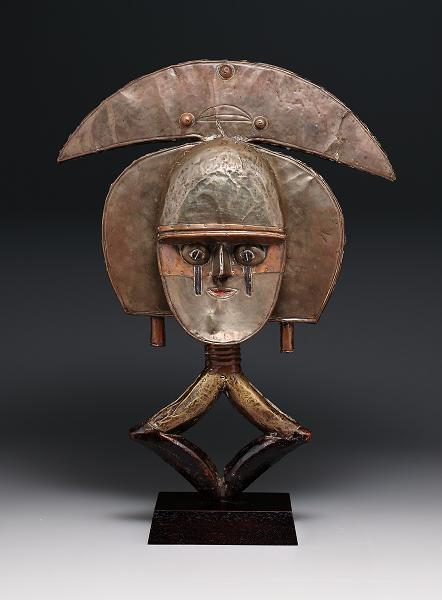
This first file comes from our very own Shannon Karol. In this file, extracted from her talk In Praise and Thanksgiving, she discusses the Janus reliquary guardian figure from the Kota peoples of Gabon (pictured below).

Janus reliquary guardian figure, late 19th or early 20th century, Dallas Museum of Art, The Eugene and Margaret McDermott Art Fund, Inc.

During the lecture Heaven on Earth: Hindu Temples and Their Sculptures, Darielle Mason describes the origins of the Hindu temple. Below is an image of the Hindu goddess Durga from our collection.

Durga, 11th century, Dallas Museum of Art, gift of the Junior Associates

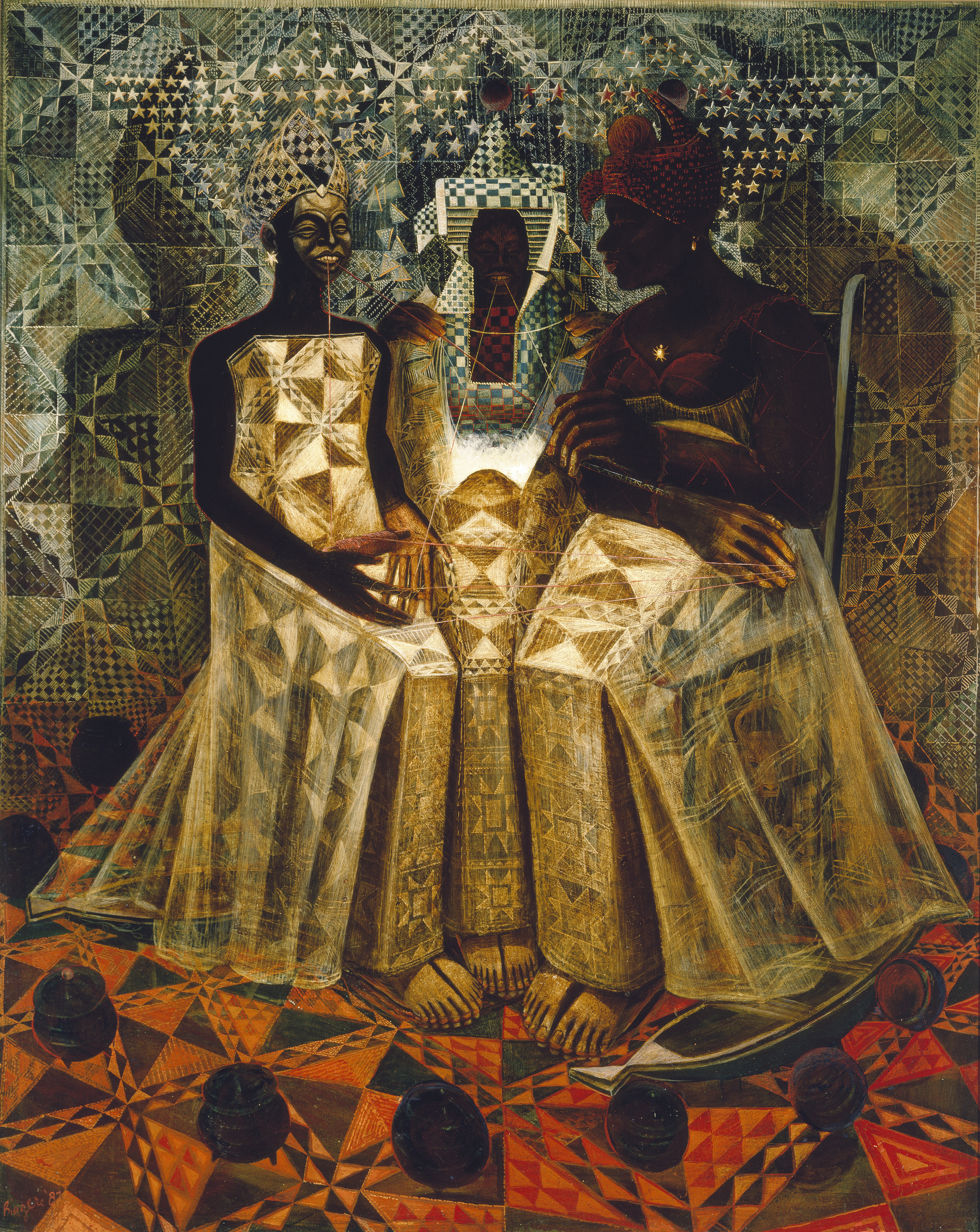
Finally, this audio file, extracted from a conversation between DMA curator Roslyn Walker and Phillip Collins, gives a brief biography of the artist John Biggers, and included a story about Biggers’ history with the DMA. Below is John Biggers’ painting Starry Crown.

John Biggers, Starry Crown, 1987, Dallas Museum of Art, Museum League

All of the works in this post will be featured in the new teaching materials, and these are only a few of the many audio files that will be available for streaming. You will also find video files, contextual images, maps, and other media when the materials debut this fall. Stay tuned to the Educators Blog for the official announcement of the materials’ debut.

Tom Jungerberg

IMLS Grant Coordinator

Friday Photos: African Headwear

As I’ve mentioned before on our blog, I love the DMA’s African collection.  Below are photos of some of my favorite hats in African Headwear: Beyond Fashion, an exhibition currently on view at the Museum.  Some of these hats are from the DMA’s collection, but there are also many loans and new acquisitions in the exhibition.  I think my absolute favorite is the Royal Messenger’s Headdress from Cameroon.  I love the bold shape and purple dye!

[slideshow]

I’m looking forward to the arrival of Jean Paul Gaultier: From the Sidewalk to the Catwalk in November–I think it will be fun to compare his fashion designs with some of the works of art in African Headwear.  I already have ideas for our next installment of Provocative Comparisons!

Shannon Karol
Manager of Docent Programs and Gallery Teaching

Teaching for Creativity

The beginning of another school year can be very exciting because there are many things that are “new.”  We may experience a new teacher, new students, new friends, new clothes, new school supplies, new bulletin boards, and more.  As we launch ourselves into a new school year at the DMA, we also launch a new blog series called Teaching for Creativity.  The inspiration for this new series comes from various sources, including the DMA’s Center for Creative Connections; our collaborative work with UT Dallas professor and creativity specialist, Dr. Magdalena Grohman; and the 2011 Summer Seminar: Teaching for Creativity, a professional development experience for K-12 educators.

Over the next year, look for monthly posts that inspire us to teach for creativity, encouraging open minds and creative behavior in ourselves, our students, and our colleagues. Teaching for Creativity blog posts will:

  • feature classroom and museum educators to share creative lessons and approaches to teaching that nurture observation skills, curiosity, imagination, and metaphorical thinking,
  • draw attention to great books and websites for creativity resources, and
  • highlight creative beings from the past and present who may offer us new ways to look at the world.

For this inaugural post, I am excited to introduce you to Shadan Price.  Shadan teaches art to students ages 3-5 at El Dorado Montessori in Frisco, Texas and joined us in June for the 2011 Summer Seminar.  Shadan shares with us the lesson plan that she developed during the Seminar and the results of trying it out in her classroom.

During the Teaching for Creativity seminar I attended, our goal was to create a lesson plan that focused on creative thinking. The lesson I came up with did that but was also simple enough for the young children that I teach to understand. In summary, my lesson had them discussing how certain shapes (we focused on circles, squares, triangles, and rectangles) and how they are used in artwork and the real world. We looked at a few art images (ex: Van Gogh’s “Starry Night”, Klimt’s “The Kiss”) and the students pointed out those shapes in the images. We then looked at images of everyday objects (ex: buttons, tables, pizzas, etc.) and the students talked about what shapes those were. The next step was brainstorming. For each shape the class thought of objects that those particular shapes could be. This was really fun for them! I didn’t want them to brainstorm for too long though because I wanted them to still have a few more ideas for the next part of the lesson which was to draw each shape on a piece of paper and then create an object (real or imaginary) out of that shape. I didn’t put any restrictions on what they could draw. I just told them no matter what it was, even if it wasn’t a real thing, they had to explain to me what the drawing was. For the most part the students really enjoyed this but I could immediately tell which students were not really comfortable making something completely out of their imaginations as opposed to something a little more guided. This was a good project to see who I need to work with more on their creative-thinking skills.  Overall this was a good project.  The students loved brainstorming and drawing their own creations!

[slideshow]

These are a few examples of what the students came up with for each shape:
TRIANGLE – almost all the students chose a slice of pizza….if I did this project over again I might tell them not to do that so I could see what else they came up with. A few others were roofs, mountains, cat ears, and noses.
SQUARE – iron man, robot, mirror, window, bubble machine, cage, bookshelf, frame, butterflies, purses, books, and dinosaurs.
CIRCLE – vacuum, wheels, monkey, balls, DVDs, cookies, lollipops, a “purse maker”, pancakes, rings, and buttons.
RECTANGLE – monster, table, frame, door, fluorescent lights, microwave, baskets, rocketships, and sharks.

I want to express great thanks to Shadan for sharing her lesson with us.  Follow this link to download the lesson: SHADAN_CREATIVE_LESSON.

What creative experiences are happening in your learning environment?  Share them here and look forward to the next Teaching for Creativity post in September.

Nicole Stutzman
Director of Teaching Programs and Partnerships

Friday Photos: Teacher Workshops

Last week, we finished up a great summer series of professional development workshops for K-12 educators.  Thank you to everyone who joined us for cool experiences (temperature and otherwise) and stimulating discussions in the DMA galleries.  Here are a few photo highlights and teacher reflections from the summer workshops.

[slideshow]

“Conversations that arise from looking at the various art is, to me, the most significant aspect of workshops like these.”

“The activities helped us examine pieces in a way we might not do on our own.  It also gave us ideas for classroom activities….”

“The experience was even better than I anticipated.  Unlike most professional development, the focus is on providing good teachers with tools to bring out the best in their students.”

At DMA Teacher Workshops, educators have fun, learn something new, share ideas, and collect CPE hours for each workshop.  In October, professional development workshops will begin again and we invite you to join us for the following.

  • Layered Materials, Layered Meanings: Mark BradfordSaturday, October 22
  • Art and Games with Artist Tom Russotti — Saturday, November 12
  • Art and Fashion — Saturday, December 3
Visit Programs for Teachers on the DMA Web site for more information.

Nicole Stutzman

Director of Teaching Programs and Partnerships

Photowalking with Ted Forbes

Last Friday, as part of 9×9, the DMA hosted a Photowalk with staff member and photographer Ted Forbes.  Over a dozen visitors attended, myself included.  Ted began with a brief talk about photographing people and their environment, showing us portraits taken by world-renowned portrait photographer Arnold Newman (who photographed John F. Kennedy, Piet Mondrian, Pablo Picasso, Marilyn Monroe, and many others).  Then, we were set loose in the second floor European galleries.  What were our directions? “Go out and shoot portraits!” Ted said.

The Photowalk experience was very hands-on experience.   Ted gave us the freedom to wander the European galleries and take pictures of Photowalk participants, strangers we encountered, and works of art around us.  As I walked around the second floor, I tried to keep in mind the concepts of negative space, people and their environment, and the commonly used “rule of thirds” when framing my shots.

Taking pictures of people in specific poses proved to be a bit challenging in the galleries, so I began to look for ways to incorporate people into my pictures while focusing on the artwork as my main subject.  I also played with reflections in windows and looking through panels of glass.  Concentrating on reflections of people against works of art as well as reflections of the artwork itself led to some intriguing images.

After we took pictures in the European galleries, we went back to the Tech Lab in C3 to look at each other’s pictures.  It was fun seeing other people’s pictures, because everyone took the instructions and captured images in completely different ways and styles, with unique perspectives.

Here are some of my favorite pictures from the Photowalk, as well as some shots I captured of participants photographing one another!

[slideshow]

Leala Rosen
Teachings Program Summer Intern

Leala Rosen is a sophomore at Hendrix College in Conway, Arkansas. She is studying sociology/anthropology and art history. As a summer intern for the Teachings Program department of the DMA, she worked with Go van Gogh outreach programs and led museum tours.


Archives

Categories