Archive Page 59


Matching Game: Words to Works

Who said it???

You’ve seen these artists express themselves with brushstroke, line, paint, and color, but have you ever heard them express themselves with words? Do these two forms of expression match up?

Play my game to see if you can match the art work to the art word!

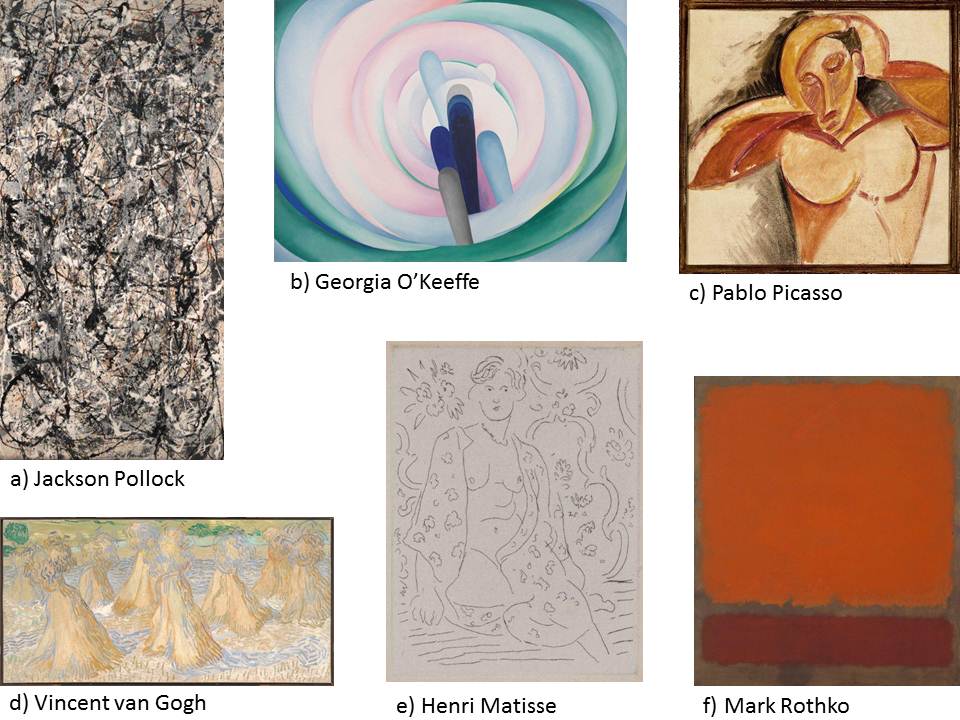
Below you will find a list of quotes straight from the mouth of some of the masters of modern and contemporary art. Following the quotes are images of artworks by these artists in the DMA collection. They have been all mixed up, so it is up to you to pair the quote and the artist. I will reveal the answers next week in the comments section of this post.

Good luck!

  1. “The fact that one usually begins with drawing is already academic. [I] start with color.”
  2. “So I said to myself – I’ll paint what I see…but I’ll paint it big and they will be surprised into taking the time to look at it – I will make even busy New Yorkers take time to see what I see of flowers.”
  3. “On the floor I am more at ease. I feel nearer, more part of the painting, since this way I can walk around it, work from the four sides and literally be in the painting.”
  4. “I want to touch people with my art. I want them to say ‘he feels deeply, he feels tenderly.’ I put my heart and my soul into my work, and have lost my mind in the process.”
  5. “It took me four years to paint like Raphael, but a lifetime to paint like a child.”
  6. “Drawing is like making an expressive gesture with the advantage of permanence.”


Hannah Burney

McDermott Intern for Teaching Programs

Teaching for Creativity: Identifying Creative Potential

The focus on creativity this month includes a wealth of information to provoke further thoughts.  University of Texas at Dallas professor and creativity specialist Magdalena Grohman shares notes from a recent conference she attended.

Have you ever wondered what would happen if we didn’t have a definition of creativity? One crucial implication is that we wouldn’t know how to recognize creativity or how to identify it in a given domain or across different domains.  What does creativity look like in science?  Math?  Language Arts?  Without knowing who is or is not creative, we would not be able to list factors that may impede or enhance creative development. Here’s what I learned from my colleagues in the Division 10: Society for the Psychology of Aesthetics, Creativity and the Arts, during the 2011 American Psychological Association Convention.

So, let’s assume we understand creativity as an interaction between aptitude, thinking process, and environment. How does that definition help us identify creative talent?

THINKING PROCESS

Researcher and educator Dr. Roberta Milgram of Ariel University of Samaria, Israel, may have a couple of suggestions for you. In her talk “Identifying Talent in Mathematics and Science in Children, Adolescents, and Adults,” Dr. Milgram showed findings suggesting that each talent has two components: academic and creative. For example, for students to do well in math, they need to show mathematical reasoning and they need to know how to compute. But, according to Dr. Milgram, those students who are mathematically gifted also show that they can notice patterns and relationships and use complex and non-algorithmic thinking. Most importantly, they can apply original thinking with mathematical symbols that results in more than one strategy and/or solution. Let’s consider another domain—take language arts, for instance. A student that has a knack for language arts will not only show great reading comprehension and writing skills, but on top of that, s/he will also be quite observant and notice patterns and relationships, as well as similarities between remote concepts. In other words, s/he will experiment with concepts to come up with new and original ideas. This experimentation and creative thinking belongs to the thinking process portion of the definition of creativity. Skill, ability, motivation, and deep task commitment relate to aptitude. The take home message? Look closely for skills and intellectual ability AND for original and unorthodox thinking patterns that lead to unique ideas and solutions.

APTITUDE

Aptitude also “contains” our attitude towards creativity, which can be shaped by our self-perception.  It turns out that whether we see ourselves as creative people depends on gender. These self-perceptions are different in girls and boys, and it has profound implications on what students invest in, and what domains of interest they choose. Another speaker, Dr. Zorana Ivcevic of Tufts University, showed that girls tend to equate creativity with artistic creativity; hence, they may be more likely to see themselves being creative in this very domain. It also suggests that they may avoid even trying to be creative in other domains. Boys, on the other hand, equate creativity with science.  Furthermore, girls are more likely to associate creativity with challenges, whereas boys—with enjoyment. The take-home message?  “Women who consider themselves to be creative are likely to engage in the arts, while men are more likely to engage in the sciences.” What we, educators, can do is first to show that creativity is in every single domain, and second to encourage our students to build bridges between disciplines. It really is OK to encourage a science-focused student to discover art, and an art student to find beauty in mathematical equations.

ENVIRONMENT

We, parents and educators, are undeniably part of the environment that influences the creativity of our children and students. Again, we can learn from Dr. Ivcevic’s study—”Perceptions of Creativity in Croatian Elementary School Students and Teachers”—that whom teachers perceive as creative, and whom students perceive as creative have great impact on who ultimately will be identified as creative and talented. The environments that value obedience to authority, maturity in behavior of children, and discourage nonconformity may decrease creativity. Dr. Ivcevic’s study of Croatian teachers’ perceptions of creativity went hand in hand with the expectation of appropriate behavior in girls and boys. Moreover, students concurred with these perceptions, and nominated those girls and boys as creative who conformed to teachers’ expectations. In other words, “good boy” and “good girl” were seen as creative.  Young children were also seen as more creative. In another study, Dr. Ivcevic found out that younger kids were more likely to be seen as creative, but not older children! It seems that in a restrictive environment that values conformity, creativity is less appropriate as children grow older. Some of you may question the relevance of this study to our society that (we want to believe) values creativity across all ages. Nevertheless, the take-home message? In an environment where conformity and authority is valued over inquisitiveness, experimentation, and exploration, we may run into the problem of misidentification—mistaking “nice” behavior for a creative behavior.

Thank you Dr. Grohman for sharing this knowledge with us.  If you have not had a chance to meet Dr. Grohman in person, she’s here at the DMA on the first Thursday of every month leading Think Creatively! workshops in the Center for Creative Connections.

Nicole Stutzman
Director of Teaching Programs and Partnerships

Art and Games and Docents

A few months ago, Tom Russotti contacted Nicole to see if the DMA might want to partner with him on any projects.  Tom is the founder of the Institute for Aesthletics, and is also an artist-in-residence at the CentralTrak Gallery.  Much of Tom’s work combines art with game playing, and I was eager to have him lead a session for our docents that might help them incorporate games into their tours.

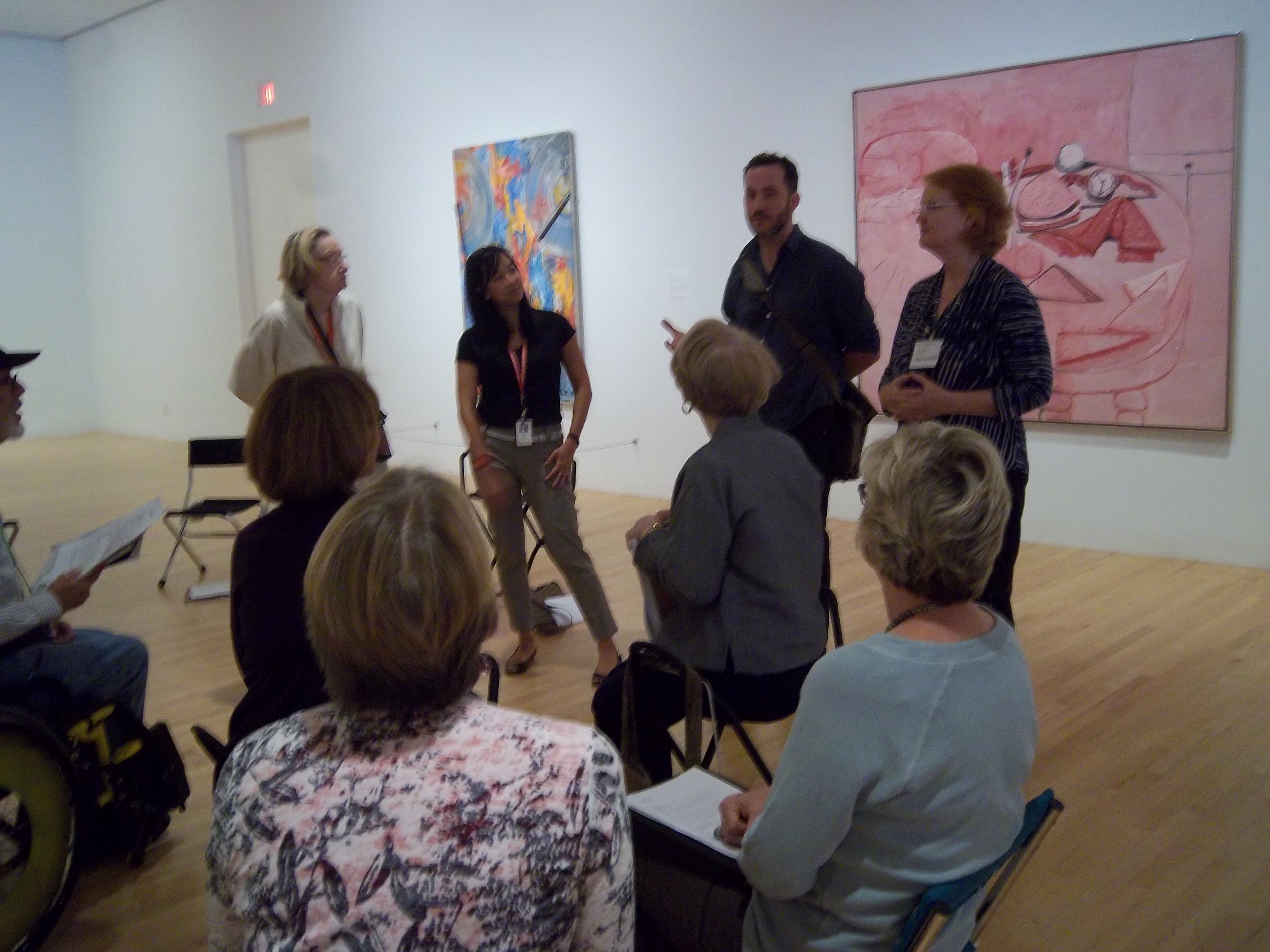
Artist Tom Russotti talks with a small group of docents in the contemporary gallery

Tom began his session by telling the docents about his projects, including his upcoming CIncArt exhibition at CentralTrak.  He also spoke about why games matter, and it’s not just because they’re fun.  Games are experiential and allow us to learn by doing.  They provide a structure for learning but don’t cause us to feel pressured to participate or come up with a “right” answer.  Games are also social and enable us to interact with works of art and with each other.

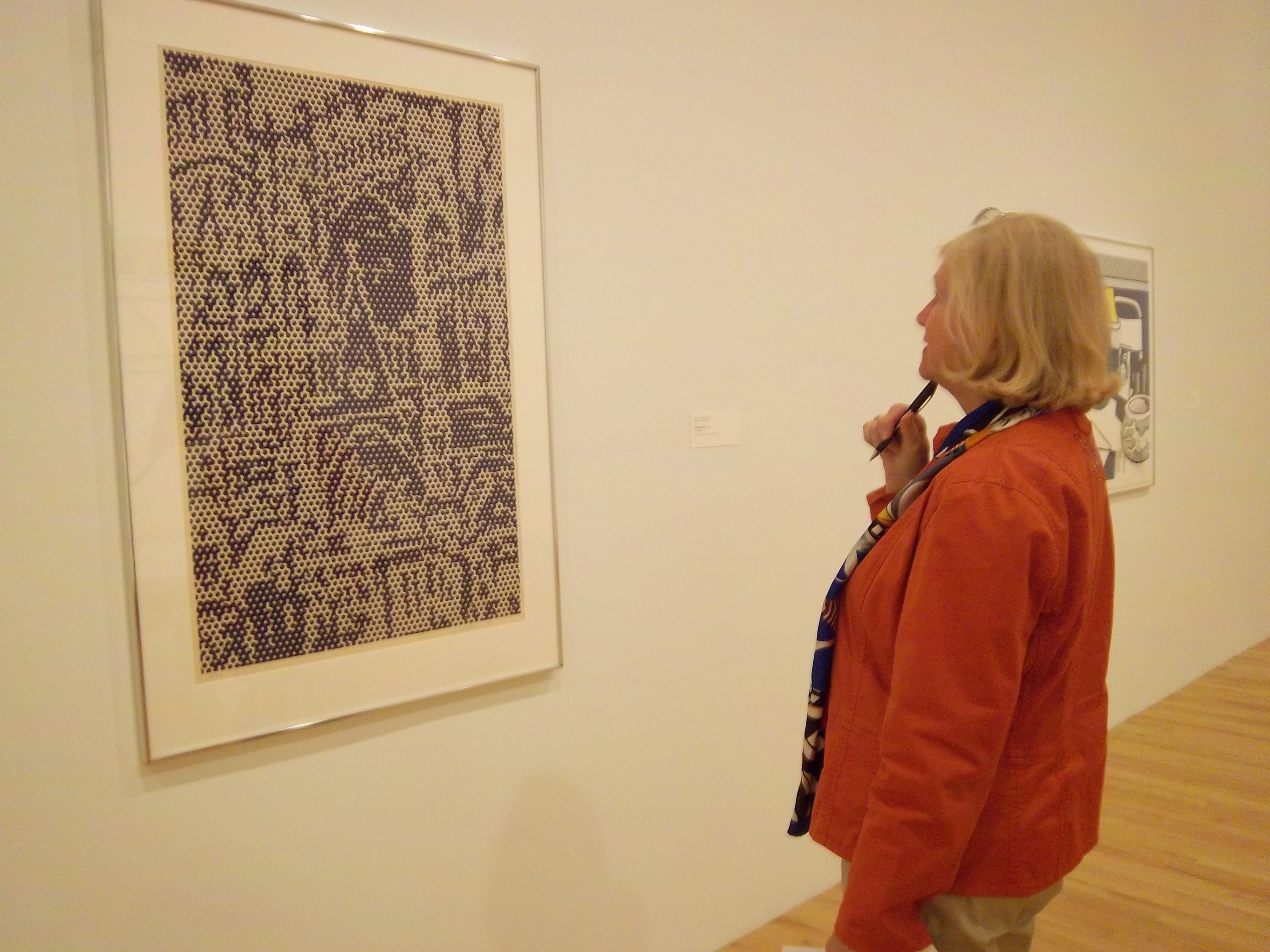
Docent Carol Placido ponders whether this Lichtenstein print matches her state of mind while playing Muse

We also spent time in the galleries playing four games that Tom created for the docents.  The games included:

  • Emotikonst, which asked docents to write down their emotional responses to a work of art on a piece of paper.  They then switched papers with another docent, who had to figure out which work of art was being described.
  • Action! allowed docents to select one Abstract Expressionist painting and use movement to re-create how that painting was made.
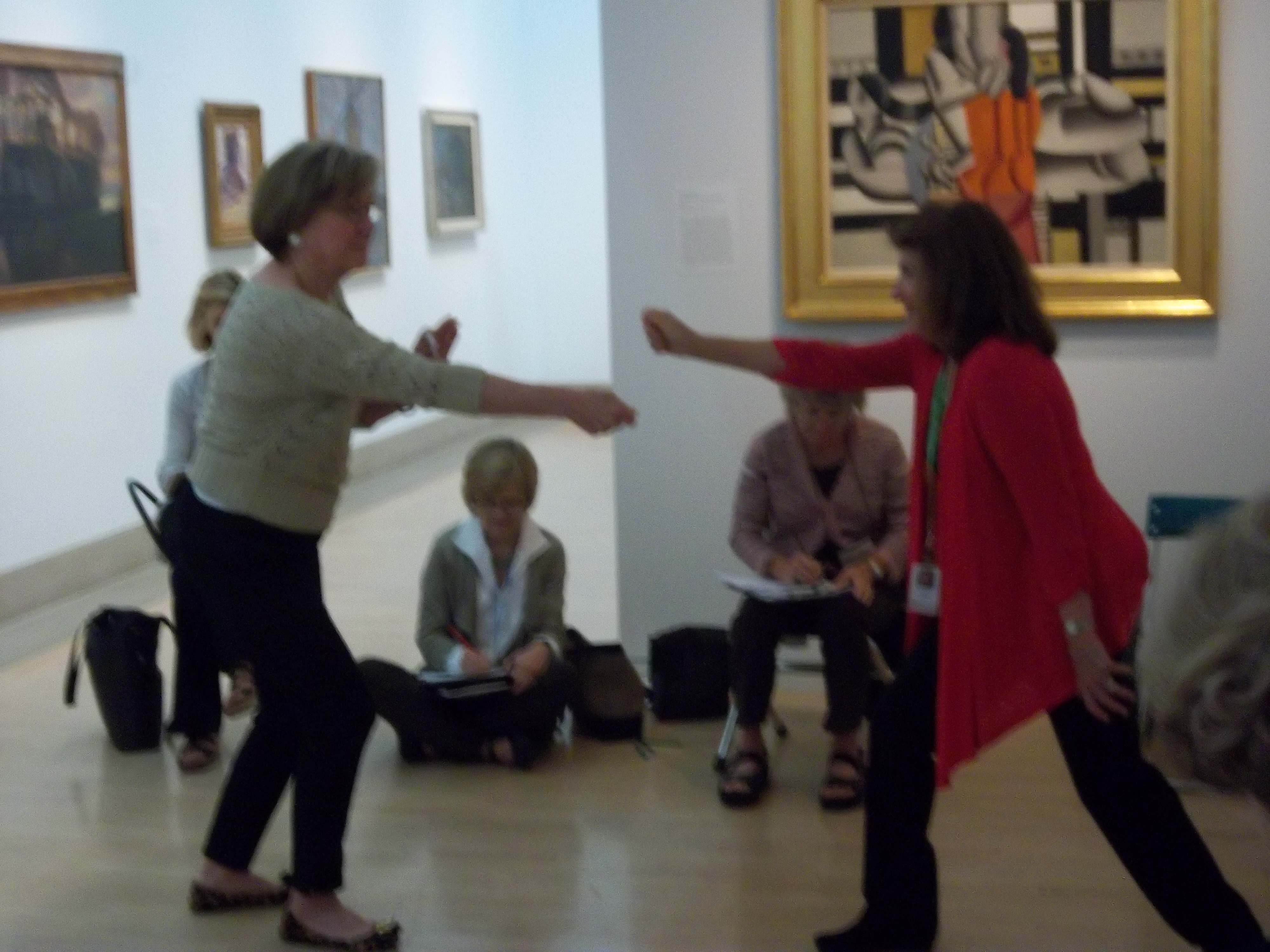
  • The Cubism Game called for one or two docents to pose like a sculpture while the rest of the group sketched them.  The group was told to sketch the “sculpture” from as many viewpoints as possible to illustrate the different perspectives one sees in a Cubist painting.
  • Muse asked docents to respond to a set of questions and prompts to identify how they were feeling at that exact moment.  They then selected a work of art that described their present state of mind.

Docents Pat Altschuler and Susan Behrendt pose like a sculpture during the Cubism Game

Each of Tom’s games had a defined goal and set of rules that went along with it.  Docents, like students, sometimes have a hard time following rules.  And as the old saying goes, rules are meant to be broken.  Many of the groups altered the rules to create new variations of Tom’s original games.  Tom encouraged the docents to give him feedback on his games, and he plans  to use their feedback to made additional tweaks to each of the games.

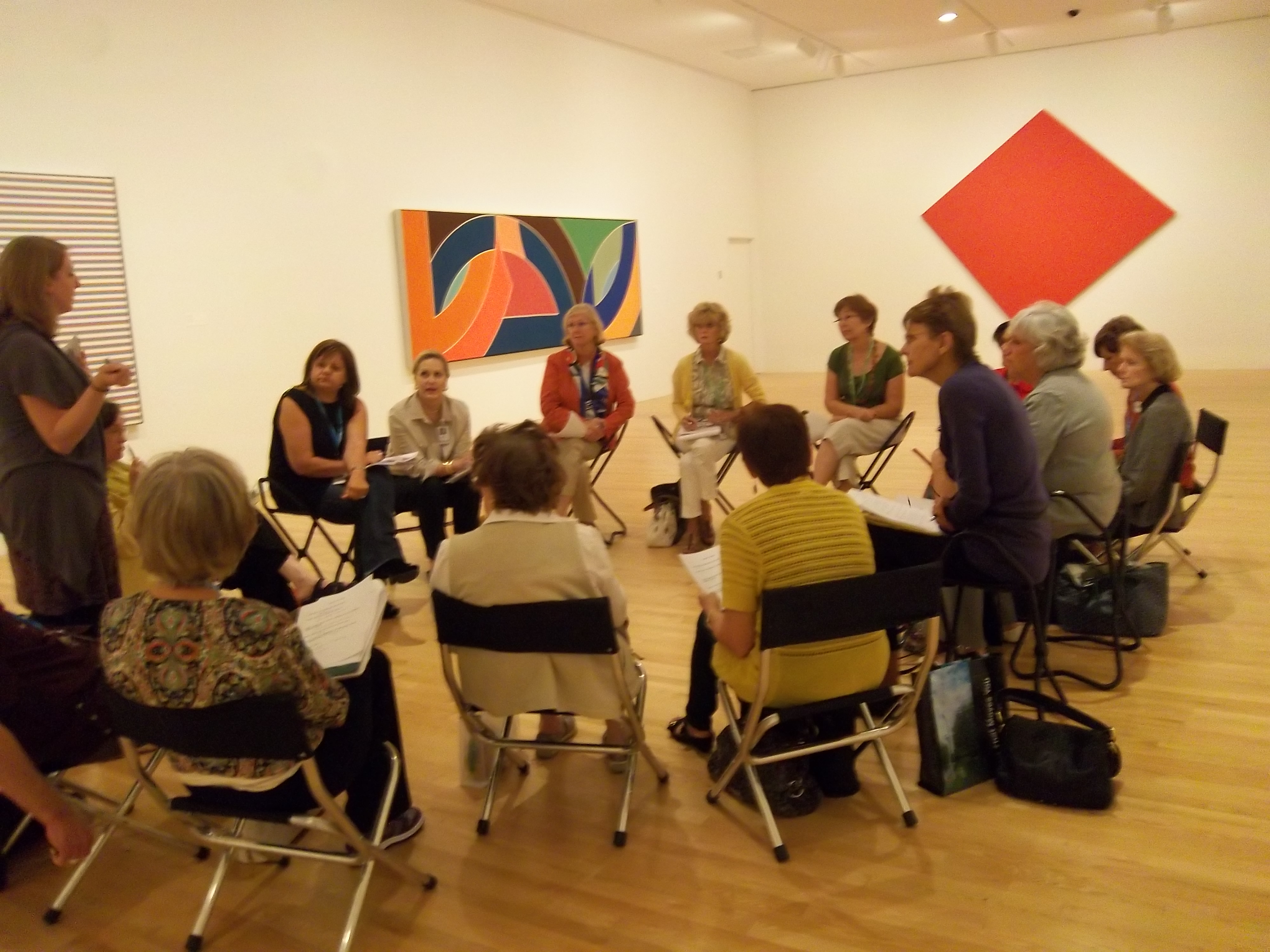
Docents brainstorm ideas for a new game that can be played in the galleries

Towards the end of training, docents were given an opportunity to invent games of their own using a set of guidelines that Tom provided.  Some of the guidelines included creating a game that was easy to learn but hard to master, designing games for the site in which they will be played, relating games to works of art, and creating cooperative games – everyone participates, and everyone wins.    Our docents came up with really great sparks for games, and I’m looking forward to working with Tom and the docents to flesh out their ideas.

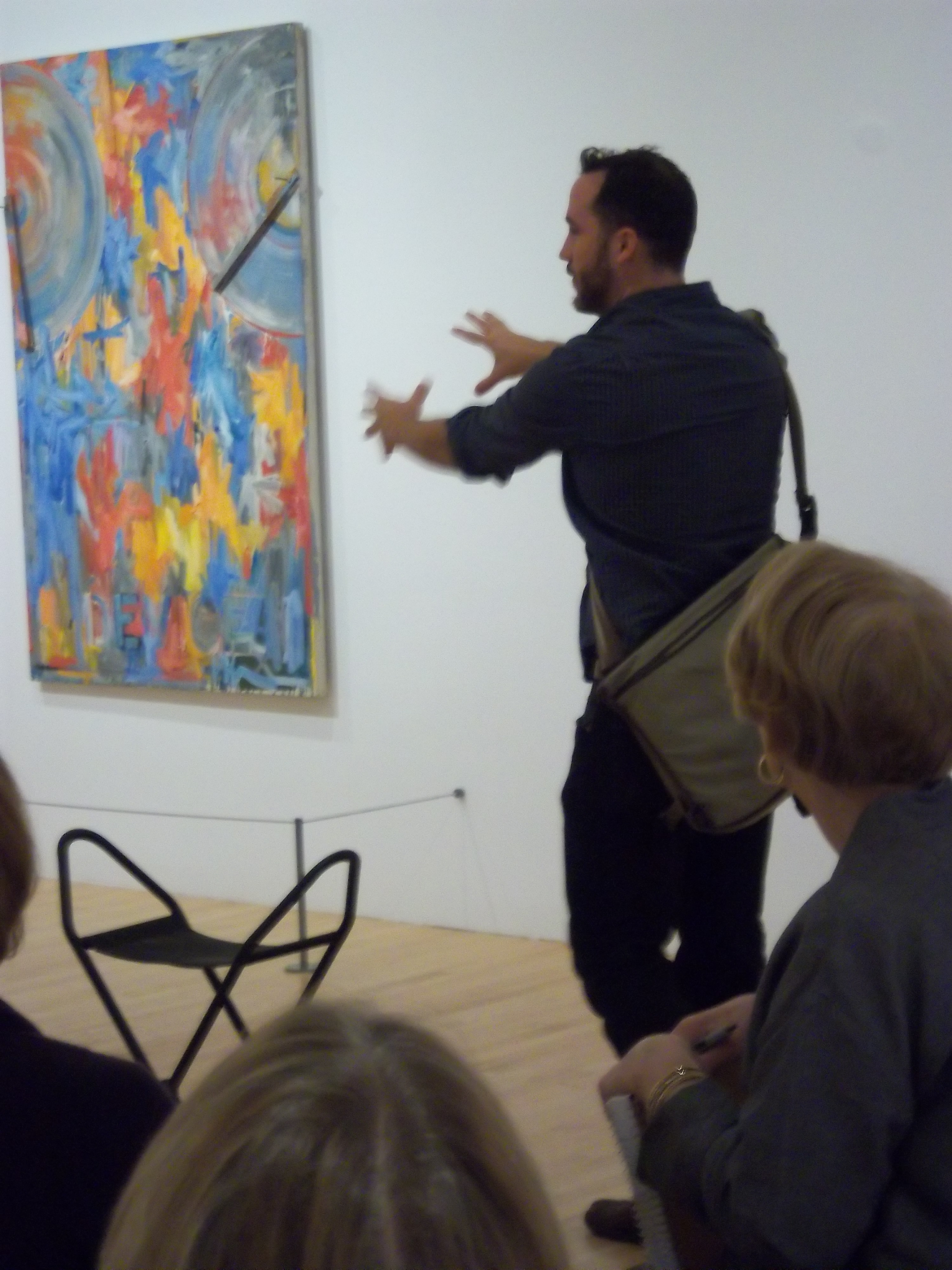
Tom Russotti talks with docents in front of Device by Jasper Johns

If you would like to have an opportunity to experience the world of art and games with Tom Russotti, I encourage you to sign up for the Art & Games teacher workshop on November 12.  Teachers will play games that Tom has created, but you will also have an opportunity to invent a game of your own.  Our docents loved learning from Tom, and I’m sure that you will, too!

Shannon Karol
Manager of Docent Programs and Gallery Teaching

Community Connection: Why Is This Art?

Over the past five years, the DMA has collaborated with area arts institutions in a weeklong program called Museum Forum for Teachers: Modern and Contemporary Art.  Participants spend an entire day at a different institution throughout the week, including the Kimbell Art Museum, Modern Art Museum of Fort Worth, Nasher Sculpture Center, and The Rachofsky House.  In the process, they become familiar with the Modern and Contemporary art currently on view in these spaces, as well as the programs, resources, and Education staff at each institution.  I had the pleasure of leading the discussions and activities at the DMA this past summer, which was also my first opportunity to work with Erin Starr White from the Modern (you may recognize her from an earlier blog post).

Describe your role at the Modern.

I am one of three Assistant Curators of Education.  My role is to work with the academic community.  My youngest audience is 3-4th graders, but I predominantly work with middle school and high school students as well as graduate students.  I also work with all the educators for those populations by leading workshops, speaking at career days, and speaking to teacher groups.

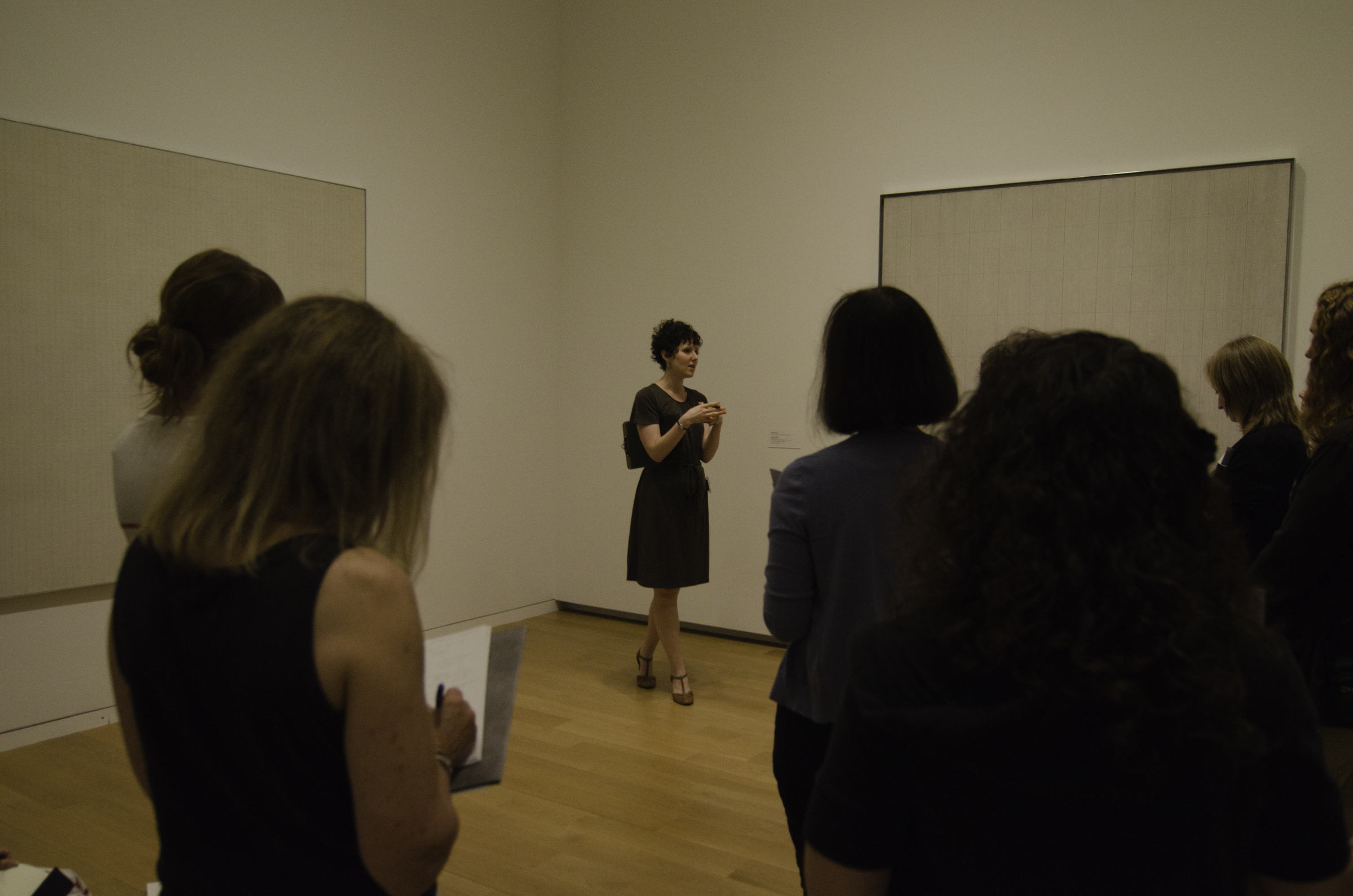
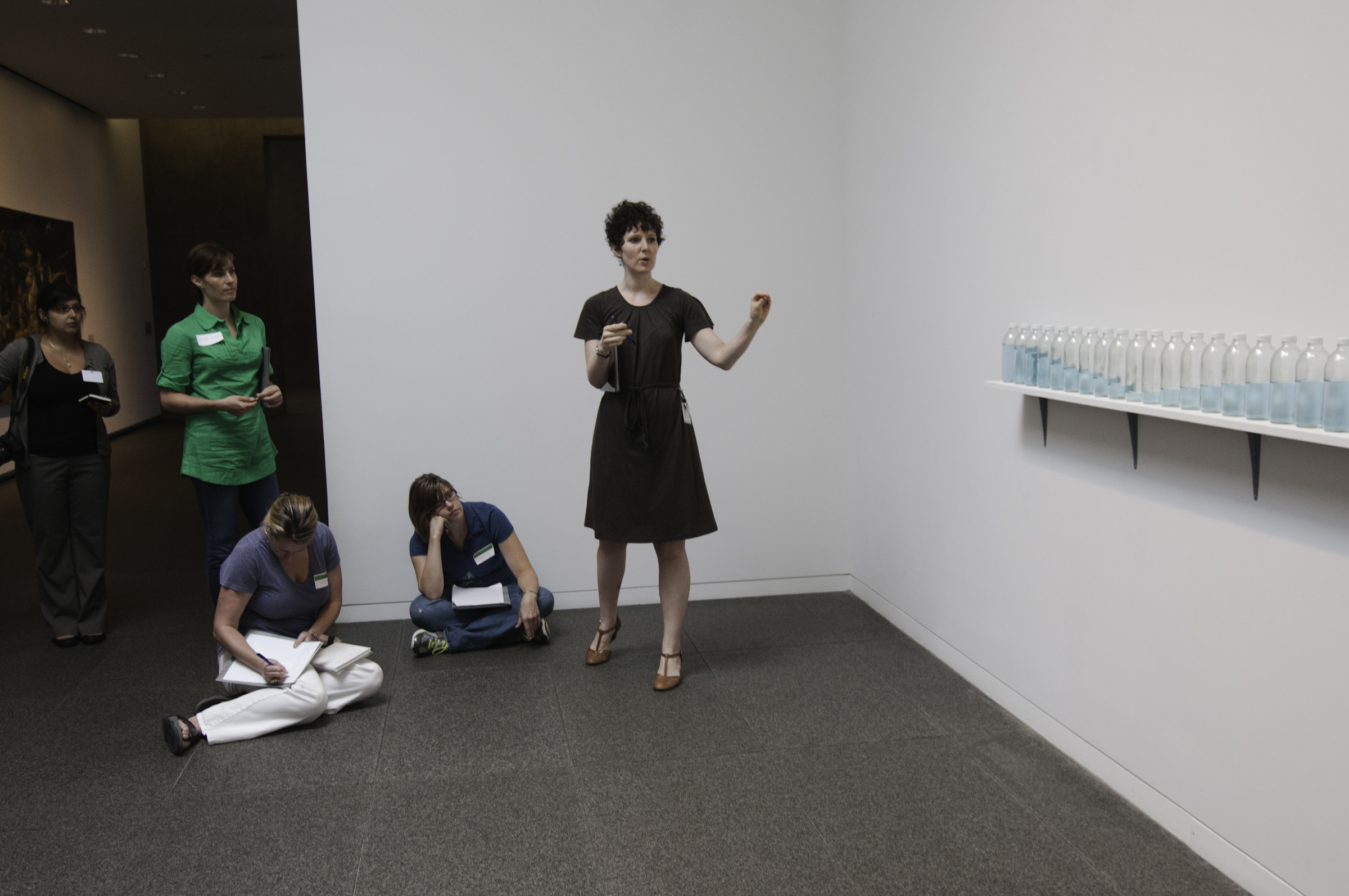
Erin working with educators in the galleries during this year’s Museum Forum for Teachers

What are some advantages to working in a museum that only collects Modern and Contemporary art?

It’s what I love;  it’s what I studied in grad school.  I focused on really Conceptual art from the late 60’s and early 70’s with a focus on New York artists.  I’m interested in the pluralism that occurs in Contemporary art – art is no longer just one thing; it takes a multitude of different shapes. Talking about the ideas and forms of Modern and Contemporary Art with students and teachers can bring about the very simple question, “Why is this art?”  This question often opens up a really great dialogue: “The Museum says it is; why do you think it is or is not art?”

Trace how you got to your current position at the Modern.

I studied Art History as an undergraduate student at University of Texas at Arlington. During my time there, I worked as an intern at the Dallas Contemporary.  I took over a position there as Program Coordinator for a little over a year to gain hands-on experience before going to graduate  school, and to determine if working in a museum setting was really what I wanted to do.  I then studied Art History in graduate school at Texas Christian University, while I worked as a part-time Curatorial Research Assistant at the Modern, tracking down paintings, talking to galleries, and securing loans.

After a year as a full-time Curatorial Research Assistant, I decided I wanted to do something more involved with people, more hands-on, and more fulfilling for me personally.  I wanted to work more with the public and with the art.  This job came up a little over two years ago, and it’s worked out really well so far.  I had a limited background working with kids, and I hadn’t worked with teachers at all, but it’s been a nice fit getting to work with educators of all levels and students of all ages.  Since my background is in Art History, I hire artists to come in and lead studio art projects.  I hire about twenty artists a year to come in and work with different groups, so I go on studio visits and get to know local artists to see if their work would fit well with certain exhibition.  For example, I am currently working with Michelle Mackey, an abstract painter heavily influenced by Richard Diebenkorn in conjunction with Richard Diebenkorn: The Ocean Park Series.

Erin working with educators in the galleries during this year’s Museum Forum for Teachers

What has been the most inspirational artist or exhibition for you?

We have a great lecture series called Tuesday Evenings at the Modern; for me, the most fulfilling lecture was by Lawrence Weiner.  I’ve always been a really big fan of his work – he was one of the
pioneers of Conceptual art – and he was here at the Modern!”

Also, Declaring Space: Mark Rothko, Barnett Newman, Lucio Fontana, Yves Klein (September 2007–January 2008) was one of the most fulfilling exhibitions for me.  It was wonderful to see works that don’t travel very often, all in one place.  This show was one I revisited as often as I could, taking in a room full of Rothkos hung the way he wanted, lit the way he wanted them to be lit; instances of Newman’s sculptures along with his paintings; roomfuls of Fontana’s work – canvases that have been slashed, metals that have been slashed; and  Klein’s enormous monochromatic blue  paintings.

What is your favorite work of art at the Modern, and why?

I can’t choose one favorite, but there is a gallery installed right now that is breathtaking.  It has three of Agnes Martin’s paintings and a little suite of her prints.  What I appreciate about her work, and about these in particular, is that they show her process.  They show her solution for artmaking – the grid – and all the different permutations that takes.  These works have a handmade “look” and have such expressivity and feeling.   Initially, you don’t get that sense; you have to look closely to pick it up.  These works are installed with our permanent collection and are nice to compare and contrast with other Abstract Expressionists on  view, as she considered herself an Abstract Expressionist.

Melissa Nelson
Manager of Teaching in the Community

Friday Photos: Mystery Artwork

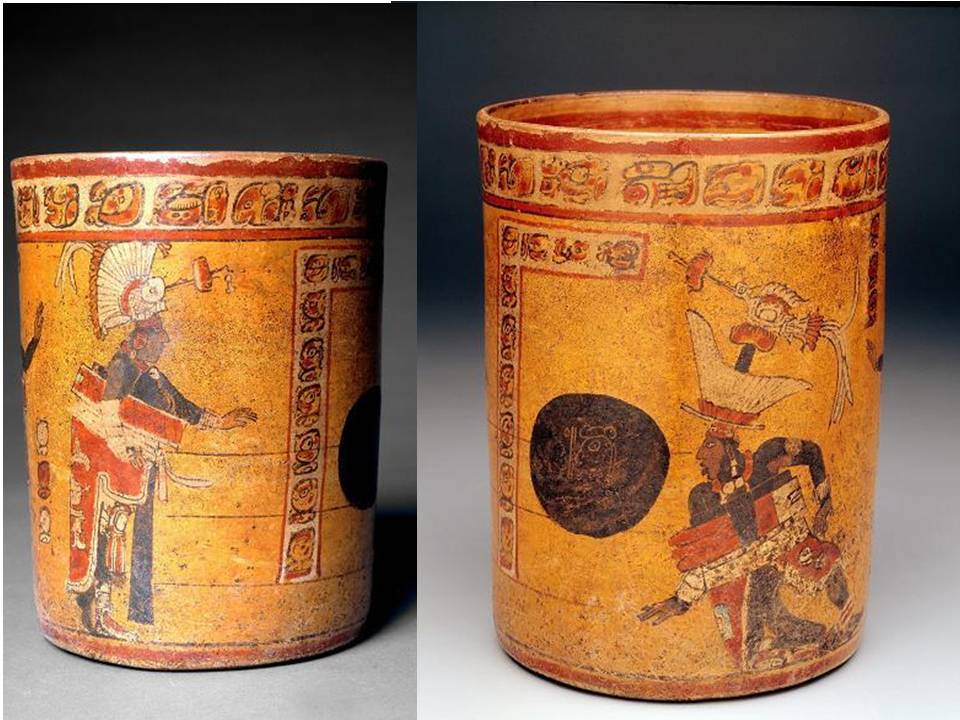
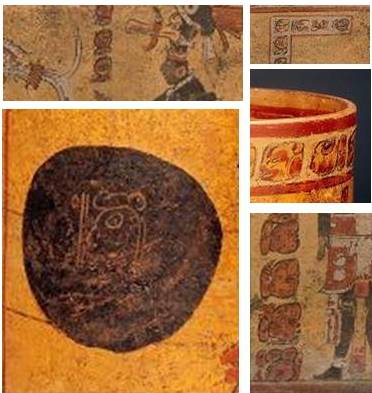
Last Friday, I posted a scrambled image and a clue in the form of a rhyme.  The final Mystery Artwork is…Cylindrical vessel with ritual ball game scene.

Cylinder vessel with ritual ball game scene, Guatamala, c. 700-850 A.D., Gift of Patsy R. and Raymond D. Nasher

This Maya vessel depicts a ceremonial ball game, in which the players hit a rubber ball with their hips, not with their hands or feet.  Who would have thought fusing art and games would be fun?  Tom Russotti, that’s who.  Tom is a visiting artist who is  designing and leading a hands-on teacher workshop in November called Art & Games.

As all good things must come to an end, I hope that you have enjoyed this series of Friday Photos: Mystery Artwork.  Thank you to those who participated!

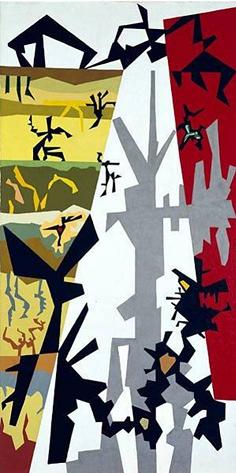
One last visual before I sign off.   Another great reason to visit the Museum is that the art is always changing.  I was surprised to find this John Sennhauser hanging next to Gerald Murphy’s Watch on the fourth floor, and it has recently been added into my top five favorite works of art at the Museum.

John Sennhauser, Colorforms in Colorspace #1, 1947, Dallas Museum of Art Acquisitions Fund, Anonymous Gift

Wishing you a fantastic Friday,

Loryn Leonard
Coordinator of Museum Visits

Meet Our New Go van Gogh Volunteers

So far this month, we have introduced you to our new docents and our new interns.  I am happy to feature another group of friendly faces this week – our new Go van Gogh volunteers.  We have fifteen new volunteers this year, which may be our largest class in the past ten years.  I am excited about the range of backgrounds, experiences, and interests this enthusiastic group brings with them.

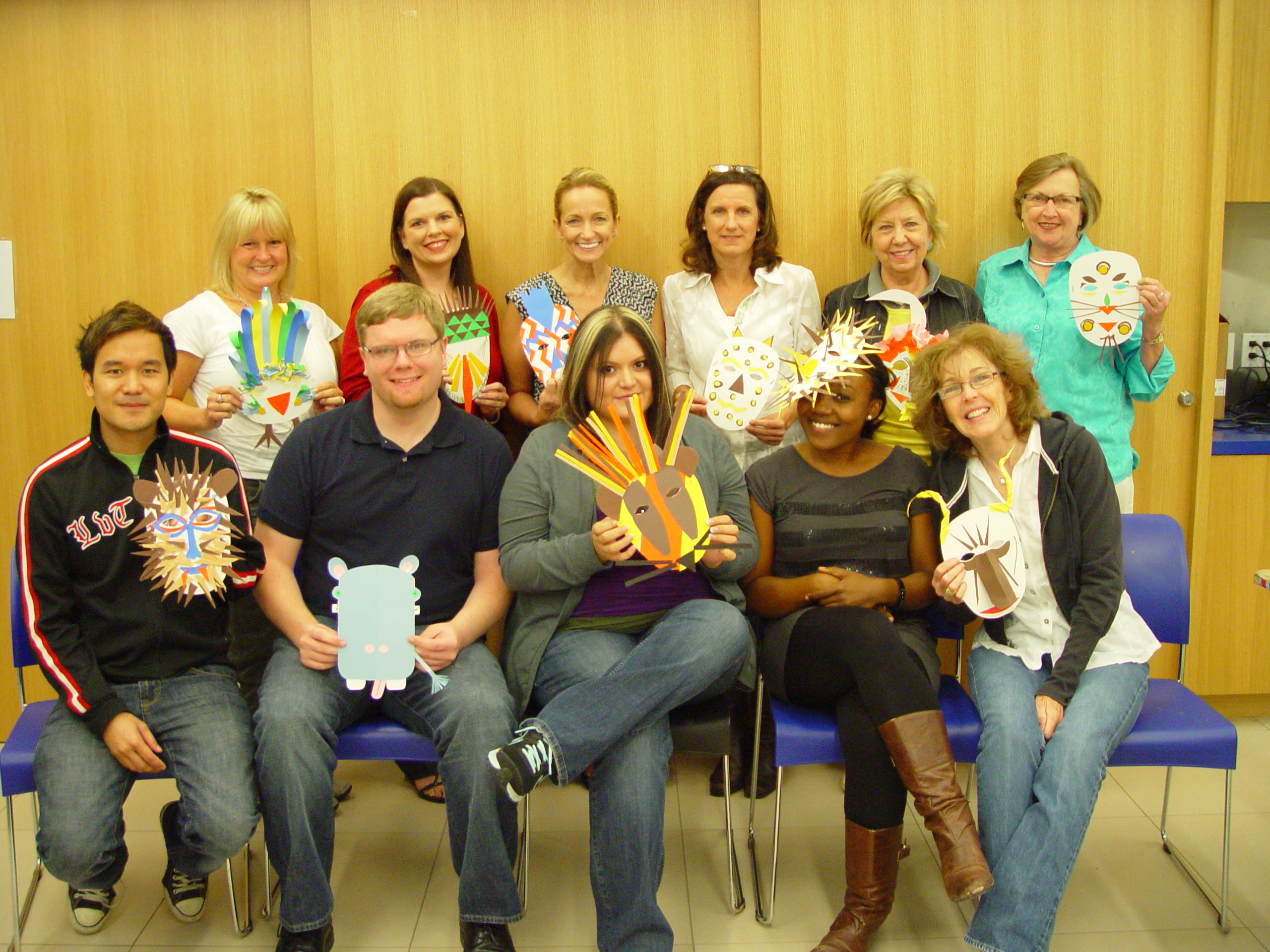
The volunteers show off their creations during their training for the African Masks and Headwear program .

Below are some fun facts about our volunteers starting with the bottom row, left to right:

  • In addition to having a Nursing degree, Gio also loves to paint and has produced more than 100 drawings and paintings in his free time.
  • Stephen’s passion for art and design, as well as his belief that volunteering makes a positive impact on the community, inspired him to volunteer along with his girlfriend…
  • …Dorly, who comes to us with a degree in Art and Performance, which will definitely come in handy in the classroom.
  • Mary is currently pursuing a PhD in Art Education at UNT and was also an education intern at the Rachofsky House this past summer (where I met her, and recruited her after she kindly encouraged me during a challenging studio art activity).
  • Michele also has a Nursing degree, and has pursued a great many other things including designing jewelry that has been sold nationwide, making a teaching video for developing countries, and writing a feature article for a major magazine.

Top row, from left to right:

  • Pam owned a window treatment business in the NYC tri-state area before recently moving a stone’s-throw distance to the DMA.
  • Sarah is part of a ceramics co-op that provides opportunities to join other artists in creative pursuits.  She originally became interested in Go van Gogh ten years ago and decided this was the year to join the program!
  • Sandy recently moved to Dallas from the Houston area after teaching language arts for fifteen years, during which she often incorporated works of art into her students’ assignments.
  • Jennie was recruited by two friends who are Go van Gogh volunteers and told her how much they loved the program.
  • Doris also recently moved from Houston, where she gained extensive art education experience in Houston ISD and museum education experience as a docent at the Museum of Fine Arts, Houston.
  • Barbara retired earlier this year after a career in Occupational Therapy, and one of her three goals for post-retirement is “finding ways to give back to the local, national, and/or world communities through volunteerism”.

Not pictured here:

  • Cristina is fortunate to work at a company that encourages volunteering, and will adjust her work schedule to accommodate her love of children and desire to “share with them the joy and excitement of art”.
  • Recently retired from Dealey Montessori, Dennis is finding his schedule to be full of his favorite pursuits, which include acting and playing chess.
  • Erin earned a degree in Studio Art and has experience in painting, sculpture, printmaking, pottery, and graphic design.  Like Cristina, Erin works full time and is adapting her schedule to volunteer with Go van Gogh.
  • Jane served as a docent at the Milwaukee Art Museum and Baltimore Museum of Art, and also led art appreciation classes in her children’s classrooms as a parent volunteer.
  • Laura has a degree in fibers and printmaking and has worked with homeschool students to make costumes and stage props.

Be on the lookout for these volunteers as they begin teaching in Dallas classrooms over the coming months!

Melissa Nelson
Manager of Teaching in the Community

Celebrating Five Years of 4th Grade Visits

Today marks the first day of student tours for the 2011-2012 school year.  And with the new school year comes a new year of partnerships with schools and school districts from across the Dallas/Fort Worth Metroplex.  I am especially excited because it also marks the fifth year of our partnership with the Dallas Independent School District.  As a result of this relationship, every 4th grade student in Dallas ISD visits the museum for a docent-guided A Looking Journey tour.

DISD students wait to enter the DMA

It’s always gratifying to receive notes from teachers about their visits to the Museum.  Below are just a couple of quotes from DISD art teachers who visited the DMA last year with their students.

  • Please pass my appreciation on to your entire team and let them know that we are ever thankful for what you do so our students can experience art. I just really can’t fully express how grateful I am.  Going to the DMA is one of the biggest highlights of my students’ year!
  • I want to thank you for a very successful, enjoyable, and educational visit to the DMA for our 4th grade yearly visit this year.  It was the best visit and one in which all of the docents were well-informed, very well-prepared, and there for the groups.  My students couldn’t stop talking about the trip, and they want to return to the DMA.

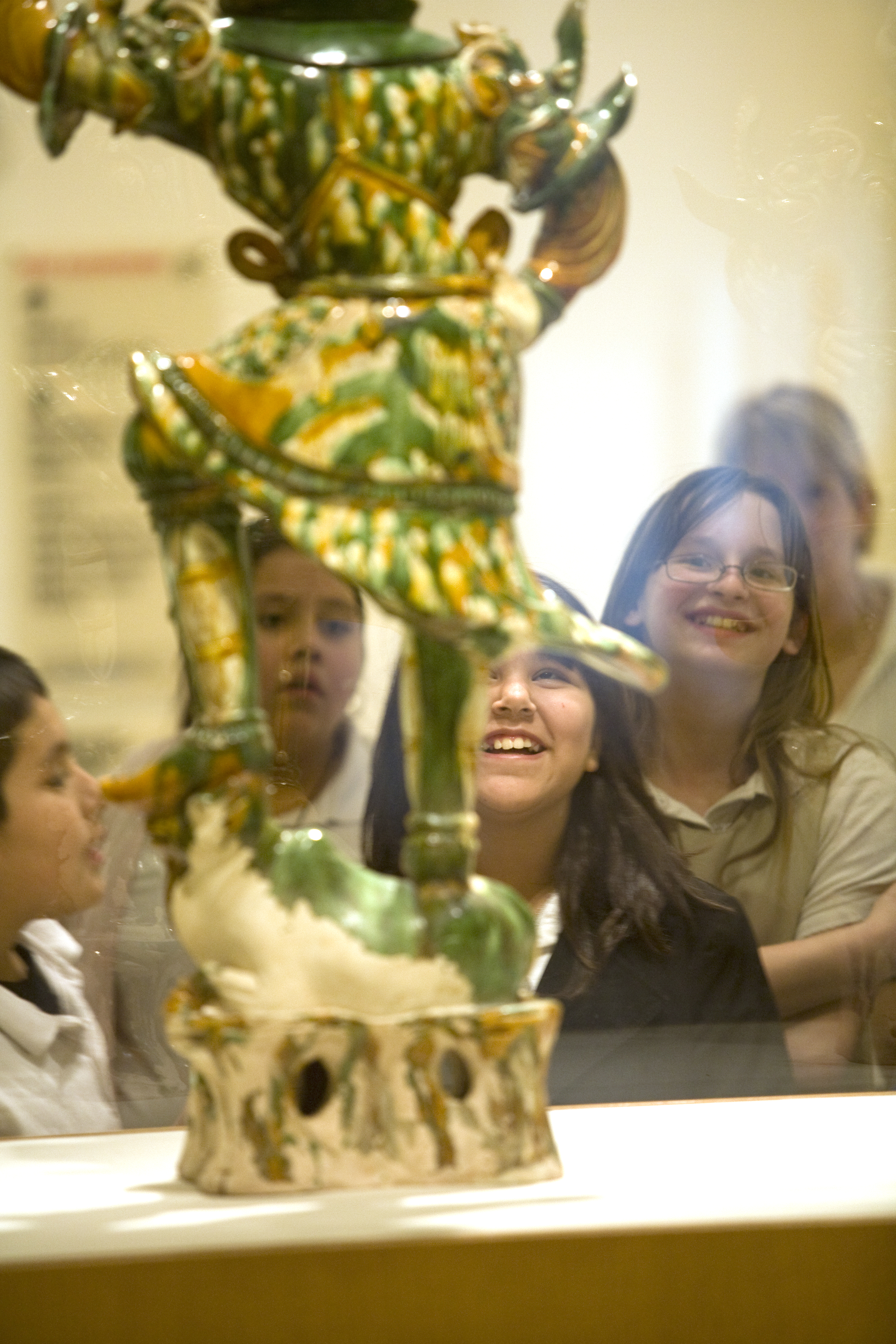
Students explore the Lokapala in the Museum's Asian galleries

Since September 2007, we have welcomed over 45,000 DISD 4th graders to the Museum for docent-guided tours.  It’s crazy to think that the 4th graders who visited us in 2007 are in 8th grade this year!  I often wonder what sort of impact their DMA visit has had on them.  Have they visited the Museum again?  Do they still think about their favorite work of art from the DMA?

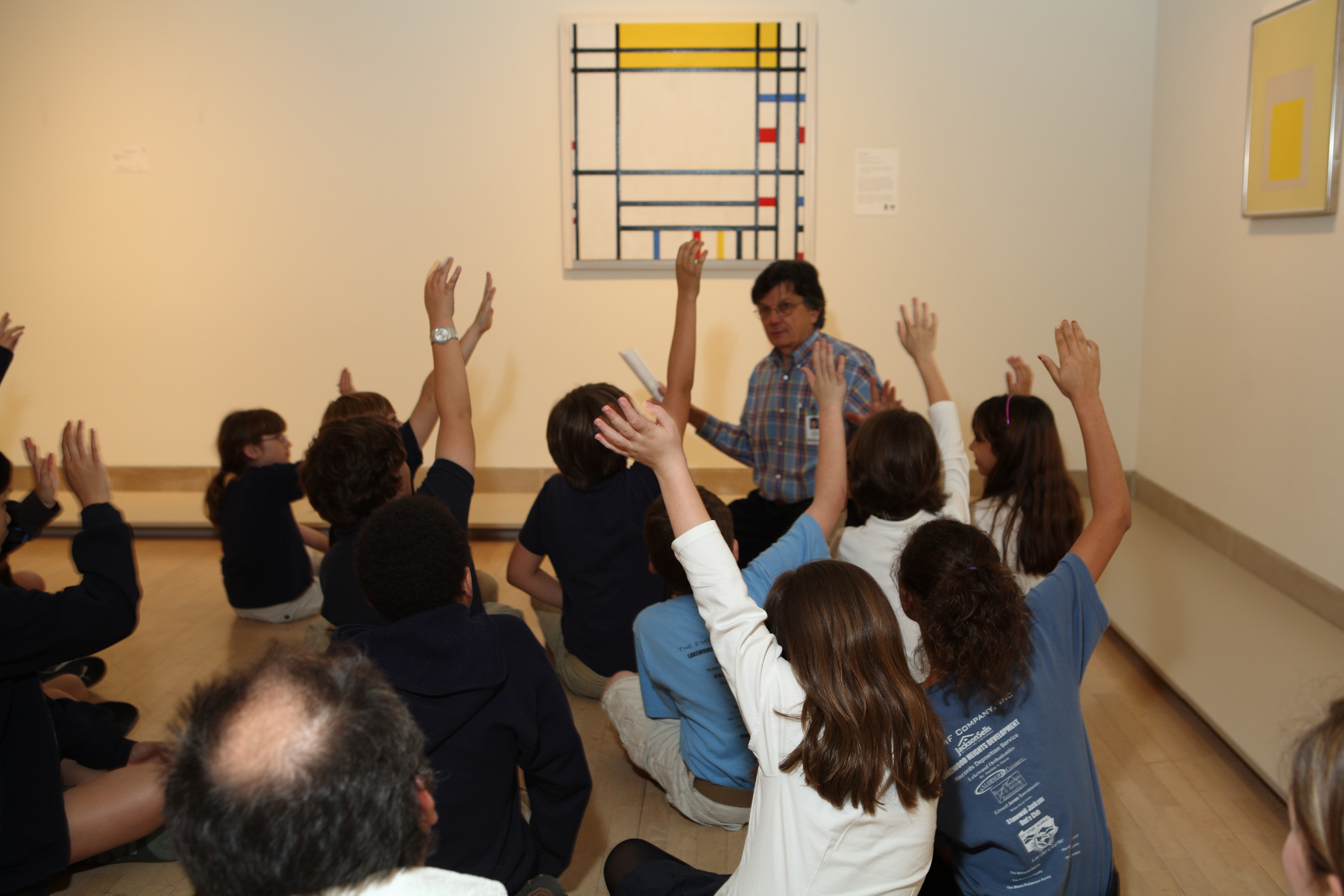
Docent Kelly Breazeale with students from Stonewall Jackson Elementary

All of us at the Dallas Museum of Art value our partnership with Dallas ISD, but it’s really the docents who benefit most from this relationship.  They’re the ones who get to spend each day in the galleries, experiencing works of art with these students.  And in a time when budget cuts and questions about the importance of the arts in education are in the headlines, all of the docents are thrilled that Dallas ISD values our partnership enough to ensure that these visits continue to happen.

Shannon Karol
Manager of Docent Programs and Gallery Teaching

Friday Photos: Mystery Artwork Series

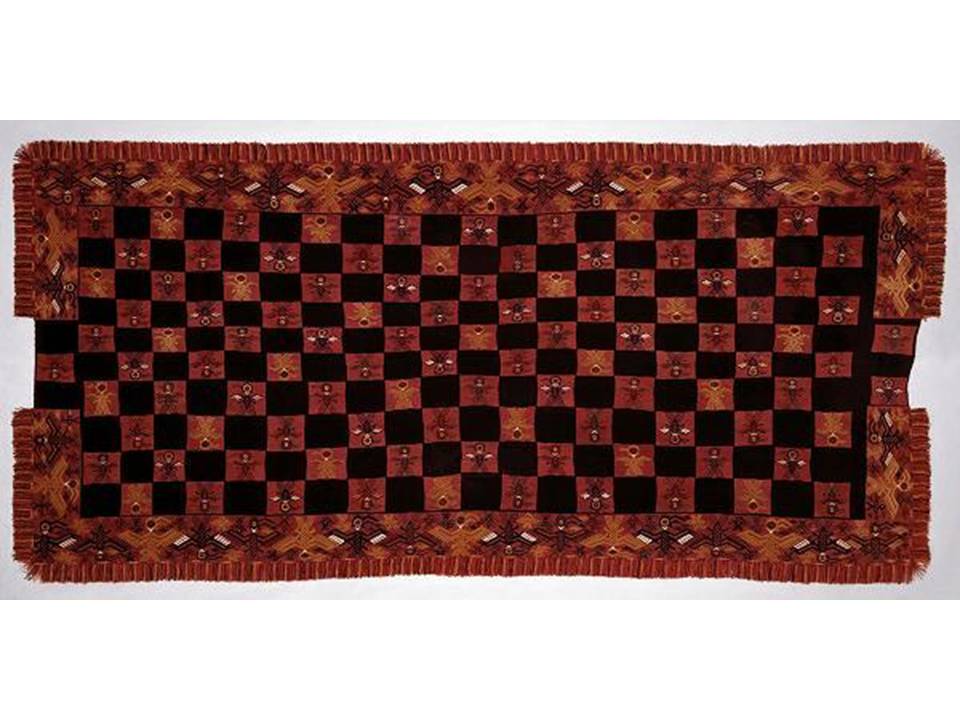
Are you tired of pulling your hair out and biting your nails in order to know this week’s Mystery Artwork?  Never fear, for I have the answer!  Last week’s Mystery Artwork is…Mantle with condors

Mantle with Condors, Peru, c. 300-100 B.C., The Eugene and Margaret McDermott Art Fund, Inc.

Interested in multicultural fashion?  Check out Art and Fashion, a teacher workshop in conjunction with The Fashion World of Jean Paul Gaultier: From the Sidewalk to the Catwalk.

Now, for the third puzzler.  Just as before, I have given you a rhyme and an altered image of the mystery object.  You have one week to search through our online collection, or go gallivanting through the galleries.  Next Friday, I will reveal the mystery object and present the final Mystery Artwork.

Brilliant colors of red and yellow,
I depict a scene of an active fellow.
A rubber ball he hits,
With the swing of his hips,
This game is an ancient Mayan ritual.

Come out tonight for a Late Night at the DMA and see if you can locate this object.  Here is a helpful hint: you can find this object on the fourth floor.

Wishing you a playful perusing,

Loryn Leonard
Coordinator of Museum Visits

The New Kids on the Block

No, not the eighties boy band…last week, a group of fresh faces joined DMA staff – the new class of McDermott Interns. I am delighted to introduce you to Hannah Burney, McDermott Intern for Community Teaching, and Jessica Kennedy, McDermott Intern for Gallery Teaching. Hannah received her B.A. in the History of Art and Visual Culture from the University of California in Santa Cruz and completed a year-long internship in the education department at the de Young Museum in San Francisco before coming to the DMA. Jessica holds both an M.A. in History with a concentration in Museum Studies and a B.A. in Art History from the University of Missouri in St. Louis. She also served as Interpretive Assistant in the Educational Media Department at the St. Louis Art Museum.

Hannah Burney, McDermott Intern for Community Teaching

Jessica Kennedy, McDermott Intern for Gallery Teaching

Hannah will work primarily with Go van Gogh and community programs, and Jessica will focus on docent and gallery teaching programs. Both interns will also participate in other areas of our department, such as Programs for Teachers, as well as contribute to DMA Educator Blog. We are so excited to have them with us for the next nine months, and hope that you will have the opportunity to meet and work with them during their time here as well.

Neither of you are Dallas natives. What do you most look forward to about living in Texas?

Hannah: Being a huge fan of food, I am very excited about the famous Texas BBQ, steak, and Tex-Mex. I also look forward to all the cultural experiences Texas has to offer that can’t be found on the West Coast, including the State Fair, a fried foods institution (where, I am told, the “corny dog” was first introduced), and hoedowns, where I hope to partake in two-stepping, line dancing, Texas swing, and the like. But, what I most enjoy about Texas is all the warm and welcoming southern hospitality.

Jessica: The thing that I most look forward to when visiting any new city is discovering local restaurants and cuisine. I love trying food that is unfamiliar to me as well as finding new versions of old favorites. I am especially eager to explore the various types of BBQ and Tex-Mex offerings specific to the DFW area.

How do you spend your free time?

Hannah: I consider myself a bit of a foodie, and love trying new foods or enjoying old favorites. Apart from dining, I love being outdoors: going for a walk, a swim, a hike, kayak trip or adventure of any kind. So, once the weather starts to cooperate, I am looking forward to exploring the Katy Trail. In the meantime, I’ve been very much taking advantage of my new pool, something I never had in San Francisco! If I have a bit of extended free time, traveling is what I most love to do.
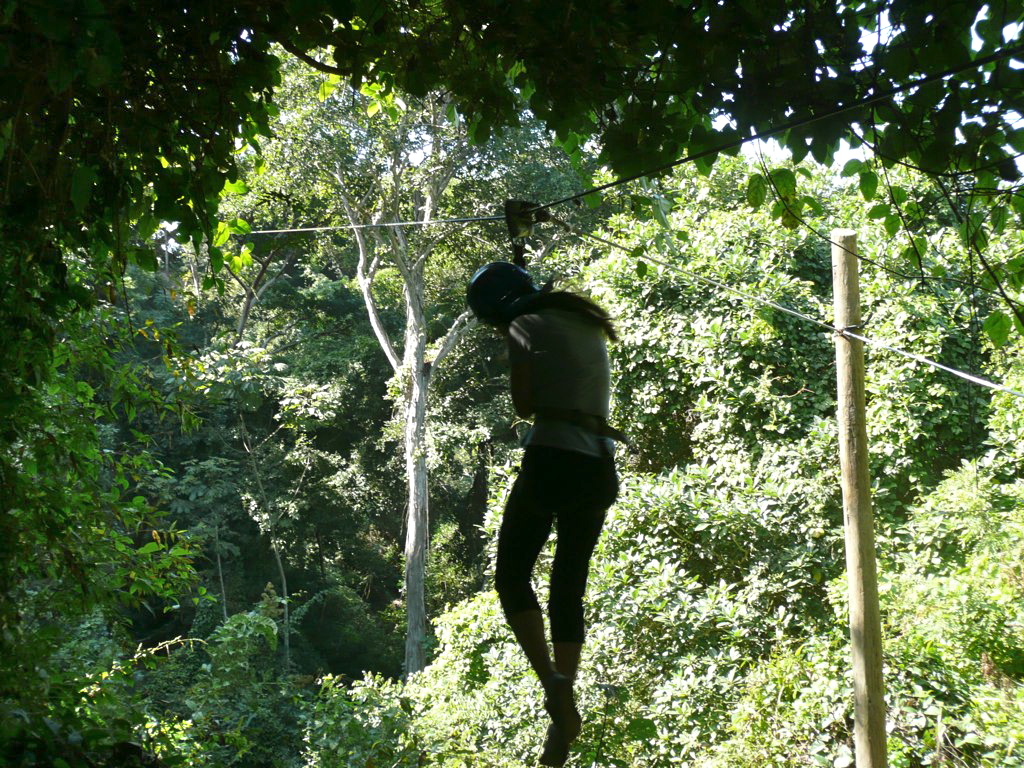
Hannah hangs from a zip line in Mexico

Jessica: I enjoy reading, trying new recipes, taking photos (although not as often as I would like), and hanging out with friends and family. Also, I have spent a bit of time traveling around the country to accompany my husband with his lifelong goal of seeing a baseball game played in every major league stadium in America. We have eight down and twenty-three to go!

Jessica and her husband made sure to check Rangers Ballpark off of the list!

Describe your first week at the DMA.

Hannah: The incredibly friendly, patient and endlessly knowledgeable staff have really eased me into my first week. From learning security policies to activity prep procedures, I have had not just  one, but many helpful hands leading the way. Besides getting to know the wonderful staff and learning the nitty-gritties of the position, I have most enjoyed spending time in the galleries exploring the vast comprehensive collection here.

Jessica: Amazing! Everyone on staff has been so welcoming and encouraging. Our schedule was packed full of introductions and training sessions, which seemed daunting at first, but it really showed me just how much the DMA values its employees. Despite the fact that it is very easy for me to get lost in the halls and galleries (my directional skills aren’t that great), in a few short days, I felt completely at home within this Museum!

What aspect(s) of your internship are you most excited to begin?

Hannah: The other interns and I discussed why some of us chose to pursue a path towards education versus curatorial work in the Museum. And we light-heartedly agreed that it was dependent upon whether you are primarily a people person or a book person. As a people person, I am most excited to begin working with the many diverse groups of people both inside and outside of the Museum. I feel very lucky to have the unique opportunity to work with docents, volunteers, students, and teachers throughout the next year.

Jessica: One of the things that I am most excited about is really learning and exploring the DMA’s collection with student groups that come to visit. I love the enthusiasm and imagination that they bring when viewing works of art. I am also looking forward to working with and learning from the wonderful education staff!

Melissa Nelson
Manager of Teaching in the Community
DMA Teacher Workshops: Top Ten Reasons to Attend

10.  Experience something new.

9.  Spend time in special exhibitions.

8.  Share and learn new strategies for teaching and learning with art.

7.  Collect CPE hours.

6.  Explore ideas across cultures and times.

5.  Connect with DMA staff, visiting artists, and scholars.

4.  Gather with educators and dive into rich conversations.

3.  Participate in creative thinking and making.

2.  Take long and close looks at works of art.

1.  See art, teaching, and life in a fresh way.

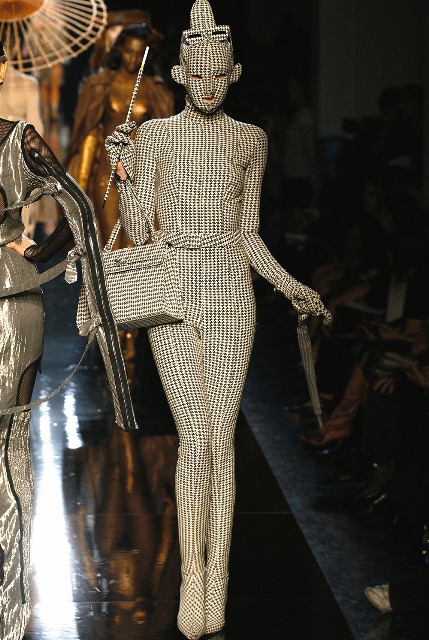
French Cancan collection, women’s prêt-à-porter, fall/winter 1991-1992, © P. Stable/Jean Paul Gaultier

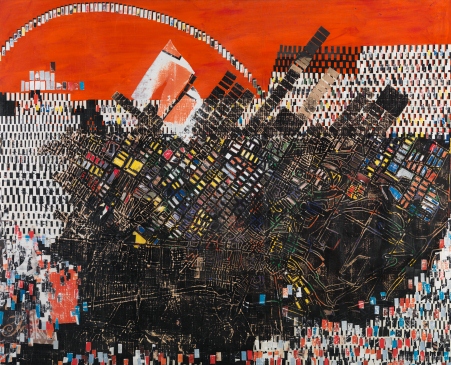
Scorched Earth, 2006, Mark Bradford, billboard paper, photomechanical reproductions, acrylic gel medium, carbon paper, acrylic paint, bleach, and additional mixed media on canvas, 94 1/2 x 118 inches, collection of Dennis and Debra Scholl, photo: Bruce M. White

Whether it’s your first or fifty-first workshop, we invite you to join us for several teacher workshops occurring this Fall and Winter at the Dallas Museum of Art.  Each workshop begins with an introduction, creative warm-up, and browse of resources.  Gallery experiences include sketching, writing, independent reflection, and group discussion with peer educators, artists, and experts.  K-12 teachers of all disciplines are welcome!

Join us on Saturday, October 22 for Layered Materials, Layered Meanings: Mark Bradford to take a close look at the work of L.A.-based artist Mark Bradford.  Artist Tom Russotti will lead an Art & Games workshop on Saturday, November 12, emphasizing play, problem-solving, and games in relationship to works of art.  Spend a full day exploring Art & Fashion in the exhibition The Fashion World of Jean Paul Gaultier and throughout the DMA collections.  Teachers may register for workshops online.

Visit the DMA this Friday, September 16 for the monthly Late Night.  Educators receive half-price admission ($5) after 5:00 p.m. on September 16 when they show their school I.D.  Drop by the Educator Resource table, talk with staff about upcoming teacher programs, and win door prizes.

Nicole Stutzman
Director of Teaching Programs and Resources


Archives

Categories