Posts Tagged 'DMA'


Searching for Chanel at the DMA

When Wendy Reves donated a massive collection of over 1,400 objects to the DMA in 1985, it was already known that a few large furniture objects, like the dining table, originally belonged to Coco Chanel. Recently, we began a new quest to see what other objects might have belonged to Mlle Chanel that are currently in the DMA’s collection. To do so, we looked at old photographs from the 1930s and 40s, when the designer lived at Villa La Pausa, in southern France, and tried to match furniture in those photos to what we have today in the Reves Collection. When we found matches, we knew that the objects were left behind by Coco Chanel when she sold La Pausa to Emery and Wendy Reves in the early 1950s. Here are a few examples so you can go see for yourself.

The Entry:
entry

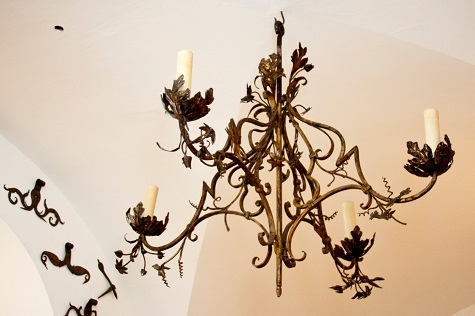
This chandelier was originally in Coco Chanel’s bedroom, hanging above her bed. Like most people who move, Mlle Chanel didn’t feel the need to take the light fixtures in her home with her. Wendy Reves, however, decided this could not stay in her new bedroom and moved it to the entryway of her home.
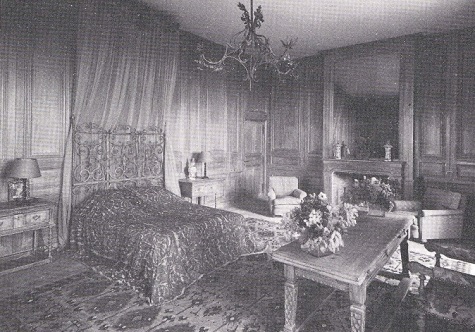
hanel’s Bedroom at La Pausa, with the chandelier now in the Reves entry and the desk at the right now serving as a buffet table in the Reves Dining Room.

Chanel’s bedroom at La Pausa, with the chandelier now in the Reves entry and the desk at the right, now serving as a buffet table in the Reves Dining Room

The Dining Room:
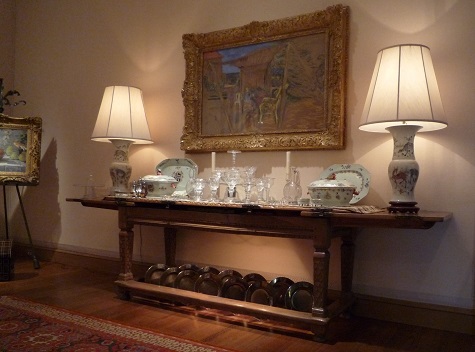
dining

This long table was originally used by Coco Chanel as a desk; however, Wendy decided that this could be useful in another way. She unfolded the leaves and moved it into her dining room to act as a buffet table.

The Grand Hall:
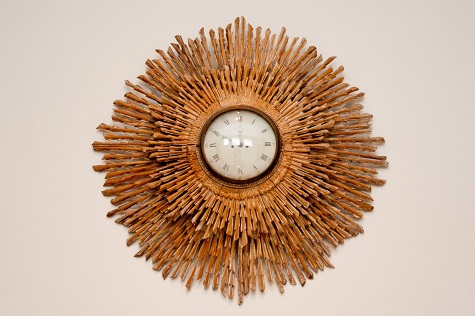
clock

Mlle Chanel had a set of two matching clocks, this one, which is now hanging in the Grand Hall, and another that hangs above the fireplace in the Reves Salon. When Wendy and Emery Reves moved in, they enjoyed these gold clocks and kept them in their original locations before donating them to the DMA.
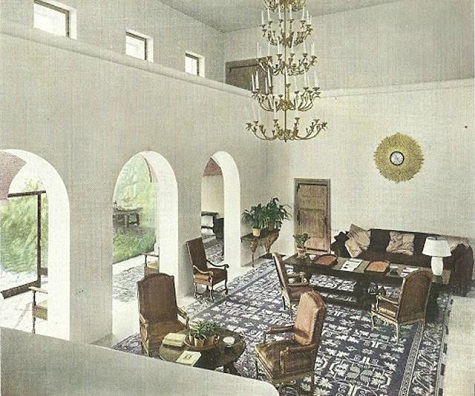
Coco’s Great Hall, with the same sunburst clock on the wall.

Coco’s Great Hall, with the same sunburst clock on the wall.

The Library:
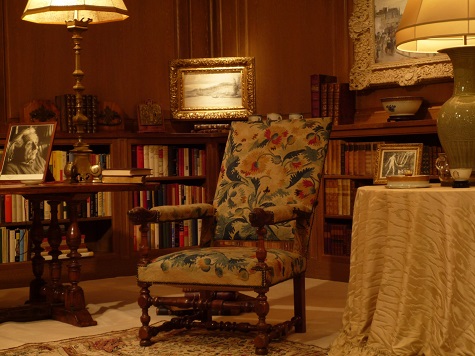
library

Possibly one of the coolest furniture items in the Reves Collection, this chair actually reclines using steel rods that come out of the handles. You can barely see them here, but pulling them out and pushing them in changes the recline of this chair. It is probably not as comfortable as our plush recliners today, but it was still the prototype. This early version of the recliner was originally in Mlle Chanel’s bedroom.
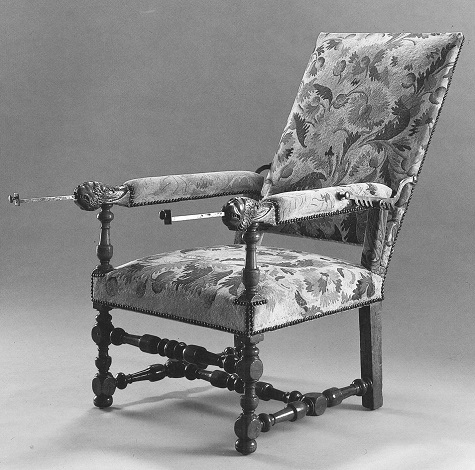
The Reclining Chair in the Library, shown with the rods pulled out

The reclining chair in the Library, shown with the rods pulled out

The Bedroom:
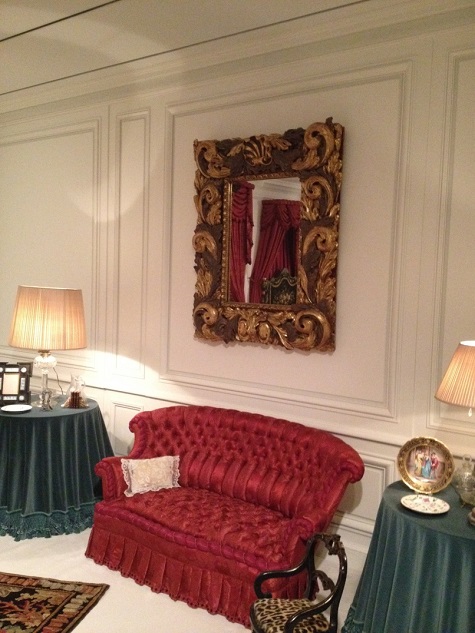
mirror

Originally in Mlle Chanel’s bedroom at La Pausa, this mirror didn’t travel far when Wendy and Emery Reves moved. They opted to keep it in their own bedroom. Interestingly, this is the only item that belonged to Coco Chanel that is in the Reves Bedroom.
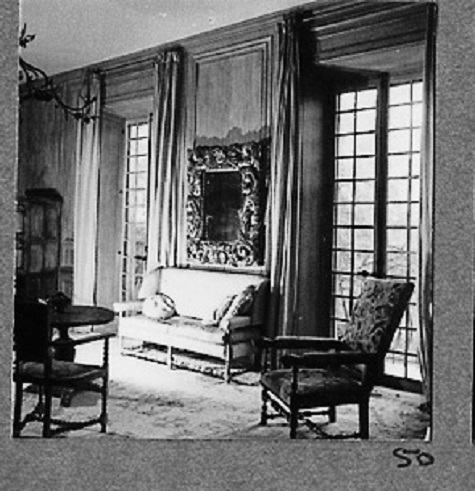
The other side of Coco’s bedroom features the mirror now in the bedroom of the Reves collection as well as the reclining chair now in the library.

The other side of Coco’s bedroom features the mirror now in the Reves Bedroom as well as the reclining chair now in the Library.

The Salon:
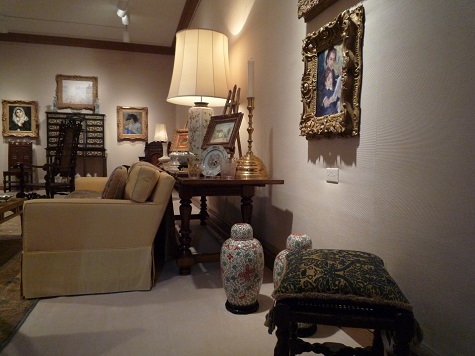
salon

Of the many items in this room that belonged to Coco Chanel, we think that this yellow couch might have originally been covered in a darker fabric and left behind when she sold La Pausa. Wendy liked the color yellow and recovered the couch to fit her tastes. We can see the similarity between them when comparing the side views.
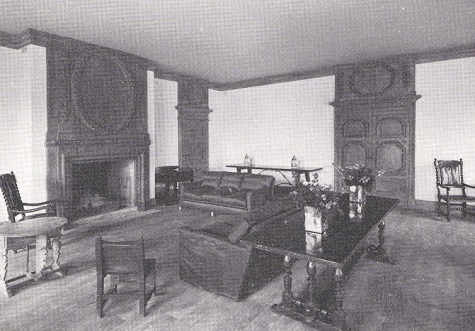
Chanel’s Salon at La Pausa, with the same couch seen from the side.

Chanel’s Salon at La Pausa, with the same couch seen from the side

Michael Hartman is the McDermott Intern for European Art at the DMA.
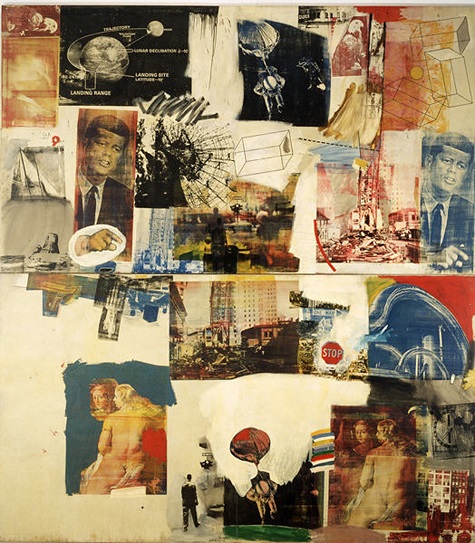
Rauschenberg’s President

In honor of Presidents’ Day, we’re  highlighting the one who watches over the Atrium and greets visitors as they enter the Museum. President John F. Kennedy is featured in the DMA’s Robert Rauschenberg painting Skyway, along with other elements of American history in the 1960s.

Robert Rauschenberg, Skyway, 1964, oil and silkscreen on canvas, Dallas Museum of Art, The Roberta Coke Camp Fund, The 500, Inc., Mr. and Mrs. Mark Shepherd, Jr. and General Acquisitions Fund

Robert Rauschenberg, Skyway, 1964, oil and silkscreen on canvas, Dallas Museum of Art, The Roberta Coke Camp Fund, The 500, Inc., Mr. and Mrs. Mark Shepherd, Jr. and General Acquisitions Fund, (c) Rauschenberg Estate/Licensed by VAGA, New York, NY

Kimberly Daniell is the manager of communications and public affairs at the DMA.

Choosing Favorites

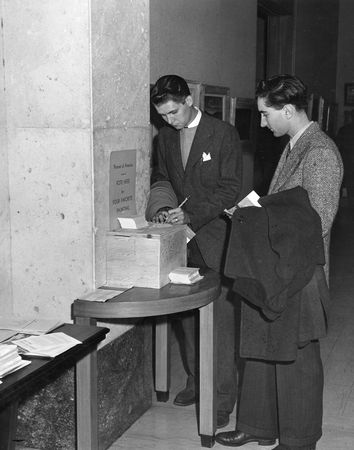
Young men voting for their favorite work in the exhibition "Portrait of America," September 30-November 5, 1945 (Photograph from the Studio of Wm. Langley)

Young men voting for their favorite work in the exhibition Portrait of America, September 30-November 5, 1945 (Photograph from the Studio of Wm. Langley)

In 1945 the Dallas Museum of Fine Arts was the seventh venue for the 150-painting traveling exhibition Portrait of America, sponsored by “Artists for Victory” and the Pepsi-Cola Company. The museum invited Dallasites to vote for their favorite work in the exhibition. The winner of the vote was Gladys Rockmore Davis’s Noel with Violin; she was awarded $100 by the manager of the local Pepsi-Cola Company bottling plant.

The DMA is once again asking you to pick your favorite, this time in the Museum’s first Art Madness tournament, inspired by the NCAA Championship game, which will take place in North Texas this April. DMA Friends are currently determining the Sweet Sixteen by participating in the DMA Friends Love a Work of Art activity. Once we have the 16 works determined in late February, the public can vote for their favorites online. Stay tuned for more information on how you can help pick the first DMA Art Madness Champion!

Hillary Bober is the digital archivist at the DMA.

Teenage Dream: Young Masters

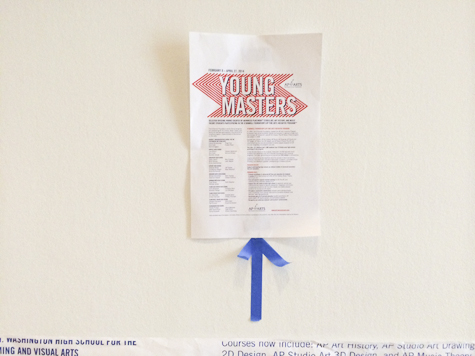
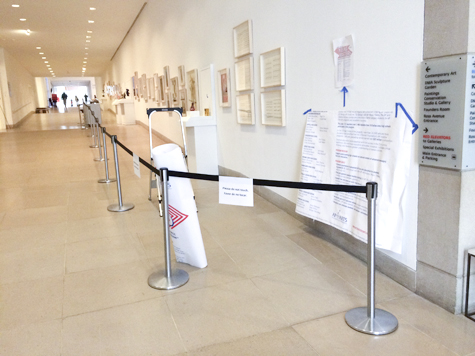
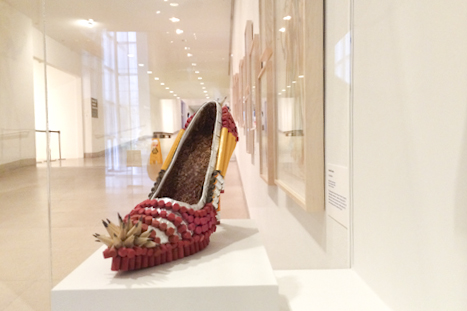
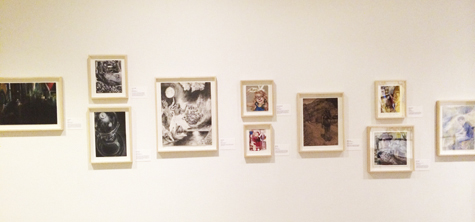
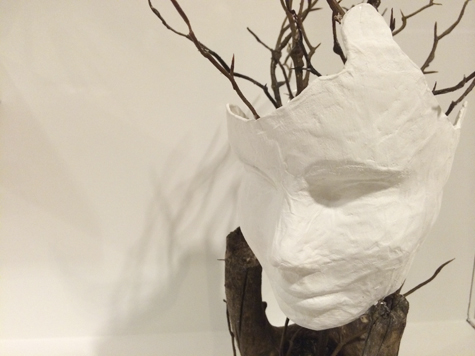
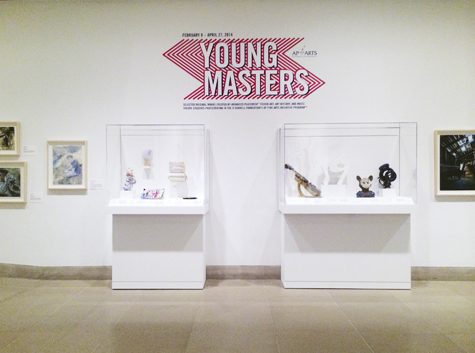
The DMA’s Concourse is filled once again with art created by area AP high school students, and that means it is time for the annual Young Masters exhibition. Since 1994 North Texas art and music students have submitted their work to the O’Donnell Foundation’s AP Arts Incentive Program for a chance to be selected for the exhibition and earn scholarships. Check out this year’s selections, on view through April 27 at the DMA.

1678

1677

1681

1684

1682

1683

ARTifacts: Our Own Monuments Man

Did you know that a former DMA director was a Monuments Man?

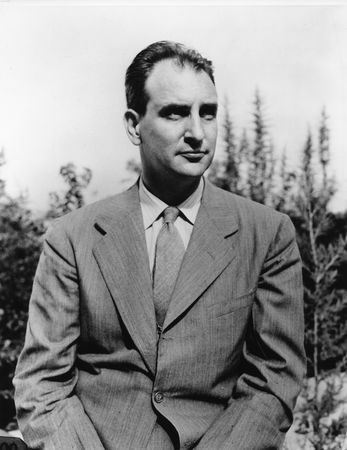
DMFA Director Richard Foster Howard (1935-1942)

DMFA Director Richard Foster Howard (1935-42)

Richard Foster Howard was director of the Dallas Museum of Fine Arts from December 1935 to May 1942. Howard arrived in Dallas to oversee the completion of the new museum in Fair Park and the grand Texas Centennial exhibition in 1936. He would go on to assemble the exhibition for the Pan-American Exposition in 1937 and start the Texas General, an annual juried exhibition of Texas artists.

Richard Foster Howard (standing) with jurors Xavier Gonzales, Donald Bear, and Frederick Browne judging the Texas section of the "Greater Texas and Pan-American Exposition," 1937

Richard Foster Howard (standing) with jurors Xavier Gonzales, Donald Bear, and Frederick Browne judging the Texas section of the Greater Texas and Pan-American Exposition, 1937

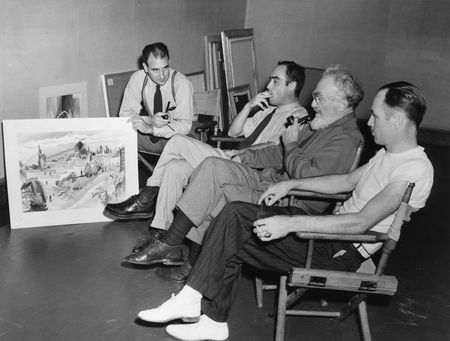
Jurors for the 1941 Texas General exhibition: Richard Foster Howard, John McCrady, Boardman Robinson, and W. Whitzle (L to R)

Jurors for the 1941 Texas General exhibition: (L to R) Richard Foster Howard, John McCrady, Boardman Robinson, and W. Whitzle

Education was a major focus of his tenure as director. Howard started free Saturday classes for children in 1937, began the school tour program with the Dallas Independent School District in 1937-38, established the education department with the hiring of Mrs. Alexandre (Maggie Jo) Hogue as the first full-time supervisor of education in 1939, and founded the Museum’s library in 1940.

During World War II, Howard retired from the Museum to join the army and was made a captain in the Army Field Artillery. He served in the European theater with distinction and returned to Germany in July 1946 as deputy chief of monuments, fine arts, and archives for the Office of Military Government for Germany (U.S.) He served as a Monuments Man until December 1948. For his service in returning works of art removed by Germans during the war, he was awarded the Order of the White Lion of Bohemia by the Czechoslovakian government and the Star of Italian Solidarity by the Italian government.

When Howard returned from Germany, he resumed his museum career, retiring as director of the Birmingham Museum of Art in 1975.

This Friday, learn even more about this special group of men and women with the opening of The Monuments Men movie.

Hillary Bober is the digital archivist at the Dallas Museum of Art.

Olympics in the Galleries

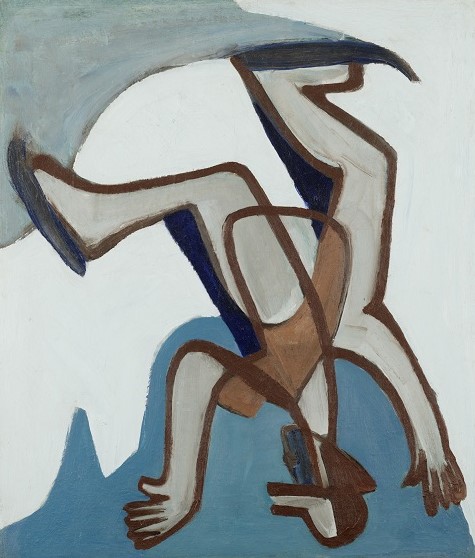
Ernst Ludwig Kirchner, Ice Skater (verso), 1929–30, oil on canvas, Dallas Museum of Art, The Eugene and Margaret McDermott Art Fund, Inc.

Ernst Ludwig Kirchner, Ice Skater (verso), 1929–30, oil on canvas, Dallas Museum of Art, The Eugene and Margaret McDermott Art Fund, Inc.

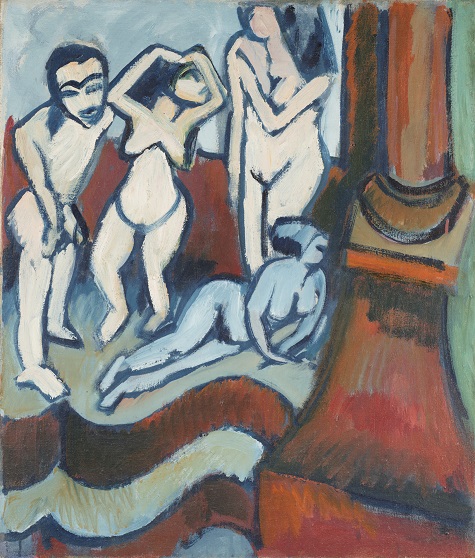
No, Ernst Ludwig Kirchner’s ice skater is not executing a complicated triple lutz, soon to be witnessed by billions around the world during the upcoming Winter Olympics in Sochi, Russia. He is permanently suspended in his upside-down state, having been painted on the verso of a canvas 17 years after the main painting on the other side, Four Wooden Sculptures, which depicts small primitive sculptures. Both sides of this expressionist artist’s painting can currently be seen (the skater requiring a bit of head tilting) in the DMA’s Behind the Scenes exhibition in the Conservation Gallery.

Ernst Ludwig Kirchner, Four Wooden Sculptures (recto), 1912, oil on canvas, Dallas Museum of Art, The Eugene and Margaret McDermott Art Fund, Inc.

Ernst Ludwig Kirchner, Four Wooden Sculptures (recto), 1912, oil on canvas, Dallas Museum of Art, The Eugene and Margaret McDermott Art Fund, Inc.

Kirchner’s interest in the movement and agility of the human body began early in his career with depictions of Berlin and Dresden cabarets and circuses. He later found inspiration in the bicyclists who practiced racing at Berlin’s Olympia stadium. The DMA’s skater was painted after the artist moved to the Swiss Alpine mountain town of Frauenkirch, near Davos, where he would spend the last 20 years of his life. The area remains a mecca for cold-weather athletics–Davos is now home to both the Kirchner Museum and the Winter Sports Museum.

In 1930, in his essay “On Life and Work,” Kirchner reflected: “Observation of movement has been for me a particularly fruitful source of creative inspiration. From that observation comes the increased awareness of life which is the source of all artistic works.” For Kirchner, most of his sports experience was only that–observation and then the subsequent depictions thereof. The skater and other works such as Ski-Jumpers (1927) and Ice-Hockey Players (1934) were executed after his physical and mental breakdown. Archery seems to be the one sport that the artist attempted himself. In 1933, he wrote to a friend, “My wife is quite a good shot, too. It is an educational sport which makes people take up beautiful attitudes.”

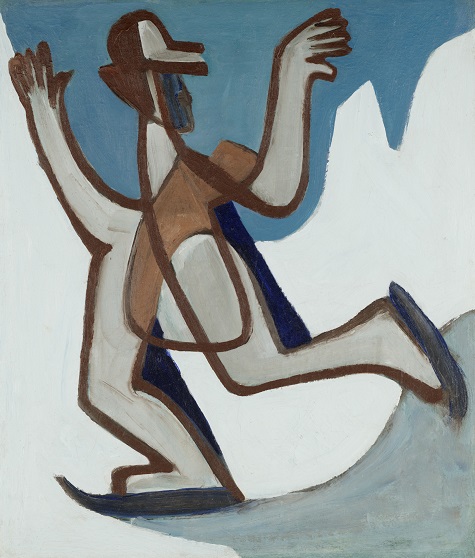
And here’s a view of Kirchner’s Ice Skater that doesn’t require turning the computer upside down.

Ernst Ludwig Kirchner, Ice Skater (verso), 1929–30, oil on canvas, Dallas Museum of Art, The Eugene and Margaret McDermott Art Fund, Inc.

Ernst Ludwig Kirchner, Ice Skater (verso), 1929–30

Read more about the appearance of athletic activity in Ernst Ludwig Kirchner’s work here.

Reagan Duplisea is the associate registrar, exhibitions at the DMA

Makers Made

jc 1
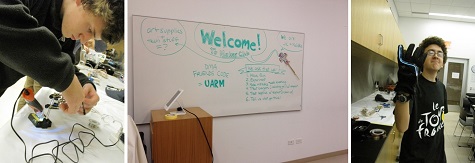
Now in its fifth month, Maker Club is a free drop-in program for ages 13-19 that asks, “What happens when art, science, and technology mix?” Capitalizing on the popularity of the Maker movement and incorporating elements from STEAM education, Maker Club is a combination between open studio and led workshop that explores a different theme each month.

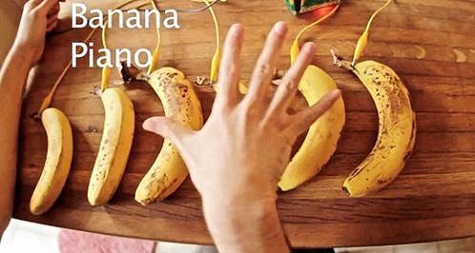
Image courtesy of makeymakey.com

Image courtesy of makeymakey.com

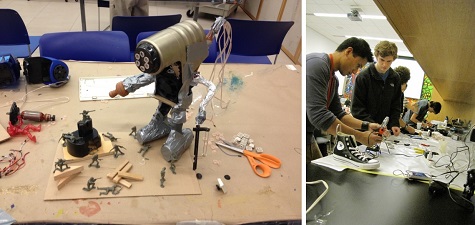
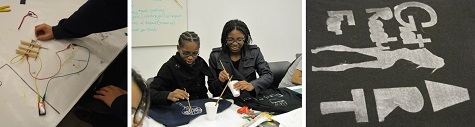
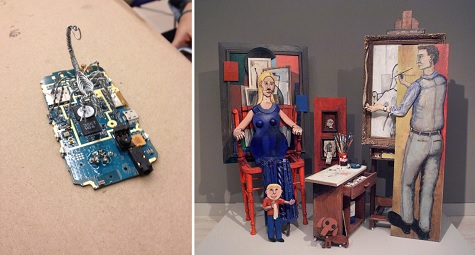
Experimentation and open-endedness rule the day as traditional art materials and tech-based supplies are thrown into the ring together. Past projects have included creating a Makey Makey mini-arcade, making found-object sculptures from discarded electronics, and using electro-luminescent (EL) wire and glow-in-the-dark screen-printing ink to make light-up clothing and accessories.
JC 2

Since no experience is required to take part, Maker Club also provides an opportunity for teens to learn and “level up” a variety of skills–from new artistic processes and creative problem solving, to circuit building, soldering and more. Group learning and collaboration is also a happy by-product of this process; oftentimes, the adult facilitators are learning just as much from the students as vice versa.
JC 3

So why have a maker-type program in an art museum? To me, the ideas aren’t mutually exclusive, but rather complementary. In the latest issue of Make magazine, Don Undeen, manager of the Metropolitan Museum of Art’s MediaLab, writes that all artists are, in fact, makers, and that museums have the potential to be a living forum where the two groups can talk to and inform one another.

There are even makers in the DMA’s collection, and those artists inspire the Makers Club members. Martin Delabano’s Family Portrait gave one teen the idea for this found-object sculture (pictured below). See how many makers you can spot in the DMA’s collection on your next visit.
JC 4

Martin Delabano, Family Portrait 1963, 2001, mixed media, Dallas Museum of Art, gift of Mr. and Mrs. Bryant M. Hanley, Jr., Lorine and David H. Gibson, and Sonny Burt and Bob Butler

JC Bigornia is the C3 program coordinator at the DMA.

Happy 30th Anniversary 1717 N. Harwood

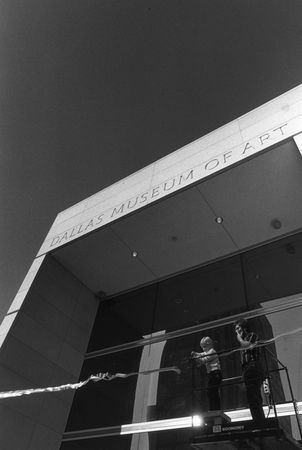
January 29, 1984, was a warm, clear day. At 12:15 p.m. a ribbon was cut . . .

Ribbon cutting ceremony on January 29, 1984 marking the grand public opening of the Dallas Museum of Art's new downtown location.

Ribbon cutting ceremony on January 29, 1984, marking the grand public opening of the Dallas Museum of Art’s new downtown location.

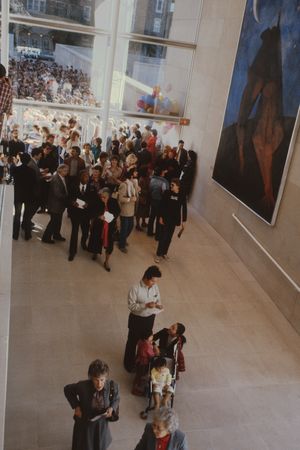
Visitors poured into the new galleries . . .

First visitors in the new museum, January 29, 1984

First visitors in the new Museum building, January 29, 1984

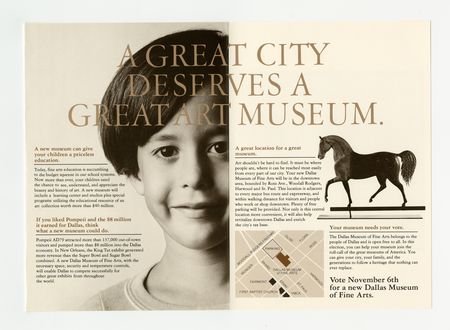
And the great city of Dallas finally got the great art museum it deserved.

Brochure with slogan "A great city deserves a great art museum" encouraging Dallas residents to vote "yes" in the 1979 bond election providing funds to build the new Dallas Museum of Art.

Brochure with the slogan “A great city deserves a great art museum,” encouraging Dallas residents to vote “yes” in the 1979 bond election to provide funds to build the new Dallas Museum of Art

Hillary Bober is the digital archivist at the Dallas Museum of Art.

Your Inner Edward Hopper

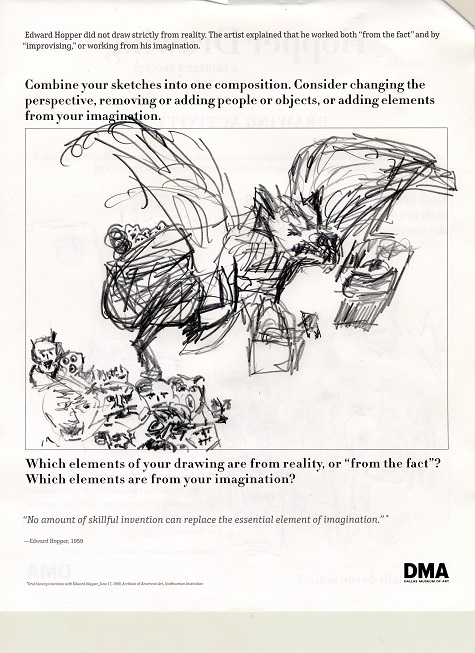
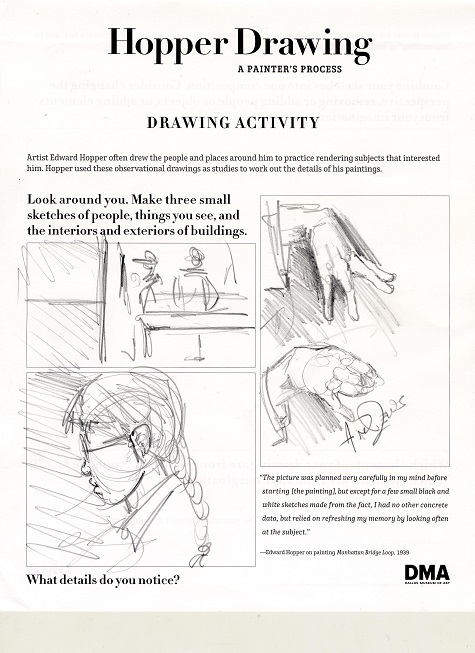
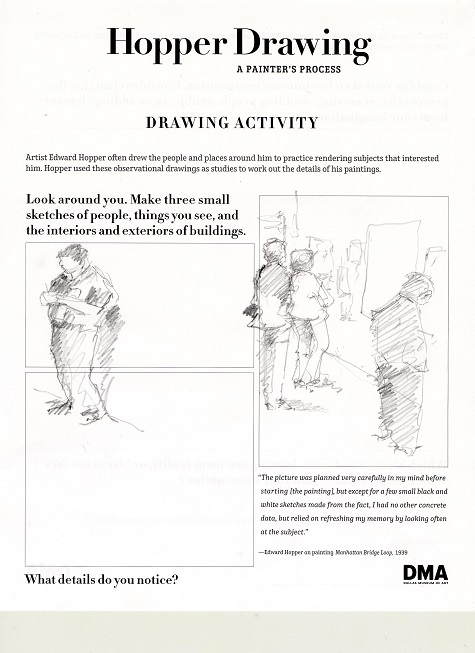
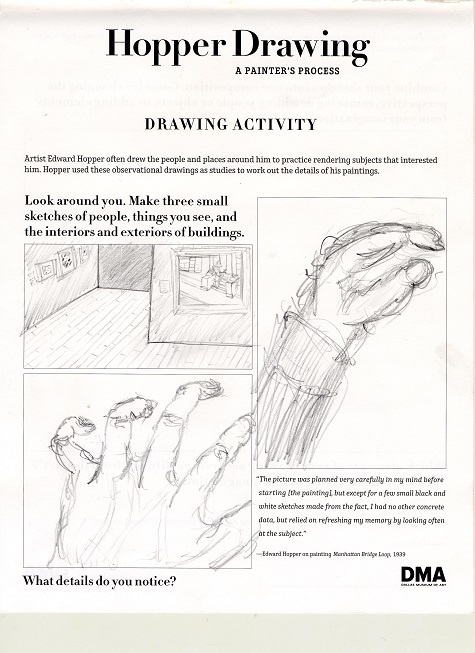
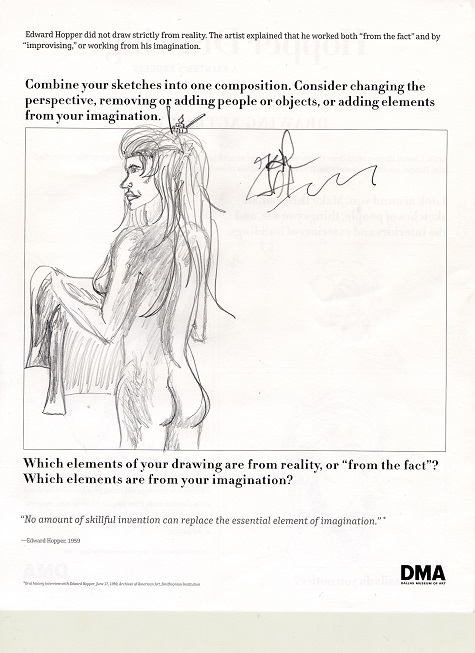
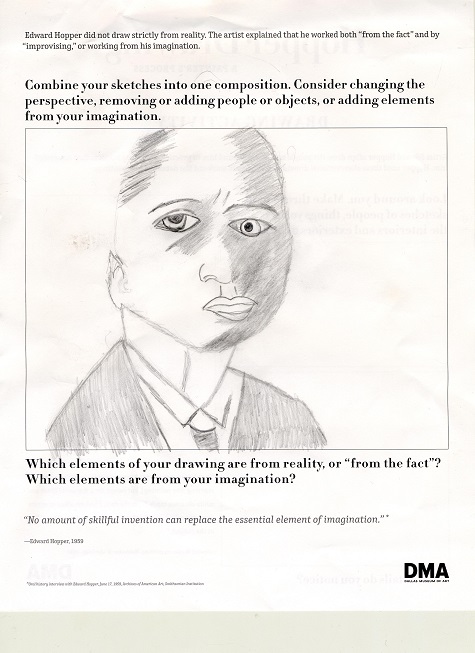
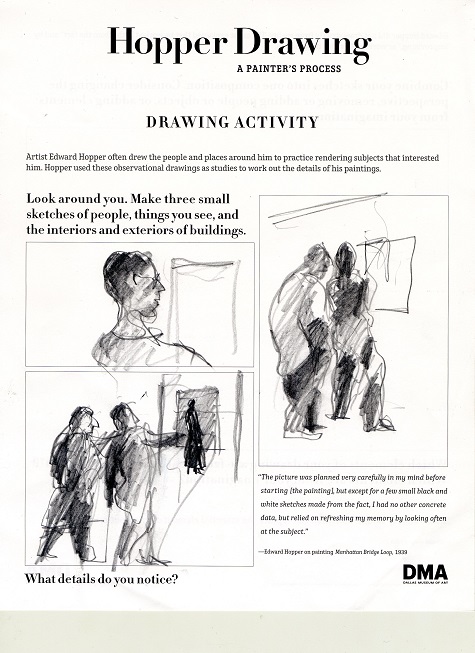
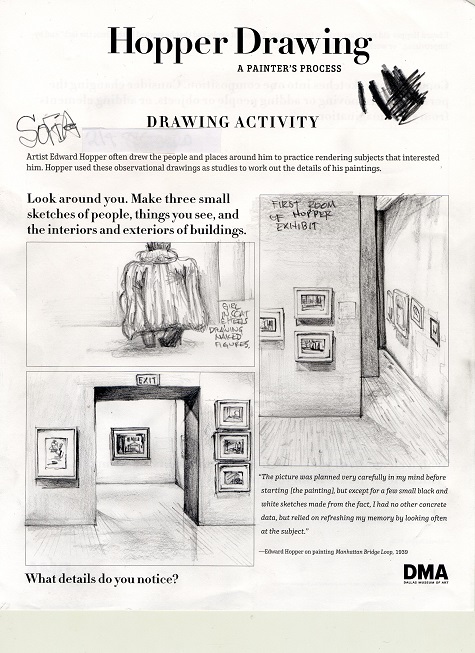
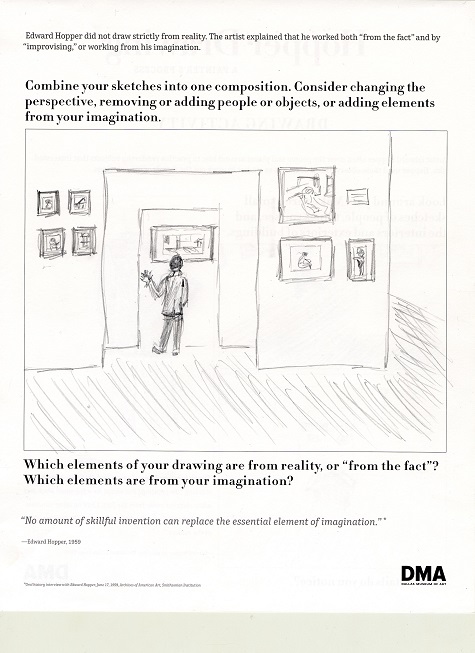
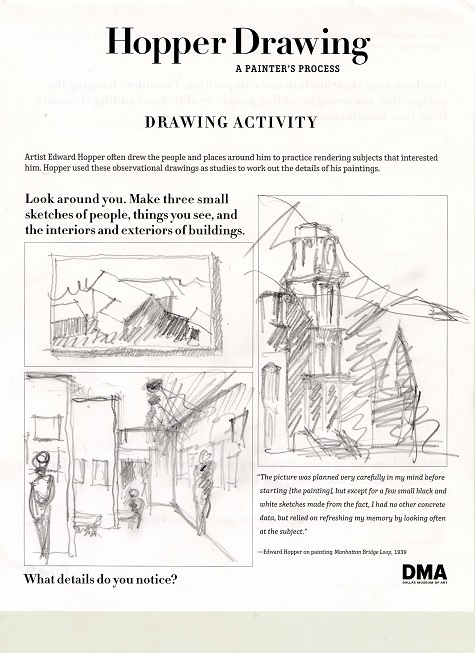
Hopper Drawing: A Painter’s Process show us in exciting detail the creative process of painter Edward Hopper. We see him working out the shapes and angles of spaces and subjects that interested him—subjects and spaces that would become the focal points of his famous paintings. When you visit the exhibition, look for little differences in his drawings and paintings, as Hopper often tweaked the composition’s point-of-view, added or eliminated figures, and used creative license to make visual departures from reality.

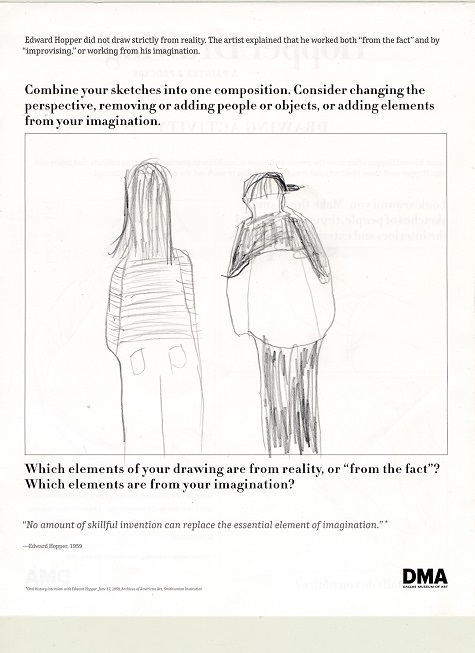
As you meander through his preparatory sketches and drawings, consider testing out your own creative process. Pick up a pencil and a clipboard at the exhibition’s entrance and sketch what you see: it could be an interesting corner, a Museum visitor in a fabulous hat, or a tree in Klyde Warren Park. Then, on the back of the page, channel your inner Edward Hopper and combine your observations into a composition that incorporates some of your imagination. As Edward Hopper once said, “no amount of skillful invention can replace the essential element of imagination.”

Check out the artistic process of other DMA visitors!

Andrea Severin Goins is the interpretation specialist at the DMA

Silver, Pearls, and Squirrels: The DMA’s Newest Acquisition

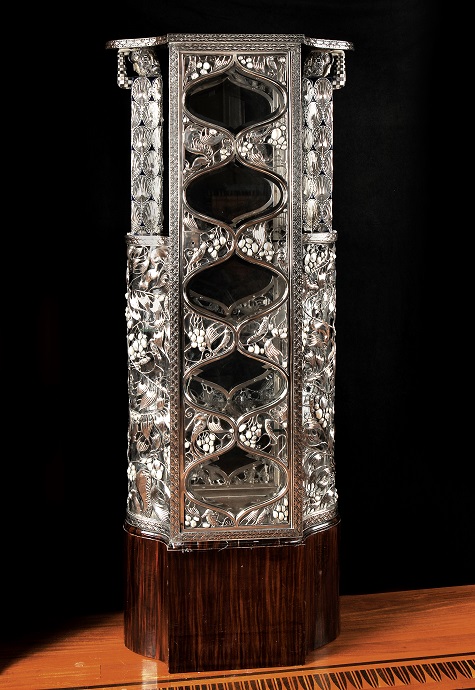
The Dallas Museum of Art recently acquired the Wittgenstein silver cabinet, a stunning example of early 20th-century design from the Wiener Werkstätte (Vienna Workshops, founded 1903), which was a major producer of lavishly designed silverwork. Intended to be a work of art as much as the objects housed within it, the cabinet (also called a “vitrine”) demonstrates a shift in design toward an elaborate ornamental aesthetic.

Silver Vitrine (for the 1908 Kunstschau), 1908, Wiener Werkstätte (Vienna Workshops), Vienna, Austria, 1903-1932, maker; Carl Otto Czeschka, Austrian, 1878-1960, designer; Josef Berger, Austrian, 1874/75-?, goldsmith; Josef Hoszfeld, Austrian, 1869-1918, Adolf Erbrich, Austrian, 1874-?, Alfred Mayer, Austrian, 1873-?, silversmiths; Josef Weber, dates unknown, cabinetmaker; Wabak, Albrech, Plasinsky, Cerhan (unidentified craftsmen), silver, moonstone, opal, lapis, lazuli, mother-of-pearl, baroque pearls, onyx, marble, ivory, enamel, glass, and Macassar ebony veneers (replaced), image courtesy of Richard Nagy Ltd, London, Dallas Museum of Art, The Eugene and Margaret McDermott Art Fund, Inc.

Silver vitrine (for the 1908 Kunstschau), 1908, Wiener Werkstätte (Vienna Workshops), Vienna, Austria, 1903-32, maker; Carl Otto Czeschka, Austrian, 1878-1960, designer; Josef Berger, Austrian, 1874/75-?, goldsmith; Josef Hoszfeld, Austrian, 1869-1918, Adolf Erbrich, Austrian, 1874-?, Alfred Mayer, Austrian, 1873-?, silversmiths; Josef Weber, dates unknown, cabinetmaker; Wabak, Albrech, Plasinsky, Cerhan (unidentified craftsmen), silver, moonstone, opal, lapis lazuli, mother-of-pearl, baroque pearls, onyx, marble, ivory, enamel, glass, and Macassar ebony veneers (replaced), image courtesy of Richard Nagy Ltd, London, Dallas Museum of Art, The Eugene and Margaret McDermott Art Fund, Inc.

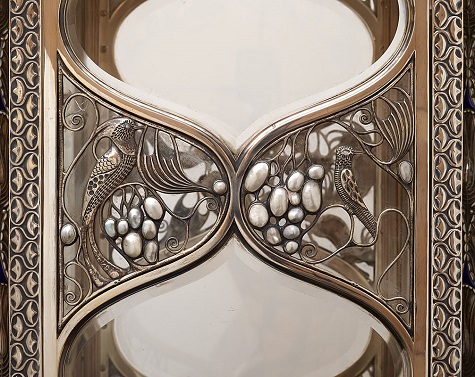
Currently on view in its own niche gallery on Level 2, and included in free general admission, the cabinet initially stuns visitors with its brilliant polished finish and begs for closer inspection, enticing viewers with brightly colored enamel, pearls, opals and other gemstones.
large_silver_vitrine_ 03

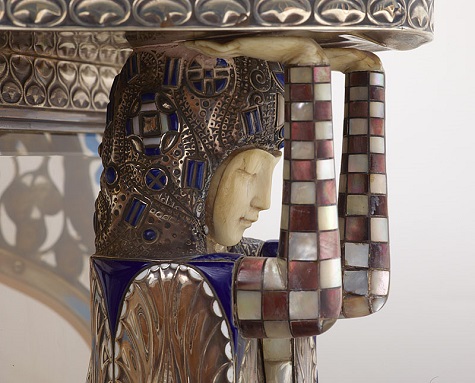
Two female figures, called “caryatids,” support the cabinet’s onyx top while emphasizing the verticality of the object and giving the flowing organic design an added sense of regal structure. Bright blue enamel and bold patterns draw the eye to these elegant figures.
large_silver_vitrine_ 08

If you look closely, you will see a wide variety of birds, some with elaborate plumage and others so small they seem to disappear among the leaves and pearls. Gemstones dot the eyes of the birds, giving them a spark of life despite their metallic forms.
large_silver_vitrine_ 05

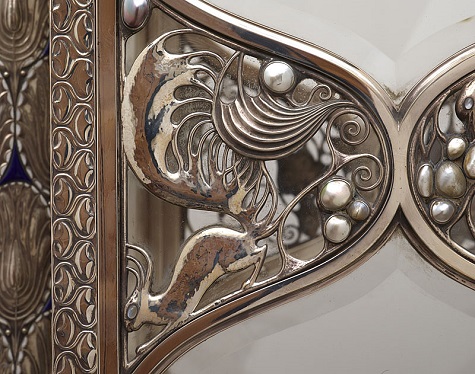
Squirrels frolic around the cabinet, hiding among the leaves and gathering pearls like acorns. Like the birds, their gemstone eyes enliven them and their differing poses suggest their distinct personalities. Further, the animals represent multiple breeds, including the red squirrel with tufted ears and the grey squirrel with rounded ears.

The cabinet by the numbers:
2 – caryatids
3 – cubic feet of wood
4 – interior glass shelves
5 – feet tall
10 – types of birds
14 – squirrels

If you look really closely, you will find other animals like lizards and mice!

Alexa Hayes is the McDermott Graduate Curatorial Intern for American and Decorative Art at the DMA.

Archives

Categories