Posts Tagged 'Dallas Museum of Art'


End of the Trail

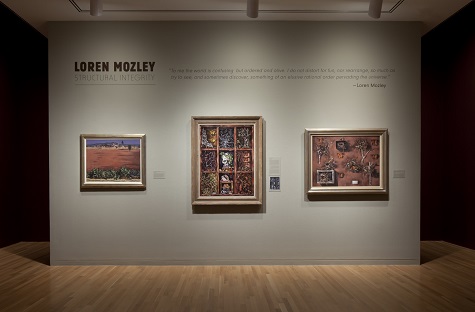
mozley sign

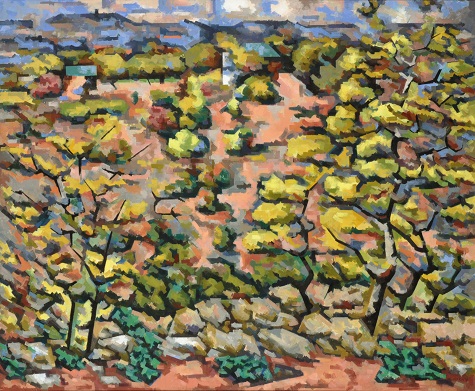
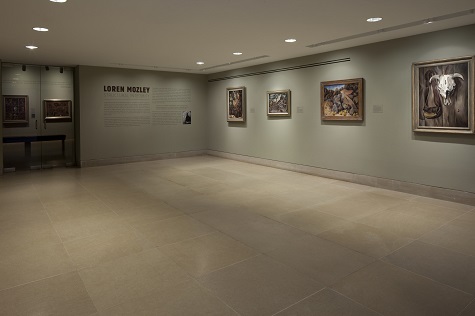
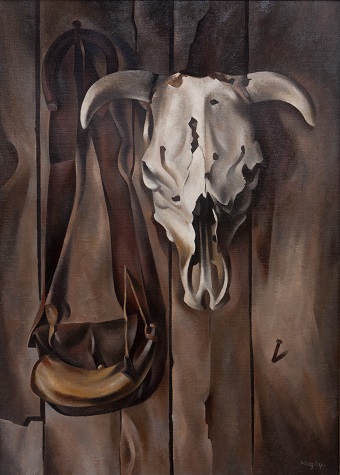
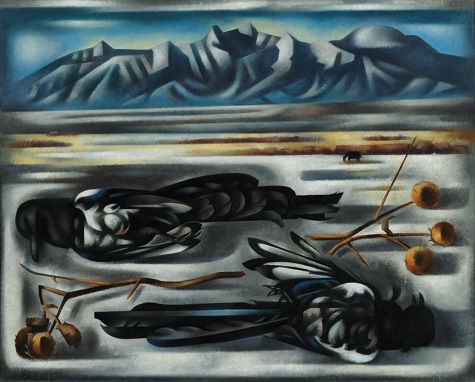
We are in the final days of the Loren Mozley: Structural Integrity exhibition. It is rare to see these works by the Texas modernist on view together, so don’t miss your opportunity to visit this free exhibition, on view through Sunday, June 30.

DMA’s Cinderella Inspires New Show

In honor of Thomas Sully’s birthday on June 19, we sat down with William Keyse Rudolph, the DMA’s former Associate Curator of American Art. Now the Milwaukee Art Museum’s Dudley J. Godfrey, Jr. Curator of American Art and Decorative Arts, William is currently organizing a retrospective exhibition of the artist. Sully (1783–1872) was born into a theatrical family in England but made a career in America, capturing in paint many of the leading actors and actresses of the time. The exhibition will feature many of these portraits as well as his “fancy pictures”–paintings made for mass appeal, with literary, artistic, and/or imaginary subjects. While at the DMA, William acquired Cinderella at the Kitchen Fire for the collection; the painting will be featured in the traveling exhibition and accompanying catalogue.
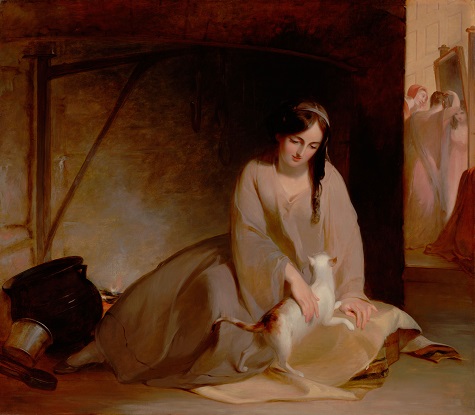
Thomas Sully, Cinderella at the Kitchen Fire, 1843, oil on canvas, Dallas Museum of Art, gift of the Pauline Allen Gill Foundation

Thomas Sully, Cinderella at the Kitchen Fire, 1843, oil on canvas, Dallas Museum of Art, gift of the Pauline Allen Gill Foundation

1. You were quoted in Art and Antiques magazine as saying that the DMA’s Cinderella at the Kitchen Fire took your breath away the first time you saw it. Why is this? Why do you consider this work Sully’s “finest fancy picture”?

For one thing, the picture is bigger than you expect. It’s nearly four feet by five feet. It was hanging on the wall of an art dealer’s office, surrounded by books, clutter, papers–and it just jumped out at me, even with all that distraction. It’s a beautifully painted, delicate picture, full of all sorts of grays and pinks that never reproduce well, but that are knock-out in person. And to be honest, it has this great big wonderful orange and white cat frolicking with Cinderella almost right at front and center. At that time, I had an orange and white cat, so the die was cast. I had to love it! And to be fair, former DMA director Jack Lane’s first words upon seeing an image of the painting were “Look at that cat!” He’s a cat person, too. We were also very fortunate that Mrs. Pauline Gill Sullivan, who had been a great benefactor of the DMA, saw the painting when we brought it to the Museum on approval and very graciously agreed to fund its acquisition. Besides having her own fine collection of European and American art, Mrs. Sullivan had a wonderful track record of making acquisitions available to the Museum, such as the commanding 18th-century portrait by Ralph Earl and a really dreamy late 19th-century Frank Duveneck painting of a woman in a red hat, so I was grateful that she responded so well to a big fairytale scene, which was out of her comfort zone in terms of the artist, size, and subject matter.

2. Did you have an interest in Sully and his paintings prior to this acquisition?

Yes. I had lived, worked, and gone to graduate school in Philadelphia for ten years before coming to the DMA, so I was well aware of Sully. He is so closely linked with the city of Philadelphia, where he worked for about sixty years, that it is almost impossible to spend time in Philly and not run into his work in virtually every cultural institution, from museums to libraries and hospitals.

3. How does it make you feel knowing that a key acquisition you made while working at the DMA will now be featured in Milwaukee’s exhibition and catalogue? Was it difficult to leave Cinderella behind?

I am, of course, thrilled! Cinderella at the Kitchen Fire actually gave birth to the show. After I acquired the work, my colleague Carol Eaton Soltis (a curator at the Philadelphia Museum of Art) and I began to talk about why this work was so interesting, which led to us proposing a show at the DMA that examined Sully’s total career: portraits as well as fancy pictures like this one. That show, which we began working on in 2005, was originally scheduled for 2009-2010 but ultimately didn’t happen due to timing and other issues. So we are really happy that years later the idea for the show was able to travel with me to Milwaukee and can now finally be seen here and then at the San Antonio Museum of Art. And yes, it was very difficult to leave Cinderella behind. You never, ever forget your first acquisition, and she was mine. I have missed her every day since I left the DMA, and I’m ridiculously excited to have her back with me for a brief time. If you ask gallery attendants at the DMA who remember me, they will tell you I used to go talk to her in the galleries. So my team here has been warned about that! I will probably burst into tears when she comes out of her crate and I see her again.

4. Since Sully also specialized in portraiture, is there any evidence that the figure of Cinderella was based on a real person?

Carol Soltis and I are convinced that the model for Sully was his daughter Rosalie, who posed for many of his works, several of which will also be in the show. She was a very talented painter herself, who died young.

5. Cinderella was painted when Sully was 60 years old. In your opinion, did it bring him the success and attention he hoped for in his later years? Did it help him attract new clients?

Yes and no. Sully hoped to sell the painting much faster than he did. He exhibited it several times in the Northeast and it was made into an engraving, but it took a few years to actually sell to a collector. One of the fascinating stories of this exhibition is how the fancy pictures like Cinderella functioned for Sully as a way to try to counteract the effects of economic crises on the portraiture market. Works like Cinderella were attempts to keep himself in front of the public, which he hoped would both result in sales of the subject pictures and remind clients that he could still turn it on when he wanted to.

6. A later version of Cinderella was (at least at one time) in the collection of Thomas Sully, Jr., of Naples, Florida. Is he a descendant of the painter? Did you ever track down this painting and will it be part of the exhibition and/or catalogue?

He is a descendant. I’ve seen an old reproduction of this picture, and I actually suspect it was the work of one of Sully’s grown children, whom he trained as artists. For that reason, I’ve never really worried about tracing it, as the DMA has the best one. What I’d be curious to see someday is another version of Cinderella done later that apparently shows her with the fairy godmother, but that one is completely obscure and only listed in Sully’s register. If anyone knows where it is, I would love to see it!

7. Do you know yet which works in the exhibition will be installed near the DMA’s Cinderella?

I don’t know exactly where the painting will go in the gallery, but it will be part of a section devoted to Sully’s fancy pictures. So she will live near an amazing picture of Little Nell Asleep in the Curiosity Shop from the Free Library of Philadelphia, which is based on Charles Dickens; and a gigantic, dramatic painting based on a scene from the early American novel The Pilot by James Fenimore Cooper that we’re borrowing from the Birmingham Museum of Art in Alabama. All three of them will be stunning together, and all were painted around the same time.

Thomas Sully: Painted Performance will be on view at the Milwaukee Art Museum October 11, 2013-January 5, 2014, and then at the San Antonio Museum of Art February 7-May 11, 2014. I hope some of the DMA’s visitors who love this painting will come see the show in one of these places to help celebrate this important painter and this really beautiful picture that the DMA family has been so quick to adopt as a favorite. And thank you to Sue Canterbury, Maxwell L.  Anderson, and all the DMA family for making her available for loan.

Reagan Duplisea is the Associate Registrar, Exhibitions at the DMA.

Off the Walls: Erminia and the Shepherds

The DMA’s galleries house art from around the world, and each work has a story. Olivier Meslay, the Associate Director of Curatorial Affairs and Barbara Thomas Lemmon Curator of European Art at the Dallas Museum of Art, shares insight about the recent acquisition Erminia and the Shepherds, by Guillaume Guillon Lethière. After you learn about the artist and the history of the painting, visit the work on Level 2 for free!

[youtube http://www.youtube.com/watch?v=1vYPk1dKg2c]

Swelling Seas

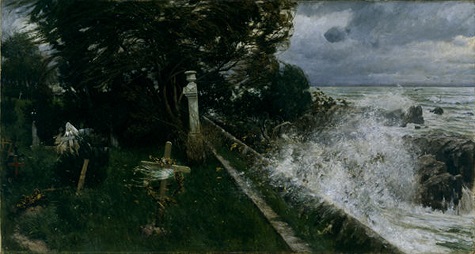
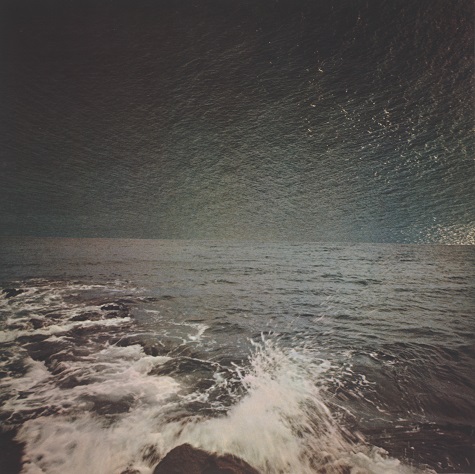
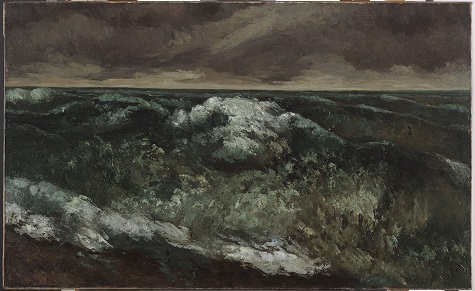
Not for the faint of heart, Neil Gaiman’s forthcoming novel, The Ocean at the End of the Lane, is wondrous, imaginative, and, at times, deeply scary. We found some frightening and powerful images of the sea in our collection that we thought were appropriate for Gaiman’s upcoming DMA Arts & Letters Live event on June 24, 2013, at the Majestic Theatre. Gaiman has announced that this will be his final U.S. tour, and as of today there are fewer than 100 tickets left to his talk and book signing! Visit the DMA’s website for more information and to buy tickets.

Adolf Hiremy-Hirschl, Seaside Cemetery (Seefriedhof), 1897, oil on canvas, Dallas Museum of Art, gift of J.E.R. Chilton

Adolf Hiremy-Hirschl, Seaside Cemetery, 1897, oil on canvas, Dallas Museum of Art, gift of J.E.R. Chilton

Gerhard Richter, Kunstverein, Richard Bacht, Margreff, Sea (Meer), 1972, yellow, red, blue, and black offset print on white lightweight cardboard, cellophaned and fixed on white lightweight cardboard, Dallas Museum of Art, Dallas Museum of Art League Fund, Roberta Coke Camp Fund, General Acquisitions Fund, DMA/amfAR Benefit Auction Fund, and the Contemporary Art Fund: Gift of Mr. and Mrs. Vernon E. Faulconer, Mr. and Mrs. Bryant M. Hanley, Jr., Marguerite and Robert K. Hoffman, Howard E. Rachofsky, Deedie and Rusty Rose, Gayle and Paul Stoffel, and two anonymous donors

Gerhard Richter, Kunstverein, Richard Bacht, Margreff, Sea, 1972, yellow, red, blue, and black offset print on white lightweight cardboard, cellophaned and fixed on white lightweight cardboard, Dallas Museum of Art, Dallas Museum of Art League Fund, Roberta Coke Camp Fund, General Acquisitions Fund, DMA/amfAR Benefit Auction Fund, and the Contemporary Art Fund: Gift of Mr. and Mrs. Vernon E. Faulconer, Mr. and Mrs. Bryant M. Hanley, Jr., Marguerite and Robert K. Hoffman, Howard E. Rachofsky, Deedie and Rusty Rose, Gayle and Paul Stoffel, and two anonymous donors

Gustave Courbet, The Wave, c. 1869-1870, oil on canvas, Dallas Museum of Art, gift of H.J. Rudick in memory of Arthur L. Kramer

Gustave Courbet, The Wave, c. 1869-70, oil on canvas, Dallas Museum of Art, gift of H.J. Rudick in memory of Arthur L. Kramer

Hayley Dyer is the Audience Relations Coordinator for Programming and Education at the DMA.

Open Office: Decorative Arts and Design

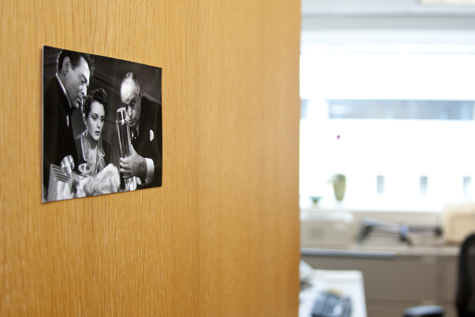
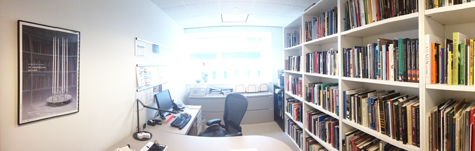
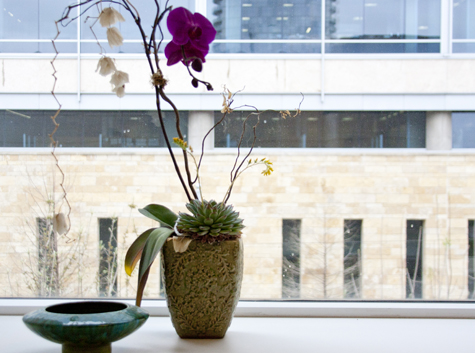
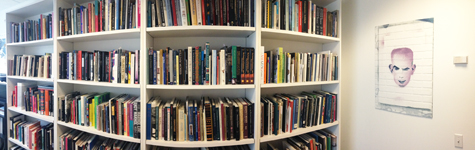
Kevin W. Tucker is the Museum’s Margot B. Perot Curator of Decorative Arts and Design. He joined the Museum in the summer of 2003 and has curated acclaimed exhibitions such as Gustav Stickley and the American Arts & Crafts Movement and The Fashion World of Jean Paul Gaultier: From the Sidewalk to the Catwalk. Take a peek inside Kevin’s DMA office:

13

IMG_3216

15

IMG_3217

14

Just One (Last) Look

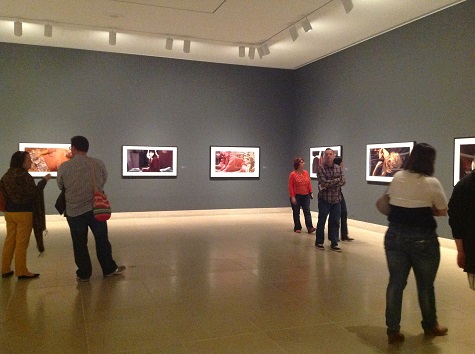
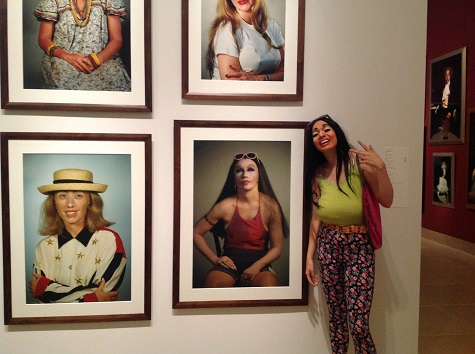
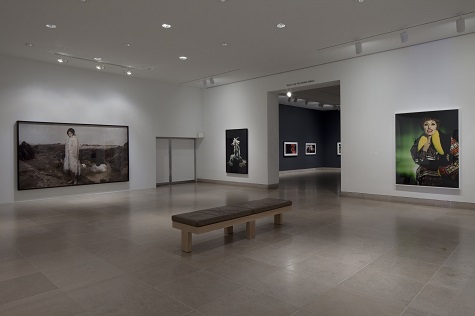
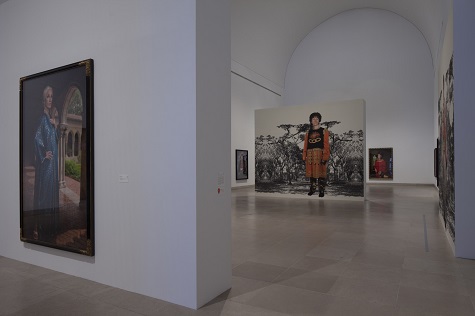
Cindy Sherman’s works are not self-portraits. Despite the fact that all her images feature one model, one photographer, and one make-up artist—all of whom are the artist herself—Sherman’s work constantly denies us access to the “real” Cindy Sherman. According to Gabriel Ritter, the DMA’s Nancy and Tim Hanley Assistant Curator of Contemporary Art, “for the most part, Sherman’s works are not introspective images that yield insight into the artist’s psyche. Instead, they are carefully constructed portraits that foreground the plasticity of identity and photography itself.”

Cindy Sherman is the artist who hides in plain sight.

Following is an excerpt from “Cindy Sherman” by Andy Grundberg in Art in America, July 18, 2012:
Of course, Sherman is in her photographs, literally, or at least in the vast majority of them, but the theme of her work is often said to be one of absence: what we see is not Sherman but a repertoire of roles, each reflecting a culturally determined possibility of female identity. This is essentially what has made her a poster child for a coterie of postmodernism’s theory-driven critics.

Yet the emptying out of Sherman as an individual within her work strikes me as misguided and, given the development charted in this emotionally powerful exhibition, just plain wrong…. It has long been apparent…that Sherman’s impetus in making new pictures stems in large part from her reaction to the critical reception of the last batch, her urge to avoid being typecast both as an artist and as a woman.

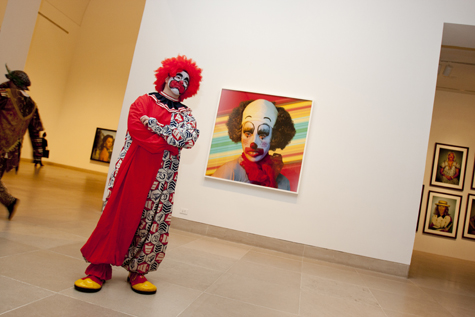
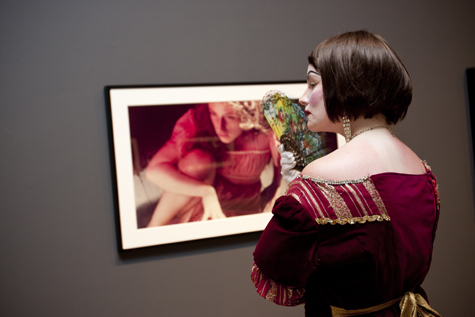
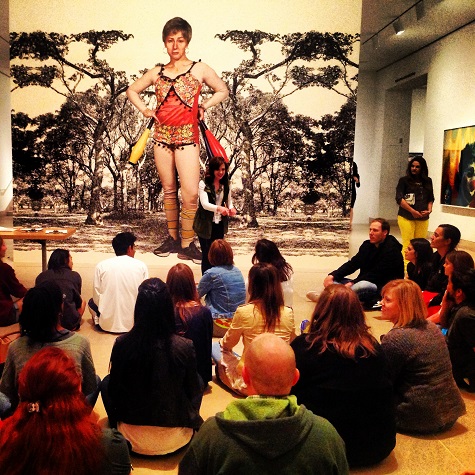
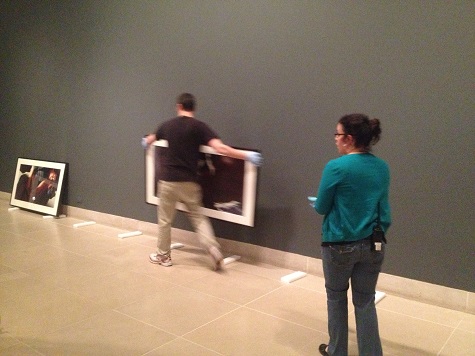
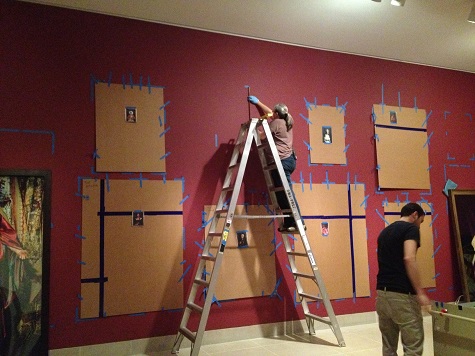
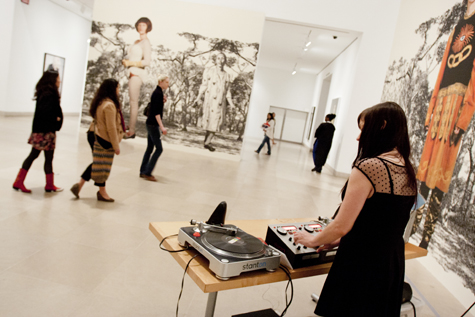
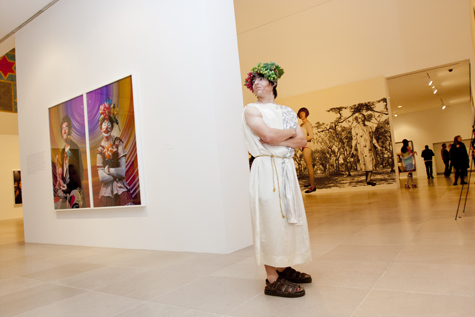
The acclaimed nationally touring exhibition closes this weekend at the DMA. See the many guises of  Cindy Sherman through Sunday, June 9. Below are a few images from the exhibition, from installation through today.

Jeffrey Grove is the Senior Curator of Special Projects and Research at the DMA.

Two Nights in Greece

On June 26 and 27, I will offer a two-session course on the themes raised by our current exhibition The Body Beautiful in Ancient Greece: Masterworks from the British Museum.

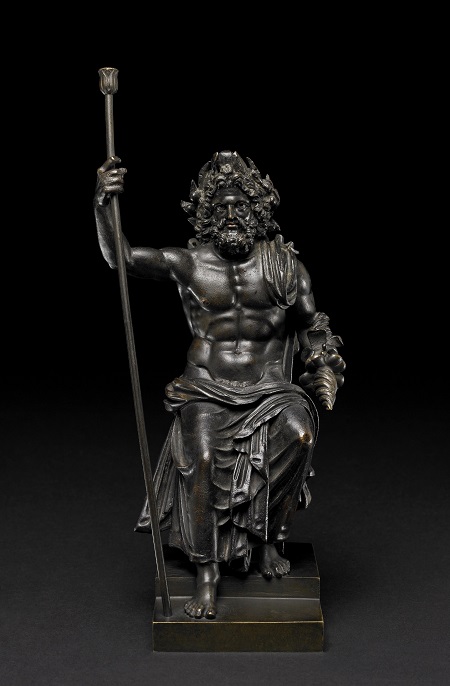
Bronze statuette of Zeus Roman period, first–second century AD, said to be from Hungary  9 5/16 x 4 5/16 x 4 3/4 in.  GR 1865,0103.36 (Bronze 909) © The Trustees of the British Museum (2013). All rights reserved.

Bronze statuette of Zeus
Roman period, first–second century AD, said to be from Hungary,
© The Trustees of the British Museum (2013). All rights reserved.

Objects from Greek and Roman antiquity can be challenging to decipher. What the classical world took for granted is no longer part of our language, either spoken or visual. The polytheistic religious framework that defined daily existence seems alien to a modern Western observer, for whom the myths of ancient Greece are complex, overlapping, and in many cases hard to understand.

Over the course of two evenings, I hope to make these artworks of some two millennia ago feel as accessible as possible to a modern viewer, and to share observations from a lifetime of handling and studying classical antiquities.

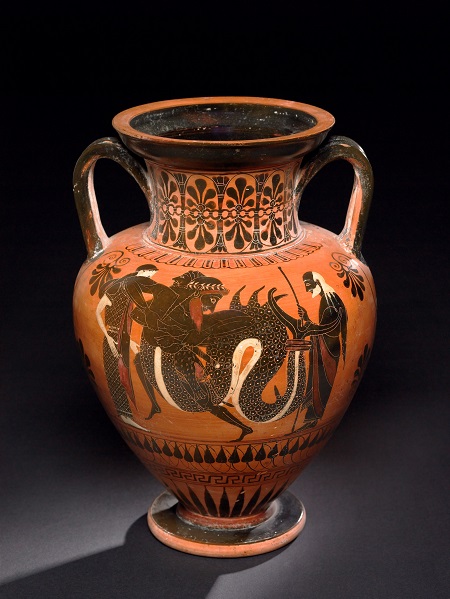
Black-figure neck amphora, Greek, 520–510 BC, from Vulci, Italy, GR 1836,0224.106 (Vase B224), © The Trustees of the British Museum (2013). All rights reserved.

Black-figure neck amphora, Greek, 520–510 BC, from Vulci, Italy, © The Trustees of the British Museum (2013). All rights reserved.

We’ll tackle the objects in the exhibition by medium, to give insight into the creative choices made by artisans working in gold, silver, bronze, marble, and terracotta, and make our way through the stylistic transitions of the Geometric through the Hellenistic periods.

By the end of these two nights, I hope to have given you what you need to take in not only the antiquities in the DMA’s galleries but also any others you may encounter in the future.

DMAReward_Small

Visit the DMA’s website for additional information on An Illustrated Course: The Body Beautiful in Ancient Greece and to register for the two-night event. DMA Friends have the opportunity to attend the course for free; earn 6,500 points and redeem that credit for the Illustrated Course reward.

Maxwell L. Anderson is The Eugene McDermott Director at the DMA.

DMA Athletes in Training

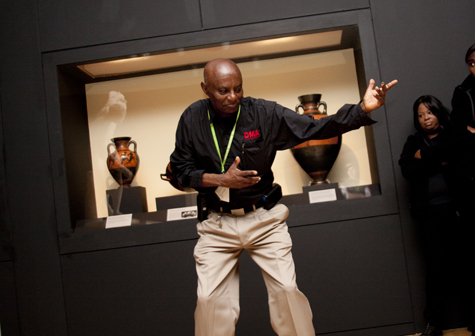
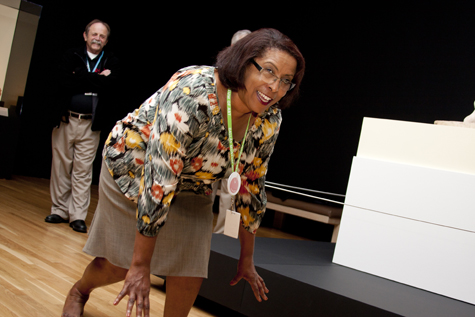
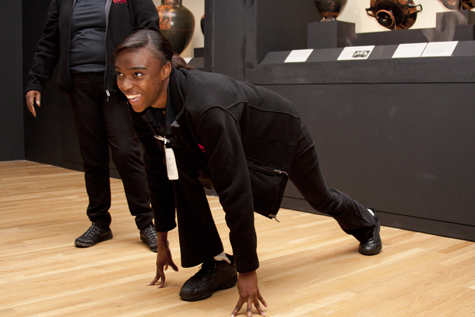
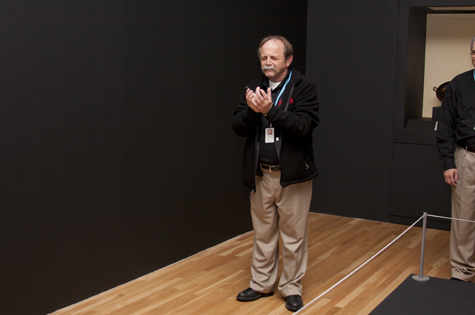
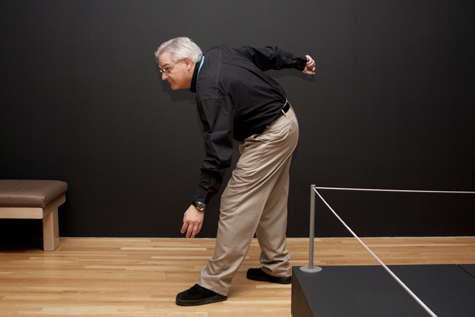
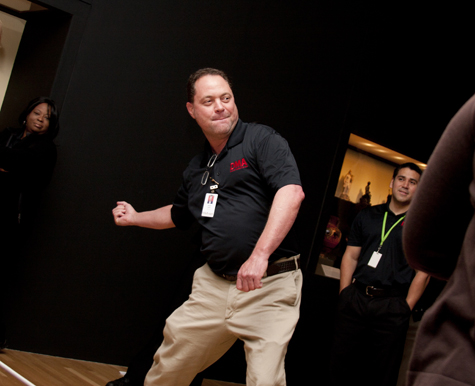
One of my favorite parts of my job is that I get to spend one morning every month talking with our fantastic Gallery Attendants about works in the collection. So far, we have discussed European art, shared Personal Responses to works in the collection, written Facebook profiles for photos in the Cindy Sherman exhibition, and compared three vastly different works in our American collection. Last week, we spent time in The Body Beautiful in Ancient Greece: Masterworks from the British Museum.

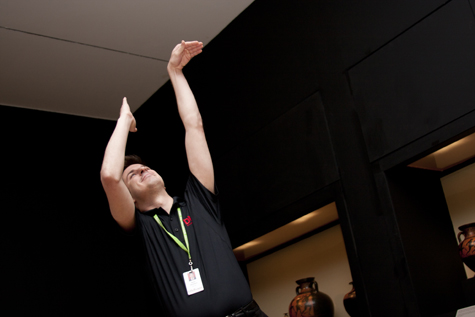
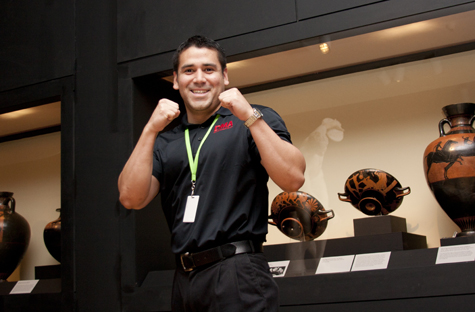
After looking at the discus thrower, the Gallery Attendants were asked to divide into teams of two. Each team had to select a sport and strike a pose that epitomizes an athlete participating in that sport. The rest of us had to guess which sporting event they were re-creating. Their poses were creative, clever, and funny, and we couldn’t resist sharing them with you!

Shannon Karol is the Manager of Docent and Teacher Programs at the DMA.
Hello, Summer!

Memorial Day marks the beginning of summer. Enjoy a fun, free (and cool) summer at the DMA with free general admission every day during Museum hours and free activities every week. Check the DMA’s website in the coming weeks for details!
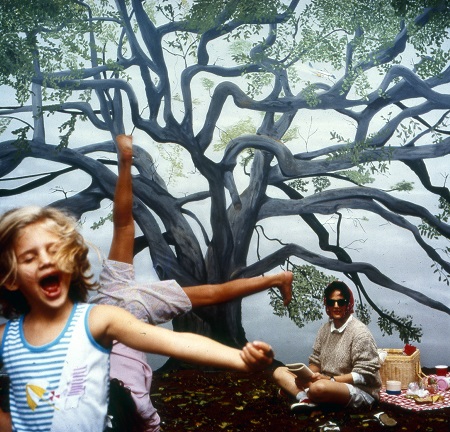
Nic Nicosia, Vacation, 1986, cibachrome photograph, Dallas Museum of Art, gift of Meisel Photochrome Corporation

Nic Nicosia, Vacation, 1986, Cibachrome photograph, Dallas Museum of Art, gift of Meisel Photochrome Corporation

Over and Out

Today is the last day at the Dallas Museum of Art for the 2012-2013 McDermott Interns. Pilar and I have had a great time working together for the Family, Access, and School Experiences team and writing for Canvas. We will miss the DMA and wanted to reflect on our time here.

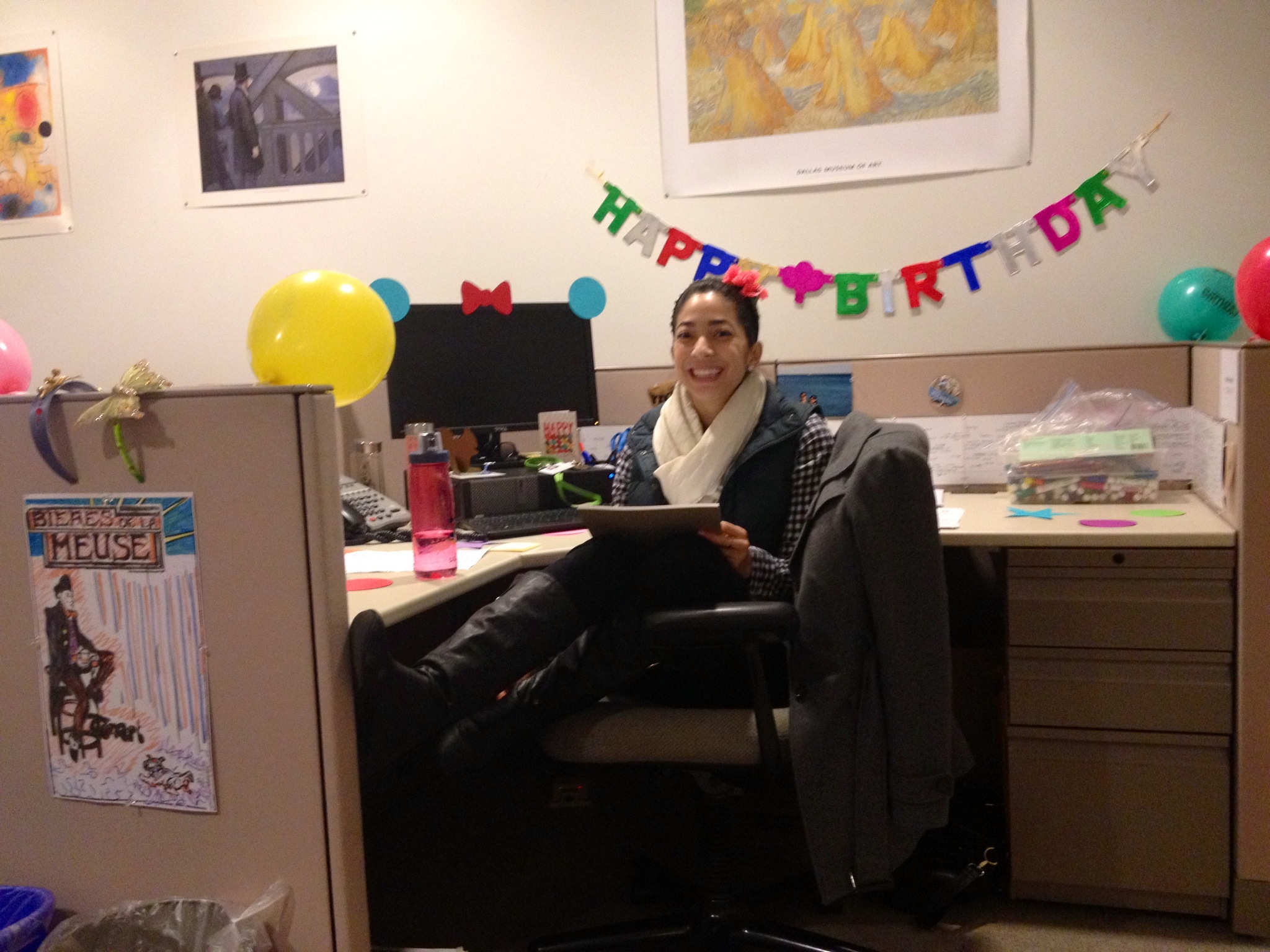
Pilar celebrates her birthday at the DMA!

Pilar celebrates her birthday at the DMA!

3 things I learned at the DMA:

  1. I have learned that elementary school girls are obsessed with One Direction! In spending lots of time teaching our Go van Gogh outreach programs, I’ve gained quite an insight as to what’s cool these days (hint, it’s not me).
  2. While I am a McDermott education intern, there are also four McDermott curatorial interns with whom we share office space. I have learned so much about the curatorial side of the museum field through daily interactions with these awesome future curators!
  3. I have had the amazing opportunity to learn how to teach in a formal classroom setting through Go van Gogh. This experience has allowed me to understand the differences in practice between formal and informal instruction styles.

Favorite part of the internship:

I was able to develop a new Go van Gogh curriculum that is based on American History as told by DMA artworks. I not only learned a ton about the editing and review process that takes place at a large institution, but I also had a great refresher course on American history!

Post-internship plans:

I will be doing lots of travelling this summer: Colorado, New Mexico, Amsterdam, the south of France, and Spain! After which, I’ll end up in Vancouver where I will be starting in the Master of Museum Education program at the University of British Columbia.

Pilar Wong
McDermott Intern for Community Teaching

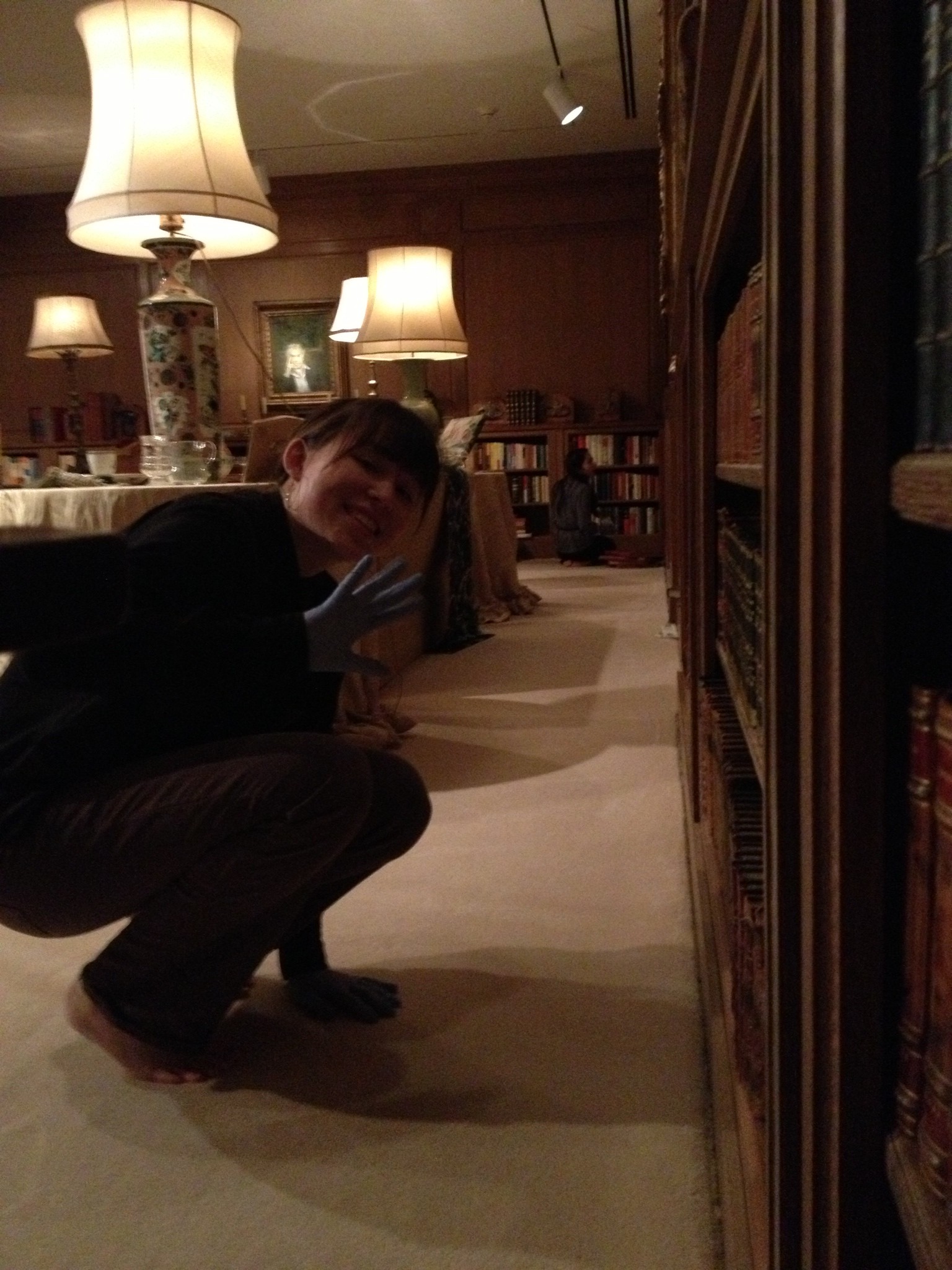
Alex bids farewell from Emery Reves' study

Alex bids farewell from Emery Reves’ study

3 things I learned at the DMA:

  1. I’ve really enjoyed working with our docent corps of about 100 volunteers. They are an enthusiastic, intelligent, generous bunch. I’ve learned a great deal from the DMA docents, and I will miss working with them.
  2. As the Gallery Teaching Intern, I toured mainly with elementary school students. That age group consistently offered refreshing interpretations of works of art, and their enthusiasm and frankness is something to which more adults, myself included, should aspire.
  3. I’ve definitely learned the importance of flexibility and openness. Some of the best experiences I’ve had have resulted from spontaneous changes – whether filling in last-minute for a docent or allowing visitors to choose what they want to see and discuss.

Favorite part of the internship:

I loved writing docent guides. These guides help introduce the docents to special exhibitions and the DMA’s permanent collection. They offer art historical and contextual information, as well as ways to interpret these shows for a variety of audiences. It combines my interest in research and art history with my passion for education.

Post-internship plans:

I’ll be sticking around Dallas for June and July. Then I will embark on my version of The Great American Roadtrip as I head back to the east coast. In the fall I will begin the Arts in Education master’s program at the Harvard Graduate School of Education.

Alex Vargo
McDermott Intern for Gallery Teaching

Thank you to everyone who has helped make this experience so fulfilling. Have a great summer!

Sincerely,
2012-2013 McDermott Interns


Archives

Categories