Posts Tagged 'Center for Creative Connections'


Seldom Scene: School Dais

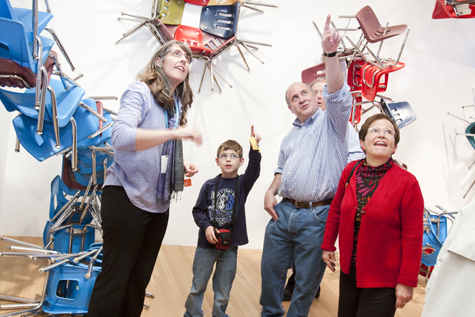
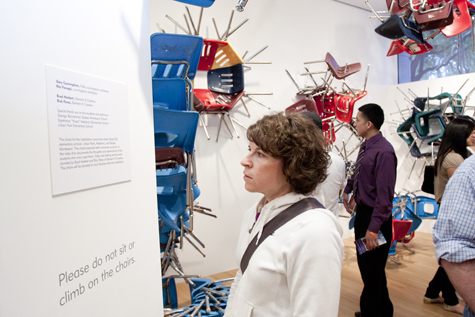
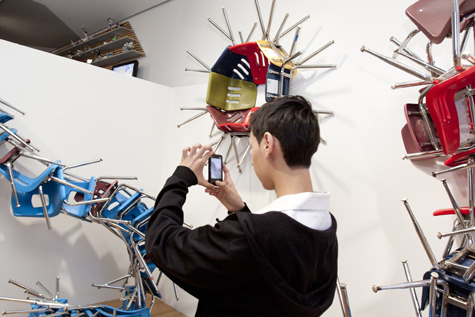
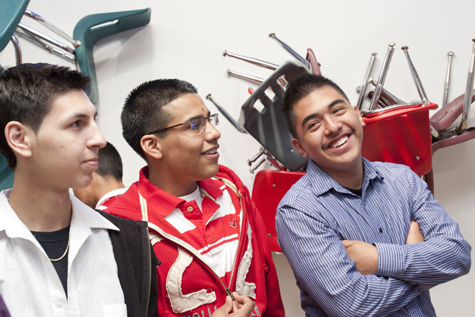
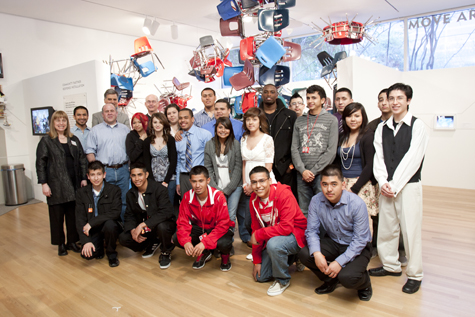
With school back in full swing we thought we would showcase the students from Dallas ISD’s Skyline Architecture Cluster who created Sculpting Space: 299 Chairs. See the installation in person in the Center for Creative Connections on Level 1 through mid-November.

Teaching for Creativity

The beginning of another school year can be very exciting because there are many things that are “new.”  We may experience a new teacher, new students, new friends, new clothes, new school supplies, new bulletin boards, and more.  As we launch ourselves into a new school year at the DMA, we also launch a new blog series called Teaching for Creativity.  The inspiration for this new series comes from various sources, including the DMA’s Center for Creative Connections; our collaborative work with UT Dallas professor and creativity specialist, Dr. Magdalena Grohman; and the 2011 Summer Seminar: Teaching for Creativity, a professional development experience for K-12 educators.

Over the next year, look for monthly posts that inspire us to teach for creativity, encouraging open minds and creative behavior in ourselves, our students, and our colleagues. Teaching for Creativity blog posts will:

  • feature classroom and museum educators to share creative lessons and approaches to teaching that nurture observation skills, curiosity, imagination, and metaphorical thinking,
  • draw attention to great books and websites for creativity resources, and
  • highlight creative beings from the past and present who may offer us new ways to look at the world.

For this inaugural post, I am excited to introduce you to Shadan Price.  Shadan teaches art to students ages 3-5 at El Dorado Montessori in Frisco, Texas and joined us in June for the 2011 Summer Seminar.  Shadan shares with us the lesson plan that she developed during the Seminar and the results of trying it out in her classroom.

During the Teaching for Creativity seminar I attended, our goal was to create a lesson plan that focused on creative thinking. The lesson I came up with did that but was also simple enough for the young children that I teach to understand. In summary, my lesson had them discussing how certain shapes (we focused on circles, squares, triangles, and rectangles) and how they are used in artwork and the real world. We looked at a few art images (ex: Van Gogh’s “Starry Night”, Klimt’s “The Kiss”) and the students pointed out those shapes in the images. We then looked at images of everyday objects (ex: buttons, tables, pizzas, etc.) and the students talked about what shapes those were. The next step was brainstorming. For each shape the class thought of objects that those particular shapes could be. This was really fun for them! I didn’t want them to brainstorm for too long though because I wanted them to still have a few more ideas for the next part of the lesson which was to draw each shape on a piece of paper and then create an object (real or imaginary) out of that shape. I didn’t put any restrictions on what they could draw. I just told them no matter what it was, even if it wasn’t a real thing, they had to explain to me what the drawing was. For the most part the students really enjoyed this but I could immediately tell which students were not really comfortable making something completely out of their imaginations as opposed to something a little more guided. This was a good project to see who I need to work with more on their creative-thinking skills.  Overall this was a good project.  The students loved brainstorming and drawing their own creations!

[slideshow]

These are a few examples of what the students came up with for each shape:
TRIANGLE – almost all the students chose a slice of pizza….if I did this project over again I might tell them not to do that so I could see what else they came up with. A few others were roofs, mountains, cat ears, and noses.
SQUARE – iron man, robot, mirror, window, bubble machine, cage, bookshelf, frame, butterflies, purses, books, and dinosaurs.
CIRCLE – vacuum, wheels, monkey, balls, DVDs, cookies, lollipops, a “purse maker”, pancakes, rings, and buttons.
RECTANGLE – monster, table, frame, door, fluorescent lights, microwave, baskets, rocketships, and sharks.

I want to express great thanks to Shadan for sharing her lesson with us.  Follow this link to download the lesson: SHADAN_CREATIVE_LESSON.

What creative experiences are happening in your learning environment?  Share them here and look forward to the next Teaching for Creativity post in September.

Nicole Stutzman
Director of Teaching Programs and Partnerships

C3 Artistic Encounters: Giant Constructions

There are things I expect to see coming into work on a Monday, like empty galleries, art being moved, staff shuttling to and from Starbucks for morning coffee.  One thing I definitely did not expect to see this past Monday was a 12-foot sculpture of a rocket ship made of chicken wire, burlap, tape, and felt lurking in the corner of our C3 Tech Lab space.  Talk about surprising!

The Rocket Ship is a communal artwork created by visitors during our 9×9 C3 Artistic Encounters program last Saturday. What I love about the Rocket Ship, which looks like something from a Michel Gondry movie or a cousin of a Claes Oldenberg soft sculpture, is that it is a realization of visitor interpretations of a work of art.

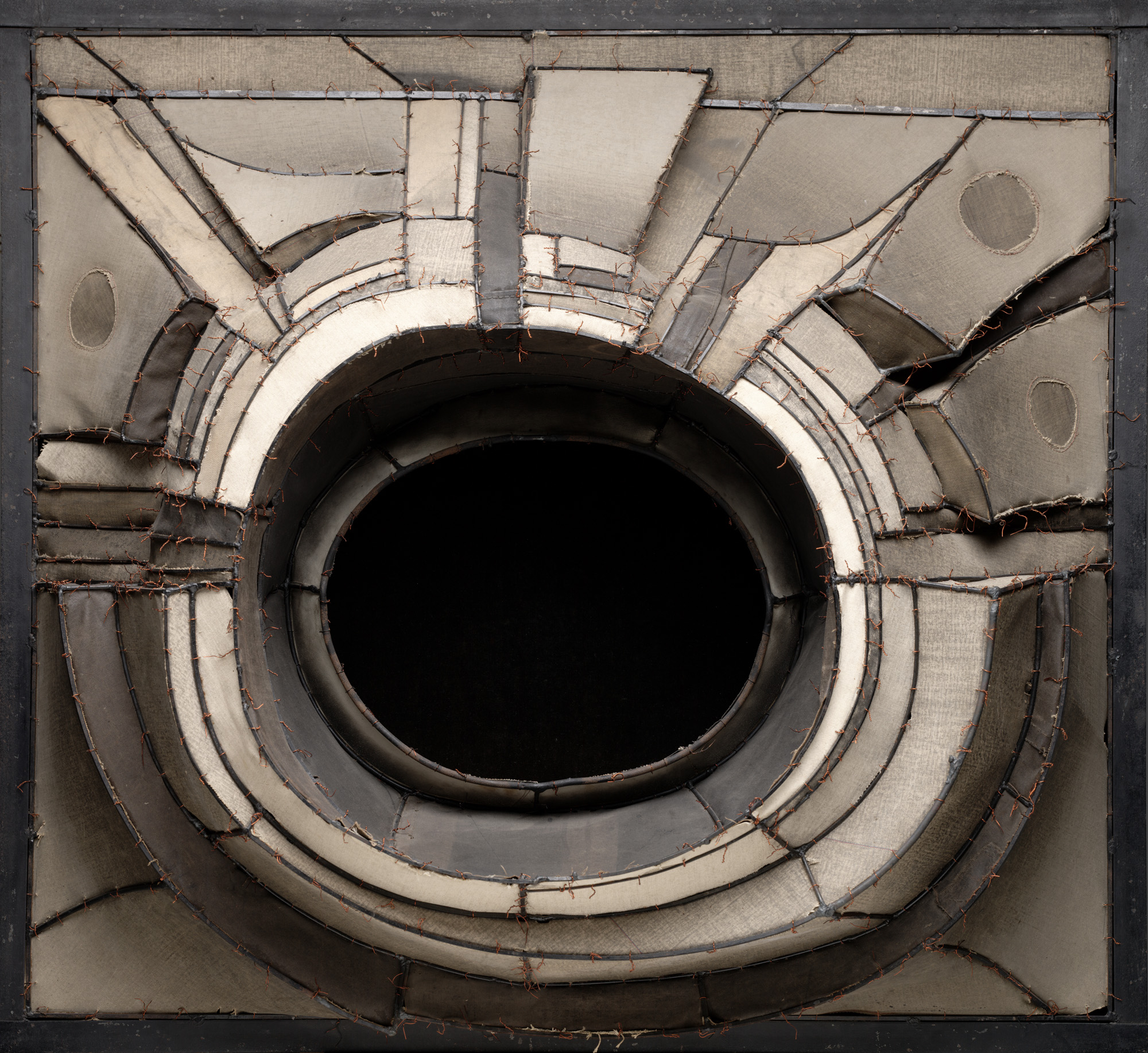
In the Center for Creative Connections, we have a metaphor response wall where visitors can leave their thoughts about Lee Bonteou’s Untitled (35).  One of the prompts visitors respond to is: “If this work of art was part of something larger, what would it be?”  Multiple responses to this prompt have been “Rocket Ship.”  So, as part of our new 9×9 Programing initiative, C3 staff teamed up with artist Rene Muhl to make this response real on a very large scale.  Kari Laehr, Center for Creative Specialist, worked with Susan Diachisin, Director of the Center for Creative Connections, and is excited to share her rocket ship-making experience with us.  Here’s Kari:

Last weekend in the Center for Creative Connections, we launched our new 9×9 Programing, specifically our third consecutive program called Giant Constructions. The program was based on Bontecou’s Untitled (35), currently found in our gallery and, I must admit, one of my favorites in the space!


Lee Bontecou, Untitled (35), 1961, welded metal and canvas, Dallas Museum of Art, gift of the Meadows Foundation, Incorporated, 1963.92.FA.

This work of art encourages participants to contemplate space through a mysterious dark opening that simultaneously toys with depth perception and confrontational elements. Participants were encouraged to create a large-scale sculpture that would act as an extension of the Bontecou piece.  We had a wonderful time with Rene discussing Bontecou’s work and trying to answer questions about the artist’s intent, types of materials used, and other interactive prompts.   As Amy mentioned above, the main prompt was “If the piece were a part of something larger, what would it be?”  Many responses to our interactive prompt came back with the same answer – ROCKET SHIP!  With the help of artist Rene Muhl, imagination became reality as our rocket ship took shape.

[slideshow]

The program lasted four hours and was a casual come-and-go process. As you can see, everyone had a great time adding to our Rocket Ship.  There are many ways to interact with art, and we look forward to continuing to promote new and exciting programs through the rest of 9×9 in July!

Kari Laehr
Center for Creative Connections, Specialist

Amy Copeland
Coordinator for Go van Gogh Outreach

Autism Awareness at the DMA: A Father’s Perspective

[slideshow]

Four times a year we host an Autism Awareness Family Celebration at the Museum for children with autism and their families. Families have fun together at this special event in the Museum’s Center for Creative Connections for two hours before the Museum opens to the public.

In April, we recognized Autism Awareness month with an April 2 Autism Awareness Family Celebration in collaboration with the Dallas Symphony Orchestra. The morning event focused on music as Jaap van Zweden, Music Director of the Dallas Symphony Orchestra, and his wife, Aaltje van Zweden-van Buuren joined us. A Dallas Symphony Orchestra string quintet performed, and Jaap van Zweden talked about movement as he waved a colorful streamer in the air along with children. Aaltje van Zweden-van Buuren shared a compelling story about her family’s experience using music therapy with her son, an individual with autism.

I had the joy of talking with an enthusiastic and involved father at our recent event; Denny Singh is clearly his son’s number one fan.

Denny and Sohan

What three words would you use to describe your family?
After my son’s diagnosis:  strongER, as in “what doesn’t kill you makes you . . . “; closER, as in redefining the word “love” and spending more time together; and MORE appreciative of what many take for granted, like our son playing with a friend.

What types of activities does your family enjoy together?
Shopping while letting my son take photos of stores (his current obsession), visiting museums and the aquarium and zoo, going to water parks, and hanging out with his beloved cousins.

What is unique about your son?
His quirky, outgoing personality (e.g., asking people about their rings and jewelry), his grasp of technology and working a smartphone better than his parents, his empathy and ability to care, and his effort to overcome challenges and inspire us to be better people while guiding us on this unexpected journey.

What do you like most about the Autism Awareness Family Celebrations? 
To borrow from a Visa commercial:
Admission to the Autism Awareness Family Celebrations: Free
Additional expenses like supplies for crafts and fun activities: Free
Creating a safe environment where families and their children are welcomed, supported, and valued: PRICELESS

Have the events changed your perception about visiting an art museum with your family?
The events have empowered our family to be more involved in the community and not be afraid of activities or environments because of autism. And just as important as the event are the tickets given to families for a follow-up visit to the DMA any other day like any other family.

The most recent Autism Awareness Family Celebration was focused on music. What is the role of music in your family? 
Music plays an important role in our family, especially for our son. He loves music and all instruments, which he knows by heart (confusing a clarinet with a bass clarinet is a no-no!). While riding in the car, he asks to listen to a specific CD over and over again. Other parents tell me this isn’t just an autism thing, although his memorizing eighteen songs by number is! For those with autism, music has been shown to teach language and improve overall functioning.
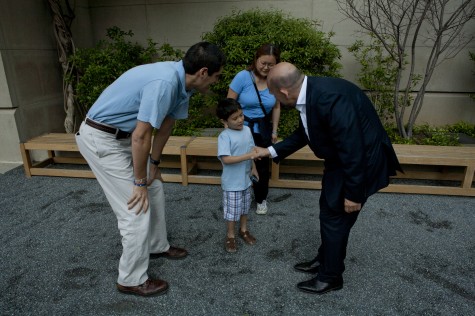
Sohan and his family meet Jaap van Zweden

Do you have any advice about visiting museums for other parents who have a child with autism?
JUST GO!!! Regardless of your child’s “level of functioning,” he or she deserves the opportunity to experience the beauty and culture of the arts. As communities become more inclusive and welcoming, it is our duty as parents to take our children out into them. Take it slow at first to make a visit a positive experience for all. Most of all, remember, “a journey of a thousand miles begins with a single step.”

I eagerly look forward to seeing you at the next Autism Awareness Family Celebration at the DMA!
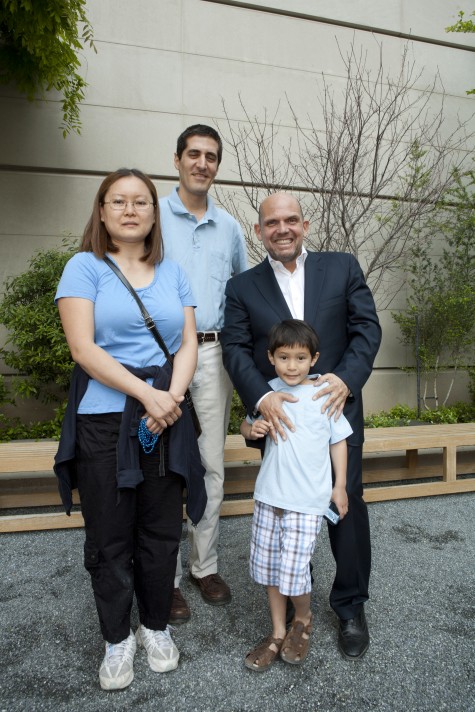
Denny, Su Chen, and Sohan with Jaap van Zweden

Amanda Blake is Manager of Family Experiences and Access Programs.
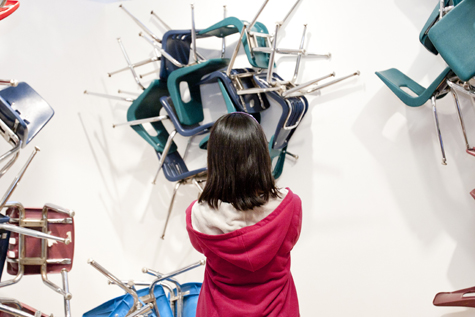
Sculpting Space: 299 Chairs by Skyline High School

[slideshow]

The Center for Creative Connections (C3) welcomes the unique perspective of community partners through a series of C3 Community Partner Response Installations (CPRI). Installed in a central gallery for approximately six months, each CPRI is a response to the current exhibition in the Center and offers visitors an opportunity to consider the themes of the exhibition in new ways. CPRI are the products of close, collaborative, and interactive working relationships between community partners and DMA staff.

Sculpting Space: 299 Chairs is the sixth CPRI to be installed. Students and faculty from the Architecture Cluster at Skyline High School in the Dallas Independent School District created this installation of classroom chair assemblages that stretch, hang, fly, and twist throughout a central gallery in C3. For these students, the process of creating Sculpting Space involved the application of classroom ideas and concepts to a real-world scenario and fostered many new connections with the DMA and Dallas-based cunningham architects.

“In order for us to flourish and bloom as students, we must first open ourselves to new ideas.”—Alberto Huerta

“Working with more people, you will hear interesting ideas that you never would have thought of alone.”—Erica Jackson

Several months ago, the students began the project by sketching chairs. Skyline teachers Tom Cox and Peter Goldstein then led students in a variety of exercises including the study of negative and positive space in DMA artworks as well as investigating spatial concepts such as fluent, voluminous, implosion, organic, and rotating through the making of 2D drawings and 3D models. Several workshops with architects Gary Cunningham and Rizi Faruqui and DMA staff focused on how to connect the chairs, what connectors would hold the chair assemblages together, and how to consider the visitors’ experiences in a space sculpted by chairs. Along the way, three DISD elementary schools swapped out their old kindergarten chairs for new ones, thus providing the high school students with chairs full of character and marked with history.

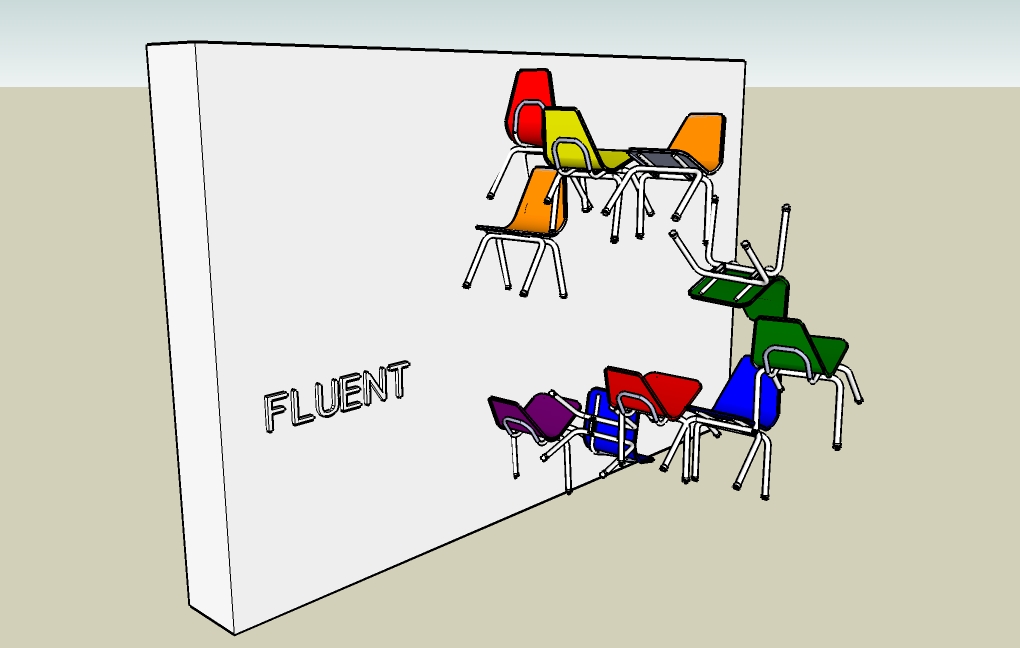
Google Sketch-Up was used to build scale models of the gallery space, providing a blueprint for the final installation of the assemblages. Videos created by Element X Creative accompany the installation, documenting behind-the-scenes aspects of the project and featuring several Skyline students sharing their experiences.

“The one true connection we have made was with the chairs and when we were little kids. They bring back memories of childhood.”—Luis Garcia

“The new connections we make will be with the people that view our work. We will not be there to explain what we made, so we have to try to convey that in shape and form.”—Sandra Benitez

Sculpting Space: 299 Chairs will be on view in the Center for Creative Connections through October.

Nicole Stutzman is Director of Teaching Programs and Partnerships.

Ordinary to Extraordinary: A Short Story about Chairs

“Success in your career begins in an ordinary classroom, in an ordinary chair.”
— Diana Maldonado, grade 11, Skyline High School (DISD)


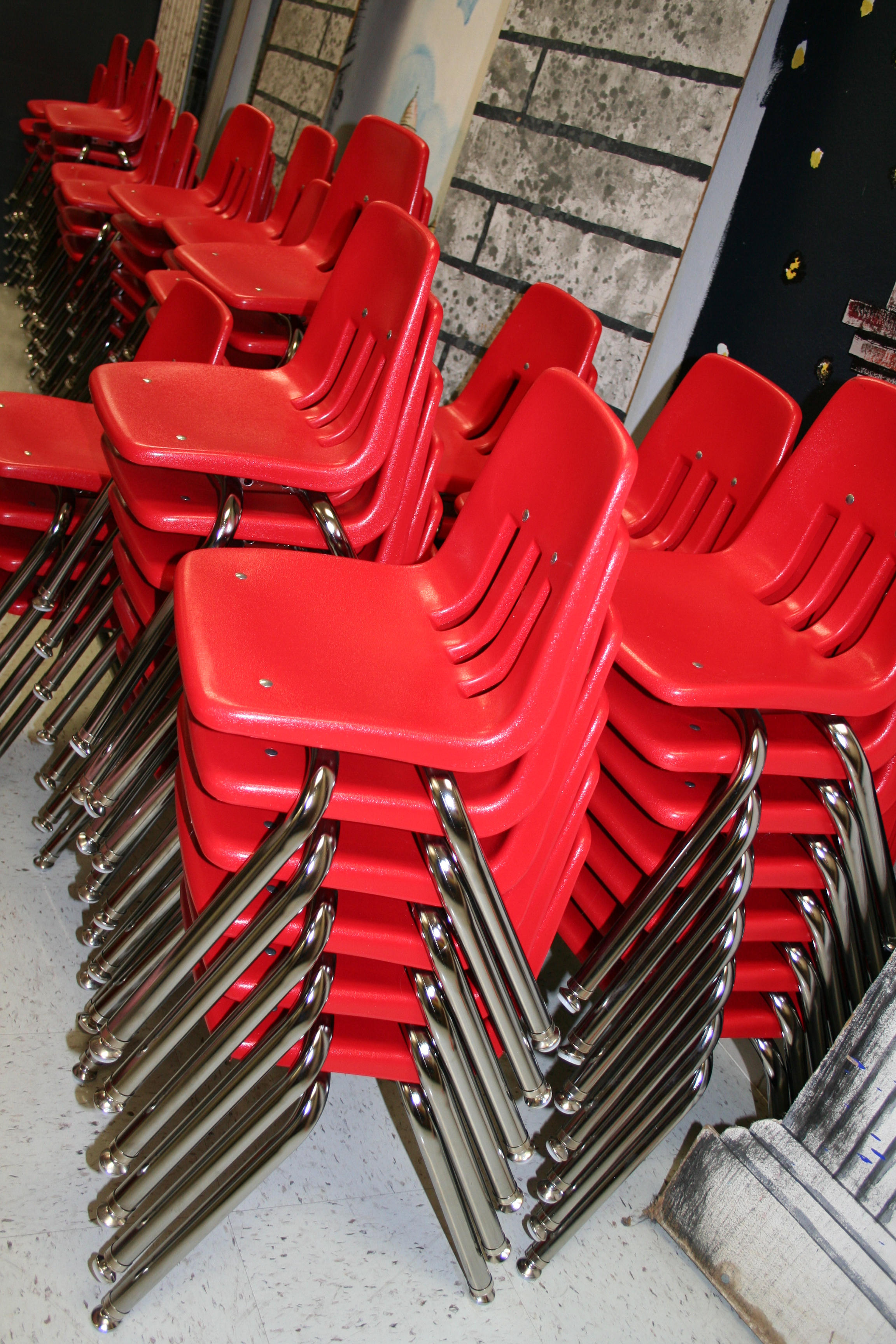
Standard-issue classroom chairs

It is a good thing to see the world from a different point of view every now and then.  We can stand and walk in someone else’s shoes, but what is it like to sit in someone else’s chair? What if the seat of this chair rises only fourteen inches above the ground?  I recently had the opportunity to take a seat in these small-size chairs while visiting pre-K and kindergarten classrooms at Dealey Montessori, Medrano Elementary, and Urban Park Elementary in DISD. Two 11th grade students from Skyline High School, Yvonne and Lauren, joined me during the visits to interview several young students who sit in fourteen-inch chairs every day at school.

For me, sitting in one of these chairs is a little bit magical.  The world is scaled down and tiny – chalkboards hang at a lower level, tables are shorter, and objects on the lowest bookshelf (which seem to require a further reach) are more colorful and interesting.  The chair-sitting experience  may also be magical for the students who sit in these small chairs every day as they get used to going to school, learn to write, and make new friends. Chairs are an important part of the school day.  They are a place to sit and rest, but also a place to participate in important and creative work.  Students shared with Lauren, Yvonne, and me various examples of the work they do in their chairs:

  • learning to read books
  • making a lion mask
  • practicing writing letters and words
  • drawing butterflies, ice cream cones, and hearts
  • singing with friends
  • painting
  • counting numbers

[slideshow]

Our visits to schools are part of a larger partnership project between the Dallas Museum of Art and the Architecture Cluster at Skyline High School.  Lauren and Yvonne are just two among more than eighty Skyline Architecture Cluster students who created an amazing installation now on view in the Center for Creative Connections.  The installation, Sculpting Space: 299 Chairs, features fourteen-inch, standard-issue classroom chairs in all colors as the primary material.  The Skyline students have transformed ordinary chairs into extraordinary chair assemblages that sculpt the space of one gallery.  Museum visitors move through the space, walking under and around clusters of chairs.  Look for more information in the coming weeks about Skyline’s unique installation on the blog Uncrated.

Google Sketch-Up model for a chair assemblage that reflects the spatial concept, "fluent"

Early in the partnership project, Skyline students and their teachers, Peter Goldstein and Tom Cox, had the brilliant idea to get “used” chairs from three DISD elementary schools.  They were interested in chairs with stories to tell — marked-up with years of scratches and crayon scribbles.  The DMA purchased hundreds of new chairs, and then Skyline students swapped the new chairs for old chairs at Dealey, Medrano, and Urban Park.  As part of the process, the elementary school students were invited to draw their chairs, write about them, and think about all of the many things they do while seated in the classroom.  Video interviews with pre-K and kindergarten students about their chairs are included with the DMA installation.   Special thanks to the teachers, students, and staff at Dealey Montessori, Medrano Elementary, and Urban Park in DISD for being a part of this wonderful partnership!

“The one true connection we have made was with the chairs and when we were little kids.  They bring back memories of our childhood.  We also have a connection to the students who once sat in these chairs where they did their work, and colored and painted.”
Luis Garcia, grade 10, Skyline High School (DISD)


Nicole Stutzman
Director of Teaching Programs and Partnerships


Seldom Scene: Love Designed

A Date to the DMA:

[youtube=http://www.youtube.com/watch?v=uIvIjRXPcTU&w=480&h=390]

The Center for Creative Connections invites you this spring to explore the Encountering Space exhibition with a fresh perspective inspired by designed spaces. Experience changes on view March 12 – September 30, 2011 throughout the Center including two additional works from our Decorative Arts collection shown below. Get involved and share your own photographs of designed spaces on Flickr, www.flickr.com/groups/dmadesigned.

Chair, Frank Lloyd Wright, 1956

Hall chair, c. 1850-1860

Are you ready for some Art?

It’s no secret that Super Bowl hysteria is sweeping the Dallas/Fort Worth Metroplex. On February 6, people from around the nation will be gathering in Arlington to watch the Steelers take on the Packers. But what are some of the best things to do in Dallas leading up to the Super Bowl? Below is a Dallas Museum of Art checklist for a super week for the sports fan and art critic in you. How many will you do?

Big New Field: Artist in the Cowboys Stadium Art Program

  1. Big New Field: Artists in the Cowboys Stadium Art Program is an exhibition of work by the artists featured in the Cowboys Stadium Art Program. While exploring the exhibition, try to figure out which artist’s work from the Cowboys Stadium belongs to the work at the DMA. Pick up Cowboys Stadium: Architecture, Art, Entertainment in the Twenty-First Century from the Museum Store if you need some help.
  2. See the former head coach of the 2006 World Champion Indianapolis Colts Tony Dungy and his wife, Lauren, on Saturday, February 5, at 3:00 p.m., part of Arts & Letters Live BooksmART. They will discuss their new children’s book You Can Be a Friend and you can stick around to meet the Dungys after this free event. Be sure to reserve your seats at https://www.tickets.DallasMuseumofArt.org/public/ or call 214-922-1818.
  3. Have you ever wanted to meet a room full of former NFL players? On Saturday, February 5, the NFL Players Association will hold the annual Jazz Brunch and Art Auction Smocks & Jocks in the Dallas Museum of Art’s Atrium at 10:30 a.m. Mingle with former and current NFL players while discovering their artistic talents. For more information on the event, click here.
  4. Explore the Center for Creative Connections and soak up some inspiration before you stop by the Art Studio to create your own work of art, maybe even a special football-inspired trophy sculpture.
  5. If you are looking for a break from football, travel to Europe without leaving the Museum through a bite-sized tour of four recent acquisitions in our new European galleries.

Friday Photos: Happy Birthday DMA!

This month the Museum celebrated its 108th birthday!  The January Late Night is our official birthday party.  Here’s a look at how we celebrated last Friday during the Late Night.  We are THRIVING at age 108!

[slideshow]

Nicole Stutzman
Director of Teaching Programs and Partnerships

Full artwork image:
Jean Dubuffet, The Reveler (Le Festoyer), 1964, Dallas Museum of Art, gift of Mr. and Mrs. James H. Clark

Friday Photos: Jumping in the DMA

Amy C. recently discovered the blog Jumping in Art Museums.  Over the holidays, we spent time in the Center for Creative Connections and in the Sculpture Garden jumping for joy with works of art.   

[slideshow]

Shannon Karol
Manager of Docent Programs and Gallery Teaching

Artworks in this slideshow include:
  • Jacques Lipchitz, The Bather, 1923-1925, Dallas Museum of Art, gift of Mr. and Mrs. Algur H. Meadows and the Meadows Foundation Incorporated
  • Robert Delaunay, Eiffel Tower, 1924, Dallas Museum of Art, gift of the Meadows Foundation, Incorporated
  • Ellsworth Kelly, Untitled, 1982-1983, Dallas Museum of Art, commission made possible through funds donated by Michael J. Collins and matching grants from The 500, Inc., and the 1982 Tiffany & Company benefit opening
  • Barbara Hepworth, Figure for Landscape, 1960, Dallas Museum of Art, gift of the Meadows Foundation Incorporated
  • Mark Handforth, Dallas Snake, 2007, Dallas Museum of Art, DMA/amfAR Benefit Auction Fund and Lay Family Acquisition Fund
  • Mark Di Suvero, Ave, 1973, Dallas Museum of Art, Irvin L. and Meryl P. Levy Endowment Fund

Archives

Categories