Archive for the 'Members' Category


Whiskered Deities

Cats are invading the DMA beginning this Sunday, October 9, when the Museum opens the nationally touring exhibition Divine Felines: Cats of Ancient Egypt. The exhibition features 80 objects from the world-renowned Egyptian collection of the Brooklyn Museum depicting cats and lions in ancient Egyptian mythology, kingship, and everyday life (and a few dogs too).

Below is an interview with DMA curator and avid cat-lover Dr. Anne Bromberg that was first published in the DMA Member magazine Artifacts. Mark your calendars for a cat-tastic night on Friday, October 21, during a special Late Night celebrating all things cat and Egypt. Listen to the purrrfect soundtrack to understand why cats are the Furry Conquerors of Culture, and follow the DMA on Spotify.

What are you most excited to present in this exhibition?
The ancient Egyptians were superb artists. Or perhaps one should say they were wealthy enough that they could afford to pay artists generously. The other interesting aspect is that for the Egyptians, cats were very important as divinities, as well as fun and delightful in ordinary life. I’ve said this to practically everybody, but cats have the closest brains to primates, or us, monkeys!
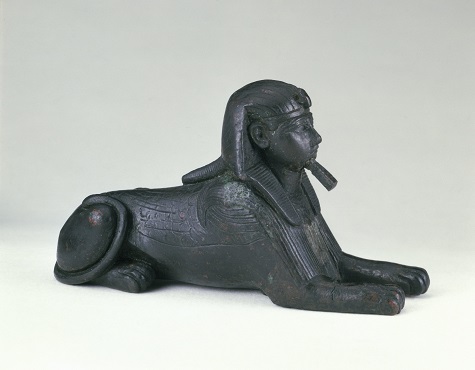
Sphinx of King Sheshenq, c. 945–718 B.C.E., bronze, Brooklyn Museum. Charles Edwin Wilbour Fund, 33.586

Sphinx of King Sheshenq, Egypt, Third Intermediate Period, c. 945–718 B.C.E., bronze, Brooklyn Museum, Charles Edwin Wilbour Fund, 33.586

Many people associate the ancient Egyptians with death or funerary rituals.
That’s partly because tombs were substantially built, so they survived. It’s clear from tomb paintings that the homes of the ancient Egyptians were equally glamorous, but almost none of that has survived.

What did this glamorous life look like?
They had beautiful clothes and were well fed. Furnishings of the everyday, as well as ritual objects, were exquisitely made. I’m sure they had trashy junk (because everyone does) but the impression you have is that the objects people lived with were really beautiful. The Egyptians believed that after death you could live forever in the land of eternal life. Part of the appeal of all Egyptian art, and certainly of this show, is that you see art made by people who believed you could take it with you.
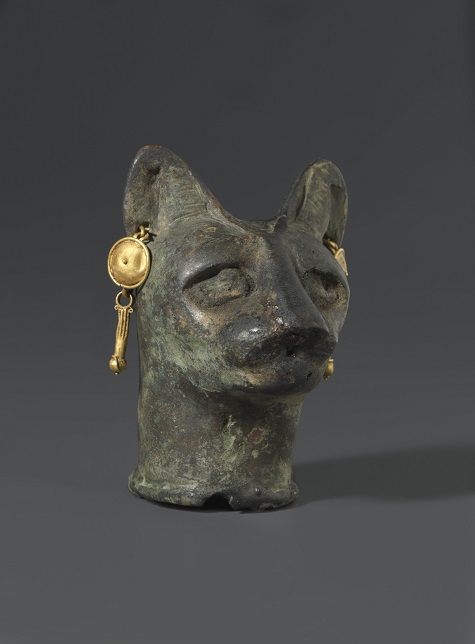
Cat's Head, 30 B.C.E. to 3rd century C.E., bronze, gold, Brooklyn Museum. Charles Edwin Wilbour Fund, 36.114

Cat’s Head, Egypt, Roman Period, 30 B.C.E.-3rd century C.E., bronze and gold, Brooklyn Museum, Charles Edwin Wilbour Fund, 36.114

It’s impressive that the ancient Egyptian civilization lasted so long.
They were isolated to some degree, and they had a foolproof source of food with the Nile River. They were also extremely literate. People who conquered Egypt knew they were taking over one of the most sophisticated cultures in their world, so they allowed that culture to continue. This many-thousand-year continuity of culture did not disappear until the coming of the Christians, who were opposed to traditional Egyptian religious ideas.

Does any part of that culture persist today?
Something that has continued unabated from prehistoric times and up until today is the passion for cats. It is still a very pro-cat civilization.
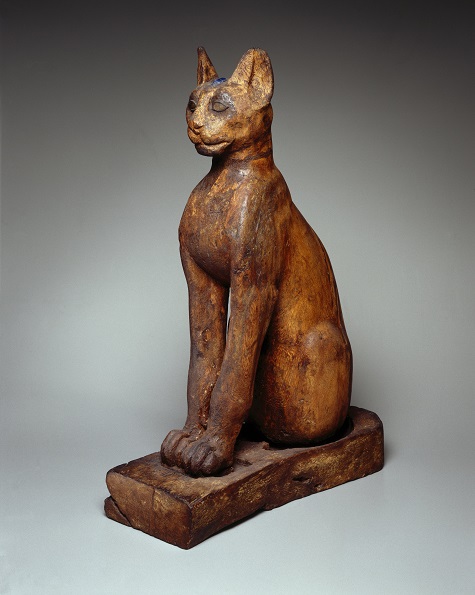
Figure of a Cat, 305 B.C.E.–1st century C.E., wood (sycamore fig), gilded gesso, bronze, copper, pigment, rock crystal, glass, Brooklyn Museum. Charles Edwin Wilbour Fund , 37.1945E

Figure of a Cat, Egypt, Ptolemaic Period-Roman Period, 305 B.C.E.–1st century C.E., wood (sycamore fig), gilded gesso, bronze,rock crystal, and glass, Brooklyn Museum, Charles Edwin Wilbour Fund, 37.1945E

Kimberly Daniell is the Senior Manager of Communications, Public Affairs, and Social Media Strategy at the DMA.
Freeze Frame

It’s hard to believe, but we’re in the final week of the celebrated exhibition Irving Penn: Beyond Beauty. Prior to the show’s opening in April of this year, Allison V. Smith, photographer and granddaughter of Stanley Marcus, shared with the DMA Member magazine, Artifacts, her first encounter with the work of Irving Penn and the impact of his legacy.  Read about her experience below, and discover the work of Irving Penn for the first time or for the hundredth time through Sunday with buy one get on free exhibition tickets offered every day.

One of the Real Greats
By Allison V. Smith
Original publish date: Artifacts Spring–Summer 2016

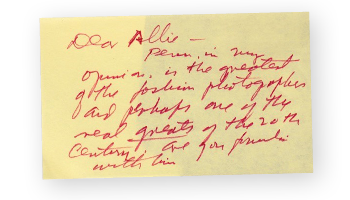
Irving Penn’s name is synonymous with beauty in fashion photography. So it’s no surprise that in 1990 my grandfather Stanley Marcus gave me, a young, passionate photographer, a signed copy of Issey Miyake’s catalogue photographed by Irving Penn. An enclosed handwritten Post-it note read:
Screen Shot 2016-08-01 at 11.05.25 AM
“Dear Allie— Penn, in my opinion, is the greatest of the fashion photographers and perhaps one of the real greats of the 20th century. Are you friends with him?”

I wasn’t, but I quickly took the time to educate myself.

Penn’s prolific photographic career spanned seventy years, and in this time he managed to merge the lines between fashion and fine art. His first cover for Vogue magazine was published in 1943, and he would shoot at least 150 more.

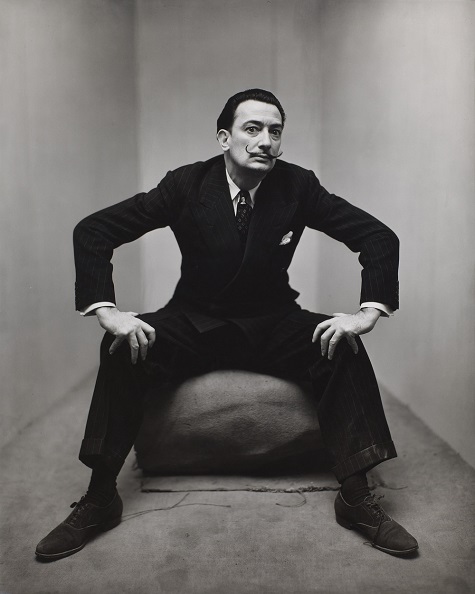
Irving Penn, Salvador Dali, New York, 1947, gelatin silver print, Smithsonian American Art Museum, Gift of the artist. Copyright © The Irving Penn Foundation

Irving Penn, Salvador Dali, New York, 1947, gelatin silver print, Smithsonian American Art Museum, Gift of the artist, © The Irving Penn Foundation

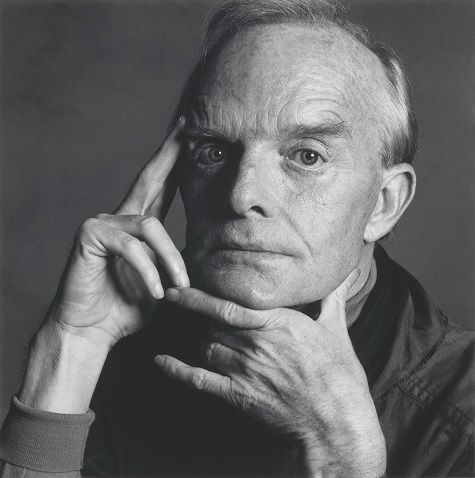
Penn’s assignments ranged from shooting striking models in designer dresses on location in Paris, to contemporary still lifes of familiar objects, to the simple “corner portraits” of artists that included Salvador Dalí and Truman Capote. These portraits were made sometime in 1948 in a constructed corner in his studio. The sitter embraced the corner, demonstrating his or her own personality and making the static background Penn chose into a private stage. Dalí fills the frame in a confident pose, with both arms placed firmly on his knees. Capote kneels on a chair, wearing an oversized tweed jacket and looking directly at the photographer. It’s hard to tell whether he’s feeling vulnerable or safe.

Irving Penn, Truman Capote, New York, 1979, printed 1983, silver print, Smithsonian American Art Museum, Gift of The Irving Penn Foundation. Copyright © The Irving Penn Foundation

Irving Penn, Truman Capote, New York, 1979, printed 1983, silver print, Smithsonian American Art Museum, Gift of The Irving Penn Foundation, © The Irving Penn Foundation

Penn wrote in Passage: A Work Record about this process: “This confinement, surprisingly, seemed to comfort people, soothing them. The walls were a surface to lean on or push against. For me the picture possibilities were interesting; limiting the subjects’ movement seemed to relieve me of part of the problem of holding on to them.”

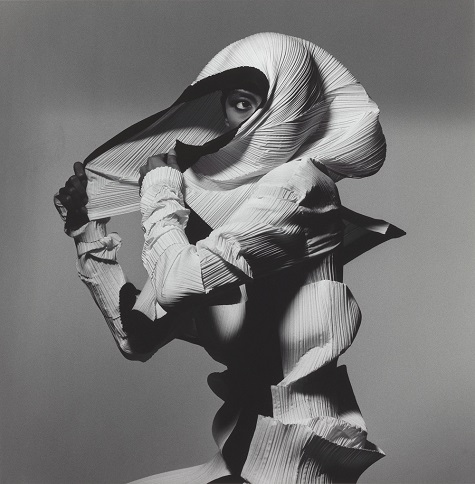
Working for Vogue, Penn had the dream job of traveling the world photographing portraits of everyday people—artisans and blue-collar workers in Paris and London, a gypsy community in Spain, and the tribes of New Guinea. Penn approached all of his portraits with the same respect and elegance as he did in posing a model in Paris or an Issey Miyake design.

Irving Penn, Issey Miyake Fashion: White and Black, New York, 1990, printed 1992, gelatin silver print, Smithsonian American Art Museum, Gift of The Irving Penn Foundation. Copyright © The Irving Penn Foundation

Irving Penn, Issey Miyake Fashion: White and Black, New York, 1990, printed 1992, gelatin silver print, Smithsonian American Art Museum, Gift of The Irving Penn Foundation, © The Irving Penn Foundation

Penn’s photographs are subtle and sophisticated, often finding his subjects against a blank backdrop. His meticulous flowers are a study of visual rhythm. His nudes, whom he shot on countless rolls of film on his Rolleiflex camera between 1949 and 1950, went largely unseen until 1980. He closely examined the shapes of models of all sizes. The results were about form and less about nakedness.

A prolific photographer and a technical master, he made personal work throughout his life, including his early photographs of shop window displays, and later cigarette butts, smashed cups, and chewing gum. These simple photos of litter experimented with different photographic processes, such as platinum and palladium, giving them a rich quality—and also leaving an indelible mark on me.

Allison V. Smith is an editorial and fine art photographer based in Dallas. In 2008, the DMA presented “Reflection of a Man: The Photography of Stanley Marcus,” a retrospective of photographs taken by the department store magnate and produced by Smith and her mother, Jerrie Smith.


Black Tie Optional, Style Mandatory

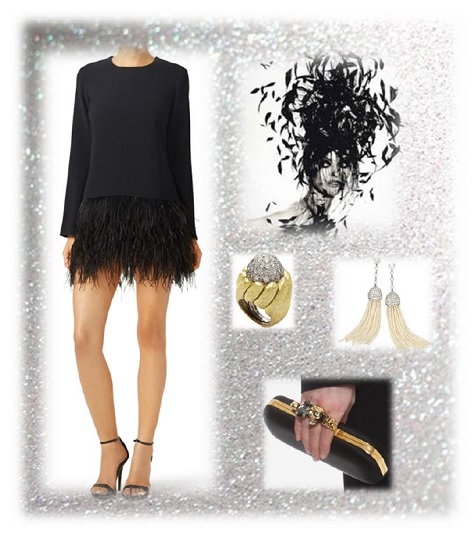
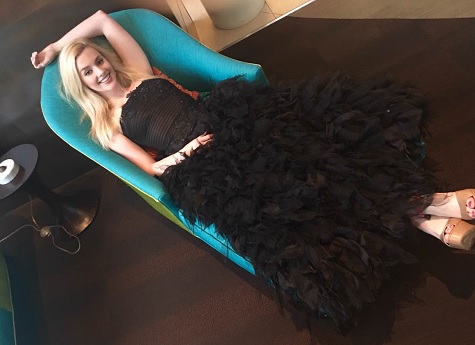
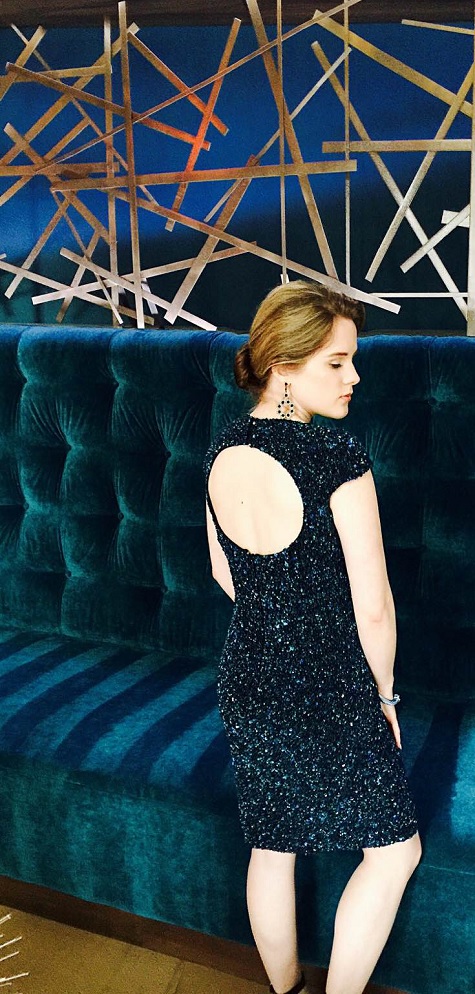
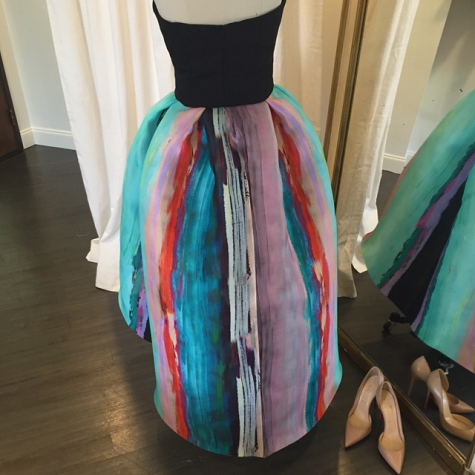
Folly at the Art Ball, our new annual fundraiser hosted by the DMA Junior Associates to benefit the Dallas Museum of Art, will launch this weekend as the After Party of the Museum’s annual gala. And we’re giving a special offer to our Uncrated readers to join in on the fun (see below). The attire “black tie optional” might sound intimidating, but it’s really about what makes you feel your best!

Inspired by fashion bloggers and chic instagrammers, we asked a few DMA Juniors to give us a sneak peek at their ensembles for the best night of the year:

Abigail Baber Rust, DMA Member since 2008
Jennifer Anthony, DMA Member since 2015
Jennifer Anthony, DMA Members since 2015
Julia Anthony, DMA Member since 2015
Vodi Cook, DMA Member since 2015 wearing Custom Couture designed by fellow DMA supporter MacKenzie Brittingham
Vodi Cook, DMA Member since 2015 wearing Custom Couture designed by fellow DMA supporter, MacKenzie Brittingham.

When trying to decide what to wear, remember to ask yourself, “Would I look great driving away in a Jaguar in this outfit?” The evening includes a chance to win a brand-new 2017 Jaguar F-Pace Prestige. No matter what, make sure you are ready to dance to the tunes of DJ Lucy Wrubel and the Georgia Bridgwater Orchestra!

Since you are loyal Uncrated readers, we’d love to treat you to 25% off entry tickets to Folly at the Art Ball. Use the discount code UNCRATEDSTYLE when you purchase yours before Saturday, April 23, at noon! Tickets will be sold at the door for an increased price of $250.

Rebekah Boyer is the Assistant Manager of DMA Member Groups at the DMA.
Black and White: Pollock’s Breakthrough Paintings

Artifacts, the DMA Member magazine,  invited Jackson Pollock’s nephew Jason McCoy to share his thoughts on his uncle’s work on the eve of the DMA’s exclusive presentation of Jackson Pollock: Blind Spots, which opens on Friday, November 20. We hope you are as delighted by his article as we were to publish it.

Breakthrough: Pollock’s Black Paintings
By Jason McCoy
Original publish date: Artifacts Fall 2015

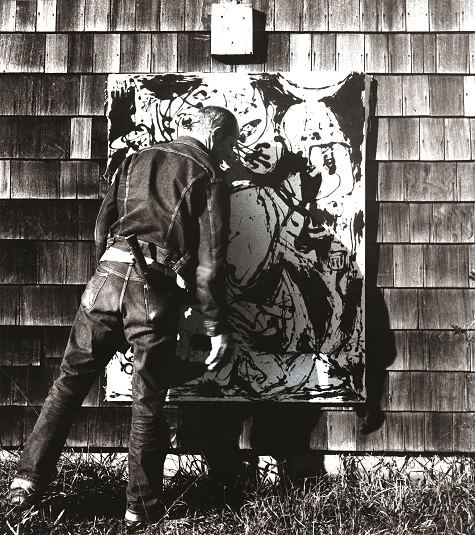
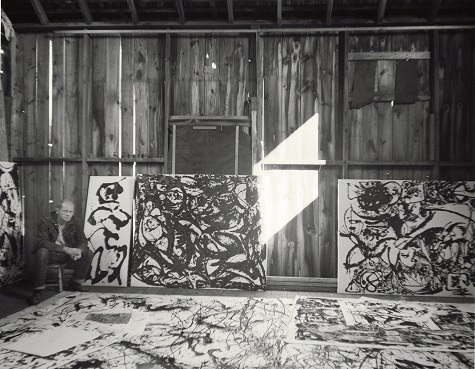
Jackson Pollock, n.d. Photograph by Hans Namuth, Courtesy Center for Creative Photography, University of Arizona © 1991 Hans Namuth Estate

Jackson Pollock, n.d.
Photograph by Hans Namuth, Courtesy Center for Creative Photography, University of Arizona © 1991 Hans Namuth Estate

When DMA curator Gavin Delahunty first talked to me about his dream of organizing an exhibition of Jackson Pollock’s so-called Black and White paintings, I was of course intrigued but thought to myself “good luck.” It is notoriously difficult to organize any Pollock show, and I knew the paintings were scattered all over the world. But the good luck seems now to be ours—Gavin has pulled it all off and we have been given the great good fortune to be able to view the largest assemblage of these works together, ever. Jackson Pollock is one of the most recognizable names in modern art, but we generally associate the name not with a single image of a specific painting but rather with the idea of paintings that consist of masses of fine lines, skeined across the picture’s surface in seeming confusion.

I appreciate that the Blind Spots exhibition will present an additional view of Pollock’s oeuvre, the paintings that followed the so-called pourings. These paintings were yet another breakthrough for Jackson Pollock, because here he was able to convey the certainty and discipline of works that, for the most part, were made in one session. There is a clarity to the paintings, a minimalism and a simplicity that make it all look so easy and pre-ordained. Not so, of course, but what is revealed is a master’s ability to get it right the first time, and so let the paintings stand for themselves. They are a powerful, fascinating lot, crowned with one of my personal favorite paintings of all, Portrait and a Dream, a longtime resident of Dallas.

Blind Spots will enable all of us to reevaluate the breadth and depth of Pollock’s accomplishments. It will illuminate that there was most often a figurative element in all of Pollock’s paintings, as images of man or beast are easy to recognize in Pollock’s first gestures on the plane. We can recall a comment he made to this effect, that in these paintings the “figure is coming through.” Such recognizable forms in fact caused consternation with certain modernist critics at the time, who did not care to acknowledge less than fully abstract painting as being modern.

Blind Spots will also include examples of Pollock’s interest in scale. In 1951, with the help of his brother, Sanford McCoy, he chose six paintings not at all similar in size to be used in a suite of serigraphs, a selection of which are exhibited in this exhibition. With a computer today, this type of curiosity might seem obvious, but this was not the case sixty-five years ago.

Had Pollock stopped after his “drip paintings” of the late 1940s he would certainly still have his place in history. Rather, his creative drive was such that it continued to evolve in unexpected ways and cover new ground, as Blind Spots reveals, accentuating that Pollock’s gift was much more than one-dimensional.

Untitled, n.d., Photograph by Hans Namuth, Courtesy Center for Creative Photography, University of Arizona © 1991 Hans Namuth Estate

Untitled, n.d., Photograph by Hans Namuth, Courtesy Center for Creative Photography, University of Arizona
© 1991 Hans Namuth Estate

–Jason McCoy is President of Jason McCoy Gallery in New York.

For more stories like the one above, all of which were created exclusively for Artifacts, visit DMA.org/members

(image: Jackson Pollock, Portrait and a Dream, 1953, oil and enamel on canvas, Dallas Museum of Art, Gift of Mr. and Mrs. Algur H. Meadows and the Meadows Foundation, Incorporated © 2015 The Pollock-Krasner Foundation / Artists Rights Society (ARS), New York)

Speakeasy Star

This Friday we’re traveling through the 20th century during Late Night with a different decade highlighted every hour. We asked one of our favorite costume gurus, Breanna Cooke (you may remember the amazing Greek Hero look she created inspired by The Body Beautiful), for tips on how to dress for a time traveling evening.

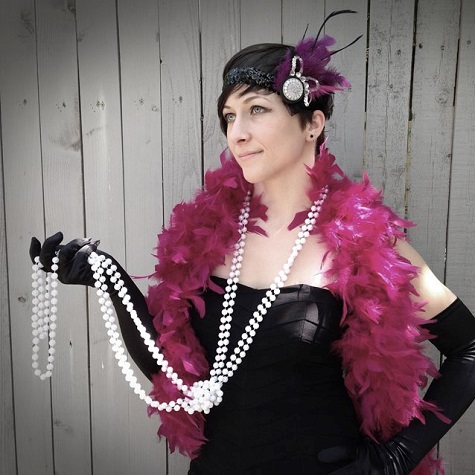
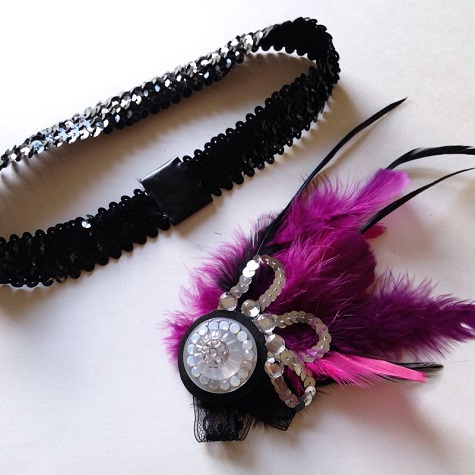
The evening kicks off with a tribute to the 1920s-30s, so here’s how you can make a flapper headband and then put together an outfit.

4

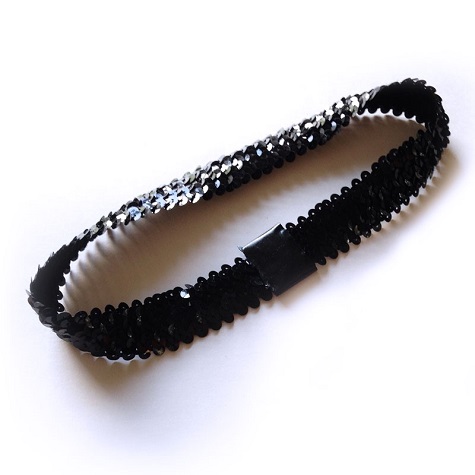
What you’ll need for the headband:

  • Long piece of sequined elastic, or stretch fabric, or other headband
  • Craft foam or a large button
  • Hot glue
  • Duct tape (optional)
  • Feathers
  • Bits of lace, ribbon, fringe
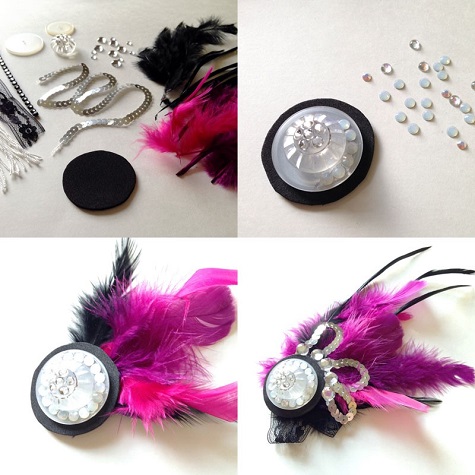
  • Rhinestones, buttons, brooches, or even pieces from broken earrings

3

  1. Make a headband
    Measure a piece of elastic or fabric to fit around your head. Then use hot glue, tape, or needle and thread to attach the ends together. If you’re taping or gluing it together, overlap the two ends. Don’t worry about the seam—you’ll glue your embellishment on top of it.

2

  1. Make an embellishment
    Using a small circle of craft foam (or a large button) as a base, start gluing rhinestones, sequins, and buttons on top. Get creative and use what you have lying around at home. Then glue some feathers or fringe to the back of your craft foam base.


1

  1. Put it together
    Using hot glue, attach your embellishment to your headband. Be sure to stick it on top of the seam to hide it.

Ideas to complete the outfit

  • Gloves
  • Feather boa
  • Long string of pearls (Hint: Mardi Gras beads work great! If you don’t have the right color, just paint them with spray paint or acrylic paints)
  • Sleeveless dress
  • Black fishnet stockings

For the gentlemen
It’s still hot in Texas, but a suit is a great accompaniment to your flapper friends. Find a bow tie, grab your fedora, shine your shoes, and we’ll see you at the DMA!

Once you have your costumes complete, come kick up your heels with the Matt Tolentino Band, who will be performing songs from the roaring 20s and 30s at 6:00 p.m. Check out the full night’s lineup online at DMA.org.

Breanna Cooke is a Graphic Designer, Costume Creator, and Body Painter living in Dallas. To see more of her work, visit breannacooke.com. Check out progress photos of her latest projects on Facebook.

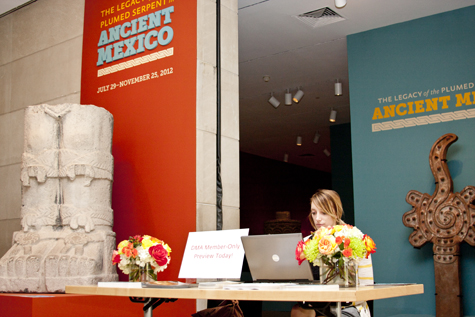
Plumed Preview

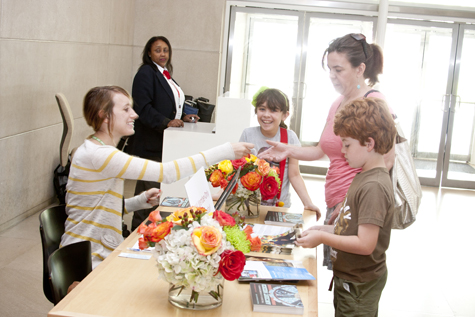
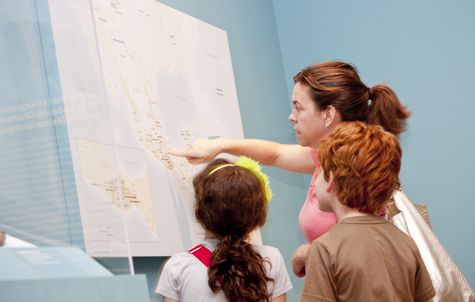
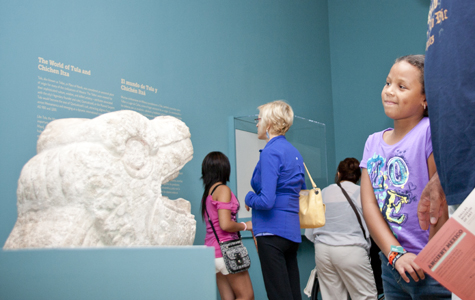
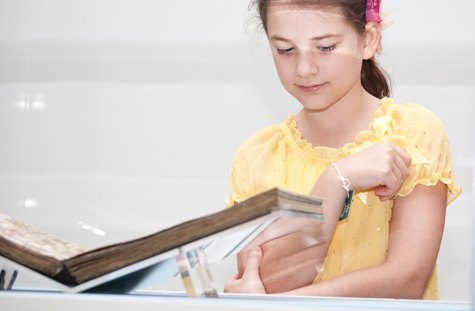
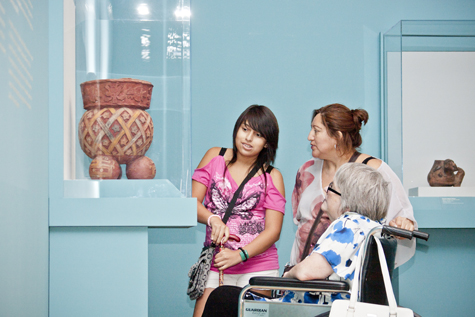
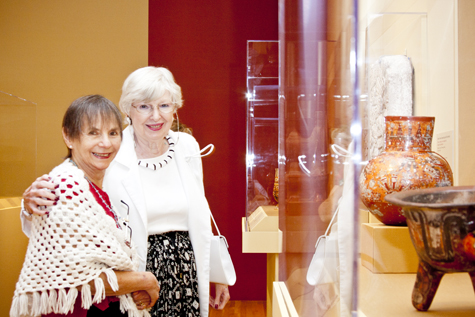
DMA members are able to preview exhibitions before the official openings and this past week our members were able to get a sneak peek at the new exhibition The Legacy of the Plumed Serpent in Ancient Mexico. Below are a few photos from the preview days, be sure to visit the exhibition now through November 25.

Photography by Adam Gingrich, the Marketing Administrative Assistant at the Dallas Museum of Art

All That Jazz

Friday, March 2nd Dallas Museum of Art members celebrated the Youth & Beauty: Art of the American Twenties in style. The evening included a 20’s themed costume contest, an introduction of the exhibition, dance lessons, and more! We thought we would share some of our favorite shots from the evening.

Show off your twenties outfits tonight at our Roaring Twenties Late Night!

[slideshow] Wendi Kavanaugh is the Member Outreach Manager at the Dallas Museum of Art

French Twist: An Intern Abroad

The Dallas Museum of Art offers a variety of internships throughout the year in various departments. This past July, Amandine Marchal joined the Development Department. Marchal hails from Montbéliard, in Franche-Comté (eastern France) and is currently studying business at the French School, HEC Paris. We tracked her down to discuss her experience at the DMA.

Describe your internship in fifty words or less?
I am a Development intern at the DMA and occasionally I assist other departments (such as Marketing and Education). I am mainly working on the Fashion World of Jean Paul Gaultier exhibition. I keep some of the special events’ invitation lists and help organize those events.

What might an average day entail?
Every day is really different. Some days I add people to the invitation lists, other days I add information about the DMA’s works of art online, order linens and flowers for lunches, and make reservations for group tours of our collection. It is very varied!

How would you describe the best part of your job and its biggest challenges?
The best part of this internship is that I work with so many people and do so many different things. It’s also quite a challenge because it requires a good deal of organization! But I really wanted to have a good overview of how a museum works, and I feel like I have a better understanding after interning at the DMA.

Growing up, what type of career did you envision yourself in? Has interning at the DMA changed your career path in any way?
I started with business studies in France and saw myself working in publishing houses. Last year, I began taking art history courses (or lessons in history of art, as we say in France). My internship at the DMA has really made me reconsider my career path. I will certainly keep learning about art and consider any museum job opportunities when I finish my studies.

What is your favorite work in the Museum’s collection?
It’s hard to choose. I would say it is Edward Hopper’s Lighthouse Hill. He is one of the first American painters that I discovered, and I love his paintings’ atmosphere. But I love to hang around the European floor and see the incredible Monet, Vernet, and Courbet paintings; they remind me of France.

How did you find out about an internship at the Dallas Museum of Art?

I wanted to find an internship in the United States, and in a cultural field. I learned that one of my fellow students at HEC (Adrien Lenoir) was doing an internship at the DMA, and I applied too. I really wanted to go to Dallas because it seemed so unusual for a French student to have an internship here! And Adrien was so enthusiastic about his own internship and the kindness of the people at the DMA that I didn’t hesitate.

What advice would you give to other students looking for an international internship?
I would tell them not to fear the “language barrier”; they will get used to talking in English. People are very patient and nice about our mistakes. An international internship is actually an incredible experience, and a way to meet extraordinary people. So don’t hesitate!

What has been your favorite Dallas experience thus far?
I was amazed by the 4th of July parades! In France people don’t celebrate Bastille Day this way. It was a very fun and unusual thing to see for me. Now I am looking forward to seeing some Halloween parties!

Member Appreciation Week

The DMA’s third annual Member Appreciation Week (MAW) is less than a month away. Each year we set aside one week to celebrate our members! Membership contributions are vital to the Museum’s operations, allowing us to present exquisite special exhibitions and rich multidisciplinary programming like Late Nights. The Dallas Museum of Art is extraordinary because of the generosity and investment of its members.

We’ve added a couple of days to this year’s MAW so that we can incorporate the opening of The Fashion World of Jean Paul Gaultier: From the Catwalk to the Sidewalk. Over twenty events are planned during these nine days, which was no easy feat, and there is something that will appeal to all of our members. Some of the week’s highlights include:

  • Member previews of The Fashion World of Jean Paul Gaultier – Preparation for the Jean Paul Gaultier exhibition has been in the works for months, but we reserved time for our members to have the opportunity to view the exhibition prior to the November 13 public opening.
  • Arts & Letters Live special lecture: Vincent van Gogh and Jackson Pollock: Changing What Art Is – Authors Steven Naifeh and Gregory White Smith will discuss their new book Van Gogh: The Life as well as the similarities they found between Vincent van Gogh and Jackson Pollock, on Monday, November 14. Members will be able to attend this event free (to make reservations click here), and I’m taking this night off so that I can enjoy my membership benefits!
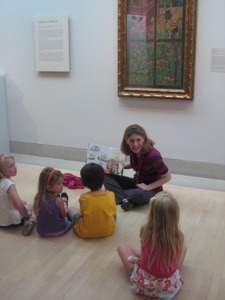
  • Story Time – Every summer the education department sends an e-mail to staff members asking who wants to read books during Story Time. I’m always one of the first to volunteer to read a children’s story in one of the collection galleries. It is a popular event with families and we want to offer our members this experience in the fall. After the story, we talk about the art. Hearing children tell me about their experience with art is one of the highlights of my job!
  • 20% off in the Museum Store – who doesn’t love a good sale! The extra 20% is just in time to start your holiday shopping.

For a full list of events, visit Events for Members. Don’t forget to stop by the Member Services Desk to introduce yourself so that we can thank you in person! For information on how to become a member, call 214-922-1247 or visit  DallasMuseumofArt.org.

Wendi Kavanaugh is the Member Outreach Manager at the Dallas Museum of Art.

Membership Miles

At the Dallas Museum of Art we are often asked, “Why should I join?” A membership allows you to enjoy all that the Museum has to offer all year long, while supporting your local arts. There are many reasons to be a member at the DMA, and one of the exciting perks this year will be tickets to the upcoming exhibition The Fashion World of Jean Paul Gaultier: From the Sidewalk to the Catwalk.

Because it’s hard for us to pick our favorites, we invited a few members to share their thoughts on what makes being a DMA member special. Do you see your favorite listed below? If not, we would love to hear from you!

• Free admission
• Supporting the Museum’s collection
• “It’s a place that I can take my grandson to; it’s fun for both of us.”—Shari, member since 2006
• Free lectures
• “The discounts to Arts & Letters Live. We loved David Sedaris.”—Kenneth,  member since 1996
• “Free parking and access to jazz programs”—Stockton, member since 2009
• Discounts in the Museum Store and on dining (the store discount is most popular with children under 10, who can always find something they can’t leave without)
• Reciprocal membership to over 500 museums
• Subscription to the Dallas Museum of Art Magazine
• “I know about things before they happen and stay in tune with new things in Dallas”—Liz, member since 2008

Wendi Kavanaugh is the Membership Outreach Manager at the Dallas Museum of Art.


Archives

Categories