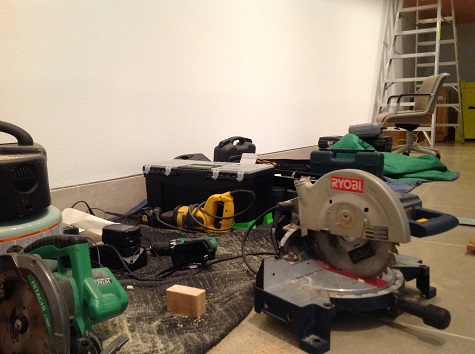
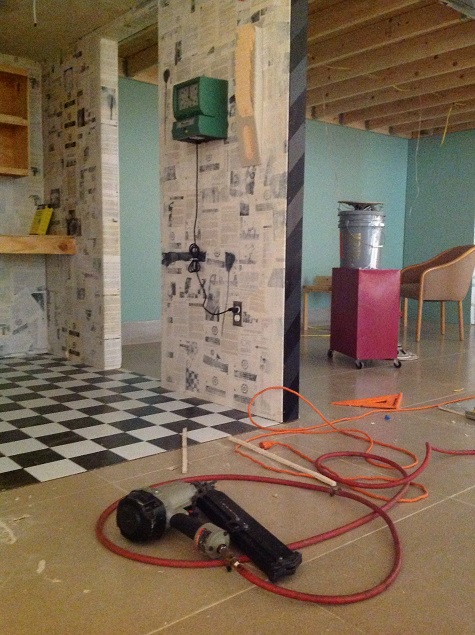
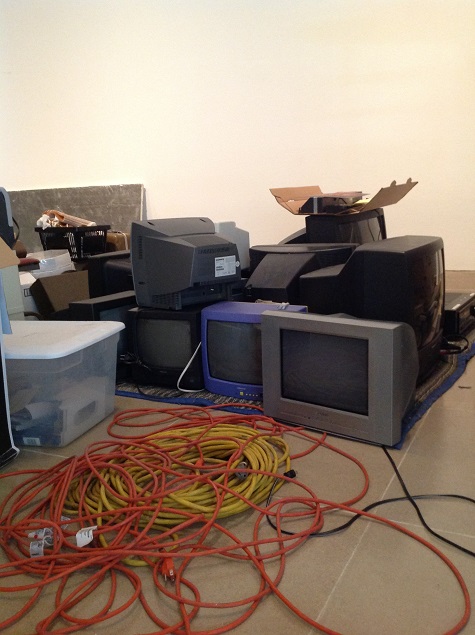
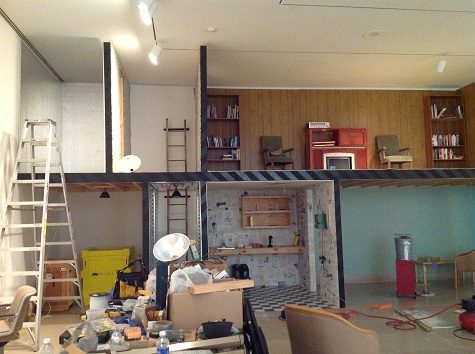
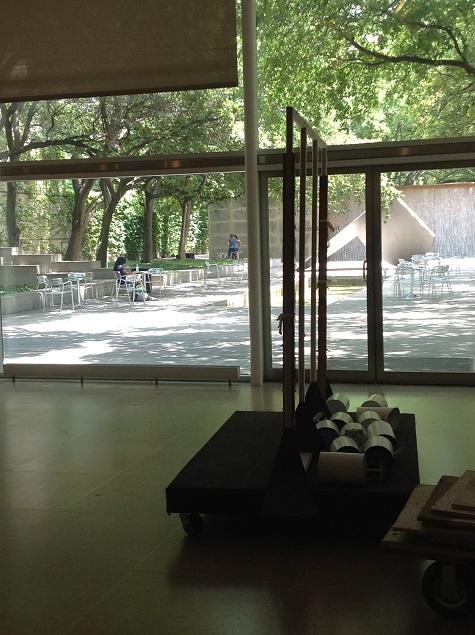
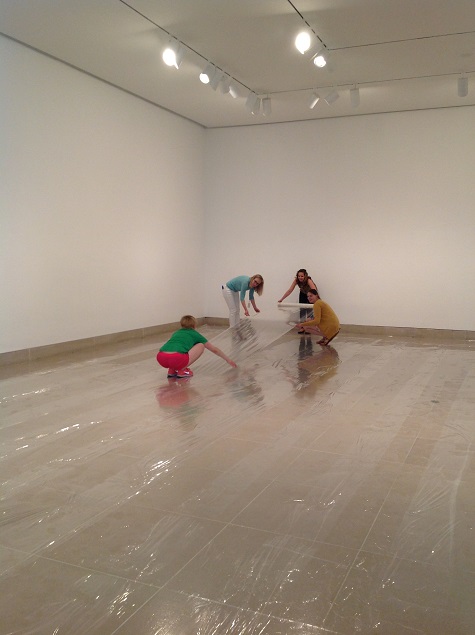
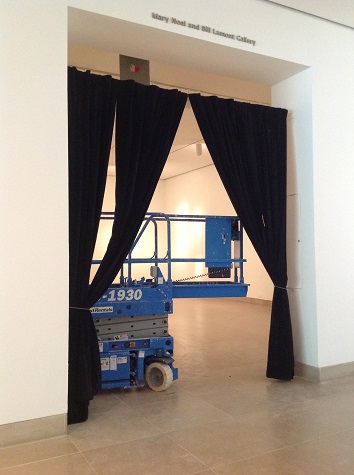
The Barrel Vault and Quadrant Galleries have a very different look. We’re preparing them for the DMA’s first experimental project space featuring Dallas-area artists, collectives, and art educators. Want to find out more about what’s to come? Join us next Friday, July 19, for a Late Night celebrating the opening of DallasSITES: Available Space and read a bit more about the creative space here.
Archive for the 'Education' Category
Creating an Available Space
Published July 11, 2013 Behind-the-Scenes , Center for Creative Connections , Dallas , DFW , Education , Exhibitions ClosedTags: Dallas Museum of Art, DallasSITES: Available Space, DallasSITES: Charting Contemporary Art, DMA
Listening Hard: Remembering JFK on Record
Published June 26, 2013 Behind-the-Scenes , Center for Creative Connections , Dallas , DFW , Education , Exhibitions , Guest Blog Post ClosedTags: Alan Govenar, Dallas Museum of Art, Hotel Texas: An Art Exhibition for the President and Mrs. John F. Kennedy, Music
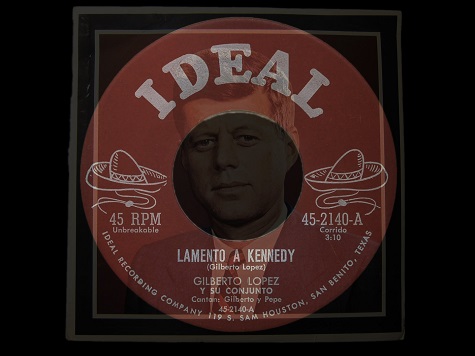
The tragedy surrounding President John F. Kennedy’s 1963 trip to Texas inspired many songwriters to remember and honor JFK through song. Listening Hard: Remembering JFK on Record is an audio-video installation produced by Alan Govenar featuring songs of a variety of genres produced in the months after Kennedy’s assassination. Swing by the C3 Theater during the run of Hotel Texas: An Art Exhibition for the President and Mrs. John F. Kennedy to experience these songs.*
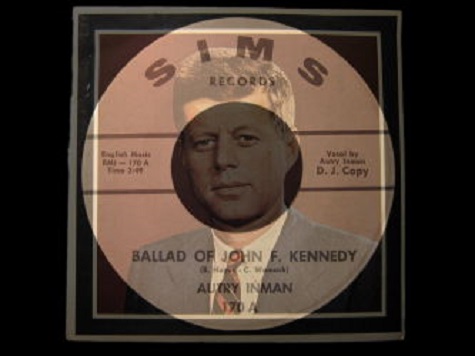
Listening Hard: Remembering JFK on Record, Alan Govenar, © Alan Govenar
Uncrated chatted with Alan, founder and president of Documentary Arts and the installation’s producer, to pick his brain about his creative process and vision for this work. Join us at the DMA during our July Late Night on Friday, July 19, at 7:00 p.m. to hear Alan discuss his installation.
When did you begin researching JFK memorial songs?
It was 1975, so nearly forty years ago. I had heard about the Mexican-American corridos and started gathering the records when I could find them. I had written a lot about blues and jazz, and this was part of it.
What was the impetus for this project?
The piece was originally commissioned by the International Center of Photography. Brian Wallis, Chief Curator at the ICP, has organized a show of photographs, JFK November 22, 1963: A Bystander’s View of History, that look at the assassination from the viewpoint of bystanders.
All of the singers are in a way personalizing their relationship with President Kennedy, either as friend or savior, champion of the downtrodden, the advocate for the forgotten or the disenfranchised. The songs juxtapose that sense of feeling a personal relationship with the president and the great sense of loss, the tragedy of his killing.
You’ve referred to this installation as an “experience.” How do you envision DMA visitors experiencing this installation?
All of the songs are topical. All were released on record. Most were written within days of the assassination. The installation is an audio loop, and the anchor, or punctuation point, is an eyewitness account released on an LP within days of the assassination. A man just saw the assassination, and someone put a microphone in his face and asked him what he saw. He was panicked, on the verge of crying. He had his five year old standing next to him. He was ready to pounce on top of him to protect him because he thought there was a maniac on the loose. That sets a certain stage for the rest of the piece, which is startling and haunting. But, there’s an aspect of the songs that has you smiling. It throws you back in time and place. Much of what the piece is about is perception and memory.
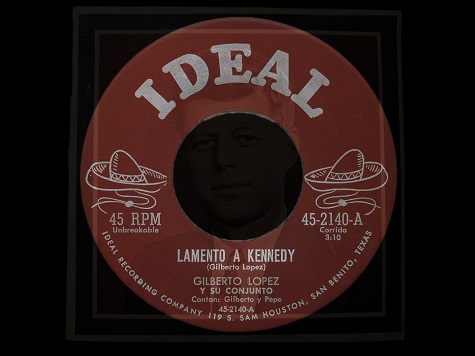
What was your creative process behind the image of JFK that continuously dissolves into images of record labels?
It has a meditative kind of effect, seeing that image reappearing. In some senses, I intended it to be reassuring, comforting, but also, it’s a memorial. It’s like looking at a tombstone. Those slow dissolves into the record labels that go in and out of JFK’s face are haunting, I think because of the idea that he was shot. It’s a complex, emotive kind of experience.
What was the most surprising thing you discovered?
The most surprising part of my research was the sheer vastness of songs written about John F. Kennedy in so many musical genres. People felt compelled to write them. People felt like their feelings needed to be expressed. A song in the installation called The Tragedy of Kennedy, by the Southern Belle singers recorded in December 1963, ends with:
Let me tell you people what we better do,
Keep our minds on Jesus for he’s a President, too.
It identifies Kennedy in that role, as a great savior who was martyred.
Why do you think Kennedy was memorialized through such diverse musical genres?
Corridos extol the virtues of the president who excited our passion to bring equality to all. The blues singers could identify with the sadness everyone was feeling. Country songs are often about mortality. It fit neatly into traditional music forms, where the way people were feeling could be expressed.
-
- Listening Hard: Remembering JFK on Record, Alan Govenar, © Alan Govenar
-
- Listening Hard: Remembering JFK on Record, Alan Govenar, © Alan Govenar
-

- Listening Hard: Remembering JFK on Record, Alan Govenar, © Alan Govenar
-

- Listening Hard: Remembering JFK on Record, Alan Govenar, © Alan Govenar
* “Listening Hard” runs in the C3 Theater at designated times during Museum hours and is included in free general admission.
Andrea Vargas Severin is the Interpretation Specialist at the DMA.
DMA Athletes in Training
Published May 29, 2013 Behind-the-Scenes , Collections , Education , Exhibitions 1 CommentTags: American art, Ancient Greece, Cindy Sherman, Dallas Museum of Art, DMA, European Art, Gallery Attendants, The Body Beautiful in Ancient Greece: Masterworks from the British Museum
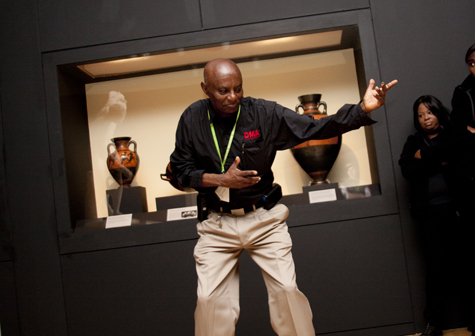
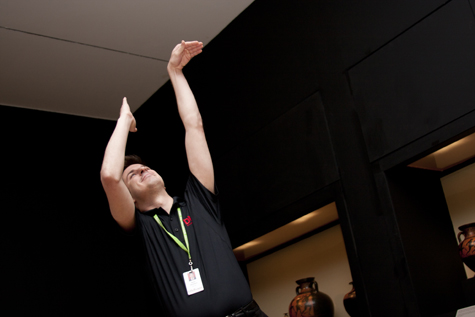
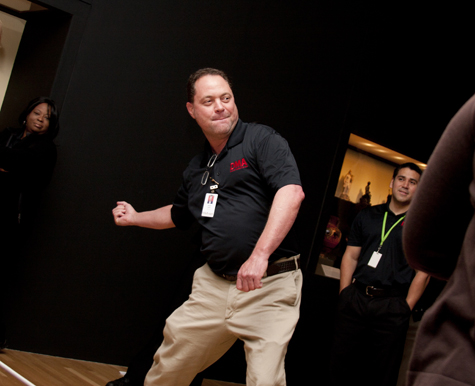
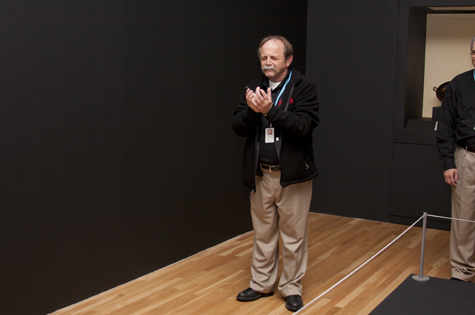
One of my favorite parts of my job is that I get to spend one morning every month talking with our fantastic Gallery Attendants about works in the collection. So far, we have discussed European art, shared Personal Responses to works in the collection, written Facebook profiles for photos in the Cindy Sherman exhibition, and compared three vastly different works in our American collection. Last week, we spent time in The Body Beautiful in Ancient Greece: Masterworks from the British Museum.
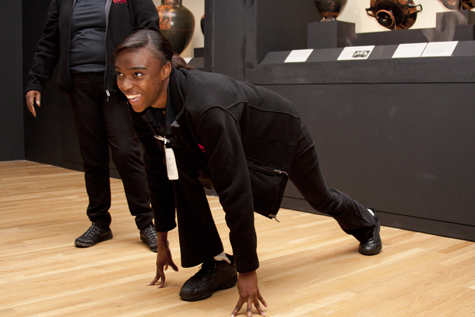
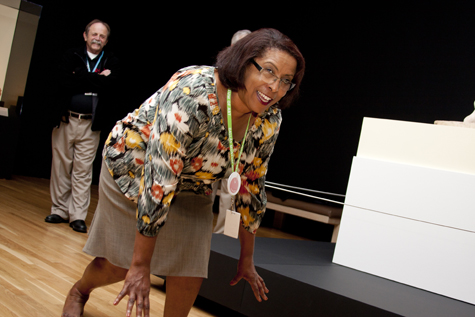
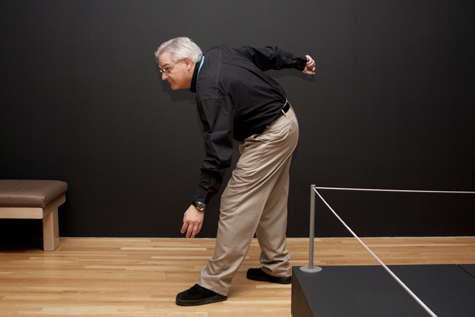
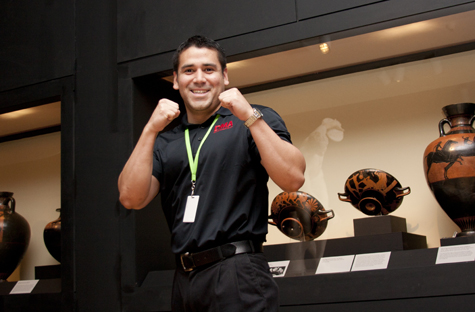
After looking at the discus thrower, the Gallery Attendants were asked to divide into teams of two. Each team had to select a sport and strike a pose that epitomizes an athlete participating in that sport. The rest of us had to guess which sporting event they were re-creating. Their poses were creative, clever, and funny, and we couldn’t resist sharing them with you!
Shannon Karol is the Manager of Docent and Teacher Programs at the DMA.
An American Art Education
Published April 24, 2013 American Art , Behind-the-Scenes , Curatorial , Education 2 CommentsTags: American art, Dallas Museum of Art, DMA, education
Two of our talented McDermott Interns have been busy working on some new projects, both involving our collection of American art.
Alexandra Vargo: As the McDermott Education Intern for Gallery Teaching, I work with school tours, adult tours, teachers, and the volunteer docent corps. Currently, I’m working on a Docent Guide for the Museum’s collection of colonial to modern American art. The guide focuses on creating interactive and versatile experiences that can be presented with any number of objects and age groups. I have been testing these activities with school tours ranging from 3rd graders to high school art students throughout my internship.
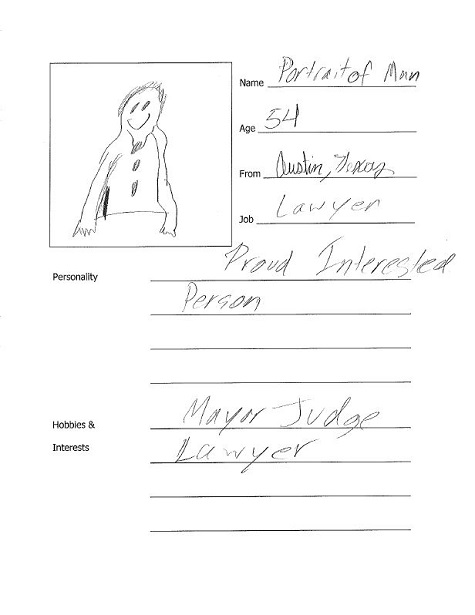
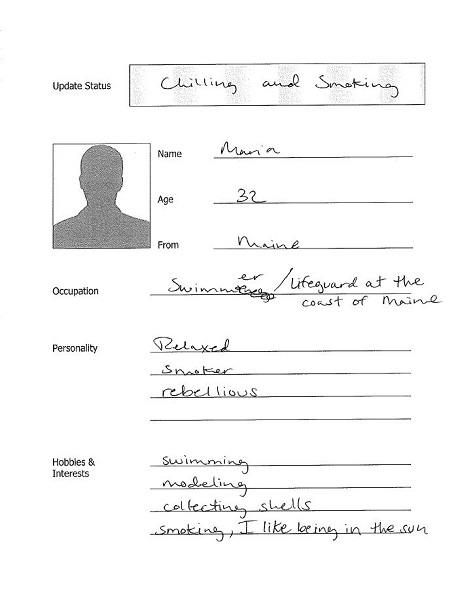
The “Make Your Own Profile” exercise has been one of the most fun to create. It is based on Facebook and asks students to think creatively about a portrait of their choice within the American collection. Students use close looking and visual evidence to draw conclusions about the personality and backstory of the subject. Check out some of the examples below:
-
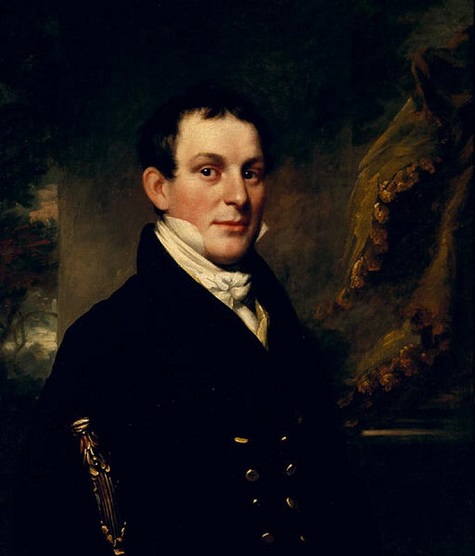
- John Wesley Jarvis, Portrait of a Man, c. 1815-1820, oil on canvas, Dallas Museum of Art, bequest of Mrs. Sheridan Thompson
-
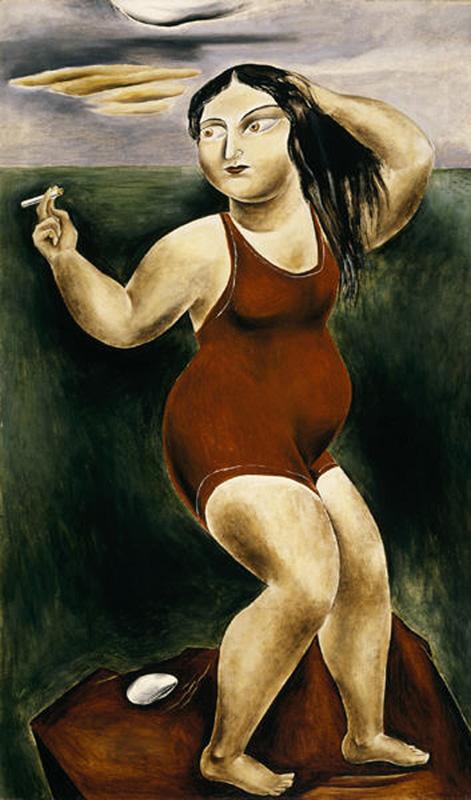
- Yasuo Kuniyoshi, Bather with Cigarette, 1924, oil on canvas, Dallas Museum of Art, Dallas Art Association Purchase Fund, Deaccession Funds/City of Dallas (by exchange) in honor of Dr. Steven A. Nash
Pilar Wong: As the McDermott Education Intern for Community Teaching, I work with Go van Gogh®, our art education outreach program. I am currently working on revamping our 5th and 6th grade program titled Picturing American History. The program focuses on artworks in the DMA’s collection that reflect important moments in American history.

The Return plate from the Man in Space series, Piero Fornasetti, designer, Richard Ginori Porcelain, manufacturer, designed 1966, porcelain, Dallas Museum of Art, gift of Michael L. Rosenberg
After discussing the five artworks, students make commemorative plates that capture a modern-day current event or social issue. This activity is based on The Return, a plate from the Man in Space series that commemorates the Space Race between the United States and the former USSR. Check out some of the kids’ responses below:
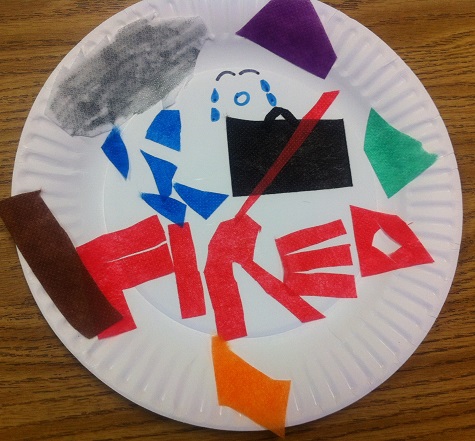
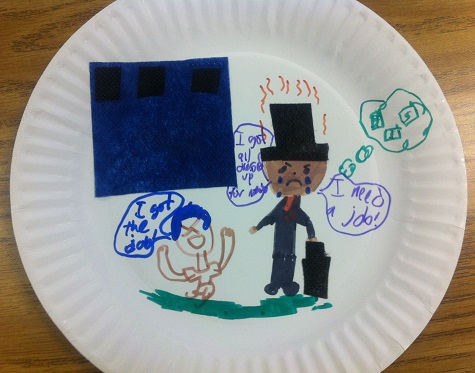
Projects like these provide valuable contributions to our ongoing educational work at the Museum and remain in use long after our McDermott Interns have left the DMA.
Alexandra Vargo is the McDermott Education Intern for Gallery Teaching and Pilar Wong is the McDermott Education Intern for Community Teaching at the DMA.
Cindy Sherman Transformed
Published April 22, 2013 Behind-the-Scenes , Education , Late Nights ClosedTags: Cindy Sherman, Dallas Museum of Art, DMA, Late Night, photo booth
On Friday, DMA Late Night visitors stopped by the Tech Lab to dress up and pose in a Cindy Sherman-like scene. Check out their transformations in these photographs taken by Greenhill School photography students and visit the Cindy Sherman exhibition to find the inspiration for the backdrops in the photos below. Stop by the Tech Lab during the Late Night on May 17 to participate in a Body Beautiful-themed Late Night Art Bytes, in celebration of our exhibition The Body Beautiful in Ancient Greece: Masterworks from the British Museum.
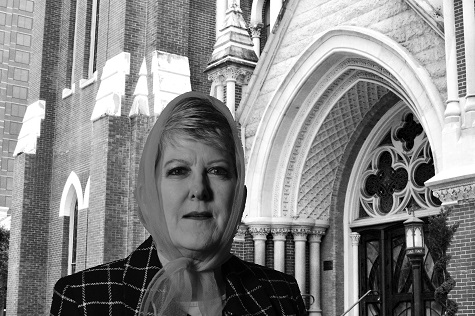
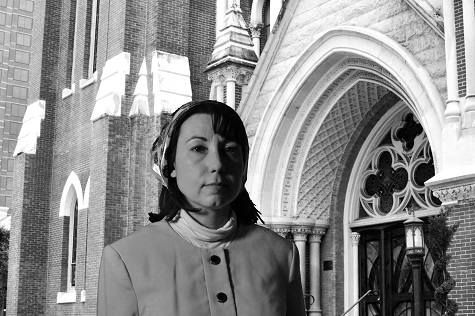

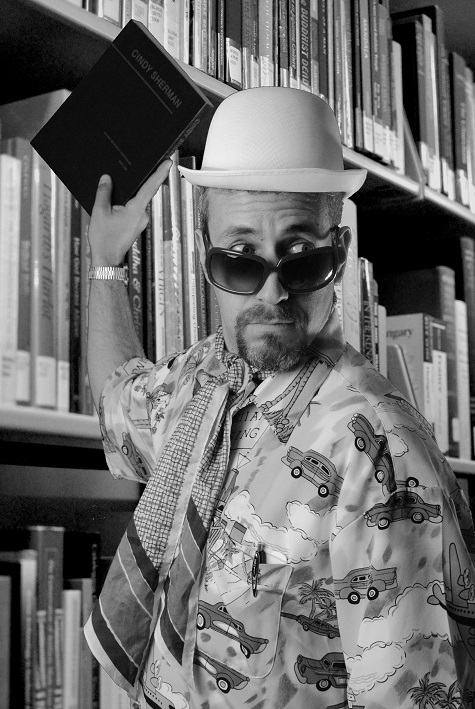

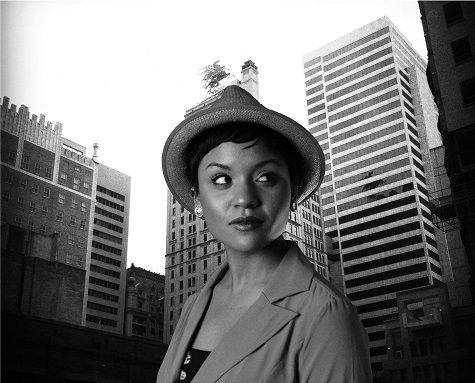
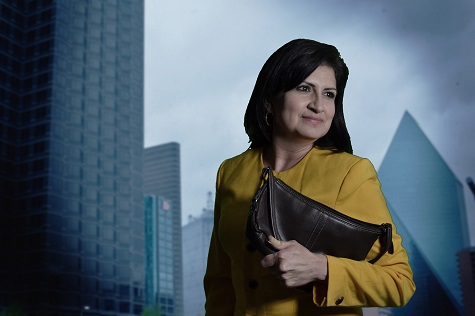
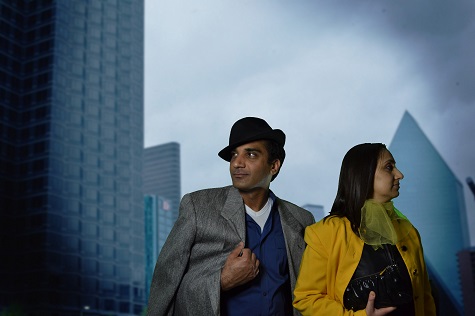
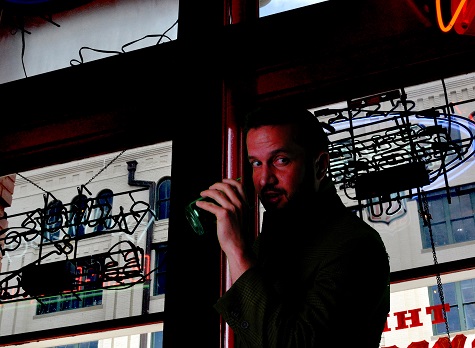
Because so many visitors stopped by the photobooth, we are still editing images. Check the DMA’s Flickr page throughout the week to see new additions to the group.
Transform yourself at home into Cindy Sherman to earn the DMA Friends Super Fan: Cindy Sherman Badge! Find out how on the DMA Friends Highlights page.
Jessica Fuentes is the C3 Gallery Coordinator at the DMA.
The Arc of Dallas at the DMA
Published April 3, 2013 Behind-the-Scenes , DFW , Education 1 CommentTags: Dallas Arboretum and Botanical Garden, Dallas Museum of Art, DMA, The Arc of Dallas
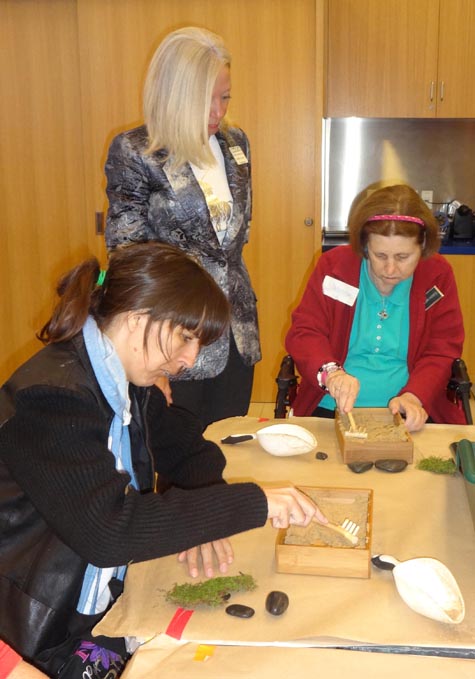
Visitors may be unaware of a special program the Dallas Museum of Art provides for adults with developmental disabilities. For the past five years, the Museum has offered a private program for The Arc of Dallas. Clients visit the Museum monthly and participate in a gallery tour and studio art-making activity. Some clients have participated for all five years, and we have a group of regular attendees. Because of their ongoing attendance, many participants feel comfortable with the Museum’s staff and in the galleries.
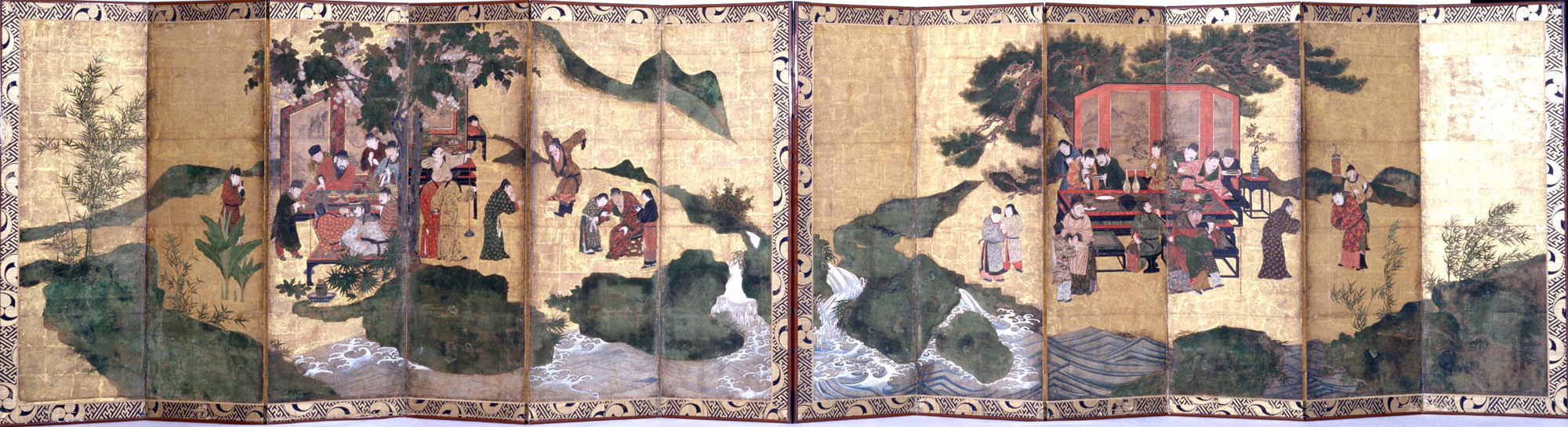
The Eight Immortals of the Wine Cup, Japan, c. 1600, ink and pigment on gold, Dallas Museum of Art, The Eugene and Margaret McDermott Art Fund, Inc.
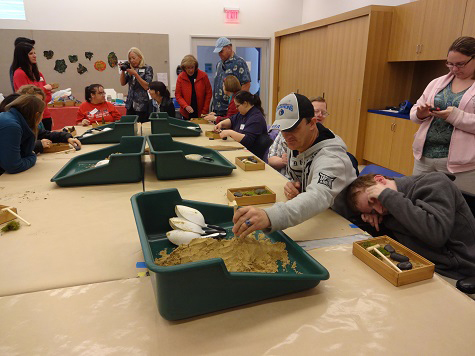
This past month we were joined by Susan Morgan, Senior Manager of Therapeutic Horticulture at the Dallas Arboretum and Botanical Garden. We discussed the importance of how nature is depicted in Japanese art, particularly the lotus flower. Clients enjoyed learning the symbolism of different plants from Sharon. Later, they walked around the Asian galleries looking for lotus flowers in the art. Back in the studio, clients created their own Zen rock gardens.
According to their website, The Arc of Dallas “promotes and protects the human rights of people with intellectual and developmental disabilities and actively supports their full inclusion and participation in the community throughout their lifetimes.” The DMA is proud to include this audience in our programming. Sherry Wacasey, Executive Director for The Arc of Dallas, believes disability does not always affect creativity, and the DMA program meets the goals to empower this population. She argues that art is another form of communication and it can touch people who in other ways cannot communicate—art can close the gap.
I worked with this program in the fall of 2012 for my master’s thesis from the University of North Texas. One of my favorite aspects of working with The Arc of Dallas clients is observing the personal connections they make to the artworks. For example, when we toured the exhibition The Legacy of the Plumed Serpent in Ancient Mexico, during the sketching portion one client identified with a ceramic figure because one arm was longer than the other, a trait that mirrored her own proportions.
Our staff enjoys The Arc of Dallas’s monthly visits and always appreciates their many hugs at the program’s conclusion. We visit different galleries every month, and next month’s visit to the exhibition Chagall: Beyond Color is certain to be a good one.
Holly York is the McDermott Education Intern for Family Programs at the DMA.
Creative Comics
Published March 20, 2013 Education ClosedTags: comics, Dallas Museum of Art, DMA, teen art, Urban Armor
Dallas students had a great time learning about comics on Sunday, March 10, at the DMA’s Urban Armor workshop. Urban Armor is a program that allows teens and tweens to take a closer look at the Museum’s collection and create unique art in the DMA’s computer-equipped Tech Lab.
Workshops are generally scheduled twice a month for two hours and are free; for more information, and to register, visit the DMA’s Urban Armor page.
Local comic book artist and illustrator Kristian Donaldson led our recent workshop, which covered the basics of drawing comics and their history and progression. Donaldson completed his training at the Savannah College of Art and Design and has worked for Marvel, DC, Dark Horse Comics, and Dallas Observer/Village Voice Media. He has also taught several classes for young adults and college-age students across the U.S.
The workshop was inspired by the recent Arts & Letters Live program featuring Art Spiegelman on February 27. One of the perks of being the McDermott Intern for Adult Programming and Arts & Letters Live is getting the chance to create a program based on my passions and interests. I grew up in small-town Texas, far from any art institutions, so as a relatively new museum-goer I have become keenly aware of a certain gap in museum activities. While programs for children, families, and adults abound, similar activities for teens and young adults often do not. One of the things I love about the DMA is that we do have programs like Urban Armor, teen-friendly author events, and student discounts. When I saw that Spiegelman was coming to Dallas, I thought that the formula of comics + teens + local art programs at schools like Booker T. Washington + Urban Armor at the DMA + FREE = awesome.
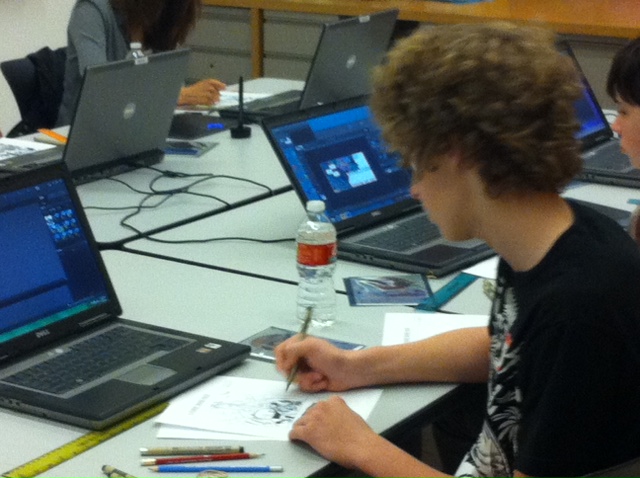
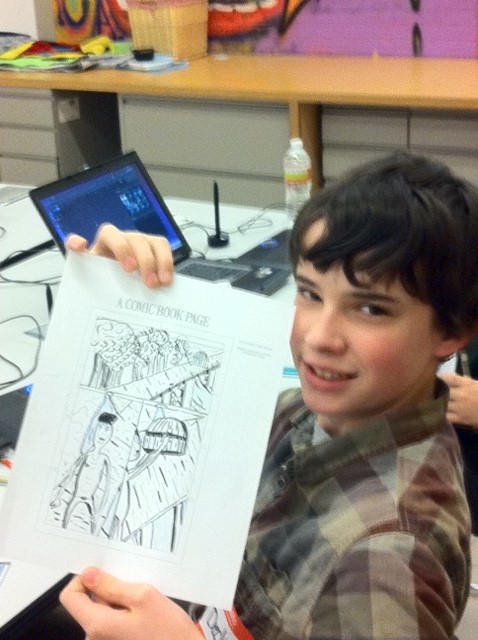
And so it began. Students age 14-17 gathered in the Center for Creative Connections to be schooled in the awesomeness that is comic book art. Kristian was very open-minded and supportive in his approach, encouraging the students to run with whatever style comes naturally, because there is no “right” or “wrong” way to draw a comic. While working with his self-professed current obsession with outer space, Kristian showed us step-by-step how to divide a basic template into three parts, set the scene with a general landscape, bring in human anatomy and emotion using shapes and positive and negative space, and lead into a story that is completely up to the artist. WOW. It was mesmerizing to watch the students create their own unique interpretations of what a comic should be. One student focused on what can only be described as a well-drawn noodle monster. I was amazed at the skill level and creativity flowing in the room.
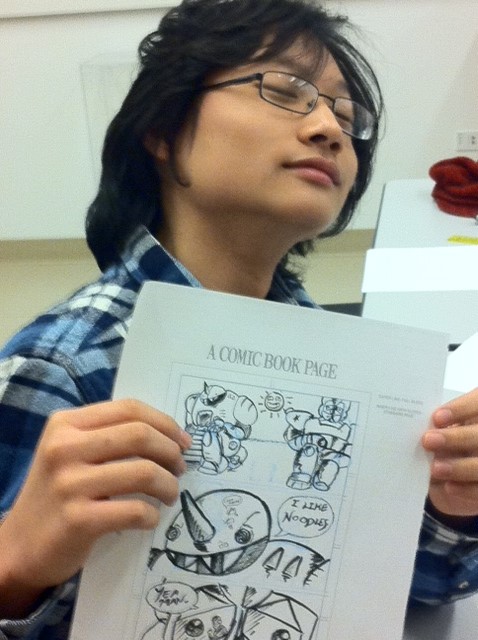
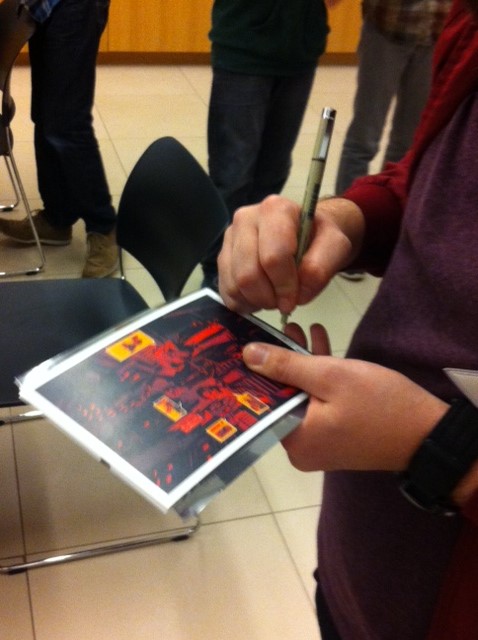
After the workshop was over, Kristian kindly signed some of his work for the students as they begged for another program with him later in the season. Comics: Part II, anyone?
Emily Brown is the McDermott Intern for Adult Programming and Arts & Letters Live at the DMA.
There’s No Place Like Home…Or a Museum That’s Open Until Midnight
Published March 6, 2013 Arts District , DMA Friends , Education , Late Nights , Special Events , Uncategorized 1 CommentTags: Dallas Museum of Art, DMA, Late Night, spring break, The Wizard of Oz
Next week is Spring Break and we are offering a lot for families and visitors of all ages to do at the DMA.
We will kick-off the week with our WFAA Family First Day on Saturday, March 9. Then, throughout the week you can explore our galleries with self-guided tours, stop by the Art Cart, compete in games with your family, and more!
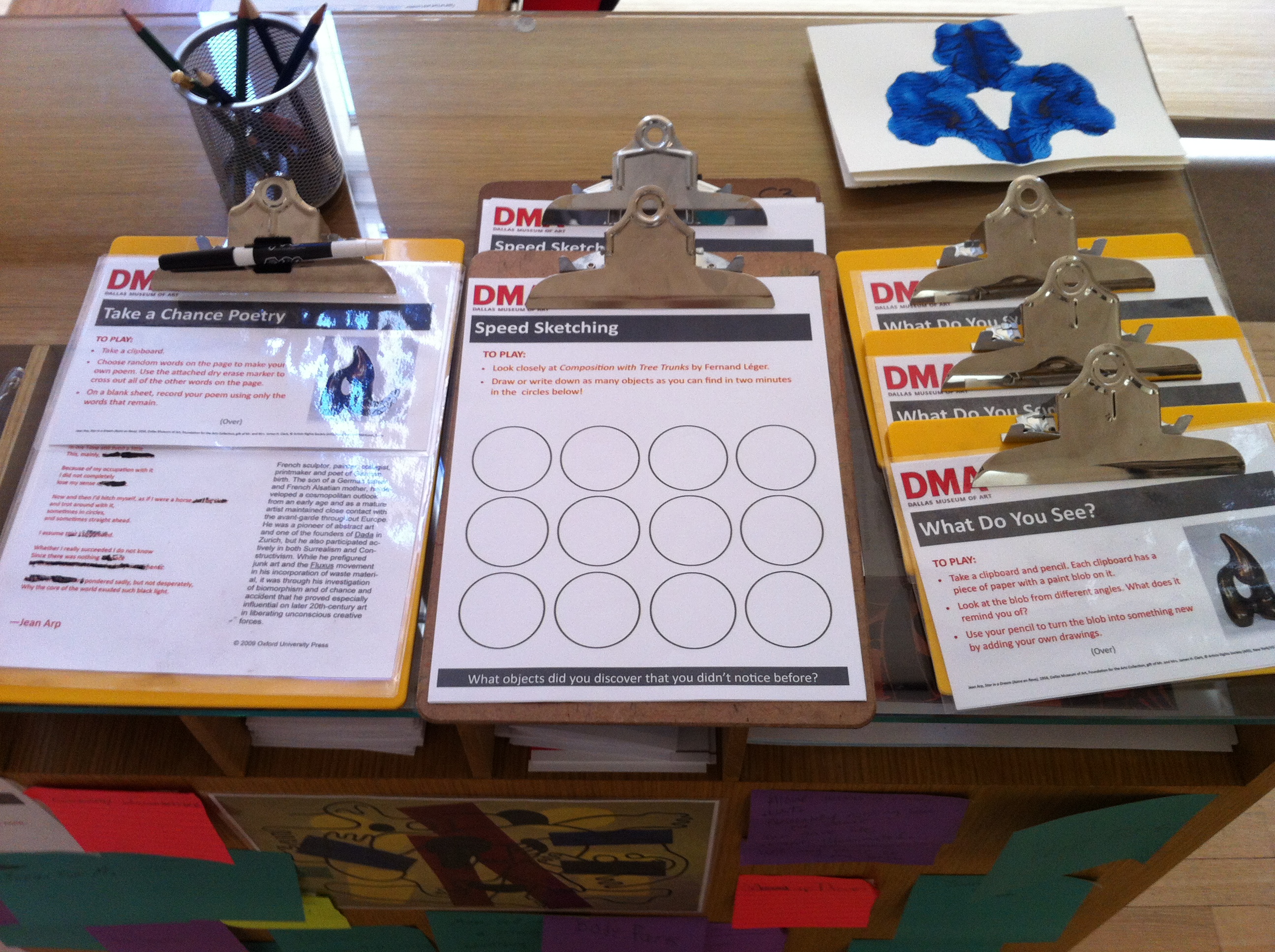
Stop by our new Art Cart in the Museum galleries.
And to end the weeklong celebration, we invite you to join us for our annual Spring Break Block Party on Friday, March 15. We will be open until midnight for our Late Night event, as will our neighbors in the Arts District: the Crow Collection of Asian Art, the Klyde Warren Park, and the Nasher Sculpture Center.
Each year we program the March Late Night around a fun family theme, from Where the Wild Things Are to Alice in Wonderland and the world of Dr. Seuss. This year, staff debated between Mary Poppins and The Wizard of Oz, and after some nostalgic discussions and fun brainstorming meetings, we decided to go over the rainbow and follow the yellow brick road to the wonderful world of Oz.
Don’t miss the “Prince of Pop-Ups,” Robert Sabuda, who will discuss his major feats of paper engineering, including his pop-up book The Wonderful Wizard of Oz.

Families can explore the galleries with our Journey Through Oz Family Adventure to find courage, a heart, a brain, and a home. And if you stay late, you can take a tour that looks at the lions, tigers, and bears (oh my!) in our collection.
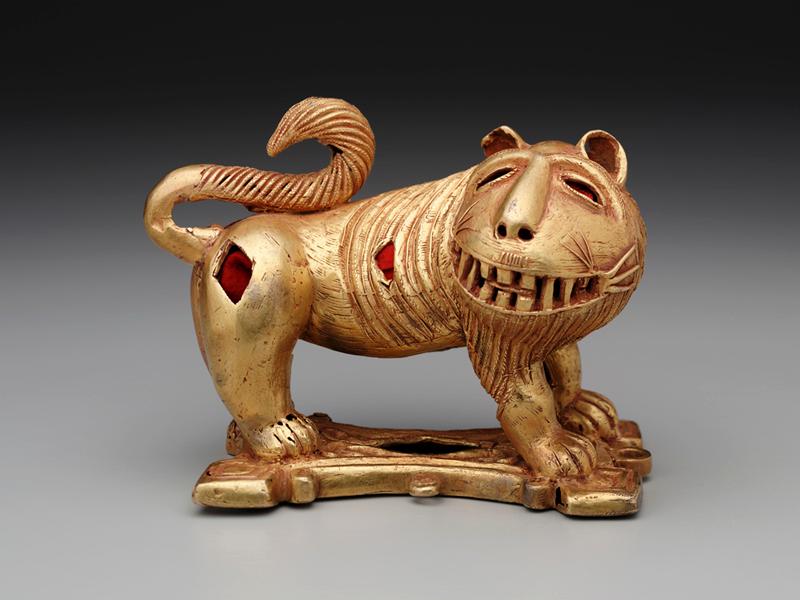
Sword ornament in the form of a lion, Ghana, Nsuta State, Asante peoples, c. mid-20th century, cast gold and felt, Dallas Museum of Art, The Eugene and Margaret McDermott Art Fund, Inc.
As for films, we decided we didn’t want to show the original Wizard of Oz but instead screen some interesting takes on the classic. So throughout the night you can watch Tom and Jerry’s take on the film as well as The Muppet’s version. And for adults we will screen the cult classic Return to Oz.
Don’t forget to bring your camera so you can take a photo with your friends and family in front of our Emerald City backdrop, accompanied by cardboard cut-out characters from The Wizard of Oz. Glinda the Good Witch is living in my office until the big day!
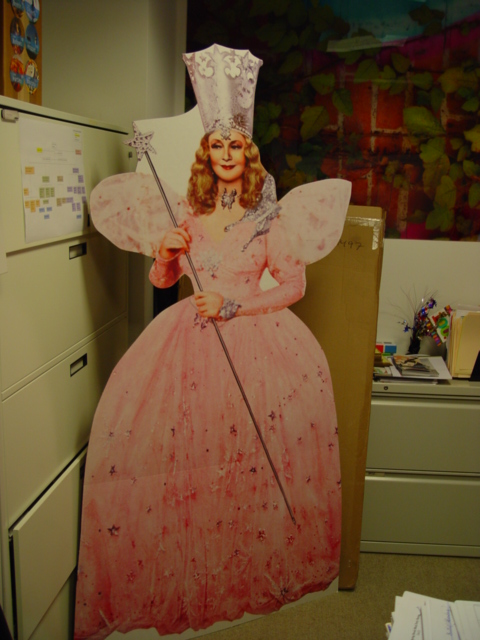
And if you are a DMA Friend, come to Late Night dressed as your favorite Wizard of Oz character to earn the Midnight Masquerade Badge and 450 points! Not a DMA Friend? Be sure to sign up at the kiosks near the Visitor Services Desks when you arrive.
Stacey Lizotte is the Head of Adult Programming and Multimedia Services at the DMA.
DMA and DTC: Collaboration Inspired by Mark Rothko
Published February 6, 2013 Arts & Letters Live , Collections , Dallas , DFW , Education , Modern Art , Special Events ClosedTags: Dallas Museum of Art, Dallas Theater Center, DMA, John Logan, Mark Rothko, Red, Tony Award
The Dallas Museum of Art and its Arts District neighbor, Dallas Theater Center, are collaborating in an unprecedented way on the upcoming production of John Logan’s Tony Award-winning play Red, a bio-drama about iconic 20th-century artist Mark Rothko. Rothko once said, “I think of my pictures as dramas; the shapes in the pictures are the performers.”
Months ago, Joel Ferrell (DTC’s Associate Artistic Director and Director of Red) and Bob Lavallee (set designer) came to the DMA for a sneak peek at our Rothko painting currently in art storage so that they could examine the stretcher and the back of the canvas.

Bob LaVvallee and Mark Leonard in art storage
Bob discussed his preliminary plans to turn the 9th floor of the Wyly Theatre into Rothko’s Bowery Studio. Joel mentioned that the actors portraying Rothko (Kieran Connolly) and his assistant Ken (Jordan Brodess) in Red will be priming and painting a canvas on stage to music in a “muscular dance,” and that “they wanted to get it right.” Joel and Bob peppered Mark Leonard (the DMA’s Chief Conservator) and Gabriel Ritter (the DMA’s Nancy and Tim Hanley Assistant Curator of Contemporary Art) with questions about Rothko’s use of materials, and great dialogue followed about the seriousness with which Rothko approached his art and creative process. On another visit, I helped production staff browse through books in the DMA’s Mayer Library to find the best photos of Rothko inside his studio in an effort to re-create it faithfully.
On January 16, the entire DTC staff, ranging from actors to production staff and administrators, joined DMA staff in an afternoon-long workshop. We immersed ourselves in the art of Mark Rothko through lively conversations with Carol Mancusi-Ungaro, who has written on Rothko’s techniques and directed the conservation of his Rothko Chapel paintings; by exploring works of art in the galleries with DMA staff by artists who came before and after Rothko; and through a sustained look and written reflection on Rothko’s painting Orange, Red and Red, which currently hangs in the South Concourse. We finished the afternoon by sharing our responses with each other, seeking to make meaning of what can seem to be an enigmatic painting.
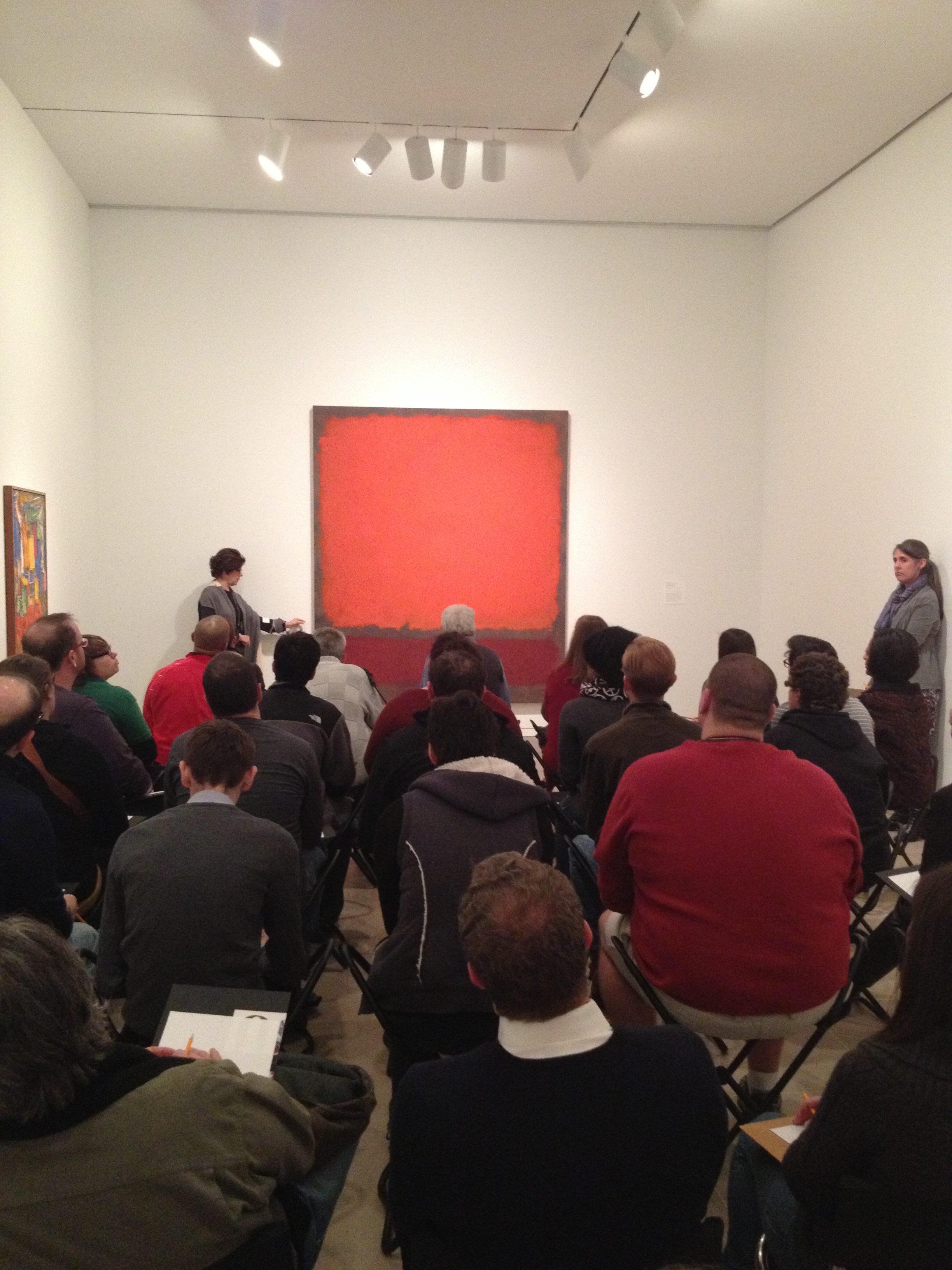
Carol Mancusi-Ungaro discusses Rothko’s painting technique with DTC and DMA staff.
Many staff agreed that the longer you looked closely at Orange, Red and Red, the more it reveals to you and rewards you. DTC Brierley Resident Acting Company member and Master Teacher Christina Vela said, “The great masters don’t offer answers, they keep asking you questions; you’re forced to continue to struggle with them.” Bob Lavallee remarked that you have to be physically in the room with the work of art in order to really understand it (as opposed to looking at an image on a screen)–much like theater. Antay Bilgutay, Interim Director of Development, said, “Having the space and opportunity to take my time with a Rothko painting changed my perception of his work.”
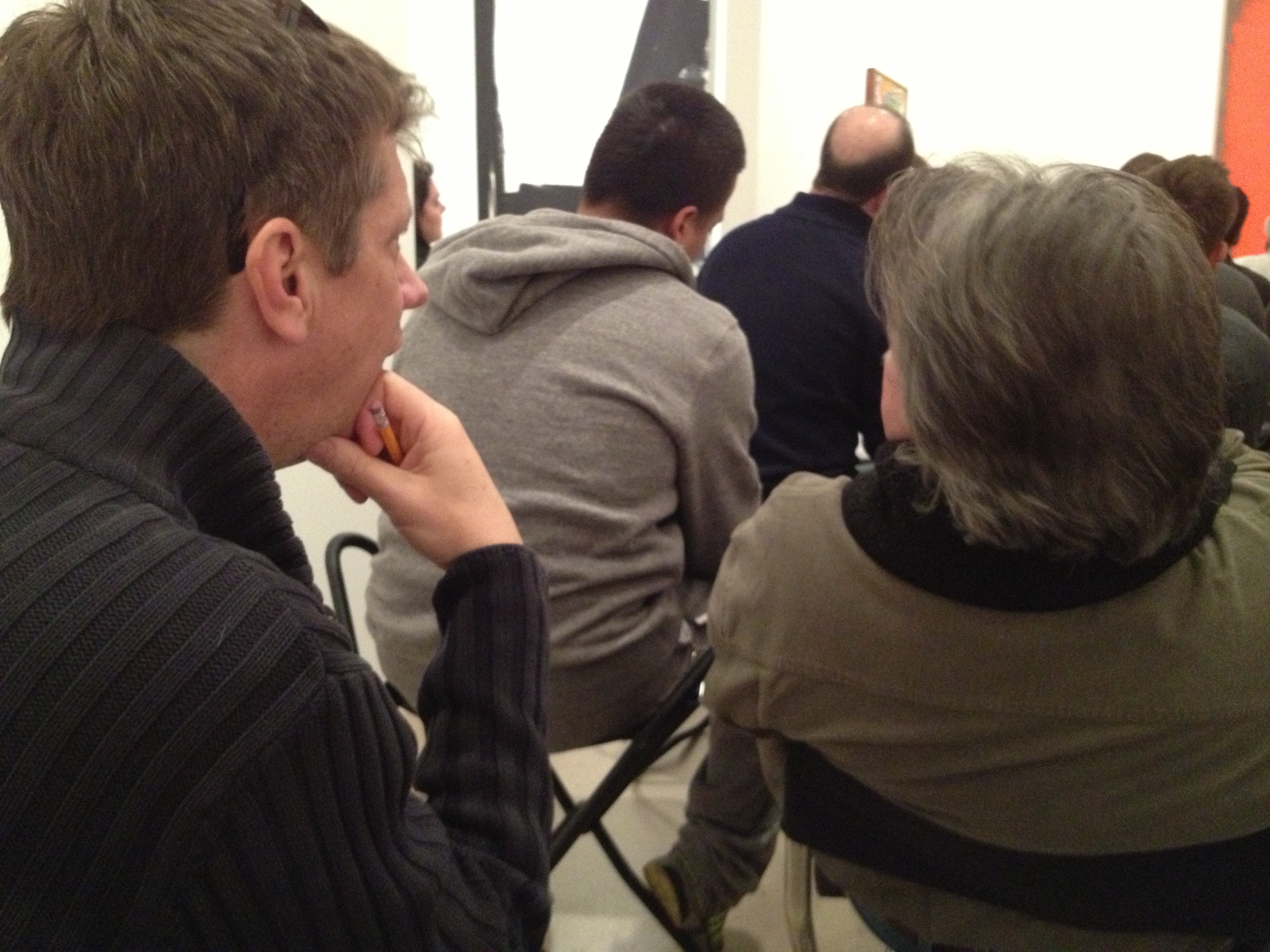
Joel Ferrell shares his reactions with a DTC colleague.
We invite you to get your tickets soon to see Red, and then come to the DMA to spend time in front of this mesmerizing work of art. Imagine you are inside the world of this painting. You might ask yourself these questions:
What do you see around you?
What do you smell, hear, and taste?
What do you feel?
How might you describe this place to someone who isn’t here?
[youtube http://www.youtube.com/watch?v=NjPVrtySbPs&w=560&h=315]
One opportunity to do just that is to attend Red In-Depth on Saturday, February 23, a program that includes a matinee performance of Red, followed by time with staff in the galleries exploring the art of Rothko and his contemporaries. Two similar in-depth experiences will take place on February 19 and 27 with middle school and high school students.
Carolyn Bess is Director of Programming and Arts & Letters Live at the Dallas Museum of Art.
Peace and Equality
Published January 21, 2013 Collections , Dallas , DFW , Education ClosedTags: Dallas Museum of Art, Edward Hicks, Glenn Ligon, I have a dream, Martin Luther King Jr., Peace and equality, Pierre Nicolas Legrand, Rufino Tamayo
Civil rights leader Martin Luther King, Jr. was a champion of peaceful ways and equality for all people. This year marks the 50th anniversary of his I Have a Dream speech, delivered in Washington, D.C., in August 1963. Pick up a Peace and Equality self-guide tour (featuring the works shown below) today at the DMA during the launch of the DMA Friends & Partners program and our return to free general admission, and visit works of art in the DMA’s collection that resonate with the spirit of peace, hope, compassion, faith, and determination prevalent throughout Dr. King’s actions and teachings.

Edward Hicks, The Peaceable Kingdom, c. 1846-1847, oil on canvas, Dallas Museum of Art, The Art Museum League Fund
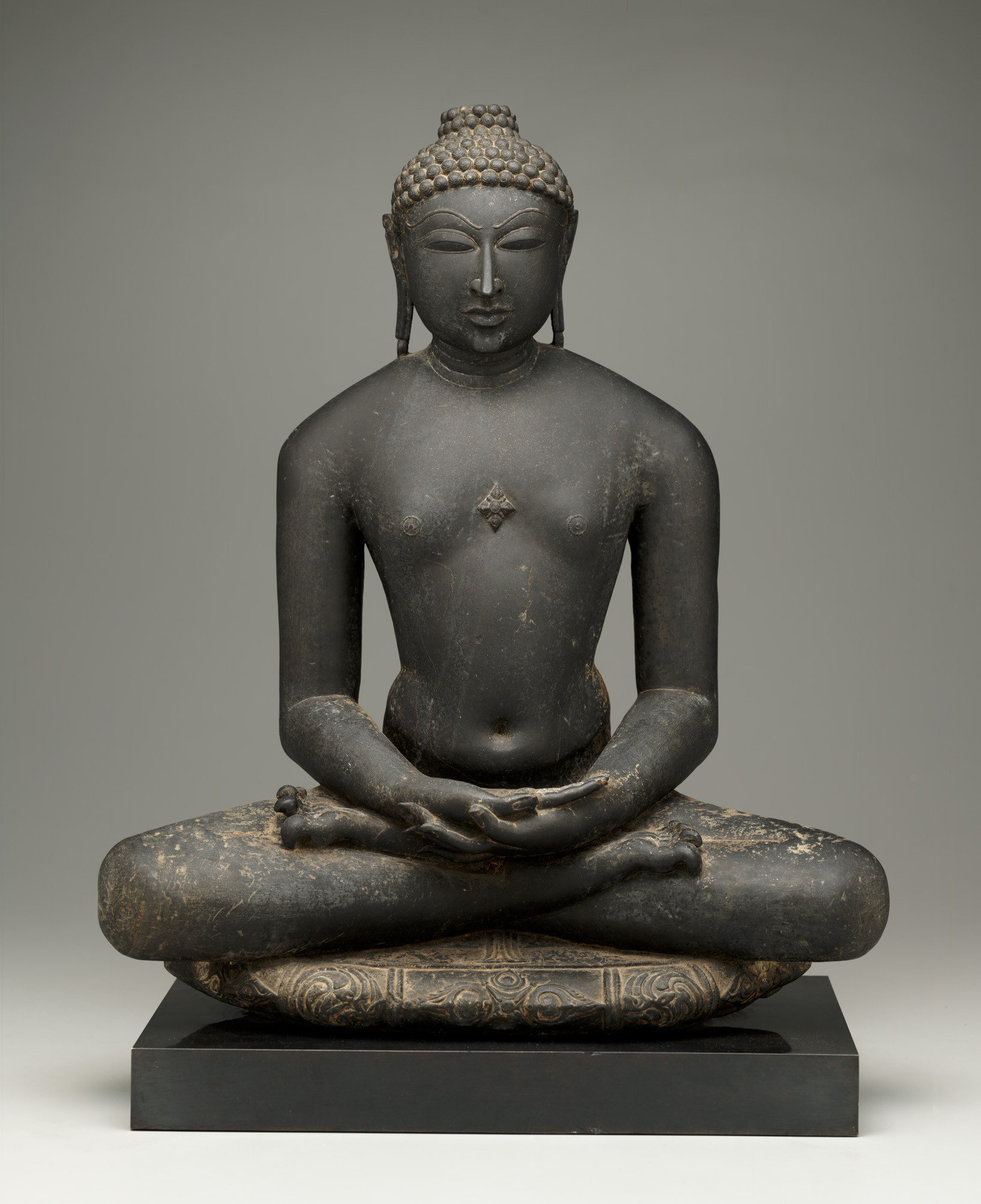
Jina, India, Western Rajasthan, 12th century, black stone, Dallas Museum of Art, gift of the Junior Associates
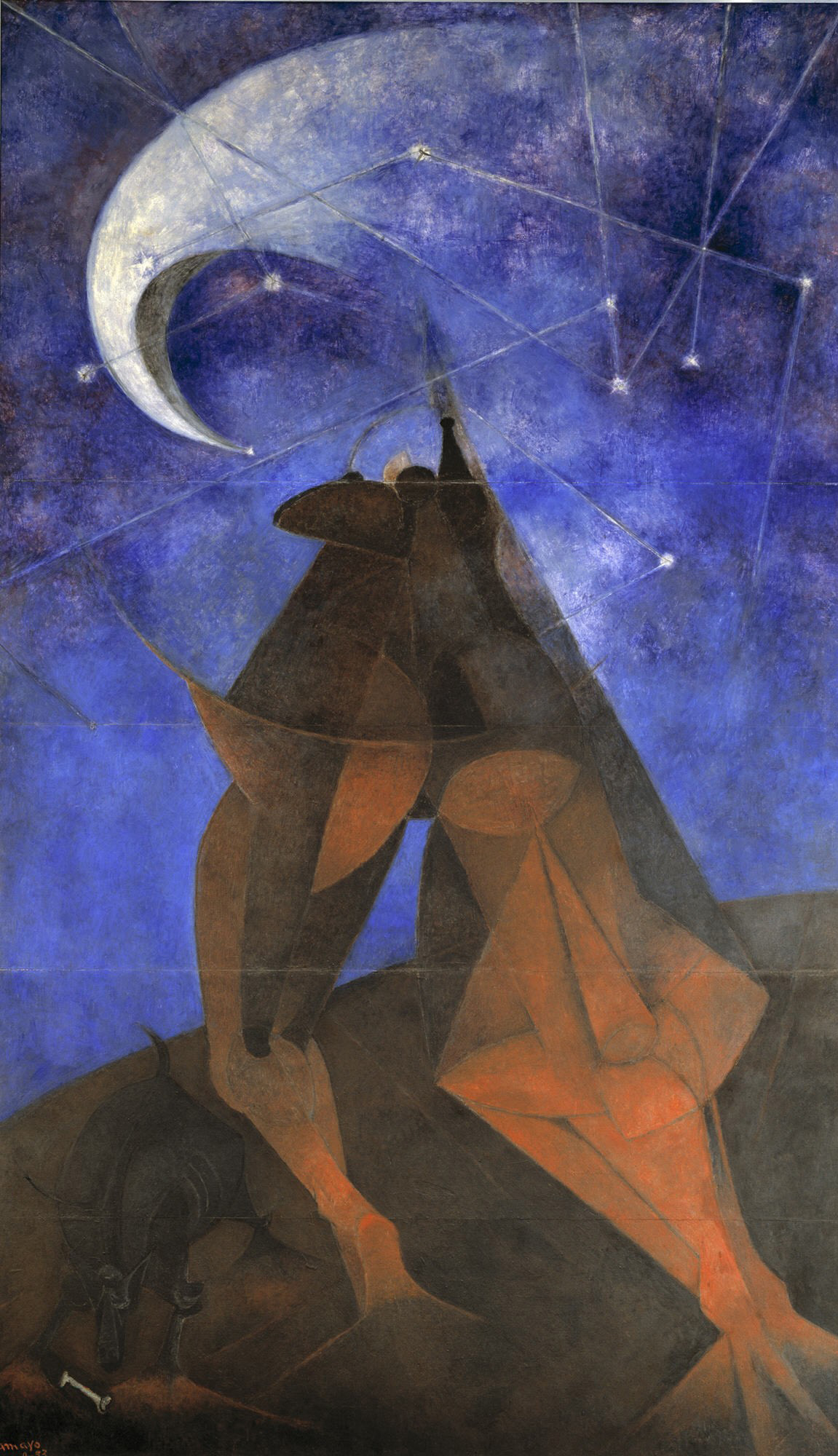
Rufino Tamayo, El Hombre (Man), 1953, vinyl with pigment on panel, Dallas Museum of Art, Commissioned by the Dallas Art Association through Neiman-Marcus Exposition Funds, (c) 2013 Estate of the artist in support of Fundacion Olga y Rufino Tamayo, A.C.

Glenn Ligon, Untitled, 2002, coal dust, printing ink, oil stick, glue, acrylic paint, and gesso on canvas, Dallas Museum of Art, DMA/amfAR Benefit Auction Fund, (c) 2002 Glenn Ligon
Nicole Stutzman Forbes is the Chair of Learning Initiatives and Dallas Museum of Art League Director of Education.