Archive for the 'Contemporary Art' Category


Calling all Dallasites

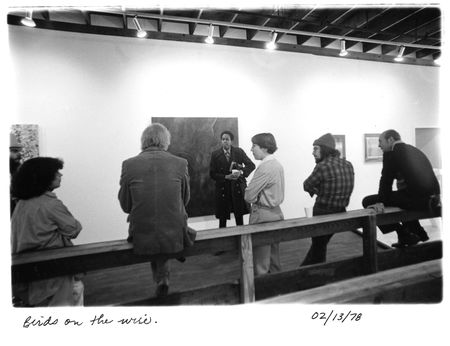
“Birds on the wire” Photograph from the opening of a 500X Gallery show, February 13, 1978. 500X Gallery Records, 1977-1996.

In 2013 the Dallas Museum of Art will celebrate a milestone in our institutional history: the 1963 merger of the Dallas Museum for Contemporary Art with the Dallas Museum of Fine Arts. The DMA is marking this occasion by launching an initiative to show how this moment was a starting point for community-wide interest in and support of contemporary art.
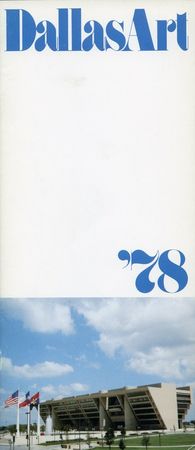
Brochure for the “Dallas Art ’78” exhibition at Dallas City Hall, Publications and Printed Materials.

By looking at the North Texas art scene over the past five decades, we hope to bring greater public awareness to the richly varied but widely undiscovered history of the area’s contemporary art avant-garde. People, places, and events are the subjects of this project, as we look outside the Museum to topics like the emergence of the gallery scene in the late 1960s with galleries like Valley House, C. Troup Gallery, Haydon Calhoun, Mary Nye, and more, and the establishment of an artists’ community as collectives take shape (the Oak Lawn Gang in the 1960s, the Oak Cliff Four and the “842s” in the 1970s, Toxic Shock in the 1980s, A.R.T.E. and the Good/Bad Art Collective in the 1990s, etc.) and artist-run spaces emerge, like A.U.M. Gallery,  D.W. Coop, 500X Gallery, and Stout McCourt Gallery.
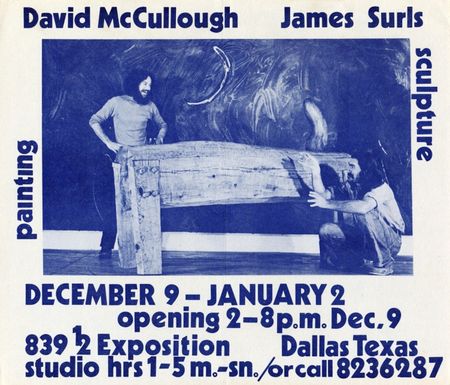
Gallery announcement for David McCullough’s studio exhibition of his work with James Surls in December, c. 1976. Paul Rogers Harris Collection of Dallas and Texas Gallery Announcements.
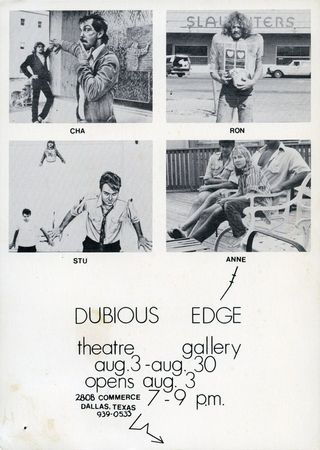
Gallery announcement for “Dubious Edge” exhibition at Theatre Gallery, c. 1987. Paul Rogers Harris Collection of Dallas and Texas Gallery Announcements.
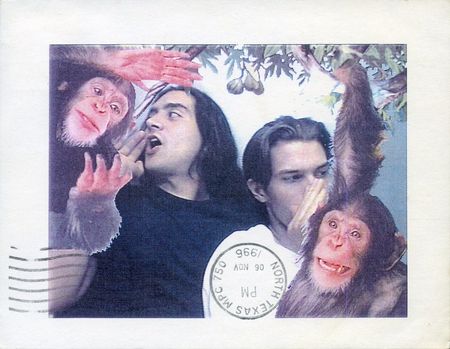
Gallery announcement for “el clumsio” group exhibition at Angstrom Gallery, November – December, 1996. Paul Rogers Harris Collection of Dallas and Texas Gallery Announcements.

Over the past year, we have developed the content that will form the basis of an exhibition scheduled to open at the Museum in May 2013. During this time, I have conducted oral history interviews with artists, arts administrators, collectors, and writers; waded through thousands of gallery announcements dating as far back as the late 1960s; burned my eyes from looking through miles of microfilmed collections; and done my best to get the word out that the DMA wants to know YOUR story.
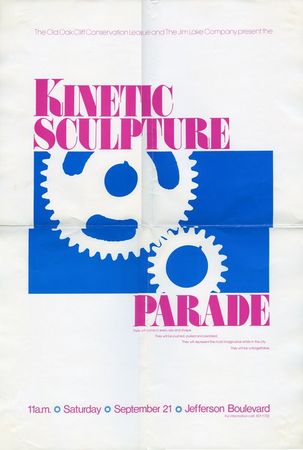
Poster for the Old Oak Cliff Kinetic Sculpture Parade sponsored by the Oak Cliff Preservation League, September 21, 1985. Paul Rogers Harris Collection of Dallas and Texas Gallery Announcements.

So let’s hear it – do you have anything you would like to share with us regarding your experience with contemporary arts in North Texas? Is there anything you are certain MUST be part of this project? This is my formal open call to Dallasites: as we develop the content for the exhibition, we are going to do our best to represent Dallas and its surroudning arts community over the past fifty years, but we do need your help. What is sitting in your closet? Do you have photographs from gallery openings or performances? Records from your gallery? Press releases announcing your show? Publications that help to document the “scene”?
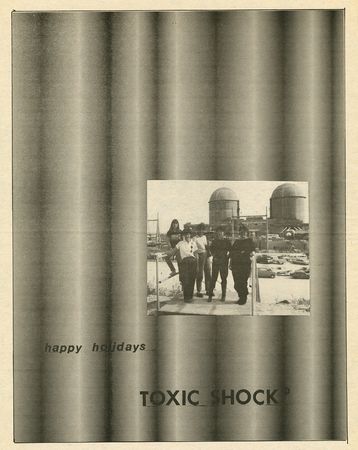
Toxic Shock page from Bwana Arts, vol. 3, 1982. Paul Rogers Harris Papers, 1959-2001.

The exhibition is only the first step as we present to you what we have found. In the coming years, we hope to add to the DMA Archives, making it the primary repository for the history of contemporary art in North Texas. So if you have something you’d like to share (be it tangible ephemera or abstract memories), please do not hesitate to contact me at larnold@DallasMuseumofArt.org. I look forward to hearing from you!
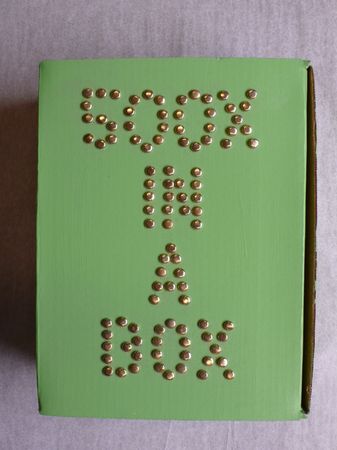
“500X in a Box,” box of a single work by every member of 500X in 1989. Charles Dee Mitchell Collection.

Leigh Arnold is the Dallasites Research Project Coordinator at the Dallas Museum of Art.

Focus on: Nobuo Sekine

For the past few months, Japanese sculptor Nobuo Sekine’s (b. 1942) works have been on view in the Marguerite and Robert Hoffman Galleries. For those of you who haven’t seen them yet, or are still wondering what these works are all about, this blog post is for you.

Phase No. 10 (1968), Phase of Nothingness-Water (1969/2005), and Phase of Nothingness-Cloth and Stone (1970/1994) were originally created in the late 1960s, and what they have in common is the word “phase” in their title. In order to understand these works better, let’s first talk briefly about global art trends in the late 1960s and then explore the idea of “phase” that so interested Sekine.

In the early 1960s, artists such as Richard Serra, Donald Judd, and Robert Morris made a clear shift away from the gestural quality of abstract expressionism (Jackson Pollock) and embraced a more minimal aesthetic. Minimalist art was intended to discard the emotionality of the past along with all non-essential formal elements related to the art object. The resulting work took shape as hard-edge geometric volumes created with industrial materials that showed little-to-no evidence of the artist’s hand in its making. As minimal sculpture evolved, artists in the late 1960s began moving outside the white cube of the gallery and museum space to create large-scale outdoor works that used the earth itself as the medium. Known as Land Art, this movement was closely associated with the work of Robert Smithson, Michael Heitzer, and others. It is within this transitional moment between minimalism and Land Art that the work of Sekine Nobuo and the Mono-ha movement in Japan came into being.

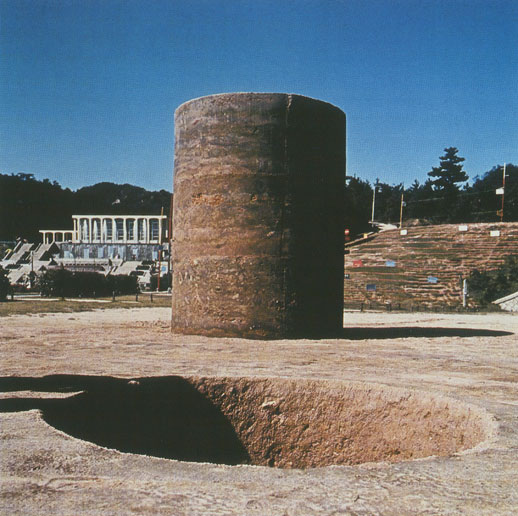
Phase Mother Earth (1968/2012) (Photo courtesy of artspacetokyo.com)

The term Mono-ha (meaning “School of Things”) encompassed a variety of different forms and approaches, but at its core the short-lived movement explored the encounter between natural and industrial objects. Using natural materials such as stone, wood, and cotton in their unadulterated states, in conjunction with wire, light bulbs, glass, and steel plates, the work of Mono-ha artists presented objects “just as they are,” with the hope of bridging the gap between the human mind and the material world.

The tenets of Mono-ha are most clearly embodied in Nobuo Sekine’s famous outdoor sculpture Phase Mother Earth (1968/2012). Often cited as the beginning of the Mono-ha movement, Sekine’s sculpture consists of a 2.2 meter-tall cylinder of earth positioned beside a hole of the exact same dimensions. While clearly in dialogue with other American and European Land Art of the time, the modest scale of Sekine’s work invites the viewer to experience the earth simply as earth rather than as a grand artistic gesture writ large across the landscape.

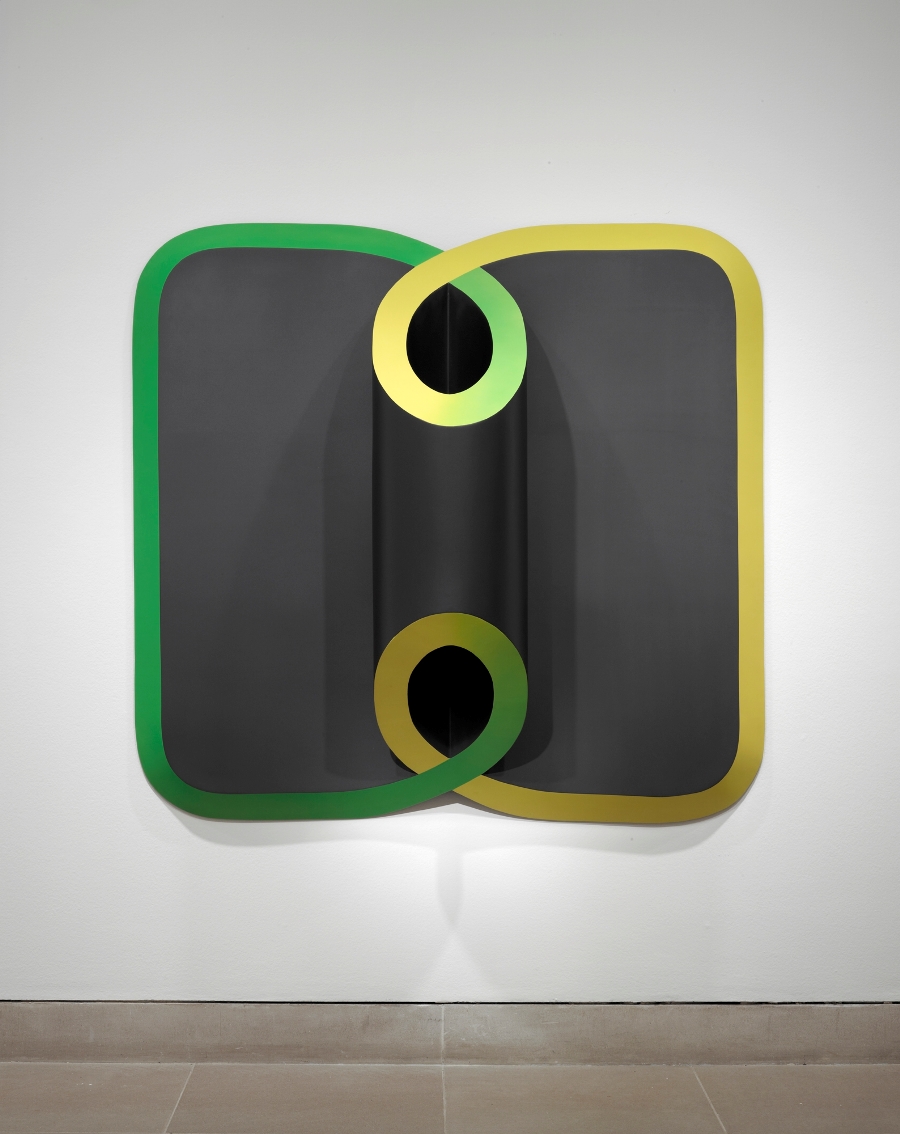
Phase No. 10, Nobuo Sekine, 1968, Steel, lacquer, and paint, The Rachofsky Collection and the Dallas Museum of Art through the DMA/amfAR Benefit Auction Fund

Sekine’s Phase-Mother Earth is closely related to the artist’s previous sculptures exploring the mathematical field of topology. Topology is a field of spatial geometry in which space and materials are considered malleable and can undergo countless transformations from one “phase” (state) to another without adding or subtracting from the original form/materials. In Sekine’s words, “a certain form can be transformed continually by methods such as twisting, stretching, condensing, until it is transformed into another.” This idea of manipulating form and space can be seen in Sekine’s work Phase No. 10 (1968) currently on view at the DMA. This wall-mounted sculpture closely resembles a Mobius strip, and when viewed head-on it appears to be a flat, curvilinear design, but when viewed at an angle the sculpture juts out from the wall, creating an optical illusion.

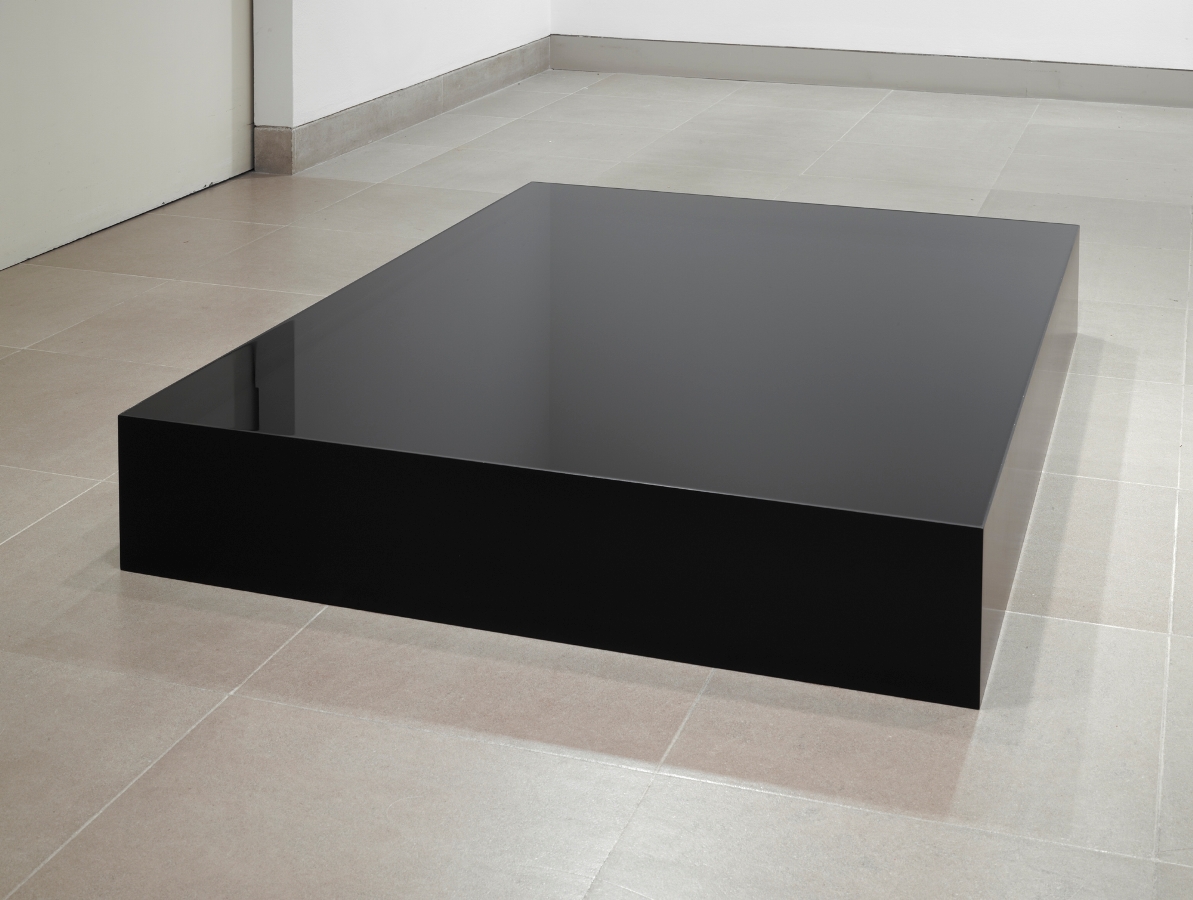
Phase of Nothingness—Water, Nobuo Sekine, 1969/2005, Steel, lacquer, and water, Dallas Museum of Art, DMA/amfAR Benefit Auction Fund

The work Phase of Nothingness—Water (1968) continues Sekine’s engagement with topology. To illustrate these ideas, the artist juxtaposed two equivalent shapes—a cylinder and a rectangle—both containing the same volume of water. At first glance, it doesn’t appear that the shallow rectangular tank and the tall cylindrical tank both hold the exact same amount of water. Similar to his earlier outdoor sculpture Phase—Mother Earth, this work attempts to depict a sense of equivalence and emphasizes the continuity of form and material. These two shapes are not meant to be seen as opposites but as equals. As Sekine explains, “[T]he mass of the universe neither increases nor decreases. This is the universe of eternal sameness. When one becomes aware of this, then the futility of modern concepts of creation can be realized.”

I hope this blog helps explain some of the fascinating (and at times complicated) ideas that inform Sekine’s sculpture. The exhibition closes Sunday, so plan your visit to the DMA before it’s too late!

Gabriel Ritter is The Nancy and Tim Hanley Assistant Curator of Contemporary Art at the Dallas Museum of Art.

Seldom Scene: Scaled Down

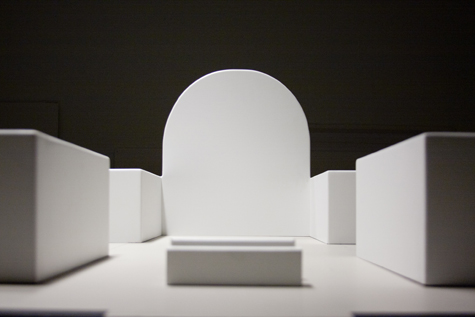
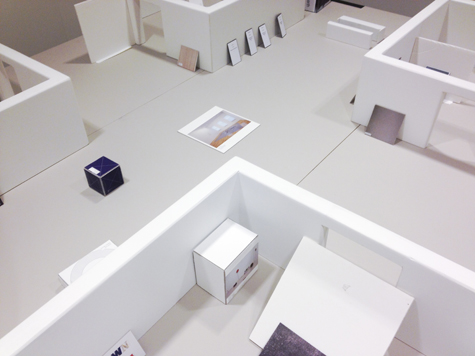
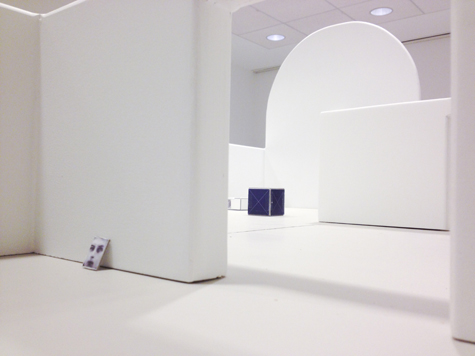
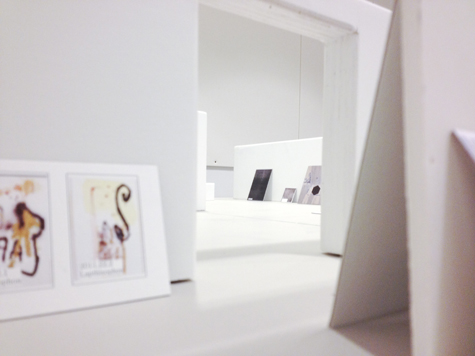
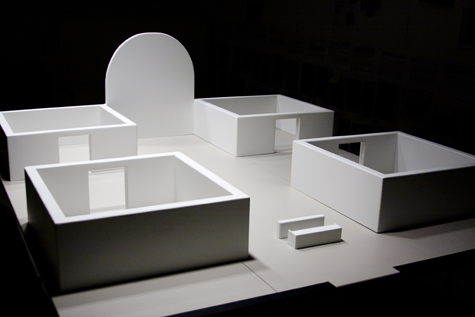
The new DMA exhibition Variations on Theme: Contemporary Art 1950s–Present explores themes and ideas that drive an artists’ creative process. With this concept in mind, the Contemporary Art Department thought it would be the perfect opportunity to share one way that curators tap into their own creative processes when developing a new exhibition – by using a scale model. Curators use scale models much like they would a doll house, to rationalize the gallery space in accordance with the placement of the art objects. Variations on Theme is installed in the gallery spaces known as the Barrel Vault and Quadrant Galleries, which are roughly 11,500 square feet. DMA carpenter Dennis Bishop constructed a wooden model of these galleries with a scale of 1:24 (one half-inch equals one foot). The objects in Variations on Theme are of various sizes and mediums and are complicated to install, so in order to visualize how certain works might look next to one another DMA exhibitions intern Jasmine Shevell created maquettes of each work that are proportional to the scale model of the exhibition space. Once each object is set into place, the design model is shared with our talented exhibitions team, registrar, and preparators, who bring the curator’s model to life!
Variations on Theme is on view at the Dallas Museum of Art until January 27, 2013.

Meg Smith is a Curatorial Administrative Assistant at the Dallas Museum of Art. Photography is by Adam Gingrich, the Marketing Administrative Assistant at the Dallas Museum of Art.

Red, White, and Blue

Some visitors to the DMA may have taken our self-guided tour Seeing Red, and loyal readers of our blog may remember a post we did back in December about works in our collection that are white. So while we have not focused on the color blue yet, we thought this would be a good day to share with you a few works in our collection that feature red, white, and blue.

Striped chevron bead, Drawn glass, Dallas Museum of Art, gift of The Dozier Foundation

Childe Hassam, Flags, Fifth Avenue, 1918, Watercolor, Dallas Museum of Art, Munger Fund, in memory of Mrs. George Aldredge

Anne Vallayer-Coster, Bouquet of Flowers in a Blue Porcelain Vase, 1776, Oil on canvas, Dallas Museum of Art, Foundation for the Arts Collection, Mrs. John B. O’Hara Fund and gift of Michael L. Rosenberg

Rufino Tamayo, El Hombre (Man), 1953, Vinyl with pigment on panel, Dallas Museum of Art, Dallas Art Association commission, Neiman-Marcus Company Exposition Funds [credit line published in 1997 DMA Guide to the Collections: Dallas Museum of Art, commissioned by the Dallas Art Association through Neiman-Marcus Exposition Funds]

Piet Mondrian, Composition with Large Blue Plane, Red, Black, Yellow, and Gray, 1921, Oil on canvas, Dallas Museum of Art, Foundation for the Arts Collection, gift of Mrs. James H. Clark

Yves Tanguy, Apparitions, 1927, Oil on canvas, Dallas Museum of Art, The Eugene and Margaret McDermott Art Fund, Inc., in honor of Nancy O’Boyle

Jean Antoine Theodore Giroust, Oedipus at Colonus, 1788, Oil on canvas, Dallas Museum of Art, Foundation for the Arts Collection, Mrs. John B. O’Hara Fund

James Brooks, Quand, 1969, oil on canvas, Dallas Museum of Art, gift of the Meadows Foundation Incorporated

Wassily Kandinsky, Boating (from Sounds), 1907-1911, 1913, Volume with thirty-eight prose poems and twelve color and forty-four black-and-white woodcuts, Dallas Museum of Art, Centennial gift of Natalie H. (Schatzie) and George T. Lee

Stacey Lizotte is the Head of Adult Programming and Multimedia Services.

Seldom Scene: Installing Form/Unformed

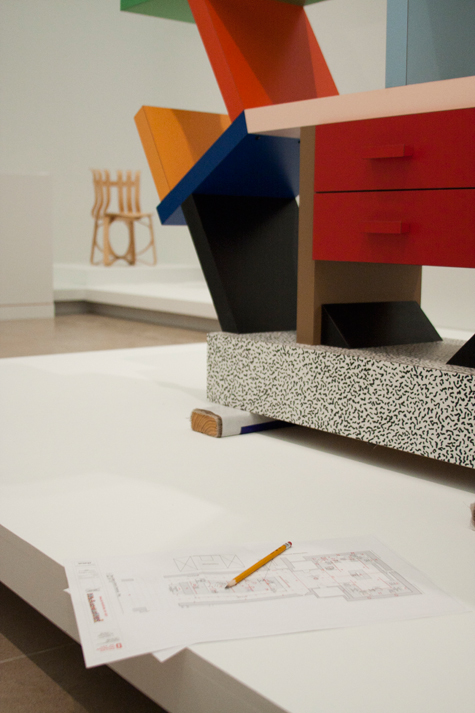
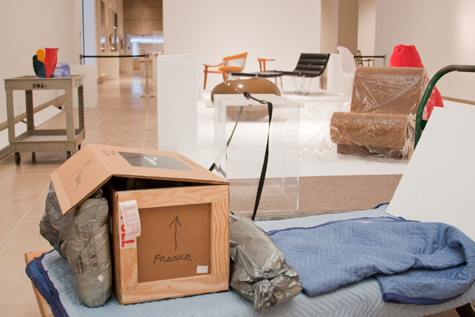
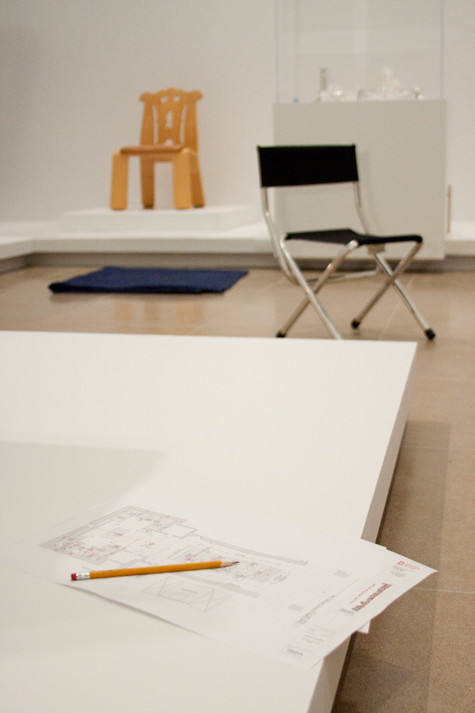
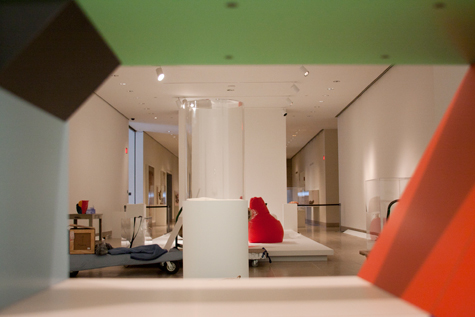
A look back at the installation of Form/Unformed: Design from 1960 to the Present, the first comprehensive overview of our modern and contemporary design collections, on view in the Tower Gallery. Work in the gallery began in October 2010 for the Decemeber 19, 2010 opening. Below are a few shots of the installation process.

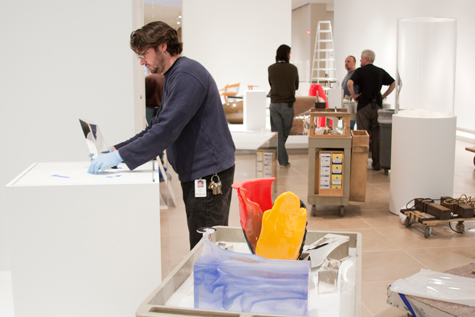
DMA exhibition staff, including preparators John Lendvay and Lance Lander and exhibitions graphic designer Kevin Parmer, install the newly opened Form/Unformed: Design from 1960 to the Present in the Level 4 Tower Gallery.

Photography by Adam Gingrich, DMA Marketing Assistant.


Different Perspectives

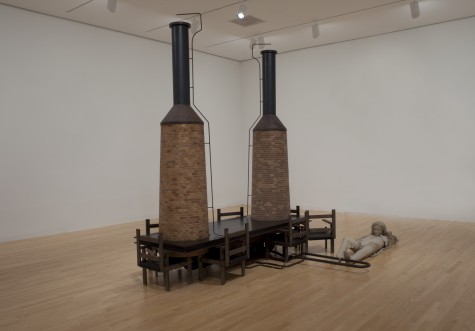
We are trying something new at the Dallas Museum of Art in conjunction with our current contemporary art exhibition Mark Manders: Parallel Occurrences/Documented Assignments. What questions or emotions do you experience after viewing Mark Manders’ work? You can now discuss your reactions to the exhibition to discover answers or perhaps look at the work in a new way.

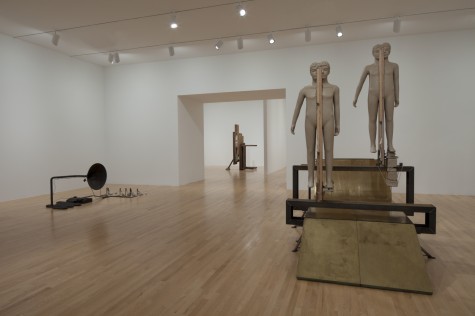
Installation View of "Mark Manders: Parallel Occurrences/Documented Assignments"

Every Thursday, through the end of the exhibition, staff and special guests will be in the exhibition from 6:30 to 8:45 p.m. for our new In Residence program. Just look for the person wearing the In Residence button and start a conversation or ask thim or her a question about Manders’ process or the materials he uses.

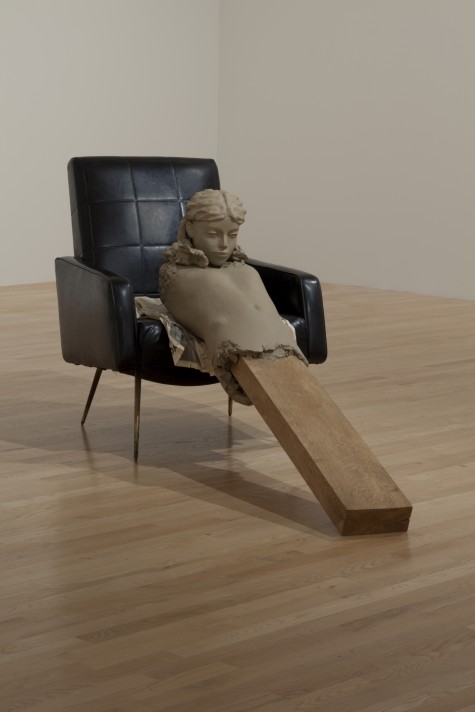
Mark Manders, "Ramble-room Chair" , 2010, Courtesy of the artist and Zeno X Gallery, Antwerp

As part of the In Residence program, we have invited an archaeologist, a poet, and an architect not only to answer questions and talk with visitors about what they perceive in Manders’ work but to participate in a conversation for our Perspectives series.

Perspectives is a series of conversations led by DMA staff who will explore with the special guests what their professions can reveal about Manders’ work. The first Perspectives conversation will take place tomorrow evening and will feature archaeologist Dr. Gregory Warden.

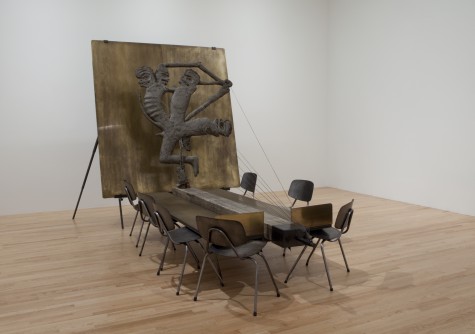
Mark Manders, "Anthropological Trophy", 2010, Courtesy of the artist; Tanya Bonakdar Gallery, New York; and Zeno X Gallery, Antwerp

If you can’t join us tomorrow night, be sure to stop by one Thursday evening before April 12 and take part in this new program. It might just change your perspective!

Mark Manders, "Room with Chairs and Factory", 2003-2008, Museum of Modern Art, New York, Marguerite Stone Bequest and Gift of Mrs. Saidie A. May (both by exchange), 393.2010

Stacey Lizotte is Head of Adult Programming and Multimedia Services.

Graffiti Couture

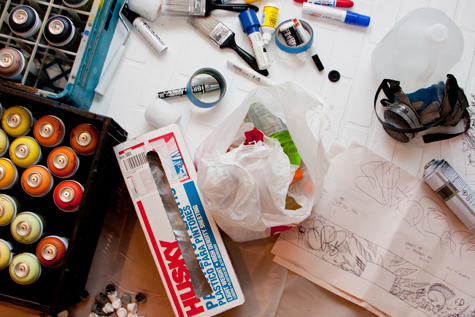
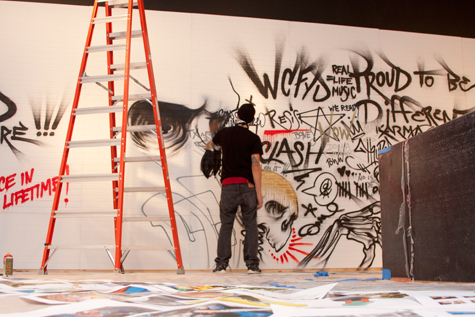
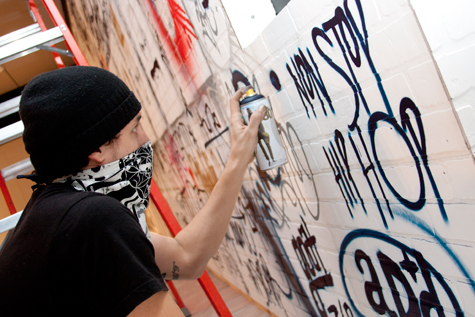
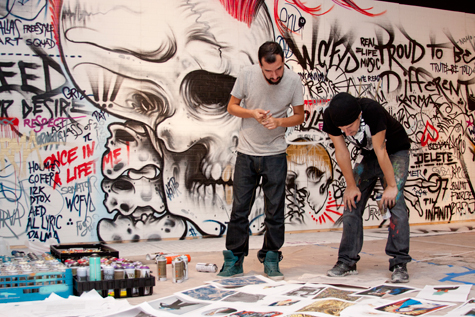
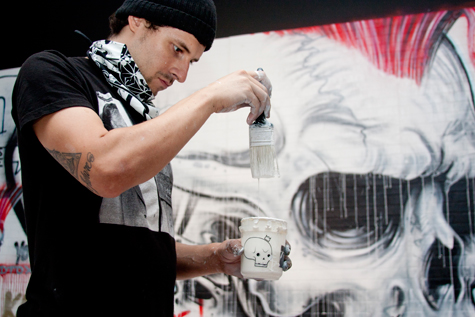
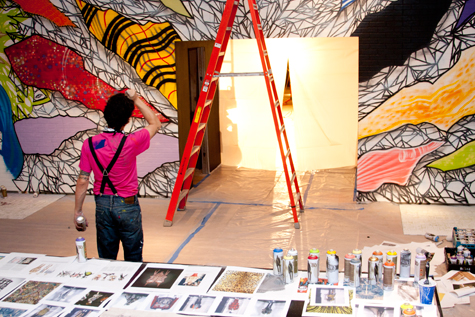
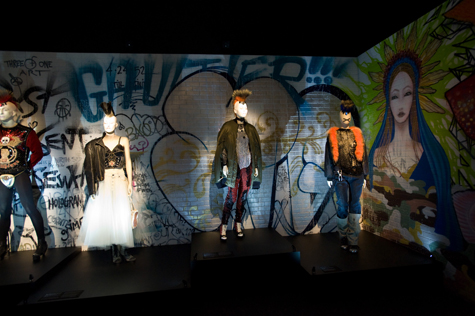
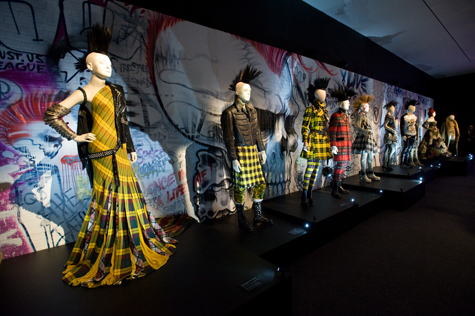
There are six exciting galleries inside The Fashion World of Jean Paul Gaultier: From the Sidewalk to the Catwalk exhibition, from a red light district to a motorized runway. For the Punk Cancan room, we decided to tag the walls with details of Gaultier and Dallas with the help of graffiti artist Jerod DTOX Davies for Blunt Force Crew/Beastmode Squad. Below is a behind-the-scenes look at the tagging process.

[youtube=http://www.youtube.com/watch?v=6piW3fqL-Uw]

Photography by Adam Gingrich, Dallas Museum of Art Marketing Assistant, and George Fiala.

Big Love from Jean Paul Gaultier

You may have heard that the U.S. Premiere of The Fashion World From Jean Paul Gaultier: From the Sidewalk to the Catwalk opened yesterday at the Dallas Museum of Art. But we had a week of pre-opening  events prior to Sunday, including the Press Preview on Thursday morning. Below are a few of our favorite shots from our time with the “enfant terrible”.

[slideshow]
[youtube=http://www.youtube.com/watch?v=A5indXVufDQ]

Kimberly Daniell, Public Relations Specialist at the Dallas Museum of Art

A Monumental Install

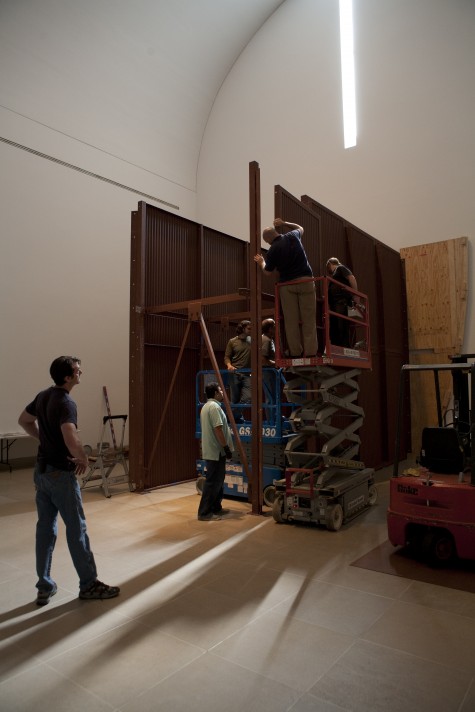
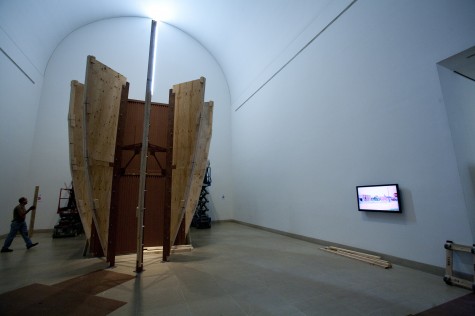
Detail, the massive ark currently grounded in the Barrel Vault, recreates part of Mark Bradford’s earlier work Mithra which was installed in New Orleans after hurricane Katrina. Detail consists of a steel and wood core to which is attached plywood panels to form the outer hull. The only part of the original Mithra that is used for this new piece is the outer plywood hull; the inner structure is new and was designed and fabricated for Bradford’s retrospective.

Because of the size and complexity of Detail, it was decided early in the planning stages of our exhibit that I would travel to Chicago to observe the piece being installed at the Museum of Contemporary Art. Being able to watch and participate in the assembly of Detail at the MCA answered most of the questions we had about its construction. Well before we began our installation, we had a very firm idea of how the piece would go together and how long it would take to build.


The first two days of installation were spent bolting together the inner steel core, which comprises thirteen steel uprights, sixteen corrugated steel panels, and almost forty horizontal and diagonal braces. Due to the size and weight of the individual components, and the fact that the steel panels were an extremely tight fit to the uprights, this was the most difficult part of the installation. The prep staff made judicious use of rubber mallets to “persuade” the steel panels to fit. When completed, this inner core replicates the look of the steel shipping containers used in the original MithraDetail is designed so that the viewer can get a slight glimpse of this inner structure through small gaps between the plywood panels that form the hull.

Once we were finished assembling the steel core, the installation went fairly quickly. The next step was to attach eleven large wooden “ribs”—each in two sections, a top and a bottom—that bolted on to flanges on the steel uprights. At this point what had been a huge steel box began to take on the shape of a giant boat. Next a series of horizontal wooden braces were screwed between the ribs. These horizontal braces, along with the wooden ribs, served as attachment points for the outer plywood “skin” that forms the hull of Detail. The final step was screwing the plywood panels to the ribs and horizontal braces, which completed the hull. The fit of the panels was not really precise; at this stage, we relied on our own aesthetic judgment, plus images from the installation in Chicago, to determine the exact placement and alignment of each panel in relation to the others around it.

We completed Detail in five days, right on schedule. Mark Bradford’s monumental boat and the Barrel Vault space seem to be made for each other, and Detail will certainly be as memorable a viewing experience as it was to install.

Mike Hill is a Preparator at the Dallas Museum of Art.
Seldom Scene: Shipyard

Mark Bradford opens on October 16 but the installation began a few weeks ago. Below are images of the Barrel Vault installation of Detail, a monumental section of the ark Mithra, which the artist built for Prospect 1, the 2008 New Orleans Biennale, one of the first international art events devised to bring visitors back to that city following Hurricane Katrina.

[slideshow]


Archives

Categories