Archive for the 'Collections' Category


Deep in the Heart of Texas

Are you ready for a picnic, fireworks, and to “remember the Alamo”?  It’s time to celebrate Texas Independence Day!

One hundred and seventy-five years ago, on March 2, 1836, Texas declared its independence from Mexico when Sam Houston and fifty-seven other men formed the Republic of Texas by signing the Texas Declaration of Independence. The Lone Star State’s triumphant struggle for independence ended a few days later at the siege of the Alamo. Among the approximately 250 brave men who died there were William R. Travis, Jim Bowie, and Davy Crockett.

A sketch of this legendary battle by Robert Jenkins Onderdonk (father of the Texas impressionist painter Julian Onderdonk) is part of the DMA’s collections. This preliminary drawing depicts Crockett in the center wearing his trademark coonskin cap. He swings a flintlock overhead, about to club advancing Mexicans who have broken through the building’s south gate.
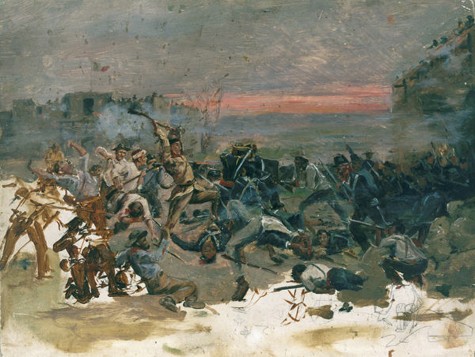
Robert Jenkins Onderdonk, American 1852-1917, "Sketch for 'Fall of the Alamo,'" , c. 1901, Oil and pencil on paper board, Dallas Museum of Art, gift of Eleanor Onderdonk, 1960.185

Davy Crockett was a celebrated 19th-century American folk hero, frontiersman, soldier, and politician. He moved from his native Tennessee to serve in the Texas revolution and died at the Battle of the Alamo. A notable work in the DMA’s collections is William Henry Huddle’s portrait of the courageous young hero who made the ultimate sacrifice for the young Texas Republic. Best known for painting scenes from the Texas war of independence, Huddle also completed a series of portraits of Texas governors. In the DMA’s painting, Huddle depicts the hero wearing his hunting clothes with his trusty rifle by his side. Although historians debate many of the details surrounding Crockett’s death, they all agree that he died on March 6, 1836, on the last day of the siege of the Alamo.

William Henry Huddle, American, 1847-1892, "Davy Crockett," 1889, Oil on masonite, Dallas Museum of Art, The Karl and Esther Hoblitzelle Collection, gift of the Hoblitzelle Foundation, 1987.47

The DMA owns some lovely images of this treasured building. One by Plano, Texas, artist Frank Klepper is quite different from Onderdonk’s combative scene. By depicting the building on a tranquil, starry night, Klepper turns the battleground into a hallowed shrine that is the pride of every Texan.

Klepper, The Alamo

Frank Klepper, American, 1890-1952, "The Alamo," early 1930s, Oil on canvas, Dallas Museum of Art, gift of the History Club, 1933.7

Martha MacLeod is the European and American Art Curatorial Administrative Assistant at the Dallas Museum of Art.

California (Day) Dreaming

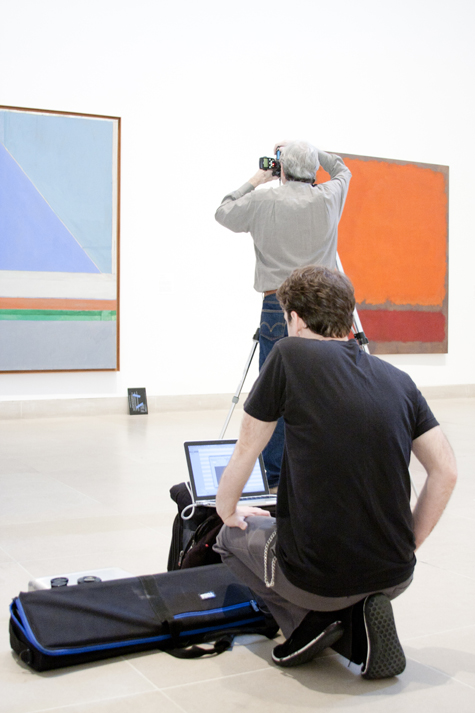
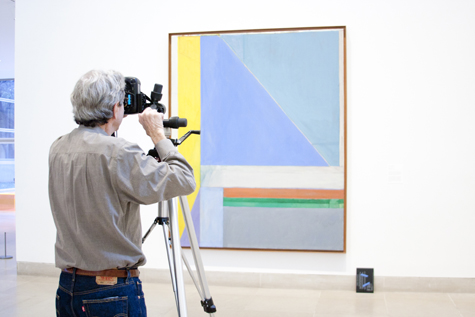
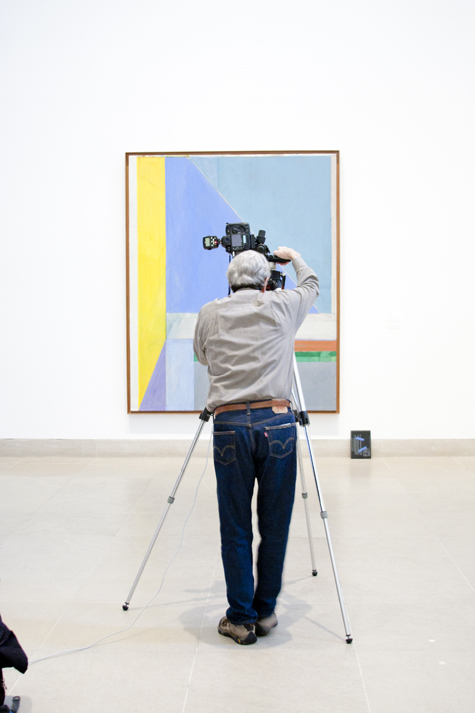
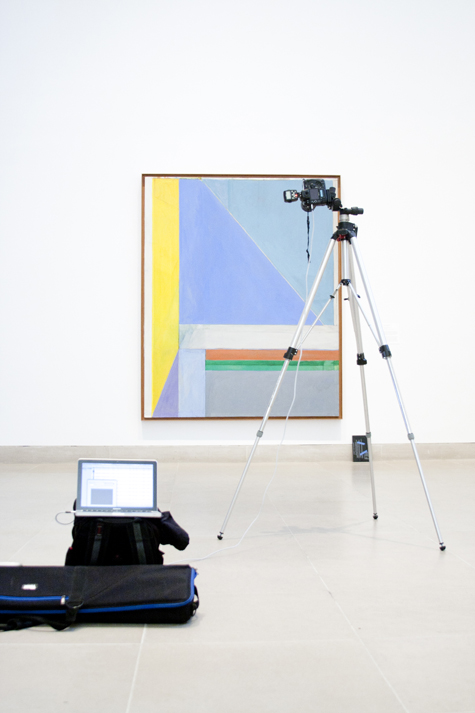
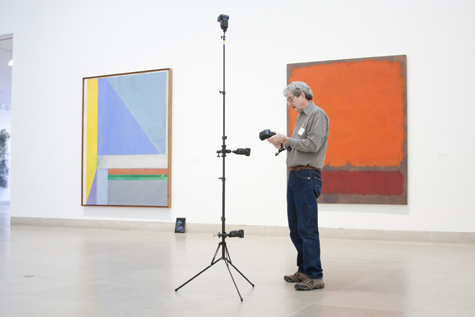
Although we’re closed on Mondays, yesterday the Barrel Vault was all lit up. That morning we hosted two special guests from The Richard Diebenkorn Foundation. The artist’s son-in-law, Richard Grant, who is also the foundation’s Executive Director, was here with a colleague to photograph our Ocean Park No. 29 for the Diebenkorn catalogue raisonné. This magnificent ab ex work, a highlight of the DMA’s collection, is now on view in our Re-Seeing the Contemporary exhibition.

The Night Owl and the Pussycats: Adventures in Igniting the Power of Art

From the very beginning in February 2009, this exciting book project inspired by the DMA’s director, Bonnie Pitman, was a collaborative effort. And my responsibility was to serve as the publication’s gatekeeper, charged with trafficking the manuscript, compiling and incorporating the numerous edits and comments, and keeping track of all the details and loose ends. There were “those days” when I imagined masses and masses of rapidly proliferating Hydra heads—and, like a metaphorical Hercules, the faster I lopped them off (i.e., completed a task), the faster they seemed to regenerate.

To keep track of all the edits to the digital manuscript, we used the Microsoft Word feature known as Track Changes, where, like a board game, everyone gets a different color. With five or six people making rainbow-colored edits, the manuscript became a vivid, almost psychedelic, dazzle of clashing colors, from bright pink to pale brown. Since large chunks of text were moved around, Word could only track this by keeping the old, lined-out passages on the page, so I found myself on “fast forward” through whole paragraphs on occasion. Then when comments were added to the screen, a running series of squashed balloons of text crowded in along the right-hand margin. Pretty soon we were laughing about eye strain.

Our quest for a perfect set of images became the next challenge. We pored through hundreds of DMA images—sorting, juxtaposing, weighing, and discarding—for each of the 141 photographs finally chosen. So it was definitely an exciting moment when the book went to the printer in early October 2010. As I write this blog two years later, we have distributed the printed copies. While this project “had its moments,” it’s also been enormously rewarding. I’ve learned a lot about data analysis, the design and packaging of information, and the challenges and pitfalls of fact checking. Even at moments of relatively frazzled morale, our spirits were always kept up by the knowledge that we were presenting something new and important. This book was a labor of love for a large group of people, especially for the two authors.

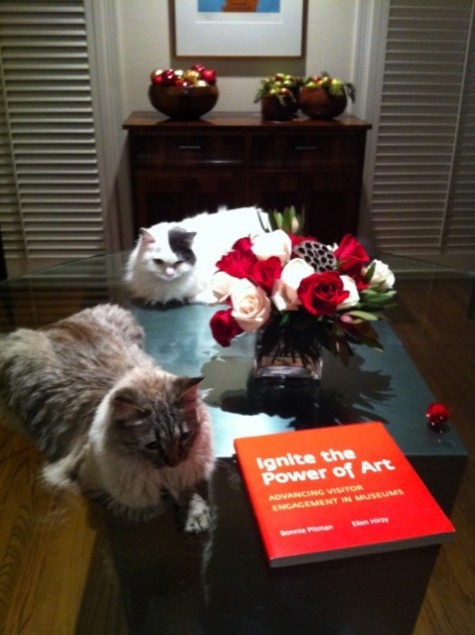
Ending on a light note, Bonnie kept us entertained throughout the editing and production process by sending digital pictures of her two cats, Leda and Perseus. Owing to the late hours she usually keeps, Bonnie was frequently hard at work on this book at one or two o’clock in the morning, seated at her glass work-table, with Leda and Perseus lying on—or playing with—stacks of galleys, photo contact sheets, charts, layouts, and reports—all of which offered the cats an ideal playground. I still have the early photographs showing them stretched out on a hoard of papers and folders. The later pictures depict their puzzlement as the glass tabletop finally resurfaced and the papers receded. And there’s a final shot of the cats sitting wistful, but perhaps also slightly triumphant, on a table cleared of everything but a vase of flowers and a single copy of the printed book. I’m sure Leda and Perseus look forward to a sequel.

Eric Zeidler is Publications Coordinator at the Dallas Museum of Art.

Seldom Scene: Presidents at the DMA

In honor of Presidents’ Day we wanted to share a few images of U.S. Presidents that are in our collection.

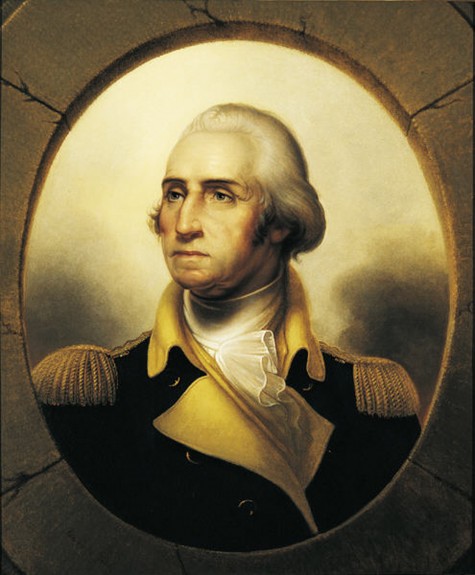
George Washington, Rembrandt Peale, c. 1850

George Washington, Jean-Antoine Houdon, c. 1786

Lincoln, Boardman Robinson, 1937

The Washington Family, Edward Savage, c. 1780

Seldom Scene: Love Designed

A Date to the DMA:

[youtube=http://www.youtube.com/watch?v=uIvIjRXPcTU&w=480&h=390]

The Center for Creative Connections invites you this spring to explore the Encountering Space exhibition with a fresh perspective inspired by designed spaces. Experience changes on view March 12 – September 30, 2011 throughout the Center including two additional works from our Decorative Arts collection shown below. Get involved and share your own photographs of designed spaces on Flickr, www.flickr.com/groups/dmadesigned.

Chair, Frank Lloyd Wright, 1956

Hall chair, c. 1850-1860

Seldom Scene: A Fond Farewell to Dorothy Austin

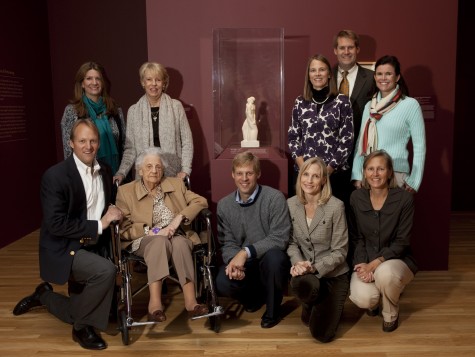
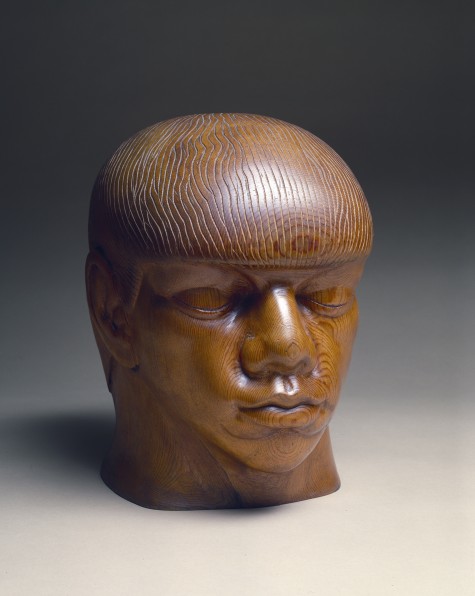
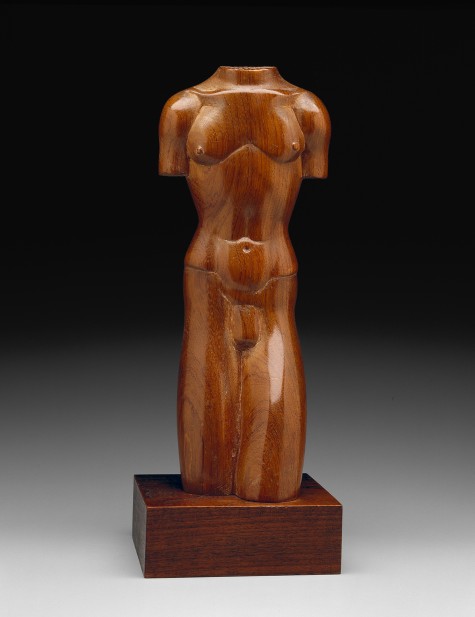
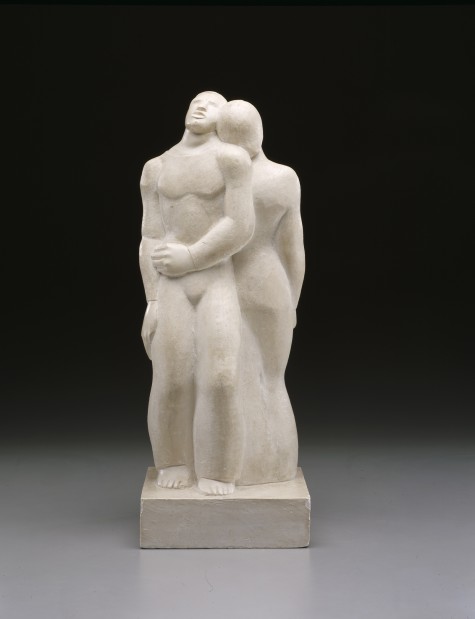
Texas sculptor Dorothy Austin passed away last week at the age of 100. Her work Slow Shuffle was featured in the 2009 Dallas Museum of Art exhibition All the World’s a Stage: Celebrating Performance in the Visual Arts, and this past year her sculptures Noggin and Male Torso were included in the exhibition Texas Sculpture. We were fortunate to have Dorothy Austin visit us in October 2009 with her family and wanted to share those memories with you.

Sculptor Dorothy Austin with her family on a visit to the DMA in October 2009.

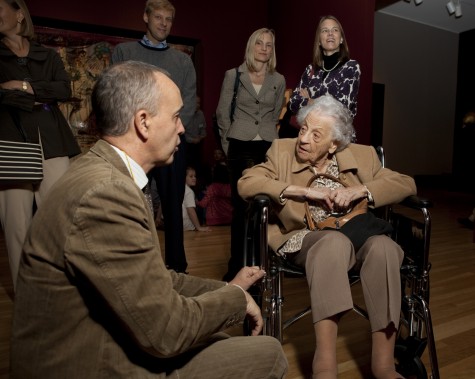
Dorothy Austin and DMA Senior Curator Olivier Meslay

Dorothy Austin, Noggin, 1933, white pine, Dallas Museum of Art, gift of an anonymous friend

Dorothy Austin, Male Torso, late 1930s-early 1940s, white pine, Dallas Museum of Art, gift of Dr. and Mrs. Robert W. Webb

Dorothy Austin, Slow Shuffle, 1939, carved plaster, Dallas Museum of Art, Texas Art Fund and Early Texas Art Fund

Are you ready for some Art?

It’s no secret that Super Bowl hysteria is sweeping the Dallas/Fort Worth Metroplex. On February 6, people from around the nation will be gathering in Arlington to watch the Steelers take on the Packers. But what are some of the best things to do in Dallas leading up to the Super Bowl? Below is a Dallas Museum of Art checklist for a super week for the sports fan and art critic in you. How many will you do?

Big New Field: Artist in the Cowboys Stadium Art Program

  1. Big New Field: Artists in the Cowboys Stadium Art Program is an exhibition of work by the artists featured in the Cowboys Stadium Art Program. While exploring the exhibition, try to figure out which artist’s work from the Cowboys Stadium belongs to the work at the DMA. Pick up Cowboys Stadium: Architecture, Art, Entertainment in the Twenty-First Century from the Museum Store if you need some help.
  2. See the former head coach of the 2006 World Champion Indianapolis Colts Tony Dungy and his wife, Lauren, on Saturday, February 5, at 3:00 p.m., part of Arts & Letters Live BooksmART. They will discuss their new children’s book You Can Be a Friend and you can stick around to meet the Dungys after this free event. Be sure to reserve your seats at https://www.tickets.DallasMuseumofArt.org/public/ or call 214-922-1818.
  3. Have you ever wanted to meet a room full of former NFL players? On Saturday, February 5, the NFL Players Association will hold the annual Jazz Brunch and Art Auction Smocks & Jocks in the Dallas Museum of Art’s Atrium at 10:30 a.m. Mingle with former and current NFL players while discovering their artistic talents. For more information on the event, click here.
  4. Explore the Center for Creative Connections and soak up some inspiration before you stop by the Art Studio to create your own work of art, maybe even a special football-inspired trophy sculpture.
  5. If you are looking for a break from football, travel to Europe without leaving the Museum through a bite-sized tour of four recent acquisitions in our new European galleries.

Seldom Scene: “Beguiling Deception”

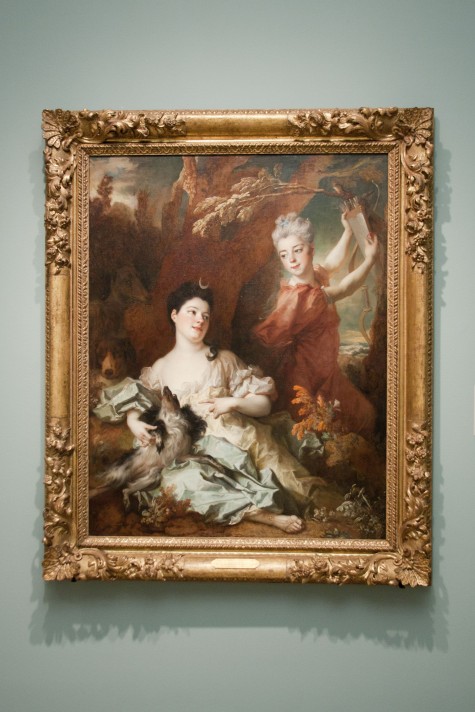
Who’s that lady? Find out tonight at 7:30 p.m. when University of Oregon Art History professor Dr. Kathleen Nicholson discusses allegorical portraits in 18th-century France at the Museum’s annual Michael L. Rosenberg Lecture.

Nicolas de Largilliére, "Portrait of the Comtesse de Montsoreau and Sister as Diana and an Attendant," 1714, oil on canvas, lent by the Michael L. Rosenberg Foundation, 29.2004.11

Discovering a Romney

You might have heard about the recent discovery of a George Romney painting in the Museum’s collections. Olivier Meslay, Senior Curator of European and American Art and The Barbara Thomas Lemmon Curator of European Art at the DMA, shared the story about the discovery with us last month. You can visit the painting in person in the European Galleries on Level 2. To read more about George Romney and Young Man with a Flute, click here.

[youtube=http://www.youtube.com/watch?v=p83xkbLgrQQ]

Painting by Numbers

Our new installation Re-Seeing the Contemporary displays more than fifty works of the art from the DMA’s captivating contemporary collection. Some of the artists on view range from familiar abstract expressionists to lesser known artists at work today. As 2010 comes to a close, we thought it might be fun to take another look at the exhibition, re-seeing the exhibition into our own top ten list of interesting categories.

1. Paintings: 29

The majority of artworks in the exhibition are paintings.

Jackson Pollock, Cathedral, 1947 Dallas Museum of Art, gift of Mr. and Mrs. Bernard


Pollock changed the definition of painting—instead of painting on the wall or an easel, he laid the canvas on the floor and applied paint to it from above through pouring and dripping.

2. Sculptures off the wall: 9

Larry Bell, The Cube of the Iceberg II, 1975 Dallas Museum of Art, anonymous gift in memory of J. O. Lambert, Jr.

Although not your typical figurative sculpture, this work has a reflective quality that involves the viewer.

3. Sculptures on the wall: 5

Alan Saret, Deep Forest Green Dispersion, 1969 Dallas Museum of Art, gift of John Weber

Though sculptures are typically displayed using a base or plinth, this work also fits the category because of its three-dimensionality. Since the piece is made out of wire and hangs off of one nail, it must be reshaped with each installation, almost becoming a living thing like the plants or moss it resembles.

4. Collages: 3

Jess, Arkadia's Last Resort; or, Fete Champetre Up Mnemosyne Creek, 1976 Dallas Museum of Art, General Acquisitions Fund

Jess took images from various sources such as jigsaw puzzles, art books, advertisements, and store catalogues and combined them to create a collage in the shape of a landscape.

5. Works never shown before: 6

Jack Whitten, Slip Zone, 1971 The Rachofsky Collection and the Dallas Museum of Art through the DMA/amfAR Benefit Auction Fund

A new acquisition that has not yet been on view, Slip Zone adds to the DMA’s collection of postwar abstract art. Whitten created the unique design by pulling various objects across the wet painted surface.

6. Works by women artists: 5

A few of the female artists are represented in the exhibition:

Jackie Ferrara, A213 Symik, 1982 Dallas Museum of Art, anonymous gift

Susie Rosmarin, Gingham, 1998 Dallas Museum of art, gift of Mr. and Mrs. Bryant M. Hanley, Jr., in honor of Charles Wylie, The Lupe Murchison Curator of Contemporary Art

Anne Truitt, Come Unto These Yellow Sands II, 1979 Dallas Museum of Art, gift of Shonny and Hal Joseph (St. Louis, Missouri) in honor of Cindy and Armond Schwartz

7. Works by Texas artists: 2

Christian Schumann, Nomads, 1998-1999 Dallas Museum of Art, Texas Artists Fund

Christian Schumann graduated from Booker T. Washington High School for the Performing and Visual Arts, located just blocks away from the DMA.

8. Works with people: 11

Wallace Berman, Untitled, 1964 Dallas Museum of Art, General Acquisitions Fund

At first glance, this collage may appear to be a repetition of the same picture. Upon further inspection, though, you can see that each hand holds a transistor radio, which in turn frames images of people, animals, and objects.

9. Works with text: 14

Glenn Ligon, Untitled, 2002 Dallas Museum of Art, DMA/amfAR Benefit Auction Fund

Inclusion of text is a modern development which Ligon often uses in his art. As the text progresses, it becomes more and more unclear.

10. Works with hot pink: 3

Pink is the color of happiness and works including hot pink just make us smile.

Charline von Heyl, Untitled (3/00), III, 2000 Dallas Museum of Art, gift of Kathleen and Roland Augustine in honor of Robert Hoffman

This painting, a recent museum acquisition, recalls a tropical rainforest inhabited by abstracted animal-like forms. The shocking combination of colors—yellow, green, turquoise, and hot pink—draw your attention to the composition.

Over the holidays we hope you will visit the DMA to discover the countless connections you can make with Re-Seeing the Contemporary and with the larger DMA collection.

Haley Berkman is the McDermott  Curatorial Intern for Contemporary Art and Sarah Vitek is the McDermott Education Intern for Adult Programming at the Dallas Museum of Art.


Archives

Categories