Saturday we hosted the Art Ball, our annual black-tie gala. Below is a peek at the preparations for this very special evening.
[slideshow]
Official behind-the-scenes blog of the Dallas Museum of Art
Saturday we hosted the Art Ball, our annual black-tie gala. Below is a peek at the preparations for this very special evening.
[slideshow]
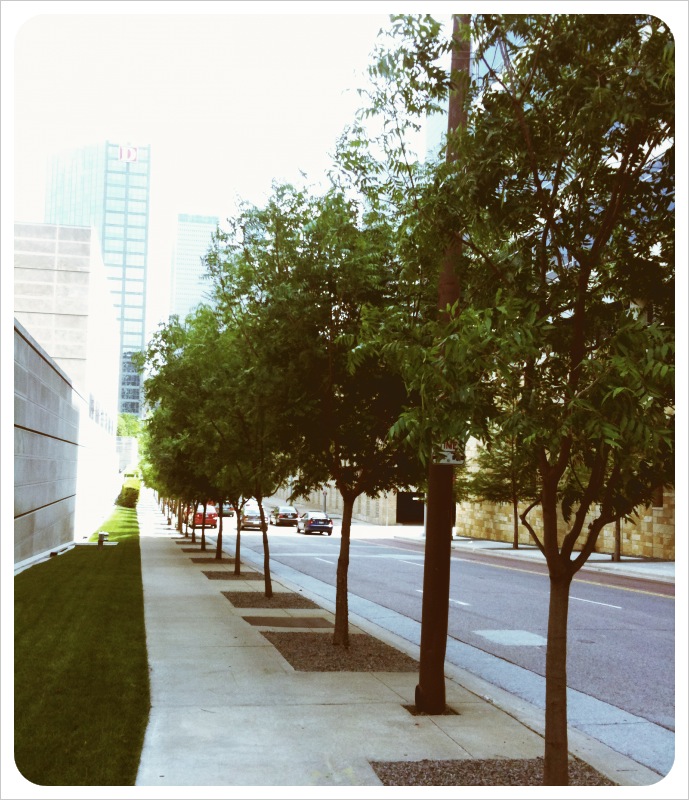
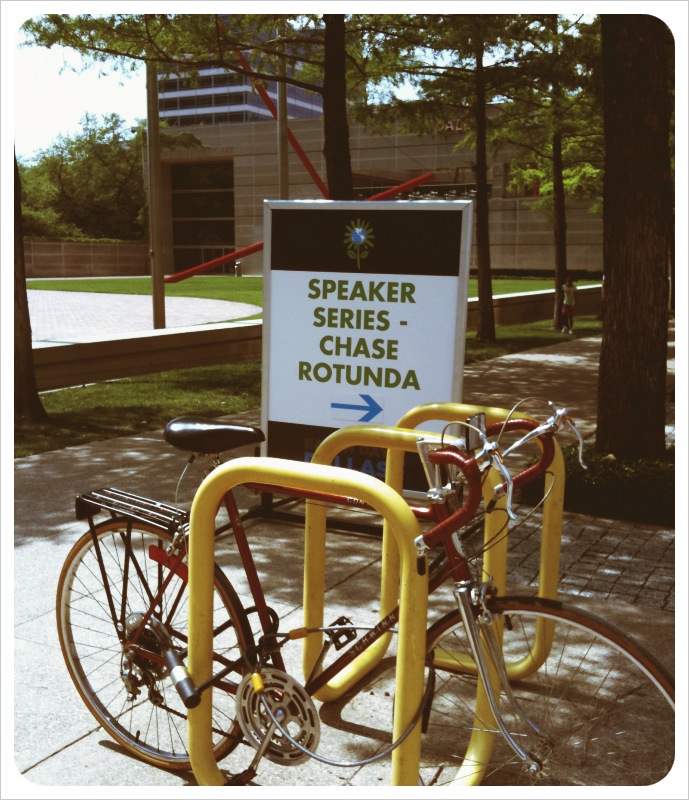
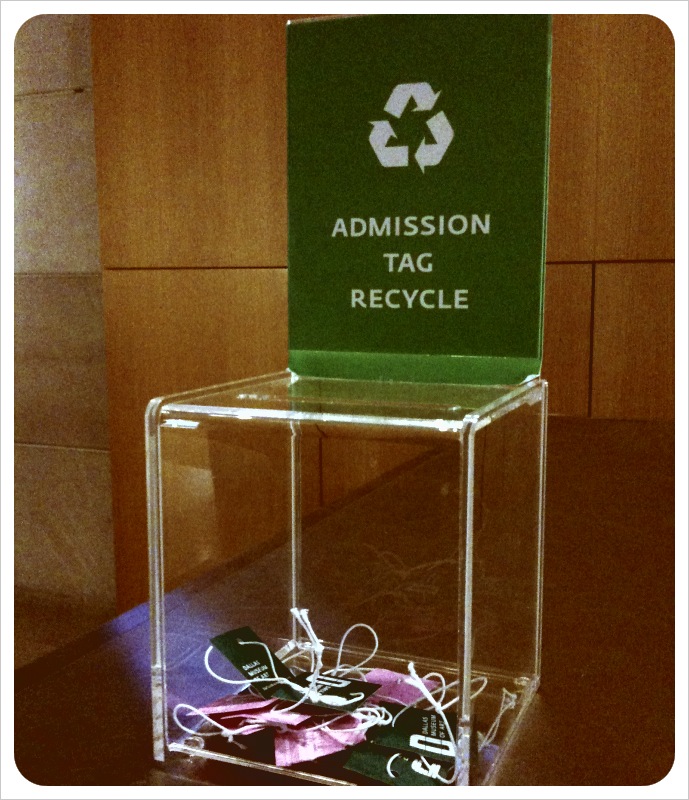
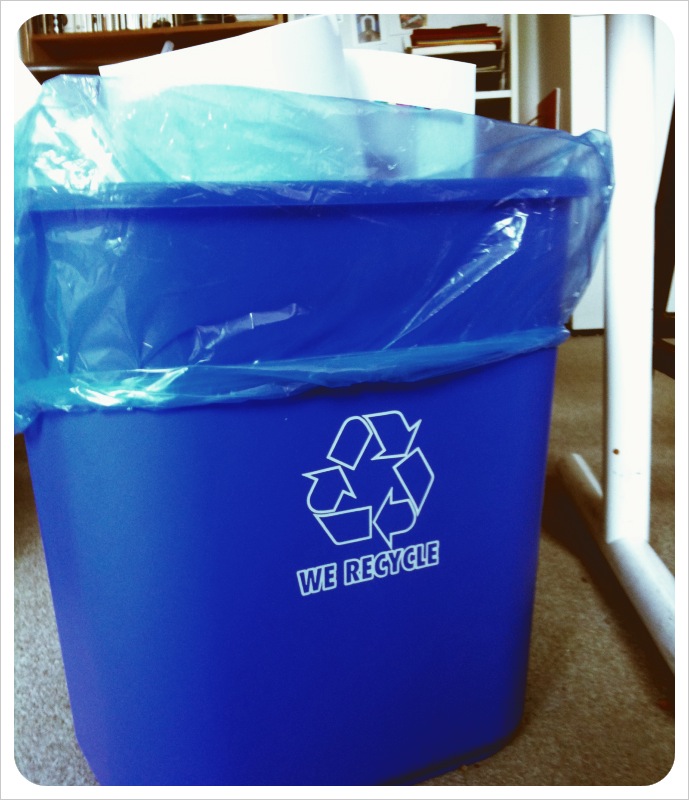
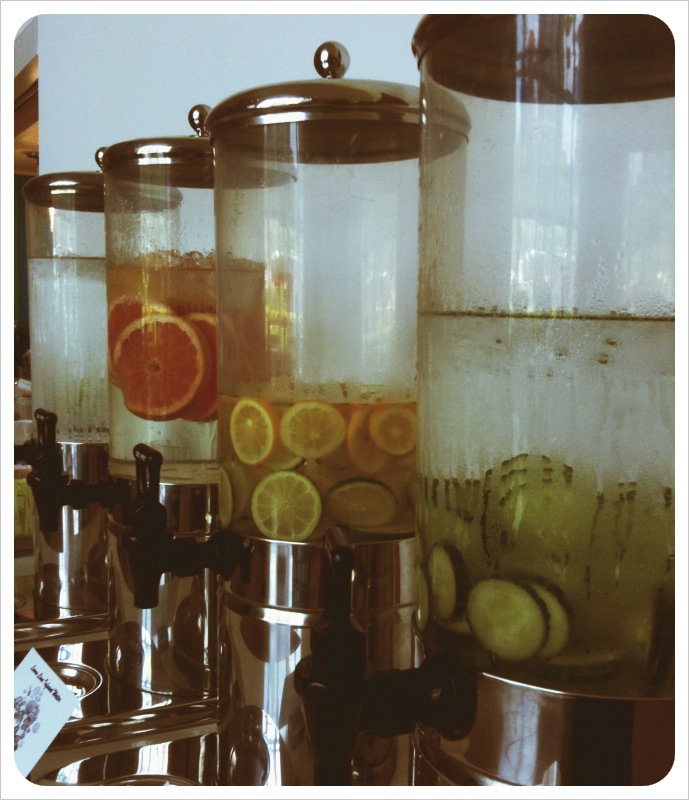
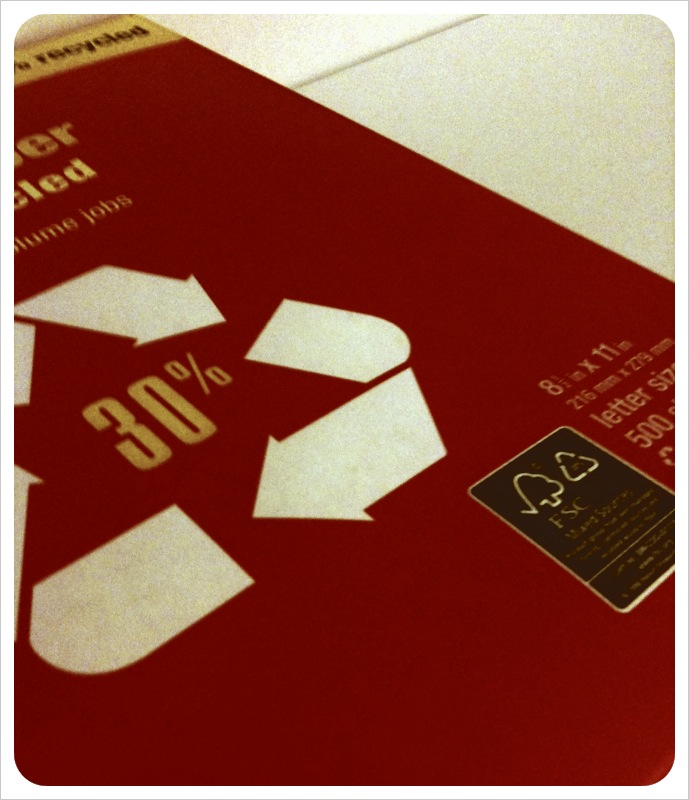


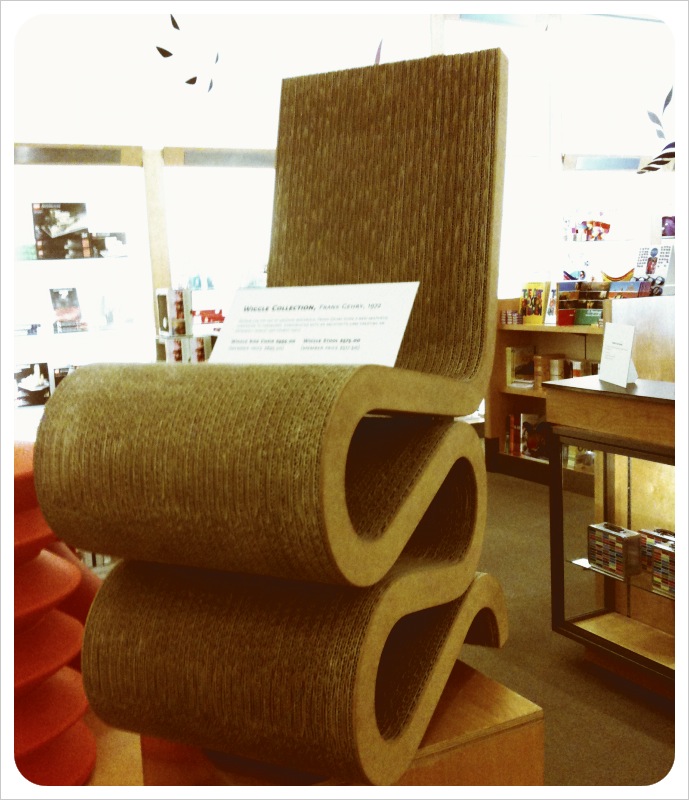
Reduce, reuse, and recycle. As Earth Day rolls around, we’re reminded of our impact on the environment. But what are we doing at the Dallas Museum of Art to be green? Uncrated went on a search to find out.
Each year, over half a million visitors step through the Museum’s doors, and our large building is 500,000 square feet, taking up two city blocks in downtown Dallas. Our global collections span over 24,000 works of art, and we produce an average of eighteen exhibitions each year. We have an underground parking garage, a cafe, a store, and over two hundred employees.
With this large footprint, we were excited to find out about some long-standing practices and a few new ones that the DMA is using to reduce its impact on the environment:
The DMA is working with the U.S. Green Building Council to achieve Leadership in Energy and Environmental Design (LEED) certification for these efforts. We hope to have our designation by August 2011.
For a selection of works on view at the Museum that incorporate recycled materials, visit our sister blog, We Art Family, for their Earth Day post. And for eco-friendly activities, emerging green technology, and thought-provoking ways to think, work, and live green in Dallas, join us today and tomorrow in the downtown Dallas Arts District for the free Earth Day Dallas Festival (the DMA will have FREE admission on Saturday, April 23, 2011!). To reduce your carbon footprint, ride DART to Pearl Station and walk to the Arts District.
Happy EARTH Day!
Mandy Engleman is the Director of Creative Services at the Dallas Museum of Art

Hello, everyone! DMA resident exhibition designer Jessica Harden here to give you a short and sweet behind-the-scenes snapshot of where some of our inspiration for exhibition design comes from. The Gustav Stickley exhibition was fun to work on because I had lots of great resources, including original photographs and The Craftsman catalogues, which Stickley published with drawings of many of his architectural and interior designs and finishes . . .

as well as records of popular colors of the time. We chose paint colors for the exhibition based on the Sherwin-Williams Arts & Crafts palette. BTW, drawing up plans for the exhibition is also part of my job . . .

as is producing construction drawings.

But back to inspiration and resources—this is a photograph of a model dining room created to show Stickley’s furniture in 1903.

. . . and this is our gallery at the DMA that we designed and built to replicate the original.

In fact, if you look around the Gustav Stickley exhibition galleries, you might notice a number of details that were inspired by Stickley’s original designs. Here, we were inspired by how Stickley used interior cut-outs to define spaces and create interesting thresholds to transition from one room to the next.

We also took inspiration from Stickley’s use of simple trim work on walls to help us define spaces and create a more residential environment for the exhibition. This included using a cap rail to imply a lower ceiling height in our 14-foot-high exhibition galleries.

And just to have a little fun, we took a few chances to let visitors discover glimpses of upcoming galleries and objects along the way.

Even some of the smallest details of the exhibition were inspired by Stickley. Here you can see that the mount for this lamp was modeled after drawings from Stickley interiors and was fabricated by our extremely talented preparators and carpentry staff. They even made new heads for the screws to match the originals!
Gustav Stickley and the American Arts & Crafts Movement is on view at the Dallas Museum of Art until May 8, when it will travel to San Diego to open on June 18.
Jessica Harden is Exhibition Design Coordinator at the Dallas Museum of Art.
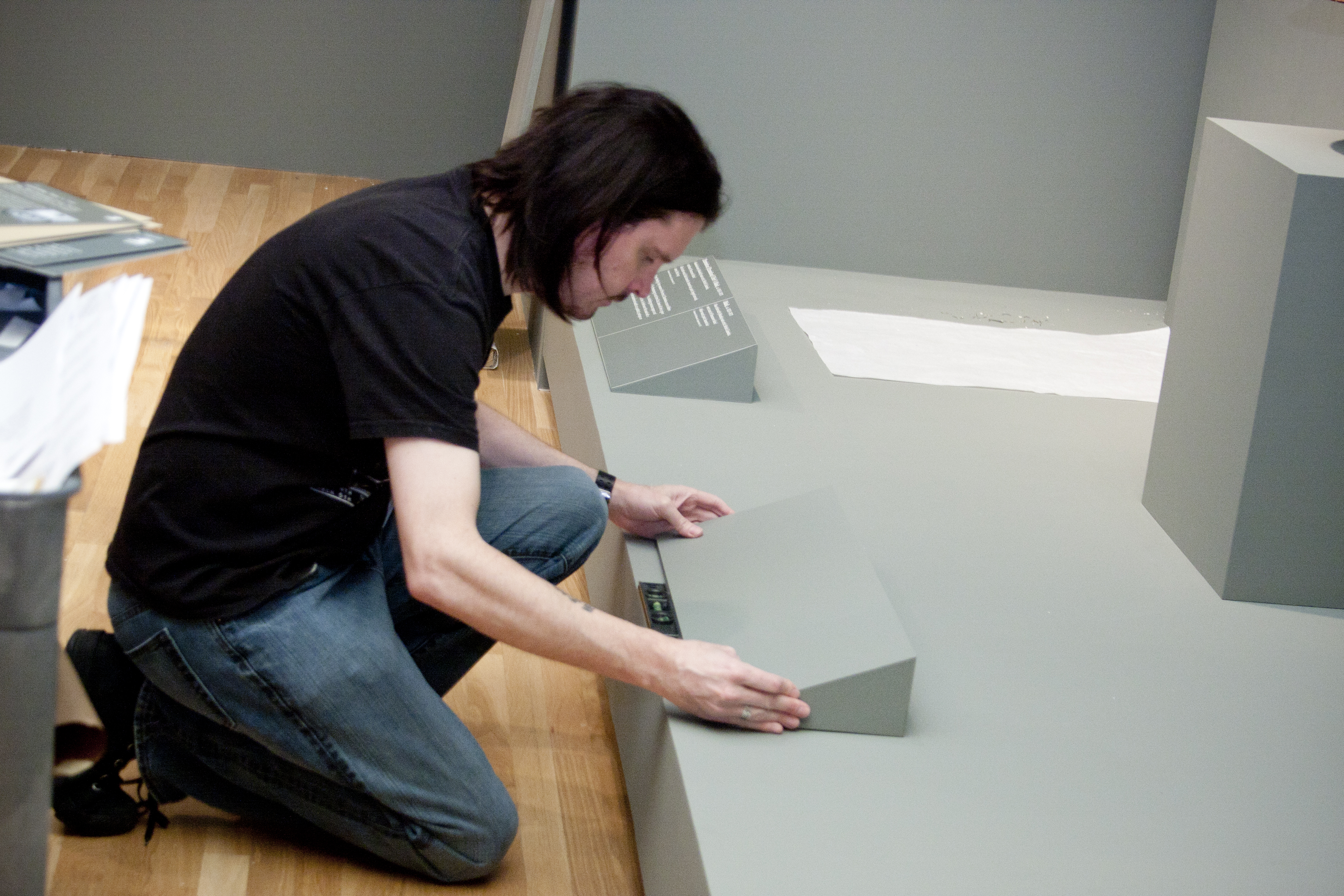
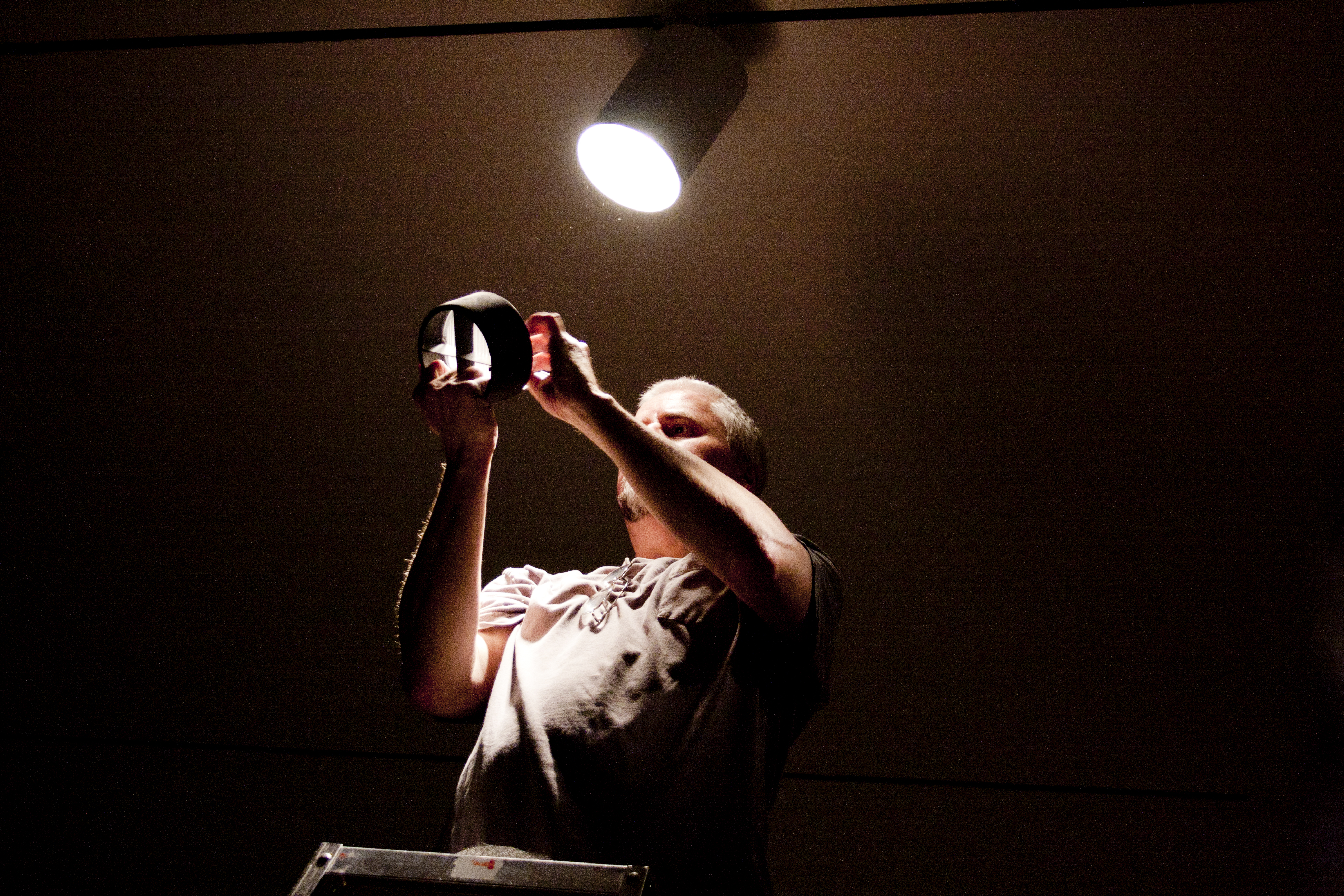
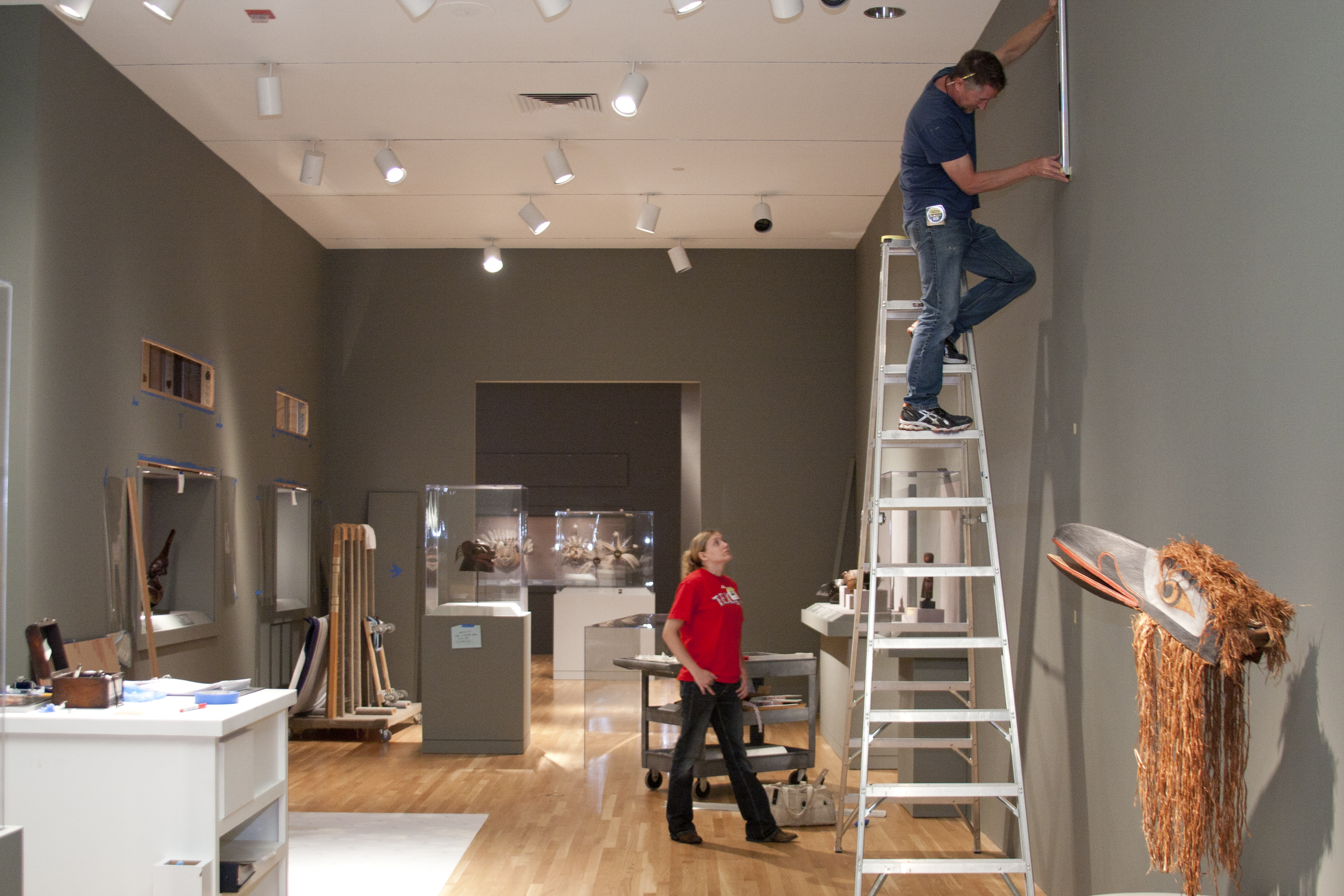
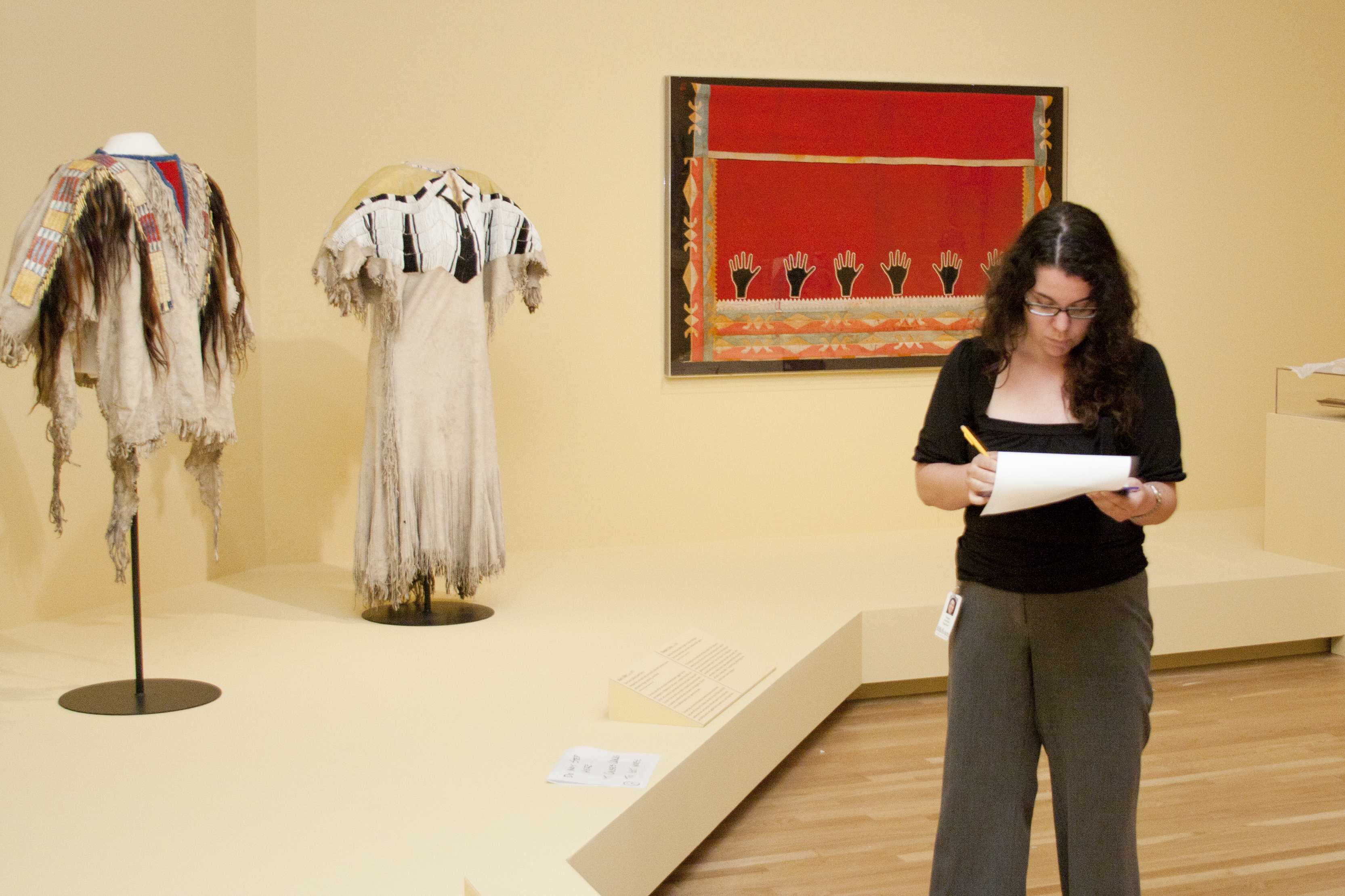
Uncrated went behind the scenes in our Chilton Galleries last week to capture the installation of our newest exhibition, Art of the American Indians: The Thaw Collection, which opens this weekend.
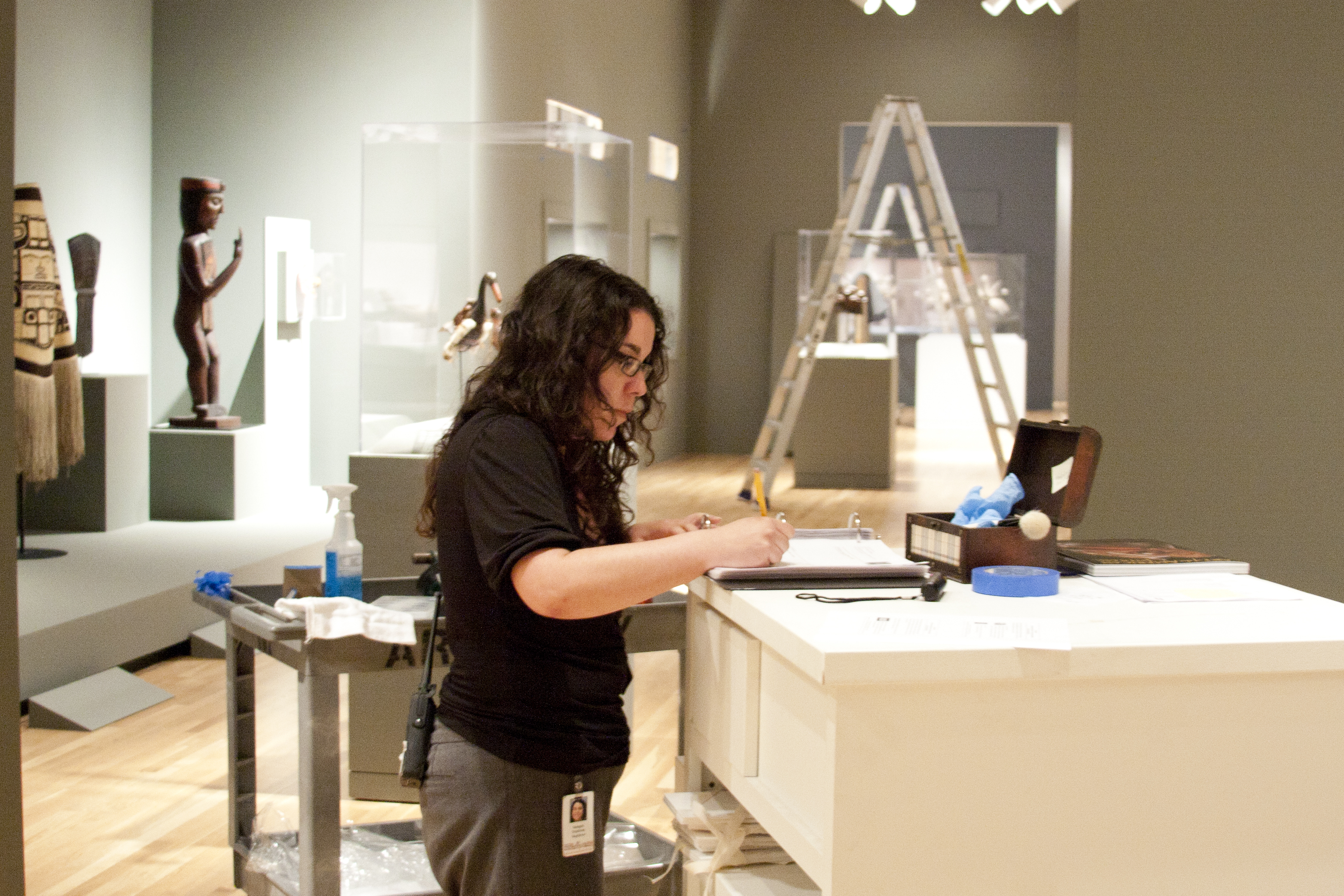
Photography by Adam Gingrich, Marketing Assistant, Dallas Museum of Art
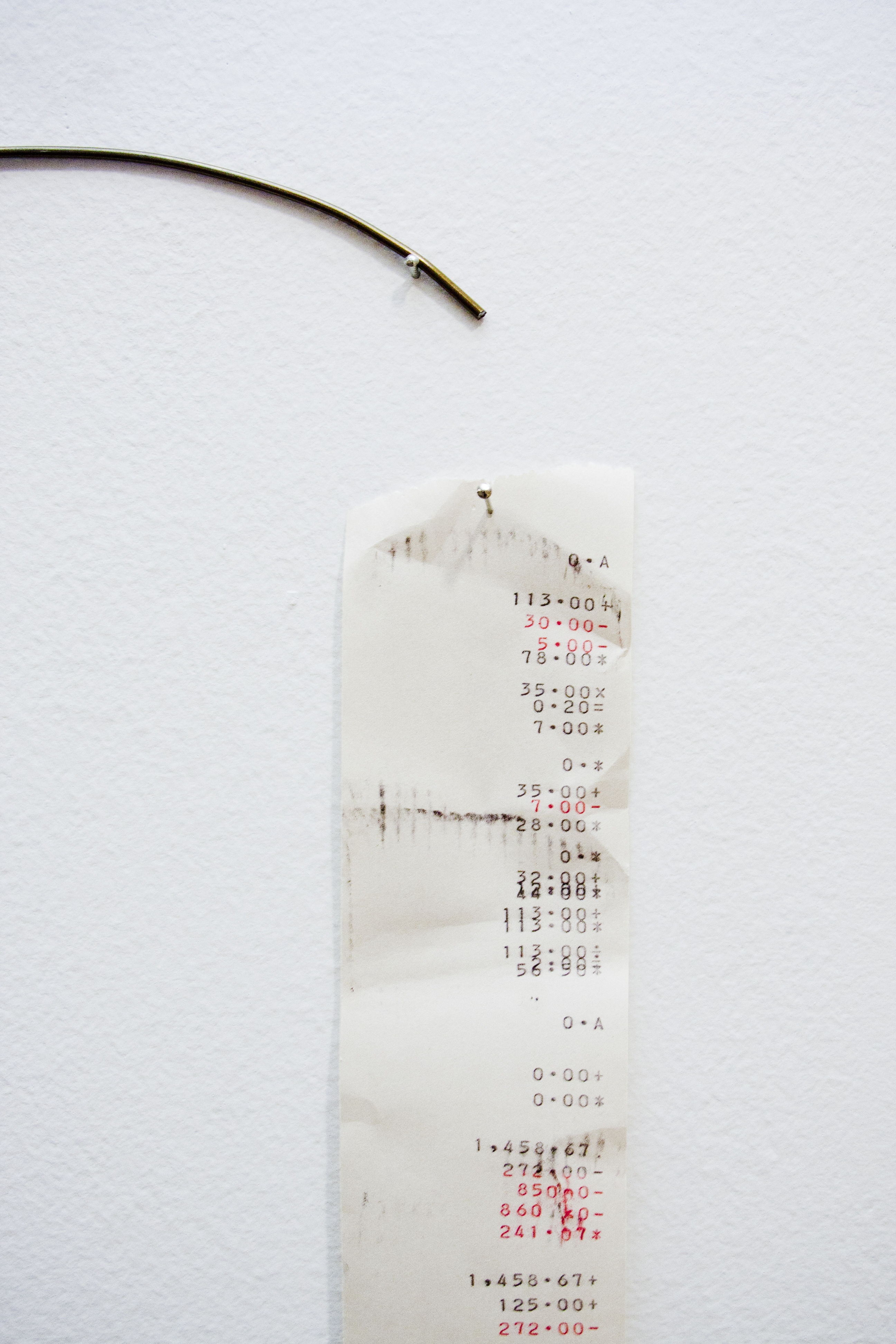
Do you have everything ready for Uncle Sam on April 18? We think this work by DMA staff member Robert Ramirez—our accounts payable coordinator—sums up the task. You might have seen it on view during our recent exhibition Insourced: Works by Dallas Museum of Art Staff exhibition.
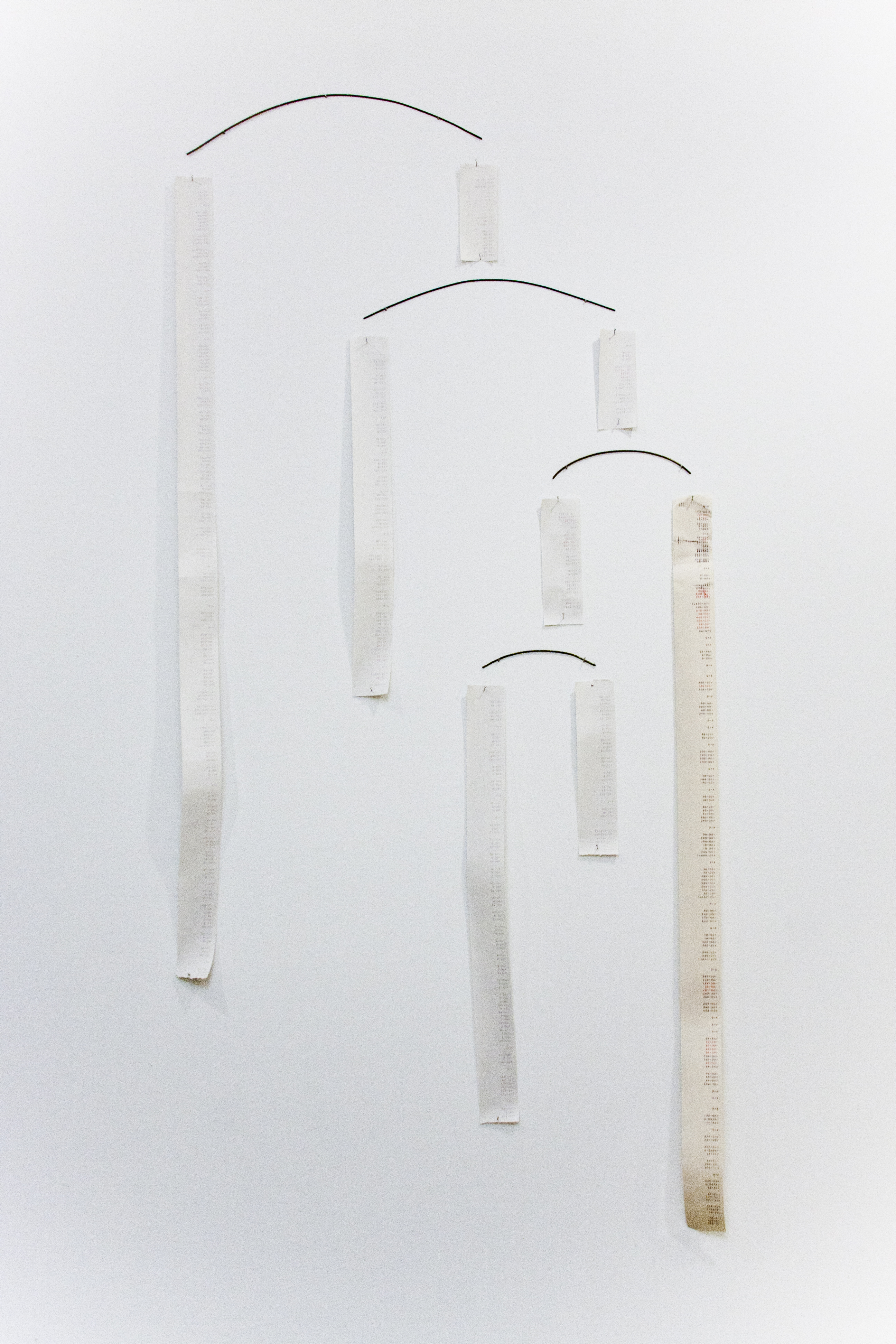
Robert Ramirez, My Love to Rinna, 2010
[slideshow]
The Center for Creative Connections (C3) welcomes the unique perspective of community partners through a series of C3 Community Partner Response Installations (CPRI). Installed in a central gallery for approximately six months, each CPRI is a response to the current exhibition in the Center and offers visitors an opportunity to consider the themes of the exhibition in new ways. CPRI are the products of close, collaborative, and interactive working relationships between community partners and DMA staff.
Sculpting Space: 299 Chairs is the sixth CPRI to be installed. Students and faculty from the Architecture Cluster at Skyline High School in the Dallas Independent School District created this installation of classroom chair assemblages that stretch, hang, fly, and twist throughout a central gallery in C3. For these students, the process of creating Sculpting Space involved the application of classroom ideas and concepts to a real-world scenario and fostered many new connections with the DMA and Dallas-based cunningham architects.
“In order for us to flourish and bloom as students, we must first open ourselves to new ideas.”—Alberto Huerta
“Working with more people, you will hear interesting ideas that you never would have thought of alone.”—Erica Jackson
Several months ago, the students began the project by sketching chairs. Skyline teachers Tom Cox and Peter Goldstein then led students in a variety of exercises including the study of negative and positive space in DMA artworks as well as investigating spatial concepts such as fluent, voluminous, implosion, organic, and rotating through the making of 2D drawings and 3D models. Several workshops with architects Gary Cunningham and Rizi Faruqui and DMA staff focused on how to connect the chairs, what connectors would hold the chair assemblages together, and how to consider the visitors’ experiences in a space sculpted by chairs. Along the way, three DISD elementary schools swapped out their old kindergarten chairs for new ones, thus providing the high school students with chairs full of character and marked with history.
Google Sketch-Up was used to build scale models of the gallery space, providing a blueprint for the final installation of the assemblages. Videos created by Element X Creative accompany the installation, documenting behind-the-scenes aspects of the project and featuring several Skyline students sharing their experiences.
“The one true connection we have made was with the chairs and when we were little kids. They bring back memories of childhood.”—Luis Garcia
“The new connections we make will be with the people that view our work. We will not be there to explain what we made, so we have to try to convey that in shape and form.”—Sandra Benitez
Sculpting Space: 299 Chairs will be on view in the Center for Creative Connections through October.
Nicole Stutzman is Director of Teaching Programs and Partnerships.
Since our art storage area is not available to the general public, we thought we’d give you a behind-the-sceneslook at our new and improved space.
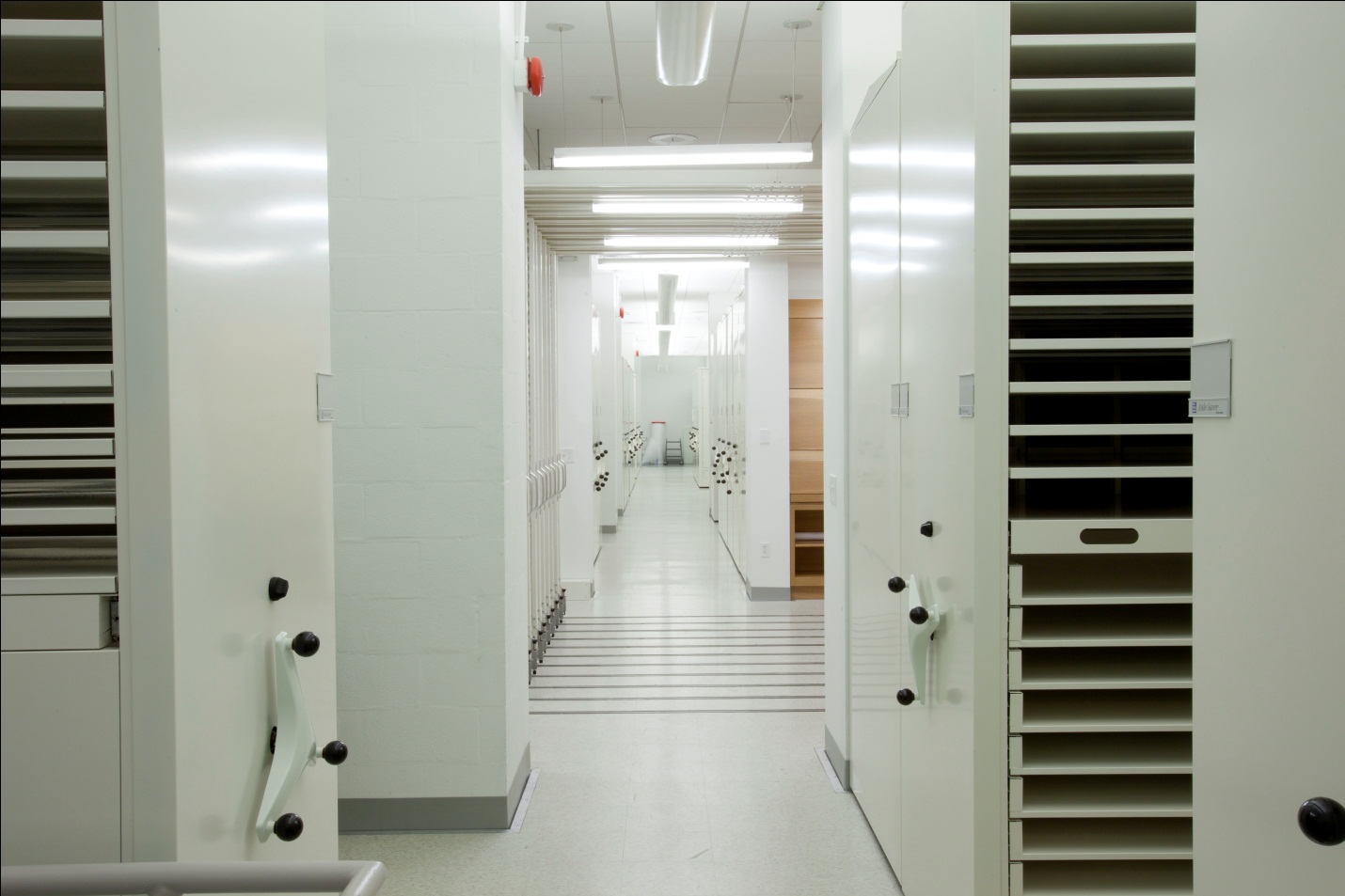
In 2008, the Museum was awarded an important grant from the National Endowment for the Humanities. Through the grant, the DMA has increased the square footage of several art storage spaces, expanded storage capacity, and modernized the spaces with new lighting, HVAC, and furniture fixtures. Each storage space was renovated to the highest preservation and green-building standards in coordination with the architecture firm Solomon & Bauer of Watertown, Ma., the City of Dallas, and contractors.
The building of the new Works on Paper (WOP) facilities was the final building stage of this multi-year project. Three new rooms were constructed within the museum’s existing storage space to specifically hold the museum’s roughly 6,000 works. With the construction complete and the new cabinets installed, we have started the process of moving art from our old storage to the new.
Space was one of the biggest concerns in our previous WOP storage. This was especially true for our storage of framed works, where our cabinets were full the point of overflow. We often needed to remove five or six pieces in order to access the one object we needed. Since the goal is to move the work as little as possible, the “overflow” constituted a threat to the care of our objects.
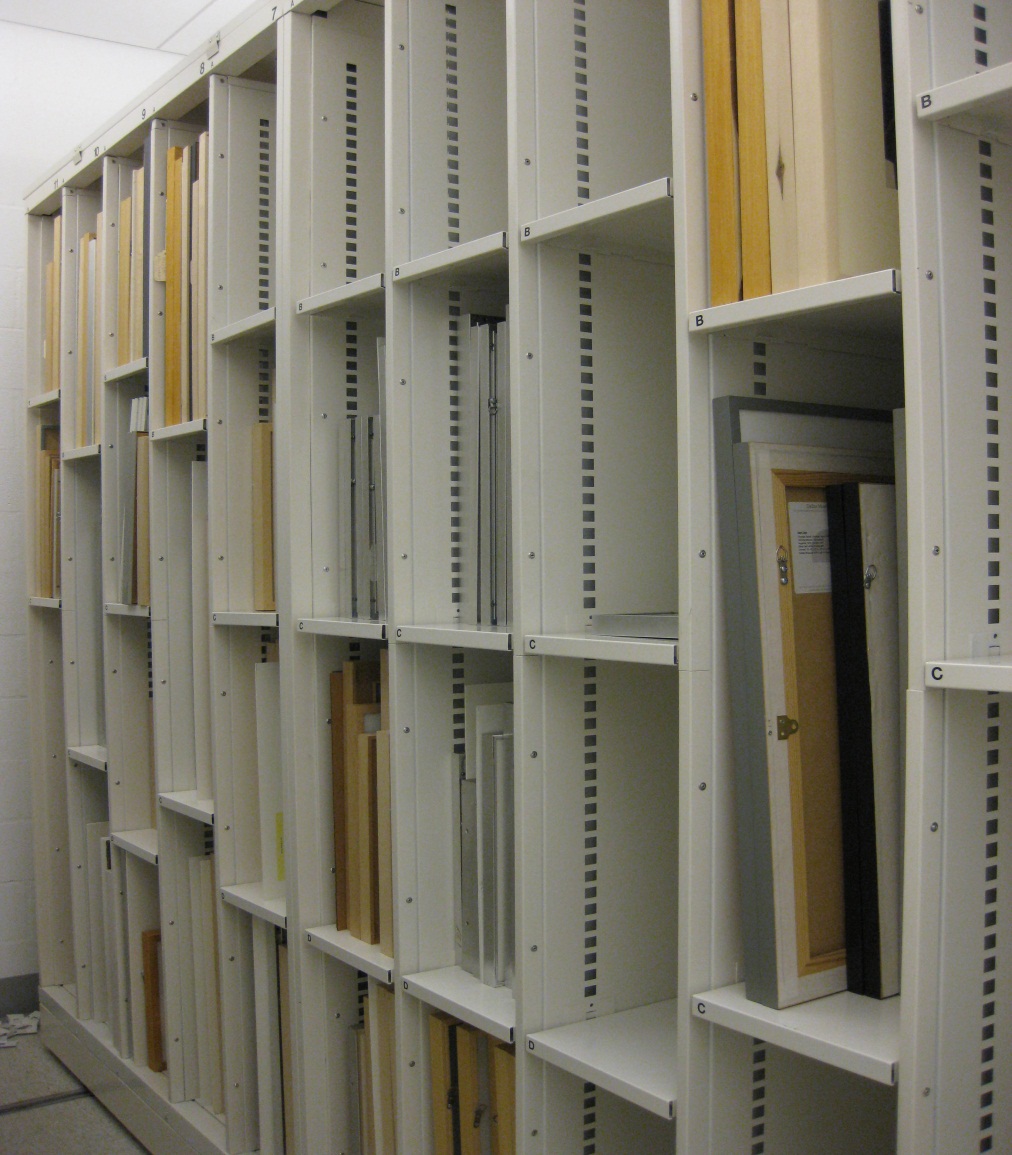
Speaking in strictly numbers, we previously had 18 cabinets with a total of 126 bins, each bin being 10 inches wide and 42 inches deep. As you can see in the picture below, the height of each bin was set. While this created an aesthetically pleasing consistency, it left significant gaps and wasted precious space.
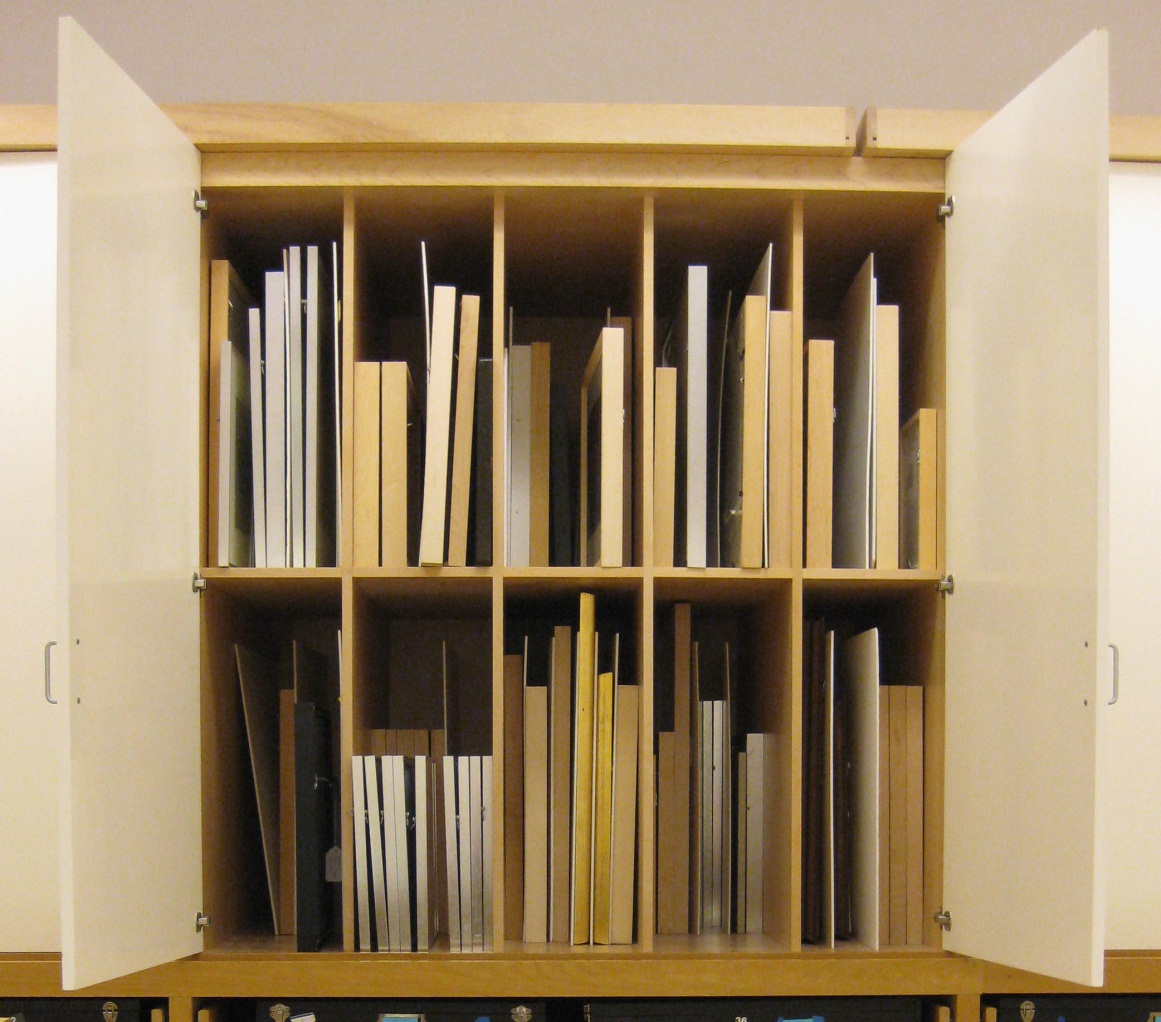
In our new space, conversely, we have 142 bins, each 11 inch wide by 42 inches deep. Not only do we have a greater number of overall bins, our new cabinets are completely modular. Depending upon the need of the collection, we can add or subtract shelves. The photo below shows the new cabinets in process of being loaded with objects. Already you can see the increased functionality of this style unit.
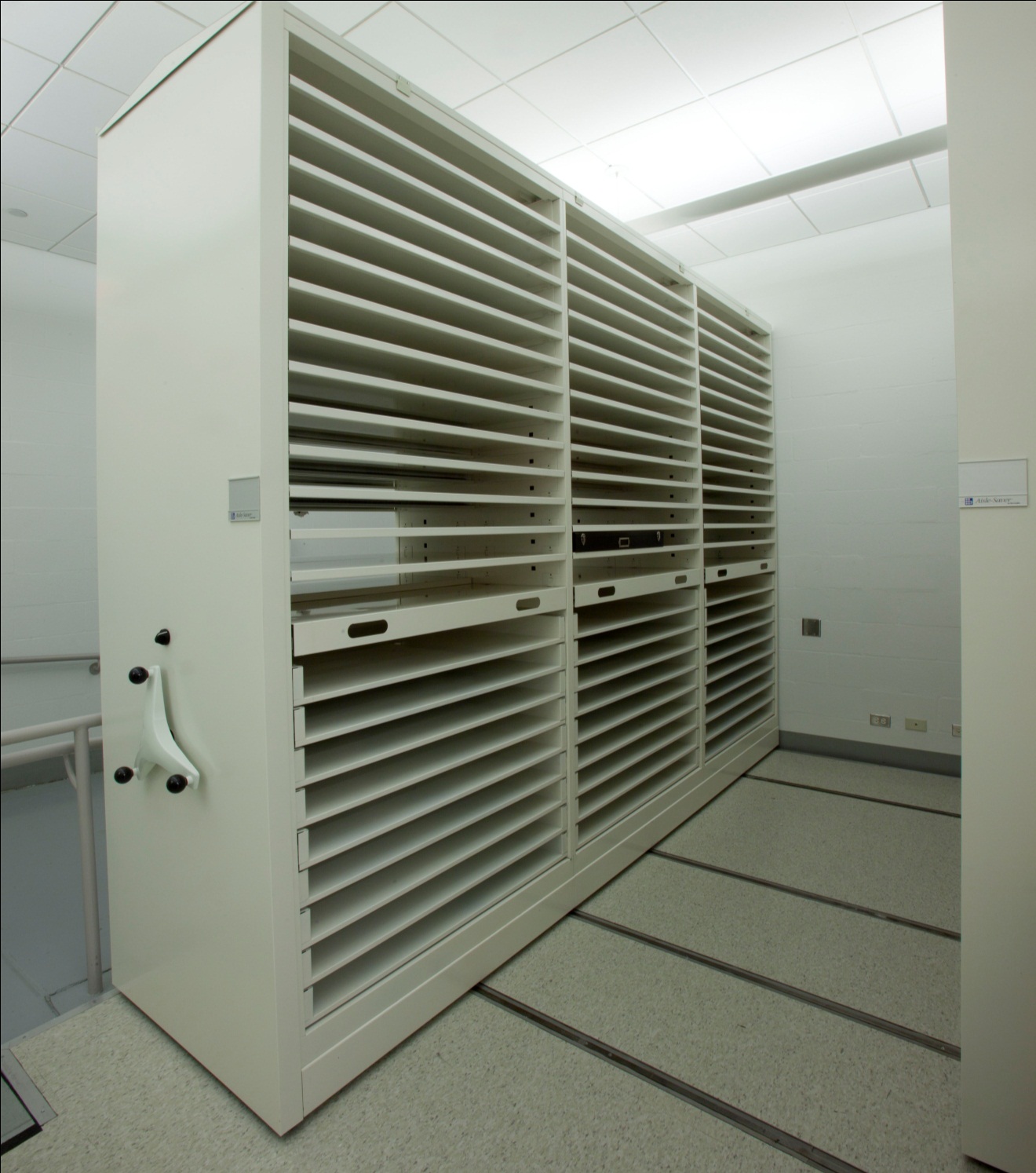
The new framed work storage units are attached to rolling racks, which allows us to maximize our space by removing the need for aisles. While the use of rolling racks has been relatively common in library stacks for years, it is only now becoming the standard in collections care. With the addition of the rolling racks in the area, we have now updated all of our storage spaces to these compacting racks. The photo below shows the new flat storage units on a rolling rack.
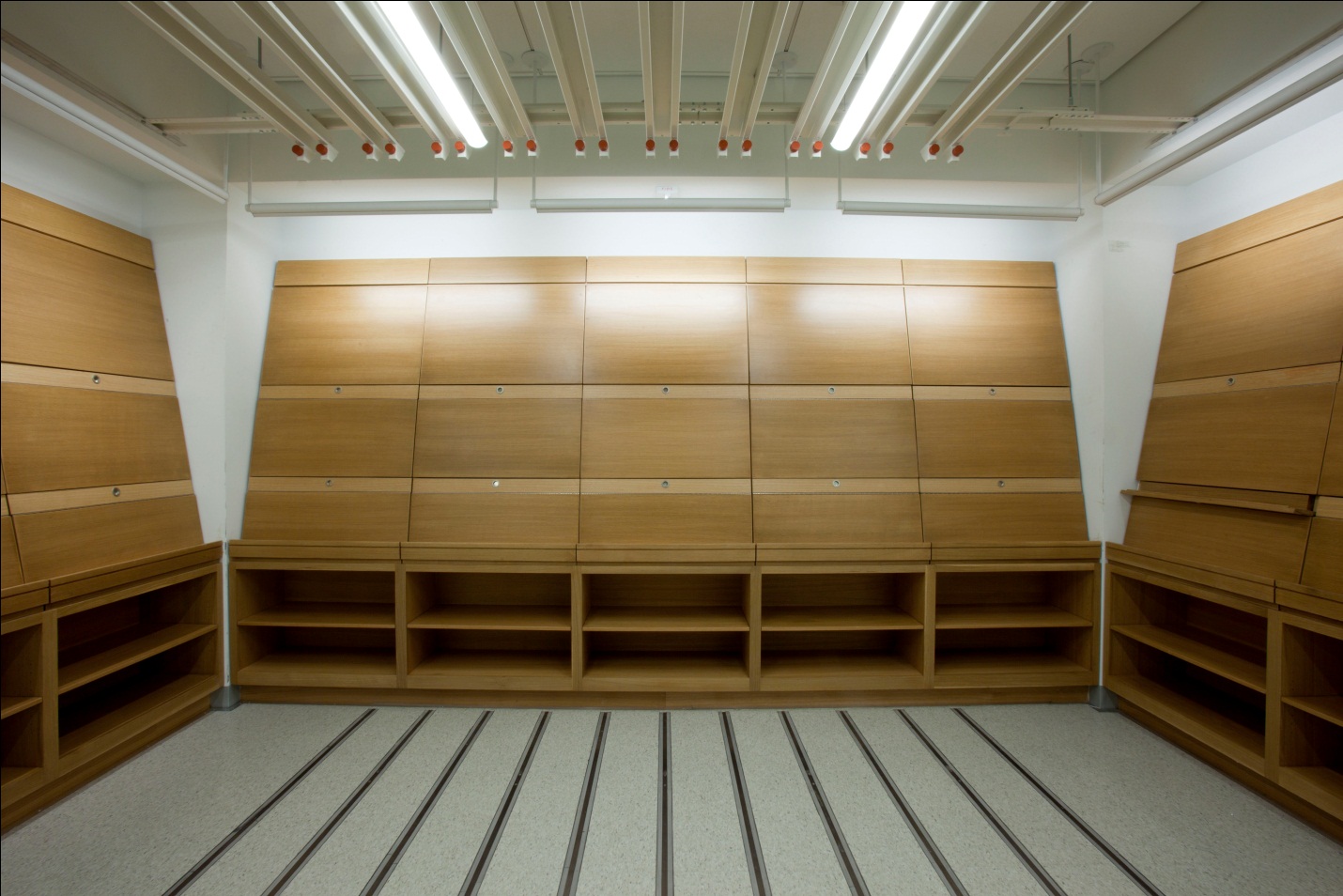
Always a problem in our old space, we specifically designed an area of the new storage space to view works on paper. Shelves built in to the slanted wooden backing fold out to support objects without having to bother with hanging. The shelves are large enough to support almost any framed work in the collection, but are also designed in such a way where many smaller pieces could also be shown all at once. The flexibility of the unit is vital to curators as they arrange and rearrange objects in preparation for gallery installations. The overall size of the viewing space is an extra plus as we can now accommodate more students or scholars visiting on research trips.
The changes in how we store our works on paper will greatly improve the overall level of care we are able to maintain. Thanks to the NEH and the Hoblitzelle Foundation, these improvements, along with the updates to our library and archives, the collections file storage space, and small objects—shown in last fall’s Small Objects Collection is Movin’ on Up!—have made a profound impact on the way the collections staff cares for our museum’s collection.
Anne Lenhart is an Assistant Registrar at the Dallas Museum of Art
Our exhibition, Concentrations 54: Matt Connors and Fergus Feehily, opens soon (Sunday, April 3 to be exact). I’ve been lucky enough to work on this show from start to finish with Jeffrey Grove, The Hoffman Family Senior Curator of Contemporary Art. Each artist has their own dedicated space in the Marguerite and Robert Hoffman Galleries. The first museum exhibition for both artists, we worked closely with them to decide the works presented as well as the logistics of each installation. Berlin-based Irish artist Fergus Feehily is integrating three objects from the DMA’s collection into his installation: a bead, a dressing cabinet, and an Indian miniature. New York artist Matt Connors, on the other hand, is installing 10 completely new paintings (finished very recently, as a matter of fact) and also a work of his that we acquired in last year Soul Error (Vertical), 2010.
We’re really excited to have both artists in town for the installation and opening events. See for yourself…
[slideshow]
On March 31, 2011 at 7:30 pm, Jeffrey will join both artists for a discussion of their work. Hope to see you there!
Erin Murphy is the Curatorial Administrative Assistant for Contemporary Art at the Dallas Museum of Art
Even though our galleries had “the day off,” today the Museum hosted Art in Bloom, the Dallas Museum of Art League’s annual symposium and luncheon. The springtime event provides generous support for the League’s Floral Endowment and the Museum’s exhibitions and educational programs.

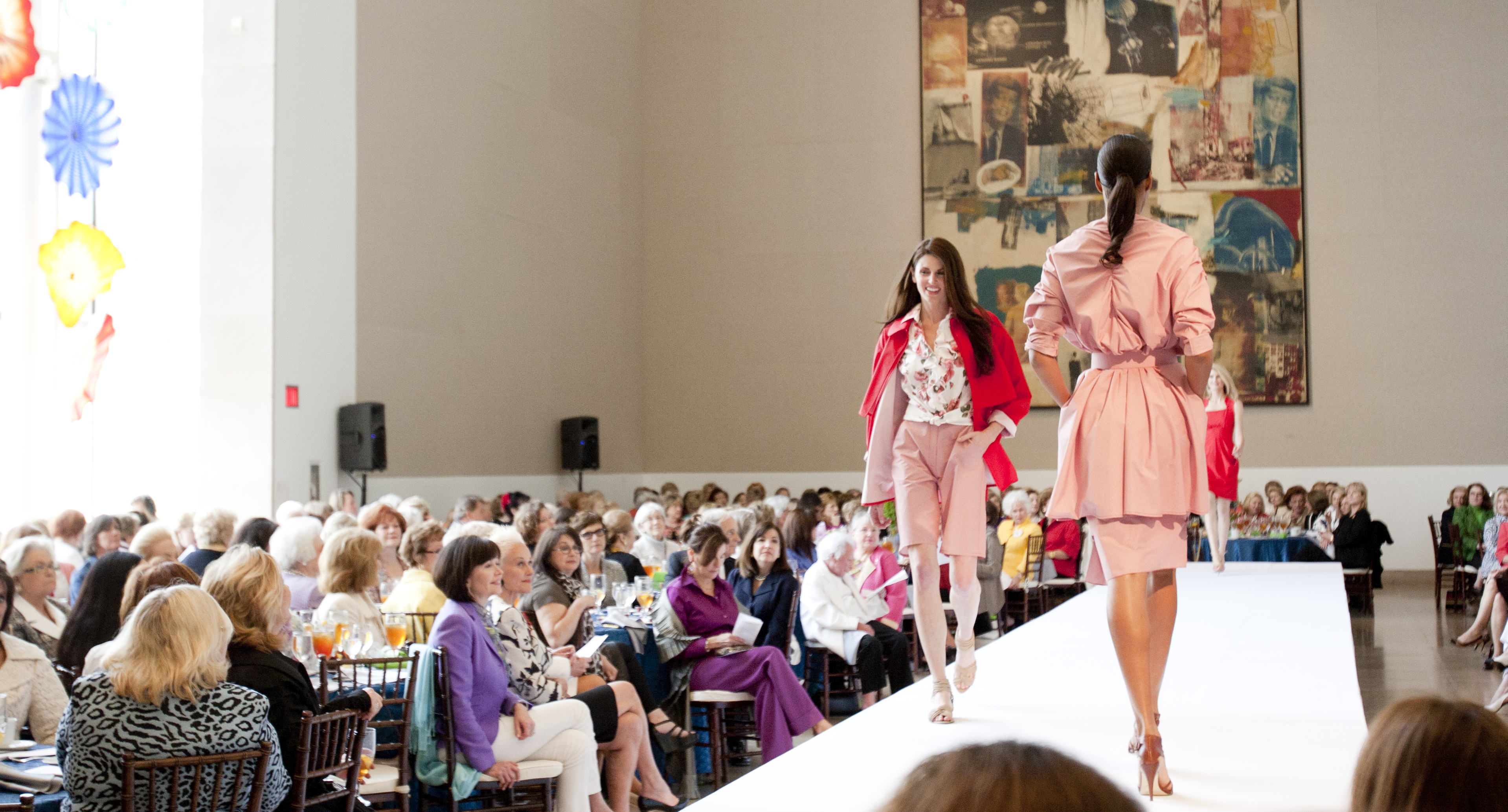
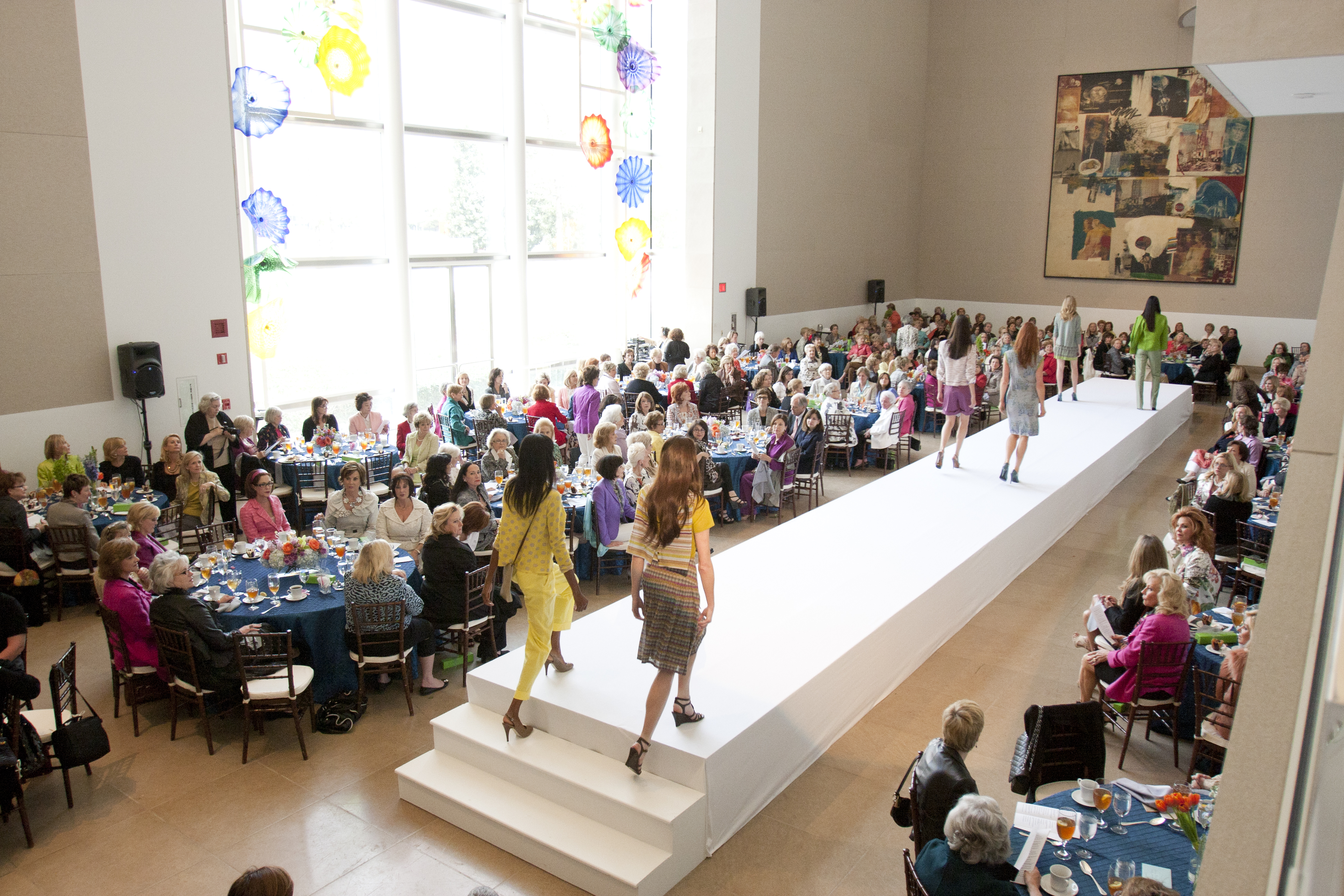
Photography by Adam Gingrich, Marketing Assistant at the Dallas Museum of Art
Following her new installation in the third-floor galleries of objects that reflect transport along Eurasia’s Silk Road, “seasoned” curator Dr. Anne Bromberg sat down with us to discuss her fascinating career. A lifelong Dallasite—except for her years at Harvard getting her B.A. in anthropology and M.A. and Ph.D. in classical art and archaeology—Dr. Bromberg has been on the staff of the Dallas Museum of Art for more than forty years, first as a lecturer and docent trainer beginning in 1962, then as head of the education department, and currently as The Cecil and Ida Green Curator of Ancient and Asian Art. What’s more, she has led an inspired life, traveling extensively to little-known locales, researching and experiencing the cultures within her discipline.
[slideshow]
Q: How would you describe your job at the DMA?
AB: Most curatorial jobs involve trying to acquire art for the museum, organizing exhibitions and/or working on exhibitions that come to us from elsewhere, publishing, lecturing, working with volunteers, [and] cultivating donors. In terms of legwork, it’s going around and seeing dealers and other collections, visiting other museums, going to conferences, and giving lectures outside the museum.
Q: You are in charge of a very diverse area of the Museum’s collections. What is your particular area of expertise?
AB: Classical art, meaning the art of ancient Egypt, Greece, and Rome, and all Asian art, but I’m mainly working with South Asian art.
Q: How did you become interested in Asian art?
AB: One of the really outstanding teachers I had taught evolution in her biology courses, including historical geology, and I was really fascinated with historical geology and that got me into reading about archaeology. And I thought, this is what I want to do. A good teacher makes a difference. I’ve actually been interested in Asia for a long, long time. When I was an undergraduate, I was reading books on Zen Buddhism and haiku, the Ramayana, and things like that. Books stimulate your passion to go see these things in reality.
Q: What are some of your favorite places you’ve traveled to?
AB: I think both my husband, Alan, and I would say the single favorite place we’ve been is Isfahan in Persia. Italy, of all the European countries, is easily the most seductive, and everybody I know who has been to India is dying to get back. We’ve been there so many times, and you feel like you’ve just scratched the surface.”
Q: What is your favorite object within the ancient and Asian collections at the DMA? Within another collection?
AB: The Shiva Nataraja, because that image is the single most important iconic image in Hinduism generally, and many Hindus would agree with that. It is exceptionally beautiful both aesthetically and because it represents the loving quality of the god Shiva. South Indian Hindu poems describe worship as falling in love with the god, and our Shiva Nataraja is the embodiment of that Chola period poetry.
Brancusi’s Beginning of the World. because of my background, I personally have a strong response to pure geometric forms and classical idealism, and I’m certainly not alone in believing that the ancient Greeks would appreciate that classical, pure, and geometric vision of the beginning of the world.
Q: Do you personally collect art? What types of objects are you most drawn to?
AB: Primarily we’ve collected what I would call third-world contemporary art—things that at the time were being made wherever—New Guinea, India, South America, Mexico, etc.
Q: Why do you think it is important for people to study non-Western art?
AB: If you study non-Western art, you’ll learn what human beings create and why. If you stick only to your own civilization, you are much less likely to think about why these things are being made . . . or about a much more serious question to me, why do we call it art?
Q: Describe your current project, an installation of objects from the DMA’s collections focusing on the Silk Road.
AB: The Silk Road installation is something that has interested me for a long time. We do have a lot of artwork that really displays the meaning of the Silk Road, which tied Eurasia together for millennia. So I was delighted when I got a space where I could show the ties between the Mediterranean world and Asia.
The Silk Road is an ancient transcontinental network of trade routes that spread across Eurasia from the Mediterranean to China and Japan. The phenomenon of the Silk Road is constantly studied and has recently been featured in museum exhibitions around the world. The new installation, organized by Dr. Bromberg, addresses six themes related to the Silk Road, including the development of cities and trade, the importance of animals to early societies, and the spread of religions. The installation presents well-known DMA favorites, such as the Javanese Ganesha and the bust of a man from Palmyra, and new works from several local private collections. Opening this weekend, come see the new installation on Level 3 the next time you visit the DMA.
Ashley Bruckbauer is the McDermott Intern for Programs and Resources for Teachers at the Dallas Museum of Art and Madelyn Strubelt is the McDermott Curatorial Intern of Ancient and Asian Art at the Dallas Museum of Art.