Archive for the 'Behind-the-Scenes' Category


An American Art Education

Two of our talented McDermott Interns have been busy working on some new projects, both involving our collection of American art.

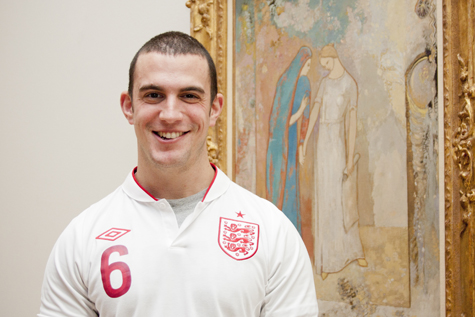
Alexandra Vargo: As the McDermott Education Intern for Gallery Teaching, I work with school tours, adult tours, teachers, and the volunteer docent corps. Currently, I’m working on a Docent Guide for the Museum’s collection of colonial to modern American art. The guide focuses on creating interactive and versatile experiences that can be presented with any number of objects and age groups. I have been testing these activities with school tours ranging from 3rd graders to high school art students throughout my internship.

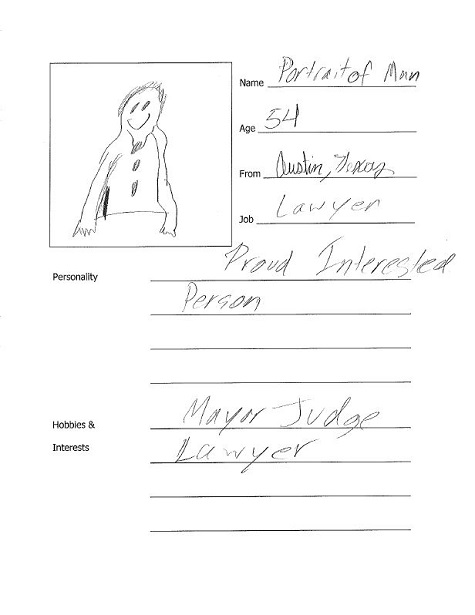
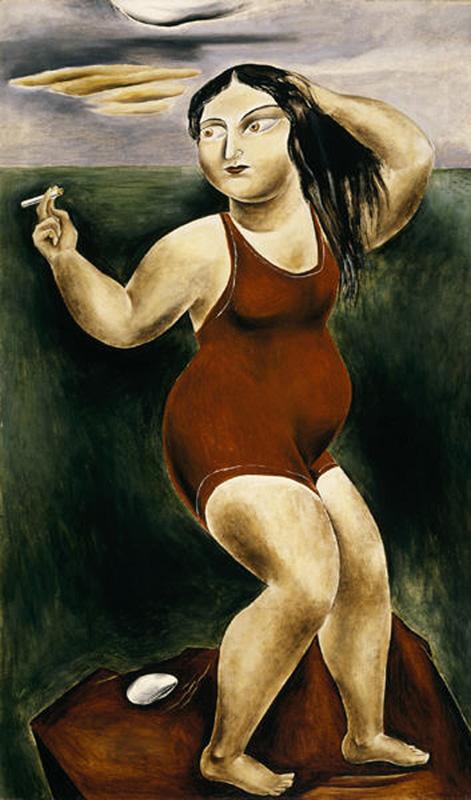
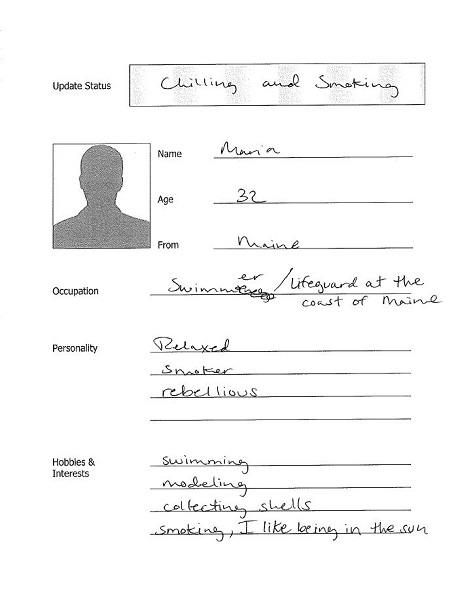
The “Make Your Own Profile” exercise has been one of the most fun to create. It is based on Facebook and asks students to think creatively about a portrait of their choice within the American collection. Students use close looking and visual evidence to draw conclusions about the personality and backstory of the subject. Check out some of the examples below:

Pilar Wong: As the McDermott Education Intern for Community Teaching, I work with Go van Gogh®, our art education outreach program. I am currently working on revamping our 5th and 6th grade program titled Picturing American History. The program focuses on artworks in the DMA’s collection that reflect important moments in American history.

Piero Fornasetti, Richard Ginori Porcelain, Le retour (The Return) plate from the "Man in Space" series, designed 1966, porcelain, transfer-printed, Dallas Museum of Art, gift of Michael L. Rosenberg

The Return plate from the Man in Space series, Piero Fornasetti, designer, Richard Ginori Porcelain, manufacturer, designed 1966, porcelain, Dallas Museum of Art, gift of Michael L. Rosenberg

After discussing the five artworks, students make commemorative plates that capture a modern-day current event or social issue. This activity is based on The Return, a plate from the Man in Space series that commemorates the Space Race between the United States and the former USSR. Check out some of the kids’ responses below:

Projects like these provide valuable contributions to our ongoing educational work at the Museum and remain in use long after our McDermott Interns have left the DMA.

Alexandra Vargo is the McDermott Education Intern for Gallery Teaching and Pilar Wong is the McDermott Education Intern for Community Teaching at the DMA.

Cindy Sherman Transformed

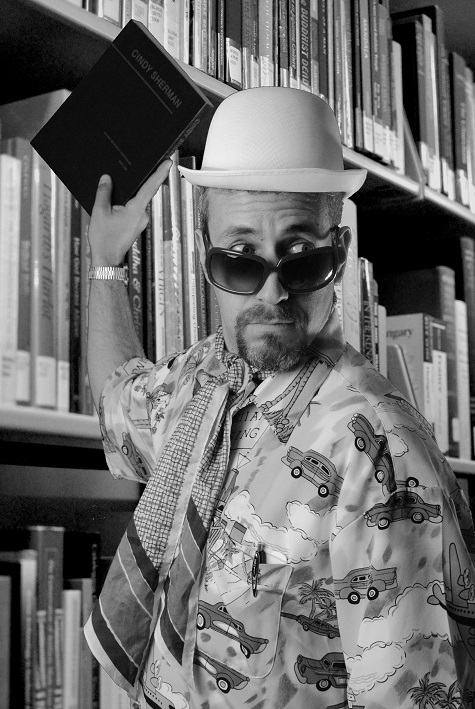
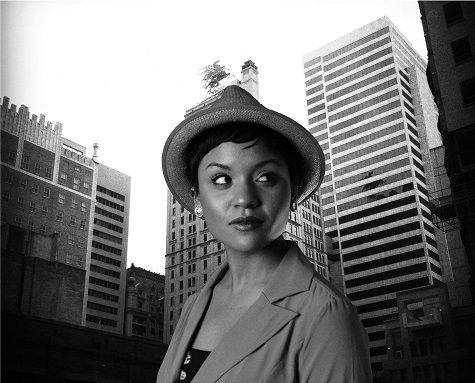
On Friday, DMA Late Night visitors stopped by the Tech Lab to dress up and pose in a Cindy Sherman-like scene. Check out their transformations in these photographs taken by Greenhill School photography students and visit the Cindy Sherman exhibition to find the inspiration for the backdrops in the photos below. Stop by the Tech Lab during the Late Night on May 17 to participate in a Body Beautiful-themed Late Night Art Bytes, in celebration of our exhibition The Body Beautiful in Ancient Greece: Masterworks from the British Museum.

Because so many visitors stopped by the photobooth, we are still editing images. Check the DMA’s Flickr page throughout the week to see new additions to the group.

Transform yourself at home into Cindy Sherman to earn the DMA Friends Super Fan: Cindy Sherman Badge! Find out how on the DMA Friends Highlights page.

Jessica Fuentes is the C3 Gallery Coordinator at the DMA.

Human Heroes & The Body Beautiful

I have worked on many big, exciting exhibitions at the DMA since I came here in 1975, ranging from Pompeii AD 79 to Chola Bronzes from South India, Splendors of China’s Forbidden City, and Tutankhamun: The Golden Age of the Pharaohs, but The Body Beautiful in Ancient Greece: Masterworks from the British Museum is one of the most extraordinary. On my many visits to London, I am always amazed at the treasures in the British Museum, and now Dallas has a chance to see some of their best art at the DMA.

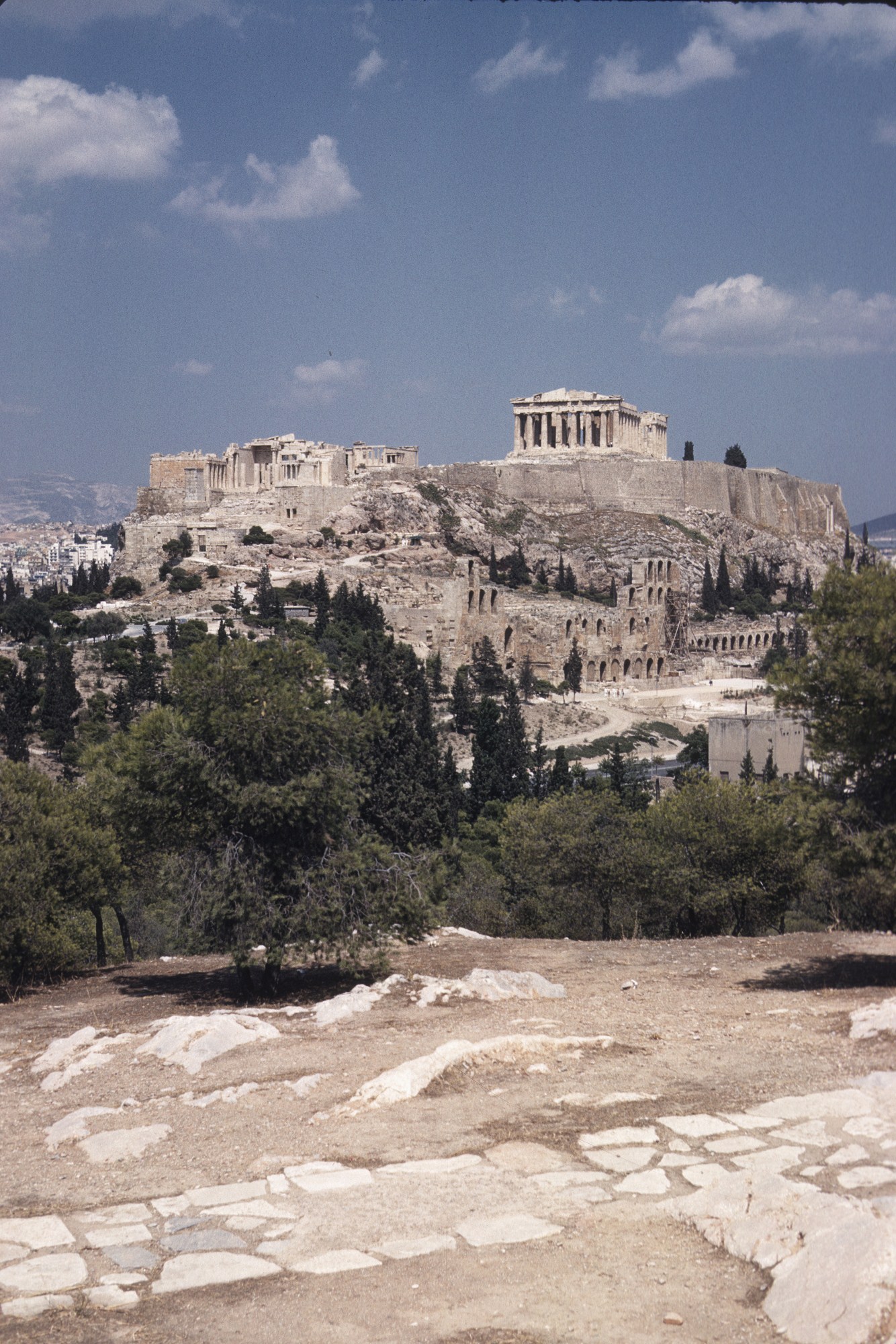
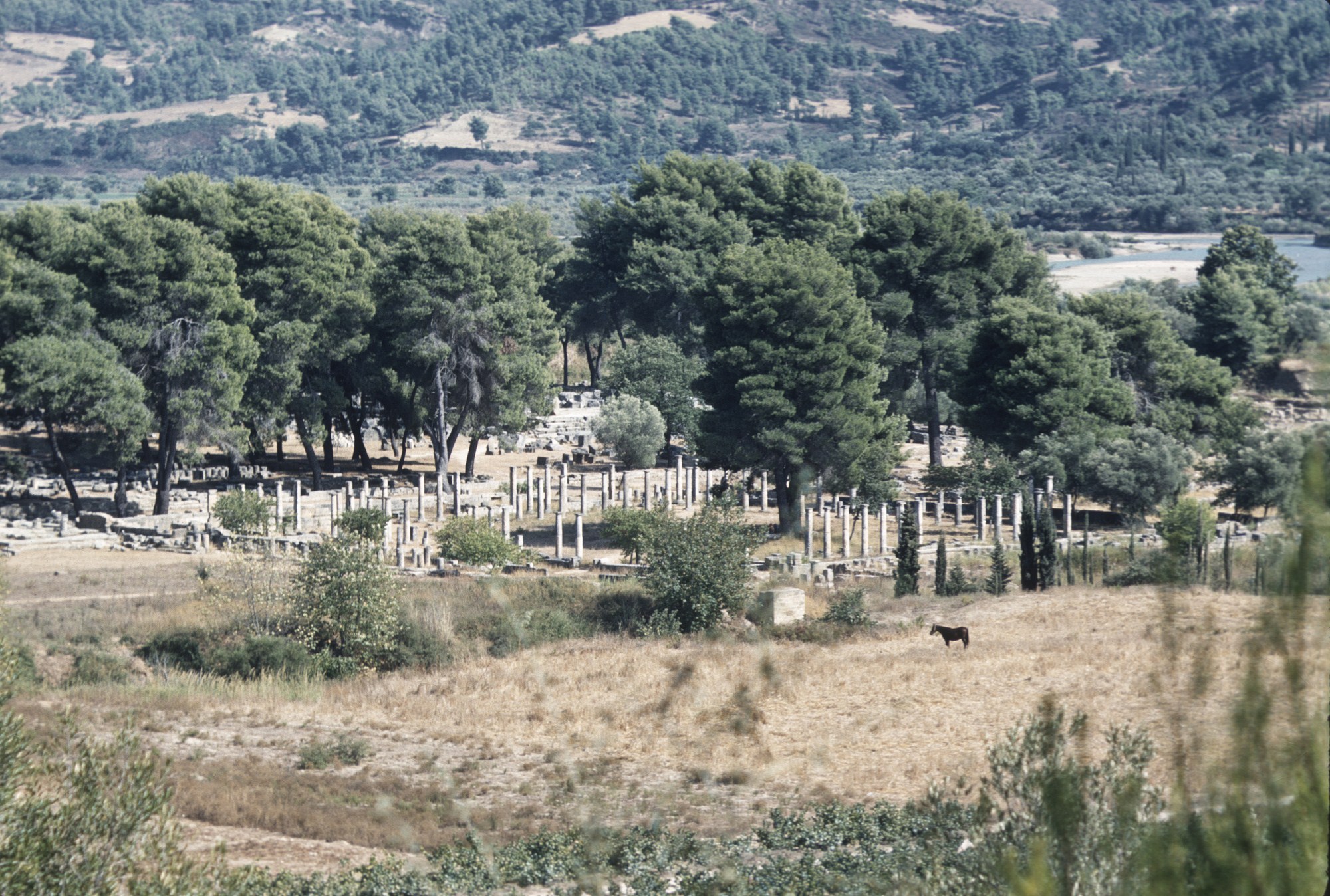
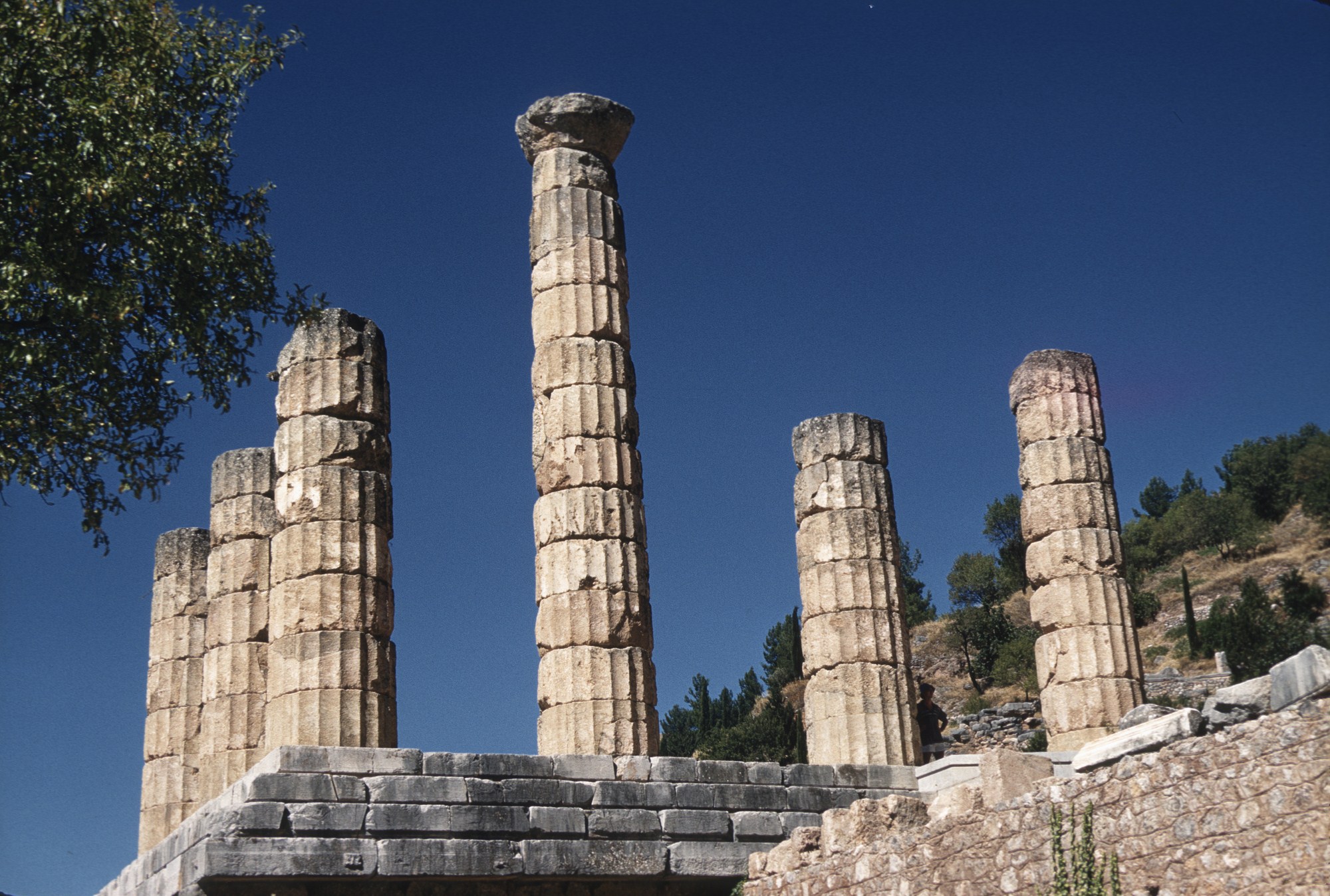
I still remember my first trip to Greece in 1960. My husband, Alan, and I roamed, sometimes as the sole visitors, over the acropolis in Athens, the AcroCorinth Mountain looming over the ancient city of Corinth, the temple of Apollo at Delphi, with its precipitous view straight down a mountainside to the sea, and the ruins of Olympia, where the Olympic Games began. No one was at Olympia then, except a boy herding black goats and someone playing a flute. Otherwise, the wind blew over the grasses and fallen stones. It was like visiting Pan, the god of nature, on his own turf. I fell in love with great sculptures like the youthful Charioteer at Delphi and the majestic Poseidon in Athens, feeling for the first time the stunning impact of ideal human beauty envisioned in art. Some of Alan’s photos from our trips to Greece will be part of an educational video on the sites of the Panhellenic games.
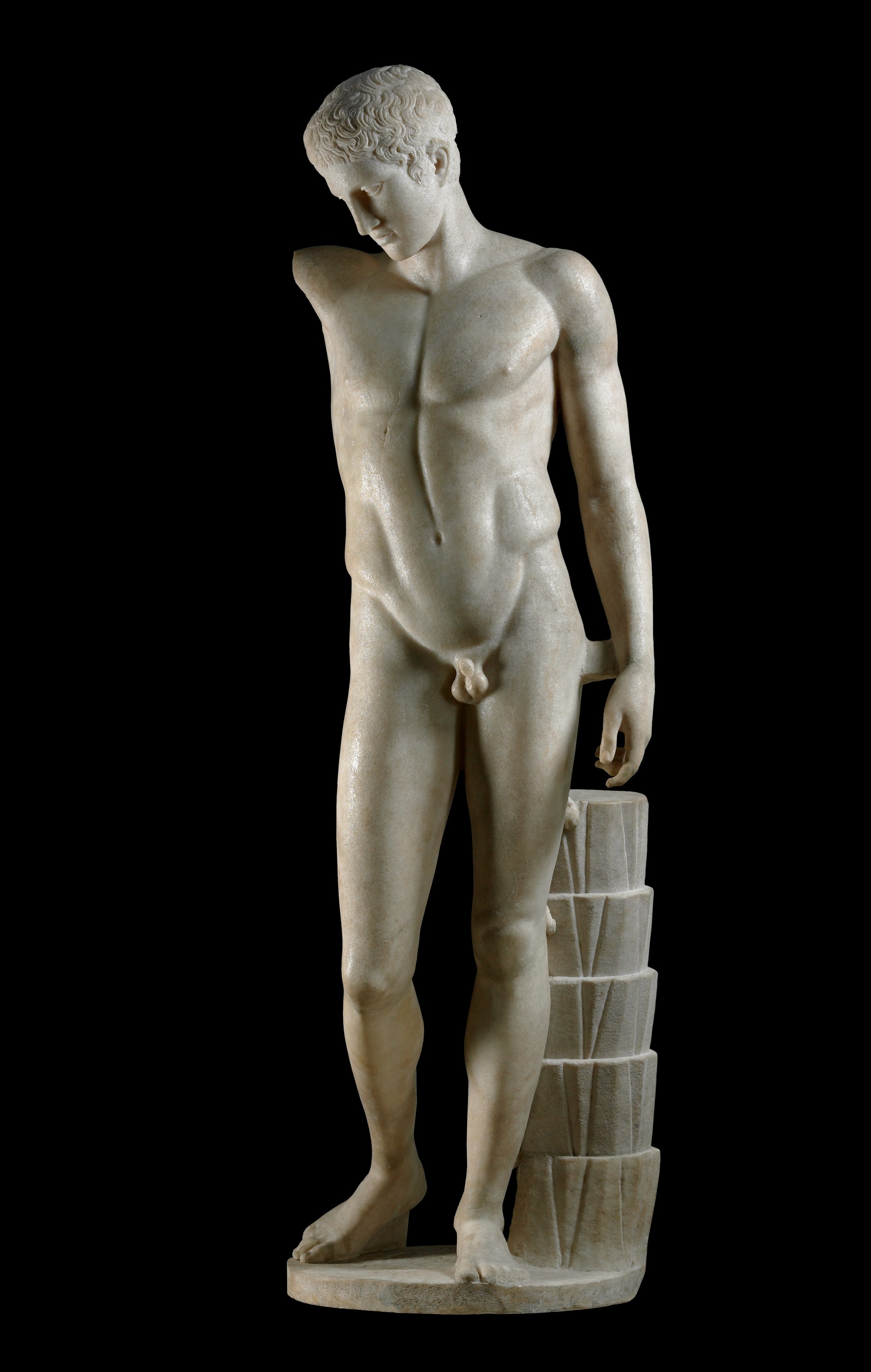
Marble statue of a victorious athlete, Roman period, first century AD, after a lost Greek original of about 430 BC, GR 1857,0807.1 (Sculpture 1754) © The Trustees of the British Museum (2013). All rights reserved.

Marble statue of a victorious athlete, Roman period, 1st century AD, after a lost Greek original of about 430 BC, © The Trustees of the British Museum (2013). All rights reserved.

The Body Beautiful in Ancient Greece: Masterworks from the British Museum displays this Greek vision of ideal human figures, particularly male nude figures. Such sculptures were admired by the Greeks because they believed that a young man who was a victor in one of the great athletic games, and who performed naked, had reached the height of glory that a man could achieve. Such victories were akin to dying heroically in battle. The same vision is best expressed in literature in Homer’s Iliad, where Achilles leads the Greeks to victory over Troy, but dies before the war is over. This ideal of human triumph is expressed in several works in the exhibition, particularly the discus thrower by Myron and the young athlete by Polykleitos. Although both of these works are shown in later Roman versions, they embody the Greek ideal of a radiant youthful victor. In a way the figures look ideal and “classical,” and in another way they are very seductive. They remind me of Keats’ description of Greek figures in Ode to a Grecian Urn: “Forever warm and still to be enjoyed; forever panting and forever young.”
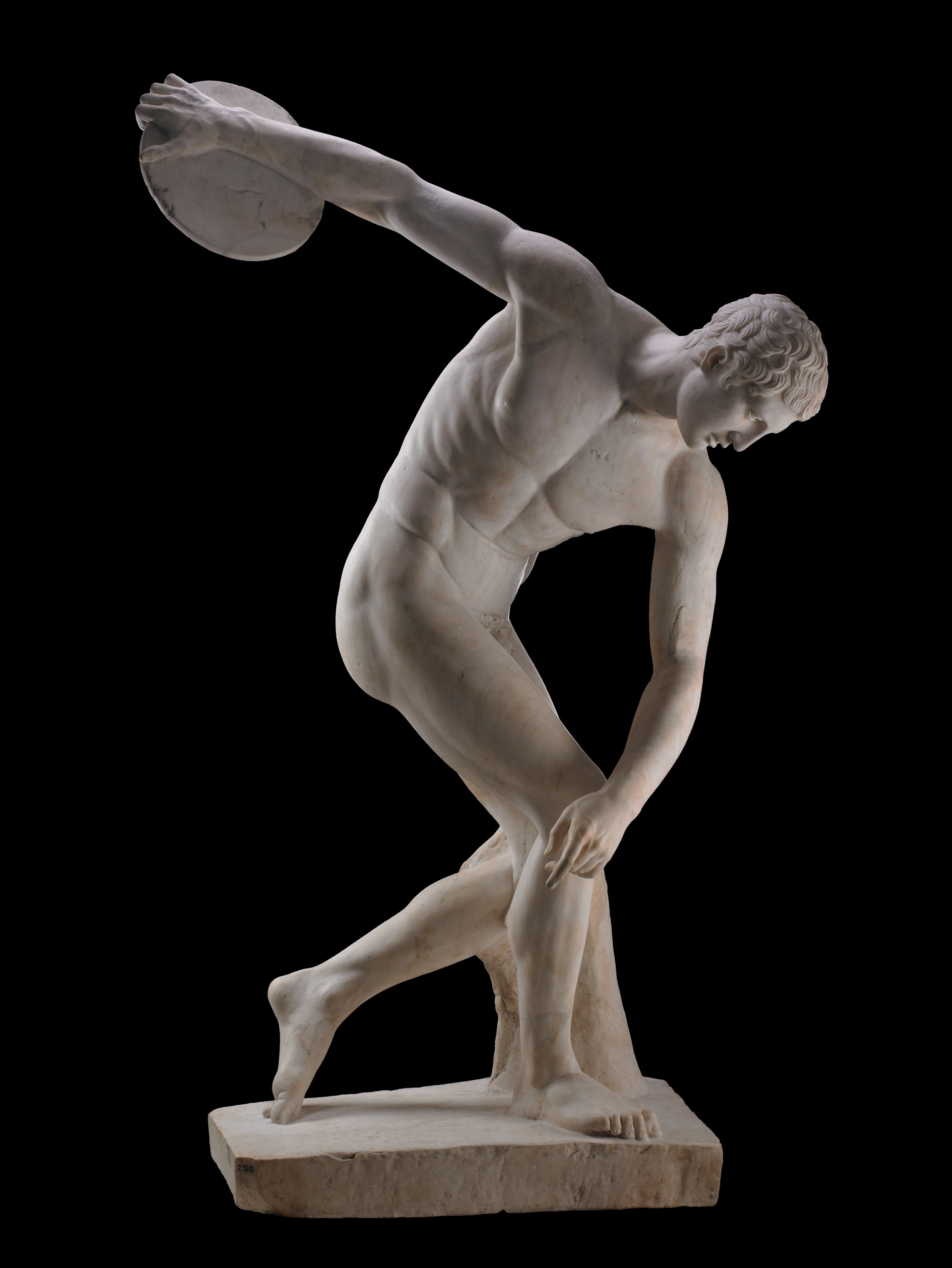
Marble statue of discus thrower (diskobolos), Roman period, second century AD, after a lost Greek original of about 450–440 BC, from the villa of the emperor Hadrian at Tivoli, Italy, GR 1805,0703.43 (Sculpture 250) AN 396999, © The Trustees of the British Museum (2013). All rights reserved.

Marble statue of discus thrower (diskobolos), Roman period, 2nd century AD, after a lost Greek original of about 450–440 BC, © The Trustees of the British Museum (2013). All rights reserved.

Works like the discus thrower and several other pieces in the show come from the great villa of the Emperor Hadrian at Tivoli, built in the 2nd century AD. They are testaments to the influence and vitality of Greek art during the Roman Empire. Hadrian was a very cultivated man who collected Greek art and commissioned many artworks in the Greek tradition. He was also personally a lover of young men. His character and life are well described in Marguerite Yourcenar’s novel Hadrian’s Memoirs. Hadrian’s villa is another delightful place that Alan and I visit often: it is a gorgeous temple of art and landscaping.
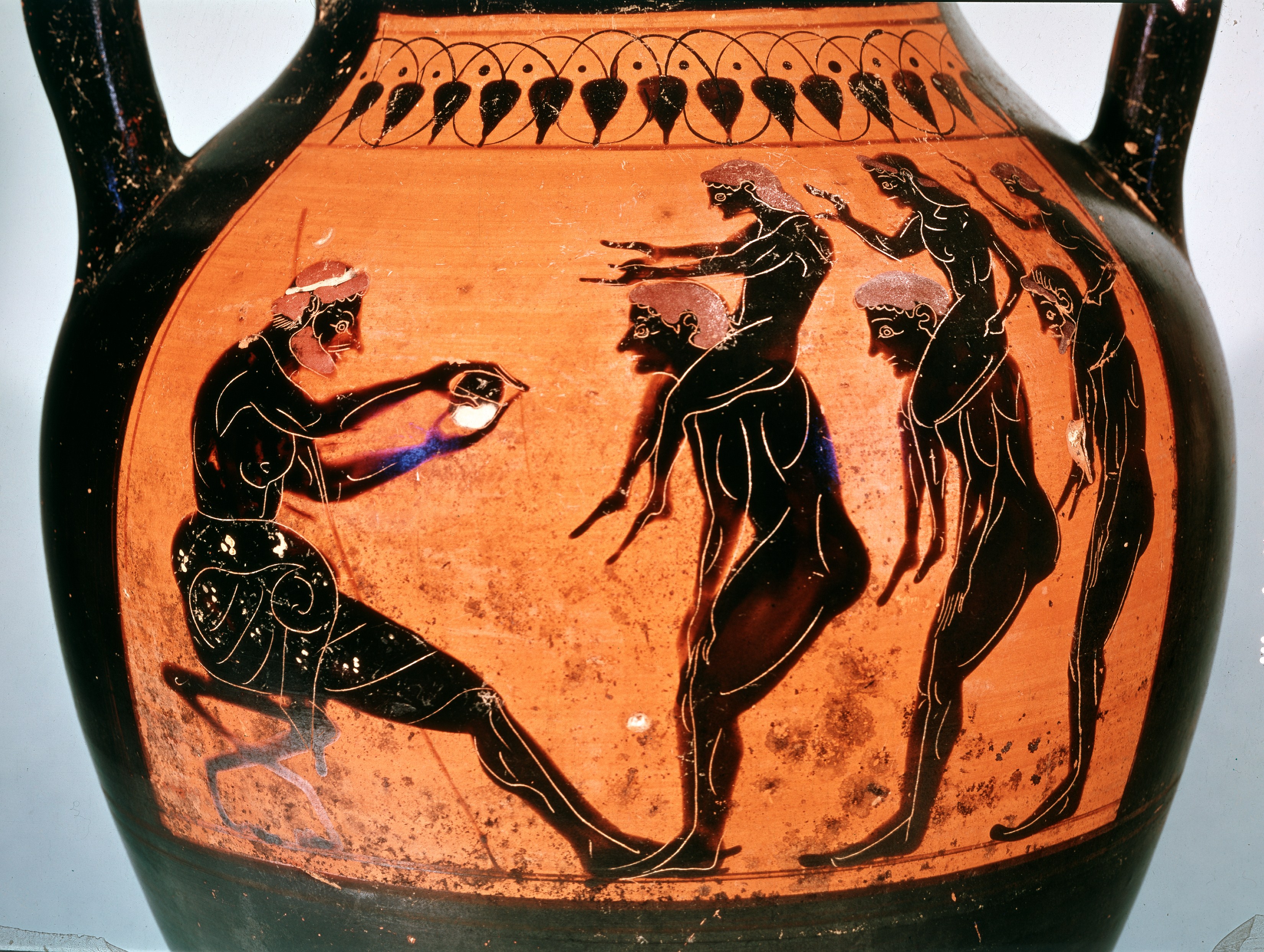
Black-figured amphora, Greek, made in Athens, about 540-520 BC, attributed to the Swing Painter, probably from Etruria, Italy, GR 1837,0609.65 (Vase B182) © The Trustees of the British Museum (2013). All rights reserved.

Black-figured amphora, Greek, made in Athens, about 540-520 BC, attributed to the Swing Painter, probably from Etruria, Italy, © The Trustees of the British Museum (2013). All rights reserved.

Besides the marble and bronze sculptures, the exhibition includes numerous painted vases, which bring to life the kinds of sports performed at Greek athletic competitions, stories, and myths of gods and heroes, and many scenes of ordinary life, including erotic encounters. Alan and I have collected ceramics all our lives, including some Greek examples. Greek vase painting has a narrative appeal; many images suggest the dramatic scenes found in the Greek theater, as well as actual scenes of masked actors. The love of real life and people is as important in Greek culture as idealizing art. I always think that it’s important to remember that the Greeks were keen observers. The kind of study of living bodies that you see in Greek sculptures is similar to the understanding that led to advances in science and medicine.
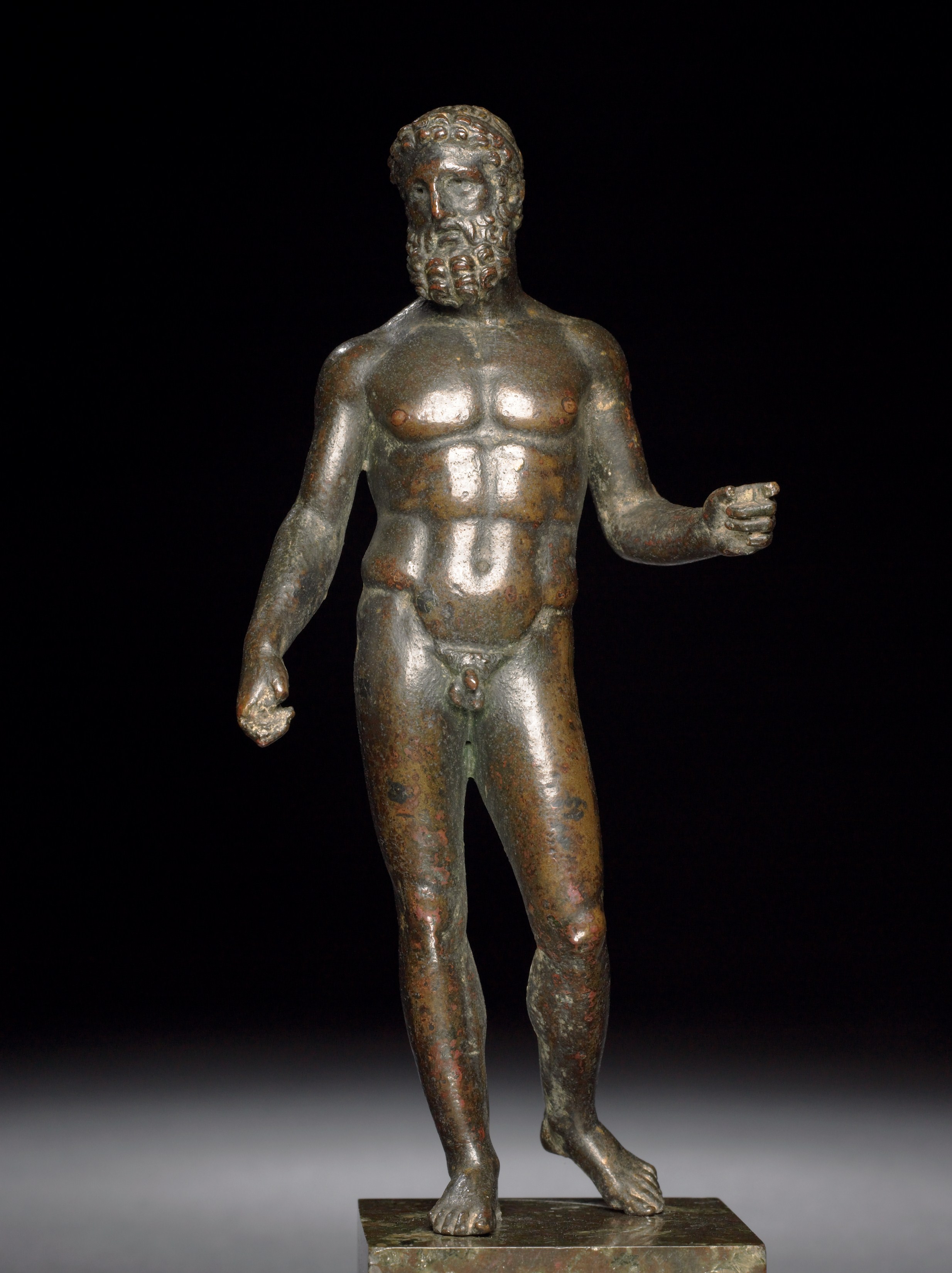
Bronze statue of Zeus, Roman period, first century AD, after Greek original of about 440 BC, said to be from Greece, GR 1824,0446.16 (Bronze 910 AN381063001) © The Trustees of the British Museum (2013). All rights reserved.

Bronze statue of Zeus, Roman period, 1st century AD, after a Greek original of about 440 BC, said to be from Greece, © The Trustees of the British Museum (2013). All rights reserved.

One of the most significant figures in The Body Beautiful in Ancient Greece is Herakles, a human hero, but also the child of Zeus, king of the gods. Herakles accomplished superhuman labors triumphantly (such as killing the Nemean lion, whose skin he is shown wearing), but he also suffered greatly. Driven mad by the jealous goddess Hera, he killed his first wife and children. At the end of his life, he was poisoned in ignorance by his second wife. In great pain, he burned himself alive on a funeral pyre. Yet Zeus and the other gods accepted him after death on Mt. Olympus, the only human to achieve immortality. His splendid, but painful, life exemplifies the Greek belief that “those whom the gods love die young.” Better to go at the height of youthful strength and beauty.

Dr. Anne R. Bromberg, the DMA’s Cecil and Ida Green Curator of Ancient and Asian Art.
Breaking Ground

We “broke ground” today on the Museum’s new paintings conservation studio! The conservation studio is located on the top level of the DMA, near the south entrance, and will include a gallery space and sculpture courtyard (accessible to you!) designed by Samuel Anderson Architects (SAA). For the first time at the DMA, visitors will be able to see behind the scenes on a daily basis, watching artwork actively being conserved by the DMA’s first Chief Conservator, Mark Leonard. Construction is scheduled for completion this fall.

Check the DMA’s social media and Uncrated throughout the summer for updates on the construction of the conservation studio. Below are photos from today’s official first day of construction.

Wright windows removed Wright windows in storage  25 26

The Arc of Dallas at the DMA

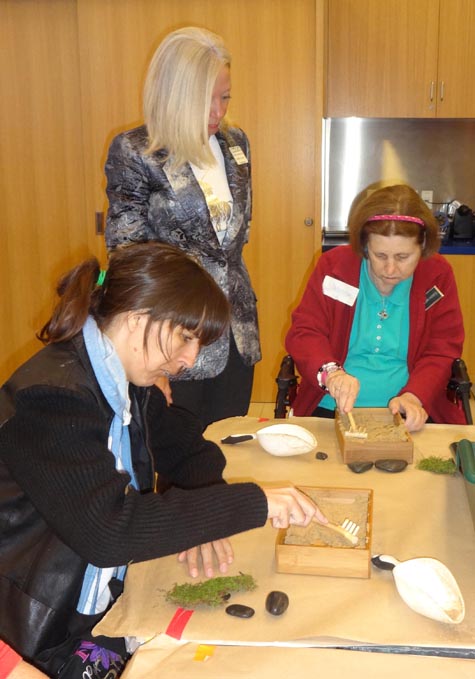
Visitors may be unaware of a special program the Dallas Museum of Art provides for adults with developmental disabilities. For the past five years, the Museum has offered a private program for The Arc of Dallas. Clients visit the Museum monthly and participate in a gallery tour and studio art-making activity. Some clients have participated for all five years, and we have a group of regular attendees. Because of their ongoing attendance, many participants feel comfortable with the Museum’s staff and in the galleries.

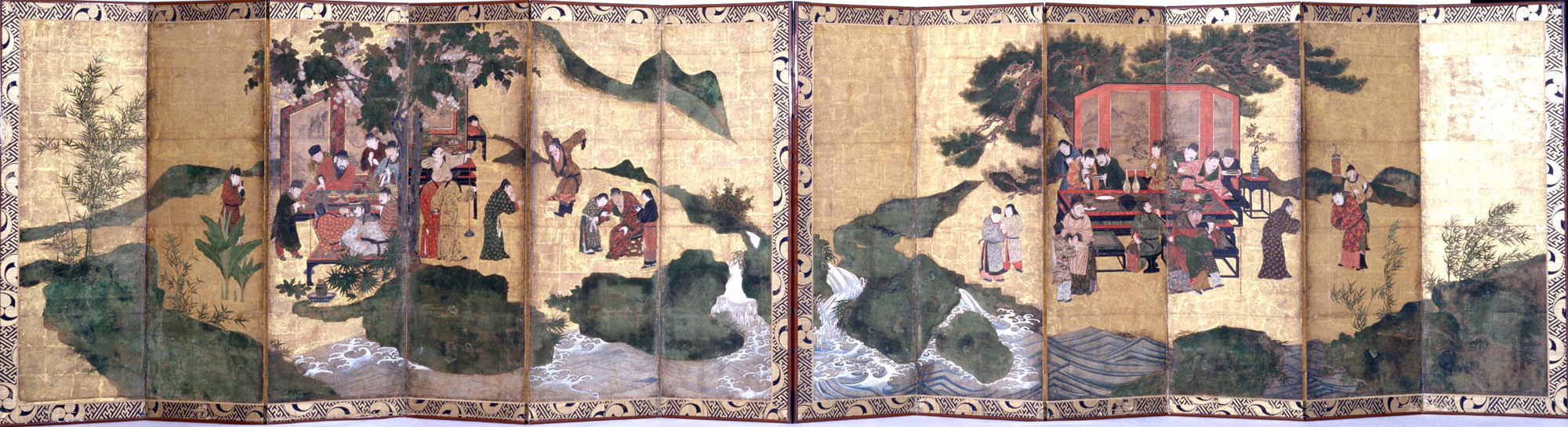
The Eight Immortals of the Wine Cup, Japan, c. 1600, ink and pigment on gold, Dallas Museum of Art, The Eugene and Margaret McDermott Art Fund, Inc.

The Eight Immortals of the Wine Cup, Japan, c. 1600, ink and pigment on gold, Dallas Museum of Art, The Eugene and Margaret McDermott Art Fund, Inc.

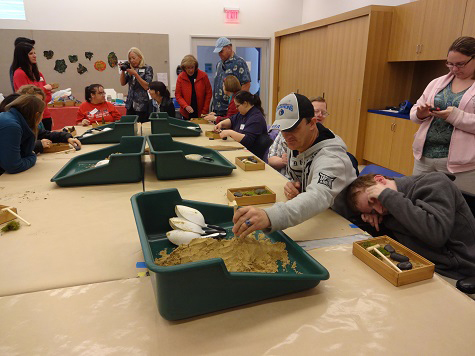
This past month we were joined by Susan Morgan, Senior Manager of Therapeutic Horticulture at the Dallas Arboretum and Botanical Garden. We discussed the importance of how nature is depicted in Japanese art, particularly the lotus flower. Clients enjoyed learning the symbolism of different plants from Sharon. Later, they walked around the Asian galleries looking for lotus flowers in the art. Back in the studio, clients created their own Zen rock gardens.

image two

According to their website, The Arc of Dallas “promotes and protects the human rights of people with intellectual and developmental disabilities and actively supports their full inclusion and participation in the community throughout their lifetimes.” The DMA is proud to include this audience in our programming. Sherry Wacasey, Executive Director for The Arc of Dallas, believes disability does not always affect creativity, and the DMA program meets the goals to empower this population. She argues that art is another form of communication and it can touch people who in other ways cannot communicate—art can close the gap.

I worked with this program in the fall of 2012 for my master’s thesis from the University of North Texas. One of my favorite aspects of working with The Arc of Dallas clients is observing the personal connections they make to the artworks. For example, when we toured the exhibition The Legacy of the Plumed Serpent in Ancient Mexico, during the sketching portion one client identified with a ceramic figure because one arm was longer than the other, a trait that mirrored her own proportions.

Our staff enjoys The Arc of Dallas’s monthly visits and always appreciates their many hugs at the program’s conclusion. We visit different galleries every month, and next month’s visit to the exhibition Chagall: Beyond Color is certain to be a good one.
image one

Holly York is the McDermott Education Intern for Family Programs at the DMA.

Everything’s Turning Up Chagall

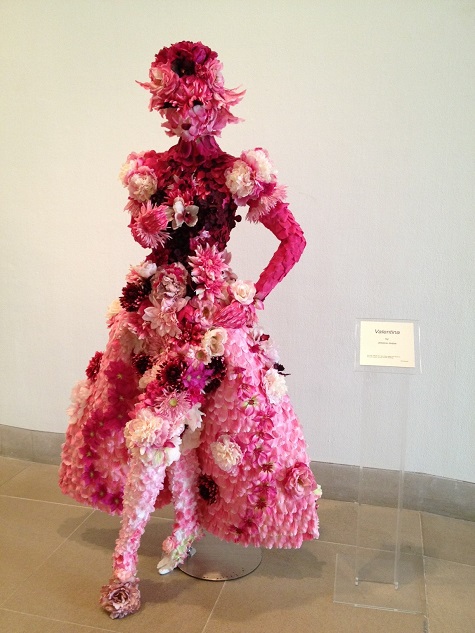
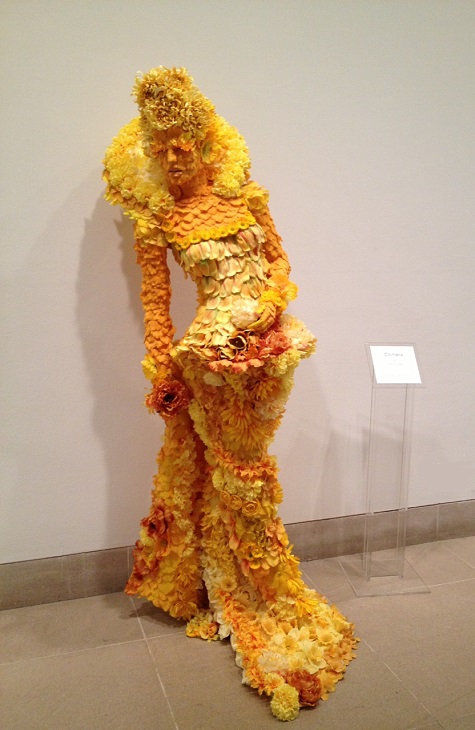
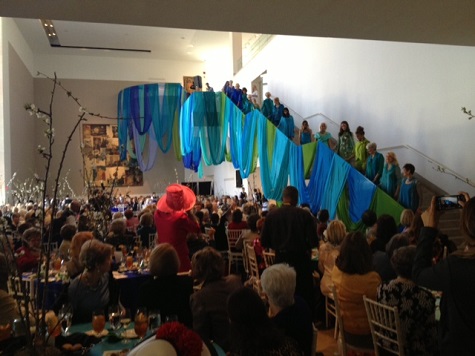
Art in Bloom guests were immersed in a world of art, color, and flowers today at this year’s floral symposium and luncheon. Bella Meyer, a New York-based floral designer and the artist Marc Chagall’s beloved granddaughter, entertained the audience with stories about life in the Chagall family, the symbolism in her grandfather’s art, and interpretations in flowers of several of his paintings. Over lunch, complete with edible flowers, a colorful fashion presentation by Allie-Coosh provided inspiration for what was to follow . . . a tour of the DMA’s exhibition Chagall: Beyond Color. Did you know that we are the only U.S. venue for this internationally touring exhibition?

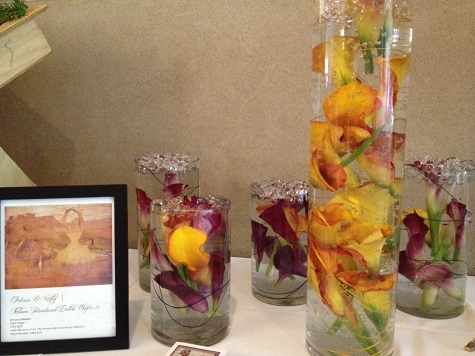
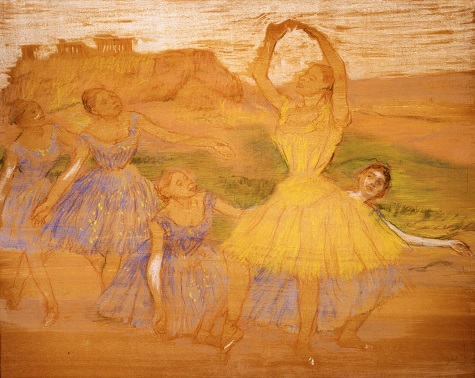
Floral arrangement inspired Edgar Degas’ Group of Dancers in the DMA’s collection

Floral arrangement inspired Edgar Degas’ Group of Dancers in the DMA’s collection

Edgar Degas, Group of Dancers, c. 1895-1897, pastel and gouache on panel, Dallas Museum of Art, The Wendy and Emery Reves Collection

Edgar Degas, Group of Dancers, c. 1895-1897, pastel and gouache on panel, Dallas Museum of Art, The Wendy and Emery Reves Collection

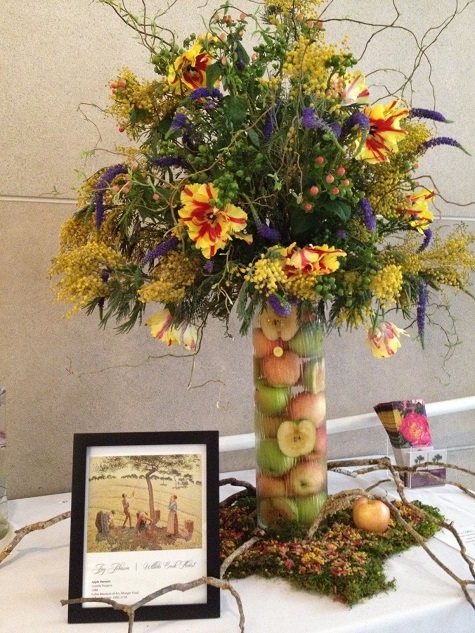
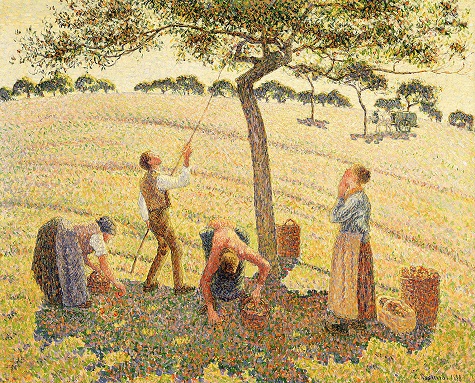
Floral arrangement  inspired by Camille Pissarro’s Apple Harvest in the DMA’s collection

Floral arrangement inspired by Camille Pissarro’s Apple Harvest in the DMA’s collection

Camille Pissarro, Apple Harvest (Cueillette des pommes), 1888, oil on canvas, Dallas Museum of Art, Munger Fund

Camille Pissarro, Apple Harvest (Cueillette des pommes), 1888, oil on canvas, Dallas Museum of Art, Munger Fund

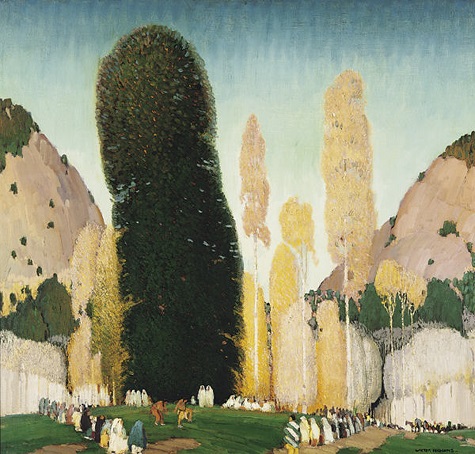
Floral arrangement inspired by Victor Higgins’ A Mountain Ceremony in the DMA’s collection

Floral arrangement inspired by Victor Higgins’ A Mountain Ceremony in the DMA’s collection

Victor Higgins, A Mountain Ceremony, c. 1930, oil on canvas, Dallas Museum of Art, anonymous gift

Victor Higgins, A Mountain Ceremony, c. 1930, oil on canvas, Dallas Museum of Art, anonymous gift

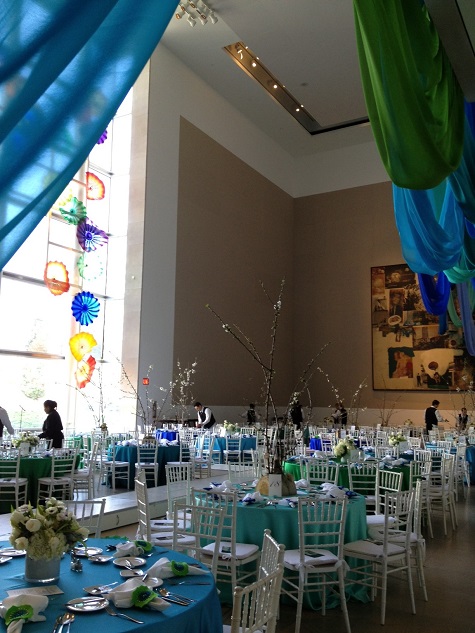
Preparing for Art in Bloom in the DMA’s Atrium

Preparing for Art in Bloom in the DMA’s Atrium

“Valentina” by Jessica Jesse

“Valentina” by Jessica Jesse

“Chimera” by Jessica Jesse

“Chimera” by Jessica Jesse

Dallas League Members and models during Art in Bloom 2013

Dallas League Members and models during Art in Bloom 2013

Debbie Stack is Director of Special Events and Volunteer Relations at the DMA.

DMA Friends: A Daily Dose of Art

“I travel a lot and always go to an art museum. But it’s expensive. Here—it’s free. I come all the time and stay like fifteen minutes…I get my daily dose of art.”

27

This month, Robert “Bobby” Kaufman became the first DMA Friend to claim a high-point-level reward offered through DMA Friends, the free membership program that launched in January 2013. “The quality of rewards is so high and a positive incentive for coming [to the DMA].” For 35,000 points, Bobby claimed the “Dinner and a Movie” reward. Come this May, he’ll dine on the DMA’s dime and watch a movie of his choosing with his invited guests in the Horchow Auditorium. Way to go, Bobby!

I sat down with Bobby for a chat last Thursday and discovered that he is without a doubt one of our most loyal DMA Friends. He stands out among our growing crowd of 5,500+ Friends who participate in DMA activities ranging from viewing art in the galleries to making something in the Center for Creative Connections to attending our weekly Gallery Talks. Bobby earns points by visiting and participating often, in short spurts. He spends most of his time in the American and European galleries, where he returns to favorite works and leaves feeling inspired. “I can’t paint. . . . But looking at the masters is a reminder to me to try to create something important.” An aspiring poet, he hopes to make his mark in the field of writing one day. He eloquently related to me how details in two of his favorite European paintings—in particular the gestures of figures in each painting—inspire him to be evocative and thoughtful when describing characters through his words.

Born and raised in Dallas, Bobby told me that he came to the Museum maybe once when he was growing up. Two years ago, his parents gave him a DMA membership when he took a teaching position in the English Department of a Dallas-area high school. Then, he started visiting the DMA every few months. Since the DMA returned to FREE general admission and launched the DMA Friends program in January, he’s visited nearly every day–often after school on weekdays. He opted not to renew his DMA membership because the DMA Friends program gives him exactly what he needs for an art museum experience.

Want to learn more about how to become a DMA Friend and earn points and rewards like Bobby? Visit DMA.org/friends and then come by the Museum to see us!

Nicole Stutzman Forbes is the Chair of Learning Initiatives and Dallas Museum of Art League Director of Education at the DMA.

Open Office: Foundation and Government Relations Director

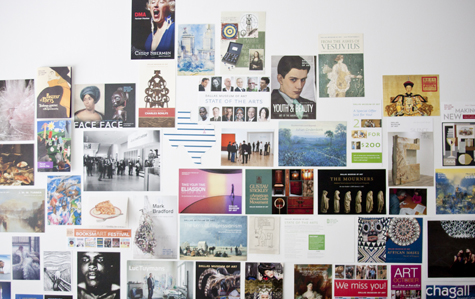
I inherited my office–and the majority of this wall collage–from its former resident. I had always admired her creative office décor, so I immediately added to it when I moved in. The timespan of exhibitions reflected on the wall ranges from 2004 (Splendors of China’s Forbidden City: The Glorious Reign of Emperor Qianlong) to present day (the newly opened Cindy Sherman). It’s fun to see a visual history of the shows we’ve presented over the last decade. Too bad it’s the only organized area of my office.

29 27 28

Anne Palamara Smith is the Director of Foundation and Government Relations at the DMA.

21 Years of Silver Supper

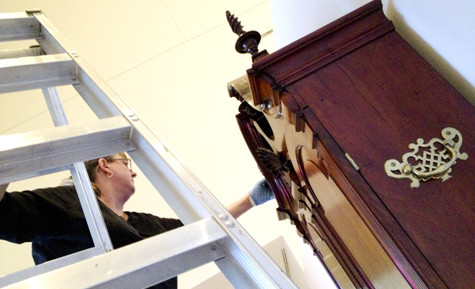
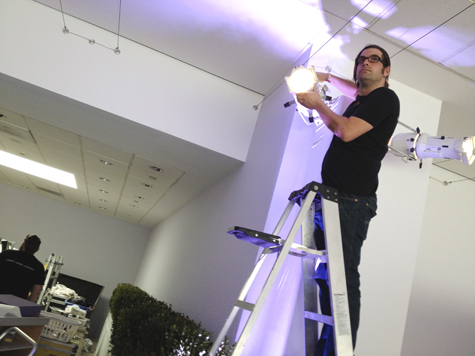
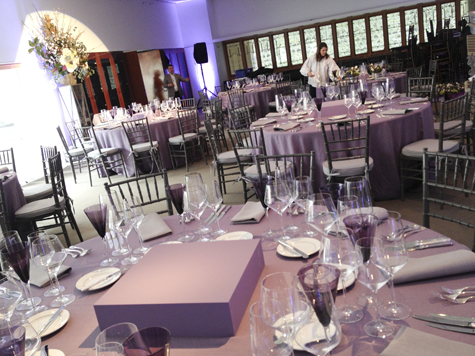
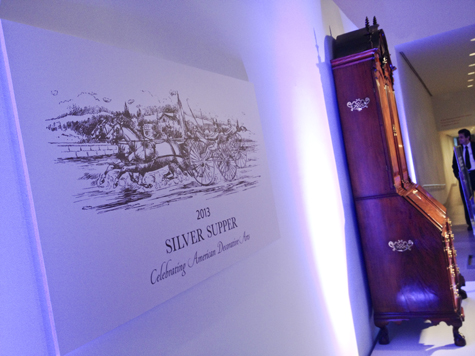
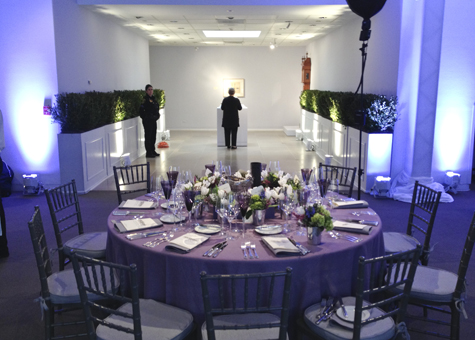
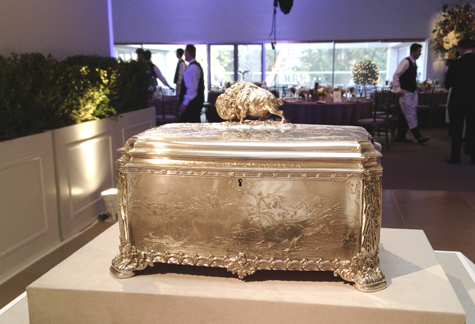
This past Friday was the 21st anniversary of Silver Supper, an annual event that celebrates the DMA’s outstanding holdings of American decorative arts and silver. This year’s Silver Supper highlighted thirty-two works from the DMA’s decorative arts and design collection. For more information on the annual event, visit the DMA’s website.

20

21

22

23

24

25

26

Installing Chagall

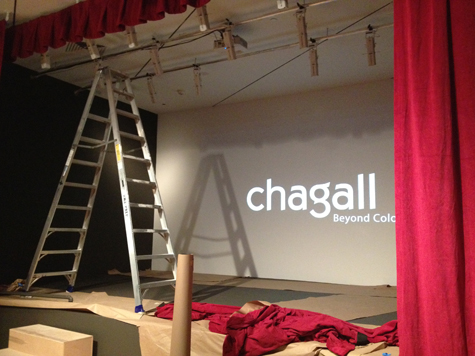
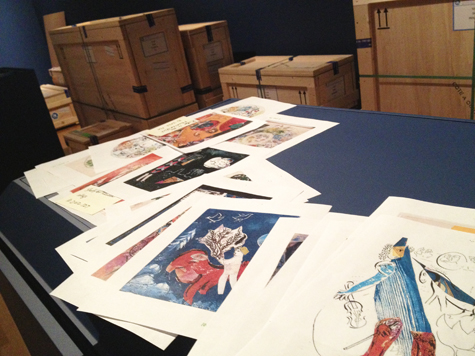
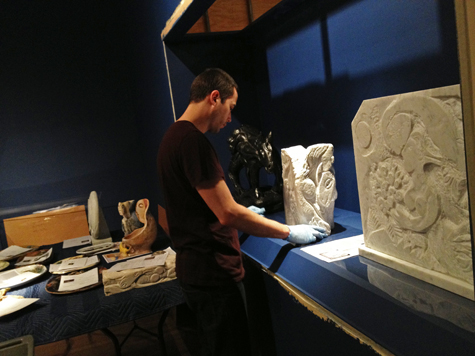
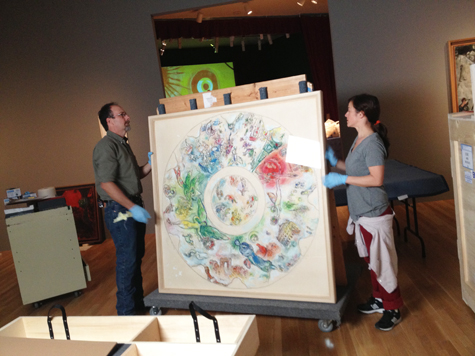
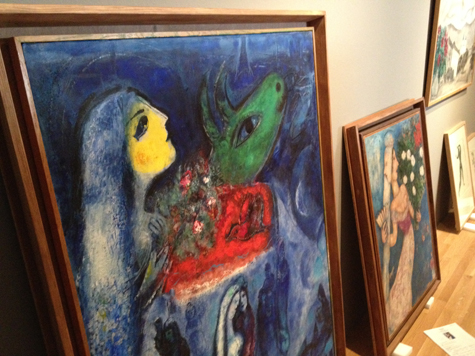
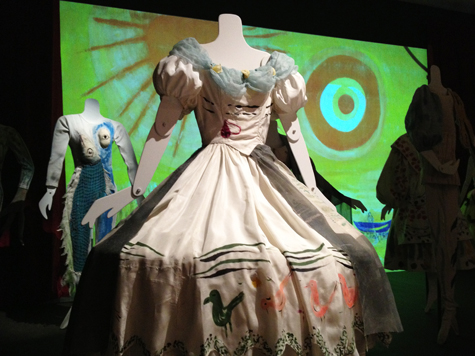
We have less than a week until the opening of Chagall: Beyond Color here at the Dallas Museum of Art. The DMA is the only U.S. venue for this exhibition, which features Marc Chagall’s sculptures, ceramics, collages, paintings, and costumes. To tide you over until the opening on Sunday, February 17, below are a few installation shots from the past week.
IMG_2898

IMG_2915

IMG_2941

IMG_2957

IMG_2971

IMG_2960


Archives

Categories