Archive for the 'Behind-the-Scenes' Category


The Man Behind the Mounts

Image
Over the past 23 years, visitors to the DMA have witnessed the handiwork of preparator and resident mountmaker Russell Sublette without actually seeing it: the lid of an African box seems to lift as if pulled by an unseen hand, the Tiffany windows emanate a ghostly glow from within the wall into which they are built, odd-shaped objects stand straight and tall in their cases. He has made a Yoruba Egungun costume twirl and dance in the galleries, and created a mannequin support for an equestrian Madonna to ride.
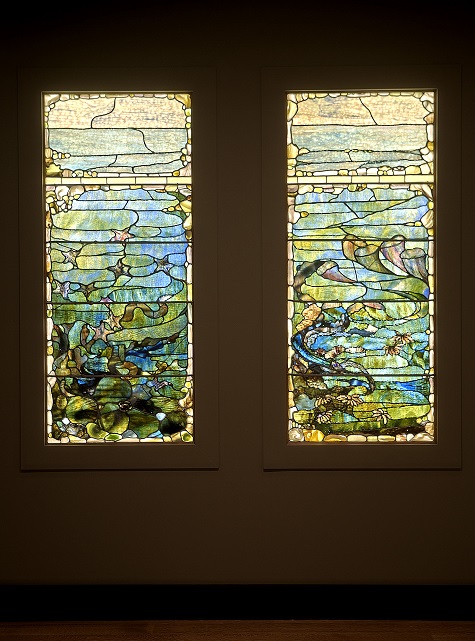
Window with Starfish ("Spring") and Window with Sea Anemone ("Summer"), c. 1885-1895, Louis Comfort Tiffany, Tiffany Glass and Decorating Company, glass, lead, iron, and wooden frame (original), Dallas Museum of Art, The Eugene and Margaret McDermott Art Fund, Inc.

Window with Starfish (“Spring”) and Window with Sea Anemone (“Summer”), c. 1885-95, Louis Comfort Tiffany, Tiffany Glass and Decorating Company, glass, lead, iron, and wooden frame (original), Dallas Museum of Art, The Eugene and Margaret McDermott Art Fund, Inc.

“The point of the mount is to let the object speak without the mount being the center of attention,” Sublette says. “The best compliment you can give a mountmaker is ‘What a great object.’”

A 35-year veteran of the Museum, Sublette began his journey to become the DMA’s expert mountmaker in high school metal shop class. He still has a dust pan he made in 1972. After working for several years as a general art handler at the DMA, he focused his attention on making mounts with the Gold of Three Continents exhibition in 1990. A training course at Benchmark, a national company that supplies mounts and supports for museums across the country, provided him with a solid foundation and advice that he still carries with him to this day.

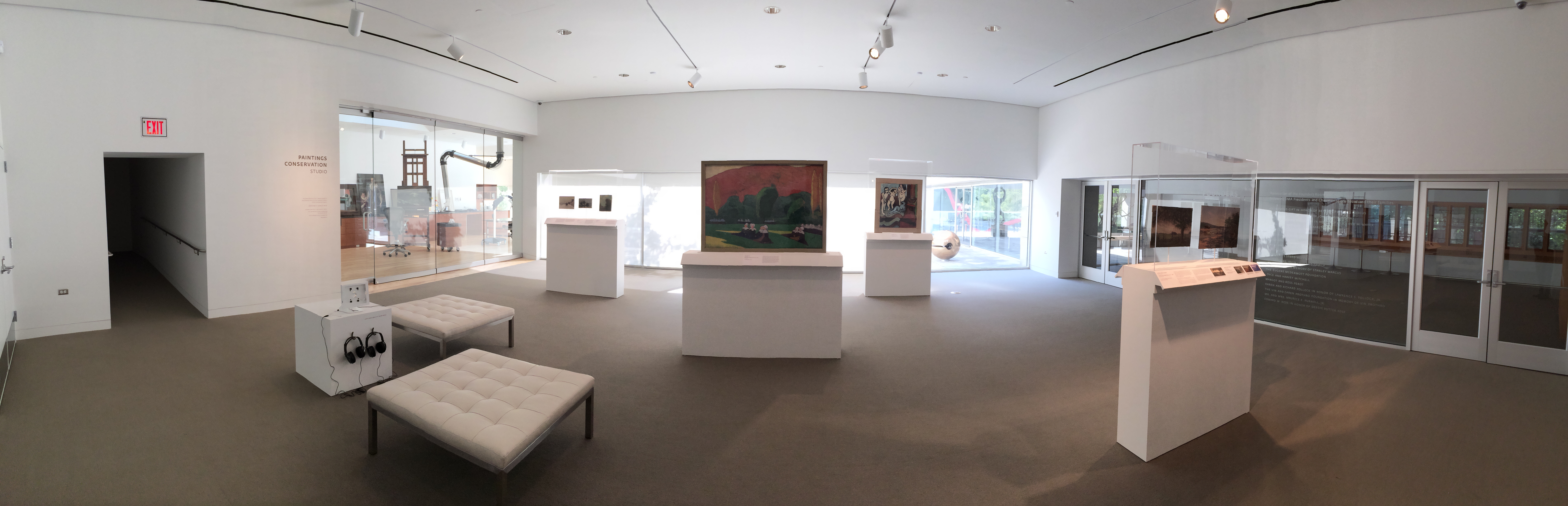
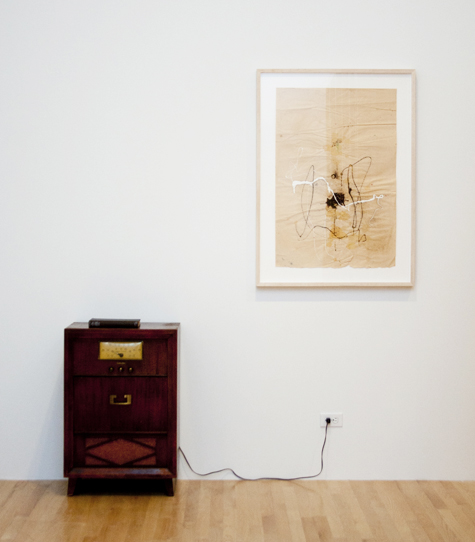
Sublette’s most recent handiwork can be seen (if you look closely enough) in the Behind the Scenes installation in the DMA’s new Paintings Conservation Gallery. Unframed canvases seem to float in their cases and provide visitors the opportunity to learn about painting support systems. The mount for William Henry Huddle’s Marble Falls was his favorite because it was the most challenging. Much time and effort were needed to thread the gravity clip and a triangular brace made to provide a strong structural gusset so the painting does not wobble.
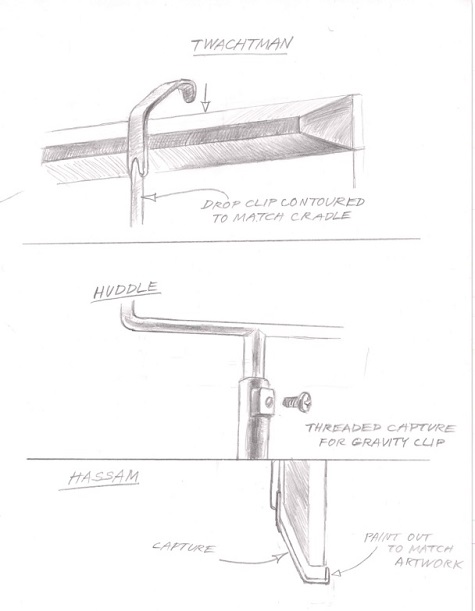
Drawing 1
Image
Image

The Huddle is indicative of Sublette’s process and approach to mountmaking: First he has to figure out the “key to the object”–how to mount the artwork securely in four points or less. Then he asks himself, “How do I make this mount as discrete as possible, invisible if I can?” Sublette achieves this unobtrusive subtlety by becoming an “amateur engineer” and figuring out how thin a piece of metal can be and still hold the weight of the piece securely. Thin pieces of metal can hold a lot of weight of they are bent, twisted and machined to strengthen and make them more rigid. Sublette says that mountmakers are “artists in service of art.” This particular artist’s preferred medium is brass: it’s cheaper than steel, very malleable, needs only a small oxygen tank, and produces no soot.

Sublette says he enjoys the mountmaking aspect of his job because it takes 100% engagement and allows for close contact with the art. He admits to revisiting an object 100-150 times before its mount is complete, measuring and re-measuring, memorizing each line and contour. “It’s important to take the mount to the piece and not the piece to the mount. You shouldn’t have to force a piece into an acrobatic dance to fit the mount. I’m anal as hell. But now I’m using it for the forces of good.”

Sublette also made the shell surround mounts for the pedestals for the double-sided works in the conservation gallery, including Ernst Kirchner’s Four Wooden Sculptures (recto)/ Ice Skater (verso) and Emile Bernard’s Breton Women Attending a Pardon (recto)/Unfinished Sketch (verso). A far cry from the dust pans of yore.

Drawing 2 Drawing 3 Drawing 4

Reagan Duplisea is associate registrar of exhibitions at the DMA.
Digging Deep

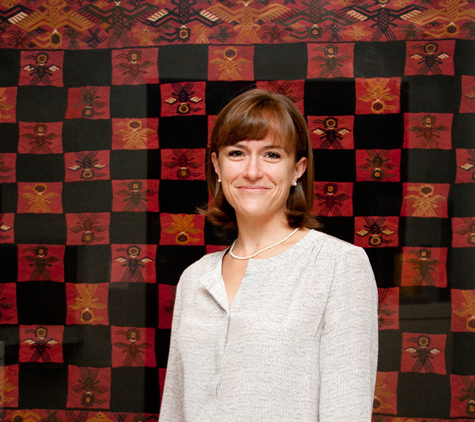
The DMA recently welcomed Dr. Kimberly L. Jones as the new Ellen and Harry S. Parker III Assistant Curator of the Americas. Uncrated caught up with Dr. Jones to find out more about her job and what’s caught her eye as she explored our galleries.

kimberlyjones

Describe your job as a curator:
For me, being a curator provides the best of all worlds. At the most basic, it entails being in the presence of amazing human achievements on a daily basis. It generally involves engrossing research on such objects, their artisans, and the cultural context in which the materials were created. It means staying informed about ongoing fieldwork and investigations that ever amplify our knowledge of these cultures. As a curator, I have the opportunity to share such fascinating insights with a broad range of people who visit a museum specifically to appreciate and learn about such hallmarks of human ingenuity. Above all else, I see my role as foremost to honor the amazing cultures of our past and present and to instill in others (hopefully) a bit of my passion and enthusiasm for their diverse conceptions and visual manifestations of the world around us.

What might an average day involve?
An average day so far usually includes juggling a few projects, from more immediate to longer-term. It entails basic catalog revisions, research on the collection, e-mails with colleagues and staff, planning for publications and exhibitions, etc.

How would you describe the best part of your job and its biggest challenges?
The best part of my job is sharing the collections and their cultural contexts with others, in any format, from tours to research inquiries to publications. That people become aware of the rich diversity of populations, practices, beliefs, and artworks throughout the Americas is the most inspiring aspect of my role. The biggest challenges (yet perhaps most fruitful exchanges) may come through the developing nature of collections and exhibitions in ancient American art, as museums engage actively in the modern global community and seek growing collaboration among individuals, institutions, and nations.

Growing up, what type of career did you envision yourself in? Did you think you’d work in an art museum?
Prior to the teenage years, I was pretty well geared toward work in archaeology, as my childhood digging in the backyard clay would attest. For graduate studies, I returned to this natural inclination, doing fieldwork for the past ten years in northern Peru. When my graduate advisor predicted a museum curatorial role for me, I dismissed him at the time, unwilling to relinquish my joy of being in the dirt. But I must admit that it is because of my work in archaeology that I feel so dedicated now to work in a museum, to have the opportunity to do best by the material achievements of these past peoples. The objects themselves remain (especially in societies without recognized writing) a crucial primary testament to ancient cultural beliefs, rituals, practices, concepts, materials, and techniques. The global community—individuals and institutions alike—would only benefit from ever-growing collaboration and commitment to ensure the long-standing preservation and public appreciation of such diverse and treasured heritage.

Do you have a favorite work in the DMA’s collection yet?
As any person who works at this institution would likely say, I cannot name one favorite but rather many that provoke that full-body smile. Emma-O in the Asian Galleries is captivating; I am struck always by the Jazz vase in the Decorative Arts Galleries; Shiva Nataraja in the South Asian Galleries harmonizes meaning and form; the cabinet in the Colonial Americas Gallery is an impressive testament to colonial trade; and the sword (telogu) with sheath from Indonesia is just plain fabulous.

As for my area of the Americas, I could not begin to share how many I cherish as masterworks of their respective cultures, exemplifying at times the technical skill and, at others, the creativity of the artisan. As a museum aims to provide for everyone, the more you know of an object—any artwork—often the more fascinating and engaging it becomes. I hope that through tours, gallery talks, invited lectures, and exhibitions, I will get to share my various “favorites” from the Arts of the Americas collection with an avid, interested community.

What are you looking forward to in your future here at the DMA?
Everything!

Dynamic Duo

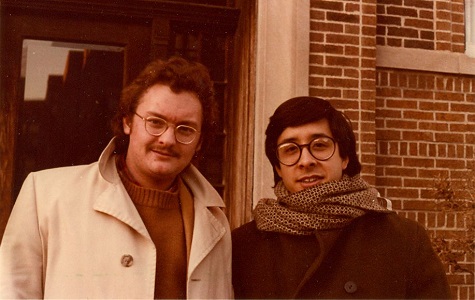
Tomorrow, artist Stephen Lapthisophon, featured in the current Concentrations 56 exhibition at the DMA, will join his lifelong friend actor John Judd for a conversation about the creative process. Get to know these best friends before Thursday’s event:

John Judd and Stephen Lapthisophon, 1978

John Judd and Stephen Lapthisophon, 1978

Do you involve each other in your creative processes?
SL: John and I speak frequently now about our influences, the creative process and the various ways that we feel our work reflects the time in which we live. There is no direct integration of his work in mine—rather, it is an implied dialogue—constant, permanent and generous.
JJ: It’s impossible to estimate the degree to which Stephen influences my work. My relationship with Stephen is almost like one of family in that even though we’ve ended up pursuing different avenues in the arts, and are no longer collaborators, we shared formative creative experiences, and we were almost constant companions for many years. Stephen is always in there somewhere.

What is one piece/work of art of the other’s that you most enjoy or inspires you?
SL: I have seen him perform many times but perhaps my favorite piece I have seen him in is Austin Pendleton’s Orson’s Shadow, where he played Laurence Olivier.
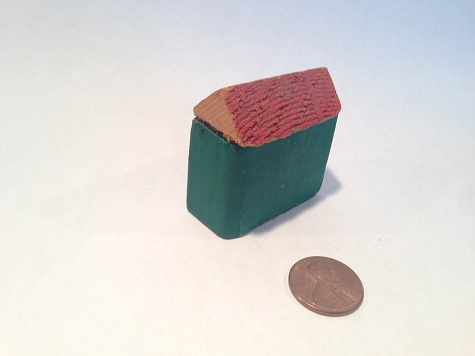
JJ: I can see his hand in this simple small piece [below] as indelibly as I do in his current work. It represents something essentially Stephen—a quality that remains and has always been present in his best work.

Stephen Lapthisophon, House, 1977, paint on wood,

Stephen Lapthisophon, House, 1977, paint on wood, courtesy of the artist, photo: John Judd

How has your friendship evolved over 40 years?
SL: I met John Judd walking into my first art class as an undergraduate at UT Austin in 1974. We have known each other and trusted each other’s work since then.
JJ: From our first conversation there has existed an unspoken agreement—that we will confront this world as allies. We are like-minded and determined to take what we were given and make more of it. To leave some marks behind. We have lived our lives in very close proximity and miles apart, we have at times collaborated and pursued separate endeavors, we’ve had individual triumphs and defeats, have even exceeded each other’s expectations, but we have always been able to pick up a phone or sit down together and resume the conversation.

For more insight, stories and discussion, join us tomorrow night, December 5, at 7.30 p.m.!
photo
Liz Menz is the manager of adult programming at the DMA

Creating the DMA Conservation Studio

2

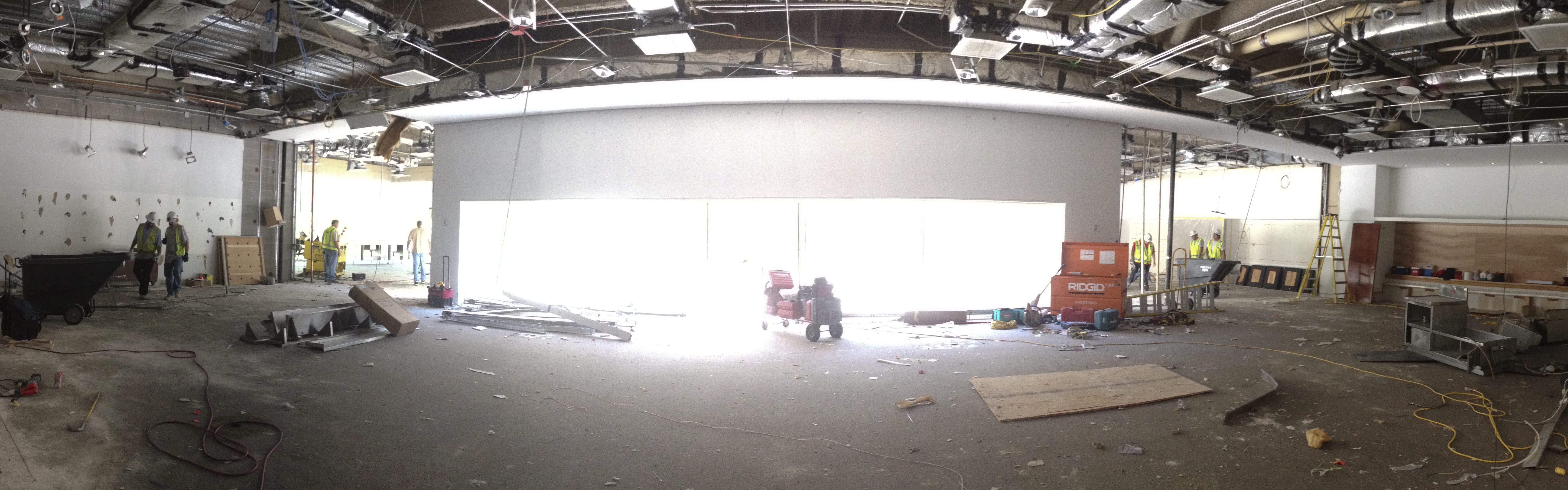
In the summer of 2012, the Dallas Museum of Art began making plans to renovate the former Seventeen Seventeen Restaurant space and transform it into a new Paintings Conservation Studio as part of the Museum’s initiative to establish a more comprehensive in-house conservation program. Construction began in the fall of 2012, and the studio is now complete, as is the adjacent Conservation Gallery. This time-lapse film captures the building process, as seen from the vantage point of what is now a public gallery space.

[youtube=http://www.youtube.com/watch?v=ukVtdkC-hEA&w=560&h=315]

The Paintings Conservation Studio features state-of-the-art technology—including a digital X-ray system—and will serve as a center for the study and treatment of works of art, as well as research into cutting-edge conservation methodologies. Brightened with natural light from new skylights and enclosed by glass walls, the studio’s design will allow visitors to observe daily activity, providing audiences with a singular behind-the-scenes experience. Activities in the studio also will be visible from both the Conservation Gallery and the adjacent outdoor Rose Family Sculpture Terrace.

The first exhibition in the gallery, Behind the Scenes, highlights the artists’ original materials and techniques, as well as the conservation histories of the works on display, exploring the various treatments they have undergone. This adjoining gallery will regularly rotate works, providing a space to explore the conservation process in greater detail through visual representations.

photo

Mark Leonard is the chief conservator at the DMA.

Sleeping with Art: Not in the Biblical Sense

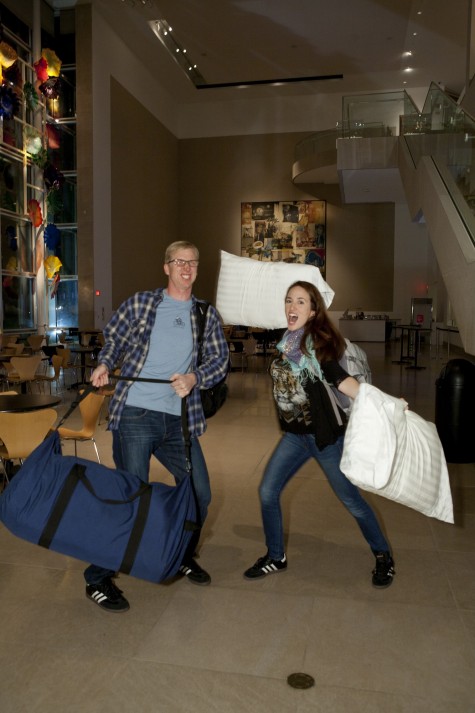
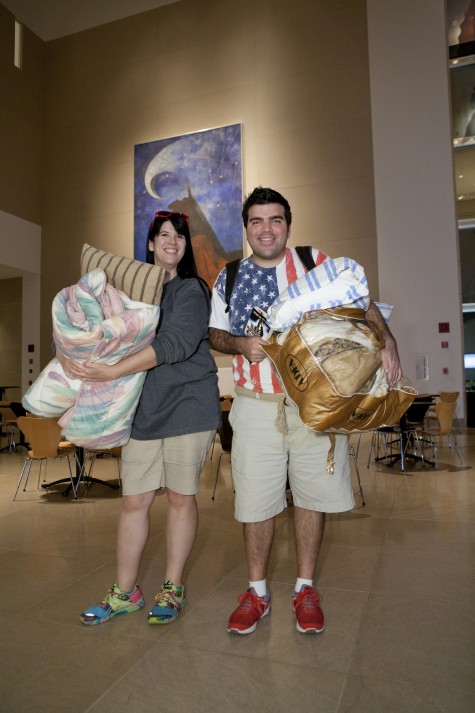
A year ago, before the launch of DMA Friends, we were brainstorming unique and fun rewards to offer. One idea we all jumped on was to hold a DMA Overnight at the Museum. We decided that this would be the “big reward” for DMA Friends to redeem, worth 100,000 points!

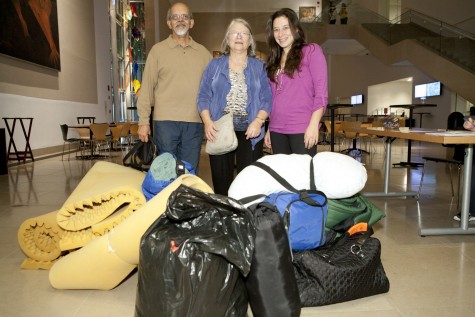
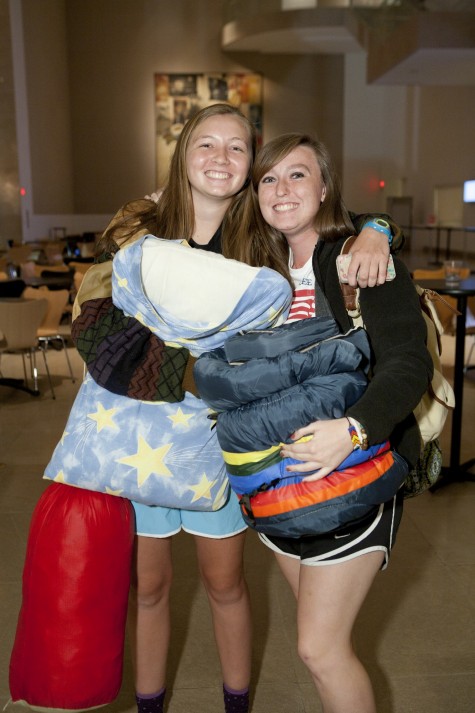
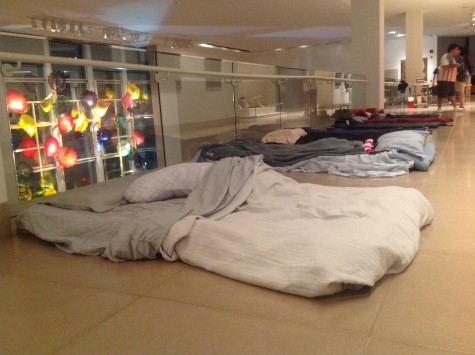
Ten months later, ten DMA Friends had earned enough points to redeem the reward. So on Friday, November 1, we hosted our first DMA Overnight!

The Overnight Crew!

The Overnight Crew!

We started planning for the DMA Overnight late this summer, and the question that we kept asking ourselves was “what are we going to do with our guests this evening?” Could they roam free for hours on end, should we pack the evening with activities, would they even want to sleep at some point or test their endurance by staying awake the entire night?

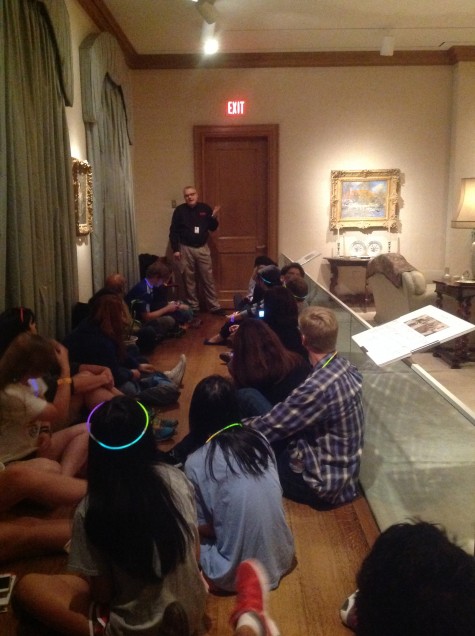
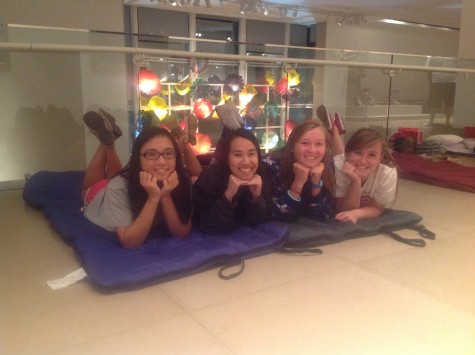
After researching other museums’ overnight programs, which were mostly nature and science museums, we put together a schedule that included an hour of free time, a curator-led tour, three different gallery activities, a midnight snack, an optional early sleep time, watching a film or playing games, and finally a time for “lights out,” when everyone had to be in their sleeping bags for the night (which ended up being close to 4 a.m.).

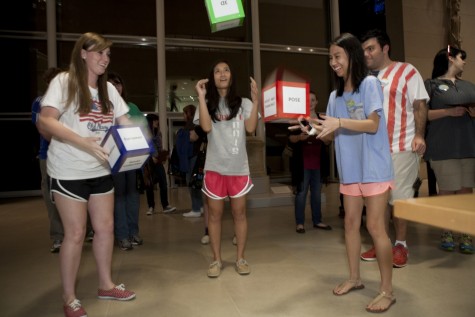
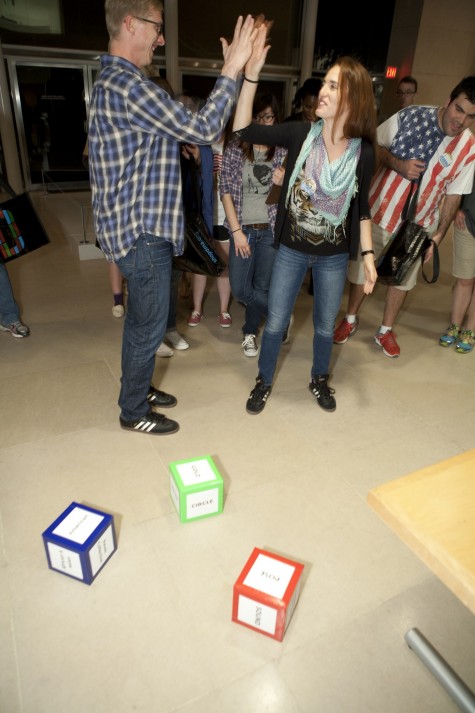
Knowing this group had done a lot at the DMA (they did earn 100,000 points after all!), we wanted them to have a new experience in the galleries, so we created a game for the DMA Overnight called Roll with It! This competitive dice game took the guests throughout the Museum as they searched for a work of art that matched the roll of the dice. One die gave a gallery location, one gave a feature that the work needed to include (red, 3D, animals), and one gave an action for the guests to do (pose, sketch, make a sound) in response to their chosen work of art. The team that completed the most rolls in 30 minutes won the game.

DMA Overnight by the numbers:

1,000,000 – points earned by 10 DMA Friends to attend the Overnight

23 – Friends

108 – glow sticks worn

3 – hand-made dice

10 – “art babies” created during the Creativity Challenge

1 – ghost story

5 – Friends who got up early to do yoga in the galleries

4 – average number of hours Friends slept during the DMA Overnight

Lights Out at the DMA

We were also excited to have Luke Darby from the Dallas Observer join us for the DMA Overnight. You can read about his experience here.

Stacey Lizotte is head of adult programming and multimedia services at the DMA, and designated RA of DMA Overnight.

coffee, seasonal fruit, root vegetables, and “Selected Poems”

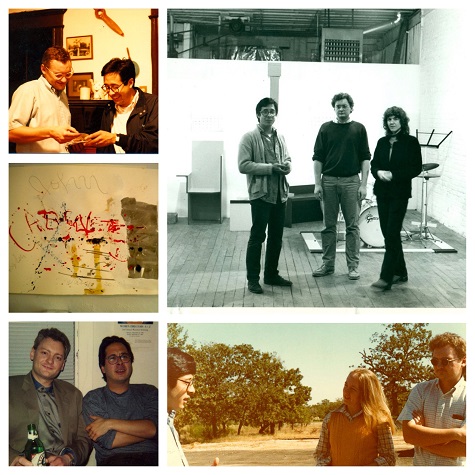
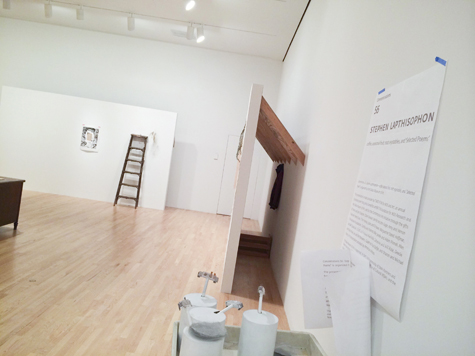
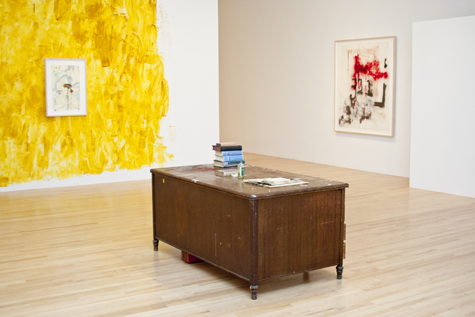
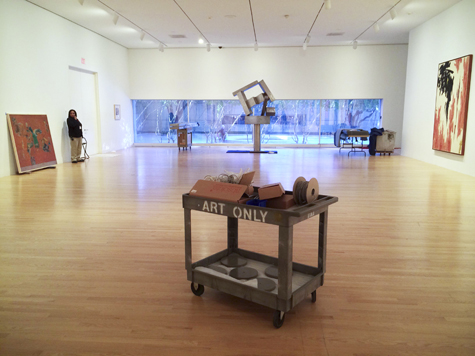
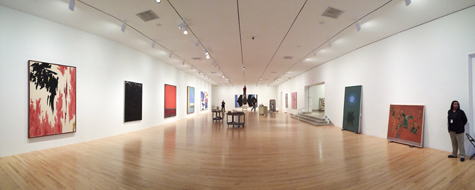
How do you install coffee, seasonal fruit, root vegetables, and “Selected Poems”? Below, get a sneak peek, including a look at works from the DMA’s contemporary collection, before the opening of Concentrations 56: Stephen Lapthisophon—coffee, seasonal fruit, root vegetables, and “Selected Poems” on Sunday.

f

14

15

a

e

Permanent Waves and Lipstick Craves

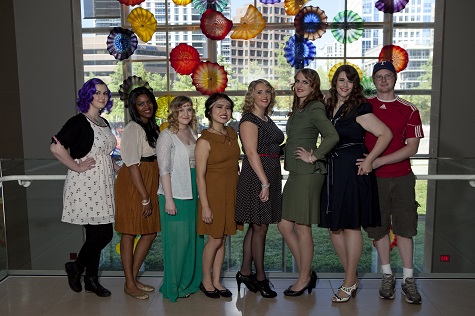
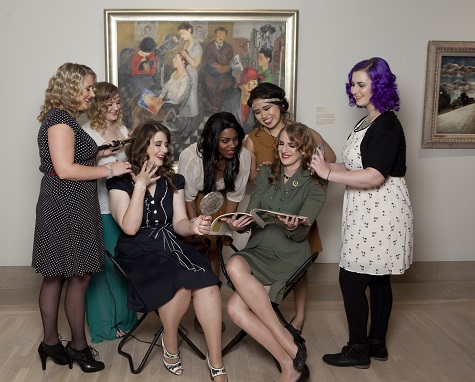
When my husband, Bryan, unexpectedly told me that he had redeemed the Art Beauty Shoppe reward from the DMA Friends program, I could hardly contain my “blow-your-wig” (check out other 1930s lingo) excitement. Bryan and I are in love with the DMA. We are both researchers at the University of Texas Southwestern Medical Center, and its close proximity to the Museum allows us to easily enjoy lunch breaks and late night events in one of our favorite places. I was particularly surprised that he had used his points because we were trying to redeem a voucher for the coveted Overnight at the DMA, which takes 100,000 points. (I was actually able to redeem it for us—see you there on November 1!).

Friends_Reward_Beauty_Shoppe_09_2013_036

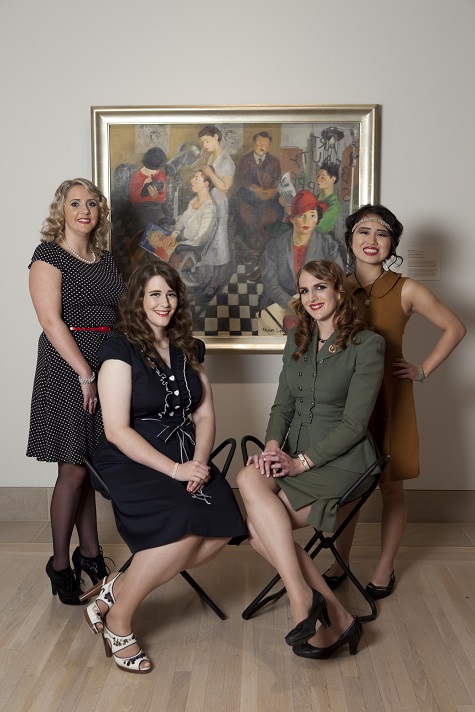
Lacey (second from right); her husband, Bryan; her friends; and Pouf stylists

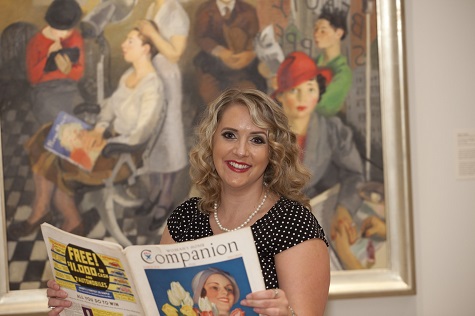
With the Art Beauty Shoppe reward, three of my friends and I were able to have our hair and makeup done in 1930s style and then have photos taken in front of the DMA’s 1934 painting Art Beauty Shoppe by Isaac Soyer. Pouf Blow Dry Salon accommodated the four of us just as if we were the four customers in the painting.

I was elated to get to share my love of the DMA with some of my friends in such a “swell” way. So I gave my friends, Amanda, Stephanie, and Katrina, a “dil-ya-ble” and we hit the Internet and antique malls to find the perfect vintage-style dresses to wear for the occasion.

Friends_Reward_Beauty_Shoppe_09_2013_052

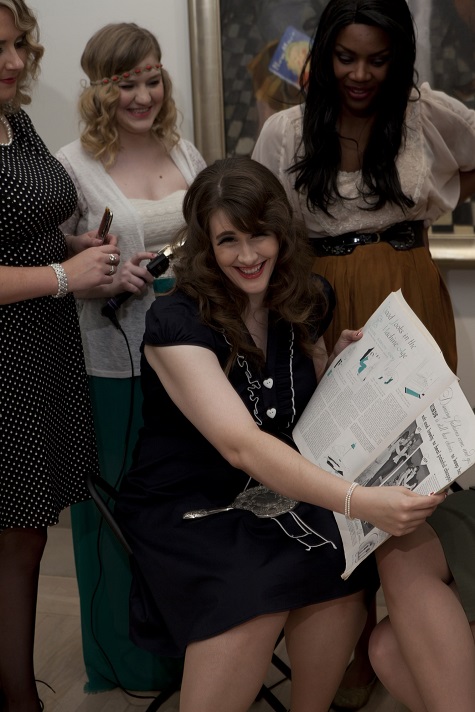
Bryan had the idea of adding props to make us look as if we were actually sitting in the salon, waiting for our appointment. He found a spring 1934 edition of Women’s Home Companion for us to peruse. I could “bump gums” for hours on that magazine alone, but I digress.

Lacey with her vintage copy of Women's Home Companion

Lacey with her vintage copy of Women’s Home Companion

Friends_Reward_Beauty_Shoppe_09_2013_144
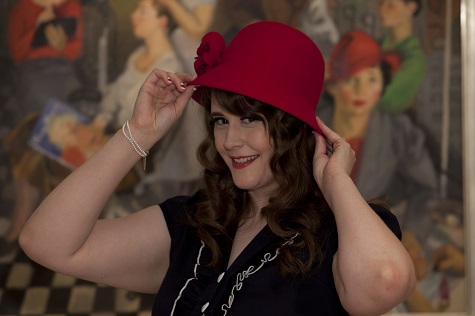
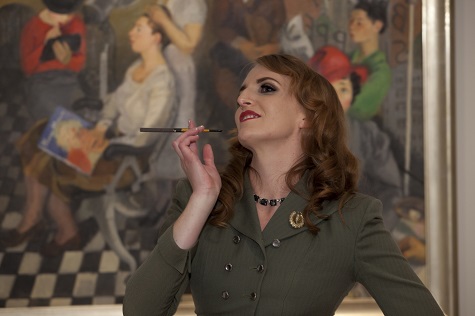
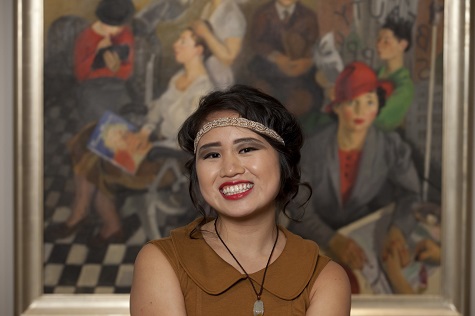
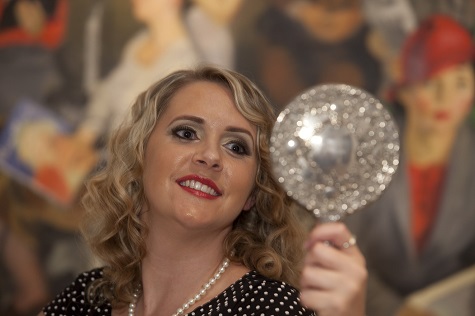
Amanda was able to find a 1930s cigarette holder, Stephanie brought tons of “snazzy” 1930s-era costume jewelry, and, with the addition of my red hat and mirror, we knew we were going to look like a group of “hot tomatoes.”

Lacey with her red hat

Lacey with her red hat

Amanda with her cigarette holder (don't worry, there were no cigarettes!)

Amanda with her cigarette holder (don’t worry, there were no cigarettes!)

The day of the photo shoot went off with a “bang”! We had quite the “hop.” The ladies from Pouf did an amazing job. They even saved the day when Katrina’s hair hadn’t quite dried enough—she ended up with quite a cool up-do. With our “keen” makeup and “nobby” hair, we posed our hearts out in front of the compelling painting. It was so much fun!

Katrina with her updo

Katrina with her up-do

Stephanie with the vintage mirror

Stephanie with the vintage mirror

Then, to top it off, Sarah Coffey—DMA assistant to the chair of learning initiatives, and organizer of the event—wasn’t going to take back stage or “goldbrick” around. She gave us a history of the painting and style of the time period. What I found most interesting was that not only did Soyer have his friends pose for the painting, but the granddaughter of the woman with the red hat actually spoke to the Museum about the piece. She informed them that her grandmother had just been engaged to her grandfather prior to sitting for the painting, and you can actually see her engagement ring while her nails are being painted a bright red. It’s so fascinating that each piece in the DMA’s collection has its own unique and interesting human history. Thank you so much Dallas Museum of Art for bringing this piece to life for me during such a wonderful experience!

Lacey Smith is a DMA Friend and researcher at the University of Texas Southwestern Medical Center.

Open Office: Center for Creative Connections

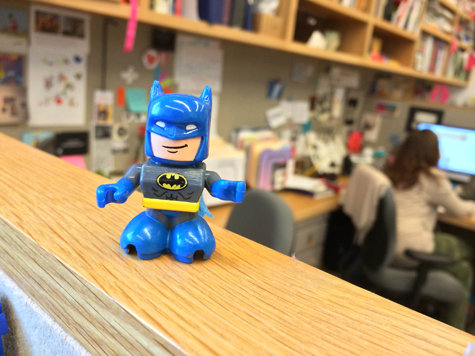
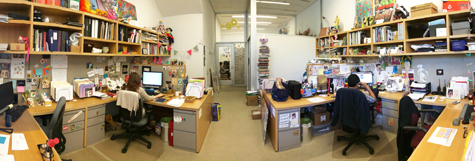
Most people don’t realize how fun having an office on the first floor of the museum can be! The ten of us (plus one intern) in the Center for Creative Connections (C3) office space are especially close, quite literally. We all sit within earshot of each other and are very close to the visitors in C3, which makes it a very lively workplace! Those who live here during the day (and often get locked in because they have stayed too late) are a fabulous group from the DMA’s C3 team; the wonderful ladies from the Family, Access, and School Experiences squad; and the Head of Community Engagement. You can visit Susan, Amanda, Amanda, Leah, Maria Teresa, JC, Danielle, Melissa, Jessica, Amy, and Tyler anytime you want! Just don’t forget which Amanda is which.

1

2

6

5

7

8

Amanda Batson is the C3 program coordinator at the DMA.

Artist Talk: Jim Hodges

With quiet determination, artist Jim Hodges has, over the past twenty-five years, produced one of the most affective bodies of sculpture, drawing, and installation of any artist of his generation. Jim Hodges: Give More Than You Take brings together works in all media–from modest objects to room-sized installations that engage the viewer in sensory experiences–to fully reveal the breadth and complexity of Hodges’ inventive vision.

Comprising over eighty objects produced from 1987 through the present, the exhibition also includes works never before seen in the United States, along with a major new piece, Untitled (one day it all comes true), created especially for this exhibition.

I’m proud to have worked so closely with Jim Hodges and Olga Viso, executive director of the Walker Art Center, to bring this remarkable exhibition to fruition, and I invite you to be among the first to see it at its US premiere in Dallas, before it travels to Minneapolis, Boston, and Los Angeles. Please join me in the Horchow Auditorium for a conversation with Jim Hodges tomorrow evening, October 3, at 7:30 p.m., and join us for a sneak peek on Saturday, October 5, a day before the exhibition opening.

[youtube=http://www.youtube.com/watch?v=vIdx_cHxrSA&w=560&h=315]

Jeffrey Grove is the senior curator of special projects & research at the DMA.

All Dolled Up

Our 30,000 (and counting!) DMA Friends have some fun and unique rewards to choose from, one of which was the Art Beauty Shoppe Reward. Our lucky DMA Friend Lacey recently redeemed this special reward, which allowed her and three friends to get their hair and makeup styled in 1930s fashion (courtesy of Pouf) and then have a photo shoot with Isaac Soyer’s Art Beauty Shoppe (1934) in the American Art Galleries. The ladies came prepared with vintage outfits and props, including a 1934 Ladies Home Companion. Check out the scene below and stay tuned for an upcoming blog post from Lacey about her experience.

Friends_Reward_Beauty_Shoppe_09_2013_062

Sarah Coffey is assistant to the chair of learning initiatives at the DMA.

Archives

Categories