Archive for the 'Art & Teaching' Category


Teaching with Art from the Himalayas and Southeast Asia

Fellow Teaching Programs Intern Ashley Bruckbauer and I, recently led a docent training session that highlighted six objects from the Himalayas and Southeast Asia.  We wanted to familiarize docents with objects from these areas, discuss teaching strategies for works with religious significance, as well as consider overarching themes within the Asian collection that would encourage students to make connections within their own lives.          

Ashley started the training session talking about the Silk Road Trade Route and how it introduced Buddhism into different regions of Asia. Buddhism originated in India and is based on the teachings of Prince Siddhartha, who became known as the Buddha, or Enlightened One. He taught that all life is suffering, but renouncing desires and the self can lead to a state of enlightenment beyond both suffering and existence. Buddhism is no longer as widely practiced in India but has spread to Southeast Asia, Central Asia, and the Far East through missionary activity. Today, it is one of the world’s largest religions.         

We then had docents look at and discuss the six works of art. These objects inspired the two themes for our docent training: Opulent Buddhas and Ferocious Protectors.

 1. Opulent Buddhas
The objects presented under this theme were the Buddha Sakyamuni, Manjusri, and the Buddha Muchalinda. These objects represented three examples of Buddha figures heavily adorned with lavish materials.  What can we learn from these objects, sculpted in opulent materials? Buddhists consider gold the supreme color, which is why many of their images are gilded. Bronze figures are sometimes coated with another metal before gilding. Gem-encrusted, gilded statues would have been created to inspire meditation among the monks in a Buddhist monastery. It also symbolizes the spiritual wealth of the Buddha.

  • The Buddha Sakyamuni is shown standing in his princely clothing. He is wearing a robe or Sanghati, with a jeweled belt, collar and crown. He also has a jeweled inlay urna or third eye, on his forehead as well.  His hand gesture, or mudra, symbolizes protection, meaning “fear not.”
  • Manjusri is the bodhisattva of divine wisdom. He is considered to be the founder of Buddhist culture. He is always shown as a youthful crowned prince. He carries traditional emblems: the Buddhist scriptures on a lotus flower and the sword that cuts ignorance.  His left hand is raised in a gesture of teaching. His sweet and placid character embodies peaceful consolation.
  • The Buddha Muchalinda represents a moment in the Buddha’s enlightenment. The Buddha was sitting under a tree in deep meditation, when rising waters were sent by a demon to drown him. The Naga or serpent king, came from beneath the earth, raised the Buddha above the rising waters on his snake coils and protected him with his seven cobra heads.

 [slideshow]

 2. Ferocious Protectors
The second group of objects discussed were the Guardian Snow Lions, Rearing Lion, and the Dharmapala Lhamo.  Ferocious animals and wrathful deities have symbolic significance and are an important decorative element in Buddhist art. Why might it have been necessary for these objects to appear frightening? Fierce sculptures such as these are made to adorn  the Buddha’s throne and protect the Buddhist law and scriptures.

  • These Guardian Snow Lions are shown heavily ornamented with a jeweled crown and decorative chains as well as elaboration of bodily features, such as the curls in the mane, tail and leg fur. Flames of wisdom, which represent light or transformation, flare up from the shoulders and the head. Their ferocity is shown by their large sharp fangs, powerful claws and brawny build. The lions would have guarded entrances of temples and demarcated sacred grounds. They also protect against evil spirits and are depicted in Buddhist art supporting the Buddha’s throne.
  • A figure like the Rearing Lion would have supported the exterior base of temples, lintels, thrones, pedestals or platforms. The details of the face, such as the squared mouth and the treatment of the eyebrows with a relief-design between eyes, are associated with the royal temple of Koh Ker. Koh Ker was the capital of the Khmer Empire during the 10th century. The Khmer Empire is now present-day Cambodia.
  • The Dharmapala Lhamo is one of eight Dharmapalas or Great Protectors of the Buddhist law and scriptures. She is typically illustrated as a bloodthirsty and terrifying character riding a mule or donkey and adorned with a crown of skulls, garland of decapitated heads, and a human skin worn as a cape. She also has flaming hair, bulging eyes and a corpse in her mouth. The goddess rides through a sea of blood accompanied by two hybrid female deities.  She would be used by monks for meditation, helping to transform anger and energy into creative energy needed to achieve enlightenment.

Karen A. Colbert
Teaching Programs Intern

Buddha Sakyamuni, Khmer Empire (Thailand), 13th century, Dallas Museum of Art, gift of David T. Owsley via the Alvin and Lucy Owsley Foundation, Cecil and Ida Green Acquisition Fund, and Wendover Fund
Manjusri, Nepal or Tibet, 18th century, Dallas Museum of Art, bequest of Mrs. E.R. Brown
Buddha Muchalinda, Khmer Empire (Cambodia), Dallas Museum of Art, Cecil and Ida Green Acquisition Fund
Guardian Snow Lions, Nepal, Kathmandu Valley, 1875, Gift of David T. Owsley via Alvin and Lucy Owsley Foundation
Rearing Lion, Cambodia: Koh Ker period, 10th century, Dallas Museum of Art, Dallas Art Association Purchase, The Museum League Fund
Dharmapala Lhamo, Tibet, 18th century AD, Dallas Museum of Art, gift of David T. Owsley through Alconda-Owsley Foundation
What does art smell like?

This past Wednesday my colleague Hadly Clark and I took advantage of our great Spring Break crowds and tried an impromptu gallery experiment.   We spent time in Re-Seeing the Contemporary: Selected from the Collection exhibition, asking visitors to look at four artworks with us and to think deeply…with their noses!

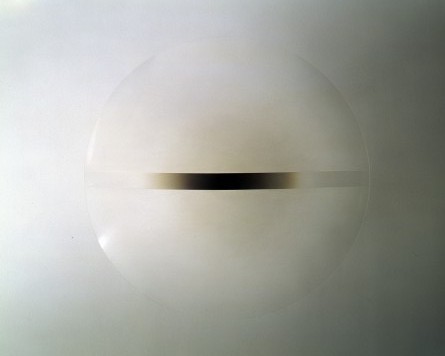
For part one of our experiment, we asked participants:  If this artwork had a scent, what do you think it would smell like?  Why?   As someone who likes thinking with her nose, I had fun hearing visitor responses and considering how their creative associations helped me see familiar artworks in fresh ways.  Below are responses inspired by one of our stops, Robert Irwin’s Untitled:

Robert Irwin, Untitled, 1968-69, Fractional gift of The Rachofsky Collection, 2001.345

  • Coconut & banana, because it’s round
  • Money
  • Disinfectant, something very clean.  It reminds me of adventures of Buck Rogers.
  • Nothing!
  • Mint or toothpaste; it’s clear and transparent
  • It smells really clean, like clean linen or spring lilies

The slideshow below includes all four featured artworks, images of participants, and a few responses for another one of our stops, Mark Rothko’s Orange, Red and Red.   After the slideshow, Hadly explains part two of the experiment and some great opportunities to join in on other experiment-like experiences here at the DMA…

[slideshow]

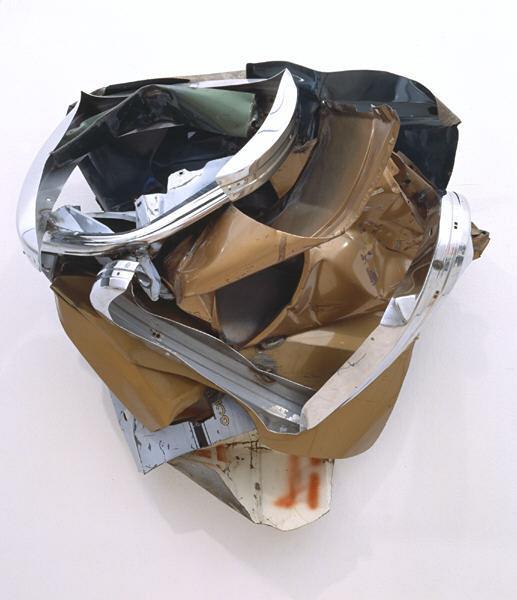
The second half of our sensory experiment encouraged participants to actively engage their sense of smell.  We provided nine samples of scents tucked secretively inside cardboard boxes with conveniently located holes for ventilation.  Boxes held a variety of scents such as Ivory soap, leather, and cinnamon.  After smelling each box, participants selected their own “scent match” or a scent they associated closest with the work of art, and shared why that scent was evocative of the work.   Here are some scent matches inspired by John Chamberlain’s Dancing Duke:

John Chamberlain, Dancing Duke, 1974, Gift of Dr. and Mrs. Harold J. Joseph in honor of Mr. and Mrs. Max Walen, 1975.69

  • Scent match #3 (peach tea) because, it smells bad! (This visitor thought of sweat and things that smell bad when he looked at the artwork, so he picked the scent he liked least).
  • Scent match #8 (leather) because it reminded me of my car
  • Scent match #9 (Clorox wipe) because it smells like paint
  • Scent match #4 (grass) because it smells green

Each week, the Center for Creative Connections (C3) hosts similar experimental, hands-on, artist-led workshops for adults. From 6:30 – 8:30 p.m. every Thursday evening, join C3 staff and a guest artist to explore what inspires them, play with new unexpected materials, or learn different techniques that can be applied to your work during a C3 Artist Encounter.

In the meantime, we’d love to hear what you smell when you look at Untitled or Dancing Duke.

Amy Copeland
Coordinator of Go van Gogh Outreach

Hadly Clark
Center for Creative Connections Coordinator

Creating Narratives

Over the past few days, I have been thinking about the ways we communicate through words and images.   In grade school, we are taught to look for contextual clues to determine the meaning of unknown words.   We make the same application when we look at images that are both familiar and unfamiliar to us.   Images are all around us – in books, magazines, newspapers, advertisements, and museums, just to name a few.

To make sense of what we see, we often create events in our minds about what we think the image is about.  For example, a work of art may suggest a story to us – the work could show the beginning, middle, or end of a story.  Some artworks may be more narrative than others.  Take a look at the following images by artists Charlie White and Gregory Crewdson.

[slideshow]

In the photograph Untitled (boy with hand in drain),  Gregory Crewdson encourages us to look closely at the scene of a young man reaching down the drain into a sinister-looking space below.  Using a sound stage or working on location, Crewdson directs each photograph as if it were a feature-length film, placing his models exactly where he wants them.   Everything in the photograph has a specific purpose from the Scope mouthwash on the sink to the soap in the shower to the light from the window.

In Inland Empire, Charlie White draws our attention to the lower left side of the photograph where a woman wields an iron pipe at a hideous monster.   Although the scene appears as if it is from a science fiction movie, it seems strangely familiar, like an urban American landscape that we have encountered at some point during our lifetime.   This computer-assisted photograph demonstrates the influence of special effects on the technique and process of photography and the motion picture industry.

The stage is set and ready for us to complete the stories.   What do you think happens next in either Untitled (boy with hand in drain) or Inland Empire?  Use all of the contextual clues in the photographs to aid in creating a new narrative.

To explore more photographs in the Museum’s collection, go to Picture This: 20th and 21st Century Photographs.

Until next time….

Jenny Marvel
Manager of Programs and Resources for Teachers

Artworks featured:

Gregory Crewdson (American, born 1962), Untitled, 2001-2002 Digital C-print, The Rachofsky Collection and the Dallas Museum of Art:  DMA/amfAR Benefit Auction Fund, 2002.45

Charlie White (American, b. 1972), The Inland Empire, 1999 Light jet chromogenic print mounted on Plexiglas, Dallas Museum of Art, Mary Margaret Munson Wilcox Fund, 1999.180

Playful Looking

What if the goal in looking at an artwork during a gallery experience wasn’t to learn everything about the object, or to arrive at “right ideas” about its meaning? 

Interpretive Play, one of my favorite models of gallery teaching, is based on this idea.  During an Interpretive Play experience, groups of visitors are guided by educators to look closely and make observations, “playing” with various possible interpretations and ideas about the artwork. Educators summarize, repeat, and connect visitor observations, weaving information into the conversation only as it is relevant to the group’s responses.  The goal of the experience is to provide an opportunity for visitors to look, think, and wonder together, coming to a shared and unique understanding of the artwork.

Two of our wonderful interns, Jackie Lincoln, McDermott Education Intern for Family Experiences, and Haley Berkman, McDermott Curatorial Intern for Contemporary Art, led a gallery talk last Wednesday in the current Re-Seeing the Contemporary: Selected from the Collection based in Interpretive Play.   They had a large group of participants and facilitated some meaty, dynamic conversations.  Jackie, a frequent blogger on the We Art Family! The DMA Family blog has graciously agreed to share her insights about the gallery talk with us.

See Jackie’s comments below the slideshow of gallery photos and featured artworks.

[slideshow]

Haley and I are both planners by nature, so we spent a couple of weeks preparing for our gallery talk.  We tried to prepare for all scenarios, leaving nothing up to chance.

We started our discussion with the painting Portrait and a Dream by Jackson Pollock, thinking that visitors might feel more comfortable discussing a work by an artist who might be more familiar to them. It was about two minutes into this discussion that I realized that the content of the conversation was largely out of mine and Haley’s control, and that it was up to the visitors to determine the course of the talk. It was a frightening moment for me, acknowledging that something that we spent so much time preparing for was in the hands of other people, but then, I took a deep breath and started to listen to what visitors were saying about the works of art. Many of the participants made observations about the works that Haley and I had not noticed before or brought up ideas or associations that we would have come up with on our own. I found that by listening to others’ ideas, I was gaining greater insight into the works, and I hope that the participants felt the same way.

Leading a group through an interpretive play exercise was much harder than I thought it was going to be, but it was also very rewarding. It was challenging guiding people through a new kind of gallery experience—an experience where they are actively participating instead of passively receiving information. Creating an environment where everyone feels comfortable sharing their observations and then finding a way to connect those (sometimes conflicting) observations is not an easy task for the facilitator. It was also challenging deciding when was the appropriate time to step away from a work or move on to a new topic or idea. However, I feel like with practice that many of these issues could be ameliorated.

Overall, this act should enhance their experience with a work of art and will hopefully make it more meaningful to them.  It was interesting and inspiring to me that a single piece of artwork can mean so many different things to so many people, and I definitely plan on incorporating this technique into more of my classes in the future!

Jackie Lincoln
McDermott Intern for Family Experiences

Amy Copeland
Coordinator of Go van Gogh Outreach

Friday Photos: Mystery Artwork

The Dallas Museum of Art education staff would like to thank you for participating in our Friday Photos: Mystery Artwork series. Our final artwork is……

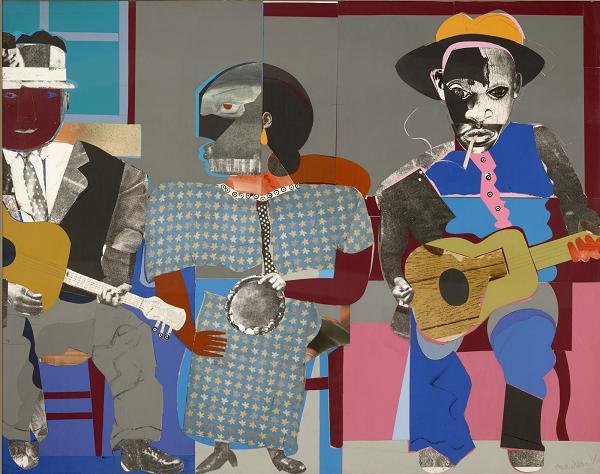
Romare Bearden, Soul Three, 1968

Dallas Museum of Art, General Acquisitions Fund and Roberta Coke Camp Fund
Dimensions: Framed dimensions: 57 x 69 x 3 in. (144.78 cm x 1 m 75.26 cm x 7.62 cm) Image dimensions: 44 x 55 1/2 in. (111.76 x 140.97 cm)
Medium: Paper and fabric collage on board

Learn more about Soul Three.
 
We encourage you to visit and explore our galleries. Please visit our web site to learn about the programs and events we offer for visitors of all ages.
 
Thanks,
Karen A. Colbert
Teaching Programs Intern

Friday Photos: Mystery Artwork

We have come to our second mystery artwork. Drumroll please, the answer is…. 


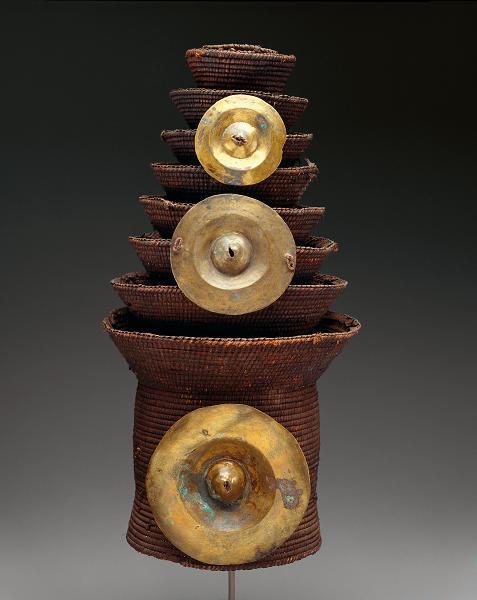
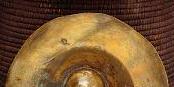
Tiered hat with brass discs (botolo)

 Date: 20th century
Dimensions: Overall: 25 x 10 x 9 3/4 in. (63.5 x 25.4 x 24.76 cm)
Medium: Coiled basketry (palm splints and fiber) and brass discs
Geographic location: Africa, Democratic Republic of the Congo
Culture: Ekonda peoples
Dallas Museum of Art, gift of the Friends of African and African-American Art

Learn more about the Tiered hat with brass discs (botolo)
 
In celebration of Black History Month, I present you with…

Mystery Artwork #3

 1. We were made from mixed media.
2. We were inspired by childhood memories.
3. Our creator was one of the great collage artists of the 20th century.
4.We are two-dimensional.
5. Our facial features resemble African masks.

What’s our name?

Start in  collections and begin your search.

Best Wishes,
Karen A. Colbert
Teaching Programs Intern


Elephants, Buffalo, and Giraffes…Oh My!

Take a moment and imagine an African elephant at the Dallas Zoo.  Now imagine an elephant at the Dallas Museum of Art.    Were the images of the elephants the same?    It would definitely make an interesting story (with a strong potential of damaging artworks) to see a live elephant  in the Museum galleries!    Although elephants are not allowed in the Museum, images and representations of elephants and other animals by living African cultures are.

On Saturday, January 29, twelve teachers from a variety of disciplines and grade levels joined the DMA and the Dallas Zoo for a full-day teacher workshop.   Teachers spent the morning exploring animals from Africa in the DMA exhibition African Masks: The Art of Disguise and in the afternoon engaged with live animals in the Dallas Zoo’s Giants of the Savanna exhibition.

[slideshow]

At the Museum, teachers considered the connections between the animals represented in masks and the living cultures that created the masks in response to their beliefs and surrounding environment.  With a focus on antelope, elephants, and buffalo, Museum staff encouraged teachers to think about descriptive words that relate to each, observe the realistic and abstract qualities of the animal masks, and think about the context of each mask in relationship to the ceremonies performed by the different cultures.

The conversation continued at the Dallas Zoo as teachers discussed  the  location of the African Savanna, the animal habitats within, and the challenges facing animals in the different African countries.  Luckily, the weather outside was extraordinary (the workshop occurred the weekend before the snow and ice), and the teachers were able to ride the monorail around the Zoo, participate in elephant observation studies, and feed the giraffes.

By the end of the day, teachers commented on their experiences with looking at patterns on the African masks and on the animals and made connections to the  significance of animals within the cultures and countries in Africa.

We all had a great time and are looking forward to another collaborative teacher workshop with the Dallas Zoo soon!  This workshop is one example of what the DMA offers to teachers of all grade levels and disciplines.   Be sure to check the Teacher Programs website for new workshops later this spring.

Until next time….

Jenny Marvel
Manager of Programs and Resources for Teachers

Friday Photos: Mystery Artwork

Last Friday, I presented clues to the first mystery artwork. I hope you enjoyed searching online or visiting the museum to find the answer.
 
The mystery artwork is…….
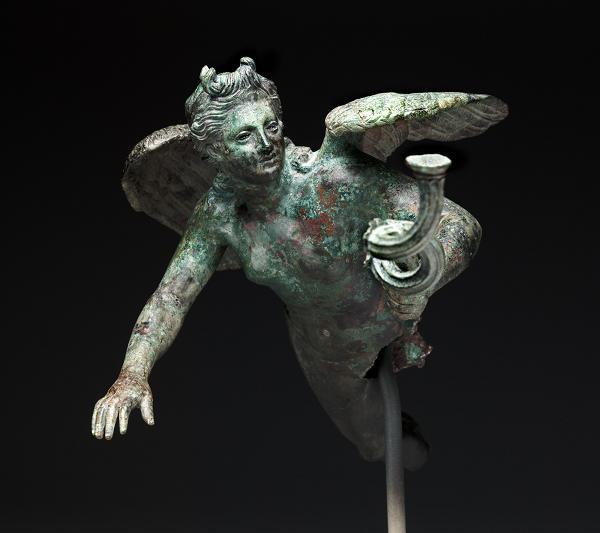
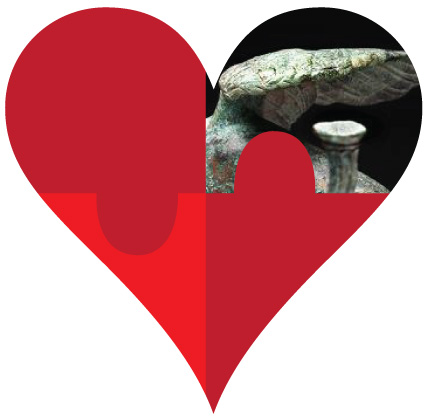
Eros lamp holder

Date: early 1st century B.C.
Dimensions: Height: 22 1/4 in. (56.515 cm)
Medium: Bronze
Dallas Museum of Art, The Eugene and Margaret McDermott Art Fund, Inc., in honor of Anne Bromberg’s 30th anniversary with the Dallas Museum of Art.  

Click here to learn more about the Eros lamp holder.

I present to you the second mystery artwork.

Take a closer look and you will see coils of fiber and metal hooked together.

Mystery Artwork #2

  1. I increase in size from top to bottom.
  2. I can only be worn by chiefs.
  3. I can also be seen with a wavy-edged scepter.
  4. My name means to sing.
  5. The presence of metal disks signifies wealth and prestige.

What am I?

You have one week to guess! Click on collections and begin your search. We also invite you to join us tonight as we celebrate our romance-inspired Late Night event.

Best Wishes,
Karen A. Colbert
Teaching Programs Intern

Artist Spotlight: Emile Bernard

I recently had the pleasure of speaking with our docents about two paintings within the collection by 19th-century, French artist Emile Bernard (1868-1941).  Both of these works feature Breton women (from the region of Brittany in France) in traditional festival attire.  In the late-19th century, the villages of Brittany, like many other rural sites outside Paris, had become the center of various artist colonies.  The most well-documented of these sites is the city of Pont-Aven, which between 1886 and 1894 became the stomping ground of notable artists such as Paul Gauguin, Paul Serusier, and Emile Bernard.  This cast of characters, along with an international array of artists from countries such as Holland, Belgium, Switzerland, became known as the Pont-Aven School and triumphed a pared-down aesthetic that departed from the naturalism of Impressionism and emphasized a synthesis of the impressions of nature and abstract forms that underlined emotional experience. 

[slideshow]

Brittany was fertile ground for the Pont-Aven School artists because of its association with an exotic aesthetic that played up the primitivism of the picturesque peasants and overlooked the industrial developments and spread of Parisian taste and sophistication to the not-so-remote villages.  In this sense, what the artists left out–factories, commericalism, and modern advancements–become just as much the subject of the work as what they included.

Bernard first visited Brittany in 1886 and would return to the region the next four summers.  In 1888, he worked closely with Paul Gauguin, and together they launched the Synthesist style that characterized much of the work coming out of Pont-Aven.  Bernard was inspired by Medieval cloisonne, or the technique of applying enamel partitions within stained glass.  He and Gauguin, like many artists of the period, also looked to Japanese prints for inspiration and a means to rejuvenate the European style. 

The two DMA paintings by Bernard are dated 1891 and 1892 by the artist in the lower right-hand corner of the canvases next to his signature.  In 1893, he left for a ten-year soujourn in Egypt and would not return to Brittany until 1910 for a brief stay and 1939-1940 for an extended stay the year before his death.

“Othering” is the act of creating an uneven power hierarchy through the myth of a binary of “us” and “them.”  This serves tp emphasize the percieved weaknesses of “them,” or the marginalized society, as a means of underlining the superiority and right to power of “us.”

These works of art can be used with students at the Museum or in the classroom.  They are a great jumping off point to think about exoticism and its role in art.  Exoticism is typically associated with well-known works by Orientalist painters such as Jean-Auguste Dominique Ingres and primitivists like Paul Gauguin.  The Pont-Aven School works embody similar ideas of “othering,” except that the exotic projections take place within France and become a sort of internal othering.   What other examples of othering, based on gender, race, ethnicity, religion, etc. can you think of in art and popular visual culture?

Ashley Bruckbauer
McDermott Intern for Teacher Programs and Resources

Friday Photos: Mystery Artwork

Dallas Museum of Art educators want to introduce a new way of helping you look at and learn about the works of art in our collection. Throughout February, we will present a mystery artwork and give you five clues to help you search our online collection for the answer. You will get one week to search before we reveal the big mystery. So buddy-up with a partner or go searching on your own and get ready to explore our collection. We also invite you to visit the Museum and search in the galleries. Admission is free during our African Masks Family Celebration, or you may want to search during our  romance-inspired Late Night.

In honor of Valentine’s Day I want to show you some love. Here are some clues to help you find the artwork I’m thinking of……

Mystery Artwork

  1. I’m made of bronze for strength and durability. Some might say, it’s a sign of our enduring love.
  2. I’m part of an ancient story of love and attraction.
  3. I’m the son of the goddess of love.
  4. I’m used to shine light in dark places.
  5. I was recovered from an ancient shipwreck near the town of Mahdia on the coast of Tunisia.

What Am I?

Here are a few tips to get you started:

  • Click on Collections to begin your search.
  • Post the name of the artwork in our comments section.

Best Wishes,
Karen A. Colbert
Teaching Programs Intern


Archives

Categories