Archive for the 'Art & Teaching' Category


The Kennedys in Texas

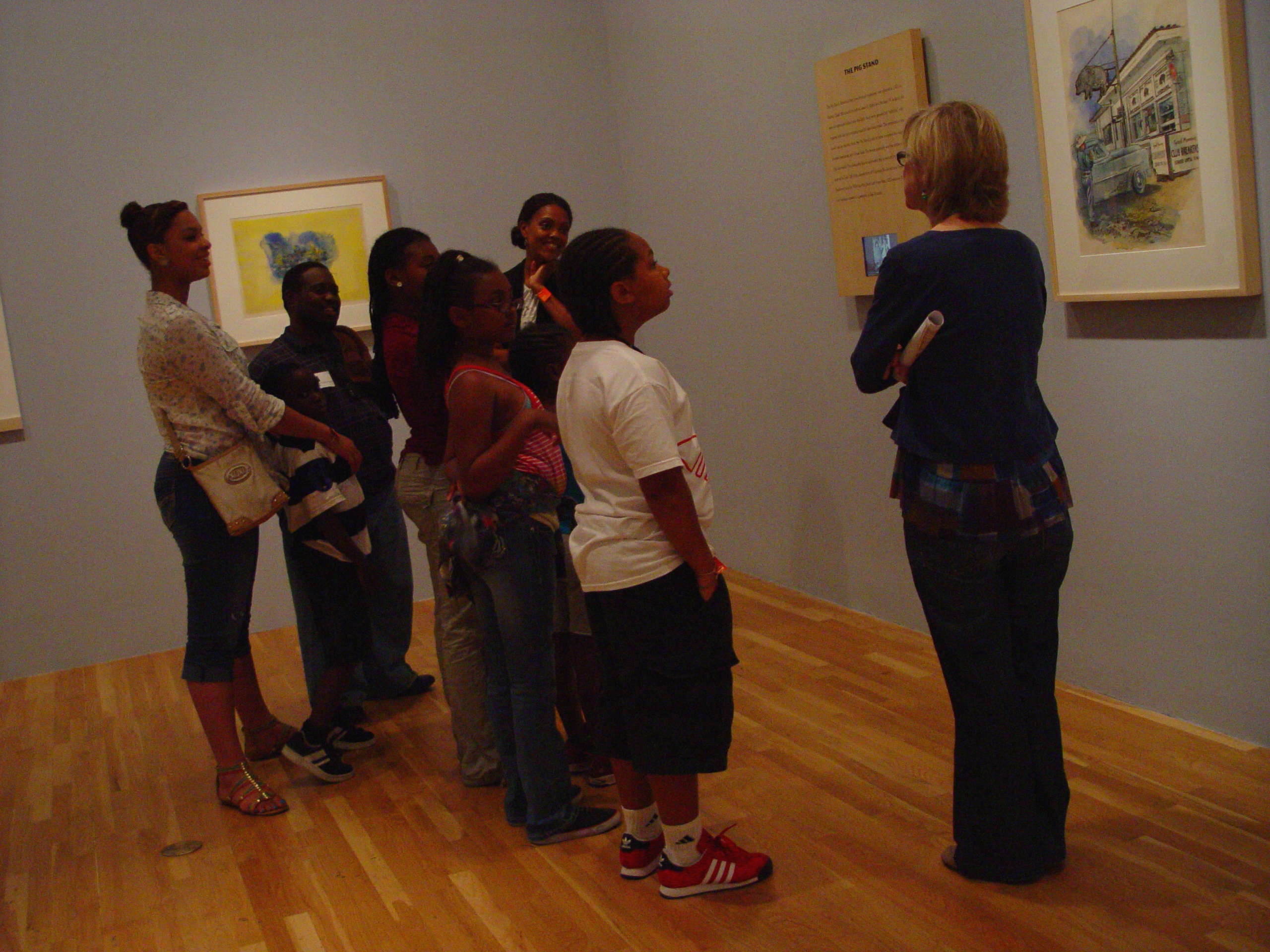
When I visited Dallas for the first time, my number one must-see destination was The Sixth Floor Museum. I have been fascinated by the Kennedy family since I was nine years old, and I felt compelled to make a pilgrimage to Dealey Plaza and the former Texas School Book Depository. What I didn’t realize is that many Texans, including a large number of the DMA’s docents, have never been to The Sixth Floor Museum. That changed last week, when a group of docents and I ventured down to the West End to explore The Sixth Floor Museum as a group.
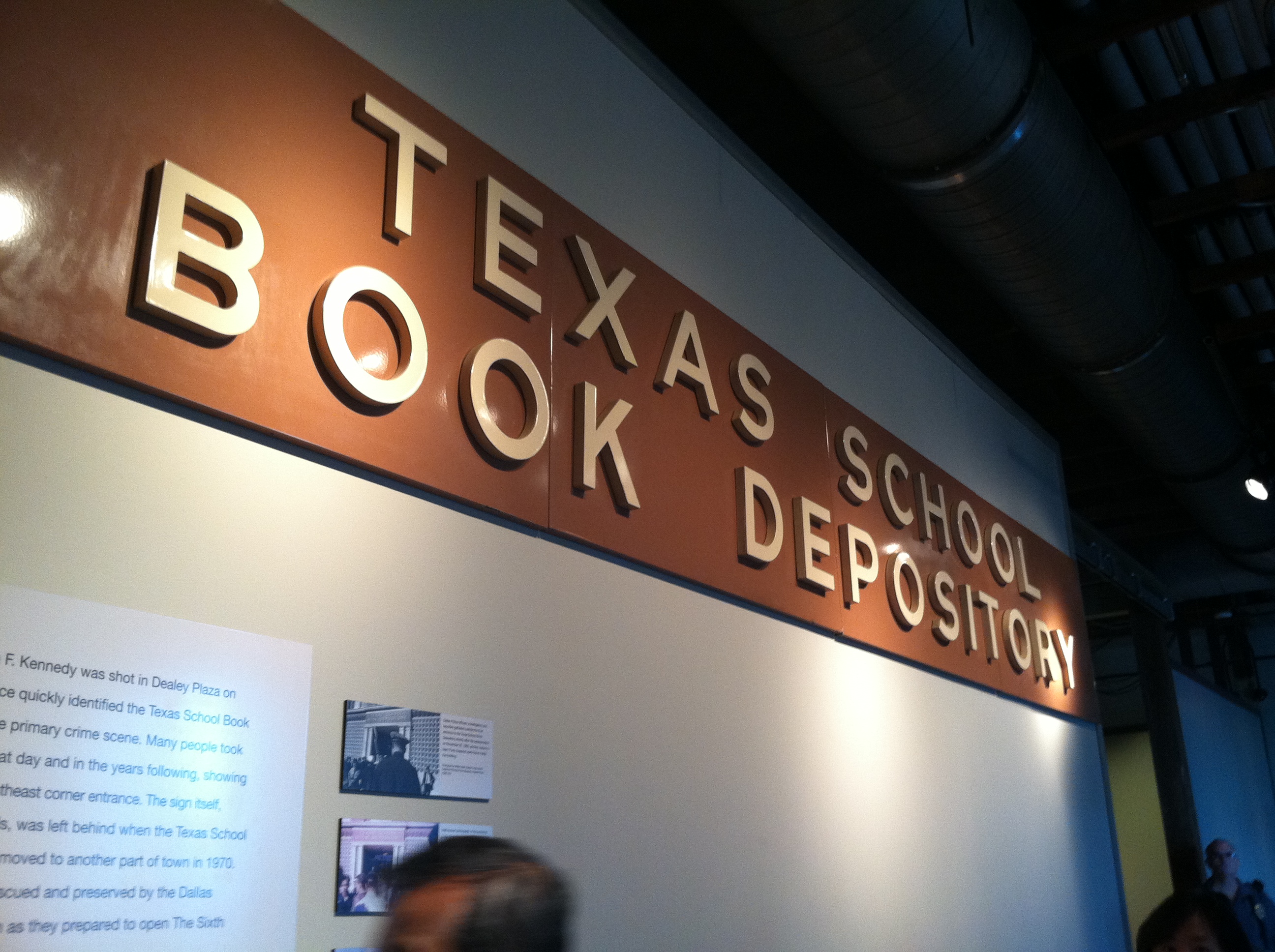
The original sign from the Texas School Book Depository on display at The Sixth Floor Museum

The original sign from the Texas School Book Depository on display at The Sixth Floor Museum

The timing for our field trip couldn’t have been better. Just last week, Hotel Texas: An Art Exhibition for the President and Mrs. John F. Kennedy opened at the DMA. This exhibition brings together thirteen of the sixteen artworks that were placed in Suite 850 at the Hotel Texas in Fort Worth. The President and Mrs. Kennedy slept in Suite 850 on November 21, 1963–the night before his fateful trip to Dallas. The original installation was created over the course of five days by a small group of art collectors in Fort Worth. Works by Picasso, van Gogh, Marsden Hartley, and Thomas Eakins decorated the suite’s living room and two bedrooms. The DMA is marking the anniversary of President Kennedy’s assassination by bringing these works back together for the first time in 50 years.
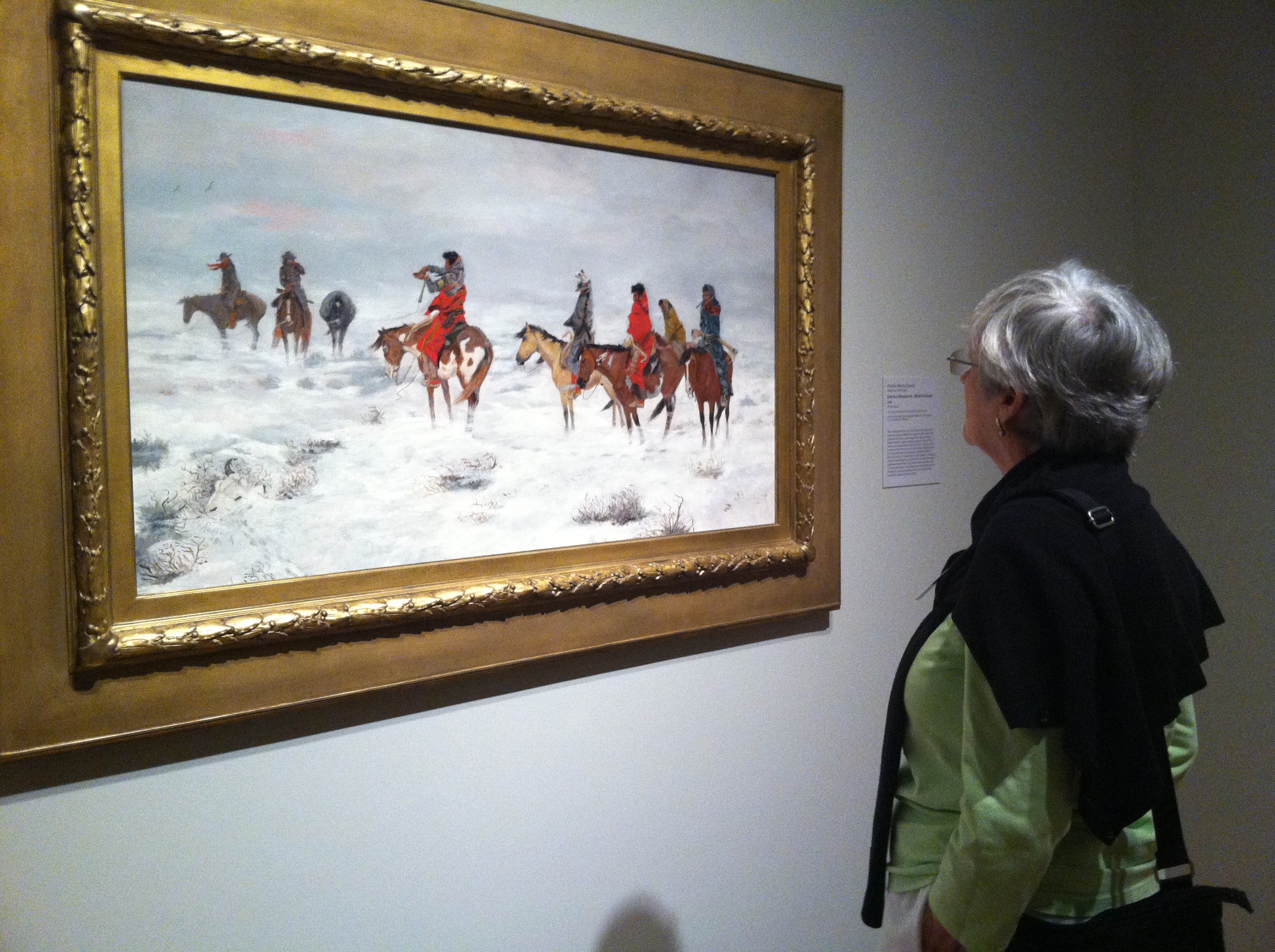
Docent Judy Butts examines Charles Marion Russell's Lost in a Snowstorm

Docent Judy Butts examines Charles Marion Russell’s Lost in a Snowstorm

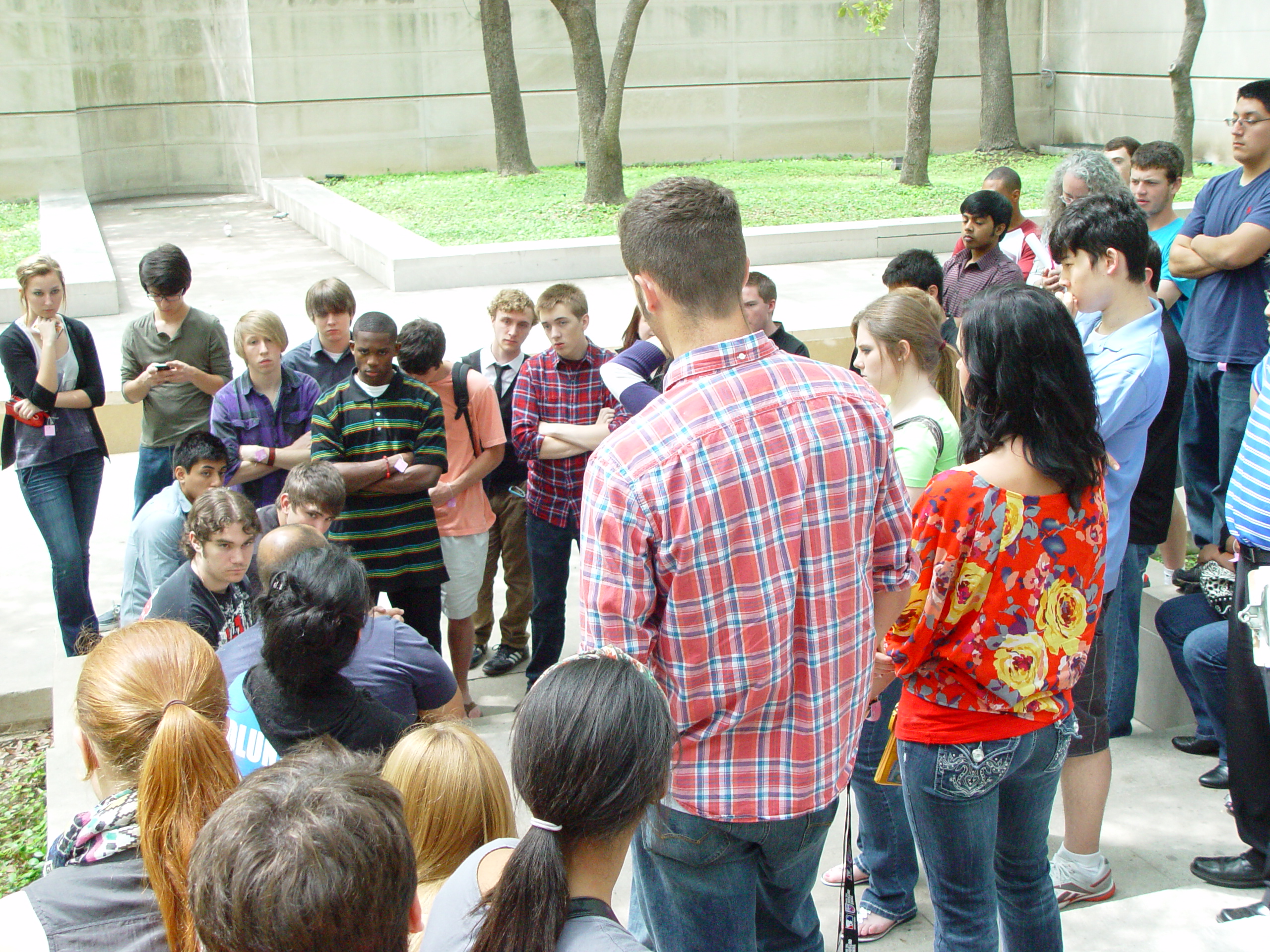
The docents and I explored Hotel Texas together before traveling down to The Sixth Floor Museum. Once we were there, we were greeted by the museum’s chief curator, Gary Mack. Gary spoke with us about his time at The Sixth Floor Museum, including his role in curating the museum’s main exhibition: John F. Kennedy and the Memory of a Nation. After speaking with Gary, we were free to explore the museum at our own pace. This was my fifth visit to The Sixth Floor Museum, and every visit is powerful and moving. This visit was even more special, though, as I listened to the docents share their memories of where they were on November 22, 1963.
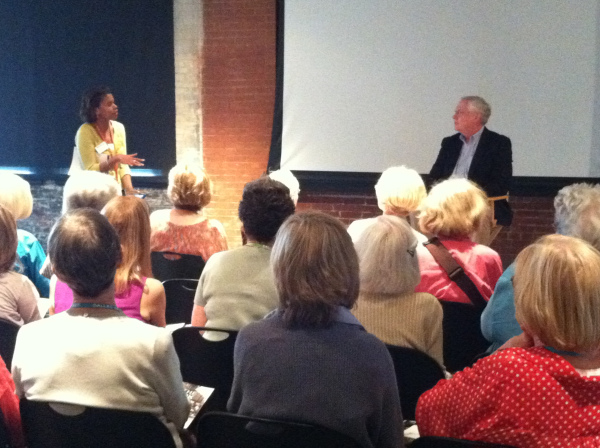
Sharron Conrad and Gary Mack speak with the DMA's docents at The Sixth Floor Museum

Sharron Conrad and Gary Mack speak with the DMA’s docents at The Sixth Floor Museum

For those of you who participate in DMA Friends, we have launched a new JFK Badge in conjunction with the Hotel Texas exhibition. To receive this badge, you only need to visit The Sixth Floor Museum and the Hotel Texas exhibit at the DMA.  Show your ticket stub from The Sixth Floor Museum to our Visitor Services Staff to receive the code. We hope to encourage our Friends and visitors to take this unique opportunity to gain a better understanding of history through these exhibitions.

The DMA and The Sixth Floor Museum have also teamed up to offer a special experience just for teachers during a full-day Teacher Workshop on Thursday, June 27th. The Kennedys in Texas: The Art and History of November 22, 1963 will begin at the DMA in the Hotel Texas exhibition. After breaking for lunch, we’ll spend the afternoon at The Sixth Floor Museum. Registration is now available online–just select “Teacher Programs” to sign up.  We hope to see you there!

Shannon Karol
Manager of Docent and Teacher Programs
Once Upon a Time…

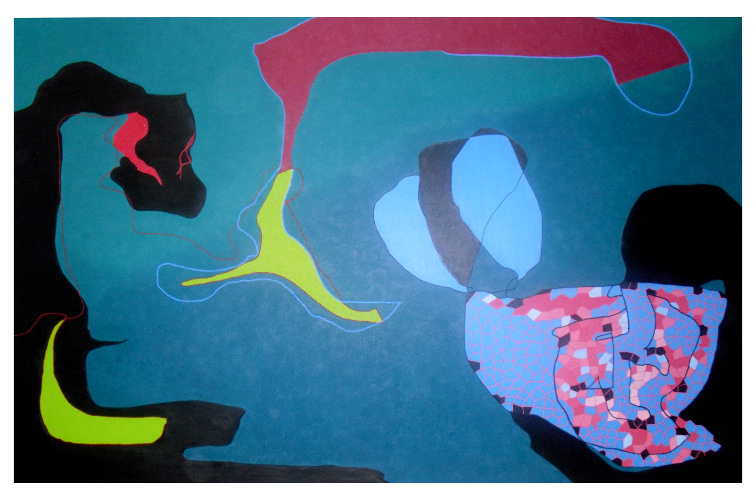
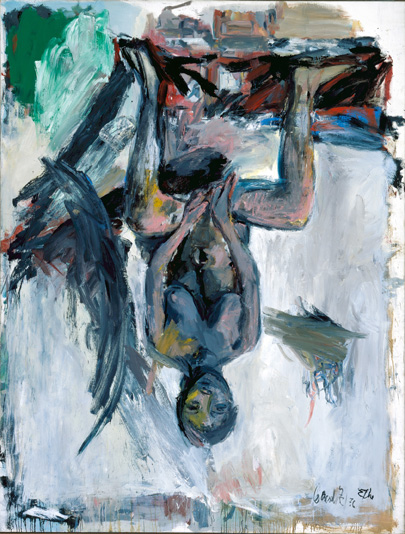
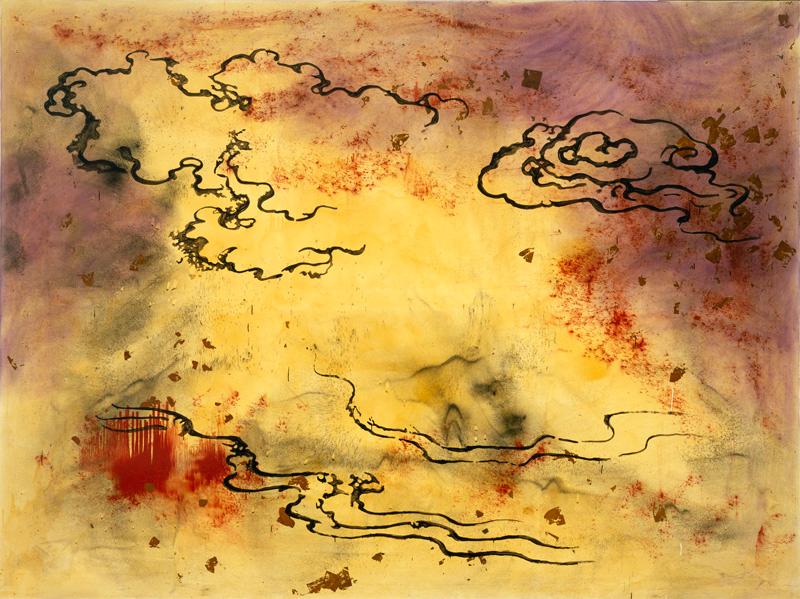
Works of art are often seen as telling their own unique stories.  However, artists can also use stories as inspiration when creating artworks. For example, the story “How Wang-Fo was Saved” inspired the German artist Sigmar Polke to create his painting Clouds (Wolken). Check out a version of this story below:

Sigmar Polke, Clouds (Wolken), 1989, Dallas Museum of Art, DMA/amfAR Benefit Auction Fund and the Contemporary Art Fund: Gift of Mr. and Mrs. Vernon E. Faulconer, Mr. and Mrs. Bryant M. Hanley, Jr., Marguerite and Robert K. Hoffman, Cindy and Howard Rachofsky, Deedie and Rusty Rose, Gayle and Paul Stoffel, and two anonymous donors

Once upon a time in a Chinese kingdom there lived an angry Emperor. When the Emperor was young, he was not allowed to leave the palace and explore the outside world. The young Emperor’s palace was decorated with the paintings of a very famous artist named Wang-Fo. Since the Emperor had never been outside, he thought that the world looked just like Wang-Fo’s beautiful paintings.

Finally, the time came when the Emperor was allowed to leave the palace. At first he was so excited, but his excitement quickly turned to disappointment. The real world was not nearly as beautiful to him as were Wang-Fo’s paintings. The Emperor believed he had been tricked and blamed Wang-Fo for his disappointment. He decided to punish Wang-Fo by tricking him as well.

The Emperor requested that Wang-Fo complete a painting he had left unfinished in the palace. Upon his arrival, Wang-Fo realized that it was trap. He immediately set to finishing his work, adding the sea at the bottom of a mountain. As he painted the water, the palace began to fill with actual water. Next, he painted a rowboat, and Wang-Fo could hear the oars splashing in the water. Wang-Fo quickly climbed into the boat!

The level of the water dropped and soon everyone in the palace came to see Wang-Fo’s finished masterpiece. In the painting they could see Wang-Fo in the rowboat slowly floating away from danger. Farther and farther down the river he rowed, until Wang-Fo disappeared and was never to be seen again. The End.

Concluding thoughts:

  • If you were to create an artwork inspired by “How Wong-Fo was Saved,” what would you choose to capture?
  • Do you think that Sigmar Polke’s Clouds (Wolken) effectively captured the story?  Was he focusing in on a particular moment or theme?
  • Are there childhood or family stories that you would want to commemorate through a work of art?

For more art-based stories, click on the links below:

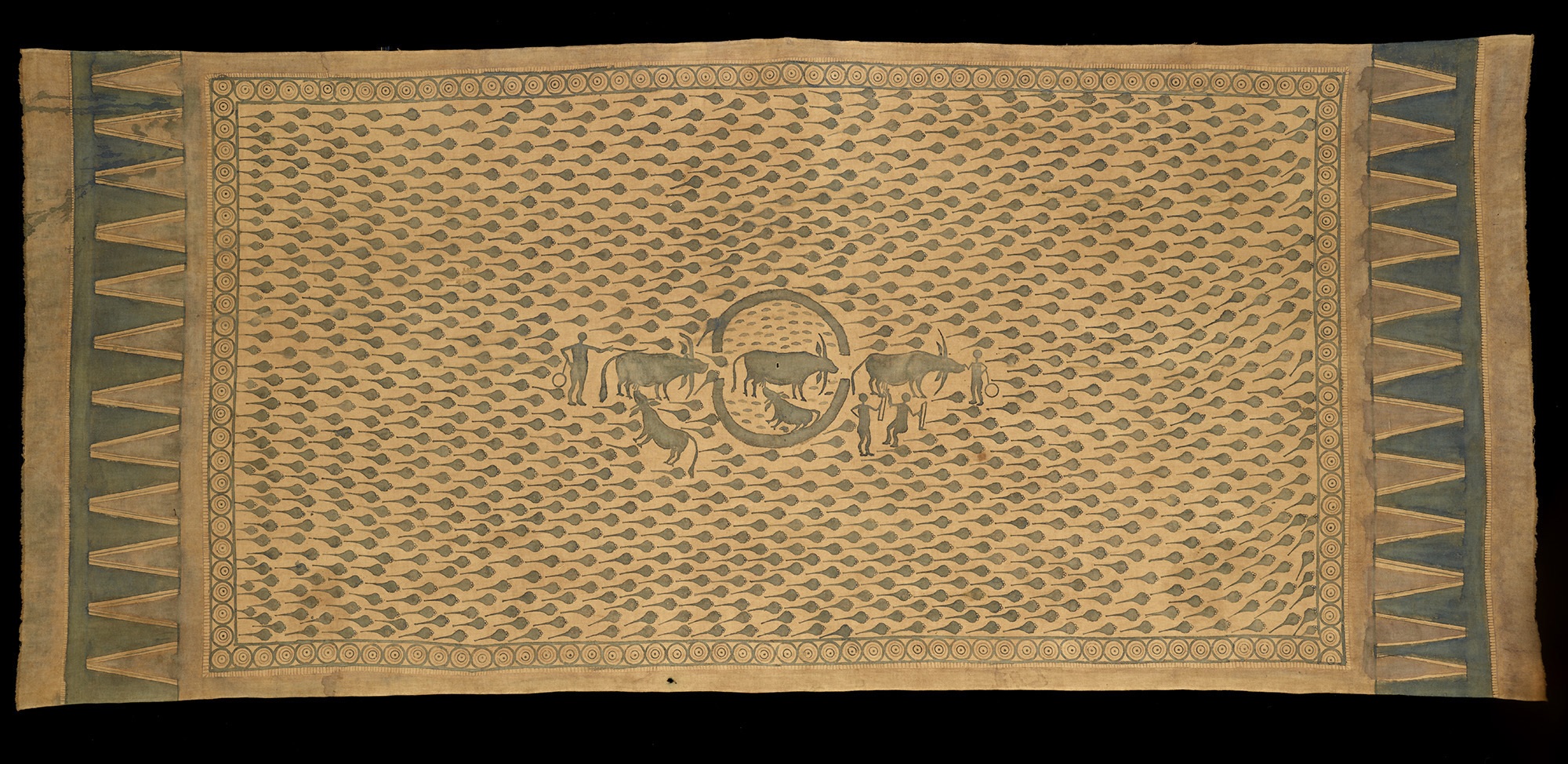
Sacred textile (mawa') depicting tadpoles and water buffalo, early 20th century, Dallas Museum of Art, the Steven G. Alpert Collection of Indonesian Textiles, gift of The Eugene McDermott Foundation

Tadpoles and Water Buffalo

Takenouchi no Sukune and the Dragon King of the Sea

How the Moon got its Rhythm

The End!

Pilar Wong
McDermott Intern for Community Teaching

Wanted: A Few Good Volunteers

If you would like to become more deeply involved with the DMA, consider these exciting volunteer opportunities.  We are currently recruiting applicants to fill three different volunteer positions!

Starting in Summer 2013: C3 Volunteer Program
Pairs well with: An interest in interacting with people of all ages, leading fun activities in the galleries, and spending time with works of art

The Center for Creative Connections (C3) is an experimental, dynamic learning environment that provides interactive encounters with works of art and artists. C3 volunteers act as hosts and welcome visitors, answer their questions, and personalize their Museum experience by providing information on the Museum’s collections, programs and activities. In addition, volunteers manage the C3 space by organizing and maintaining the C3 area, enforcing good Museum behavior, observing visitor flow, and prepping program and activity supplies. Volunteers also lead activities in the galleries and assist with special events such as Late Nights.

Volunteers attend mandatory trainings at the Museum beginning in June. The first training is on June 15 from 10:00 a.m.-12:00 p.m. Three-hour volunteer shifts are available Tuesday-Sunday from 11:00 a.m.-5:00 p.m., Thursdays 6:00 p.m.-9:00 p.m., and select Fridays 6:00 p.m.-12:00 p.m.

We are especially in need of volunteers who are available Tuesday-Friday from 11:00 a.m.-5:00 p.m., but folks who are available on evenings and weekends are equally welcome to apply. To request an application, email Rhiannon Martin. The application deadline is Friday, May 31.

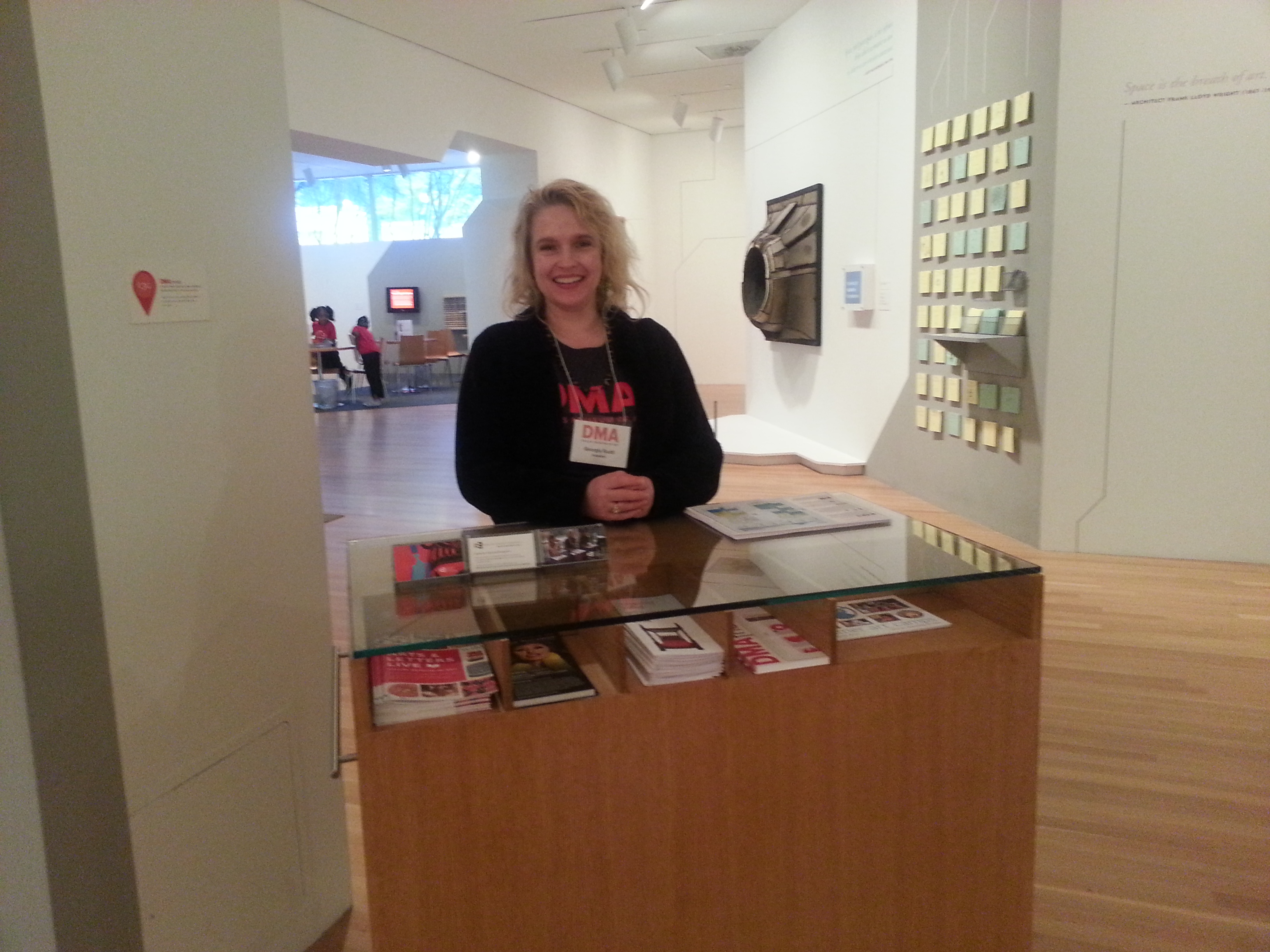
Georgia, a C3 Volunteer, greets visitors as they enter the Center for Creative Connections.

Georgia, a C3 Volunteer, greets visitors as they enter the Center for Creative Connections.

Starting in Fall 2013: Docent Program
Pairs well with: A passion for teaching and learning, leading conversations and gallery experiences, and spending time with works of art

The desire to communicate the power of art to others is the main requirement to become a docent, and we are currently recruiting new docents for the 2013-2014 training year. New docents complete a yearlong training program consisting of lectures, gallery talks, and workshops led by Museum staff and outside experts. These training sessions, held each Monday from September through May, prepare new docents for tours by introducing them to the DMA’s collection and immersing them in our teaching philosophy. After completing training, docents conduct weekly tours for groups of visitors ranging from elementary school students to adult visitors.

If you (or someone you know) would like to learn more about the DMA docent program or to request an application for the 2013-2014 training year, email Shannon Karol. The application deadline is Friday, May 24.

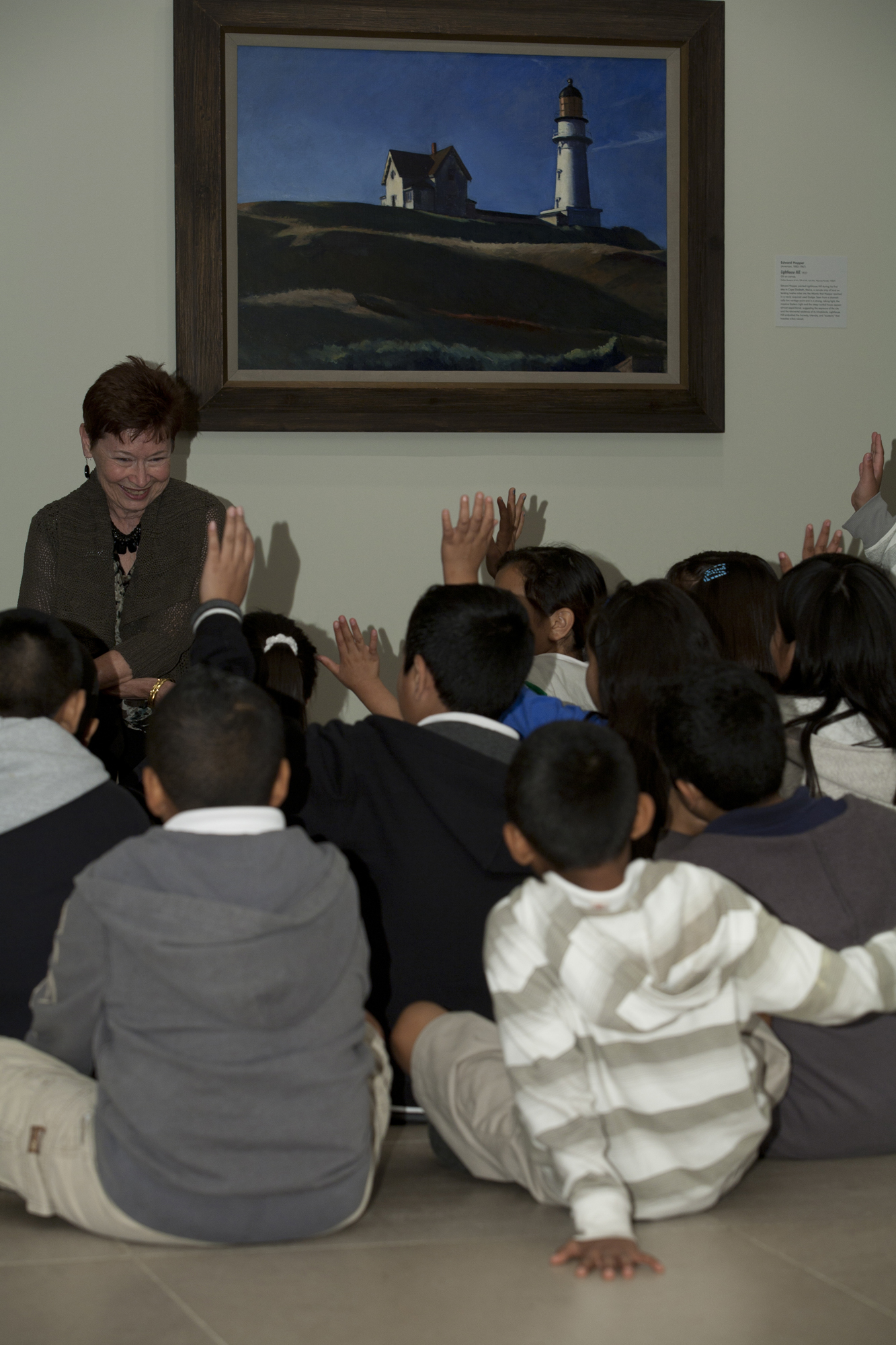
Marilyn, a DMA Docent, talks with students about Edward Hopper's Lighthouse Hill.

Marilyn, a DMA Docent, talks with students about Edward Hopper’s Lighthouse Hill.

Starting in Fall 2013: Go van Gogh Program
Pairs well with: Enthusiasm for teaching 1st-6th grade students, leading conversations and art-making activities at Dallas-area schools, and spending time with works of art

Check back in July for information about volunteering with the Go van Gogh® program during the 2013-2014 school year.

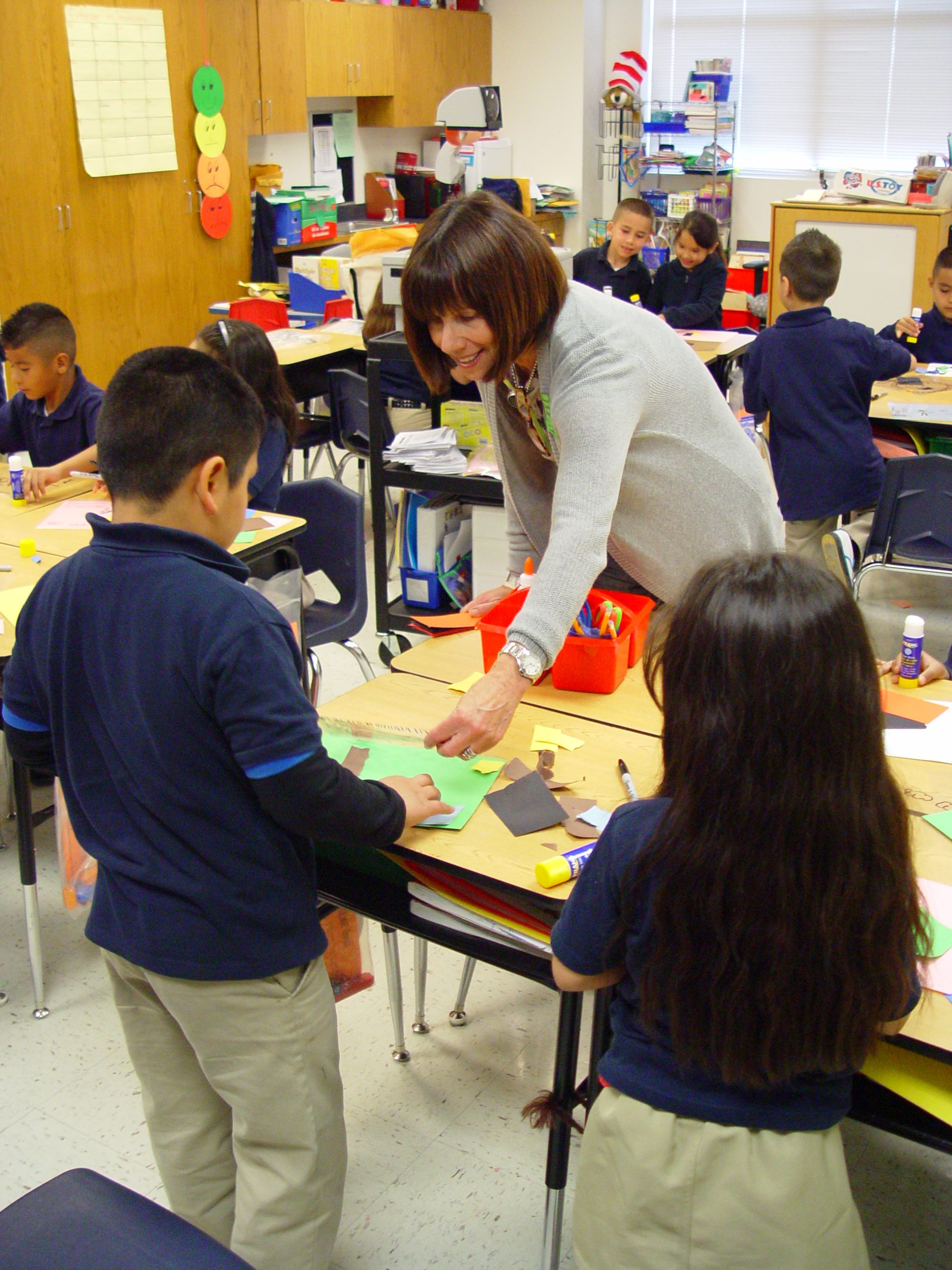
Karen, a Go van Gogh volunteer, helps students with an art project

Karen, a Go van Gogh volunteer, works with first grade students on an art activity

We hope you’ll consider volunteering with us!

Shannon Karol
Manager of Docent and Teacher Programs
Make This: Cosplay Armor and Accessories

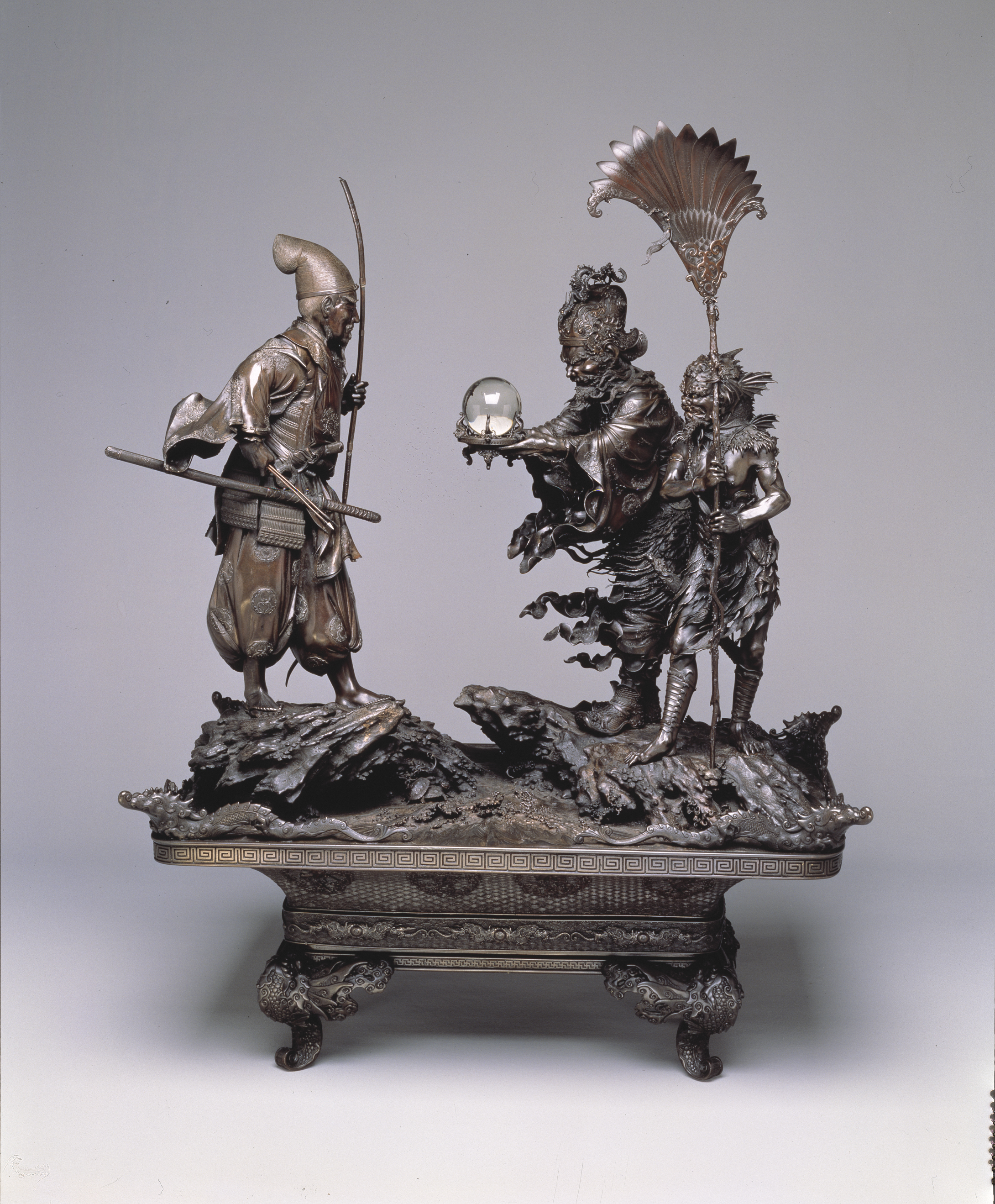
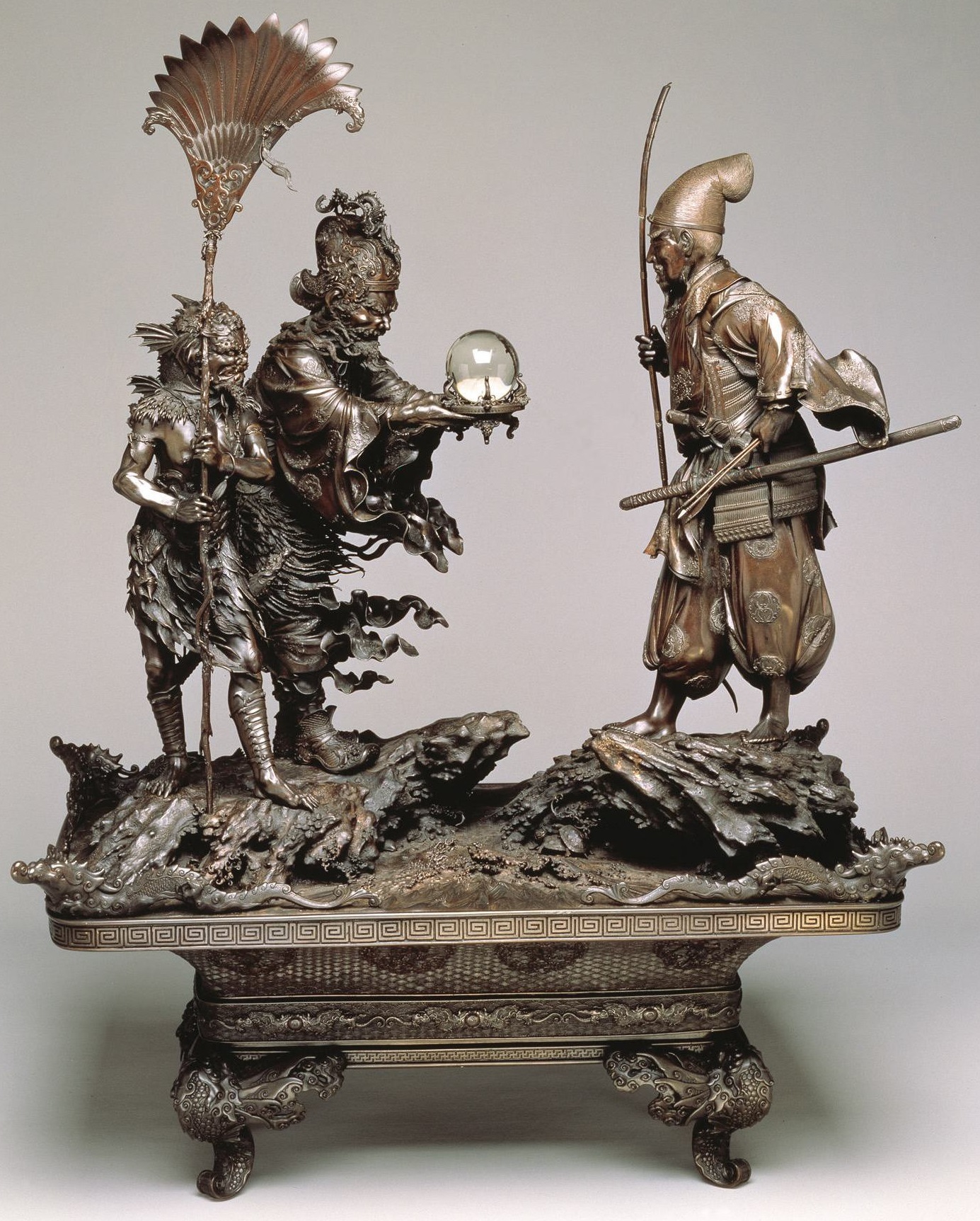
Takenouchi no Sukune Meets the Dragon King of the Sea, Japan, 1875-1879, Dallas Museum of Art, Foundation for the Arts Collection, The John R. Young Collection, gift of M. Frances and John R. Young

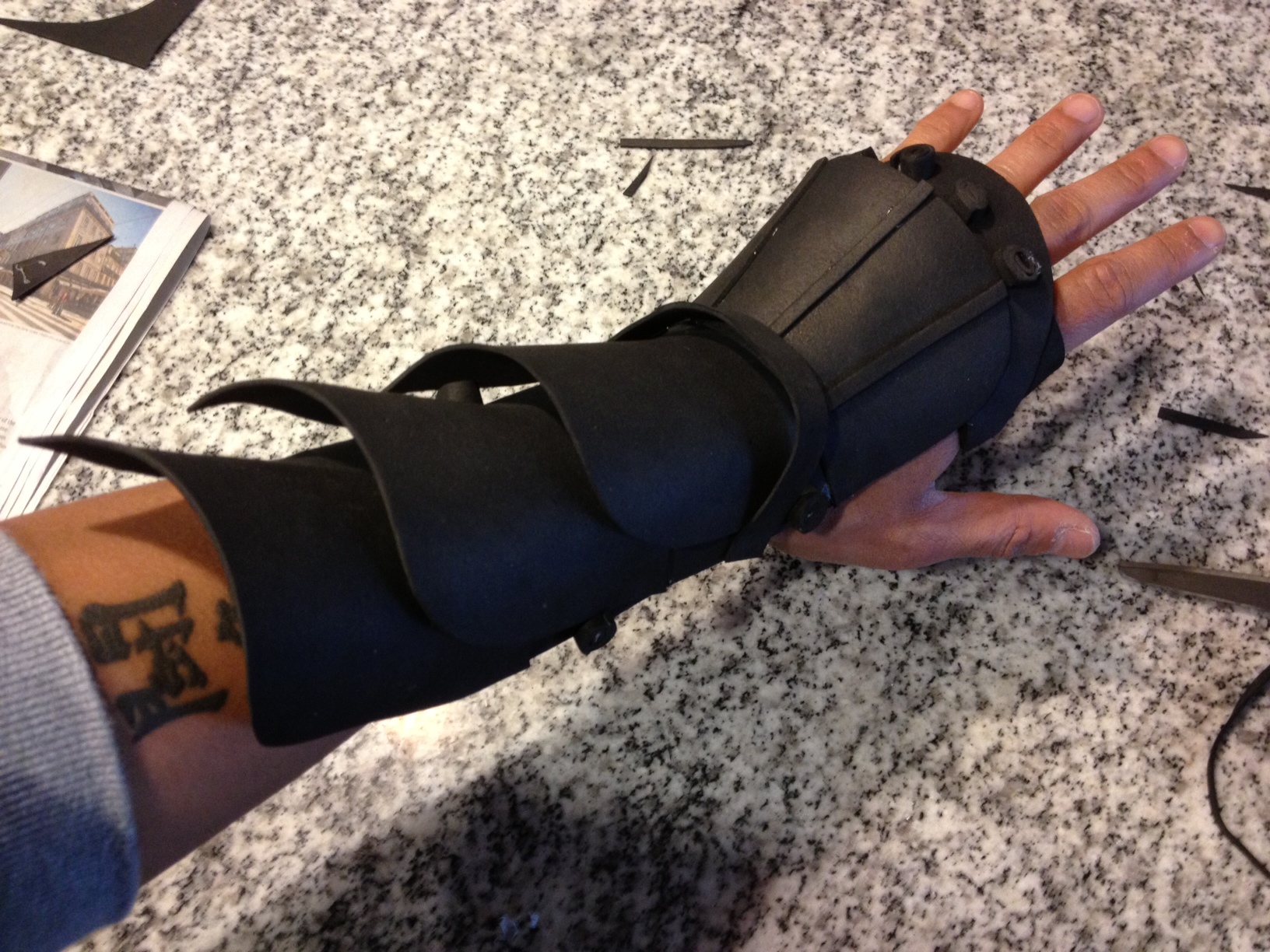
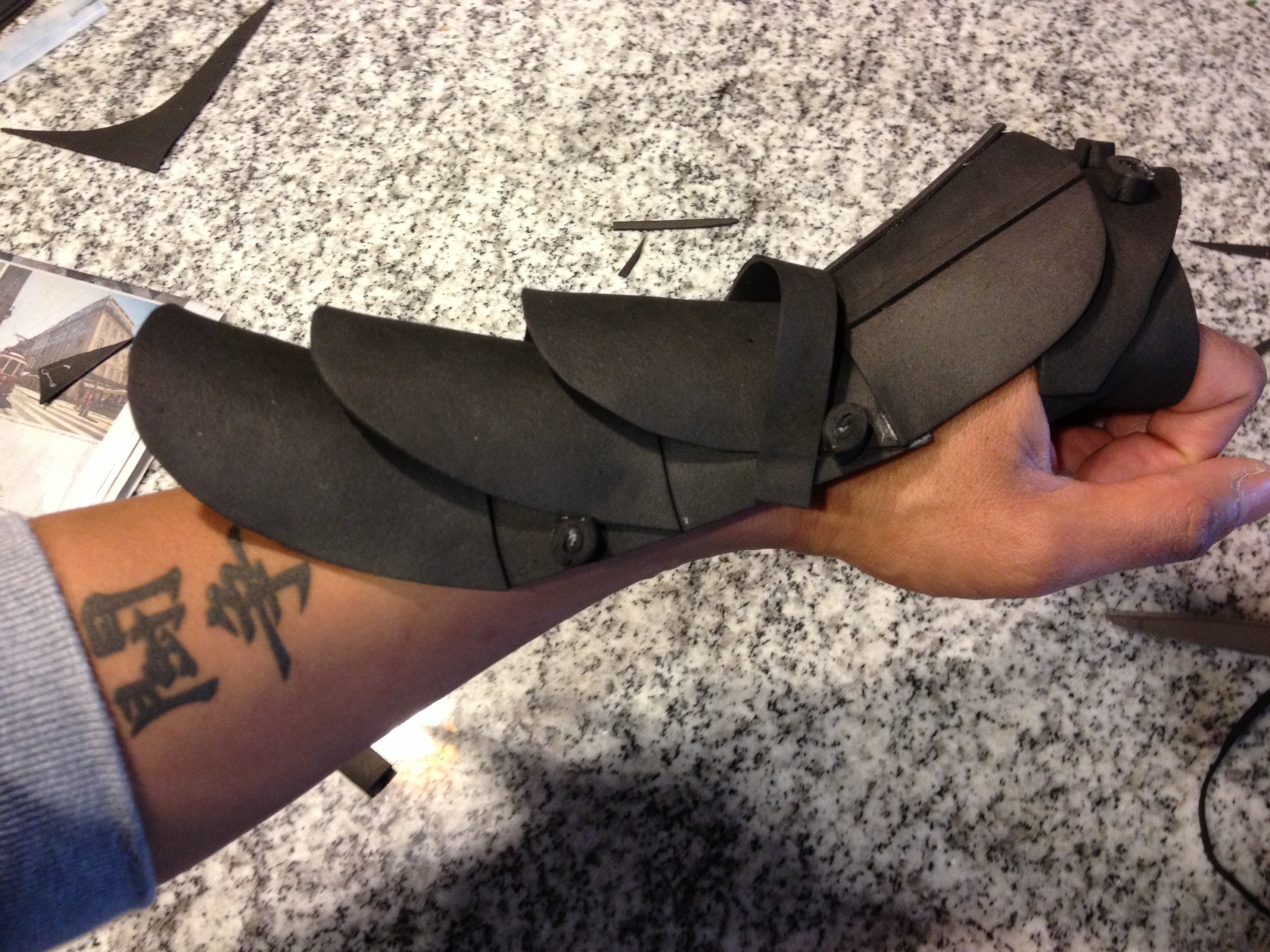
In thinking of an activity relating to the sculpture above for our June Studio Creations workshops, I kept coming back to the idea of costumes. The outfits, armor, and accessories worn by each of the three figures is amazingly detailed, and with Dallas Comic Con on the way, making cosplay accessories seemed like a really fun project. I’m going to show you how I made a “fin”-style gauntlet. But you can apply these directions to make whatever you want: helmet, tiara, jewelry, cape, etc.

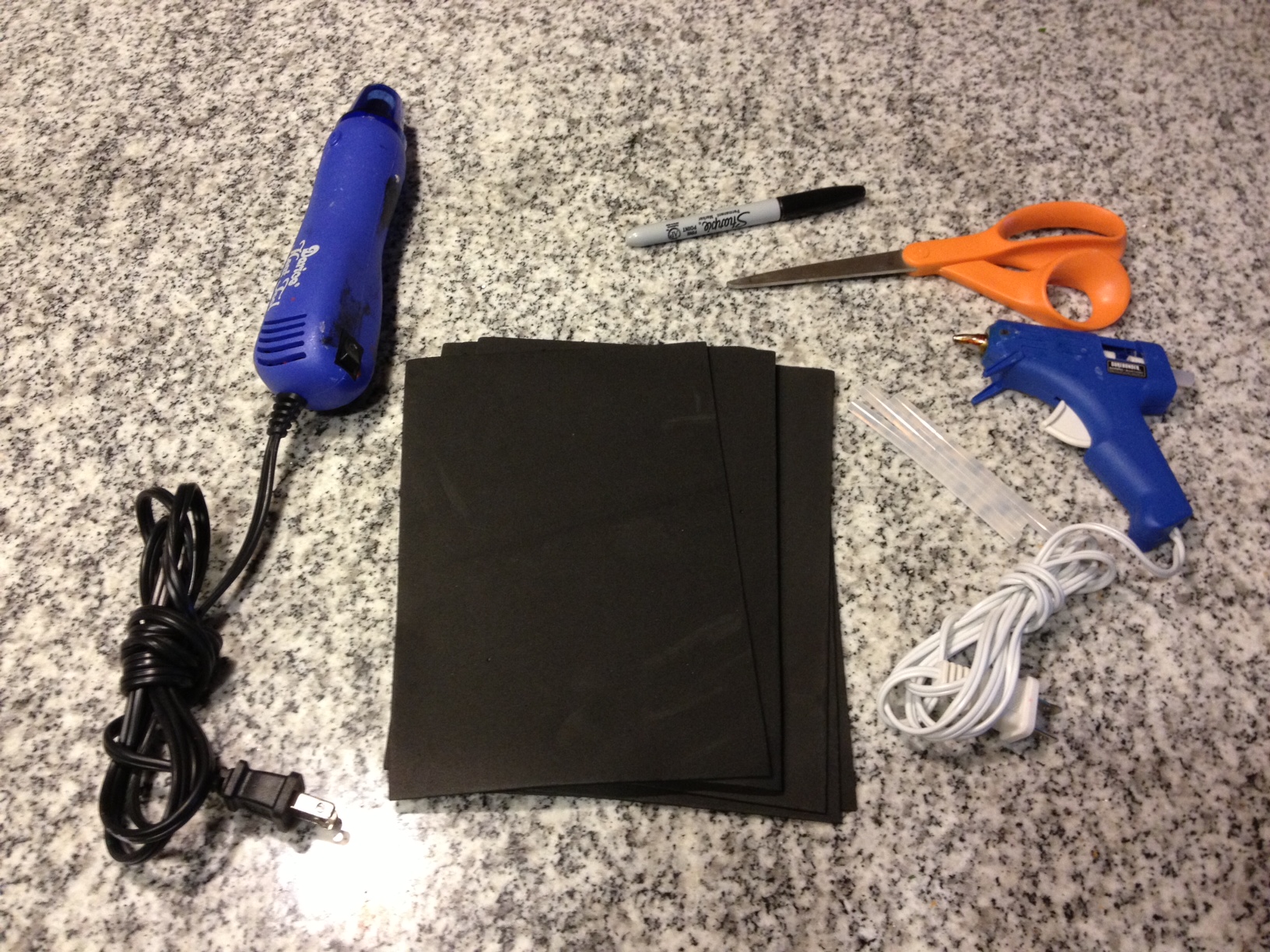
What you need:

  • Craft foam sheets (available at any craft store)
  • Self-adhesive foam stickers (optional)
  • Hot glue gun
  • Hair dryer or heat gun (optional)
  • Scissors
  • Sharpie marker
  • Scrap paper
  • Velcro (optional)
  • Elastic or rubber bands (optional)
  • Double-sided tape (optional)

photo 1

Steps

photo 2

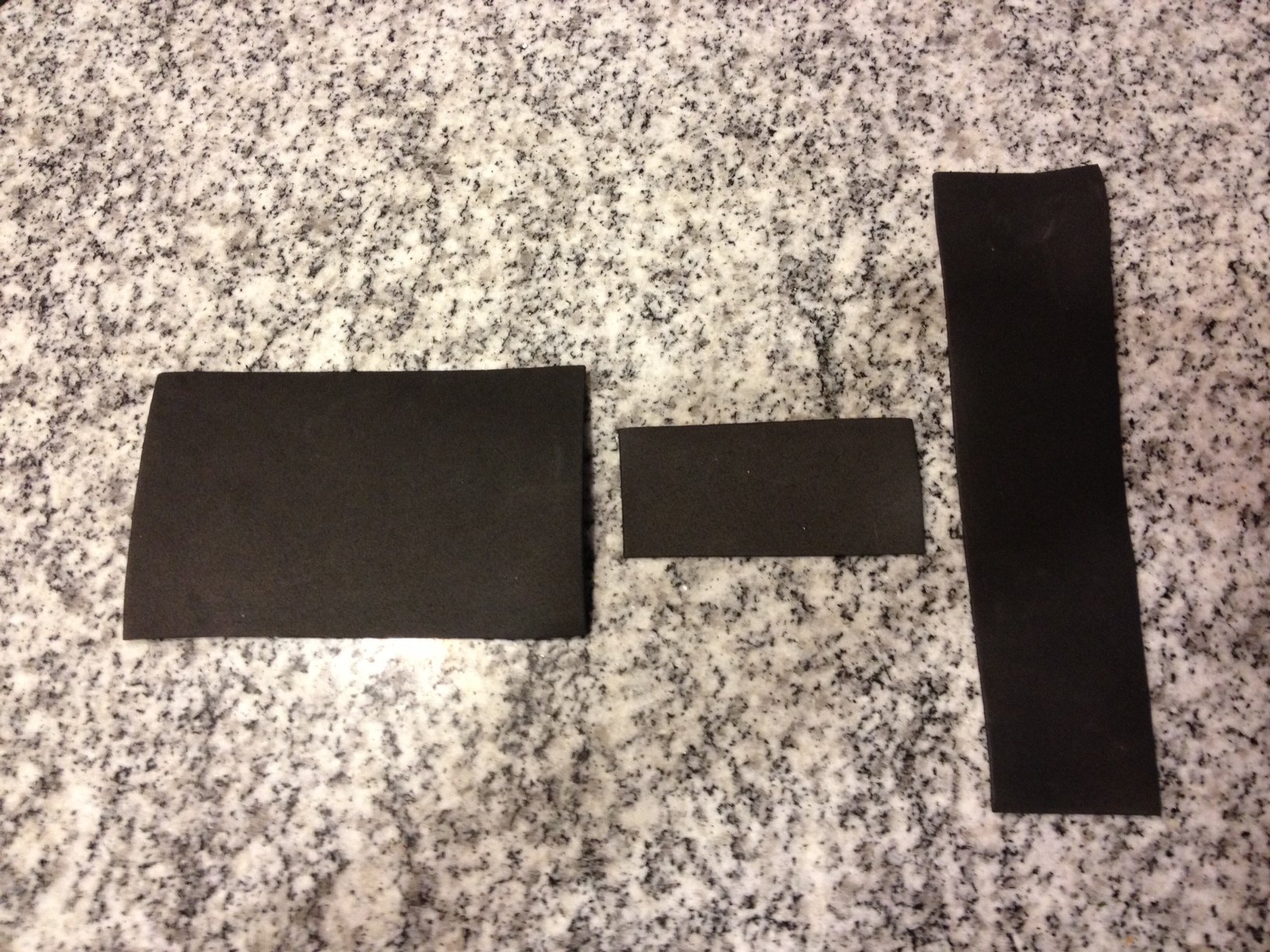
Pieces for the base of the gauntlet

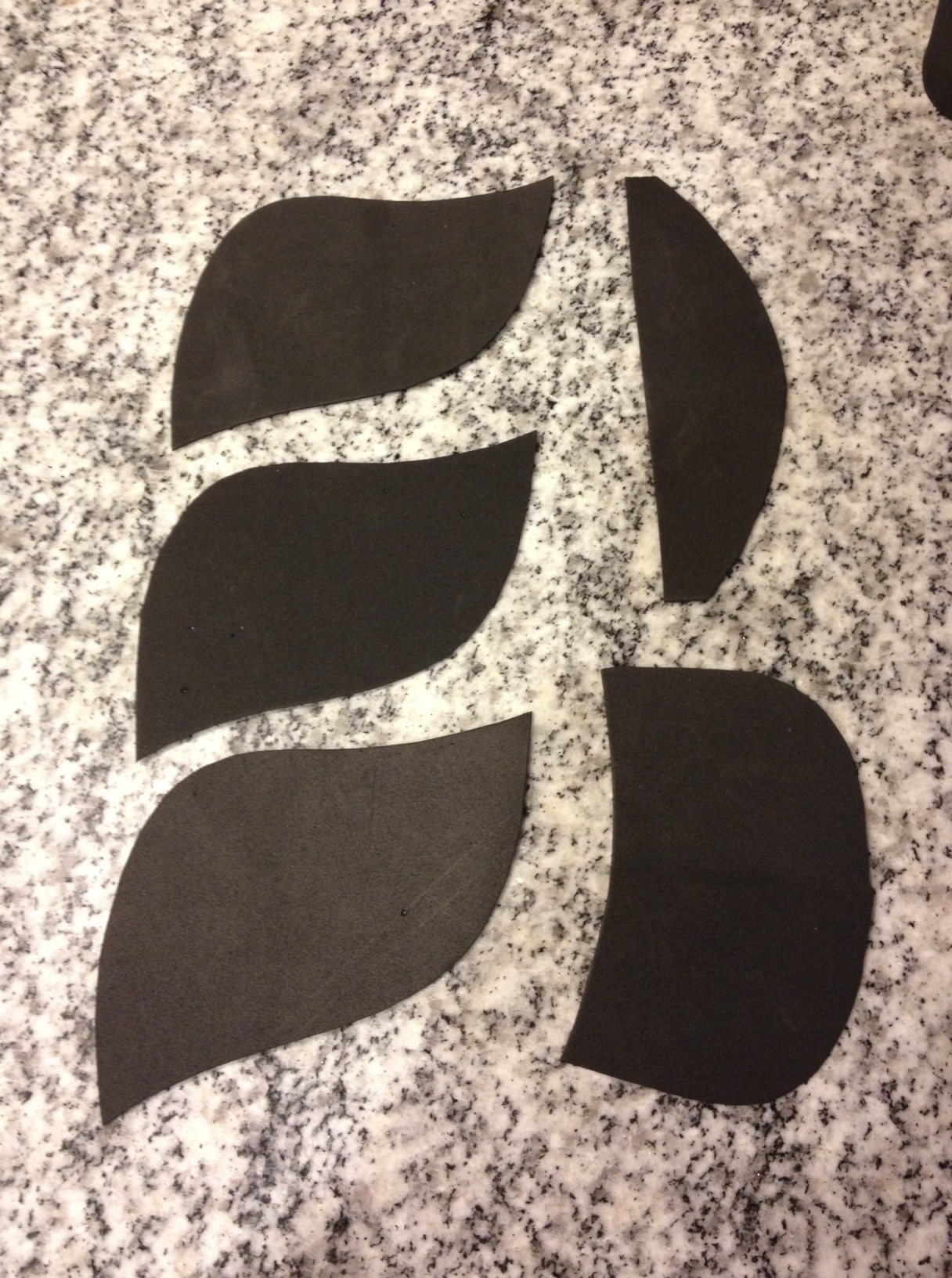
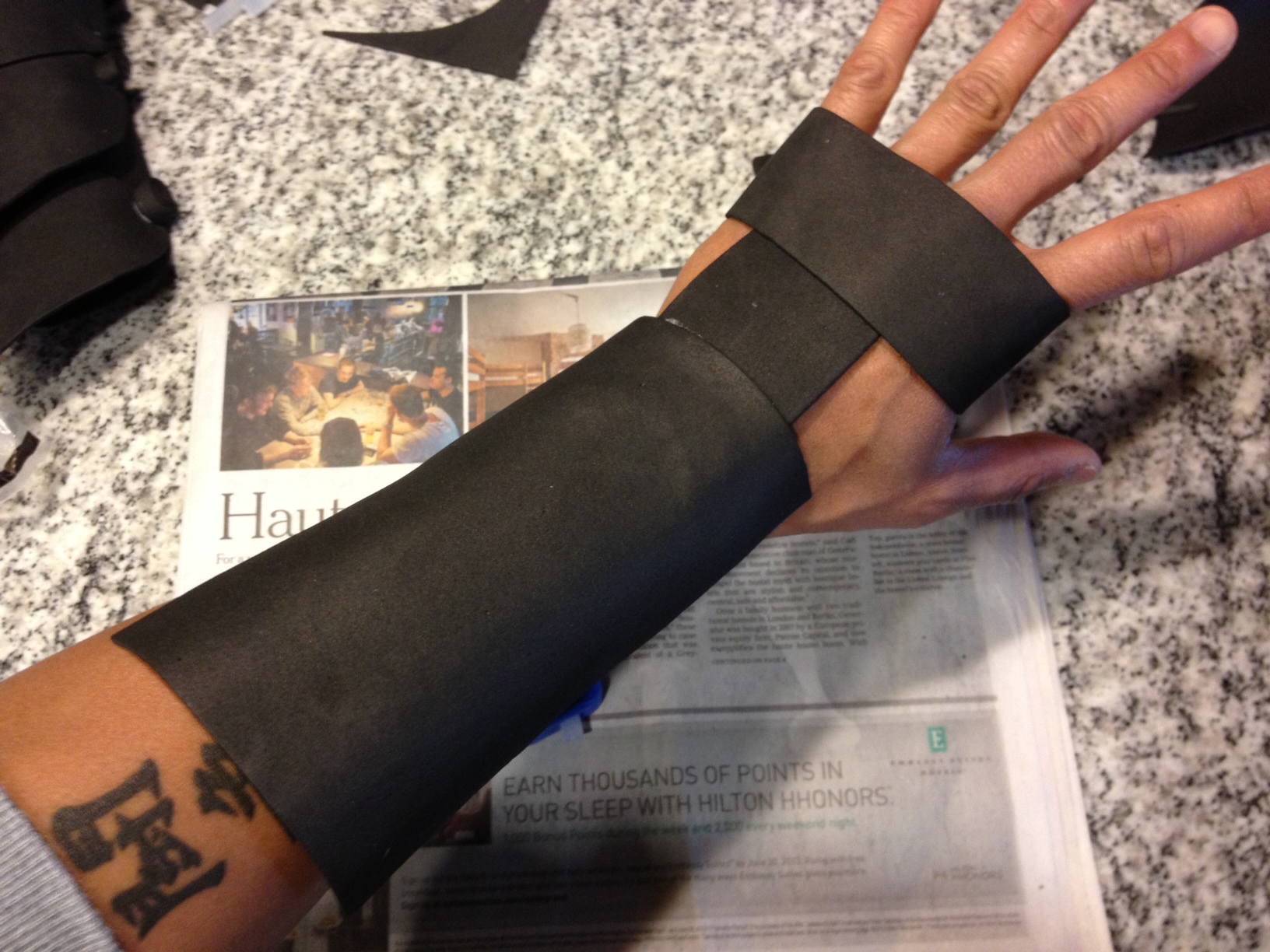
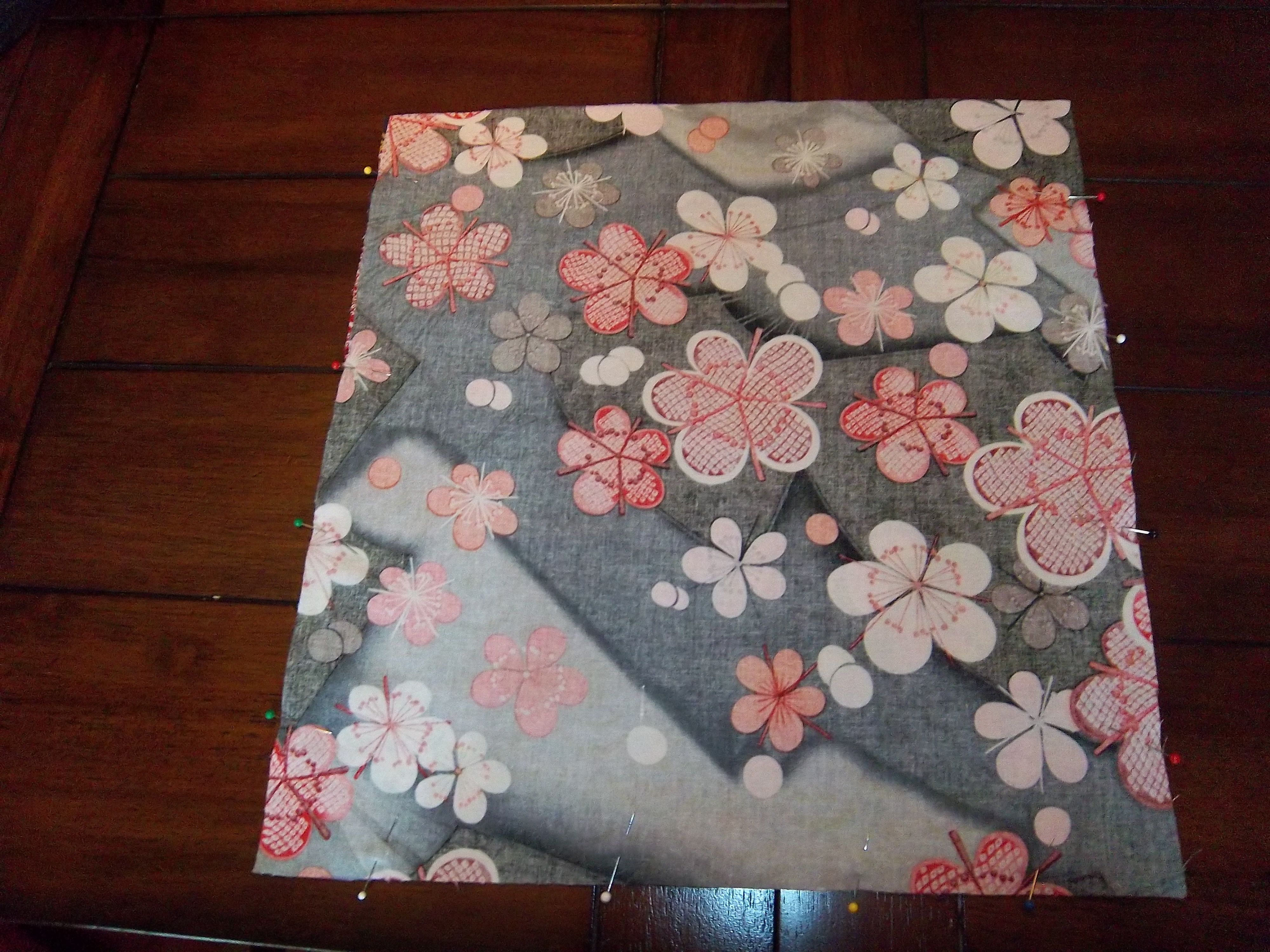
For the base of the gauntlet, I cut a piece of craft foam to fit the back of my forearm. I made a similar piece to encircle the back of my hand and palm.

photo 3

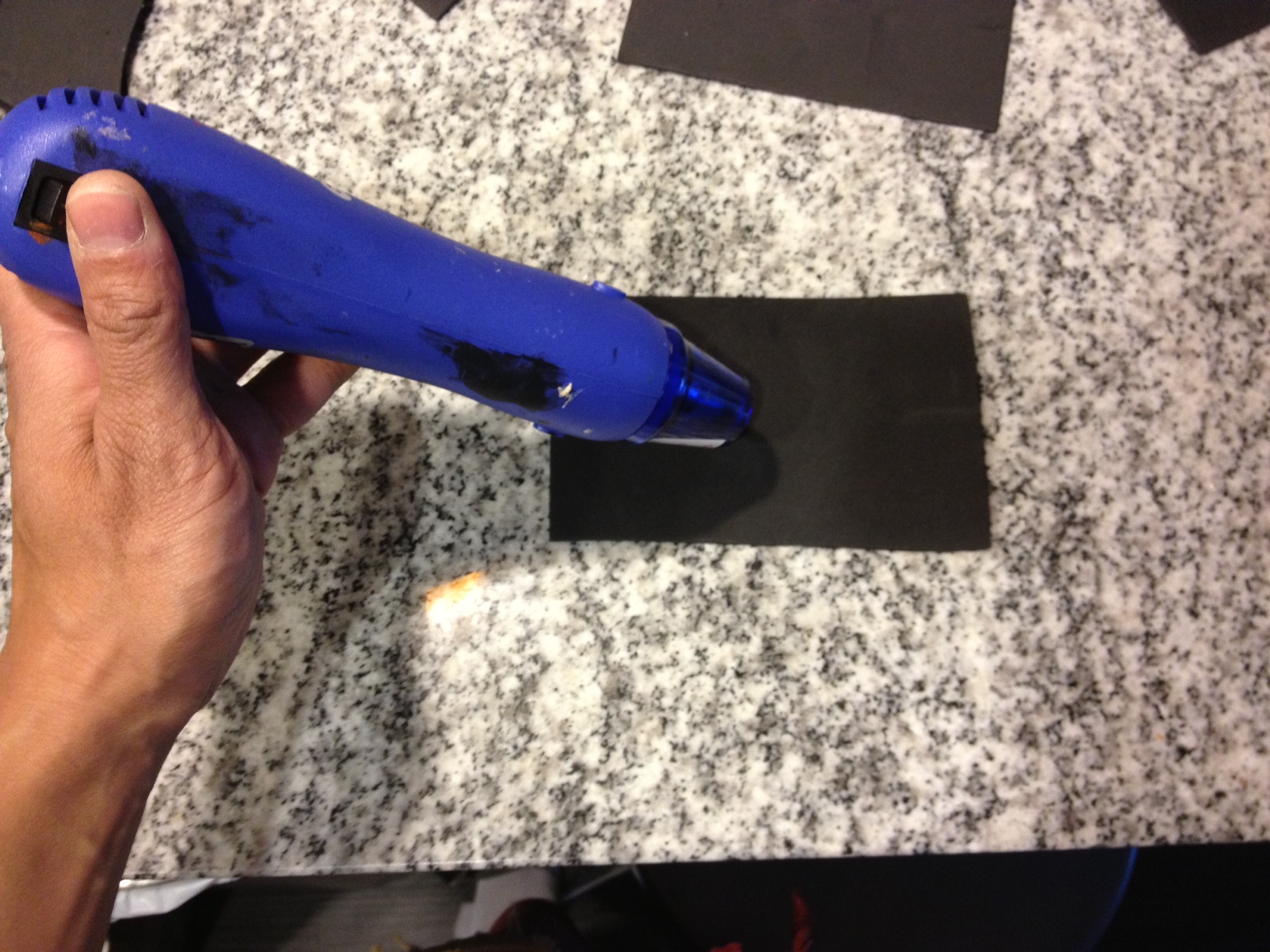
Heating the foam

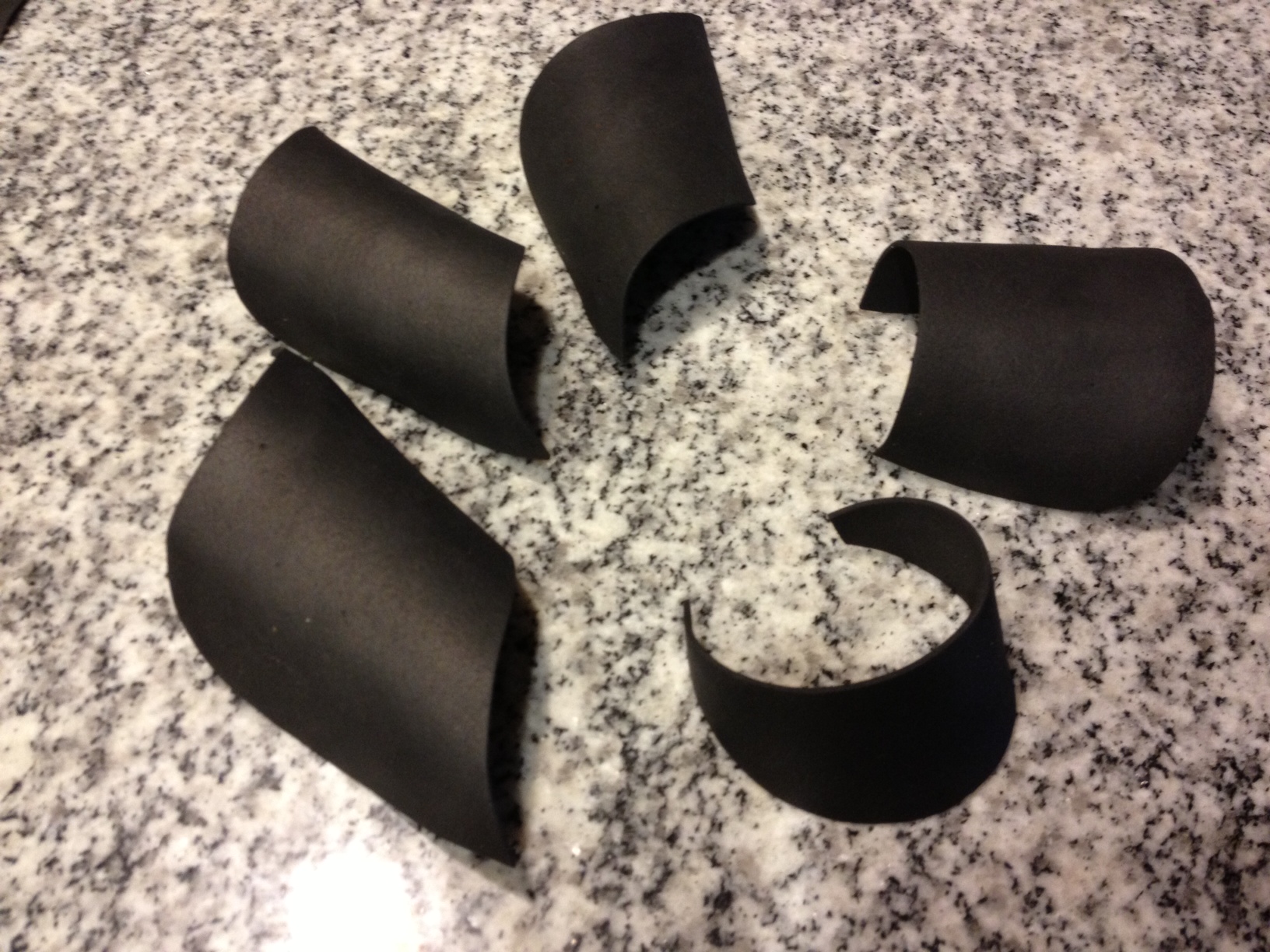
Optional: I used a heat gun to carefully heat and shape the foam. While it was still warm, I formed the pieces around my forearm and hand. You could also do this with a glass, tube, etc. If you want to skip this step, you can curl the foam without heating it–it just doesn’t hold its shape as well.

photo 5

“Armor” pieces

I then cut more foam pieces for the armor plating. You can draw the shape directly on the foam with your sharpie or you could cut out a template to use from your scrap paper.

Save the scraps of foam that are left over–these can be used for decorations later! Self-adhesive foam shapes work well for decoration, too.

photo 1

Pieces after being heated and shaped

photo 2

Gluing the base together

I then used a hot glue gun to put all of the pieces together. Double-sided tape works, too.

photo 3

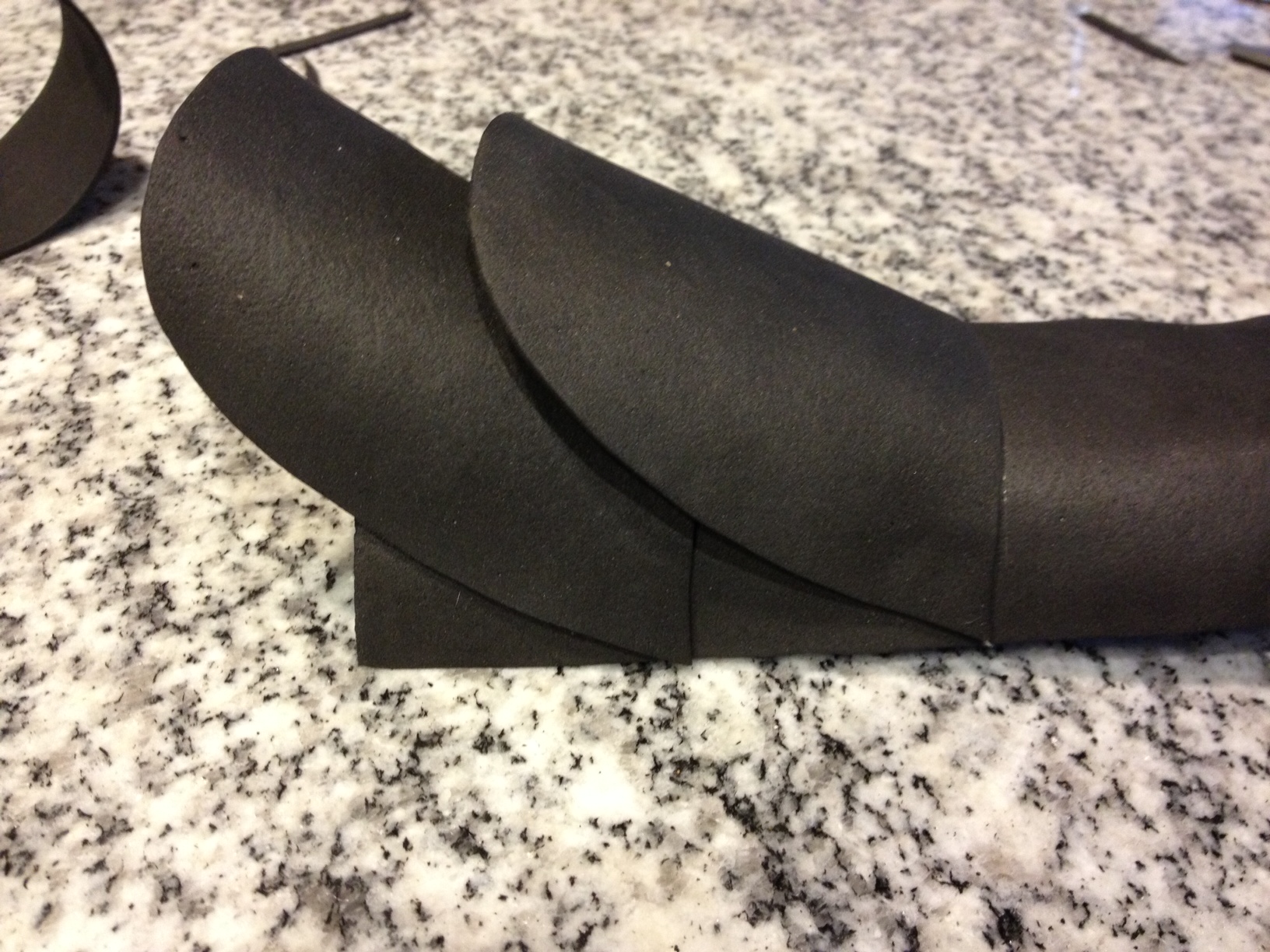
Armor pieces glued at an angle to make them pop out

You could use velcro or elastic to make a closure for the glove so that it stays on your wrist. In this case, I used the scrap foam to make some small studs that I will stretch rubber bands across to hold it in place.

photo 4

Finished glove

photo 5

Close-up of the stud attachments

Keep in mind that craft foam is very thin, so this armor is purely for show! And again, you can make almost anything you can imagine with these materials. For more ideas,  search “cosplay diy” and also check out this amazing tutorial.

And don’t forget to come to the DMA to see Takenouchi no Sukune Meets the Dragon King of the Sea and to participate in Studio Creations!

JC Bigornia
C3 Program Coordinator

What the NAEA Means to ME!

The Mission Statement:
“The National Art Education Association (NAEA) advances visual arts education to fulfill human potential and promote global understanding.”

“Founded in 1947, The National Art Education Association is the leading professional membership organization exclusively for visual arts educators. Members include elementary, middle and high school visual arts educators, college and university professors, researchers and scholars, teaching artists, administrators and supervisors, and art museum educators, as well as more than 45,000 students who are members of the National Art Honor Society or are university students preparing to be art educators. We represent members in all fifty states plus the District of Columbia, U.S. Possessions, most Canadian Provinces, U.S. military bases around the world, and twenty-five foreign countries.”

[quotes from the NAEA Website]


The NAEA Student Chapter

I joined the National Art Education Association in 2007 when I was an art education student at the University of North Texas and was instantly welcomed into a membership of 17,170 art educators who would mentor me along my educational journey. Membership and attendance to the national conventions truly made an impact on who I am today. By constantly being filled with current research, discovering the various ways to put educational theory to practice, giving presentations, hosting students, having numerous networking opportunities and by creating countless friendships—I became a stronger art educator. As I became more active in the organization, I was granted the opportunity to hold two leadership roles within the NAEA structure and just recently concluded my term as the NAEA Student Chapter President this past March at the 2013 Annual Convention in Fort Worth.

As of June 2012, 2,633 members classified themselves as students and testified to the need for an active voice in the organization. It was my duty over the past four years to serve the university student population to make their voices heard to the board of directors and to be an advocate for pre-professionals.

NAEA Governance Structure

NAEA Governance Structure

At the beginning of the 2013 NAEA Convention, Past-President Dr. Bob Sabol addressed the Delegates Assembly to propose a change to the current governance structure.  That change was voted on unanimously and can be seen in the following video. Some new and exciting things are in the works, and Bob can express it better than I can. I am still speechless!

[vimeo 64564970 w=500 h=281]

NAEA from amanda Batson on Vimeo.

Don’t miss out on an opportunity to be a part of the NAEA and the 2014 National Convention in San Diego, CA. The NAEA is currently accepting applications for proposals. See you there!

naea5

Amanda Batson
C3 Program Coordinator

You Will Not Want to See This

The Story pirates logoIn 2003, the Story Pirates started as a twelve-person group who wanted to bring quality education to under-resourced public schools. Today, the organization puts a unique spin on children’s literature by putting words into action. That is, the Pirates act out stories onstage, bringing life to educational ideas such as plotline and story development. When they are not cutting it up on the stage, the pirates lead programs for teachers across the US. The group also works with low-income schools to establish acting and writing programs.

The Pirates encourage originality by having students submit their creative writing with the possibility of being chosen as the main stage event. They use puppets, song, dance, and sketch comedy to illustrate these kid-created stories. Every once in a while, they take random suggestions from the audience or pull an unsuspecting viewer onstage.  The Pirates have become so popular that they have even appeared on NBC Nightly News.

And guess what?  The Story Pirates are coming to the DMA!  They will be performing Pseudonymous Bosch’s Write This Book: A Do-It-Yourself Mystery on Sunday, April 28 at 3:00 pm in Horchow Auditorium.  Bosch’s newest mystery is the culmination of his five part Secret Series, a group of thoroughly entertaining, read-if-you-dare stories.  Write This Book:  A Do-It-Yourself Mystery encourages readers to write their own ending with interactive puzzles, games, and choose-your-own-adventure scenarios.  The elusive Mr. Bosch will sign books following the event.  (Disclaimer:  The author denies responsibility for any terrible tales, woebegone worries, or deadly endeavors that may result from reading his books.)

For FREE tickets, call 214-922-1818 or order online. But don’t wait! We expect this marvelously mysterious program to sell out quickly!

Emily Brown
McDermott Intern for Adult Programming

Cindy Sherman: An Actor’s Perspective

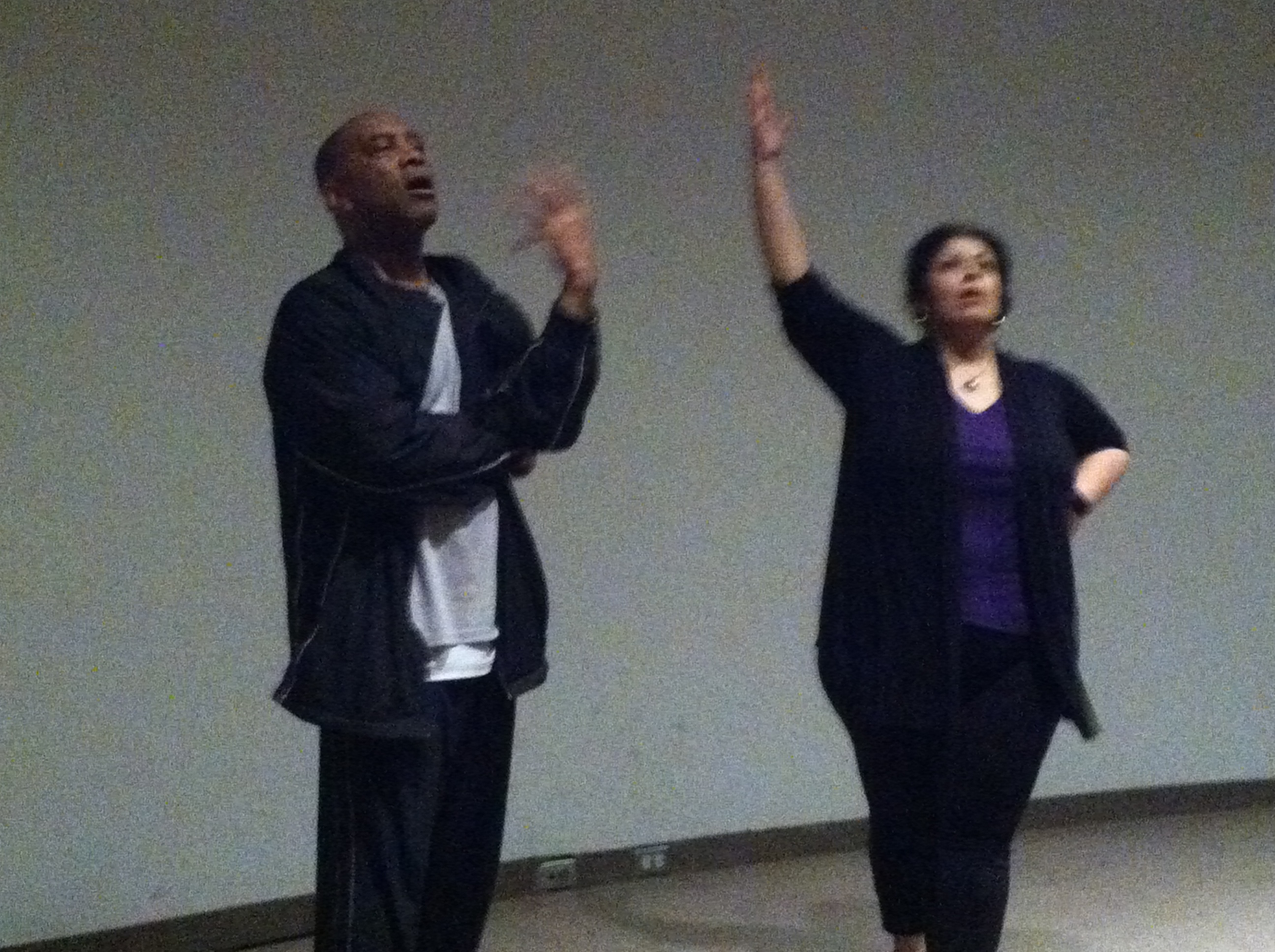
The DMA has had several exciting opportunities to collaborate with the Dallas Theater Center in 2013. Last Monday, two of DTC’s fabulous actors joined our docents to share their perspectives on the Cindy Sherman exhibition. Hassan El-Amin and Christie Vela talked about the ways in which they transform themselves as they prepare to take on new roles. This also helped docents think about Cindy Sherman’s process, which includes using make-up, costumes, and props to alter her appearance for photographs.

Christie and Hassan both mentioned that sometimes it’s the little things that help them figure out who a character is. A pair of glasses, a silly vest, or a wig can make you act differently, and that may be just what’s needed to define a character. They also discussed how a costume can serve as a visual cue to the audience about a character’s personality. That costume tells us something about a character from the first moment we see it–Hassan described it as the “pop and sizzle.”

Actors Hassan El-Amin and Christie Vela lead training for the DMA's docents

Actors Hassan El-Amin and Christie Vela lead training for the DMA’s docents

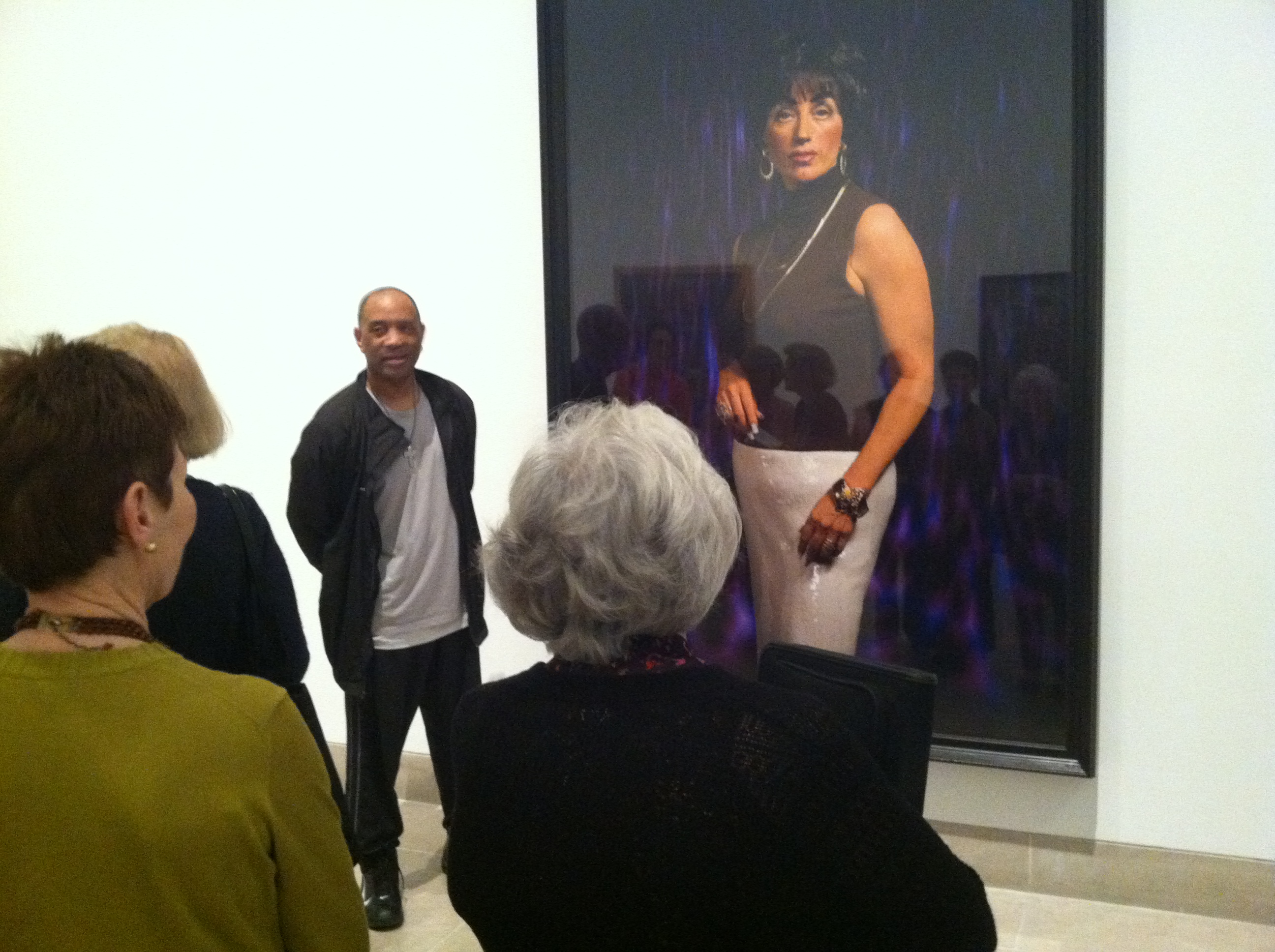
The docents had a lot of questions about how Christie and Hassan mentally prepare for a new role. In a sense, they take on a new persona each time they prepare for a new production. They did say that they have fun inventing a back story for each character–they create little stories that help to explain a character’s personality traits or appearance. Christie described them as “little secrets” that she keeps for herself and maybe doesn’t tell the rest of the cast. The docents had an opportunity to explore this process while looking at Cindy Sherman’s Society Portraits, a series from 2008.

Inventing a persona for one of Cindy Sherman's Society Portraits

Inventing a persona for one of Cindy Sherman’s Society Portraits

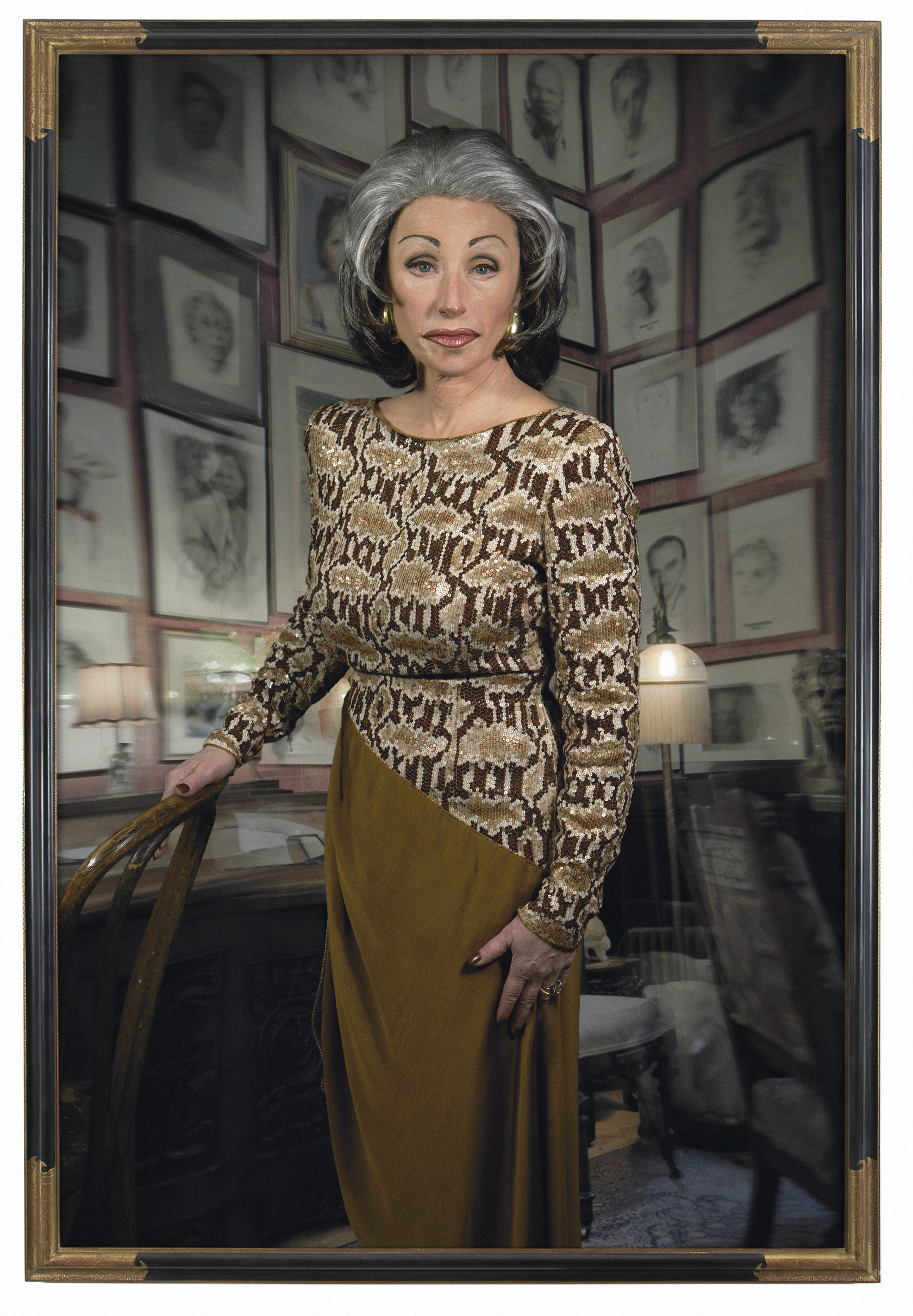
Hassan led the docents through the galleries and asked them to describe the women in the series. Our best conversation was about Untitled #474. The group decided that this looked the most like a real society portrait. This woman has put forth a lot of effort with her outfit and makeup, so we know she cares about her appearance. Perhaps she is a woman who knows a lot of famous people, based on the wall of portraits behind her. They finally decided that she was an old-time movie starlet, and she had just had her third facelift in an effort to keep up her good looks. We were able to create a life for her just by looking deeper into what Cindy Sherman was presenting to us in the photograph.

Cindy Sherman. Untitled #474. 2008. Chromogenic color print, 7' 6 3/4" x 60" (230.5 x 152.4 cm). The Museum of Modern Art, New York. Courtesy the artist and Metro Pictures, New York © 2012 Cindy Sherman

Cindy Sherman. Untitled #474. 2008. Chromogenic color print, 7′ 6 3/4″ x 60″ (230.5 x 152.4 cm). The Museum of Modern Art, New York. Courtesy the artist and Metro Pictures, New York © 2012 Cindy Sherman

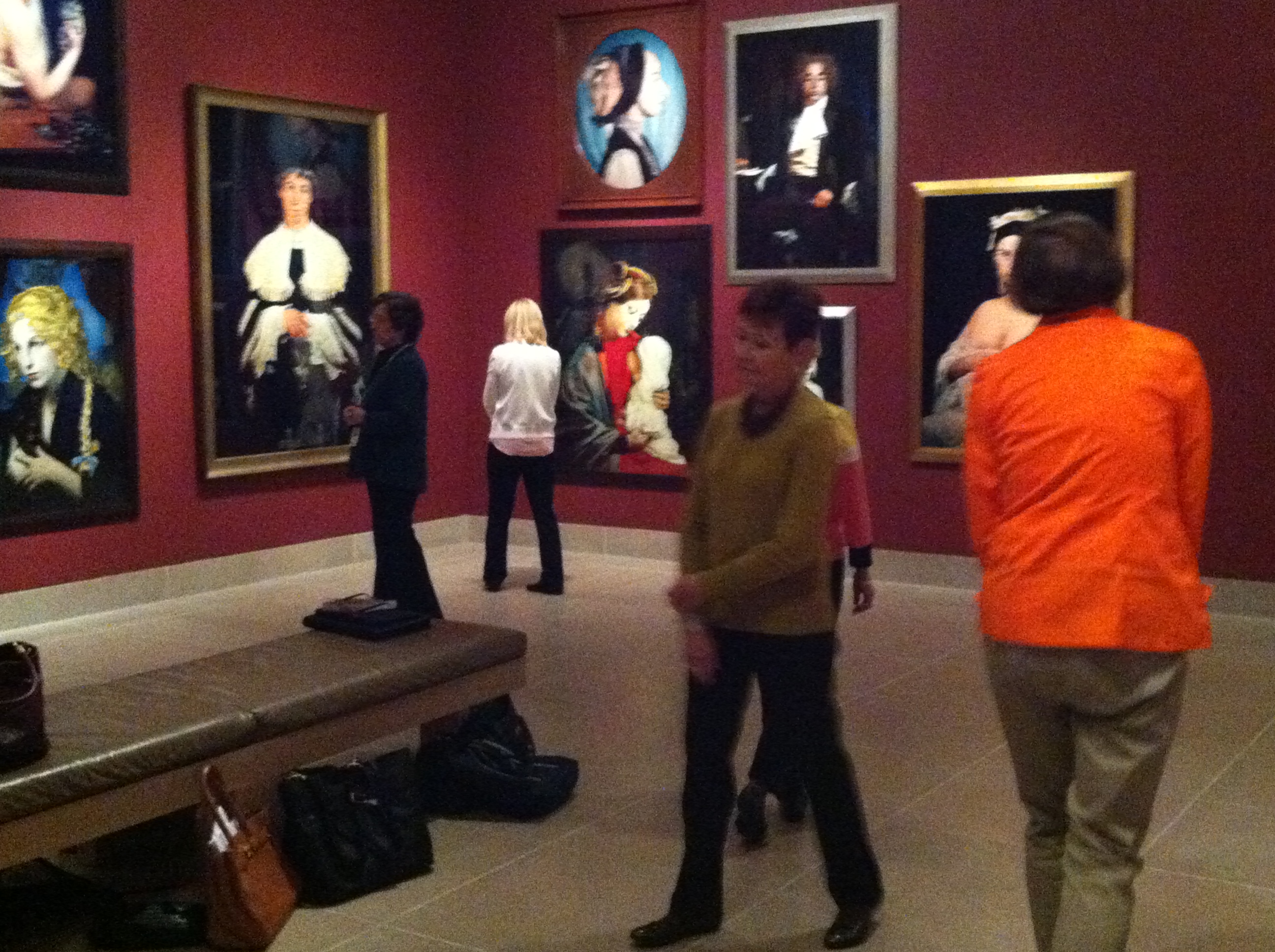
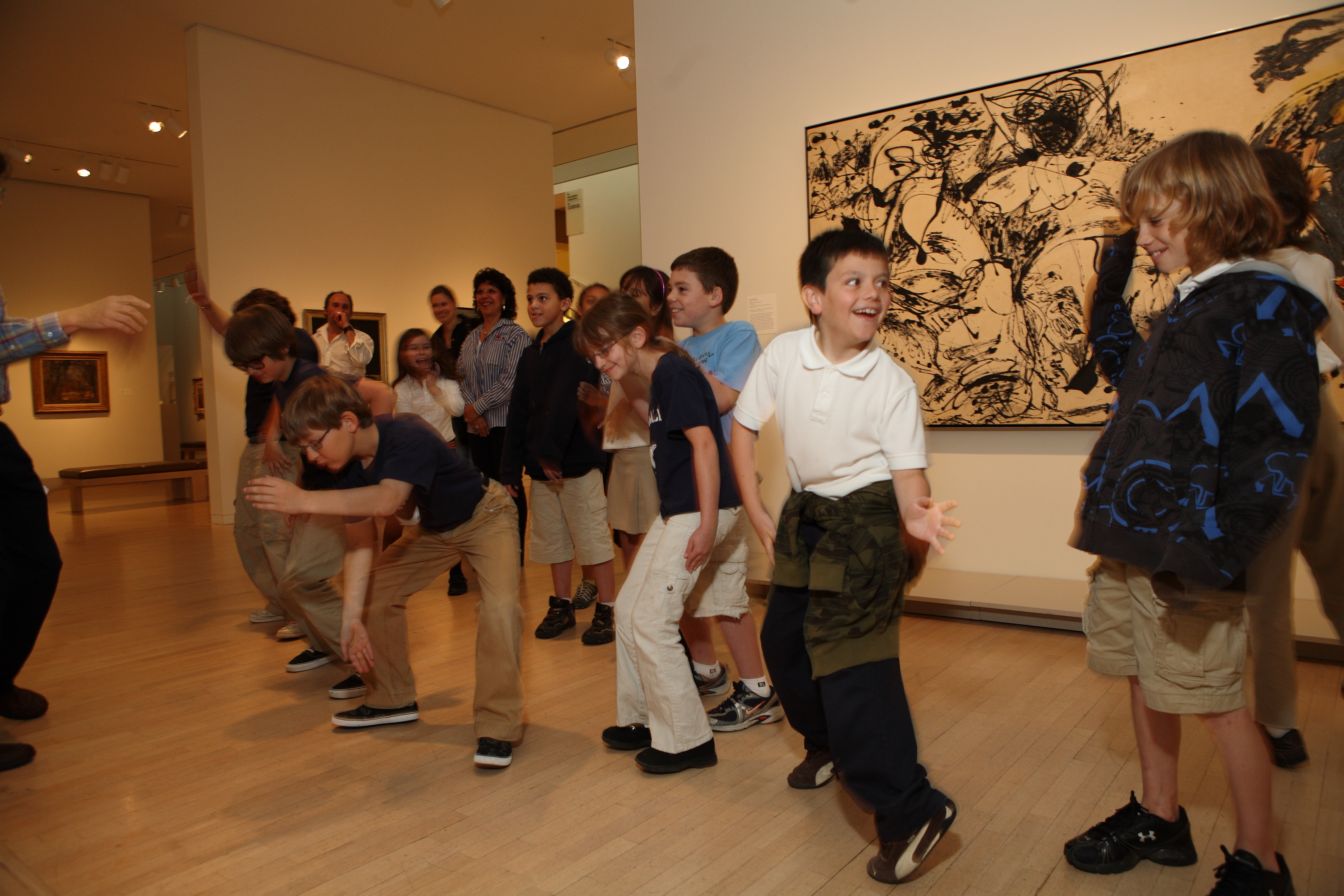
Christie then led the docents in a simple actor exercise. Each docent was asked to select one History Portrait and look at the details that Cindy Sherman has provided for us. Christie pointed out that in theater, everything actors need to know is in the text of a play. We can look at these photographs as a text as well–everything that we need to know is there, and everything has significance. Docents were then asked to think about how this person would walk. Would she lead with her nose, her chest, her hips? Docents walked around the gallery in character, and we tried to guess which photograph they were bringing to life. Once again, the emphasis was on slowing down and looking deeper to discover the hidden traits of these people.

Docents walking like figures from Cindy Sherman's History Portraits

Docents walking like characters from Cindy Sherman’s History Portraits

It was so interesting to hear Hassan and Christie talk about how important the audience is to a performance; I think that’s something a lot of us take for granted. They said as actors, they think of the audience as a partner and they’re interacting with us just as much as they are the other actors on the stage.  It’s interesting to think about how important the viewer is to Cindy Sherman’s photos, too.  Without our interpretations and invented narratives, the photos would just be untitled images in the gallery. Our relationships–either with photos or with actors on stage–help to complete the viewing process and make it fulfilling for everyone involved.

Shannon Karol
Manager of Docent and Teacher Programs
Friday Photos: Emotional Performances

Last month, Shannon Karol and I led a group of K-12 teachers through the Cindy Sherman exhibition.  The goal of this teacher workshop was to encourage educators to explore the artistry of both Cindy Sherman and photography by examining works of art spanning Sherman’s forty year career. We investigated themes of identity and performance as we considered Sherman’s role as photographer, model, art director, make-up artist, and stylist.

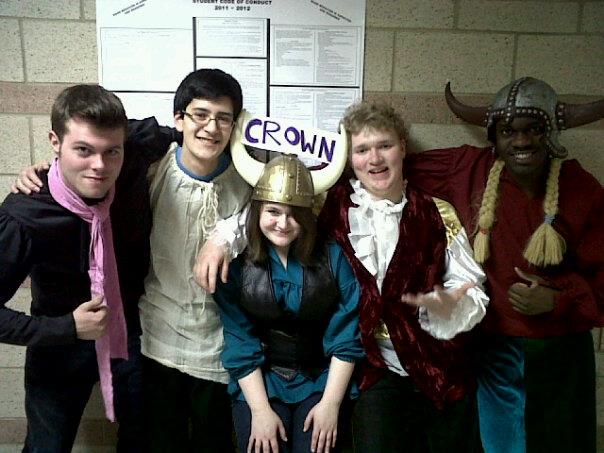
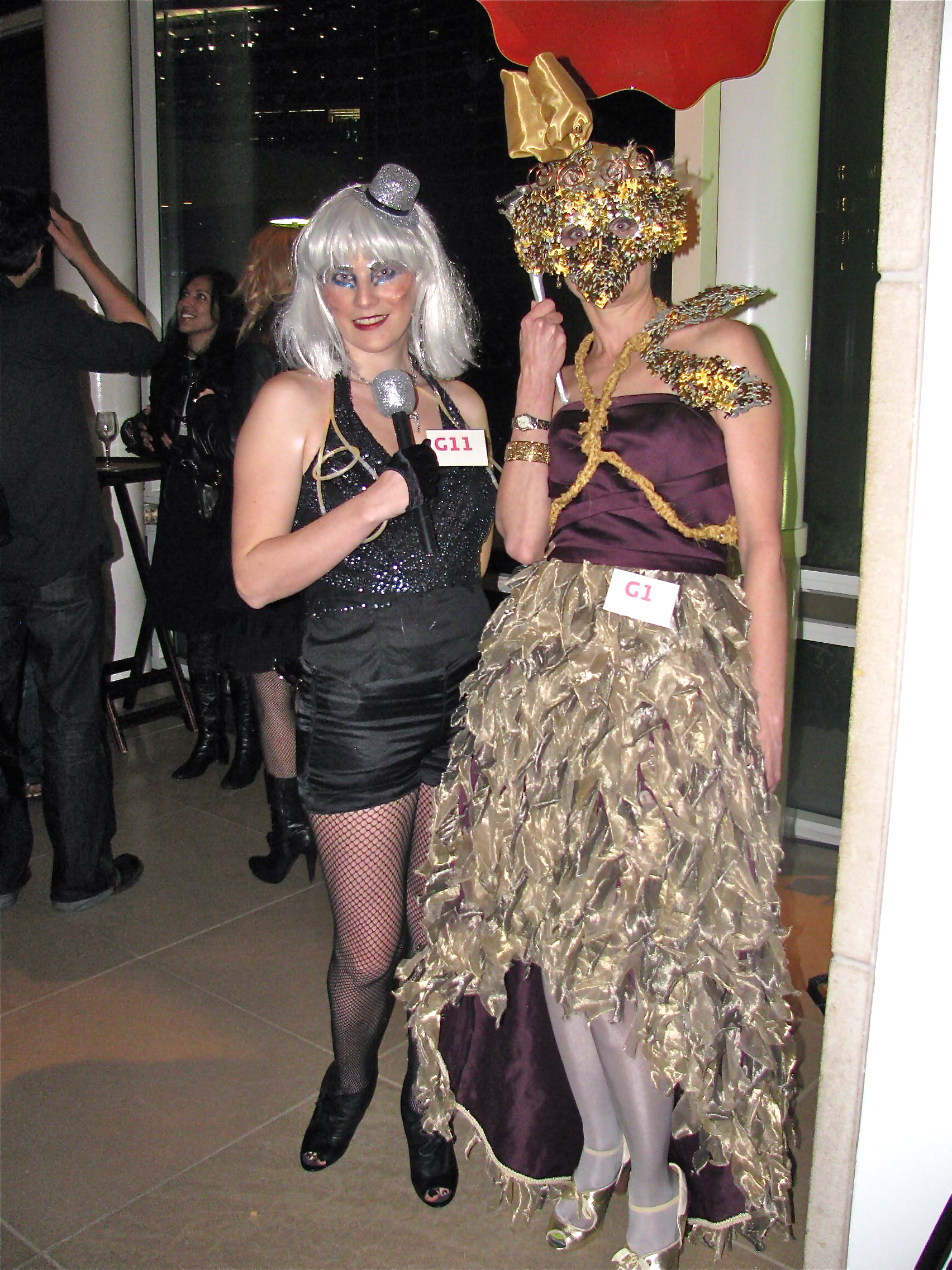
We concluded the workshop with a performance-based activity that shed light on Sherman’s artistic process.  Each teacher was given an emotion card and–without revealing their specific emotion–was asked to direct a partner to convey this emotion through facial expressions, body language and costumes. Everyone had a great time dressing up and playing director–take a look at the entertaining results!

Danielle Schulz
Teaching Specialist

Art and Access at the DMA

April is Autism Awareness Month and autism-focused events, fundraisers, walks, and lectures abound all over the country. While most people have likely heard of autism, Autism Awareness Month highlights the growing need for awareness and promotes ways to support and accept people on the autism spectrum. Chances are that you know of someone with autism, since an autism spectrum disorder occurs in about 1 in 88 individuals.

Autism is different for everyone. Symptoms may include mild challenges for those who are high functioning, while others may have more severe symptoms affecting their daily life. Because it’s difficult to predict the behavior of children with autism, parents can feel intimidated bringing their child to an art museum and tend to be more comfortable participating in specifically designed activities alongside other similar families.

The DMA’s Autism Awareness Family Celebrations, which take place throughout the year, provide a safe, comfortable way for children with autism and their families to experience the Museum together. In the Center for Creative Connections, families can participate in gallery experiences, enjoy an interactive musical performance, explore hands-on activities in the courtyard, relax in a quiet sensory room run by occupational therapy students from Texas Women’s University, and create works of art in the C3 Studio – all before the Museum opens to the public.

We work closely with an autism specialist and Autism Speaks to plan programming for Autism Awareness Family Celebrations, taking into account the specific needs of the audience and the innovative tools available in C3. This invaluable partnership results in the creation of customized social stories about visiting the DMA, which are sent to parents in advance of each event so they can talk through the visit with their child at home.

Many parents note that after attending an Autism Awareness Family Celebration, they feel more comfortable with their child in a museum setting. One such mother, Jennifer Linde, had trouble finding opportunities for her family to be creative together and interact alongside other families. Her goal as a mom is to teach her son with autism, Alex, how to be as independent as possible. Jennifer never considered taking her two children to a museum because of Alex’s behavioral issues. After discovering the Autism Awareness Family Celebrations at the Dallas Museum of Art, Jennifer  now feels differently. The events give her family a wonderful opportunity to allow her son to develop his social skills and explore new interests while not worrying about the reactions of other people, something she says is often an issue for their family. The Linde family attends most Autism Awareness Family Celebrations and Alex has participated in our summer art camp for kids with autism for the past two years.

Alex loves to draw and usually draws machines and robots–never figures–in black and white. At the Autism Awareness Family Celebration in April 2011, Alex participated in sketching in the galleries and then went to our courtyard to experience music by the Dallas Symphony Orchestra, where he saw kids using streamers to move to the music. After the performance, Alex returned to sketching and created another drawing. His mother was overjoyed when she saw what he had drawn: figures all over the paper with streamers–in color! It was a magical morning for the Linde family. Check out photos of Alex below – including his colorful streamer drawing!

We are excited be in our fourth year of offering Autism Awareness Family Celebrations and our third year of offering a summer art camp for kids on the spectrum. Our next event happens this Saturday, April 6, and is themed around music and nature with a special performance by a violin duo from the Dallas Symphony Orchestra. We look forward to seeing families connecting with one another and with works of art while having fun together at the DMA!

Amanda Blake
Head of Family, Access, and School Experiences

Summer Outreach Volunteers Needed

Each summer, the Go van Gogh program visits libraries across the city of Dallas—bringing free, hour-long arts programs to children ages 5-12 and their families.  Our Go van Gogh volunteers lead these programs, helping children to explore, talk about, and make works of art at the libraries.

This year we are excited to be recruiting a new corps of volunteers, Go van Gogh summer outreach volunteers, to help us bring these summer art experiences to the community.  If you love working with children, have a passion for art, and want to give back to the community–we need YOU!

Interested volunteers must attend three training sessions on Friday mornings in late May and early June. Volunteers must be 18 years of age and are asked to commit to presenting two outreach programs a month during June, July, and August.

To request a volunteer application, email Rhiannon Martin or call 214-922-1331. Applications are due Friday, May 10. If you have questions about the Go van Gogh program, email Amy Copeland or call 214-922-1231.

Amy Copeland
Manager of Go van Gogh and Community Teaching Programs


Archives

Categories