Archive for the 'Art & Teaching' Category


What is Accessibility?

The DMA, as well as other museums and cultural institutions across the country, have been tackling this question in the hopes of creating environments that are safe, open, and comfortable for a wide variety of people. Primarily, accessibility is thought of as a physical construct: a museum is deemed accessible if it holds no physical barriers to entry. Ramps, elevators and similar architectural structures are essential components for accessibility, providing individuals with and without mobility issues easy entry into any type of building. Removing physical boundaries is a key first step towards addressing the accessibility question.
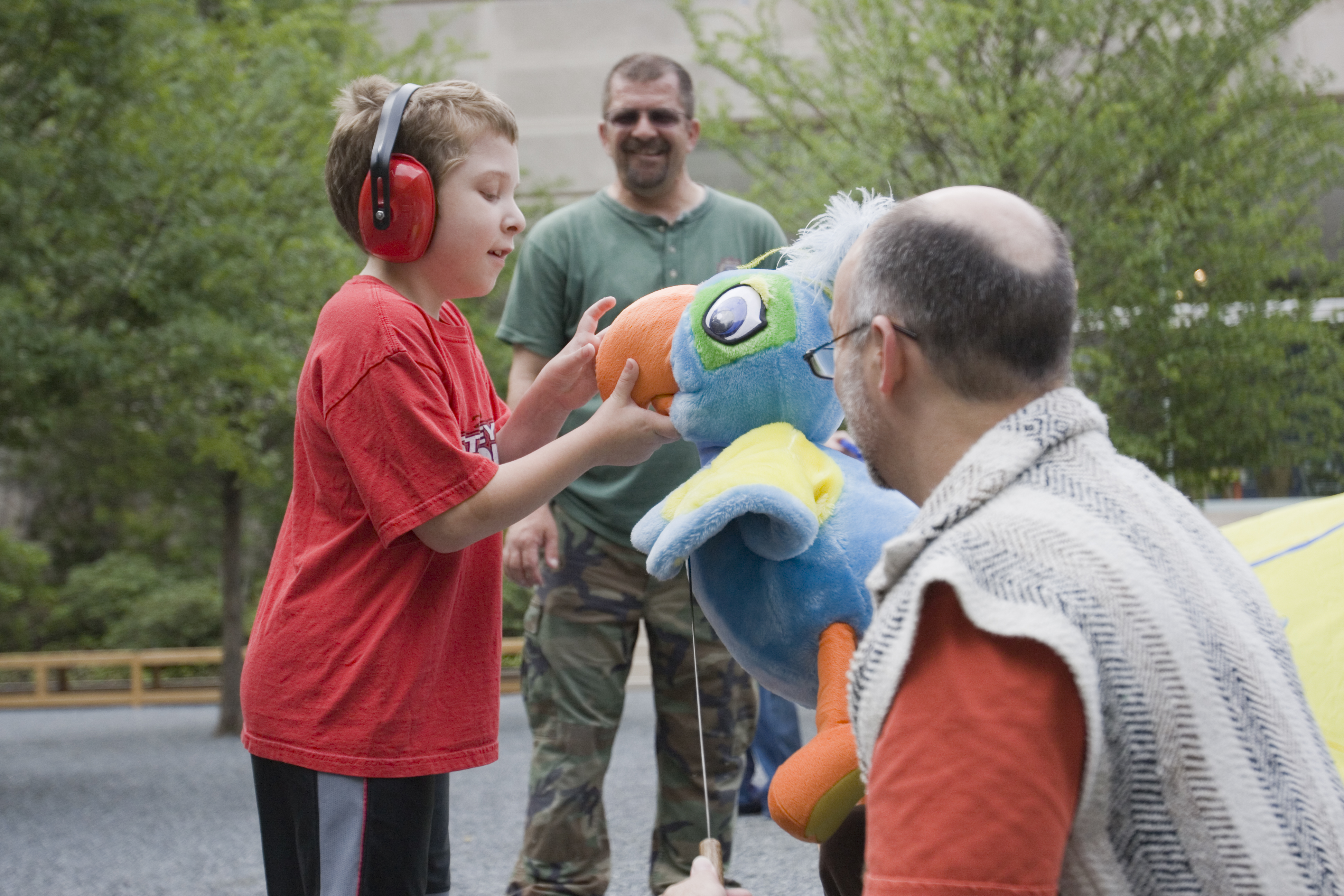
A family participating in an Autism Awareness Family Celebration at the DMA

A family participating in an Autism Awareness Family Celebration at the DMA

But then what? How does accessibility extend inside museum walls? Museums strive to ensure that their collections, programs, and services are accessible to all audiences, often by providing diverse educational programs that cater to visitors of varying abilities. When we think about teaching at the DMA, we think about inclusive experiences that are open to everyone, regardless of a person’s ability. While making learning experiences at the DMA open and accessible to all is important, we also believe that designing individualized experiences for a range of needs is important too. And we hope these special programs raise the awareness that art is for everyone, though some visitors may need to work in different ways to see and enjoy it.
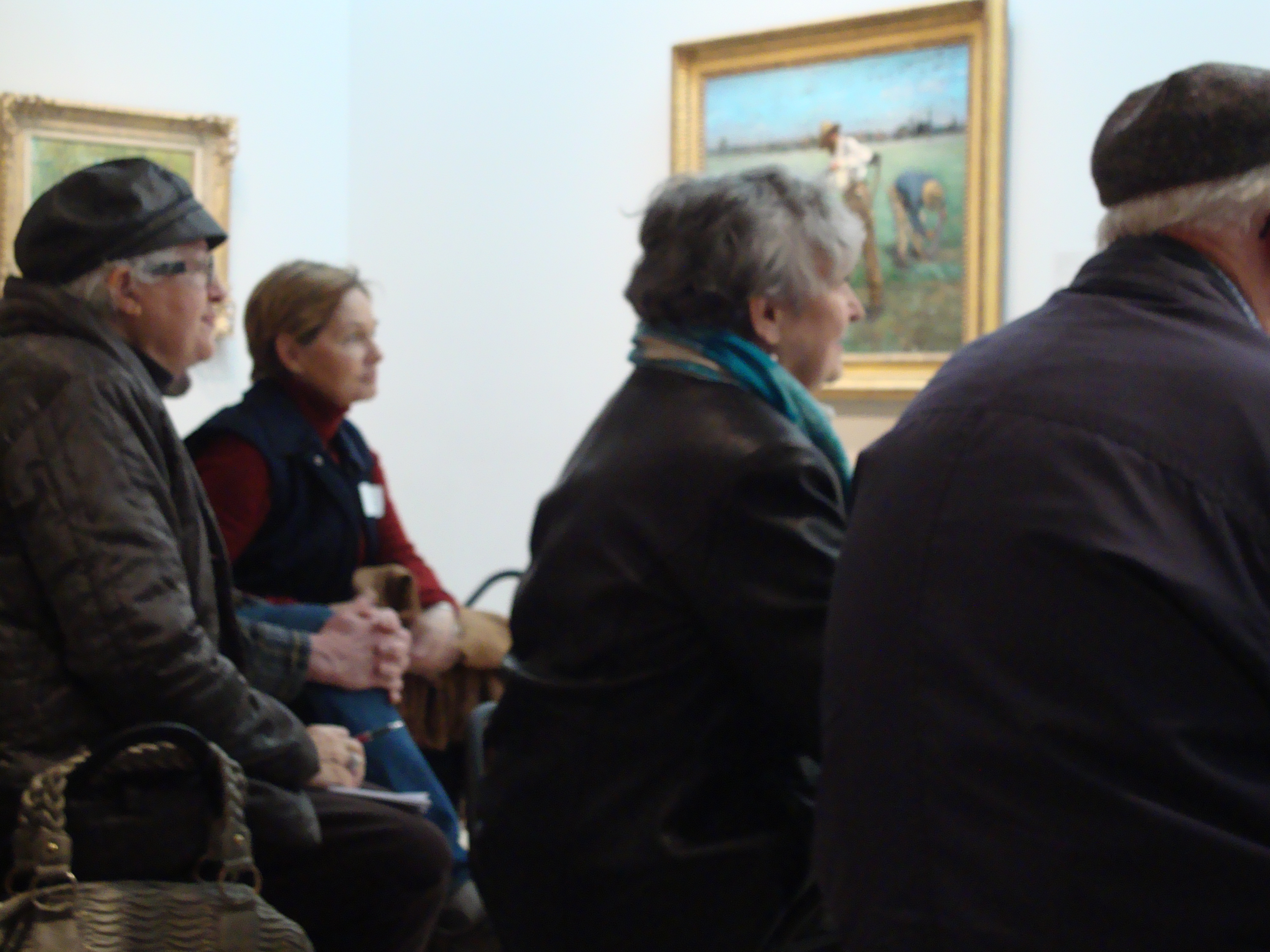
Meaningful Moments participants in the gallery

Meaningful Moments participants in the gallery

Our Access Programs provide these individualized experiences for visitors with special needs. Interactive gallery experiences and hands-on art making opportunities are available for adults with developmental disabilities as part of our partnership with The Arc of Dallas, as well as for adults with dementia and their care partners during our Meaningful Moments monthly program. For families and visitors with autism spectrum disorders, we organize a specialized summer art camp for children as well as Autism Awareness Family Celebrations throughout the year. These multi-sensory programs and events involve tactile opportunities and art-making activities that enable visitors of varying abilities to discover and appreciate artists and their works of art. During the month of October, we participate in Art Beyond Sight Awareness Month and focus on helping visitors enjoy art using senses beyond eyesight.
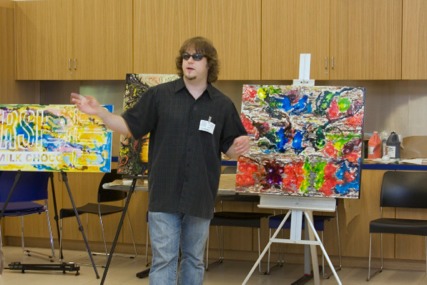
John Bramblitt talking about his works of art to summer campers

Artist John Bramblitt talking about his works of art to summer campers

The DMA is an Art Beyond Sight Partner and is proud to have participated in programming for Art Beyond Sight Awareness Month each October since 2007. Composed of leading institutions in 35 states and 25 countries, Art Beyond Sight Awareness Month is an outreach effort dedicated to promoting art education for people with vision impairment and building an inclusive society with improved access for all. This year, we were excited to expand our offerings to include programs for adults.
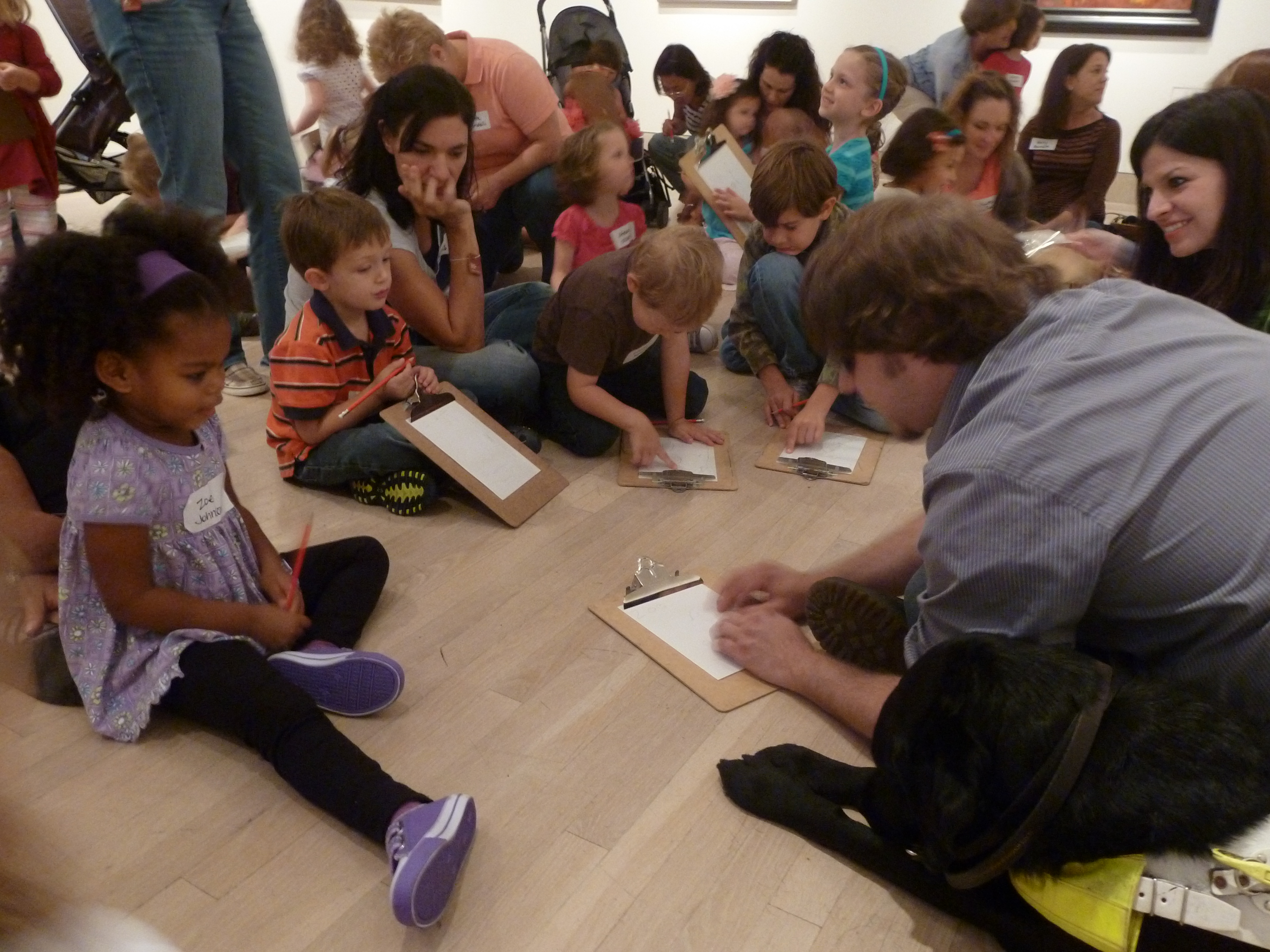
John leading a homeschool class for ABS month in the DMA's galleries

John leading a homeschool class in the galleries

Artist John Bramblitt joined several ABS programs this month to talk about his process as a blind painter. Our October First Tuesday was focused on the senses and the Museum’s youngest visitors had the chance to immerse themselves in a sensory experience in Arturo’s Nest, our space for children under the age of four. John led Studio Creations in early October to kick-off a month of ABS-themed weekend art-making. He also led this month’s Meaningful Moments for visitors with Alzheimer’s disease and he will close our month of experiences by teaching our homeschool class. In our Arturo’s Art and Me class for children aged 3-5, kids got to paint in the dark to experience sightless painting and our Arc participants had the chance to wear blindfolds to paint with their fingers!
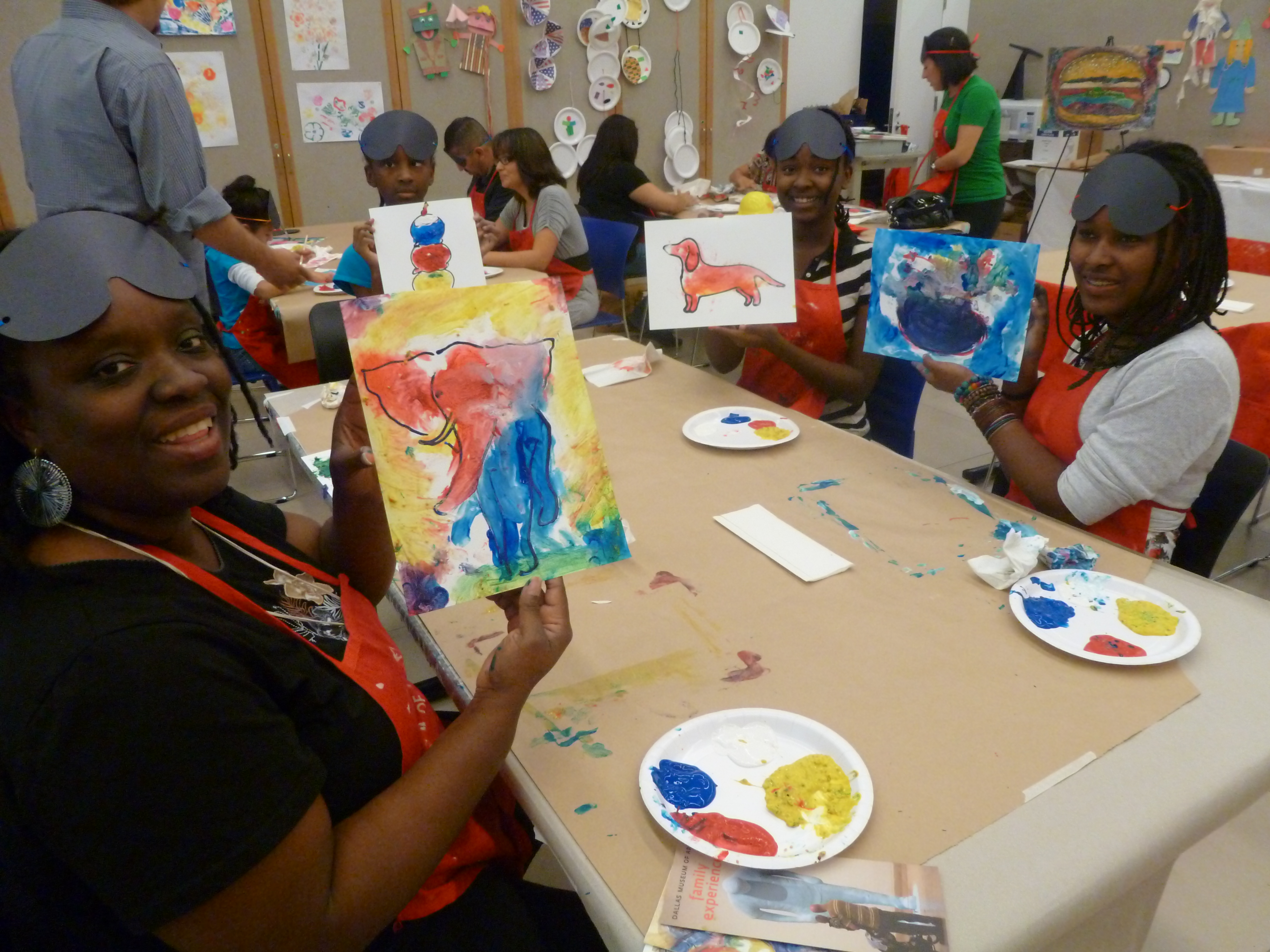
Visitors experience John Bramblitt's Sightless Painting activity

Visitors experience John’s Sightless Painting activity

In addition to these experiences, John led a public gallery talk for adults, during which he shared images of his artwork, talked about his process, and provided insights into his subject matter. And during Late Night last Friday, John teamed up with Stephen Lapthisophon in an artist’s lecture. Both artists have visual impairment, and both approach painting in a completely different way.

John’s process is very detailed and planned out, with various techniques that he employs for raised lines. John uses raised lines to sketch the base of his drawing first – some of the lines are raised for only a short period of time while others remain raised to allow John to feel the contours of his drawing for a longer amount of time. After he drafts his lines, John adds many, many layers of paint. For Stephen on the other hand, art-making is a social art and isn’t highly technical.

Both artists have varied creative inputs as well. Much of John’s artwork is representational and a reflection of an internalization of his sensory world, while Stephen’s artwork is more about the experience of his senses as he is creating (often with food and text) which could be a reflection of society and the associations of his materials. Each artist spoke a bit about his process and then each had the chance to sit down for a conversation together before taking questions from the audience. The artists had the chance to ask questions of one another and it was interesting to hear them contrast their processes and to get their takes on how other senses play a strong role in their own art. This program was an opportunity for visitors with visual impairment to meet and talk with John and Stephen. The lecture ended with a woman who has been blind for five years asking advice from the artists about her own art. Each artist gave her some ideas and encouragement before meeting with her after the lecture to continue the conversation.
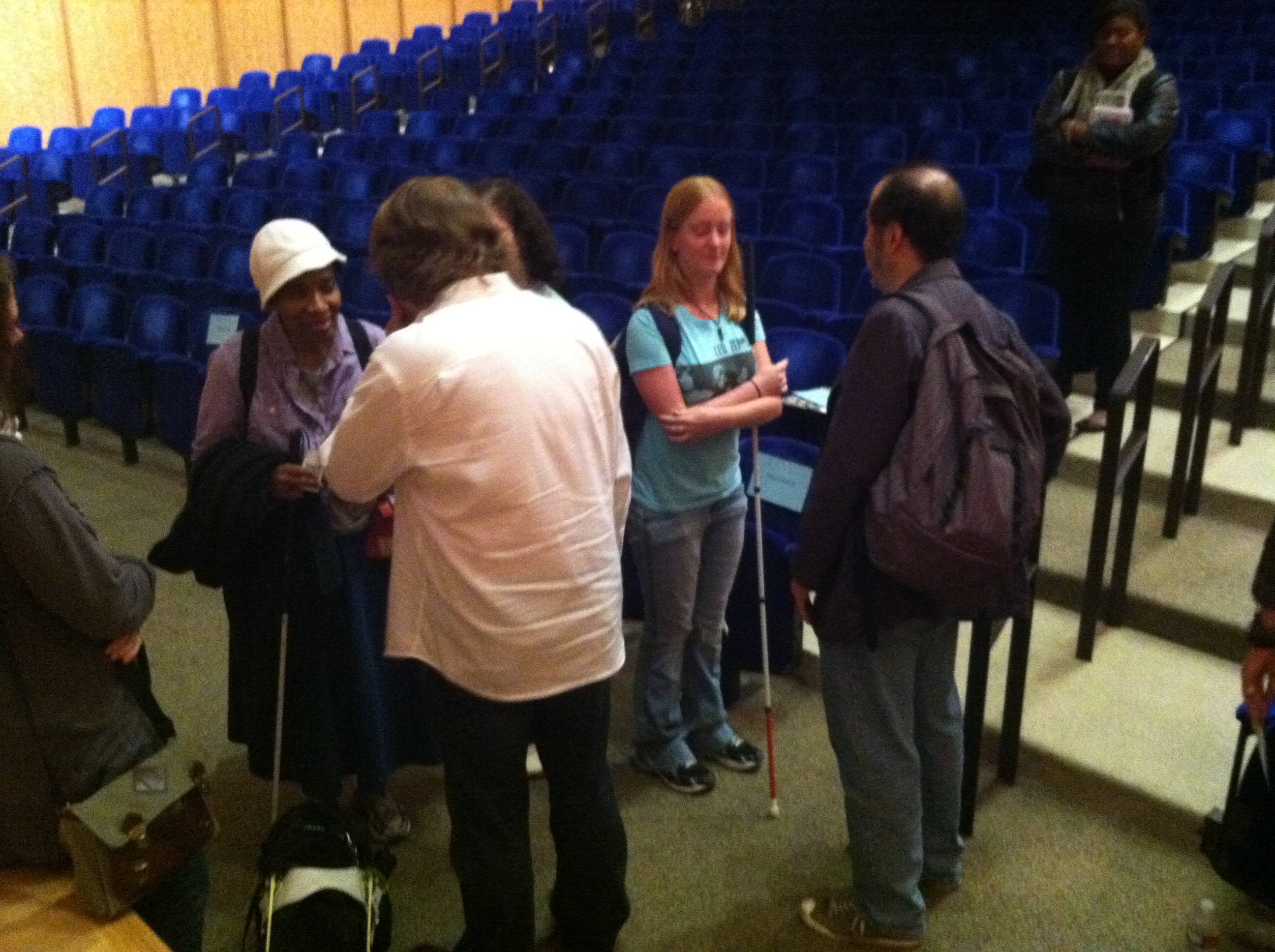
Visitors with vision impairment talking with John Bramblitt and Stephen Lapthisophon after their Late Night artist lecture

Visitors with vision impairment talking with John and Stephen after their Late Night artist lecture

The Access Programs offered by the DMA are essential components in creating welcoming, accessible environments, but there is still more to be done. What other types of resources can and should be made available to visitors?  Let us know what you think and be sure to check back in the future as we delve deeper into this matter.

Danielle Schulz
Teaching Specialist

Amanda Blake
Head of Family, Access, and School Experiences
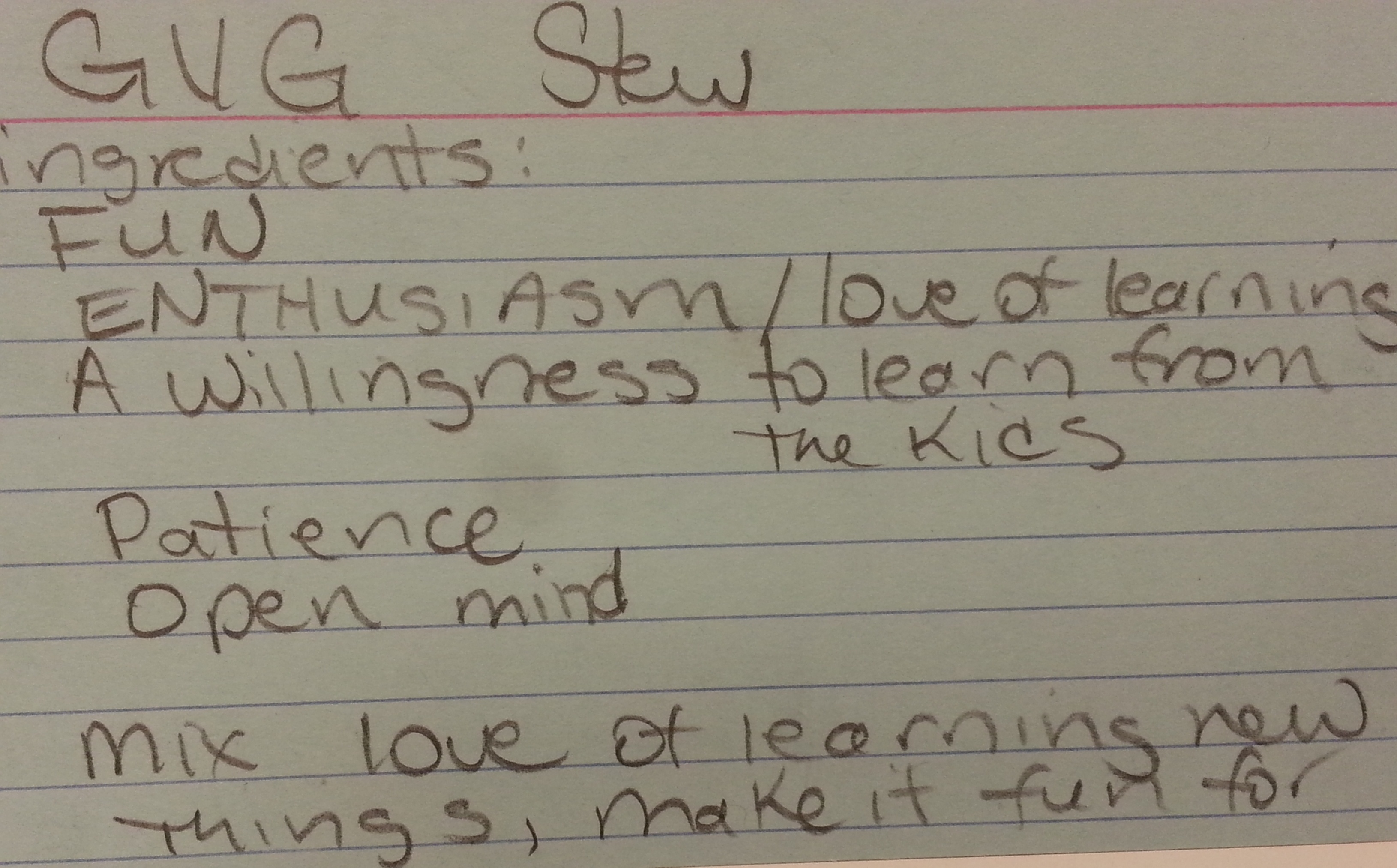
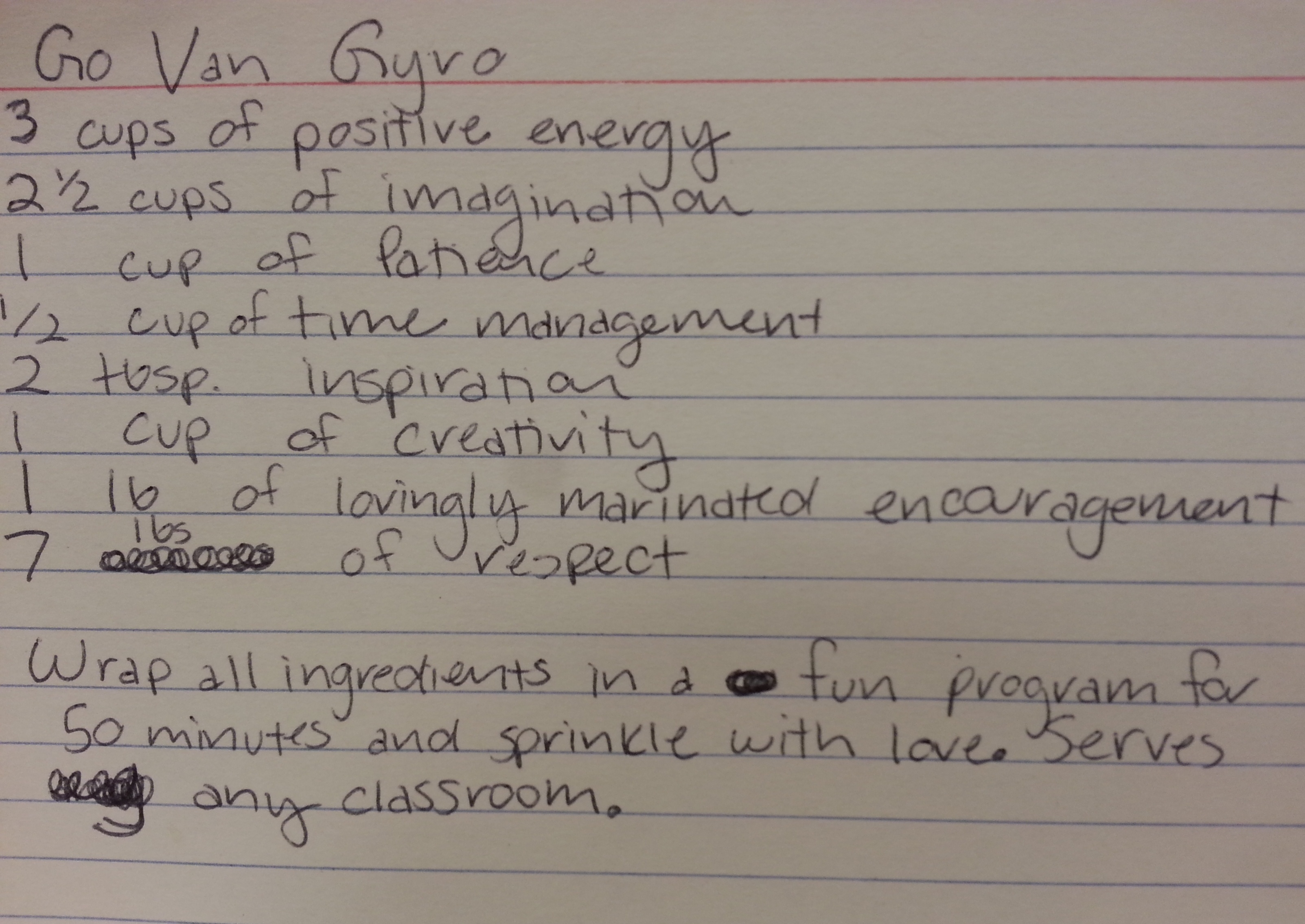
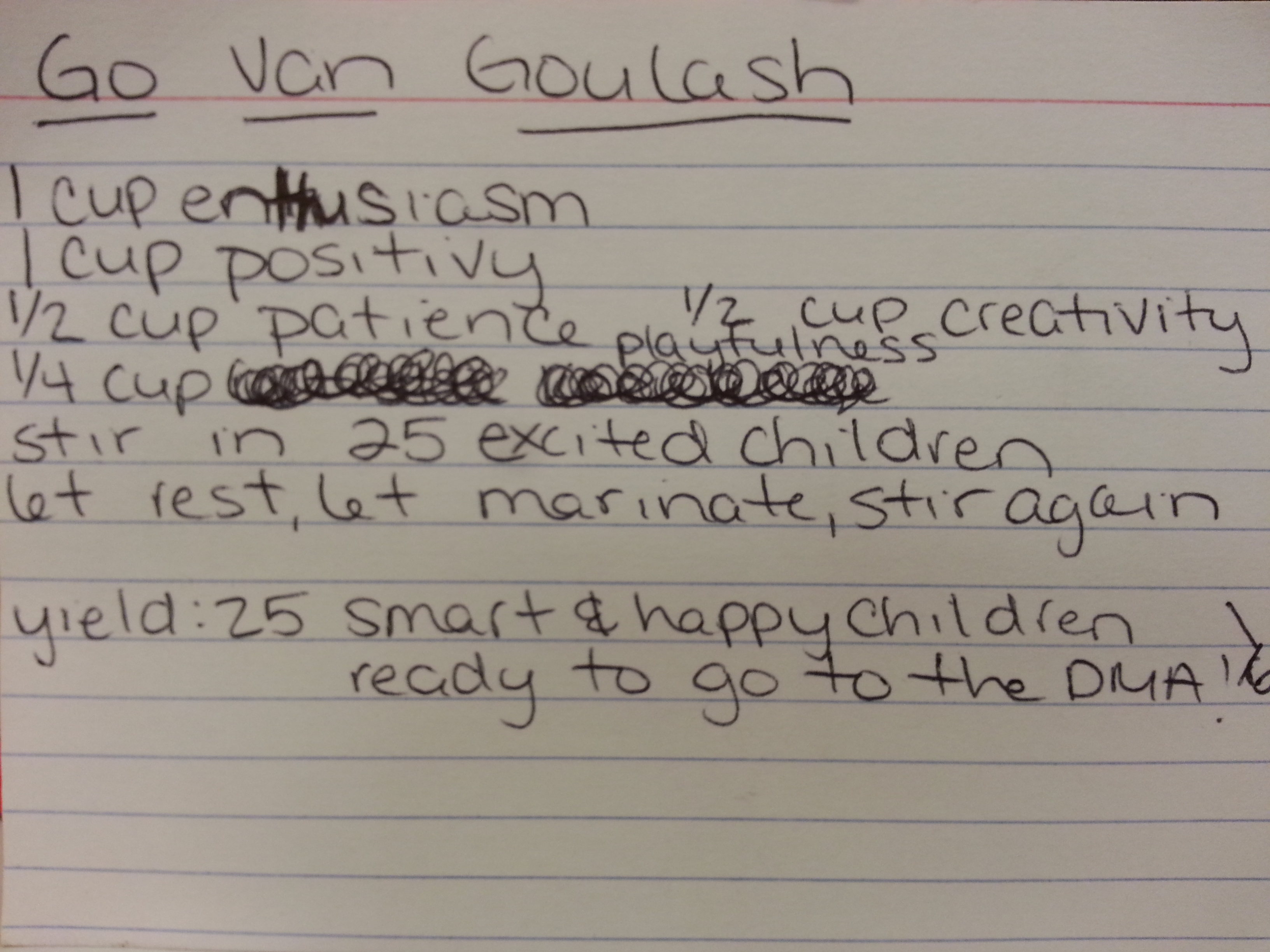
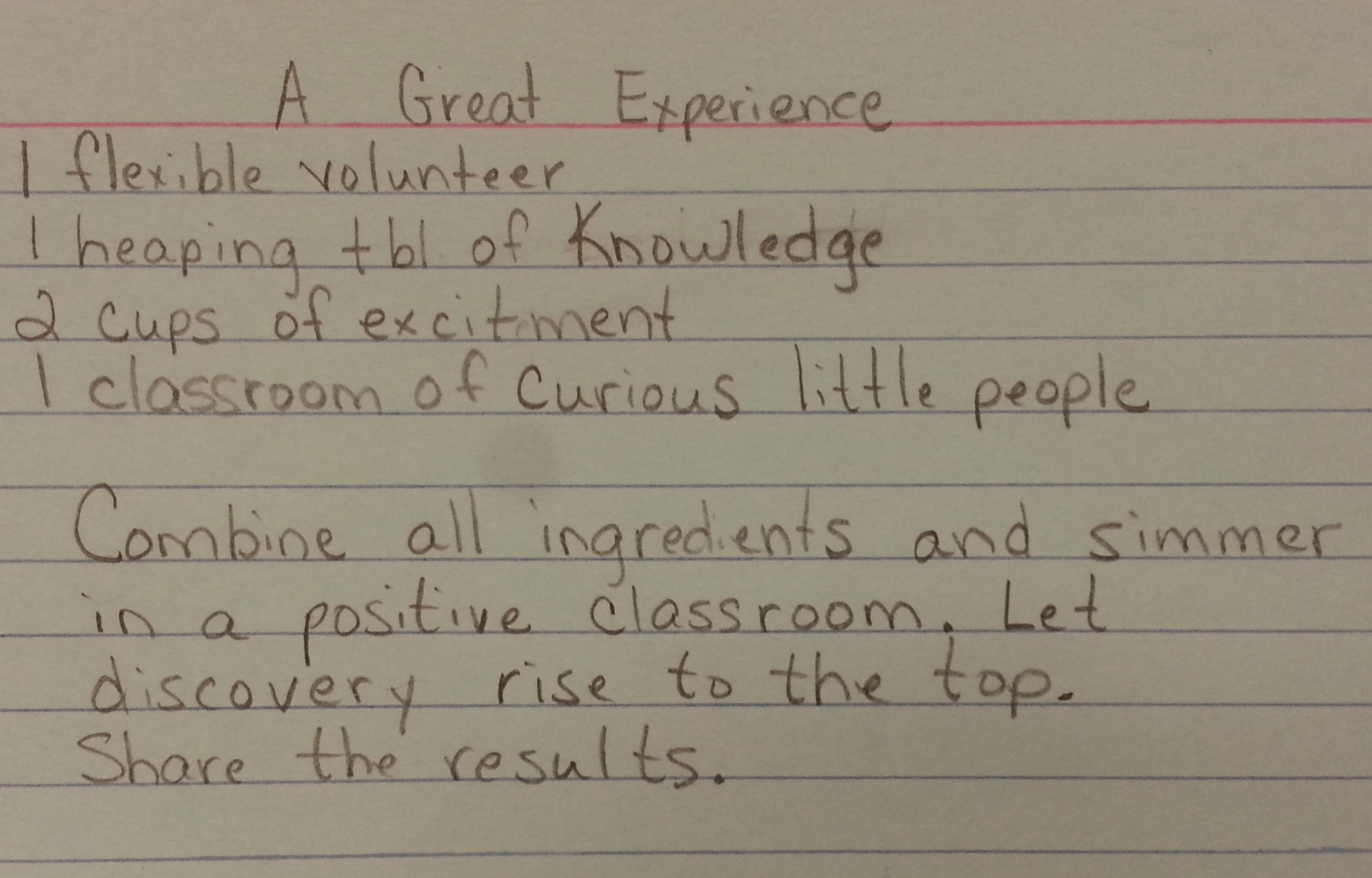
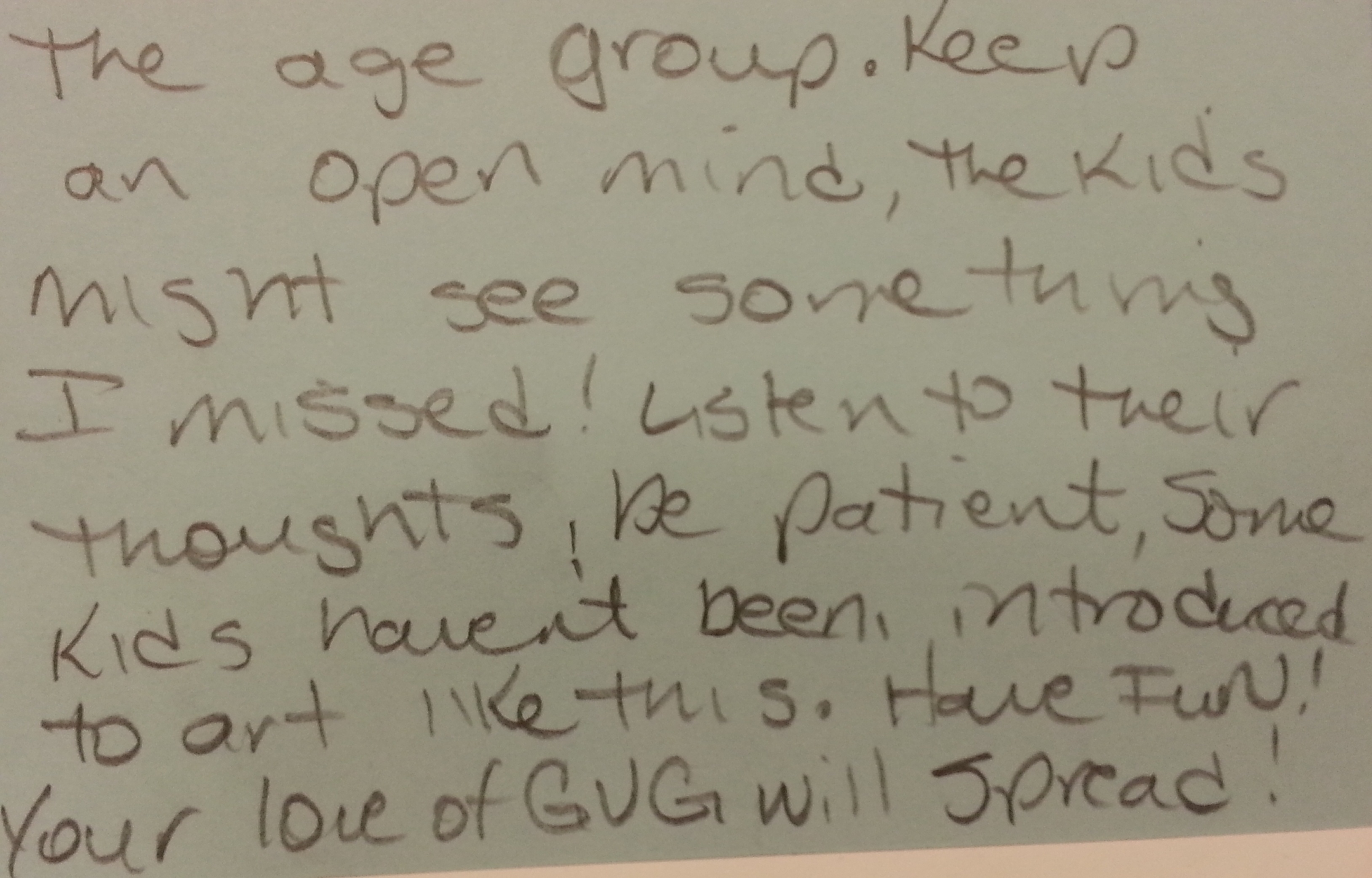
Friday Photos: Go van Goulash and Other Recipes for Great Outreach

Just this morning, Go van Gogh staff wrapped up the last of our Welcome Back training sessions for volunteers—school outreach is officially in full swing!  To get everyone back in a Go van Gogh mindset, we asked our returning volunteers to reflect on classroom teaching experiences by writing a “recipe” for what they think makes a great Go van Gogh program.

We asked to volunteers to:

  • think about the ingredients they’d need for a program to go smoothly,
  • consider the techniques they’d use to combine these ingredients,
  • and articulate what they hoped their efforts would yield.

Fifteen minutes and several cleverly-titled recipes later, we had a great mix of creative, thoughtful, and inspiring methods for teaching to send us off into the classrooms this fall.  See the photos below for tips on how we create the perfect Go van Gyro/Goulash/Stew!

Amy Copeland
Manager of Go van Gogh and Community Teaching Programs

Get Schooled at the DMA

Want to explore the DMA’s collection or special exhibitions before the Museum is open to the public all while earning CPE hours? Our Teacher Workshops give you an opportunity to do just that. Held on select Saturdays from 9:00 am—12:30 pm, K-12 teachers of all disciplines are invited to join us for conversations and interactive gallery experiences. We are hosting three workshops this fall, and the links below take you directly to registration information.

IMG_1500

Provocative Comparisons: A New Approach to Teaching with Artworks
Saturday, October 12

Discover new and unexpected connections across the Museum. Teachers will contemplate thought-provoking cross-cultural comparisons in the DMA’s encyclopedic collection. This workshop presents a new way to frame conversations about artworks, and teachers will gain access to resources and tools they can use in their classroom.

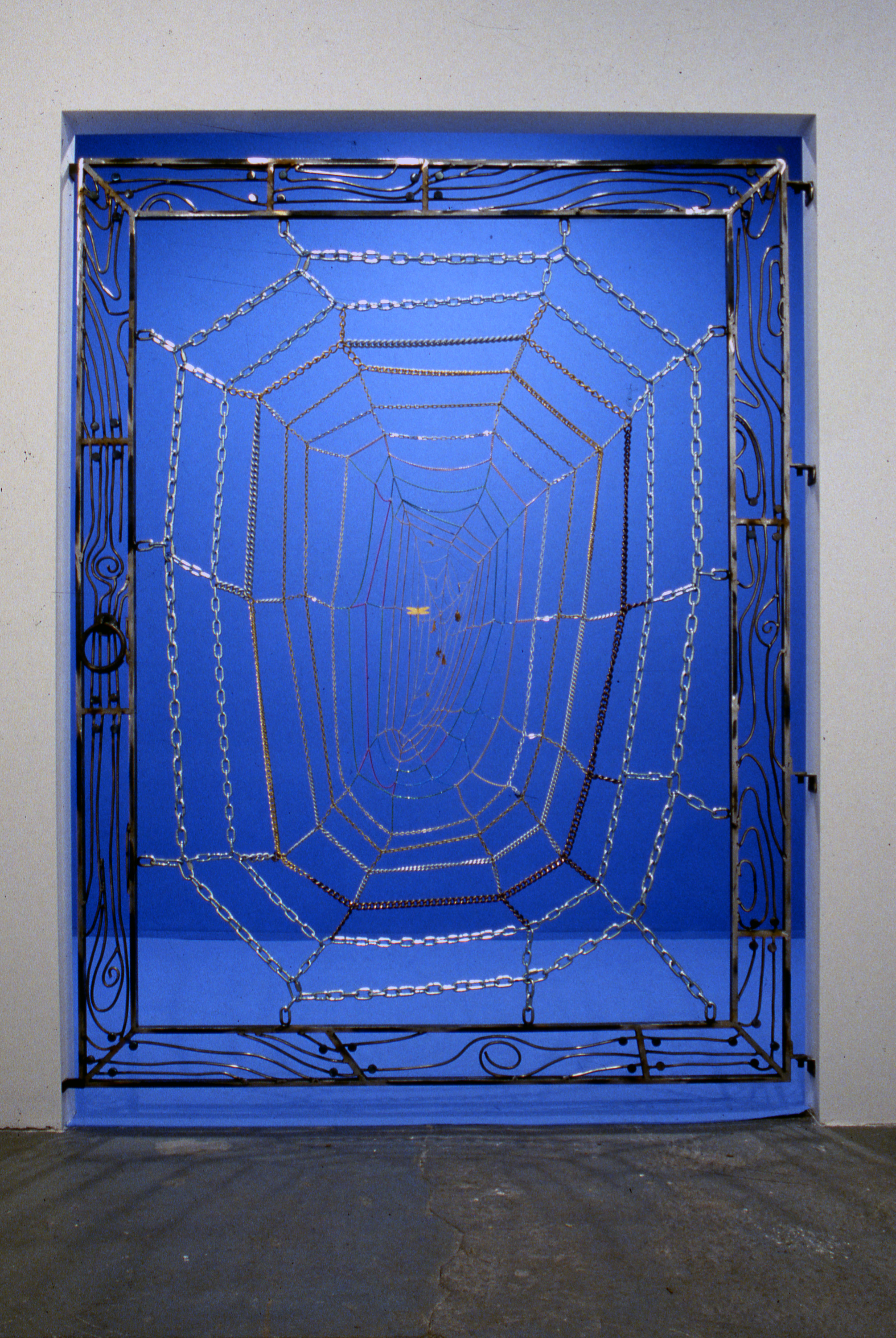
Jim Hodges, Untitled (Gate), 1991, copyright Jim Hodges

Jim Hodges, Untitled (Gate), 1991, © Jim Hodges

Jim Hodges: Give More Than You Take
Saturday, November 2

Contemporary artist Jim Hodges excels at poetic gestures of conceptual art using materials that range from the everyday to the precious. Teachers will have the unique opportunity to explore the ephemeral nature of Hodges’ work. We will also investigate themes of relationships, beauty, and transformation throughout Hodges’ career.

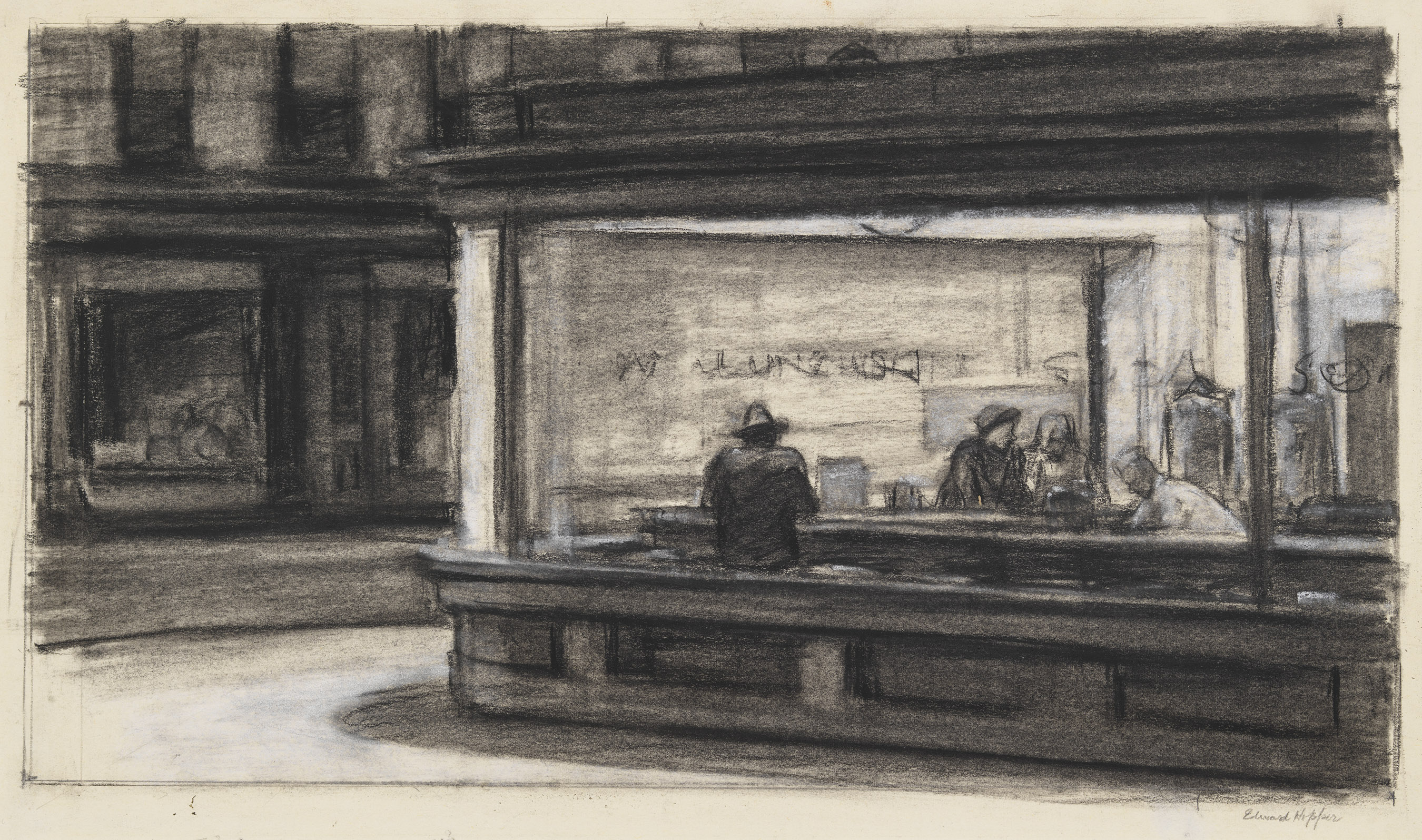
Edward Hopper, Study for Nighthawks, 1942, Whitney Museum of American Art, copyright Heirs of Josephine N. Hopper, licensed by the Whitney Museum of American Art. Digital Image, copyright Whitney Museum of American Art, NY

Edward Hopper, Study for Nighthawks, 1942, Whitney Museum of American Art, © Heirs of Josephine N. Hopper, licensed by the Whitney Museum of American Art. Digital Image, © Whitney Museum of American Art, NY

Hopper Drawing: A Painter’s Process
S
aturday, December 7

Discover the creative process of American artist Edward Hopper. Teachers will participate in gallery dialogues and hands-on art experiences as we explore drawings, watercolors, prints, and paintings from across Hopper’s career. We will also trace the evolution from sketch to finished painting.

Educators Block Party logo

The DMA is also participating in a brand new Educator Block Party, being held in the West End this Thursday, October 3rd, from 4:00-8:00 p.m. Teachers of all disciplines are invited to stop by The Sixth Floor Museum, The Old Red Museum, the Dallas Holocaust Museum, and the Perot Museum of Nature and Science to learn more about the different cultural organizations in Dallas county. Each organization will have a booth where you can learn about field trips, outreach programs, and even more teacher workshops. Admission to enter the Educator Block party is FREE, but you must bring a school ID with you to be able to participate. We hope you’ll stop by and say hello!

Shannon Karol
Manager of Docent and Teacher Programs

Teacher Resources: Resourceful Recycling

Many educators have the gift of recycling materials into wonderful creations. If they do not already possess this genius, they quickly learn how to be resourceful with what they have around them. In C3, we defy all resource limitations when creating workshops and programming. Check out how we up-cycle materials in some of our hottest programs. I hope it inspires you!

Late Night Creativity Challenge

Creativity Challenges occur once a month on Late Night at the DMA. In these challenges, teams compete against each other using random materials to create an original work of art inspired by the collection. I have never once purchased materials for this program—all the creations come from leftovers and odd materials I find around the C3 Art Studio and my own personal closet.

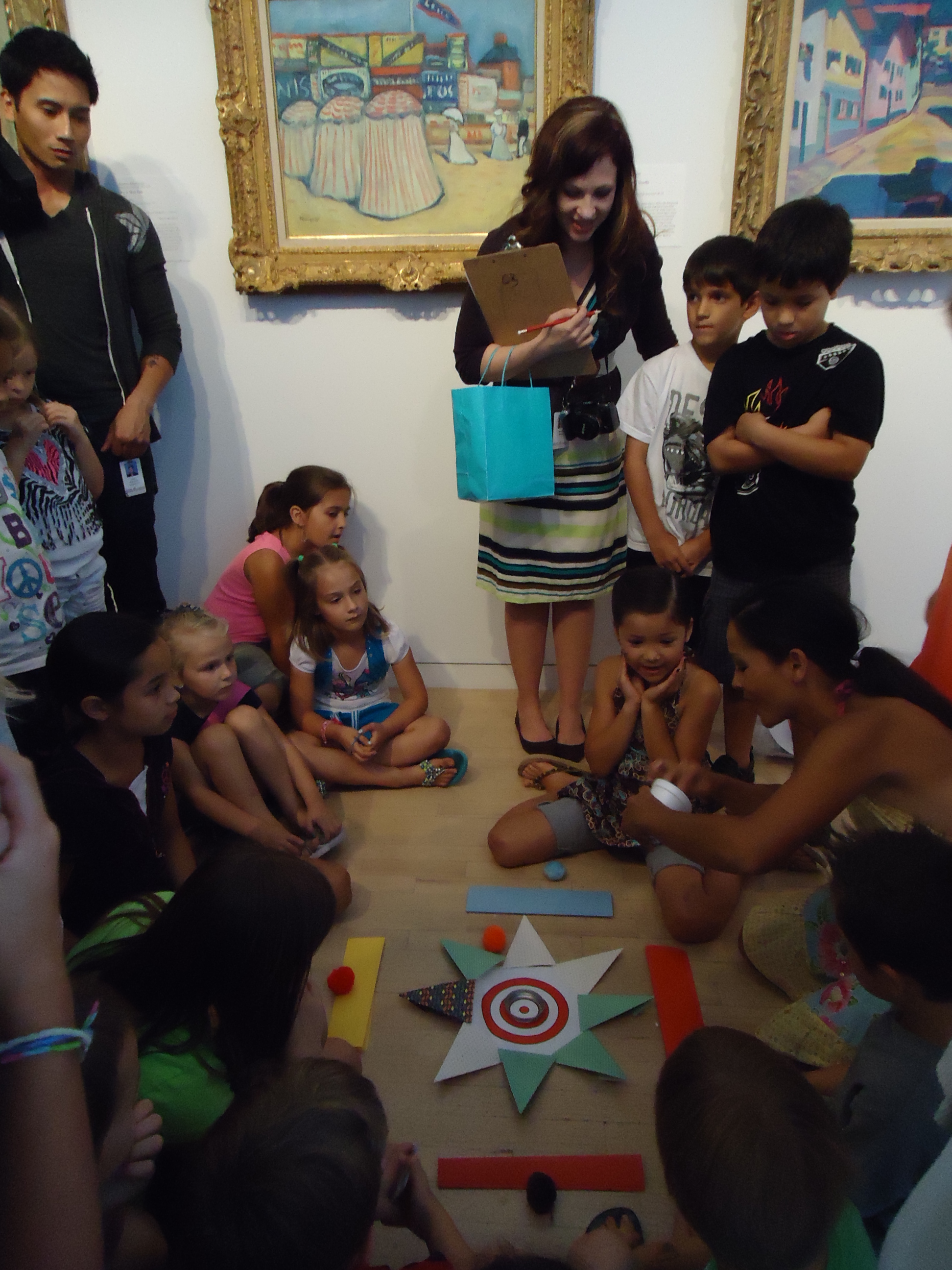
Visitors celebrate the summer by creating games inspired by the collection.

Visitors celebrate the summer by creating games inspired by the collection.

Materials used: cups, scraps of paper, and pom pom balls

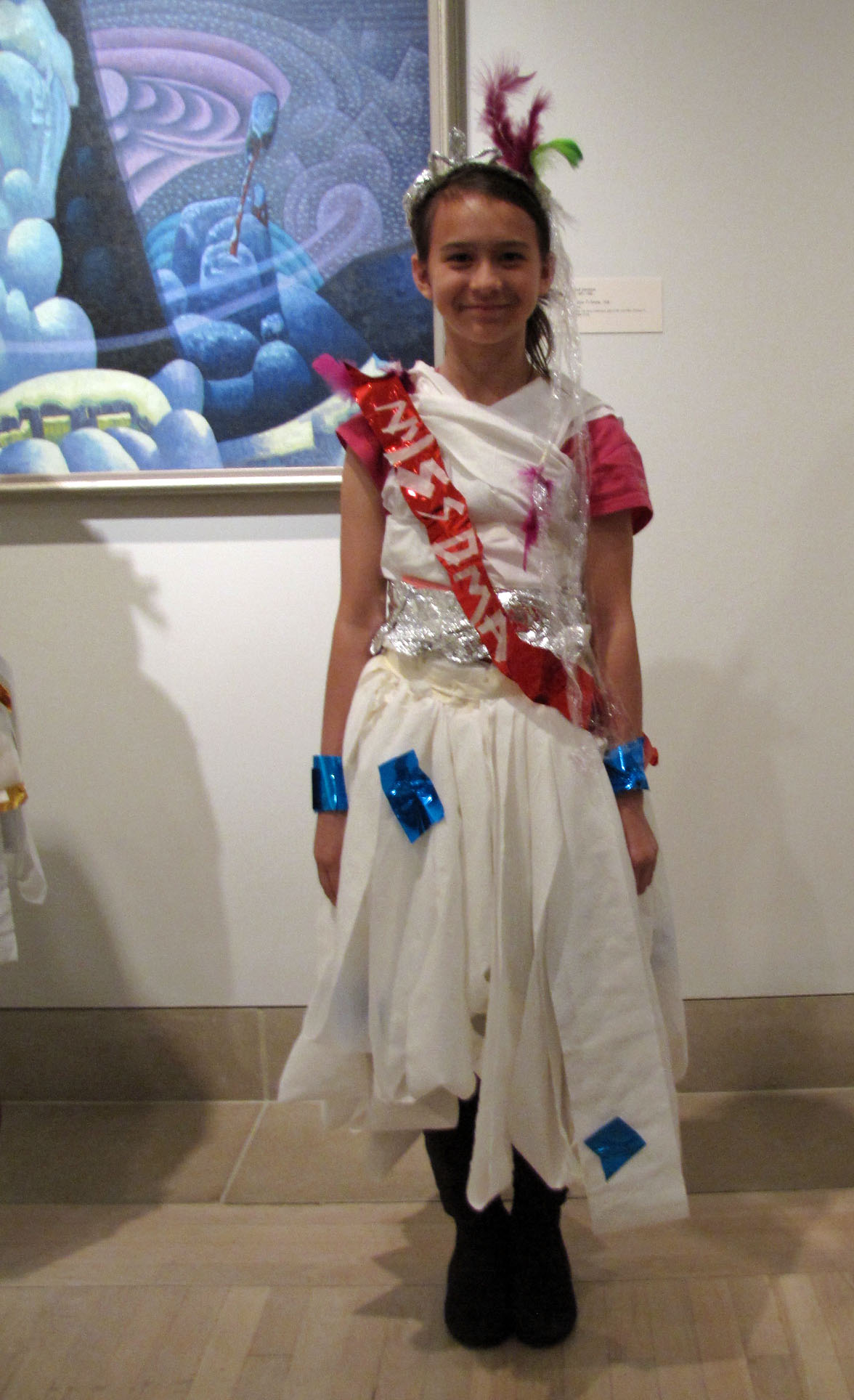
The first Miss America pageant happened in the 1920's which was the focus of the DMA's special exhibition Youth and Beauty. Visitors had to walk the stage in their gowns and participate in a question and answer portion to become the next Miss DMA.

Visitors create gowns to become the next Miss DMA in conjunction with a special exhibition.

Materials used: toilet paper from the DMA Operations team, tape, cling wrap, and blue reflective paper

C3 Adult Workshops

The Open Studio, C3 Artistic Encounters, and Think Creatively allow adults to experience art in new ways.  These workshops are led by staff or local contemporary artists, who share the creative process and lead visitors through an art making experience.

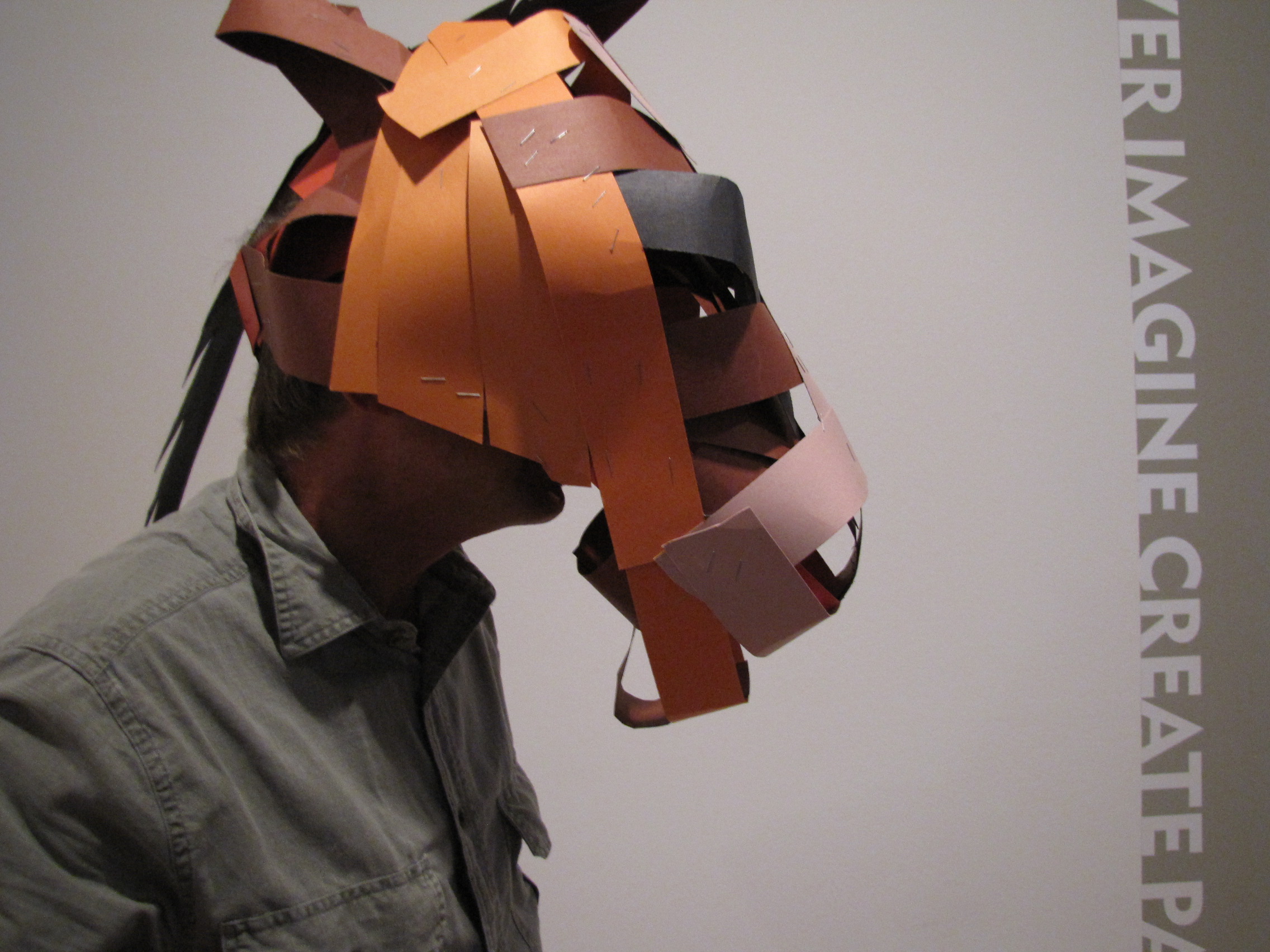
Alternate identities

Alternate identities workshop.

Materials used: rail board and staples

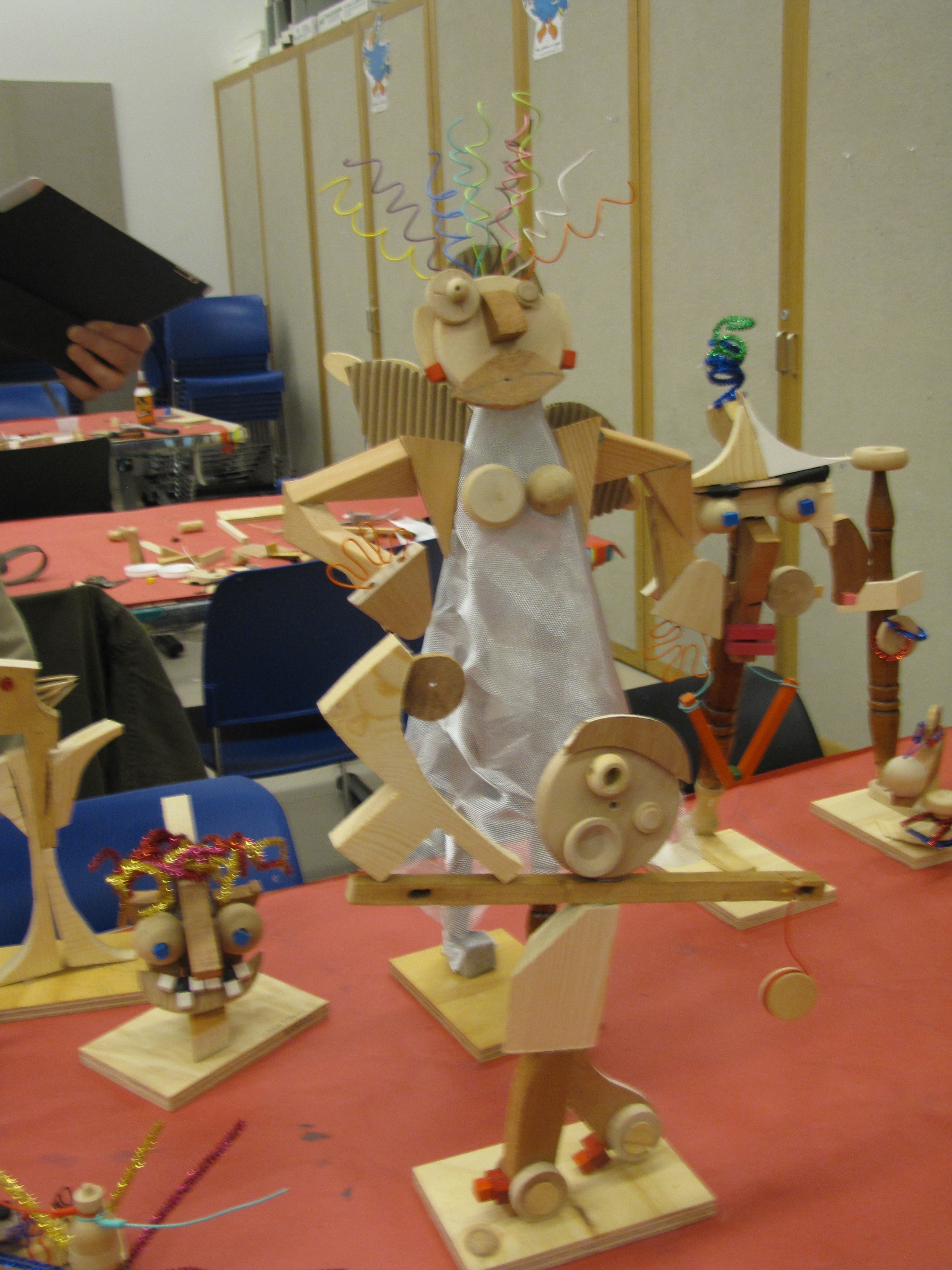
Self-Portraits!

Guest artist Martin Delabano showed what can be created with scraps of wood.

Materials used: wood, hot glue, beads and pipe cleaners

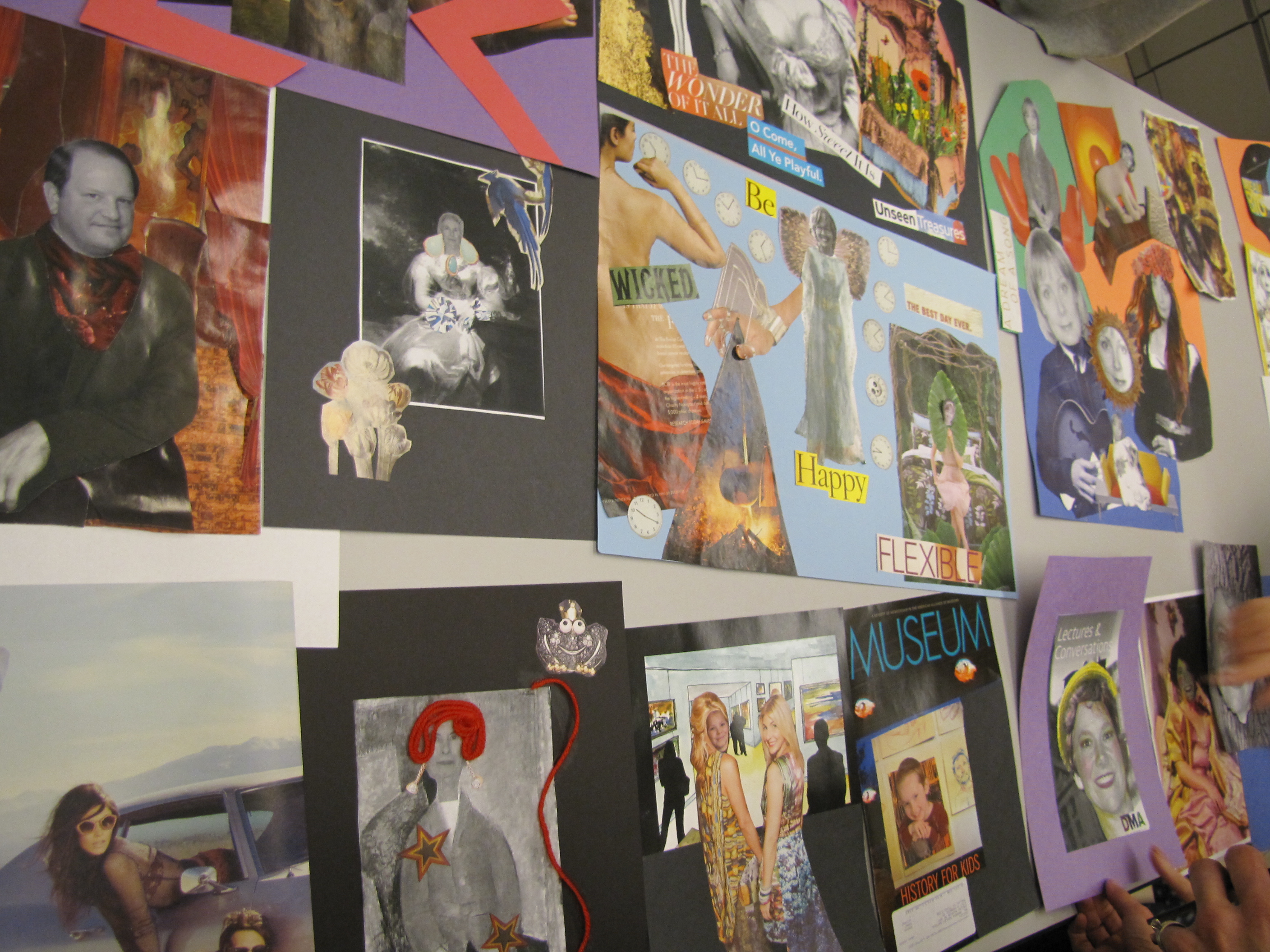
Collage workshop with guest artist Margaret Meehan.

Collage workshop with guest artist Margaret Meehan.

Materials used: Magazines, card stock, and yarn

Urban Armor

Our teens join us for monthly Urban Armor workshops where we take a closer look at the Museum’s collection and then create original works of art using advanced techniques in the Tech Lab.

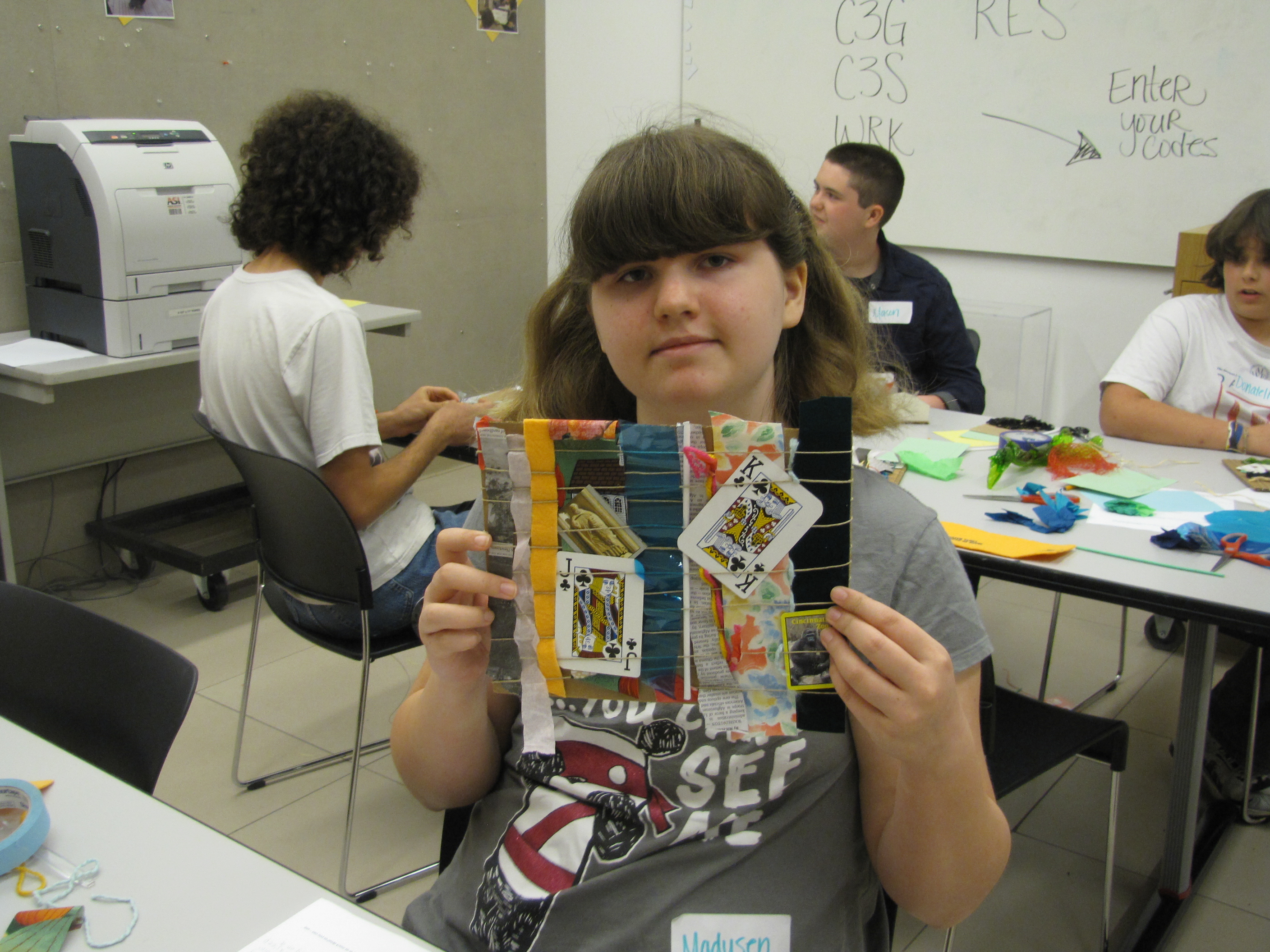
Conceptual Weaving project where materials were chosen to represent a certain thought. Our teen's word  was playful.

Conceptual Weaving project where materials were chosen to represent a certain thought. This teen’s word was playful.

Materials used: cardboard, assorted collage materials, twine

Studio Creations

Visitors can discover a different activity each month by exploring how artists see the world through the our collection. After time looking at works of art in the gallery, visitors create their own art project in our studio every Saturday and Sunday.

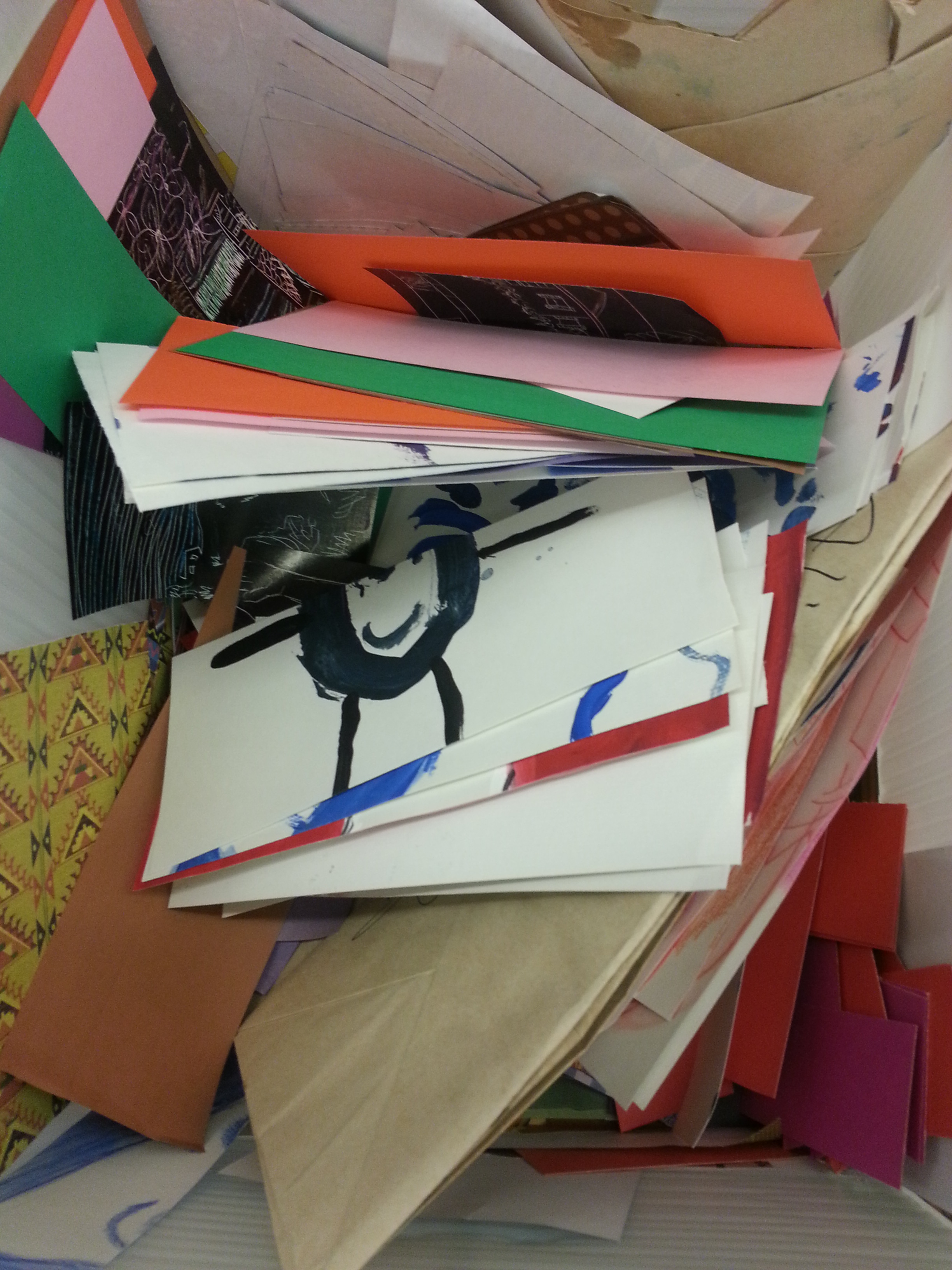
What happens when you leave your artwork behind?

What happens when you leave your artwork behind?

You guessed it--Found Object Sculptures!

You guessed it–Found Object Sculptures!

Materials used: Old and abandoned art work, cardboard, and assorted collage materials

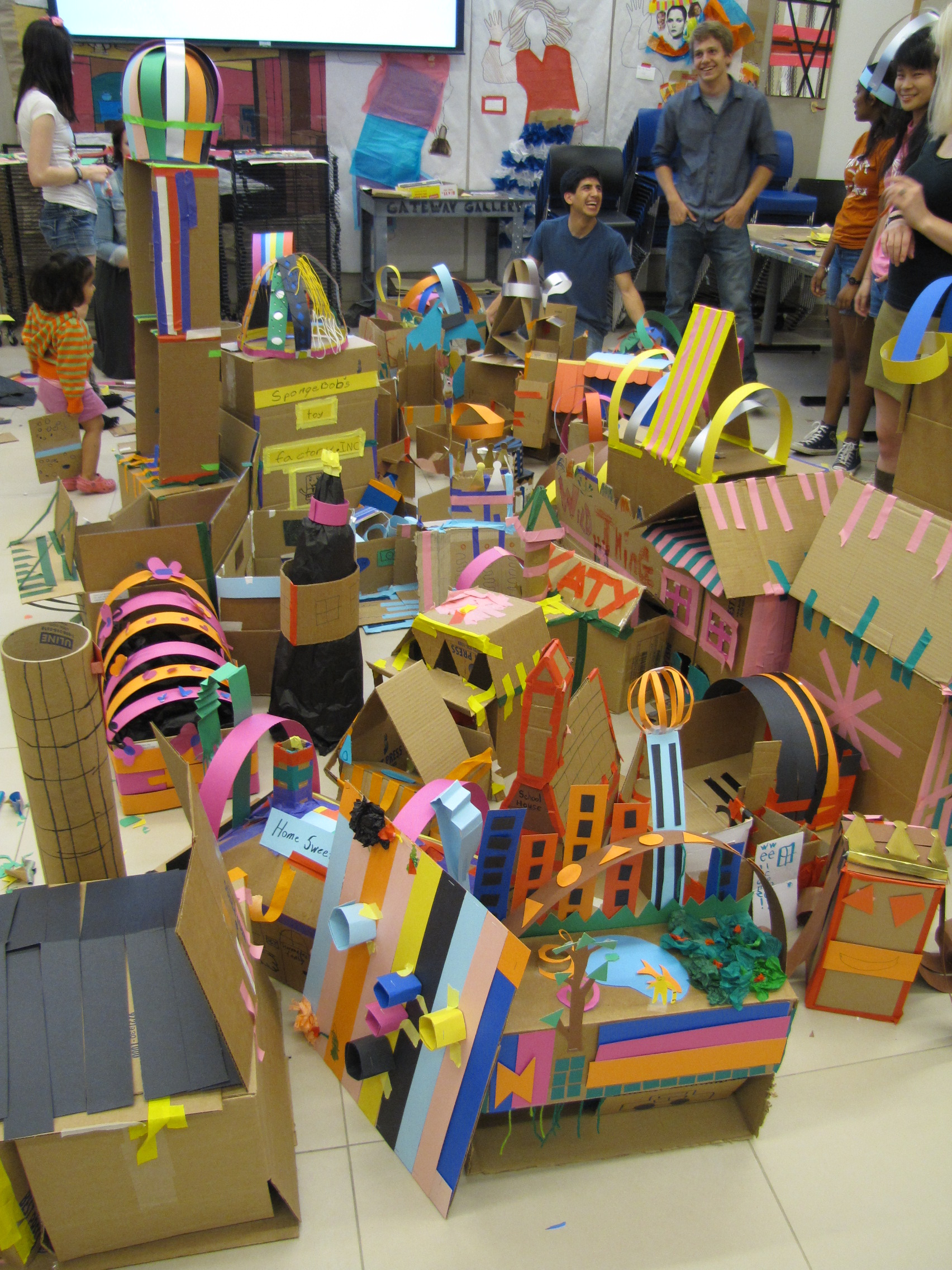
Life size recreation of our city!

Life size recreation of our city!

Materials used: boxes, paper, and tape

The Art Spot

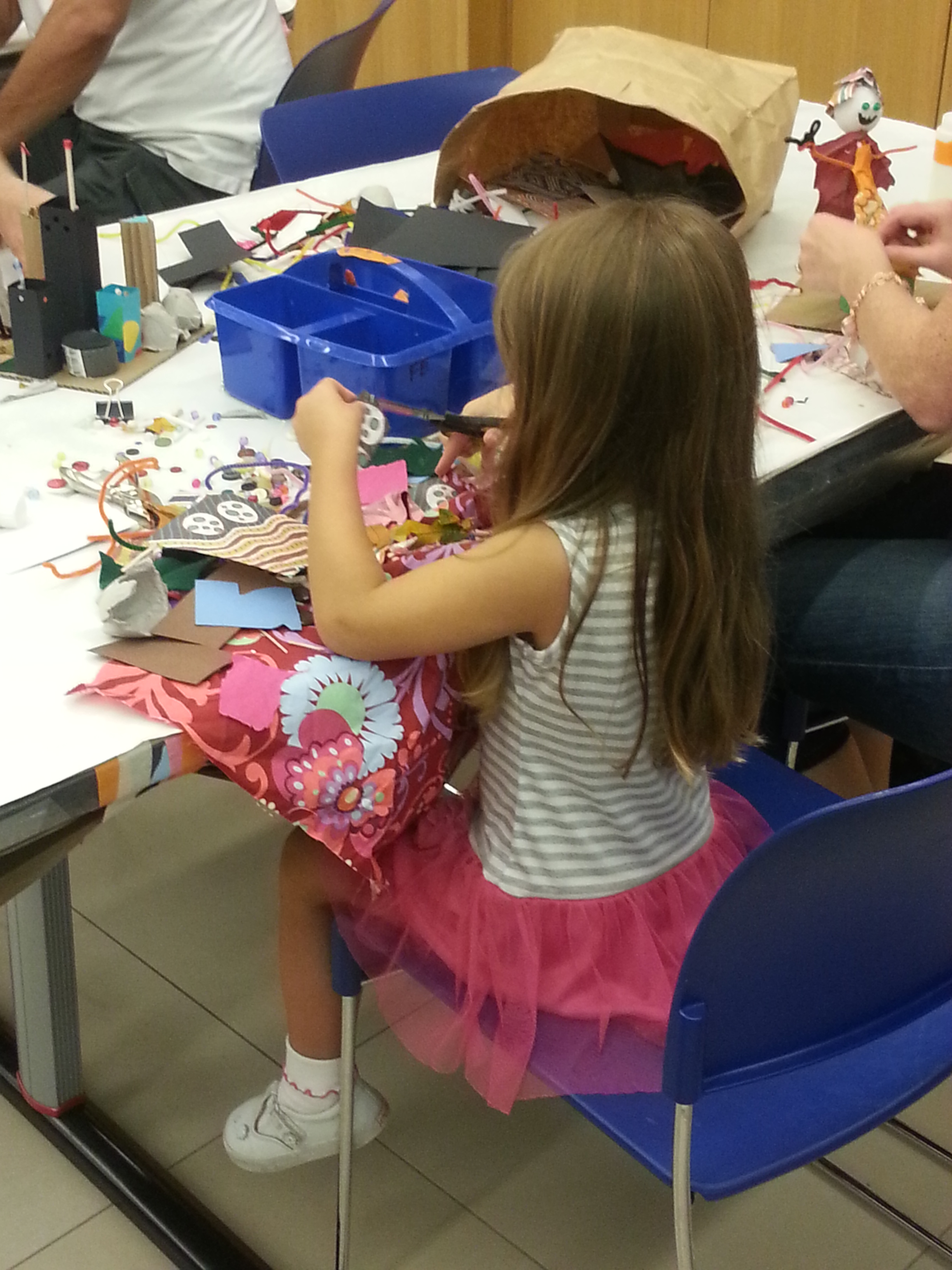
Even if we are not having a program, you can still make original works of art in C3 at the Art Spot! We provide materials and tools everyday for visitors to drop by and create!

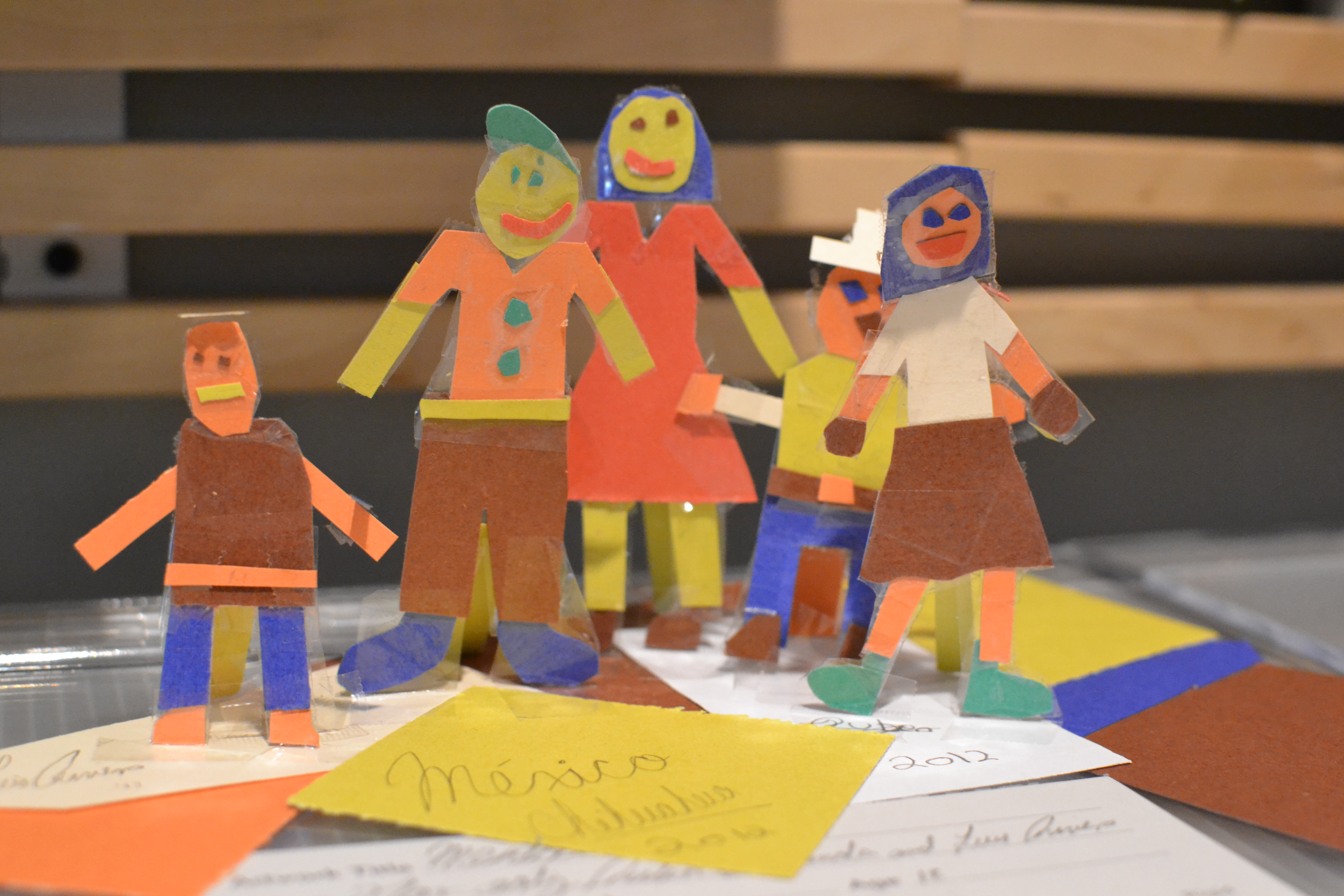
Visitors created family portraits inspired by a work of art in C3.

Visitors created family portraits inspired by a work of art in C3.

Materials used: Paper and tape

9820130044_914ce48671_o

Office supplies to inspire the creative process!

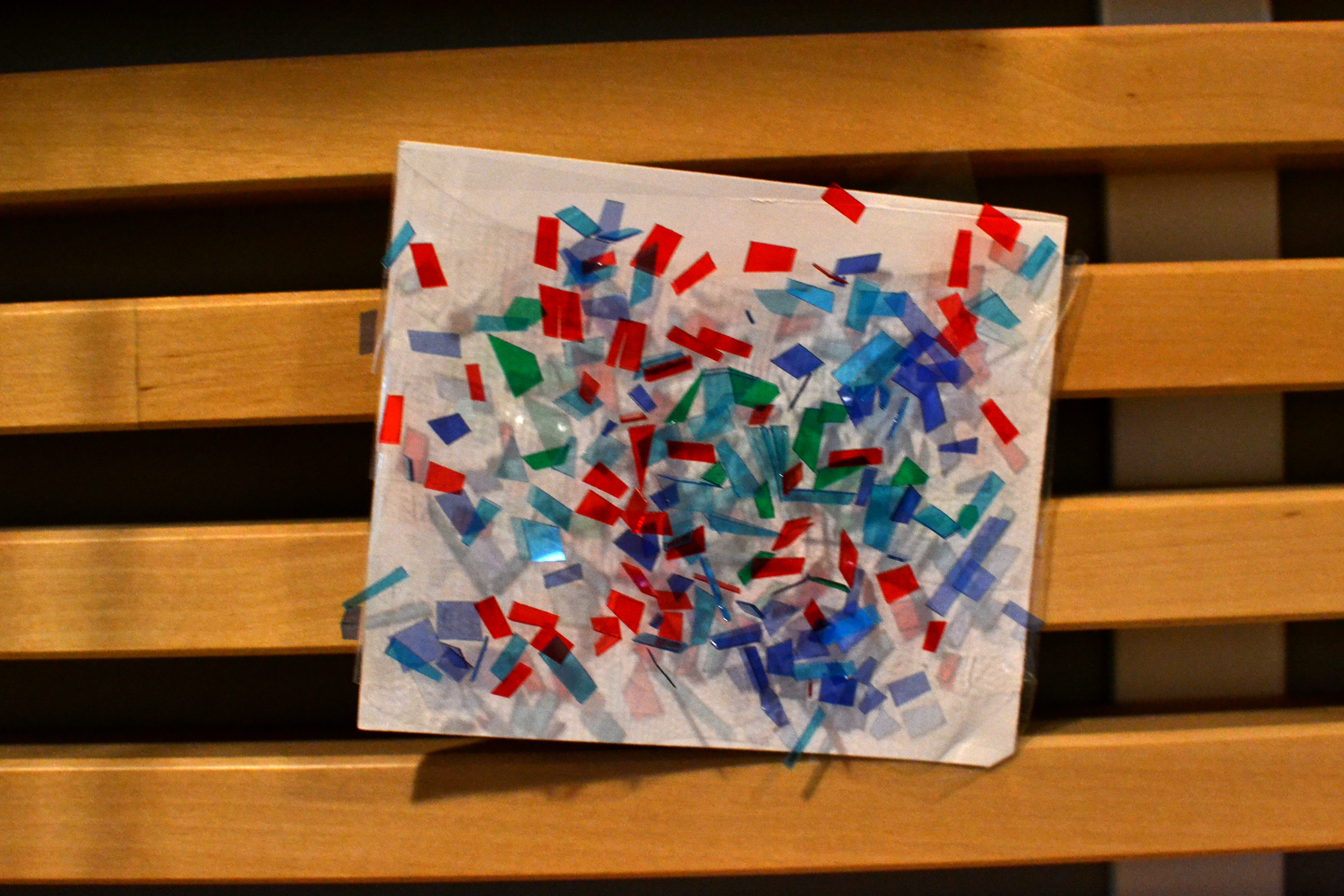
Materials used: File folder tabs and clear tape

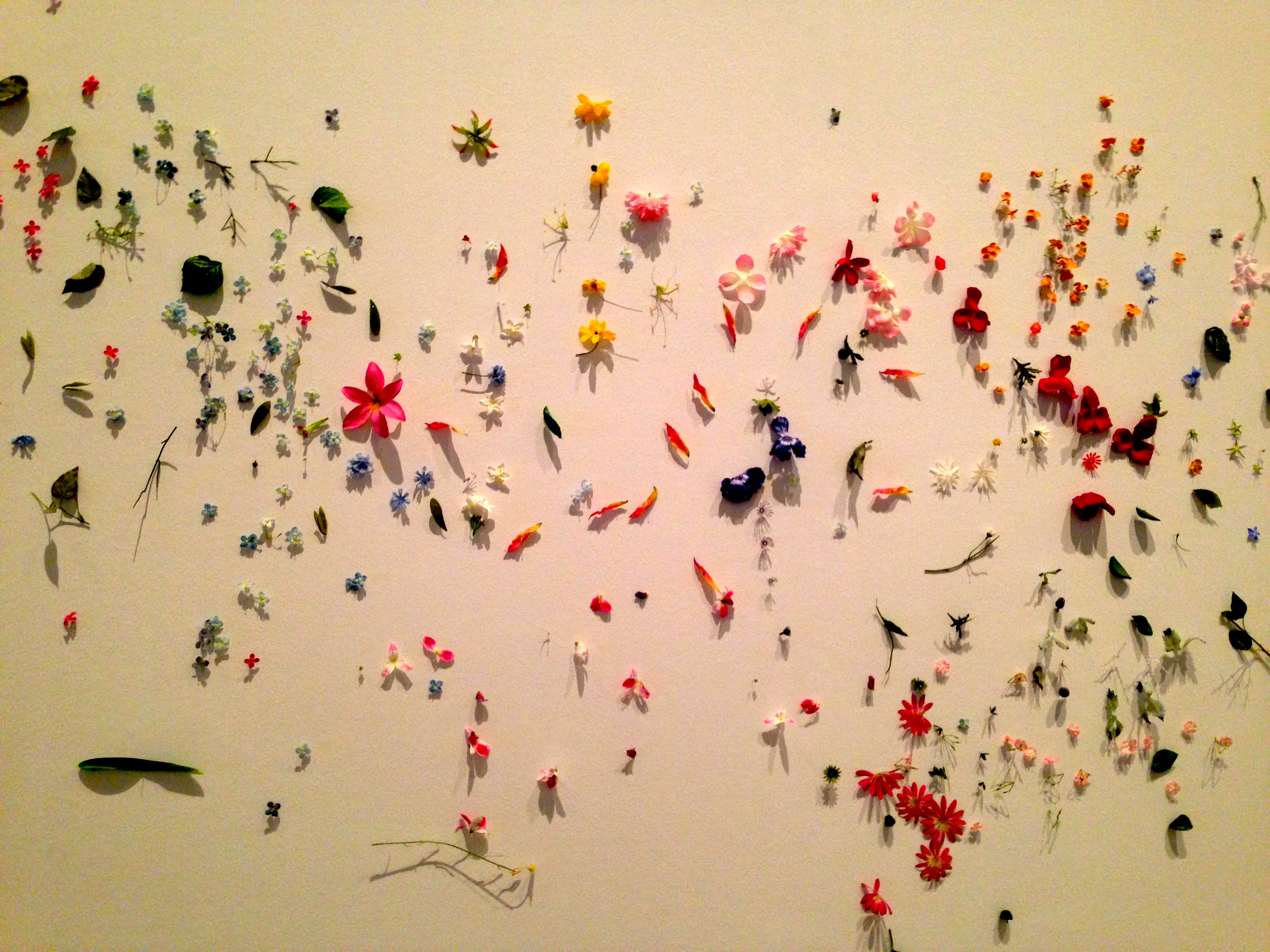
Jim Hodges, Changing Things, 1997, Dallas Museum of Art, Mary Margaret Munson Wilcox Fund and gift of Catherine and Will Rose, Howard Rachofsky, Christopher Drew and Alexandra May, and Martin Posner and Robyn Menter-Posner

Doesn’t this last creation look inspired by the new Jim Hodges work on view? Drop by and see more amazing creations when the exhibition opens on October 6!

How do you reuse your materials? Remember: Before you purchase supplies, see if you can transform the materials you already have. We would love to see the work that you create with the objects all around you.

Amanda Batson
C3 Program Coordinator

What Does Fun Look Like at the DMA?

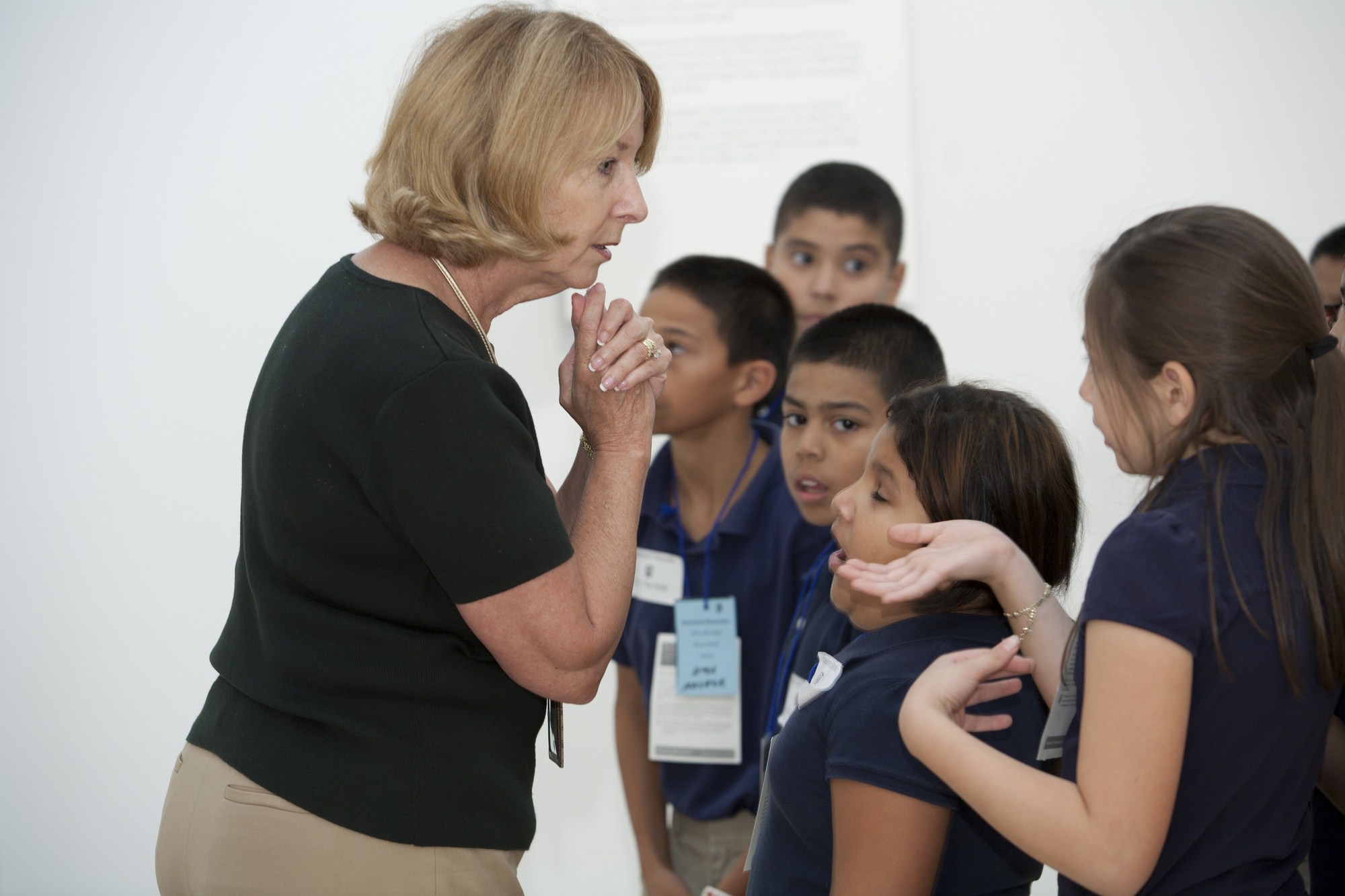
I have written posts in the past about our goals for docent-guided tours at the DMA. Our current goal statement was written five years ago, and I think it’s in need of a few updates. It states that we want students to feel comfortable at the Museum, as well as to begin to see their world in a fresh way. What does that mean, and how can we measure whether that happens on our tours?

4th_Grade_Tours_11_2012_032

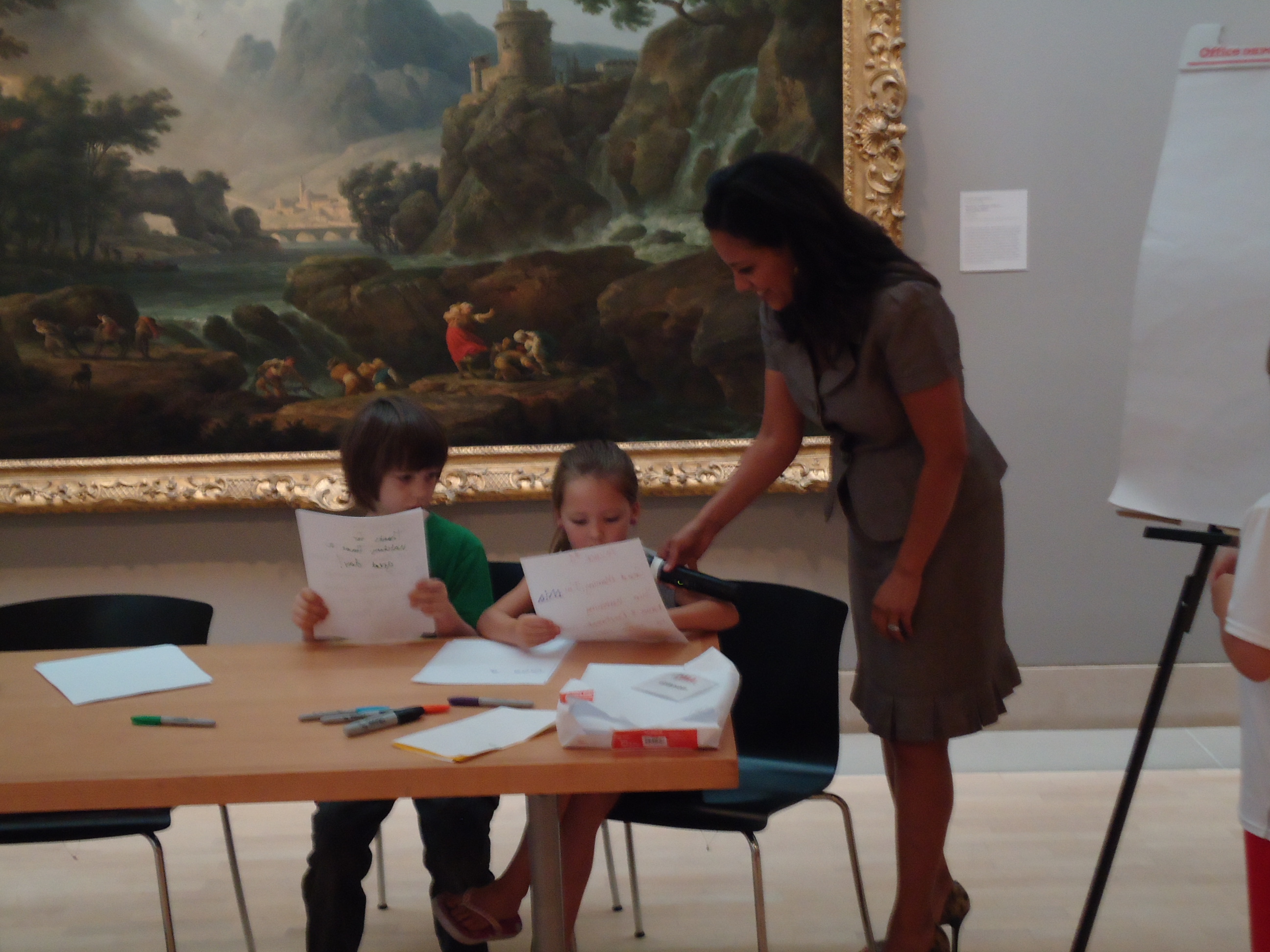
Over the summer, I met with small groups of docents to begin redefining our goal for tours. These docents were asked “What are your motivations and desires when planning a tour for the DMA’s visitors?” Their answers were thoughtful and really demonstrate their passion for the work that they do at the DMA.

  • My hope is that they will learn how to “look” in a museum setting and that they will want to return or visit other museums.
  • My biggest goal is to get the students to want to come back and to leave with vivid memories of what they saw.
  • My biggest hope is that even one child sees an object that excites them and makes them want to see more.
  • I want them to leave with more questions than they had when they came in so that they will be eager to come back and enjoy what this museum has to offer.
  • I want the students to feel comfortable, be inspired and amazed, learn a few things, and have fun!
  • My motivation is to share objects that are special to me so that I can bring genuine excitement to them.

4th_Grade_Tours_11_2012_105

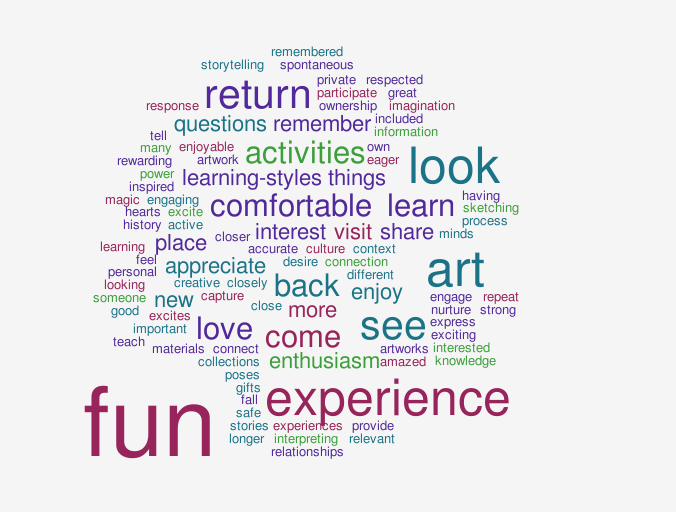
I plugged the docents’ responses into Wordle in order to easily see what words popped up repeatedly. In a word cloud, the size of a word corresponds with the number of times it was entered into Wordle. From this word cloud, it’s obvious that a “fun experience” is the top motivation for our docents when planning tours.

Docent Goal Word Cloud

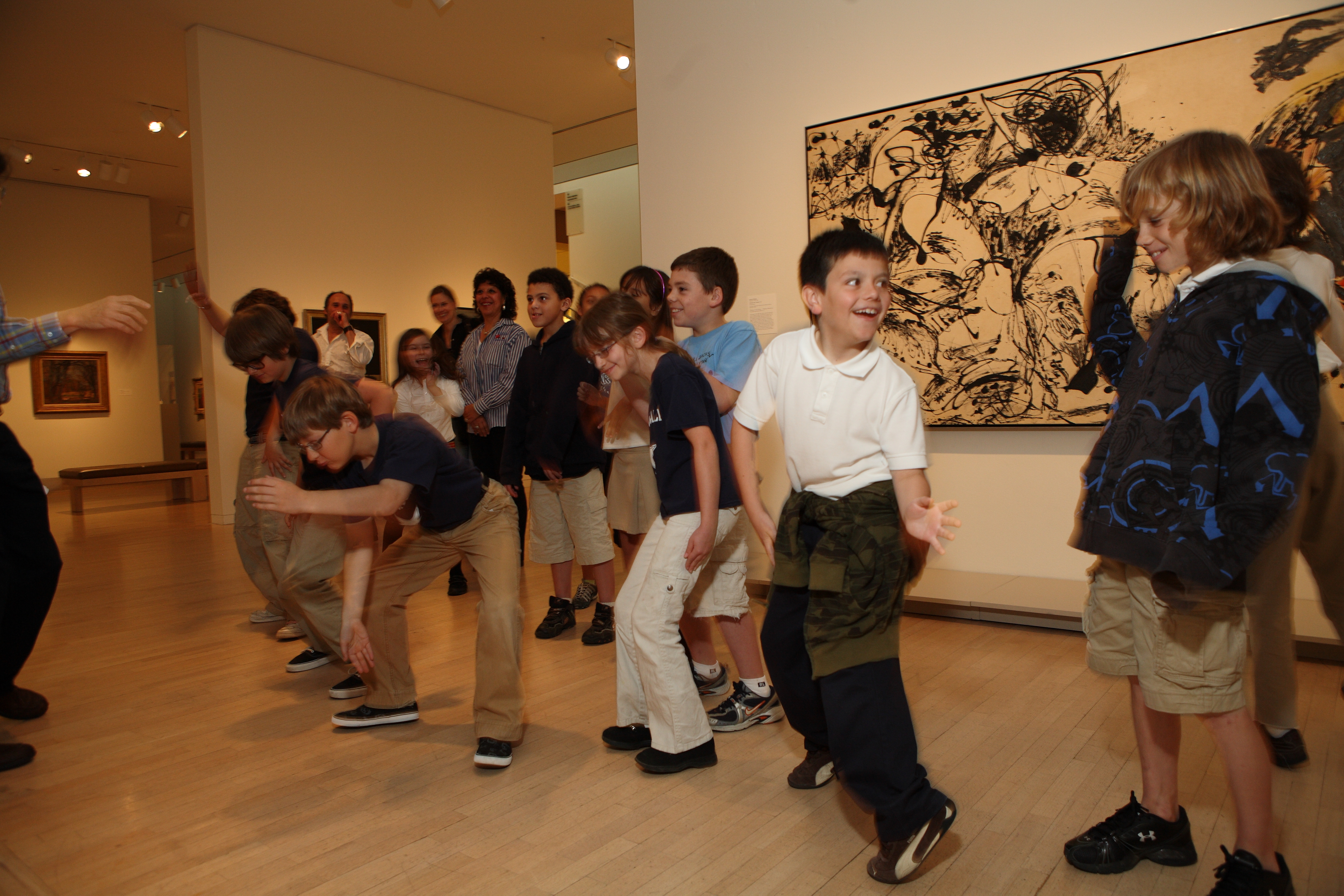
As a group, the docents and I are now trying to unpack the word “fun.” Just what does a fun experience at the DMA look like? How do we know that students are having fun in our galleries? Do sketching and inventing stories about a work of art lead to a fun experience? Is laughter our best indicator that students are enjoying their tour? These are just some of the questions that we are pondering as we begin our new training year.

StudentVisits_ShannonKarol_02_27_2009_072

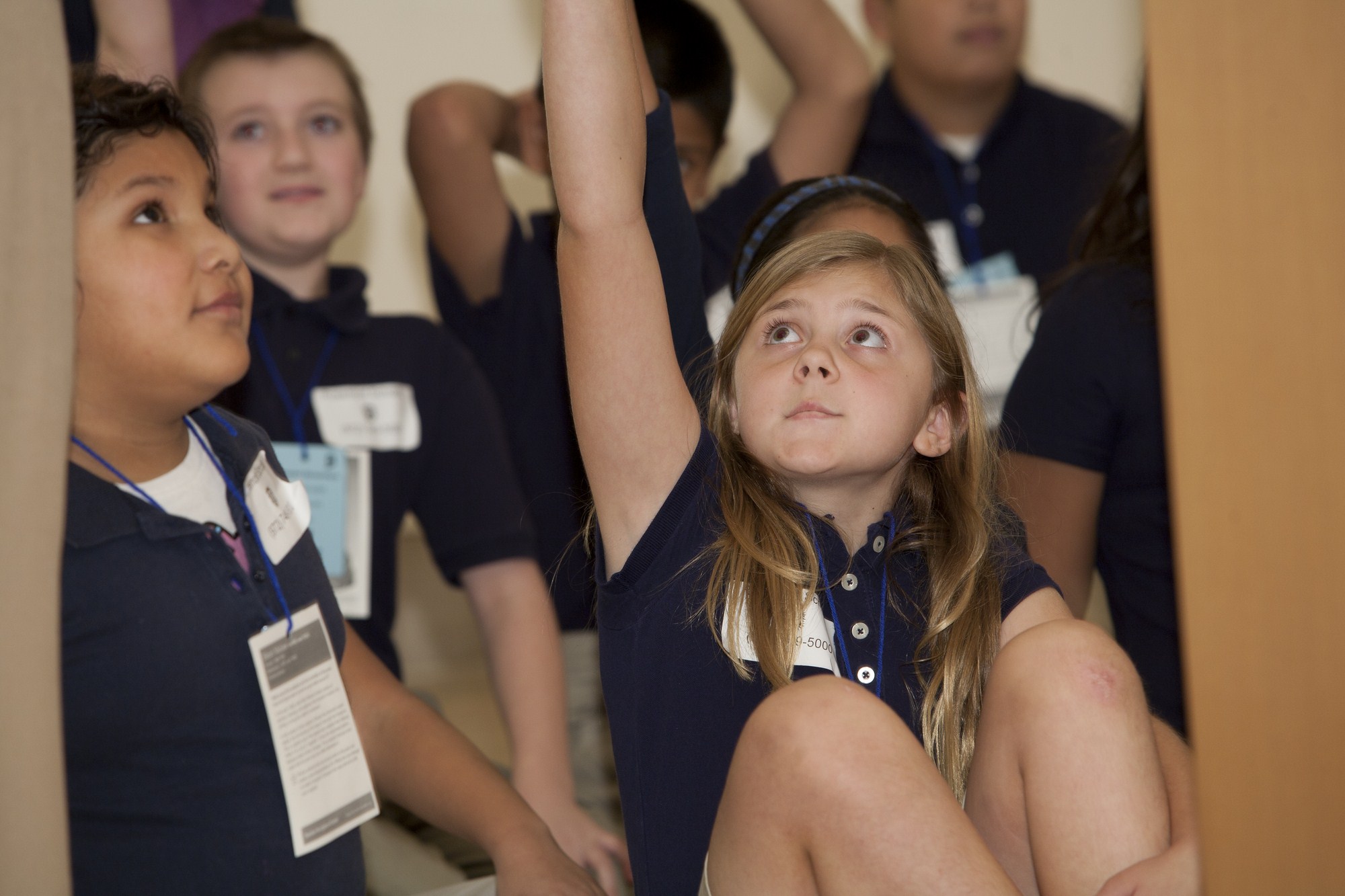
These kiddos certainly appear to be having fun on their tour

Now it’s your turn to weigh in. I would love to have your insight as we move forward with revising our goal for docent-guided tours. How do you know that your students (or children) are having fun at the DMA? What have been some of their favorite experiences here? If you’re a teacher, I am also curious to know what your motivations are when you schedule a field trip to the DMA. It will be interesting to see how your motivations overlap with those of our docents.

Please add your comments below or feel free to email me. I look forward to hearing your thoughts on having fun at the DMA!

Shannon Karol
Manager of Docent and Teacher Programs

Go van Gogh-ing on a Colorful Classroom Adventure

The newest Go van Gogh program involves two things that are deeply exciting in my book: expanding outreach to a new audience and getting messy with paint!

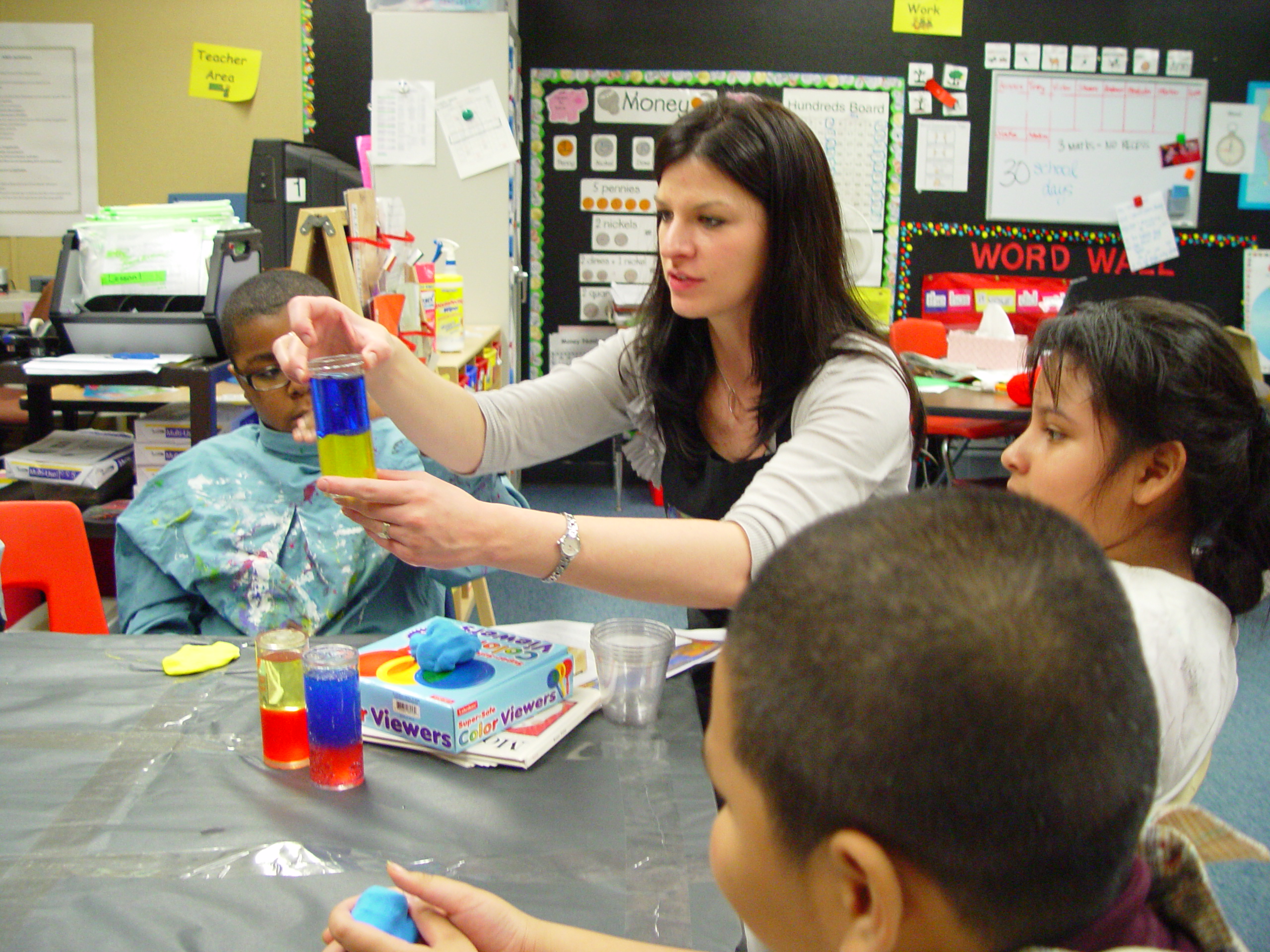
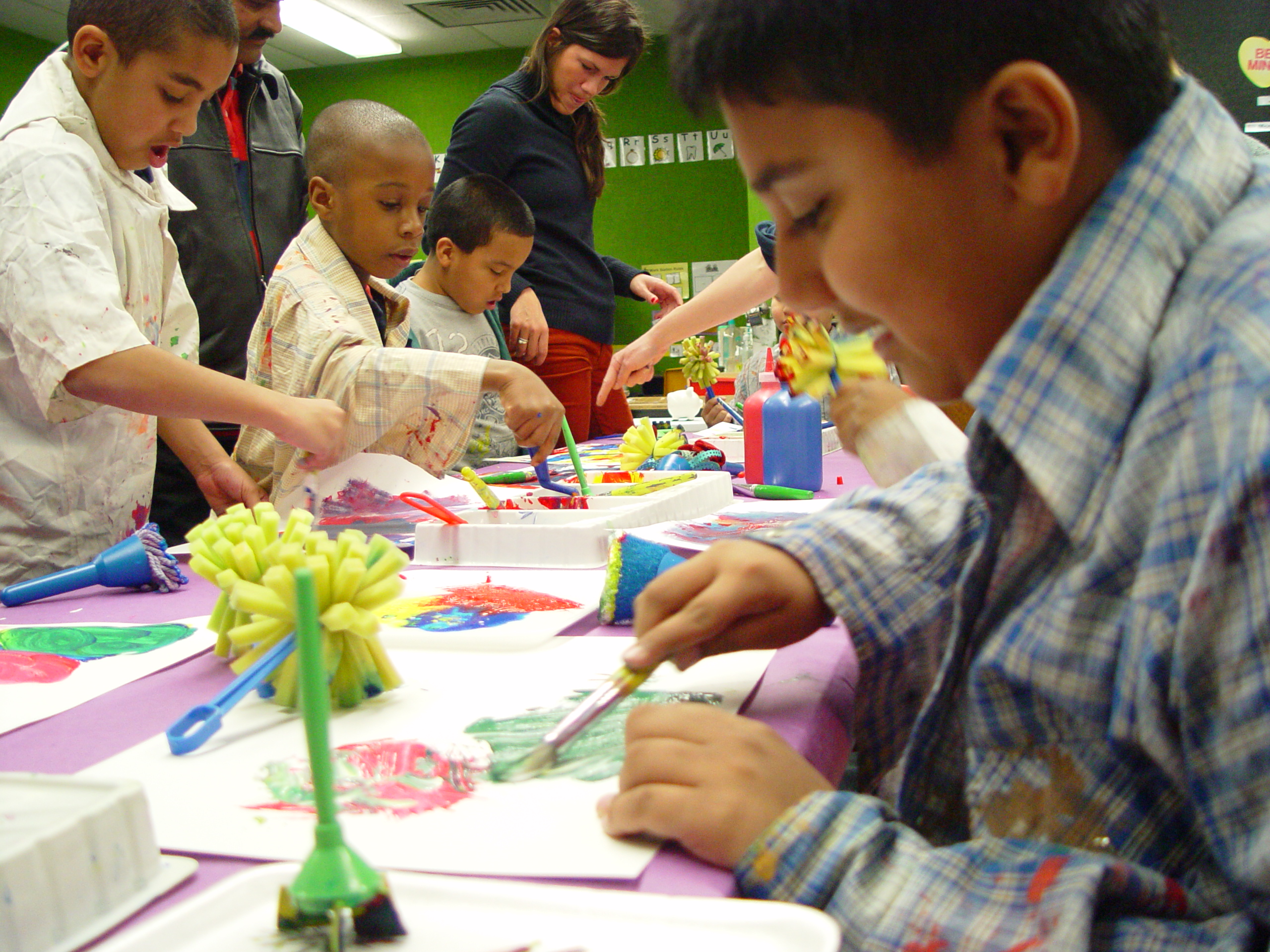
Color My World is a one-hour outreach experience for elementary students in Special Education classrooms. The program was developed by Head of Family, Access, and School Experiences Amanda Blake, and it takes the best of what we do in Museum Access programs—creating multi-sensory activities for a range of abilities—and brings it out to schools.
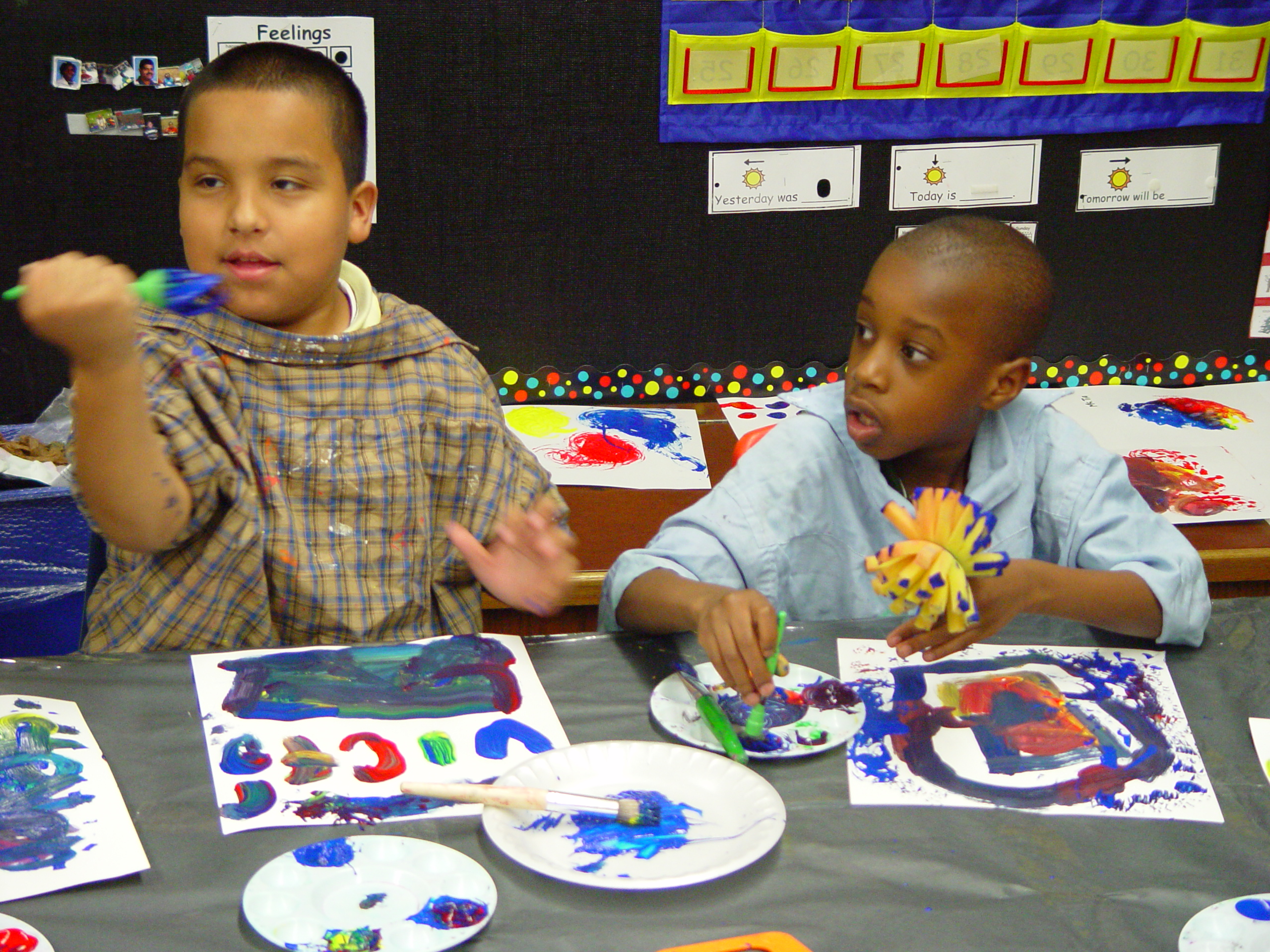
Color My World is a colorful adventure in a variety of media. Students listen to a story, watch color-mixing experiments, discuss the color wheel, and paint two artworks using a variety of ordinary (and extraordinary!) painting tools. We explore and take inspiration for our color-mixing and painting techniques from artworks in the Museum’s collection.

Color My World is offered to mixed-age Special Education classes within Dallas city limits. Programs take place on selected Monday afternoons and may begin at or after 1:00 p.m. If you are interested in requesting a program for your Special Education classroom, please email me.

And then grab a smock, ready your palette, and let’s get to painting!

Amy Copeland
Manager of Go van Gogh and Community Teaching Programs

Calling All Gumshoes!

Kids need to use problem solving skills on a daily basis, both at home and in the classroom. What better way to harness these skills than with some sleuthing in the Dallas Museum of Art galleries? Creative problem solving can be fun for both you and your child. Just think of what you can discover alongside your junior detective!

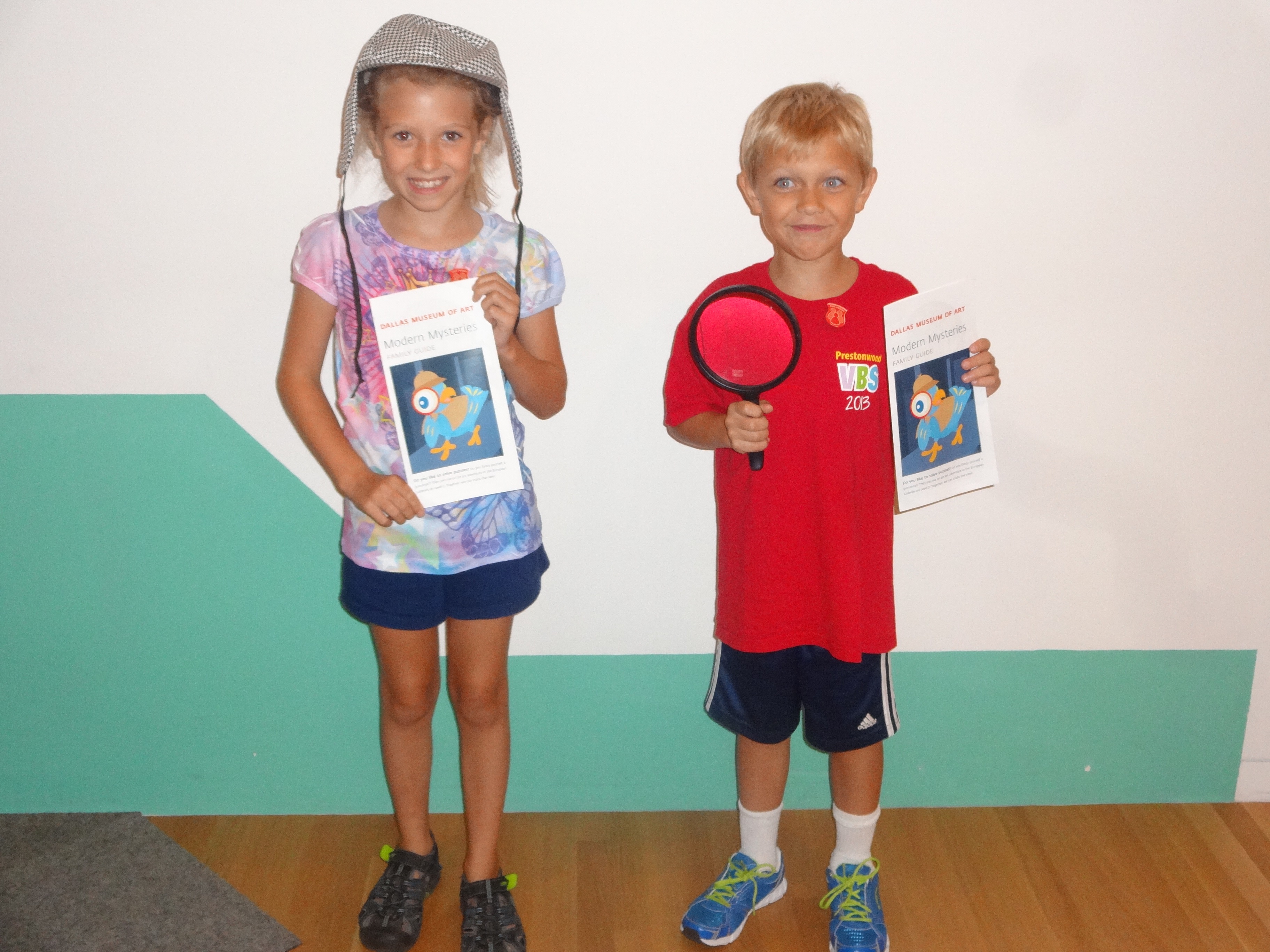
Develop into a problem-solving duo with the Modern Mysteries family guide, available in the Center for Creative Connections. Your little gumshoe will discover works of art in the galleries using careful observation, problem solving, and analysis of their findings–the same tools and techniques that real detectives use!

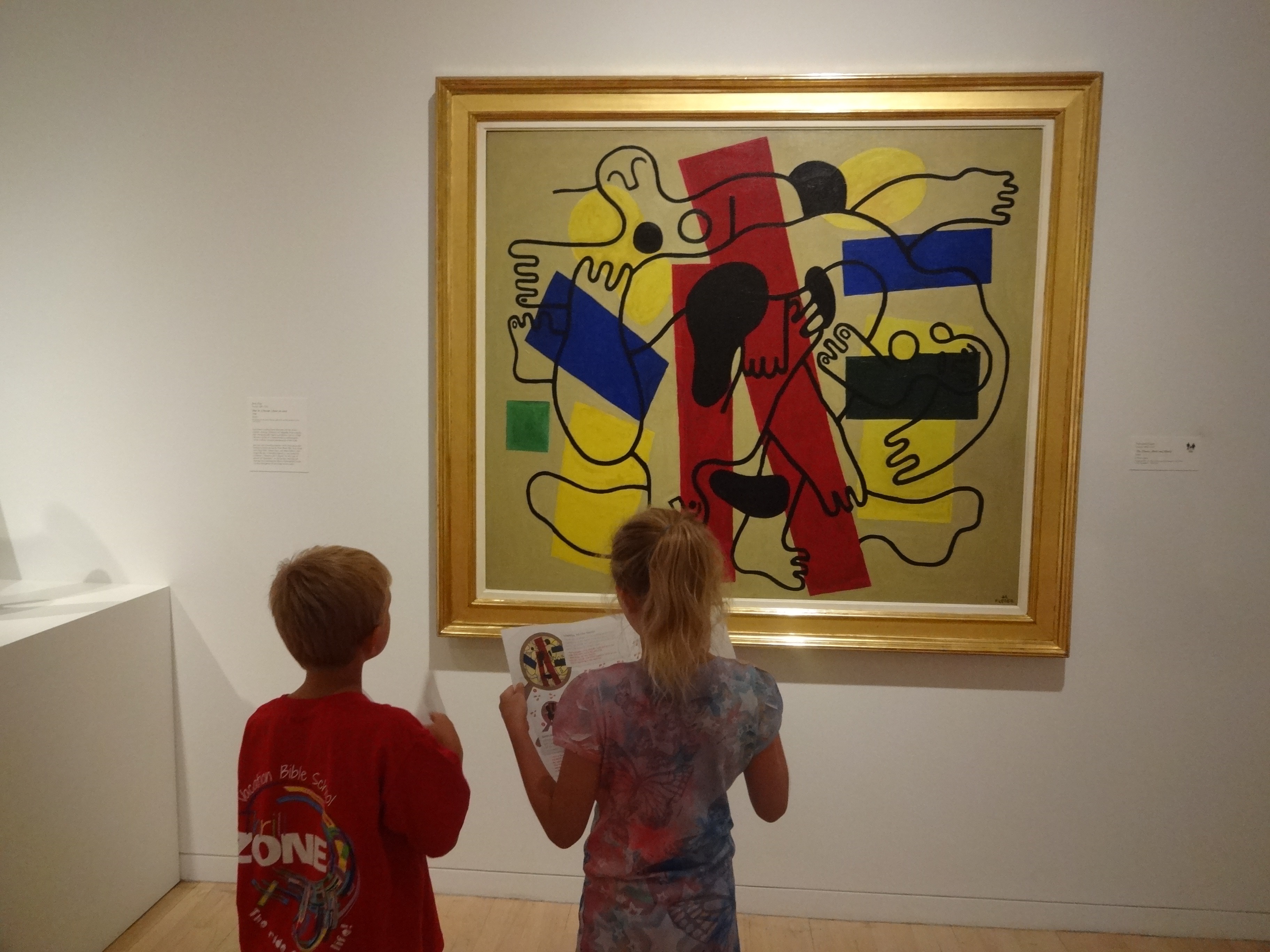
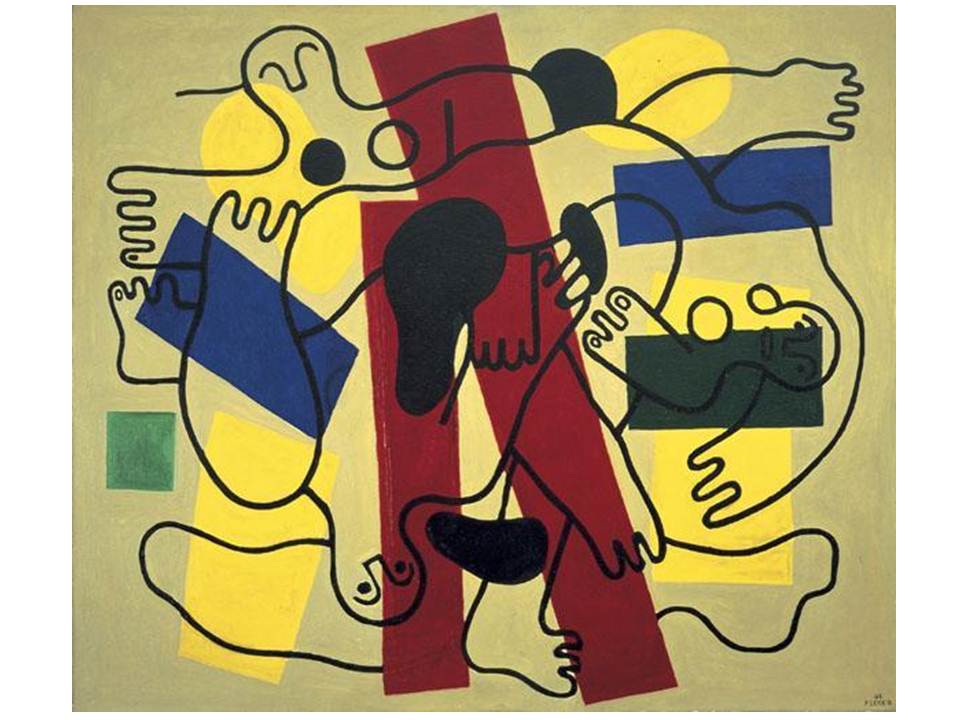
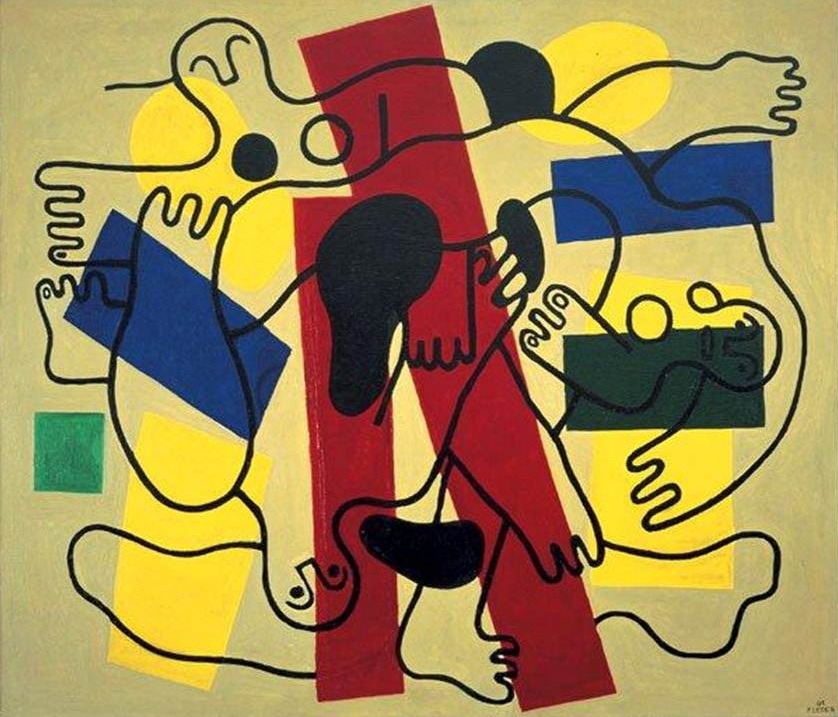
For example, the elements of design are the building blocks used to create a work of art. Some of the elements are LINE, COLOR, and SHAPE. Let’s investigate these elements at work in The Divers by Fernand Leger.

  • Find a squiggly, curvy, straight, rigid, and wavy LINE.
  • How many COLORS are in this painting?
  • What SHAPES can you identify?
  • Now that you’ve discovered these details, what do you think is happening in this painting?

juniordetective


There are many other mysteries to uncover in the European galleries with the Modern Mysteries family guide. And families who are part of DMA Friends can earn their Junior Detective Badge once their sleuthing is complete. So throw on your detective cap and polish your magnifying glass to embark on an art adventure here at the Dallas Museum of Art!

DSC06701

Emily Wiskera
Graduate Education Intern

Friday Photos: Breaking News at the DMA

WFAA Channel 8's Cynthia Izaguirre sharing newscasting tips with summer campers

WFAA Channel 8’s Cynthia Izaguirre sharing newscasting tips with summer campers

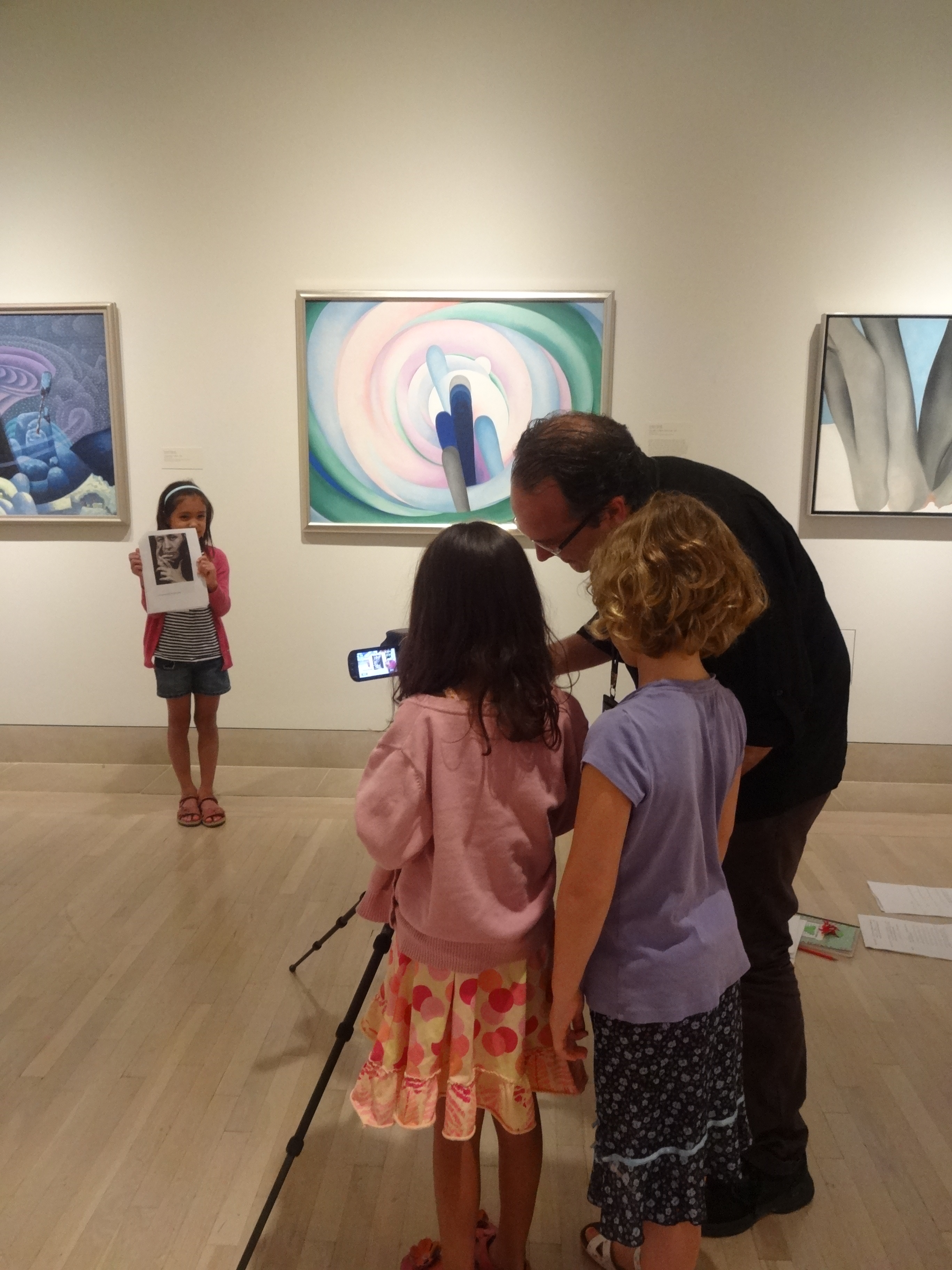
What happens when you give six to eight year olds a video camera, a sparkly pretend microphone and the chance to be newscasters for the day? The latest, breaking edition of DMA Art News! Campers in the New World Kids 2 summer art camp spent two weeks learning about how creativity comes in all shapes and sizes. One of the highlights of camp was working with WFAA Channel 8’s Cynthia Izaguirre to learn the ins and outs of broadcast news.

Shooting B-roll for our Art Newscast with Ted Forbes

Shooting B-roll for our Art Newscast with Ted Forbes

After a practice session with Cynthia, the kids were ready to roll. Ted Forbes, the Museum’s Multimedia Producer, worked his magic to help the kids get their ideas from paper to camera. The final result is this debut of the DMA Art News!

[youtube=http://www.youtube.com/watch?v=IGJdiPaU5kU]

 
Leah Hanson
Manager of Early Learning Programs

Art Babies

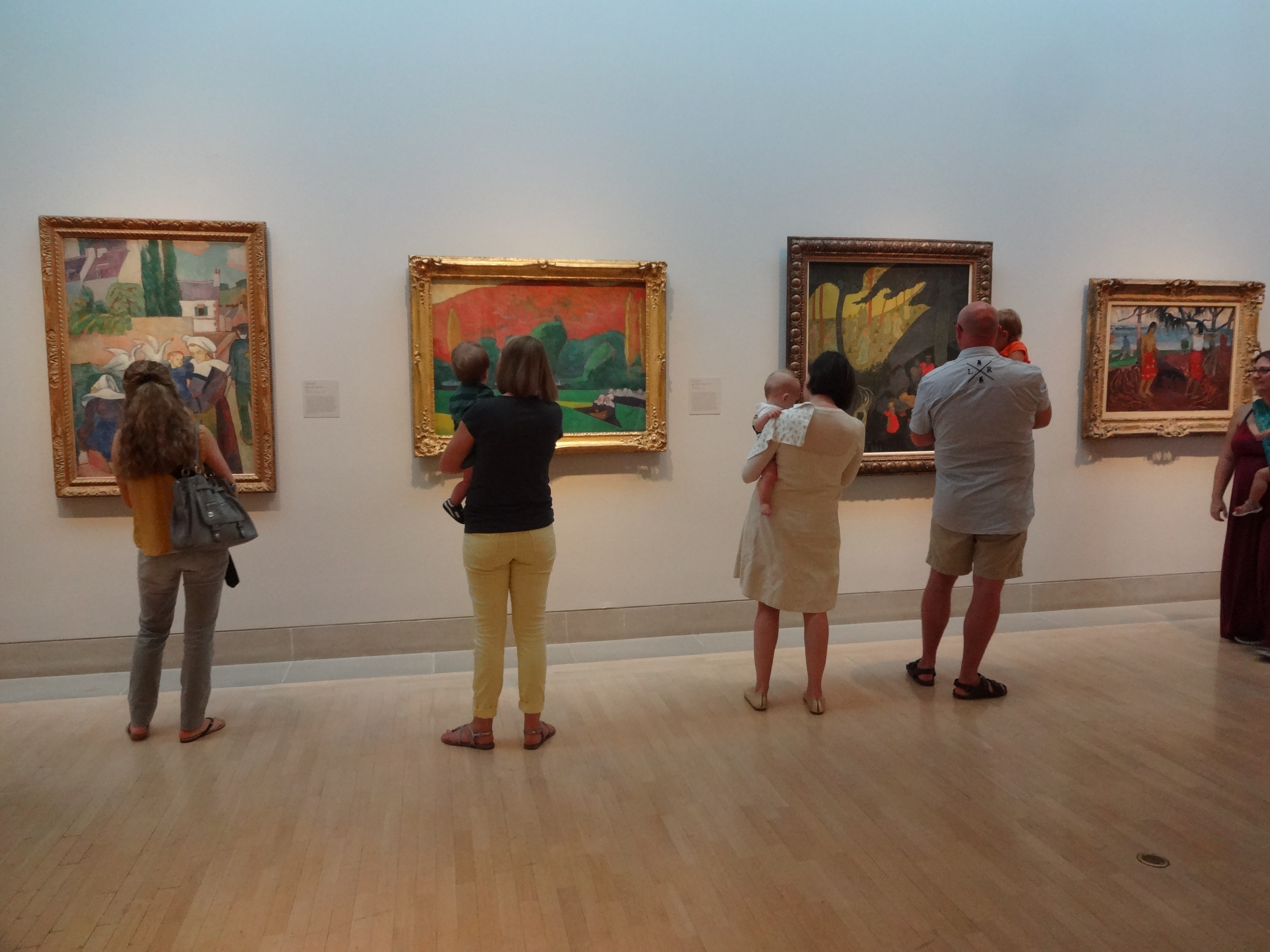
Do you think your baby is too young to bring to the DMA? Think again! We are currently testing a potential program for infants (3-23 months) and their parents or caregivers called Art Babies, based on research by Dr. Katerina Danko-McGhee, Director of Education at the Toledo Museum of Art.

Creating a stimulating environment contributes to a baby’s brain development. Visiting the Museum is one way to provide a stimulating environment for your child. Looking at art promotes early neuron connections while talking about art helps early language development.

Now that you know the Museum is a great place for your baby’s development, what kind of art should you look at during your visit? Art that is high in contrast or uses bright bold colors captures a baby’s attention best. Babies like both abstract and representational art; however infants 13-18 months particularly prefer representational art.

Several babies from our first test group were captivated by the contrasting colors of The Divers by Fernand Leger. Portraits also work well, especially faces with big eyes (think of Dora the Explorer) or depictions of babies. Also look for artworks that feature familiar objects such as animals or plants.

You might be wondering, “How can I tell if my baby is interested in a work of art?” Babies communicate their aesthetic preference through body language. They might visually fixate, smile, laugh, or reach toward the object that interests them. When looking at art with your baby, it is best to hold them or have them in a front carrier at a safe distance from the artwork. This allows the baby to physically react to the art they prefer.

The Divers, Fernand Leger, 1942, oil on canvas, Dallas Museum of Art, Foundation for the Arts Collection, gift of the James H. and Lillian Clark Foundation

Fernand Leger, The Divers, 1942, Dallas Museum of Art, Foundation for the Arts Collection, gift of the James H. and Lillian Clark Foundation

While viewing art with your baby, it’s important to validate the child’s response by being supportive and interactive. When your child reaches toward a particular painting, talk about colors, shapes, or familiar objects in the artwork. This will aid in language development and help them create meaning from familiar objects.

Our first test for Art Babies received positive feedback and parents were amazed at their babies’ reactions to the artworks. Follow the DMA on Facebook or Twitter for future information on this program.

Holly York
McDermott Intern for Family Experiences
Friday Photo: Expect the Unexpected

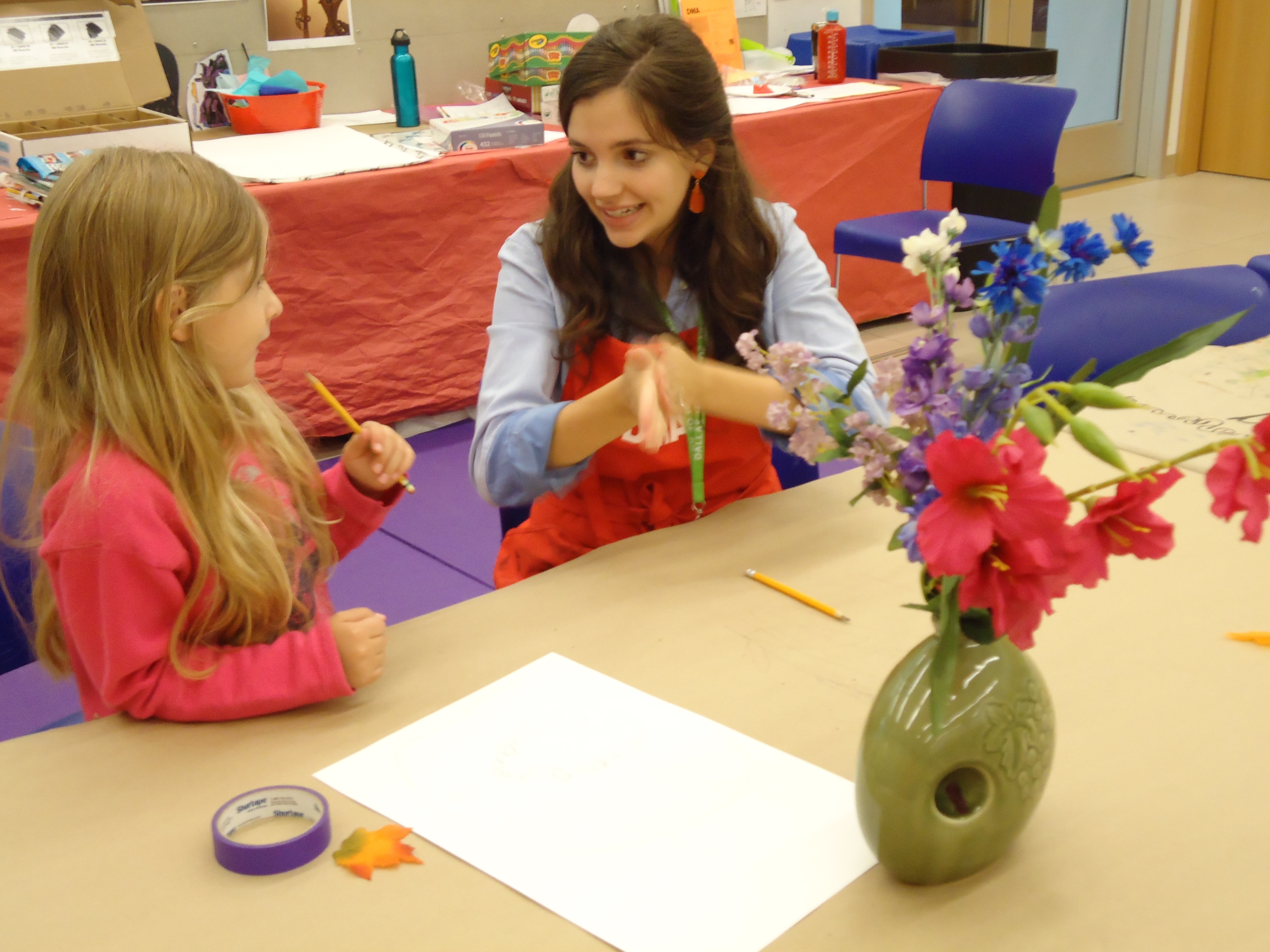
Hello all! My name is Rachel and I am one of the interns for Family Programs at the DMA this summer! I am about to start my senior year at Texas Christian University, studying Early Childhood Education and Child Development. My love of the arts and children led me to the DMA this summer and it has been quite an adventure! My favorite part has been watching the children create such wonderful works of art – never underestimate the power of a child’s creativity!

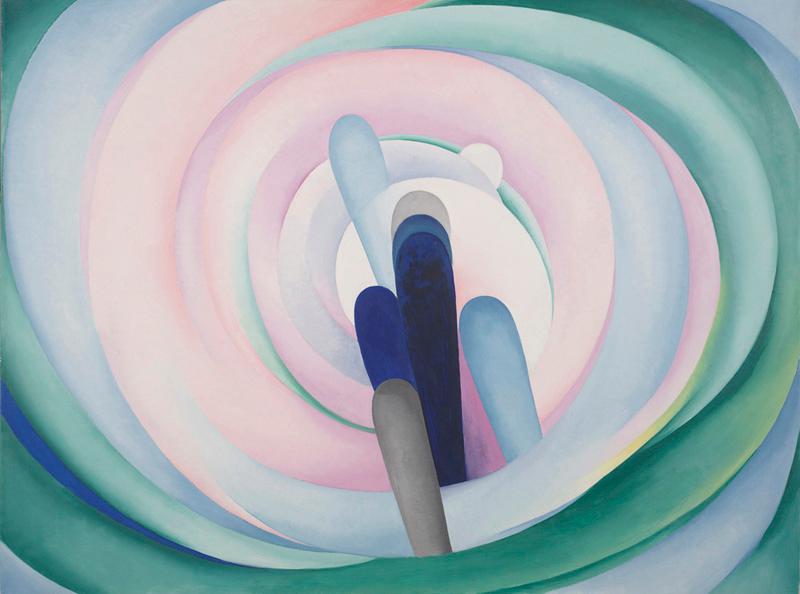
My favorite painting in the gallery is Georgia O’Keeffe’s Grey Blue & Black – Pink Circle. I love this painting because of the soft colors and swooping movement.

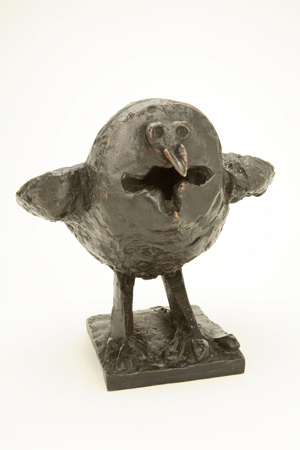
The piece of art that describes my time at art camp is Angry Owl, a sculpture by Pablo Picasso currently on view in the Museum’s special exhibition, Hotel Texas: An Art Exhibition for the President and Mrs. John F. Kennedy. But it’s not because the owl is angry–It’s because this piece is so unexpected for Picasso since he isn’t known for sculptures! At art camp you should always expect the unexpected! 🙂
Rachel Moss
Summer Programs Intern


Archives

Categories