Archive Page 48


Do-It-Yourself Stickley

“When we come to make things ourselves . . . we should not only find more pleasure in making them but we shall take more pleasure in possessing them.” —Gustav Stickley, The Craftsman, March 1905

Early 20th-century designer and businessman Gustav Stickley believed in the do-it-yourself movement. His magazine, The Craftsman, provided readers with step-by-step instructions on making household objects such as side tables, clocks, embroidered pillows, and even birdhouses.

In just a few months, the Dallas Museum of Art will host the exhibition Gustav Stickley and the American Arts & Crafts Movement. We’re inviting people to produce objects inspired by Stickley’s designs, document their process, and share their experience with the DMA. These videos and photographs will be displayed in the exhibition’s education space. Our deadline is January 5. Learn more about the DIY Stickley project on the DMA website.

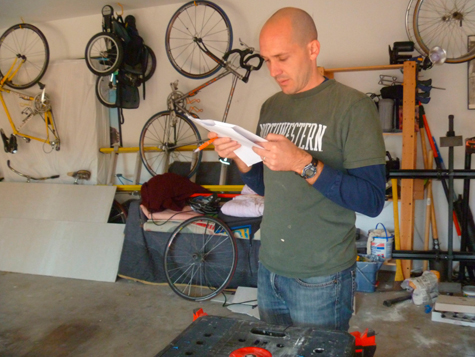
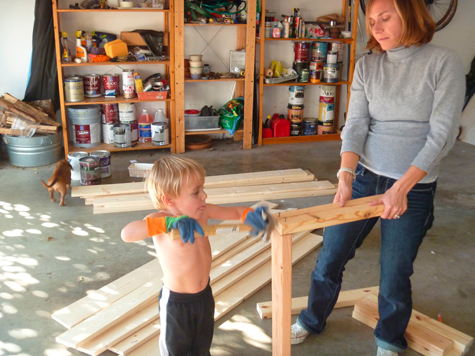
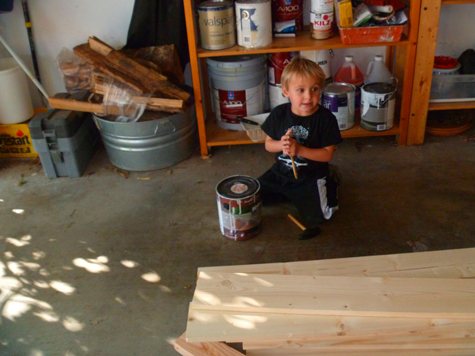
A few weeks ago, my husband, John, and I thought it would be fun to take up Stickley’s challenge and make one of his simpler designs with our kids, Aiden and Rowan.

After some debate, we decided to make the doghouse for our two dogs, Sampson and Beasley.

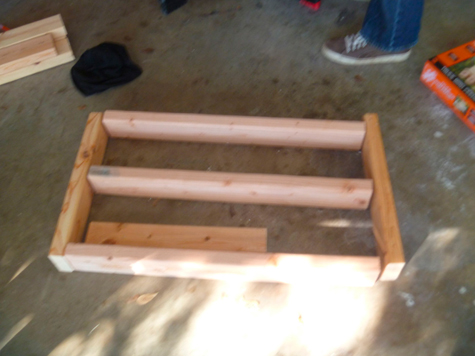
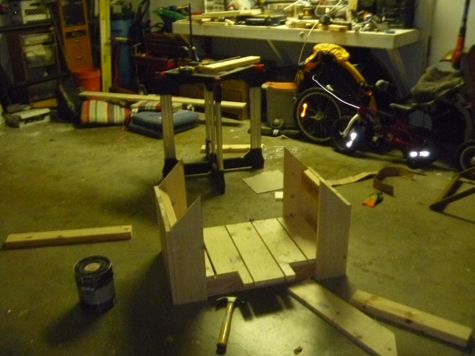
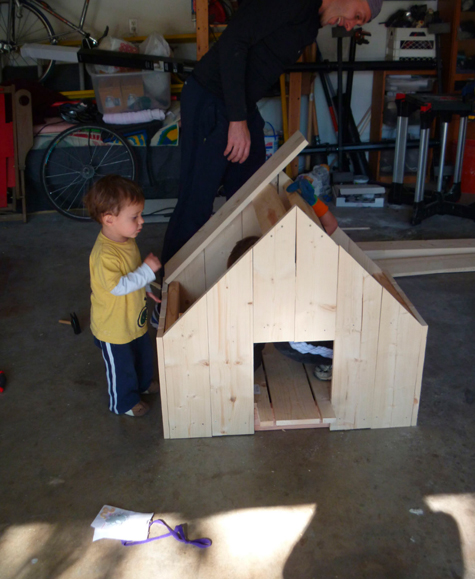
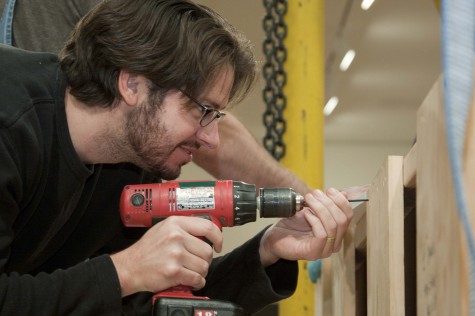
Building the structure moved along pretty quickly thanks to John and Aiden. By the end of day one, we had framed the structure and attached the walls and floors.


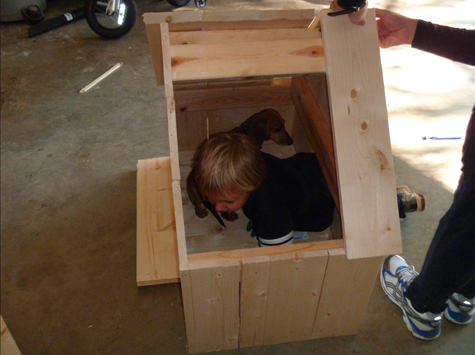
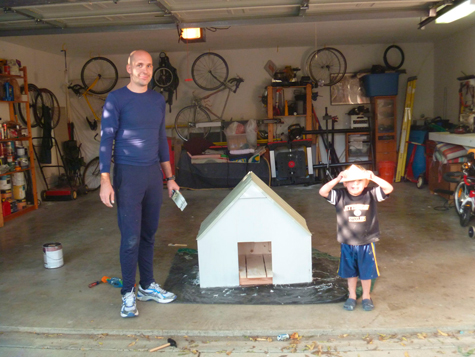
Day two included attaching the roof, painting, and trying to get the dogs to go inside the doghouse.

Apart from adjusting the measurements and the paint, we stayed close to Stickley’s original design. This was a fun weekend project for our family and a great way to make Stickley’s designs come to life in the 21st century.


Gustav Stickley and the American Arts & Crafts Movement will be on view at the Dallas Museum of Art from February 13 through May 8, 2011. To learn more about the do-it-yourself Stickley project and discover how you can participate, visit the DMA website.

Guest blogger Laura Bruck was formerly Manager of Gallery Interpretation at the Dallas Museum of Art and is currently an education consultant.

Seldom Scene: Installing Eliasson


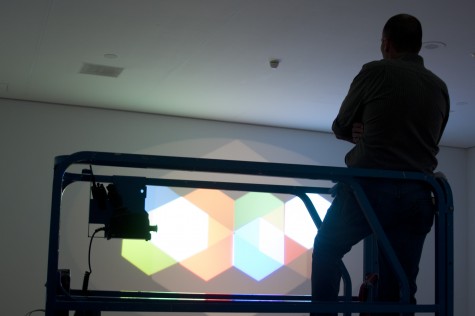
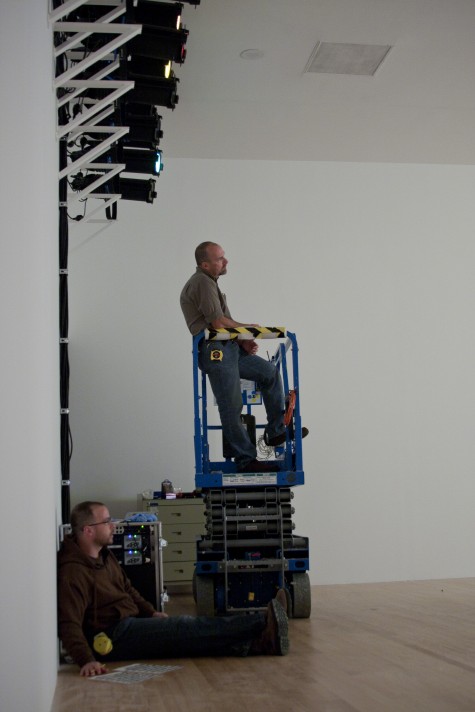
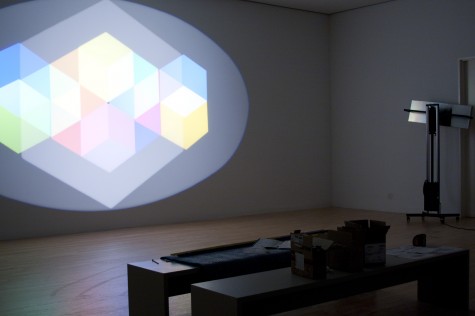
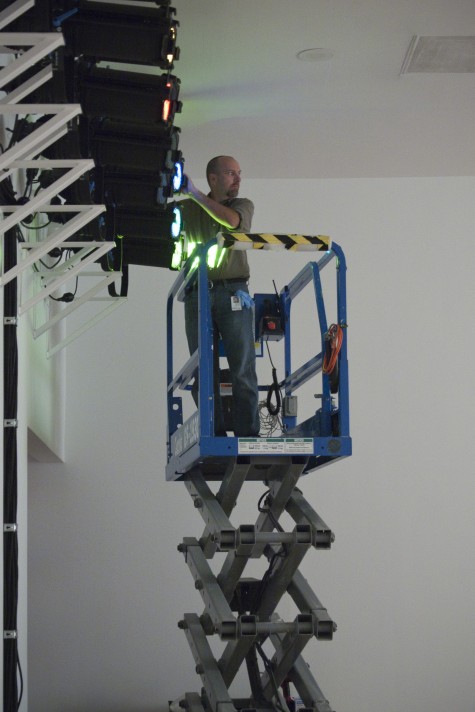
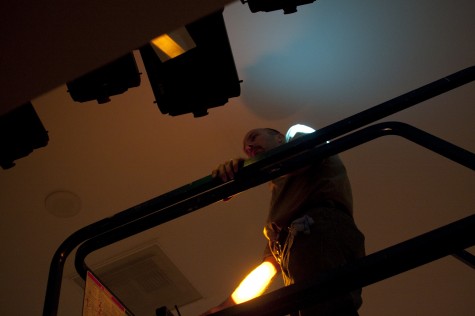
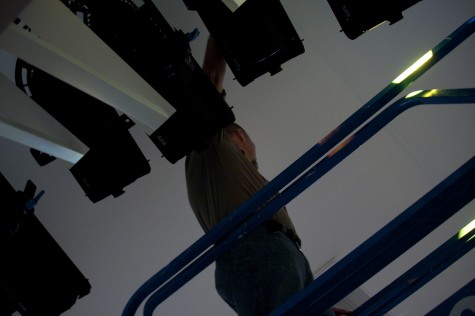
Dallas Museum of Art preparators Mike Hill and Lance Lander fine-tune the installation of Olafur Eliasson’s The outside of inside. This work of art, recently acquired by the DMA, is included in the new exhibition Big New Field: Artists in the Cowboys Stadium Art Program, which opens this Sunday, December 5.

Olafur Eliasson, The outside of inside, 2008, projectors, spotlights, color-filter foil, stainless steel, and control unit, Dallas Museum of Art, DMA/amfAR Benefit Auction Fund, 2009.1.a–aa, © 2008 Olafur Eliasson

Photography by Adam Gingrich, DMA Marketing Assistant

Seldom Scene – A Penguin’s Night at the Museum

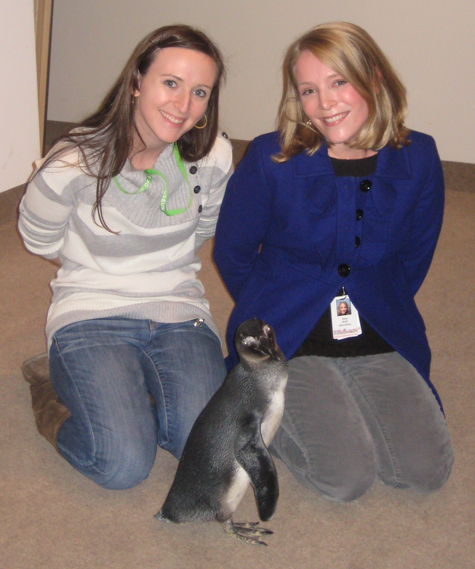
To help us celebrate our exhibition African Masks: The Art of Disguise, the Dallas Zoo’s Animal Adventure Program made an appearance at Friday’s Late Night with a few animals that call Africa home. Donny, the Black-footed Penguin, was a big hit with the DMA staff (see the BIG smiles) and with visitors too.

An Extraordinary Ten Years

After a decade of working with school programs at the Dallas Museum of Art, I have recently resigned as Head of Teaching Programs in order to continue to develop my two passions – works of art and teaching.

The last ten years have been extraordinary in many ways as I have learned about and taught with the DMA’s encyclopedic collections and special exhibitions.  I’ve met several teachers who share my passion for art and teaching and have spent many meaningful hours in the galleries with them as we explored works of art together.  I’ve directed our docent program and have worked closely with over a hundred dedicated volunteers who give several hours of their time each week to make Museum visits possible for tens of thousands of Dallas-area students each year.

Although I’m looking forward to new adventures, I’m sad to leave behind the wonderful friendships I’ve made – with works of art and with people.  I appreciate all of the time and energy that teachers devote to sharing their love of works of art with their students and the time they commit to scheduling and preparing for art museum visits.  I believe that experiences with works of art can be transformative, and I wish all of you art teachers and my staff and docent colleagues all of the best as you continue to make these experiences possible.

Fondly,

Molly Kysar
Head of Teaching Programs

[slideshow]

TAEA 2010

This past weekend, my colleague Shannon Karol and I took a trip down I-35 to Austin for the annual Texas Art Education Association (TAEA) conference.   TAEA brings together art educators in K-12 classrooms, universities, and museums.

My favorite part of TAEA has been getting to hear what other museums in the state are doing.  This year, I learned how ArtPace works with community partners in a program called ¿Como Vives?, how the Meadows Museum structures a multiple-visit program with area 6th graders, and how the Museum of Fine Arts, Houston engages audiences with contemporary art.  There was a lot to take in! 

Shannon and I also got a chance to talk about the DMA in presentations we gave.  Shannon shared her expertise in African art with conference-goers in her session, Themes for Teaching with African Art.  The session included themes (including family, proverbs, and royalty) that can be used to engage students of all ages with African art.  If you are interested in integrating African artworks into your classroom, I hope you’ll check out Shannon’s African Art Resources

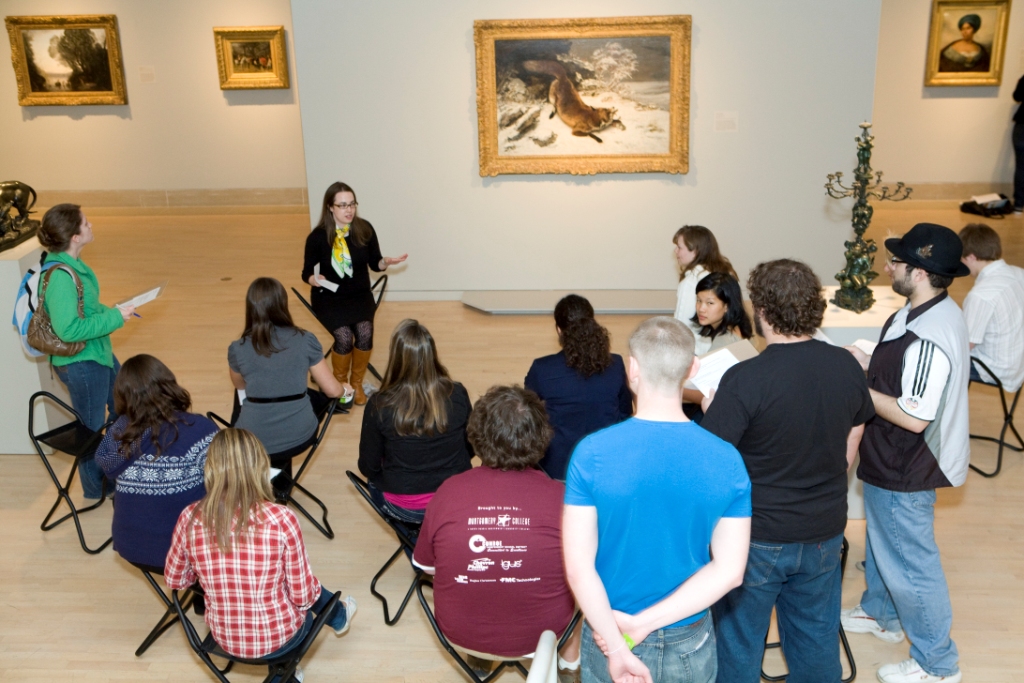
In my session, Close-Looking, Collaboration, and Creative Response: Interactive Experience with Works of Art, I shared three activities that allow for my favorite kinds of gallery experiences: ones that are open-ended, involve groupwork, and art-making or writing in response to a work of art.  My favorite of the three is Post-It poetry.  I like poetry exercises; I think they’re a great way to get students to distill their ideas about an artwork into brief, meaty responses.  With Post-It poetry, students write words that describe an artwork on individual Post-Its and stick them to a board that serves as a group word bank.  After all group members have contributed responses, the group works together to rearrange Post-Its to create phrases or sentences.  Click here for more detailed Post-It poetry instructions.

What I like most about this activity are the unexpected resonances that happen when students read poems.  Hearing different, fresh combinations of words always enriches the experience of looking at an artwork for me.  Below are some Post-It poetry pictures, and a Post-It poem participants made during my TAEA session.

[slideshow]

The two of us also took in the sights in Austin.  We checked out the Blanton Museum of Art, stopped by the capitol, shopped funky stores on South Congress, and had a blast eating out of trucks!  (Not the F-150 kind, but the street-food-vending kind).   All in all, it was quite the weekend.

Amy Copeland
Coordinator of Go van Gogh Outreach

Backstage with Arts & Letters Live

Many people have asked me, “How do you plan Arts & Letters Live?” Here’s a glimpse into the process of how we “produced” this year’s series.

In July DMA colleagues Helen Seslowsky, Katie Hutton, and I spent five days in a very hot and humid New York meeting with nearly forty publicists from all the major publishing houses to learn the scoop about new book releases on the horizon for 2011. When we got back to Dallas, we met for about twelve hours to prioritize our wish list of authors and brainstorm about books whose themes resonate with the Museum’s upcoming exhibitions and collections installations. For example, Mexico’s renowned novelist Carlos Fuentes is coming to speak while the exhibition Tierra y Gente: Modern Mexican Works on Paper is on view. In March two biographers will share new insights into the lives of artists Lee Krasner and Amedeo Modigliani, both of whom have works in the Museum’s collections.

Throughout the year, we also travel to hear authors speak at several prominent book fairs—the Texas Book Festival in Austin, the National Book Festival in D.C., and the New Yorker Festival in Manhattan—to discover which authors speak as beautifully from the stage as they do on the page. I heard Annie Proulx, Simon Schama, Pico Iyer, Gary Shteyngart, and others at a variety of these festivals while planning the 2011 season and knew I wanted to pursue them.
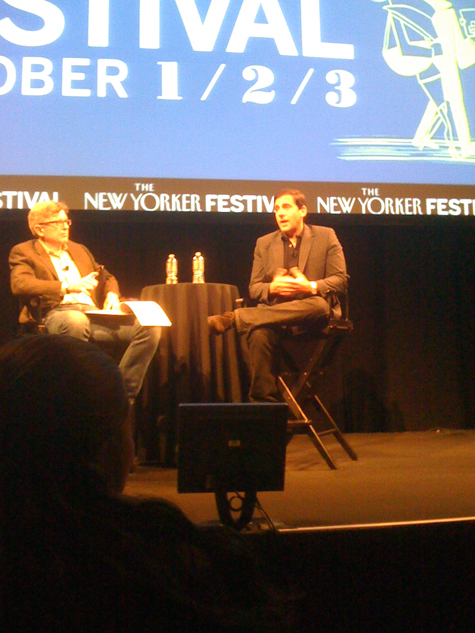
From my front row seat at Steve Carell's interview with Tad Friend at the New Yorker Festival. At the 2010 festival, I also heard authors Tobias Wolff and Mary Karr, E. L. Doctorow, Atul Gawande, Yo-Yo Ma in conversation with Alex Ross, and Simon Schama and Annie Proulx -- both of whom we're bringing to Dallas as part of the 2011 season!

And because we want a season of events that will appeal to many people, we book (pun intended) a balance of fiction, nonfiction, memoir, poetry, and programs that combine art forms in creative and unexpected ways. In February we’ll feature Eric Siblin, author of The Cello Suites, who will share the story behind Bach’s missing manuscript, its rediscovery, and his own infatuation with this music. To give this evening added flair, we’re partnering with the Dallas Bach Society, and their cellist Gyongy Erody will perform musical excerpts to bring this story to life.

Our next step is to send out proposals to the publishers and anxiously await their responses. The process is like putting together a complex jigsaw puzzle—discerning which authors and performers are available and when. There’s been many a time when a requested author wants to come to Dallas, but he’s scheduled to be on the West Coast at the same time we want him to be here in Texas.
Katie Hutton (Interim Head, Arts & Letters Live) at The Library Hotel's rooftop bar after a long, but fruitful day of meetings with publicists in New York. The team enjoyed "Red Badge of Courage" cocktails!

Throughout the summer and early fall, we also spend at least one day every week vetting short stories for our Texas Bound series, where Texas actors read short fiction by Texas writers. Lone Star State–connected authors from all over the country submitted nearly two hundred stories for consideration. Our team reads them and brings the strongest contenders to read-aloud sessions with our director Raphael Parry, who many people know as the Executive and Artistic Director of Shakespeare Dallas. We debate the merits and potential shortcomings of each story. Does it hook the audience’s attention and follow a cohesive narrative arc, or does it lag in the middle? What actor do we imagine bringing the story to life? Constructing a program of three or four stories is like creating a chef’s tasting menu—a short, funny appetizer followed by a hearty, more serious entrée, and finally, a dessert.

Arts & Letters Live will celebrate its 20th anniversary season in 2011! I’ve been with the series nine of those years. It’s heartwarming to hear vivid recollections from many of you—what an author said to change your perspective or transport you out of the everyday. Or the “aha” moment you had in the middle of a performance combining art, music, and poetry. I hope you’ll share your favorite Arts & Letters Live moments by commenting on this post. Check out our exciting 2011 season lineup here!

Carolyn Bess is the Director of Programming at the Dallas Museum of Art.
Behind the Video

Check out this behind-the-scenes look at DMA staff filming the inspirational art-making videos that can be seen at the Center for Creative Connections Space Bar.

Uncrated Gets Crated

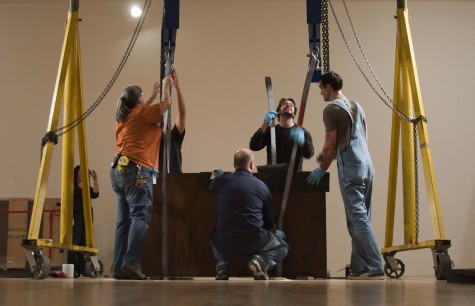
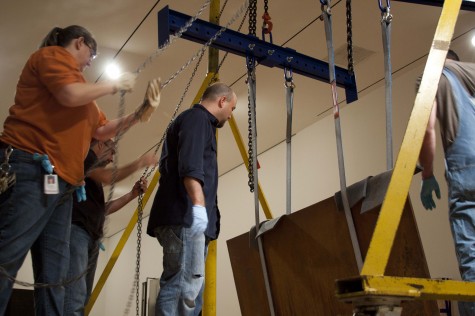
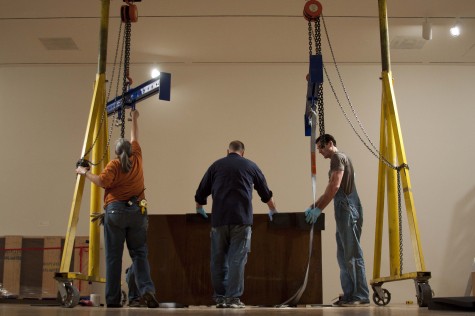
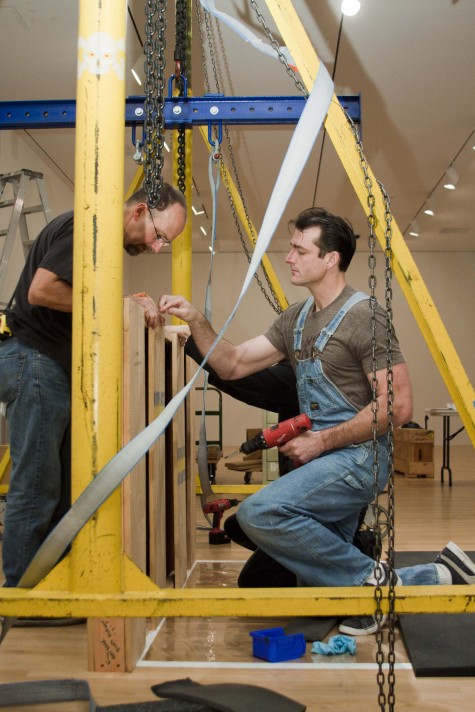
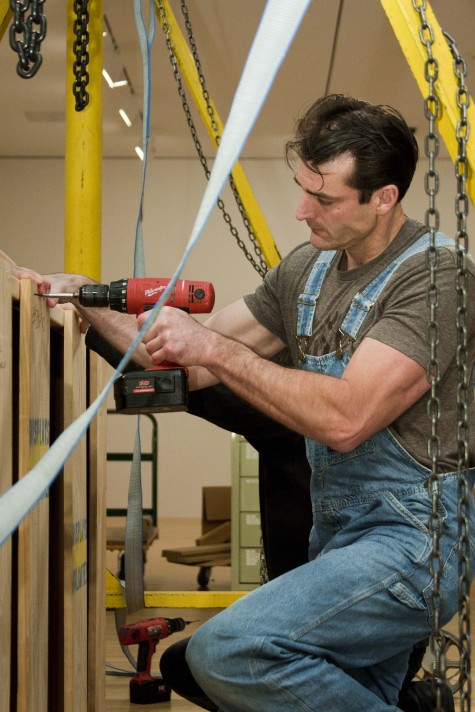
Earlier in the week DMA preparators de-installed a sculpture by Donald Judd in the Museum’s Hoffman Galleries. (They’re setting up for Big New Field.) We thought photos of its crating would be fun to share with our Uncrated readers:

New Acquisitions in African Collection

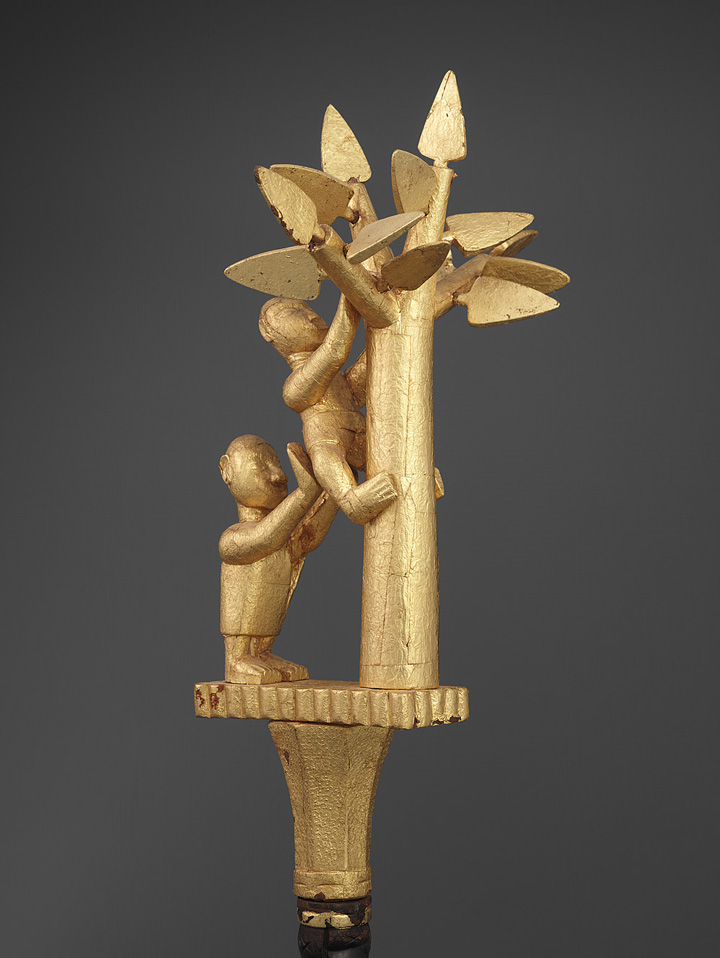
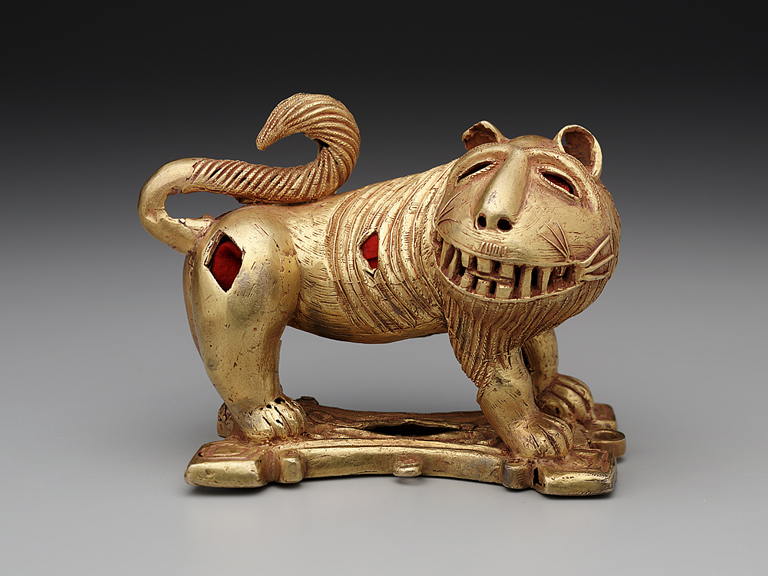
Two works of art from the Asante peoples in Ghana are now part of the DMA’s collection and are currently on view in the African galleries.  Both works of art were made for Asante chiefs and relate to proverbs.

The Linguist Staff has a finial which refers to an Asante proverb that states, “one who climbs a good tree always gets a push,” that is, if a chief’s intentions are good and fair, he will have the support of his people.  A ruler owns several linguist staffs in order to display the one that best visualizes the message he wishes to convey to his people at a particular time.

The Sword ornament in the form of a lion is a hollow cast gold sculpture.  Similar to linguist staff finials, the imagery on sword ornaments is meaningful.  The lion, for example, is an emblem for the bravery of the chief.  A proverb states, “If the lion has no intention to attack, it will not show its teeth before you,” advising a person to heed the warnings of a chief.  This lion’s teeth are bared.

Visit the Museum soon to see these new acquisitions!

Molly Kysar
Head of Teaching Programs

Linguist staff (okyeame poma), Ghana, Asante peoples, first half of 20th century, wood and gold leaf, Dallas Museum of Art, The Eugene and Margaret McDermott Art Fund, Inc., 2010.1.McD

Linguist staff (okyeame poma) (detail), Ghana, Asante peoples, first half of 20th century, wood and gold leaf, Dallas Museum of Art, The Eugene and Margaret McDermott Art Fund, Inc., 2010.1.McD

 Sword ornament in the form of a lion, Ghana, Nsuta State, Asante peoples, c. mid-20th century, cast gold and felt, Dallas Museum of Art, The Eugene and Margaret McDermott Art Fund, Inc., 2010.2.McD

Arts & Learning

In my daily life as an educator at an art museum, I can easily be caught up in the administrative aspects of my job.  With this post, I would like to step back and reflect on the importance of our jobs as art educators – whether in the classroom or at an art museum – and why learning through the arts is so important.

The Partnership for 21st Century Skills is a national organization that “advocates for 21st century readiness for every student.  As the United States continues to compete in a global economy that demands innovation, P21 and its members provide tools and resources to help the U.S. education system keep up by fusing the three Rs and four Cs (critical thinking and problem solving, communication, collaboration, and creativity and innovation).”  Learning through the arts plays an important role in the development of these skills.  “…the arts promote work habits that cultivate curiosity, imagination, creativity, and evaluation skills.  Students who possess these skills are better able to tolerate ambiguity, explore new realms of possibility, express their own thoughts and feelings, and understand the perspective of others.”  View a map for the arts and 21st century skills.

A four-year research initiative at the Guggenheim evaluated the impact of its pioneering arts education program Learning Through Art (LTA) on students’ problem-solving abilities and creativity.  “With this study of the Learning Through Art program, we are pleased to demonstrate that arts education helps develop the skills necessary to persistently and adaptively work through problems,” said Kim Kanatani, Deputy Director and Gail Engelberg Director of Education, Solomon R. Guggenheim Foundation. “By asking students to think like artists, we are imparting 21st-century skills in encouraging them to approach problems with creativity and analytic thought rather than just recitation of facts.”

Finally, the National Art Education Association website has a list of Ten Lessons the Arts Teach, which include “the arts celebrate multiple perspectives” and “”the arts enable us to have experience we can have from no other source.” 

I believe that experiences with works of art can be transformative, and the DMA Teaching Programs & Partnerships department values and supports the work of classroom teachers who are providing these learning experiences for students.  Thank you for the work that you do!

Molly Kysar
Head of Teaching Programs


Archives

Categories