Archive Page 19


Literary Connections to the DMA Collection

Back in October, I blogged about the Beat Generation and Abstract Expressionism.  Since then, I have continued to explore connections between great works of literature and works of art in the DMA collection.  The number of literary connections in our collection is amazing, and I’m excited to share some of them with you.

For example, did you know that the characters of Dick and Nicole Diver in F. Scott Fitzgerald’s Tender is the Night were inspired by the artist Gerald Murphy and his wife Sara?  Fitzgerald even dedicated the novel to them: “To Gerald and Sara–Many fêtes.”  Gerald and Sara Murphy were Americans who made their home on the French Riviera, which is where Part I of Tender is the Night takes place.  The Murphys were also great friends with authors like Fitzgerald and Ernest Hemingway and with artists like Pablo Picasso and Fernand Léger.  The DMA owns two paintings by Gerald Murphy: Watch and Razor.  These are two of only seven paintings by Murphy still known to exist today. 
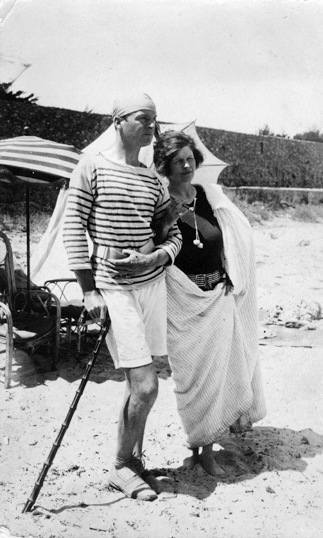
Gerald and Sara Murphy
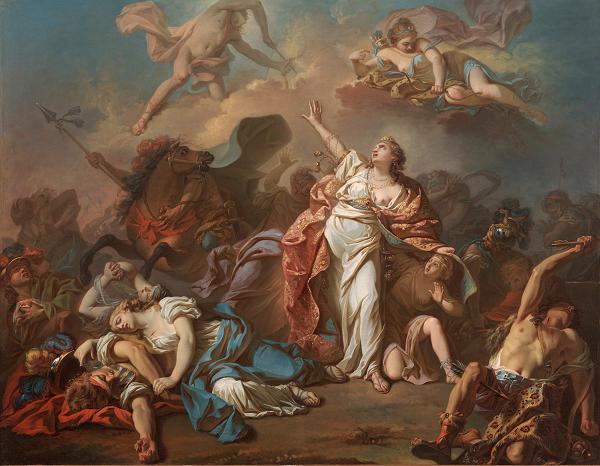
Connections can also be made between works of art in our European galleries and literature from Antiquity.  Jacques-Louis David’s Apollo and Diana Attacking the Children of Niobe shows a scene from Ovid’s Metamorphoses.  Niobe was a woman who boasted about how wonderful her fourteen children were.  The goddess Latona was offended by this and sent her own children–Apollo and Diana–to murder Niobe’s sons and daughters.  David fills his canvas with the attack, and we see thirteen of Niobe’s children lying murdered on the ground (Niobe’s youngest daughter is still alive, shielded by her mother’s cloak).  Ovid’s description of the deaths, especially of Niobe’s sons, are so precise that you can identify which male figure is which son based on the wounds David has included. 

Jacques-Louis David, Apollo and Diana Attacking the Children of Niobe, 1772

My favorite literary connection is between Jean-Baptiste Carpeaux’s Ugolino and His Children and Dante’s Inferno.  Count Ugolino resides in the lowest circle of Hell.  During his lifetime, Ugolino was jailed for treachery and was locked away with nothing to eat.  Eventually, his sons and grandsons began to die, and they pleaded with Ugolino to eat their flesh so he would stay nourished.  Carpeaux’s sculpture shows Ugolino gnawing at his own fingers, and we get a sense of the agony he must be feeling as he tries to decide whether or not to devour his own family members.  
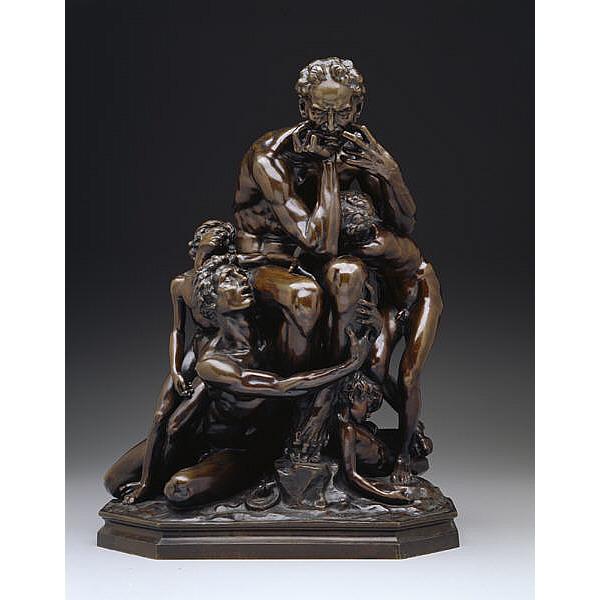
Jean-Baptiste Carpeaux, Ugolino and His Children, 1860 (cast c. 1871)

If you love literature and the Dallas Museum of Art as much as I do, you should attend the Late Night celebration on January 15th.  Arts and Letters Live will kick off their 2010 season with a “Literary Deathmatch.”  Four authors representing different Texas cities  will compete to be named the Literary Deathmatch Champion.  It sounds like an event not to be missed!

Shannon Karol
Tour Coordinator 
Let It Snow…

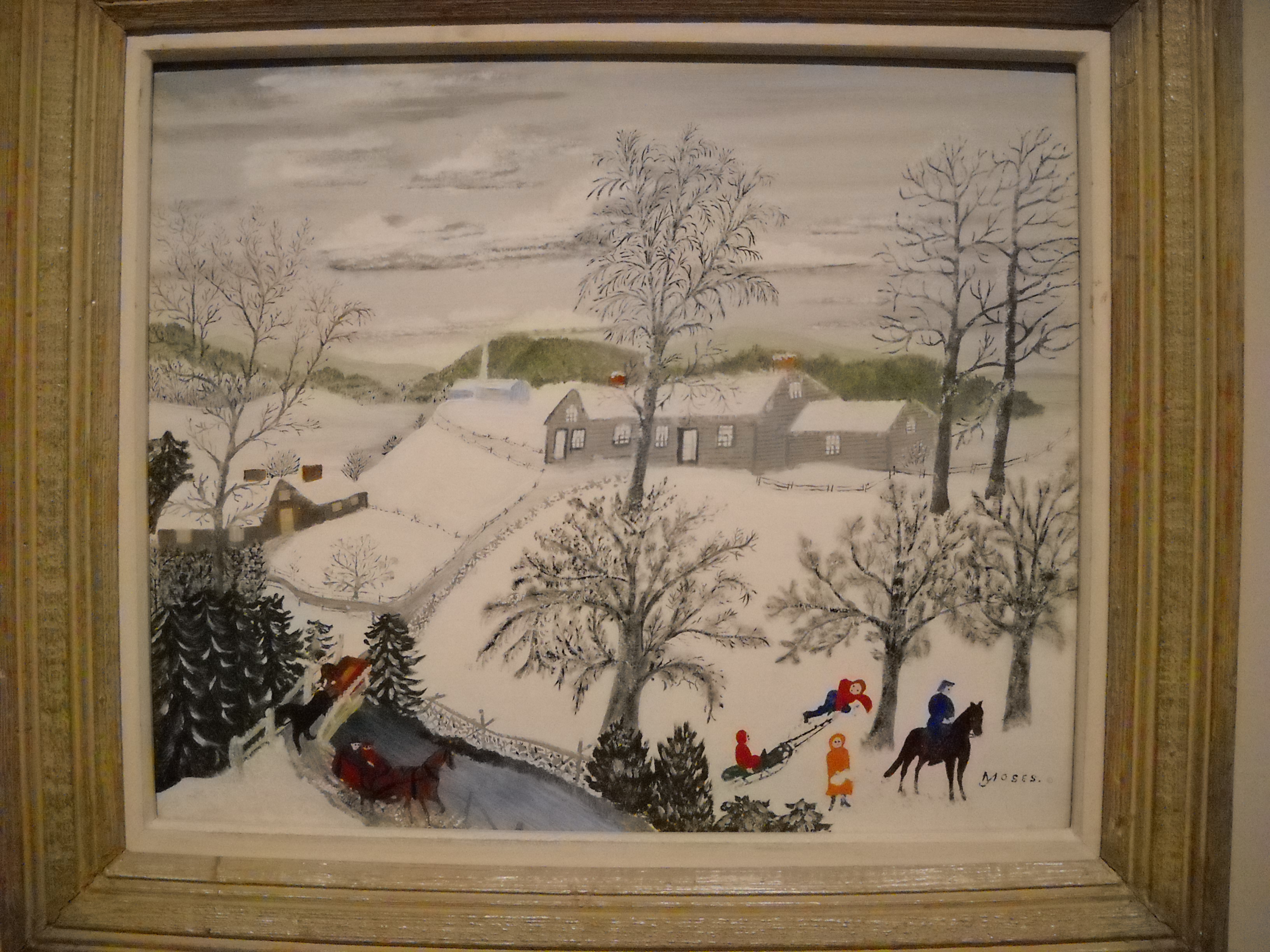
With the holidays right around the corner, I find myself feeling nostalgic for the winters of my childhood.  I grew up in Michigan, so I’m used to having lots of snow and a “white Christmas.”  Living in Dallas, where it’s 60 degrees in December, I sometimes forget that this is actually winter!  To get myself into the holiday spirit, I set out to explore images of snowy fun in our collection.*  Happy Holidays!

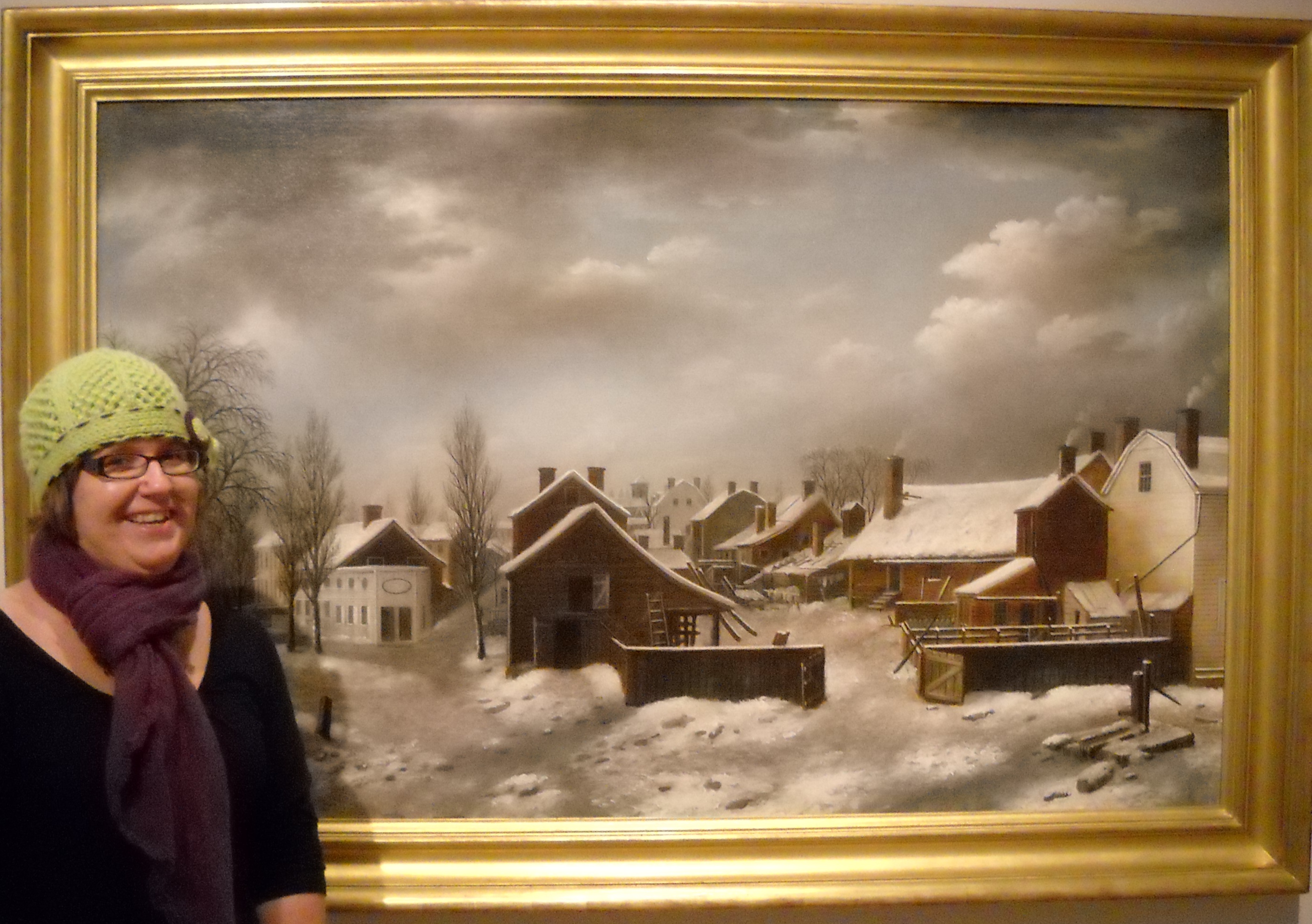
In front of Francis Guy's Winter Scene in Brooklyn, c. 1817-1820

Shannon Karol
Tour Coordinator

Anna Mary Robertson Moses, The Owlkill, 1950

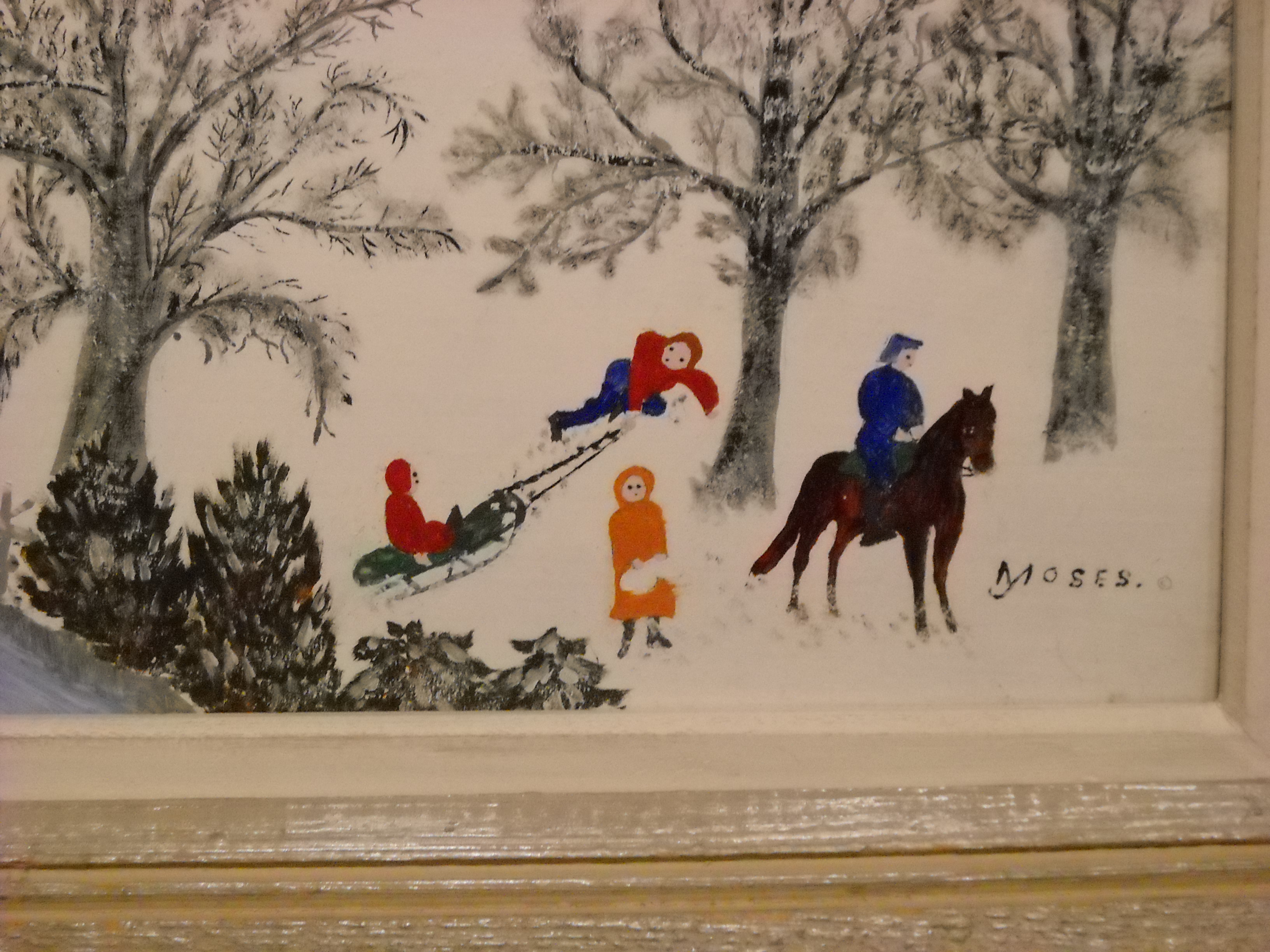
Detail of The Owlkill. I want to go sledding!

Detail of Berthe Morisot's Winter (Woman with a Muff). I had a muff when I was little and loved it.

*My colleagues in the Family Programs department are also getting into the holiday spirit.  Be sure to check out the DMA Family Blog, We Art Family, to read their version of ‘Twas the Night Before Christmas.

Jacob Lawrence: The Life of Toussaint L'Ouverture

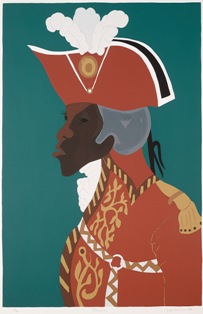
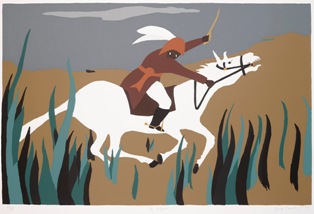
On December 6, Jacob Lawrence: The Life of Toussaint L’Ouverture opened at the DMA (on view through May 23, 2010).  This exhibition of fifteen silkscreen prints illustrates scenes from the life of Toussaint L’Ouverture, a man who played an important role in the Haitian Revolution (1791-1804).  Born a slave, Toussaint learned to read and write and worked his way up through the ranks to become commander in chief of the revolutionary army.   The prints in the exhibition chronicle not only Toussaint’s rise to power, but also the events that led to Haiti becoming the first free black republic in the Western Hemisphere.

Jacob Lawrence, General Toussaint L'Ouverture, 1987

Jacob Lawrence began creating this series of prints in 1986, but they were based on a series of paintings that he completed in 1938 when he was just 21 years old.  It’s fascinating to me that an artist living and working in the 20th century would be interested in a little-known leader of a revolution that happened in the early 19th century.  There is a great quote from Jacob Lawrence that explains why Toussaint was such an important figure to him:

 “I’ve always been interested in history, but they never taught Negro history in public schools…I don’t see how a history of the United States can be written honestly without including the Negro.  I didn’t do it just as a historical thing, but because I believe these things tie up with the Negro today.  We don’t have a physical slavery, but an economic slavery.  If these people, who were so much worse off than the people today, could conquer their slavery, we certainly can do the same thing.” (quoted in Jacob Lawrence: The Complete Prints, 1963-2000: a catalog raisonné, edited by Peter T. Nesbitt, p. 16.)

Jacob Lawrence, The Opener, 1997

We are offering a variety of programs for students and teachers focusing on this exhibition, including a Teacher Workshop on February 6, 2010.  We are also offering docent-guided tours of the exhibition; because it is a small focus exhibition, docents will be using three themes–narrative and biography, commemoration, and leaders–to make connections between the screen prints in the exhibition and works of art in our African and American galleries.  I hope that you’ll join us to explore The Life of Toussaint L’Ouverture!

Shannon Karol
Tour Coordinator
Coming Soon: The Lens of Impressionism

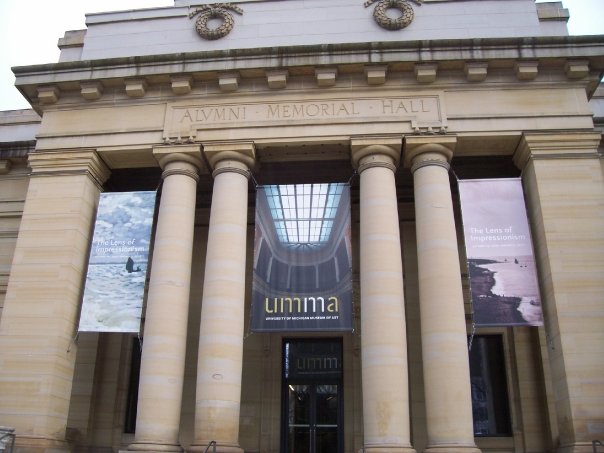
Last week, while spending Thanksgiving with my family in Michigan, I convinced my sister to drive me to Ann Arbor to visit The University of Michigan Museum of Art. I love the UMMA and always look for any excuse to visit when I am home, but this time I had a special assignment. I was there to do background research as we plan tours, teacher workshops, and online teaching materials for The Lens of Impressionism: Photography and Painting Along the Normandy Coast, 1850—1874, an exhibition that will open at the DMA on February 21, 2010.

The Lens of Impressionism at The University of Michigan Museum of Art

The Lens of Impressionism is a great exhibition for teaching about artistic process—you can look at images of the same stretch of coastline and compare what painters and photographers are choosing to include in their compositions. To me, the highlight of the exhibition was seeing a handful of original paper negatives, dating to the 1850s. I can’t even begin to imagine how hard it would be to preserve a paper negative for 150 years. The negatives were displayed in lightboxes next to contemporary prints made from the negatives. They provide a great tool for teaching about photography and making photographic prints—something students may not know about in our digital age.

One of my favorite paintings from the Detroit Institute of Arts is in the exhibition—Edouard Manet’s On the Beach (Sur la plage)—and I can’t wait until it arrives in Dallas and I can visit it whenever I like. However, I think I may have a new favorite painting: Eugène Boudin’s Bathing Time at Deauville, from the National Gallery of Art. Men and women visit the beach dressed in their Sunday best—it’s definitely very different from what we wear to the beach today! I also love the horses and dogs that stand on the shore, and I think this will be a fun painting to explore with students on tours.

We will be offering a variety of programs for students and teachers relating to The Lens of Impressionism: Photography and Painting Along the Normandy Coast, 1850—1874, including an Evening for Educators on February 23, 2010. Visit our website for additional information on tours and teacher workshops, and be sure to check back in February for a new set of online teaching materials.

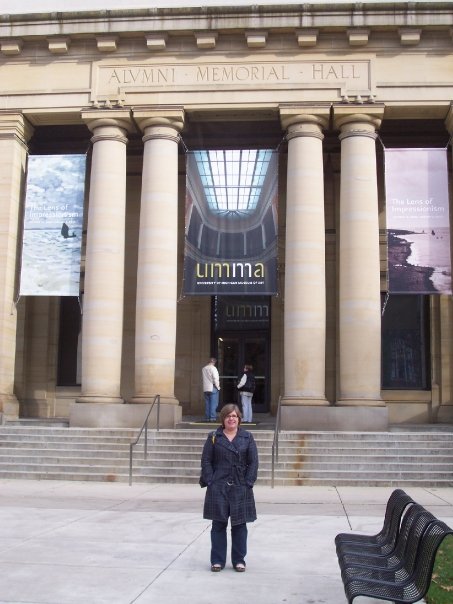
Me, outside of the UMMA

Shannon Karol
Tour Coordinator
The Arts of Africa at the DMA

November has been an exciting month at the DMA—several of us attended the Texas Art Education Association conference last week, we’ve had a busy month with tours, and Thanksgiving is right around the corner. However, the most exciting event (and the one for which I am most thankful) is the publication of a brand new catalogue spotlighting the Museum’s African collection: The Arts of Africa at the Dallas Museum of Art.

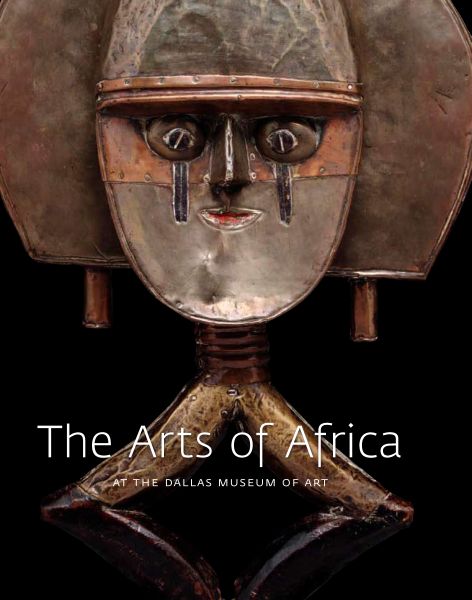
The Arts of Africa at the Dallas Museum of Art

Written by our curator of African Art, Dr. Roslyn Adele Walker, the catalogue has been published to coincide with the 40th anniversary of the DMA’s first acquisition of African art in 1969. The catalogue highlights 110 works of art in our collection and includes beautiful photography of the objects.  Contextual photos have also been included to illustrate how many of the objects would have been (and in many cases still are) used in Africa.

Four years ago, before I was Tour Coordinator at the DMA, I worked with Roz as a McDermott Graduate Curatorial Intern. Over the course of my year with Roz, I contacted many scholars and photographers asking for permission to use their contextual photographs in the catalogue. I also researched various works of art, including our Egungun costume (which I blogged about in September), and I love finally seeing everything in print! This is an exciting moment for the DMA, but also for Roz, and I couldn’t be happier for her.

To celebrate the publication of The Arts of Africa at the Dallas Museum of Art, Roz will give a brief talk, followed by a book signing, on Thursday December 10th at 7:00 pm. I hope you’ll join us in the Center for Creative Connections Theater to learn more about our African collection, and to congratulate Roz on this wonderful accomplishment.

Shannon Karol
Tour Coordinator
The Fourth Graders are Coming!

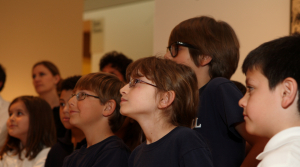
Three years ago, we embarked on a partnership with the Dallas Independent School District  and Dallas ArtsPartners to provide every 4th grader in the district with a docent-guided visit to the Dallas Museum of Art.  Over the past two years, we have welcomed over 22,000 DISD 4th graders to the DMA for “A Looking Journey” tours.  This week marks the start of these visits for the 2009-2010 school year.

I had the chance to tour with a group of fifteen 4th graders from John Reagan Elementary on Tuesday.  They were bright, observant, and enthusiastic—and I think every person in my group participated in our dialogue in the galleries.  I always set up the idea of taking a journey at the beginning of my tour, and these students really got into it.  As we moved from one work of art to the next, they imagined we were on an airplane flying from New York to Africa and Egypt and then on to Europe.  At one point, I even heard train noises coming from behind me!    

Students1

4th Grade Students in the Galleries

I have been looking forward to the start of these visits since July (when I first scheduled these tours), and I was downstairs on Tuesday when the first DISD students arrived at the Museum.  It was such fun to hear their wonder and amazement as they walked through the doors and saw our Barrel Vault for the first time.  Some of my favorite gallery experiences have happened with DISD 4th graders, and I can’t wait to see what adventures the next year holds.

Shannon Karol
Tour Coordinator
The Beat Goes On

A few weeks ago, I gave a Gallery Talk at the DMA that made connections between Abstract Expressionism and the Beat Generation.  I graduated from the University of Michigan with a degree in Art History as well as English, so I am always looking for ways to make literary connections in our galleries.  Jackson Pollock’s Cathedral is one of my favorite paintings in our collection, and it provides the perfect comparison for the writings of the Beat Generation. 

The Beats believe in spontaneity and writing what is on your mind—an “undisturbed flow,” as Jack Kerouac called it.  Part I of Allen Ginsberg’s Howl, an iconic work of Beat literature, is one long run-on sentence.  Ginsberg uses commas and semicolons to punctuate stanzas, but a period does not appear until the very end of Part I.  The Beats also felt that an author should write in the moment and shouldn’t worry about grammar or punctuation (see Jack Kerouac’s The Essentials of Spontaneous Prose, 1959).  Kerouac’s first draft of On the Road was written over the course of three weeks, and in the end looked like one massive paragraph.  He didn’t think about punctuation or line breaks—he just let his words flow.  

So what does all of this have to do with Jackson Pollock?  Just as the Beats were letting words and ideas spontaneously stream onto paper, Jackson Pollock allowed paint to flow from his brush onto canvas.  His gestures draw our eye across—and right up to the edges—of the canvas, and we can imagine how he moved his arm and body through the picture plane.  There is a fantastic quote from Pollock that really illustrates just how similar his technique was with the Beat philosophy of writing: 

“When I am in my painting, I’m not aware of what I’m doing.  It is only after a sort of ‘get acquainted’ period that I see what I have been about.  I have no fear of making changes, destroying the image, etc., because the painting has a life of its own.  I try to let it come through.  It is only when I lose contact with the painting that the result is a mess.  Otherwise there is pure harmony, an easy give and take, and the painting comes out well.” ~Jackson Pollock, My Painting, 1947-1948.

Pollock painted “in the moment,” and his lines and gestures come together to create one unified masterpiece.  It’s also interesting to note another link between Pollock and the Beats–Cathedral was titled by another Beat poet: Frank O’Hara.  O’Hara described the painting in this way: “Cathedral is brilliant, clear, incisive, public—its brightness and its linear speed protect and signify, like the façade of a religious edifice…”
 
 I’m looking forward to continuing to explore interdisciplinary (especially literary) connections in the DMA’s collection and sharing these connections with our docents—and with student groups.  Are there other interdisciplinary connections that you make in your classrooms using the DMA’s collection?  If so, I would love to hear about them!       


Shannon Karol                                                                                                                                                                                                                         Tour Coordinator
Welcome Back, Students!

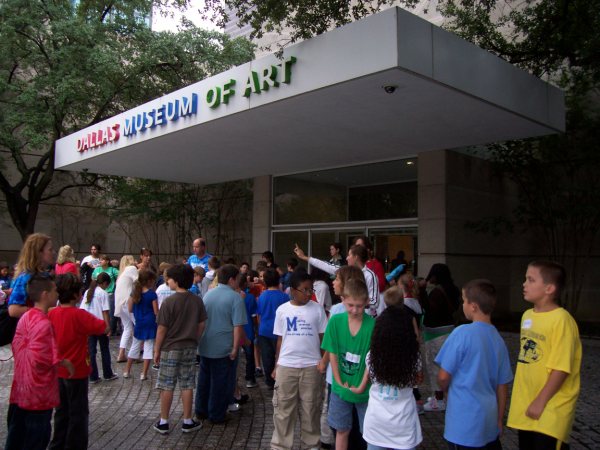
This past Tuesday, September 22nd, was our first day of school tours for the 2009-2010 school year.  I always look forward to the first day of tours—it’s my version of the first day of school.  Our first visitors were 4th graders from McKinney ISD, and they braved the rain and cooler temperatures to visit the DMA for an A Looking Journey tour.

Students waiting to enter the DMA

Students waiting to enter the DMA

 Our A Looking Journey tour allows students to travel the world without ever leaving the Dallas Museum of Art.  The teacher who scheduled this tour requested that all students see Frederic Edwin Church’s The Icebergs and Vincent van Gogh’s Sheaves of Wheat, two stars of our American and European collections respectively.  I also overheard one student asking her docent if they would have a chance to see the mummy.  She was excited to be at the Museum, and the mummy was at the top of her list of things to see while she was here.* 

It’s also great to have our docents back at the Museum, ready to tour.  I was talking with one of our docents on Tuesday who was giving her first tour after having been away last year.  She really missed being with students in the galleries, and couldn’t wait to take those 4th graders on their Looking Journey.  I’m giving an A Looking Journey tour myself today, and I am looking forward to hearing what insights my 4th graders will bring to our tour.  I always learn something new from students in the galleries, and that is why I love my job so much!  And yes, I will be including the mummy on my tour…

 Shannon Karol                                                                                                                                                                                                                         Tour Coordinator

*The mummy is on loan and currently on view in Crossroads: Where Cultures Connect.  Lent by Bridwell Library, Perkins School of Theology, Southern Methodist University, Dallas, Texas.

A Sneak Peek Behind the Curtain

Last week, our new special exhibition was unveiled to the public.  All the World’s a Stage brings together works of art in our collection that deal with the idea of performance.  Performance is a key theme at the DMA this year, as we get ready to welcome a new neighbor to the Arts District: the Dallas Center for the Performing Arts.

 All the World’s a Stage is an exciting exhibition because it brings so many of our favorite works of art together in one place.  You usually never see Shiva Nataraja and Romare Bearden’s Soul Three side-by-side, but they’re only one gallery apart from now until February.

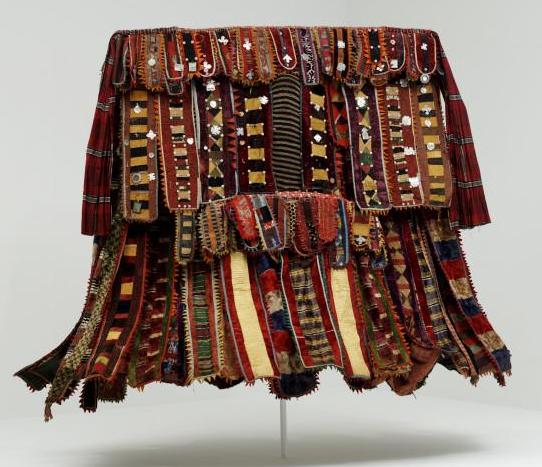
Yoruba Egungun

Yoruba Egungun costume

I’m especially excited that our Yoruba Egungun costume from Nigeria is back on display.  This is one of my favorite works of art in our collection.  Its multiple layers of cloth were added year after year by family members, and it is fun to imagine who added them and why.  This costume is used during a ceremony to honor ancestors—quite different from how we honor our ancestors.  The Egungun ceremony includes singing and drumming, and the Egungun twirls through the crowd like a whirlwind.  It’s definitely a spectacle for the senses, and one I hope to see in person some day!

We’re offering a variety of programs for teachers and students relating to the theme of performance this year, including docent-guided tours of the exhibition.  I hope you’ll attend one of these programs so we can share the excitement of this exhibition with your students.

Shannon Karol                                                                                                                                                                                                                         Tour Coordinator


Archives

Categories