We reached out to our curators and invited them to shed light on significant and/or recent acquisitions that resonate with them during American Artist Appreciation Month. From Diego Rivera to Marsden Hartley, find out what works they picked!
Dr. Anna Katherine Brodbeck, Hoffman Family Senior Curator of Contemporary Art
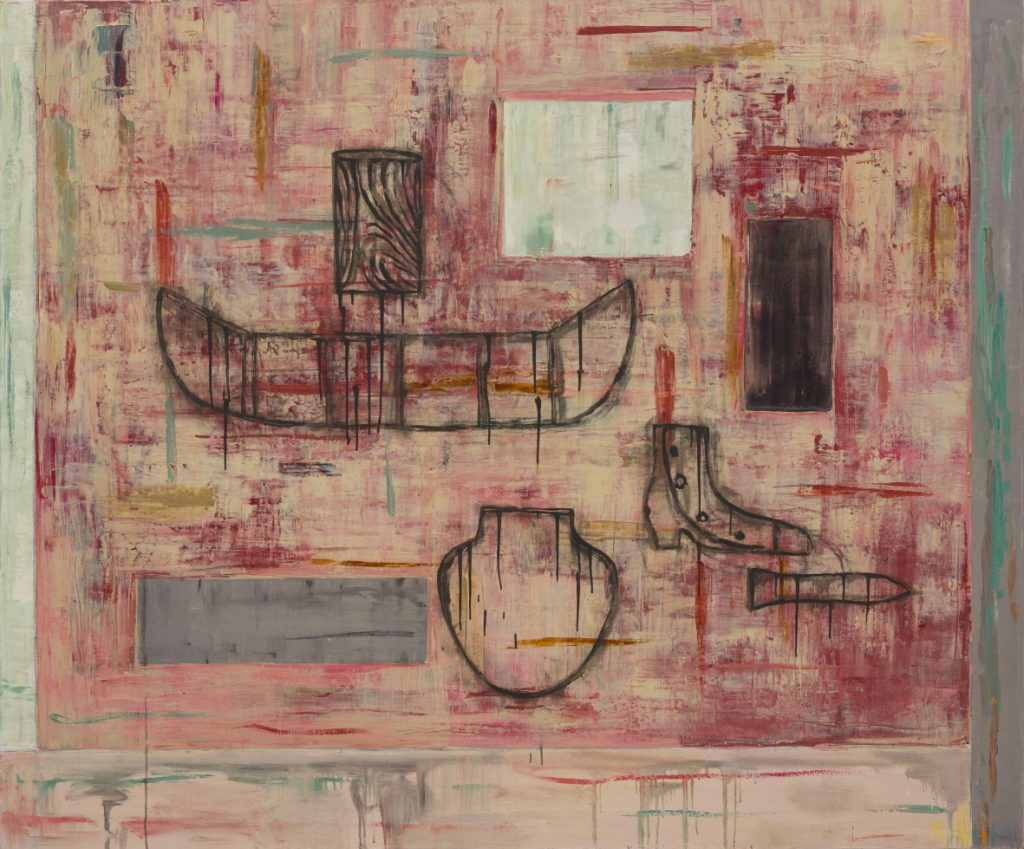
Jaune Quick-to-See Smith, Montana Memories: White Pine, 1989, mixed media on canvas, Dallas Museum of Art, TWO x TWO for AIDS and Art Fund, 2020.15
The paintings of Jaune Quick-to-See Smith—an enrolled Salish member of the Confederated Salish and Kootenai Nation, Montana—comment on the ongoing effects of US colonization and environmental destruction. Seen this way, the linear divisions of the ochre ground reference the US government partitioning of her natal land, while the foregrounded symbols enact a tension between settler and indigenous cultures.
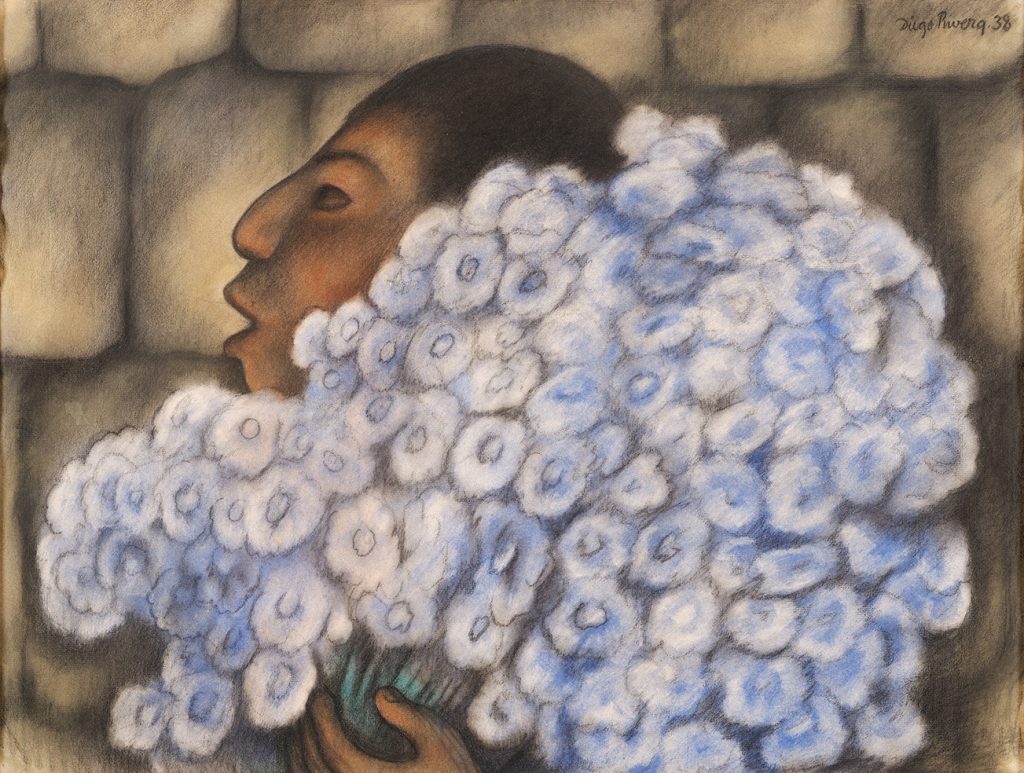
Mark Castro, Jorge Baldor Curator of Latin American Art
Rivera’s works often depict aspects of Mexican culture that make the country unique. This flower seller acts as an avatar for Mexico’s indigenous peoples and cultural traditions. For Rivera, these communities had ancient histories that gave them a greater sense of authenticity and history than could be found in the United States.
Sue Canterbury, The Pauline Gill Sullivan Curator of American Art
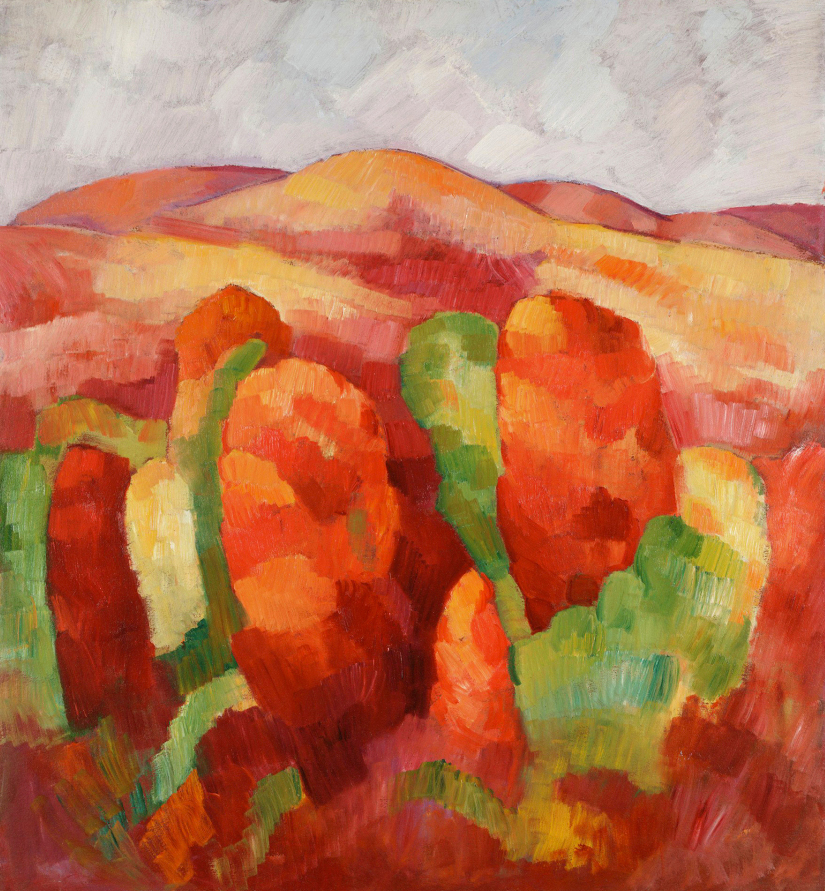
Marsden Hartley, Mountains, no. 19, 1930, oil on board, Dallas Museum of Art, The Eugene and Margaret McDermott Art Fund, Inc., 2008.24.McD
I see the colorful splendor of a New England autumn as an alluring characteristic particularly associated with America. It is the motif to which Hartley turned in 1930 to allay criticisms that his work was not sufficiently “American” in its subject matter. These paintings of the White Mountains helped turn the tide of his career.
Jaclyn Le and graphic installers place environmental wall graphics in Flores Mexicanas: Women in Modern Mexican Art.
My name is Jaclyn Le and I am the Senior Graphic Designer at the Dallas Museum of Art. My primary role here is to design the identity, graphics, and environmental graphic design of each special exhibition and permanent collection gallery, in both English and Spanish. Working closely with the Design and Interpretation team, the Exhibitions team, and each of our curators, my goal is to make sure the identities, graphics, and environmental design of each exhibition are aligned to the curator’s vision, and that they showcase the works and information in the best way possible.
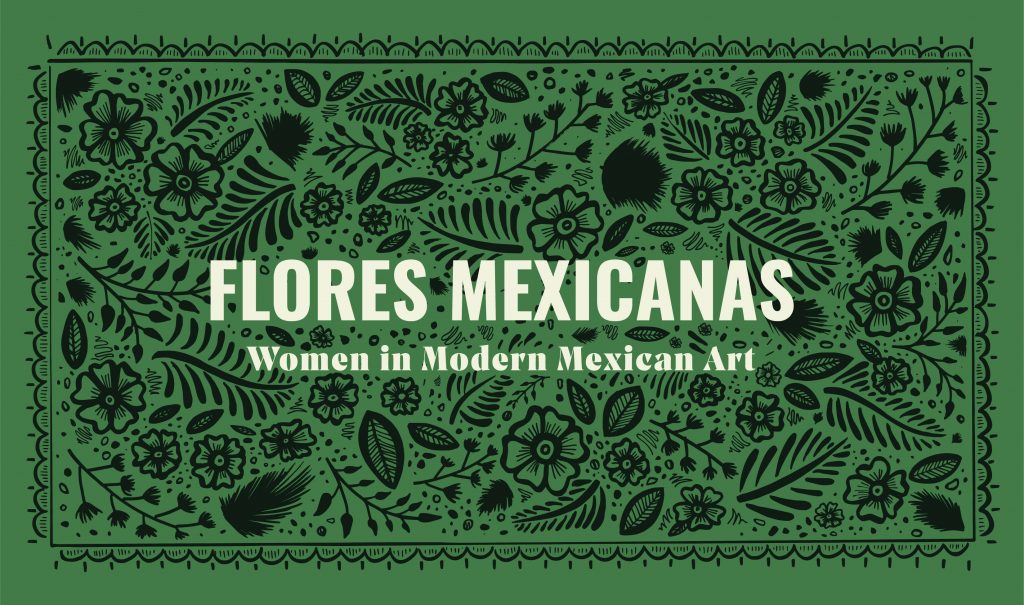
I was extremely excited to work on the design for the exhibition Flores Mexicanas: Women in Modern Mexican Art, curated by Mark Castro, The Jorge Baldor Curator of Latin American Art. We wanted the design to feel approachable, elegant, and vibrant. The typography is a pairing of a bold style seen in Mexican prints from the early decades of the 20th century, paired with a fuller, more feminine typeface.
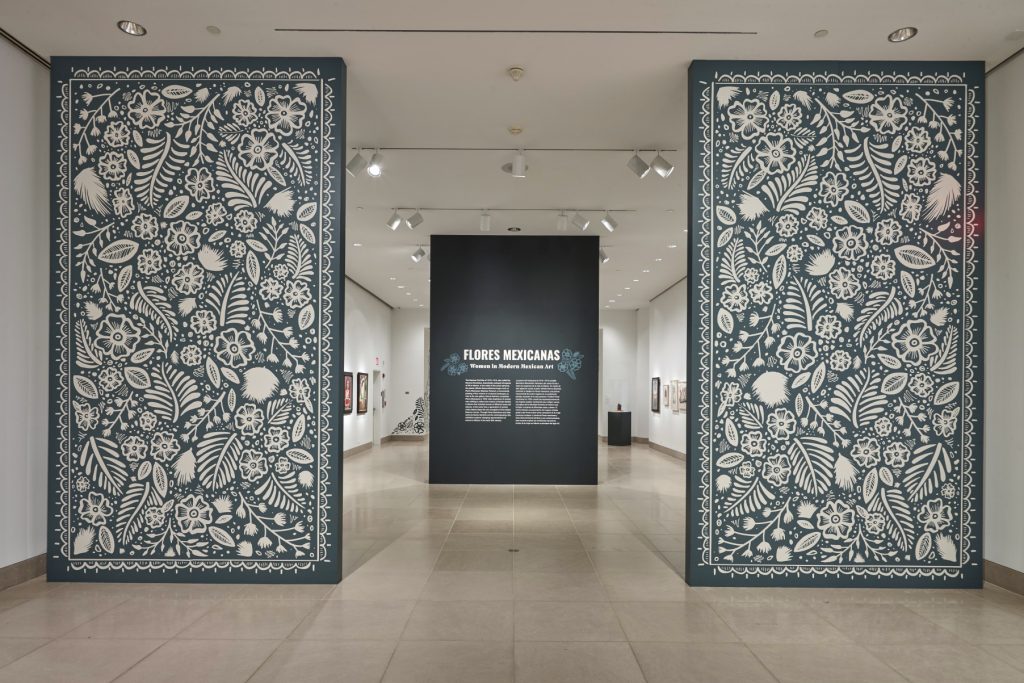
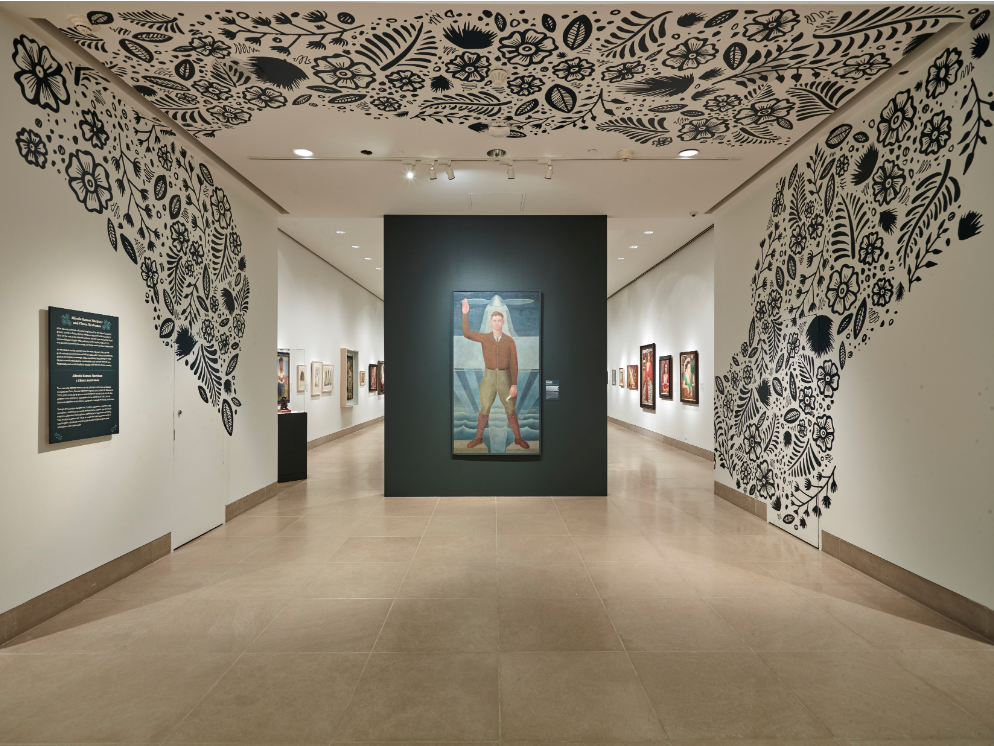
The hand-drawn floral pattern was inspired by Mexican lacquer ware from Olinalá. Our director, Agustín Arteaga, lent me a wonderful book full of different styles to look at, and I developed a monochromatic floral pattern illustrating common motifs I saw throughout the book. This floral pattern flanks both walls of the entrance to the exhibition, and weaves its way up and over the ceiling in the space right before the monumental painting Flores Mexicanas by Alfredo Ramos Martínez.
Tower Gallery Feb 2020
How to draw your own floral set as seen in Flores Mexicanas: Women in Modern Mexican Art.
You can watch this video tutorial to create your own floral set. Use any marker or drawing tool you have to create this. Here, I am using a Crayola Superfine tip marker.
1. Start by plotting three dots that will be the center of your flowers. You want to plot them with enough space in between—a triangle shape would be perfect for this.
2. Draw a ring around each of the three dots. These will be the bases of the flowers to draw petals around.
3. Start drawing the petals around each ring. I have 5-6 petals per flower here. It’s okay if they are not all equal in size—it will look better this way in the end!
4. Once all the petals of your three flowers are complete, draw 2-3 lines coming from the center ring to about halfway across each petal. This will give your flowers more depth and interest.
5. In the negative spaces between your three completed flowers, draw a few slightly curved lines. These will be the stems of your leaves. I have drawn 4 here.
6. Starting with the longest curved stem line, create a teardrop shape around the stem center. You can make these as wide or narrow as you’d like. Draw diagonal lines out from it to create the lines in the leaves. Do this for the other curved line stems from step 5, but save one of the stems for a fuller palm leaf drawing (in the next step).
7. For the palm leaf, create simple leaves by drawing small curved strokes of lines, starting from the top of the stem and working your way to the base. These curved leaf lines will gradually get bigger and bigger with each stroke, as you make your way to the base.
8. Complete your floral set by dropping in dots or circles in the spaces between the three flowers and leaves. Show us your creation by taking a picture and tagging #DMAatHome!
Jaclyn Le is the Senior Graphic Designer at the Dallas Museum of Art.