Posts Tagged 'DMA'


What Hopper Saw

The opening of the much-anticipated exhibition Hopper Drawing: A Painter’s Process is just around the corner. Organized by Curator of Drawings Carter E. Foster of the Whitney Museum of American Art, New York, the show had a very successful run there before coming to Dallas. Shortly before the show’s opening here, we were fortunate to sit down with Carter for a quick Q&A to learn a bit more about the exhibition.
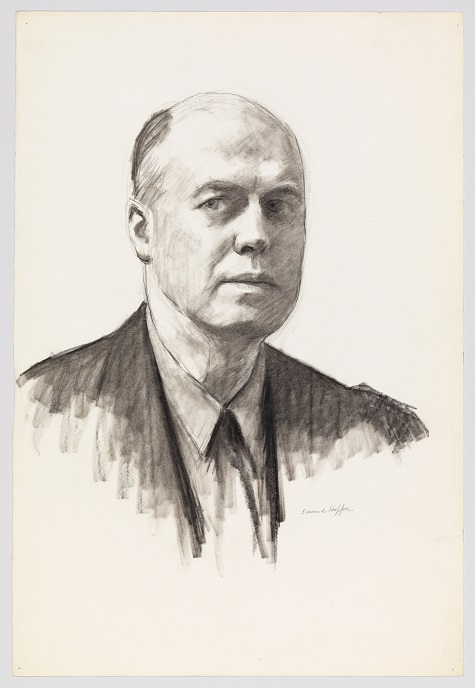
Edward Hopper, Self-Portrait, 1945, fabricated chalk and charcoal on paper, Whitney Museum of American Art, New York; Josephine N. Hopper Bequest 70.287, © Heirs of Josephine N. Hopper, licensed by Whitney Museum of American Art, N.Y.

Edward Hopper, Self-Portrait, 1945, fabricated chalk and charcoal on paper, Whitney Museum of American Art, New York; Josephine N. Hopper Bequest 70.287, © Heirs of Josephine N. Hopper, licensed by Whitney Museum of American Art, N.Y.

In what regard did Hopper hold his drawings? Simply as a means to an end? Or more?
Hopper actually tended to belittle his drawings when asked about them. During his lifetime, he somewhat reluctantly shared them with others when they inquired about his drawings. He most definitely considered himself first and foremost a painter, and his drawings were the means through which he worked out his ideas for paintings. But he also seems to have done them for his own private satisfaction, as many artists do, as a way to keep his hand and eye honed.
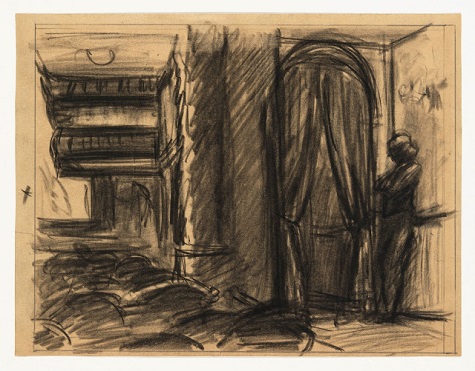
 Study for New York Movie, 1938 or 1939, fabricated chalk on paper, Whitney Museum of American Art. Image courtesy of gwen-photoblog.blogspot.com

Study for New York Movie, 1938 or 1939, fabricated chalk on paper, Whitney Museum of American Art. Image courtesy of gwen-photoblog.blogspot.com


Do you have a favorite drawing,or suite of drawings that have a particular appeal? And, why?
There are many, but I especially love the close-up bust-length study for New York Movie, in which Hopper features just the slightest winsome half-smile on the face of the usherette (in this case, his wife, Jo, who posed for him). The technique of this drawing is just amazing, with a variety of textures and great subtlety in the play of light across her face.

Did you have any preconceived notions that were overturned by what you learned during your research?
No. When I do research I try to let the material lead the way. Research is about asking the right questions, rather than having pre-formed ideas.

How did you discover some of New York’s buildings in Hopper’s drawings?
Mainly by looking at the incredible collection of photographs from the 1930s commissioned by the Local History division of the New York Public Library. They are all online and searchable by street location. Very useful! Also, the collection of “Subway construction photographs” at the New York Historical Society was an important source of images of a vanished New York City.

How did your idea for this exhibition develop?
Since I’m curator of drawings, and half of our drawing collection is works by Edward Hopper, it made perfect sense to propose an exhibition. I was lucky to be able to delve in so deeply.
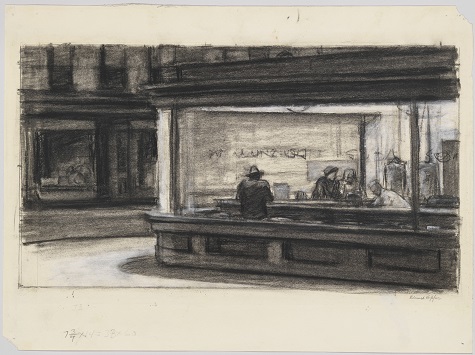
Edward Hopper, Study for Nighthawks, 1942, fabricated chalk and charcoal on paper, Whitney Museum of American Art, New York; purchase and gift of Josephine N. Hopper by exchange 2011.65, © Heirs of Josephine N. Hopper, licensed by the Whitney Museum of American Art, N.Y.

Edward Hopper, Study for Nighthawks, 1942, fabricated chalk and charcoal on paper, Whitney Museum of American Art, New York; purchase and gift of Josephine N. Hopper by exchange 2011.65, © Heirs of Josephine N. Hopper, licensed by the Whitney Museum of American Art, N.Y.

What new discoveries about Hopper’s drawing process did you make in the course of working on this exhibition?
The heart of this exhibition is examining what Hopper saw, what he drew, and what he painted in order to understand better his artistic process. I think the research, in particular on Nighthawks and New York Movie, helped us elucidate more clearly than ever before the way Hopper tweaked and tinkered with reality to get to his uncanny, often strange, and ultimately universal imagery of the human condition and the self in the world.

Martha MacLeod is the curatorial administrative assistant for the European and American Art Department at the DMA.
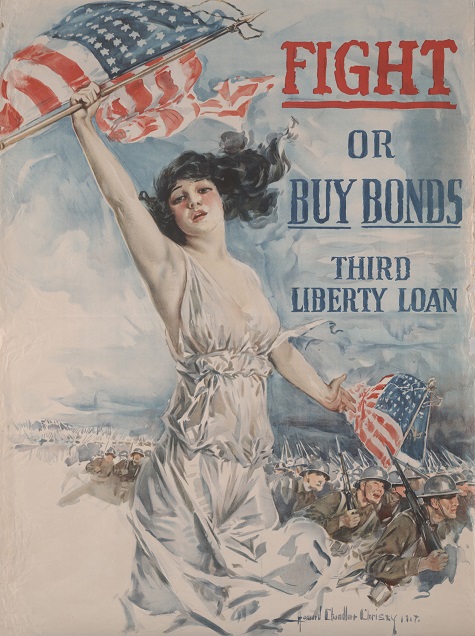
Lend Your Strength

Howard Chandler Christy, Fight or Buy Bonds. Third Liberty Loan,  United States Department of the Treasury, Forbes Lithographic Manufacturing Company, 1917, color offset lithograph, Dallas Museum of Art, gift of Marcia M. Middleton in memory of Joel Middleton

Howard Chandler Christy, Fight or Buy Bonds. Third Liberty Loan, United States Department of the Treasury, Forbes Lithographic Manufacturing Company, 1917, color offset lithograph, Dallas Museum of Art, gift of Marcia M. Middleton in memory of Joel Middleton

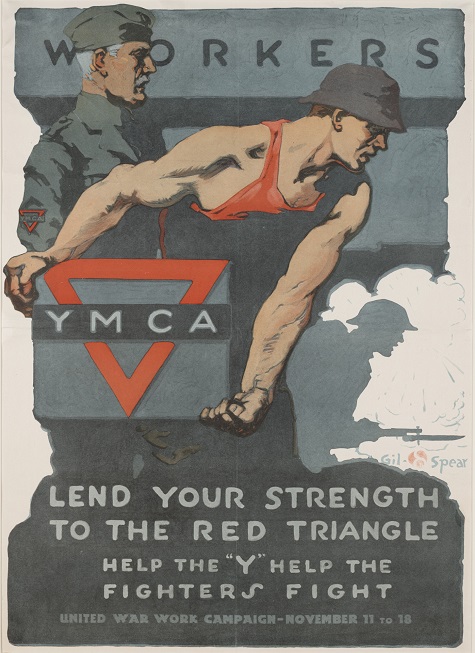
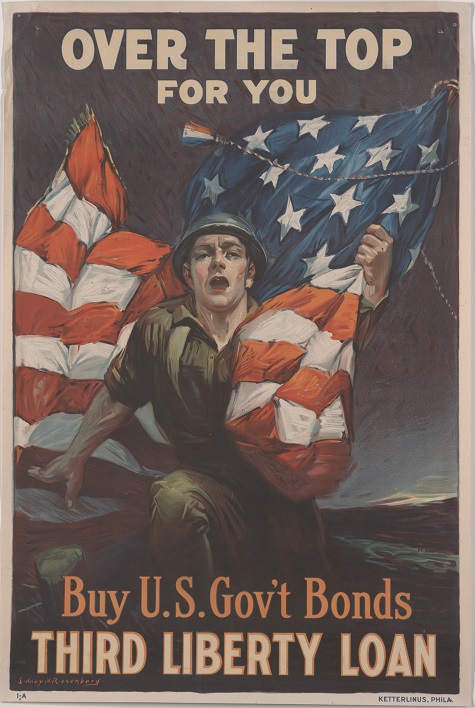
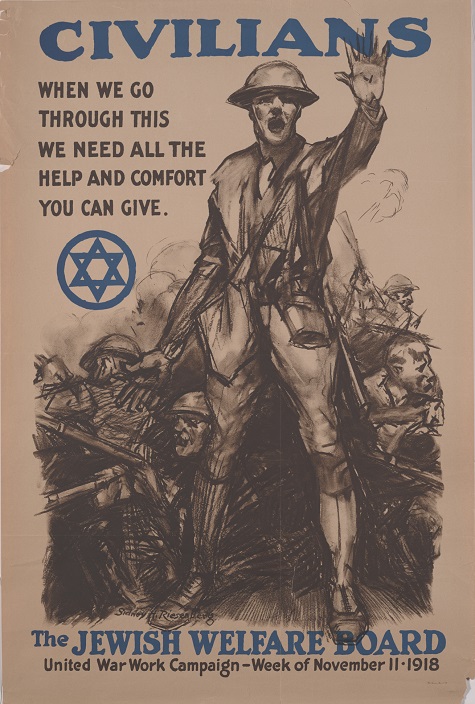
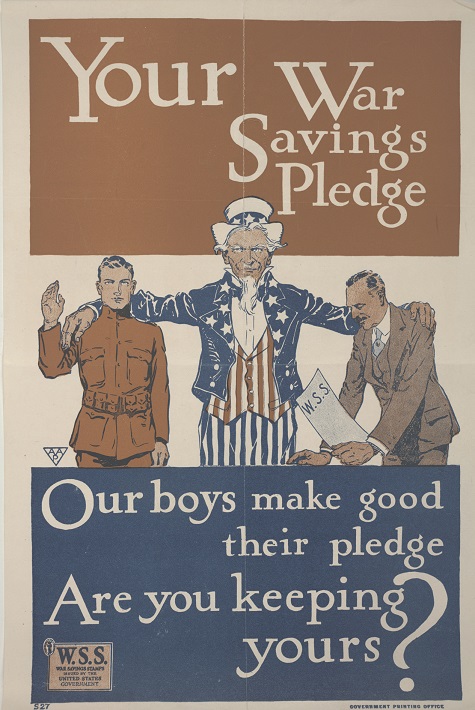
In honor of Veterans Day, we pulled together a few of the War Bond posters from The Great War in the DMA’s collection. Thank you to all who have protected and served this country and to those who continue to do so.

Gil Spear, Lend Your Strength to the Red Triangle. Help the "Y" help the fighters fight. United War Work Campaign, November 11 to 18, United War Work Campaign, 1918, color offset lithograph, Dallas Museum of Art, gift of Marcia M. Middleton in memory of Joel Middleton

Gil Spear, Lend Your Strength to the Red Triangle. Help the “Y” Help the Fighters Fight. United War Work Campaign, November 11 to 18, United War Work Campaign, 1918, color offset lithograph, Dallas Museum of Art, gift of Marcia M. Middleton in memory of Joel Middleton

Sidney H. Riesenberg, Over the Top for You. Buy U. S. Gov't Bonds, Third Liberty Loan, United States Department of the Treasury, Ketterlinus, 1918, color offset lithograph, Dallas Museum of Art, gift of Marcia M. Middleton in memory of Joel Middleton

Sidney H. Riesenberg, Over the Top for You. Buy U. S. Gov’t Bonds, Third Liberty Loan, United States Department of the Treasury, Ketterlinus, 1918, color offset lithograph, Dallas Museum of Art, gift of Marcia M. Middleton in memory of Joel Middleton

Sidney H. Riesenberg, The Jewish Welfare Board United War Work Campaign—Week of November 11, 1918, United War Work Campaign, Alco-Gravure, Inc., 1918, color offset lithograph, Dallas Museum of Art, gift of Marcia M. Middleton in memory of Joel Middleton

Sidney H. Riesenberg, The Jewish Welfare Board United War Work Campaign—Week of November 11, 1918, United War Work Campaign, Alco-Gravure, Inc., 1918, color offset lithograph, Dallas Museum of Art, gift of Marcia M. Middleton in memory of Joel Middleton

Unknown, Your War Savings Pledge. Our Boys make good their pledge. Are you keeping yours?, United States Department of the Treasury, Government Printing Office, 1917, color offset lithograph, Dallas Museum of Art, gift of Marcia M. Middleton in memory of Joel Middleton

Unknown, Your War Savings Pledge. Our Boys Make Good Their Pledge. Are You Keeping Yours?, United States Department of the Treasury, Government Printing Office, 1917, color offset lithograph, Dallas Museum of Art, gift of Marcia M. Middleton in memory of Joel Middleton

Sleeping with Art: Not in the Biblical Sense

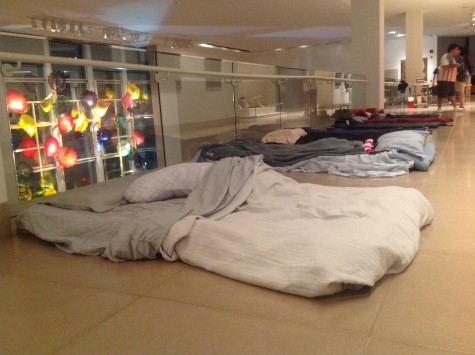
A year ago, before the launch of DMA Friends, we were brainstorming unique and fun rewards to offer. One idea we all jumped on was to hold a DMA Overnight at the Museum. We decided that this would be the “big reward” for DMA Friends to redeem, worth 100,000 points!

Ten months later, ten DMA Friends had earned enough points to redeem the reward. So on Friday, November 1, we hosted our first DMA Overnight!

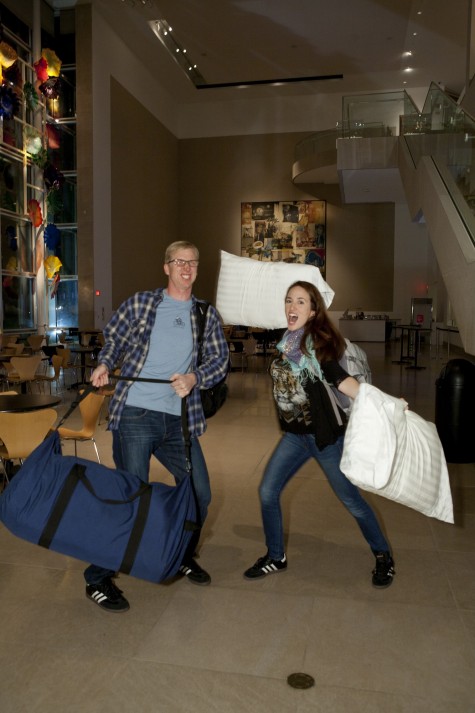
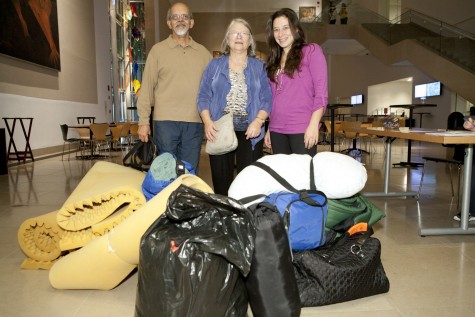
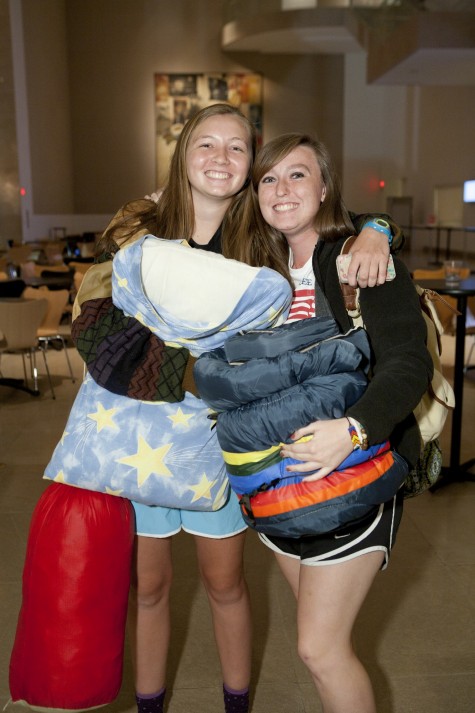
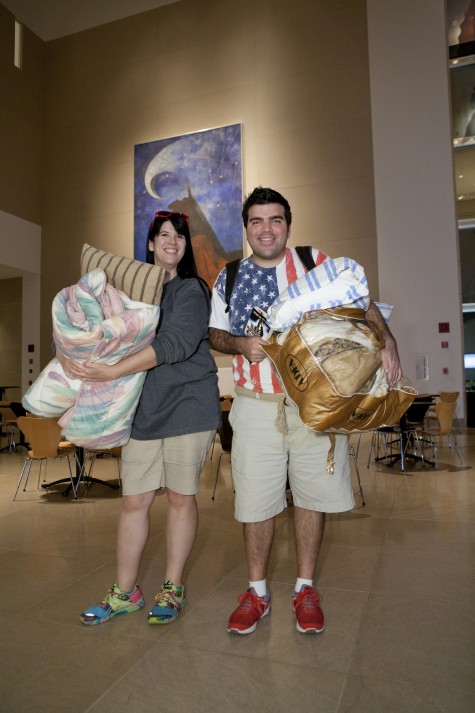
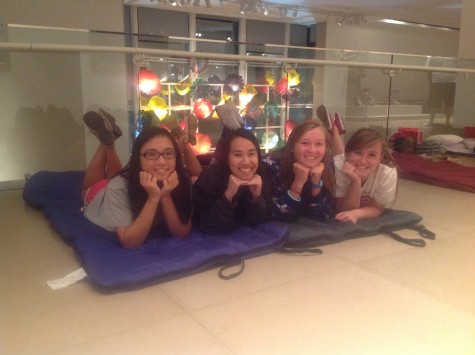
The Overnight Crew!

The Overnight Crew!

We started planning for the DMA Overnight late this summer, and the question that we kept asking ourselves was “what are we going to do with our guests this evening?” Could they roam free for hours on end, should we pack the evening with activities, would they even want to sleep at some point or test their endurance by staying awake the entire night?

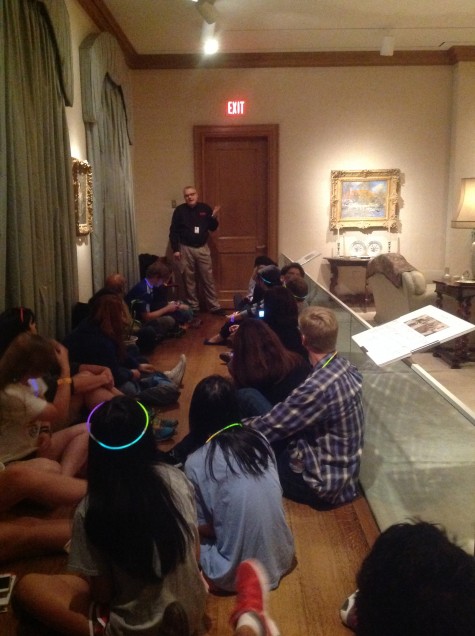
After researching other museums’ overnight programs, which were mostly nature and science museums, we put together a schedule that included an hour of free time, a curator-led tour, three different gallery activities, a midnight snack, an optional early sleep time, watching a film or playing games, and finally a time for “lights out,” when everyone had to be in their sleeping bags for the night (which ended up being close to 4 a.m.).

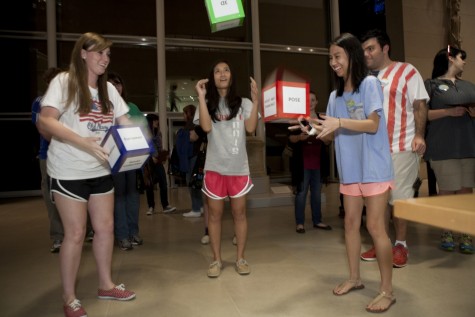
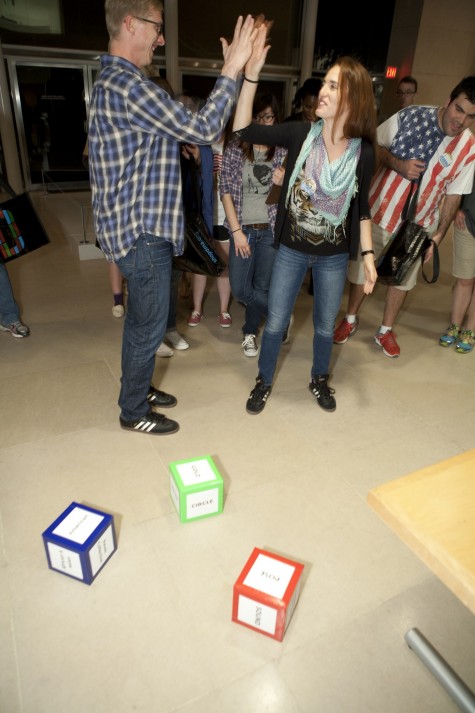
Knowing this group had done a lot at the DMA (they did earn 100,000 points after all!), we wanted them to have a new experience in the galleries, so we created a game for the DMA Overnight called Roll with It! This competitive dice game took the guests throughout the Museum as they searched for a work of art that matched the roll of the dice. One die gave a gallery location, one gave a feature that the work needed to include (red, 3D, animals), and one gave an action for the guests to do (pose, sketch, make a sound) in response to their chosen work of art. The team that completed the most rolls in 30 minutes won the game.

DMA Overnight by the numbers:

1,000,000 – points earned by 10 DMA Friends to attend the Overnight

23 – Friends

108 – glow sticks worn

3 – hand-made dice

10 – “art babies” created during the Creativity Challenge

1 – ghost story

5 – Friends who got up early to do yoga in the galleries

4 – average number of hours Friends slept during the DMA Overnight

Lights Out at the DMA

We were also excited to have Luke Darby from the Dallas Observer join us for the DMA Overnight. You can read about his experience here.

Stacey Lizotte is head of adult programming and multimedia services at the DMA, and designated RA of DMA Overnight.

A Colorful Anniversary

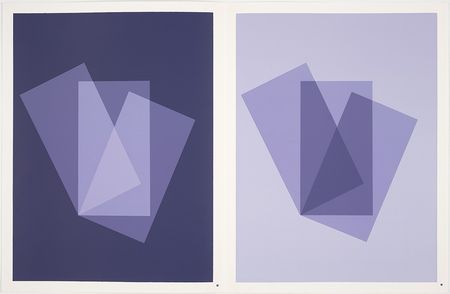
Josef Albers "The Interaction of Color" Plate XI

Josef Albers, The Interaction of Color, Plate XI

In 1963, the Dallas Museum of Fine Arts celebrated the publication of Josef Albers’ The Interaction of Color with an exhibition of the portfolio and 22 Albers paintings from the Sidney Janis Gallery in New York. Albers attended the opening of the exhibition and gave a lecture on his theories of color.

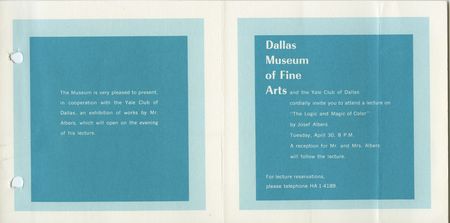
Invitation to Josef Albers lecture at the DMFA,

Invitation to Josef Albers’ lecture “The Logic and Magic of Color” at the DMFA on April 30, 1963

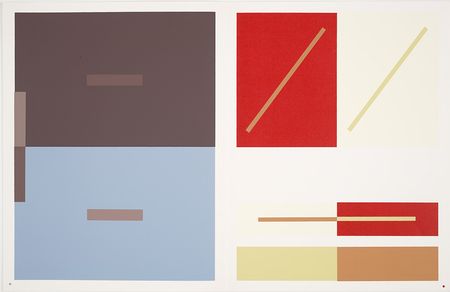
According to Albers, the portfolio “shows a new way of teaching color, of studying color . . . to make our eyes sensitive to the wonders of color interaction.”

Josef Albers "The Interaction of Color" Plate VII

Josef Albers, The Interaction of Color, Plate VII

The Interaction of Color has never gone out of print and remains influential among teachers, artists, and designers. Yale University Press has even developed a popular app, available here.

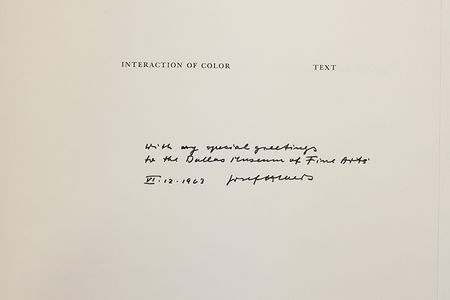
The Mayer Library at the DMA has in its collection the portfolio, which Albers presented in 1963, inscribed “with my special greetings to the Dallas Museum of Fine Arts.”

Inscription to the Dallas Museum of Fine Arts  from Josef Albers in "Interaction of Color"

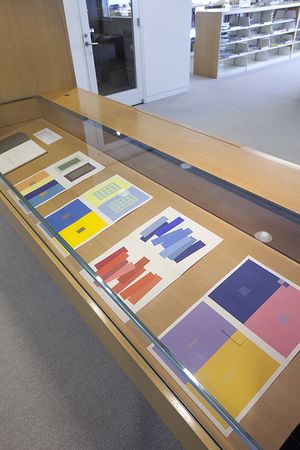
Several silkscreen color plates from the portfolio are currently on display in the Mayer Library.

ALI_03

Selected plates from The Interaction of Color on view in the Mayer Library

Mary Leonard is the librarian at the Dallas Museum of Art.

#DMAGiveMore

DSC_0800
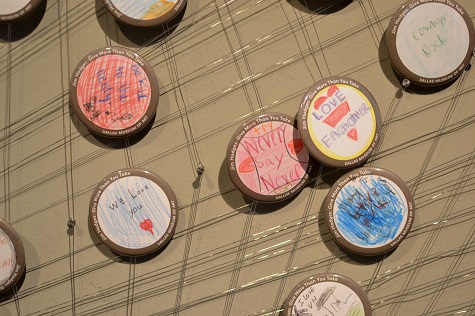
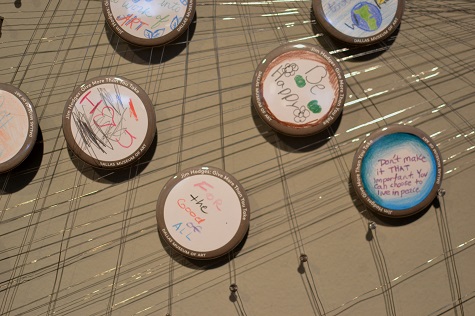
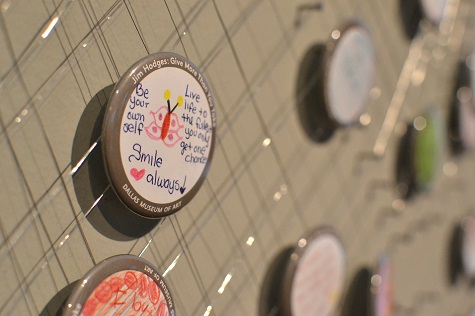
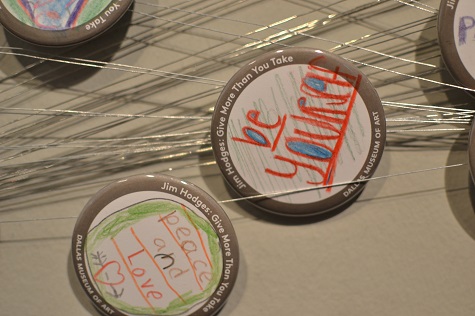
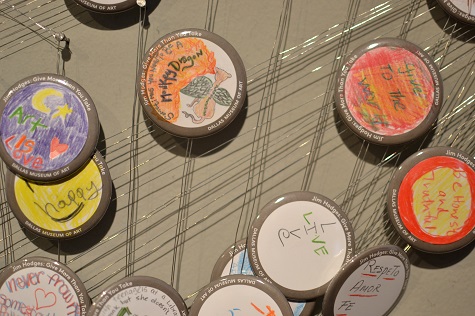
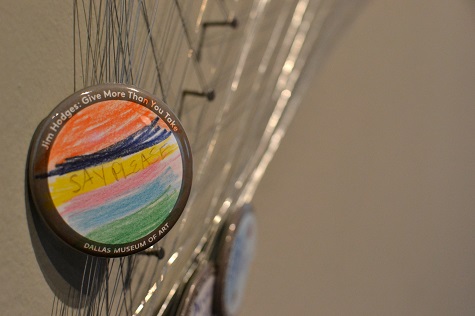
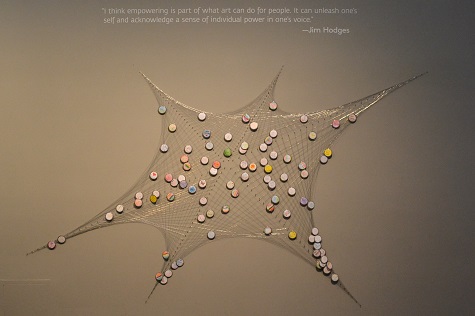
The Center for Creative Connections (C3) has taken the Jim Hodges exhibition title, Give More Than You Take, as a call to action. Hodges gave the exhibition this title after reflecting on what it means to be an artist and have a voice in our community. Inspired by this idea of the power of our individual voices, we are offering visitors a chance to consider how they might use their voices in creative and positive ways.

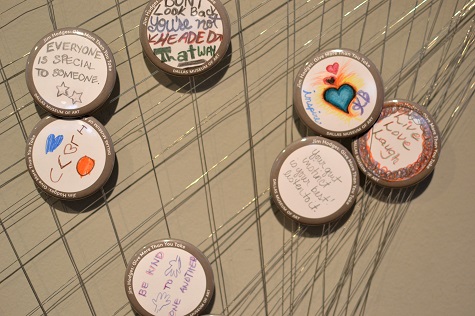
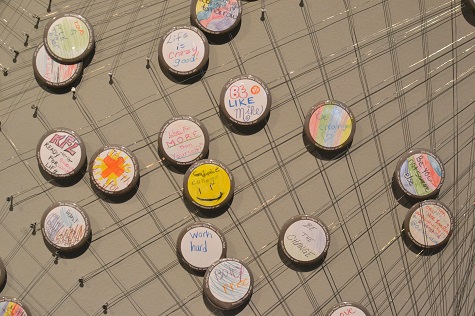
Throughout the run of the exhibition Jim Hodges: Give More Than You Take, we are hosting a Community Exchange in C3. You can make a button with a personal, positive motto that you want to share with the community. Then leave the button you create on our Community Exchange wall and take someone else’s button from the wall.

Wear the button you take out into the community to share a positive message. Document your button’s journey by tagging photos with #DMAGiveMore (check out our #DMAGiveMore on the DMA’s Instagram).

Want to truly give more than you take? Make a positive gesture by giving your new button away to someone else.
DSC_0072

Jessica Fuentes is the C3 gallery coordinator at the DMA.

DMA Park Rangers

It’s hard to believe one whole year has passed since our neighbor Klyde Warren Park  opened its gates. In honor of the first anniversary, we created a Park Rangers guide to the DMA.

The role of a ranger is to care for and protect the flora and fauna of the park and to educate visitors about them. As a former park ranger, I can personally attest that the jobs that we do here at the DMA aren’t entirely different! We just focus on works of art instead of nature. And, there is actually quite a bit of nature to be investigated within the Museum’s walls.

Come to the DMA and explore nature on the Park Rangers self-guided tour. Print it at home before your visit or ask a friendly gallery attendant—the DMA’s own version of a park ranger—for one when you arrive.

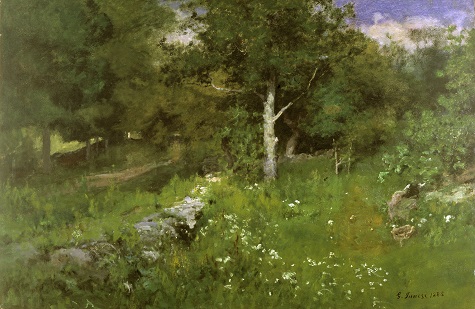
George Inness, Summer Foliage, 1883, oil on canvas, Dallas Museum of Art, bequest of Joel T. Howard

George Inness, Summer Foliage, 1883, oil on canvas, Dallas Museum of Art, bequest of Joel T. Howard

One tour stop is George Inness’s Summer Foliage, which shows the artist’s unique ability to bring to life a traditional landscape scene. After your Museum visit, saunter over to Klyde Warren Park to experience nature firsthand, right in the middle of the Dallas Arts District!Practice capturing your own landscape with a camera or a phone. Don’t forget to tag your photo #DMAParkRanger.

Andrea Vargas Severin is the interpretation specialist at the DMA.
A Rainy DMA Day

As a native Texan, it is ingrained in me to celebrate the rain whenever it decides to appear. As a child, I thought rainy days should be treated like snow days – with a day off from school!If you are like me and struggle with being productive on those rare rainy days in Dallas, I encourage you to play hooky and view the DMA’s collection in a new (darker and stormier) light. Below are my two favorite places at the DMA to celebrate Mother Nature’s greatest performance in Texas – a fall shower!
chihuly
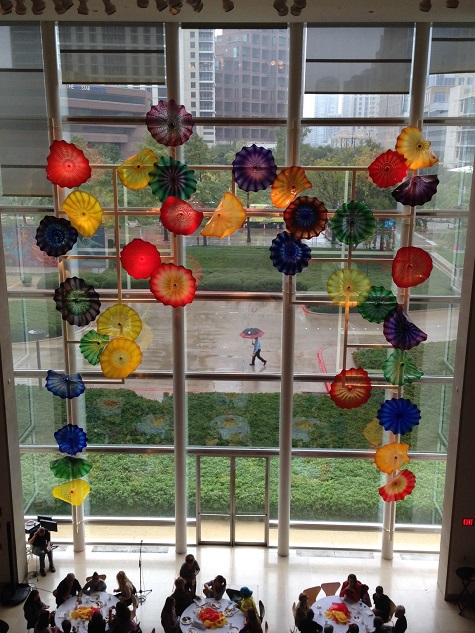
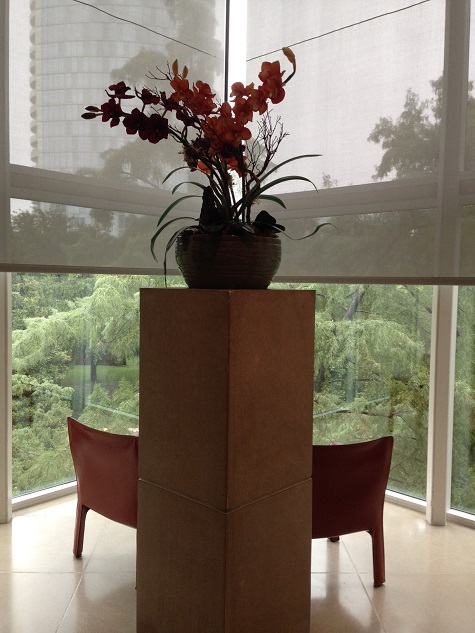
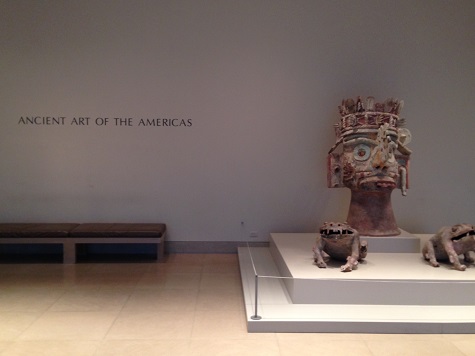
The Level 4 landing outside the Ancient American Art Galleries is the #1 spot in my opinion. You can observe a storm rolling in through the large window framed by our Dale Chihuly glass sculpture, Hart Window, or sit down in the corner windows with a friend and watch the raindrops fall on the trees.
corner window
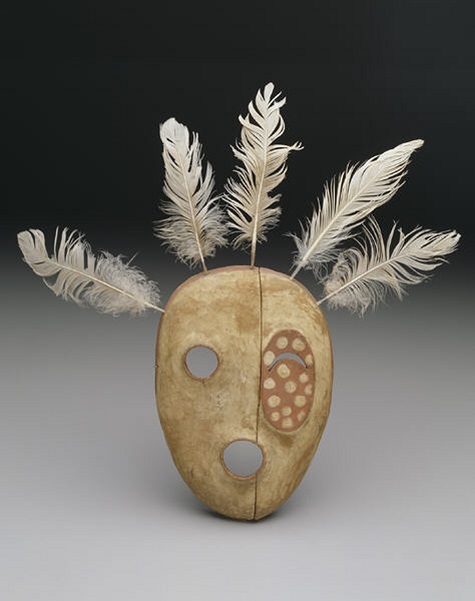
This location is perfect because it is next to the head of the rain god Tlaloc. Among the cultures of Central Mexico during the 14th to 16th century, Tlaloc controlled rain, lightning, and thunder. According to DMA legend, every time Tlaloc is disturbed, rain will follow. It’s only fitting that the best seat in the house to watch a rainstorm would be right next to him! Find out more about Tlaloc and his rain powers on the DMA’s smartphone tour.
tlaloc

kelly
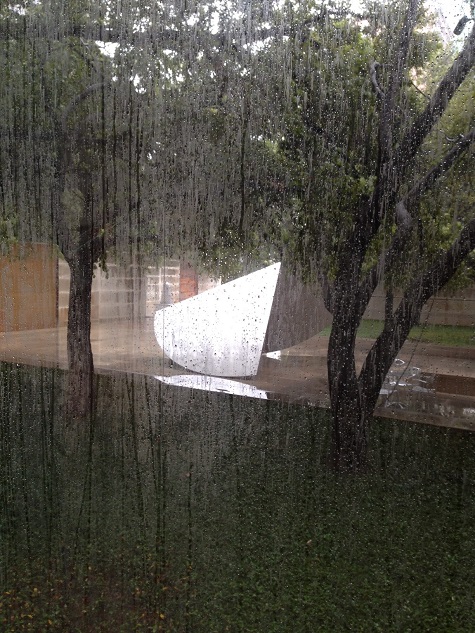
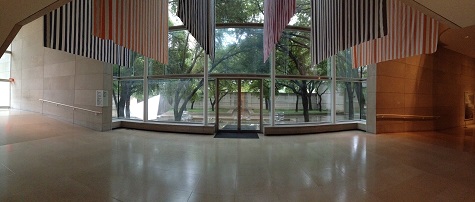
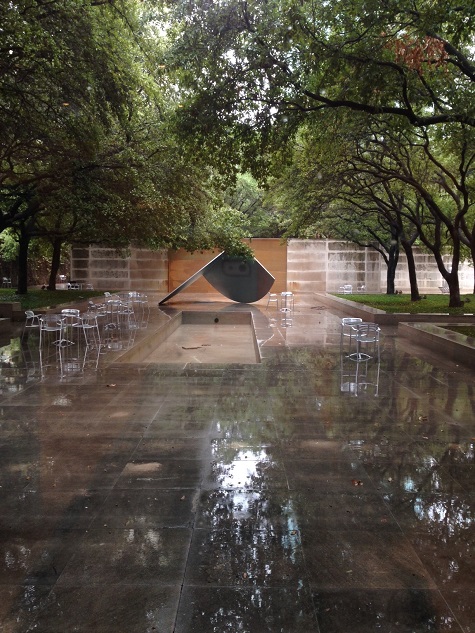
Another great spot to watch the rain is by the DMA’s Sculpture Garden. If you are prepared for the weather, walking around the garden during a light drizzle is quite lovely. But if you’d like to stay dry, I suggest sitting underneath Daniel Buren’s Sanction of the Museum, outside the Hoffman Galleries in the Concourse.
buren
Perching here gives you a beautiful view of Ellsworth Kelly’s stainless steel piece Untitled as the water runs down its sides. Plus, with all the raindrops on the window you can pretend you’re outside instead of warm and cozy and surrounded by contemporary art!
sculpture garden
If you’ve been lucky enough to catch a rainstorm here at the DMA, leave a comment and tell us your favorite rainy day art spots.

Madeleine Fitzgerald is the McDermott Education Intern for Adult Programming and Arts & Letters Live at the DMA.

Hocus Pocus

Halloween is just around the corner and it has us seeing haunting references in works at the DMA and treats throughout the Museum’s galleries. Tell us which works cause you to have a hair-raising Museum visit.

Honoring Luc Tuymans and TWO x TWO

This year marks the 15th anniversary of TWO x TWO for AIDS and Art, the annual contemporary art auction held at The Rachofsky House benefitting the Dallas Museum of Art and amfAR, The Foundation for AIDS Research. As a part of TWO x TWO for AIDS and Art 2013, the renowned Belgian artist, Luc Tuymans, will receive the amfAR Award of Excellence for Artistic Contributions to the Fight Against AIDS this weekend, in recognition of his generosity and support of amfAR’s programs. In 2009, the Dallas Museum of Art presented Tuymans’ first retrospective of paintings in the United States, and he has since become one of the most significant artists of his generation with work represented in the world’s most important public and private collections.

Tuymans’ work draws on the historical traditions of Northern European art, as well as photography, television, and cinema, to capture the human condition of the late 20th and 21st centuries. Tuymans is best-known for examining the memory traces of trauma, specifically focusing on politically-charged topics like, the Holocaust, the American response to 9/11, and Belgium’s controversial role in post-colonial Congo.

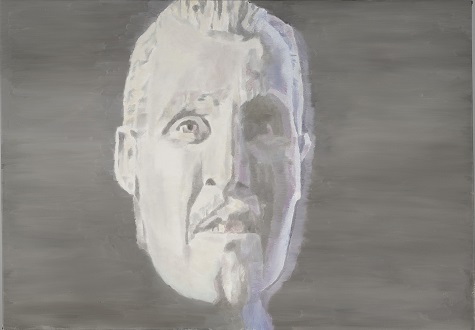
Luc Tuymans, The Man From Wiels II, 2008, oil on canvas, The Rachofsky Collection and the Dallas Museum of Art through the DMA/amfAR Benefit Auction Fund

Luc Tuymans, The Man From Wiels II, 2008, oil on canvas, The Rachofsky Collection and the Dallas Museum of Art through the DMA/amfAR Benefit Auction Fund

In The Man From Wiels II, Tuymans explores issues of history and memory, as well as the relationship between photography and painting. This painting was purchased in 2009 with funds from the DMA/amfAR Benefit Auction and is currently on view, along with Tuymans’ Mirror, at the DMA.
Meg Smith is the contemporary art curatorial administrative assistant at the DMA

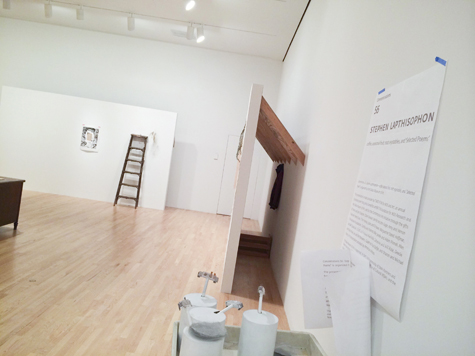
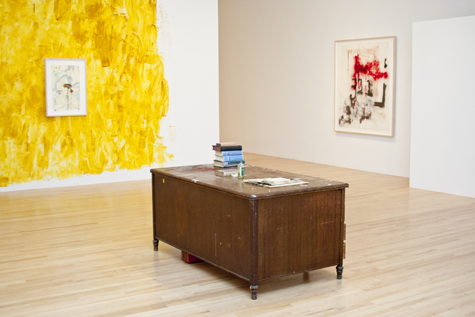
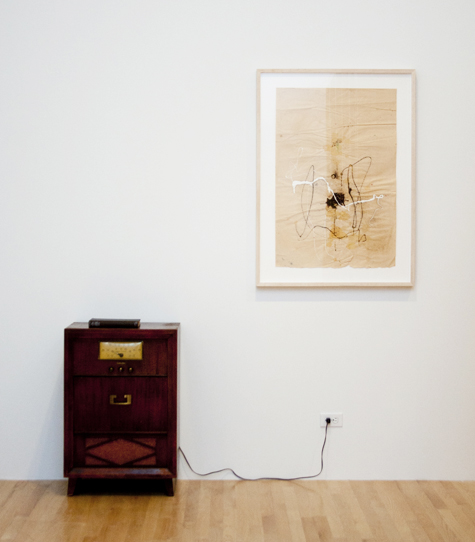
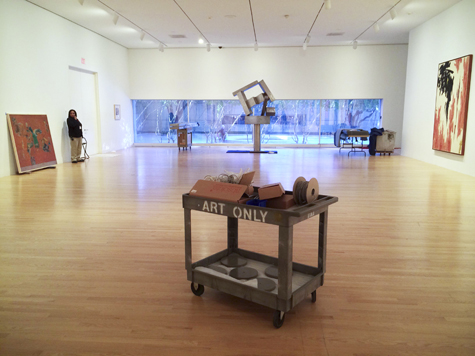
coffee, seasonal fruit, root vegetables, and “Selected Poems”

How do you install coffee, seasonal fruit, root vegetables, and “Selected Poems”? Below, get a sneak peek, including a look at works from the DMA’s contemporary collection, before the opening of Concentrations 56: Stephen Lapthisophon—coffee, seasonal fruit, root vegetables, and “Selected Poems” on Sunday.
f

14

15

a

e


Archives

Categories