Posts Tagged 'Dallas Museum of Art'


Youth and Beauty in the Harlem Renaissance

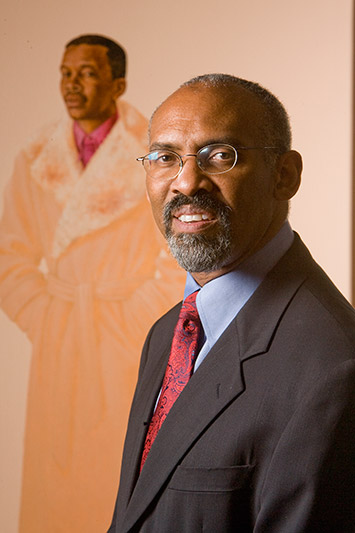
Regarded as one of the premier art historians on the Harlem Renaissance, Dr. Richard Powell will be joining us on Friday, May 18, for our Late Night celebration centered on the Harlem Renaissance and the Youth and Beauty: Art of the American Twenties exhibition.

Dr. Powell, the John Spencer Bassett Professor of Art & Art History at Duke University, has been writing on art and curating since 1988, when he received his Ph.D. from Yale University. He has worked with the Studio Museum in Harlem, the Whitney Museum of American Art, and the Smithsonian American Art Museum. We asked him a few questions about his work before he joins us on Friday.

You’ve worked extensively on African diaspora, American art, and African American art.  What drew you to the Harlem Renaissance specifically?

So much of the work during this period was trail-blazing. It was pushing against conventions to make a bold, new statement in art.

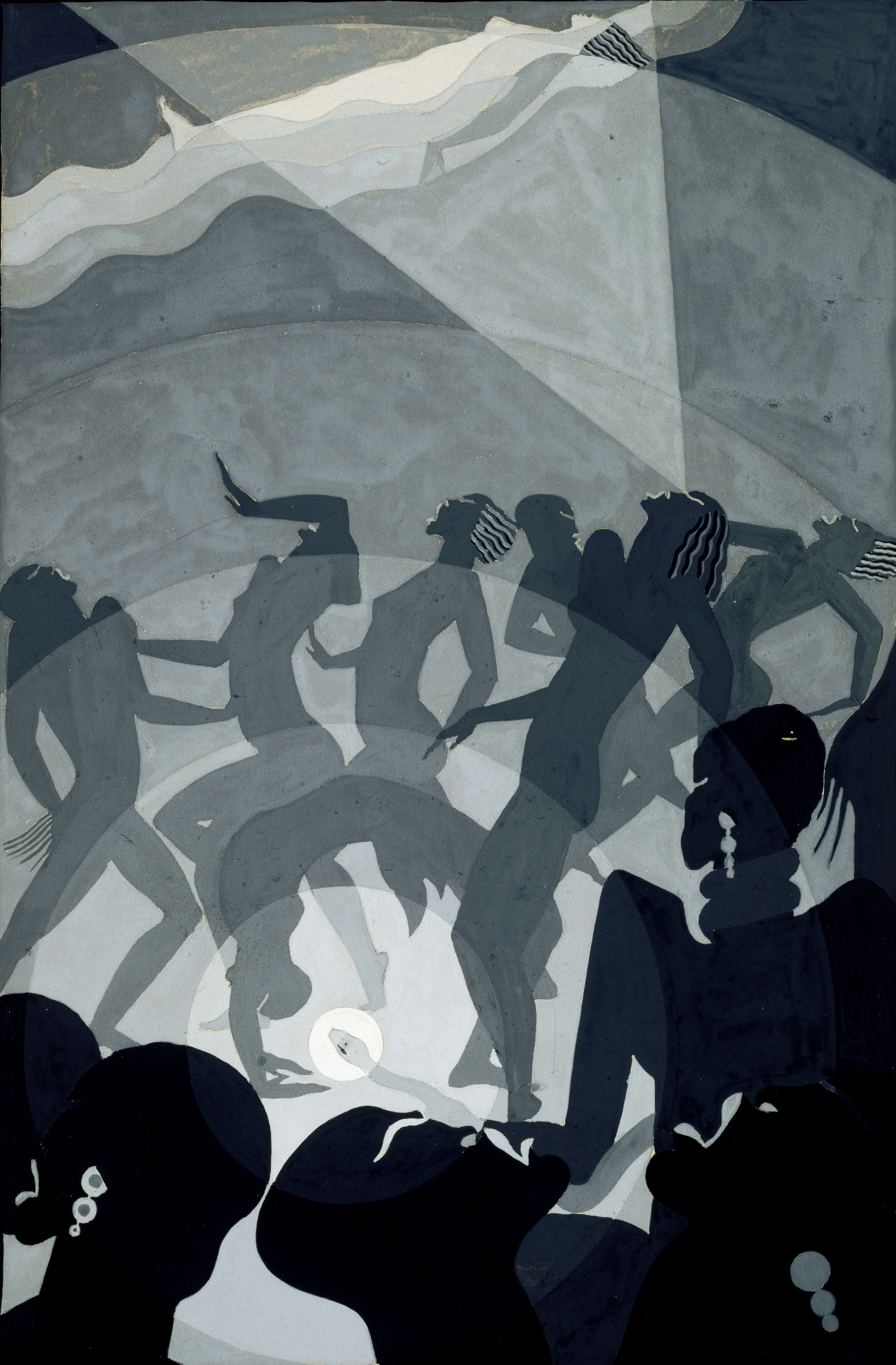
Would you comment on the work Congo (1928) by Aaron Douglas, which is featured in Youth and Beauty, and how it is evocative of the Harlem Renaissance?

It is evocative of the Harlem Renaissance because Douglas is encouraging viewers to see African dance, bodies, and art as sources of inspiration and information. My favorite part of the picture is the woman looking upward with what seems like “super sight” Eyes that radiate upward on a levitating figure. Eyes that do more than simply see; they project.

Aaron Douglas, Congo, c. 1928, gouache and pencil on paperboard, North Carolina Museum of Art, Raleigh, Gift of Susie R. Powell and Franklin R. Anderson

Do you have a favorite, little known fact or story about the Harlem Renaissance?

My little known fact is that the term “Harlem Renaissance” actually comes into common currency starting in the 1940s. Artistically inclined black artists in the 1920s and 1930s referred to that moment as the “New Negro Arts Movement.”

What are you most looking forward to on your visit to Dallas?

Just seeing Dallas. It’s been a little while since I was last there. I’m really looking forward to my visit!

Dr. Powell’s lecture, Jungle Beauty: Harlem Renaissance Portraits and Their Marks, will start at 9:00 p.m. in Horchow Auditorium on Friday, May 18. We hope to see you there!

Liz Menz is the Manager of Adult Programming.

Mother’s Day flashback

We were poking around in the Museum’s archives and found this Dallas Morning News article from May 15, 1949, featuring mothers at the Dallas Museum of Fine Arts. It could be fun to re-create the photos and treat your mom to a beautiful Mother’s Day at the DMA this Sunday.

Dallas Morning News Staff Photos by Ed Miley, May 15, 1949.


Dallas Morning News Staff Photos by Ed Miley, May 15, 1949.


Dallas Morning News Staff Photos by Ed Miley, May 15, 1949.

Hillary Bober is the Digital Archivist at the Dallas Museum of Art.

How It's Used: Sacred Bronzes of India

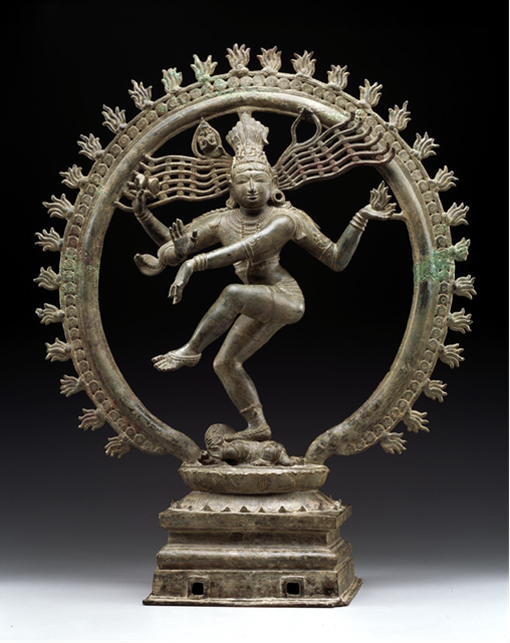
Earlier this week, Loryn told us all about how sacred Indian bronze sculptures were made. Using the lost-wax process, each beautiful bronze sculpture was created as a one-of-a-kind work of art. Now that we know how they were made, I would like to explore how they were used.

Shiva Nataraja, sculpture, bronze, Chola dynasty, 11th century, Dallas Museum of Art, gift of Mrs. Eugene McDermott, the Hamon Charitable Foundation, and an anonymous donor in honor of David T. Owsley, with additional funding from The Cecil and Ida Green Foundation and the Cecil and Ida Green Acquisition Fund, 2000.377

Shiva Nataraja, Chola dynasty, 11th century, Dallas Museum of Art, gift of Mrs. Eugene McDermott, the Hamon Charitable Foundation, and an anonymous donor in honor of David T. Owsley, with additional funding from The Cecil and Ida Green Foundation and the Cecil and Ida Green Acquisition Fund, 2000.377

.
As Loryn mentioned, many bronze sculptures were originally housed in Hindu temples. Each temple is dedicated to one particular god, and its primary function is to serve as the temporary home of that god. According to the Hindu belief system, an image of a god can be inhabited by the actual physical deity. This can only happen if the sculptor and priest have diligently followed the instructions of the sacred scriptures throughout the creation of the icon. This ability to invoke the actual presence of the god gives devotees the chance to interact with the deity directly. It is this interaction that lies at the heart of all Hindu worship, known as darshan, which means to see and be seen in return. This visual encounter, experienced by both devotee and deity, is the primary reason for temple visits.

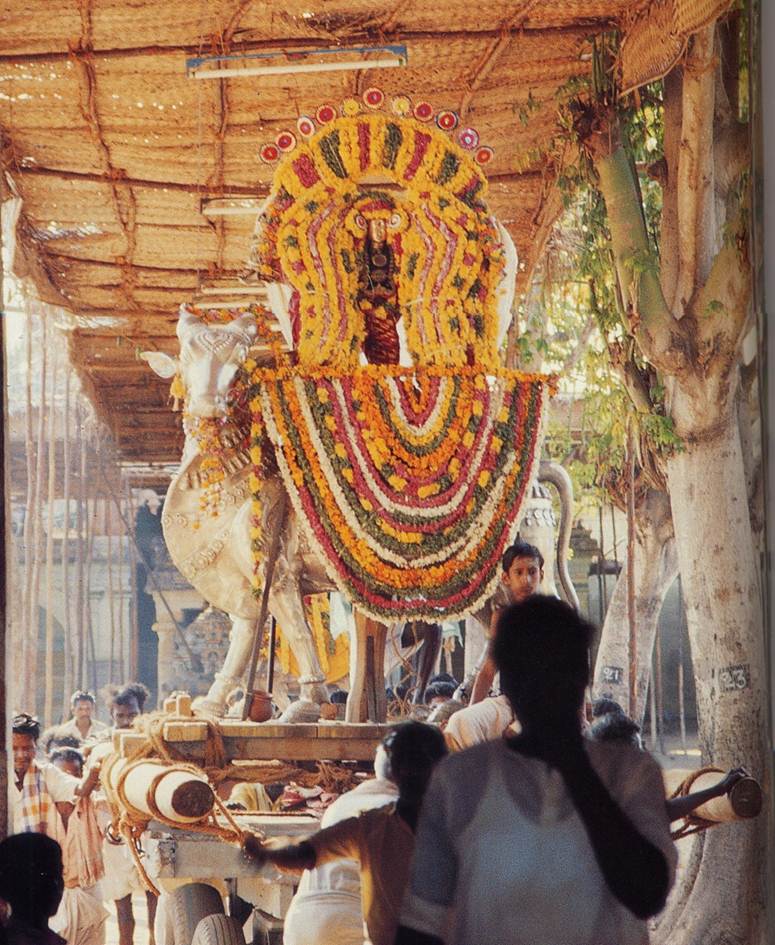
The god usually resides within a stone icon installed in the inner sanctuary of the temple. But in order to make himself accessible to everyone, he is brought outside the temple walls for processions. Special sculptures are created solely for use in processions, usually made of bronze. The god leaves the inner sanctuary and inhabits the bronze sculpture after intensive ritual purification.

Photograph by John Guy, Shiva on his silver mount Nandi, 1993. Guy, John. Indian Temple Sculpture. V&A Publications: London, 2007.

.
The DMA’s bronze Hindu sculpture Shiva Nataraja was one of these sacred sculptures made for processions. It’s easy to identify because of the holes at the bottom of the platform. During a procession, poles were inserted into these holes so that temple attendants could easily carry it through town. Shiva Nataraja would have been so richly adorned with clothes, jewelry, flowers, auspicious unguents and liquids, that oftentimes the eyes were the only visible feature. However the eyes were also the most important feature. As long as the eyes could be seen through the heap of endless offerings, darshan could still be experienced by all present. To this day, Hindu processions are still very lively public events that involve the entire community and attract pilgrims from far and wide. Engaging all five of the senses with incense, flowers, music, dancing, hymns, and mantras, everyone actively participates in the religious festivities.

I hope this helps spark your imagination during your next visual encounter with a Hindu deity!

Hannah Burney
McDermott Intern for Teaching Programs and Partnerships

Seldom Scene: Installing a Souvenir Tusk

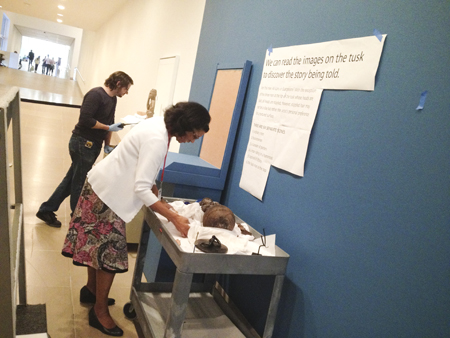
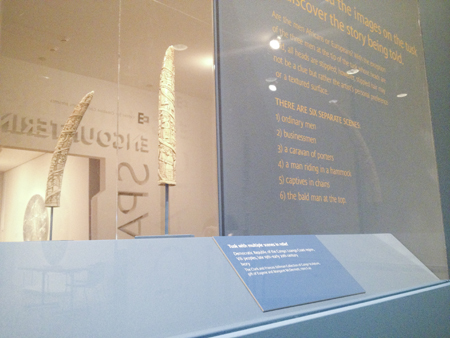
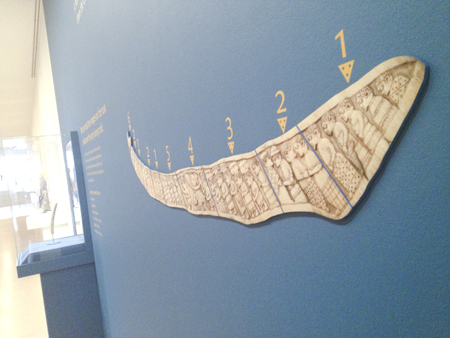
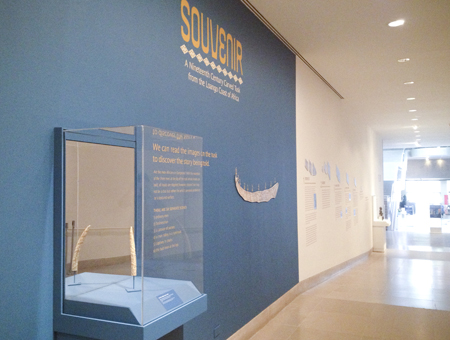
This past weekend, Souvenir: A 19th-Century Carved Tusk from the Loango Coast of Africa opened in the Museum’s Concourse. Below are a few shots of the installation process.

Photography by Adam Gingrich, DMA Marketing Assistant

The Quality Instinct

Join us Wednesday, May 2 at 7:30pm for an Arts & Letters Live Special Event, Seeing Art Through a Museum Director’s Eye: Dr. Maxwell Anderson in Conversation with Krys Boyd.

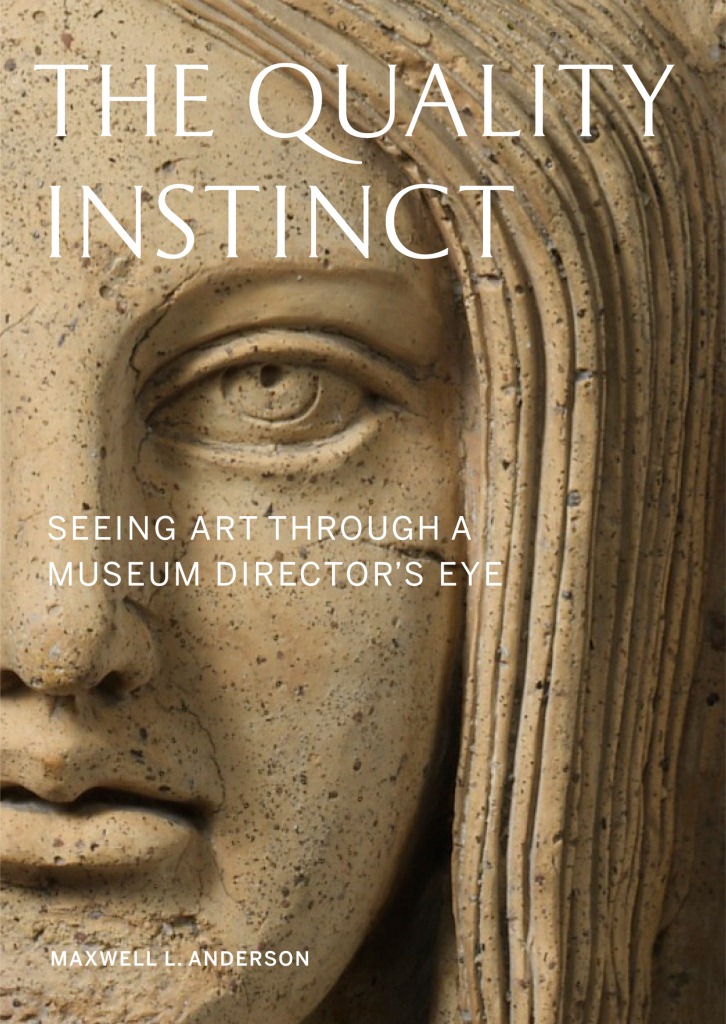
The Quality Instinct: Seeing Art Through a Museum Director's Eye by Maxwell L. Anderson

The Quality Instinct: Seeing Art Through a Museum Director’s Eye was published less than a month after Maxwell L. Anderson began as The Eugene McDermott Director of the Dallas Museum of Art.  In an interview, he said “The book is really an introduction to a ground floor of understanding about artistic intention and artistic result, and I hope people will take something away from it in feeling more comfortable with objects that, even today, great professors of artistic and art historical theory may be a little out of touch with.”

Maxwell describes his family’s travels when he was a child as “great exposure to new ways of seeing the world”.  These experiences clearly made an indelible impression on him, as he states “I used, in the course of a career as an art historian, and a museum curator and director, to go back and refresh my eye about what I learned as a child and how it would influence the way I see today as an adult.”

Rather than our standard interview format, I decided instead to ask our new Director five quick questions:

  • Are there any books you’ve read multiple times?  Catcher in the Rye, by J.D. Salinger.  The Way We Live Now, by Anthony Trollope.
  • Do you have a “can’t miss” TV show?  The Big C is one Jacqueline and I don’t miss.  That, and Shark Tank.
  • What is your favorite quote? “I’d rather be an optimist and a fool than a pessimist and right.” – Albert Einstein
  • If you could have dinner with any historical figure, who would it be? Montesquieu – he was so funny and casual and arch.
  • Coming from Indianapolis, how are you preparing for the Dallas summer?  I’m looking forward to it.  It will be cooler than growing up in New York in the summer; there, I would walk out on the hot street, get in a cab and stick to the vinyl seat, and go to a walk-up apartment without air conditioning.

Don’t miss what will surely be an interesting conversation between Maxwell Anderson and Krys Boyd.

Melissa Nelson
Manager of Teaching in the Community

Seldom Scene: Installing Form/Unformed

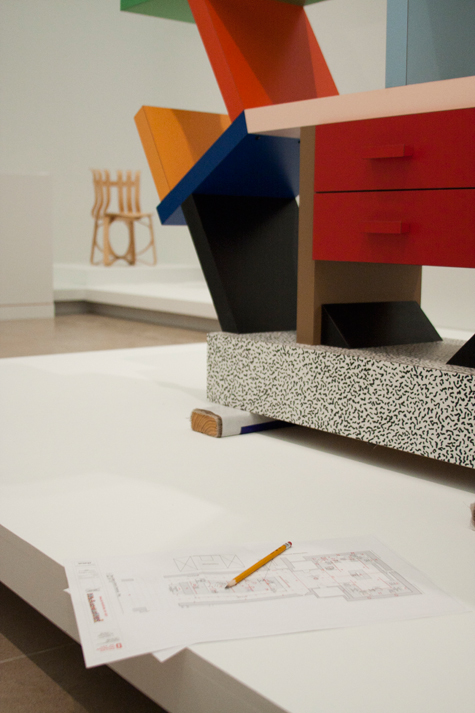
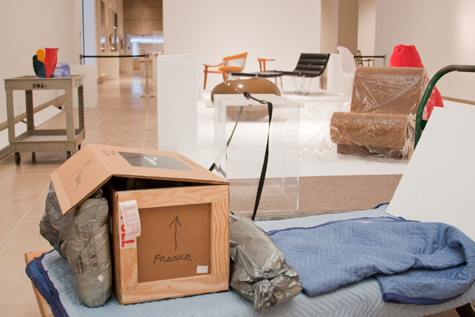
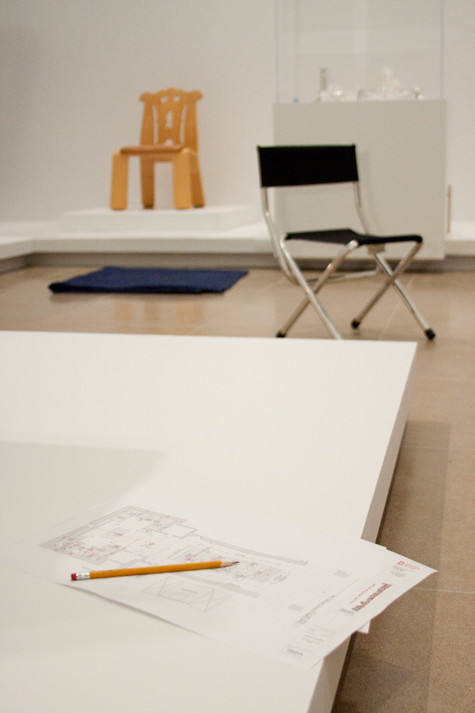
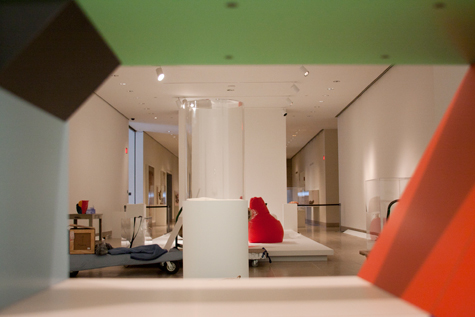
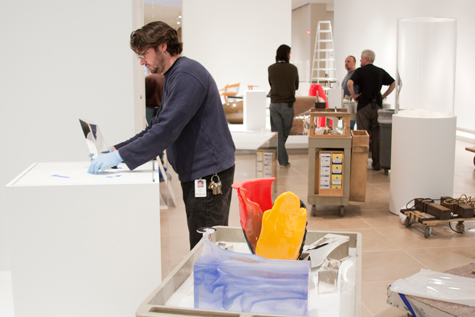
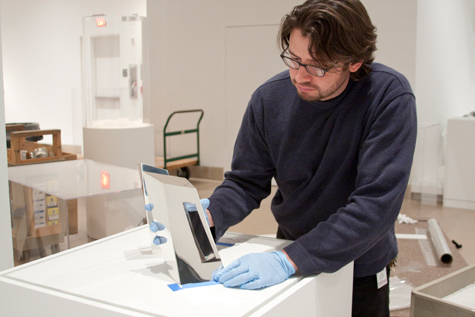
A look back at the installation of Form/Unformed: Design from 1960 to the Present, the first comprehensive overview of our modern and contemporary design collections, on view in the Tower Gallery. Work in the gallery began in October 2010 for the Decemeber 19, 2010 opening. Below are a few shots of the installation process.

DMA exhibition staff, including preparators John Lendvay and Lance Lander and exhibitions graphic designer Kevin Parmer, install the newly opened Form/Unformed: Design from 1960 to the Present in the Level 4 Tower Gallery.

Photography by Adam Gingrich, DMA Marketing Assistant.


Friday Photos: Young Philanthropists

Earlier this spring, we were delighted to learn the DMA was selected to receive a donation through Episcopal School of Dallas’s philanthropy program.  Thanks to a generous gift made to The Dallas Foundation by Mr. and Mrs. J. Puckett, the Giving Beyond Ourselves program was formed with the goal of helping students to develop a philosophy of financial giving that would complement their experiences of volunteering their time for community service.  In the Giving Beyond Ourselves program, the junior class participates in advisory groups who research and select non-profit organizations they wish to support financially.  The DMA is honored to be one of this year’s recipients, along with Children’s Medical Center, Genesis Women’s Shelter, Operation KindnessMi Escuelita Preschool, American Red Cross, and Ronald McDonald House of Dallas.

The advisory group who selected the DMA came to the Museum for a two-hour visit, which included a staff-led walkthrough of various galleries and exhibitions and a special behind-the-scenes tour of our art storage space.  The students asked thoughtful questions about the DMA’s mission, annual budget, educational programs, and accessibility to diverse audiences.

We extend a BIG thank you to ESD students Blake Archer, Michael Collins, Amanda Eggers, Asia Hawkins, Wilson Miller, Reed Seidel, Sarah Spellings, Catharine Turner, and Tristan Whitcher; their advisor Mrs. Barbara Sampson; and Community Service Director Christi Morrow for selecting the DMA!

Director of Collections Management Gabriela Truly (on the right) talks to the group about one of the DMA's art storage spaces.

Melissa Nelson
Manager of Teaching in the Community

Facing Off

Our exhibition Face to Face: International Art at the DMA is composed of never before seen pairs of objects drawn straight from the Museum’s collection. They are joined across cultures, great distances, and centuries of time to present an entirely new way to experience and celebrate a collection that is thrillingly diverse and over one hundred years in the making.
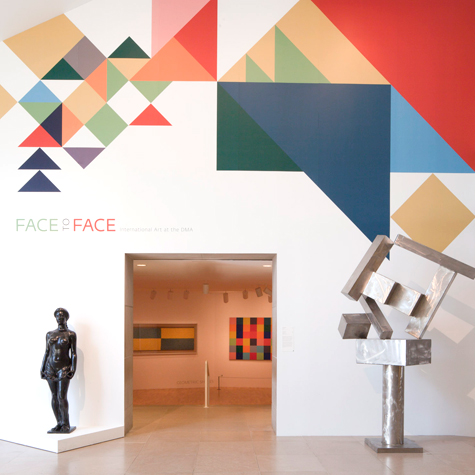
David Smith’s Cubi XVII and Aristide Maillol’s Flora

Organizing Face to Face required the collaboration of every member of our curatorial staff. Dr. Anne Bromberg, our curator of Ancient and Asian Art, spearheaded its sprawling course, spending weeks and weeks stalking the galleries, storage areas, and even her own colleagues to negotiate across departmental divides and ensure that what came to fruition was groundbreaking.

The result is a rare chance to see some of our “greatest hits” in lively and entirely new contexts. Visitors are welcome to speculate for themselves upon the many ways paired works might be related. I expect there are no right or wrong answers to these investigations, and that the discoveries one can have touring Face to Face are essentially limitless.
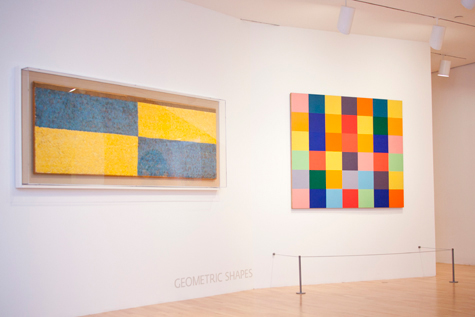
Peruvian Panel and Ellsworth Kelly’s Sanary

This is the first pair to welcome you to the exhibition. The composition of both works relied upon geometry and the stunning experience of pure color. The ceremonial textile from the Huari culture of Peru is beautifully composed of hundreds of blue and yellow macaw feathers—the yellow offering soft complement to the naturally iridescent shimmering of the blue.

Sanary, by American artist Ellsworth Kelly, presents a more complex pattern created from recycled paintings. No two colored squares repeat side by side, and like the feather panel, their summation elicits an explosive though carefully controlled punch of pure color. Their paired visual impact must be seen to be believed.
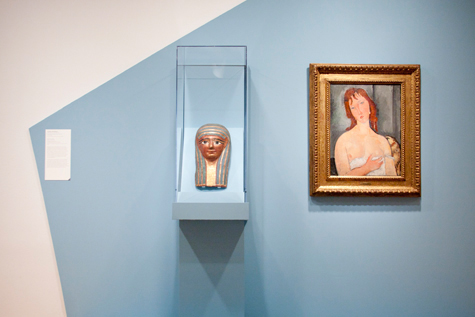
Egyptian mummy mask and Amedeo Modigliani’s Portrait of a Young Woman

Of all the pairings, Dr. Bromberg has said this one raised the most eyebrows among her colleagues, but after placing them side by side for the first time during installation, it became clear that though derived from wholly different civilizations and made for completely different purposes, they were easily relatable as unique expressions of the very human desire to immortalize beauty through portraiture.
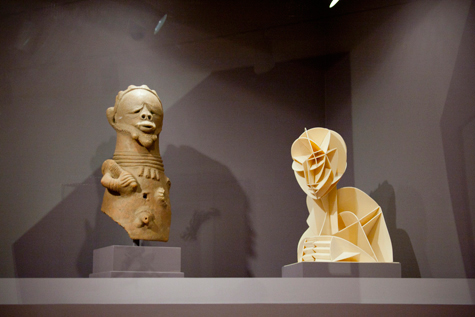
Male figure from Nigeria and Naum Gabo’s Constructed Head No. 2

There’s much to be learned—things you may never have noticed before until you’re faced with this unique installation. This pair in particular enables audiences to reflect upon decisions the artists made in depicting their subjects abstractly. One might spend hours ruminating over their own visceral reactions to their striking features.
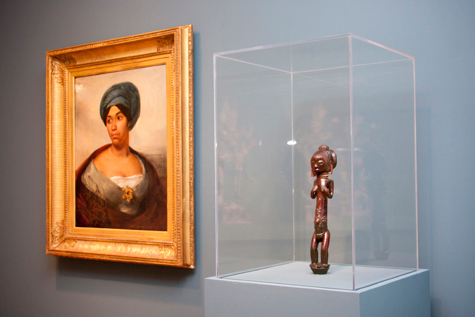
Eugène Delacroix’s Portrait of a Woman in a Blue Turban and Standing femail figure from the Democratic Republic of the Congo

Our Exhibition Design Coordinator, Jessica Harden, worked closely with Dr. Bromberg to create specific lighting, color, and spatial treatments for every pair in Face to Face. Its dynamic installation highlights the need to take one’s time in the exhibition. Here each artwork can be appreciated more intimately on its own terms.

This is particularly true with the pairing of Eugène Delacroix’s Portrait of a Woman in a Blue Turban and the standing female figure from the Luba peoples of Africa. Lengthy meditations over the artists distinct but relatable choices in depicting their subject’s tranquil and quintessentially feminine beauty are highly encouraged.
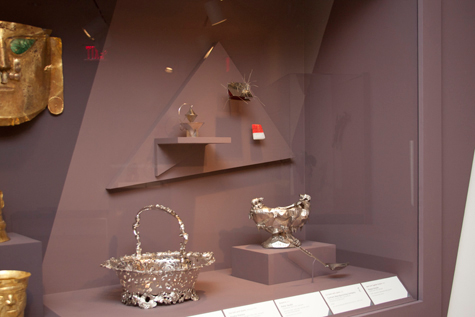
An entire case in Face to Face is dedicated to things that sparkle! And here it’s true that not all that glitters is literally gold. The DMA maintains a strong collection of decorative, functional, and ceremonial objects fashioned from precious materials by a variety of cultures for an even greater variety of reasons.
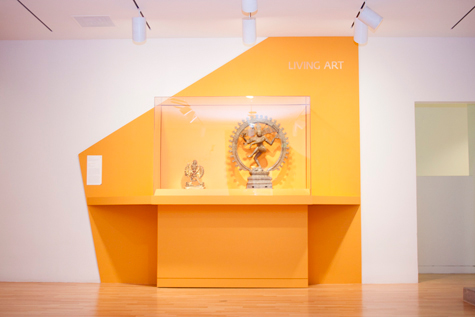
Shiva Nataraja from India and The Dharmapala Vajrabhairava from Tibet

Face to Face’s broad representation (albeit in a small space) of the DMA’s expansive, internationally renowned collection is inspiring. The exhibition not only draws our attention to the mysterious nature of creating and studying art but also to that lesser realized art form of building a collection.

While exploring any museum, it’s easy to forget that a collection is built by people, and at the DMA these people have for over a century now nursed a vision that not only tells the history of art but also the story of our great museum.

Auriel Garza is the Curatorial Assistant for Ancient Art, Non-Western Art, and Decorative Arts & Design at the Dallas Museum of Art.
An Evening with David Sedaris

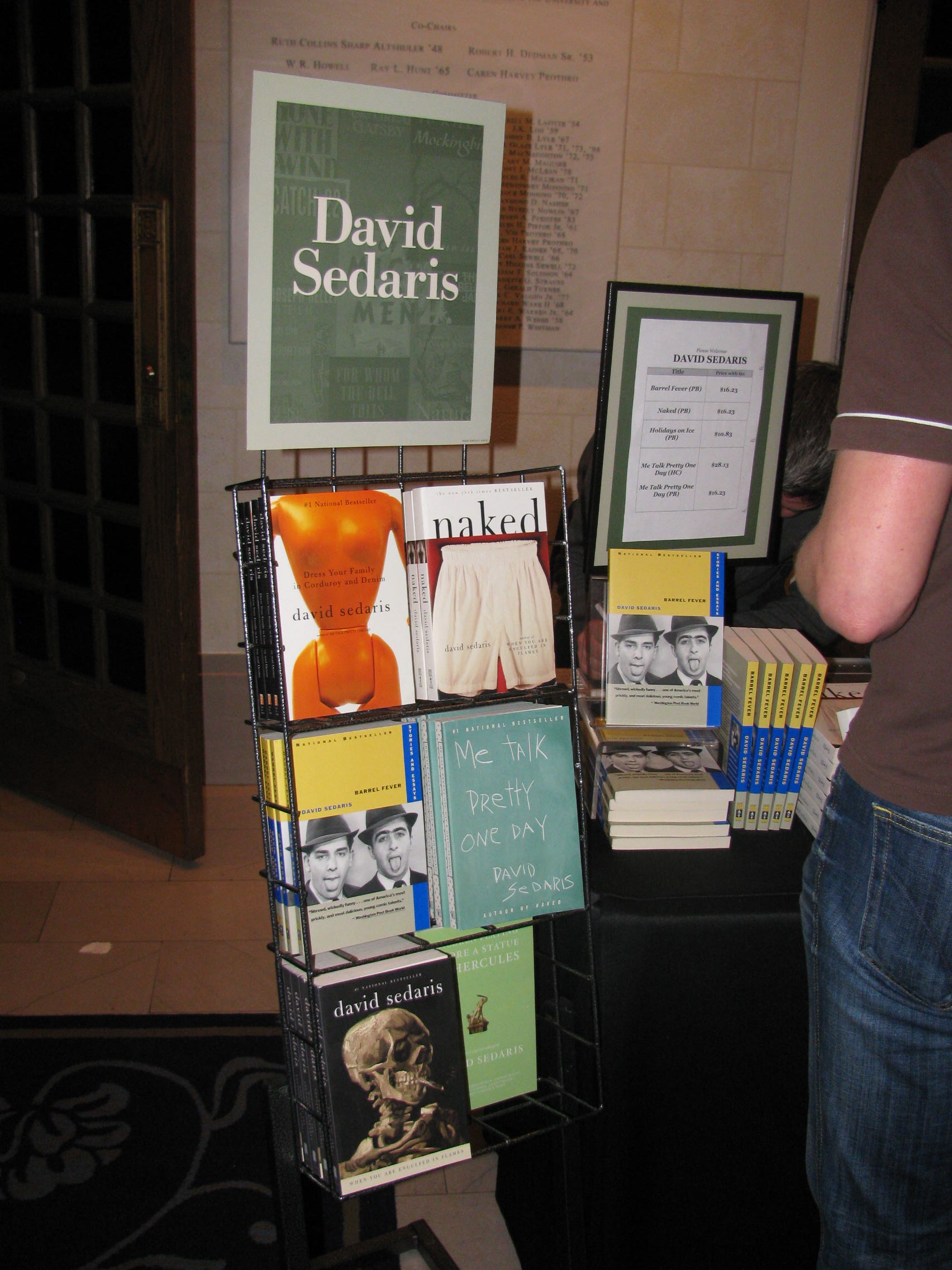
If you’ve ever read any of the eight books by David Sedaris, you probably already consider him a close and personal friend. Through his witty short stories, he seamlessly weaves back and forth between autobiography and absurdist fiction, having the reader laughing and gasping at each turn of the page. He effortlessly wraps you up in his world, introducing you to his quirky family, and keeping you on the inside of every joke. So, it came as no surprise that he was just as enthralling and humorous in person as he is in his books.

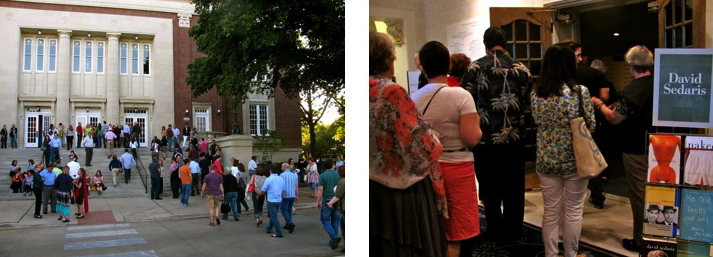
This was David Sedaris’ fourth year coming to Dallas with Arts & Letters Live, and yet the 2,500 seat SMU Auditorium was still completely sold out. After several readings and a question and answer session, many hurried to get their place in line to meet David. I say meet, because David Sedaris does not just sign books, he has a conversation with each person who approaches his table as if welcoming them into his home. Despite this taking hours, going very late into the night, Sedaris maintains his energy and enthusiasm for each and every fan.  He uses his comedic flare to start unusual conversations with each visitor, and then references the encounter in the book he signs for them. With a drawing or clever comment, Sedaris turns a brief interaction into a special inside joke between the fan and him.

In my case, I was so excited to see him that I ran out the door without either of my two favorite books that I wanted him to sign. Fortunately with a simple explanation, he was more than happy to sign the program for me instead, writing, “Oh Hannah you forget everything”. So, just like many of the fans in line, I got to walk away with my very own personal story of David Sedaris.

Don’t miss out on the rest of this Arts & Letters Live season!

If you have any stories from an Arts & Letters Live event, please don’t hesitate to share in the comments below.

Hannah Burney
McDermott Intern for Teaching Programs and Partnerships

All That Jazz

Friday, March 2nd Dallas Museum of Art members celebrated the Youth & Beauty: Art of the American Twenties in style. The evening included a 20’s themed costume contest, an introduction of the exhibition, dance lessons, and more! We thought we would share some of our favorite shots from the evening.

Show off your twenties outfits tonight at our Roaring Twenties Late Night!

[slideshow] Wendi Kavanaugh is the Member Outreach Manager at the Dallas Museum of Art


Archives

Categories