Posts Tagged 'Dallas Museum of Art'


McDermott Interns: Where Are They Now?

Each September, the DMA welcomes a new class of McDermott Interns, thanks to the generous support of the Eugene McDermott Education Fund. During their brief nine months at the Museum, the McDermott Interns contribute to numerous projects, from exhibitions to tours to programming and beyond. Their hard work helps make the Museum the dynamic place we know and love!

But what happens after the internship is complete? For some, the stars align and we are able to welcome them into full-time positions here at the Museum. In fact, we have nine previous McDermott Interns, myself included, currently on staff. Others move on to different adventures across the country. I checked in with some of our recent McDermott graduates to see where life has led them.
OLYMPUS DIGITAL CAMERA

Sara Woodbury
McDermott Graduate Curatorial Intern for European and American Art, 2010-2011

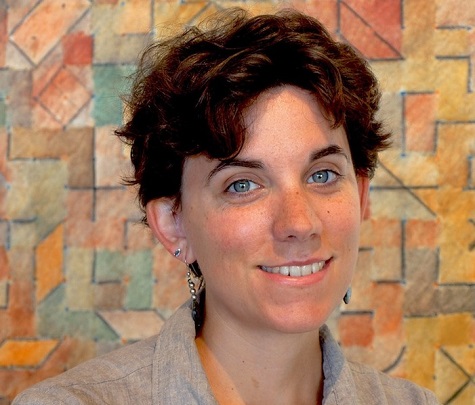
My post-McDermott career so far has taken me both east and west. From June 2011 to June 2013, I served as curatorial fellow at the Shelburne Museum in Vermont, a wonderfully eclectic museum with holdings that include American folk art, impressionist paintings, and a landlocked steamboat. When I wasn’t working on exhibits, I experimented with printmaking at a community studio, an interest that developed out of a works on paper exhibit I curated at the DMA. In July 2013, I relocated to Roswell, New Mexico, where I am now the curator of collections and exhibitions at the Roswell Museum and Art Center. Though I’ve only been here a few weeks, I’m happy to be back out west, and am looking forward to the challenges and opportunities of my new position.

Stefanie Logan
Stefanie Kae Dlugosz
McDermott Curatorial Intern for Decorative Art, 2010-2011

After leaving the DMA, I worked as the project assistant at the Nelson-Atkins Museum of Art on the traveling exhibition Inventing the Modern World: Decorative Arts at the World’s Fairs 1851-1939, co-organized with the Carnegie Museum of Art. In August 2012, I began a graduate program at Indiana University, Bloomington, and am looking forward to completing my MA in art history next spring. I also currently serve as a graduate assistant at the Indiana University Art Museum.

Logan Acton
McDermott Education Intern for Teaching Programs, 2009-2010

From 2010 to 2011, I held a position at the DMA as assistant to the director of education, which also allowed me to help with activities for the 2010 McDermott Intern class. In July 2011, I moved to Missouri to study sculpture at the Kansas City Art Institute. I’m currently pursuing a studio practice as a visual artist there and am planning to apply for MFA programs soon. I met Stefanie at the DMA during her McDermott Internship and in October 2012 I asked her to marry me. She accepted and we are currently planning our wedding!

Wendy Earle headshot
Wendy Earle
McDermott Graduate Curatorial Intern for Ancient American Art, 2011-2012

I have been really busy in my position as curator of collections and exhibitions at the Museum of the Southwest in Midland, where I have been since May 2012. It’s great working at a multidisciplinary institution that combines an art museum, children’s museum, planetarium, and historic home into one. I am the entire curatorial department, so I get to do a little bit of everything, including picking up artwork from different states, designing exhibitions, creating interpretive activities, giving gallery talks, and writing grants. We are installing or deinstalling exhibitions almost every month. In the past, I only worked with the art of long-dead civilizations, but now I get to work with lots of exciting contemporary artists—a fun new challenge.
Alec
Alexander Unkovic
McDermott Curatorial Intern for Contemporary Art, 2012-2013

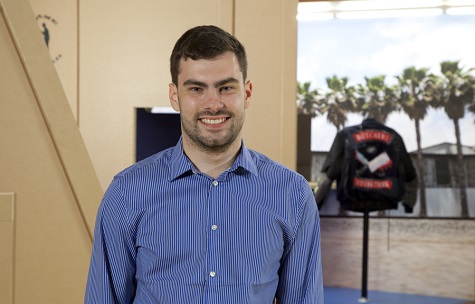
In July 2013, I moved back to Philadelphia and started my new job as the administrative and publicity coordinator at The Fabric Workshop and Museum. I am now creating the content for FWM’s social media (Facebook: /fabricworkshop, and Twitter: @fabricworkshop), and I work on publicity and community outreach initiatives. Additionally, my duties at FWM include helping with exhibition budgets, publications, and checklists, coordinating museum openings and events, and maintaining travel arrangements. Being a McDermott Intern definitely helped prepare me for this job. I’m really enjoying myself here, but I sure do miss Dallas and the DMA!

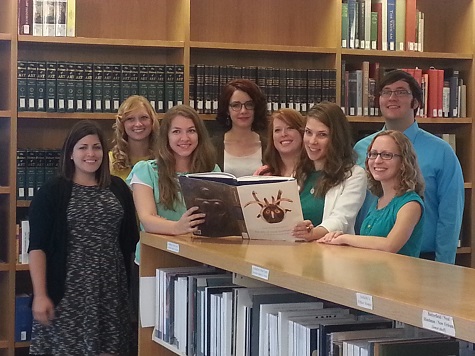
Our newest class of McDermott Interns began last week. During your next visit to the DMA, keep an eye out for Alexa Hayes, Amelia Wood, Amy Elms, Amy Kaczmarek, Hayley Prihoda, Madeleine Fitzgerald, Michael Hartman, and Temple Shipley. We get the pleasure of working with them for the next several months, and we can’t wait to see where they’ll go from here!
2013/2014 McDermott Interns

2013/2014 McDermott Interns

P.S. If you’re interested in becoming a McDermott Intern next year, check our website in January 2014 for the application!

Sarah Coffey is the assistant to the chair of learning initiatives and former McDermott Education Intern for Adult Programming at the DMA.
Rewarding DMA Friends

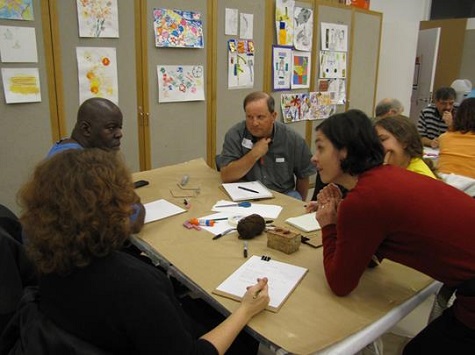
Longtime Center for Creative Connections (C3) visitor and volunteer Mary Burkhead claimed a DMA Friends reward for six of her friends to attend a small-group artist-led art-making session. Mary was one of our first DMA Friends, joining on January 21, the official “opening day” of the program. Mary and I brainstormed about possibilities for this specialized workshop, and she requested a private Think Creatively workshop with Magdalena Grohman, Ph.D., in C3. Mary loves attending the Thursday night adult workshops and was eager to have a special class just for her and the friends that she has made over the past year in the workshops. Read the interview with Mary Burkhead below. I hope she inspires you to keep collecting your DMA Friends points!

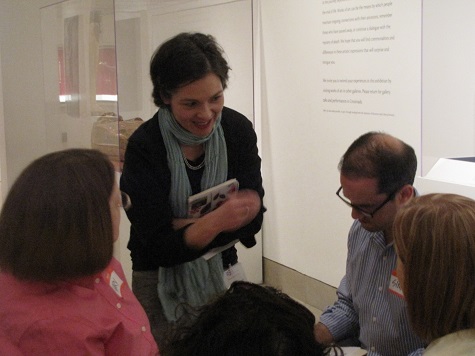
Dr. Magdalena Grohman and class in discussion

Dr. Magdalena Grohman and class in discussion

How long have you been coming to the DMA?
Since I moved to Dallas in the mid-80s.

How many DMA Friends badges have you earned?
Oh, gosh, lots! Some more than once. I hate to admit it, but I’m rather greedy about them. I’m still disappointed that I didn’t get the last code needed for the special Neil Gaiman badge. But I did get the special JFK badge!

What is your favorite way to collect points?
By seeing and doing wonderful things in the Museum, of course! Seriously, you earn badges by doing what you already love to do: going to special exhibitions, exploring the galleries, attending workshops, lectures, and special events.

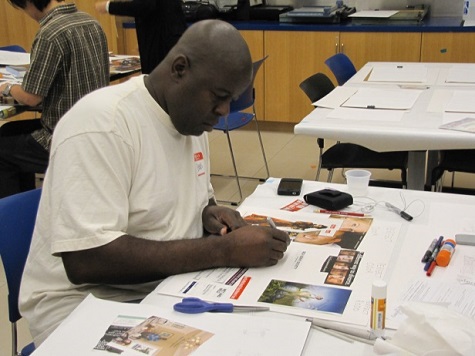
Think Creatively presentation by visitor

Think Creatively presentation by visitor

Why were you interested in claiming the “Small Group Art-Making Session in C3” reward?
I frequently attend the creativity workshops and the Artistic Encounters workshops. I encourage everyone to try them. I always have a wonderful time, and learn a lot. And I’ve met so many wonderful, fun, interesting people. I just loved the idea of having a special session with some of these new friends.

What is your favorite thing to do or see at the DMA?
Well, I have lots of favorites, and I hate to be limited. And the DMA is not limited! One of my favorite artworks is The Icebergs. I will be very glad to see it again when it returns home this month. But there are many other pieces that I also love. I love the workshops, of course. That’s why I selected it for my reward. I also love the Arts & Letters Live programs. I love how the DMA brings together many different types of art. And then there is Late Night! I could go on forever.

Dr. Magdalena Grohman and visitors responding to works of art

Dr. Magdalena Grohman and visitors responding to works of art

How did you choose the people that were going to participate with you in the workshop?
With great difficulty! I wanted everyone who had ever attended a workshop to come, but of course, that’s not possible. So I selected a group of folks who participate frequently and who interact well. That’s important for a group learning experience. Not to mention,  they are all fun, wonderful people!

Visitor in thought

Visitor in thought

What do you value the most at the DMA?
I think the most wonderful thing about the DMA is that it is available to everyone. Art is so important to individual people and to the whole community. I’ve talked to so many people at the Museum who are having fun, experiencing new things, and exploring the possibilities of art. I love that. It’s exciting to talk to people who have come for the first time, or the first time in a long time. It’s nice to talk to out-of-towners who think our DMA is great!

Do you recall a favorite moment at the DMA?
There are so many. But one wonderful moment was being in the Museum late at night–I think it was close to midnight–on the 100th anniversary. There were so many people there, and they were all having so much fun! I’m so glad that led to the monthly Late Nights.

Are you also a DMA Partner in addition to being a DMA Friend? 
I am a Partner, and I also have memberships in several other  local museums. Financially supporting the DMA is a great value for entertainment and education, and also for our community.

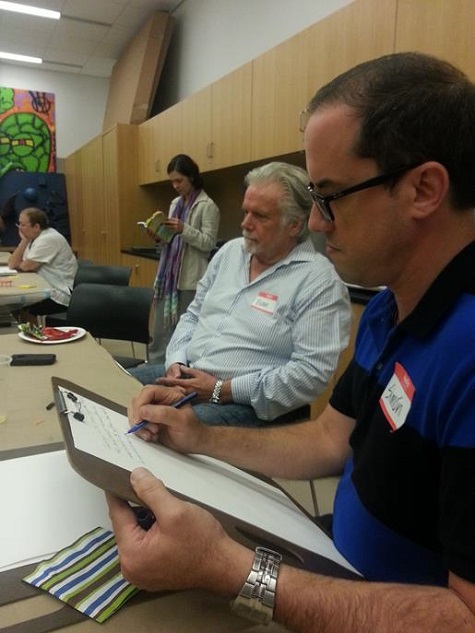
Two participants writing to music

Participants writing to music

Amanda Batson is the C3 program coordinator at the DMA.

Frozen in History

We are in the final two weeks of the DMA-organized exhibition Hotel Texas: An Art Exhibition for the President and Mrs. John F. Kennedy, but there is still time for you to visit this free exhibition and learn more from historians. This Thursday at 7:30 p.m., Dr. David Lubin, author of Shooting Kennedy: JFK and the Culture of Images and Charlotte C. Weber Professor of Art at Wake Forest University, will examine iconic photos of the Kennedys’ visit to Texas and discuss his book. Below, learn more about the history of the installation in Suite 850 from Hotel Texas catalogue contributor Scott Barker.

[youtube=http://www.youtube.com/watch?v=GZ5ADYDCczo&w=560&h=315]

Kimberly Daniell is the public relations manager at the DMA, and Ted Forbes is the interactive media developer at the DMA.

Work vs Play on Labor Day

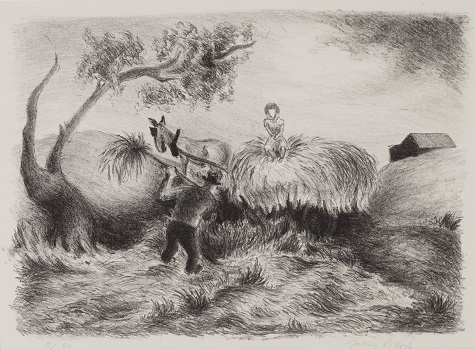
We hope your Labor Day is less like this Jackson Pollock lithograph . . .

Jackson Pollock, Hayride, 1935-1936, lithograph, Dallas Museum of Art, gift of Mrs. Arthur Kramer, Sr.

Jackson Pollock, Hayride, 1935-1936, lithograph, Dallas Museum of Art, gift of Mrs. Arthur Kramer, Sr., (c) Pollock-Krasner Foundation/Artists Rights Society (ARS), New York

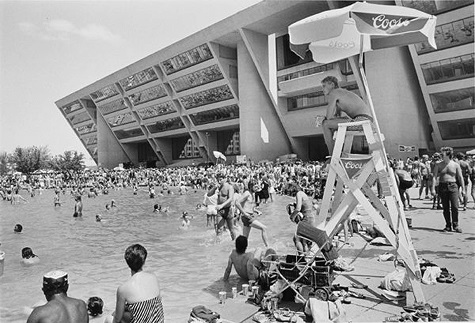
and more like this Lynn Lennon photograph.

Lynn Lennon, Beach Party, Dallas City Hall, 1984, gelatin silver print, Dallas Museum of Art, Mr. and Mrs. Homer B. Jester Fund

Lynn Lennon, Beach Party, Dallas City Hall, 1984, gelatin silver print, Dallas Museum of Art, Mr. and Mrs. Homer B. Jester Fund, (c) 1984 Lynn Lennon

The DMA is closed today, but you can enjoy free general admission every day during Museum hours (Tuesday-Sunday 11:00 a.m.-5:00 p.m.; Thursday 11:00 a.m.-9:00 p.m.; third Fridays 11:00 a.m.-midnight).

Everything is Everything

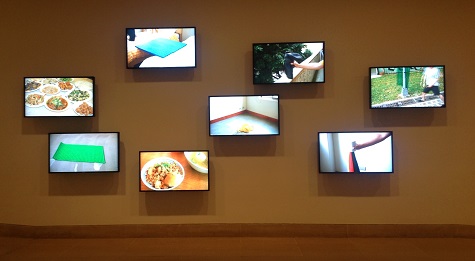
This week the DMA unveiled the work Everything is Everything (2006) by the artist Koki Tanaka, which will be on view in the Concourse for the next five months.

video

The work of Koki Tanaka takes shape primarily as video and installation that explores the relationship between objects and actions. His videos record simple gestures performed with ordinary objects—a knife cutting vegetables, beer poured into a glass, the opening of an umbrella—in which seemingly “nothing happens.” Yet, through their repetitive composition and heightened attention to detail, Tanaka’s videos compel us to take notice of the mundane phenomena of daily life. Latent patterns and geometrical forms emerge out of Tanaka’s work, and otherwise ordinary objects are transformed, providing an epiphany of sorts from moments of everyday life.

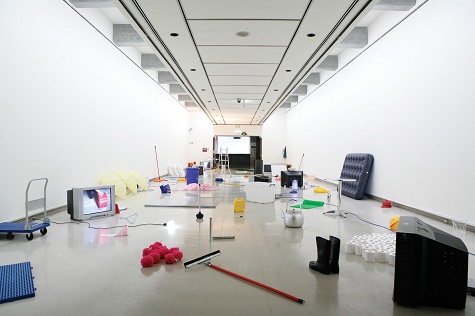
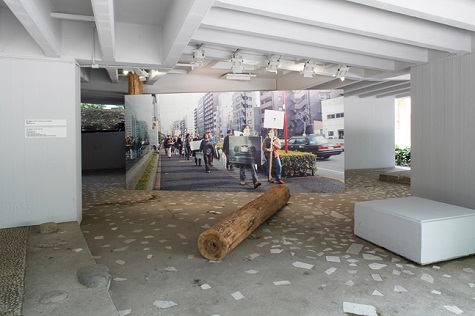
EVERYTHING IS EVERYTHING, 2006, Eight channel DVDs, color, sound and materials in everyday use, dimension variable, installed at Taipei Biennial 2006 in Taipei Fine Arts Museum. Image courtesy of the artist, Aoyama Meguro, Tokyo, and Vitamin Creative Space, Guangzhou.

Everything is Everything, 2006, eight-channel DVDs, color, sound, and materials in everyday use, installed at Taipei Biennial 2006 in Taipei Fine Arts Museum
(Image courtesy of the artist, Aoyama Meguro, Tokyo, and Vitamin Creative Space, Guangzhou)

The eight-channel video installation Everything is Everything was first created for exhibition at the 2006 Taipei Biennial. For this work, the artist and two assistants spent a total of eight days recording their interactions and interventions with readily available items, including hangers, cups, towels, an air mattress, and toilet paper, all found around the city of Taipei. The physical properties of these objects were tested (a metal hanger is stretched to its breaking point) or their uses were expanded (a level placed on two table legs becomes an impromptu hurdle). Tanaka and his assistants experimented with these objects multiple times, both indoors and in public, and their exploits were compiled into eight distinct video loops ranging in length from 1:19 to 1:50 minutes. Tanaka’s tightly cropped framing of each scene often features the performers from the neck down or removes them from the shot altogether, thus focusing the viewer’s attention on the objects and the simple, repetitive acts being performed.

[youtube=http://www.youtube.com/watch?v=JQQELlWYn4w&w=420&h=315]

In her canonical text, Passages in Modern Sculpture (1981), art historian and critic Rosalind Krauss begins the book’s final chapter with a film by Richard Serra, Hand Catching Lead (1968), in which the artist’s disembodied hand tenaciously attempts to catch pieces of falling lead. Krauss reads Serra’s film as characteristic of minimalist sculpture in the way that it “exploit[s] a kind of found object for its possibilities as an element in a repetitive structure.” The repetitive nature of the actions in Everything is Everything, combined with the use of inexpensive, mass-produced materials, highlights an affinity Tanaka’s videos share with the logic of minimalist sculpture and process art of the 1960s. Similarly, Tanaka’s repetitive use of the objects in Everything is Everything alludes to Serra’s Verb List (1967–68), in which the artist listed eighty-four verbs such as “to roll . . . to crumple . . . to drop . . . to scatter” as a means to relate actions to “oneself, material, place, and process.” Tanaka’s object-oriented work is indebted to minimalism as well as to the legacies of Mono-ha and Arte Povera, as evidenced by a shared interest in exploring the physicality and formal qualities of quotidian objects through processes of encounter and repetition.

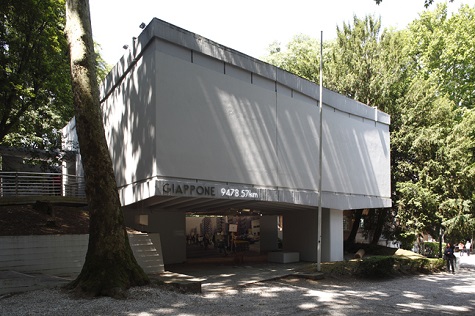
Japan Pavilion Photos: Keizo Kioku

Japan Pavilion Photos: Keizo Kioku

Japan Pavilion Photos: Keizo Kioku

Japan Pavilion Photos: Keizo Kioku

Koki Tanaka was born in Tochigi, Japan, in 1975, and currently lives and works in Los Angeles. He received his MFA from Tokyo University of the Arts, Japan, in 2005 and has since been the subject of solo exhibitions at UC Irvine University Art Gallery (2012), the Yerba Buena Center for the Arts, San Francisco (2010), and the Museum of Modern Art, Gunma (2008). Recent group exhibitions include Made in L.A. at the Hammer Museum (2012), the Yokohama Triennale (2011), and Making is Thinking at the Witte de With, Rotterdam (2011). Most recently, Tanaka was selected to represent Japan in the 55th Venice Biennale, for which he received a special mention.

Gabriel Ritter is The Nancy and Tim Hanley Assistant Curator of Contemporary Art at the DMA.

Go van Gogh, Past to Present

Go van Gogh, the DMA’s elementary school outreach program, is celebrating its 35th anniversary this year. Before we pack up the Go van Gogh van and head out to schools across the city, we thought it would be fun to take a look through all thirty-five years of the program.

Go_Van_Go_1992

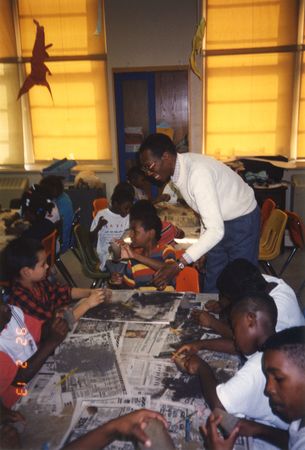
1992 Go van Gogh program led by DMA educator Phil Collins

Below are a few fun facts about Go van Gogh through the years.

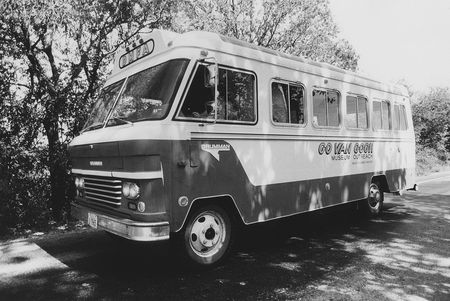
The first Go van Gogh van was actually a bus!

Go_Van_Go_1978

First Go van Gogh vehicle, 1978

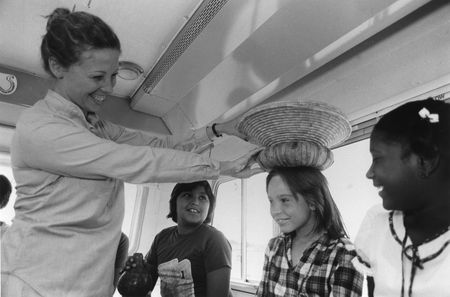
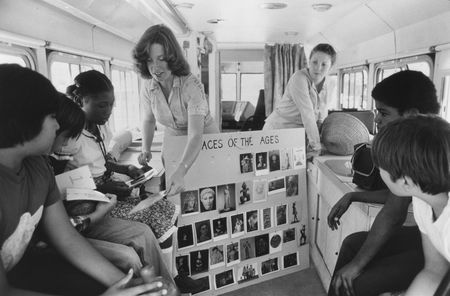
When the program began at the then Dallas Museum of Fine Arts in Fair Park in 1978, school outreach presentations could be given in classrooms or on the Museum Outreach bus itself.

Go_Van_Go_1979_Outreach_002

DMFA teaching staff member Roberta Mathew conducting an outreach program in the Go van Gogh bus in fall 1979

Go_Van_Go_1979_Outreach_001

DMFA education staffers Susan Geyer and Roberta Mathews conducting an outreach program aboard the Go van Gogh bus in fall 1979

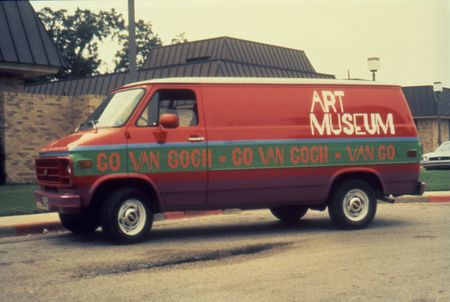
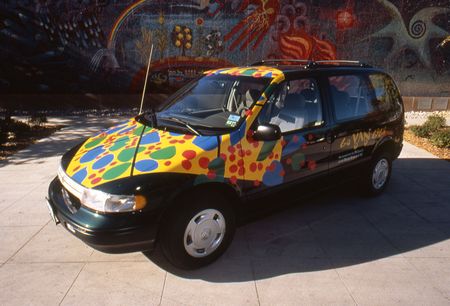
Go van Gogh vans (and buses) have always been easy to spot on the freeway.

Go_Van_Go_1981

Go van Gogh van in 1981

Go_Van_Go_c1988_001

Go van Gogh van, c. 1988

Go_Van_Go_c1988_002

Go van Gogh program, c. 1988

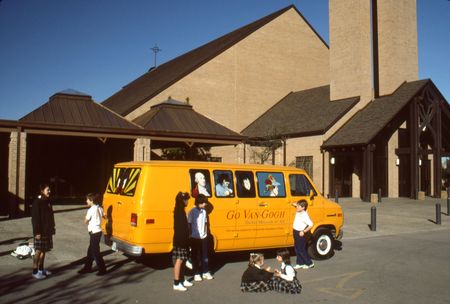
Bright and colorful, Go van Gogh vans often feature artworks from the Museum’s collection in painted or vinyl designs. The Go van Gogh van from the late 1990s included a design from Henri Matisse’s Ivy in Flower.

Go_Van_Go_1990s_002

Go van Gogh van in the 1990s

Go van Gogh van

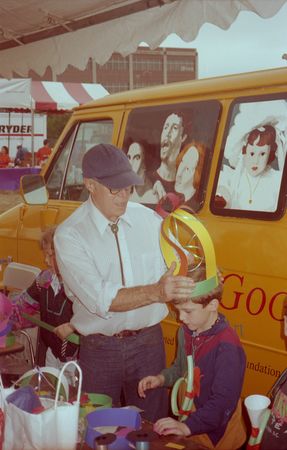
Today’s Go van Gogh van

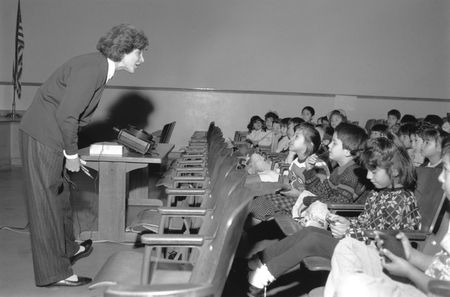
Go van Gogh programs have always included a visual presentation of artworks from the Museum.

Go_Van_Go_Outreach_004

Go van Gogh program using a slide projector, 1980s or 1990s

Through the years, we’ve made many updates in the technology we use to bring these artworks to life. What began with projectors and large printed posters led to overhead transparencies and laminated images.

GvG MT Reilly Elementary, 4th grade

Go van Gogh program with 4th graders at Reilly Elementary School

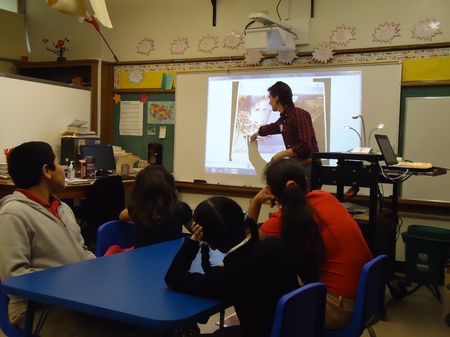
Later this school year, Go van Gogh will go digital: using iPads and projectors to bring images of artworks to life in the classroom.

Looking ahead to fall, we are excited to unveil a new facet of Go van Gogh outreach–a program designed for Special Education classrooms called Color My World. To learn more about the program, visit our website.

Amy Copeland is the Manager of Go van Gogh and Community Teaching Programs at the DMA.

Audio Tours 21st-Century Style

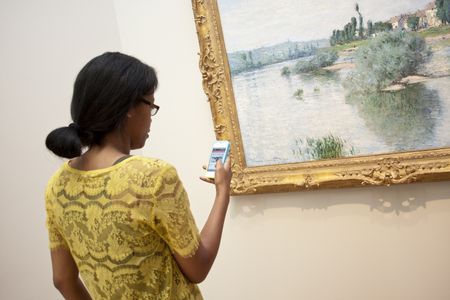
Audio tours have been part of the Museum world for a while, but now you no longer need a shoulder strap when exploring the DMA’s collection. Visitors to the DMA can use their web-enabled devices to access information about the collection, including video interviews, images, geographical information, and responses from the community through the DMA smARTphone tours. Some special exhibitions even have a free smARTphone tour. Right now, discover oral histories tied to Hotel Texas: An Art Exhibition for the President and Mrs. John F. Kennedy (on view through September 15, 2013), and this October you can learn more about the Jim Hodges: Give More Than You Take exhibition from artist Jim Hodges and co-organizing curator Jeffrey Grove, senior curator of special projects & research at the Dallas Museum of Art.

Visitors using audio tour, circa 1960s [Photography by Pat Magruder]

Visitors using audio tour, circa 1960s
[Photography by Pat Magruder]

Visitor using smARTphone tour, 2012

Visitor using smARTphone tour, 2012

Hillary Bober is the Digital Archivist at the Dallas Museum of Art.

Friday Photos: Back to School

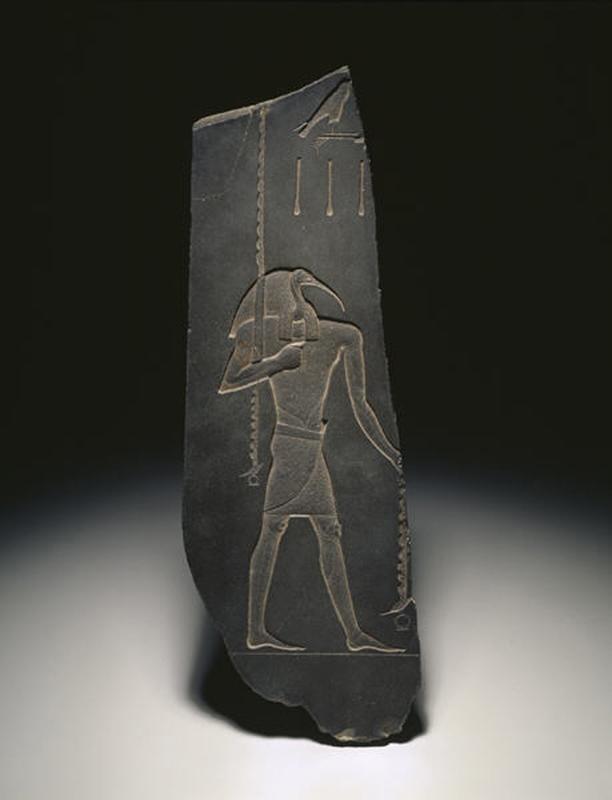
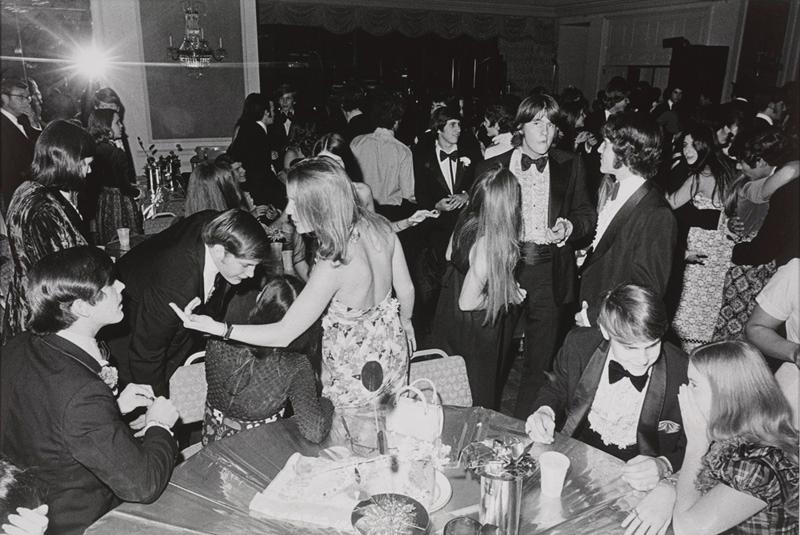
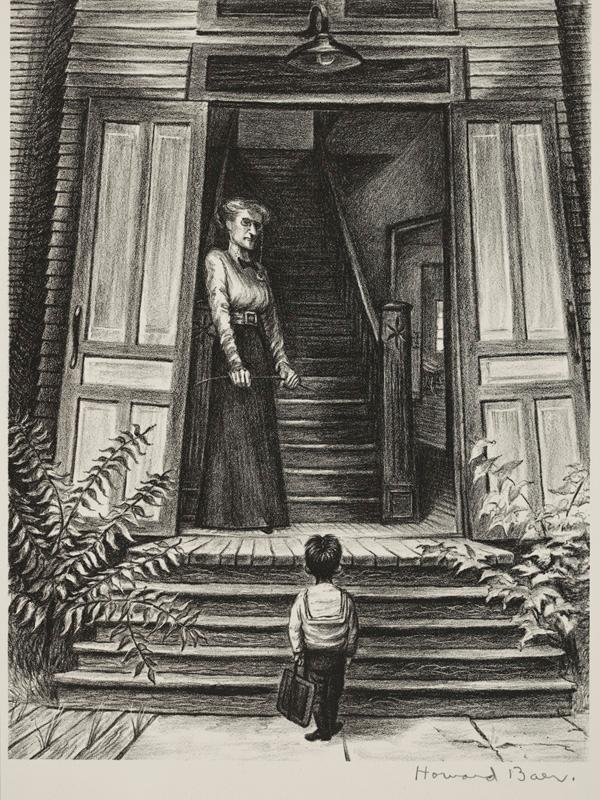
The start of the new school year is upon us! It’s an exciting time for kids, adults and educators alike, so what better way to commemorate this time of year than by highlighting works of art from the DMA’s collection that have a scholastic connection. Peruse these works of art and think about how they relate to your memories of school. Do they inspire excitement? Dread? Nostalgia? Click on the images to learn more.

Artworks shown:

  • Olin Herman Travis, Country School House, n.d., Dallas Museum of Art, gift of A. H. Belo Corporation and The Dallas Morning News
  • Thoth, God of Learning and Patron of Scribes, Egyptian, 663-525 B.C.,  Dallas Museum of Art, gift of Elsa von Seggern
  • Geoff Winningham, High School Prom, 1973, Dallas Museum of Art, gift of Prestonwood National Bank
  • Pottier & Stymus Manufacturing Company, Library Table, 1865, Dallas Museum of Art, gift of the 1992 Silver Supper and an anonymous donor in honor of Charles L. Venable
  • Howard Baer, My First Day at School, n.d., Dallas Museum of Art, Foundation for the Arts, The Alfred and Juanita Bromberg Collection, bequest of Juanita K. Bromberg
  • Larry Brown, Untitled #8, 1986,  Dallas Museum of Art, gift of Mr. and Mrs. I. C. Deal

Danielle Schulz
Teaching Specialist

Reading, Writing, and Arithmetic

I don’t know about anyone else, but I’m looking forward to the start of a new school year later this month. The DMA’s galleries have been quiet during the “school day” without the sounds of docents, teachers, and students deep in conversation about works of art. I thought it might be fun to celebrate back-to-school time with a DMA tribute to the “three Rs.”

Reading
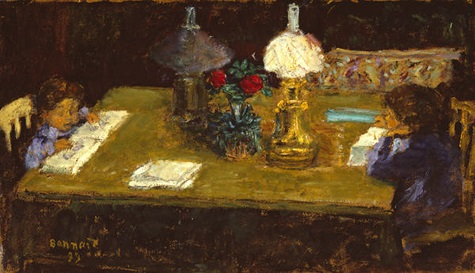
Pierre Bonnard often used his nieces and nephews as models for his paintings. Bonnard was also fascinated by education, and in this painting he shows his nephews Charles and Jean Terrasse reading at a table. It’s easy to imagine that these two children are completing their homework assignments before going to bed. It certainly looks as if one of the boys is more interested in his reading than the other—a scene that is probably familiar to many parents and teachers.

Pierre Bonnard, Interior: The Terrasse Children, 1899, oil on paper board panel, Dallas Museum of Art, The Wendy and Emery Reves Collection

Pierre Bonnard, Interior: The Terrasse Children, 1899, oil on paper board panel, Dallas Museum of Art, The Wendy and Emery Reves Collection

Writing
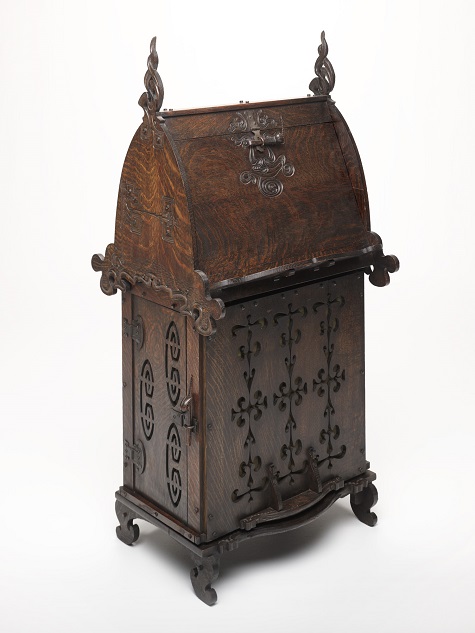
Charles Rohlfs’ Swinging Writing Desk was one of the trademarks of his artistic furniture style. The desk rests on a footed platform and spins on a series of small wheels. The interior of the desk is divided into small compartments—perfect for storing pencils, pens, and any other supplies you might need. I don’t think I would mind doing homework if I had such a beautiful desk to use.

Desk (Model #500), Charles Rohlfs, Charles Rohlfs Workshop, c. 1899-1901, white oak with iron hardware, Dallas Museum of Art, anonymous gift

Desk (Model #500), Charles Rohlfs, Charles Rohlfs Workshop, c. 1899-1901, white oak with iron hardware, Dallas Museum of Art, anonymous gift

Arithmetic
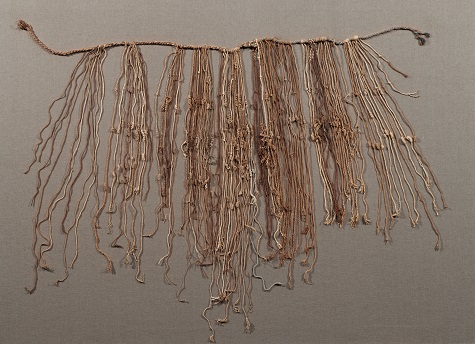
The name khipu comes from a Quechua word meaning “knot,” a fitting name as khipu are made up of many strands of knotted fibers. It is not known what the knots signify, but it is thought that they represent a numerical record. Numbers may be indicated by the size and position of each knot on its cord.

Fragmentary khipu with two main cords and top and subsidiary and tertiary cords, Inca, Late Horizon, c. A.D. 1476-1534, cotton, plant fiber, and indigo dye, Dallas Museum of Art, the Nora and John Wise Collection, bequest of John Wise

Fragmentary khipu with two main cords and top and subsidiary and tertiary cords, Inca, Late Horizon, c. 1476-1534, cotton, plant fiber, and indigo dye, Dallas Museum of Art, the Nora and John Wise Collection, bequest of John Wise

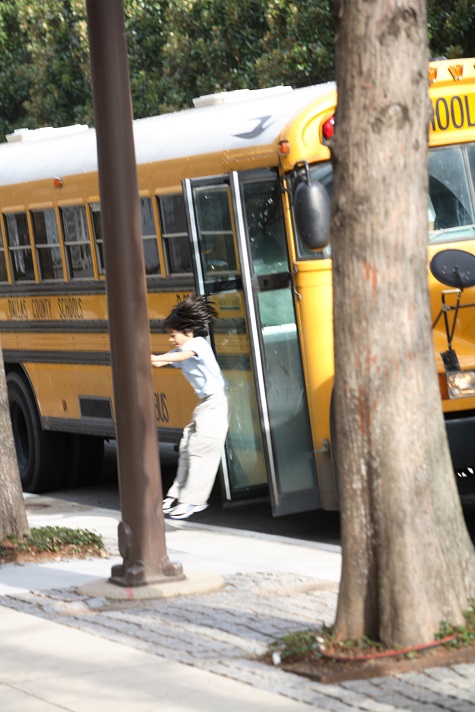
September 16 is the official start date for student programs at the DMA, but we’re currently taking reservations for Museum visits and Go van Gogh outreach programs. Scheduling information can be found online. If you are an educator, we hope you’ll consider bringing your students to the Museum this year. I hope they’ll be as excited as this student was to visit the DMA!

Student jumping off of a school bus at the DMA.

Student jumping off of a school bus at the DMA.

Shannon Karol is Manager of Docent and Teacher Programs at the DMA.

Open Office: Preparators

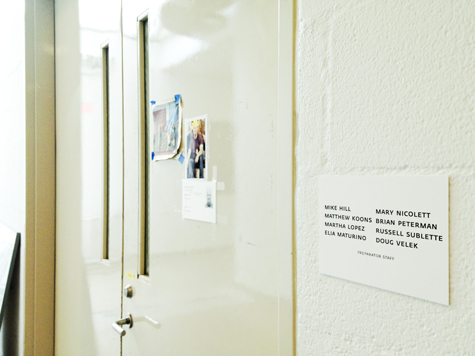
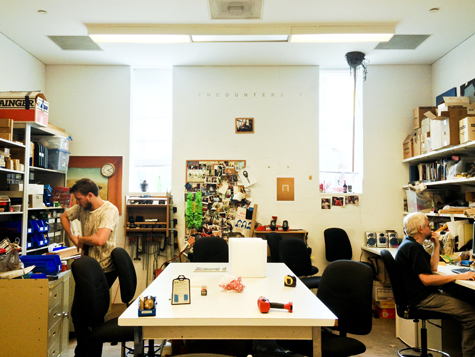
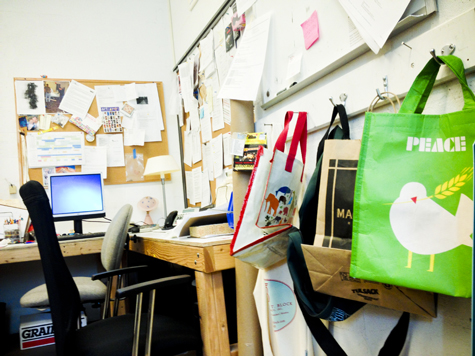
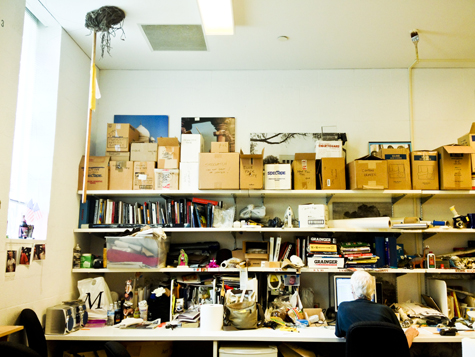
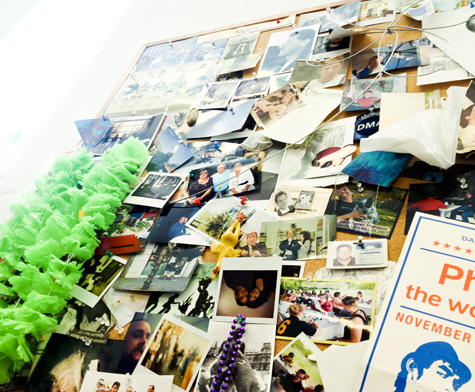
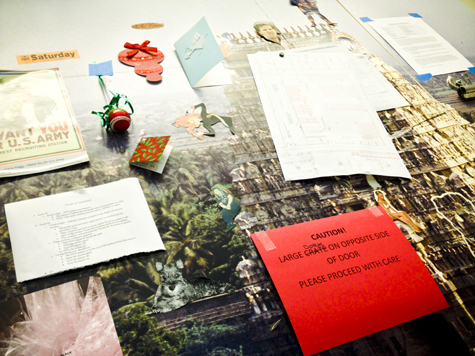
The preparators at the Museum assist in the unpacking of all the art that enters the DMA and ensure that it is handled, stored, and installed in the safest manner possible. Eight people share this office space, with two shared computers. On most days we are only in here during lunches, breaks, and an occasional meeting, so this becomes more of a holding space for our tools, fasteners, touch-up paints, and assorted specialty jigs. The large central table serves as a workspace for covering decks and lifts, as well as being our lunch table. The bulletin board is nicknamed our “wall of shame,” holding photographs and collages of a variety of subjects. As we are always on the go, jumping from one project to another very quickly, this place rarely gets organized, but we always manage to find that one necessary specialty thing-a-ma-bob when it is needed.

1

2

3

4

5

6

Mary Nicolett is a preparator at the DMA


Archives

Categories