Posts Tagged 'Dallas Museum of Art'


Volunteer With Us!

C3 Volunteer Lindsey Lawrence

A quick quiz for you, our dear readers:

Do you love to…

a) talk to people of all ages and sizes
b) spend time in a creative and art-filled environment
c) give back to the community
d) all of the above

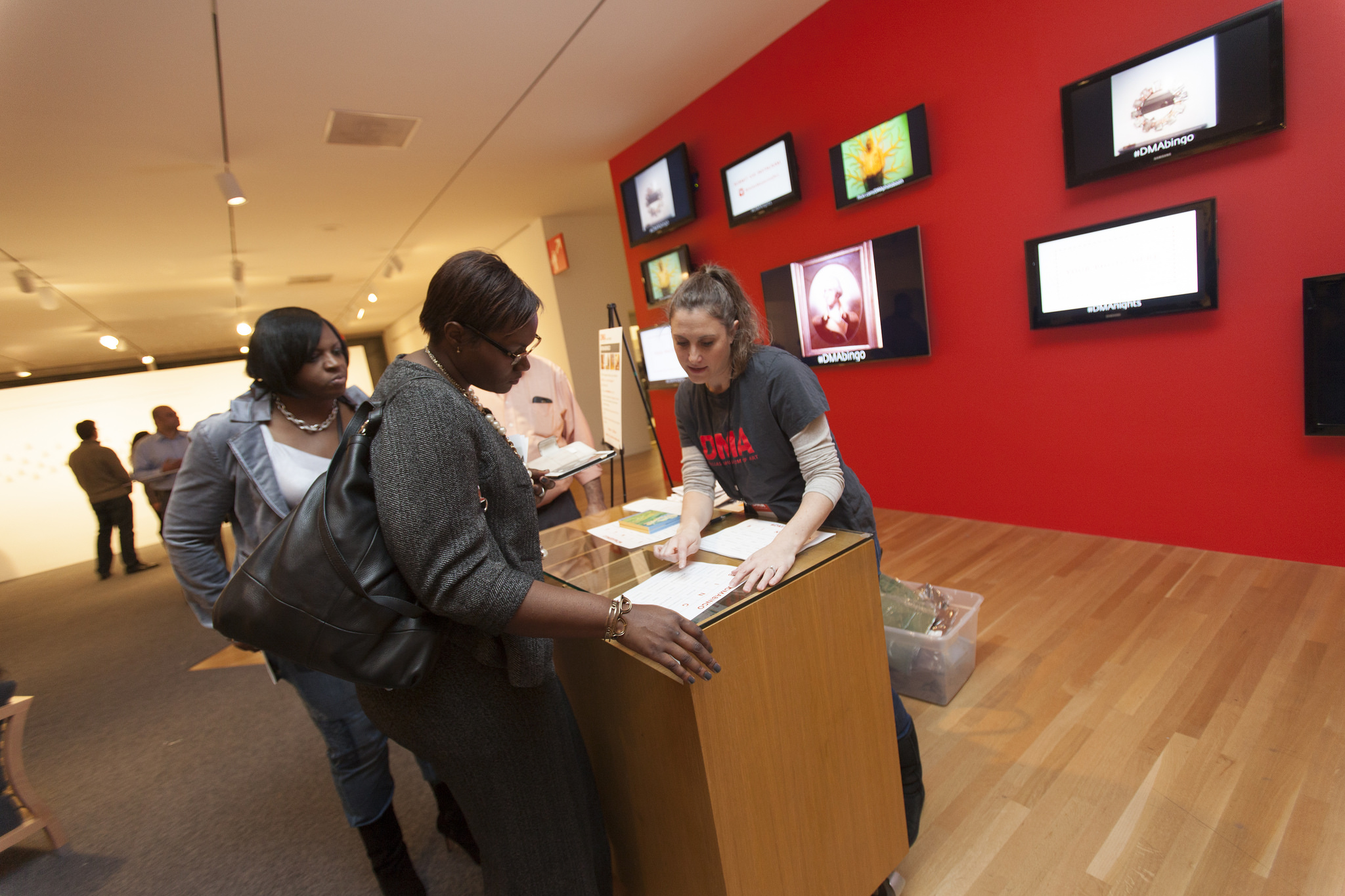
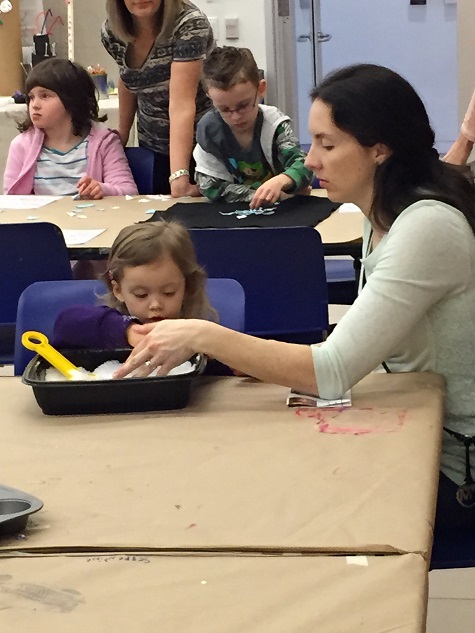
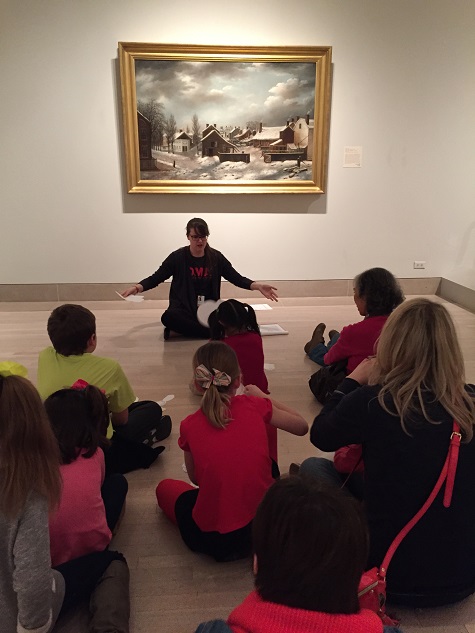
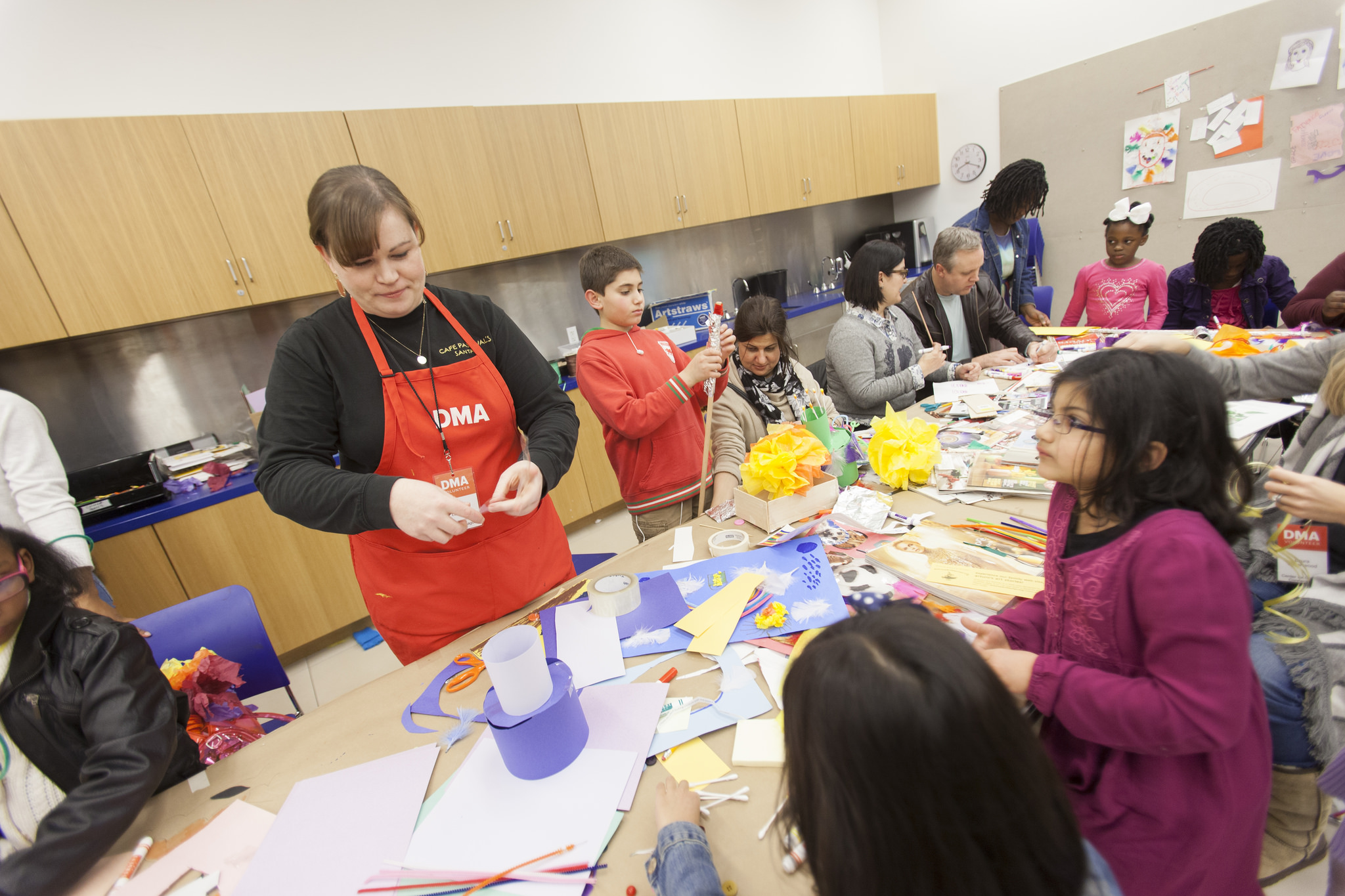
If your answer is d) all of the above, then you are the perfect candidate for the C3 Volunteer Program! C3 Volunteers work with visitors of all ages, from 0-99, in the Center for Creative Connections (C3). Every day is different: one day, you might chat with a retired couple about a European painting on view; another day, you might help a five year old and his mother create something out of fun materials at the Art Spot; and yet another day, you might give a high school student a hint on a scavenger hunt she is completing as a class assignment.

No prior expertise in education, art, or art-making is necessary–just a desire to welcome and help visitors as they explore the Center for Creative Connections and the DMA. Volunteers also help us keep our fun activities and interactive spaces clean and organized, as well as prepare materials for studio and gallery programs.

If you are interested, please email us to request a volunteer application. Applications are due March 22, 2015. Mandatory volunteer orientation takes place Saturday, April 4 from 9:30 a.m. – 12:30 p.m. Volunteers must be 16 years of age or older, and able to commit to a year of volunteering.

C3 Volunteer Lauren Drawhorn

We hope to hear from you soon!

Melissa Gonzales
C3 Gallery Manager

Map Making

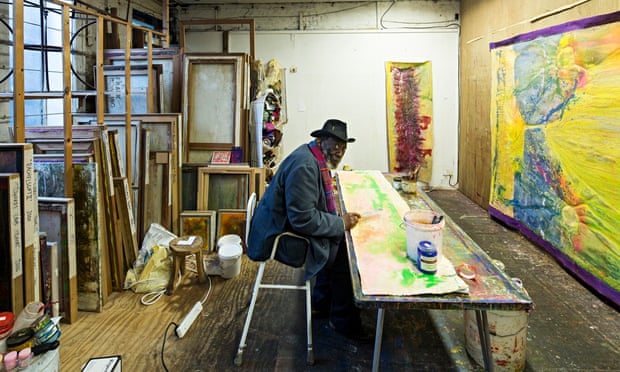
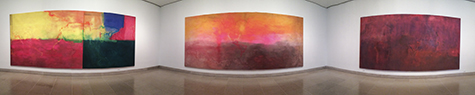
Tonight we’re opening three exhibitions including one featuring paintings by Frank Bowling. Bowling is a Guyanese-born British artist and is widely celebrated for his contributions to the field of abstraction and his advocacy of black artists internationally. Frank Bowling: Map Paintings highlights work Bowling created in the 1970s while living in New York. Discover more about this artist, who at 80 years old is still active in his London studio, in this fantastic look at his life in The Guardian.  See his work tonight for free during Late Night.

Artist Frank Bowling in his studio in South London. Photograph: David Levene. Web source: http://www.theguardian.com/

Experiments on Public Space

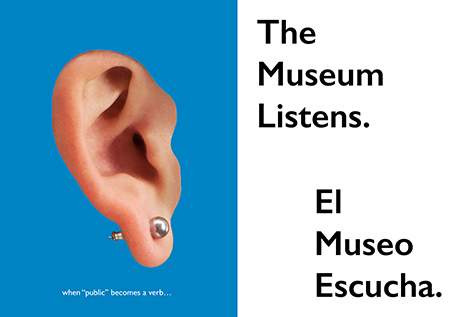
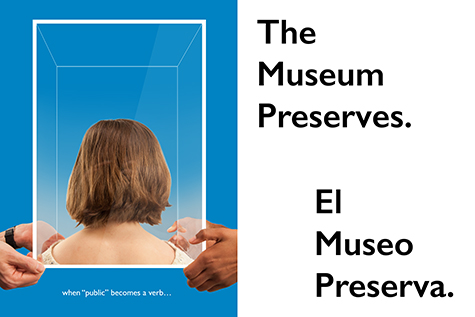
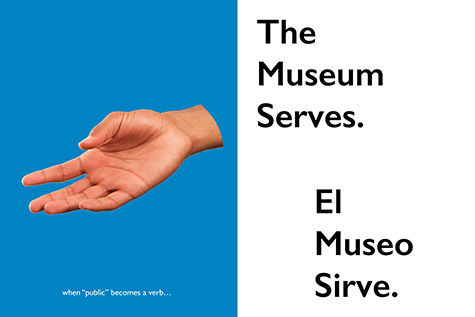
The word public is defined as an adjective: it is used to attribute a quality to someone or something, usually modifying and describing a noun. But what happens when public becomes a verb–an action, a state, the main part of a sentence? Public suddenly stops being passive and becomes active–an occurrence, a happening, an event…

But what makes a museum public? What are its responsibilities? How do we build democratic space/vision? Is it possible or necessary? And if it’s true that we’re losing publicness, how do we reclaim it back?

These are some of the questions I hope to explore with my new work, Experiments on Public Space (EPS). EPS came about thanks to the opportunity to carry out an independent project as part of my McDermott Internship at the Dallas Museum of Art. My background in both research and artistic practice is focused in an interest to understand, explore and expand the ways audiences interact/participate with contemporary art. This project is an extension of that line of inquiry specifically looking at institutional contexts.
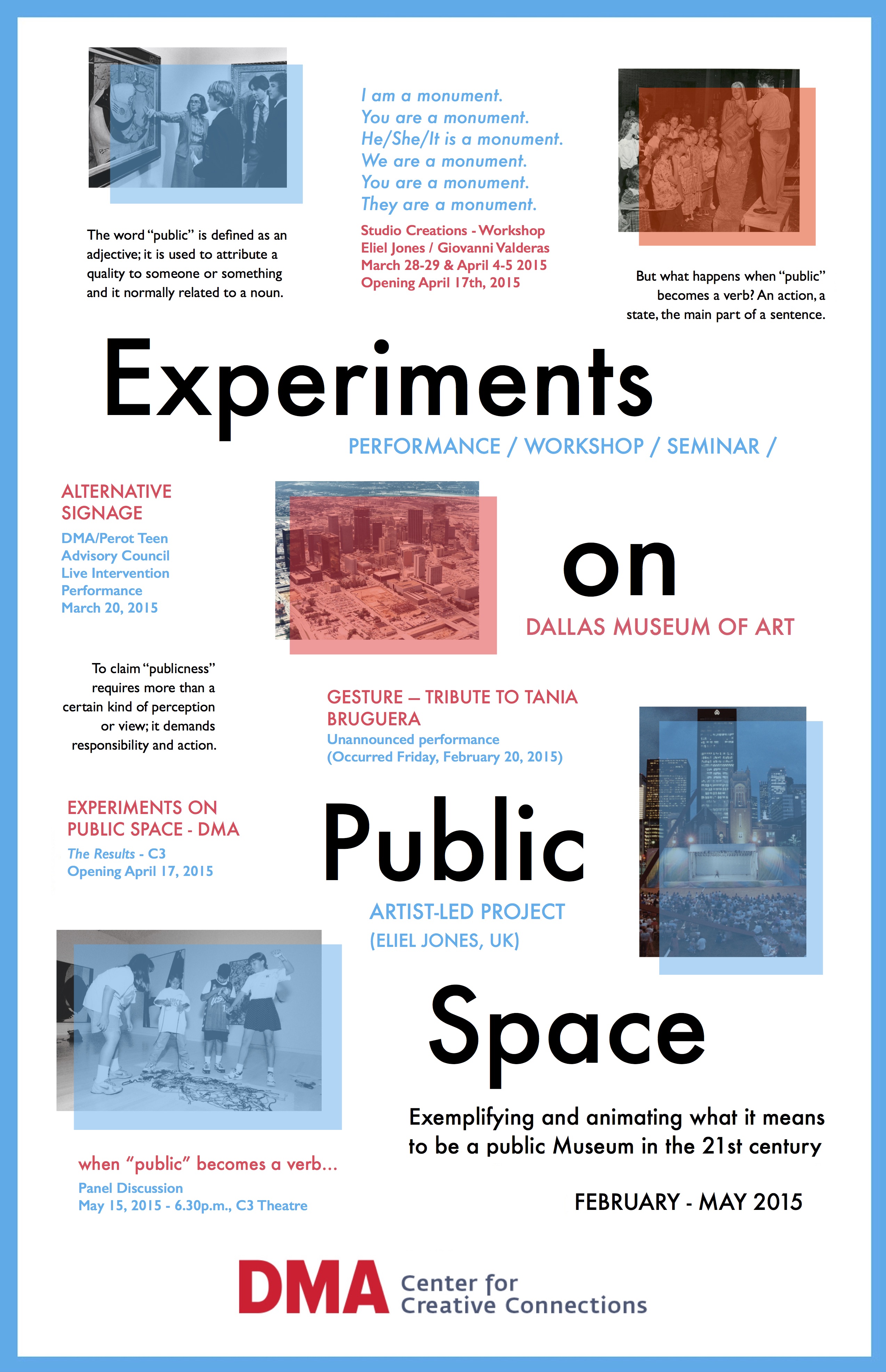
Experiments on Public Space / Dallas Museum of Art, February - May 2015

Experiments on Public Space / Dallas Museum of Art, February – May 2015

I’m fascinated by the language used in museums when referring to issues around publicness, because what do we actually mean when we refer ourselves as a “public museum”? What does it entail? How does a public museum feel or look? What do our visitors understand by “public”? Are they not the public themselves? And why probe publicness? Why now? Why here?

Coming from England, I was very curious about the differences between public cultural institutions here in America and those back in Europe. I think the dialogue is particularly of relevance to the DMA because of its historical founding as a public museum and it’s recently reestablished free general admission, something that is rare in this country. I’m also intrigued by the context of the Museum in a city as diverse as Dallas. Considering the city’s large latino population, I want to explore the standings of the institution in serving a wide range of communities.

The project itself is built on a series of practice-based evaluation methods that take place in the Museum. The public will provide the data with their participation in performances, interventions, seminars and workshops, aiming to collaboratively measure the publicness of the environment in which the institution acts. With this approach I hope to implement active research into the life of the Museum, collecting both inside and outside voices as a way of opening up dialogue. In this sense, the project uses unconventional evaluation methodologies to promote opportunities for reflection, thought, participation and active discussion. The goal is that through these programs, we might collectively exemplify and animate publicness and what it means in the context of museums in the 21st century.
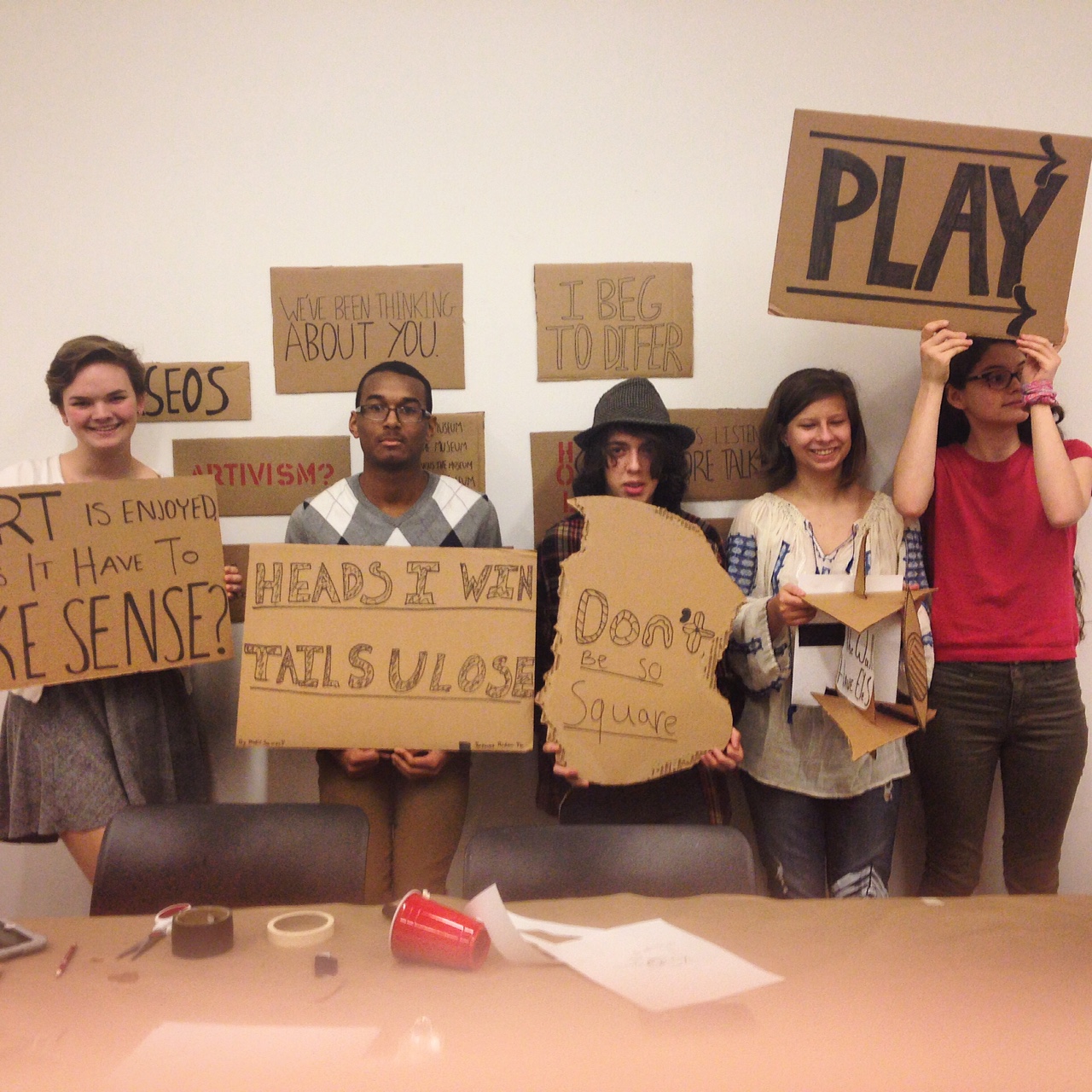
Alternative Signage

Members of the DMA/Perot Teen Council during a production session for “Alternative Signage”, one of the EPS programs happening during March Late Night.

Confused? Challenged? Excited? – This is a very brief introduction to a project that has almost taken a life of its own. Publicness is a complex issue that touches upon many different fields and it is easy for it to be overlooked or even forgotten. With EPS I hope to bring it back to the fore in an attempt to reclaim its importance. I believe there is a big difference between possessing a quality and being one, and it is crucial that we understand the difference. To claim ‘publicness’ requires more than a certain kind of perception or view; it demands responsibility and action.

Program scheduling will be published on the DMA website, under Center for Creative Connections –  Community Projects. I hope you’ll join me in this experiment!
Eliel Jones
McDermott Intern for Visitor Engagement

A Table fit for a Contessa

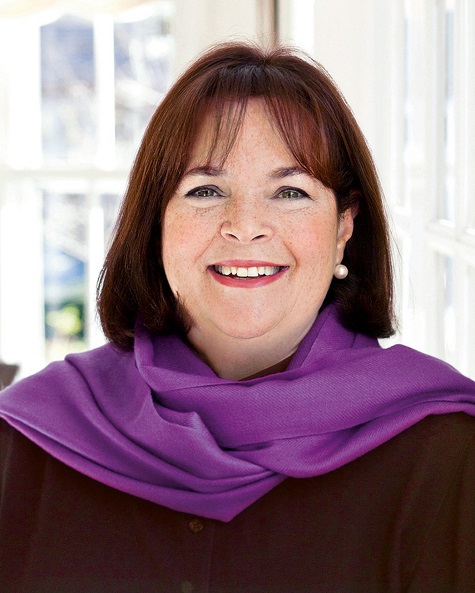
Today is what the DMA Arts & Letters Live team has been waiting for since we began planning this event last July: INA GARTEN DAY!

ina

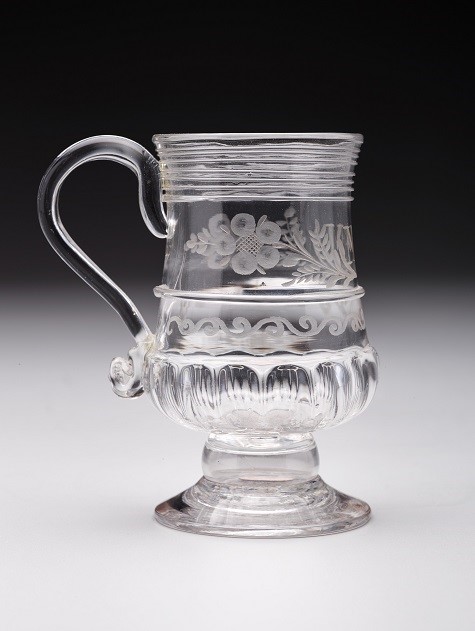
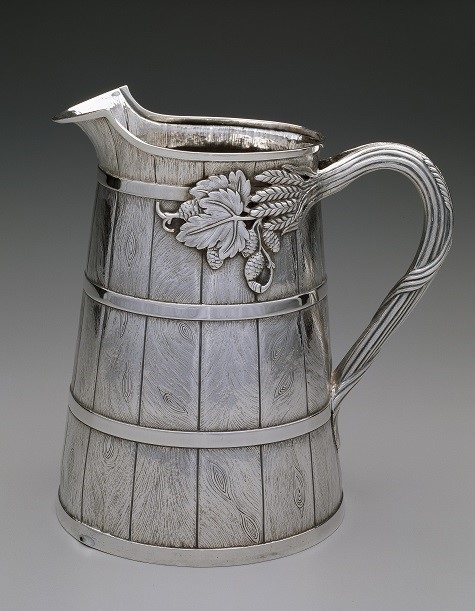
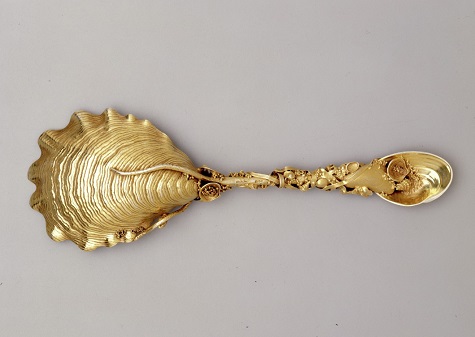
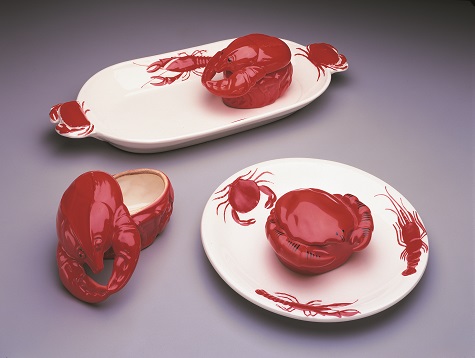
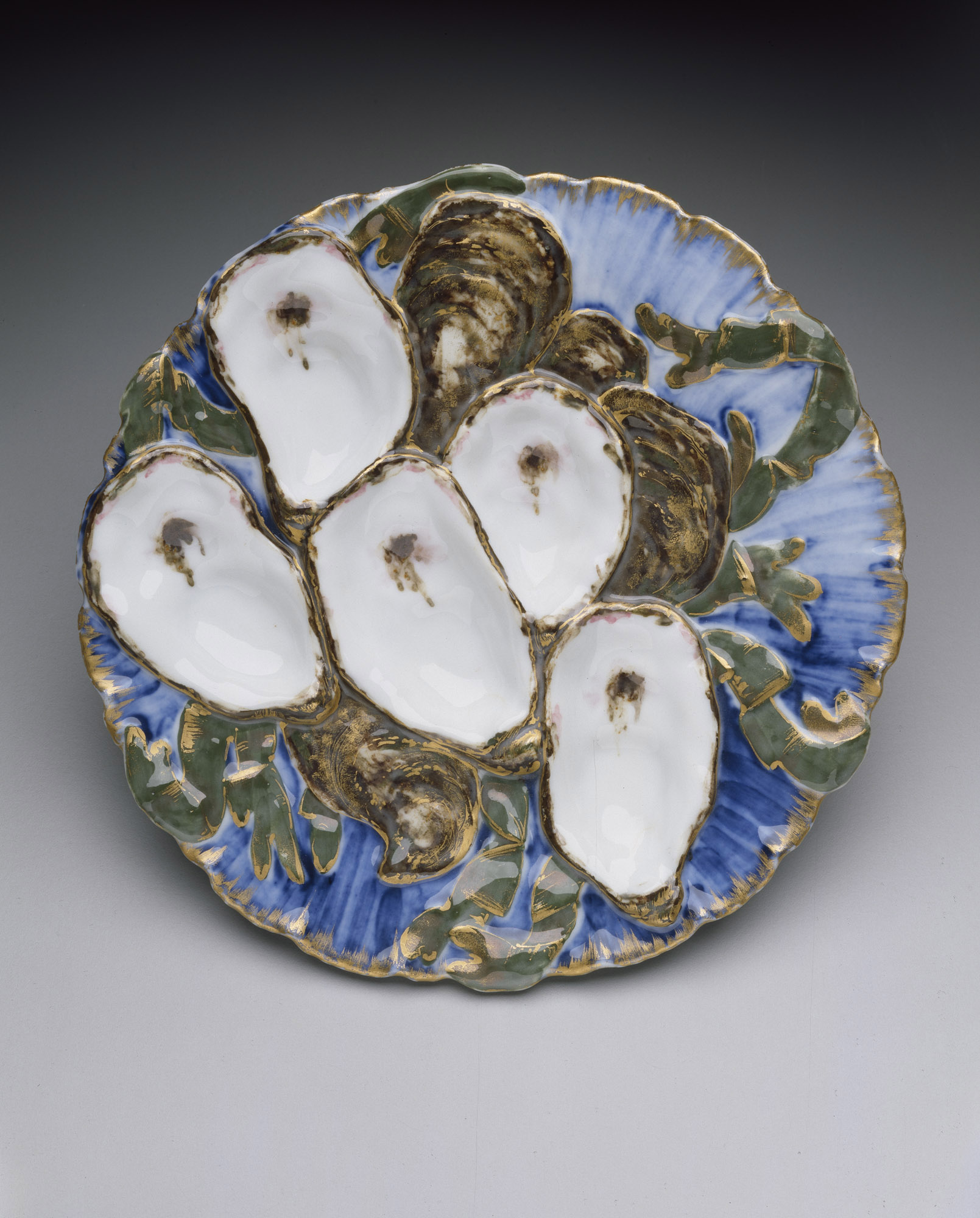
We are hosting the lovely Ina Garten tonight as part of the 2015 DMA Arts & Letters Live season. To celebrate the Barefoot Contessa’s visit to Dallas, below are some of my favorite pieces from the DMA’s collection that are fit for any fête in the Hamptons with Ina! Explore the DMA collection galleries for free and plan your fantasy table setting.

If you missed getting tickets to Ina Garten’s event, foodies are in still in luck, we are hosting the amazing chef Marcus Samuellson on March 27, get tickets now online.

A Barrel of Art

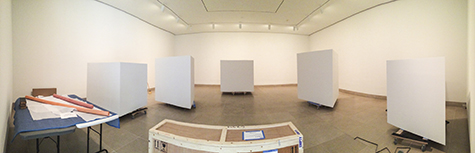
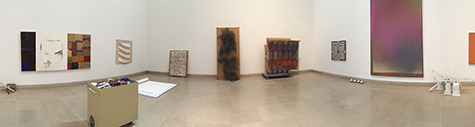
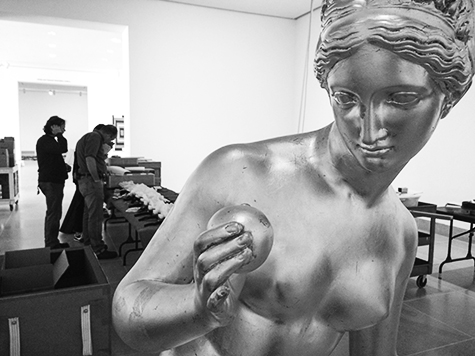
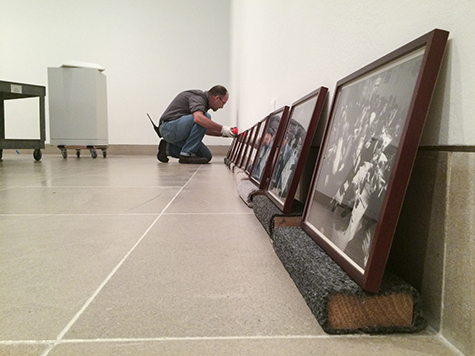
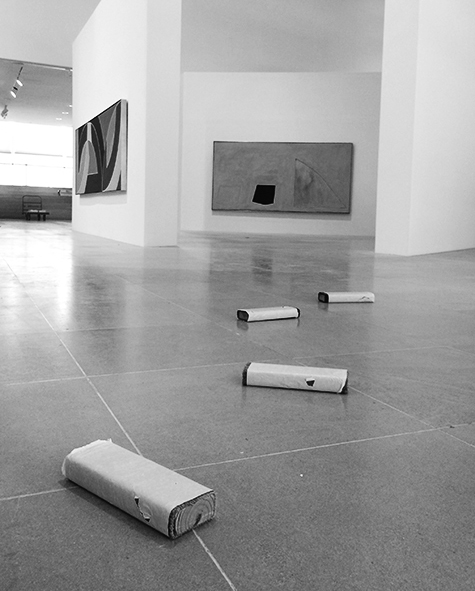
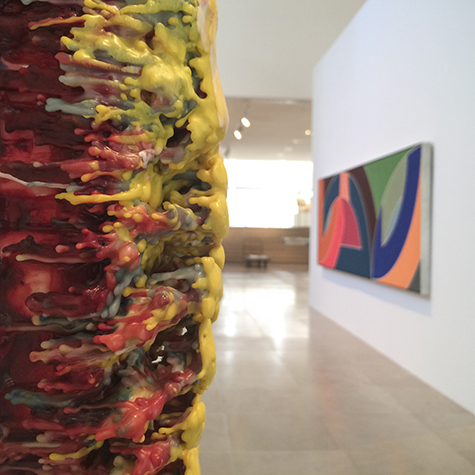
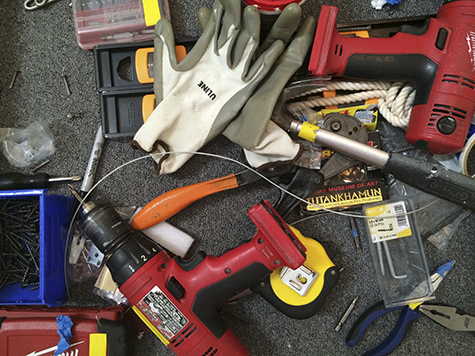
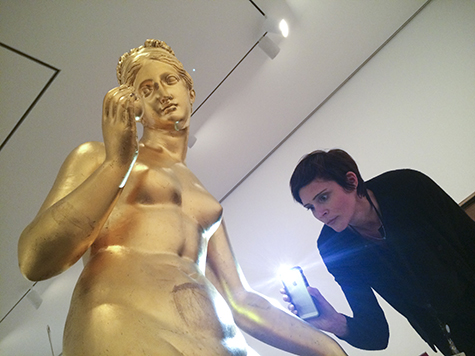
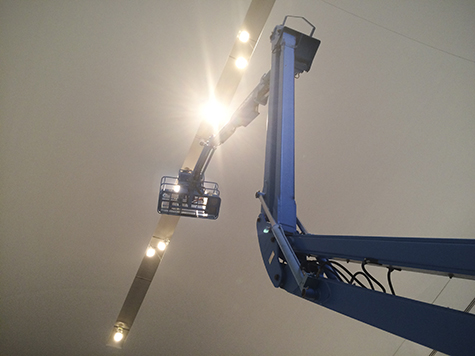
Next Friday, February 20 the DMA is opening three exhibitions (Frank Bowling: Map Paintings, Bold Abstractions: Selections from the DMA Collection 1966–1976, and Concentrations 58: Chosil Kil) in time for our February Late Night. Installation for these three exhibitions began last week, get a sneak peek at the works of art below and start planning your artful Late Night now.


CHOSIL_INSTALL_BLOG_FEB_2015_001 CHOSIL_INSTALL_BLOG_FEB_2015_002 CHOSIL_INSTALL_BLOG_FEB_2015_004 CHOSIL_INSTALL_BLOG_FEB_2015_005 CHOSIL_INSTALL_BLOG_FEB_2015_006 CHOSIL_INSTALL_BLOG_FEB_2015_007 CHOSIL_INSTALL_BLOG_FEB_2015_008 CHOSIL_INSTALL_BLOG_FEB_2015_009 CHOSIL_INSTALL_BLOG_FEB_2015_010 CHOSIL_INSTALL_BLOG_FEB_2015_012

Cuddly Symbols of Undying Love

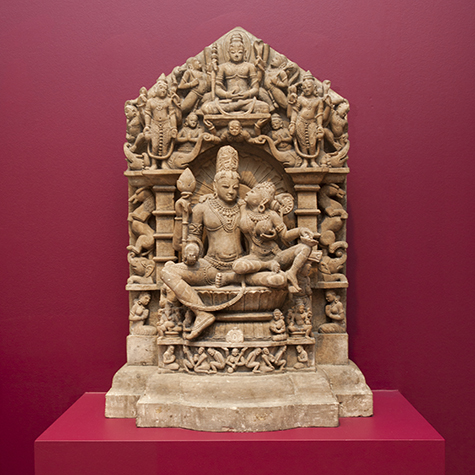
Uma-Maheshvara, central India, likely late 11th to 12th century, buff sandstone, Intended bequest of David T. Owsley

Uma-Maheshvara, central India, likely late 11th to 12th century, buff sandstone, Intended bequest of David T. Owsley

Dr. Anne Bromberg, The Cecil and Ida Green Curator of Ancient and Asian Art at the DMA, can always be counted on to discuss the representation of love in various forms in the works in the DMA’s collection. We asked her to pick out a work on view for a special Valentine’s Day post:

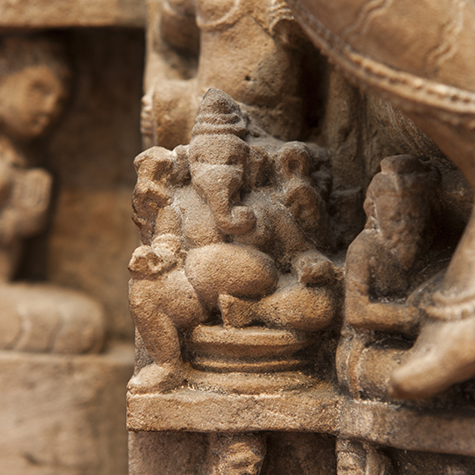
In this sumptuous temple relief, the great Hindu god Shiva embraces his wife Parvati in a sensuous and romantic way. As both gods are deities of fertility, they are shown as almost naked and with beautifully modeled bodies. By their feet are their two sons, the elephant-headed god Ganesha and Skanda, a war god. Over the couple is a scene with Shiva in his other aspect, as the great god of yogic meditation. According to a Hindu text, Parvati longed for a baby after she and Shiva married, but he remained stubbornly ascetic. Finally, the beautiful Parvati said, “Alright, just give me a child and you can go on being the divine yoga master.” So he did, but since Shiva is the god of life, death, and rebirth, it wasn’t that simple. When Shiva found the child Ganesha barring him from Parvati when she was bathing, he cut off his son’s head. Then, moved by Pavati’s despair, he said that he would restore the boy with the head of the first person he saw, which turned out to be an elephant. Elephant-headed Ganesha became the god who removes obstacles from people’s path and gives them prosperity. He is the most popular god in India today. So the tumultuous story has a happy ending, and Shiva and Parvati are cuddly symbols of undying love.

Detail of Ganesha

Detail of Ganesha

Visit this work, and many other works that embody love, in the DMA’s collection galleries for free this Valentine’s Day.

Anne Bromberg is The Cecil and Ida Green Curator of Ancient and Asian Art at the DMA.

A (Warm) Winter Wonderland: Autism Awareness Family Celebration

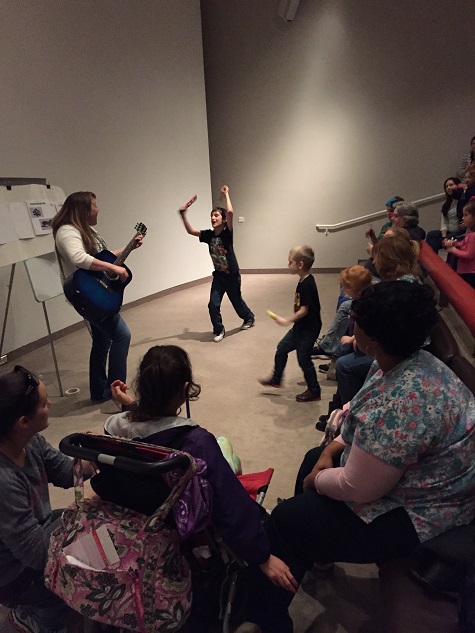
This past Saturday, we had the first Autism Awareness Family Celebration of the year. Our theme was snowy weather, which was a fun contradiction to the sunny Texas forecast that we had for the day. Families who attend every Autism Awareness Family Celebration joined first-time families for a fun morning in the Center for Creative Connections making pom-pom snowflake paintings in the studio, relaxing in the TWU sensory room, sketching from works of art in the galleries, and gathering resources from Autism Speaks. Check out all of the DMA’s access programs online at DMA.org.

Amanda Blake is the Head of Family, Access, and School Experiences at the DMA.

After Midnight: When the artwork is an early riser

Eight months ago, I joined the Dallas Museum of Art as the Director of Collections Management, helping to oversee the care of our art collection—both on and off the walls in our galleries and for our special exhibitions.  As part of that responsibility, I supervise the Museum’s team of preparators and registrars. Preparators are the staff who actually handle the art and are responsible for installing the artwork you see hanging in the galleries. Registrars, among other duties, are in charge of all logistics and coordination of loans coming to the DMA. Members of our excellent team have written about their adventures on Uncrated before (relive some of those stories here, here, here, here, and here!).

Last month we were all focused on the arrival of paintings from around the globe for our newest special exhibition, Between Action and the Unknown: The Art of Kazuo Shiraga and Sadamasa Motonaga.

Art travels in specially built crates, and there are particular companies that coordinate the shipping and customs procedures for works of art. The DMA Registrar staff works in close contact with these companies to make sure the works are safe and sound at all times. They know what size crate can fit in the cargo hold of different aircrafts and all possible flight options. We are kind of the travel agent for the artwork! We know that if a crate is higher than 63 inches it means that it will need to fly in a cargo plane.

That was the case for some of the most amazing artwork you will see in Between Action and the Unknown: The Art of Kazuo Shiraga and Sadamasa Motonaga, which opens at the DMA on February 8. We had 30 crates of 52 works of art travel from Japan to Dallas accompanied by the staff from the Japan Foundation and couriers from two of the lending institutions, the Mie Prefectural Art Museum, and the Hyogo Prefectural Museum of Art.
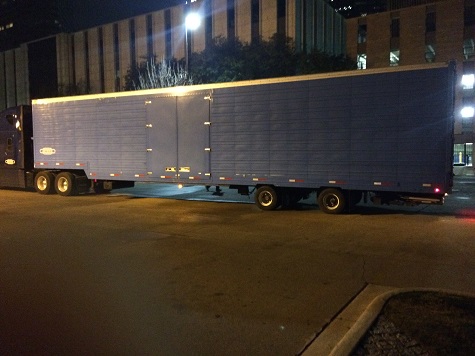
Truck arrival

As there is no need to cater to passengers, cargo flights tend to leave and arrive at not the most convenient times. They are likely to arrive in the middle of the night—or in the middle of the morning, depending on how you look at it!
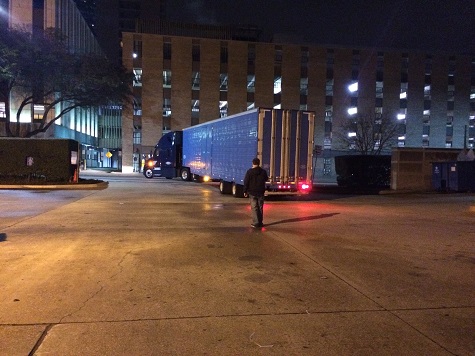
Truck manovering

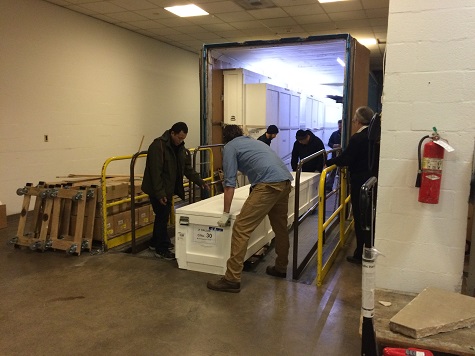
The Shiraga and Motonaga works arrived at the DMA on a cold January night. Registrar and Preparator staff, armed with lots of coffee, good attitudes, and heavy coats, were at the DMA to receive the shipment. Our galleries were dark, and so was the night outside. Under the watchful eyes of our Security staff, we worked just as we would during the day, moving quickly and carefully. Preparators unloaded the big truck and moved the crates into our galleries. There they would acclimatize—a museum term for adjust to the current conditions (sort of like getting over jet lag)—for a 24-hour period. Afterward, these beautiful works were uncrated and installed in the presence of their couriers.

Truck at dock

I hope you will visit the DMA soon and enjoy this stunning exhibition!
Isabel Stauffer is the Director of Collections Management at the DMA.

ThisClose: A Rare Look at Reves Treasures

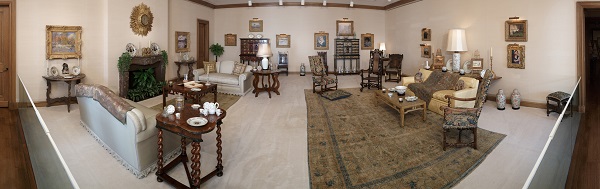
This year, the Dallas Museum of Art celebrates the 30th anniversary of the opening of the Wendy and Emery Reves Galleries, which house a varied and celebrated collection of paintings, sculptures, furnishings, and decorative arts. The Reves Galleries were designed as a replica, on a slightly reduced scale, of the principle rooms in the couple’s villa on the French Riviera. The unusual domestic character of these galleries has made them both loved and loathed over the years. They offer an opportunity to step into the past and discover the history of art collecting and display in the mid-20th century. But, the barriers that separate visitors from the displays have been a perennial frustration. As curators, we are often as frustrated as our audiences with the limitations of the display in the Reves Galleries. Yes, we feel your pain.

The Grand Salon in The Wendy and Emery Reves Collection at the Dallas Museum of Art

The Grand Salon in the Wendy and Emery Reves Collection at the Dallas Museum of Art

This spring, we are making some modest refurbishments to two of the rooms in the Reves Galleries that will require them to be closed for some months (the rest of the Reves wing will remain open). We’ll take advantage of the partial closure to photograph the works of art on view in those galleries as part of the DMA’s multi-year digital cataloging project. In coming months, visitors to our online collection will discover the fruits of that labor in hundreds of new and improved images of works of art in the Reves Collection. But, there will be also be an even more immediate opportunity for visitors to take a closer look at some of the Reves treasures.

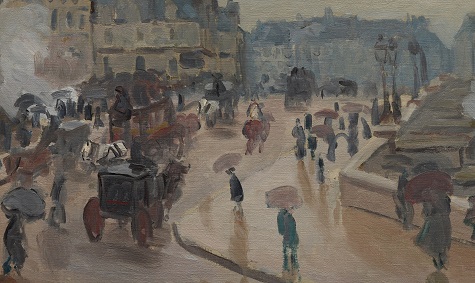
Claude Monet, The Pont Neuf, 1871, oil on canvas, Dallas Museum of Art, The Wendy and Emery Reves Collection, 1985.R.38

Claude Monet, The Pont Neuf (detail), 1871, oil on canvas, Dallas Museum of Art, The Wendy and Emery Reves Collection, 1985.R.38

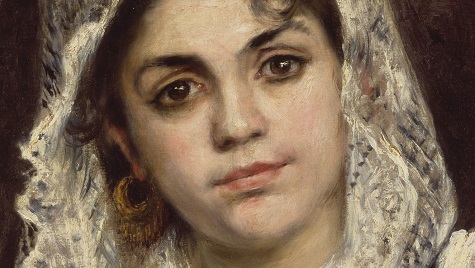
On January 31, we will open an intimate exhibition, included in free general admission, in Focus Gallery II on Level 1, featuring the great impressionist paintings from the Reves Collection, including works by Pierre-Auguste Renoir, Claude Monet, Camille Pissarro, and Paul Cézanne. These works, usually on display in the Library and Grand Salon of the Reves Galleries, are among the greatest treasures of the Reves Collection . . . and among the most difficult to appreciate in their current setting, hanging on distant walls some twenty or even thirty feet from the barriers. In the exhibition Impressionist Paintings from the Reves Collection, thirteen of the greatest paintings from the Reves Collection will be brought together for a period of close study and exploration. Anyone who has longed for a closer view of these paintings will revel in this opportunity, curators included! But, this opportunity will be a limited one. Impressionist Paintings from the Reves Collection will be on view only until March 22, so be sure to plan a visit soon for an up-close and personal visit with these old friends.

Pierre-Auguste Renoir, Lise in a White Shawl (detail), c. 1872, oil on canvas, Dallas Museum of Art, The Wendy and Emery Reves Collection, 1985.R.58

Pierre-Auguste Renoir, Lise in a White Shawl (detail), c. 1872, oil on canvas, Dallas Museum of Art, The Wendy and Emery Reves Collection, 1985.R.58

Heather MacDonald is The Lillian and James H. Clark Associate Curator of European Art at the DMA.

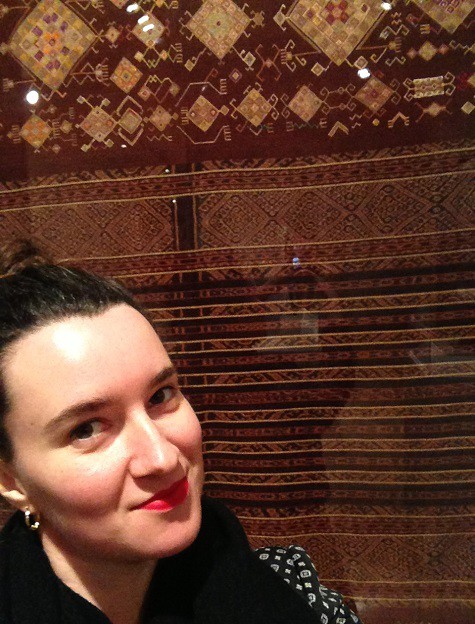
The Selfie Seen Around the World

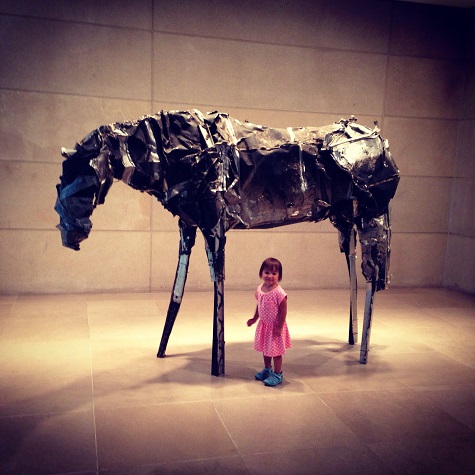
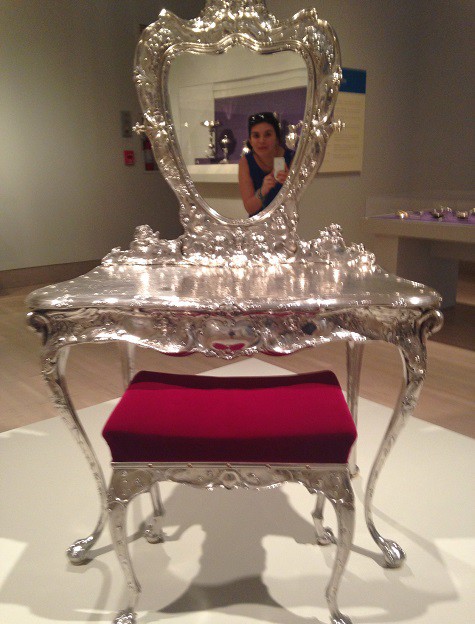
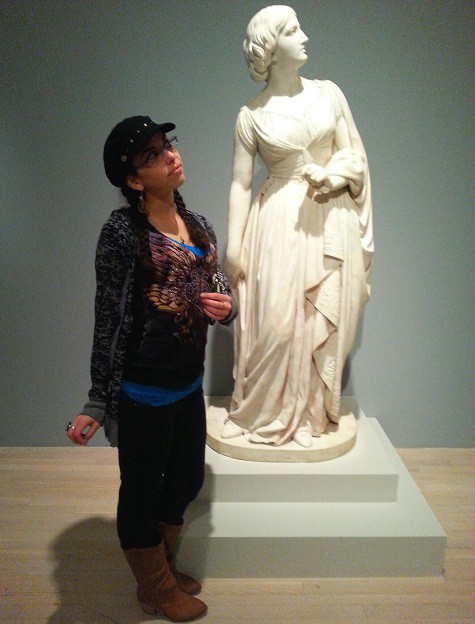
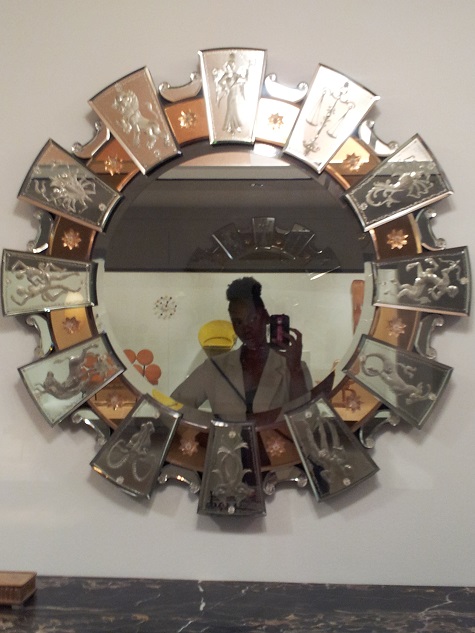
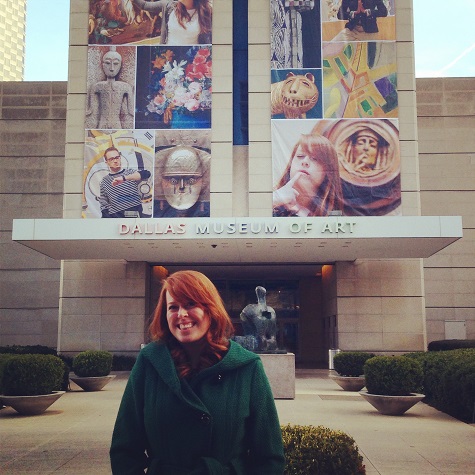
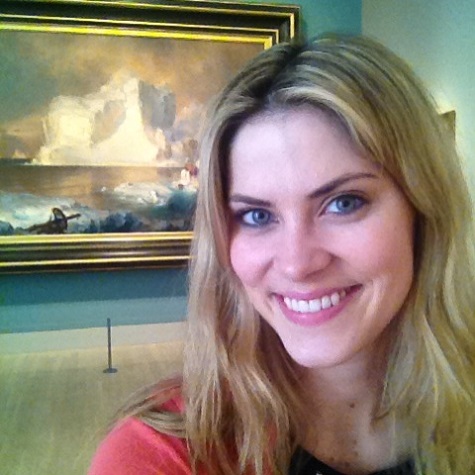
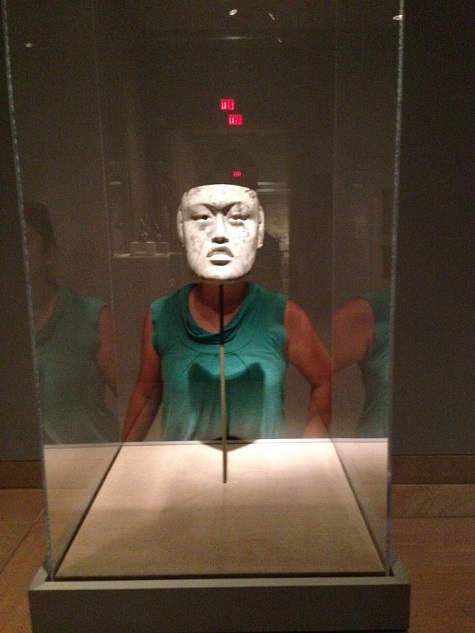
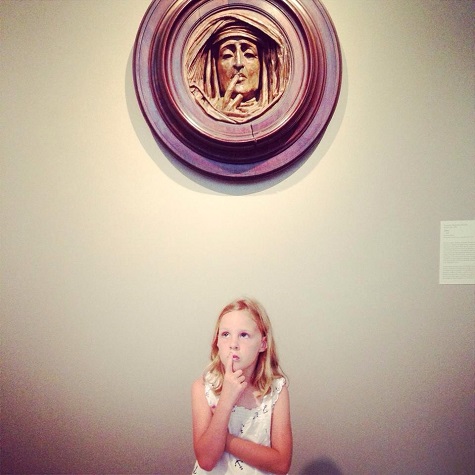
Today marks the second anniversary of DMA Friends and we are so excited to have over 90,000 friends! Today also happens to be Museum Selfie Day, with people sharing selfies in museums from around the world. Celebrate two years of free general admission and the DMA Friends program by sharing your DMA selfie with the hashtag #MuseumSelfie.

Enjoy a few of our favorite Museum Selfies from our DMA Friends, visitors, and staff. If you aren’t already a DMA Friend, sign up for our free membership program on your next visit!


Archives

Categories