What do you love to do? Perhaps it’s a favorite hobby or pastime, or perhaps it’s part of your job. Is there a moment that comes to mind when you think back on how you first became interested in that particular passion? We call these moments the “wonder moments”—moments where sparks of curiosity are first ignited. We asked DMA staff members about the “wonder moments” that led to working in a museum or doing the jobs they do now. Here’s what they had to say:
Tamara Wootton Forsyth
The Marcus-Rose Family Deputy Director
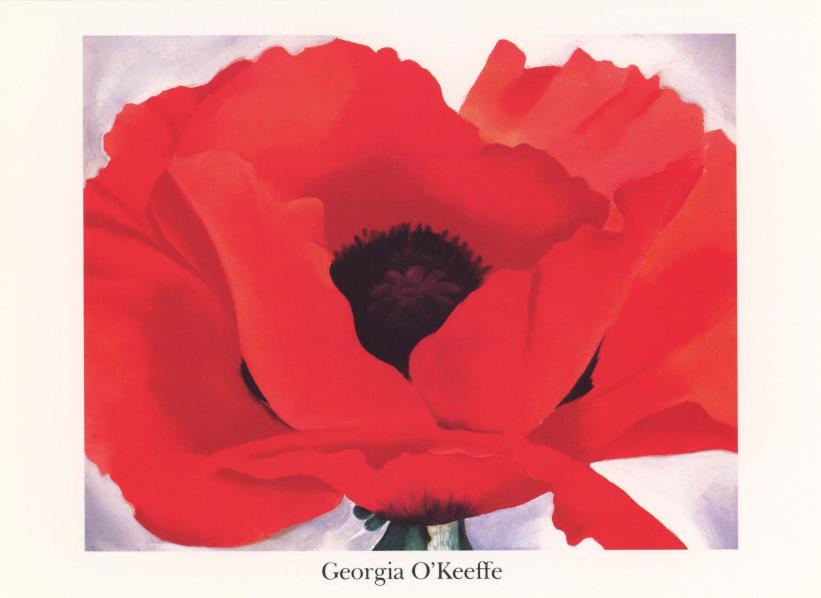
The moment I knew when I wanted to work in a museum was actually here at the DMA! My high school art teacher made it a requirement that we go on a field trip to a museum. My field trip was to see the Georgia O’Keeffe exhibition here at the DMA. I was dumbfounded by the exhibition and knew I wanted to stay in the arts forever. This was my favorite painting from the show. I even ended up with a small tattoo of the work!

Jacqueline Allen
The Mildred R. and Frederick M. Mayer Director of Libraries
I’ve always loved a good mystery. In grade school, I read From the Mixed-Up Files of Mrs. Basil E. Frankweiler, a novel about two children who run away to the Metropolitan Museum of Art and research an art object. Two decades later, I visited The Met in New York City and knew then that art and museums would be part of my life. Fast forward to an Arts & Letters Live event on March 26, 2004, where I met the author E. L. Konigsburg, a dream come true.

Emily Schiller
Head of Interpretation
My first art history course was History of Design. I remember calling my family to tell them it’s not a coincidence that fast food companies have red and yellow logos! I was hooked; everything around me has a story and I can tap into those stories by looking closely and asking “why?”.

Brian MacElhose
Collections Information Manager
I discovered when working at the Museum of Arts and Design (MAD) that I could merge two of my interests: computers and the fine arts. I had decided to return to nonprofit museum work after working in a for-profit gallery for about three years in New York City. When I was tasked with governing MAD’s art information, I realized that data is my jam!

Sarah Schleuning
Interim Chief Curator and The Margot B. Perot Senior Curator of Decorative Arts and Design
I was backpacking through Europe between undergraduate and graduate school. While wandering through the magical streets of Venice, I was captivated by the poster for the exhibition The Unknown Modigliani. My friend and I decided to go, and still today we talk about the luck of sharing that experience. The installation was sublime. What I remember most was being transfixed by the simplicity of his line and how evocative it was in conjuring up the physicality and emotion of the human form. Now, 27 years later, I can still remember everything about it. A simple pencil and paper with artistic intent transformed my life, and now I forever hope that the shows I create offer new ideas, ways of seeing, and the magic of possibilities.

Bernardo Velez Rico
Manager of Off-Site School Programs
My “wonder moment” was as an undergraduate at Stanford University. The first class I took taught the histories of my communities—ones of resistance and resilience—through art; that taught me we all have stories to tell, and that I could help youth share their own.
Laura Hartman
Conservator
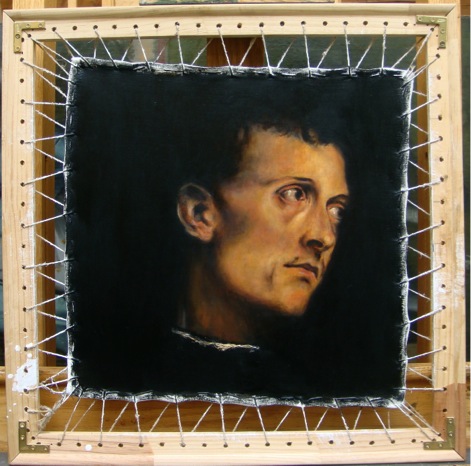
My family moved quite a bit as I grew up but one constant was visiting local museums, the Dallas Museum of Art being a long-time favorite. I became intimately familiar with each painting I visited. Eventually, I started making painting reconstructions, or copies, using historic material and technique, of favorite works. I was continually curious about historic paint and painting techniques and was introduced to conservation through that avenue.

Jessica Thompson-Castillo
Manager of Teen Programs
My “a-ha” moment was when I was working alongside teen volunteers in my first museum internship at Thinkery in Austin. Young people taught me what it means to listen and act with empathy—because sometimes that’s hard for adults to remember. Their passion and leadership inspire me to be a positive force for change in my community.