Archive Page 154

Membership Miles

At the Dallas Museum of Art we are often asked, “Why should I join?” A membership allows you to enjoy all that the Museum has to offer all year long, while supporting your local arts. There are many reasons to be a member at the DMA, and one of the exciting perks this year will be tickets to the upcoming exhibition The Fashion World of Jean Paul Gaultier: From the Sidewalk to the Catwalk.

Because it’s hard for us to pick our favorites, we invited a few members to share their thoughts on what makes being a DMA member special. Do you see your favorite listed below? If not, we would love to hear from you!

• Free admission
• Supporting the Museum’s collection
• “It’s a place that I can take my grandson to; it’s fun for both of us.”—Shari, member since 2006
• Free lectures
• “The discounts to Arts & Letters Live. We loved David Sedaris.”—Kenneth,  member since 1996
• “Free parking and access to jazz programs”—Stockton, member since 2009
• Discounts in the Museum Store and on dining (the store discount is most popular with children under 10, who can always find something they can’t leave without)
• Reciprocal membership to over 500 museums
• Subscription to the Dallas Museum of Art Magazine
• “I know about things before they happen and stay in tune with new things in Dallas”—Liz, member since 2008

Wendi Kavanaugh is the Membership Outreach Manager at the Dallas Museum of Art.

Friday Photos: Mystery Artwork

How well do you know the collection?

Earlier this year, our intern Karen Colbert introduced the Mystery Artwork Photo Series, a three week series that presented a detail of an artwork and encouraged our readers to visit the Museum or go online with a handful of clues to find the mysterious object.

This September, I challenge you to explore our galleries and investigate the clues given with each work in our new Mystery Artwork series.  For the next four Fridays, I will post an altered photograph of the mystery artwork and give you a clue in the form of a rhyme.  It is up to you to visit the Museum and search our galleries or practice your good research skills by searching on our online collections page. 

The cryptic artwork will be revealed the following Friday, with the presentation of a new a mystery artwork.  The winner will receive the best non-prize ever: complete bragging rights that you know the DMA’s collections. 

Remember, Thursday Night Live offers free admission to Texas educators with their ID, or you could visit anytime with a teacher membership.

Ready, set, go!

His paintings reference color theory,
and his color palette is seldom dreary,
with three layers of squares,
this painting hangs across from a chair.

Best of luck,
Loryn Leonard
Coordinator of Museum Visits

How I Spent My Summer Vacation

Back when I was in grade school, classes began after Labor Day weekend.  I am still getting accustomed to the fact that students and teachers now return to school before the holiday.  And, with temperatures still well into the 100’s, it is difficult to believe that summer is over.

Amy:

This has been a summer of unexpected things and exciting moments.  A highlight for me is definitely the Mavericks winning the NBA title—go Mavs!  I also got to see my kid brother graduate from college, scored some tickets to the Colonial in Fort Worth, and recently took a fun river trip in Austin with friends from college.  Summer was great, but I’m definitely ready for some cool(er)  temperatures.

Amy & her brother, after a very long day moving out of the dorms!

Loryn:

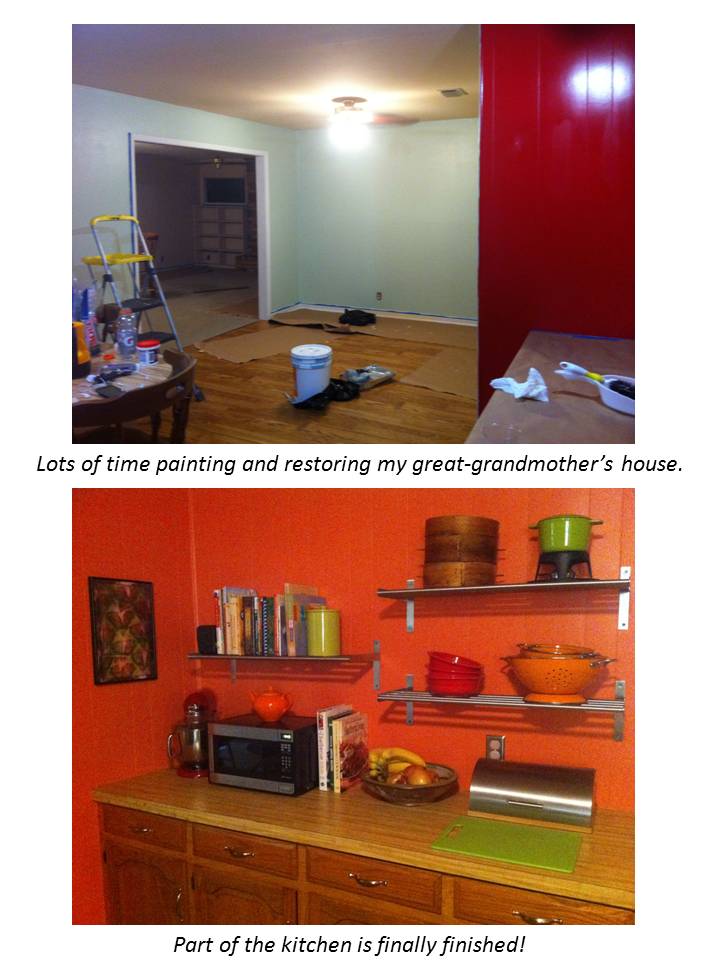
Despite the sweltering heat, this summer has been a monumental milestone in my life.  Not only did I achieve a life-long goal and land my dream job here at the DMA, but my husband and I also bought our first house, which was the very home my great-grandmother lived in.  Best of all, I spent most of my time in the galleries with students, teaching and learning about art.

Melissa:

I escaped the Dallas heat and spent ten days in the Pacific Northwest.  Over five of those days, my friends and I hiked 47 kilometers (29 miles) along the Juan de Fuca Trail on Vancouver Island, British Columbia.  We walked through lush rainforests with huge ferns, scrambled over the roots of enormous fir trees, waded through muddy bogs, and climbed up and down rocky cliffs along the coast.  Some of the scariest moments were crossing over bridges hewn out of logs and expansive suspension bridges.  Afterward, we treated ourselves to a three-day weekend in Victoria and Vancouver, where we visited Granville Island Public Market and enjoyed the deliciously famous JapaDog!

Nicole:

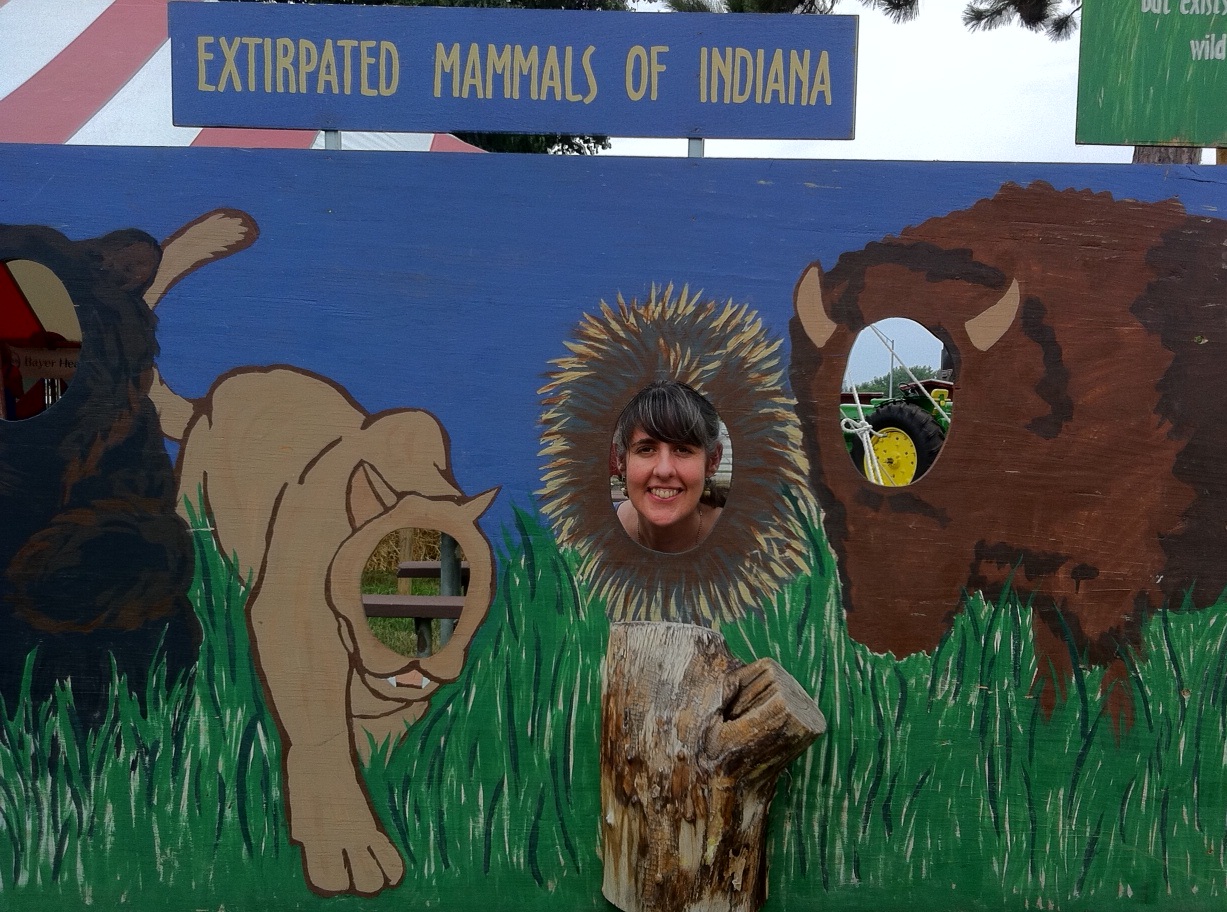
This Summer I Learned a New Word…“extirpate.”  It means to pull up by the roots; to totally destroy.  Extirpated animals are those that no longer exist in the wild in a certain area, but may exist
elsewhere in the world.  I learned this new word during my summer vacation trip to the Elkhart County 4-H Fair.  It’s one of the largest county fairs in the world and it’s held in my Indiana hometown.  I LOVED going to the fair as a kid and hadn’t been back in quite some time to see the chickens, rabbits, and goats; watch the harness horse races; check out the new tractors and other complex farm machinery; and sink my teeth into a sugary, fried-dough concoction called an elephant ear.  I don’t remember what extirpated animal I am in this picture.  Turkey?  Hedgehog?  I’ll have to return next summer to be sure.


Shannon:

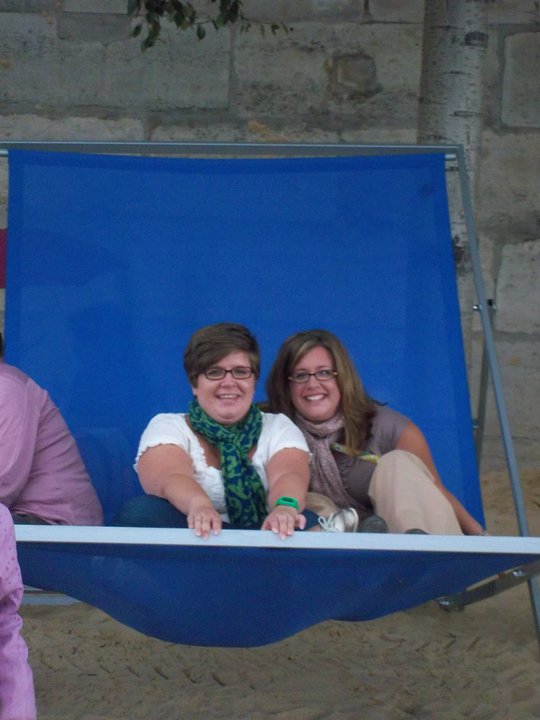
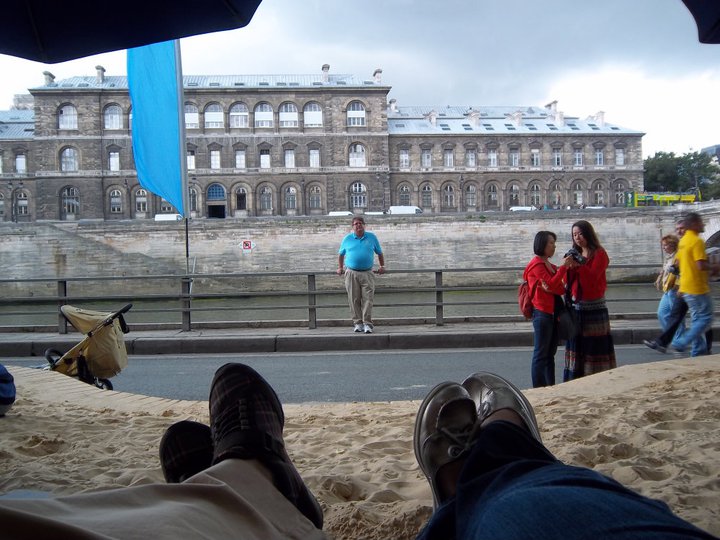
Although I didn’t make it to the beach during my summer vacation, I did visit the Paris Plages.  Each summer, sand is placed along the right bank of the Seine River in Paris, transforming the streets and walkways into a temporary beach.  Each section of the Plage was decorated with different colored beach chairs, umbrellas, and cabanas.  It was cloudy and rainy during my day “sur la Plage,” but I had a lot of fun walking through the sand along the Seine.

Tom:

Though I didn’t have the grand, romantic odyssey that Shannon had in France, my summer was full of travel and excitement. In May, I drove to Louisiana for the New Orleans Jazz and Heritage Festival (also known as Jazz Fest). Jazz Fest features two of my greatest loves: fantastic music and copious fried food. In July, I flew into Chicago where my brother took me out for one of the most delicious hamburgers I’ve ever had. From there, I drove to Fall Creek, Wisconsin, home of the Fall Creek High School’s Fighting Crickets! Fall Creek is also home to my grandmother and my many, many precious great-aunts.

Creativity: My first encounters and my first discoveries

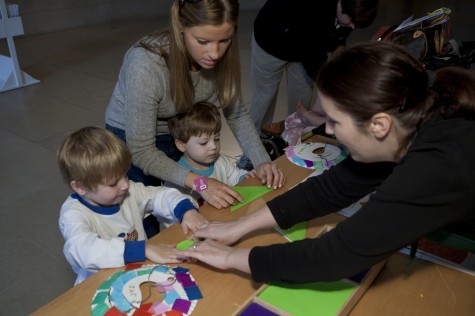
Magdalena Grohman leading a class in the Center for Creative Connections

Magdalena Grohman is a creativity expert who spends the occasional Thursday evening at the DMA helping inspire visitors participating in Thursday Night Live’s Artistic Encounters. But how did Magdalena discover her own creativity? She shared that journey with us below.

I received one of my very first lessons about creativity in elementary school. I was made to believe that creativity was only for those artistically or musically talented. You were born with it or you were not. I did not possess these talents, but at the same time I enjoyed writing in my diary, sketching (especially different layouts and arrangements for my dream room), creating collages, and so on. But that wasn’t considered creative. Only art, only music, and only if you were naturally talented.

The cracks in this belief system started to appear in high school when I met students and teachers who encouraged creative expression through other domains such as dance, movement, and theater. Suddenly, I realized I could express myself, share my state of mind, tell a story, and provoke others to think in new, creative ways. The true breakthrough came when a group of professors from Jagiellonian University in Krakow came to my high school to lead a workshop that taught creative thinking. With the workshops came a new wave of thinking about creativity and my first and foremost discovery about it: creativity was in everyone and could be enhanced.

This meant you could be CREATIVE in any number of ways, be it telling stories, designing birthday cards, finding new ways to teach, writing a song, formulating hypotheses, communicating diagnosis . . . the list goes on. This also meant that you could nurture creative potential at any stage in life. “But,” the professors warned, “You need to put some work into it.” What they meant was that creativity could be honed and developed by shaping core attitudes about creativity such as open-mindedness, self-discipline, and perseverance.

So, the first step to increase your creative potential is to liberate yourself from any belief system that is detrimental to creativity. The second step is to nurture positive attitudes toward creativity. These include (according to creativity researchers and educators) sticking to your creative endeavor no matter what and being open-minded, observant, curious, and self-disciplined. With this in mind, you will see that the next steps are much, much easier.

Take the next step tomorrow night when Magdalena will lead Thursday Night Live Artistic Encounters: Think Creatively with Tom Cox and Peter Goldstein at 6:30 p.m. in the Center for Creative Connections.

Shelagh Jessop is the Center for Creative Connections Coordinator at the Dallas Museum of Art

More Clips Than A Barber Shop (Audio Clips, That Is)

If you’ve been by the Museum’s offices in the past few weeks, you might have seen me crouched over a laptop in a corner with headphones like two giant beetles over my ears. Why, you ask? I’ve been sorting through audio files from the DMA’s extensive catalog of lectures and interviews. Many of these audio files come from gallery talks and docent training sessions led by DMA staff members and guest lecturers. The experience has been illuminating. Every speaker brings thoughtful, entertaining, and challenging new ways to look at the art. So this week, I thought I might share a few of my favorite audio files which will be appearing in the new teaching resources this fall.

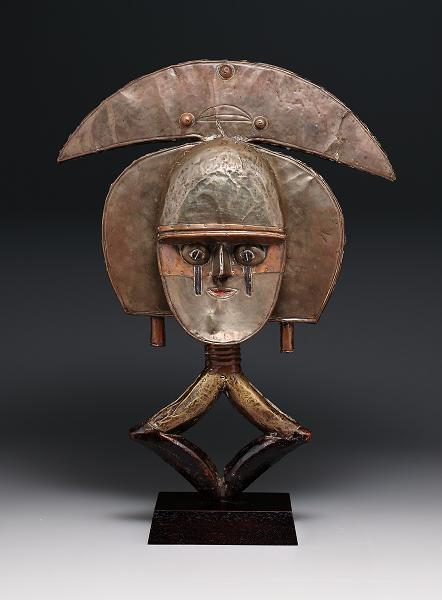
This first file comes from our very own Shannon Karol. In this file, extracted from her talk In Praise and Thanksgiving, she discusses the Janus reliquary guardian figure from the Kota peoples of Gabon (pictured below).

Janus reliquary guardian figure, late 19th or early 20th century, Dallas Museum of Art, The Eugene and Margaret McDermott Art Fund, Inc.

During the lecture Heaven on Earth: Hindu Temples and Their Sculptures, Darielle Mason describes the origins of the Hindu temple. Below is an image of the Hindu goddess Durga from our collection.

Durga, 11th century, Dallas Museum of Art, gift of the Junior Associates

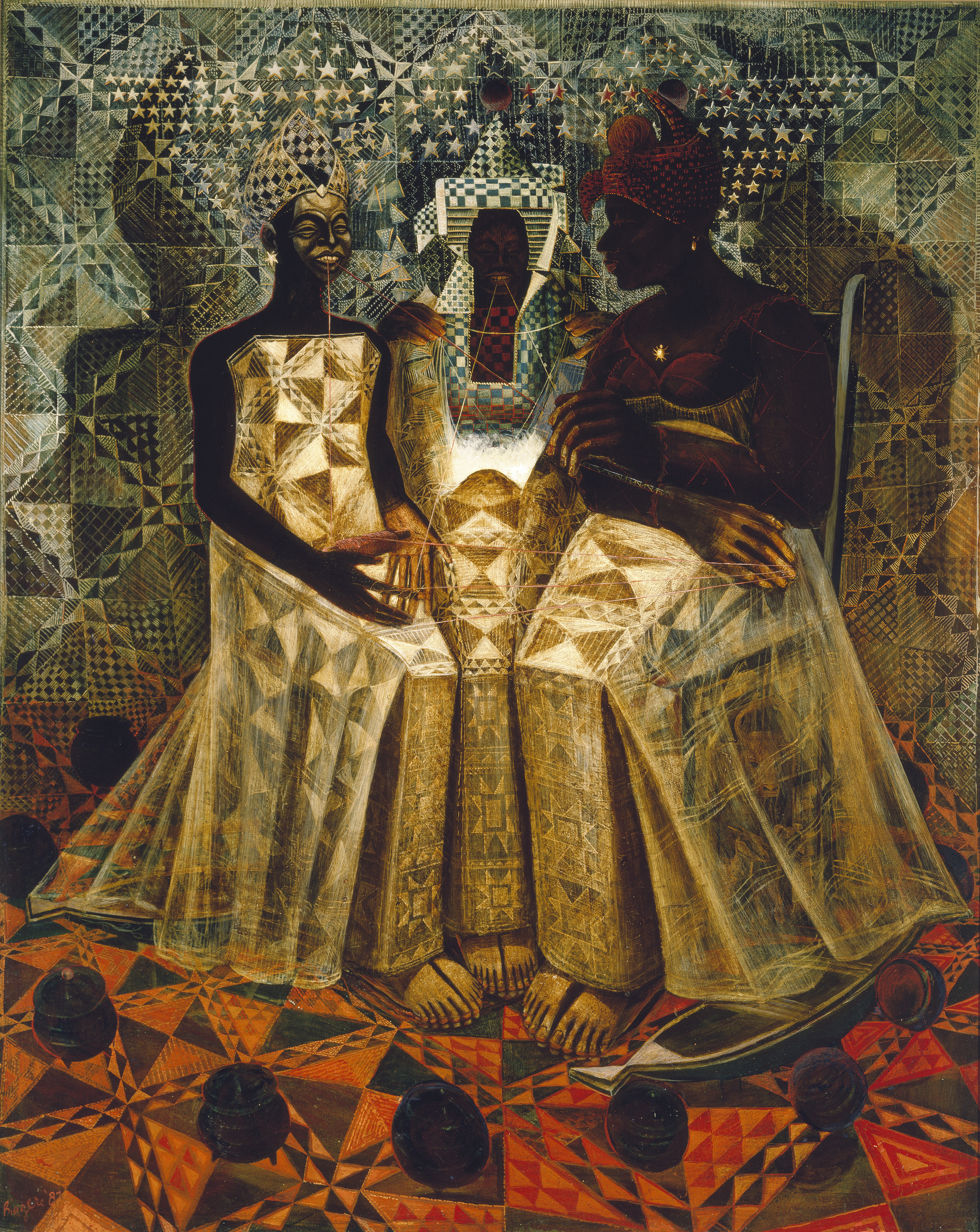
Finally, this audio file, extracted from a conversation between DMA curator Roslyn Walker and Phillip Collins, gives a brief biography of the artist John Biggers, and included a story about Biggers’ history with the DMA. Below is John Biggers’ painting Starry Crown.

John Biggers, Starry Crown, 1987, Dallas Museum of Art, Museum League

All of the works in this post will be featured in the new teaching materials, and these are only a few of the many audio files that will be available for streaming. You will also find video files, contextual images, maps, and other media when the materials debut this fall. Stay tuned to the Educators Blog for the official announcement of the materials’ debut.

Tom Jungerberg

IMLS Grant Coordinator

Seldom Scene: School Dais

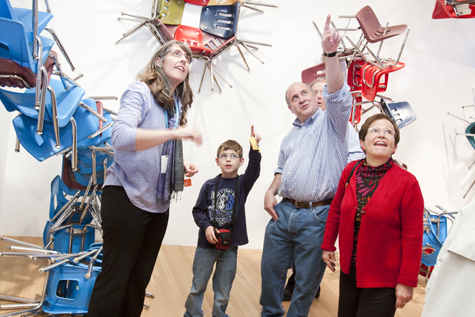
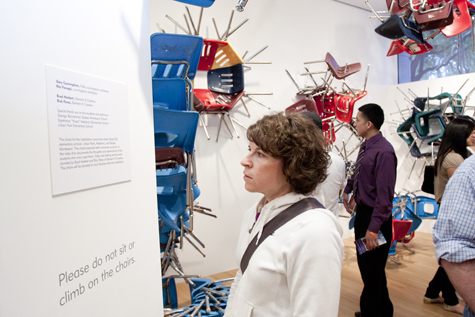
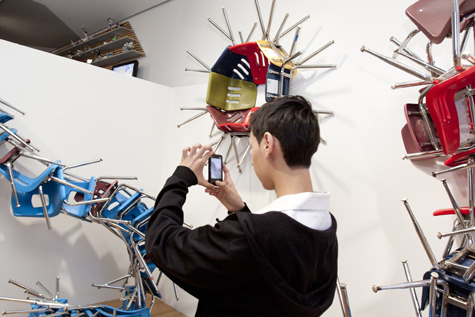
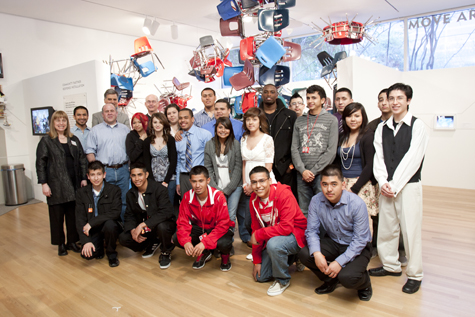
With school back in full swing we thought we would showcase the students from Dallas ISD’s Skyline Architecture Cluster who created Sculpting Space: 299 Chairs. See the installation in person in the Center for Creative Connections on Level 1 through mid-November.

Picture This

For many artists a picture was not finished when the paint had dried and the varnish was applied. The culminating step was framing the artwork. Only then was the project complete. Traditionally the artist had many options. He could choose a stock frame from a local cabinetmaker, or make a thoughtful selection from a skilled framer. Artists often possessed such a keen interest to frame a painting in a manner that perfectly complemented it that they designed their own.

The 18th-century British portrait painter George Romney (1734-1802) routinely joined forces with his preferred London framer William Saunders to produce frames of the artist’s design. Frame historians have studied Saunders’ detailed ledgers that record many of these collaborations. Romney’s decorative concepts coupled with Saunders carving expertise resulted in several exquisite frames. Regrettably, as a painting changed hands the new owner would often reframe it to suit prevailing tastes or to match the room where the artwork hung.

This may have been the fate of the original frame that once surrounded Romney’s Young Man with a Flute, which is now on view in the DMA’s European Galleries. Until recently, a simple wooden frame adorned with a gilt sight edge (the part of the frame closest to the canvas) surrounded the painting. That frame was more in keeping with the sparse ones typically used by artists working in colonial America.
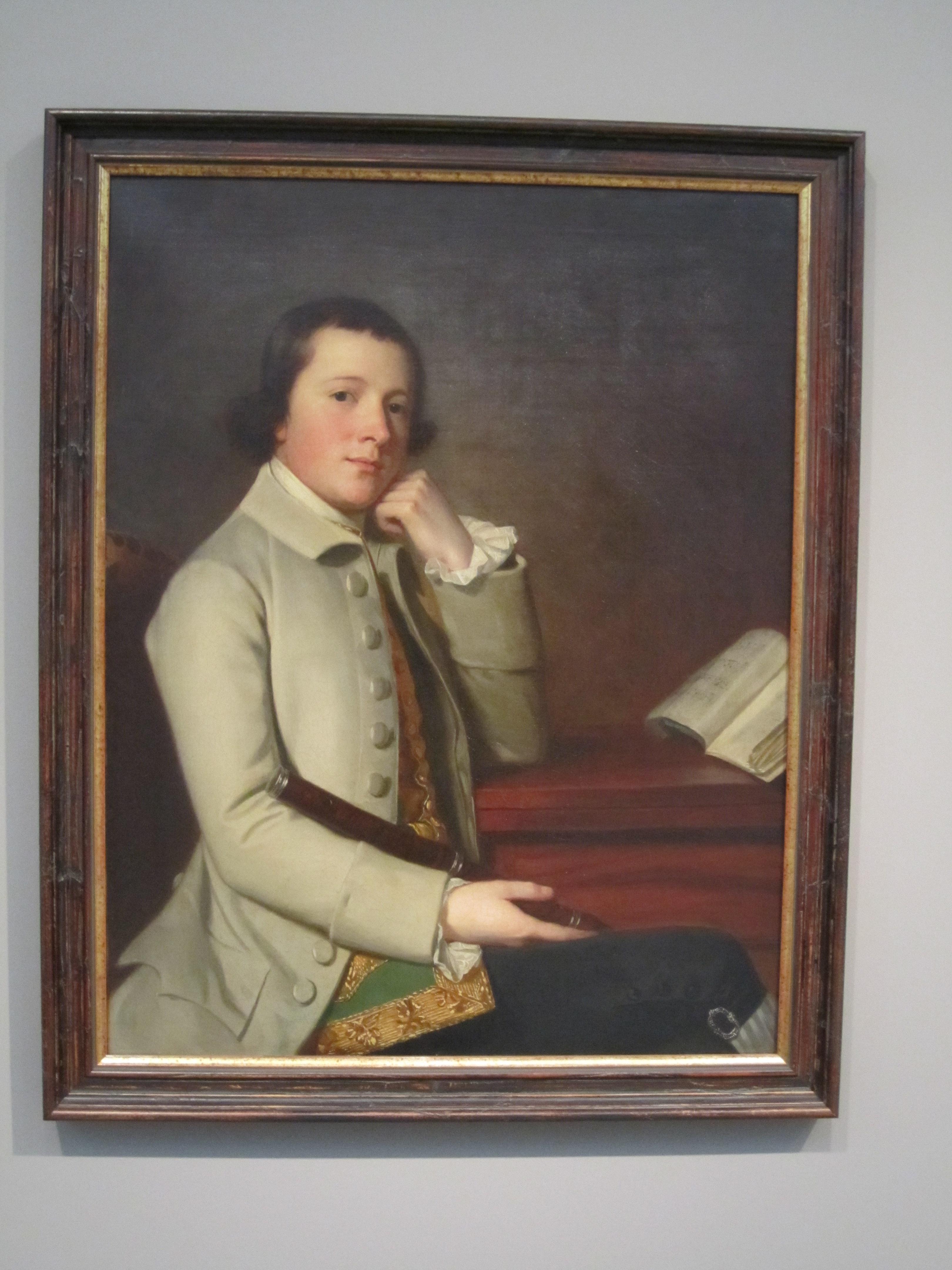
George Romney, Young Man with a Flute, late 1760s in its simple wooden frame

Wishing to restore the painting to Romney’s well-documented vision for his completed works, the Museum recently purchased a frame from a London dealer with an expertise in the artist’s designs. Now a “Romney Style” frame surrounds the painting. It is a faithful reproduction of the artist’s 18th-century original. The archetype became synonymous with the painter thus earning its eponymous name.
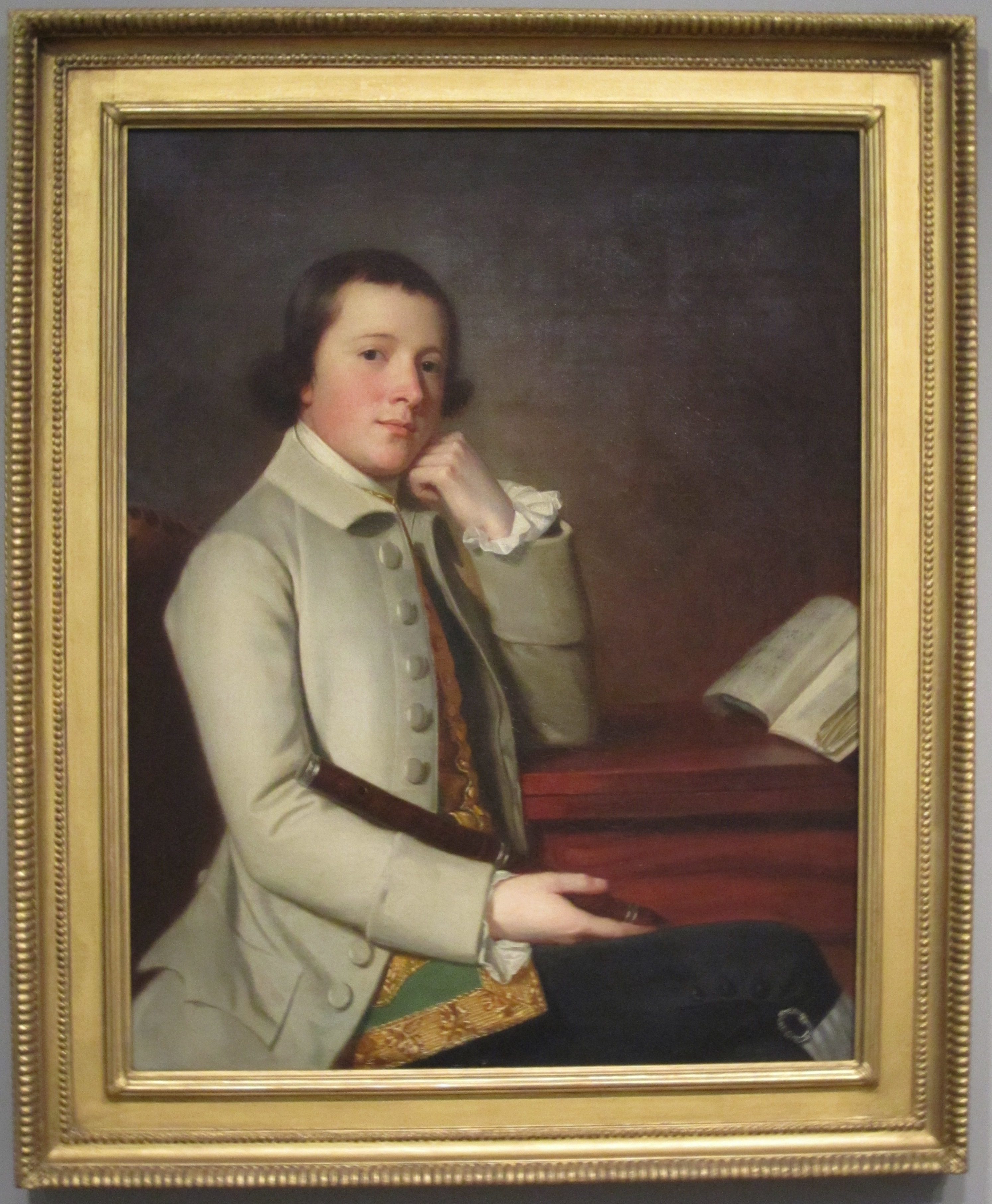
Young Man with a Flute surrounded by its “Romney Style” frame

The approximately four-inch-wide burnished gilt neoclassical frame draws the viewer’s eye into the portrait. Its decorative elements include a rope-twist back molding, superbly carved gadrooning that traverses the circumference on the outside rim, a plain frieze, a small bead course, and a delicately reeded sight edge. The reproduction “Romney Style” frame harmonizes with the painting in a manner unrivaled by its wooden unornamented predecessor.

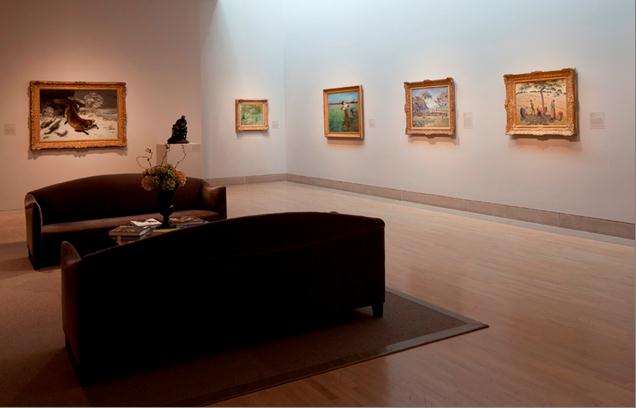
Compared to Romney, there are scant extant records of the frame choices made by the 19th-century artist Paul Signac (1863-1935). Last year, when the DMA acquired the French artist’s Comblat-le-Château, Le pré, it had a Régence Style frame that was popular very early in the 18th century.

Second from the right, Paul Signac’s Comblat-le-Château, Le Pré in its Régence style frame.

Its decorative components included a course of cross-hatching and punch work covering the entire frame. A fussy pattern of shells, fans, palmettes, C-scrolls, and foliage ornamented the center rails and corners, while a linen liner at the sight edge completed the overall design scheme. Although a lovely frame, it is not the prototypical choice made by a post-impressionist artist who worked in the wake of the pioneering painter Edgar Degas (1834-1917). Not only was Degas enormously influential to art history but he also revolutionized frame design. In fact, he believed that it was an artist’s duty to see his pictures properly framed. Earlier this year, the DMA heeded Degas’s mandate and purchased a new frame for its Signac.
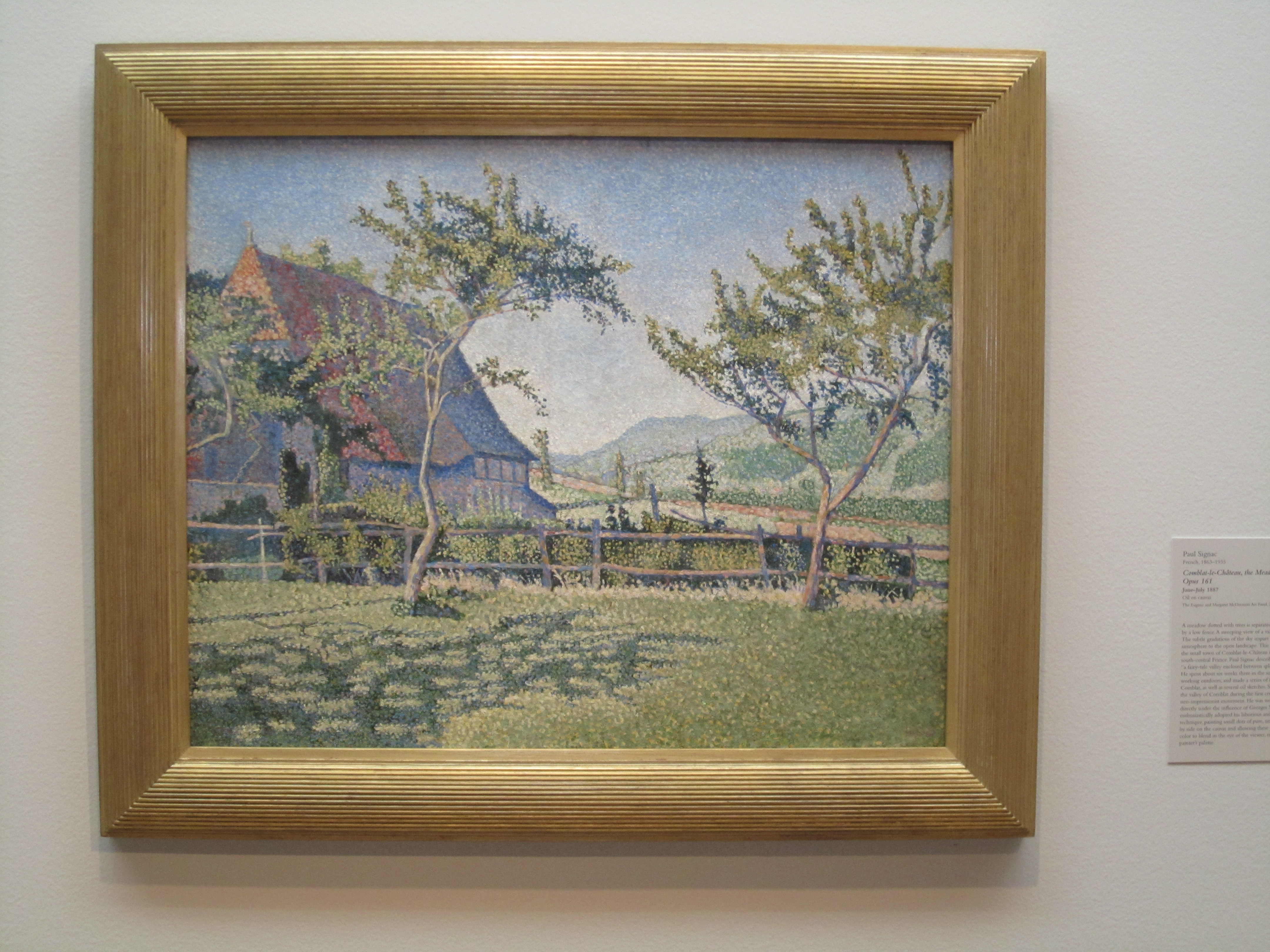
Comblat-le-Château, Le Pré with its Degas style frame.

The picture’s new frame is a reproduction based on one of Degas’s most inventive designs. It features a lightly rounded profile embellished with rows of thin parallel grooves. The frame’s roundedness and fine fluting echo Degas’s “cockscomb” pattern, which he softly gilded but rarely burnished. Because of its shape, some call this format a “cushion” molding. The frame’s innovative streamlined repetitive forms do not compete with Signac’s lovely painting; rather their simplicity harmonizes with the picture to enhance it. While these before-and-after photographs illustrate the difference a frame can make, they pale when compared to seeing firsthand each striking painting now with its stylistically appropriate frame. On your next visit to the DMA, come view these superb frames and the paintings they surround.

Martha MacLeod is the Curatorial Administrative Assistant in the European and American Art Department at the Dallas Museum of Art.

Friday Photos: African Headwear

As I’ve mentioned before on our blog, I love the DMA’s African collection.  Below are photos of some of my favorite hats in African Headwear: Beyond Fashion, an exhibition currently on view at the Museum.  Some of these hats are from the DMA’s collection, but there are also many loans and new acquisitions in the exhibition.  I think my absolute favorite is the Royal Messenger’s Headdress from Cameroon.  I love the bold shape and purple dye!

[slideshow]

I’m looking forward to the arrival of Jean Paul Gaultier: From the Sidewalk to the Catwalk in November–I think it will be fun to compare his fashion designs with some of the works of art in African Headwear.  I already have ideas for our next installment of Provocative Comparisons!

Shannon Karol
Manager of Docent Programs and Gallery Teaching

Connect: Teachers, Technology, and Art

In September, the DMA will wrap up a two-year project called Connect: Teachers, Technology, and Art that focuses on the redesign and enhancement of web-based teaching materials available to K-12 educators on the DMA website. The end result of this project, which has been made possible by a generous grant from the Institute for Museum and Library Services (IMLS), will be a dynamic new model for the internal development and external presentation of online teaching materials.

There are thirty units in total on the DMA’s teaching resources website, exploring every genre of art in our expansive collection. Over the past two years, DMA staff have been working specifically on redesigning units for African and South Asian art.

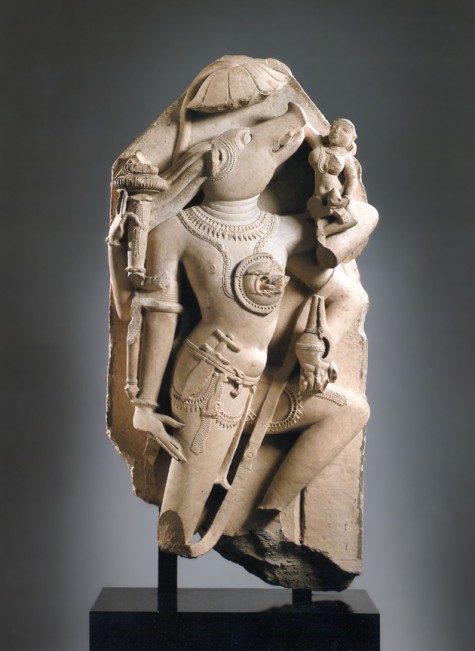
Vishnu as Varaha, India, Madhya Pradesh, 10th century, sandstone, gift of David T. Owsley via the Alvin and Lucy Owsley Foundation and the Alconda-Owsley Foundation, E. E. Fogelson and Greer Garson Fogelson Fund, General Acquisitions Fund, Wendover Fund, and gift of Alta Brenner in memory of her daughter Andrea Bernice Brenner-McMullen, 2002.25

The completed project will present over sixty artworks from the collection. Teachers will have the option to sort artworks according to religion, geography, time period, themes, and other categories.

Here’s what our teaching resource website looked like before:

 And here’s the template that will launch this fall:

We are very excited to launch this new content next month, and are extraordinary thankful for the many teachers in our community who have helped informed our work along the way. This grant truly has allowed us to transform the way we communicate with and educate our audiences.

For more information, check out our sister blog for educators.

Anne Palamara is Director of Foundation and Government Relations at the Dallas Museum of Art

Teaching for Creativity

The beginning of another school year can be very exciting because there are many things that are “new.”  We may experience a new teacher, new students, new friends, new clothes, new school supplies, new bulletin boards, and more.  As we launch ourselves into a new school year at the DMA, we also launch a new blog series called Teaching for Creativity.  The inspiration for this new series comes from various sources, including the DMA’s Center for Creative Connections; our collaborative work with UT Dallas professor and creativity specialist, Dr. Magdalena Grohman; and the 2011 Summer Seminar: Teaching for Creativity, a professional development experience for K-12 educators.

Over the next year, look for monthly posts that inspire us to teach for creativity, encouraging open minds and creative behavior in ourselves, our students, and our colleagues. Teaching for Creativity blog posts will:

  • feature classroom and museum educators to share creative lessons and approaches to teaching that nurture observation skills, curiosity, imagination, and metaphorical thinking,
  • draw attention to great books and websites for creativity resources, and
  • highlight creative beings from the past and present who may offer us new ways to look at the world.

For this inaugural post, I am excited to introduce you to Shadan Price.  Shadan teaches art to students ages 3-5 at El Dorado Montessori in Frisco, Texas and joined us in June for the 2011 Summer Seminar.  Shadan shares with us the lesson plan that she developed during the Seminar and the results of trying it out in her classroom.

During the Teaching for Creativity seminar I attended, our goal was to create a lesson plan that focused on creative thinking. The lesson I came up with did that but was also simple enough for the young children that I teach to understand. In summary, my lesson had them discussing how certain shapes (we focused on circles, squares, triangles, and rectangles) and how they are used in artwork and the real world. We looked at a few art images (ex: Van Gogh’s “Starry Night”, Klimt’s “The Kiss”) and the students pointed out those shapes in the images. We then looked at images of everyday objects (ex: buttons, tables, pizzas, etc.) and the students talked about what shapes those were. The next step was brainstorming. For each shape the class thought of objects that those particular shapes could be. This was really fun for them! I didn’t want them to brainstorm for too long though because I wanted them to still have a few more ideas for the next part of the lesson which was to draw each shape on a piece of paper and then create an object (real or imaginary) out of that shape. I didn’t put any restrictions on what they could draw. I just told them no matter what it was, even if it wasn’t a real thing, they had to explain to me what the drawing was. For the most part the students really enjoyed this but I could immediately tell which students were not really comfortable making something completely out of their imaginations as opposed to something a little more guided. This was a good project to see who I need to work with more on their creative-thinking skills.  Overall this was a good project.  The students loved brainstorming and drawing their own creations!

[slideshow]

These are a few examples of what the students came up with for each shape:
TRIANGLE – almost all the students chose a slice of pizza….if I did this project over again I might tell them not to do that so I could see what else they came up with. A few others were roofs, mountains, cat ears, and noses.
SQUARE – iron man, robot, mirror, window, bubble machine, cage, bookshelf, frame, butterflies, purses, books, and dinosaurs.
CIRCLE – vacuum, wheels, monkey, balls, DVDs, cookies, lollipops, a “purse maker”, pancakes, rings, and buttons.
RECTANGLE – monster, table, frame, door, fluorescent lights, microwave, baskets, rocketships, and sharks.

I want to express great thanks to Shadan for sharing her lesson with us.  Follow this link to download the lesson: SHADAN_CREATIVE_LESSON.

What creative experiences are happening in your learning environment?  Share them here and look forward to the next Teaching for Creativity post in September.

Nicole Stutzman
Director of Teaching Programs and Partnerships


Archives

Categories