Archive for the 'People' Category


Behind-the-Scenes: The Making of Coastlines Soundscapes

Have you immersed yourself yet in the multi-sensory experience of Coastlines: Images of Land and Sea?  If not, let me tease you…

[youtube=http://www.youtube.com/watch?v=5MO-3rvalYU]

This is one of twelve individual sound designs created for works of art in the exhibition, and these individual sound designs represent only one layer of a three-part, synchronized sound installation. A global soundscape powered by two subwoofers is audible throughout the Coastlines exhibition and contains musical elements shaped by the natural sounds and rhythms of waves. Regional soundscapes emerge from ten ceiling-mounted speakers and respond to the thematic sections of the exhibition. The twelve local, or individual, soundscapes representing interpretations of selected works of art are delivered through Holosonics hyperdirectional speakers, which allow for a controlled design of the auditory space.  Now that I’ve geeked out on the technology of the sound installation, let me tell you a little more about the making of this sonic experience.

The Coastlines sound installation was created by graduate students and faculty in the Arts and Technology program at the University of Texas at Dallas, in collaboration with undergraduate students in the School of Information and Communication and Media Engineering at the Université du Sud Toulon-Var (USTV), in Toulon, France.  The project began in September 2009 with several planning meetings between UT Dallas and the Dallas Museum of Art focusing on exhibition themes and artworks, as well as technological possibilities. UT Dallas faculty and students presented a proof of concept demonstration in December 2009 for the multilayer sound design and use of hyperdirectional speakers. In January 2010, under the direction of UT Dallas professor Dr. Frank Dufour, students selected works of art in the Coastlines exhibition and began composing sonic interpretations for these works. Lead graduate students Michael Austin and Jason Barnett also began work on the conceptual and technical development of the overall multilayer sound design.
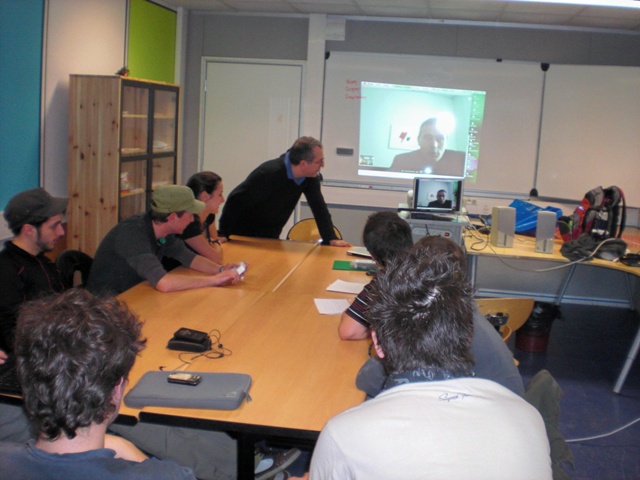
Professor Frank Dufour talks with French students via Skype.

Communications about the project between the creators occurred primarily through the Internet using Skype, a free web-based chat software, and a private social network that provided a forum for the exchange of ideas, images, and iterative sound designs.  The exchange was bilingual, encouraging each set of students to work through language barriers.  In addition, Michael Austin visited the USTV students in Toulon, France during project development to lead them in sound design workshops.  One of the workshops included collecting sounds from the harbor in Toulon, France.  Many of these were used in the individual sound designs created by students in Texas and France.
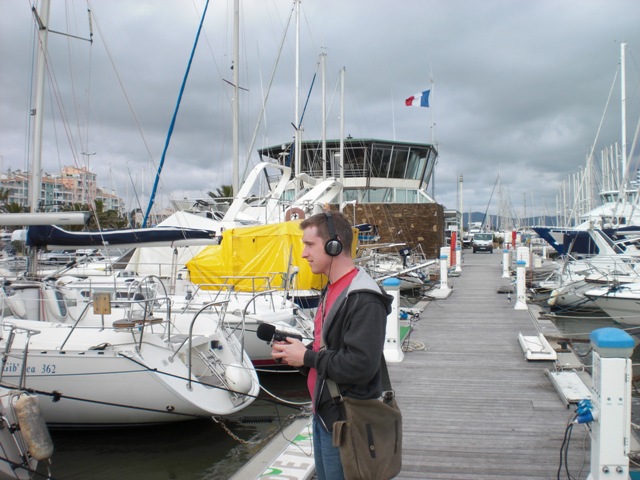
Michael collects sounds of the harbor in Toulon.
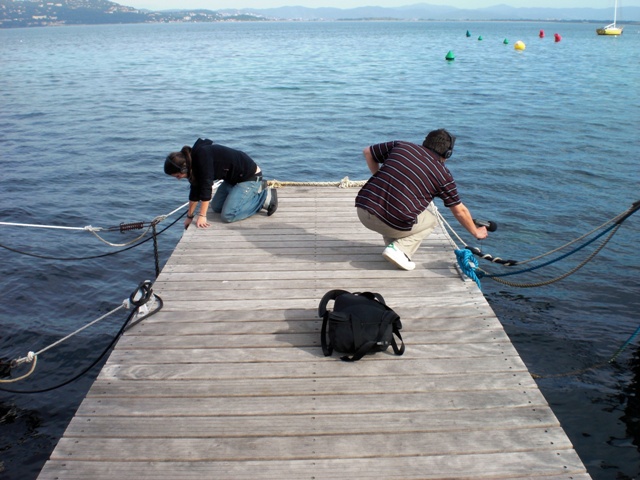
French students record the sound of water.

This project is an education initiative undertaken in part with the support of FRAME, the French Regional and American Museum Exchange. FRAME fosters exchanges between a group of American and French art museums committed to establishing long-term partnerships on common projects that make their respective resources available to a wider public. Several collaborating museums and universities involved with FRAME are focused on the relationship between music and art and support the work of young artists.

This Friday night at the Dallas Museum of Art Late Night you can support the work of young artists involved in the Coastlines sound design project.  Visit the exhibition, then stop into the Theater in the Center for Creative Connections at 8:30 p.m. to hear Dr. Dufour and students from UT Dallas share insights about the project and their process.

Nicole Stutzman
Director of Teaching Programs and Partnerships
Interview with Curator Heather MacDonald

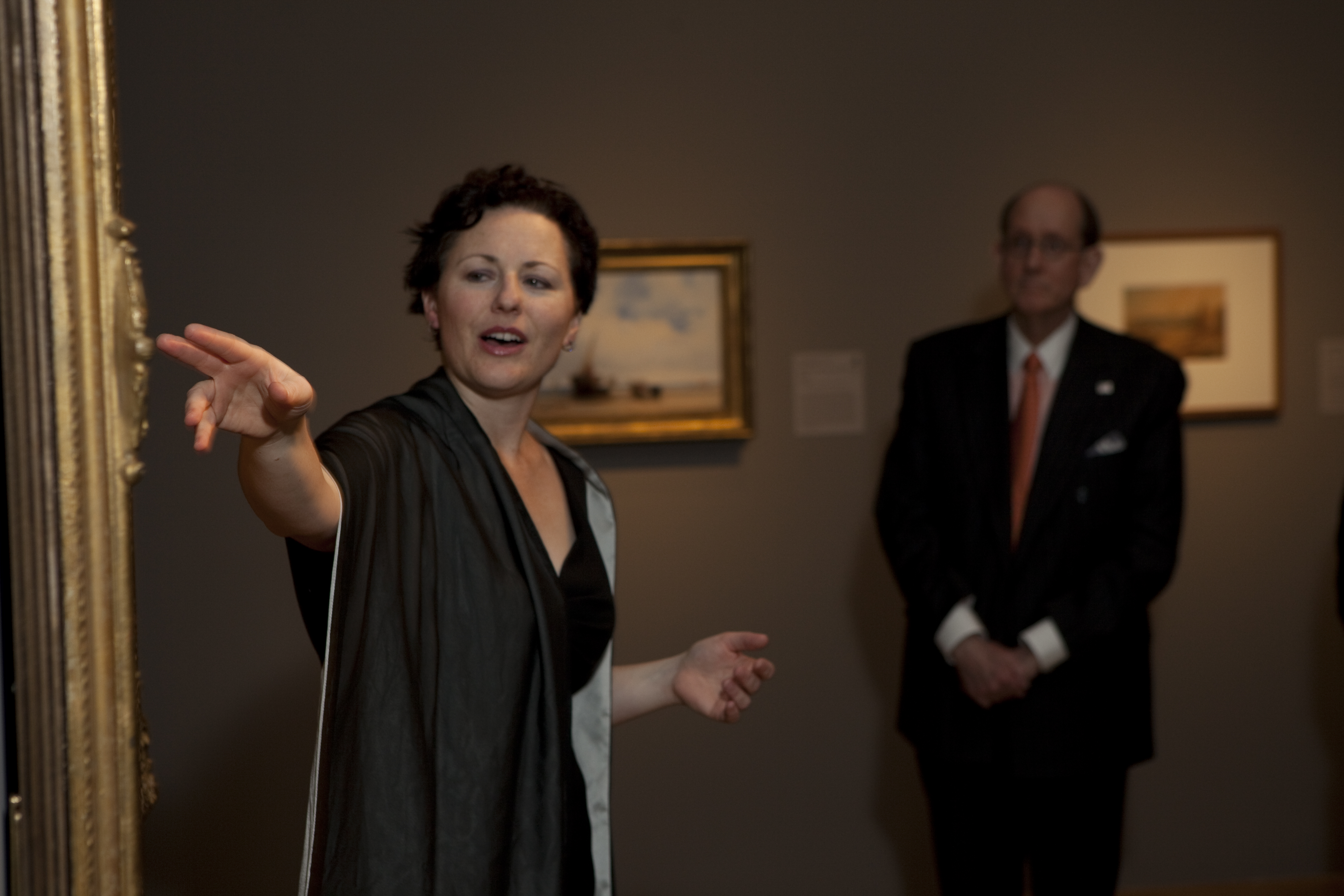
One of our outstanding curators here at the Dallas Museum of Art, Dr. Heather MacDonald, graciously took time out of her busy schedule to answer questions related to her job at the Museum. Continue reading for more information about Heather’s job and the exciting exhibitions that she is working on at the DMA. To learn more about Heather’s projects at the DMA, please click on the following link: ‘The Year of Heather’: Curating at the Dallas Museum of Art

Name and Title: Heather MacDonald, The Lillian and James H. Clark Associate Curator of European Art

Years Employed at the Dallas Museum of Art: 4 1/2

Heather MacDonald, The Lillian and James H. Clark Associate Curator of Eurpean Art

Describe your job here at the Museum: I work with the collection of European painting, sculpture, and works on paper (prints, drawings, and photographs) from the 15th century to 1945. Together with the Senior Curator of European and American Art, Olivier Meslay, I look after the permanent collection galleries as well as organizing temporary exhibitions. My job involves a lot of research and writing, but also collaboration with other departments in the museum on teaching and interpretation, managing multi-year projects, and on caring for the works of art. I travel a lot to see works of art, meet with colleagues, attend art fairs and professional conferences, and see important exhibitions. Being a curator is also being a teacher: leading tours, giving lectures, and training the docents who will help communicate your research and ideas to a wider public. You have to be as comfortable at the lecture podium as in the library or gallery.

What is the favorite part of your job?  I think that for most curators the most enjoyable part of the job is installing works of art in the galleries, whether it’s the permanent collection or a special exhibition. It’s the fruition of many months, sometimes years, of planning, and a moment to think in very specific, physical terms about the encounter between a work of art and the viewer. There is a real magic to seeing paintings come out of their travel crates and go on the wall of a gallery that has been designed just for them. You have to cross your fingers that everything works the way you planned, and it is a great feeling when it’s even better than you could have imagined.

What is a challenge you face in your job? It can be a real challenge to find time for the most important parts of my work (research, thought, and writing) with the constant demands of email and meetings that consume so much of the working day. Understanding and interpreting works of art is a time-consuming activity, and a lot of that slow-paced and intensive work inevitably has to happen at night or on weekends, away from the office.

How did you decide you wanted to work in a museum?  I thought I wanted to teach art history at the university level, but part way through graduate school I realized that career was not for me. Having at that point almost completed my PhD in art history, I thought I might as well try a museum job before leaving the field entirely, and I found the work much more engaging and rewarding. I feel very lucky that I was able to find this other career in my discipline.

If you weren’t working here at the Museum, what is something else you would be doing?  Well, I have a lot of fantasy careers, of course, but I think most likely working in editing or publishing. I love books and the written word. I’m lucky that part of being a curator is working on the creation of exhibition and collection catalogues, which allows me to be involved with publishing in that way.

What are some upcoming exhibitions that will be at the Museum over the summer?  This summer my exhibition Coastlines: Images of Land and Sea will be on view at the Museum. It features more than 60 paintings, photographs, drawings, and prints made between 1850 and today describing the landscape and human experience of the coast. We’re trying something new by presenting this exhibition with a sound installation that was created by faculty and graduate students from the University of Texas at Dallas.  I’m really looking forward to hearing how people respond to this sound environment. It’s a new way of experiencing an exhibition, and I hope it will encourage people to look more slowly at the works of art and think about them in new ways.

The May 21 Late Night will focus on the closing of the exhibition The Lens of Impressionism: Photography and Painting Along the Normandy Coast, 1850-1874 which was curated for the DMA by Heather. Visit the Web site for more information about this program.

Amy Wolf
Teaching Programs Coordinator

Community Connection: Bringing the Very Best

Dave Herman has partnered with the DMA’s Education divison in a variety of ways.   As President and Creative Director of Preservation LINK, Inc., Dave initiated a partnership with the DMA that resulted in an annual exhibition of photographs by participants in Preservation LINK’s Point of View program.  He was invited to serve on an advisory board for the development of a new type of Go van Gogh outreach program, based on his perspective as a professional photographer and his teaching experiences with students.  Dave also led several workshops as the February Visiting Artist in the Center for Creative Connections as well as a Summer Art Camp during 2009.  In summary, we enjoy partnering with Dave and take every opportunity to work with him. 

Dave Herman coaches a student through an art project.

You describe yourself as a visual sociologist.  Can you tell us what that means to you?

Visual sociology is, in a lot of ways, documentary in nature. It is almost as if you put out a hypothesis or investigative question, and then you document what you find out and share some of those answers visually. It lends itself to a different kind of attention, because you’re trying to put pieces of puzzles together and understand what that all looks like.  Visual sociology is also about how people interact with each other and how they respond to things.

Was there a defining experience or person in your life that led you to where you are today?

I first associate my mom and dad with helping to shape me and my values.  A lot of what I do is based on my background and what I believe in.  My work with students through Preservation LINK comes from a passion to help kids understand themselves, understand their potential, and to be confident that they can reach their goals. One thing that motivates me now, even as an artist, is that I didn’t necessarily have that growing up.  This is something really important – for students to have guidance and the opportunity to grow, to have ownership, and to eventually have a sense of “I’ve got this now”.

Over the six years that I’ve known you, I’ve witnessed exciting growth with Preservation LINK.  Do you have any advice for others who are interested in starting a non-profit organization with the goal of educating youth through literacy, art, and technology?

Budding photographers

I would say the first thing as an initiator, dealing with kids, is to make sure you’re reaching for the sky. Make sure that you’re bringing the very best to young folks. I say that because sometimes when we talk about equipment, for instance, some people say “let’s just get this (lesser value) equipment because they’re kids and they don’t need a big camera”. In reality, that is what they need. For them to grab onto something real at a certain level, you’re able to push your message and your lesson a little bit further.

Also, believe in your vision. Know how or learn how to manage it.

How does research and evaluation factor into your program development and implementation?

In a big way. Evaluation and research impacts and informs how we move forward.  It informs how we deliver programs and how we assess our accomplishments.  We are able to see what the impacts of our programs are on the community, students, parents, and the adults that supports kids’ learning. We wouldn’t be the same organization that we are now if it wasn’t for the evaluation and research that is a part of Preservation LINK.

What do you most hope students who participate in your programs will walk away with from their experiences?

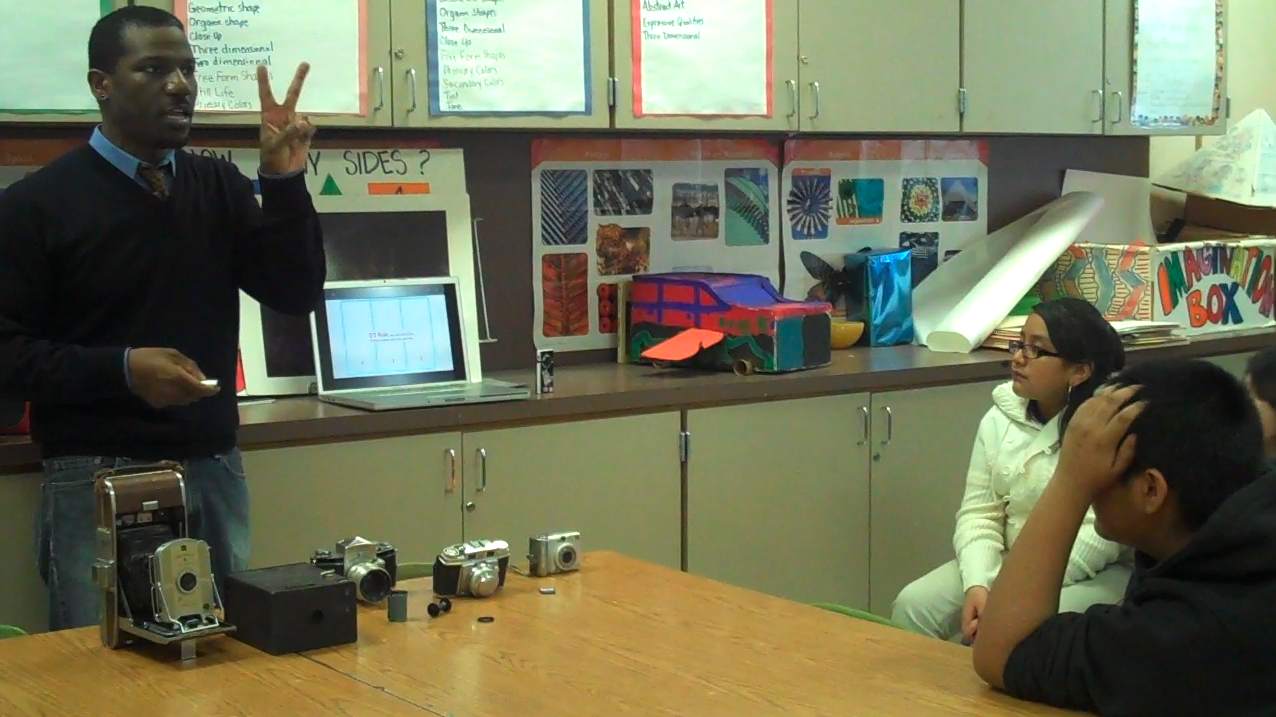
Students learn about the history of photography during a Preservation LINK program.

I want the students to know that people care about who they are, what they learn, and what they want to become.  I hope they’re motivated to take even more ownership in their lives.

See photographs taken by elementary students during Presevation LINK’s Point of View Program at the Dallas Museum of Art.  The exhibition, titled Through the Eyes of Our Children: Something Beautiful, will be on view from May 14-August 29 on the M2 level of the Museum, adjacent to the Mayer Library.  View images from past Preservation LINK programs here.

Interview with Stacey Lizotte, Head of Adult Programming and Multimedia Services

I recently had an opportunity to interview one of my Education staff colleagues. Stacey Lizotte. She answered questions related to her job and shares information about upcoming public programs.

Name and Title: Stacey Lizotte, Head of Adult Programming and Multimedia Services

Years Employed at the Dallas Museum of Art: 5

Describe your job here at the Museum: I oversee and help create the adult programming offered at the Museum including Late Nights, Thursday Night Live, lectures, gallery programs, concerts, and programs for adults offered in partnership with other community organizations. I also work with our Multimedia staff to make sure any programs requiring technical support go off without a hitch.

What is your favorite part of your job? Watching visitors of all ages on Late Nights, when Museums are normally not open, talking with each other, exploring the galleries, watching a performance in front of a work of art, and overall having FUN in a museum. Another part of my job I enjoy is stepping away from my desk, leaving the office areas behind, to stroll through the galleries. You can’t beat taking a break with works of art for company.

What is a challenge you face in your job? Continually making our reoccurring programs fresh and new for our visitors. For instance there are eleven Late Nights a year, and we see a lot of repeat visitors. We want to make sure that each time our visitors are here they have a new and exciting experience.

How did you decide you wanted to work in a Museum? When I was in high school my art teacher, Mrs. Dunn, took us on a field trip to an art museum. As we were talking about a work of art, she started to tap dance and proclaimed that art was so wonderful it made her want to dance. I realized then that museums were magic places. It was not until I was looking into graduate schools and talking with a professor at UNT about their Museum Certificate program within their Art Education program that I realized I could actually have a job at a museum.

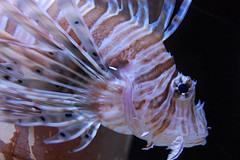
If you weren’t working here at the Dallas Museum of Art, what is something else you would be doing? I would be working with animals. Growing up on the East Coast, there was a time I seriously thought of becoming a marine biologist. I also have a degree in photography, so if I were staying within the art field I would be photographer. Or maybe some combination of the two. Here are two photos I took at the Mystic Marinelife Aquarium:  

What are some highlights for Public Programs this spring? This spring we are offering a lot of interesting programs celebrating our new exhibition The Lens of Impressionism. There are several lectures exploring photography including a lecture with Dr. Terry Barrett on April 24. On selected Thursday evenings you can take a tour of the exhibition and then have drinks in our outdoor courtyard while listening to local musicians perform French music. Visit the web site to see the complete program guide.    

We are also very excited about our April 16 Late Night. We are celebrating our visitors with a true iMuseum experience. It will be a night where you can interact with performers, create your own videos, respond to works of art in video confessionals, go on Twitter treasure hunts, share your own photos of the Museum, and more. Check out our web site for a full schedule of events.  

Amy Wolf
Teaching Programs Coordinator

Get to Know a DMA Docent

If you have scheduled a docent-guided visit to the DMA, you already know how wonderful our docents are.  We have a corps of over one hundred volunteer docents who lead tours for K-12 and higher education students, as well as our adult visitors.  I recently talked with Lisa Jacquemetton to learn more about her experience as a DMA docent.


Docent Lisa Jacquemetton with Franz Kline's Slate Cross

How long have you been a DMA docent?
I am in the middle of my third year.

Why did you become a docent?
I had just finished my Masters in Liberal Arts at SMU and I loved that but I didn’t really want to take my formal education any further.  One of my friends was a docent, and she suggested that I contact Molly .  I became a docent primarily for the art history education, or so I thought.

Tell me about your experience in the docent program.
I’ve just loved it.  I have made all kinds of new friends with similar interests—fellow docents, educators, and even getting to know the curators has been fun.  I have learned much more than art history.  I’ve learned how to teach, I’ve learned a lot about comparative religion, science, world history– so much more than art history.  I’ve learned that I really love being around kids.  Who knew?

So what makes you love being around kids?
I think it’s seeing their reaction.  When you have a kid really get into a work of art, you see their faces light up, or at the end of the tour when they saw “aw, are we done” and you know that they want to keep going—it’s a high.

What is your favorite work of art in the DMA collection?
That’s like asking me what my favorite color is.  I’m partial to contemporary art and Abstract Expressionism.  My favorite, but it was just taken down, was The Eye by David Altmejd.  I also love Franz Kline’s Slate Cross—so dramatic, so powerful, and for me, so emotional.  I tend to react to art on an emotional level first, and that’s one of those pieces that makes me swoon.

Share your best tour experience.
The best tour experience I had was an Arts of the Americas tour last year.  First we headed to the elevators to go up to the 4th floor, and the reaction of these kids—they were so into it.  We went through the Ancient American galleries, looking at the Inca tunic first.  Then we looked at Xipe Totec, and I gave them the gory details, which they loved.  And then we ended at the Olafur Eliasson exhibition which was a huge hit. We ended up in the Room for One Color, and I gave them pieces of paper inside so they could decide what color it was.  One boy in my group was in a wheelchair and did not have fully formed foot, so he took off his sock and held his piece of paper between his toes.  (He wasn’t able to use his hands.)  When we came out, he was so into the whole experience.  And here’s the best part—the kids asked me for my autograph and I wrote it on their little pieces of colored paper.  I felt like a rock star.  It was the first and only time I’ve been asked for my autograph.  I practically flew home off my own energy that day.  When the kids react like that, that’s the best.

Shannon Karol
Tour Coordinator

Pablo Picasso said…

Every child is an artist.  The problem is how to remain an artist once we grow up.

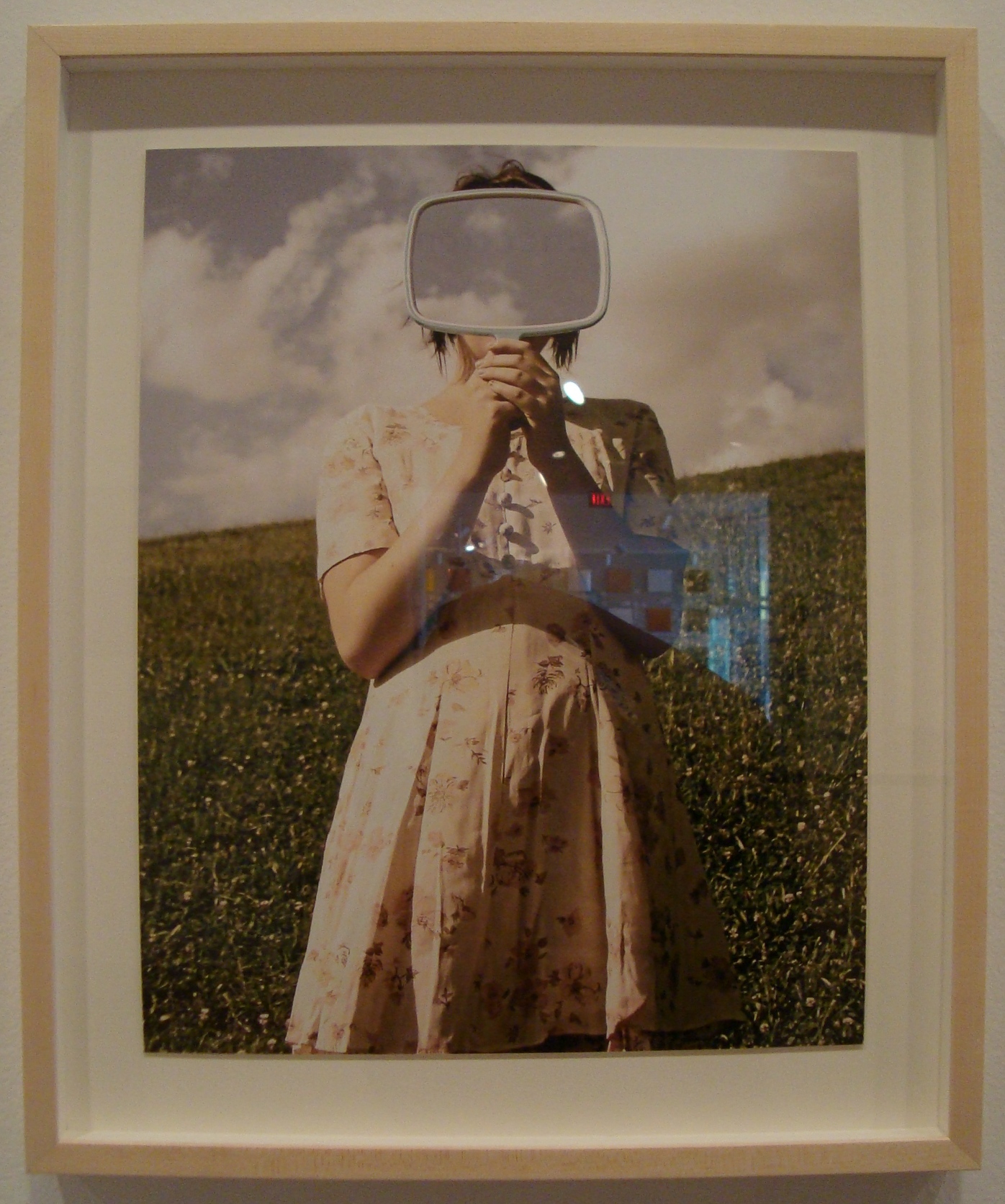
Best in Show - Looking Glass Self by Katy Wood

The halls and galleries of the DMA fill up this spring with two installations of creative work by young artists in the community.  Earlier this month, the Young Masters exhibition opened in the Dallas Museum of Art’s Concourse.  The exhibition features a selection of artworks created by Advanced Placement Art students from Dallas area high schools who participate in the O’Donnell Foundation AP Studio Arts Incentive Program.  The Incentive Program focuses on making Texas the strongest state in AP arts education and preparing students for life in the 21st century as critical thinkers with global perspectives.    A total 280 works were submitted for the juried exhibition, which included two rounds of judging.  The DMA’s own Jeffrey Grove, Senior Hoffman Family Curator of Contemporary Art, selected the final winners.  Katy Wood from Booker T. Washington High School took away top honors with her self-portrait Looking Glass Self, a color digital photograph. In her statement Katy says. “Psychology greatly influences my artwork.  In this piece, I explored a psychological theory called ‘looking-glass self’, in which one’s self can be reflected by the society and environment’s perceptions.”  Images by additional award winners are featured on the AP Arts Web site.

In April, the work of young artists from fourteen elementary, middle, and high schools in the Dallas area will be on display in conjunction with the exhibition Coastlines. These artists are part of the Young Artist’s Program, an education-based initiative presented with the Museum’s annual fundraising event the Art Ball.  Each year the Art Ball provides essential funding for the DMA’s exhibitions programs and gives students throughout Dallas an opportunity to make art in response to a unique theme derived from a DMA exhibition.  Inspired by images of coastal landscapes and the sea, many of the schools participating in the Young Artist’s Program this year are creating large-scale collaborative works that will fill gallery spaces on the first floor.  Works in all media will be on view to the public from April 15 to April 24, 2010, and the exhibition will be accompanied by a video documentation of students working.

Nicole Stutzman
Director of Teaching Programs and Partnerships
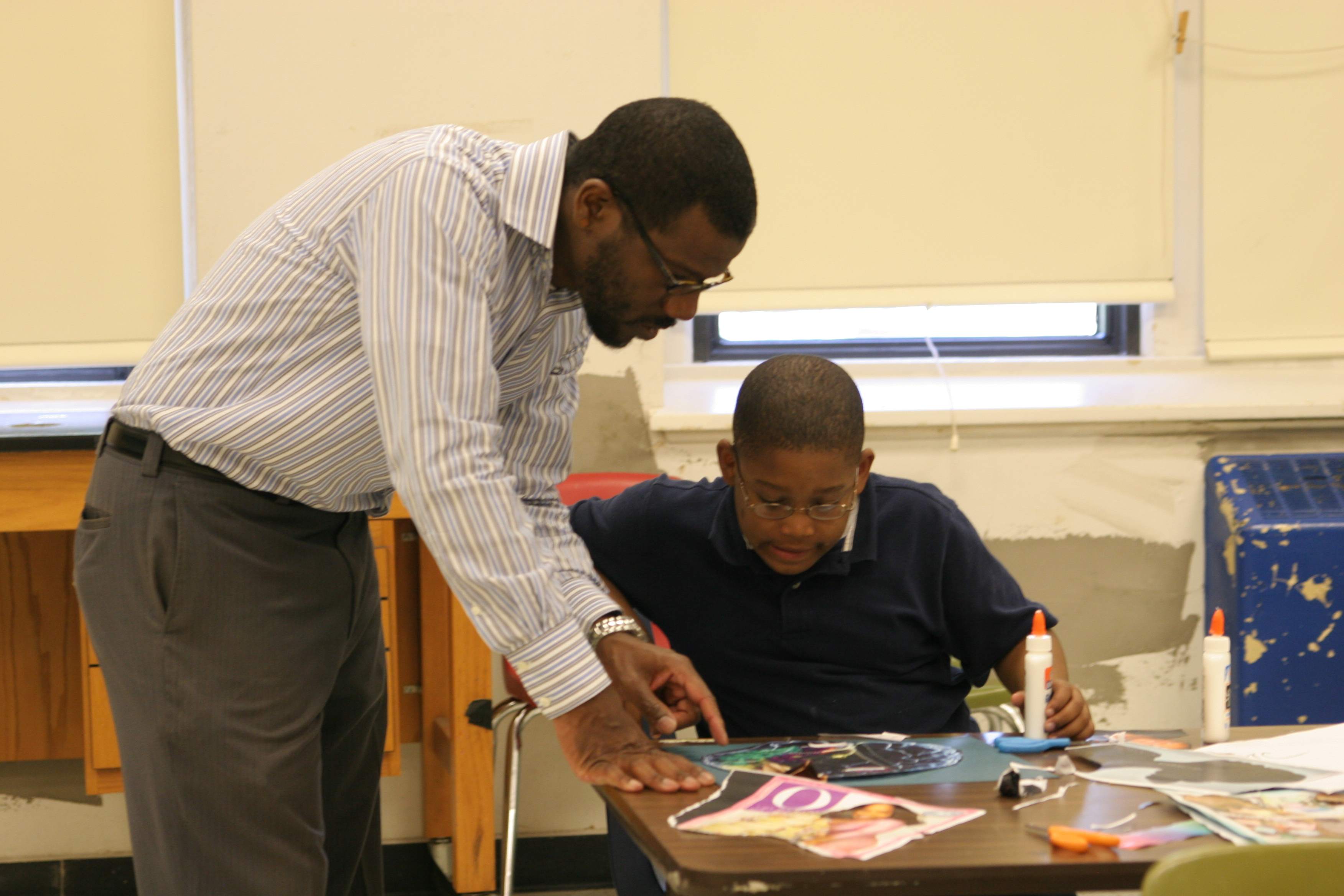
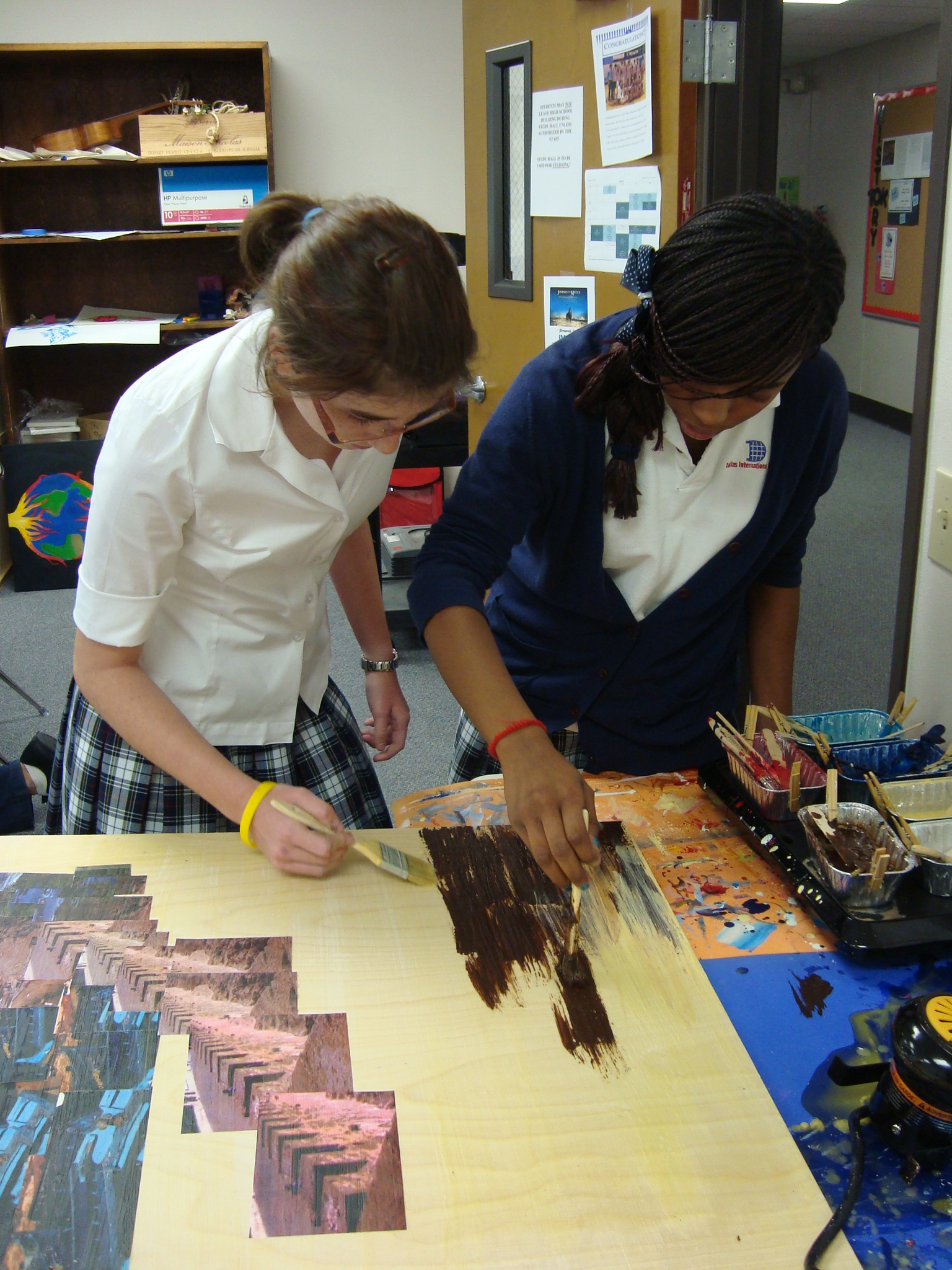
Students at the Dallas International School apply encaustic to their mixed media artwork about the Moroccan coast.

Eduardo Mata Elementary artists create mixed media nautical collages.

Found It!

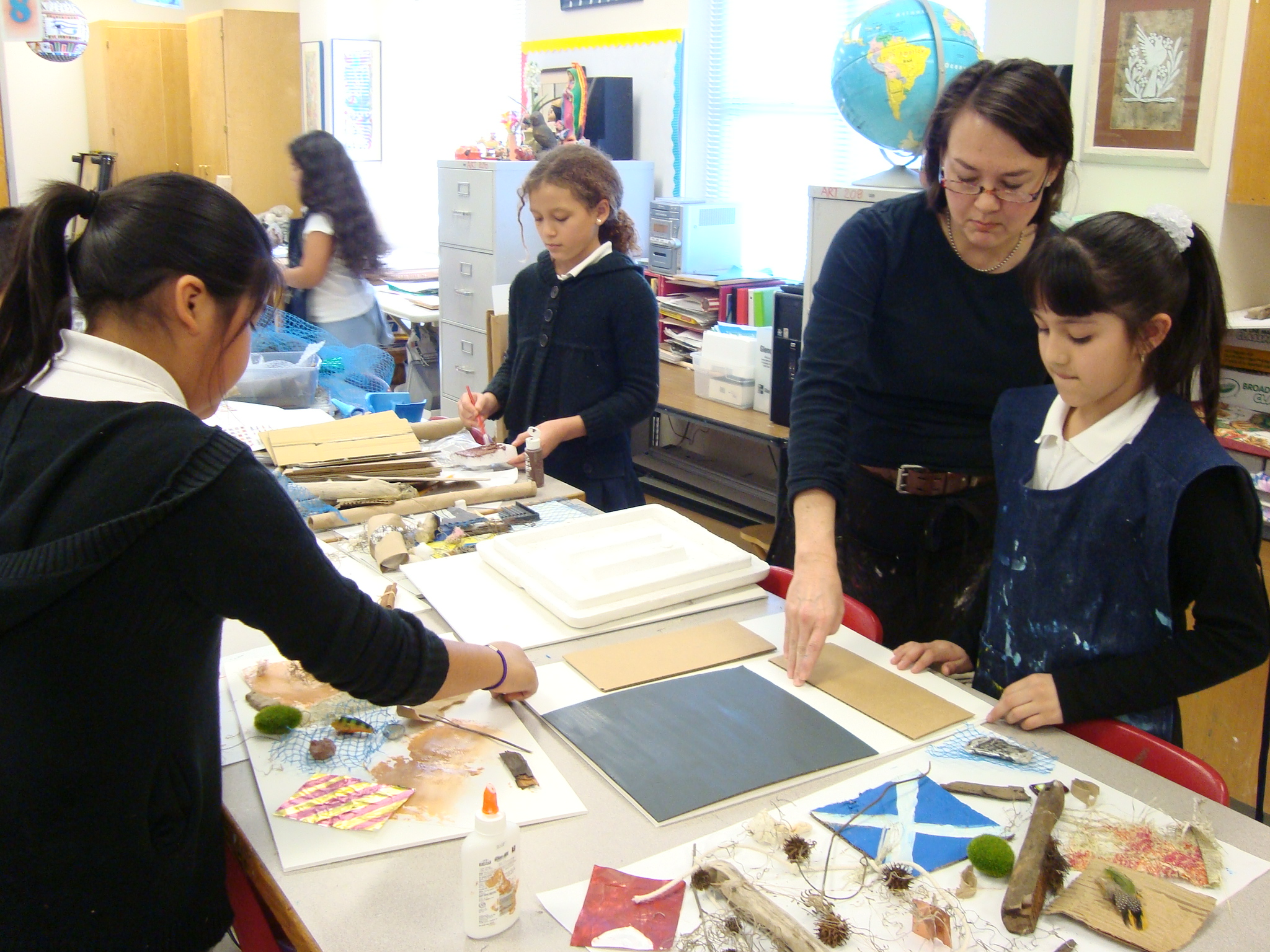
Back in November, I shared some photos from a project inspired by Dorothea Tanning’s Pincushion to Serve as Fetish.  This project is part of a new afterschool program we are developing in partnership with Thriving Minds at Dallas ISD schools.  At the time, I was testing the program with 4th-5th graders at Conner Elementary School.  I am currently working with Shawna Bateman at Twain Elementary School and Daniel Hall at Long Middle School, who are leading the program with their students.  In the process, I have learned a great deal from their experiences, insights, and feedback regarding the program.
Below are images of projects inspired by Mark Handforth’s Dallas Snake.  Through these projects, students learn about artists who use found objects as materials for their art.  Found objects are natural or man-made objects found (or sometimes bought) by an artist that are treated as a work of art just the way they are, used for inspiration, and/or used as materials for works of art.
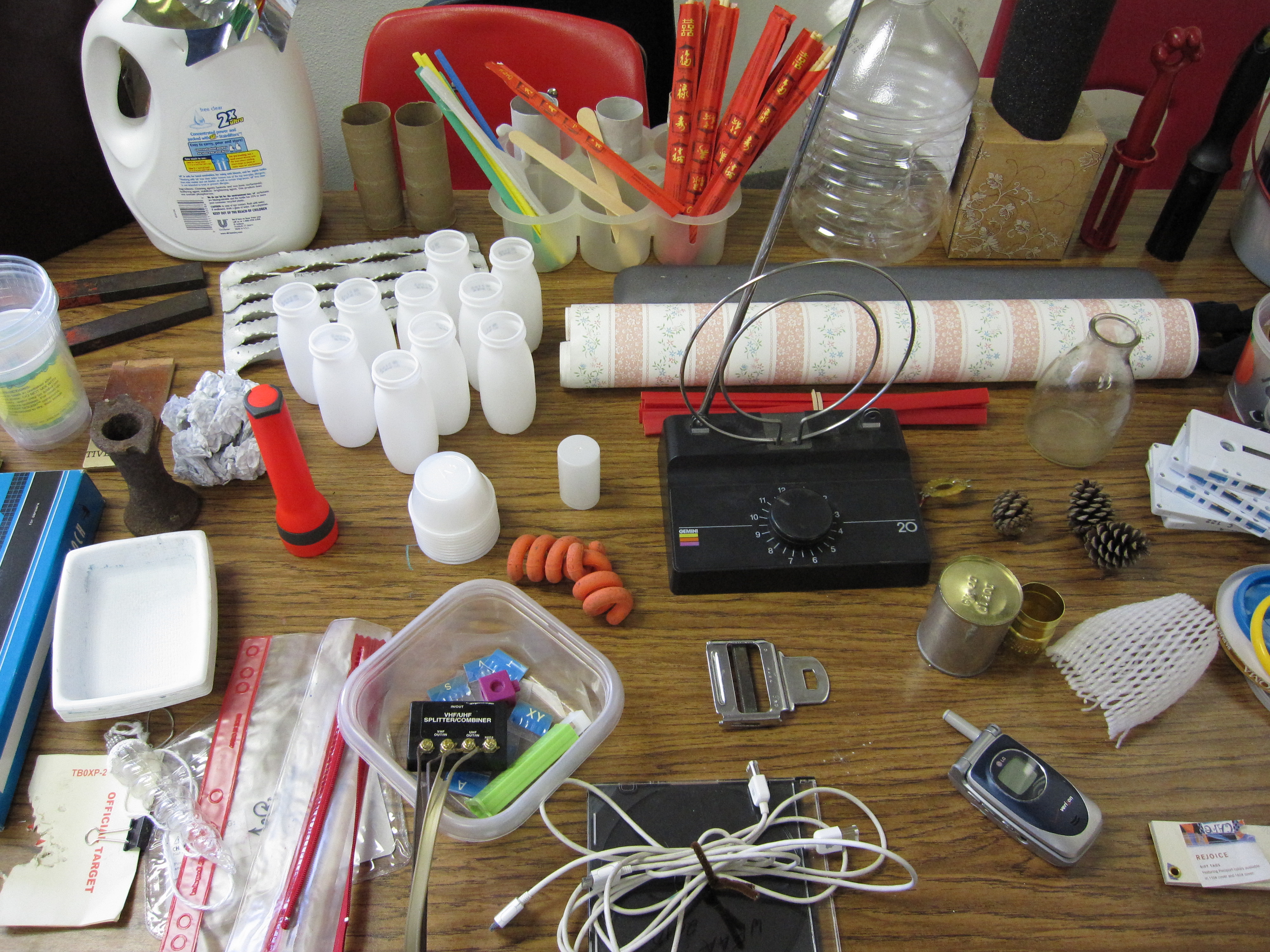
First, the students chose several items from the collection of found objects provided by the instructor.

An array of found objects to choose from

 
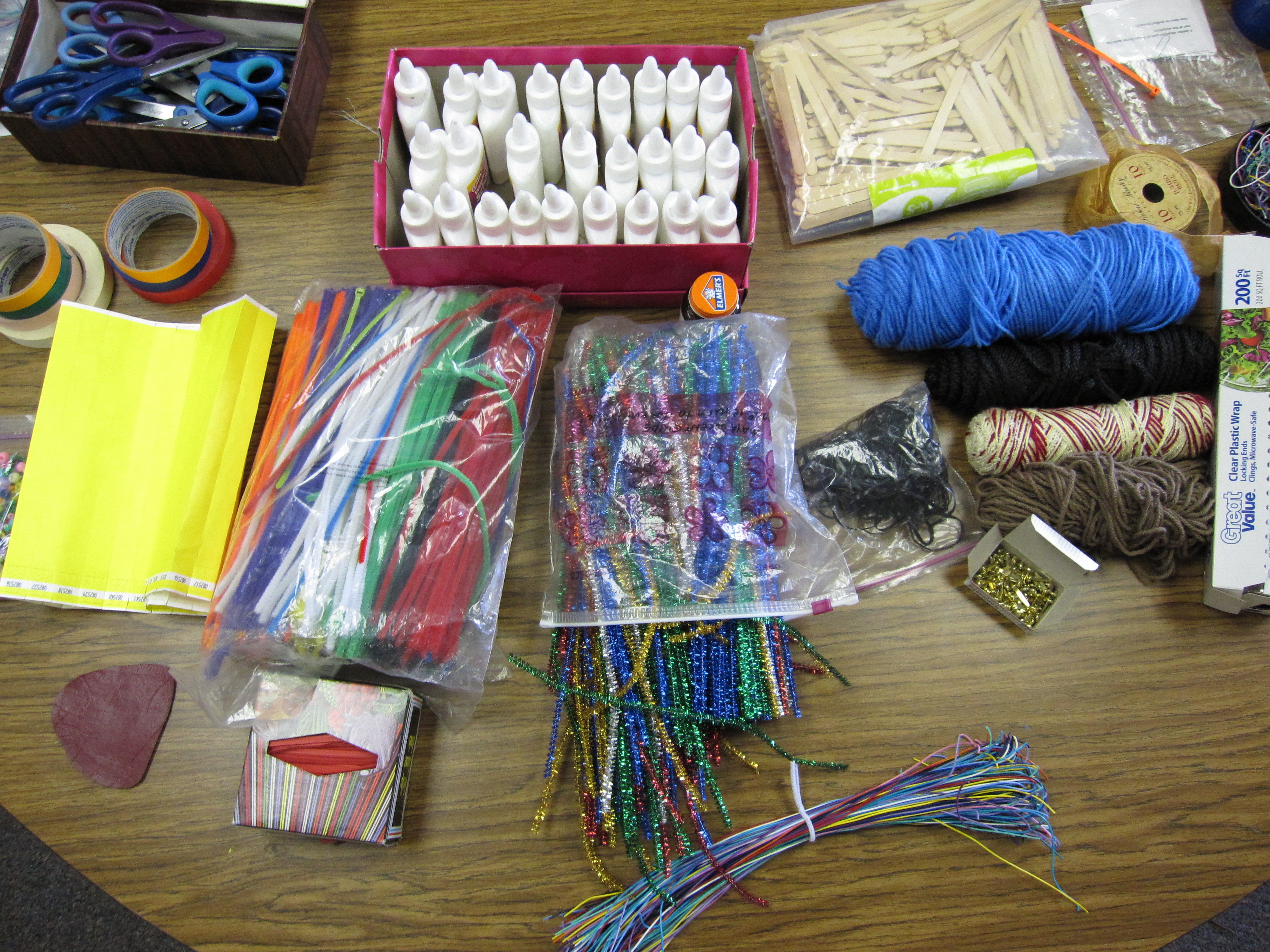
Next, students selected materials that helped them connect their objects.
 

Materials for connecting found objects

 
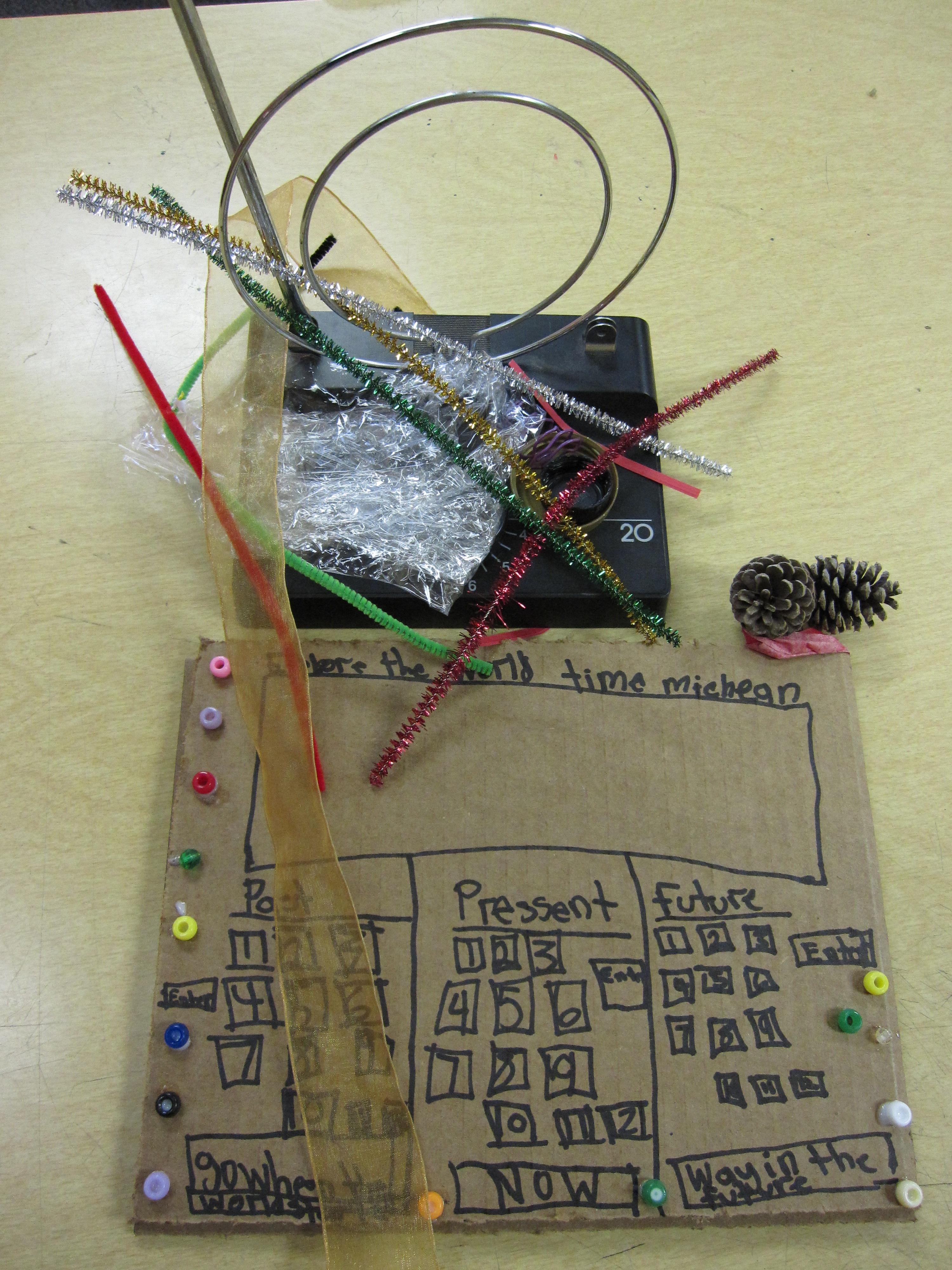
One student created a time machine with cardboard, plastic beads, an old tv antenna, and other assorted items.
 

Time Machine

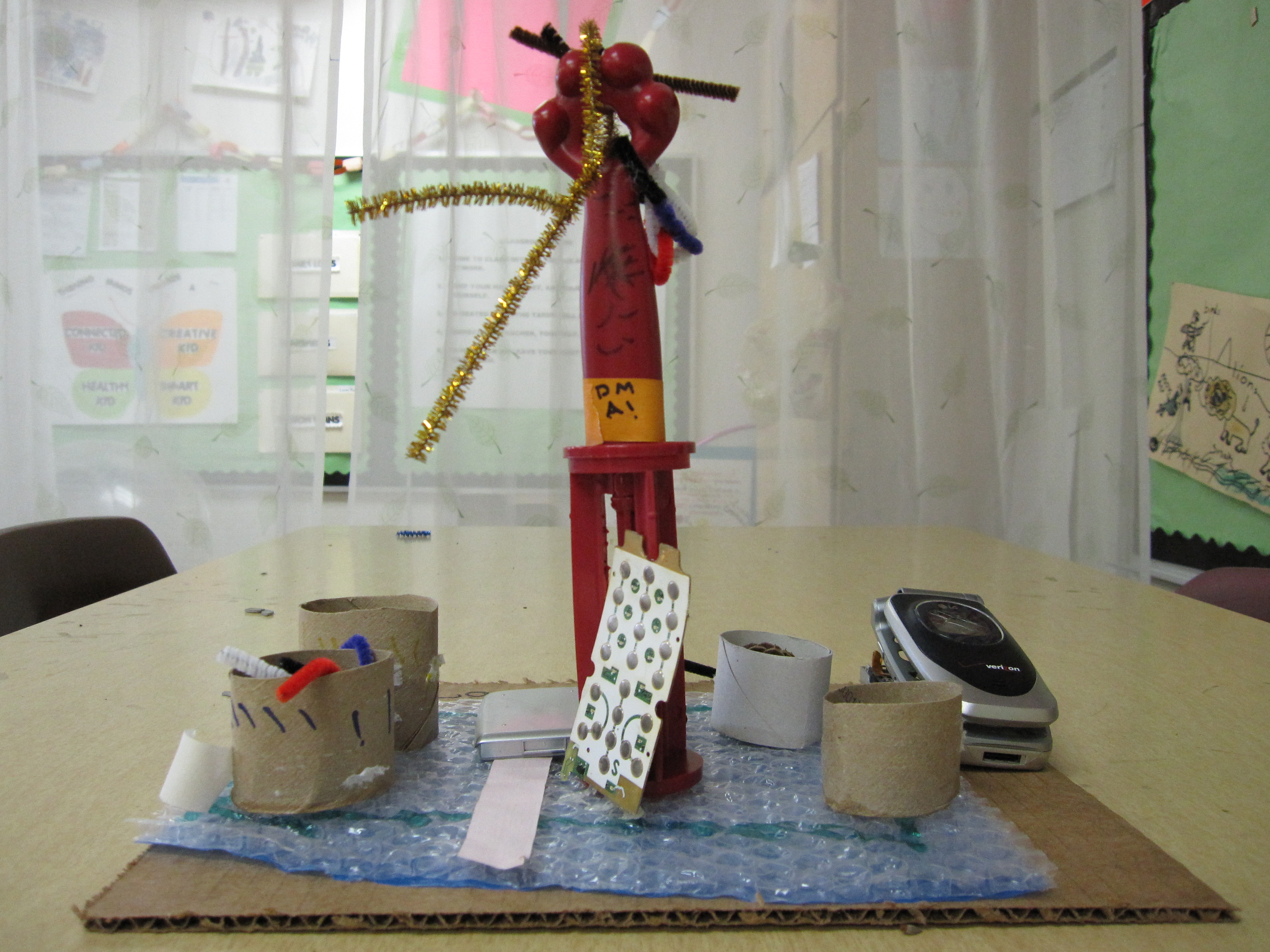
 Another student created a sculpture park with a lint roller handle, cell phone, bubble wrap, and paper towel roll.

The Sculpture Park

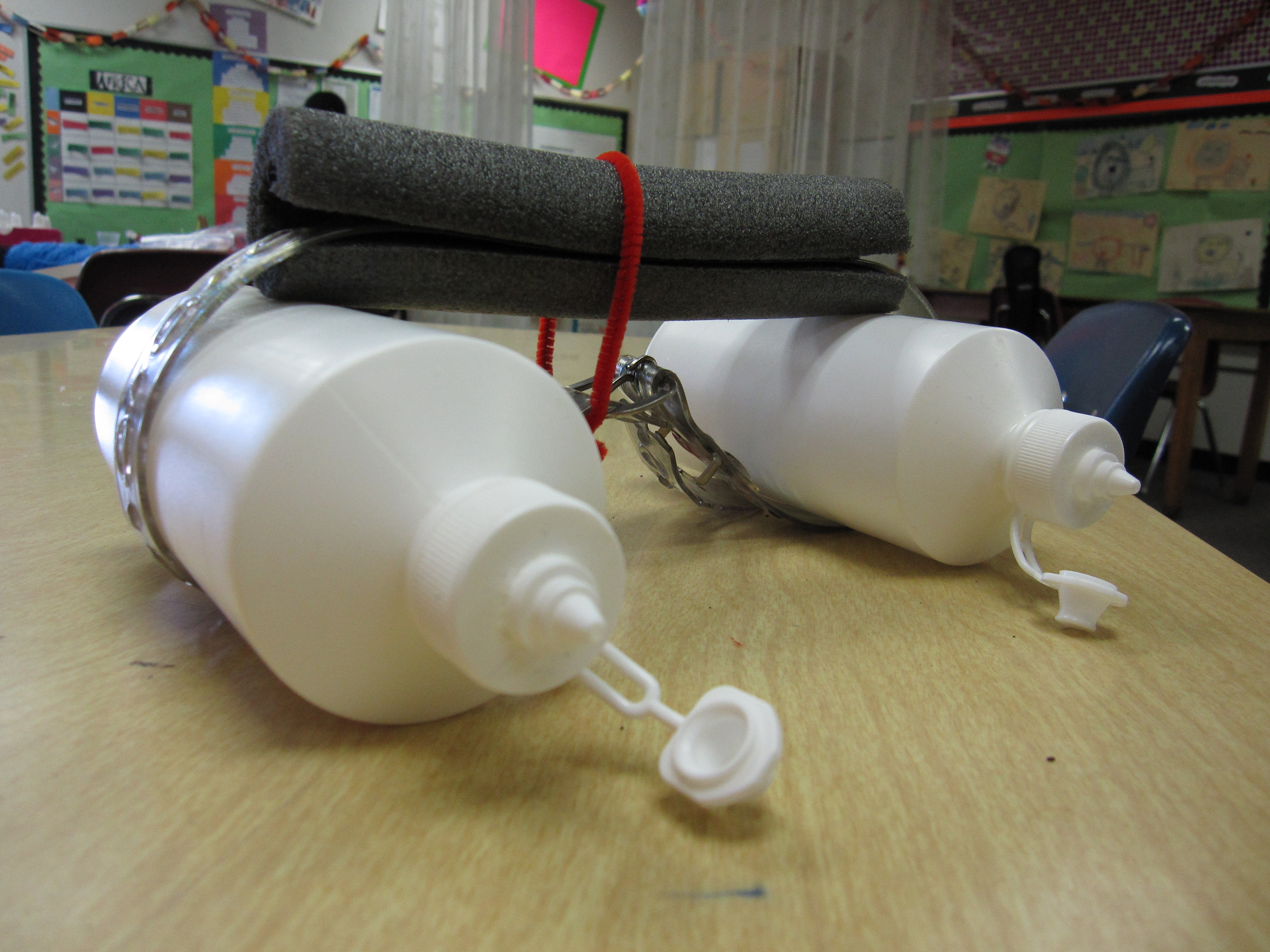
Saline solution bottles, foam tubing, a belt, and a pipe cleaner were combined to make binoculars.

Binoculars

 Students will see Mark Handforth’s Dallas Snake firsthand when they visit the DMA at the end of their program.

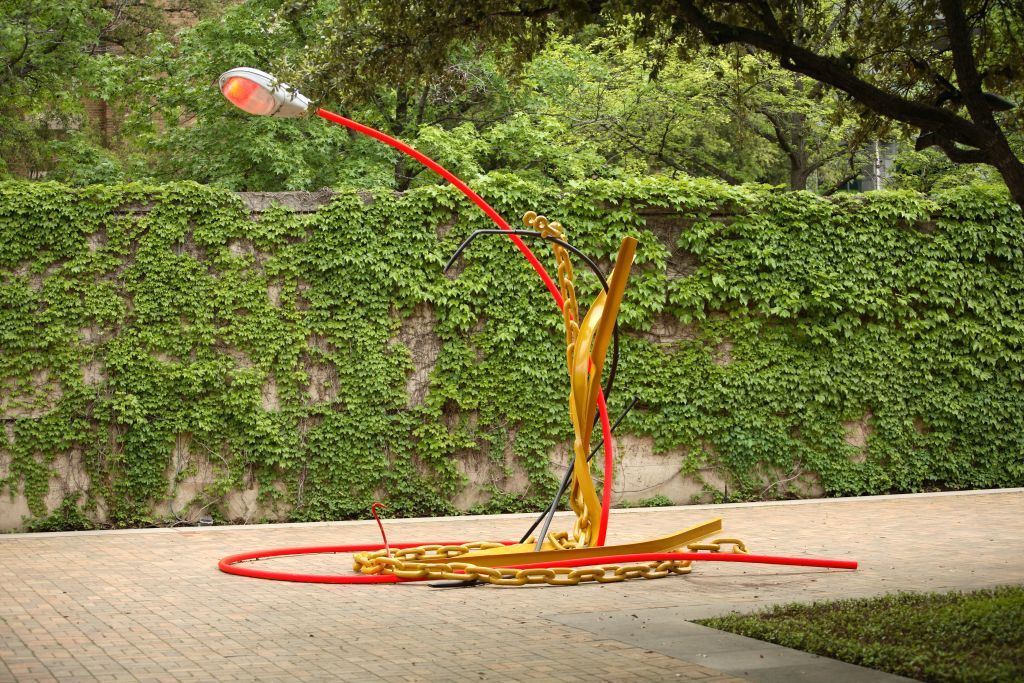
Dallas Snake by Mark Handforth

Community Connection: Using Art to Get at Life

As museum professionals, we attend conferences regularly to share the exciting work we are doing at the DMA and to learn from our national and international colleages.  I attended the annual National Art Education Assocation Convention for the first time in 2004, and I had the pleasure of participating in a session led by Dr. Terry Barrett.  Since then, I scan each year’s schedule to make sure I don’t miss an opportunity to learn from Dr. Barrett.  Last year, I was delighted to hear that he had joined the Art Education faculty at the University of North Texas.  I recently had a chance to talk with Dr. Barrett before UNT adjourned for Spring Break. 

Dr. Terry Barrett

What sparked your interest in art education?

I’ve been in the field a long time and I got into it by default.  When I graduated from college, I was eligible for the Vietnam War draft.  I was opposed to the war, and one way to avoid the draft was to teach.  I began teaching in an inner-city, all-black high school in St. Louis; I was there the year Martin Luther King, Jr. was shot.  I fell in love with the kids and decided I liked teaching.  I’ve been teaching ever since.

How would you describe your theory to a person with no experience in art education?

My mission is to help people appreciate art and to appreciate life through art, because I think art gives us different ways of thinking about the world.

Did you ever have a great idea that didn’t work?  What did you learn from that experience?

No, I don’t think I ever had a great idea that didn’t work.  Thinking of “great ideas” is intimidating in itself.  Other people come to me with great ideas – I have said yes to many offers throughout my career, and that’s led me to different directions that have been very interesting.

For example, one big change in my career occurred when a former student asked if I would be an art critic in education for the Ohio Arts Council and I said, “Yeah, why not?”  Being an art critic in the schools enlivened me;  my research, my teaching and my community service came together like a circle – a productive circle.

I was a cancer patient about 5 years ago.   I went through chemotherapy and private counseling and during that time I figured out I wasn’t afraid to die, but I was afraid of becoming old and inactive.  My counselor told me I have to get over that fear and suggested I go to an assisted living community and work with the elderly.  I said “Why not?”.  I also started doing contemporary art interpretation with people with cancer, and we started seeing how those images related to our lives. They really enjoyed the process and produced some beautiful writings.  That’s when I started thinking about life issues more than art issues and using art to get at life.

I had enough years at Ohio State to retire, but there was an opening at University of North Texas and I thought “Why not?”.  I wasn’t ready to retire; I wanted to stay active and keep working, writing, and teaching.

I love your artist statement about choices you’ve made related to making art, your creative process, and the materials you choose.  Can you tell me more about how you came to these decisions – was it a learning experience of trial and error, or did you approach artmaking this way from the beginning?

When I was young, I made art instinctively and intuitively. As I got older and was writing more, I didn’t have time to make art and do it well, so I stopped.  I realized I missed it, and that’s when I began painting.  Sandy Skoglund told me I needed something to fit my lifestyle.  As an example, she told me about a friend who frequently traveled on an airplane and made small collages because they didn’t require a lot of space or materials.  The small paintings I make really satisfy me.  They’re fun to make and I don’t exhibit them; I just do them for my own enjoyment.

It seems like much of your life and work has been in the Midwest, specifically Ohio.  What is your impression/experience of living and working in north Texas?

I miss the trees, but I like the sunshine a lot. The people here are friendlier than they are in the Midwest. There’s a degree of politeness that I like; the Midwest has a reputation for being a friendly place, but people here smile and make eye contact and open doors more than I’m used to.  I love wide open skies, and I love living in horse country.  I wish some rich ranch owner would give me a little plot of land to live on a horse farm, where I would build a small green house with a small ecological footprint.

Dr. Barrett will lead part of an upcoming Teacher Workshop titled  Exploring Photography: The Lens of Impressionism, along with photographer and educator Frank LopezVisit the website to learn more and register.

Melissa Nelson
Manager of Learning Partnerships with the Community

From Student to Staff

I began my relationship with the Dallas Museum of Art when I was an AP art student at Frisco High School and visited the Museum with my class.  Although I spent at least three hours a day in art classes during my senior year, the Museum felt like it was a world apart from my own, much further than the half hour drive from my school. After graduating from Frisco High, I earned a scholarship to the University of Texas at Dallas where I was accepted into Collegium V, the honors program there. In addition to the courses available on campus, each spring UT Dallas and the Dallas Museum of Art collaborate to offer an innovative honors seminar that takes place at the Museum.

Me in 1717 during the honors seminar exploring the senses

I signed up for the partnership class in the spring of my freshman year,  a course devoted to the Maya, and I fell in love with the Museum. I took the class again the following year, studying modernism, then once more the next spring, studying the process of creativity. Although I had graduated with my Bachelor´s degree in Art & Performance by the time my fourth year arrived, I was able to participate as a graduate student auditing the course, this time about the senses in art and literature. As my scholarship program drew to a close, I learned that the Museum offers eight McDermott internships: four in the Curatorial Department and four in Education. I knew I loved art, I knew I loved sharing the things I was passionate about with others, so I applied to work at the Museum doing just that. Not long after, I found myself walking through the Museum’s doors as the McDermott Teaching Programs Intern.

Me leading discussion during a teacher workshop about contemporary art

Not only have I been afforded the great opportunity to participate in teacher workshops and docent training as well as leading tour groups of all ages, but I have found myself on the other side of the table in the spring honors seminar. My experiences as a high school, undergraduate, and graduate student have shaped the way I see the Museum and the educational opportunities it provides, especially the way we interact with visitors. As someone who has witnessed it firsthand, I know that transformative experiences with art in the Museum are possible. My goal as a museum educator is not to impart a specific set of facts to a group of students, but rather to spark each student’s sense of wonder and provide them a starting point for whatever journey their imagination takes.

Looking Sharp in Those Navy Blazers!

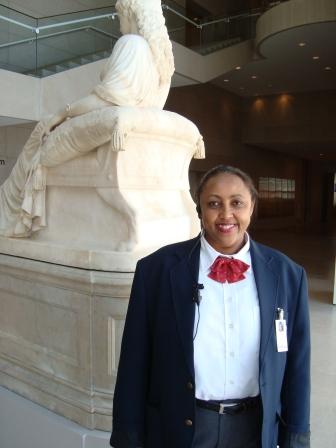
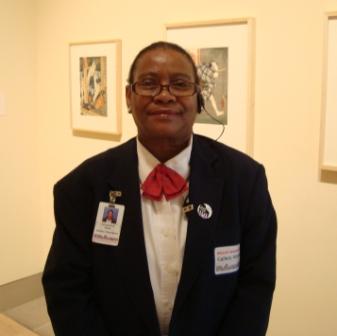
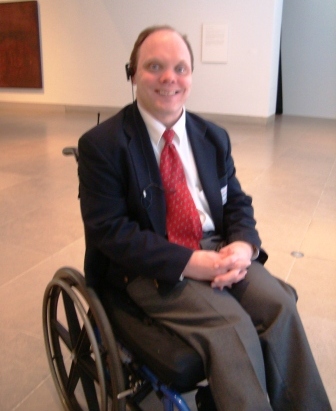
Gallery attendants are some of my favorite people!  They work hard and long, and are always excited to see me and any visitors that I might be bringing through the galleries.  Let’s honor them and the work they do!  I wish I could post pictures of them all.  Here are just a few to get to know.


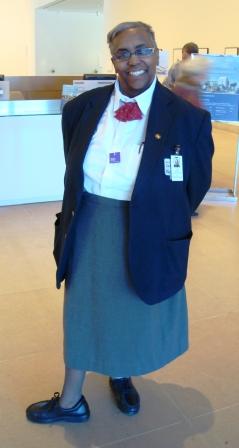
Clockwise from upper left:  Muli has worked at the DMA for 14 years!  She likes to cook when she has some free time.  Always smiling, Jacque, has graced the galleries for 9+ years and puts together 1000-piece jigsaw puzzles.  Mr. Ronald counts this year as his lucky thirteenth at the DMA and plays a mean Scrabble game.  Eugene has worked at the DMA for 7 months.  He’s a guitar player in a band and paints too!  Ornery Ethel, or “Dean” as everybody calls her, has been a part of the DMA family for 2 years.  She loves church and shopping.

Nicole Stutzman
Director of Teaching Programs and Partnerships


Archives

Categories