Archive for the 'Curatorial' Category


From Idea to Exhibition

There are few moments in a curator’s career more thrilling than the realization of a major exhibition project. While more modest exhibitions may take months of development, others require curators to commit years of their professional lives to researching the topic, seeking loans of works of art, and bringing together the necessary participants and funding to craft a touring exhibition and a substantial scholarly catalogue.

Following my organization of the DMA’s last major decorative arts exhibition, Modernism in American Silver: 20th-Century Design, in 2005, I began work in earnest on a topic that I had considered years earlier, that of the work of one of the leading figures of the American Arts and Crafts movement, Gustav Stickley (1858-1942). In recent decades, Stickley’s name had become nearly synonymous with the boldly functional Craftsman furniture more broadly known as “Mission furniture” (a term that he despised), and examples of his factory’s works had been included in major Arts and Crafts survey exhibitions in New York, Boston, Los Angeles, and elsewhere. Given this, I found it curious that no museum had yet undertaken a monographic study of Stickley’s production for a major touring exhibition. As I later discovered, some colleagues had pondered the topic but for various reasons were unable to pursue it. It was, for me, and for the DMA, an opportunity to forge another strong link between the Museum’s development of its 20th-century decorative arts and design collections and an exhibition idea that seemed to resonate with possibilities. Stickley, as an orchestrator of design and a proselytizer for the simple life – he even published a magazine, The Craftsman, to promote his progressive ideas – was far more than an owner of a furniture factory. In the first decade of the 20th century, he sought to change the way Americans thought about the home, machine-made goods, craft, and, ultimately, their lifestyle. The subject was about not only furniture as design but the very art of how one could, or in Stickley’s mind, should, live.
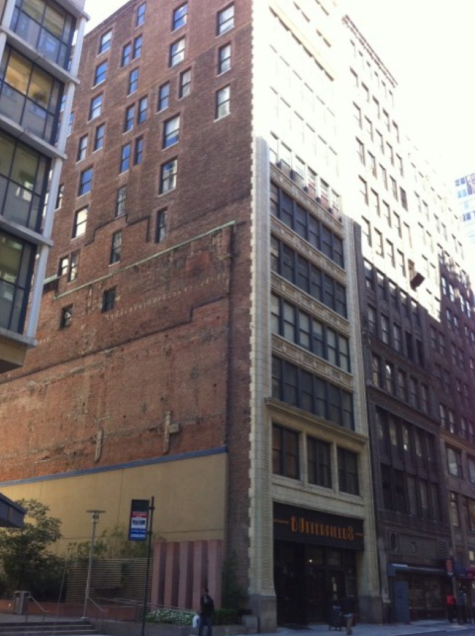
An appointment in Manhattan provided me with an opportunity to walk by Stickley’s Craftsman Building, which still stands right off of 5th Avenue and 38th Street (it’s now a restaurant and offices). He leased the entire 12-story structure in 1913 and used it as a headquarters and a department store. Furniture, garden supplies, household equipment, rugs, and a host of goods were sold here; there was even a “Craftsman Restaurant” on the top floor. What exactly was in a Craftsman fruit cocktail anyway?
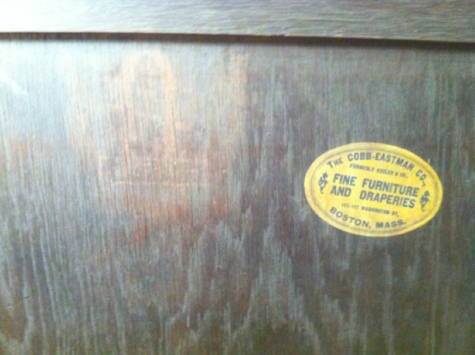
On the left, one can just barely make out the Stickley mark as a red decal on the back of this desk. A joiner’s compass (an archaic woodworker’s tool used to lay out circles) surrounds his borrowed motto “Als ik kan” (If I can) and below is a copy of his signature. While subtle differences in this mark can tell us what year this piece may have been made (this work is from 1903 or 1904), the paper label to the right is especially interesting to me – it indicates where the piece was originally sold. Surviving retailer tags such as this one are far rarer than Stickley’s own mark. Dallas had two retailers of Gustav Stickley’s Craftsman furniture between 1902 and 1916.
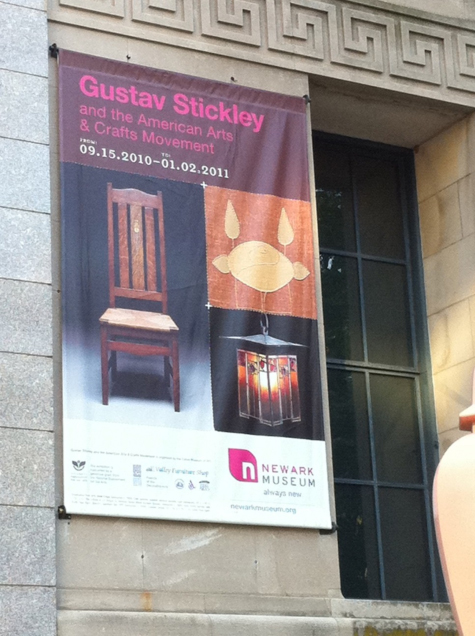
Stickley comes to Newark.

Five years later, on September 15, 2010, we celebrated the public opening of the exhibition Gustav Stickley and the American Arts & Crafts Movement at the Newark Museum. Although it is unusual to premiere an exhibition at a museum other than the organizing one, there was a happy synchronicity in that Craftsman Farms, once Stickley’s New Jersey home (and located a mere twenty minutes from Newark), is celebrating their centenary. The night before the public opening, lenders, colleagues, museum members, press, and other guests convened at the museum for the usual slate of honorific speeches, convivial chats, and a sneak peek at what would be revealed when the doors officially opened the following day. Arriving at this point required hundreds of hours of research into Stickley’s career, pouring over surviving business papers at Winterthur, examining original sales catalogues, advertisements, photographs, inventories, and other documents, and, with this information in mind, reviewing the actual pieces of furniture, metalware, textiles, and architectural drawings that are included in the exhibition. This research is the very heart of such exhibitions and associated catalogues and not only allows us to satisfy our curiosity as scholars – the why, when, and how these works were made and for whom – but also provides us with the knowledge for shaping a new and compelling story for our visitors and readers.
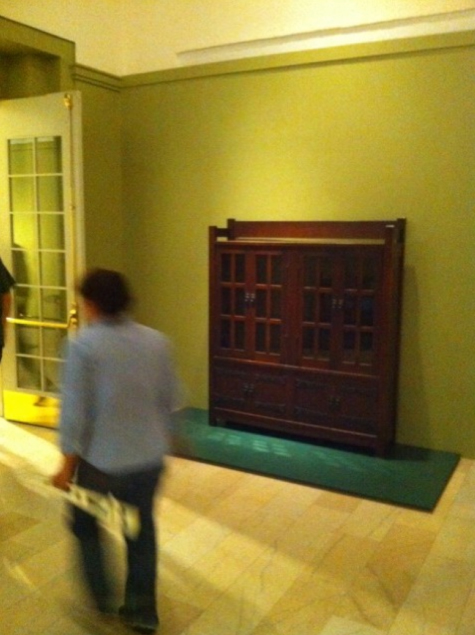
The Newark Museum’s staff never slowed down for a moment – preparing for an opening, especially one with large pieces of furniture and a recreation of an entire dining room, is not a simple matter. Each work must be handled with care, its condition well documented, labels written by the curator and placed by the preparation staff. That’s the condensed version. One of Stickley’s rectilinear oak bookcases from 1901 looms in the background, awaiting its public premiere.
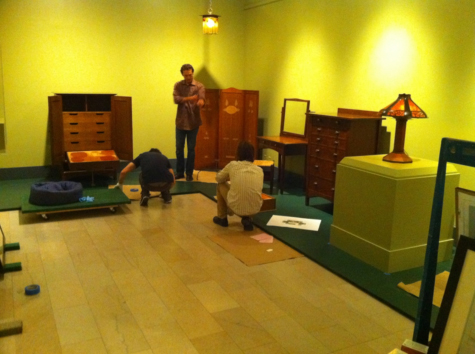
DMA registrar Brent Mitchell consults with Newark’s team as we prepare to install Stickley’s own chest of drawers (far left). The best laid plans must always be adjusted to accommodate those unexpected challenges.

After spending nearly two weeks supervising the installation of the exhibition with DMA registrar Brent Mitchell and the dedicated staff at the Newark Museum, including Ulysses Dietz, their curator of decorative arts, I at last felt a sense of relief and exhilaration as the last object was placed. The exhibition is done, at least for now – come February 13, 2011, the doors will open to the DMA’s presentation of Gustav Stickley and the American Arts & Crafts Movement.
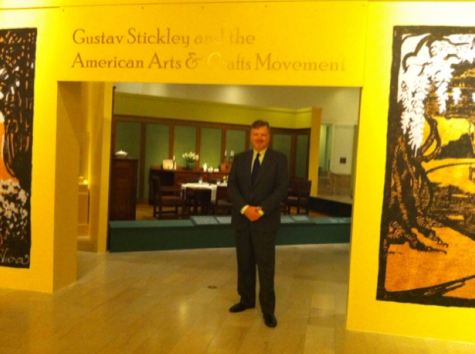
Done!
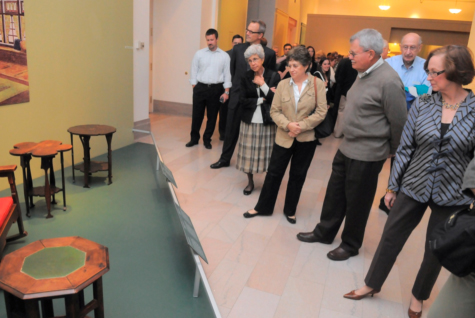
Opening night.

Kevin W. Tucker is the The Margot B. Perot Curator of Decorative Arts and Design at the Dallas Museum of Art.
Uncrating Stickley: A Registrar’s Report

Just before Labor Day I left Dallas for New Jersey to be on-site for the uncrating and installation of the exhibition Gustav Stickley and the American Arts & Crafts Movement. Organized by the DMA, this exhibition opens at the Newark Museum of Art next week, and as the DMA’s Registrar, it is part of my job to help in the moving of these works to ensure proper handling.

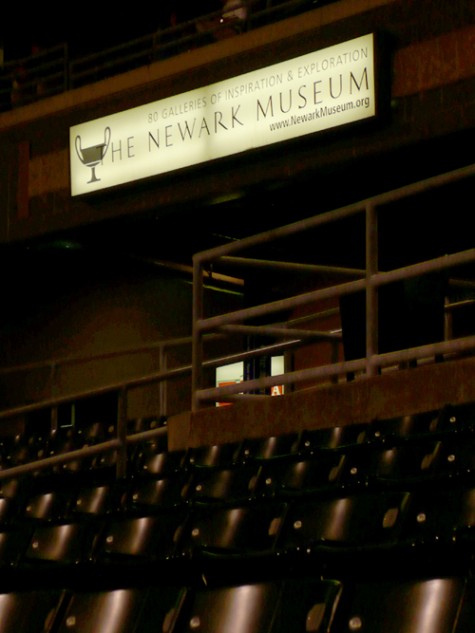
It's nice to see a museum being promoted at a sporting event. I noticed this sign for the Newark Museum while watching the Newark Bears play the Bridgeport Bluefish.

It’s early September and the ideal weather makes this a great evening to catch a minor league baseball game in Newark. After working all day installing the exhibit at the Newark Museum, this is a nice change of pace. Even the annoyingly loud music that plays every time a batter steps up to the plate can’t ruin the great atmosphere.

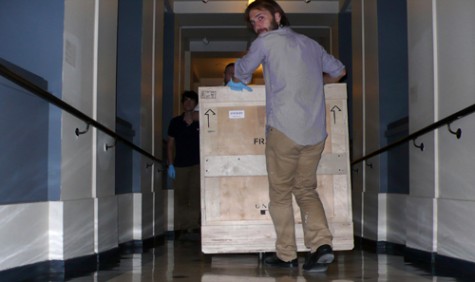
Daniel Brophy makes sure he doesn't run me over as he helps David Bonner and Seth Goodwin move a crate into the galleries for unpacking.

It’s proving to be a challenge installing an exhibition at another museum as the opening tour venue–usually the organizing institution opens the show but in this case it premieres in Newark to coincide with the 100th birthday of Stickley’s home, Craftsman Farms, in Parsippany-Troy Hills, New Jersey. But the Newark Museum exhibition team and registrars are working hard to make sure we unpack, condition report (as a registrar, it is also part of my job to carefully document any change in condition or damage that might occur), and install the 100-plus objects before the first opening event on September 14.

One of the specific challenges revolves around the fact that this is the first time I’ve seen the majority of the objects in person. This adds to the amount of packing documentation and condition report notes that must be made before the objects can be finally installed. But we’ve worked out an effective system where Newark Museum registrars Antonia Moser and Amber Germano have been completing many of the condition reports while I update packing notes and direct the art handlers (Seth Goodwin, Daniel Brophy, Diane June, and David Bonner) on the order of crate unpacking. It’s vital to keep the unpacking and condition reporting process moving smoothly with as little down time as possible in order to meet our deadline.

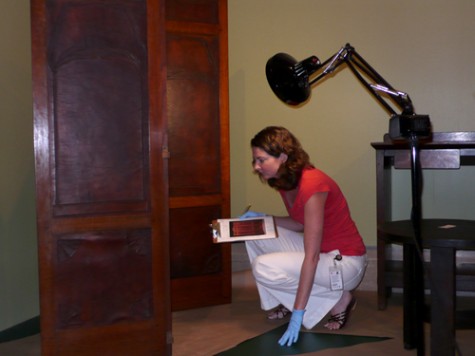
Newark Museum Associate Registrar Antonia Moser performs a condition report on a folding screen in one of the museum galleries.

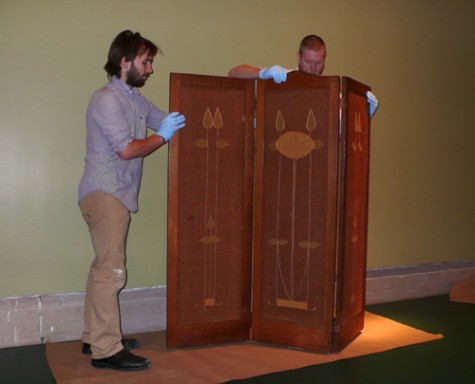
Daniel Brophy and Seth Goodwin install a folding screen after unpacking it. Gloves are required when handling works of art to protect the surface of objects.

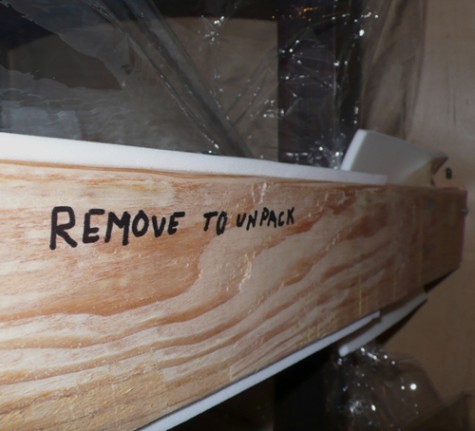
While crates look like simple wooden boxes on the outside, their interiors can be filled with numerous braces and other packing features to ensure the safety of the artwork while being transported. It's vital to follow any instructions provided by the various craters, who often write directions and registration marks directly on the crate and crate components for easy visibility.

And while every exhibition installation has its fair share of bumps in the road and unique challenges, it’s what makes my job as a registrar so appealing. There’s not much that beats opening crate after crate of fine art and making sure it’s installed safely for museum visitors to enjoy. And as a bonus, I’ve discovered that Stickley’s ash furniture pieces are quite beautiful. Be sure to check them out if you’re in Newark, Dallas, or San Diego during the exhibition dates in those cities.

Oh, and here’s a double bonus: the home team Newark Bears have erased a 4-1 deficit and now lead the Bridgeport Bluefish 7-5 in the bottom of the fourth inning. Go Bears!

Brent Mitchell is the Registrar for Loans and Exhibitions at the Dallas Museum of Art.
Ask a Curator Day in the Twittersphere

Wednesday, September 1, was the first ever “Ask a Curator” day on Twitter. The event was organized by Jim Richardson of Sumo, a design agency in England. Over 300 museums worldwide participated and the DMA was thrilled to be one of only three in Texas to sign-up. Our curators, from the areas of ancient to contemporary art, jumped into the Twittersphere to talk about their work. They answered questions from what to visit at the Museum if you only had one day (so hard to pick when we have over 24,000 works!), to their favorite work of art in the collections (Decorative Arts and Design curator Kevin W. Tucker says it is impossible, like picking your favorite child) and favorite city to see art (Anne Bromberg, who curates our ancient and Asian art collections, named Isfahan, Iran). A lot of people wanted to know what to study to become a curator (DMA curators studied Art History, Studio Art, and Anthropology to name a few). The biggest challenge of the day, other than avoiding all the spam that hit the world-trending topic midday, was figuring out how to answer all of the great questions in only 140 characters! If you still have a question, post it on Facebook and Twitter and we will do our best to track the curators down in the galleries.

#askacurator Day @ the DMA was a blast; below are some of our favorites:

@JoseSPiano #askacurator How often does a curator walk through the galleries and interact with the public once an exhibit has opened?
Roslyn Walker, Curator of the Arts of Africa, likes to walk through the gallery daily and to give talks and tours when she can.

@deadsunflower #askacurator What part of your job do you love the most?
Anne Bromberg, Curator of Ancient and Asian Art, says the best part of her job is thinking about art all day

@hoperobertson How do you decide what exhibitions to feature at your museum? Personal choice, or is it all pre-arranged? #askacurator #iloveart
Olivier Meslay, Curator of European and American Art, says, One of many factors is to see how it relates to the rest of the museum’s collections. #askacurator

@kayommm What did you study at schools and what career will be required to be a curator? #askacurator
Curator of Contemporary Art Charles Wylie studied American Studies and Art History. #askacurator

@hummeline @DallasMuseumArt What piece in your collections still stops you in your tracks when you see it?
Anne Bromberg, Curator of Ancient and Asian Art, answered, Brancusi’s “Beginning of the World http://bit.ly/9giNHD #askcurators

@artistMFReid @DallasMuseumArt What art would you love to add next to your collection? Dream big…
Olivier Meslay, Curator of European and American Art, would love to have a large painting of the Grand Canyon by Thomas Moran

Members Celebrate African Masks

Last Friday we posted to our blog that it takes several weeks to install an exhibition, and they are planned many months (if not years) in advance. Once the Museum’s membership department knows when exhibitions will open, we start scheduling our preview events.

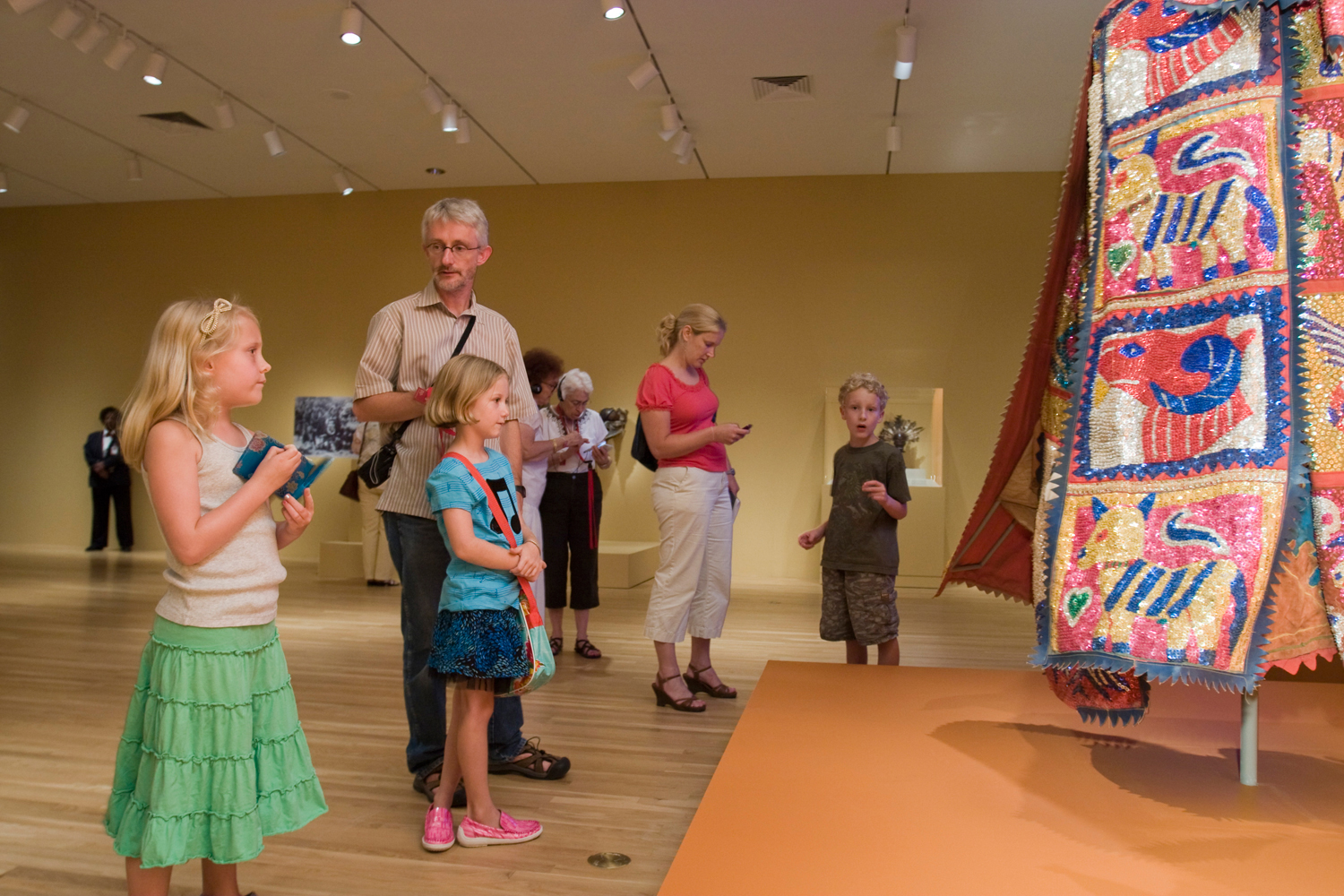
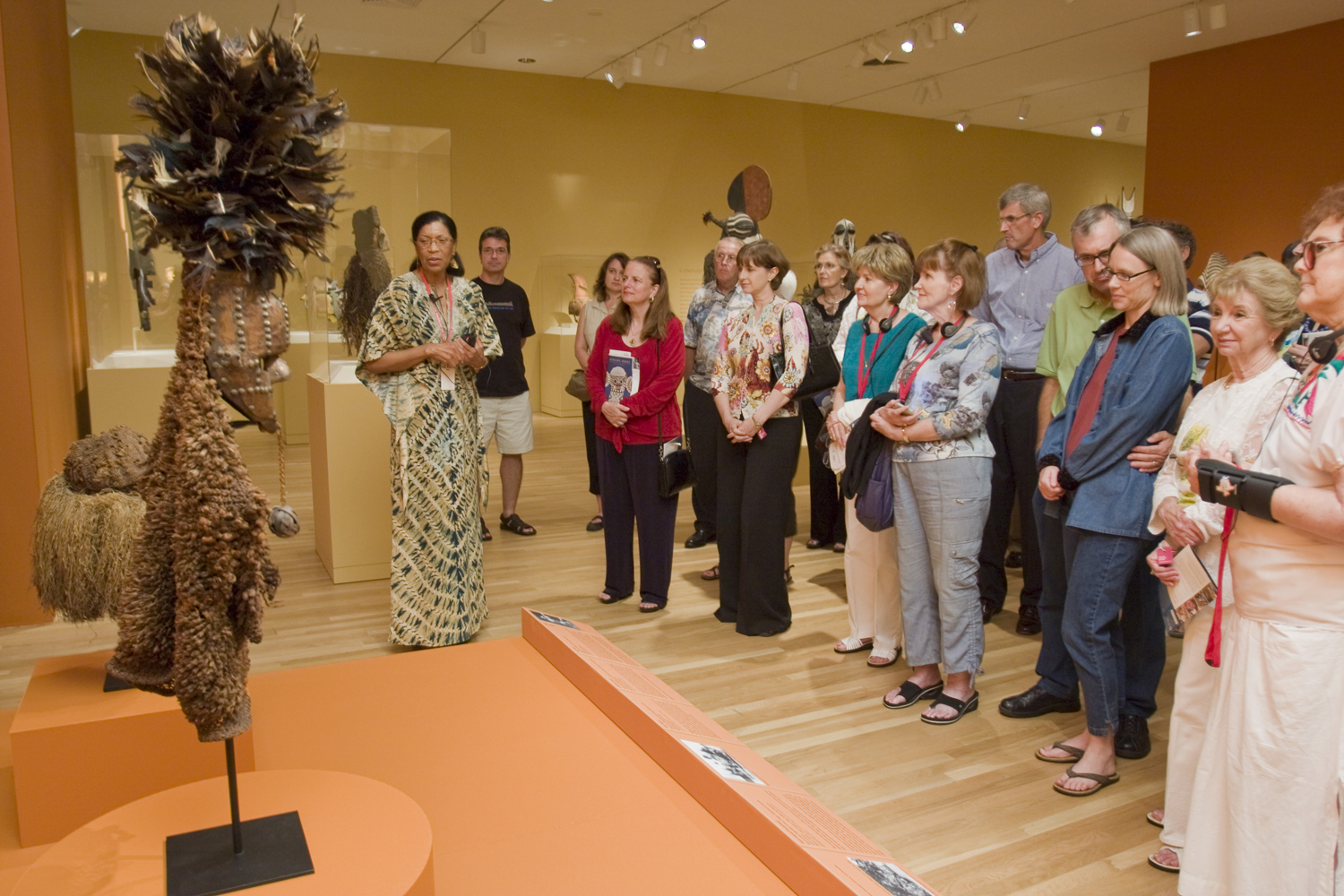
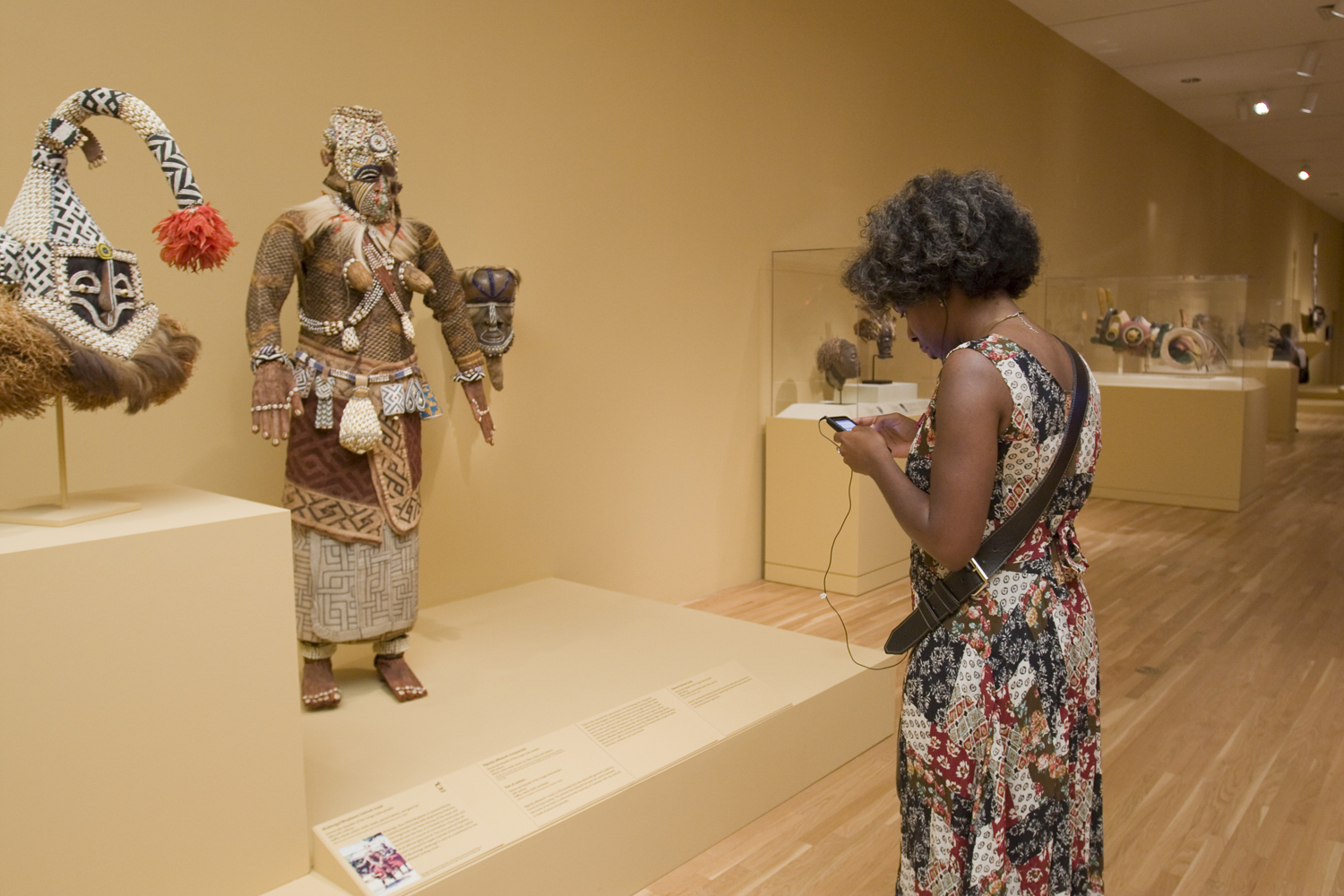
This past weekend was busy; we hosted three previews! Over 1,000 DMA members took the opportunity to tour African Masks: The Art of Disguise before opening day.

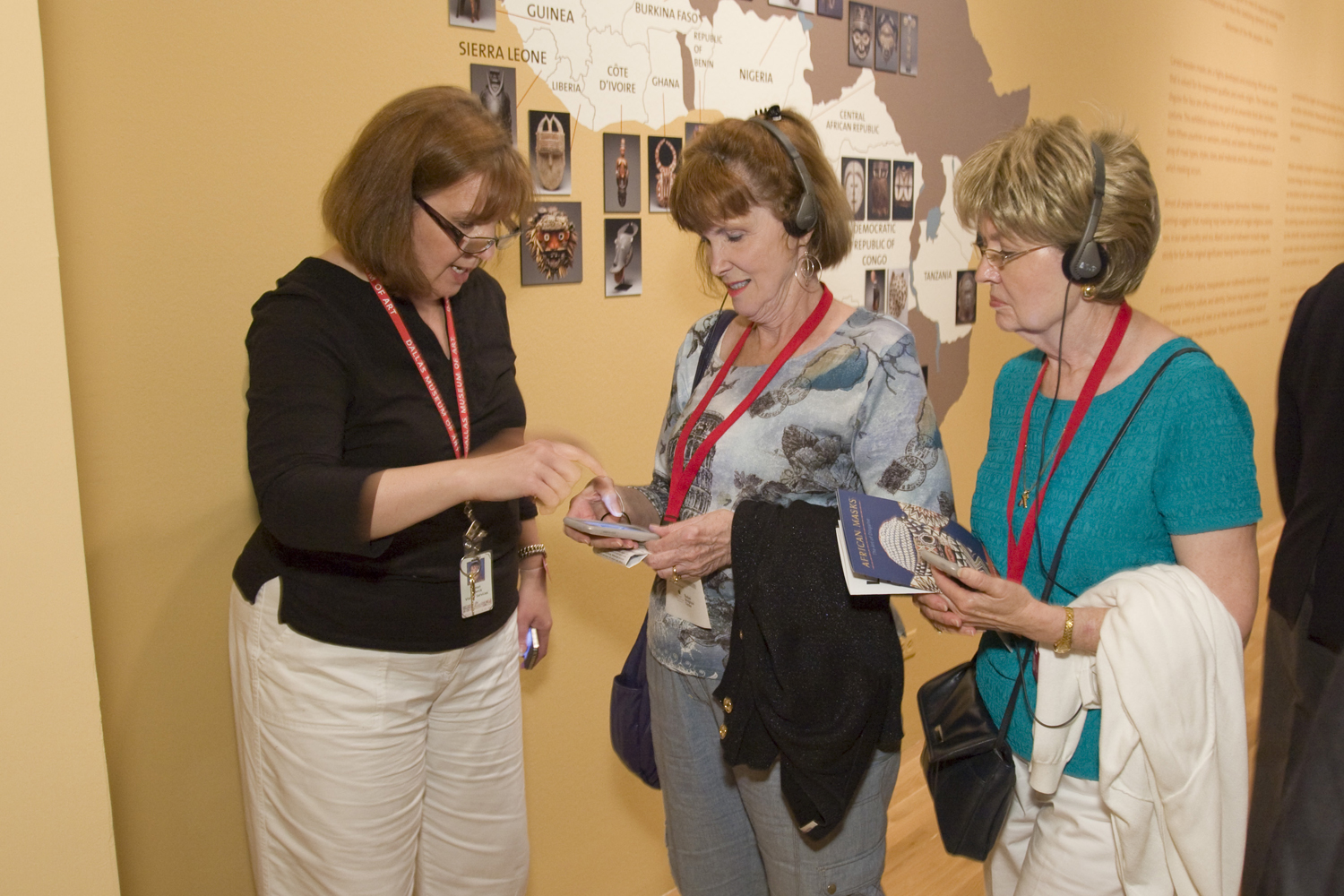
In addition to greeting members at the exhibition and assisting them with the new smARTphone tour, we hosted the first Members Lounge at Late Nights. Some of you may remember that when the we presented the King Tut exhibition, DMA members were able to take a break from the crowds in a separate lounge area. We decided to bring the concept back during Late Nights. If you are a member and plan to visit during the September Late Night, stop by the Members Lounge at Late Nights for a snack and some additional fun. And please be sure to say hello!

A Curator’s Best Days

The best days in a curator’s professional life are often the days spent in the conservation lab. That’s where we get to spend quality time with works of art and talk to conservators, the fantastically knowledgeable people who can look through a microscope or infrared scope and tell you the life history of an object. I was lucky enough to spend several hours in the painting conservation lab of the Midwestern Art Conservation Center (MACC), a private conservation center housed at the Minneapolis Institute of Arts (MIA). I was there to confer with conservator David Marquis just before he begins cleaning an important painting in the DMA’s collections, Paul Gauguin’s Under the Pandanus, also known by its Maori title I Raro Te Oviri.

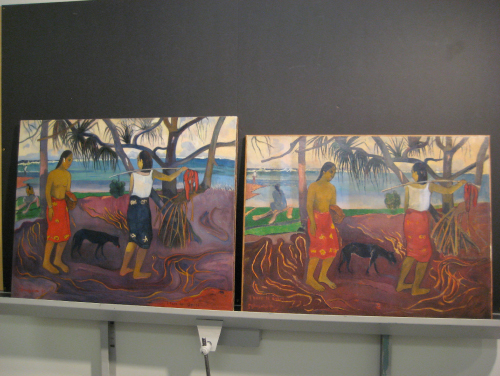
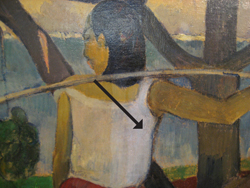
Gauguin painted Under the Pandanus in 1891, a few months after he arrived in Tahiti for the first time.  Sometime later, possibly the next year, he painted a second version of the composition, and that picture is now in the collection of the MIA. When I got to the MACC lab, they had brought both paintings to the lab and removed them from their frames so that we could do a thorough comparison. Ours is on the right, the MIA version on the left.

Last year we began to look closely at the condition of our painting, and earlier this summer we sent our painting to the MACC for technical analysis. Once the two versions of the painting were placed side by side, the differences become more and more obvious . . . and intriguing.

Though the technical study had just begun, David Marquis immediately pointed out how dirty the surface of the DMA canvas was, and how discolored the old layer of varnish had become. This yellowed varnish layer and surface layer of grime radically changed the appearance of the painting. MIA Associate Curator of Paintings, Sue Canterbury, described it as being like looking at the painting through a double-amber filter—not exactly what Gauguin had intended! The MIA version, which was cleaned within the last ten years, gives us a much better sense of what our painting must have looked like when it was first completed.

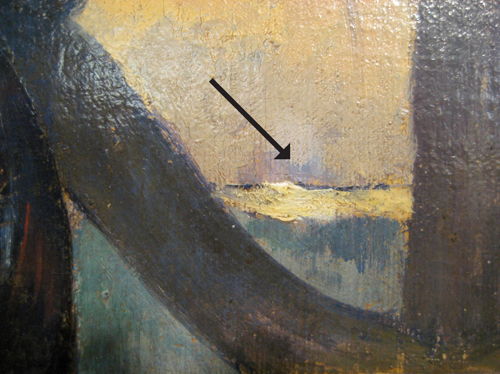
Once we decided to take off these two “amber filters,” David Marquis began by making “cleaning windows,” that is, cleaning small areas of the canvas. This is the first window he opened, in an area of the horizon near the right edge of the painting.

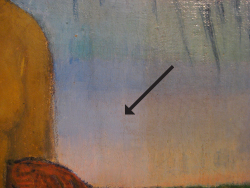
The results are pretty amazing! The white surf is actually so much brighter and cooler in tone than it appears in the dirty areas. Now that he knew what the cleaning might reveal, David opened some windows in other areas. When I got to the lab to take a look, several areas of the canvas had been cleaned, revealing a whole new palette of colors.

Once David’s cleaning of the varnish and grime is complete later this summer, we’ll have a much better sense of the choices Gauguin made while he was working on our painting, as well as how the painting has changed over time and the extent of work done by earlier conservators. We’re just at the beginning of this important project, so stay tuned for future updates about the results of our study of Under the Pandanus, and look for it to be back in the galleries, and looking better than ever, next year.

Heather MacDonald is The Lillian and James H. Clark Associate Curator of European Art at the DMA.

Installing African Masks: The Art of Disguise

[slideshow]

Welcome to the debut of “Uncrated,” the Dallas Museum of Art’s new blog!

With the August 22 opening of African Masks: The Art of Disguise fast approaching, installation began the first week of August. Typically the installation of an exhibition takes about two weeks, but with the complex mounts, costumes, graphics and AV needs, this show will take a full three weeks to pull together. The exhibition will be on view in the same gallery previously occupied by The Lens of Impressionism: Photography and Painting Along the Normandy Coast, 1850-1874.  However, visitors will notice a significant difference in the look and feel from the previous show. Demo and construction began in June, drastically transforming the space into a large open gallery enveloped in warm oranges and yellows.


Archives

Categories