Archive for the 'Collections' Category

One Way of Looking at a Mola

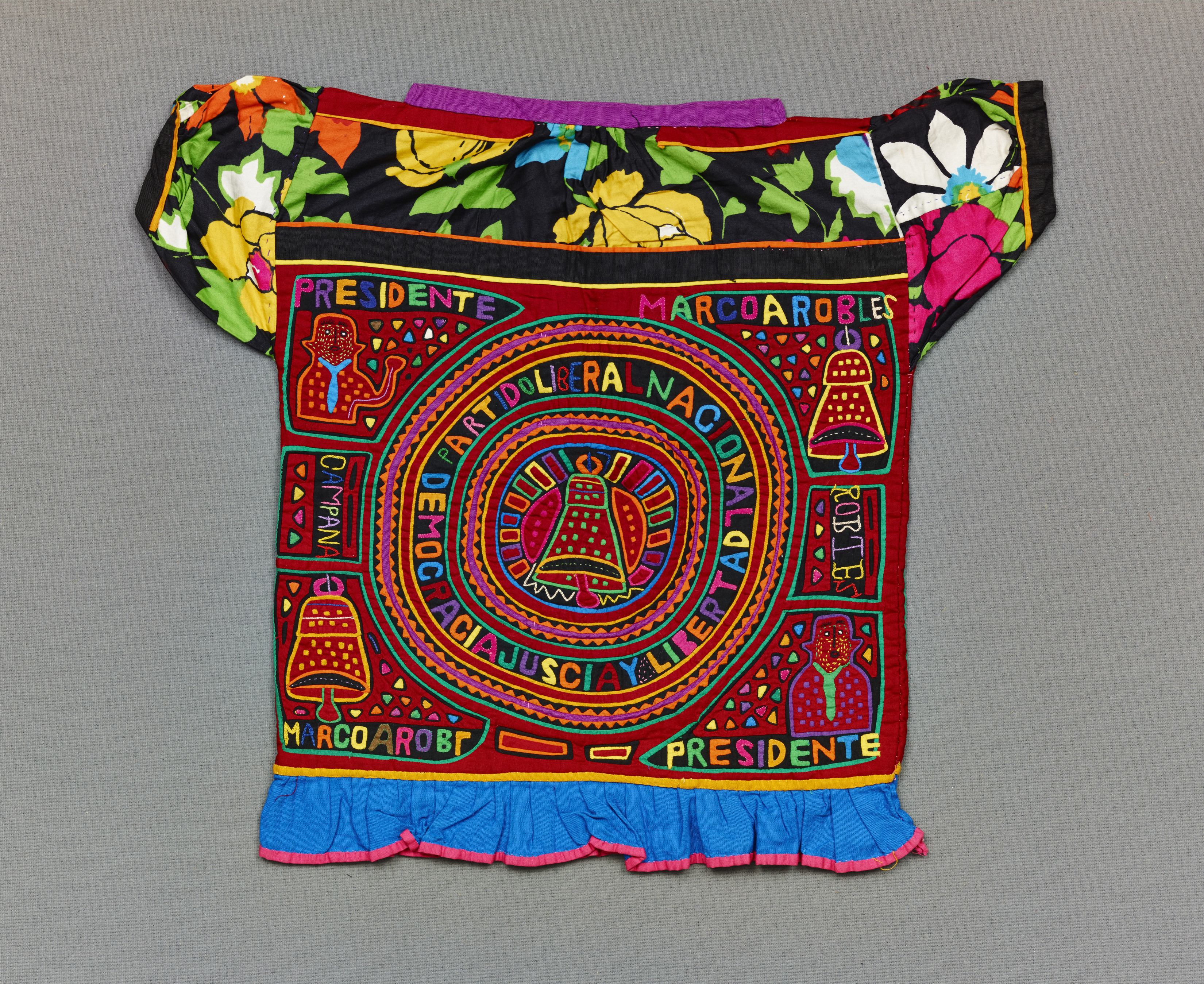
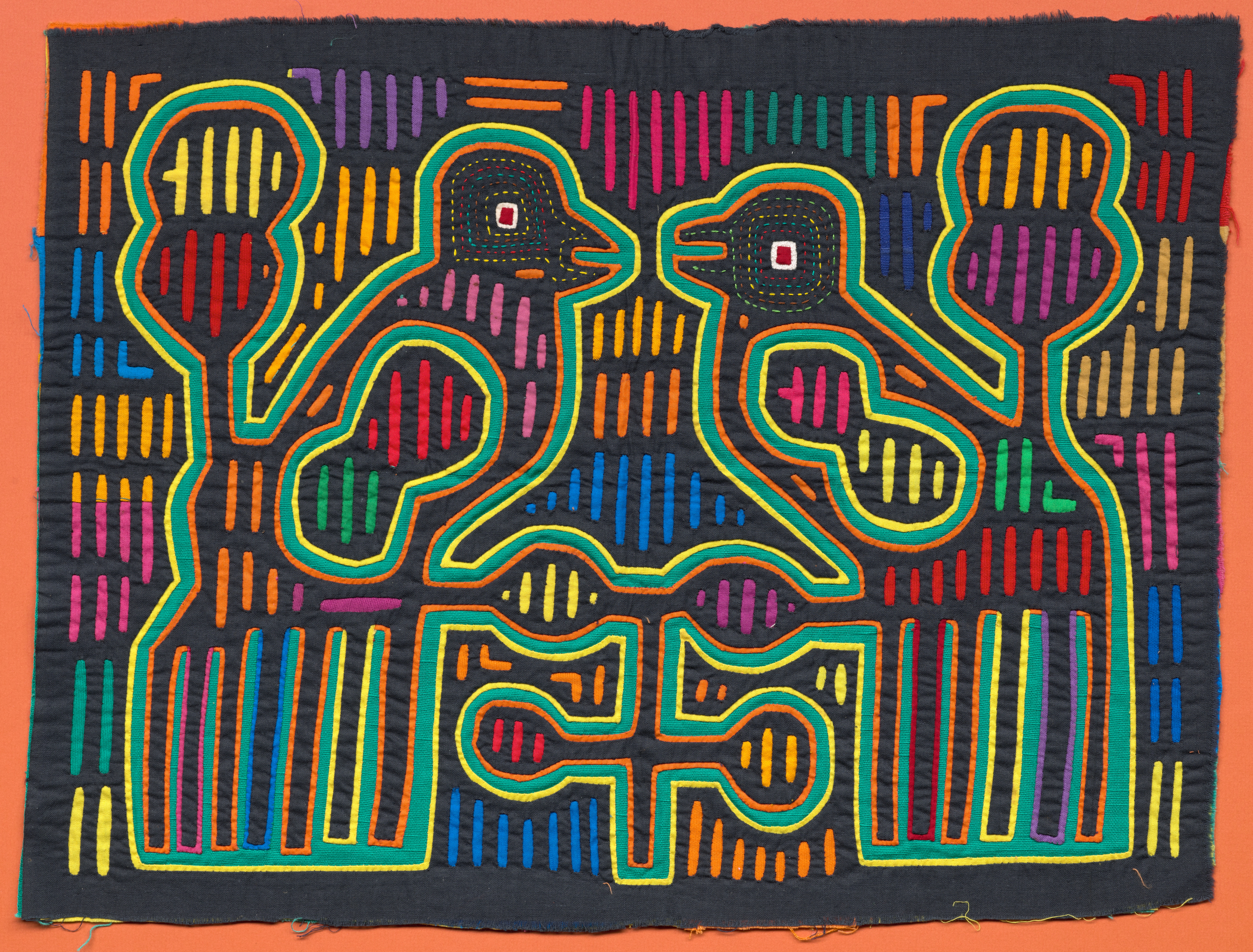
The Guna people live in an autonomous region of coastal Panama. The molaa blouse with appliqué panels on the front and back—is one of the most recognizable Guna art forms.  Guna women devote hours daily to making molas together while they converse about their craft. This social context of production reinforces a shared set of aesthetic principles, including symmetry, contrast, and evenly distributed detail.[1] Well-made molas are admired and copied by others.

This brightly colored mola features birdlike figures rowing boats. Velvety sleeves and rick-rack trim elevate the sumptuous detail of the appliqué panels. There are many ways—cultural, historical, and economic—to approach these intricate works. For now, let’s look closer at this mola to understand its key aesthetic attributes.
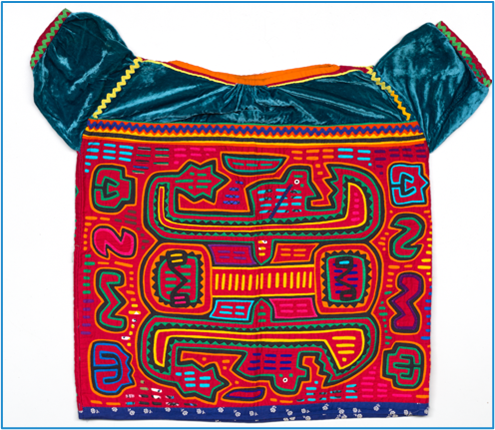
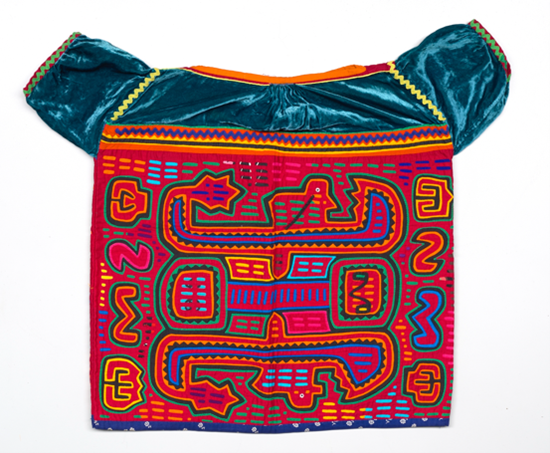
Symmetry: Imagine drawing a line from the center of one side of either panel straight across to the other side. The top half and the bottom half of the panel would mirror each other—with minor variations on either side. You would discover the same effect if you drew a line down the center of the blouse. This mola is symmetrical in quarters.

Duality: This blouse features near identical panels on the front and back. Guna women often make molas in pairs. This practice, along with the symmetry that governs individual panels, relates to the Guna belief that every living being has a double.[2] However, Guna women are not wedded to cosmology. They are artists who explore aesthetic convention and respond to market conditions. Women sometimes tear apart blouses to sell individual molas, thus interrupting the ability of their objects to reflect the cultural value of duality.
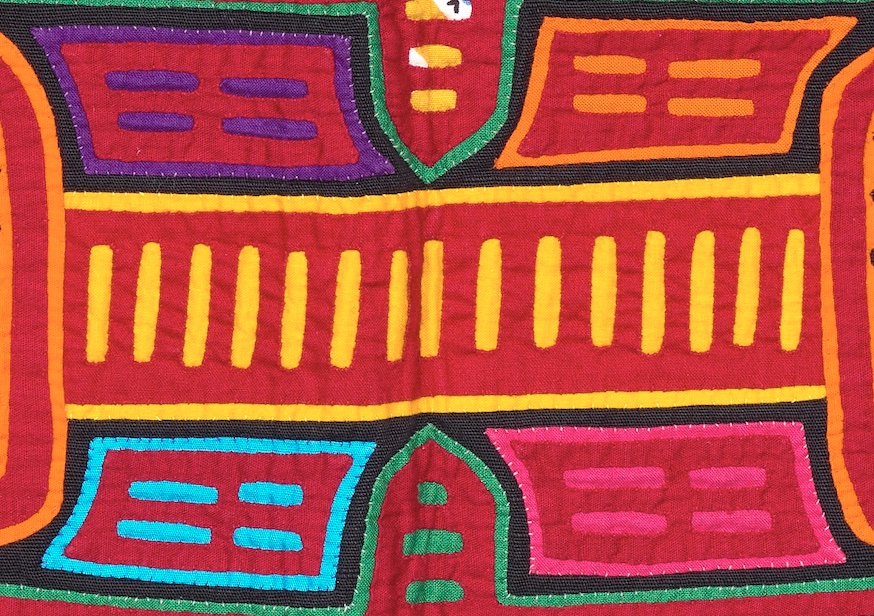
Stitches: Small, evenly spaced concealed stitches are also a hallmark of prized molas. While some stitches are visible in a close-up of this blouse, they are light in color, small, and evenly spaced and do not detract from the quality of the mola.
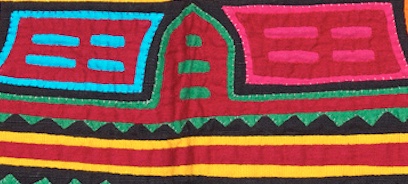
Contrast: Pay attention to the range of colors in this detail. Notice the red shapes over an area of blue and an area of green. Layers of bright contrasting colors articulate the shapes of this mola.
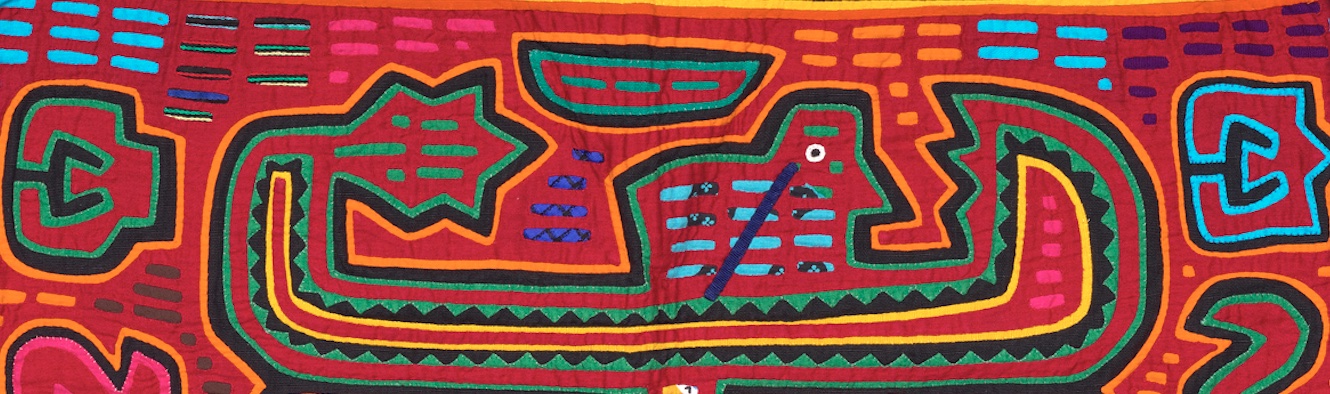
Filler motif: Guna women aim to create molas with little empty space. This technique leads to a cohesive composition while highlighting technical expertise. Guna artists have developed varieties of “filler motif”—small, simple repeated shapes—to cover spaces between main compositional elements. Filler motifs can be made from small circles, triangles, or, as we see here, slits called tas-tas.[3] The slits extend over the boats and figures to create an especially cohesive composition.

It can be tempting to interpret unattributed Indigenous art as a direct transmission of a unique—often exoticized— culture. While a cultural framework is key to interpreting Guna art forms, close looking reveals how women’s aesthetic choices also inform the production of molas.


[1] Mari Lyn Salvador  and Vernon Salvador, Yer dailege! Kuna women’s art. (Albuquerque, NM: Maxwell  Museum of Anthropology, University of New Mexico, 1978)

[2] Michel Perrin and Deke Dusinberre. Magnificent Molas: the Art of the Kuna Indians (Paris: Flammarion, 1999), 45.

[3] Diana Marks, Molas Dress, Identity, Culture ( Albuquerque: University of New Mexico Press, 2016)

Madeleine Aquilina, Michigan Summer Intern for Latin American Art, PhD Candidate in History of Art at University of Michigan
Highlights of “Pursuit of Beauty”

Museum exhibitions serve different purposes. Some do heavy lifting in the field of new scholarship about unknown or understudied artists or cultures. Others may capitalize on strengths in the museum’s collection and, thereby, present a richer, contextual understanding of an artistic movement. And yet others present to our visitors works by artists that address gaps in our own permanent collection—a role beautifully fulfilled by the present exhibition, Pursuit of Beauty: The May Family Collection. I would like to focus on a few works and what—besides their apparent beauty—makes them special to me.

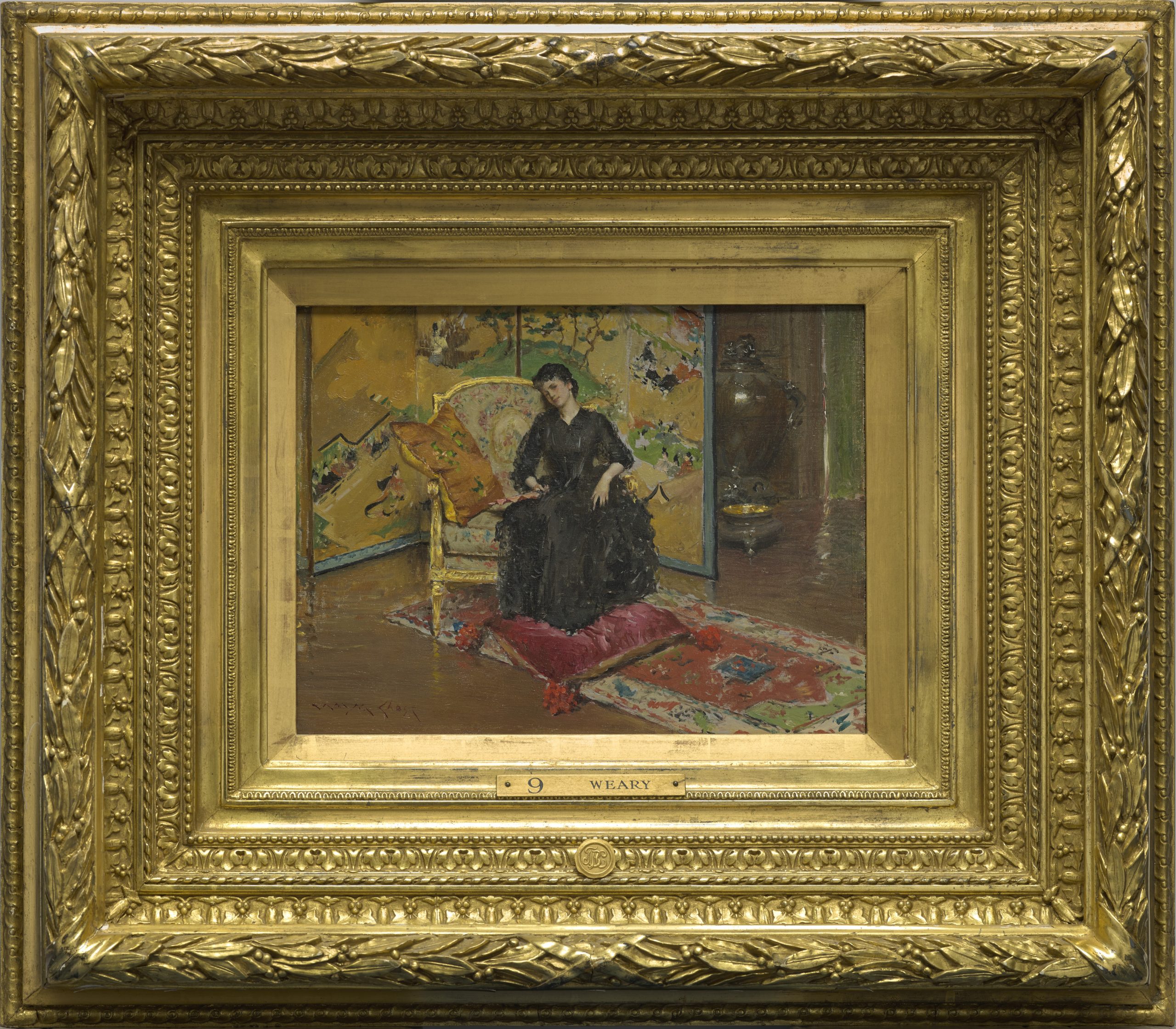
William Merritt Chase, Weary, c. 1889, oil on panel, The Collection of Eleanor and C. Thomas May, Jr., 114.2019.17
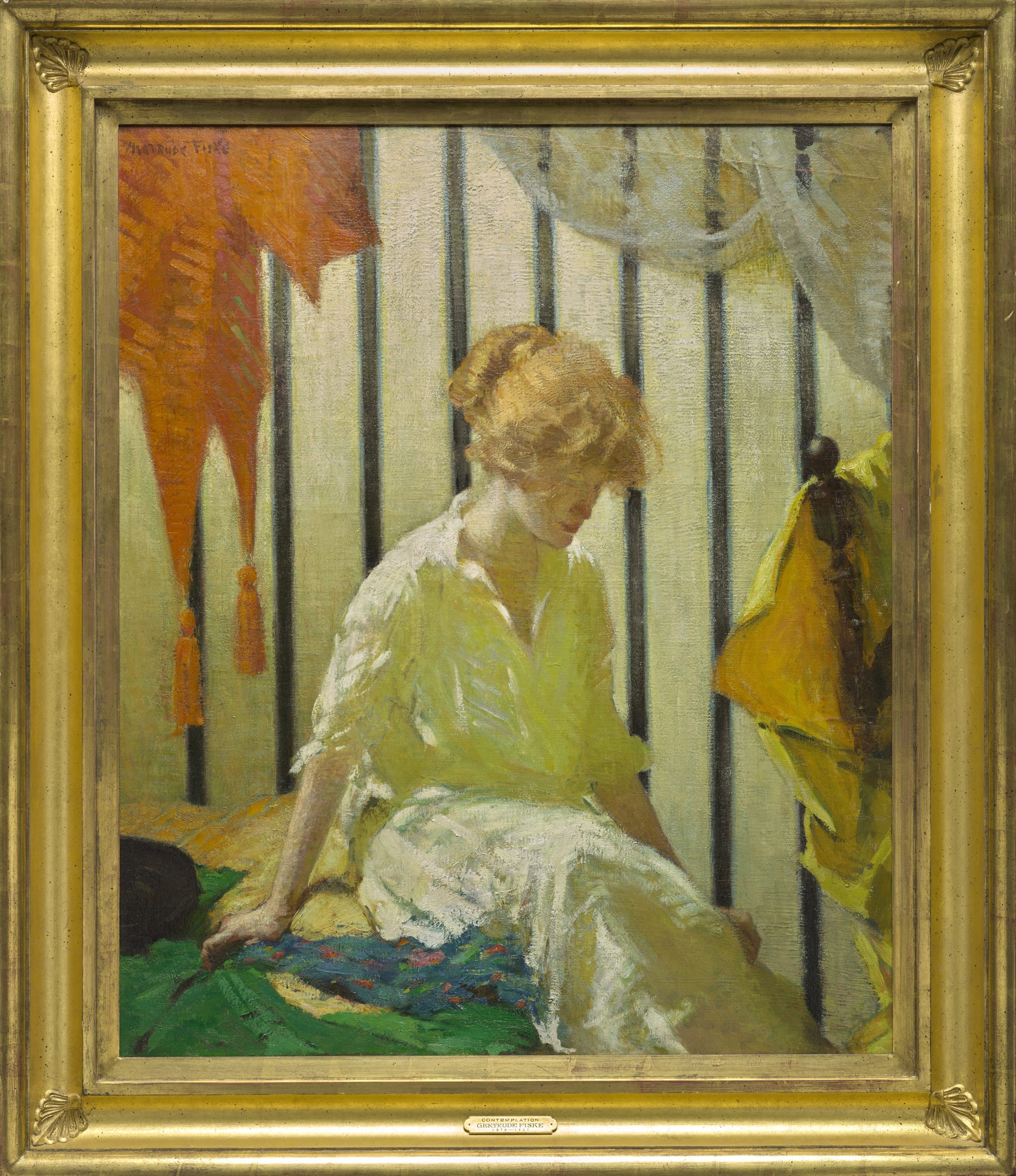
Gertrude Fiske, Contemplation, before 1916, oil on canvas, The Collection of Eleanor and C. Thomas May, Jr.

Weary (1889), a small interior scene by William Merritt Chase is a quintessential example of the artist’s skills of observation that also provides us a peek into his well-appointed studio in Manhattan. Chase was not striving to make a narrative here. The subject is beauty alone—of a sitter placed within a beautiful setting full of patterns and textures. The large Japanese screen in the background, the plush velvet of the cushion beneath her feet, the sparkle of gilding on the armature of the chair, and the gleam of light on the large vase in the background at right, are all effects that lure and please the eye. A wonderful counterpoint to Chase’s creation is Contemplation (1915) by Gertrude Fiske, an artist trained in Boston. While it too presents a contemplative woman set in an interior, the artist is presenting to us a modern woman for the new age. Using complimentary colors of orange and green to frame the sitter, the crisp striped wallpaper effectively foregrounds her. Fiske further illuminates her with light flooding in from the upper left, which simultaneously bathes her face and torso in yellow that reflects off the material at the right edge.  

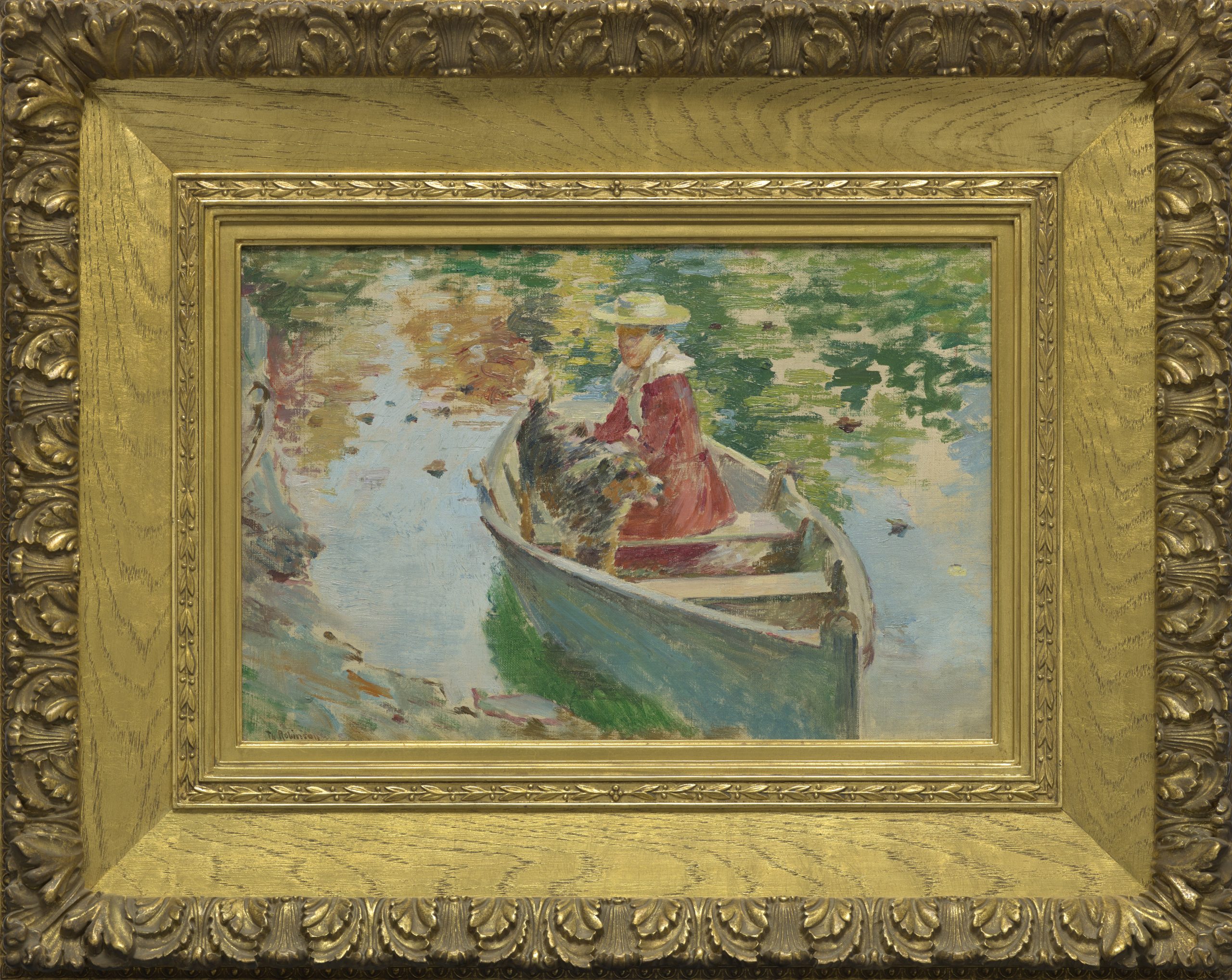
Theodore Robinson, Miss Motes and Her Dog Shep in a Boat, 1893, oil on canvas, The Collection of Eleanor and C. Thomas May, Jr.
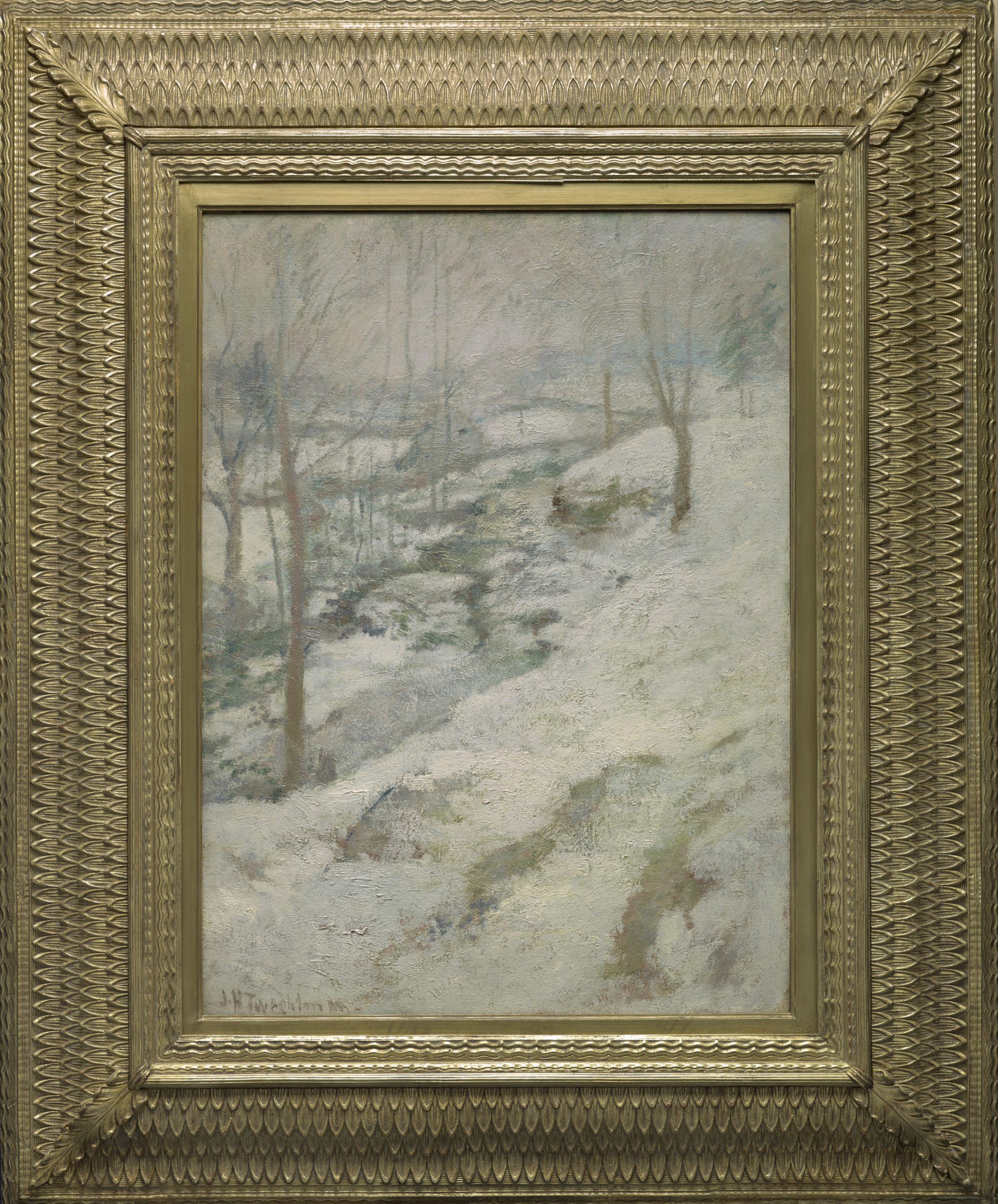
John Henry Twachtman, Frozen Brook, 1893, oil on canvas, The Collection of Eleanor and C. Thomas May, Jr., 114.2019.12

American Impressionism is underrepresented at the DMA and two works within the May Family Collection created in the exact same year offer comparison of two artists whose means (light & brushwork), achieved different ends. Theodore Robinson’s small canvas of Miss Motes and Her Dog Shep in a Boat (1893) is an oil sketch by the first and most important of the American Impressionists to paint alongside Monet at Giverny between 1886 and 1892. Robinson’s intent was to capture an individual in a fleeting moment and his quick touches of brushwork fix her at a point in time as well as evoking the optical effect of forms blurred in reflection on the dappled surface of the water. In Frozen Brook (1893), John Twachtman also endeavored to capture a particular moment, but his motivation was to capture the atmospheric and emotive effects of a winter’s day. His brushwork is more varied, complex, and labor intensive (daubed, scumbled, and dragged) to conjure the optical effect of heavy, wet snow on the cusp of spring, when all is blanketed in contemplative silence. 

I do hope that you will come to the DMA to explore these five works for yourselves, along with the other twenty-three now on view. 

Sue Canterbury is The Pauline Gill Sullivan Curator of American Art and Interim Allen and Kelli Questrom Curator of Works on Paper at the DMA.

The Views Are Tree-mendous

When you visit the DMA this fall, you’ll have the opportunity to see Van Gogh and the Olive Groves, the first exhibition dedicated to Vincent van Gogh’s series of olive grove paintings!  

These paintings capture the abundant olive trees around the asylum of Saint-Rémy, where Van Gogh spent the final year of his life. But he was not the only artist who took inspiration from nature. There are many depictions of trees in our collection; take some time to see how many you can find!  

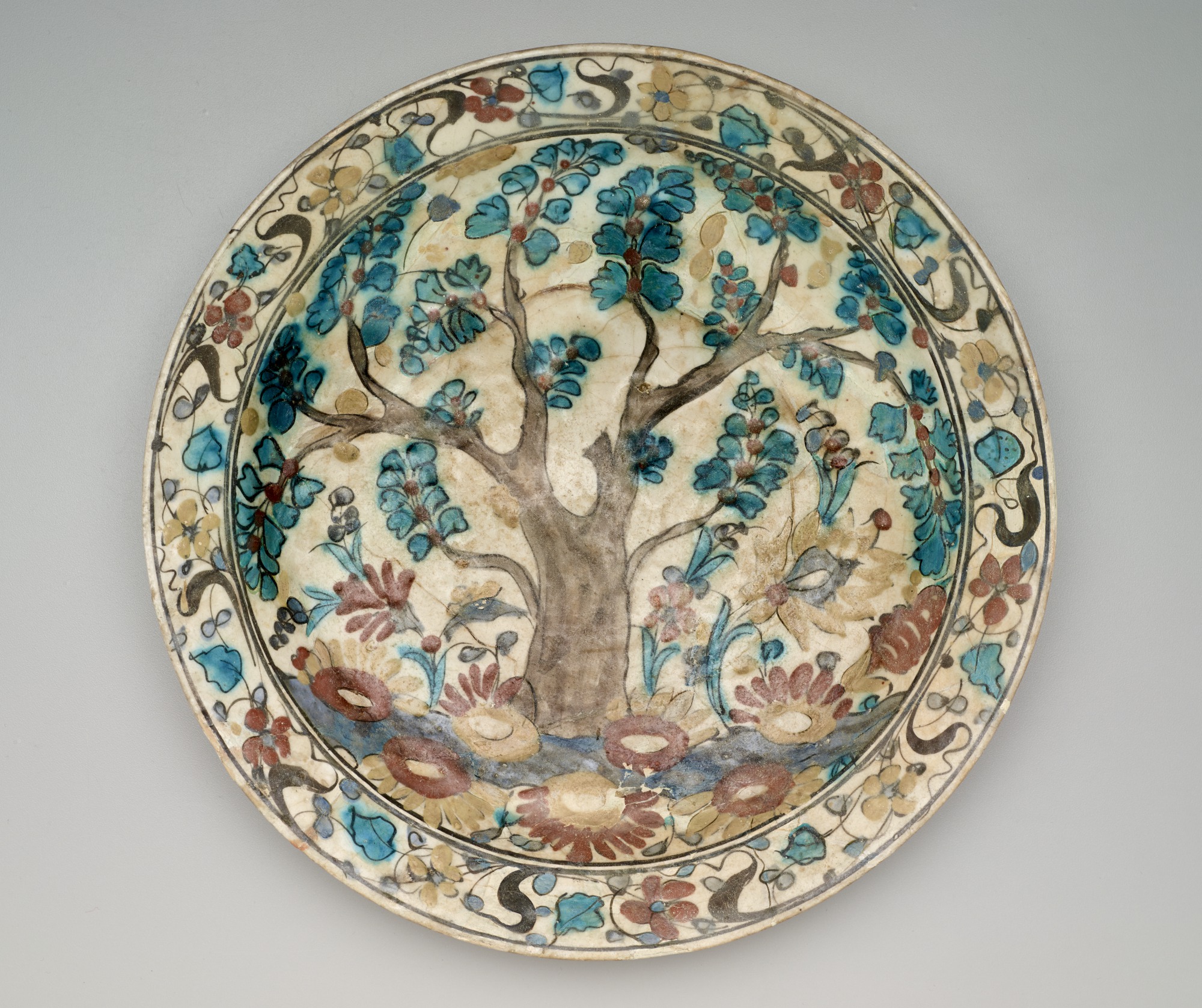
To help you, I’ve put together a tour of trees featuring 11 of my favorites currently on view. Starting on Level 1 in the Keir Collection of Islamic Art, look for this 17th-century dish from Iran among the many ceramics displayed in this gallery. 

Dish, Iran, 17th century, fritware, underglaze-painted in black, blue, turquoise, and brown, with red and yellow slips, The Keir Collection of Islamic Art on loan to the Dallas Museum of Art, K.1.2014.653

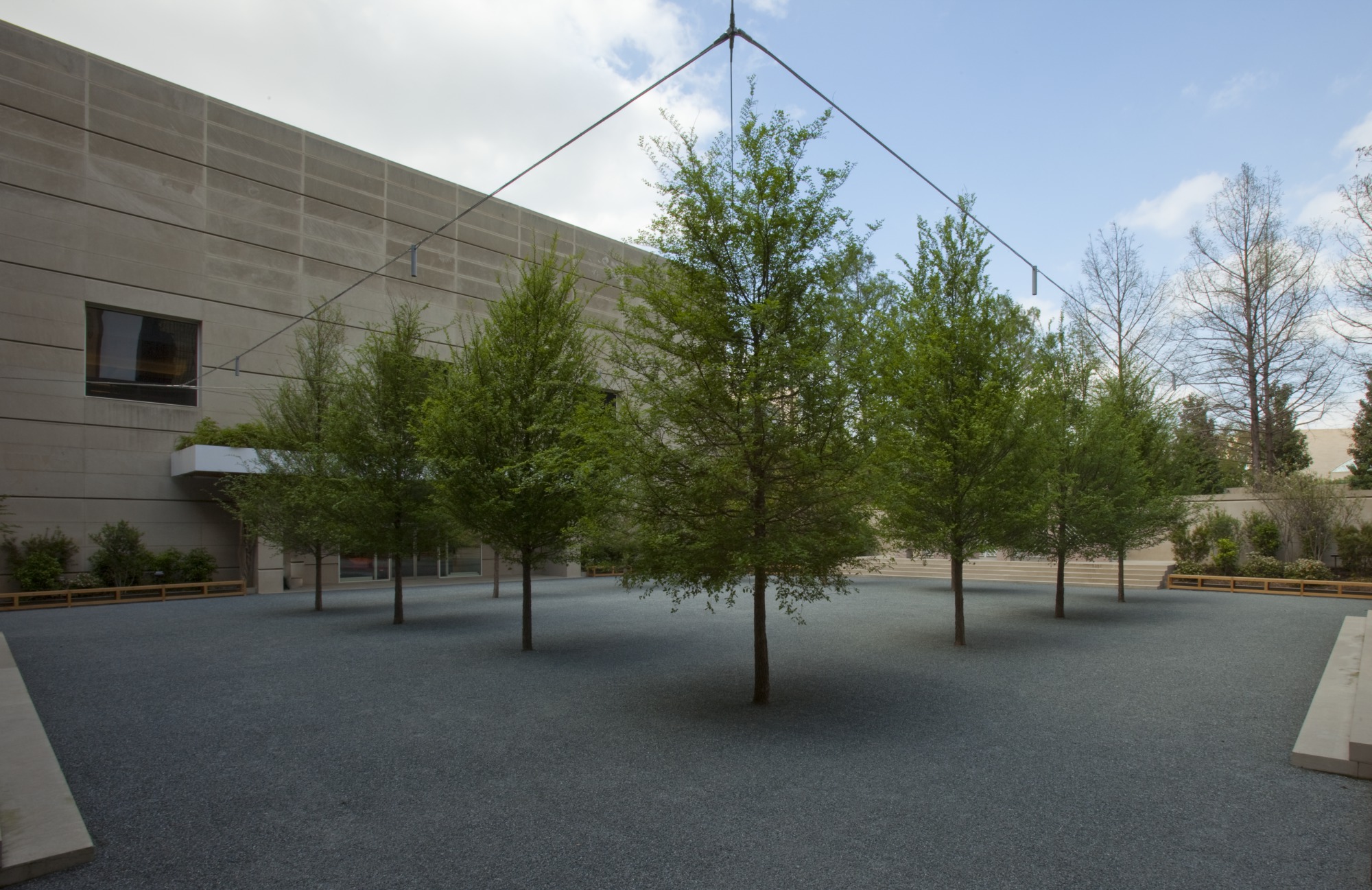
Across from the Keir Collection, step outside into the Fleischner Courtyard, named after the artist Richard Fleischner, who designed this space for the DMA’s move to this location in 1983. These are not the original trees, as the courtyard has been refurbished twice since the 1980s—in 1993 and 2009.

Richard Fleischner, Courtyard Project for the Dallas Museum of Art, 1981–83; reconfigured by the artist for the Hamon addition, 1993; refurbished 2009, limestone, marble, wood, and plantings, Dallas Museum of Art, commissioned to honor Minnie and Albert Susman on the occasion of their 50th anniversary by their children Robert F. and Anna Marie Susman Shapiro, 1983.14, © Dallas Museum of Art, 

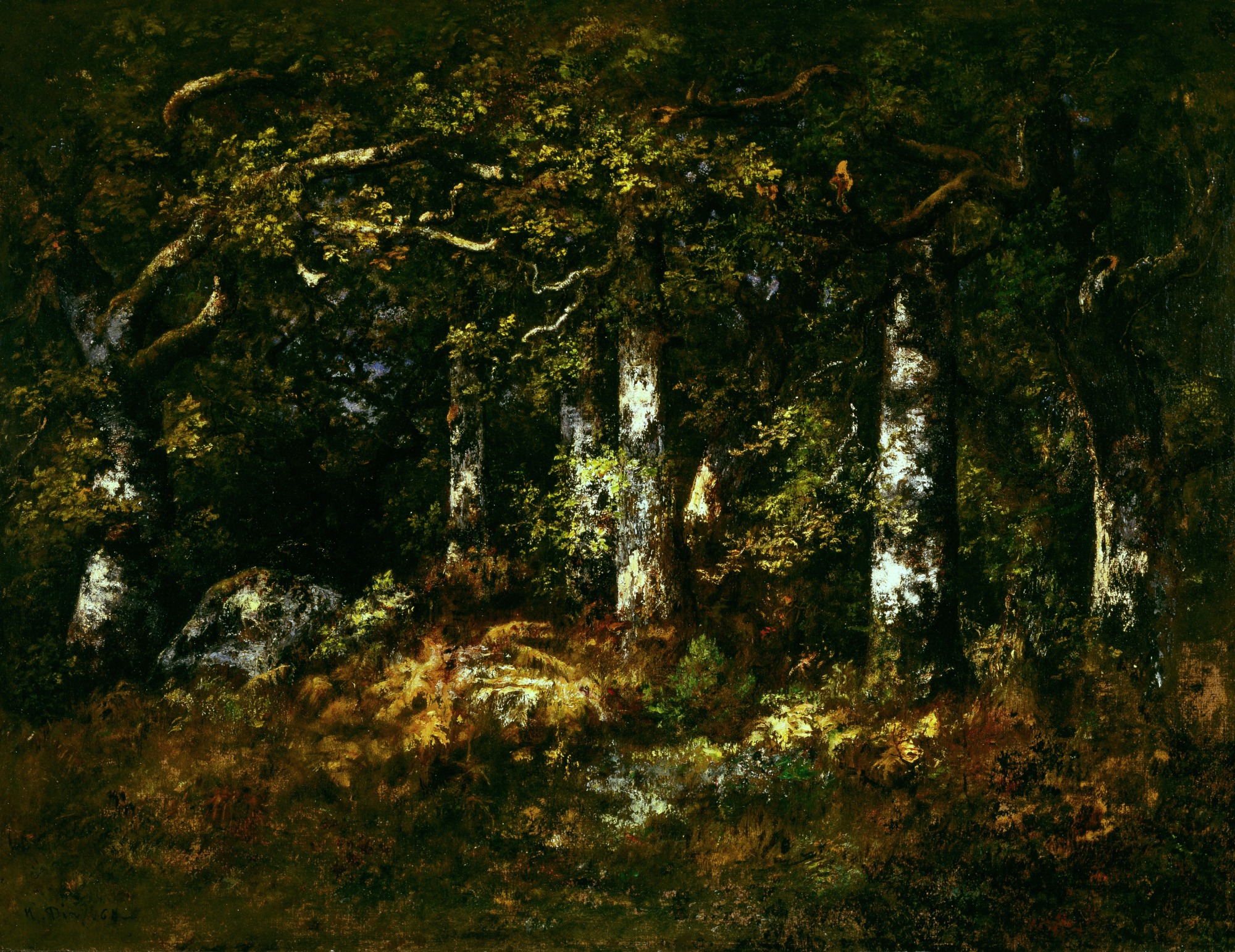
Next, head to Level 2 and our European Art Galleries to find the grove of oak trees in the Forest of Fontainebleau by Narcisse Diaz de la Peña. The artist was part of the Barbizon School of French painters, whose goal was to rediscover the magic of untouched nature.

Narcisse Diaz de la Peña, Forest of Fontainebleau, 1868, oil on canvas, Dallas Museum of Art, Munger Fund, 1991.14.M

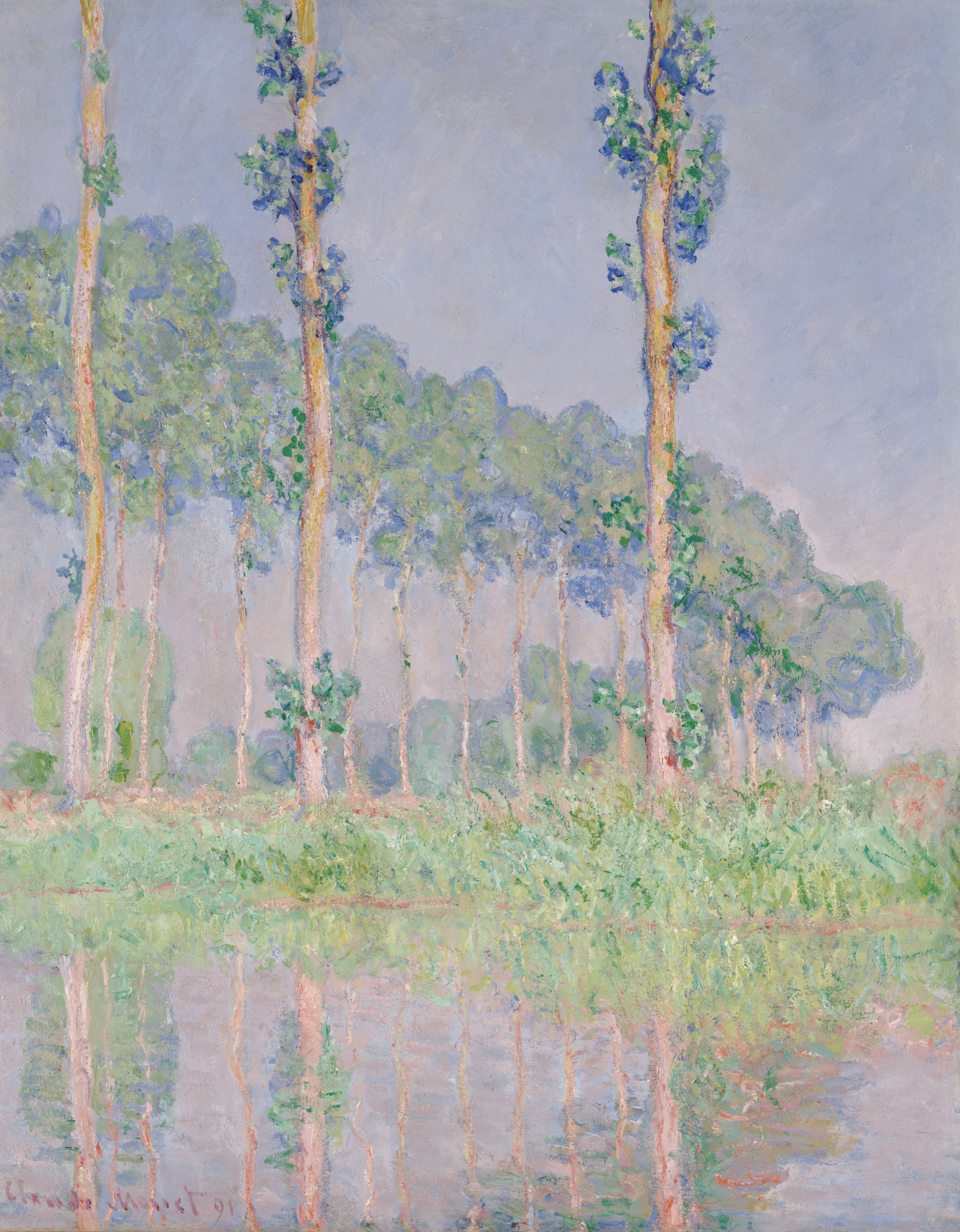
Leaving the dark forest behind, take in the bright colors of Claude Monet’s poplar trees. Poplars, Pink Effect belongs to a series of 24 paintings; like Van Gogh, Monet often revisited the same subject multiple times to capture varying light and weather conditions.

Claude Monet, Poplars, Pink Effect, 1891, oil on canvas, Dallas Museum of Art, The Eugene and Margaret McDermott Art Fund, Inc., bequest of Mrs. Eugene McDermott, 2019.67.14.McD

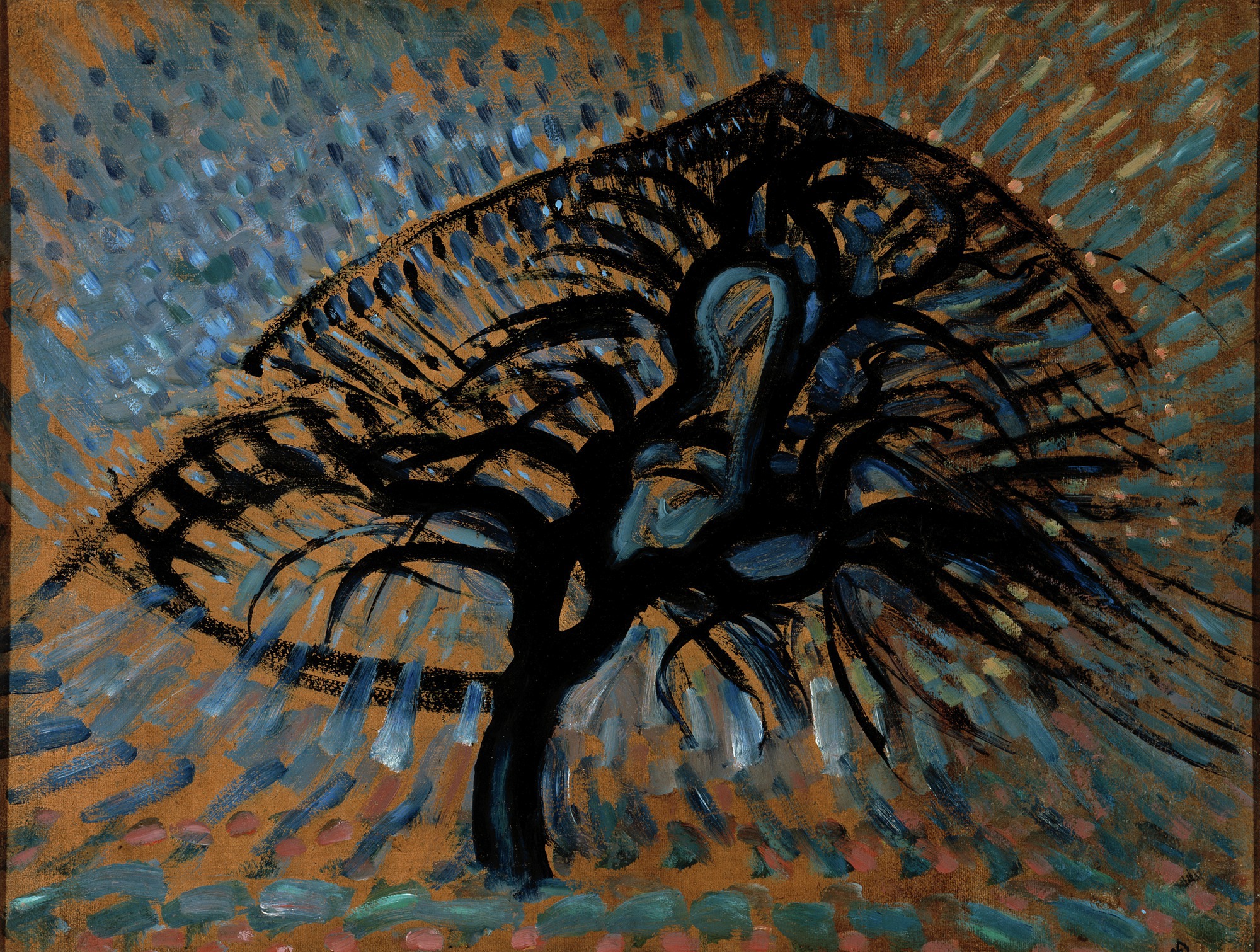
Before leaving Level 2, look for an apple tree painted by Piet Mondrian. Through his use of line and color, Mondrian conveyed nature’s dynamic energy.

Piet Mondrian, Apple Tree, Pointillist Version, 1908–09, oil on composition board, Dallas Museum of Art, Foundation for the Arts Collection, gift of the James H. and Lillian Clark Foundation, 1982.26.FA

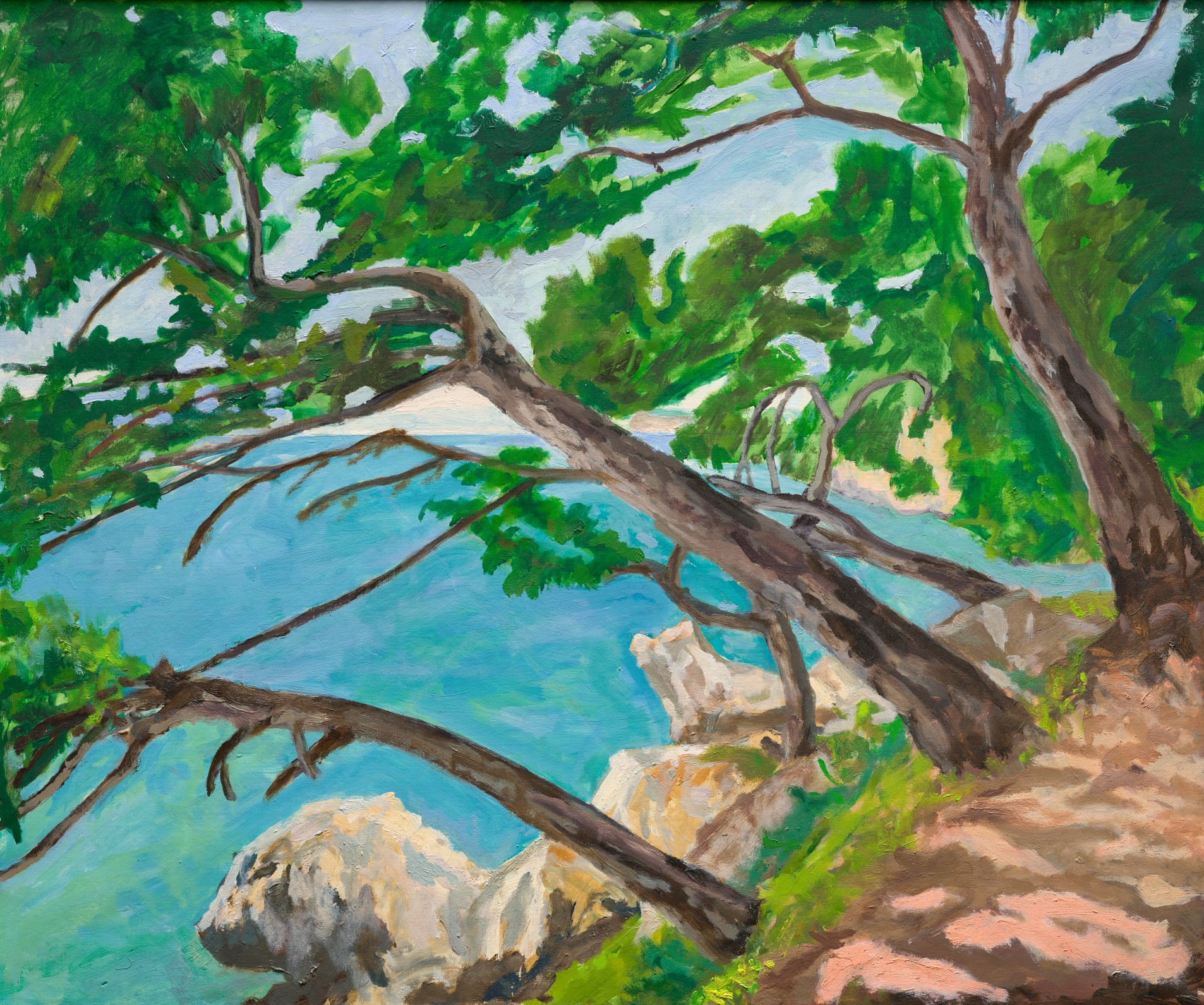
Did you know Winston Churchill was also an artist? If you visit the Wendy and Emery Reves Collection on Level 3, you will find several paintings by Churchill, including Sea and Pine Trees, Cap d’Ail

Winston Churchill, Sea and Pine Trees, Cap d’Ail, about 1955, oil on canvas, Dallas Museum of Art, The Wendy and Emery Reves Collection, 1985.R.14, © The Churchill Heritage Limited

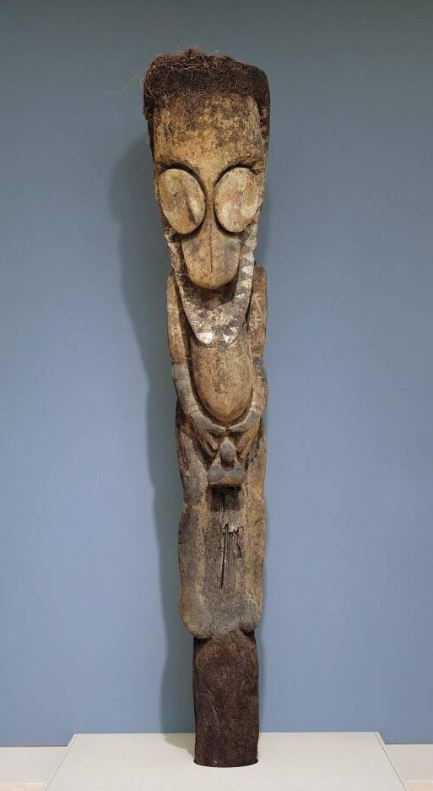
As you continue exploring Level 3, take a moment to stop and appreciate the standing male figure from Vanuatu. While not a literal depiction of a tree, it was carved from the lower part of a tree-fern stem and stands over 11 feet tall! 

Standing male figure, Vanuatu, Ambrym Island, about 1930–50, tree fern and pigment, Dallas Museum of Art, anonymous gift, 1996.33

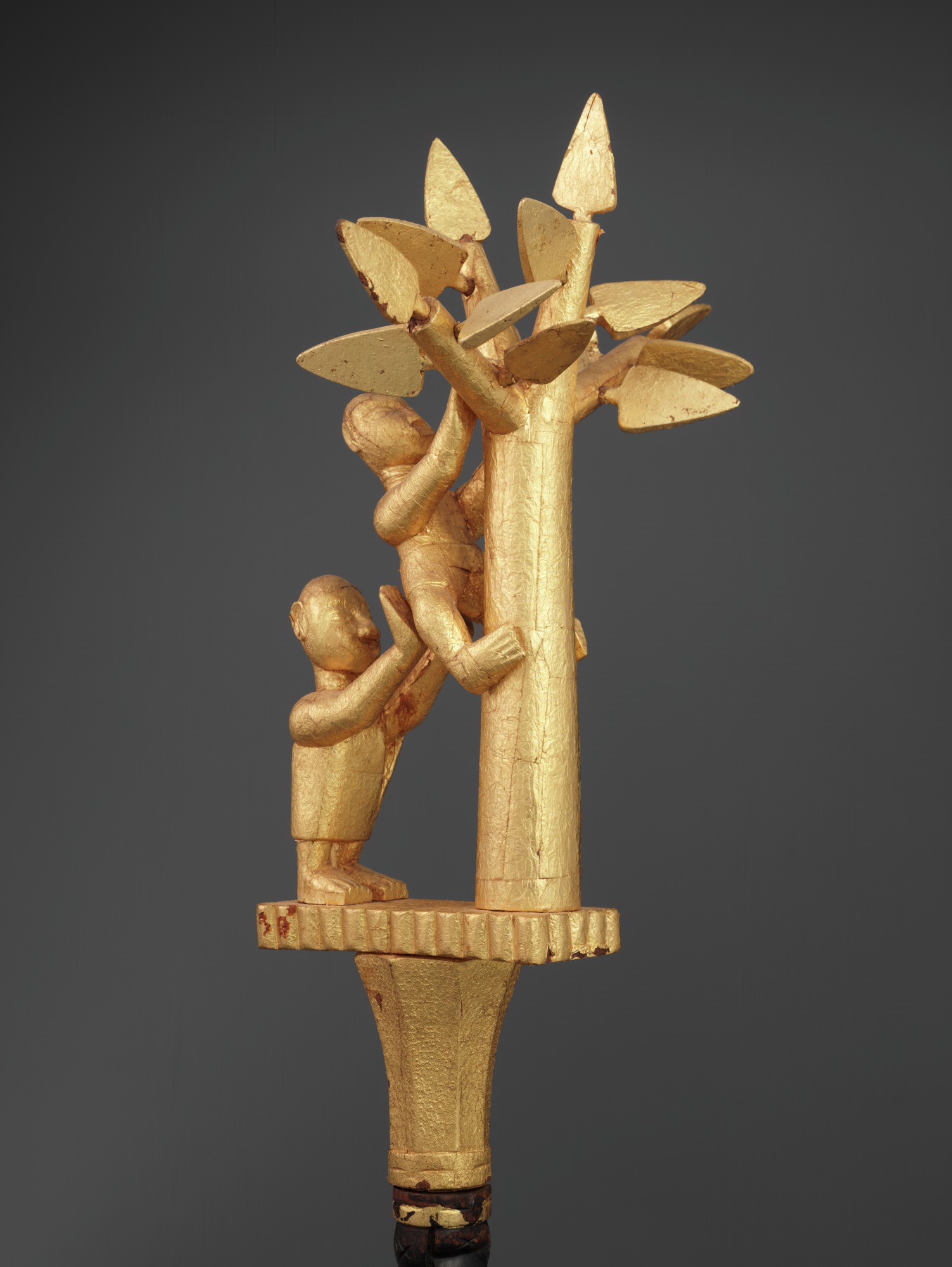
Now make your way to the Arts of Africa Galleries and look for the linguist staff (okyeame poma) from the Asante peoples of Ghana. The finial on this staff refers to an Asante proverb that states, “One who climbs a good tree always gets a push.”

Linguist staff (okyeame poma), Ghana, Asante peoples, 1900–50, wood and gold leaf, Dallas Museum of Art, The Eugene and Margaret McDermott Art Fund, Inc., 2010.1.McD

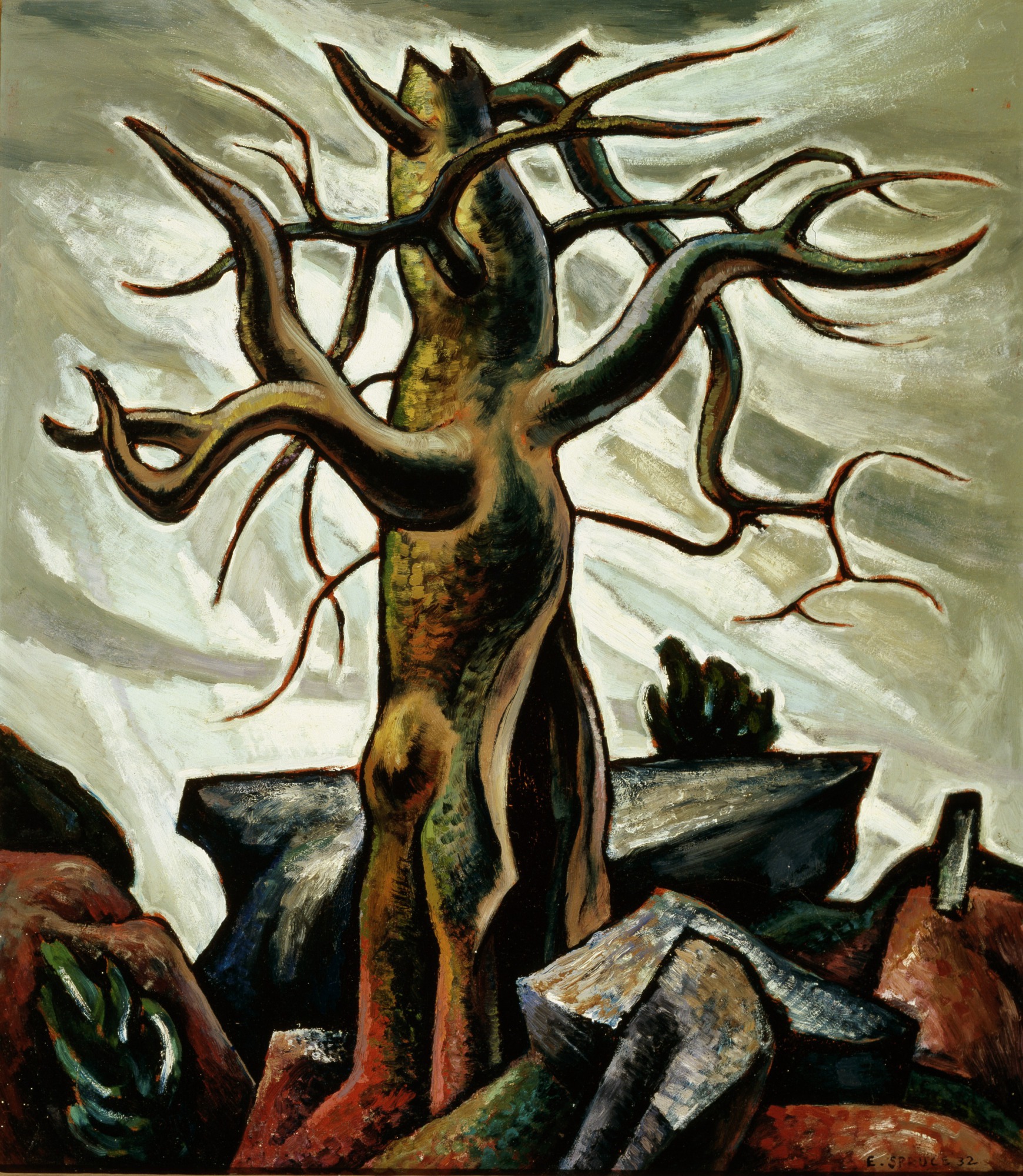
Head to Level 4 and find Veteran, a painting by Everett Spruce (bonus tree points!). The tree in this painting shows us the often uncompromising and inhospitable forces that shape the Texas landscape.

Everett Spruce, Veteran, 1932, oil on Masonite, Dallas Museum of Art, gift of Maggie Joe and Alexandre Hogue, 1986.232, © V. Alice Spruce Meriwether

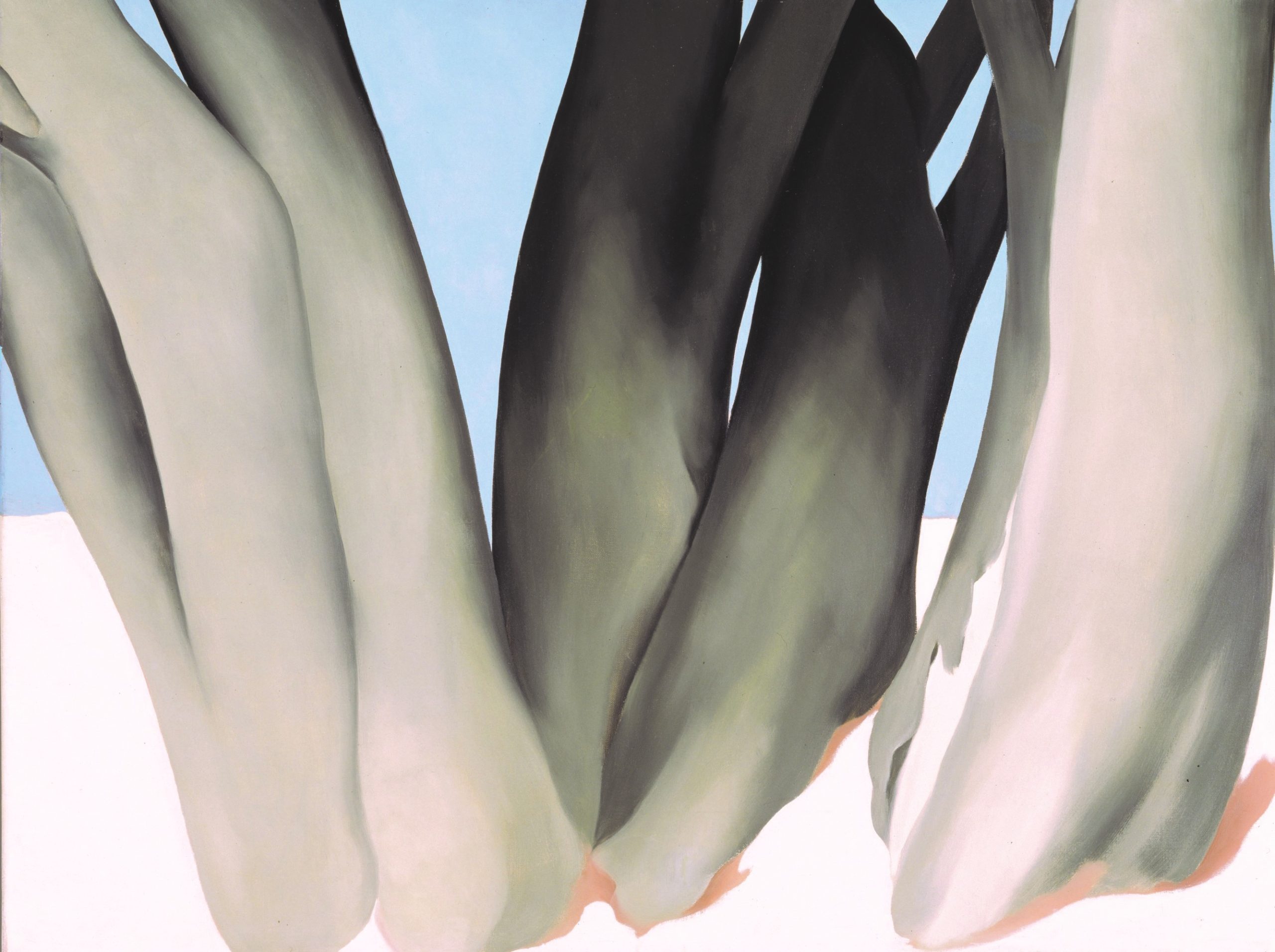
Around the corner from Veteran, Georgia O’Keeffe’s Bare Tree Trunks with Snow gives us a more minimalist and abstract version of trees. O’Keeffe would often simplify what she saw in nature, using descriptive titles to clarify things for the viewer.

Georgia O’Keeffe, Bare Tree Trunks with Snow, 1946, oil on canvas, Dallas Museum of Art, Dallas Art Association Purchase, 1953.1, © The Georgia O’Keeffe Foundation / Artists Rights Society (ARS), New York

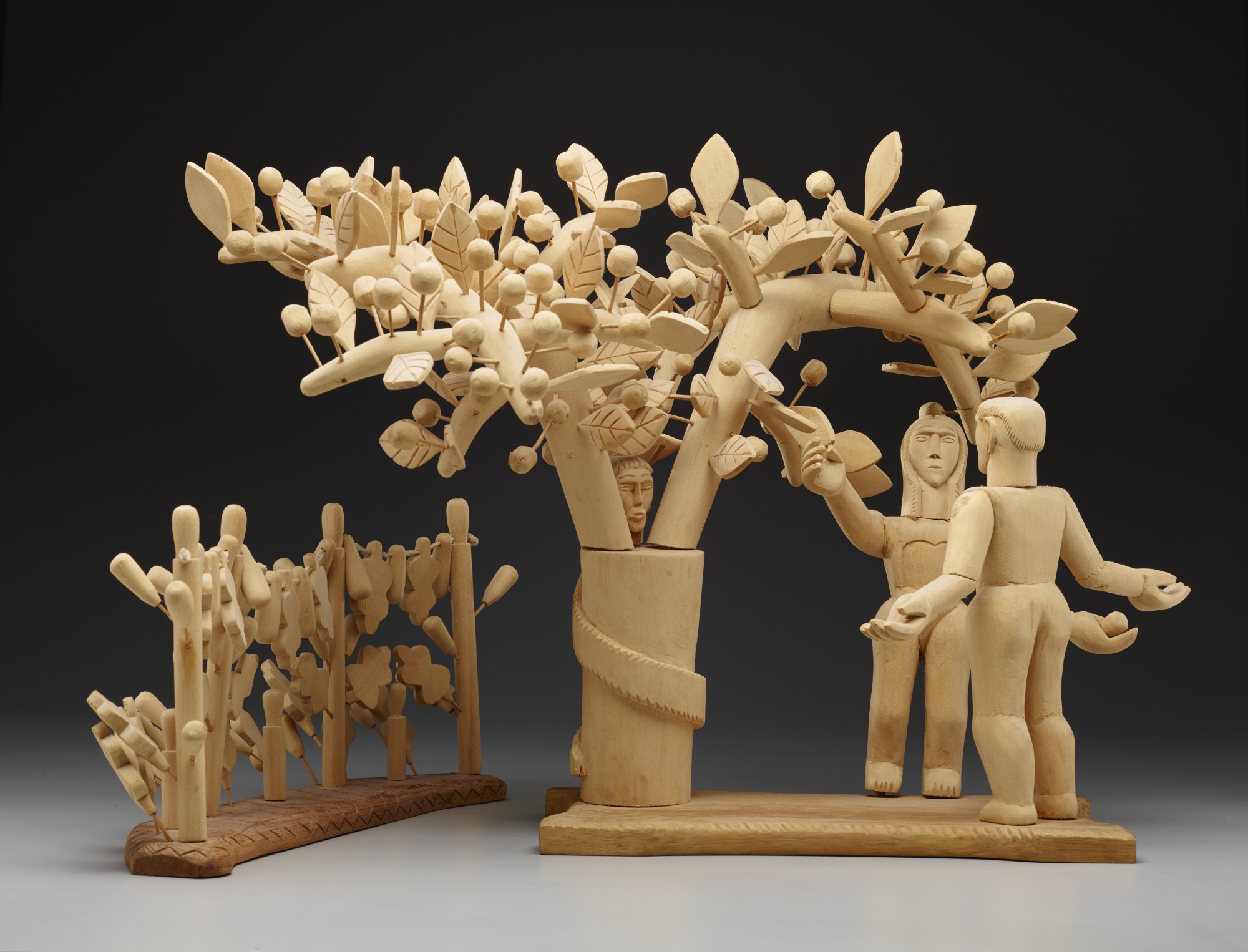
The final tree on this walk through the woods is in the free special exhibition Devoted: Art and Spirituality in Mexico and New Mexico. George López’s sculpture Adam and Eve and the Tree of Life shows the moment when Eve offers Adam an apple from the tree of knowledge—and it is made of wood from three different trees: cottonwood, pine, and cedar!

George López, Adam and Eve and the Tree of Life, 1956, cottonwood, pine, and cedar, Dallas Museum of Art, Dallas Art Association Purchase, 1956.100.1

Stacey Lizotte is the DMA League Director of Adult Programs at the DMA. 

Connections Across Collections: Fatherhood

With Father’s Day just around the corner, we asked DMA staff to highlight their favorite works across our collections that connect to the art of fatherhood. See what they selected, and celebrate your own father or father figure with a visit to the DMA on June 20!

Nicole R. Myers, The Barbara Thomas Lemmon Senior Curator of European Art

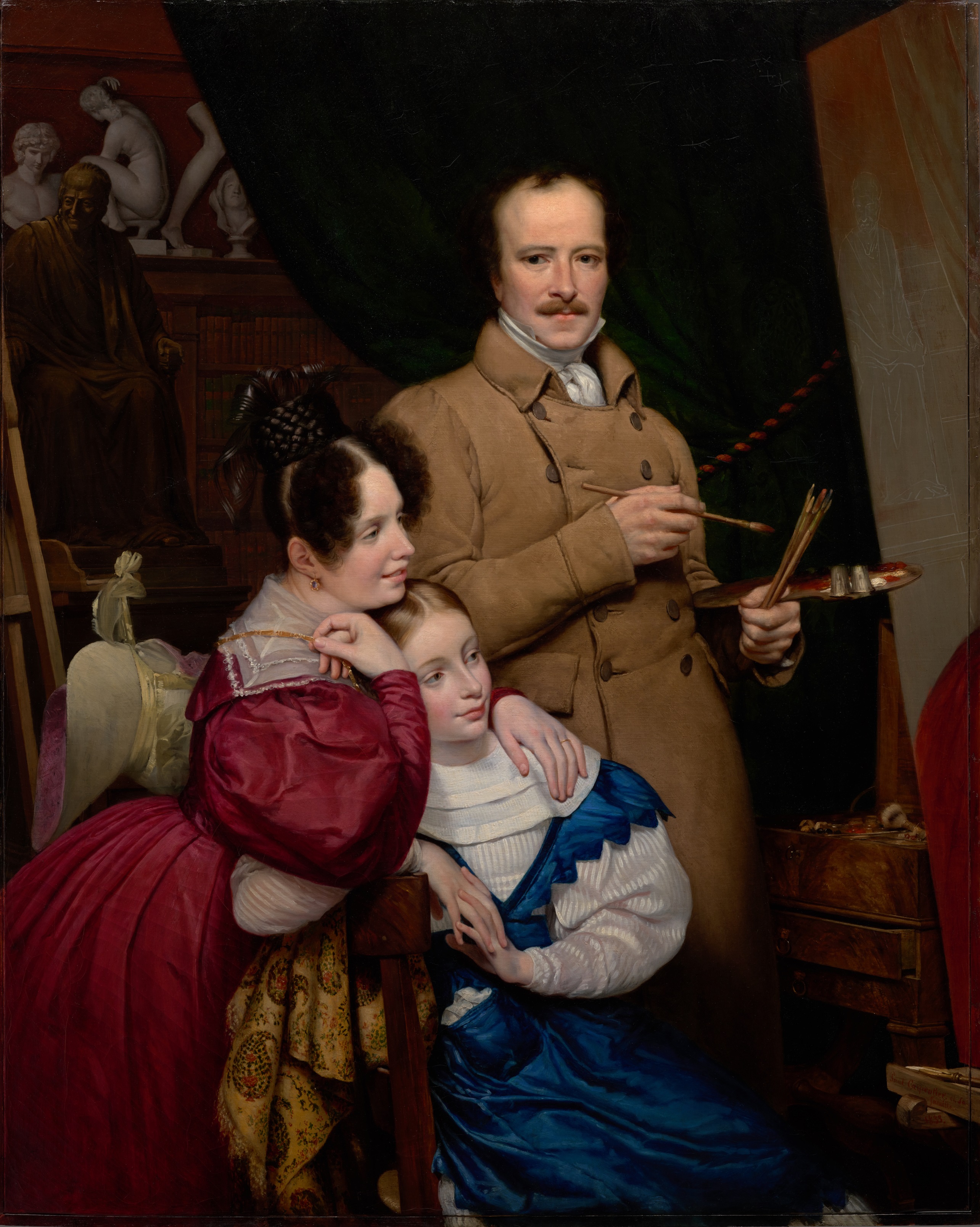
One of the things I love most about this grand self-portrait by Carpentier is that it celebrates his role as a father and husband as much as it does his profession as painter. By tightly grouping the figures, the women’s arms lovingly intertwined, Carpentier places familial love and support at the center of his studio practice.

Listen to Laura Eva Hartman, Paintings Conservator at the DMA, discuss this painting here.

Paul Claude-Michel Carpentier, Self-Portrait with Family in the Artist’s Studio, 1833, oil on canvas, Dallas Museum of Art, Foundation for the Arts Collection, Mrs. John B. O’Hara Fund, 2014.38.FA

Stacey Lizotte, DMA League Director of Adult Programs

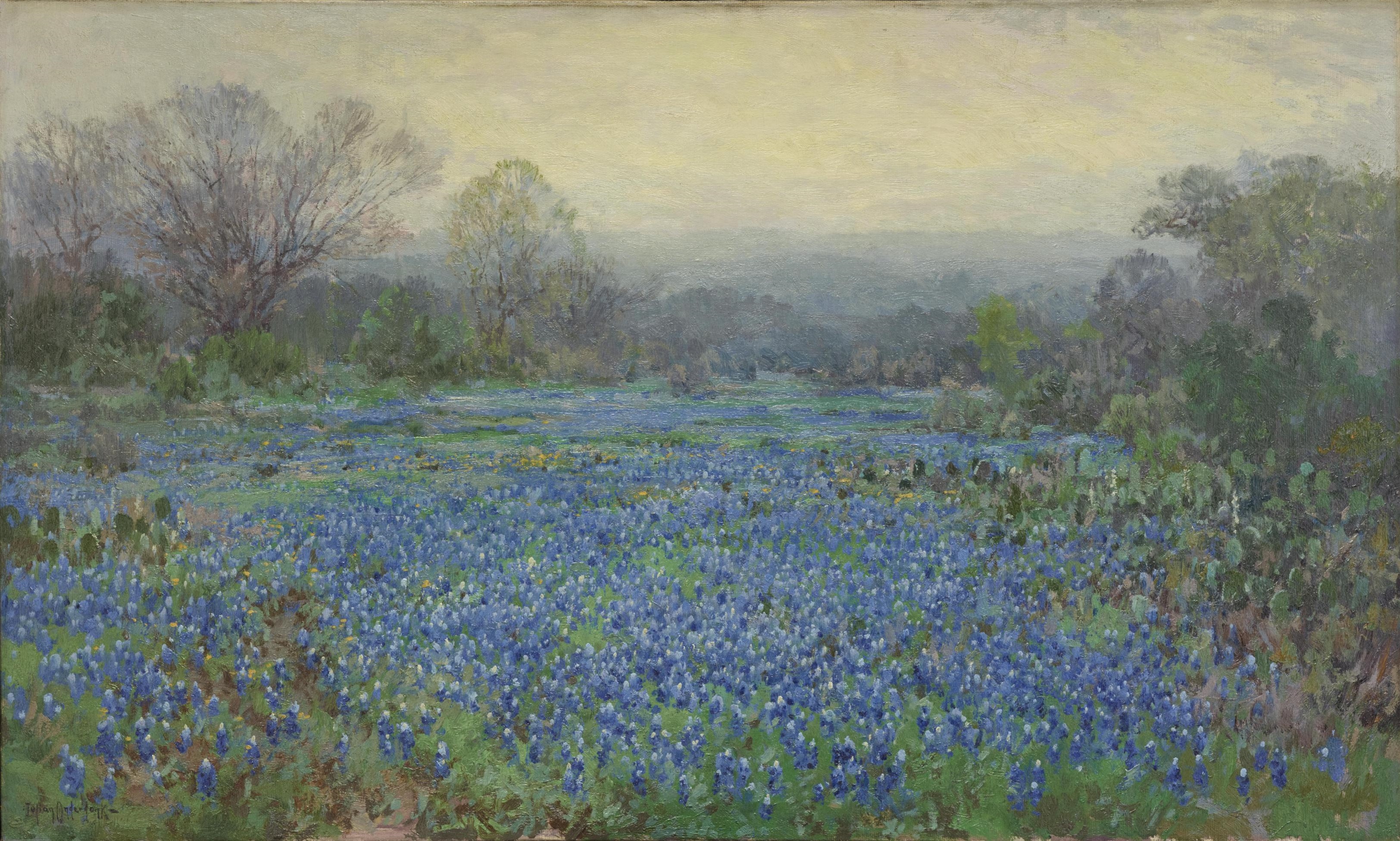
Julian Onderdonk was one of the greatest early Texas artists known for his paintings of bluebonnets, the state flower of Texas. Julian was originally trained by his father, Robert Jenkins Onderdonk, an artist and art teacher in San Antonio and Dallas who was known as the “Dean of Texas’s Artists” for his contributions to the arts in Texas.

Julian Onderdonk, Untitled (Field of Bluebonnets), 1918–1920, oil on canvas, Dallas Museum of Art, bequest of Margaret M. Ferris, 1990.153

Mark Castro, The Jorge Baldor Curator of Latin American Art

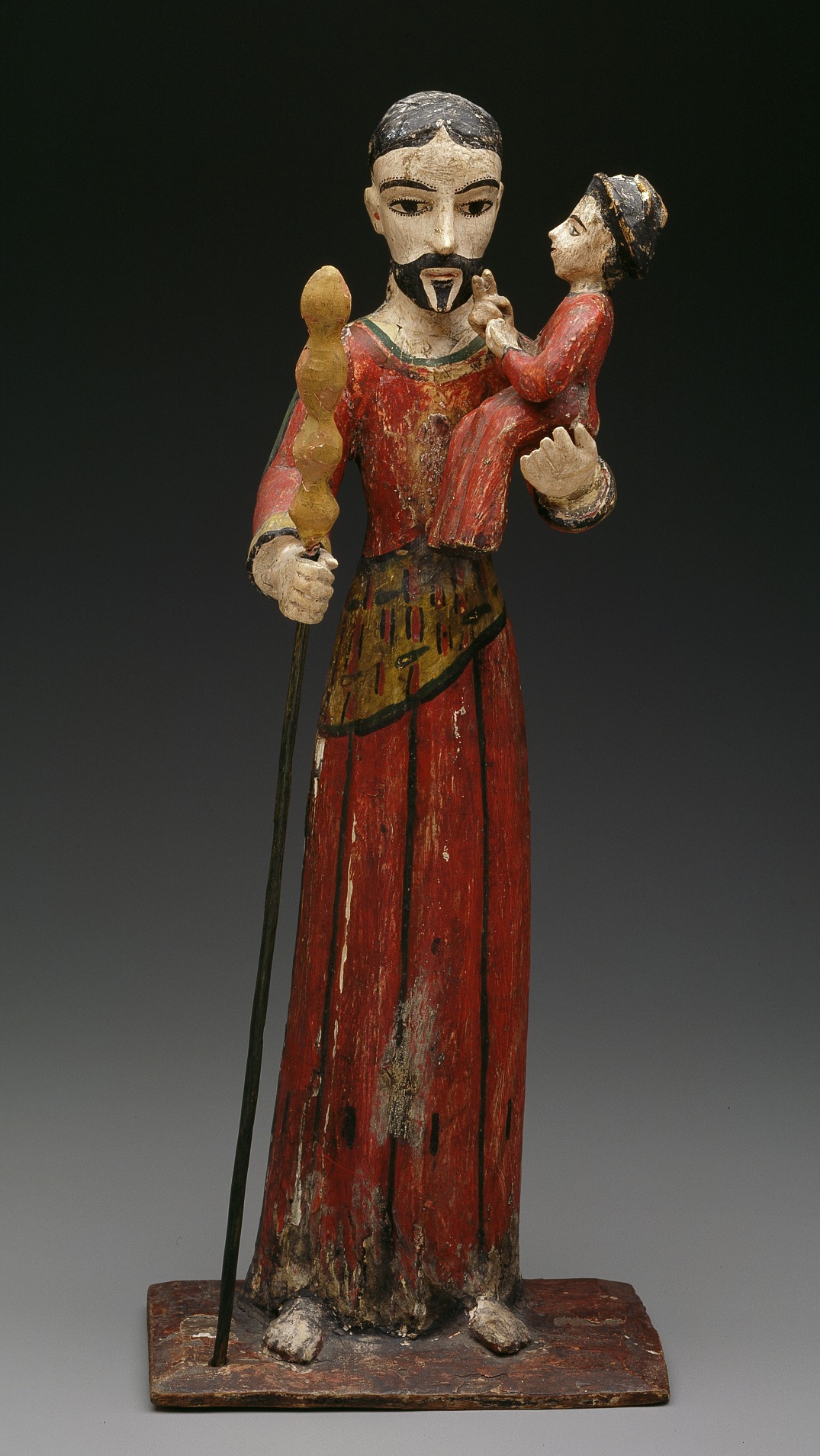
In the Americas, Saint Joseph is depicted as youthful and strong, often carrying the child Christ in his arms, like in this New Mexican bulto currently on view in Devoted: Art and Spirituality in Mexico and New Mexico. This reinforced his role as Christ’s earthly father and the protector of the Holy Family.

José Benito Ortega, Saint Joseph, Late 19th–Early 20th century, wood, gesso, and paint, Dallas Museum of Art, gift of Mr. and Mrs. Stanley Marcus, 1961.51.A-C

Leah Hanson, Director of Family, Youth, and School Programs

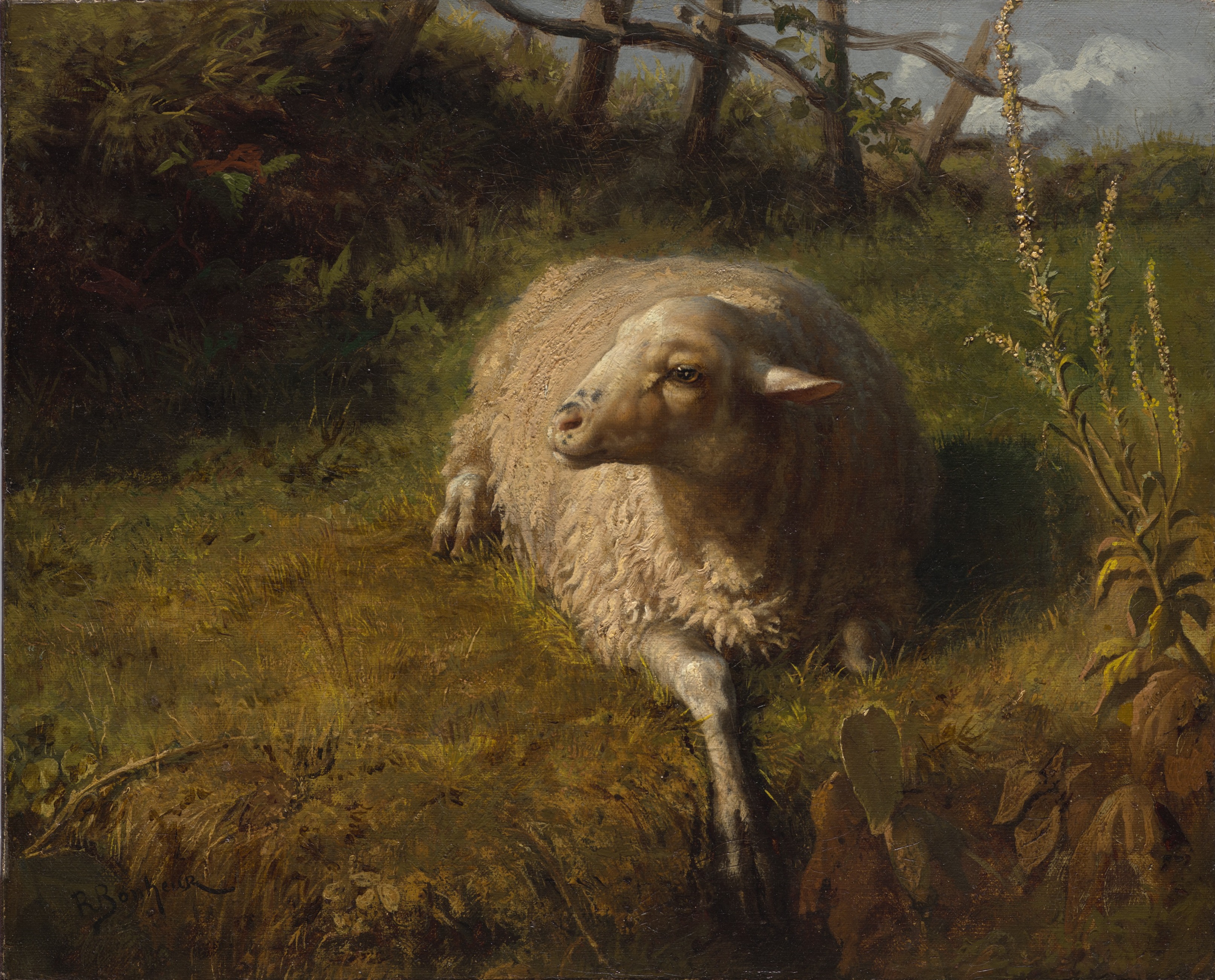
This might seem an unusual choice to celebrate fathers, but what you can’t see behind the scenes is a father who supported his daughter in becoming an artist. This love even extended to a menagerie of animals he brought to the family studio for Rosa to study and paint!

Rosa Bonheur, A Sheep at Rest, second half of the 19th century, oil on canvas, Dallas Museum of Art, gift of Dr. Alessandra Comini in honor of Charlotte Whaley, 2018.44

Martha MacLeod, Senior Curatorial Administrator and Curatorial Assistant for Decorative Arts/Design, Latin American Art, and American Art

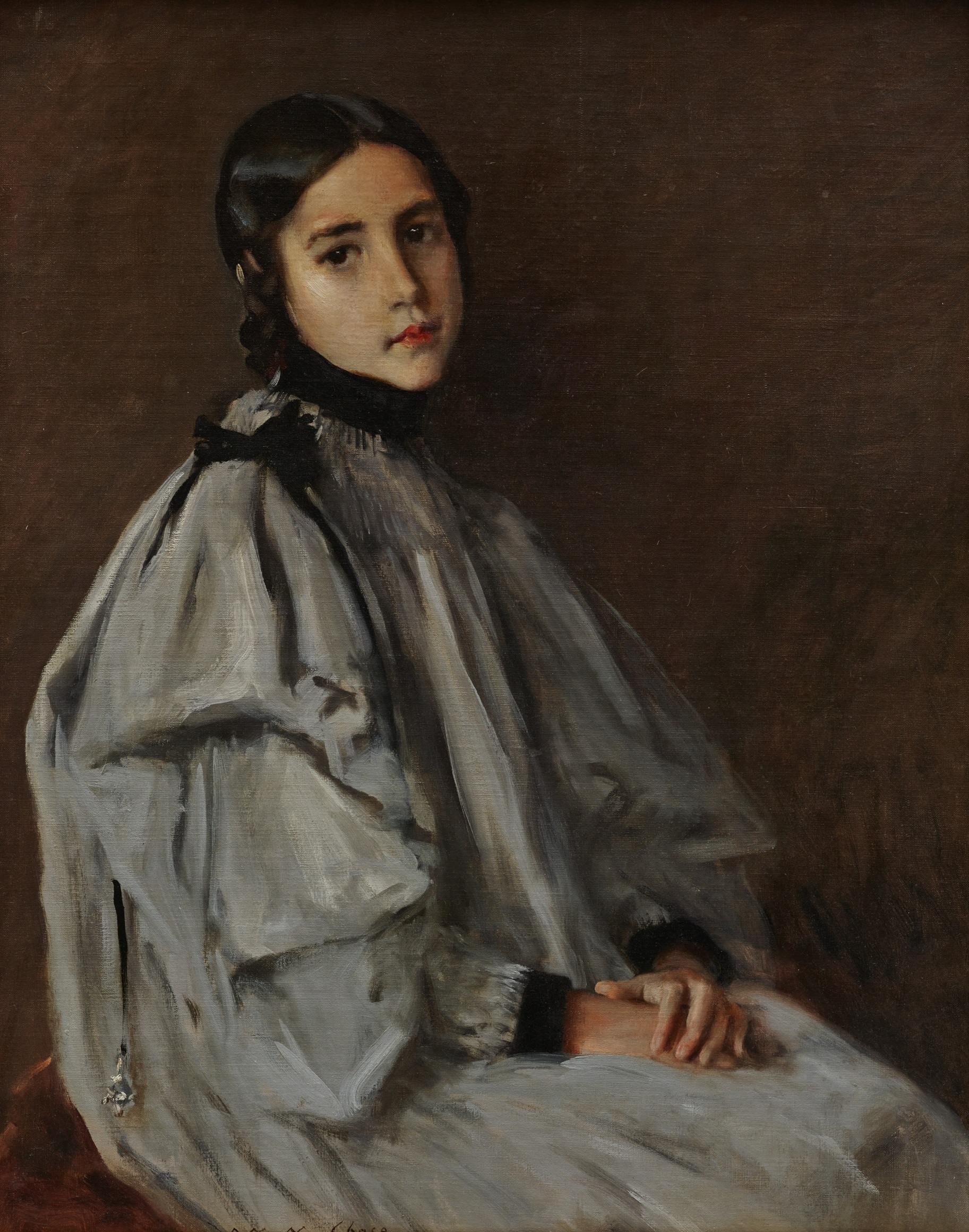
Chase was one of America’s leading painters and teachers. He completed about a dozen portraits of his daughter Dieudonnée. Here she is in her early teens. Also, one of her father’s students, she was an accomplished still life and landscape painter.

William Merritt Chase, Dieudonnée, c. 1899, oil on canvas, Dallas Museum of Art, Dallas Art Association Purchase, 1922.2

Panamanian Molas: Made For and By Women

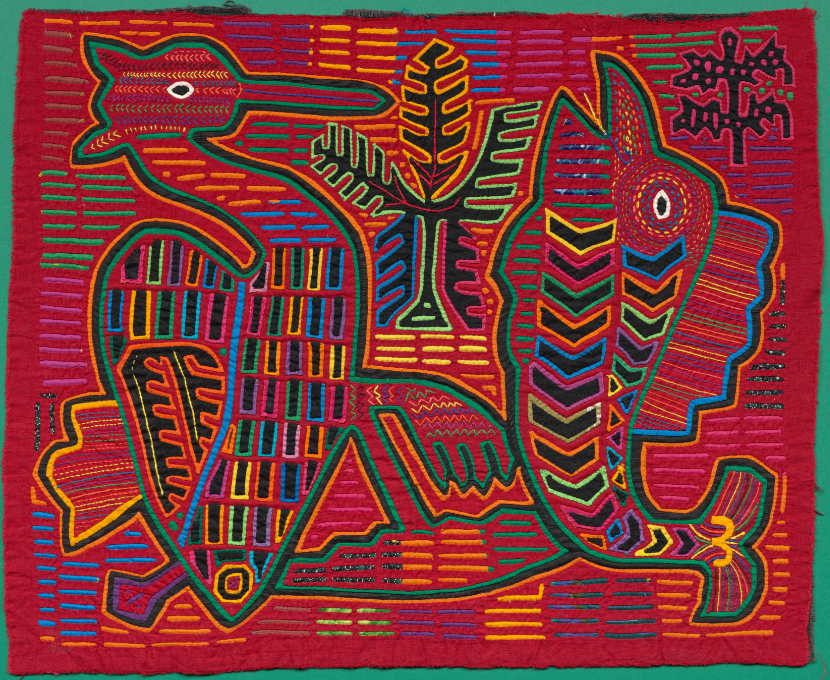
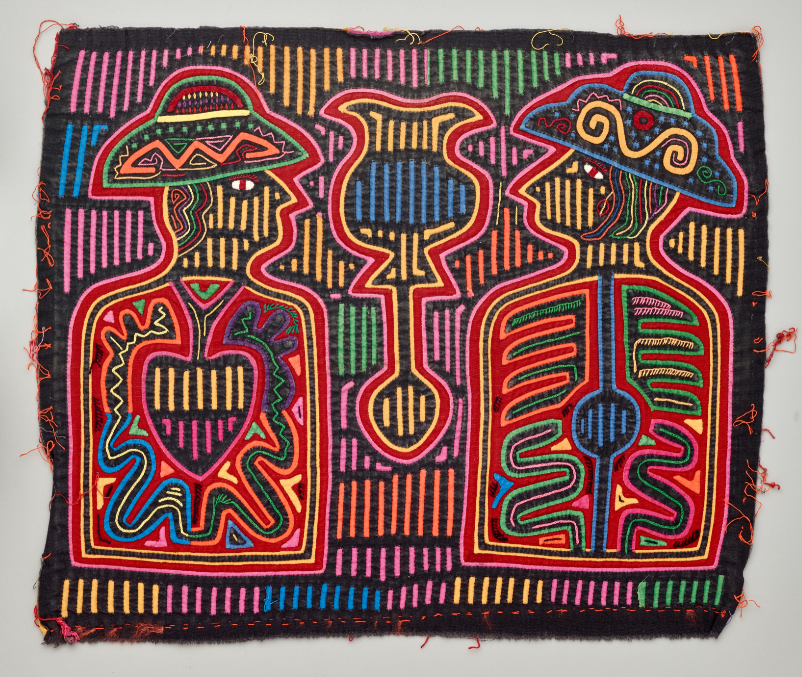
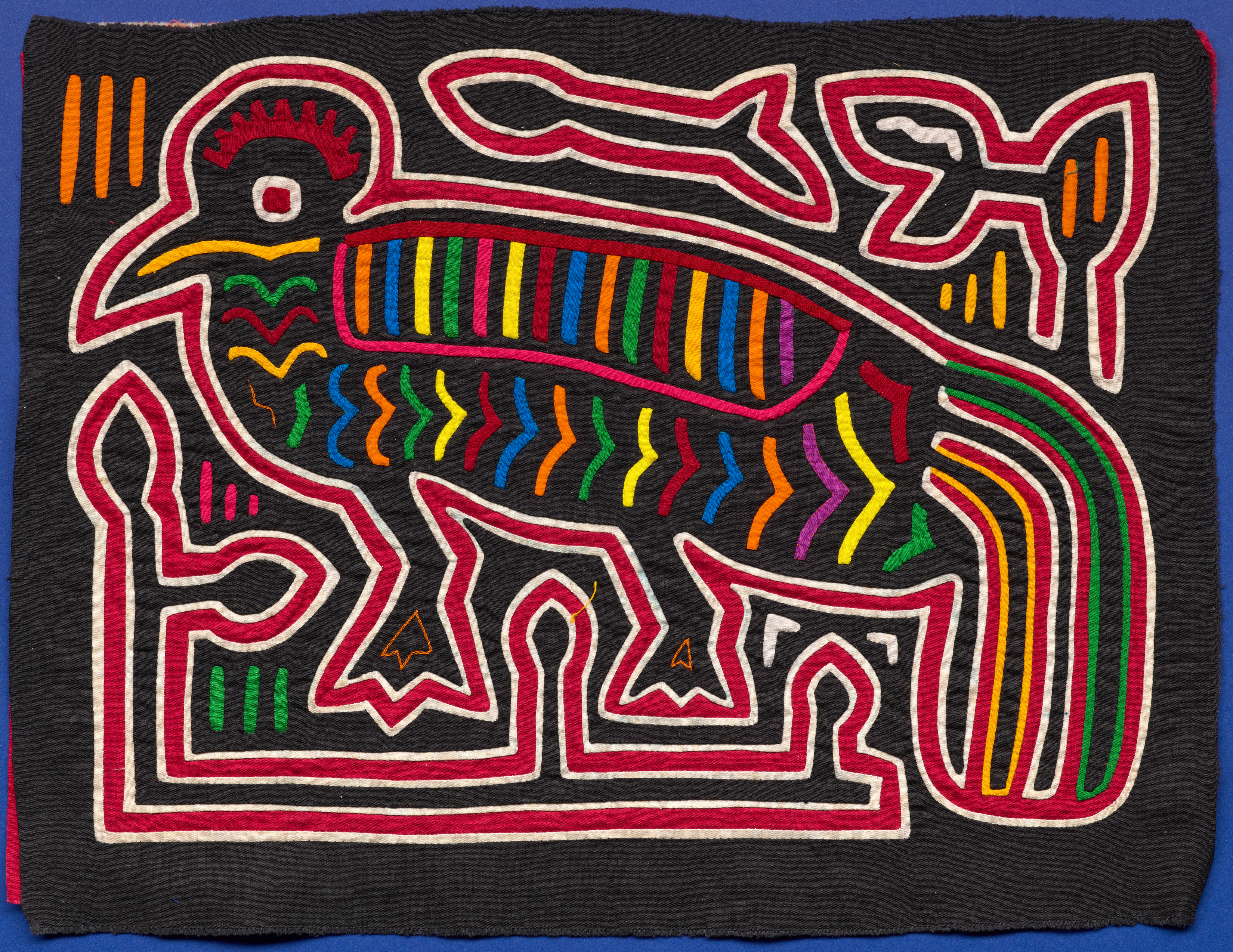
This past December, the Kaleta A. Doolin Foundation donated the Reverend Isaac V. and Alicia C. Pérez Mola Collection to the DMA. The collection is composed of some 70 molas: hand-stitched textiles that form part of Guna women’s clothing in the Republic of Panama. The Guna occupy a territory called the Gunayala Comarca (Gunaland Province), formed by hundreds of tiny islands, as well as by the adjacent coastline. This attire was adapted from the ancient practice of women painting their bodies with complex geometric designs, later translated to textiles following the adoption of new fabrics and tools introduced by European settlers. Over the decades, molas have become the single most recognizable material element of Guna cultural identity.

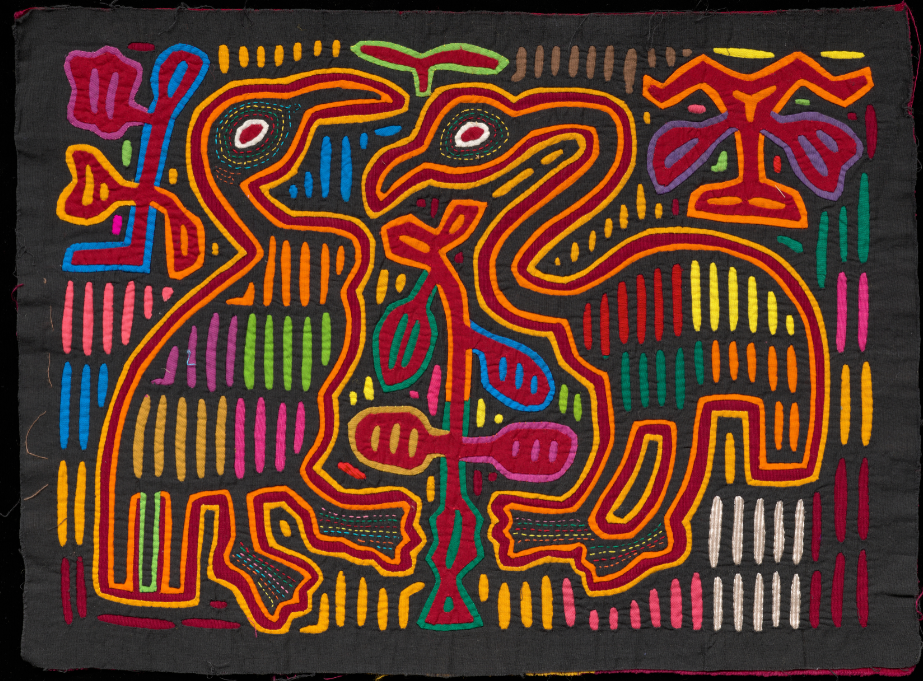
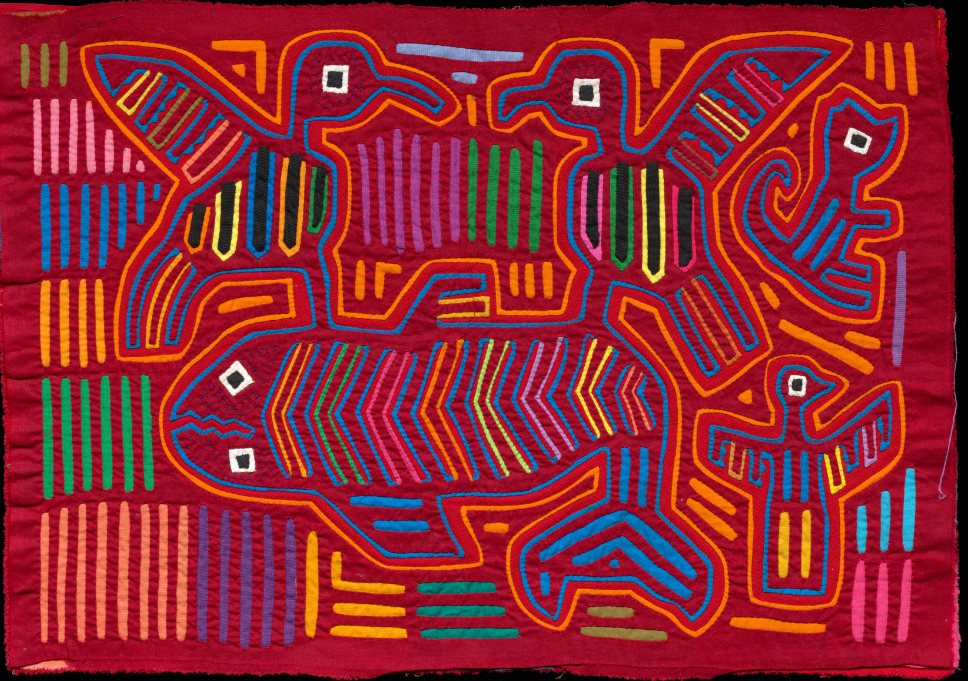
Molas: Two aquatic birds (T44205.43); Terrestrial birds, fish, and mammal (T44205.46); Aquatic bird and fish with spiny dorsal fin (T44205.15), Guna people, Gunayala Comarca, Panama, mid-20th century, cotton, Dallas Museum of Art, The Isaac V. and Alicia C. Pérez Mola Collection, gift of The Kaleta A. Doolin Foundation; Man and woman wearing hats, mid-twentieth century, Guna people, Gunayala Comarca, Panama, cotton, Dallas Museum of Art, gift of The Dozier Foundation, DS.1990.303

The arts in Guna society are strictly gendered, with men engaged in basket weaving and public oratory, reciting poems and stories. Women, including men who identify as women, design and fabricate molas. The molas are created using a complex reverse appliqué process. Two or three pieces of fabric are first basted together and then a design is hand cut into the top layer, with multiple layers of colorful, contrasting fabrics and appliques then sewn between the top and bottom layers. This elaborate technique is intensive, typically taking a maker three to five weeks to complete the 15 by 17-inch textile.

Care is taken to match the thread to the cloth and layer the fabrics in a way that gives the impression of a seamless and uniform composition. Mola designs incorporate elements such as flowers, birds, animals, and mythical creatures, but geometric patterning remains a crucial element.

The mola has deep ties to Guna identity. In 1918 the Panamanian government began a campaign to subjugate and assimilate the Guna, which included banning traditional dress. The Guna resisted, and making and wearing molas became an act of political protest. In 1925 the two parties reached an agreement granting the Guna autonomy to govern their own affairs and sovereignty over their Indigenous identity and culture. To this day, Guna women still produce beautifully executed molas for their own use in clothing, as well as versions for tourist consumption.
Blouse incorporating National Liberal Party mola, Guna people, Gunayala Comarca, Panama, 1962, cotton, Dallas Museum of Art, gift of Carolyn Williams Marks, Harriet Williams Peavy, and Suzanne Williams Nash, 2016.68.19

Reverend Isaac V. Pérez, his wife, Alicia, and their daughter, Elva, moved to Panama in 1953 when Reverend Isaac accepted employment with a denomination-affiliated organization. Among his responsibilities was working with local Guna to create a new church. On one of his first visits to the islands, he was gifted a mola as a gesture of friendship. Alicia and Elva were fascinated by the complex and unusual qualities of the design, heightened by its vibrant colors.

Mola: Ground cuckoo, Guna people, Gunayala Comarca, Panama, mid-20th century, cotton, Dallas Museum of Art, The Isaac V. and Alicia C. Pérez Mola Collection, gift of The Kaleta A. Doolin Foundation, T44205.25

The Pérezes remained in Panama for 22 years and amassed a stunning collection of molas. The family treasured them for their creativity, design, and imagery—but even more so as a reminder of the graciousness of the Guna people. Their collection joins 10 molas already stewarded by the DMA, and together they offer a testament to the creativity and resilience of the Guna people, and the critical role of women in preserving and adapting Guna culture.

Mola: Two terrestrial birds perched in trees, Guna people, Gunayala Comarca, Panama, mid-20th century, cotton, Dallas Museum of Art, The Isaac V. and Alicia C. Pérez Mola Collection, gift of The Kaleta A. Doolin Foundation, T44205.16

Dr. Mark A. Castro, The Jorge Baldor Curator of Latin American Art
Dr. Michelle Rich, The Ellen and Harry S. Parker III Assistant Curator of the Arts of the Americas
Alyssa Wood, Curatorial Assistant

Connections Across Collections: Repurposed Materials

Making the old new by transforming discarded objects into works of art is an integral part of contemporary artist Chris Schanck’s practice, as seen in his dressing table featured in the upcoming Curbed Vanity exhibition and made of found materials from the neighborhood surrounding his Detroit studio. We asked DMA curators what other artworks and objects in our collection feature repurposed materials. From personal mementos to wild animal horns, find out about these objects and what they’re made of.

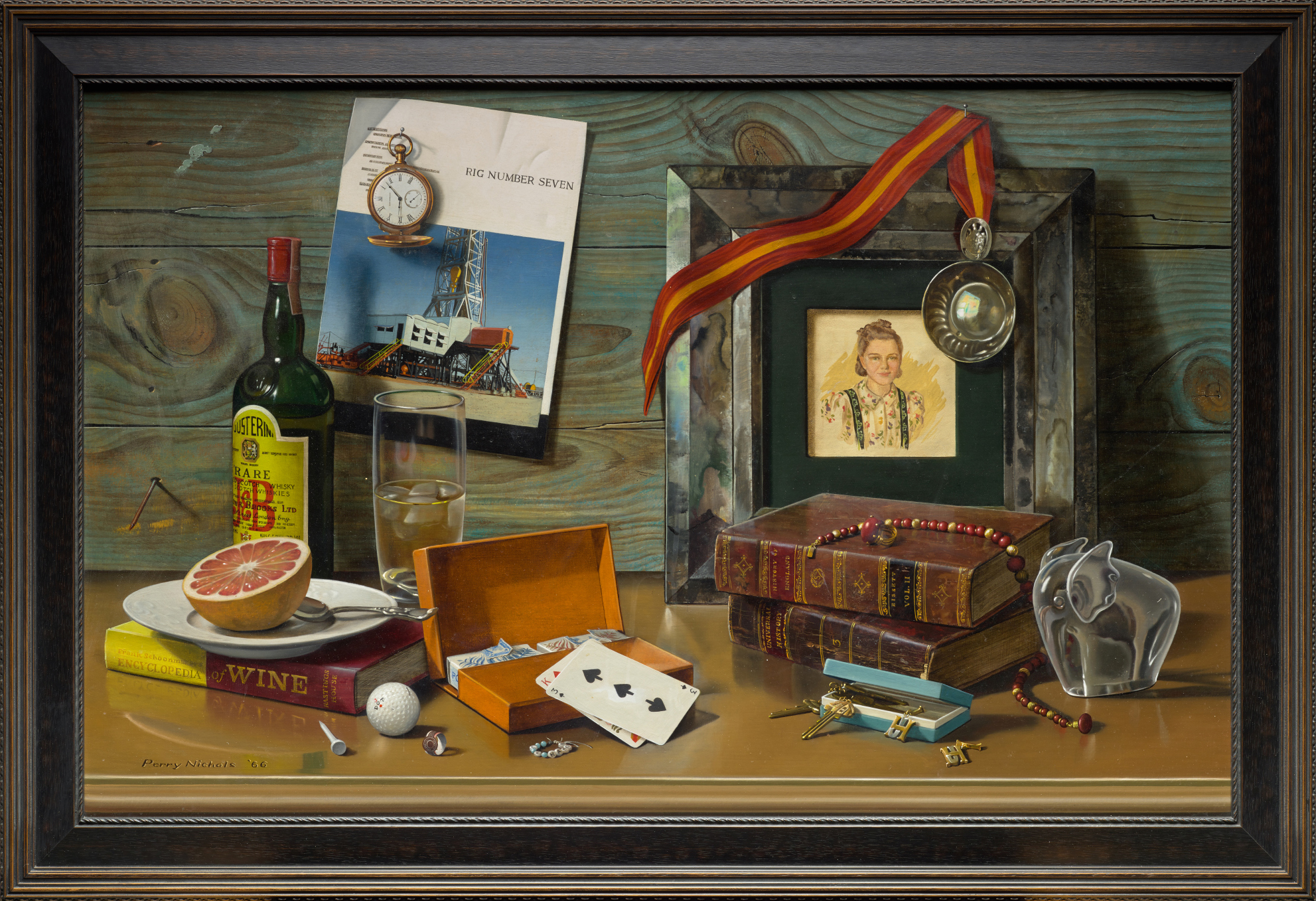
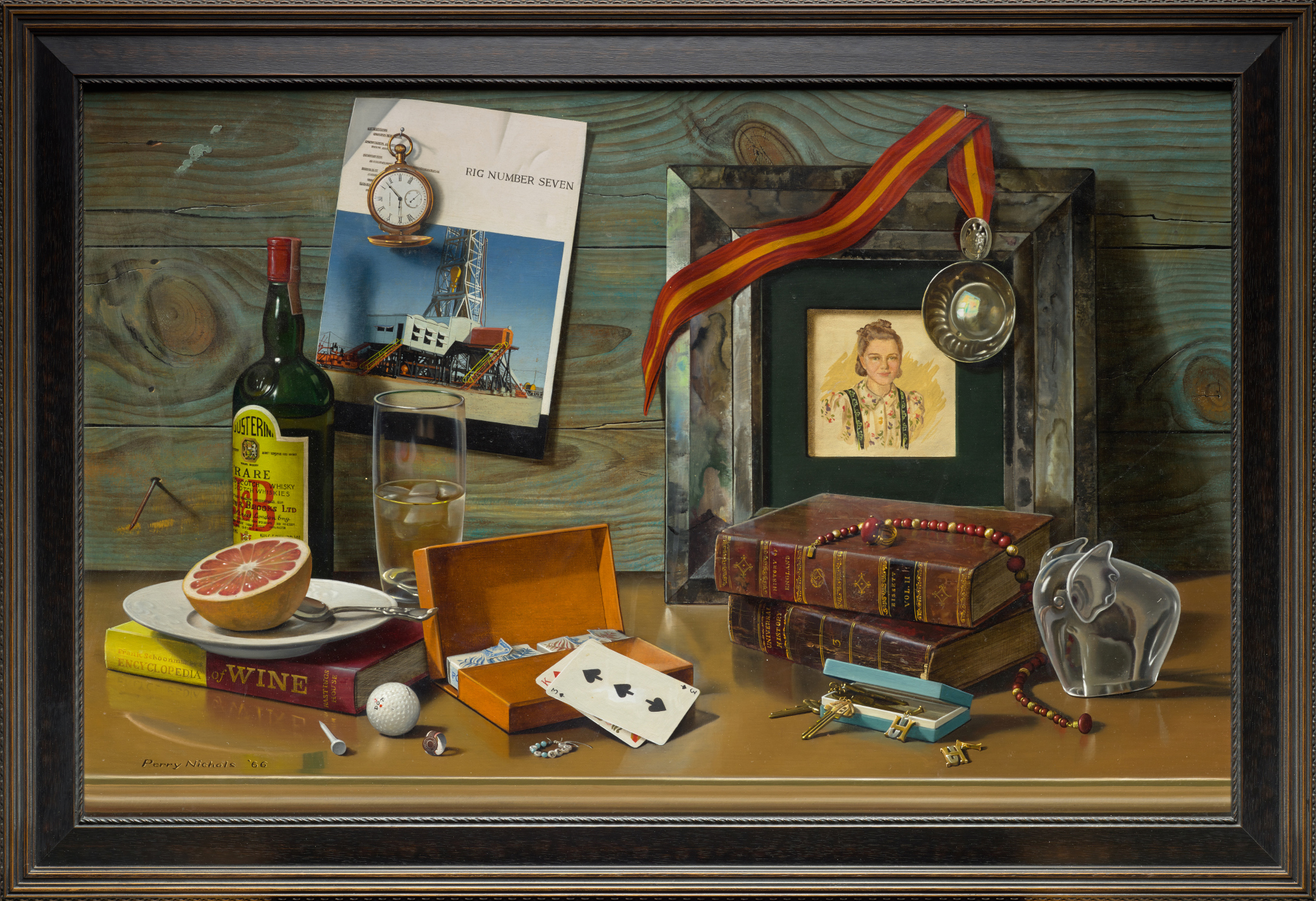
Perry Nichols, [The Desk Top of Jake Hamon], 1966, oil on canvas, Dallas Museum of Art, bequest of Carlos Nichols, 2017.37, © Perry Nichols

Sue Canterbury, The Pauline Gill Sullivan Curator of American Art 
“Dallas native Perry Nichols portrayed Jake Hamon by depicting objects and mementos that represented some of the sitter’s traits, hobbies, and interests. When the Hamons owned the painting, it hung over their mantle while the real-life items rested below.”

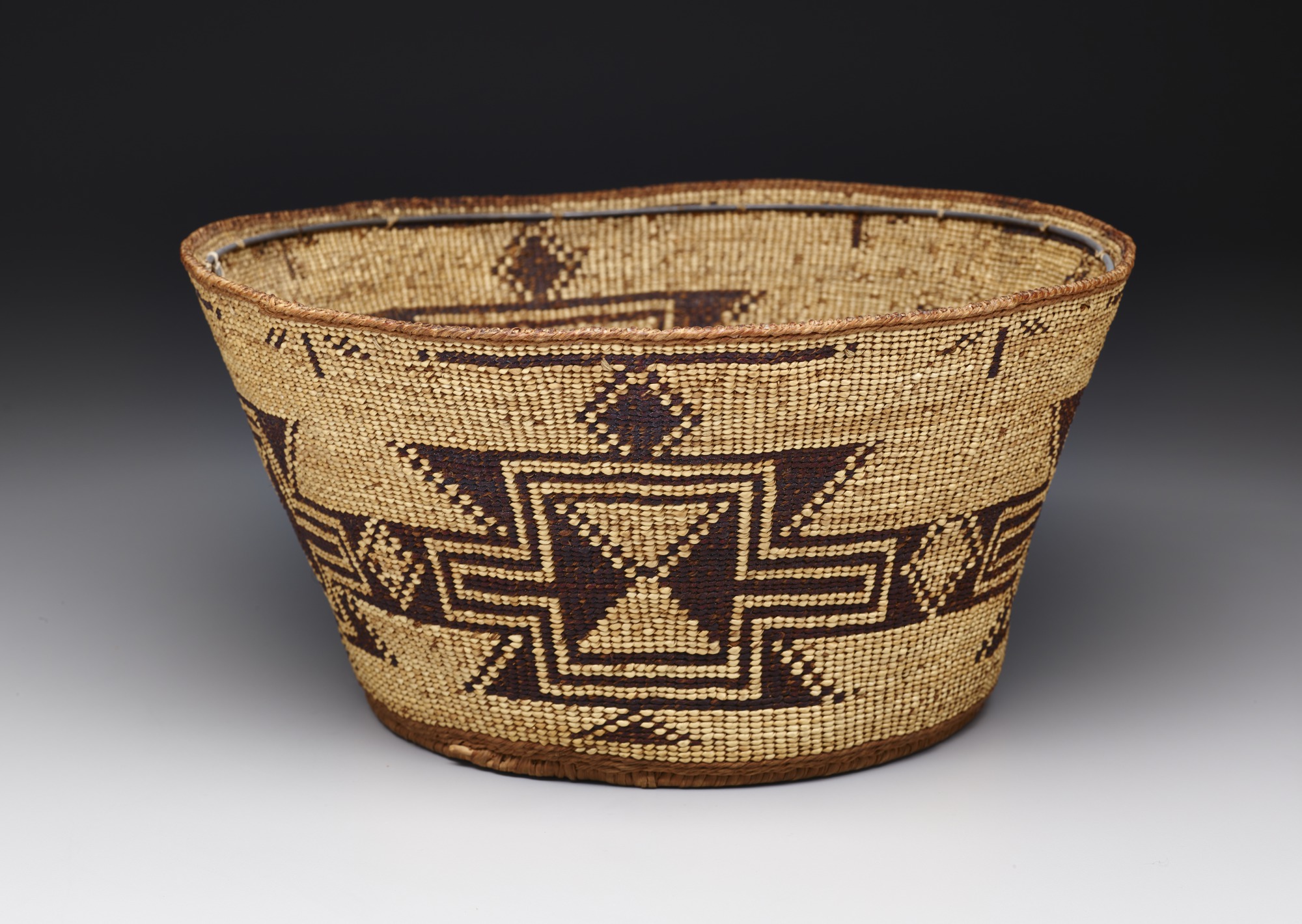
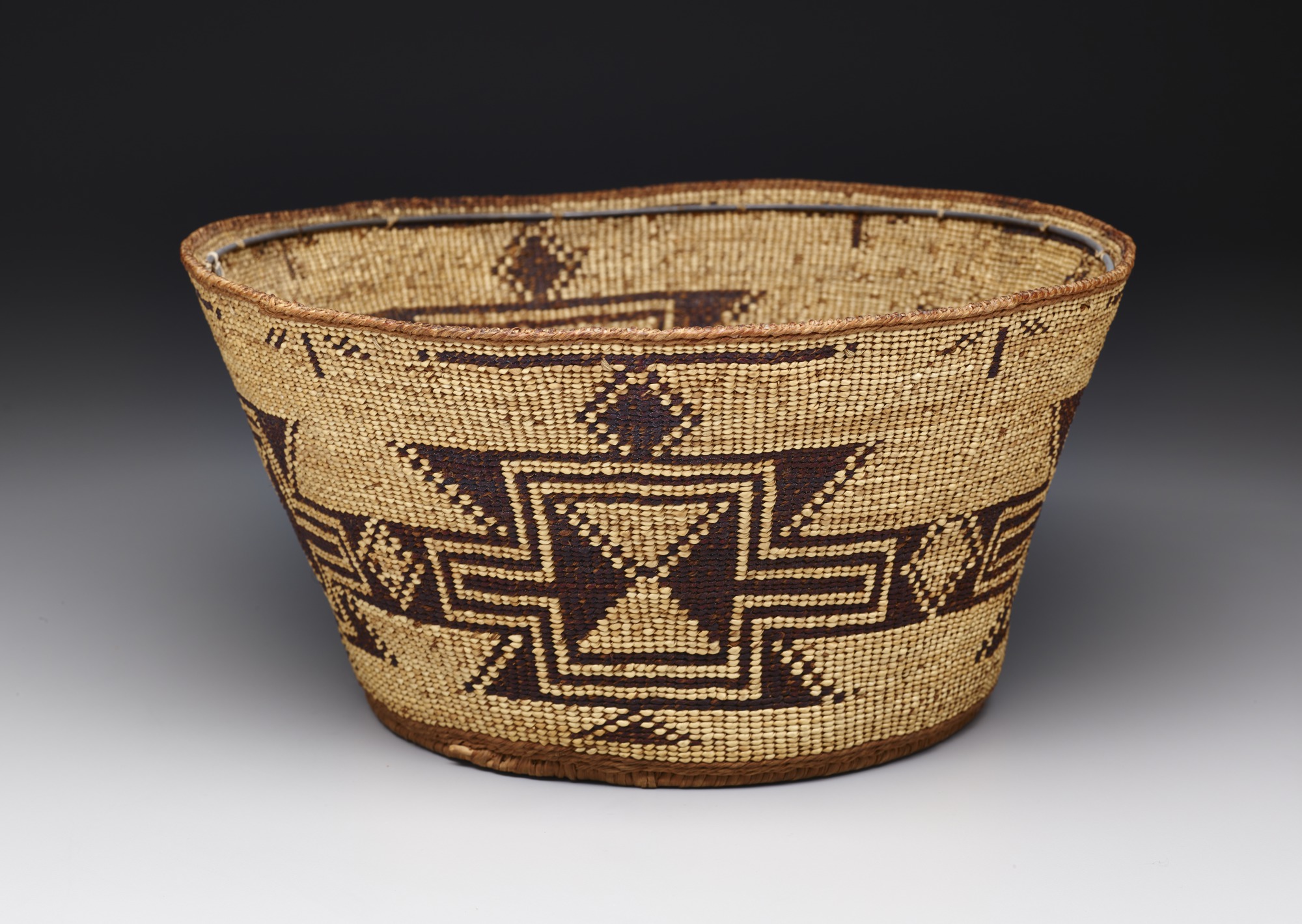
Ceremonial basket, California, Shasta basketweaver, 19th–20th century, Squaw grass and black mountain sedge, Dallas Museum of Art, gift of Mrs. Eugene M. Solow, 1954.130.1

Dr. Michelle Rich, Ellen and Harry S. Parker III Assistant Curator of Arts of the Americas
“Foraging for grasses in nature is a form of producing art with found materials. The Shasta artist who wove this beautiful basket took the time to harvest the bear grass (Xerophyllum tenax) and black alpine sedge (Carex nigricans) from the wilds of Northern California.”

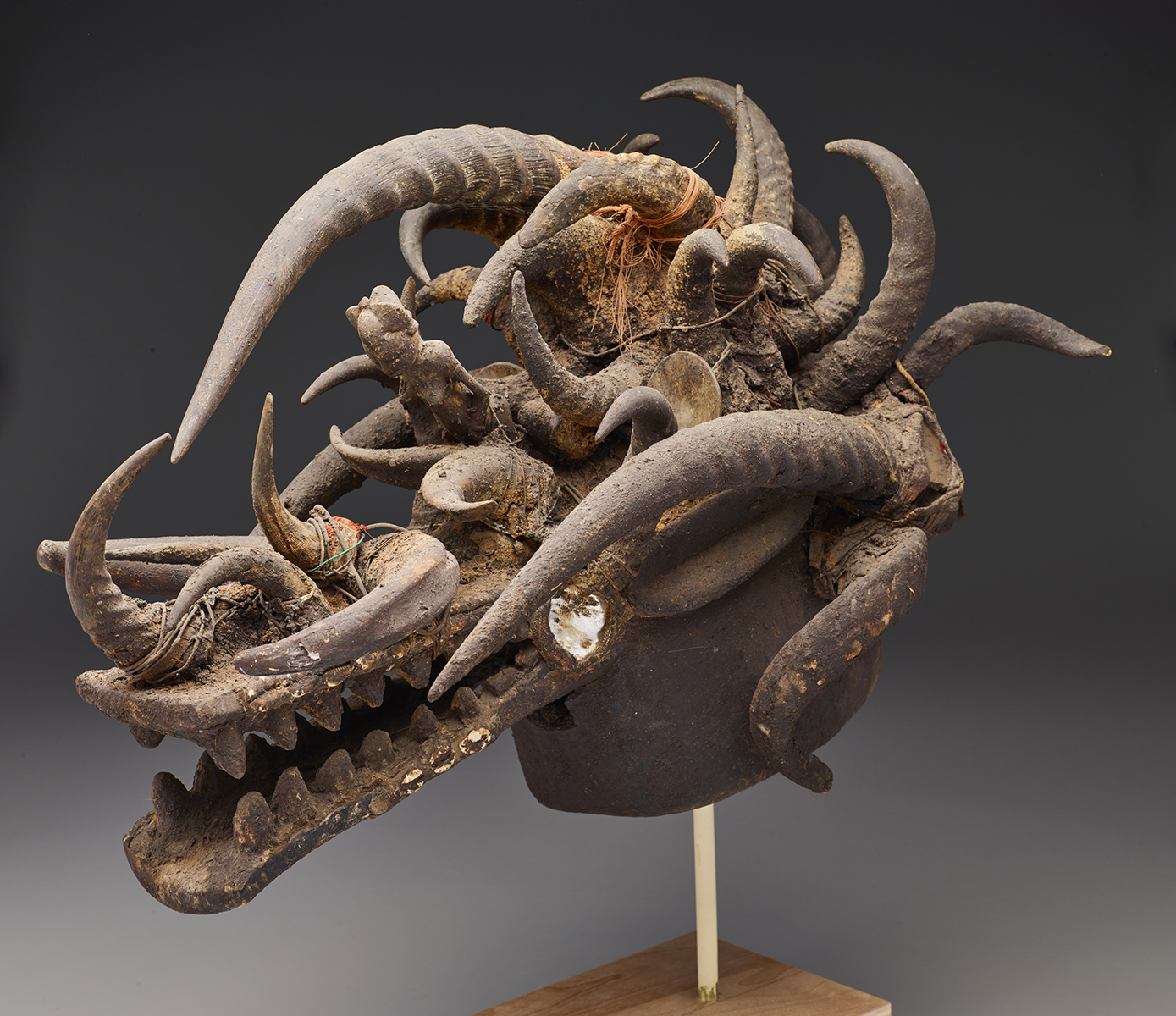
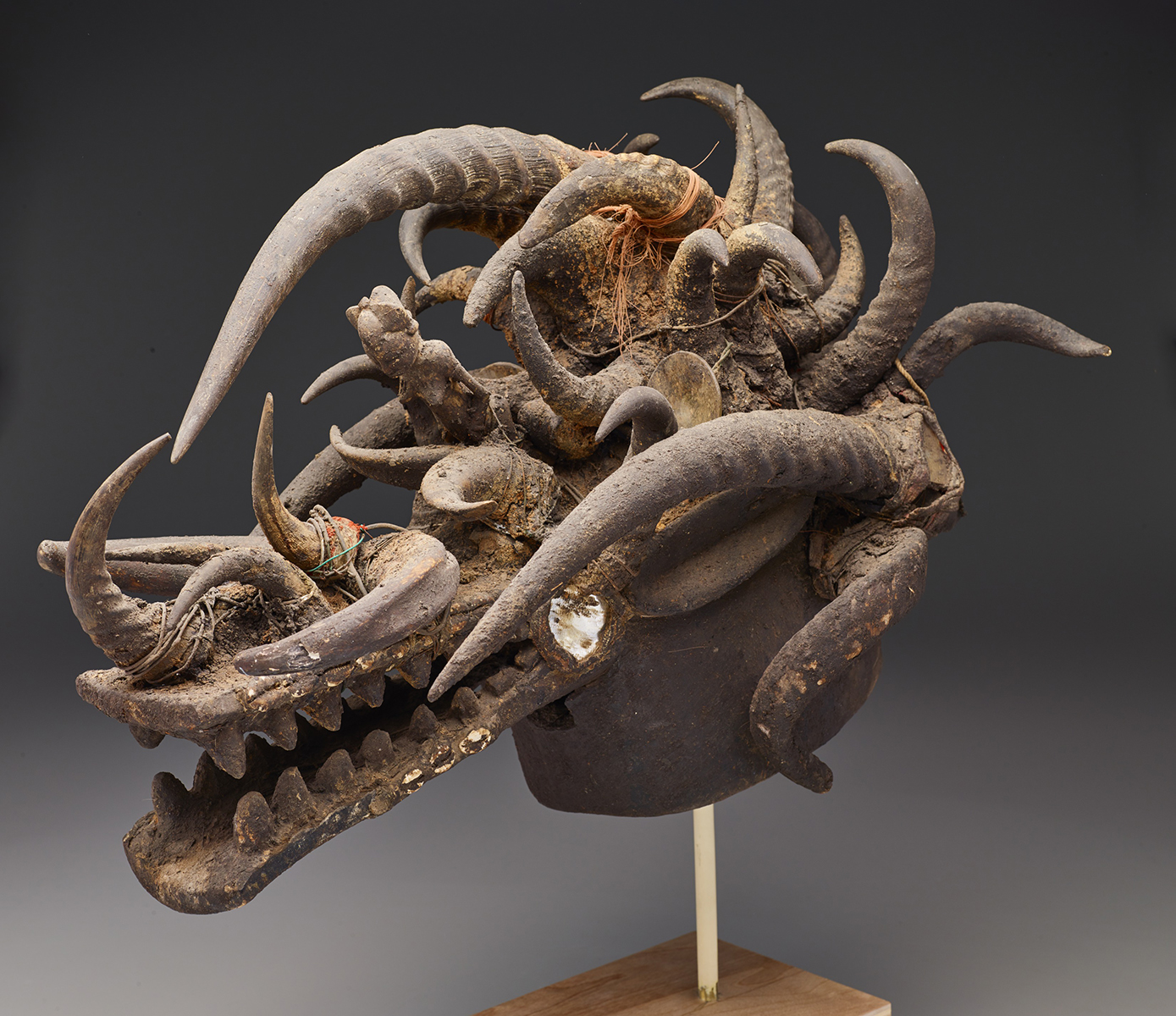
Helmet mask (komo), Mali and Côte d’Ivoire, Senufo sculptor, mid-20th century, wood, glass, animal horns, fiber, mirrors, iron, and other materials, Dallas Museum of Art, gift of David T. Owsley, 1997.24

Dr. Roslyn A. Walker, Senior Curator of the Arts of Africa, the Americas, and the Pacific and The Margaret McDermott Curator of African Art 
“Sharp horns, tusks, and zigzag teeth of wild animals; mirrors; cowrie shells; wine glasses; and sacred texts contribute to the fierce appearance and spiritual power of this helmet mask, as well as project the prominence of the Komo society member.”

Expanded for DMA Members: Connections Across Collections: Repurposed Materials

Making the old new by transforming discarded objects into works of art is an integral part of contemporary artist Chris Schanck’s practice, as seen in his dressing table featured in the upcoming Curbed Vanity exhibition and made of found materials from the neighborhood surrounding his Detroit studio. We asked DMA curators what other artworks and objects in our collection feature repurposed materials. From cabinet chairs to cowrie shells, find out about these objects and what they’re made of.

Perry Nichols, [The Desk Top of Jake Hamon], 1966, oil on canvas, Dallas Museum of Art, bequest of Carlos Nichols, 2017.37, © Perry Nichols

Sue Canterbury, The Pauline Gill Sullivan Curator of American Art 
“Dallas native Perry Nichols portrayed Jake Hamon by depicting objects and mementos that represented some of the sitter’s traits, hobbies, and interests. When the Hamons owned the painting, it hung over their mantle while the real-life items rested below.”

Helmet mask (komo), Mali and Côte d’Ivoire, Senufo sculptor, mid-20th century, wood, glass, animal horns, fiber, mirrors, iron, and other materials, Dallas Museum of Art, gift of David T. Owsley, 1997.24

Dr. Roslyn A. Walker, Senior Curator of the Arts of Africa, the Americas, and the Pacific, and The Margaret McDermott Curator of African Art 
“Sharp horns, tusks, and zigzag teeth of wild animals; mirrors; cowrie shells; wine glasses; and sacred texts contribute to the fierce appearance and spiritual power of this helmet mask, as well as project the prominence of the Komo society member.”

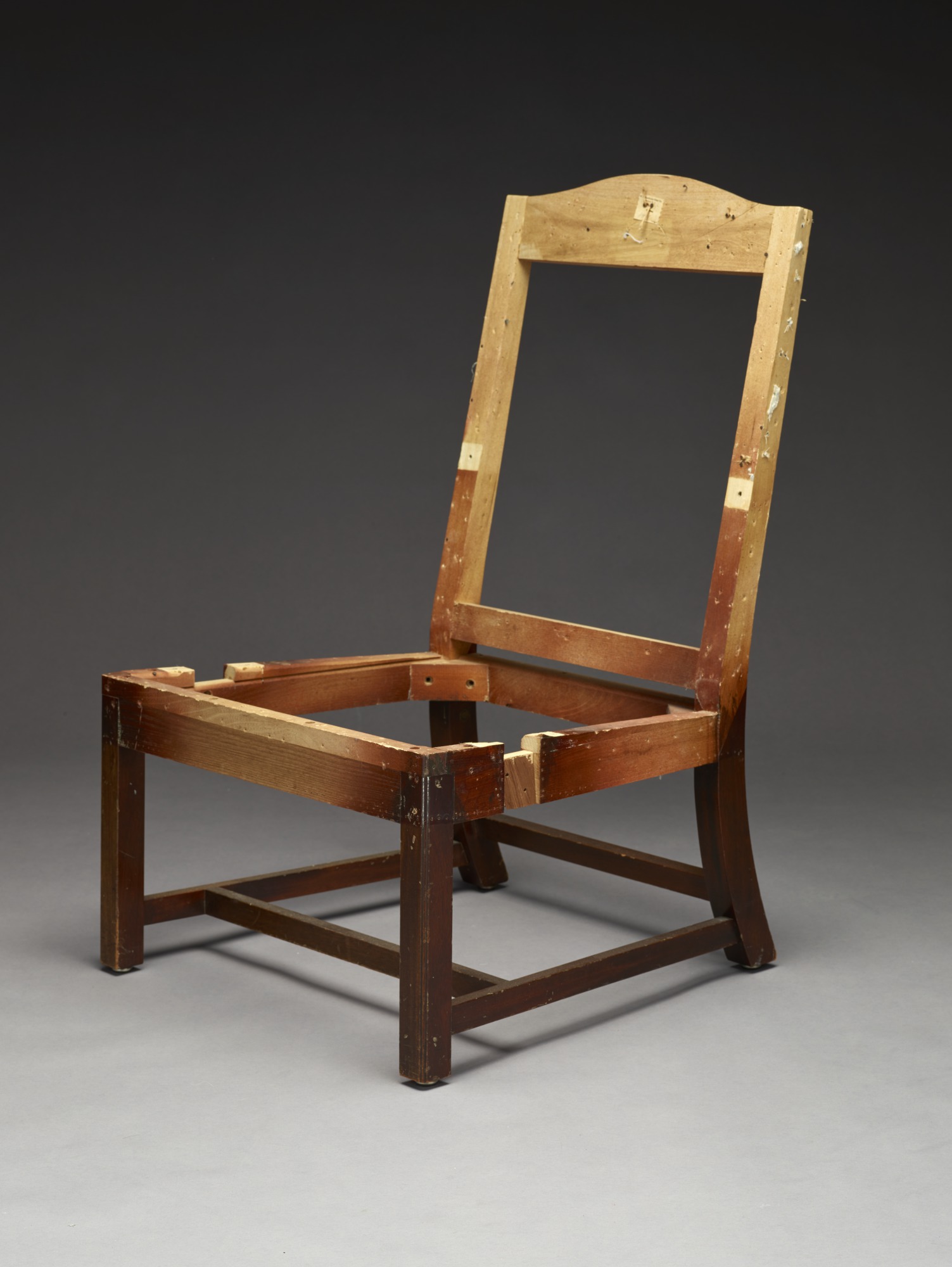
Danh Vo, Lot 20. Two Kennedy Administration Cabinet Room Chairs, 2013, mahogany and metal, Dallas Museum of Art, TWO x TWO for AIDS and Art Fund, 2014.12, © Danh Vo

Dr. Vivian Li, Lupe Murchison Curator of Contemporary Art 
“In Lot 20, Danh Vo disassembles and disperses two cabinet chairs once owned by Kennedy and his Secretary of Defense Robert S. McNamara, the primary architect of the Vietnam War, thus evoking the far-reaching losses made from the decisions of the chairs’ former occupants.”

Ceremonial basket, California, Shasta basketweaver, 19th–20th century, Squaw grass and black mountain sedge, Dallas Museum of Art, gift of Mrs. Eugene M. Solow, 1954.130.1

Dr. Michelle Rich, The Ellen and Harry S. Parker III Assistant Curator of Arts of the Americas
“Foraging for grasses in nature is a form of producing art with found materials. The Shasta artist who wove this beautiful basket took the time to harvest the bear grass (Xerophyllum tenax) and black alpine sedge (Carex nigricans) from the wilds of Northern California.”

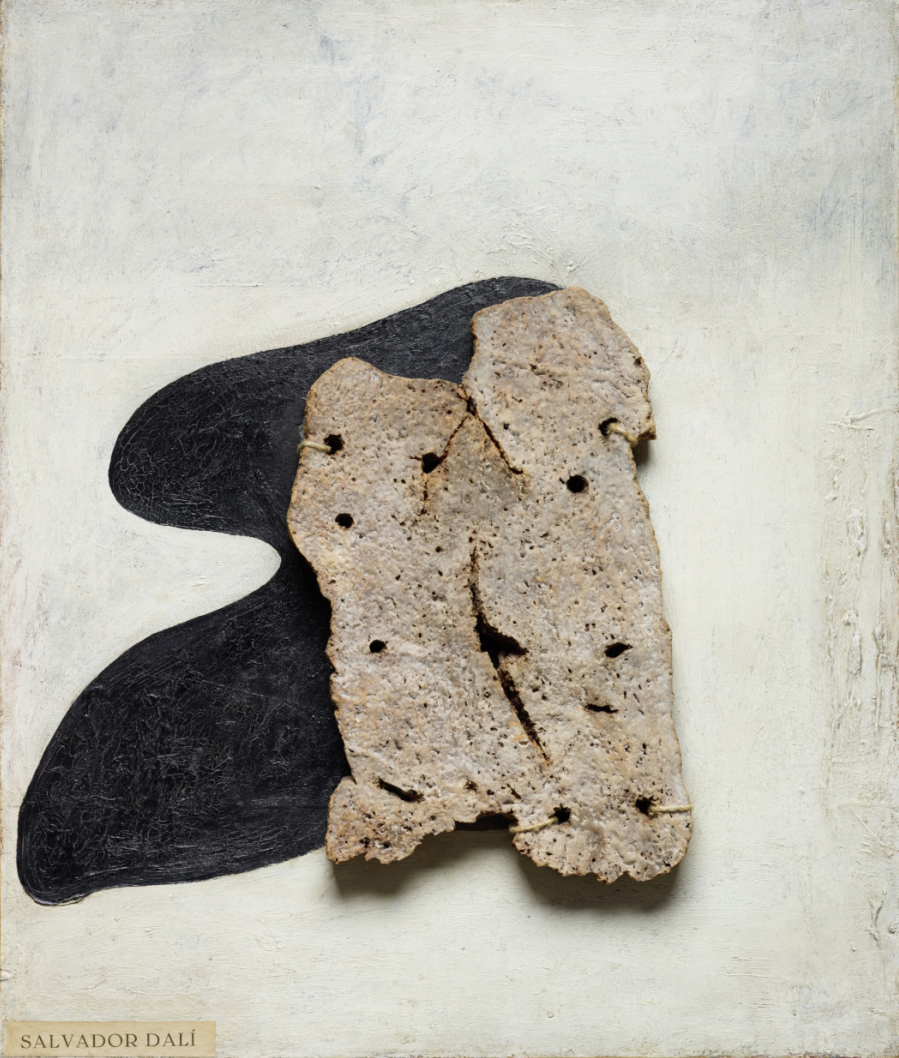
Salvador Dalí, Female Nude, 1928, oil, cork, cord, and collage on canvas, Dallas Museum of Art, bequest of William B. Jordan and Robert Dean Brownlee, 2019.72.78, © Salvador Dalí, Gala-Salvador Dalí Foundation/Artists Rights Society (ARS), New York

Dr. Nicole R. Myers, The Barbara Thomas Lemmon Senior Curator of European Art
“An extraordinary early work, Female Nude is a rare example of Dalí’s brief experimentation with found objects. Here, he affixed an anthropomorphic piece of cork to the canvas in order to evoke the form of a female nude, a playful effect completed by the painted shadow.”

Connections Across Collections: Latin American Influence

As Hispanic Heritage Month continues, we’re spotlighting artworks and objects in our collection that were created with influence from Latin American culture and artists. We asked curators from across departments for their picks, and here’s what they had to say:

Sue Canterbury, The Pauline Gill Sullivan Curator of American Art

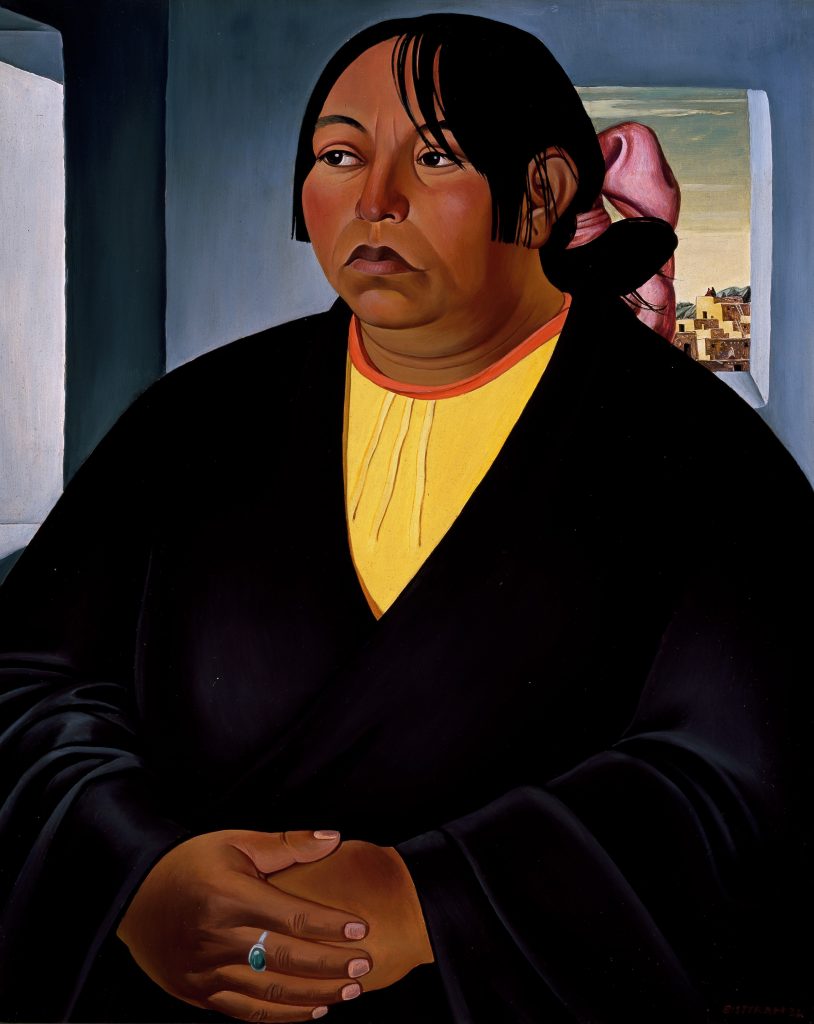
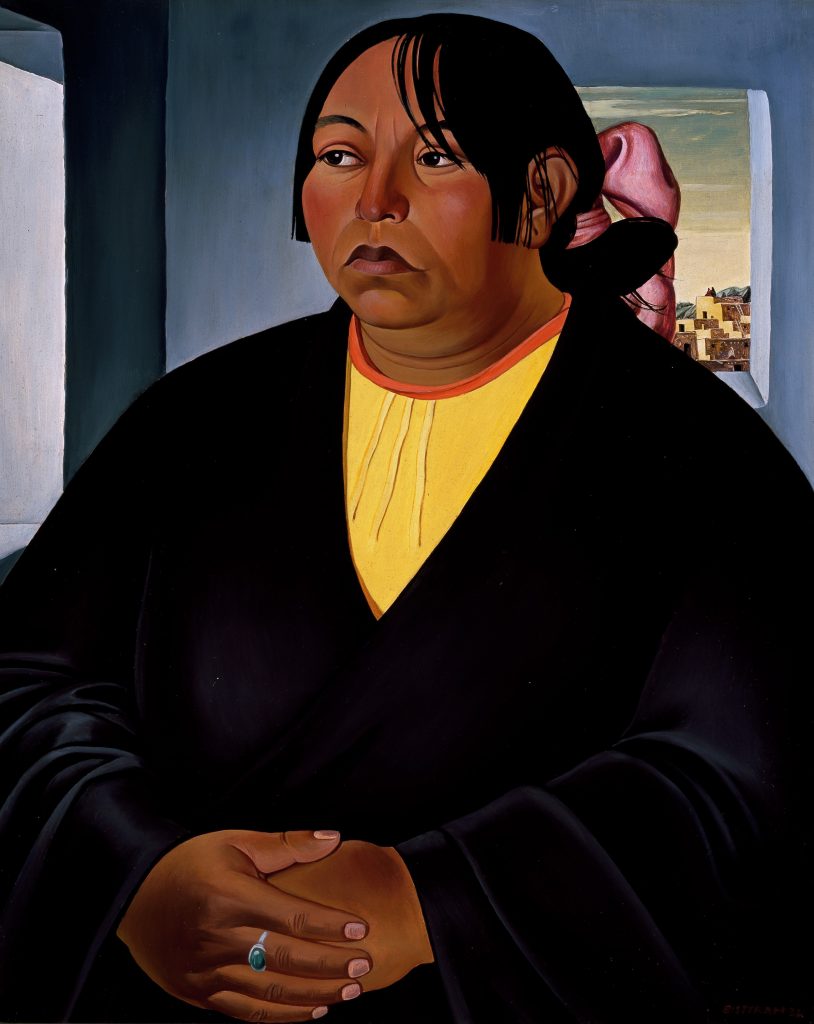
The year before settling in Taos, Emil Bisttram studied with Diego Rivera in Mexico. This painting’s volumetric forms and linear qualities evidence Rivera’s influence. It bears the hallmarks of Bisttram’s work from the early 1930s that often depicted Native Americans and the artist’s all-consuming interest in New Mexico’s architecture and landscape.

Emil J. Bisttram, Pueblo Woman, 1932, tempera and oil glaze on panel, Dallas Museum of Art, gift of Mr. and Mrs. Royal C. Miller, 1960.165

Dr. Michelle Rich, The Ellen and Harry S. Parker III Assistant Curator of the Arts of the Americas, and Dr. Mark A. Castro, The Jorge Baldor Curator of Latin American Art

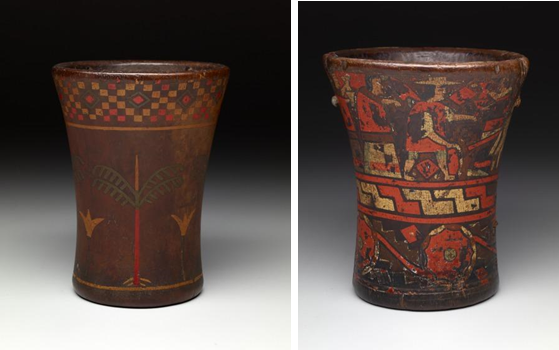
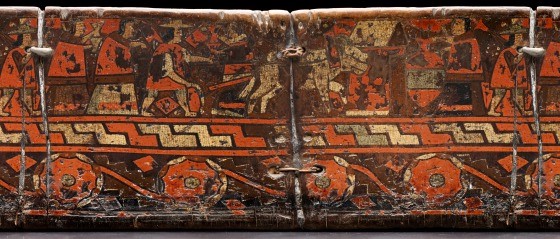
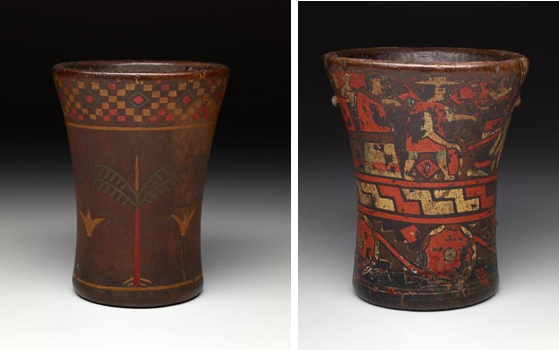
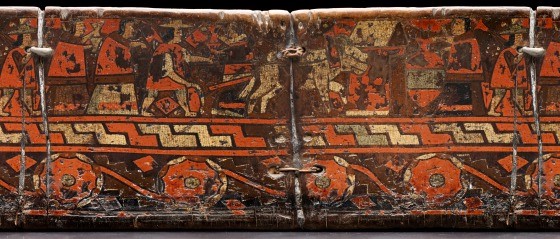
Keros (ceremonial wooden cups from the Andes) in the DMA’s collection range in date from the 15th century through the Spanish viceregal period. As on the elegant kero with palm trees and flowers, their decoration can recall the geometric designs favored in the indigenous art of the pre-contact Inka Empire (for comparison, see this ceramic kero and checkerboard tunic). The cups, however, could also feature complex narratives. The kero with plowing scene depicts a man driving a plow ox, followed by two women: the first woman is planting seeds, and the second is ceremonially raising a pair of keros in the air (for more detail, see the rollout photograph of the upper portion).

Upper left: Quero (qerokero) with palm trees and flowers, Peru, Inca, mid-17th–late 18th century, wood and pigmented resin inlay, Dallas Museum of Art, The Nora and John Wise Collection, gift of Mr. and Mrs. Jake L. Hamon, the Eugene McDermott Family, Mr. and Mrs. Algur H. Meadows and the Meadows Foundation, Incorporated, and Mr. and Mrs. John D. Murchison, 1976.W.1849; Upper right and bottom: Quero (qerokero): plowing with oxen, Peru, Inca, 17th–18th century, wood, metal, cane, and pigmented resin inlay, Dallas Museum of Art, The Nora and John Wise Collection, gift of Mr. and Mrs. Jake L. Hamon, the Eugene McDermott Family, Mr. and Mrs. Algur H. Meadows and the Meadows Foundation, Incorporated, and Mr. and Mrs. John D. Murchison, 1976.W.1851

Expanded for DMA Members: Connections Across Collections: Latin American Influence

As Hispanic Heritage Month continues, we’re spotlighting artworks and objects in our collection that were created with influence from Latin American culture and artists. We asked curators from across departments for their picks, and here’s what they had to say:

Sue Canterbury, The Pauline Gill Sullivan Curator of American Art

The year before settling in Taos, Emil Bisttram studied with Diego Rivera in Mexico. This painting’s volumetric forms and linear qualities evidence Rivera’s influence. It bears the hallmarks of Bisttram’s work from the early 1930s that often depicted Native Americans and the artist’s all-consuming interest in New Mexico’s architecture and landscape.

Emil J. Bisttram, Pueblo Woman, 1932, tempera and oil glaze on panel, Dallas Museum of Art, gift of Mr. and Mrs. Royal C. Miller, 1960.165

Julien Domercq, The Lillian and James H. Clark Assistant Curator of European Art

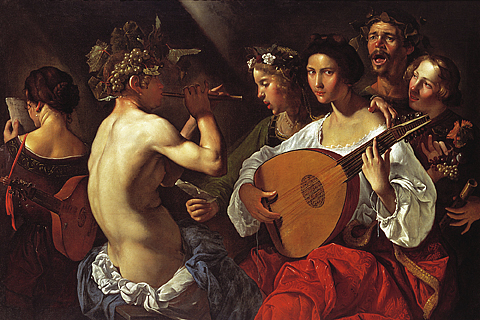
One of the highlights of our collection, the fabulous Bacchic Concert by 17th-century Italian artist Pietro Paolini spent about 100 years hanging on the walls of the Torre Tagle palace in Lima. It was part of an impressive collection of European paintings amassed in the early 19th century by a Peruvian diplomat; about 20 of these works are now owned by the DMA thanks to a gift of the Hoblitzelle Foundation.

Pietro Paolini, Bacchic Concert, 1625–30, oil on canvas, Dallas Museum of Art, The Karl and Esther Hoblitzelle Collection, gift of the Hoblitzelle Foundation, 1987.17

Sarah Schleuning, Interim Chief Curator and The Margot B. Perot Senior Curator of Decorative Arts

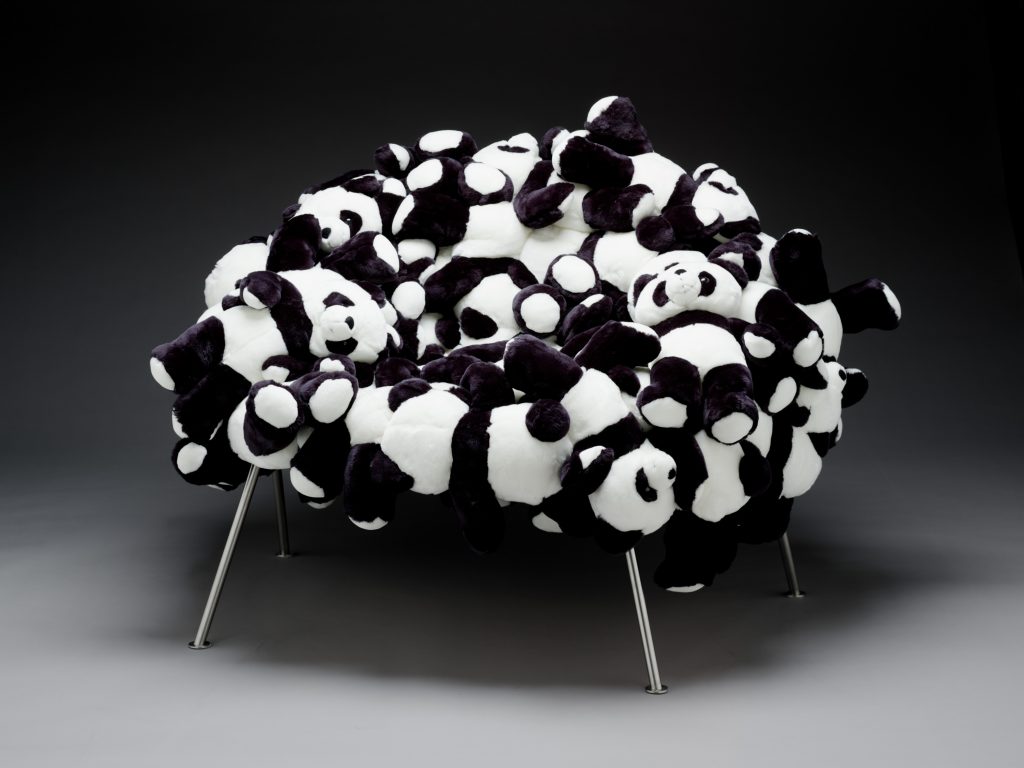
Known for employing simple materials or common objects to create innovative contemporary furniture, Brazilian designers Fernando and Humberto Campana express their heritage through color, textures, and creative chaos. Here, inspired by their childhood, they use stuffed panda bears to envelop the sitter. Providing both physical and emotional comfort, the chair, they insist, is “about sitting. It’s design, not sculpture.”

Banquete chair with pandas, Fernando Campana, Humberto Campana, designed 2006, stuffed animals on steel base, Dallas Museum of Art, TWO x TWO for AIDS and Art Fund, 2009.9, © Fernando and Humberto Campana / Artists Rights Society (ARS), New York

Dr. Michelle Rich, The Ellen and Harry S. Parker III Assistant Curator of the Arts of the Americas, and Dr. Mark A. Castro, The Jorge Baldor Curator of Latin American Art

Keros (ceremonial wooden cups from the Andes) in the DMA’s collection range in date from the 15th century through the Spanish viceregal period. As on the elegant kero with palm trees and flowers, their decoration can recall the geometric designs favored in the indigenous art of the pre-contact Inka Empire (for comparison, see this ceramic kero and checkerboard tunic). The cups, however, could also feature complex narratives. The kero with plowing scene depicts a man driving a plow ox, followed by two women: the first woman is planting seeds, and the second is ceremonially raising a pair of keros in the air (for more detail, see the rollout photograph of the upper portion).

Upper left: Quero (qero, kero) with palm trees and flowers, Peru, Inca, mid-17th–late 18th century, wood and pigmented resin inlay, Dallas Museum of Art, The Nora and John Wise Collection, gift of Mr. and Mrs. Jake L. Hamon, the Eugene McDermott Family, Mr. and Mrs. Algur H. Meadows and the Meadows Foundation, Incorporated, and Mr. and Mrs. John D. Murchison, 1976.W.1849; Upper right and bottom: Quero (qero, kero): plowing with oxen, Peru, Inca, 17th–18th century, wood, metal, cane, and pigmented resin inlay, Dallas Museum of Art, The Nora and John Wise Collection, gift of Mr. and Mrs. Jake L. Hamon, the Eugene McDermott Family, Mr. and Mrs. Algur H. Meadows and the Meadows Foundation, Incorporated, and Mr. and Mrs. John D. Murchison, 1976.W.1851

Connections Across Collections: Curator Picks

We reached out to our curators and invited them to shed light on significant and/or recent acquisitions that resonate with them during American Artist Appreciation Month. Find out more about the contemporary piece by Jaune Quick-to-See Smith and 1930 Marsden Hartley painting that they picked!

Dr. Anna Katherine Brodbeck, Hoffman Family Senior Curator of Contemporary Art

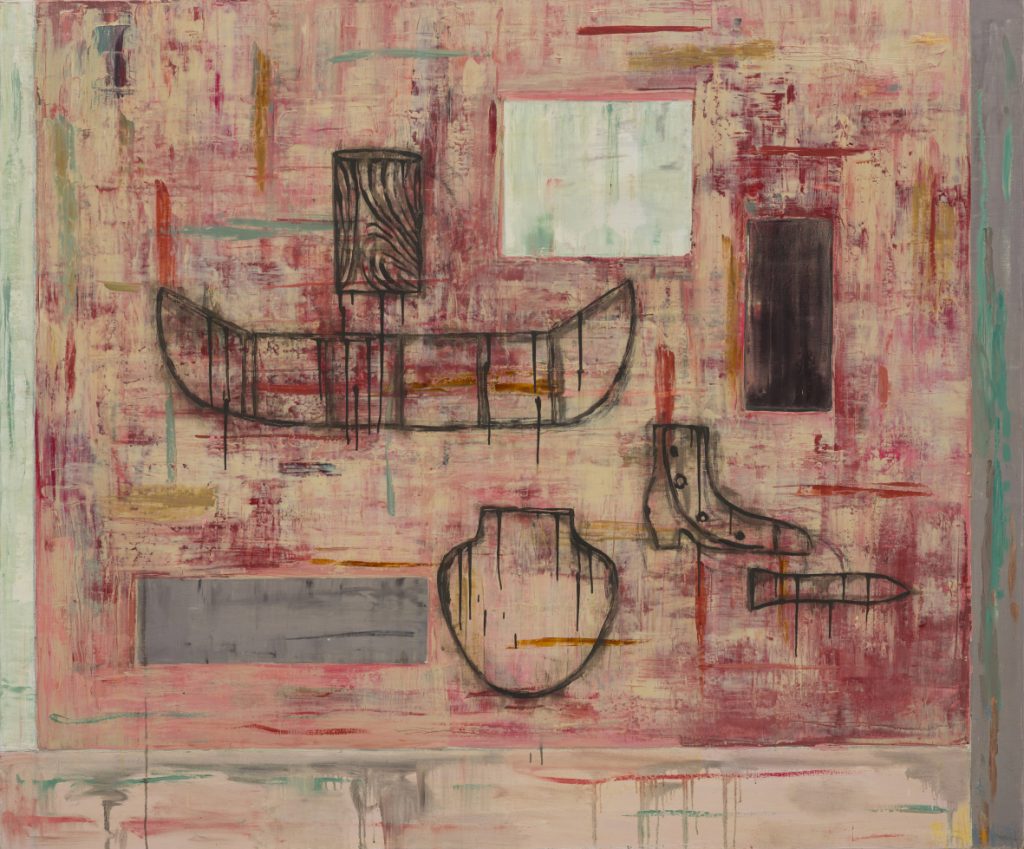
Jaune Quick-to-See Smith, Montana Memories: White Pine, 1989, mixed media on canvas, Dallas Museum of Art, TWO x TWO for AIDS and Art Fund, 2020.15

The paintings of Jaune Quick-to-See Smith—an enrolled Salish member of the Confederated Salish and Kootenai Nation, Montana—comment on the ongoing effects of US colonization and environmental destruction. Seen this way, the linear divisions of the ochre ground reference the US government partitioning of her natal land, while the foregrounded symbols enact a tension between settler and indigenous cultures.

Sue Canterbury, The Pauline Gill Sullivan Curator of American Art

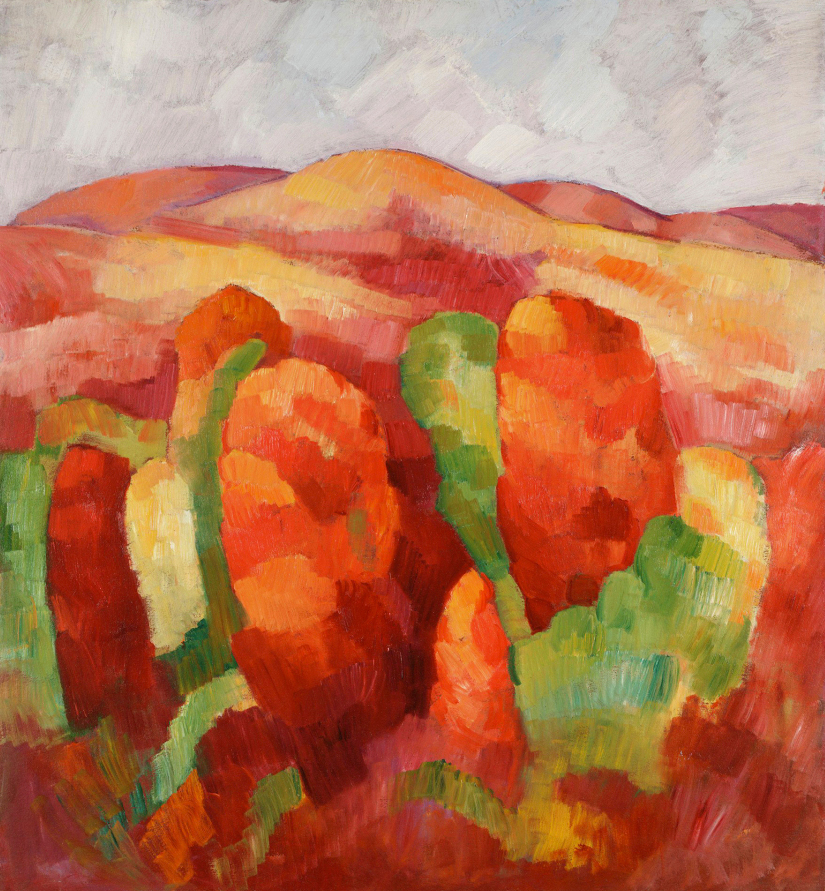
Marsden Hartley, Mountains, no. 19, 1930, oil on board, Dallas Museum of Art, The Eugene and Margaret McDermott Art Fund, Inc., 2008.24.McD

I see the colorful splendor of a New England autumn as an alluring characteristic particularly associated with America. It is the motif to which Hartley turned in 1930 to allay criticisms that his work was not sufficiently “American” in its subject matter. These paintings of the White Mountains helped turn the tide of his career.


Archives

Categories