Archive for the 'Behind-the-Scenes' Category


Seldom Scene: Karla Black at the DMA

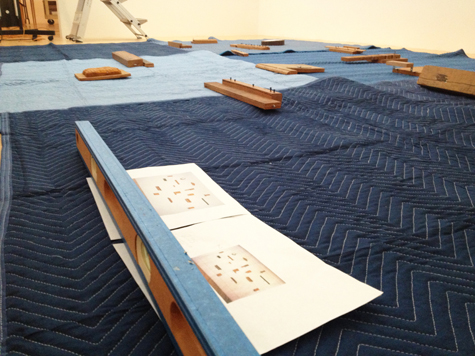
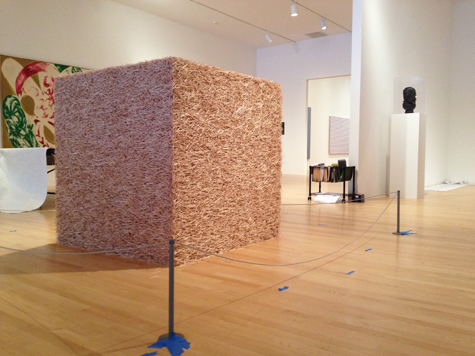
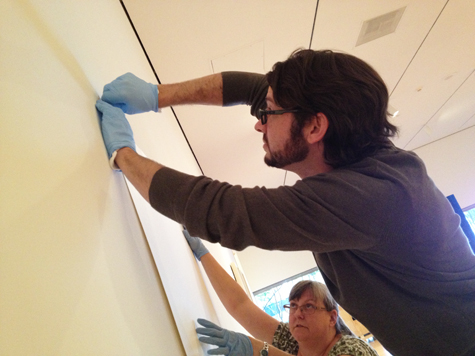
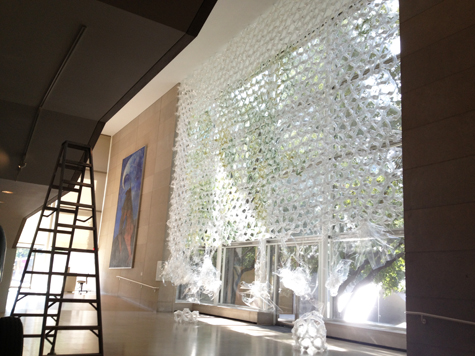
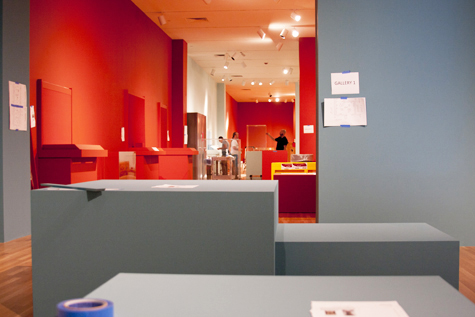
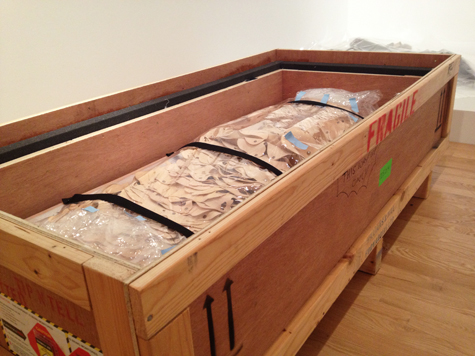
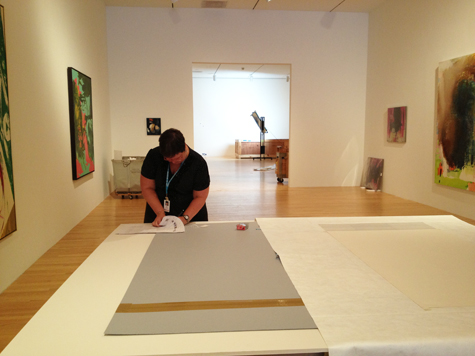
Scottish artist Karla Black will open her first solo project at a U.S. museum this Friday at the DMA. For Karla Black: Concentrations 55, the artist has created two sculptures for the DMA’s Hoffman Gallery and South Concourse. See images from the installation process below, and meet Black and see her work at our Late Night this Friday. She will discuss her exhibition at 7:00 p.m. in the Hoffman Gallery.

Texas Art in a Texas Museum

I first joined the DMA team in July 2010 as an intern for the Curatorial Department of European and American art. In May 2011 I was hired as the research project coordinator for early Texas art, a two-summer position sponsored by the Texas Fund for Curatorial Research. As an art history graduate student specializing in 18th-century British art, I enjoy switching gears when I am in Dallas for the summer and learning about the history of the local art scene in my hometown. The culmination of my research is an addition to the DMA website that includes both a timeline of all Texas-related exhibitions and a historical text about the evolution of the Dallas art community over the years.

The most valuable resource for my project has been the DMA Archives. When I first started researching the relationship between Dallas art clubs, local artists, and the Museum, I spent many hours perusing exhibition catalogues and photographs from the 1920s, 30s, and 40s. I was surprised to learn that women played a central role in the early history of the Museum, and that support for local artists was strong and consistent throughout the decades. I quickly realized that most of my attention would be devoted to the period spanning the 1930s to the 1960s. During this time, the Museum sponsored between five and twenty exhibitions each year that exclusively showcased the work of Texas artists.

Most of these exhibitions were sponsored by local art clubs and were held annually. Examples include the Dallas Allied Arts exhibitions, the Dallas Print and Drawing Society exhibitions, and the Texas Watercolor Society exhibitions. For each exhibition, local artists submitted works for entry, which were then judged by a three-person jury prior to the opening of the show. Top works of art were awarded purchase prizes, which were monetary awards provided by art clubs, private donors, and local businesses. All works that received purchase prizes automatically entered the Museum’s permanent collection.

Here are some of my favorites:

[slideshow]

What surprised me most as I was researching the Museum’s collection of Texas art, and specifically the purchase prizes, is the variety of subject matter, techniques, and artistic styles. As you can see, Texas art is not restricted to panoramic views of the desert or scenes of cowboys at work on the ranch. There is much to be learned about the Museum’s vast and incredibly varied collection of regional art. I think it’s time we all took a closer look. Explore the Texas Art section of the Dallas Museum of Art’s website for additional images and information.

Alexandra Wellington is the former Research Project Coordinator for Early Texas Art at the Dallas Museum of Art.

Installing the Boulevards of 19th-Century Paris

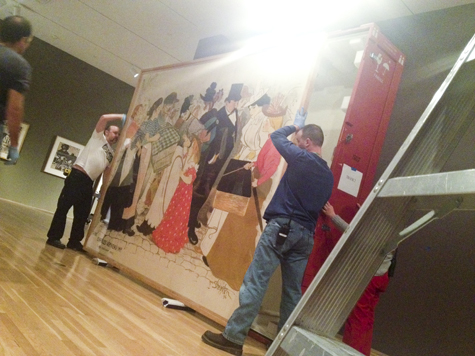
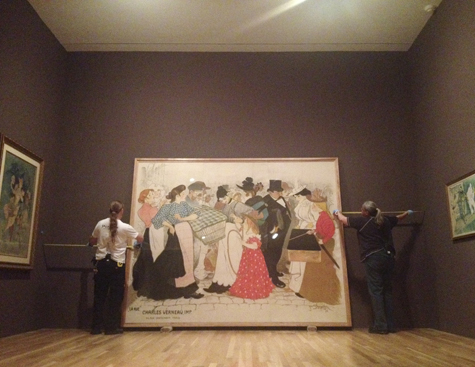
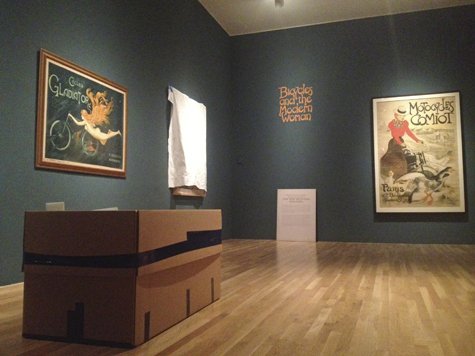
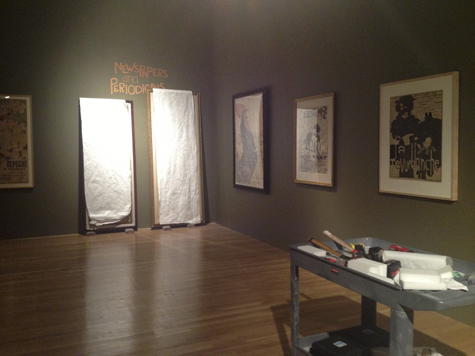
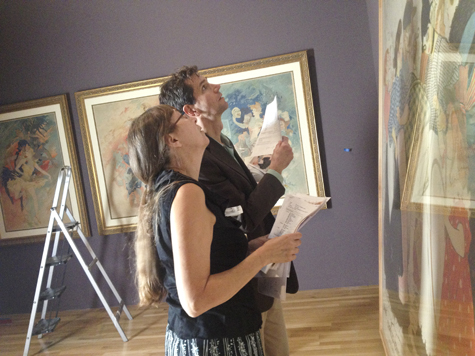
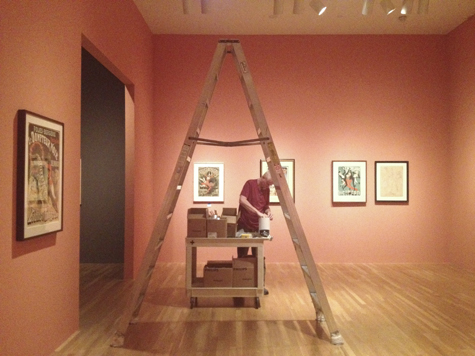
Paris arrives this Sunday at the DMA with the opening of Posters of Paris: Toulouse-Lautrec and His Contemporaries. We are excited to be one of only two venues presenting the exhibition and wanted to share with you some of the installation process. Join Dr. Heather MacDonald, The Lillian and James H. Clark Associate Curator of European Art and curator of the DMA presentation, at 2:00 p.m. this Sunday for an Opening Day Exhibition Tour. Check out all of our upcoming related programming here.

Calling all Dallasites

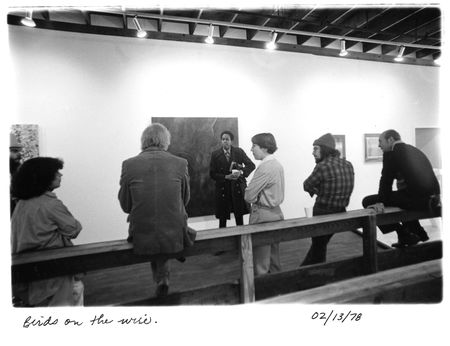
“Birds on the wire” Photograph from the opening of a 500X Gallery show, February 13, 1978. 500X Gallery Records, 1977-1996.

In 2013 the Dallas Museum of Art will celebrate a milestone in our institutional history: the 1963 merger of the Dallas Museum for Contemporary Art with the Dallas Museum of Fine Arts. The DMA is marking this occasion by launching an initiative to show how this moment was a starting point for community-wide interest in and support of contemporary art.
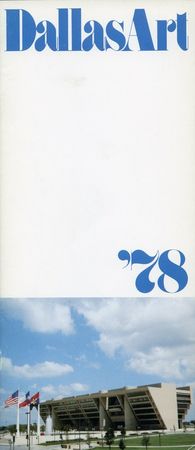
Brochure for the “Dallas Art ’78” exhibition at Dallas City Hall, Publications and Printed Materials.

By looking at the North Texas art scene over the past five decades, we hope to bring greater public awareness to the richly varied but widely undiscovered history of the area’s contemporary art avant-garde. People, places, and events are the subjects of this project, as we look outside the Museum to topics like the emergence of the gallery scene in the late 1960s with galleries like Valley House, C. Troup Gallery, Haydon Calhoun, Mary Nye, and more, and the establishment of an artists’ community as collectives take shape (the Oak Lawn Gang in the 1960s, the Oak Cliff Four and the “842s” in the 1970s, Toxic Shock in the 1980s, A.R.T.E. and the Good/Bad Art Collective in the 1990s, etc.) and artist-run spaces emerge, like A.U.M. Gallery,  D.W. Coop, 500X Gallery, and Stout McCourt Gallery.
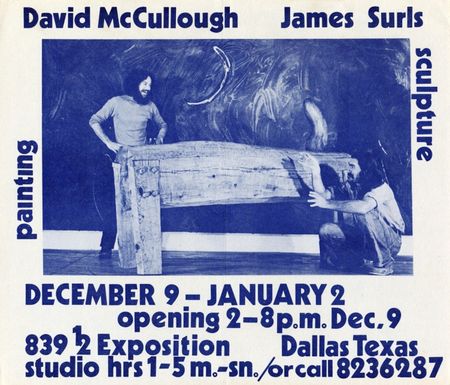
Gallery announcement for David McCullough’s studio exhibition of his work with James Surls in December, c. 1976. Paul Rogers Harris Collection of Dallas and Texas Gallery Announcements.
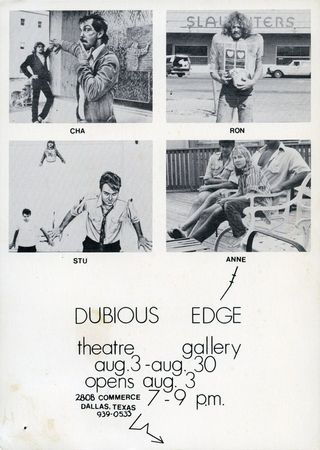
Gallery announcement for “Dubious Edge” exhibition at Theatre Gallery, c. 1987. Paul Rogers Harris Collection of Dallas and Texas Gallery Announcements.
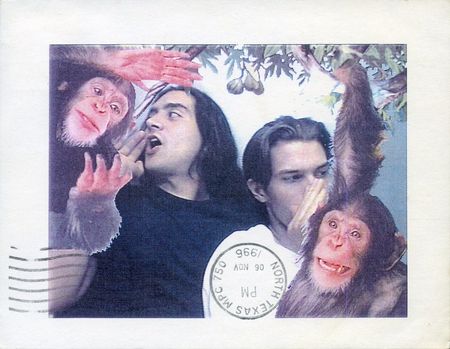
Gallery announcement for “el clumsio” group exhibition at Angstrom Gallery, November – December, 1996. Paul Rogers Harris Collection of Dallas and Texas Gallery Announcements.

Over the past year, we have developed the content that will form the basis of an exhibition scheduled to open at the Museum in May 2013. During this time, I have conducted oral history interviews with artists, arts administrators, collectors, and writers; waded through thousands of gallery announcements dating as far back as the late 1960s; burned my eyes from looking through miles of microfilmed collections; and done my best to get the word out that the DMA wants to know YOUR story.
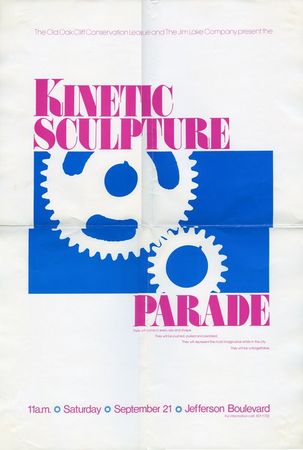
Poster for the Old Oak Cliff Kinetic Sculpture Parade sponsored by the Oak Cliff Preservation League, September 21, 1985. Paul Rogers Harris Collection of Dallas and Texas Gallery Announcements.

So let’s hear it – do you have anything you would like to share with us regarding your experience with contemporary arts in North Texas? Is there anything you are certain MUST be part of this project? This is my formal open call to Dallasites: as we develop the content for the exhibition, we are going to do our best to represent Dallas and its surroudning arts community over the past fifty years, but we do need your help. What is sitting in your closet? Do you have photographs from gallery openings or performances? Records from your gallery? Press releases announcing your show? Publications that help to document the “scene”?
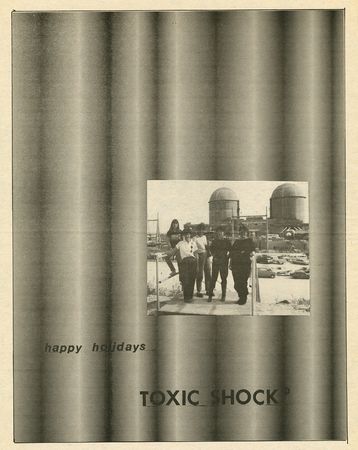
Toxic Shock page from Bwana Arts, vol. 3, 1982. Paul Rogers Harris Papers, 1959-2001.

The exhibition is only the first step as we present to you what we have found. In the coming years, we hope to add to the DMA Archives, making it the primary repository for the history of contemporary art in North Texas. So if you have something you’d like to share (be it tangible ephemera or abstract memories), please do not hesitate to contact me at larnold@DallasMuseumofArt.org. I look forward to hearing from you!
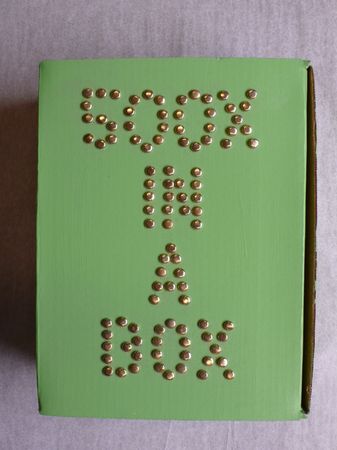
“500X in a Box,” box of a single work by every member of 500X in 1989. Charles Dee Mitchell Collection.

Leigh Arnold is the Dallasites Research Project Coordinator at the Dallas Museum of Art.
Bon Voyage to The Icebergs

Considered by some to be the DMA’s Mona Lisa, Frederic Edwin Church’s The Icebergs has been a destination icon for museum visitors ever since it was placed on display in 1979. Measuring slightly over 7 feet high and 11 feet wide in its frame, and weighing a cumbersome 425 pounds, it is the anchor of the American galleries in both a figurative and literal sense. Consequently, its presence is as keenly felt as its absence. Yet, there are times when a museum must make a sacrifice—albeit reluctantly–in the support of new art historical scholarship.

Frederic Edwin Church, “The Icebergs,” 1861, oil on canvas, Dallas Museum of Art, gift of Norma and Lamar Hunt, 1979.28

The Icebergs is to play a pivotal role in the presentation of the upcoming exhibition The Civil War and American Art, which will open at the Smithsonian American Art Museum and travel to the Metropolitan Museum of Art in New York. Longtime members of the DMA will be pleased to know that this important exhibition has been organized by the DMA’s former curator of American Art Dr. Eleanor Jones Harvey, who has been with the Smithsonian American Art Museum since 2003. The exhibition will feature key works by America’s greatest artists of the era. These works channeled the conflicting emotions of a nation coming to grips with a reality that altered the very fabric of its identity and transformed its once unassailable optimism into dread for the unknown outcomes that lay ahead.

Frederic Edwin Church, “Cotopaxi,” 1862, oil on canvas, Detroit Institute of Arts, Founders Society Purchase, Robert H. Tannahill Foundation Fund, Gibbs-Williams Fund, Dexter M. Ferry Jr. Fund, Merrill Fund, Beatrice W. Rogers Fund, and Richard A. Manoogian Fund, Photo courtesy Detroit Institute of Arts

Key to charting the path from America’s loss of faith to its eventual hope of redemption will be four monumental landscapes by Frederic Church: The Icebergs, Cotopaxi, Aurora Borealis, and Rainy Season in the Tropics. The first two works have often been paired in a binary context of arctic and tropics, but, in this presentation, their multiple layers of meaning are to be revealed. In the case of The Icebergs, Church changed its title to The North for its debut just twelve days after the beginning of the war in 1861. He also donated all the ticket proceeds to the Union Red Cross. In his painting of the following year, Cotopaxi, Church depicted paradise rent asunder by the volcanic and explosive forces of nature as a symbolic reflection of the cleaving of a nation. A month before the end of the war, Church exhibited Aurora Borealis, wherein the darkness of the endless arctic winter echoed the weariness that dominated the American psyche. In Rainy Season in the Tropics, presented in 1866 after the close of the war, Church delivered the viewer—and a nation—from its trials and tribulations into a paradise redeemed by a nourishing rain and the promise of a double rainbow.

Frederic Edwin Church, “Aurora Borealis,” 1865, oil on canvas, Smithsonian American Art Museum, Gift of Eleanor Blodgett, Photo courtesy Smithsonian American Art Museum

Frederic Edwin Church, “Rainy Season in the Tropics,” 1866, oil on canvas, Fine Arts Museums of San Francisco, Museum purchase, Mildred Anna Williams Collection

For those wanting to bid a fond farewell to The Icebergs before its departure, please be sure to do so before mid-October, when it will be removed from view. If you would like to see the DMA’s masterpiece in the context of the exhibition, it will be at the Smithsonian American Art Museum in Washington, D.C., November 16, 2012–April 27, 2013, and then in New York at the Metropolitan Museum of Art May 21–September 2, 2013.

Sue Canterbury is The Pauline Gill Sullivan Associate Curator of American Art at the Dallas Museum of Art.

iMuseum: iCame, iSaw, iDid

Next week our September Late Night will be our “iMuseum 2.0” event, where visitors can use technology to explore the DMA and participate in new, interactive programs. You will be able to text a work of art with your questions, listen to the winner of our Be Our Main Stage Act contest, go on a Choose Your Own Adventure tour, have conversations with our curators in the galleries, go on our Twitter Treasure Hunts, and more!

Here are just a few of the new programs we will be offering on September 21:

Text a Work of Art
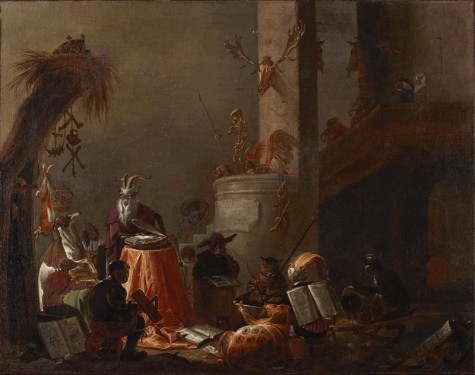
Do you sometimes wonder what a work of art is thinking or feeling? Well now you can find out when you text a work of art your question and get a response! There will be three works of art answering your questions throughout the night, including Cornelis Saftleven’s College of Animals, so start thinking of your questions.

Cornelis Saftleven, “College of Animals,” 1655, oil on canvas, Dallas Museum of Art, The Karl and Esther Hoblitzelle Collection, gift of the Hoblitzelle Foundation

Silent Soundtrack
Visitors will be able to check out a pair of headphones, provided by Austin Silent Disco, se -up with three different music channels. Each channel will have a soundtrack picked by DMA staff for a specific gallery. After you listen to our choices, we invite you to share your own ideas about the music you would choose to accompany a gallery or work of art.

Personal Tours
Check out a docent for a personal thirty-minute tour of two to three works in the DMA’s collection. Choose from themes like Love & Lust, Big & Small, Land & Sea, Work & Play, Secrets & Stories, Gods & Heroes, or Good & Bad. Docents will be available on a first-come, first-served basis.

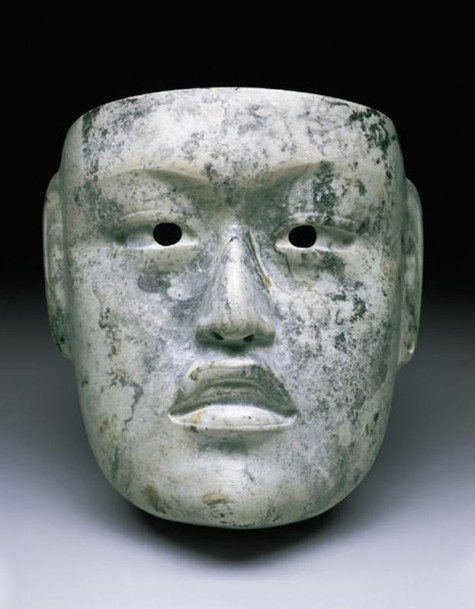
One of the works you will hear about on your personal tour.
Mask, Mexico, state of Veracruz, Rio Pesquero, Gulf Coast Olmec culture c. 900-500 B.C., jadeite, Dallas Museum of Art, gift of Mr. and Mrs. Eugene McDermott and The Eugene McDermott Foundation and Mr. and Mrs. Algur H. Meadows and the Meadows Foundation, Incorporated

Art Trivia
Do you know how many paintings by Gerald Murphy are in the DMA’s collection? If so, participate on your own or bring a group of friends and play as a team, in our Art Trivia contest. There will be several rounds and the winners of each round will win great prizes!

Gerald Murphy, “Razor,” 1924, oil on canvas, Dallas Museum of Art, Foundation for the Arts Collection, gift of the artist

Stacey Lizotte is Head of Adult Programming and Multimedia Services at the Dallas Museum of Art.

Seldom Scene: Scaled Down

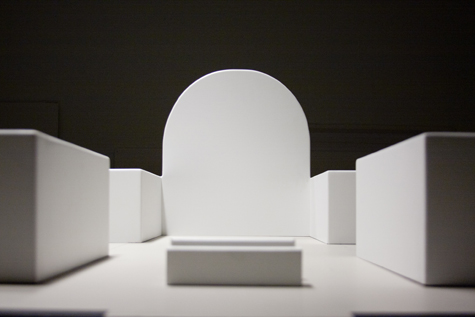
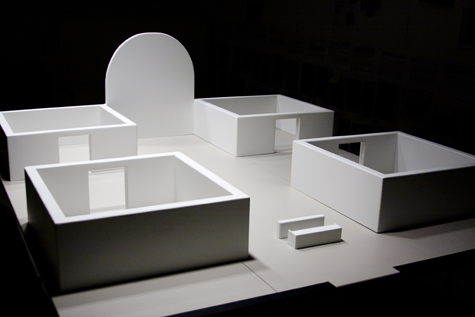
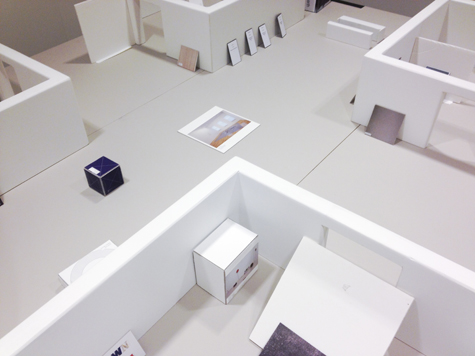
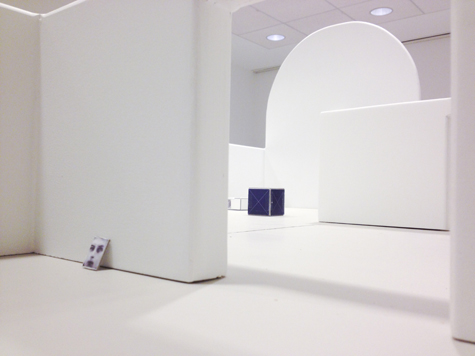
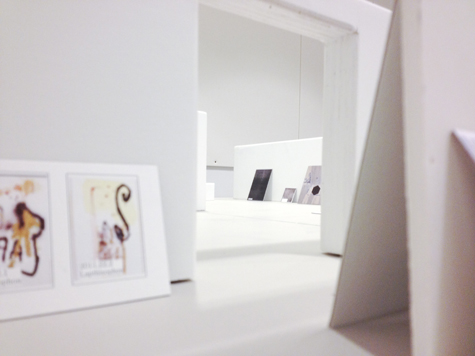
The new DMA exhibition Variations on Theme: Contemporary Art 1950s–Present explores themes and ideas that drive an artists’ creative process. With this concept in mind, the Contemporary Art Department thought it would be the perfect opportunity to share one way that curators tap into their own creative processes when developing a new exhibition – by using a scale model. Curators use scale models much like they would a doll house, to rationalize the gallery space in accordance with the placement of the art objects. Variations on Theme is installed in the gallery spaces known as the Barrel Vault and Quadrant Galleries, which are roughly 11,500 square feet. DMA carpenter Dennis Bishop constructed a wooden model of these galleries with a scale of 1:24 (one half-inch equals one foot). The objects in Variations on Theme are of various sizes and mediums and are complicated to install, so in order to visualize how certain works might look next to one another DMA exhibitions intern Jasmine Shevell created maquettes of each work that are proportional to the scale model of the exhibition space. Once each object is set into place, the design model is shared with our talented exhibitions team, registrar, and preparators, who bring the curator’s model to life!
Variations on Theme is on view at the Dallas Museum of Art until January 27, 2013.

Meg Smith is a Curatorial Administrative Assistant at the Dallas Museum of Art. Photography is by Adam Gingrich, the Marketing Administrative Assistant at the Dallas Museum of Art.

Seldom Scene: Load Three Tons and What Do You Get?

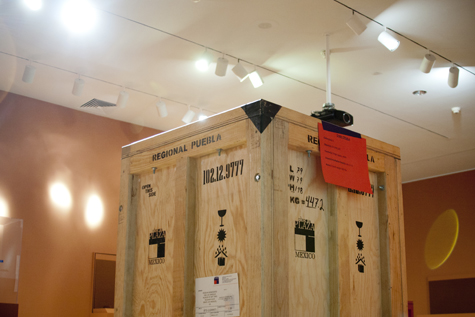
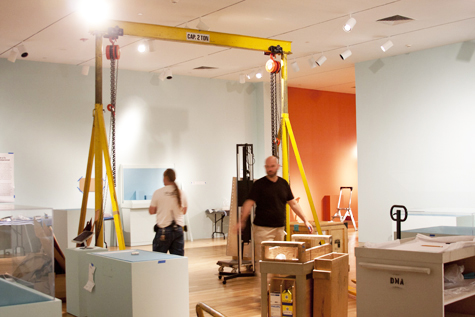
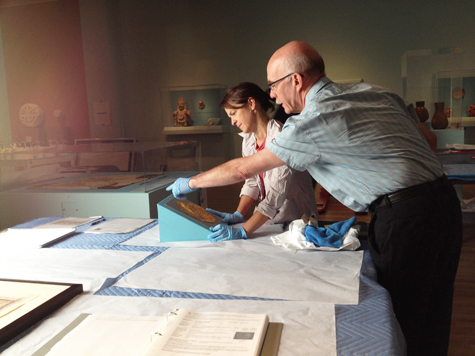
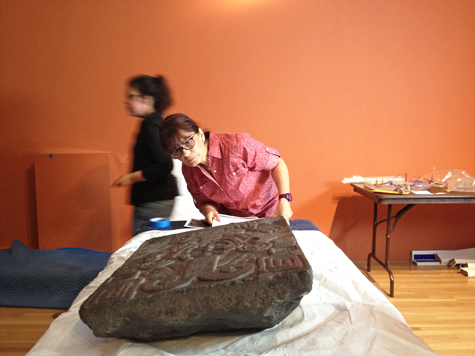
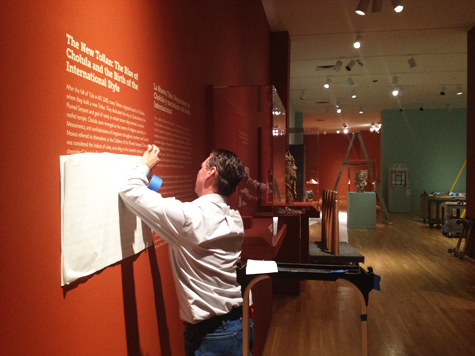
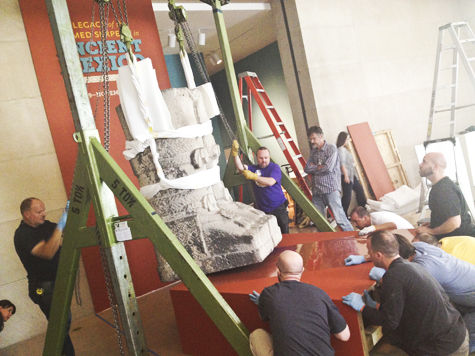
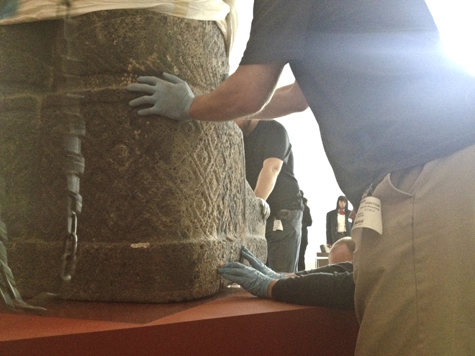
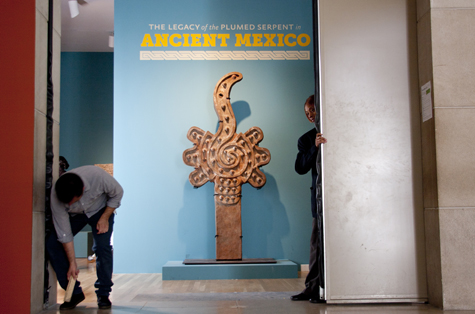
We have been receiving and unpacking crates for a couple of weeks in preparation for the opening of The Legacy of the Plumed Serpent in Ancient Mexico on Sunday, July 29. This exhibition contains a number of works weighing hundreds of pounds, including a sculpture of sandaled feet weighing more than three tons, so we brought in some extra equipment and helping hands to assist in the installation process, which you can see below. Join us this Saturday, July 28, for a free sneak peek of the exhibition (normally $14) during the WFAA Family First Day from 11:00 a.m. until 5:00 p.m.

Photography by Adam Gingrich, Administrative Assistant for Marketing and Communications

Let Your smARTphone Be Your Guide

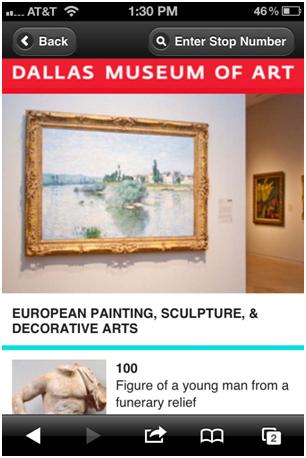
For many of us, our smartphones are an integral part of how we interact with and even interpret the world around us. At the DMA, we’ve been using smARTphone tours as a tool to do precisely that–allow visitors to become actively engaged with works of art throughout the Museum.

In 2009, when smartphones were first becoming popular, the DMA decided to experiment with creating tours for visitors on them. The Museum offers free Wi-Fi throughout the building, so we went with a web-based application that would work on any web-enabled smartphone. We gathered videos and audio clips, images, and text related to thirteen works of art in the collection and made them accessible to visitors via smartphones. There is so much fascinating information that can’t be displayed on labels and wall texts, and that first tour demonstrated the exciting possibilities offered by the interactive and multimedia features. Since then, we’ve created smARTphone tours for special exhibitions and added many stops to our collection tour.

Currently on the DMA’s smARTphone tour, you can listen to audio and video introductions for more than seventy-five works of art, learn about the artists and cultures that created them, check out community response projects like poems and sound designs, and look through archival and contextual photographs. Personally, some of my favorite choices include watching Dr. Heather MacDonald discuss why Claude Monet’s painting The Seine at Lavacourt was a failure, listening to sound designs created by UTD students in response to our Indonesian jaraik, and perusing the photographs of Coco Chanel at the Villa La Pausa.

While our initial efforts were well received, in 2011 the Museum embarked on a new phase of development of the smARTphone tours program. We revamped the design and organization, created a feature that allows multiple staff members to publish content, and added over fifty-five new stops to the tour.

From the interface design to the production of content, the DMA’s smARTphone tours are created entirely in-house and bring together staff from many of the Museum’s departments including IT, Education, Curatorial, and Marketing. While IT and Marketing worked on the new look of the tour, staff from the Education and Curatorial departments decided which works of art should be included and developed content.  The new tour stops include over one hundred video and audio clips of curators speaking about works of art and artist biographies, and reflect the collaborative efforts of the various departments.

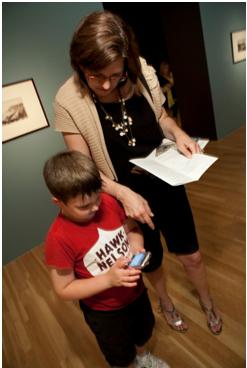
It was thrilling to see all of our hard work come to fruition when the new stops were released in February 2012 at the opening of the exhibition Face to Face: International Art at the DMA. The real highlight, though, is to see visitors using it. While conducting an evaluation of the smARTphone tour, I spoke with a mom and her twin 9-year-old boys, who said they had looked at every video in Face to Face and wanted to look at more when they got home!

Feedback from our visitors is especially important, and periodic evaluation has played an integral role in the development of the tours. From user experience to content, we’ve assessed visitor experiences with the smARTphone tours four times over the past several years. Each time we learn something new.

If you’re at the DMA or at home, be sure to check out the smARTphone tour at dma.mobi.

Laura Bruck is a museum consultant and also adjunct assistant professor of art history at the University of Dallas.

We’ve Looked at Clouds

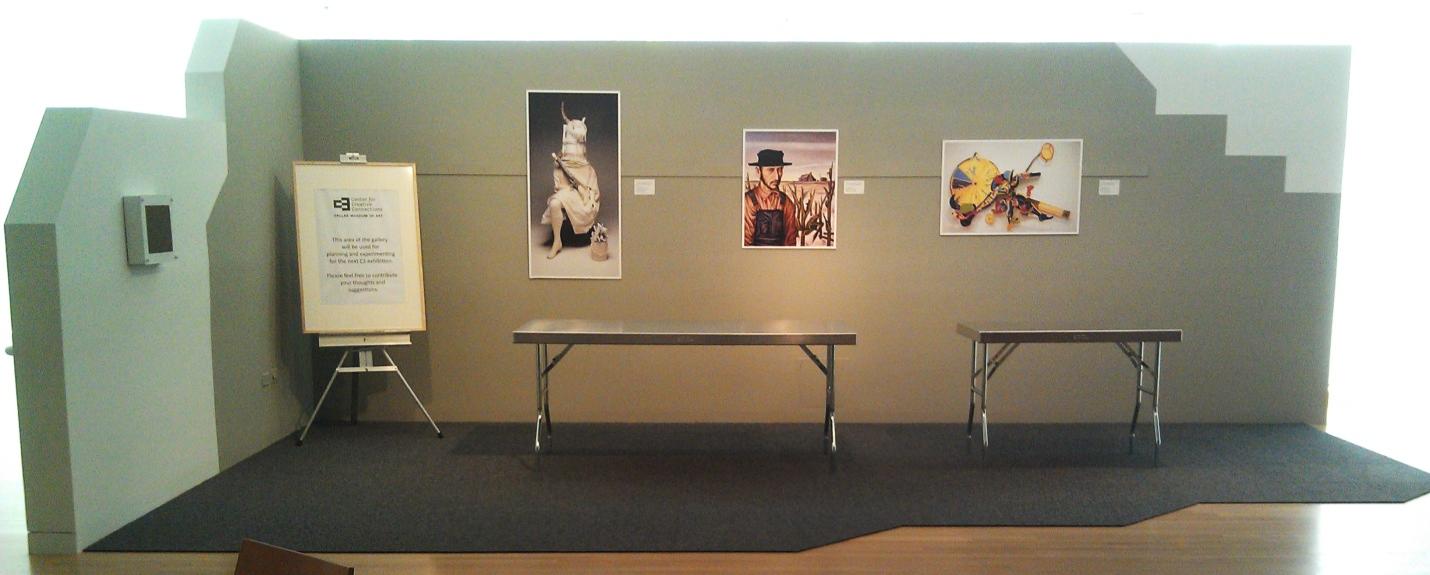
If you’ve come into the Center for Creative Connections (C3) within the past month you may have noticed a few changes in our space. Aside from new artworks in our Encountering Space exhibition, we have transformed one area into a Prototyping Station. What does that mean exactly? Well, in this space we use reproductions of works of art to engage our visitors in conversations. These conversations allow us to better understand visitors’ perspectives and inform our thinking in the development of exhibitions. For the past month, we have focused on three works of art from our collection.

We often have so much background information about a work of art that it is difficult to decide how much of it visitors need to know. There is a delicate balance between providing information and allowing visitors to learn through their own observations. While we did these tests, we only provided a minimal amount of information besides the image.

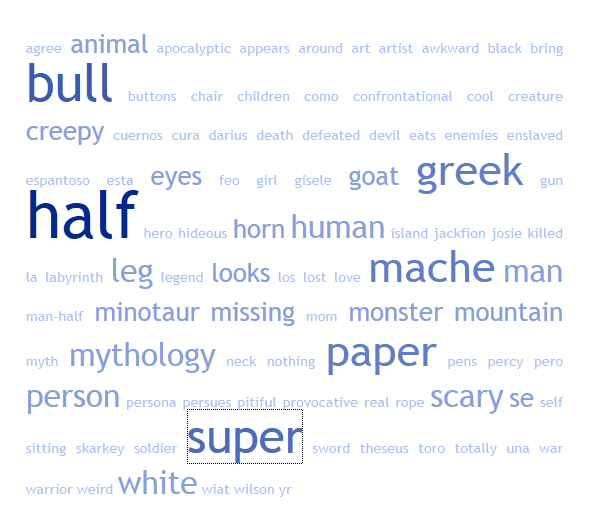
Our dialogues have included both face-to-face conversations and written responses to questions we’ve posed. We have documented these responses and decided to make word clouds to show you what we have received so far. Word clouds, or tag clouds, are a way of visualizing data. You enter text into a computer program, and it generates a visual representation of which words are repeated most often. The words that are used most often appear larger. Take a look at the following word clouds we generated based on visitors’ responses to the following:

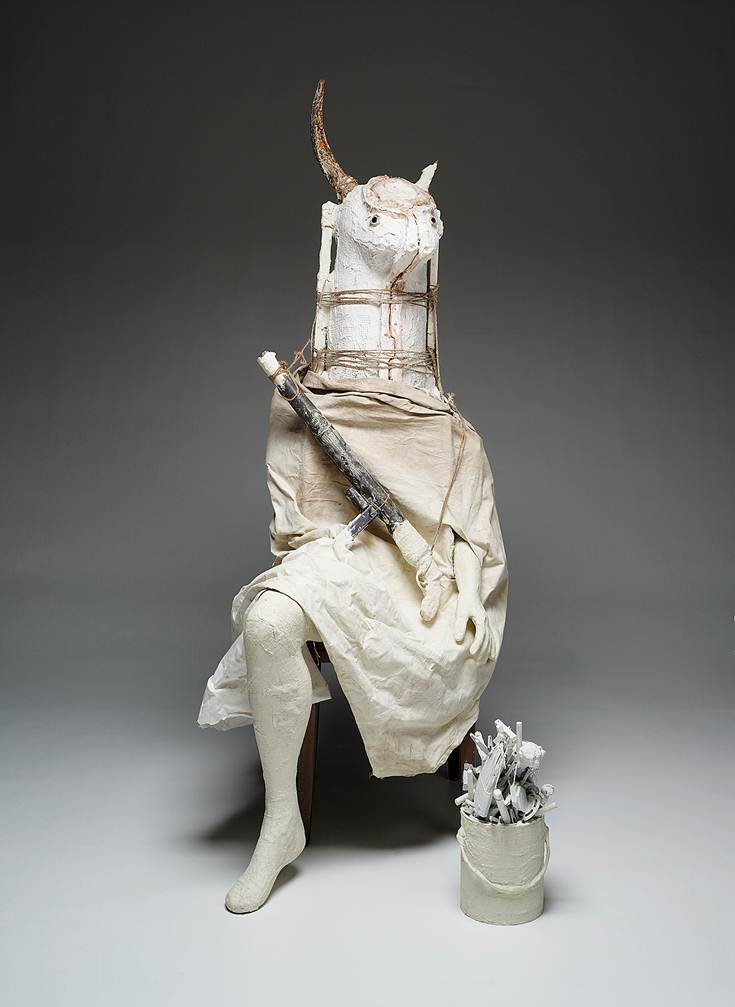
“The title of this work of art is The Minotaur. Tell us what you know about the Minotaur.”

“We are looking for descriptive words for this work of art. List what comes to mind when you look at this picture.”

Marcel Dzama, “The Minotaur,” 2008, plaster, gauze, rope, fabric, chair, bucket, and paintbrushes, Dallas Museum of Art, DMA/amfAR Benefit Auction Fund, 2008.43.2.a-e, (c) Marcel Dzama

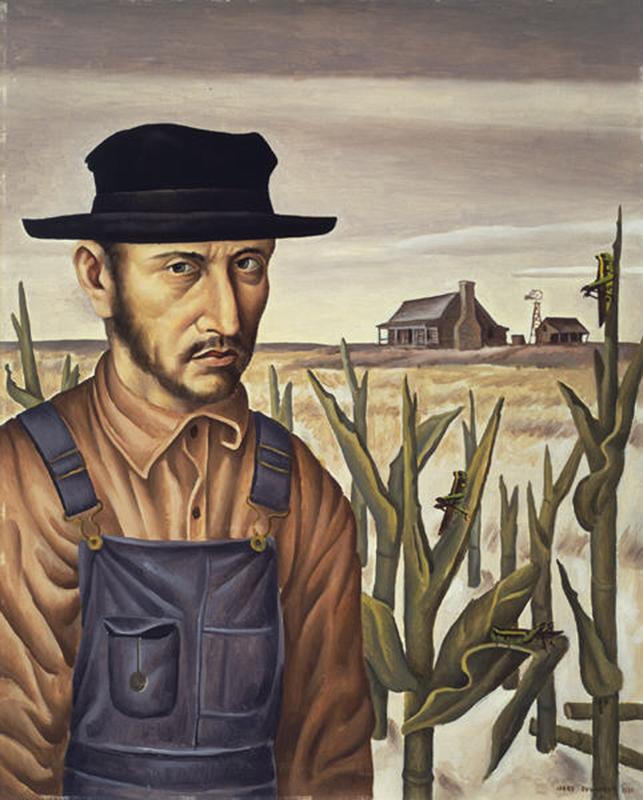
Jerry Bywaters, “Share Cropper,” 1937, oil on Masonite, Dallas Museum of Art, Allied Arts Civic Prize, Eighth Annual Dallas Allied Arts Exhibition, 1937.1

Visitors noticed many things, ranging from objects to emotions.Why is this process important? We want to gather input from visitors. Putting this testing area in the middle of the gallery allows visitors to see the process we use to develop interpretive components for a work of art. It also gives Museum-goers a chance to contribute information and a perspective that may be different from the staff’s, which is an important component of the C3 mission.

The next time you are at the Museum, stop by the C3 and share your responses in our new prototyping area.

Jessica Nelson is the C3 Gallery Coordinator at the Dallas Museum of Art.

Archives

Categories