Archive for the 'Behind-the-Scenes' Category


Preserving Pollock: A Conversation about Art Conservation

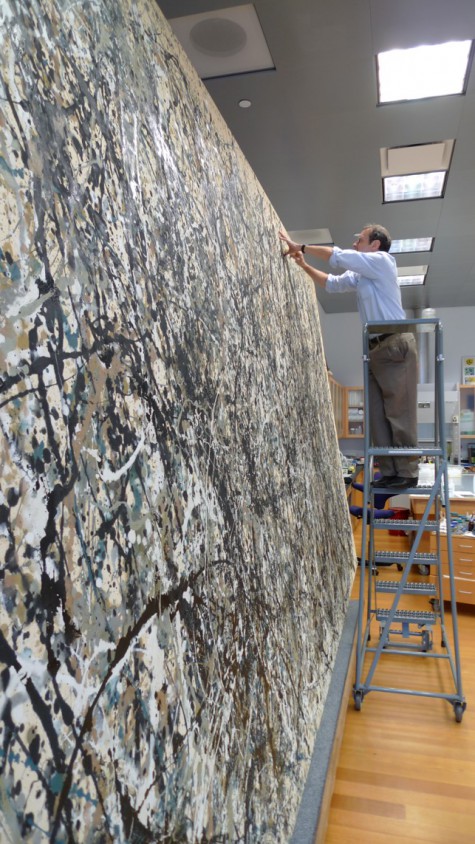
Jim Coddington at work on Jackson Pollock’s One: Number 31, 1950 in the Conservation Studio at MoMA

Jim Coddington at work on Jackson Pollock’s One: Number 31, 1950 in the Conservation Studio at MoMA

I’ll be talking with Jim Coddington, the Chief Conservator at the Museum of Modern Art in New York, this Friday evening, November 20, at 9:00 p.m. about his extensive experience with the work of Jackson Pollock. We’ll be discussing the materials and techniques Pollock used in his paintings, the ways in which those materials have aged and changed over the years, and how conservators approach the preservation challenges that Pollock’s works present.

For a preview of some of the topics that we’ll touch upon, you can have a look at the “Jackson Pollock Conservation Project” blog posts that Jim has been making over the past few years.

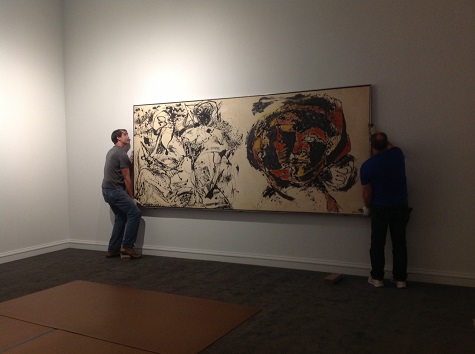
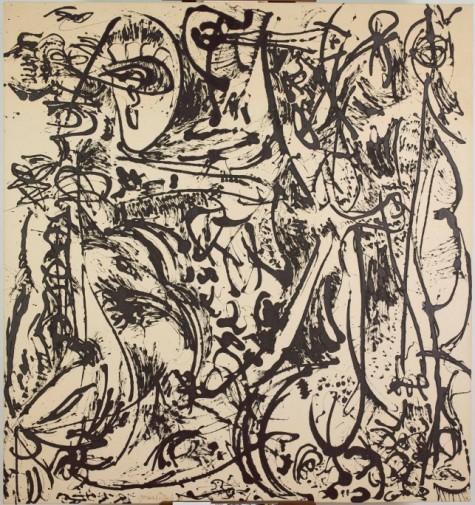
MoMA has generously lent Echo: Number 25, 1951 to the Dallas Museum of Art for the Jackson Pollock: Blind Spots exhibition, opening Friday, November 20:

Echo Number 25 1951

Jackson Pollock, Echo: Number 25, 1951, 1951, enamel on canvas, The Museum of Modern Art, New York, Acquired through the Lillie P. Bliss Bequest and the Mr. and Mrs. David Rockefeller Fund, © 2015 The Pollock-Krasner Foundation/Artists Rights Society (ARS), New York

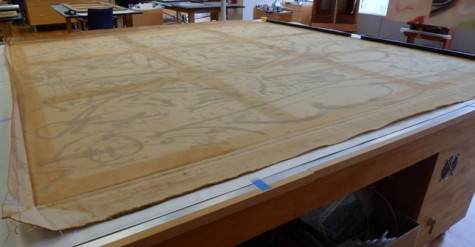
Jim carried out technical studies and conservation treatment on Echo, and we will be discussing some of the details of that work during our Late Night conversation. Here is a photo of the reverse of Echo during its treatment, with the stretcher removed, which reveals darkening of the canvas where it had been in direct contact with the wood stretcher support:

Conservation Blog Post

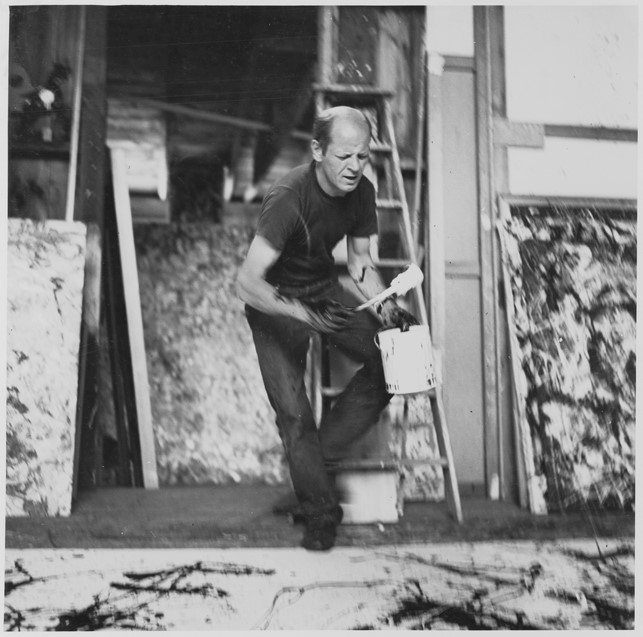
In addition to a behind-the-scenes look at the conservation treatments that Jim has undertaken, we’ll also examine Pollock’s working methods. Jim and his colleagues at MoMA have done pioneering analytical studies of Pollock’s materials and techniques, lending new insight into our understanding of this extraordinary artist’s work. Join us this Friday at the DMA!

Pollock in Studio

Source: MoMA.org

Mark Leonard is the Chief Conservator at the DMA.

A Pollock Comes Home

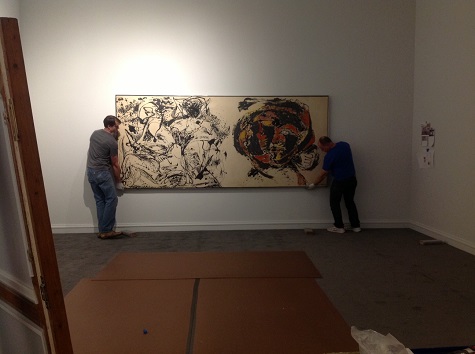
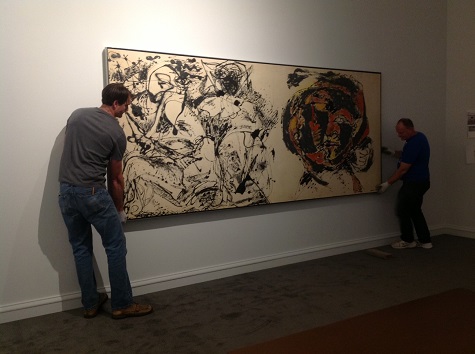
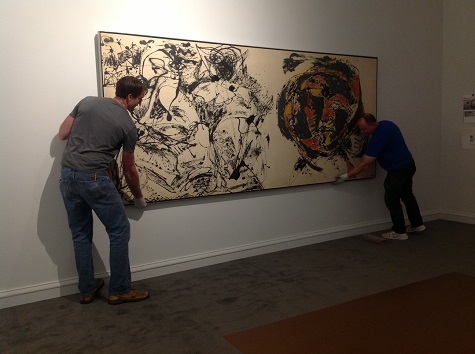
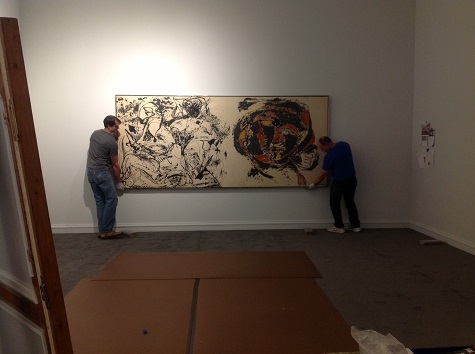
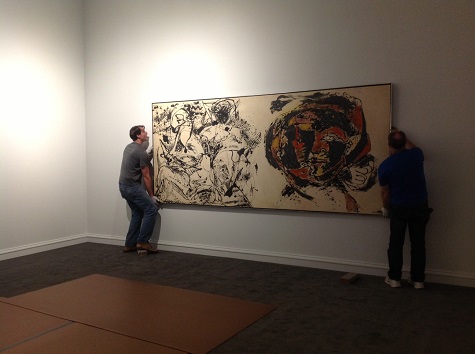
You may have heard about an exhibition that we are just a little bit excited about here at the DMA. Since we cannot wait for you to experience Jackson Pollock: Blind Spots, which opens this Friday during Late Night, we thought we would share the homecoming of the DMA’s Portrait and a Dream, which was recently installed inside the exhibition. Jackson Pollock: Blind Spots will be on view November 20, 2015, through March 20, 2016.

Kimberly Daniell is the Manager of Communications and Public Affairs at the DMA.

Black and White: Pollock’s Breakthrough Paintings

Artifacts, the DMA Member magazine,  invited Jackson Pollock’s nephew Jason McCoy to share his thoughts on his uncle’s work on the eve of the DMA’s exclusive presentation of Jackson Pollock: Blind Spots, which opens on Friday, November 20. We hope you are as delighted by his article as we were to publish it.

Breakthrough: Pollock’s Black Paintings
By Jason McCoy
Original publish date: Artifacts Fall 2015
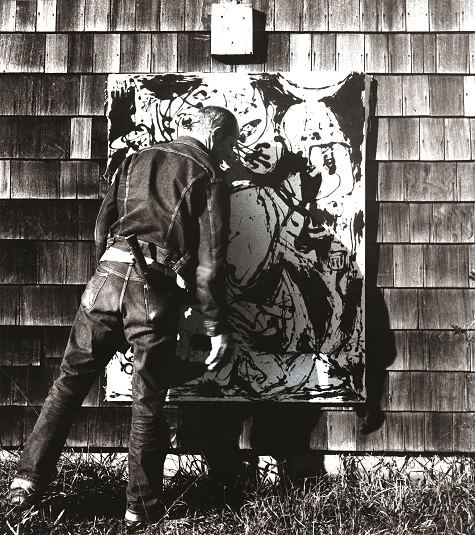
Jackson Pollock, n.d. Photograph by Hans Namuth, Courtesy Center for Creative Photography, University of Arizona © 1991 Hans Namuth Estate

Jackson Pollock, n.d.
Photograph by Hans Namuth, Courtesy Center for Creative Photography, University of Arizona © 1991 Hans Namuth Estate

When DMA curator Gavin Delahunty first talked to me about his dream of organizing an exhibition of Jackson Pollock’s so-called Black and White paintings, I was of course intrigued but thought to myself “good luck.” It is notoriously difficult to organize any Pollock show, and I knew the paintings were scattered all over the world. But the good luck seems now to be ours—Gavin has pulled it all off and we have been given the great good fortune to be able to view the largest assemblage of these works together, ever. Jackson Pollock is one of the most recognizable names in modern art, but we generally associate the name not with a single image of a specific painting but rather with the idea of paintings that consist of masses of fine lines, skeined across the picture’s surface in seeming confusion.

I appreciate that the Blind Spots exhibition will present an additional view of Pollock’s oeuvre, the paintings that followed the so-called pourings. These paintings were yet another breakthrough for Jackson Pollock, because here he was able to convey the certainty and discipline of works that, for the most part, were made in one session. There is a clarity to the paintings, a minimalism and a simplicity that make it all look so easy and pre-ordained. Not so, of course, but what is revealed is a master’s ability to get it right the first time, and so let the paintings stand for themselves. They are a powerful, fascinating lot, crowned with one of my personal favorite paintings of all, Portrait and a Dream, a longtime resident of Dallas.

Blind Spots will enable all of us to reevaluate the breadth and depth of Pollock’s accomplishments. It will illuminate that there was most often a figurative element in all of Pollock’s paintings, as images of man or beast are easy to recognize in Pollock’s first gestures on the plane. We can recall a comment he made to this effect, that in these paintings the “figure is coming through.” Such recognizable forms in fact caused consternation with certain modernist critics at the time, who did not care to acknowledge less than fully abstract painting as being modern.

Blind Spots will also include examples of Pollock’s interest in scale. In 1951, with the help of his brother, Sanford McCoy, he chose six paintings not at all similar in size to be used in a suite of serigraphs, a selection of which are exhibited in this exhibition. With a computer today, this type of curiosity might seem obvious, but this was not the case sixty-five years ago.

Had Pollock stopped after his “drip paintings” of the late 1940s he would certainly still have his place in history. Rather, his creative drive was such that it continued to evolve in unexpected ways and cover new ground, as Blind Spots reveals, accentuating that Pollock’s gift was much more than one-dimensional.
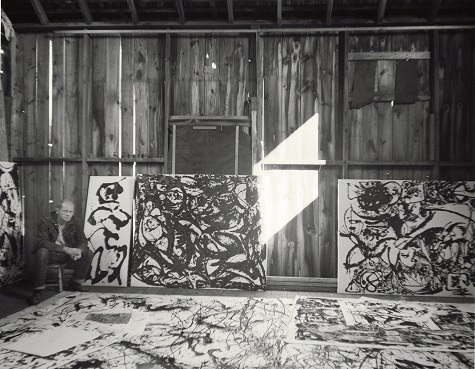
Untitled, n.d., Photograph by Hans Namuth, Courtesy Center for Creative Photography, University of Arizona © 1991 Hans Namuth Estate

Untitled, n.d., Photograph by Hans Namuth, Courtesy Center for Creative Photography, University of Arizona
© 1991 Hans Namuth Estate

–Jason McCoy is President of Jason McCoy Gallery in New York.

For more stories like the one above, all of which were created exclusively for Artifacts, visit DMA.org/members

(image: Jackson Pollock, Portrait and a Dream, 1953, oil and enamel on canvas, Dallas Museum of Art, Gift of Mr. and Mrs. Algur H. Meadows and the Meadows Foundation, Incorporated © 2015 The Pollock-Krasner Foundation / Artists Rights Society (ARS), New York)
Red Hot

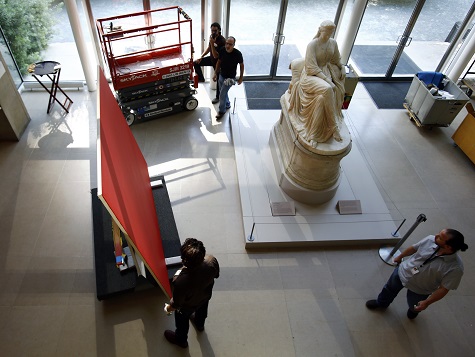
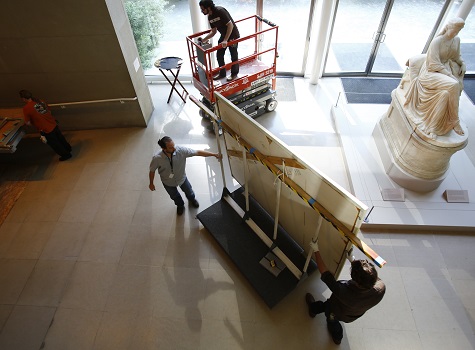
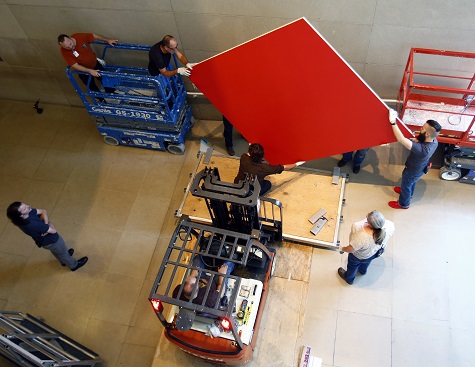
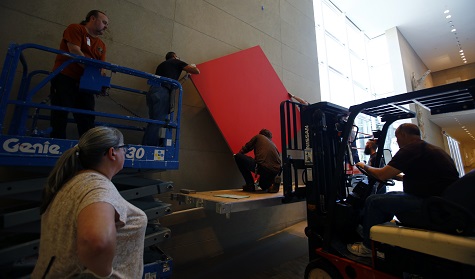
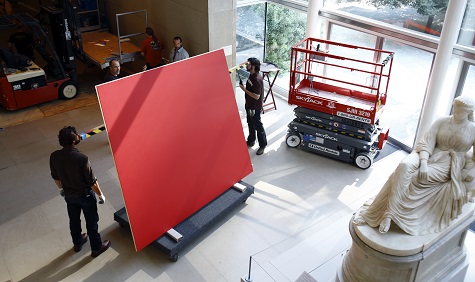
This past weekend the annual TWO x TWO for AIDS and Art benefit dinner and contemporary art auction raised a record $8.3 million! In commemoration of the event, which supports the DMA’s contemporary art acquisitions fund and amfAR’s AIDS research efforts, and in recognition of Ellsworth Kelly, this year’s honored artist, we installed the artist’s work Red Panel, which entered the DMA’s collection in 1985. You can view this work in the Museum’s Concourse on your next visit, and then stop by Untitled , which was commissioned for the Museum’s Sculpture Garden.

V.I.B. Visit to the DMA

Two week’s ago we had a special visitor at the DMA, the great godson of Gerald Murphy! The Museum’s education blog, DMA Canvas, shared his visit and snapped a few photos of 11-month-old Vance in front of his great godfather’s work Watch.

Gerald Murphy was described as “the progenitor of Pop Art” in a New York Times review of the exhibition Making it New, which the DMA presented in in 2008. His two works in the colelction serve as a precursuer to those works on view in International Pop, now open and on view through Janaury 17, 2016.

Dallas Goes Pop

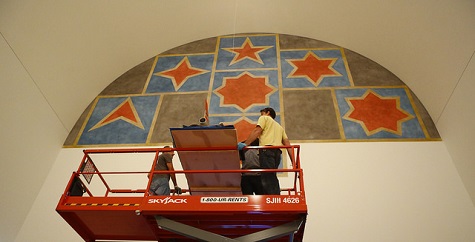
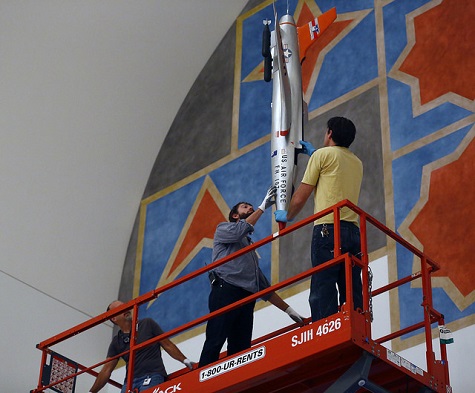
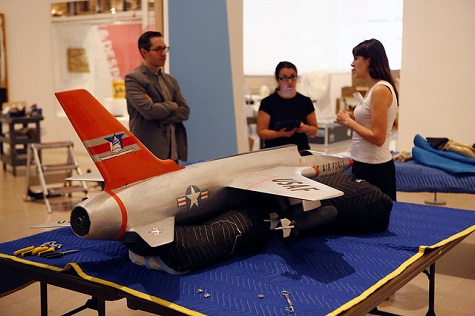
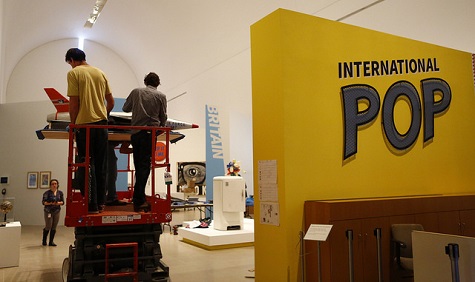
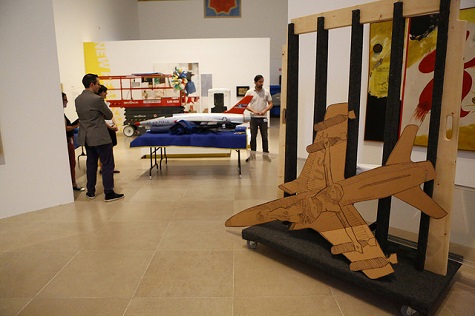
It’s been a busy, colorful week in the Museum’s Barrel Vault gallery. We have been putting the final touches on the nationally touring exhibition International Pop, which opens this Sunday, October 11, including the installation of León Ferrari’s The Western Christian Civilization (La civilización occidentaly cristiana) from 1965. This morning DFW press were given a sneak peek of the groundbreaking and critically acclaimed exhibition.  Here’s your behind-the-scenes look, and mark your calendars for Sunday.
Class of 2016

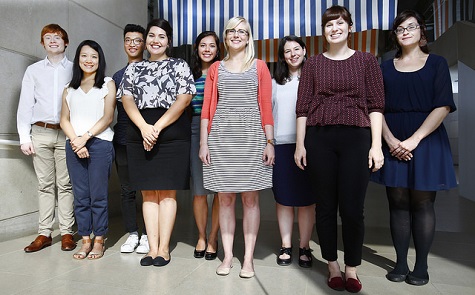
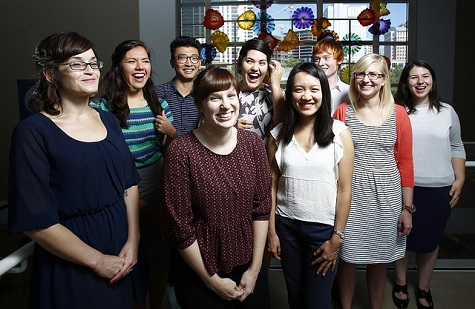
It’s time for us to welcome our 2015-2016 class of McDermott Interns to the DMA. Each year a new class joins the Museum for nine months in positions divided between the Museum’s curatorial and education departments. You will hear from each of the interns on Uncrated throughout their nine months at the DMA, but we thought we would share a few fun facts about this group before they delve into their internships.
21137137158_965ca20768_z

Devon Hersch, the McDermott Intern for Asian Art, plays the piano and has been recording music in Austin of songs he wrote during college.

Jenny Wang, the McDermott Graduate Intern for Adult Programming and Arts & Letters Live, has no luck with earrings—she’s had her ears pierced twice in the same spot but the holes always close up.

Nolan Jimbo, the McDermott Intern for Contemporary Art, has never had queso dip (a problem he hopes the other interns will help rectify). He also still has three baby teeth.

Erin Piñon, the McDermott Graduate Intern for American Art, uses coconut oil as a cure-all product (similar to Windex in My Big Fat Greek Wedding).

Paulina Lopez, the McDermott Graduate Intern for Visitor Engagement, was the only girl in her town’s regional baseball league during the 6th grade.

Emily Wiskera, the McDermott Graduate Intern for Family and Access Teaching, has had the same pen pal for eleven years. They only communicate through cryptograms and have never met face to face!

Franny Brock, the Dedo and Barron Kidd McDermott Graduate Intern for European Art, won a snow-sculpting competition in St. Paul, Minnesota.

Whitney Sirois, the McDermott Graduate Intern for Gallery and Community Teaching, made a time capsule with friends in college, but the gravel was too dry to bury it so they hid the capsule in ceiling tiles on campus . . . along with the shovel.

Amanda Kramp, the McDermott Graduate Intern for Ancient American Art, loves planning, hosting, and attending themed dinner parties. This includes themed decorations, music, and food and drink. She even requests that guests don fancy or period specific dress relevant to the theme.

Learn more about the McDermott Internships on the DMA’s website; you can apply for your chance to be a 2016-2017 McDermott Intern in January.

21298744646_751c8e1855_z

Sarah Coffey is the Education Coordinator at the Dallas Museum of Art.

Precious Objects

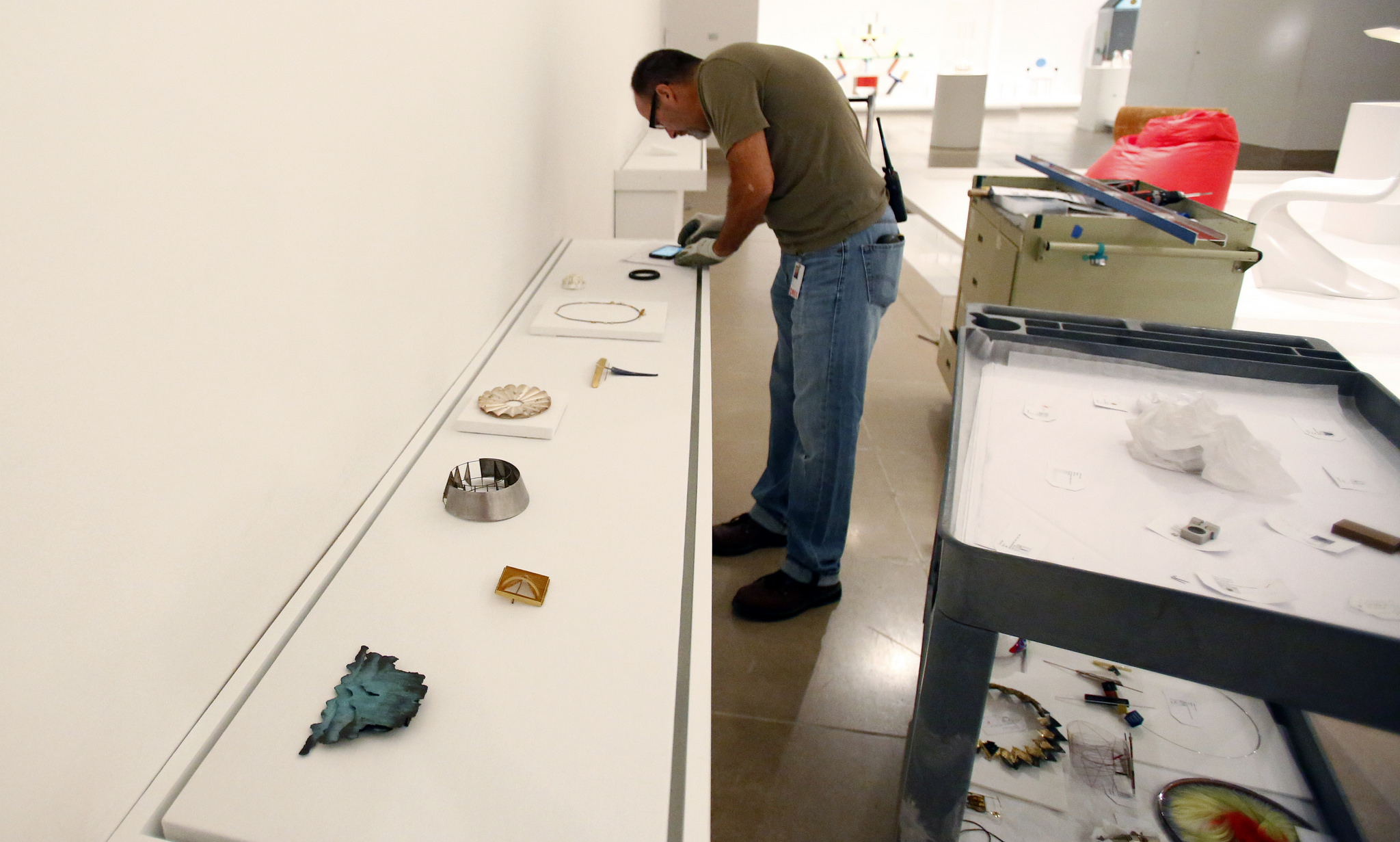
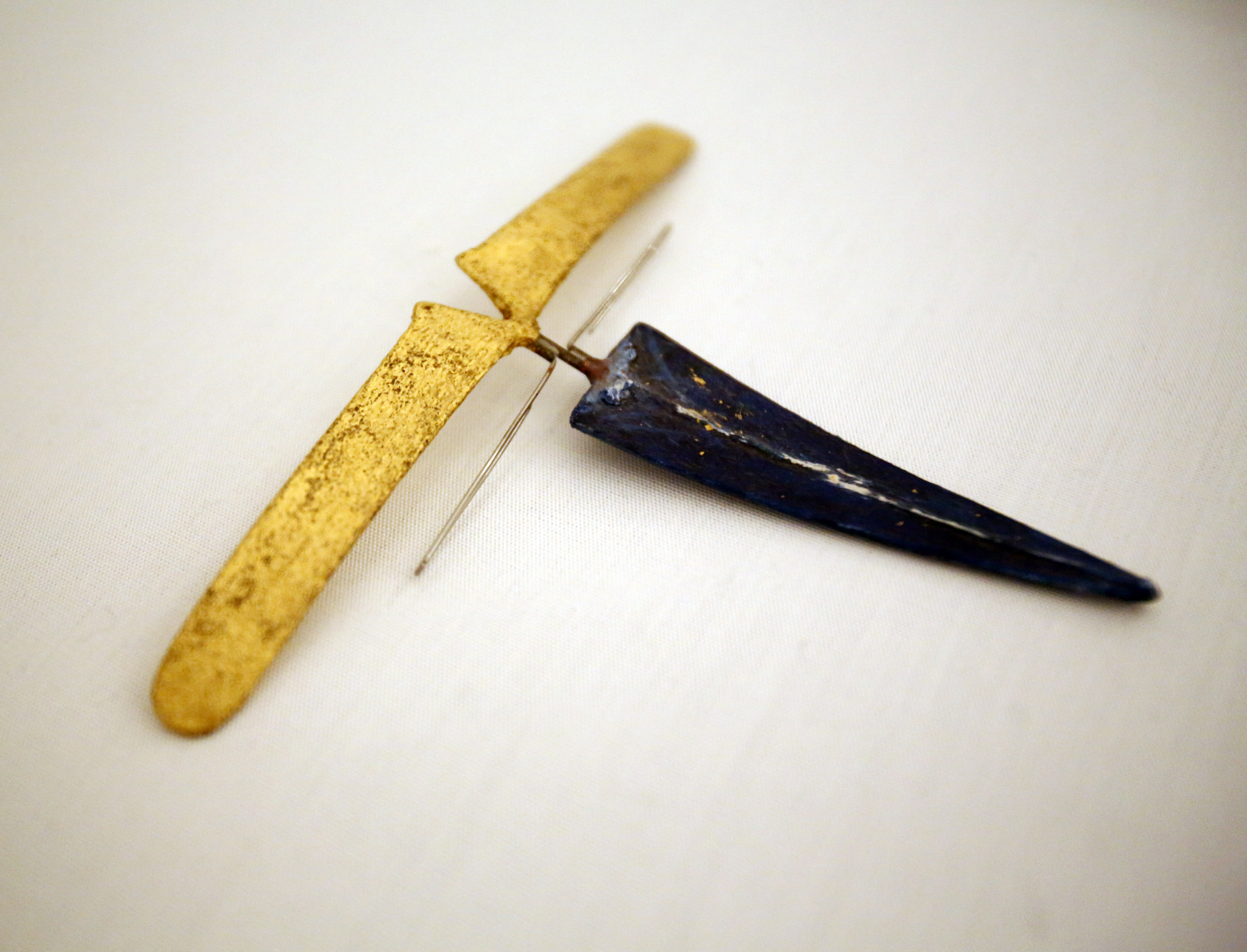
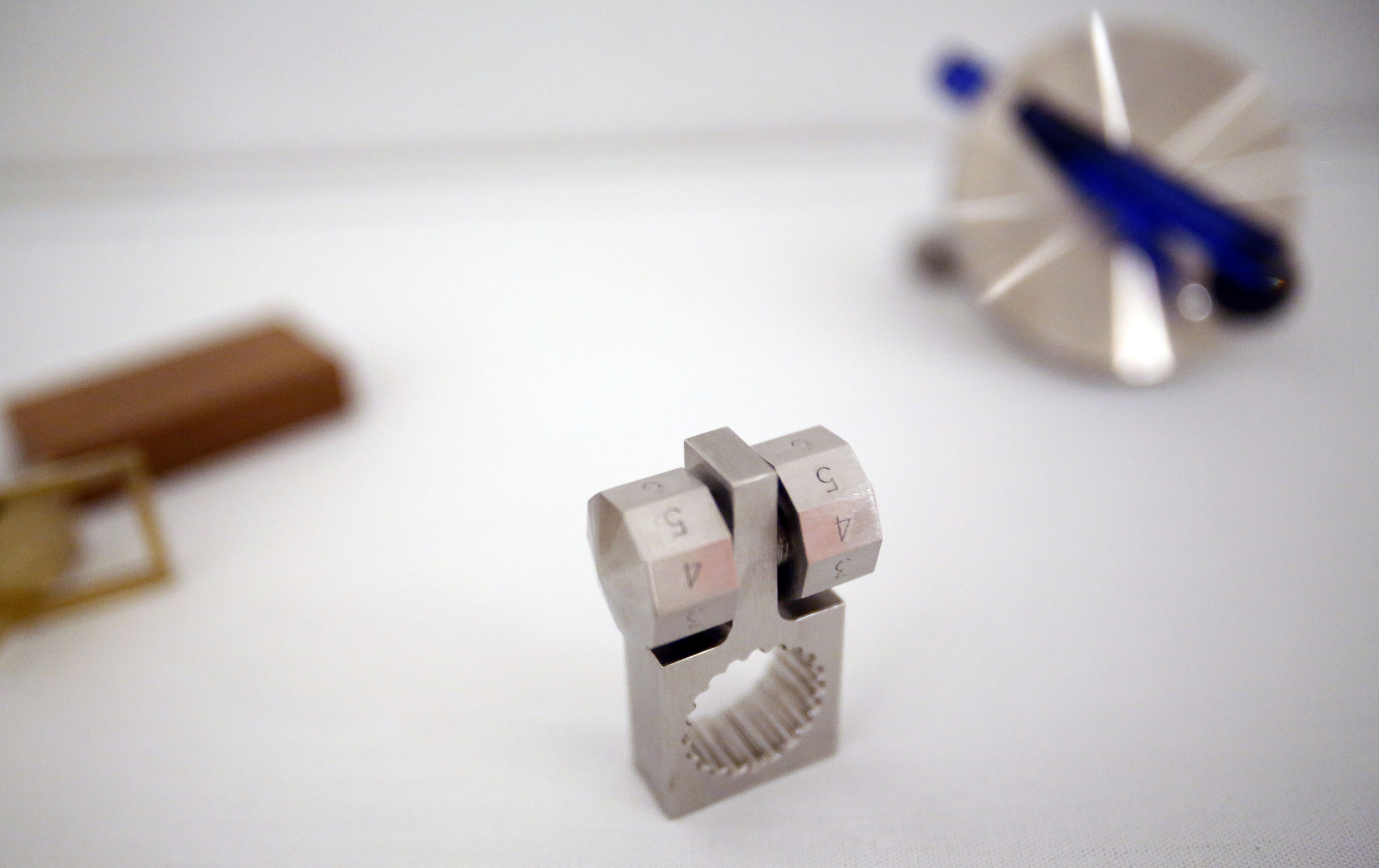
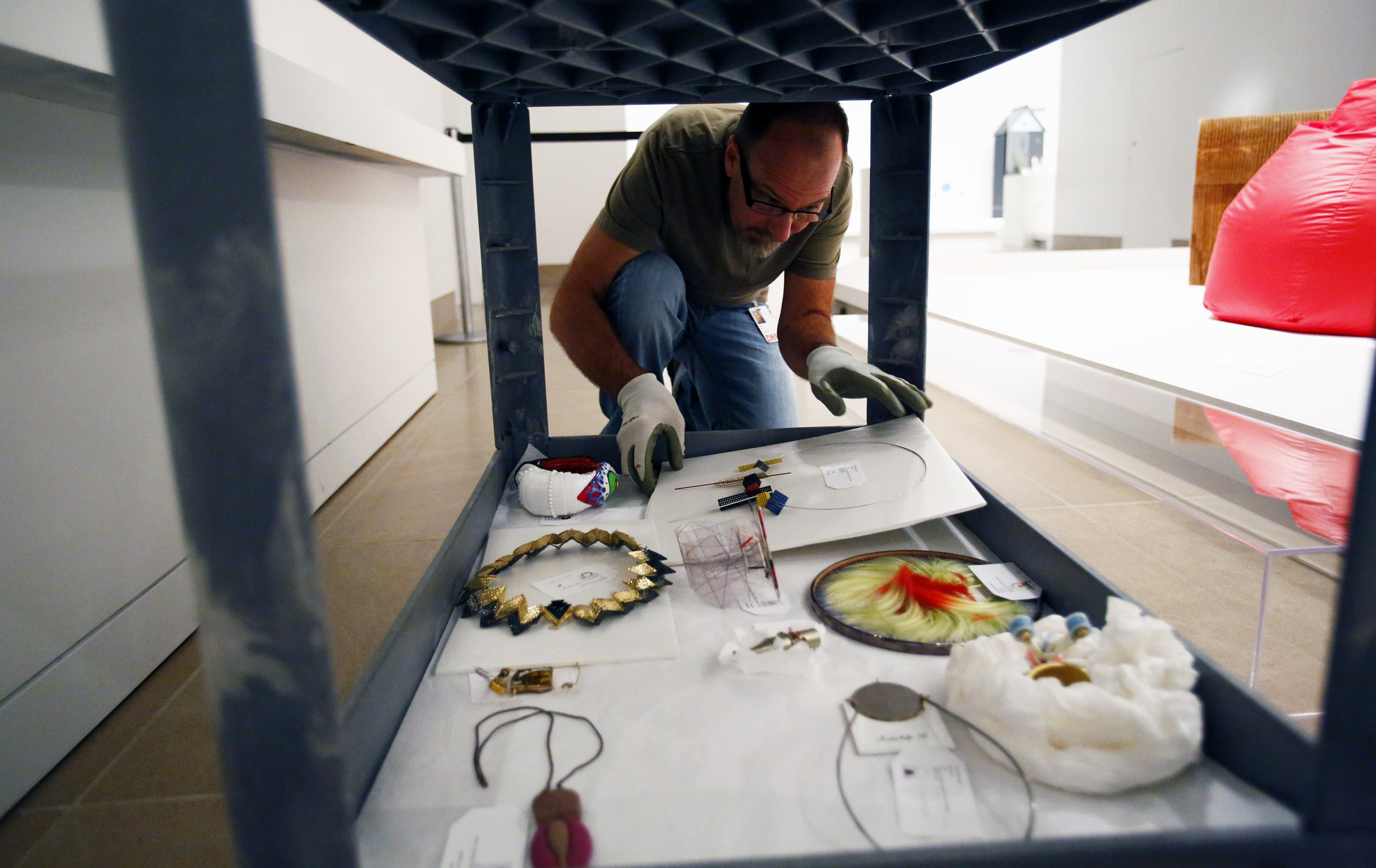
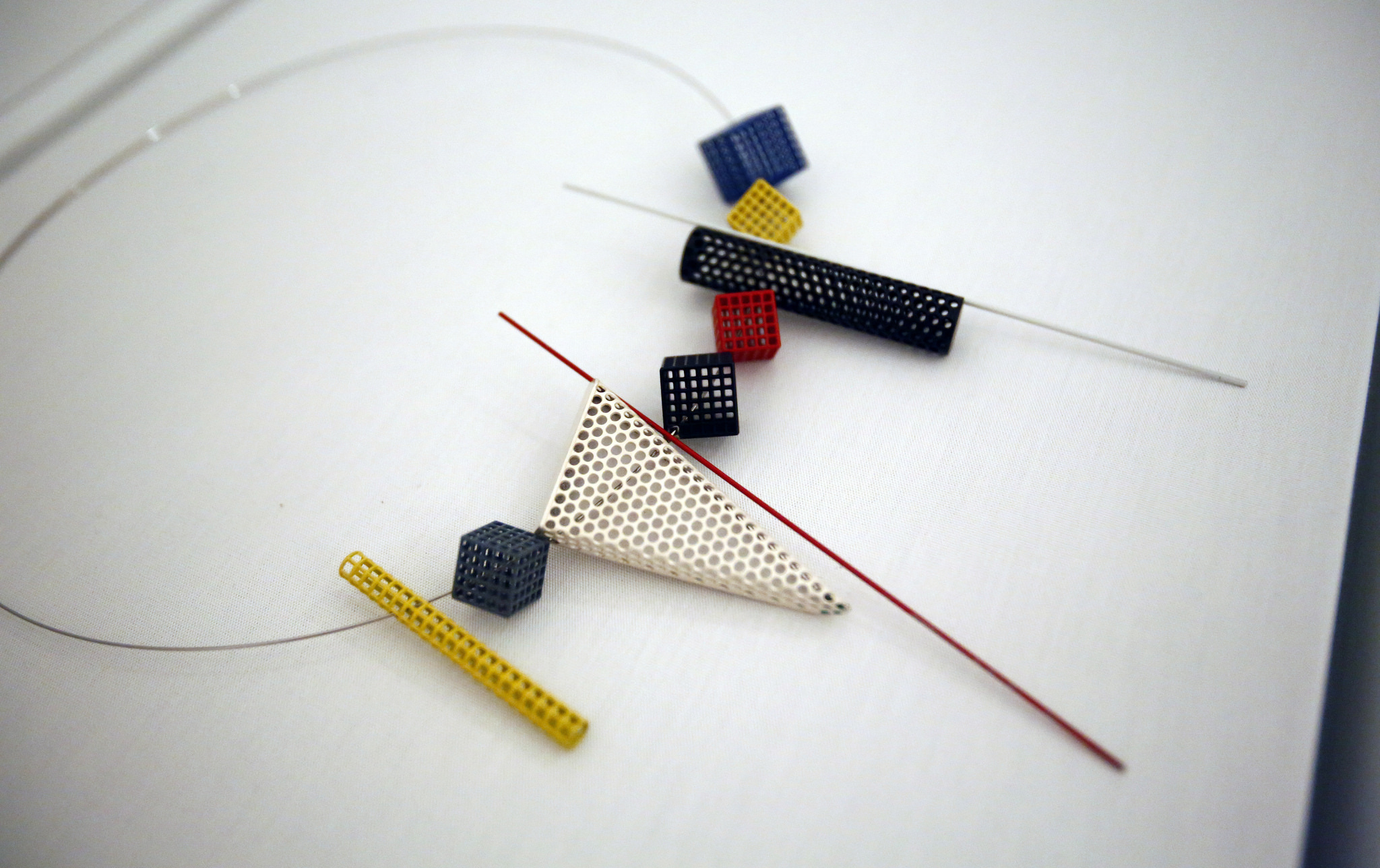
Twenty-five works from the celebrated Rose-Asenbaum Collection of modern and contemporary jewelry are now on view, and included in free general admission, in the Museum’s Tower Gallery exhibition Form/Unformed: Design from 1960 to the Present. The collection includes over 700 pieces of modern studio jewelry created by more than 150 acclaimed artists from Europe and around the world. Take time to “ooh” and “ahh” over these magnificent bracelets, brooches, necklaces, and more.

Photo 1

Photo 2

Photo 3

Photo 4

Photo 5

School’s in Session

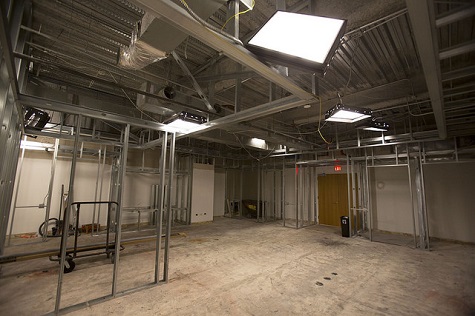
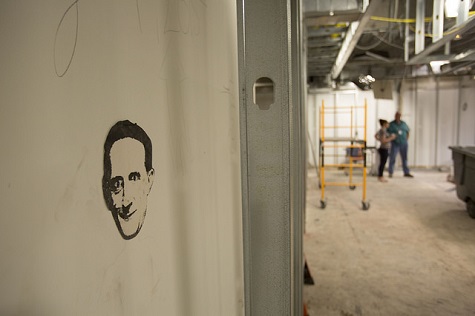
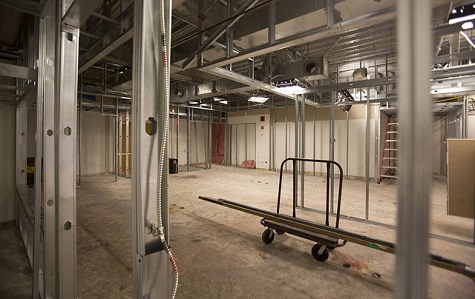
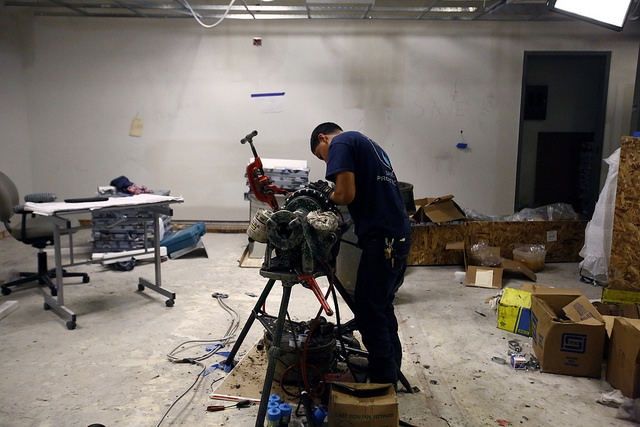
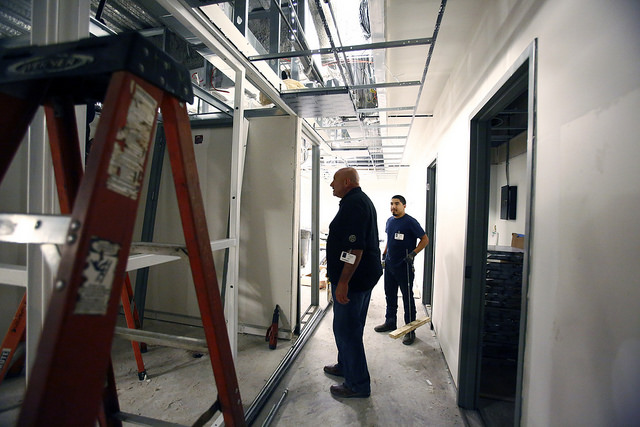
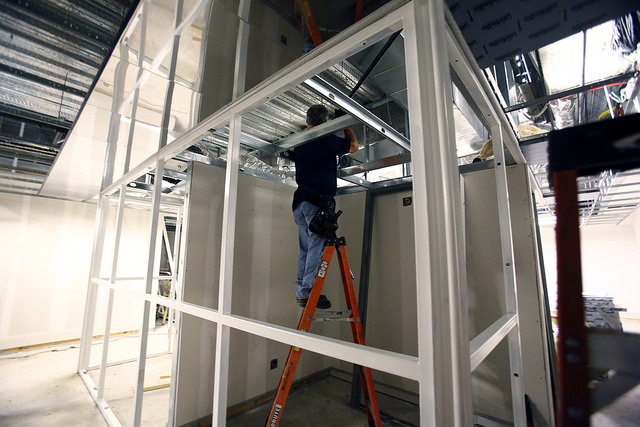
School is back in session in DFW and at the DMA. You may have heard about the establishment of the Edith O’Donnell Institute of Art History at the University of Texas at Dallas last fall and the downtown campus at the DMA. Dr. Kimberly L. Jones, the DMA’s Ellen and Harry S. Parker III Assistant Curator of the Arts of the Americas, will lead one of the Institute’s first seminars this fall on Inca art inside the Museum galleries, and ahead of the completion of the construction of the Edith O’Donnell Institute of Art History’s space at the DMA. Check out the progress below on the the new downtown campus in the Museum’s building.

Kimberly Daniell is the Manager of Communications and Public Affairs at the DMA.

Speakeasy Star

This Friday we’re traveling through the 20th century during Late Night with a different decade highlighted every hour. We asked one of our favorite costume gurus, Breanna Cooke (you may remember the amazing Greek Hero look she created inspired by The Body Beautiful), for tips on how to dress for a time traveling evening.

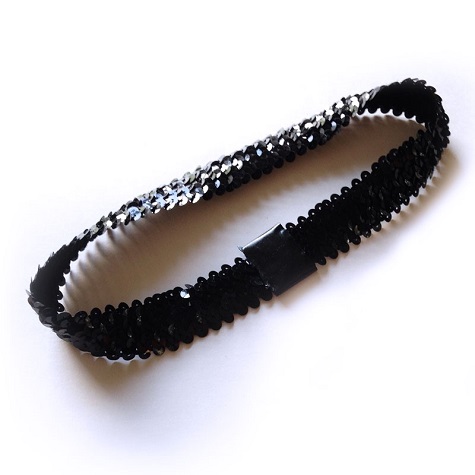
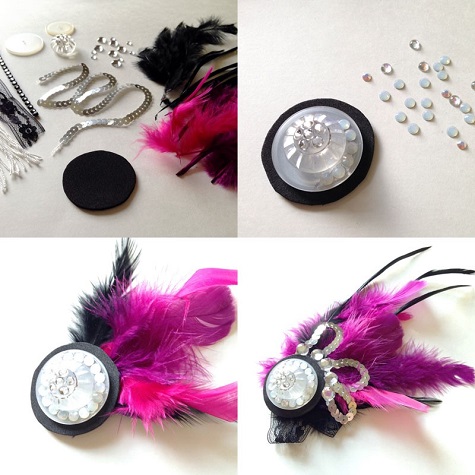
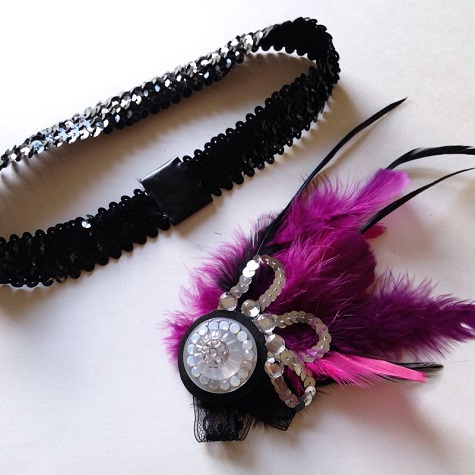
The evening kicks off with a tribute to the 1920s-30s, so here’s how you can make a flapper headband and then put together an outfit.

4

What you’ll need for the headband:

  • Long piece of sequined elastic, or stretch fabric, or other headband
  • Craft foam or a large button
  • Hot glue
  • Duct tape (optional)
  • Feathers
  • Bits of lace, ribbon, fringe
  • Rhinestones, buttons, brooches, or even pieces from broken earrings

3

  1. Make a headband
    Measure a piece of elastic or fabric to fit around your head. Then use hot glue, tape, or needle and thread to attach the ends together. If you’re taping or gluing it together, overlap the two ends. Don’t worry about the seam—you’ll glue your embellishment on top of it.

2

  1. Make an embellishment
    Using a small circle of craft foam (or a large button) as a base, start gluing rhinestones, sequins, and buttons on top. Get creative and use what you have lying around at home. Then glue some feathers or fringe to the back of your craft foam base.


1

  1. Put it together
    Using hot glue, attach your embellishment to your headband. Be sure to stick it on top of the seam to hide it.

Ideas to complete the outfit

  • Gloves
  • Feather boa
  • Long string of pearls (Hint: Mardi Gras beads work great! If you don’t have the right color, just paint them with spray paint or acrylic paints)
  • Sleeveless dress
  • Black fishnet stockings

For the gentlemen
It’s still hot in Texas, but a suit is a great accompaniment to your flapper friends. Find a bow tie, grab your fedora, shine your shoes, and we’ll see you at the DMA!

Once you have your costumes complete, come kick up your heels with the Matt Tolentino Band, who will be performing songs from the roaring 20s and 30s at 6:00 p.m. Check out the full night’s lineup online at DMA.org.

Breanna Cooke is a Graphic Designer, Costume Creator, and Body Painter living in Dallas. To see more of her work, visit breannacooke.com. Check out progress photos of her latest projects on Facebook.


Archives

Categories