Archive for the 'Art & Teaching' Category


Gearing up for Tours

We’re definitely back in the swing of things here at the DMA, now that the new school year is well under way. Last Monday we had our first docent training of the semester, and we welcomed back almost 100 experienced docents as well as a class of 21 new docents.  Dr. Anne Bromberg, The Cecil and Ida Green Curator of Ancient and Asian Art, led our training on the new exhibition All the World’s a Stage

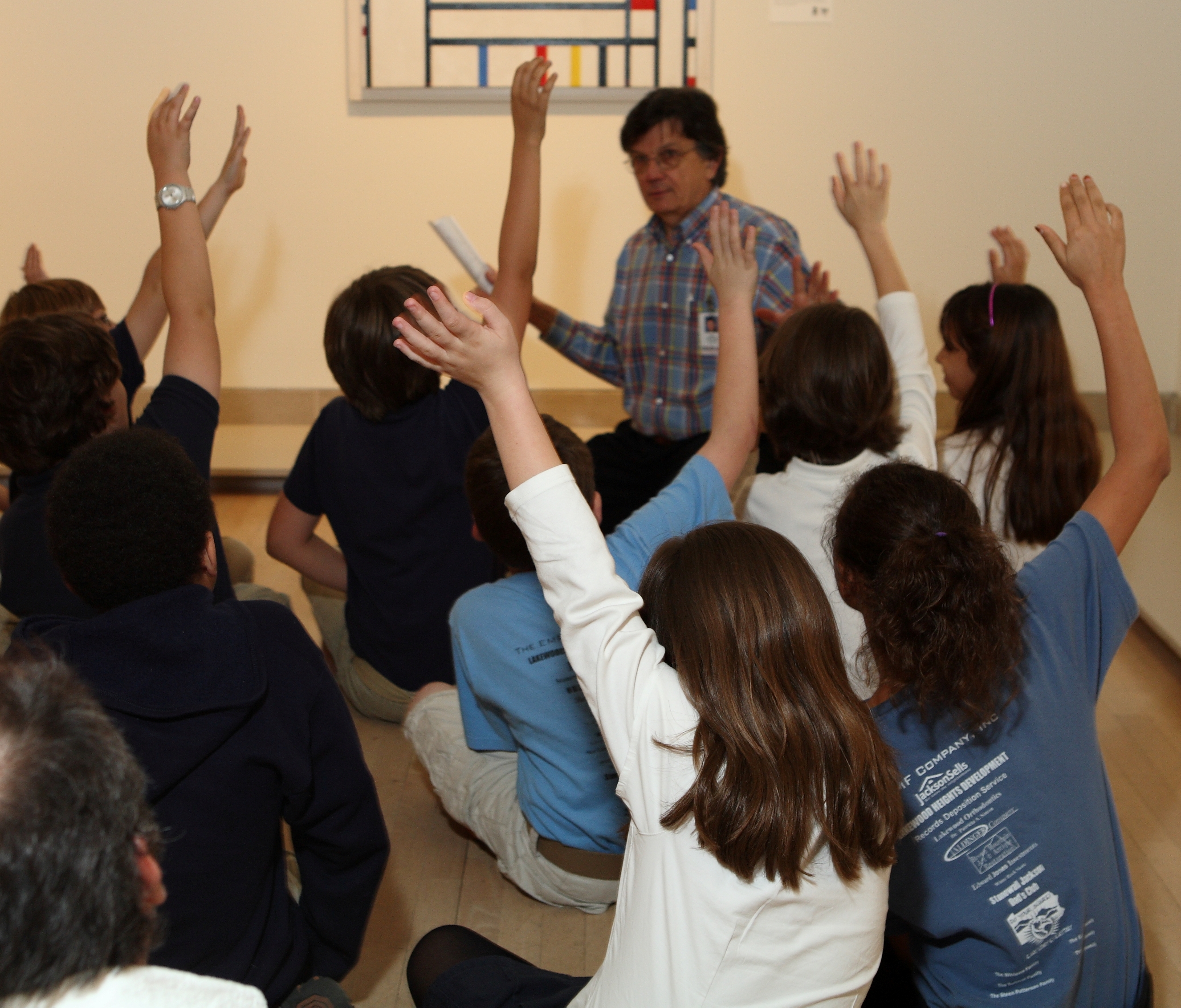
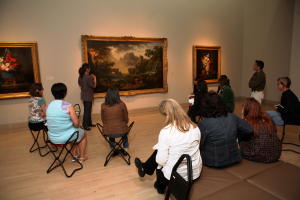
Our docents are rigorously trained volunteers who attend training at the Museum every Monday during the school year from 9:45 a.m. until 2:30 p.m.  These wonderful volunteers lead tours of our collection and special exhibitions for tens of thousands of K-12 students each year. We are all looking forward to these school tours starting again todocent trainingday!


Molly Kysar
Head of Teaching Programs

Getting to Know a Work of Art

Currently I am working on teaching materials for the All the World’s a Stage: Celebrating Performance in the Visual Arts exhibition.  Education staff creates online resources for the works in our collection as well as for special exhibitions.  One of my favorite aspects of writing and creating resources is getting to know a work of art on a more personal level.  Usually my research includes looking closely at the work of art, reading about the artwork and artist in the Museum’s object file (a file full of history about the object), and gathering information online and in books about the artist, culture, or the work of art.   

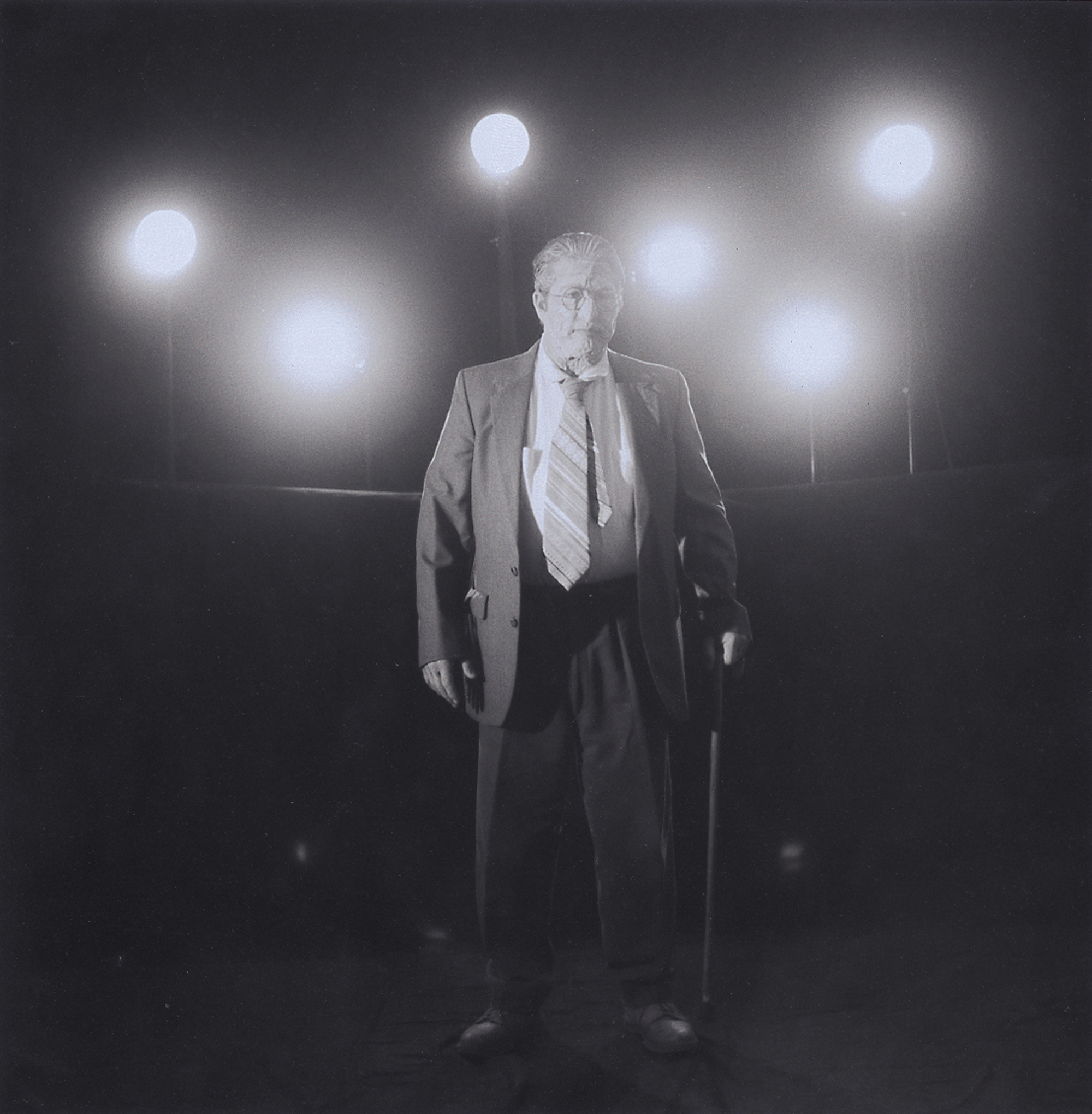
After the completion of the teaching materials, I often come away with one or two favorite works of art.  Although there are many shining stars in All the World’s a Stage, Nic Nicosia’s Act #9 stands out for several reasons.  

Nic Nicosia, Act #9, 1995

Nic Nicosia, Act #9, 1995

The idea that life is divided into multiple stages, from childhood to adulthood, might be translated into the chapters, or acts, of someone’s life.   The man in Act #9 appears as an old man – nearer to the conclusion of his life rather than the beginning.   This man, Nic Nicosia, the artist who made this work, stands on a stage.  By putting on makeup to appear older, he felt that he “became” the character.   It seems like he is facing an audience and delivering a monologue much like Willy Loman in Death of a Salesman. 

Without getting too philosophical, it is interesting to consider that we are all actors on the stage of life and we all have different roles to play.  There is no doubt that art is powerful and can have strong impact on how you see the world.  

Look forward to the launch of the All the World’s a Stage teaching materials in the next few weeks.

Until next time…

 Jenny Marvel

 Manager of Learning Partnerships with Schools

Community Connection: What happens when you combine textiles with concrete?

Welcome to the first “Community Connection” blog post!  My name is Melissa Nelson, and I’m the Manager of Learning Partnerships with the Community at the DMA.  Each month, I will interview a creative member of our community and feature their responses here in a series of posts called “Community Connection”.

Meet Lesli Robertson, our first Visiting Artist with the Museum’s Center for Creative Connections.  I caught up with Lesli bright and early last week, as she was enjoying the cool weather before her day got started.

What first made you want to become an artist?

I think it made sense, and it was something that was part of my nature and my world.  Making helped me understand things, either about the world or myself.  I didn’t have any art classes in elementary school, and in high school the emphasis of looking at artists didn’t get that much better.  It wasn’t until college that I started seeing what it really was about – making art, creating art, throughout history to contemporary use.  It wasn’t until then that I figured out I was an artist.

How would you describe your creative process?

I use textile-based media; I think they have the potential for communication.  My work depends on where I’m at, what I’m thinking about, what’s going on.  It’s very intuitive, though I make conscious decisions on material, form, how things are installed.  Part of the process is looking at where you’ve come from as an artist and where you’re going.  The body of work I’m now working on is a reaction to the past three years of writing, research, and studio work.  It is a comment on the evolution of my artwork.  The materials I use stay the same – I started working with textile-based media and concrete five to six years ago and I love those materials. They have so much content to them and apply so well to what I want to do, formally and conceptually.

Apart from creating things, what do you do?

I love working on projects with the community and looking for different opportunities for collaborations.  For example, last semester I worked with the biology department at University of North Texas (Lesli is an adjunct professor of fibers at UNT’s College of Visual Arts and Design).  I am also conducting research in Uganda and writing an article on contemporary bark cloth artists.  I have to almost limit what I do – it is all informative but can pile up real easily.

What handmade possession do you most cherish?

I’m most proud of a handmade mat from Uganda that I bought from an artisan.  It is gorgeous.  It is hand-plaited in narrow strips about two inches wide, which are then stitched together, and cut into a mat of about three feet by seven feet.  What’s so gorgeous is that the artisans work with two tones of color.  When everything gets stitched together, it makes a pattern and it’s beautiful.  It’s one of those things that you covet, and I’m glad I have it, so I don’t have to covet it anymore.

Please describe the work you’re currently doing with the Dallas Museum of Art.

I’m working on a community collaborative project.  I’m asking the community to make small concrete collages that I’m weaving into small strips, which I’m using for an art installation in the Museum’s Center for Creative Connections.  The idea is to work with the diverse communities that the DMA works with, and having an artwork that shows each individual that makes up this larger community.  I’m going out and working with groups, and inviting people in the Museum to contribute also.  The installation relates to the Materials and Meanings exhibition in the Center for Creative Connections, and the idea that materials can mean something to the person making the work of art.  I ask the participants to choose materials that represent them to include in their individual collages.

To meet Lesli in person, join us for our first Thursday Evening Program for Teachers on September 10 at 7:00 p.m.  Participation is free and advance registration is not required.

The Ice House Cultural Center summer camp students, Dallas ISD Talented and Gifted elementary students, Cathedral Guadalupe, and Booker T. Washington teachers are just a few of the groups Lesli is working with from July through October.  Make sure you check out Lesli’s installation in the Center for Creative Connections, starting January 2010.

Melissa Nelson

Manager of Learning Partnerships with the Community
Kicking off a New Program for Teachers

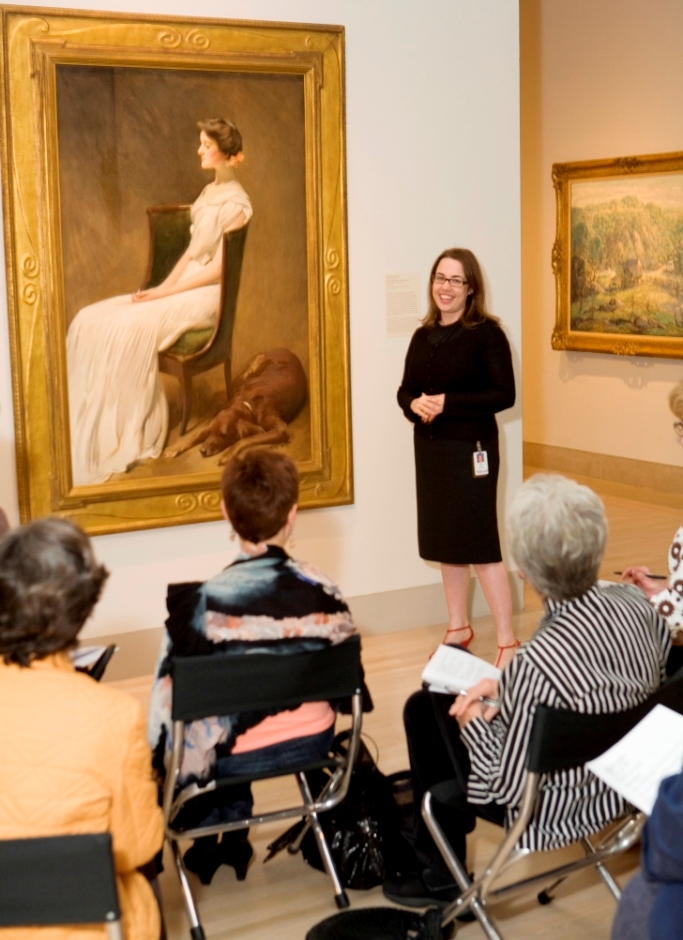
On September 10 at 7:00 p.m., all educators are invited to participate in our first Thursday Evening Program for Teachers.  Artist Lesli Robertson will join us to share her creative process and to involve teachers in a community response project.  Participation is free and advance registration is not required. 
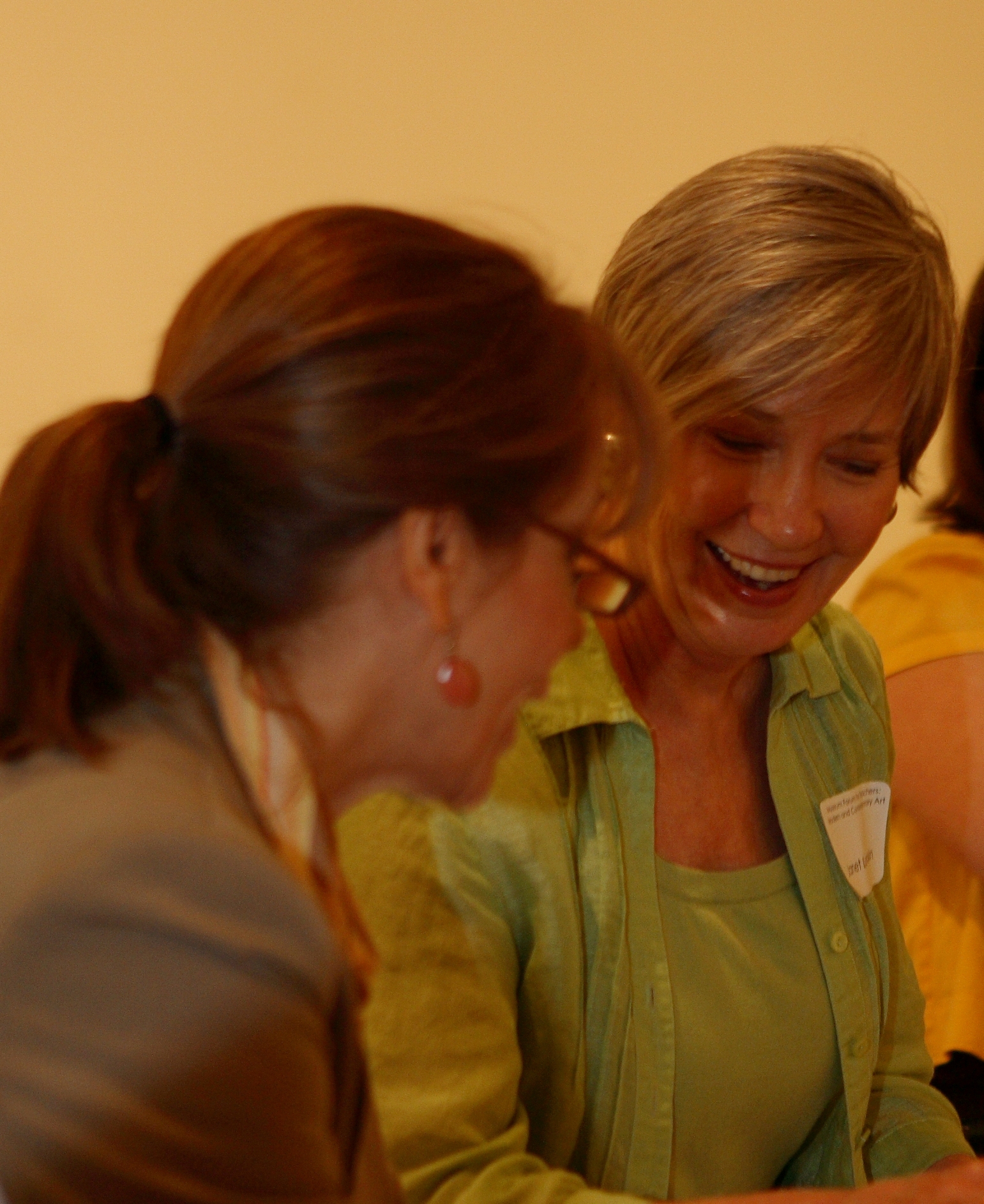
Lesli is a textile artist by training, but in her creative process she often combines materials that are a sharp contrast to the usual fibers. She will create a piece incorporating elements created by DMA visitors and other community members.  Check out photos of other programs Lesli has led for Museum visitors lately. 

Get here a little early and enjoy the “Teachers Lounge” in the Atrium Cafe, starting at 6:30.  Look for the reserved tables and relax while listening to the live Jazz in the Atrium.  Food and drinks will be available for purchase.  We’ll depart from the Atrium at 7:00 to meet with Lesli.

This year a different Thursday evening program will be highlighted for teachers each month, including gallery conversations, lectures, and art-making opportunities.  Visit our website for information about upcoming programs. 

I am looking forward to this opportunity for educators to come together in a community for a monthly experience that explores creativity and makes connections to our collection.  Gather up your teacher friends and join me on September 10 for this first program.

Molly Kysar
Head of Teaching Programs

Diego Rivera: A Closer Look at Cubism and Mexican Modernism

An opportunity to partner with the Meadows Museum for a two-part teacher workshop on Diego Rivera resulted in an exciting collaboration over the past two weekends. The Meadows Museum’s current exhibition, Diego Rivera The Cubist Portraits, 1913-1917,  explores Rivera’s artistic production during the formative years he spent in literary and art circles in Paris during World War I, and provides a new perspective on this lesser known and crucial period of the Mexican artist’s career.

 During the first part of the workshop, which was held at the Meadows Museum, we explored Rivera’s work and discussed various influences on his paintings. Personally, I enjoyed examining Rivera’s works through his connections with other artists like Pablo Picasso and Juan Gris. 

 The second half of the workshop was held at the DMA. We explored important Cubist works of art by Pablo Picasso, Juan Gris, and Georges BraqueWe also spent time with our own Diego Rivera painting, Portrait of Dr. Otto Ruhle as well as works by fellow Mexican artist Rufino Tamayo. Teacher participants had in-depth conversations related to these works of art and made connections with the artworks through journaling, sketching, and artist quotes.

 This workshop was a great kick-off for our 2009-2010 school year. Information on our upcoming teacher workshops can be found at: www.DallasMuseumofArt.org/Education/Teachers/index.htm.  

 Amy Wolf
Teaching Programs Coordinator

Welcome Back, Teachers!

SoundDesignForum_04_25_2009_013

A big part of my job is planning professional development programs for educators.  This year we are offering a variety of experiences, including Saturday teacher workshops, Evenings for Educators, and new Thursday evening programs for teachers.  Through these programs, we want to help teachers connect with works of art in the Museum; with people, including artists, museum educators, and classroom teachers; and with creativity – that of artists as well as their own. 

Here are some tips about how to join us this year and how to get the latest information for teachers:

  • Learn more about our programs for teachers in 2009 – 2010 by checking out our newly designed Web site with more accessible information about Saturday teacher workshops, evening programs, and summer programs.
  • Send your name, school name, and email address to teacherprograms@DallasMuseumofArt.org to receive the latest news in our new monthly Educator E-newsletter.
  • Join us for a new series of monthly Thursday evening programs for teachers.  Arrive early for a little social time with DMA education staff and other educators in the “Teachers Lounge” in the Atrium Café.  Food and drink are available for purchase.
  • Stay tuned to this blog to get behind-the-scenes info about the Museum and how we serve students and teachers.

I hope to see you at the Museum soon.  Have a great year!

Molly Kysar
Head of Teaching Programs


Archives

Categories