Pause and Remember

Just in time for Memorial Day, the Dallas Museum of Art has added to its collection David Johnson’s 1870 painting View from Garrison, West Point, New York. This landscape is a fantastic panoramic view of the Hudson River Valley with the United States Military Academy at West Point front and center. As we take time off to celebrate the many sacrifices our veterans have made for our country, consider stopping by the Museum to see this painting, now on view in the American galleries.

David Johnson, "View from Garrison, West Point, New York," 1870, oil on canvas, Dallas Museum of Art, The Patsy Lacy Griffith Collection, gift of Patsy Lacy Griffith by exchange, and General Acquisitions Fund, 2012.6

David Johnson, “View from Garrison, West Point, New York,” 1870, oil on canvas, Dallas Museum of Art, The Patsy Lacy Griffith Collection, gift of Patsy Lacy Griffith by exchange, and General Acquisitions Fund, 2012.6

David Johnson, "View from Garrison, West Point, New York" (detail of United States Military Academy), 1870, oil on canvas, Dallas Museum of Art, The Patsy Lacy Griffith Collection, gift of Patsy Lacy Griffith by exchange, and General Acquisitions Fund, 2012.6

David Johnson, “View from Garrison, West Point, New York” (detail of United States Military Academy), 1870, oil on canvas, Dallas Museum of Art, The Patsy Lacy Griffith Collection, gift of Patsy Lacy Griffith by exchange, and General Acquisitions Fund, 2012.6

Martha MacLeod is the Curatorial Administrative Assistant in the European and American Art Department at the Dallas Museum of Art.

Picture This – Part Deux

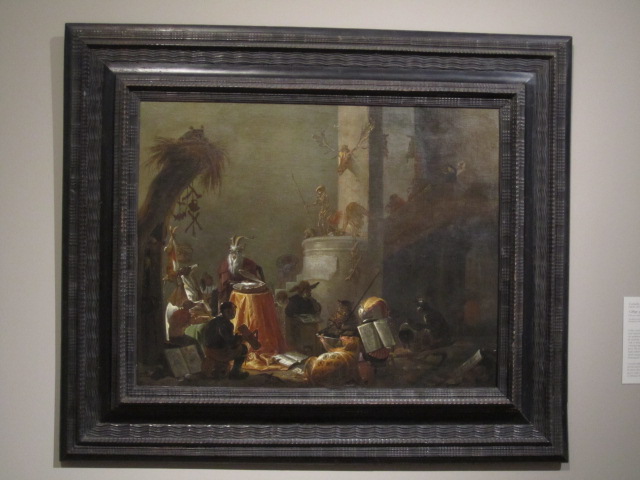
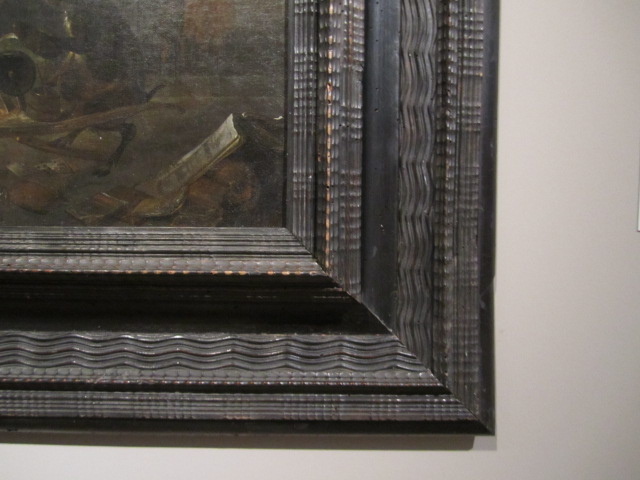
Over a year ago, the Dallas Museum of Art sent  College of Animals by Cornelis Saftleven (1607-1681) to a conservator for cleaning and minor repair. With the grime removed from the Dutch artist’s enigmatic composition, it was the perfect time to do a bit more. So we replaced the thin, unadorned gilt frame that formerly surrounded the canvas with one more in keeping with the sort preferred by Dutch artists working during Saftleven’s time. Seventeenth-century Netherlandish artists typically favored a waffle or ripple style molding frame. These darkly painted wooden frames that simulated ebony are decorated with several rows carved in a zigzag design, and often have a reverse ogee profile.  A few months ago, the DMA purchased a period Dutch frame that has all of these design elements from a Parisian dealer. Now that Saftleven’s College of Animals is back from the conservator and has an appropriate frame, it is once again on view in the European galleries for everyone to enjoy!

The simple gilt frame that formerly surrounded Cornelis Saftleven’s “College of Animals,” n.d., oil on canvas, Dallas Museum of Art, The Karl and Esther Hoblitzelle Collection, gift of the Hoblitzelle Foundation, 1987.32

Cornelis Saftleven, College of Animals with its period seventeenth-century waffle-style Dutch frame.

Detail of College of Animals’ new frame

Martha MacLeod is the Curatorial Administrative Assistant to the European and American Art departments.

Remaking the Arts of Africa Gallery

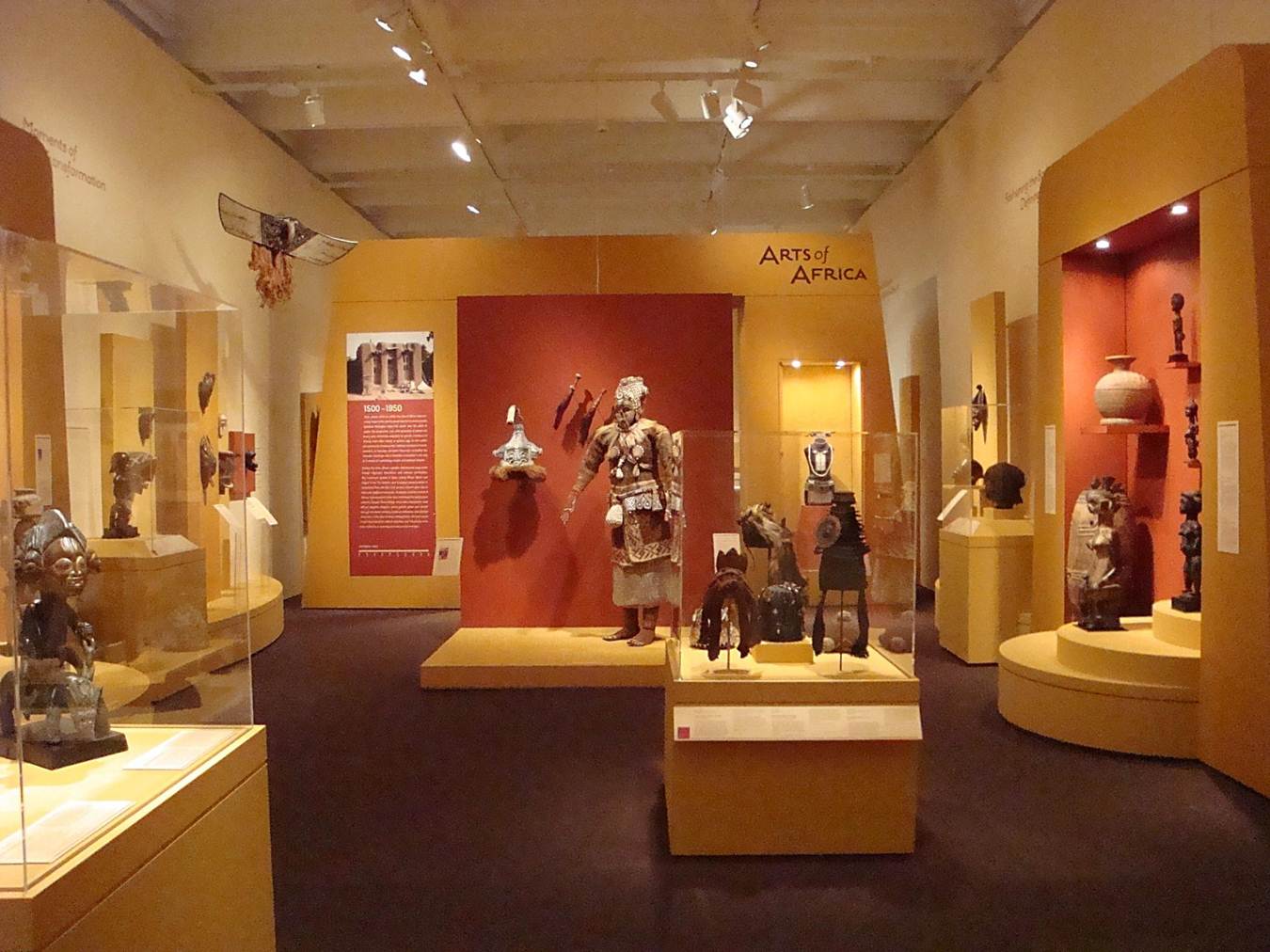
My name is Edleeca Thompson and I am the curatorial research assistant for the Arts of Africa Reinstallation Project, sponsored by the Texas Fund for Curatorial Research. The research for the reinstallation project involves photographing gallery spaces and observing the use of technology and interactive media, as well as visitor responses, in order to ascertain the “best practices” in exhibition design for African art. I am also collecting information on educational programs, activities, and events that support a more innovative approach to the representation and interpretation of African art. This information will be used for the upcoming reinstallation of the DMA’s Arts of Africa gallery in the fall of 2013.

Since June 2011, Roslyn Walker, Senior Curator and The Margaret McDermott Curator of African Art, and I have visited twenty museums (together or separately) in the United States and Europe for this project. For me, the most impressive displays are at the Louvre (Paris), the Musée Rietberg (Zürich), the Rautenstrauch-Joest Museum (Cologne), and the Museum Aan de Stroom (Antwerp).
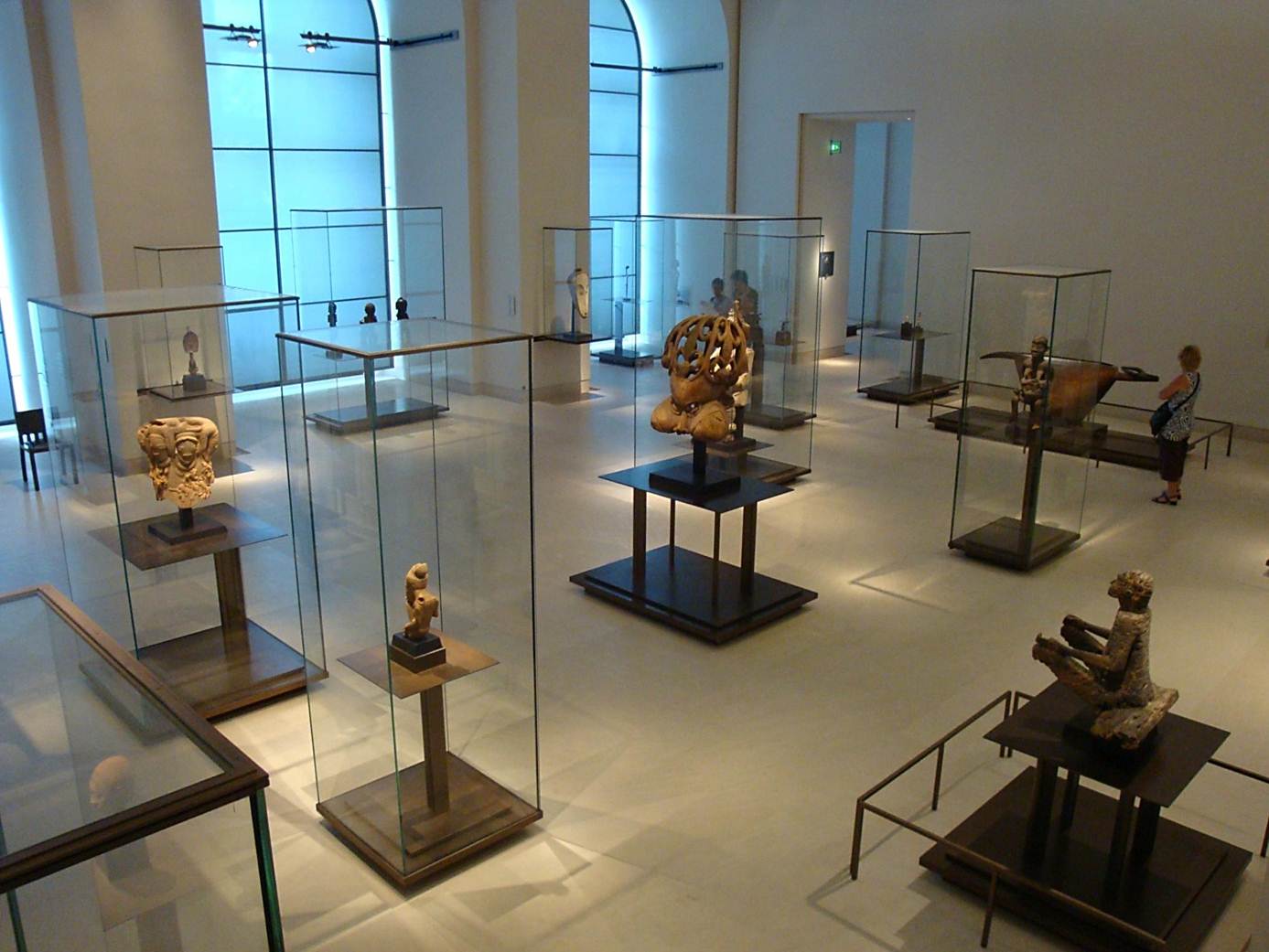
Musée du Louvre, Porte des Lions, Paris, France

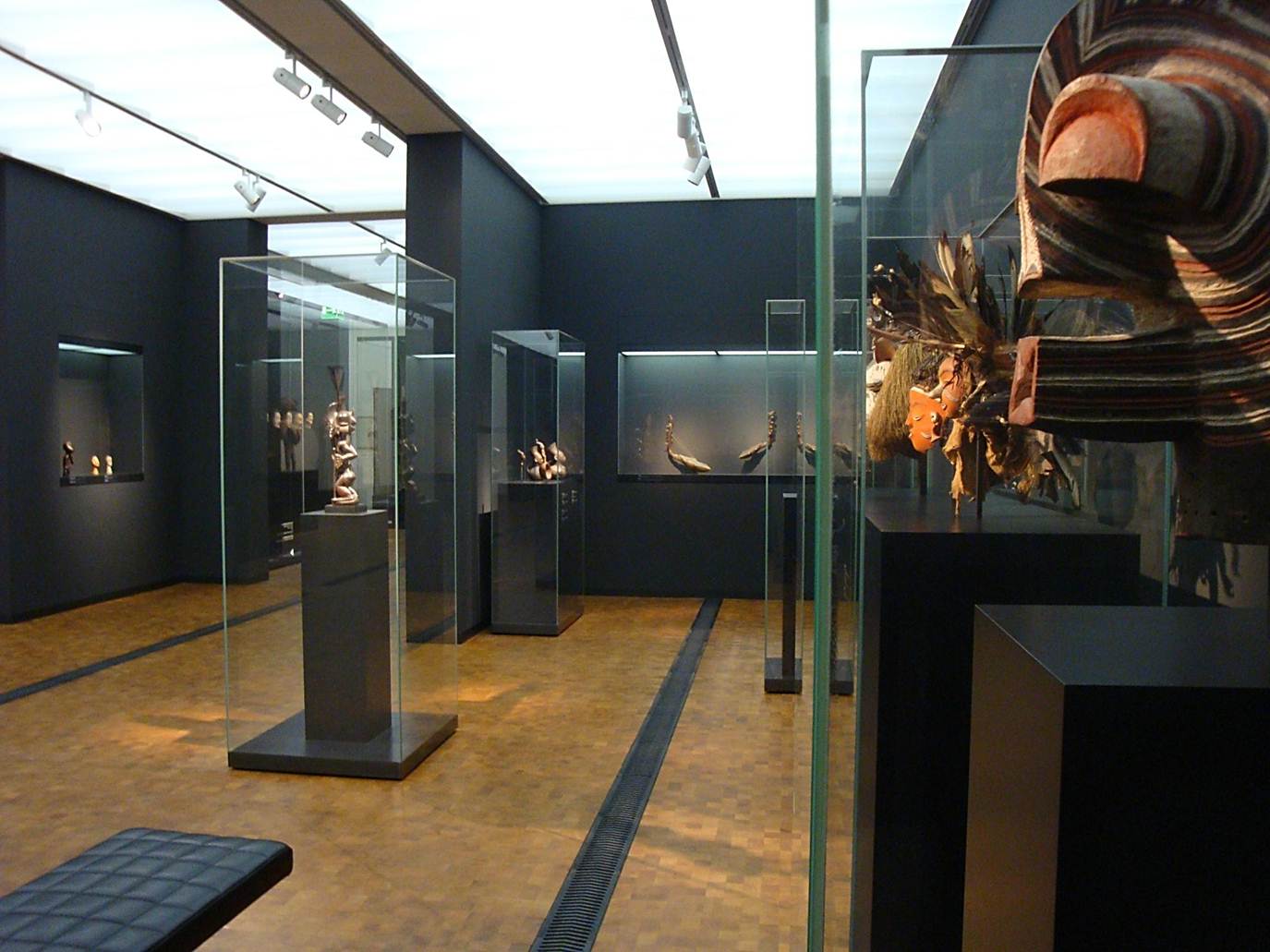
In Paris we toured the Pavillon des Sessions, where African art has been presented at the Louvre since 2000. The first picture shows the cool and serenely elegant African gallery at the Louvre. Although the Louvre is most known for its vast collection of masterpieces of Western art, the arts of Africa and Oceania have become increasingly popular with the general public. In response to public demand for more information on the objects, the museum added more labels and portable laminated information cards that visitors can take with them as they tour the galleries.
Museum Rietberg, Zurich, Switzerland

The Rietberg Museum also follows the tendency toward cool elegance, but with more color contrast in their restrained, yet intimately formal, spaces.

Rautenstrauch-Joest Museum, Cologne, Germany

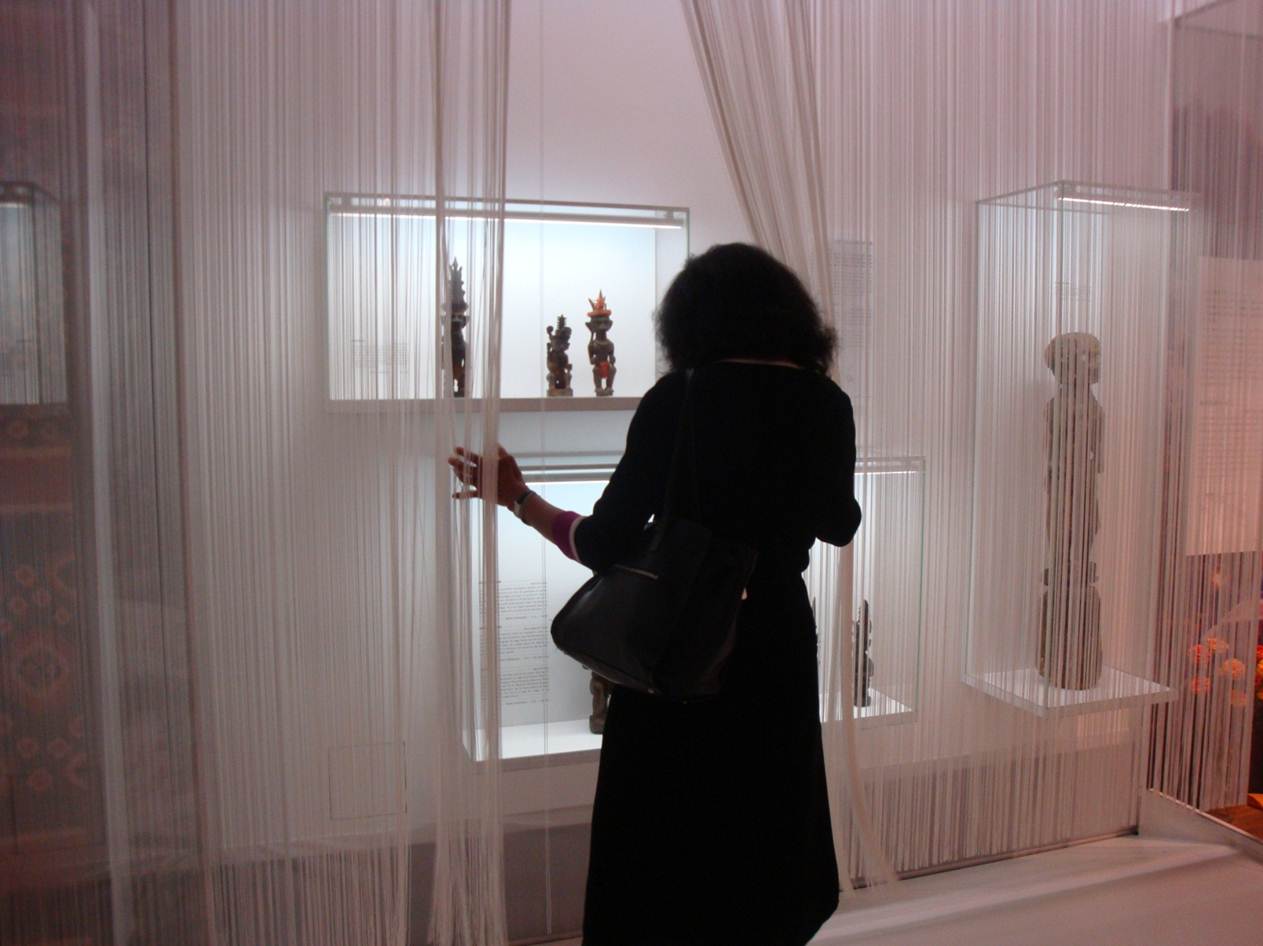
The Rautenstrauch-Joest Museum carries spatial intimacy even further in an exhibit that explores the theme of death and the afterlife. The serene, contemplative environment, with its white walls, cushy flooring, featherlike ceiling, and soft, ambient music, evokes otherworldly experiences of the afterlife. The visitor approaches the gallery in stages before entering a large, veiled space. In order to view some of the objects, it is necessary to part the veil in front of the display case.

Museum aan de Stroom, Antwerp, Belgium

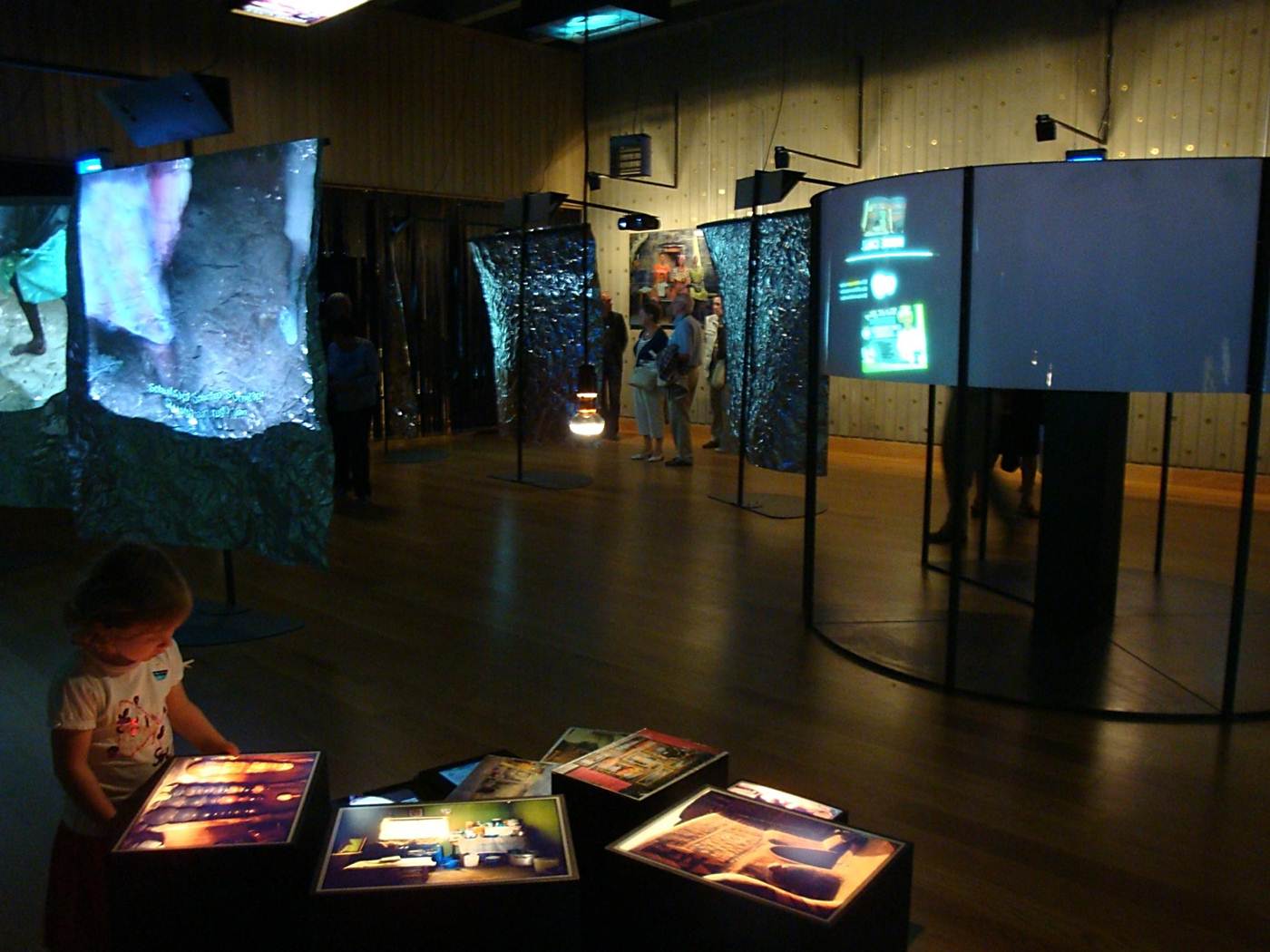
The Museum Aan de Stroom, which houses the ethnographic, maritime, folklife, and Antwerp history collections, by far exceeded all expectations regarding the use of technology. Here, the visitor is surrounded by multimedia devices.
Chicago Art Institute, Chicago, Illinois

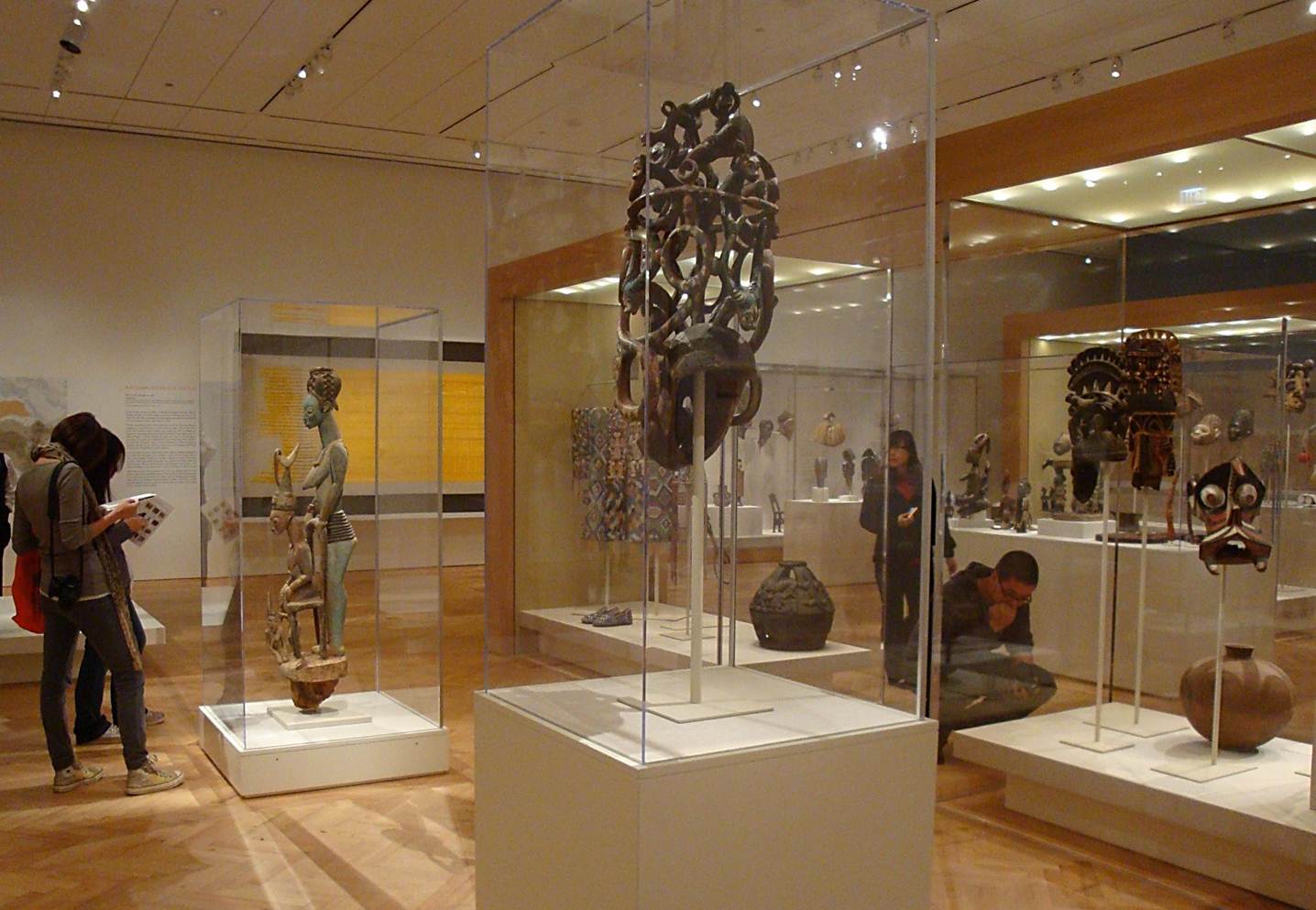
The Art Institute of Chicago’s newly reinstalled gallery features a number of sculptures displayed in the round. The gallery also incorporates videos of ritual performances and still photographs of artists at work, as well as a historical timeline that parallels the cultural developments of both Europe and Africa.

Cantor Arts Center, Stanford University, Palo Alto, California

The African collection at the Cantor Arts Center, Stanford University, was reinstalled in 2012 and includes objects ranging from pre-dynastic Egypt to the mid-20th century. Themes of body adornment, economics, and the afterlife are addressed through time and space.

All in all, being given this opportunity to travel and work with Dr. Walker has been a total blast! I’m excited for the DMA in anticipation of making the Arts of Africa exhibit more appealing and engaging for visitors for years to come.

Edleeca Thompson is Curatorial Research Assistant at the DMA.

The McDermott Intern Class of 2011–2012

Left to right: Jessica Kennedy, Vivian Barclay, Hannah Burney, Wendy Earle, Lexie Ettinger, Melissa Barry, Andrew Sears and Mary Jordan

Each year, the Dallas Museum of Art welcomes a new class of McDermott interns into the family.  Throughout the history of the program our interns have been outstanding, intelligent students with interests spanning the full range of art-related interests. This year’s group is no exception. Of the eight interns, five hold master’s degrees while the other three have earned their BA and plan to pursue advanced degrees. Their interests range from Medieval and Contemporary Art to Art Education and Museum Programming. As you will learn, their talents and interests extend beyond Art and Art History!

Vivian Barclay is the Graduate Curatorial Intern for Decorative Arts and Design. She holds a B.A. in Art and Performance for University of Texas at Dallas and a M.A in Art History from Texas Christian University. Vivian was born and raised in Valencia,Venezuela.

Melissa Barry is the Graduate Curatorial Intern for Contemporary Art. She received her B.A. in Art History and Business Administration from Baylor University and her M.A in Art History from Texas Christian University. She can also sign to R. Kelly’s I Believe I Can Fly.

Wendy Earle is the Graduate Curatorial Intern for the Arts of the Americas and the Pacific. She earned her B.A in Art History from the University of Michigan and her M.A. in Art History from the University of Texas. She has piloted a plane.

Andrew Sears is the Curatorial Intern for European and American Art. He graduated from Emory University with a B.A in Art History. He has never been to a zoo–a fact his fellow interns plan to help him remedy this year.

Hannah Burney is a Teaching Programs intern. She will work primarily with Go van Gogh and other outreach programs. She spent part of her childhood in South  Korea.

Lexie Ettinger is the Education Intern for Adult Programming. She majored in Art History, and minored in Political Science at the University  of Arizona. Currently she is pursuing her M.A at the University of North Texas. Her family dogs’ names are Cinnamon and Sugar, and Sugar has her own Face book page.

Mary Jordan is the Education Intern for Family Experiences. She holds a B.A from Indiana University and a M.A from Johns Hopkins in Medical and Biological Illustration and is currently pursuing a Master’s Degree in Art Museum Education at the University of North Texas. In her “first” career as a medial illustrator, she often sketched in the operating room, directly from surgery. One of the most interesting was a cardiac bypass surgery.

Jessica Kennedy interns in the DMA’s Teaching Programs assisting with docents and gallery programs. She holds a M.A in History with a concentration in Museum Studies and a B.A. in Art History form the University of Missouri in St. Louis. The first name of each member of her immediate family starts with the letter J. Therefore she will answer to any “J” name.

The next time you are in the museum don’t be surprised if you find one of them leading a gallery talk, helping with Late Nights or instructing your child in the Center for Creative Connections. Also, in the coming months, check Uncrated to read their contributions to this blog.

The Dallas Museum of Art offers nine-month paid internship positions in the Education and Curatorial Divisions. These internships are intended for those individuals who wish to explore a career in museum work. For more information, or to apply for the 2012-2013 McDermott Internship program, visit our website. Applications will be available in January 2012.

Martha MacLeod is Curatorial Administrative Assistant for European and American Art and manages the McDermott Interns

There’s a New Girl in Town

Earlier this year, the DMA was very fortunate to receive a lovely gift from SMU’s distinguished Art History professor emerita Dr. Alessandra Comini. She gave us a beautiful sculpture of Lady Godiva by one of 19th-century America’s premier female sculptors, Anne Whitney. Whitney’s work frequently reflects her commitment to social activism. In fact, before Whitney became an artist she often wrote essays and poems that were published in a contemporary periodical dedicated to women’s rights called Una. Soon she became notable for expressing her abolitionist and feminist views through both the written word and sculpture. Whitney’s sensibilities made Lady Godiva’s story particularly appealing.

Anne Whitney, Lady Godiva, c. 1861–64, marble, Dallas Museum of Art, gift of Dr. Alessandra Comini in memory of Dr. Eleanor Tufts, who discovered the Massachusetts-backyard whereabouts of this long-forgotten statue and brought it to Dallas.

Generally, we think of Lady Godiva on her legendary ride, but Whitney chose to depict a moment much earlier in the story. Godiva lived in Coventry England during the 11th century. As the story goes, she complained to her husband that the tax he levied against his subjects was excessively high. He agreed to lower them if in return she would ride naked on a horse through the streets of Coventry. Whitney depicts the moment when Godiva accepted her spouse’s challenge. Gazing heavenward, fully clothed and just starting to remove her girdle, she is about to begin protesting on behalf of Coventry’s vulnerable and oppressed.

It is especially unusual to own an artwork depicting the earlier, more poignant moment in the account of Lady Godiva’s famous ride. Moreover, owning a full-sized marble sculpture of a woman by a woman artist is quite rare. We are grateful to Dr. Comini for her generosity, and we encourage you to come see this exquisite sculpture in the DMA’s American Galleries on Level 4.

Join Dr. Alessandra Comini on Thursday, October 27 for a special lecture on women sculptors from America who descended upon the seven hills of Rome during the 1860s and beyond.  Click here for additional details.

Martha MacLeod is the Curatorial Administrative Assistant in the European and American Art Department at the Dallas Museum of Art.

Picture This

For many artists a picture was not finished when the paint had dried and the varnish was applied. The culminating step was framing the artwork. Only then was the project complete. Traditionally the artist had many options. He could choose a stock frame from a local cabinetmaker, or make a thoughtful selection from a skilled framer. Artists often possessed such a keen interest to frame a painting in a manner that perfectly complemented it that they designed their own.

The 18th-century British portrait painter George Romney (1734-1802) routinely joined forces with his preferred London framer William Saunders to produce frames of the artist’s design. Frame historians have studied Saunders’ detailed ledgers that record many of these collaborations. Romney’s decorative concepts coupled with Saunders carving expertise resulted in several exquisite frames. Regrettably, as a painting changed hands the new owner would often reframe it to suit prevailing tastes or to match the room where the artwork hung.

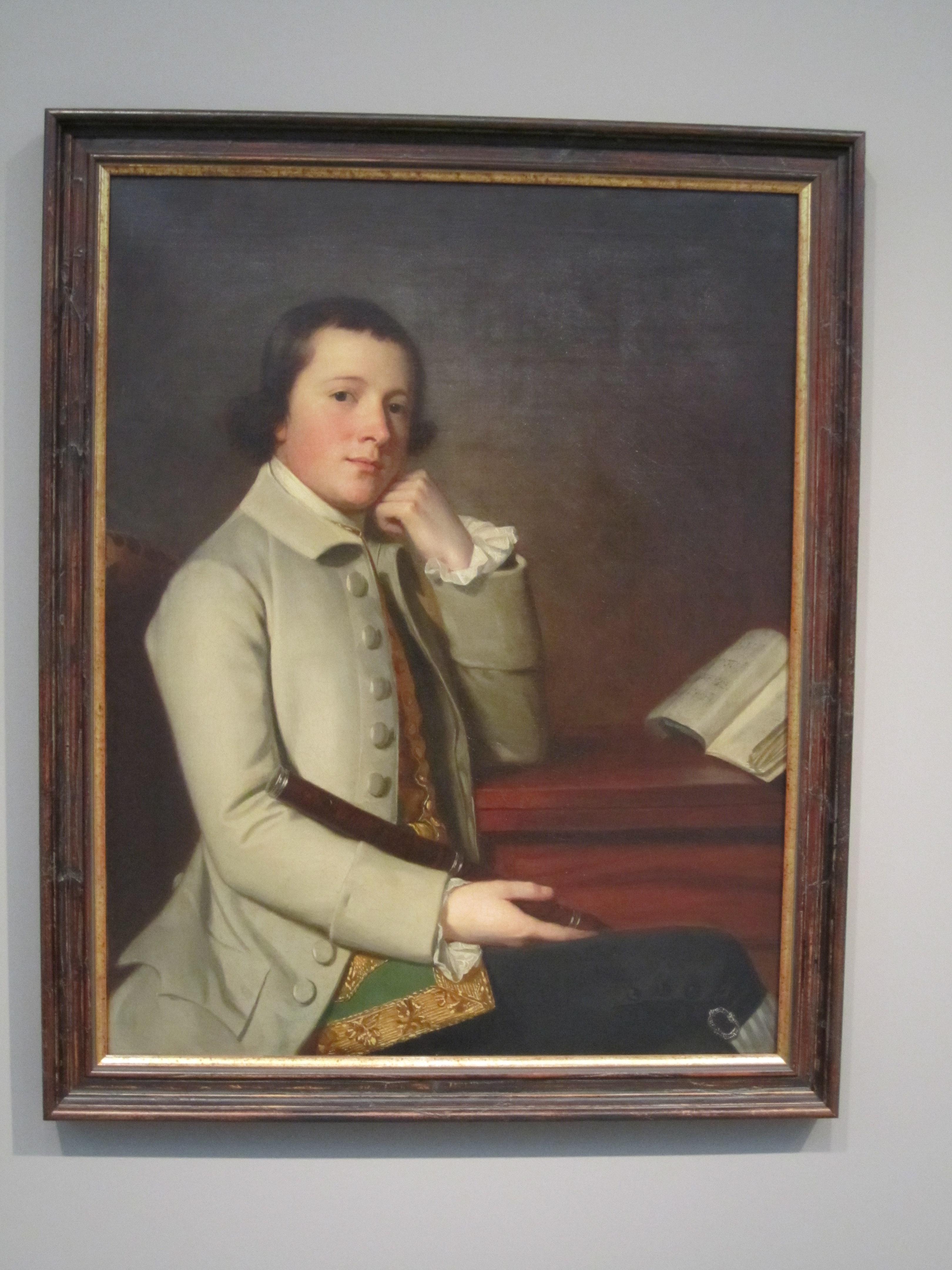
This may have been the fate of the original frame that once surrounded Romney’s Young Man with a Flute, which is now on view in the DMA’s European Galleries. Until recently, a simple wooden frame adorned with a gilt sight edge (the part of the frame closest to the canvas) surrounded the painting. That frame was more in keeping with the sparse ones typically used by artists working in colonial America.

George Romney, Young Man with a Flute, late 1760s in its simple wooden frame

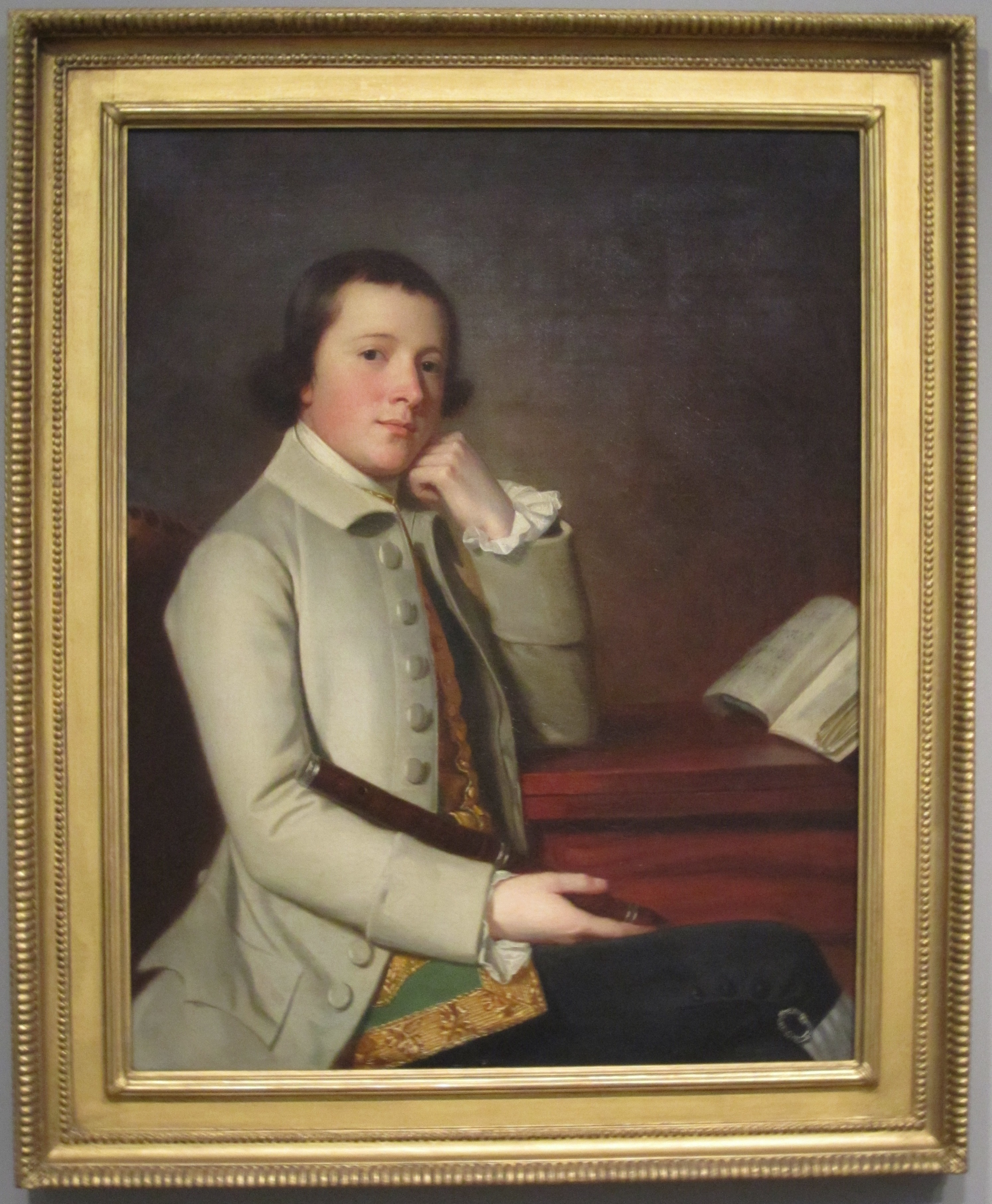
Wishing to restore the painting to Romney’s well-documented vision for his completed works, the Museum recently purchased a frame from a London dealer with an expertise in the artist’s designs. Now a “Romney Style” frame surrounds the painting. It is a faithful reproduction of the artist’s 18th-century original. The archetype became synonymous with the painter thus earning its eponymous name.

Young Man with a Flute surrounded by its “Romney Style” frame

The approximately four-inch-wide burnished gilt neoclassical frame draws the viewer’s eye into the portrait. Its decorative elements include a rope-twist back molding, superbly carved gadrooning that traverses the circumference on the outside rim, a plain frieze, a small bead course, and a delicately reeded sight edge. The reproduction “Romney Style” frame harmonizes with the painting in a manner unrivaled by its wooden unornamented predecessor.

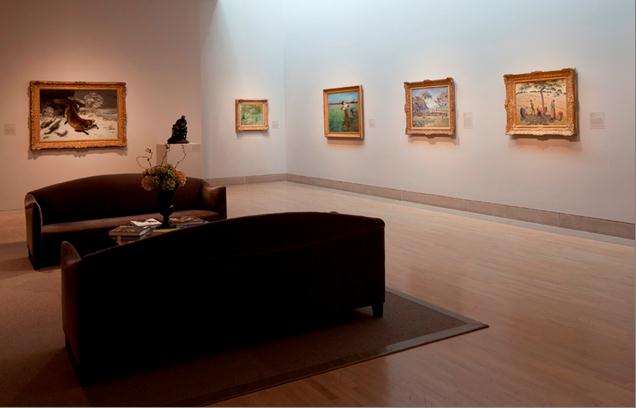
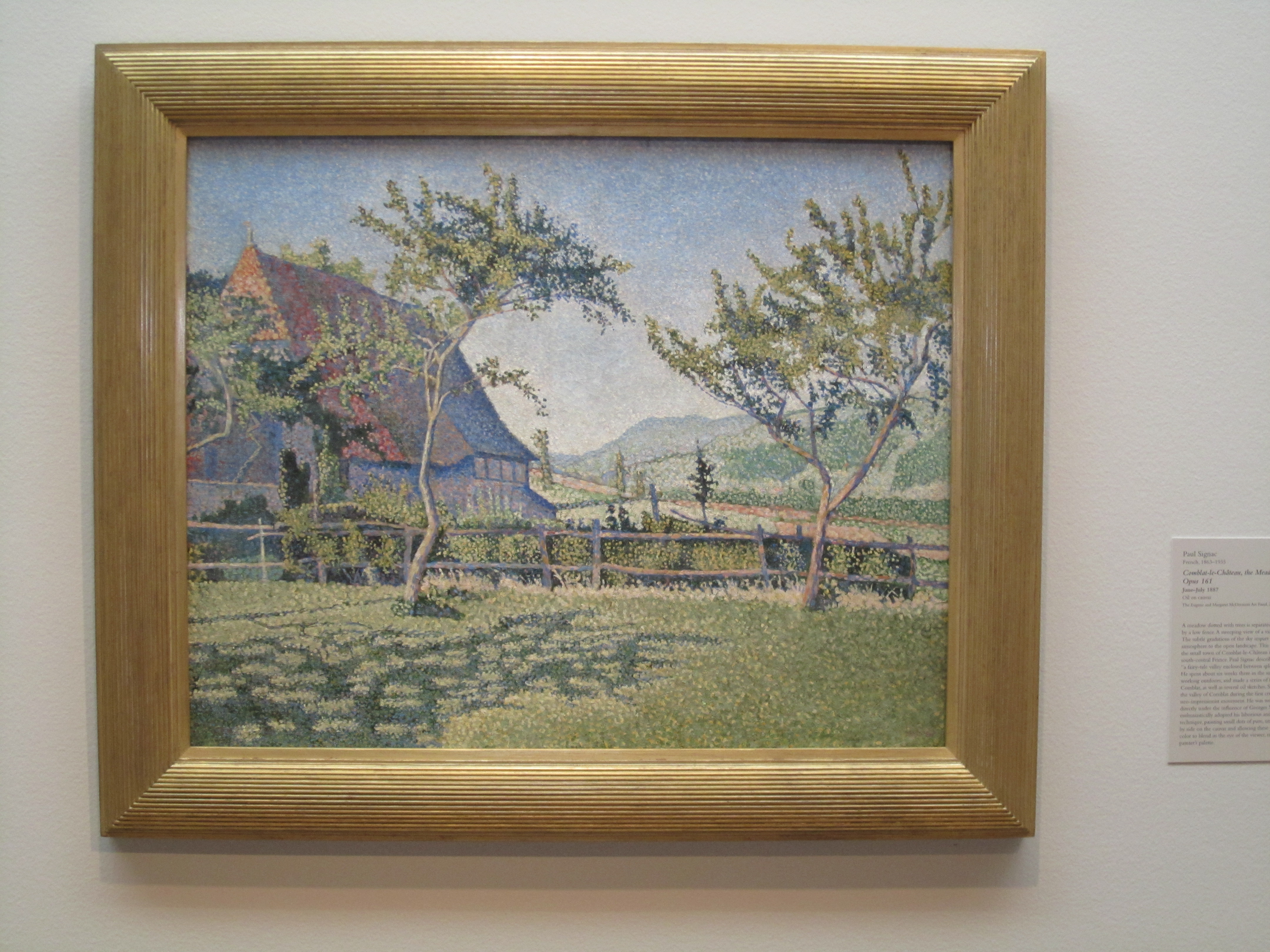
Compared to Romney, there are scant extant records of the frame choices made by the 19th-century artist Paul Signac (1863-1935). Last year, when the DMA acquired the French artist’s Comblat-le-Château, Le pré, it had a Régence Style frame that was popular very early in the 18th century.

Second from the right, Paul Signac’s Comblat-le-Château, Le Pré in its Régence style frame.

Its decorative components included a course of cross-hatching and punch work covering the entire frame. A fussy pattern of shells, fans, palmettes, C-scrolls, and foliage ornamented the center rails and corners, while a linen liner at the sight edge completed the overall design scheme. Although a lovely frame, it is not the prototypical choice made by a post-impressionist artist who worked in the wake of the pioneering painter Edgar Degas (1834-1917). Not only was Degas enormously influential to art history but he also revolutionized frame design. In fact, he believed that it was an artist’s duty to see his pictures properly framed. Earlier this year, the DMA heeded Degas’s mandate and purchased a new frame for its Signac.

Comblat-le-Château, Le Pré with its Degas style frame.

The picture’s new frame is a reproduction based on one of Degas’s most inventive designs. It features a lightly rounded profile embellished with rows of thin parallel grooves. The frame’s roundedness and fine fluting echo Degas’s “cockscomb” pattern, which he softly gilded but rarely burnished. Because of its shape, some call this format a “cushion” molding. The frame’s innovative streamlined repetitive forms do not compete with Signac’s lovely painting; rather their simplicity harmonizes with the picture to enhance it. While these before-and-after photographs illustrate the difference a frame can make, they pale when compared to seeing firsthand each striking painting now with its stylistically appropriate frame. On your next visit to the DMA, come view these superb frames and the paintings they surround.

Martha MacLeod is the Curatorial Administrative Assistant in the European and American Art Department at the Dallas Museum of Art.

Meet Monsieur le Directeur de Transition

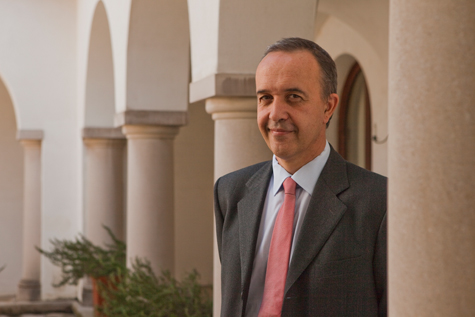
Late in the summer of 2009, when Olivier Meslay joined the DMA as the Senior Curator of European and American Art, he never imagined that two years later he would be the Interim Director. Yet, that is exactly what he was asked to be when Bonnie Pitman stepped down earlier this year. Honored by the appointment, Olivier gladly accepted this important responsibility.

Admired for his accomplishments as a curator, scholar, and professor, as well as for his humor and kindness, Olivier is the perfect person to lead the DMA during this transitional time, because, as they say in Texas, “this is not his first rodeo.” Before joining the DMA’s curatorial staff, he spent sixteen years at the Musée du Louvre. His credentials include graduating from some of the finest educational institutions in France, including the Institut National du Patrimoine, (the French State School for Curators), the Ecole du Louvre (where he was also a professor from 1997 to 2006), and the Sorbonne. Yet, Olivier is quite familiar with American museums; from 2000 through 2001 he was a fellow at the renowned Clark Art Institute in Williamstown, Massachusetts.

During his career at the Louvre, he held a number of senior positions, including curator of British, American, and Spanish painting. He curated several exhibitions, such as the innovative “Louvre Atlanta” project, a three-year collaboration with the High Museum of Art that presented seven shows drawn from the Louvre’s collections that attracted more than one million visitors. Other exhibitions over the course of his career reflect his expertise in British, Spanish, and American Art. A few of the most notable are William Hogarth, American Artists and the Louvre, and La collection de Sir Edmund Davis. He also played a pivotal role developing databases on the Louvre website that provide public access to the entire catalogue of American and British art in French museums. Beginning in 2006, he served as Chief Curator of Louvre Lens, a satellite of the noted Paris museum under development in northern France.

Olivier remained there until 2009, when he moved to Texas to assume his role as the DMA’s Senior Curator of European and American Art. Since leading that division, he curated José Guadalupe Posada: The Birth of Mexican Modernism, and, reflecting his eagerness to embrace his new home, Texas Sculpture. Olivier also spearheaded a complete reinstallation and reconfiguration of the Museum’s European galleries. Thanks to a recently completed project, of which he is most proud, almost the entire collection of the DMA is now available for viewing on our website. Olivier recognizes that this herculean effort came to fruition through the extraordinary efforts of many of his colleagues. His innovative spirit and dynamic leadership quickly made a difference at the DMA. Those qualities will help him lead us through the months ahead. In his spare time, Olivier, his wife, and their two sons have traveled to cities throughout our state, including Paris (Texas not France), El Paso, Laredo, Amarillo, and Midland. This thoughtful, intelligent Frenchman has not forgotten his heritage, but he has developed a keen interest in his new hometown. He has a deep appreciation for everything in Dallas, from its people, to its food, and, of course, its art museum.

Martha MacLeod is the Curatorial Administrative Assistant in the European and American Art Department at the Dallas Museum of Art.

Interview with Tammy Bradley

[slideshow] One of the busiest staff members in the Museum, Tammy Bradley, works in the Security department. Tammy’s job at the Museum encompasses a wide range of responsibilites. Enjoy reading about her job at the DMA!

Name and Title: Tammy K. Bradley, Gallery Attendant Manager

Years Employed at the Dallas Museum of art: Twenty-two years and two months

Describe your job here at the Museum: I ensure that galleries are properly staffed for normal operating hours and for special events. In addition to this I enforce museum policies and procedures during special events. Other responsibilities include scheduling and posting gallery attendants in the galleries.

What is your favorite part of your job: I enjoy listening to gallery attendants and working with them to better themselves in different areas.

How did you decide you wanted to work in a Museum? I had a friend that was working here at the time who asked me to put in an application and I did so. Twenty-two years later I’m still here!

If you weren’t working in a museum, what is something else you would be doing? I would be retired from the military.

Amy Wolf
Coordinator of Gallery Teaching

My Creative Process

[slideshow]

The Dallas Museum of Art is currently exhibiting a staff art show called Insourced. This exhibition includes works of arts by staff members from all over the museum, such as gallery attendants, visitor services representatives, exhibition designers and interns. I am an art enthusiast and really enjoy looking at works of art, whether it’s a masterpiece, a graphic design, or an advertisement. I also enjoy looking at nature, people, and places for inspiration. I find that looking at a broad range of artworks as well as the things around me: 

  1. Inspires and influences my own art.
  2. Gives me a boost of confidence to create art.
  3. Allows me to be free to explore different mediums.

My two works of art, Untitled (2007) and Generations (2001), were inspired by observing things around me. Generations was created using two inexpensive materials: paper and charcoal. One night,  I decided to draw my mother, who was sitting on the couch. I grabbed my drawing board, newspaper print, and a box of charcoal sticks. I sat in front of her for about forty-five minutes. I think the essence of my mother, my grandmother and great-grandmother shines through in this portrait.

Untitled was inspired by a box of chicken from a fast food restuarant. I was drawn to the image of the chicken on the front of the box. I thought about the box growing legs and running around. Strange, you might think, but it was the beginning steps to my creation. First, I sketched and decided on the materials. I knew I wanted to pair wood and metal because I thought they were good match. Once I drew my sketches and had an idea of what I wanted to make, I created the objects.  I made the wooden boxes by gluing and nailing wood panlels together and creating a hollow form. I also used a mechanical disc sander to even out and smooth the sides and edges of the box. 

The bottom portion of the scultpture took more time to make. I used iron rods to make the legs. I first cut the rods into shorter pieces and then reattached them using a torch. Cutting and reattaching the rods gave them a sense of movement. The feet, which are my favorite, are made of bronze. They were created using the lost wax casting process. Once I had all my pieces made, it was time to combine them by using a hammer and  torch. I first assembled the legs and the feet using the torch. I inserted the rods into the feet and melted the sides in order to bond the two metals. Then, I torched and hammered the top of the rods in order to flatten them. Once they were flattened, I was able to nail them to the bottom of the boxes. For me, this work of art is a constant reminder that anything can be an inspiration.

Artists are inspired by people, places and things. So the next time you are walking, sitting, or standing, stop and observed the things around you. It could be the sky, a smile, or a box of chicken that could inspire you to create a work of art.
Karen A. Colbert
Teaching Programs Intern

Andrew Wyeth, That Gentleman


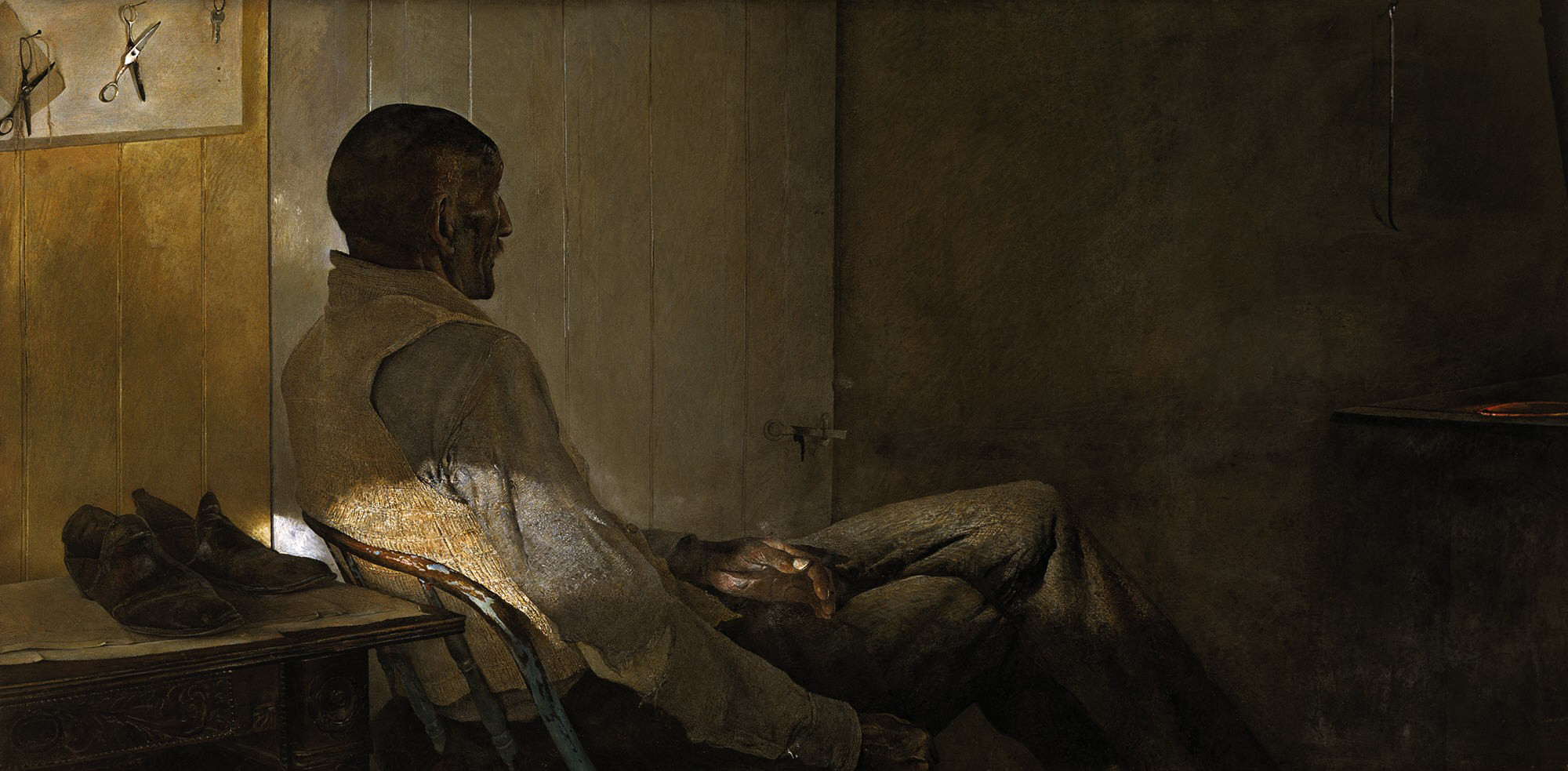
That Gentleman is one of my favorite artworks at the Dallas Museum of Art. This painting, which is located on the 4th floor in the American galleries, was painted by Andrew Wyeth in 1960. 

That Gentlemen portrays an elderly African-American man named Tom Clark, who was the neighbor of Mr. Wyeth. Although his face is hidden from the viewer, I’m compelled to further explore this composition with fresh eyes, looking for clues that express his personality. Mr. Wyeth wrote about Mr. Clark, stating: “His voice is gentle, his wit is keen, and his wisdom enormous.” This portrait is a constant reminder of how we should sometimes stop and take notice of the quiet, unsung heroes in our life.

Karen A. Colbert
Teaching Programs Intern


Archives

Categories