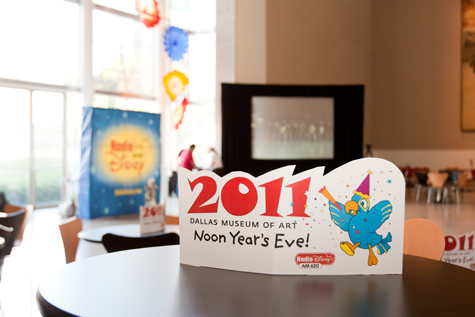
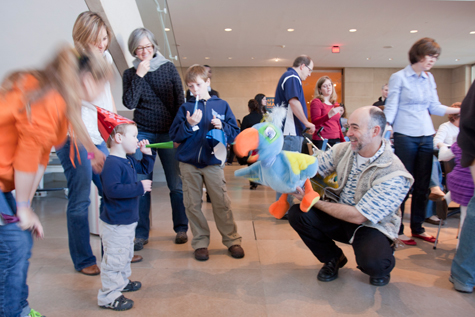
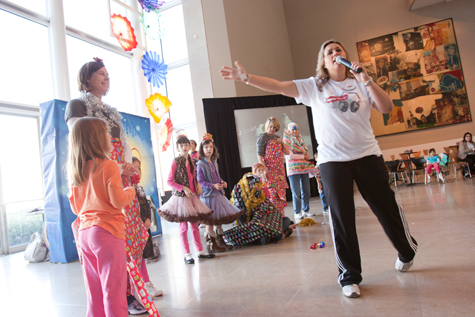
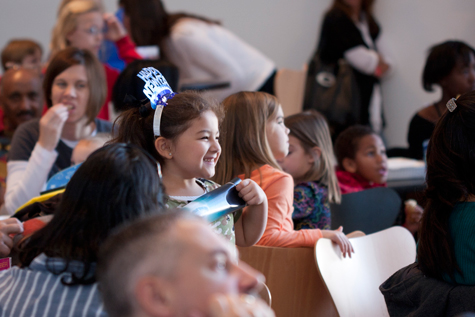
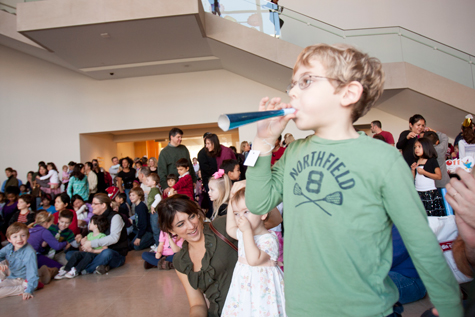
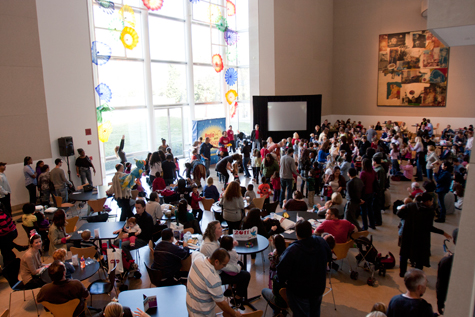
We celebrate the arrival of 2011 a bit earlier than most during the second annual Noon Year’s Eve with Radio Disney and over 4,200 visitors joined us. Families enjoyed a morning filled with games, give-aways, art, and a countdown to the new year at 12:00 p.m. We had to share some of our favorite moments from that day with you on Uncrated, enjoy!
Archive Page 47
Seldom Scene: Noon Year’s Eve
Published January 10, 2011 Education 1 CommentTags: Art, Dallas Museum of Art, Family, Noon Year's Eve, Radio Disney





Discovering a Romney
Published January 6, 2011 Behind-the-Scenes , Collections , European Art , Installation ClosedTags: 18th-century British art, Art discovery, Dallas Museum of Art, European Art, George Romeny, painting
You might have heard about the recent discovery of a George Romney painting in the Museum’s collections. Olivier Meslay, Senior Curator of European and American Art and The Barbara Thomas Lemmon Curator of European Art at the DMA, shared the story about the discovery with us last month. You can visit the painting in person in the European Galleries on Level 2. To read more about George Romney and Young Man with a Flute, click here.
[youtube=http://www.youtube.com/watch?v=p83xkbLgrQQ]
Big New Field, Brand New Audience
Published January 6, 2011 Community Connection , People , works of art ClosedTags: Big New Field, Cowboys Stadium Art Program, State of the Arts
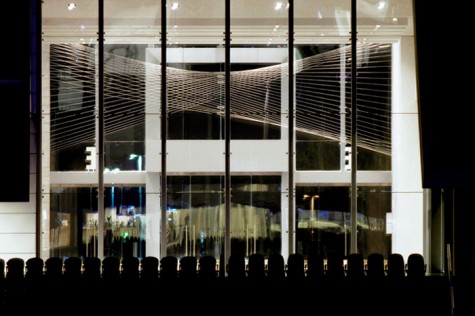
Annette Lawrence, "Coin Toss," 2009, stranded cable, The Art Program at Cowboys Stadium
There’s a lot to be excited about with the new Cowboys Stadium (the architecture, the mega-TVs, the sheer size of the place and its many luxuries). What gives all of us at the Museum goosebumps is the number of people the stadium seats, and by extension, the number of those people who will have the opportunity to experience extraordinary contemporary art while at the stadium. It’s like the featured artists and their artworks are getting an Oprah’s Book Club level of exposure. Not bad at all!
Next Thursday, the Museum is hosting another State of the Arts lecture, perfect for those interested in learning more about the Cowboys Stadium Art program. The evening will feature major players in the program: Annette Lawrence, visual artist featured at the stadium; Bryan K. Trubey, architect and Principal/Director of HKS Sports & Entertainment Group; and Charles Wylie, The Lupe Murchison Curator of Contemporary Art at the Dallas Museum of Art and member of the Cowboys Stadium Art Council. Lawrence’s work can also be seen in Big New Field.
If you’re curious to explore the stadium before next Thursday’s talk, check out the newly-released iPhone app, The Art at Cowboys Stadium. The app features a mobile tour, interviews with the Joneses, the Cowboys Stadium Art Council, and featured artists, as well as documentation of artwork installations.
Amy Copeland
Coordinator of Go van Gogh Outreach
The Ball Drops
Published December 29, 2010 Arts & Letters Live , Center for Creative Connections , Education , First Tuesday , Late Nights ClosedTags: Dallas Museum of Art, Jeff Kinney, Jill Foley, New Year’s Eve, Noon Year’s Eve, The Grinch, The Mourners
The DMA and Radio Disney are teaming up again this year for Noon Year’s Eve on December 31, the perfect way to ring in the New Year if your bedtime is a bit before midnight. The Museum will open at 10:00 am to kick off the three hours of celebration. There will be music and games led by Radio Disney DJ Tera Beal and prizes aimed at visitors ages 6 and under. Everyone is invited to join in on the countdown for when the clock strikes noon. The DMA is also offering a prize for parents and other grown-ups who come, $5 admission and $5 parking in the DMA garage from 10:00 am – 2:00 pm (visitors ages 12 and under are always free at the DMA).
[slideshow]
Inspired by the New Year’s countdown — and the impressive Times Square crystal ball — we created a top ten countdown (without any scientific data or specific parameters) of the past year at the DMA.
10. Turning 107 in January and kicking off a year of great Late Nights at the Museum.
9. The month long celebration of the Arts District, Art in October, with two free admission days to the Nasher Sculpture Center, The Crow Collection of Asian Art, and the Dallas Museum of Art with multiple family programs.
8. Welcoming the DMA-organized exhibition The Mourners from our sister city of Dijon, France in October with an opening weekend featuring a Mourner on stilts and five French chefs.
7. The summer gave us two months of the inspiring and cozy The Living Room installation made of recycled cardboard by artist Jill Foley.
6. Celebrating the bicentennial of Mexico’s independence with nine months of events and two exhibitions featuring Mexican art.
5. September brought the opening of the new C3 exhibition Encountering Space with new works of arts from the DMA collection, a space bar, and a new Arturo’s Nest.
4. Inviting a special guest, The Grinch, to close out a great year of exciting First Tuesdays.
3. Jeff Kinney, author of the popular Diary of a Wimpy Kid, made an appearance as part of the BooksmART series of Arts & Letters Live in April.
2. Launching our quarterly Autism Awareness Family Celebrations in April inviting children with autism and their families to explore C3 and participate in activities an hour before the Museum opened.
1. Our amazing visitors! More than 500,000 of you visited our many exhibitions and programs throughout 2010, we can’t wait to get started on 2011.
2010 also brought the launch of Uncrated. Thank you dear readers and Happy New Year.
Painting by Numbers
Published December 27, 2010 Behind-the-Scenes , Collections , Contemporary Art , Curatorial , Exhibitions , Installation , Modern Art , Sculpture 1 CommentTags: Alan Saret, Anne Truitt, Charline von Heyl, Christian Schumann, Contemporary Art, Dallas Museum of Art, Glenn Ligon, Installation, Interns, Jack Whitten, Jackie Ferrara, Jackson Pollock, Jess, Joan Mitchell, Larry Bell, modern art, painting, sculpture, Susie Rosmarin, Wallace Berman
Our new installation Re-Seeing the Contemporary displays more than fifty works of the art from the DMA’s captivating contemporary collection. Some of the artists on view range from familiar abstract expressionists to lesser known artists at work today. As 2010 comes to a close, we thought it might be fun to take another look at the exhibition, re-seeing the exhibition into our own top ten list of interesting categories.
1. Paintings: 29
The majority of artworks in the exhibition are paintings.

Jackson Pollock, Cathedral, 1947 Dallas Museum of Art, gift of Mr. and Mrs. Bernard
Pollock changed the definition of painting—instead of painting on the wall or an easel, he laid the canvas on the floor and applied paint to it from above through pouring and dripping.
2. Sculptures off the wall: 9

Larry Bell, The Cube of the Iceberg II, 1975 Dallas Museum of Art, anonymous gift in memory of J. O. Lambert, Jr.
Although not your typical figurative sculpture, this work has a reflective quality that involves the viewer.
3. Sculptures on the wall: 5

Alan Saret, Deep Forest Green Dispersion, 1969 Dallas Museum of Art, gift of John Weber
Though sculptures are typically displayed using a base or plinth, this work also fits the category because of its three-dimensionality. Since the piece is made out of wire and hangs off of one nail, it must be reshaped with each installation, almost becoming a living thing like the plants or moss it resembles.
4. Collages: 3

Jess, Arkadia's Last Resort; or, Fete Champetre Up Mnemosyne Creek, 1976 Dallas Museum of Art, General Acquisitions Fund
Jess took images from various sources such as jigsaw puzzles, art books, advertisements, and store catalogues and combined them to create a collage in the shape of a landscape.
5. Works never shown before: 6

Jack Whitten, Slip Zone, 1971 The Rachofsky Collection and the Dallas Museum of Art through the DMA/amfAR Benefit Auction Fund
A new acquisition that has not yet been on view, Slip Zone adds to the DMA’s collection of postwar abstract art. Whitten created the unique design by pulling various objects across the wet painted surface.
6. Works by women artists: 5
A few of the female artists are represented in the exhibition:
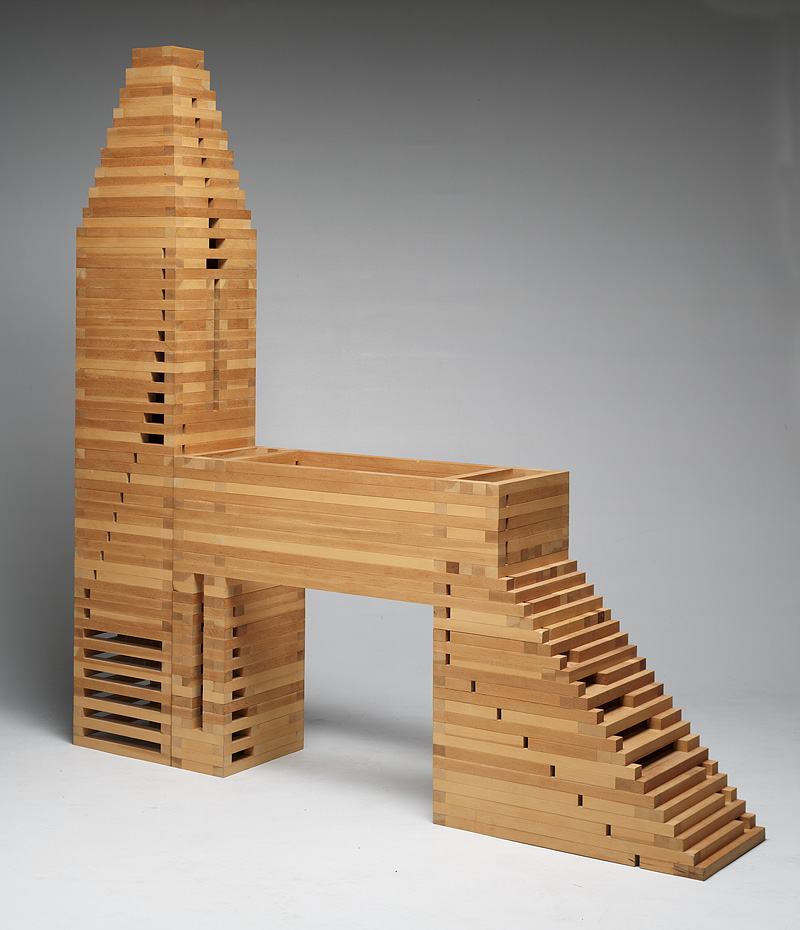
Jackie Ferrara, A213 Symik, 1982 Dallas Museum of Art, anonymous gift

Susie Rosmarin, Gingham, 1998 Dallas Museum of art, gift of Mr. and Mrs. Bryant M. Hanley, Jr., in honor of Charles Wylie, The Lupe Murchison Curator of Contemporary Art

Anne Truitt, Come Unto These Yellow Sands II, 1979 Dallas Museum of Art, gift of Shonny and Hal Joseph (St. Louis, Missouri) in honor of Cindy and Armond Schwartz
7. Works by Texas artists: 2

Christian Schumann, Nomads, 1998-1999 Dallas Museum of Art, Texas Artists Fund
Christian Schumann graduated from Booker T. Washington High School for the Performing and Visual Arts, located just blocks away from the DMA.
8. Works with people: 11

Wallace Berman, Untitled, 1964 Dallas Museum of Art, General Acquisitions Fund
At first glance, this collage may appear to be a repetition of the same picture. Upon further inspection, though, you can see that each hand holds a transistor radio, which in turn frames images of people, animals, and objects.
9. Works with text: 14

Glenn Ligon, Untitled, 2002 Dallas Museum of Art, DMA/amfAR Benefit Auction Fund
Inclusion of text is a modern development which Ligon often uses in his art. As the text progresses, it becomes more and more unclear.
10. Works with hot pink: 3
Pink is the color of happiness and works including hot pink just make us smile.

Charline von Heyl, Untitled (3/00), III, 2000 Dallas Museum of Art, gift of Kathleen and Roland Augustine in honor of Robert Hoffman
This painting, a recent museum acquisition, recalls a tropical rainforest inhabited by abstracted animal-like forms. The shocking combination of colors—yellow, green, turquoise, and hot pink—draw your attention to the composition.
Over the holidays we hope you will visit the DMA to discover the countless connections you can make with Re-Seeing the Contemporary and with the larger DMA collection.
Haley Berkman is the McDermott Curatorial Intern for Contemporary Art and Sarah Vitek is the McDermott Education Intern for Adult Programming at the Dallas Museum of Art.
All I Want for X-Mas
Published December 23, 2010 Museum Insight , People , works of art 2 CommentsTags: Staff favorites
[slideshow]
I recently asked colleagues which artwork from the DMA they would most like to take home and why they like it so much. Below are their responses.
Melissa Nelson:
If I could take home any work of art from the Museum, I would choose Phil Collins’ the world won’t listen. This is a three-part video installation showing ordinary people from Colombia, Indonesia, and Turkey singing their favorite songs from The Smiths’ album of the same title. As an art-lover, it’s amazing to see the global devotion to a British band that spans three non-English speaking countries, expressed through genuinely heartfelt and uninhibited singing and dancing, shown simultaneously on large screens in a pitch-black room. As an avid Smiths fan, it’s impossible for me to view this work of art without wanting to perform the songs myself.
Amy Wolf:
I would like to take home Aria After the Ballet, by Edgar Degas. I wrote about Degas monotypes in my graduate studies, so having this in the collection is wonderful! I like the cool build-up of pastel colors on the figures contrasting against the flat stage backdrop.
Ashley Bruckbauer:
Farm Near Duivendrecht, in the Evening, Piet Mondrian, c. 1916 (Reprise of a compositional Series from 1905-1908). I absolutely love the juxtaposition of positive and negative space in this work and the overall painterly style. It appears at once realistic and abstract, with blocks of warm oranges sharply contrasted by neighboring blocks of cool blues and purples. Also, I love seeing this example of Mondrian, which is so different from the body of work for which he is most famous. I wouldn’t mind if it appeared in my Christmas stocking this year!
Shannon Karol:
I have had such a hard time deciding which artwork I want to take home with me! As of right now, my choice is Carousel Club by Wayne Gonzales (currently in Big New Field). I love the ruby red background and the Kennedy connection. Plus it will fit in my apartment much easier than Robert Rauschenberg’s Skyway (my 2nd choice).
Karen Colbert:
That Gentleman, Andrew Wyeth, 1960; I love this artwork because it exudes serenity. I am always wanting to get a glimpse of the man’s face in the artwork, and although it’s not seen by the viewer, I think the colors, the composition, and subject matter give you snapshot of the type of gentleman he was.
Nicole Stutzman:
Choosing just one work of art is so HARD! But, I would love to share one of my favorite works from Indonesia.
Wall panel with figure of a slain shaman, Indonesia, Taileleu Village, c. 1900. Wood, paint, shell inlay, and cloth.
Why is it one of my favorites?
1) I love the way the maker emphasized the hands of the carved figure. They seem a little too large and slightly out of proportion, and the texture of the hands seems really rough. You can see gouging marks around the fingers from the tools used by the maker to create such a deep relief. I love the physical qualities of the size and texture of the figure’s hands.
2) I also love the stories behind this object. The panel was carved following a headhunting ritual, which was part of festivities surrounding the creation of a new clan house, or uma. It served as a memorial to the headhunting victim and was placed in the front room of the uma. Seen by visitors who entered the house, the panel proved the courage and abilities of the house’s owners. The culture that created this lived on the Mentawai Islands, and they believed that everything around them had a soul – the people, the trees, the houses they inhabited, and more. I think this is a wonderfully powerful perspective to have about the world around you. Part of the beliefs surrounding the creation of the panel focus on the Mentawaian people’s efforts to maintain harmony between all of the spirits and souls in the world. Through this panel they honored the spirit of the slain victim and the materials used to make the panel, as well as the new house and its soul.
Jenny Marvel:
The “Dimension” tea and coffee set; I would love to have this coffee and tea service to have as a conversation piece while entertaining guests during the holidays!
Amy Copeland:
My answer to this question changes all the time, but right now I would most like to take home one of the sketchbooks we have from artist Otis Dozier. Drawings are my favorite media, and I love the bright colors, pale washes, and gestural lines Dozier uses to capture the places he traveled. I’ve seen single pages of his sketchbooks on view before, but they’ve been enclosed in vitrines, so I would welcome the opportunity to turn the pages!
I hope the next time you visit the DMA, you’ll find a favorite artwork.
From all of us here at the DMA, warm wishes for a merry and bright holiday.
Amy Copeland
Coordinator of Go van Gogh Outreach
Form/Unformed: Building a Collection of Modern and Contemporary Design at the DMA
Published December 22, 2010 Decorative Art and Design , Exhibitions , Installation ClosedTags: American art, Campana brothers, Dallas Museum of Art, European Art, Fine and Decorative Arts, Giovanni Corvaja, Installation, Zaha Hadid

As the curator of decorative arts and design for the DMA, I oversee a collection of nearly 8,000 works of American and European art. From 17th-century ceramic vases to 20th-century plastic chairs, these holdings are among the Museum’s most expansive and diverse. One aspect of this collection is a growing number of modern and contemporary international design objects, a selection of which has recently been installed in an exhibition in the Museum’s Tower Gallery, Form/Unformed: Design from 1960 to Present. In this installation, we showcase, for the first time, a perspective upon design of the last fifty years as seen through the lens of the DMA’s collections.
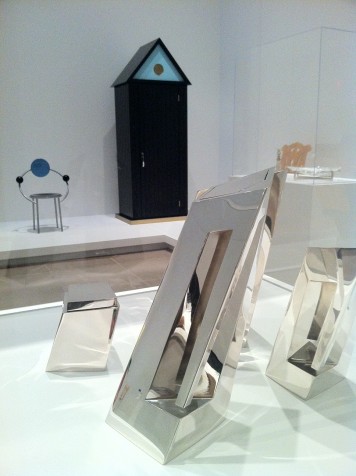
Zaha Hadid's coffee and tea service set.
Although the DMA began acquiring modern design of the 20th century nearly two decades ago, it has only been in recent years that opportunities to collect contemporary design have been taken, resulting in a host of new acquisitions, such as a tea service and bench by Pritzker Prize-winning architect Zaha Hadid and a witty assemblage of stuffed animals as a chair by the Brazilian design team of the Campana brothers. Many of the objects reflect a logical continuum with the Museum’s historic decorative arts works–whether by function as seating and tableware, or most plainly as aesthetic creations inspired by the era and cultural milieu in which they were fashioned. Even so, a few works in the exhibition, such as Giovanni Corvaja’s “The Golden Fleece” ring, reveal a new collecting interest within the department, that of jewelry. Just this year, over a dozen exceptional examples entered the collection, with yet more growth anticipated in the coming years. Such decisions to expand collecting areas are not made lightly, as resources must be carefully considered and such “new” areas of interest must be reviewed for their logical connections to the DMA’s other collections (in this instance, ancient Greek and pre-Columbian jewelry).

Robert J. King's Celestial Centerpiece.
Our new jewelry collecting efforts have been exciting, and as we continue to add new works in this area (and in other arenas of design), you will see additions to this exhibition and the Museum’s galleries–so keep a watchful eye!
Kevin W. Tucker is the The Margot B. Perot Curator of Decorative Arts and Design at the Dallas Museum of Art.
Seldom Scene: The Grinch Visits
Published December 20, 2010 Behind-the-Scenes , Education , First Tuesday 1 CommentTags: AT&T Performing Arts Center, Dallas Museum of Art, First Tuesday, Grinch, Holidays, Staff
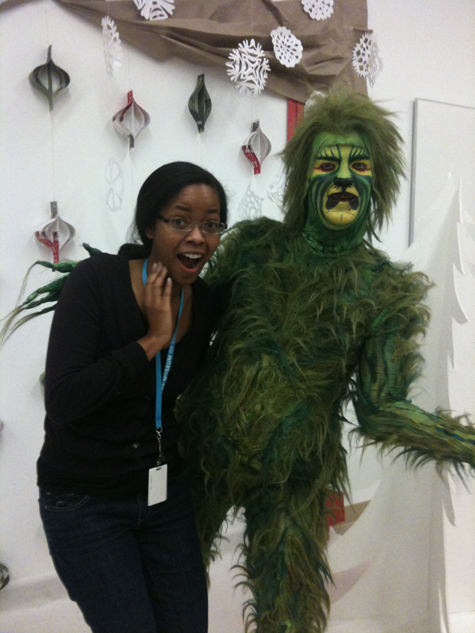
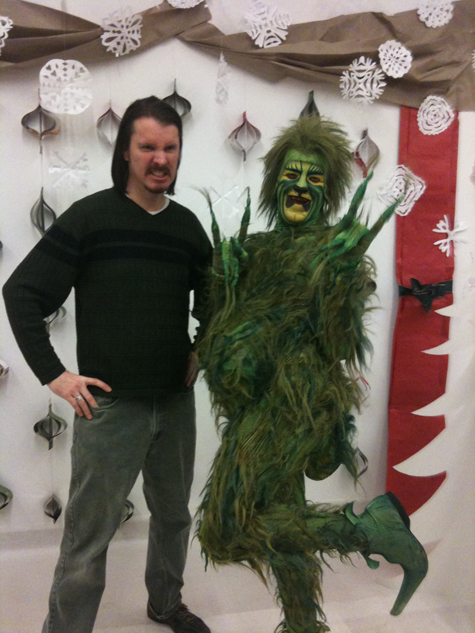
On the first Tuesday of every month, admission to the DMA is free, and we have special activities for our youngest visitors until 3:00 p.m. On December 7, we had a special guest in C3, the Grinch (before his heart grew three sizes in one day). He stopped by from the AT&T Performing Arts Center, where Dr. Seuss’ How the Grinch Stole Christmas! The Musical was opening later that night. DMA staff members could not pass up this photo opportunity.


The Starting Line
Published December 15, 2010 Center for Creative Connections 1 CommentTags: Annette Lawrence, Community Partner, Line
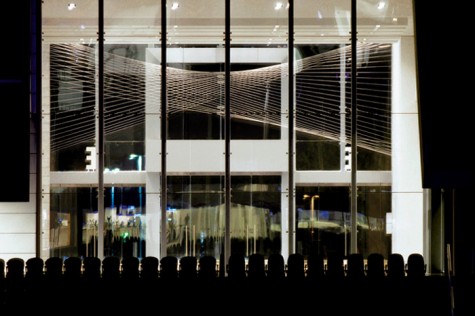
Annette Lawrence, "Coin Toss," 2009, stranded cable, The Art Program at Cowboys Stadium
Try to imagine the longest line of paper conceivable. Now think about how much time it would take to create it. How many people would participate? What would this mass of paper look like? Well, the DMA’s Center for Creative Connections teamed up with Big New Field artist and Community Partner Annette Lawrence this month to start the longest paper line possible.
In the Art Studio earlier this month, Museum visitors crowded around the tables using long rolls of white butcher paper, 4-foot rulers, and double-sided tape to create their own addition to Lawrence’s continuous line. Sounds of paper ripping and scissors cutting echoed throughout the Center as the lines our visitors made snowballed to the ground before they rolled them up onto giant spools. Couples worked together to merge their own lines into one and siblings helped each other meld their contributions to the larger spool. The line continued to grow and grow like a living being.

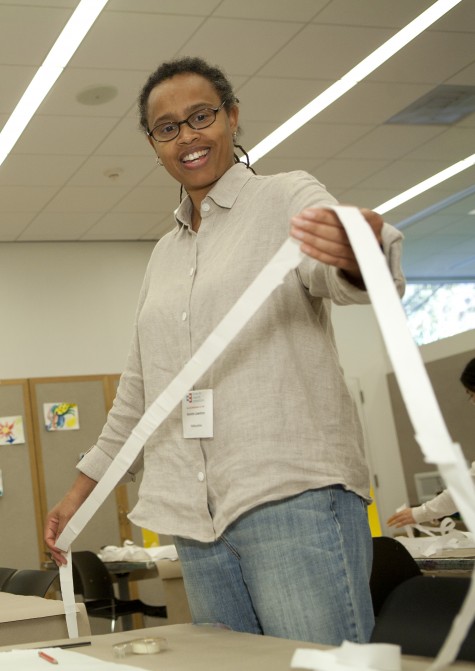
Every six months the Center for Creative Connections invites a Community Partner to creatively respond to the Center’s current exhibition. Our newest partner, Annette Lawrence, came up with the idea to allow visitors to be an active part of the project. Through a series of workshops now through next September, Museum visitors can contribute to a collective paper line by tearing and taping pieces of white butcher paper together. Center staff will collect and store the paper on large spools until Lawrence installs the line in the Center next fall. Once installed, those visitors who contributed to the line will be invited to come view the final work.
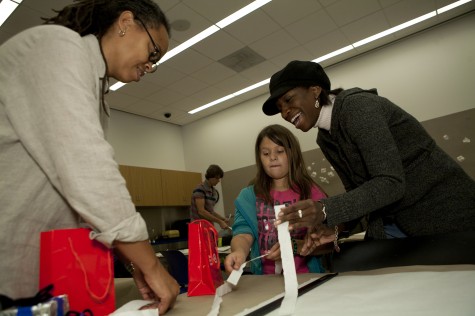
Imagine the metamorphosis of two-dimensional pieces of paper into a three-dimensional sculptural form. Visitors were excited to think about how the artist will install the line in the Center, thinking it might be a never-ending maze of white strips hanging from the ceiling and covering the walls or imagining it as a huge ball of yarn. For now we have to wait for the end result, but until then the line will continue to evolve.
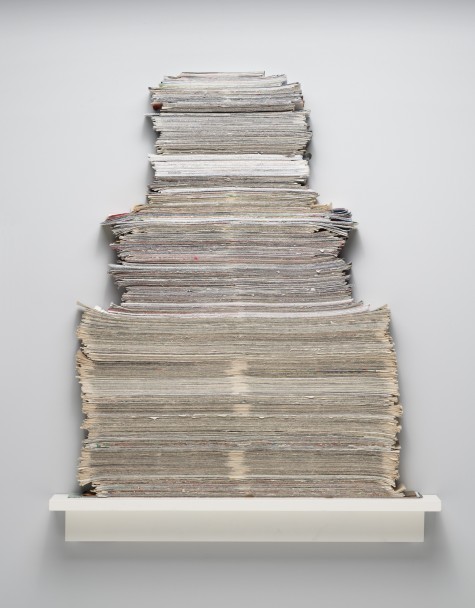
Annette Lawrence, "Free Paper 12 / 05," 2006–08, mixed media, Dallas Museum of Art, Charron and Peter Denker Contemporary Texas Art Fund, 2008.100.a–e, © Annette Lawrence
The Center for Creative Connections has previously worked with the following Community Partners: the School of Architecture at the University of Texas at Arlington (UTA); Booker T. Washington High School for the Performing and Visual Arts; University of North Texas College of Visual Arts and Design, New Media; textile artist Lesli Robertson (UNT), and, currently, the Center for Creative Computation, Meadows School of the Arts, Southern Methodist University.
Annette Lawrence will participate in the DMA’s “State of the Arts” series, a conversation about the arts and the cultural landscape of the Metroplex, on Thursday, January 13 at 7:30 p.m.
Hadly Clark is the Center for Creative Connections Coordinator for the Dallas Museum of Art
Re-imagining and Re-installing
Published December 9, 2010 Behind-the-Scenes , Collections , Curatorial , Exhibitions , Installation ClosedTags: Brancusi, collections, Dallas Museum of Art, European Art, Hepworth, Installation, Kandisnsky, Matisse, Uncrating
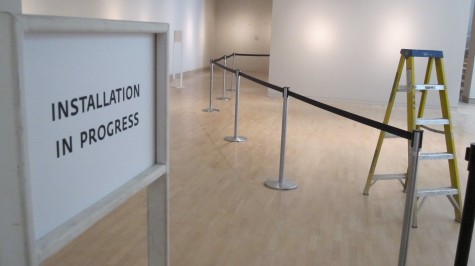 The DMA exhibitions department spends much of its time planning, organizing, and fine-tuning any given exhibition. And ironically, the installation process marks the beginning of the end of our efforts. On the Museum’s second floor, our department is now working to complete the massive reinstallation of the European galleries, which host some of the most well known and celebrated works of art in the DMA’s collections. Alongside curators Olivier Meslay and Heather MacDonald, the exhibition designer, preparators, registrars, and carpenters have come together to re-introduce this selection of masterpieces to DMA visitors.
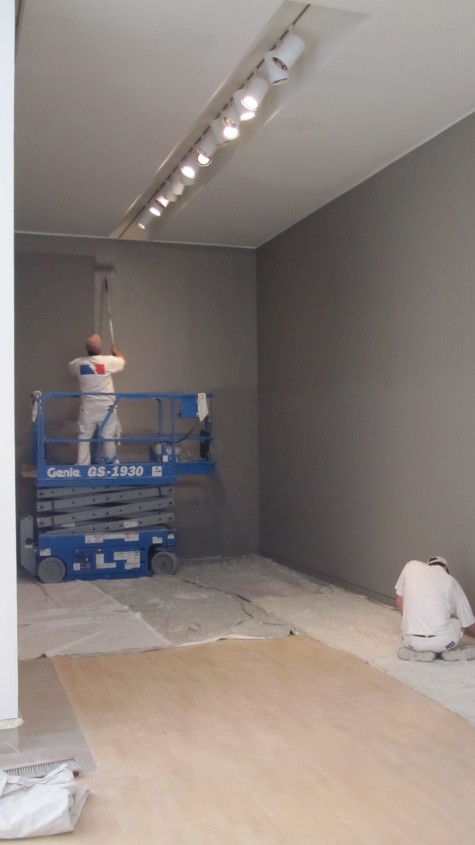 During “install,” the exhibitions department ensures that the careful removal of objects, new construction (such as platforms, walls, and pedestals), and re-installation of the artwork all run according to plan. Close attention to the condition of the galleries and the creation of hospitable environments for the works — and visitors — come into play.
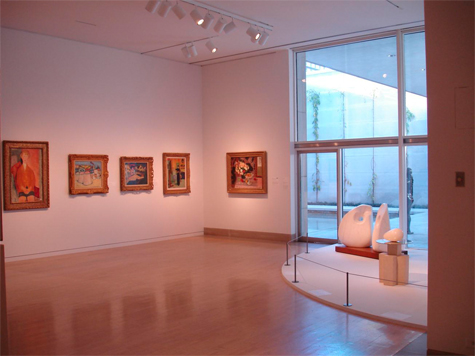 For example, the sculptural grouping found off the Level 2 courtyard requires proper window tinting before the works can reach their “final destination.” Anyone will agree that this precaution was worth the wait when caught between Brancusi or Hepworth’s monochromatic contours and Matisse or Kandisnsky’s vibrant polychrome canvases. When filtered properly, the same light that can damage art now works in tandem with it, persuading us to step back and experience the “dance” between these gleaming three-dimensional whites and the vivid impressionist brushwork.
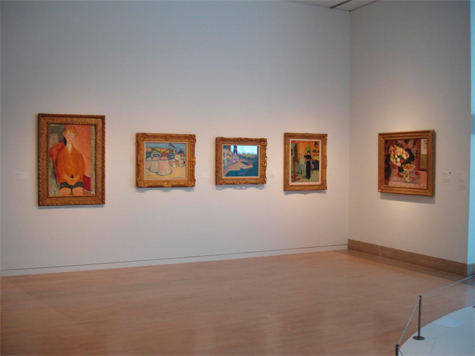
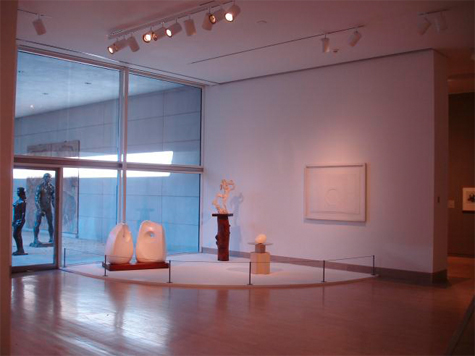
We hope you’ll come see for yourself on your next visit to the DMA.
Aja Martin is the Exhibitions Administrative Assistant at the Dallas Museum of Art.