Archive Page 51


Friday Photos: Creative Children

[slideshow]

The world needs a little bit more creativity, joy, and delight.  Recently, I learned of a grant opportunity for elementary schools sponsored by Crayola and the National Association of Elementary School Principals (NAESP).   Champion Creatively Alive Children is a grant opportunity that supports innovation and the integration of arts across the curriculum to build 21st century skills.  Awards to each school total $3,000 and include Crayola products. Proposals will be accepted through June 15, 2012.  Take action and champion creativity in your school!

Nicole Stutzman
Director of Teaching Programs and Partnerships

Artworks shown in images:

  • Mark Rothko, Orange, Red and Red, 1962, Dallas Museum of Art, Gift of Mr. and Mrs. Algur H. Meadows
  • Jean Dubuffet, The Reveler (Le Festoyeur), 1964, Dallas Museum of Art, Gift of Mr. and Mrs. James H. Clark

Ivory Tusks and Cultural Hybridity

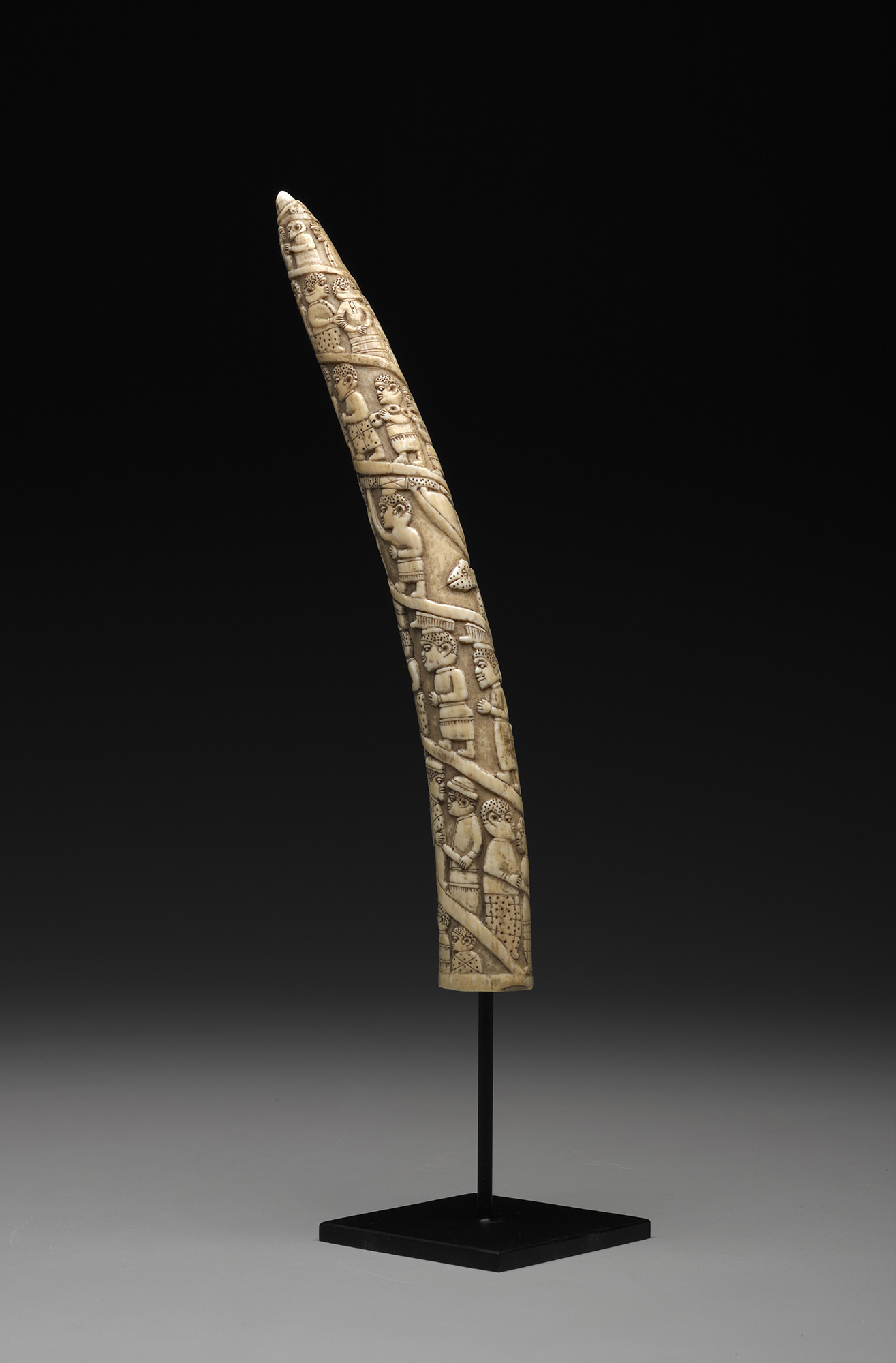
During the 19th century, carved ivory tusks were commissioned for export to countries such as Portugal, Britain, France, Spain, Holland, India, and America. These “souvenirs,” often mementos of an African adventure, exhibited a combination of indigenous and foreign subjects and styles.

This Saturday, an interesting exhibit opens in the Museum concourse, Souvenir: A 19th Century Carved Tusk from the Loango Coast of Africa.  While the exhibition explores African souvenir art in the 19th and 20th centuries, the highlighted work is a carved ivory tusk the Museum acquired in 1969. This is the first time the tusk has been on view since its acquisition.

Tusk with multiple scenes in relief, 19th-20th century, Dallas Museum of Art, The Clark and Frances Stillman Collection of Congo Sculpture, gift of Eugene and Margaret McDermott

Six hundred to one thousand of these tusks are estimated to exist in private collections and museums. An article in Smithsonian magazine refers to these tusks as “spirals of history,” as the images carved in relief often tell stories of transatlantic  trade, manual laborers, rituals, and interactions with foreigners.

The spiral motif as well as the concept of conveying narrative through a spiral recall indigenous artistic traditions, while the subject matter of these tusks often incorporate foreign objects, subjects, or figures. Ultimately, these carved tusks are cultural hybrids.

I’m thinking of all the teaching possibilities related to cultural hybridity. In a recent discussion with colleagues about the very personal and complex implications of defining one’s own “culture,” I am confident that many students could relate to this notion of cultural hybridity. It would be interesting to ask your students to consider their “culture.” Often we associate culture with ethnicity, but culture could also include age, gender, geographic location, religion, or political status.  What could an exercise about exploring and defining the various elements of one’s culture look like? For example, you might ask students to design a souvenir about the various cultures that affect their day to day actions and decision-making. What would their souvenir look like? How would they represent various cultures?

For teaching ideas and information about other works in our African collection, visit our our new online teaching materials related to our standing power figure (nkisi nkondi), helmet mask (mukenga), or rhythm pounder. Please comment and share with us the ways that you and your colleagues are incorporating ideas about cultural hybridity (and the fluid nature of culture) in your classrooms, and come check out Souvenir, on view until September.

Andrea V. Severin
Coordinator of Teaching Programs

References:

The Quality Instinct

Join us Wednesday, May 2 at 7:30pm for an Arts & Letters Live Special Event, Seeing Art Through a Museum Director’s Eye: Dr. Maxwell Anderson in Conversation with Krys Boyd.

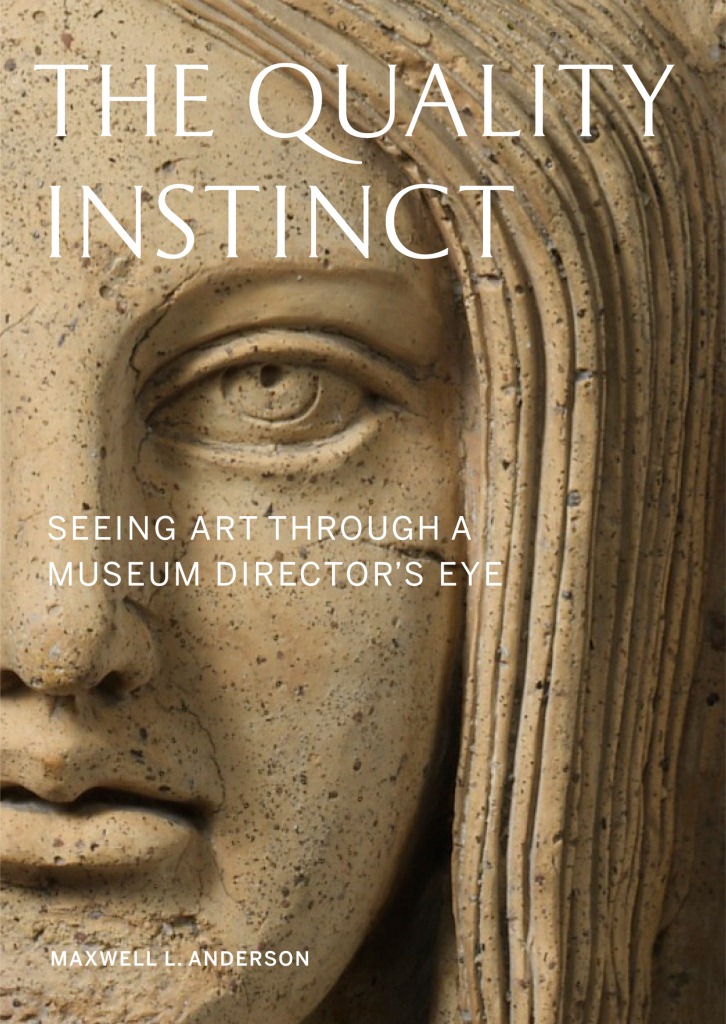
The Quality Instinct: Seeing Art Through a Museum Director's Eye by Maxwell L. Anderson

The Quality Instinct: Seeing Art Through a Museum Director’s Eye was published less than a month after Maxwell L. Anderson began as The Eugene McDermott Director of the Dallas Museum of Art.  In an interview, he said “The book is really an introduction to a ground floor of understanding about artistic intention and artistic result, and I hope people will take something away from it in feeling more comfortable with objects that, even today, great professors of artistic and art historical theory may be a little out of touch with.”

Maxwell describes his family’s travels when he was a child as “great exposure to new ways of seeing the world”.  These experiences clearly made an indelible impression on him, as he states “I used, in the course of a career as an art historian, and a museum curator and director, to go back and refresh my eye about what I learned as a child and how it would influence the way I see today as an adult.”

Rather than our standard interview format, I decided instead to ask our new Director five quick questions:

  • Are there any books you’ve read multiple times?  Catcher in the Rye, by J.D. Salinger.  The Way We Live Now, by Anthony Trollope.
  • Do you have a “can’t miss” TV show?  The Big C is one Jacqueline and I don’t miss.  That, and Shark Tank.
  • What is your favorite quote? “I’d rather be an optimist and a fool than a pessimist and right.” – Albert Einstein
  • If you could have dinner with any historical figure, who would it be? Montesquieu – he was so funny and casual and arch.
  • Coming from Indianapolis, how are you preparing for the Dallas summer?  I’m looking forward to it.  It will be cooler than growing up in New York in the summer; there, I would walk out on the hot street, get in a cab and stick to the vinyl seat, and go to a walk-up apartment without air conditioning.

Don’t miss what will surely be an interesting conversation between Maxwell Anderson and Krys Boyd.

Melissa Nelson
Manager of Teaching in the Community

Friday Photos: Young Philanthropists

Earlier this spring, we were delighted to learn the DMA was selected to receive a donation through Episcopal School of Dallas’s philanthropy program.  Thanks to a generous gift made to The Dallas Foundation by Mr. and Mrs. J. Puckett, the Giving Beyond Ourselves program was formed with the goal of helping students to develop a philosophy of financial giving that would complement their experiences of volunteering their time for community service.  In the Giving Beyond Ourselves program, the junior class participates in advisory groups who research and select non-profit organizations they wish to support financially.  The DMA is honored to be one of this year’s recipients, along with Children’s Medical Center, Genesis Women’s Shelter, Operation KindnessMi Escuelita Preschool, American Red Cross, and Ronald McDonald House of Dallas.

The advisory group who selected the DMA came to the Museum for a two-hour visit, which included a staff-led walkthrough of various galleries and exhibitions and a special behind-the-scenes tour of our art storage space.  The students asked thoughtful questions about the DMA’s mission, annual budget, educational programs, and accessibility to diverse audiences.

We extend a BIG thank you to ESD students Blake Archer, Michael Collins, Amanda Eggers, Asia Hawkins, Wilson Miller, Reed Seidel, Sarah Spellings, Catharine Turner, and Tristan Whitcher; their advisor Mrs. Barbara Sampson; and Community Service Director Christi Morrow for selecting the DMA!

Director of Collections Management Gabriela Truly (on the right) talks to the group about one of the DMA's art storage spaces.

Melissa Nelson
Manager of Teaching in the Community

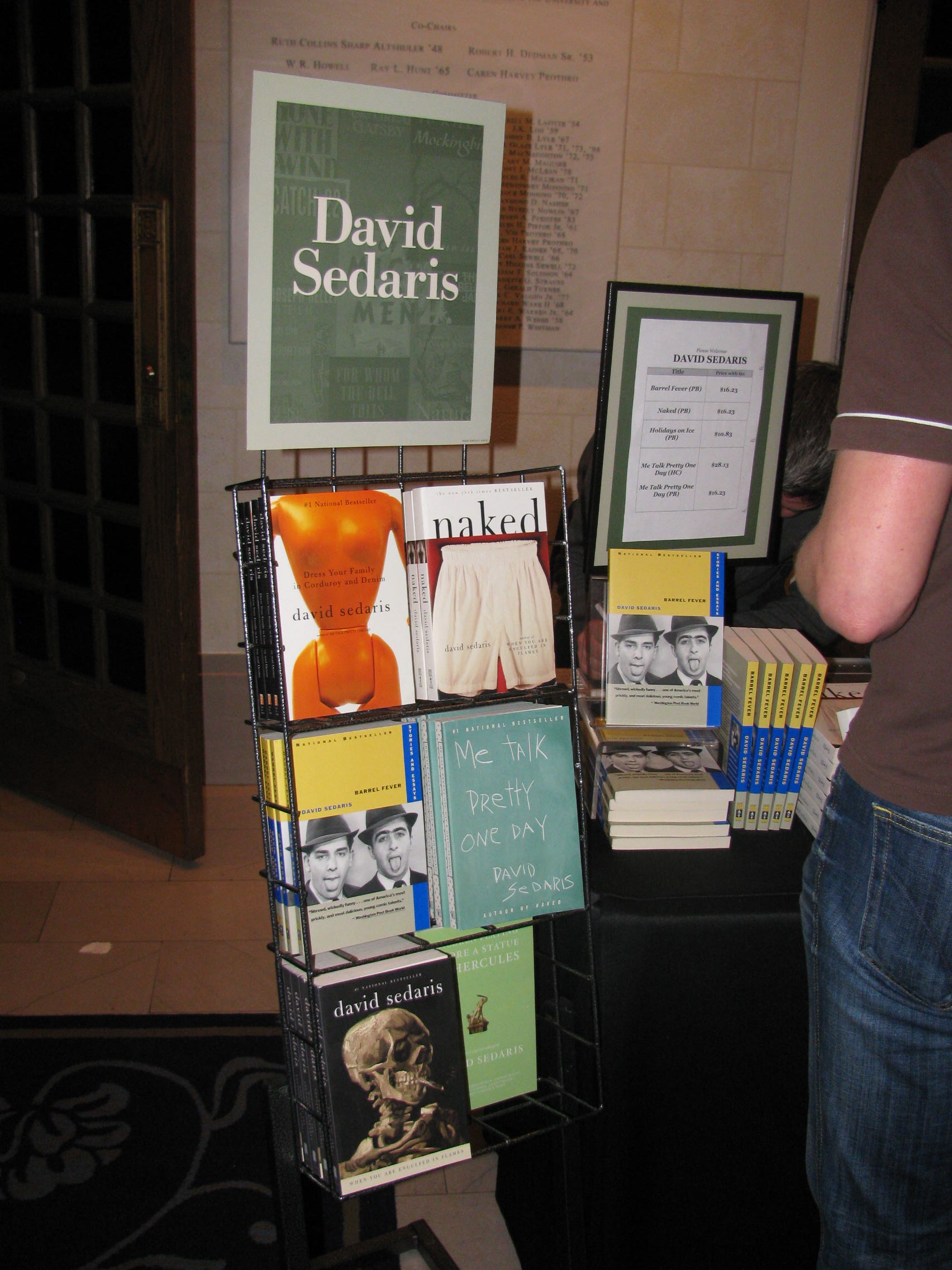
An Evening with David Sedaris

If you’ve ever read any of the eight books by David Sedaris, you probably already consider him a close and personal friend. Through his witty short stories, he seamlessly weaves back and forth between autobiography and absurdist fiction, having the reader laughing and gasping at each turn of the page. He effortlessly wraps you up in his world, introducing you to his quirky family, and keeping you on the inside of every joke. So, it came as no surprise that he was just as enthralling and humorous in person as he is in his books.

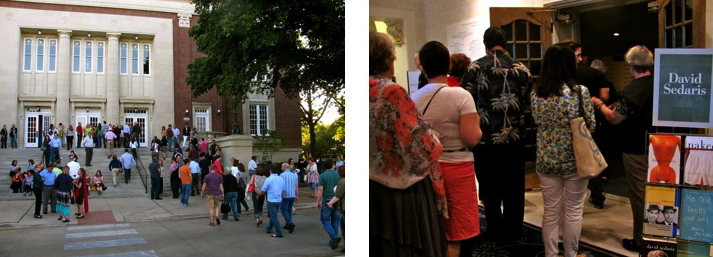
This was David Sedaris’ fourth year coming to Dallas with Arts & Letters Live, and yet the 2,500 seat SMU Auditorium was still completely sold out. After several readings and a question and answer session, many hurried to get their place in line to meet David. I say meet, because David Sedaris does not just sign books, he has a conversation with each person who approaches his table as if welcoming them into his home. Despite this taking hours, going very late into the night, Sedaris maintains his energy and enthusiasm for each and every fan.  He uses his comedic flare to start unusual conversations with each visitor, and then references the encounter in the book he signs for them. With a drawing or clever comment, Sedaris turns a brief interaction into a special inside joke between the fan and him.

In my case, I was so excited to see him that I ran out the door without either of my two favorite books that I wanted him to sign. Fortunately with a simple explanation, he was more than happy to sign the program for me instead, writing, “Oh Hannah you forget everything”. So, just like many of the fans in line, I got to walk away with my very own personal story of David Sedaris.

Don’t miss out on the rest of this Arts & Letters Live season!

If you have any stories from an Arts & Letters Live event, please don’t hesitate to share in the comments below.

Hannah Burney
McDermott Intern for Teaching Programs and Partnerships

Staff Spotlight: Mary Nangah

Mary Nangah wears many hats.  She is an artist, a student, and an aspiring chef.  She is also the DMA’s part-time Community Teaching Assistant.  Mary’s hard work behind-the-scenes helps make Go van Gogh visits and community outreach events happen.  Here, Mary tells us more about her role at the Museum.

Mary Nangah

Describe your job here at the Museum:

I work primarily with Go van Gogh,  and my main duties involve planning and prepping supplies for volunteers to take into the classroom.  I also help with any upcoming projects that may arise, such as reviewing the DMA Connect website and helping with the Dallas International Film Festival‘s High School Day.  I also assist Melissa with Go van Gogh volunteer training.

Could you trace the path that has brought you to the DMA?

It was the summer of 2011, and I was interning at the Rachofsky House during the Museum Forum for Teachers.  I met Melissa  during that week, and she thought I was awesome because I helped her during an art-making activity.  And she must have thought to herself, “Hmm, Mary would really be a good fit for the Go van Gogh program.”  So by the end of the week, Melissa and I exchanged contact information and she said she would keep me posted on internship opportunities at the DMA.  I started here as a part-time intern at the end of August.

What has been the most interesting aspect of your work here?

Well, besides checking out the food trucks, it has been interesting to see how much planning goes into the Go van Gogh program.  Every little step matters, from making sure the materials are prepared ahead of time, to packing the bags, to making sure the schools are reminded that volunteers are coming.  Each of those steps, which may seem small, all keep the program flowing smoothly.

The people I work with are an essential part of what makes my work here interesting.  Hannah and I work well together because we have an understanding of what needs to be done to keep things moving steadily forward.  With the larger department, there is a good amount of collaboration, teamwork, and encouragement.  And we have great lunches together, too!

How do you spend your time outside the Museum?

I enjoy watching CNN, the Food Network, and HGTV.  I also love cooking.  Oh, yeah, I am working on my PhD at the University of North Texas, too.  Hence, I do a lot of reading, thinking, and writing about art education.  Specifically, I am researching contemporary West African art.  My interest in this area comes from my background as a Cameroonian artist, as well as my interest in finding out about other contemporary West African artists.  The next step of my research is to travel to Ghana in the summer of 2012.

Where do you see yourself in five years?

Well, I had better be done with my PhD and working at either a university or a museum/art center.  I’m leaning towards wanting to be a curator, but a curator who is attached to education because I think they’re connected.  As an art educator, I believe it’s important for me to create an environment where art can be experienced by and accessible to everyone.  Art education, for me, goes beyond the classroom and the museum and into every day happenings.  Art is for every day.
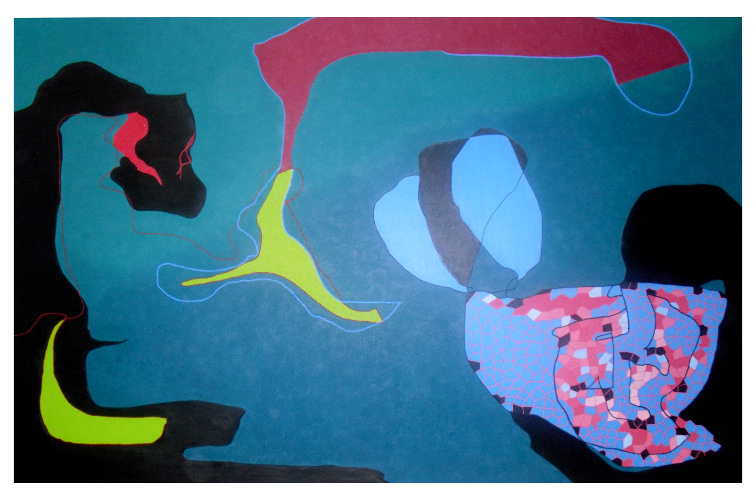
Mary Nangah, The Ultimate Leap, 2010, Oil on canvas

We have all enjoyed working with Mary over the past year and can’t wait to see where her poise, intellect, and excellent sense of humor take her in the future!

Shannon Karol
Manager of Docent Programs and Gallery Teaching
Friday Photos: Art about Earth

Happy (almost) Earth Day! To celebrate the upcoming Earth Day on April 22nd, I’m highlighting some works in the DMA’s collection that give a special nod to our home planet.

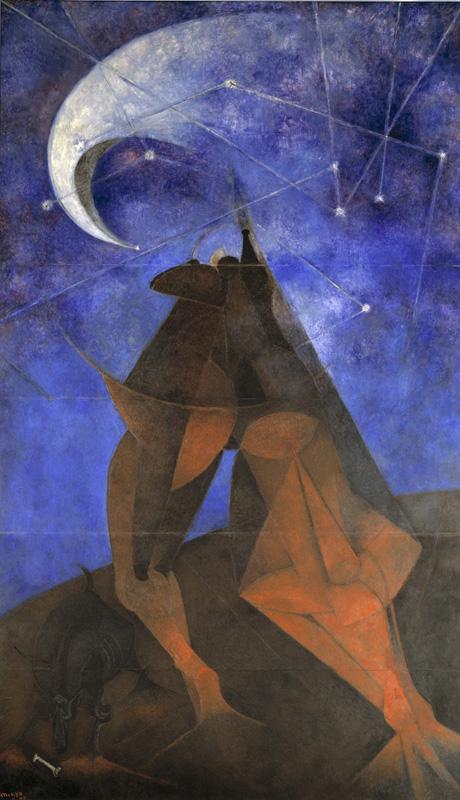
  • Rufino Tamayo’s El Hombre (Man) was commissioned by the Dallas Art Association to celebrate the universality of the human condition. With legs resembling tree trunks rooted strongly in the ground, the figure suggests the inextricable tie between humans and Earth.

Rufino Tamayo, El Hombre (Man), 1953

  • The Yup’ik peoples of Alaska’s western coast and adjacent islands created this mask. They understand their relationship with their maritime environment, particularly its sea creatures, as collaborative and reciprocal. Masked dances at seasonal festivals honor the animals hunted during the previous year.

Mask with seal or sea otter spirit, late 19th century

  • Flower consists of hanging, geometric shapes that move and oscillate with the wind. Alexander Calder explicitly stated that this work not only represents the earth, but also “the miles of gas above it, volcanoes upon it, and the moon making circles around it.”

Alexander Calder, Flower, 1949

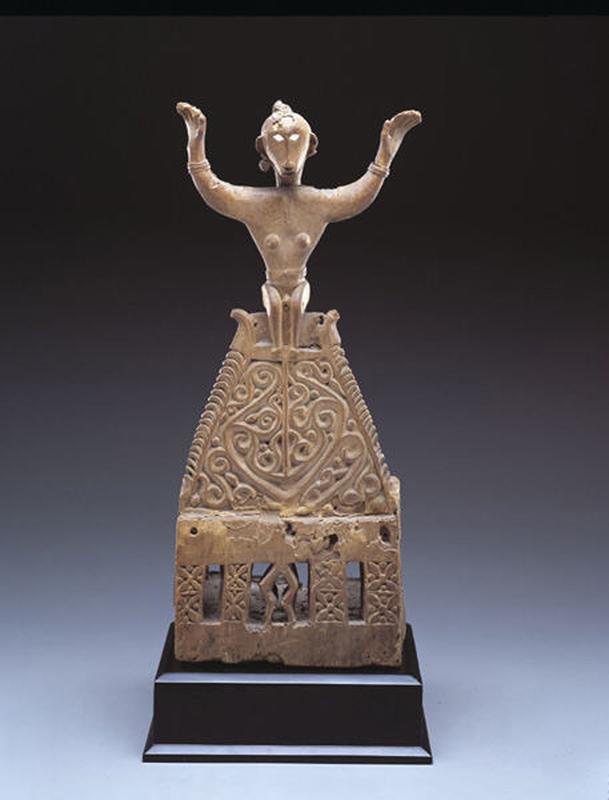
  • This figure’s arms are outstretched in the shape of a boat, which peoples of the western islands of Southeast Moluccas related to creation, the founding of family and society, women, and a cosmic womb. She represents the founder-mother, or a kind of “Mother Earth.”

Altar depicting the first female ancestor (luli), 19th century

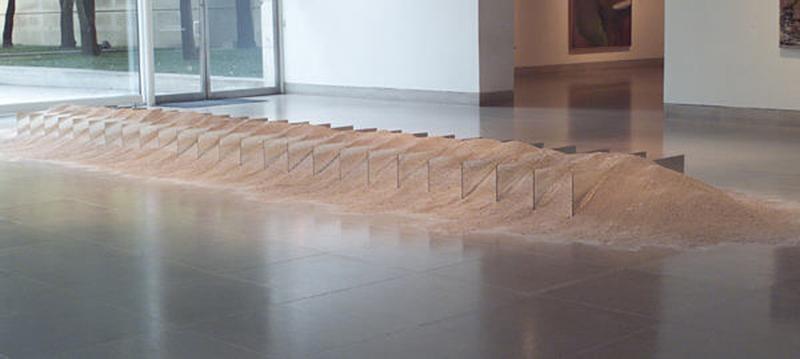
  • Often using the Earth as his medium, Robert Smithson transports earth into the gallery with a long pile of sand separated by mirrors, contrasting the organic and the man-made.

Robert Smithson, Mirrors and Shelly Sand, 1969-1970

Check out the educator resources of the Earth Day Network for some inspiration for incorporating environmental issues into your teaching, or celebrate Earth at the two-day Earth Day Dallas festival.

How do you increase awareness about and appreciate the Earth in your classroom? (We would love to hear about it!)

Andrea V. Severin
Coordinator of Teaching Programs

Artworks shown:

  • Rufino Tamayo, El Hombre (Man), 1953, Dallas Museum of Art, Dallas Art Association commission, Neiman-Marcus Company Exposition Funds
  • Mask with seal or sea otter spirit, late 19th century, Dallas Museum of Art, gift of Elizabeth H. Penn
  • Alexander Calder, Flower, 1949, Dallas Museum of Art, gift of the Dallas Garden Club in honor of Mrs. Alex Camp
  • Altar depicting the first female ancestor (luli), 19th century, Dallas Museum of Art, The Eugene and Margaret McDermott Art Fund, Inc.
  • Robert Smithson, Mirrors and Shelly Sand, 1969-1970, Dallas Museum of Art, gift of an anonymous donor; the Vin and Caren Prothro Foundation; an anonymous donor in memory of Vin Prothro and in honor of his cherished grandchildren, Lillian Lee Clark and Annabel Caren Clark; The Eugene McDermott Foundation; Dr. and Mrs. Mark L. Lemmon; American Consolidated Media; Bear/Hunter; and donors to the C. Vincent Prothro Memorial Fund

High School Day: Students Connect with Filmmakers and Art

Students arrive at the Dallas Museum of Art for High School Day

Last Friday, we had nearly 400 students visit the Dallas Museum of Art  for High School Day, a free educational event that was held in the Dallas Arts District.  This event was presented by the Dallas International Film Festival, and the students attended discussions and workshops at the DMA, the Nasher Sculpture Center, the Crow Asian Collection, and the Annette Strauss Square at the AT&T Performing Arts Center. 

High School Day was a day chock-full of workshops and discussion panels from 8:30 a.m.-4:00 p.m., during which the students had the opportunity to work with local and regional filmmakers and professionals. 

Digital Cinematography with Paul "Bear" Brown

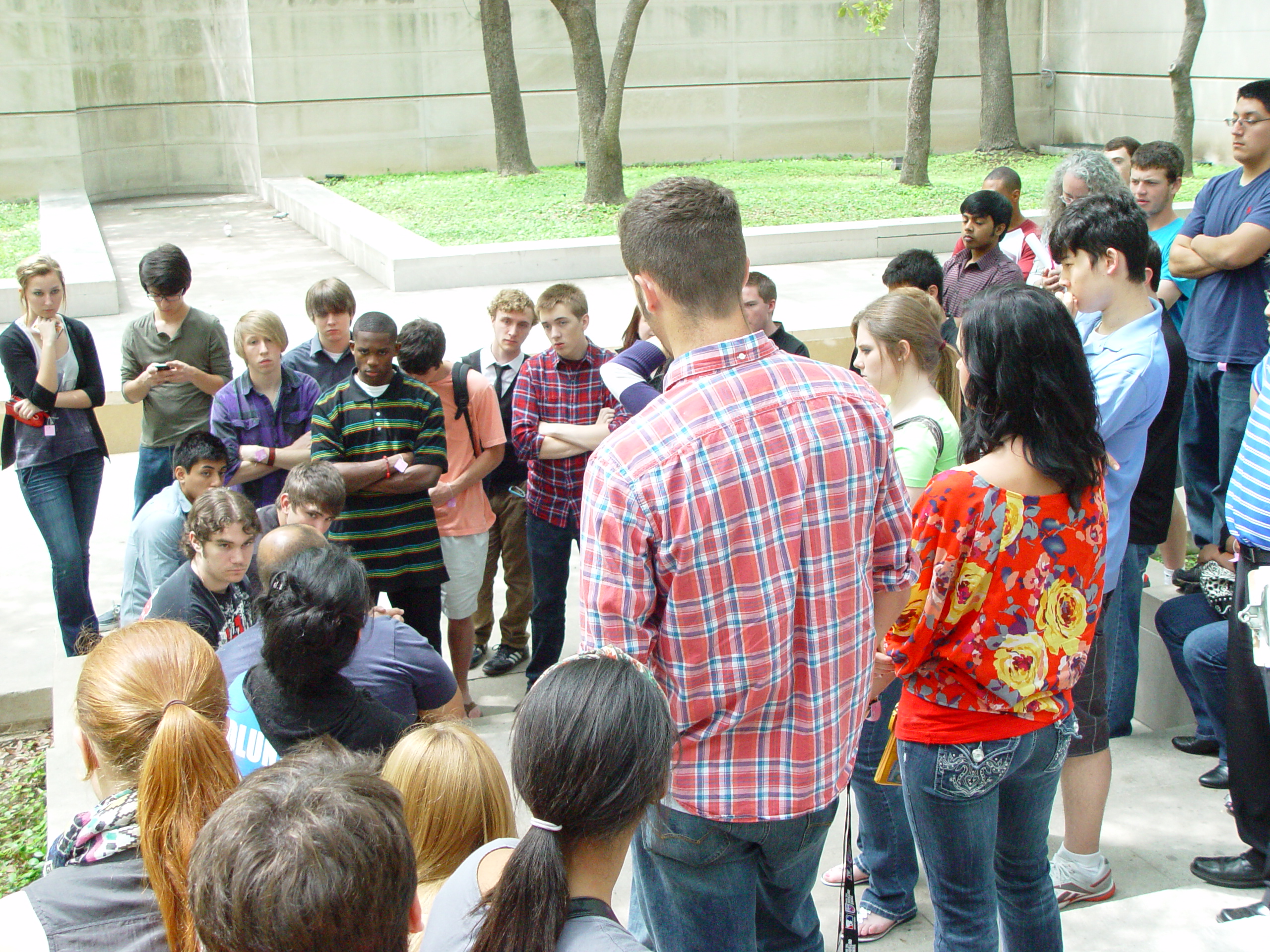
One of the three sessions held at the Museum was Digital Cinematography, which was held in our outdoor sculpture garden.  This workshop was led by Paul “Bear” Brown, a professor at the Savannah College of Art and Design (SCAD).  Students in this session learned what type of digital cameras are commonly used in filmmaking,  such as the Canon 5D MKII. Other topics included popular production tools such as Sliders.

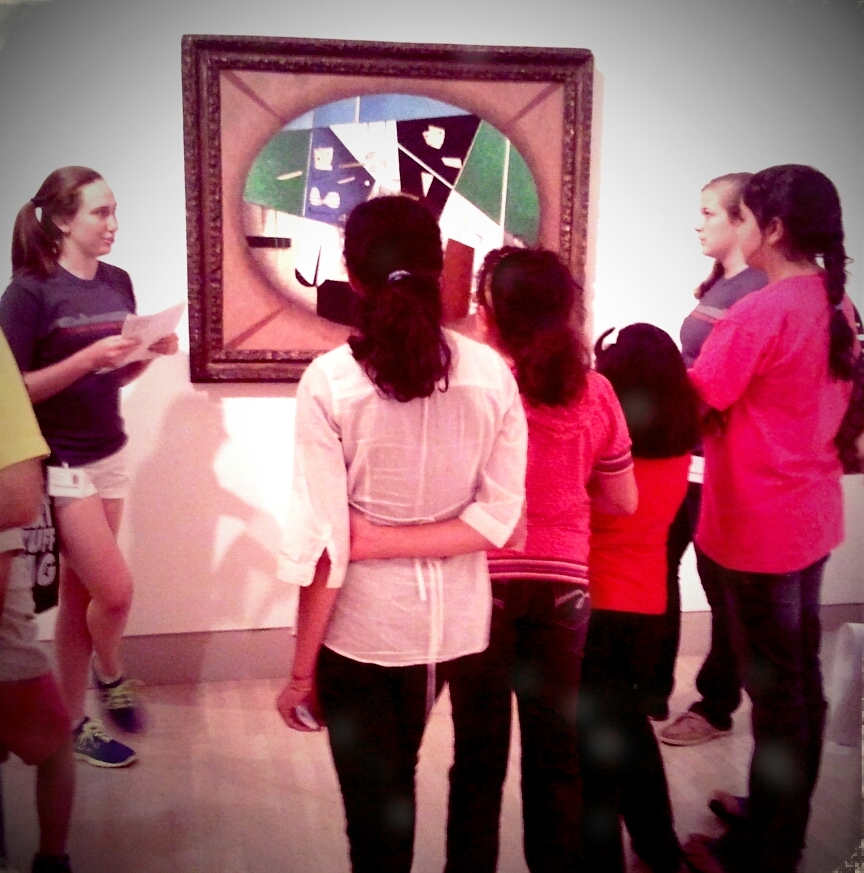
Students experiencing "Cinematic Response" in the galleries at the Dallas Museum of Art.

While half of the students interacted with Mr. Brown, the other half were making connections between art and film in the Youth and Beauty: Art of the American Twenties exhibition.  Cinematic Response, a DMA staff-led experience, allowed the students to be the film “critic” of works of art that are featured in the exhibition.  Each student was given an award title, such as “Best Cinematography,” and they selected the work of art that best fit this description.  This was a great way to get the students discussing the art of the Roaring Twenties in the context of film.

Another workshop featured at the DMA was The Nuts and Bolts of Screenwriting with Carolyn Hodge, the president of the Dallas Screenwriters Association.  Ms. Hodge broke down the fundamental basics of a script and gave some pointers for the students.  Then she discussed loglines, and had the students create their own logline based on the movie The Hunger Games.  A logline is basically a summary of the film in one or two sentences. This is what one group came up with:

“A young, impoverished girl who struggles to survive a totalitarian government is forced to fight to the death in a competitive feudal match. ”

The Nuts and Bolts of Screenwriting with Carolyn Hodge.

Lighting as Storyteller session with Michael Hofstein

The third and final workshop held at the DMA was Lighting as a Storyteller with SCAD professor Michael Hofstein.  Students learned to match specific lighting techniques with the story being told.  Holfstein used examples of cinematic lighting rendered in paintings and popular films, and then discussed the importance of lighting within a specific story.

Overall, High School Day was fun and educational for all.  The event provided many opportunities for local students to connect with professionals in the filmmaking world.  I can’t wait to see what the future of filmmaking holds!

Cheers,

Loryn Leonard
Coordinator of Museum Visits

"Ghost" Post: A Farewell to the DMA

If this post feels a little spooky, it’s because I am submitting this from beyond the walls of the Dallas Museum of Art (OOOooooOOO)! My last day as the McDermott Intern for Gallery Teaching was two days ago, but I will miss the DMA so much that I couldn’t leave without a proper farewell! Thinking back on these last seven months, I realized just how many wonderful art-filled experiences I’ve had, but since I am limited to this one post, I’ve decided to share my top five:

  • Mark Bradford’s exhibition was the first non-collection show that I learned about at the DMA. His huge works of art are overwhelming, innovative, and have wonderful background stories. It is for all of these reasons (and more!) that I loved looking at this exhibition with my fourth-grade tour groups.

  • My next favorite work of art is the ancient Egyptian coffin of Horankh. I really enjoyed speaking about ancient Egypt during our Intern Share Sessions for the Docents. I am also fond of talking to fourth-graders about the process of mummification and the Egyptian gods and goddesses.

  • One of my favorite spaces in the Museum is the American silver gallery, because the pieces have such wonderful decorations and designs. Having worked in a Victorian-era historic house full of objects from the Gilded Age, I enjoy sharing these with school groups because they really encourage close looking.

  • Hannah and I noticed this little lady as soon as we started at the DMA, and she has been one of our “favorites” ever since. I think she is funny. Hannah thinks she is scary. Either way, she will be gracing the cover of the Me & My World docent guide that I revised as my internship project.

  • Last, but certainly not least, I must include the lovely ladies that I worked with during my time at the DMA. This is one of the most friendly, creative, and fun-loving group of people I have ever had the privilege to work with.  I knew that I could always count on them to provide me with words of  encouragement, whether we were discussing an upcoming project or belting out songs during a karaoke outing. I will miss them immensely. (Unfortunately, Nicole isn’t in this group photo, but I’m talking about her too!)

Thank you for making my time here so wonderful!

Jessica Kennedy
McDermott Intern for Gallery Teaching

Wanted: Teen Docents

Each summer, we recruit and train a group of dedicated volunteers known as Teen Docents.  Initiated in the summer of 2001, the DMA Teen Docent program provides opportunities for high school students to deepen their relationship with the Museum.  Our Teen Docents not only lead tours for young visitors, but also volunteer to help with First Tuesdays and Late Nights.  They really are an integral part of summer programming at the DMA.

Teen Docents Leah and Abby lead a tour during last year's BooksmART Festival

One of the perks of being a Teen Docent is learning more about the DMA’s collection and our summer exhibitions.  Teen Docent training will occur in early June, and shortly after that the teens will begin leading tours in our galleries.  Our tours this summer include Animal Safari, which allows students to search for animals in works of art, and Summer Vacation, which asks students to make connections between their favorite summer activities and those they see in works of art.

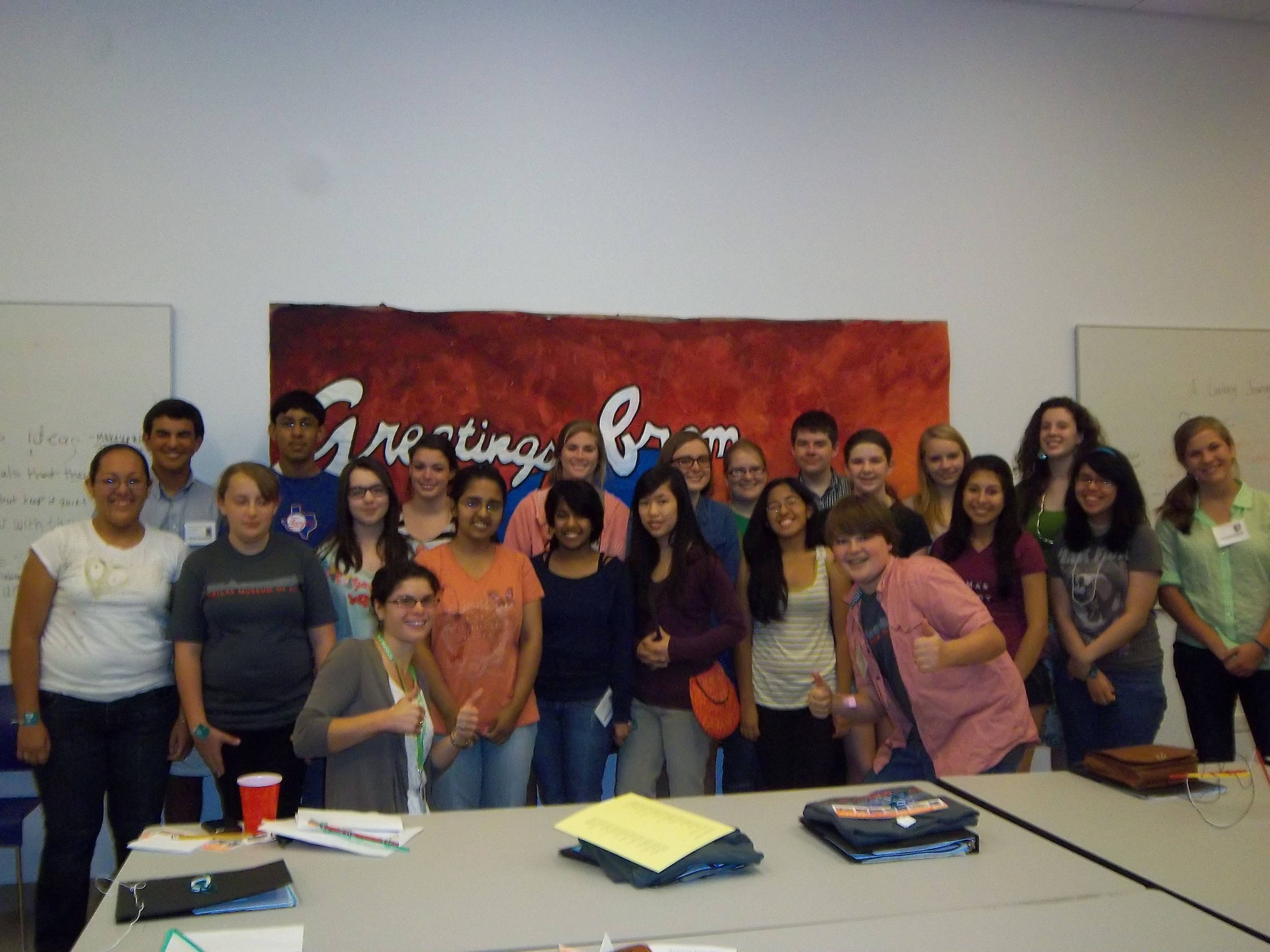
The 2011 DMA Teen Docents

We will begin accepting applications for the Teen Docent program next week.  If you have any students who love art, teaching, or might even be thinking about a career in a Museum, have them email me at SKarol@DallasMuseumofArt.org.  We would love to have them spend their summer with us as a Teen Docent at the DMA!

Shannon Karol
Manager of Docent Programs and Gallery Teaching

Archives

Categories