Archive Page 50


Flower of the Prairie: George Grosz in Dallas

Even if you have never heard of the German Expressionist George Grosz, many of his paintings may be very familiar to you. The Flower of the Prairie: George Grosz in Dallas exhibition highlights a range of Grosz’s work over a lifetime, with graphic works, paintings, and contextual photographs. Recently opened at the DMA, this special exhibition features twenty paintings Grosz created of our very own home: Dallas, Texas.

Born and raised in Germany, Grosz gained fame and notoriety in the 1920s with his satirical drawings of life in Berlin. His open and ever-increasing dissatisfaction with German government ultimately led to his move to America in 1933. As a child, he fantasized about America as a perfect place where everyone’s dreams could come true. He loved reading books about American life, especially the Wild West, and he dreamed of one day going to Texas to see it for himself. His childhood dream came true when he was commissioned to paint a series about Dallas. In 1952, Leon Harris, Jr., the young vice president of the department store A. Harris & Company, commissioned the series as a part of the celebrations for the store’s 65th anniversary.

At fifty-nine years old, Grosz arrived in Dallas to discover that it wasn’t quite as wild as he imagined. Dallas of the 1950s was a bustling, prosperous metropolis undergoing continuous change and growth. Primarily execeuted in watercolor, Grosz’s series illustrates the modernity of the new city, but also seems to capture the dreamlike quality of his imagination.

[slideshow]

In celebration of Flower of the Prairie: George Grosz in Dallas, the museum has created a variety of fun programs throughout the summer for all ages.

Hope to see you all there,

Hannah Burney
McDermott Intern for Teaching Programs and Partnerships

Artworks shown:

Self Portrait, George Grosz, 1936, oil on canvas, Dallas Museum of Art, gift of A. Harris and Company in memory of Leon A. Harris, Sr.

A Dallas Night, George Grosz, 1952, watercolor on paper, Dallas Museum of Art, Foundation for the Arts Collection, anonymous gift in memory of Leon A. Harris

Cowboy in Town, George Grosz, 1952, watercolor, Dallas Museum of Art, gift of A. Harris and Company in memory of Leon A. Harris, Sr.

Cattle, George Grosz, 1952-1953, oil on canvas, Dallas Museum of Art, gift of A. Harris and Company in memory of Leon A. Harris, Sr.

Flower of the Prairie, George Grosz, 1952, watercolor on paper, University Art Collection, Southern Methodist University, Dallas, Texas Gift of Leon A. Harris, Jr.  UAC.1961.10

Friday Photos: Peaceful Space

Imagine you are in a peaceful place.  What does that place look like?  Is it a serene hillside, a secluded beach, or even just the comfort of your home?  Images on the Center for Creative Connection’s Monitor Wall explore the idea of peacefulness through photos in the latest installation: Peaceful Space.  To find out more about the Monitor Wall in the Center for Creative Connections or C3, I’ve asked C3 Specialist Jessica Nelson about the project.

The Monitor Wall in the Center for Creative Connections

Who are the artists behind the artwork?

The images on the Monitor Wall fall into three different categories.  We have images submitted by our visitors, images from the DMA’s collection, and images from around the DMA.  Knowing the “artists behind the artwork” can be a little tricky because our visitors submit their entries on our Flickr page.  However, I do know that we have some DMA employees who contribute regularly such as Amanda Blake, Jonathan Toles, and myself.

What was the inspiration for the C3 Monitor Wall?

So, in relation to those three different categories of images, there were a few different things that inspired the creation of the Monitor Wall.  First, we wanted to have the ability to show more works of art from the DMA’s collection, and in doing so create a connection between the C3 theme Encountering Space and the rest of the collection.  Also, we wanted to provide an opportunity for visitors to participate in the content of the exhibition.  We see the Monitor Wall as an opportunity to take the idea of “programming” and move it beyond the museum walls, in the sense that our visitors are participating in the exhibition by contributing their photographs, and this participation happens after they have left the physical space of the museum.

How often do you change the images?

The theme for the Monitor Wall changes every six months.  Previous themes include: Texas Space, Filled Space, and Designed Space.  Throughout those six months, we add images that our visitors submit every month.

[slideshow]

Capture your peaceful place and submit your photograph to the Dallas Museum of Art’s Flickr page! 

Wishing you all a peaceful weekend,

Loryn Leonard
Coordinator of Museum Visits

Presenting…CONNECT! A New Teacher Resource

Since 2009, DMA educators and area K-12 teachers have collaborated and developed CONNECT Teaching Materials, accessible at dmaconnect.org, the DMA’s new and improved online teaching materials. Funded by a grant from the Institute of Museum and Library Services, this new resource builds bridges between your students and cultures around the world through an exploration of works of art in the DMA’s collection and special exhibitions. The ultimate goal of these resources is facilitating a relevant, meaningful, and culturally literate understanding of those works for students and teachers.

CONNECT is designed to be accessible via a variety of learning styles. The ideas and information about each work of art are organized into various levels. Levels of access include First Glance material, which provides a brief but thorough introduction to the work of art. Extended Information is an in-depth exploration of an artwork’s content and information related to its visual, artistic, cultural, and historical contexts. Teaching Ideas are also included with each work, encouraging close looking, meaningful dialogue, and offering multidisciplinary ways to connect with a work of art, such as exercises in art making, writing, and research. Additionally, contextual images, audio and video clips featuring curators, artists, and other content experts, links to relevant websites, and a bibliography of reference books are offered for each work.

In short, CONNECT Teaching Materials provide teachers:

  • Accurate information about works of art in the Dallas Museum of Art’s collection and select temporary exhibitions.
  • Choices and levels of information for accessing and experiencing works of art.
  • Multiple perspectives on works of art through audio and video clips featuring curators, artists, and other content experts.
  • Teaching ideas that encourage close looking, dialogue among students, and personal connections with works of art.
  • Teaching ideas that emphasize multiple learning styles and connections across disciplines.
  • Support for teaching cultural literacy.
  • Extensions for learning through bibliography and website links.

Consider this neat interdisciplinary scenario: Ms. Lammers’ fifth-grade math classroom at Nathan Adams Elementary School in Dallas uses CONNECT to explore an Egungun costume made by the Yoruba people in Nigeria. They investigate the patterns and symmetry of the costume as a tool to refine their measurement skills and learn divisibility rules. Before delving into the math, however, the students explore the ritual context of the costume and consider rituals in their own families, and they begin to make meaning of this costume to the Yoruba.

We hope that you check out this new resource, and we would love to hear your thoughts about how you could connect with CONNECT in your classroom!

Andrea V. Severin
Coordinator of Teaching Programs

Second Annual BooksmART Festival

Last year’s BooksmART Festival was such a success that we’ve been counting down the days until June 9th.  That’s when the second annual BooksmART Festival will be held at the DMA.  Festivities will include readings and presentations by authors, demonstrations led by illustrators, Scrabble games in the galleries, creature animations in the Tech Lab, and of course, tours of the collection.

The BooksmART Festival line-up was announced last week, and includes authors Jack Gantos, Eileen Christelow, Meg Wolitzer, and Daniel Kirk.  Personally, I’m most excited to see Taye Diggs, who will be here to talk about his book Chocolate Me.  I’m also looking forward to hearing from Bruce Foster, who has created a pop-up book inspired by Harry Potter.

The BooksmART Festival will kick off at 11:00 a.m. on June 9th, and admission to the DMA and the Festival will be free for everyone.  I hope you’ll join in the celebration!

Shannon Karol
Manager of Docent Programs and Gallery Teaching

Friday Photos: Thank you, Go van Gogh Volunteers!

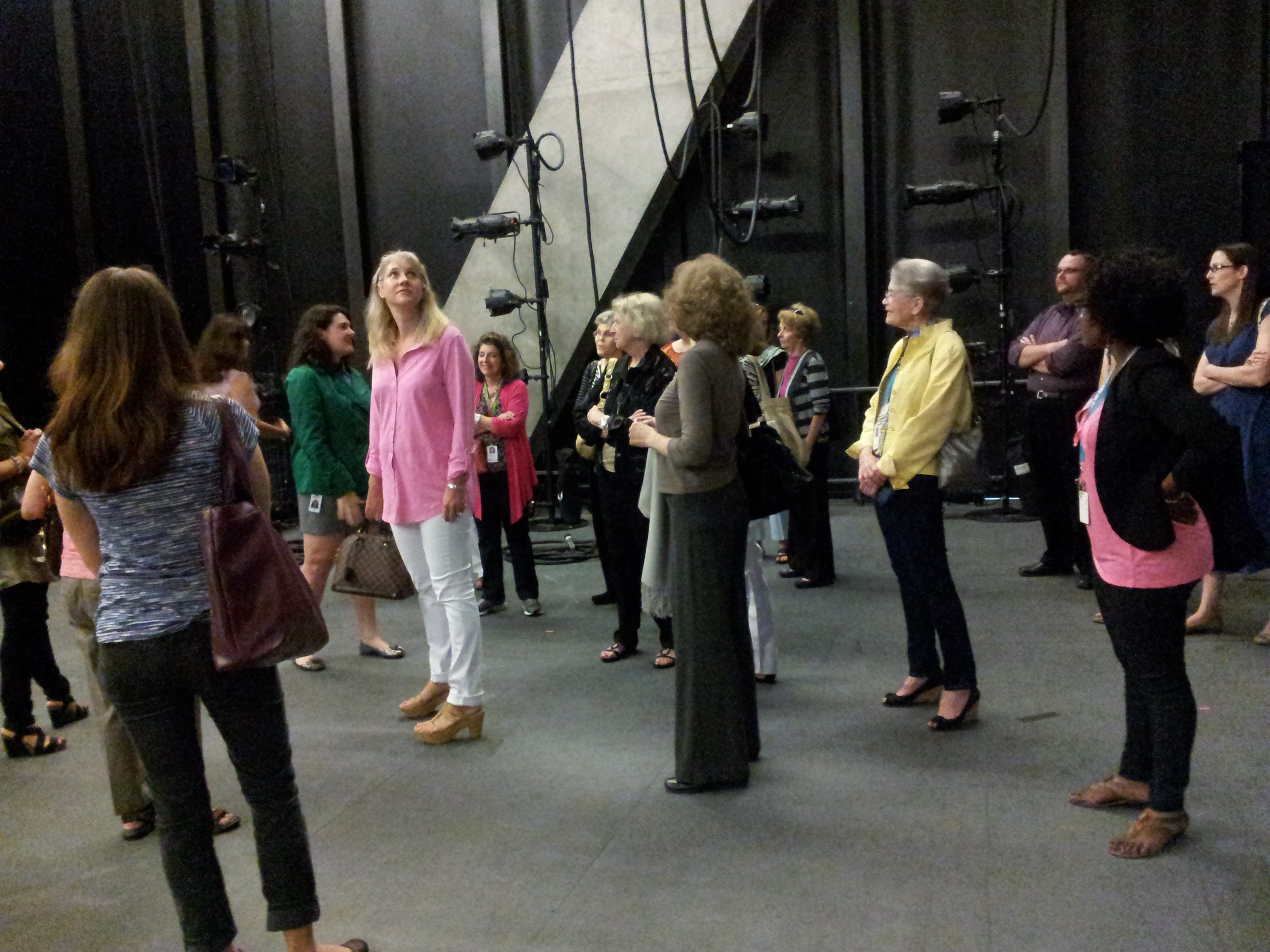
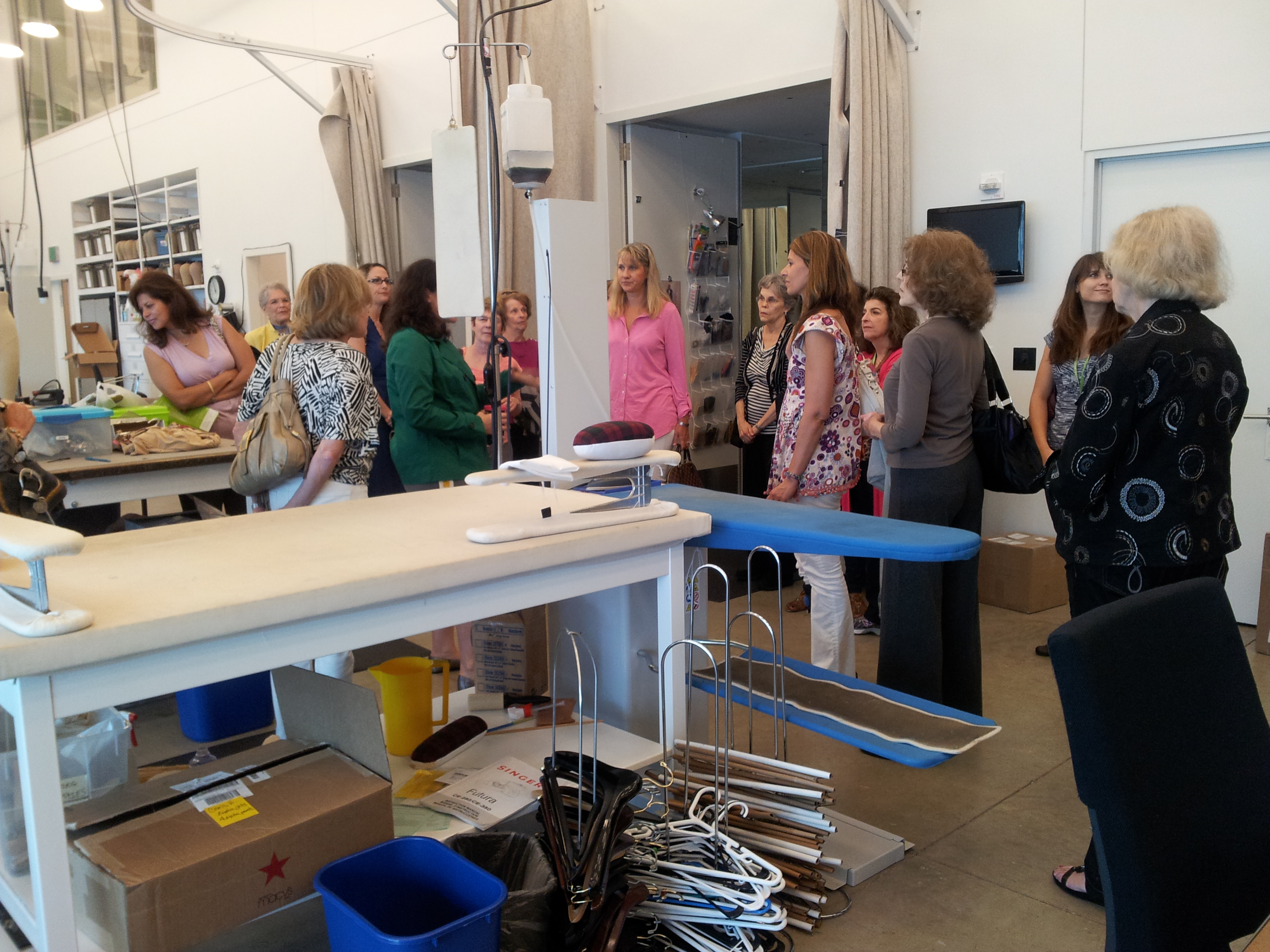
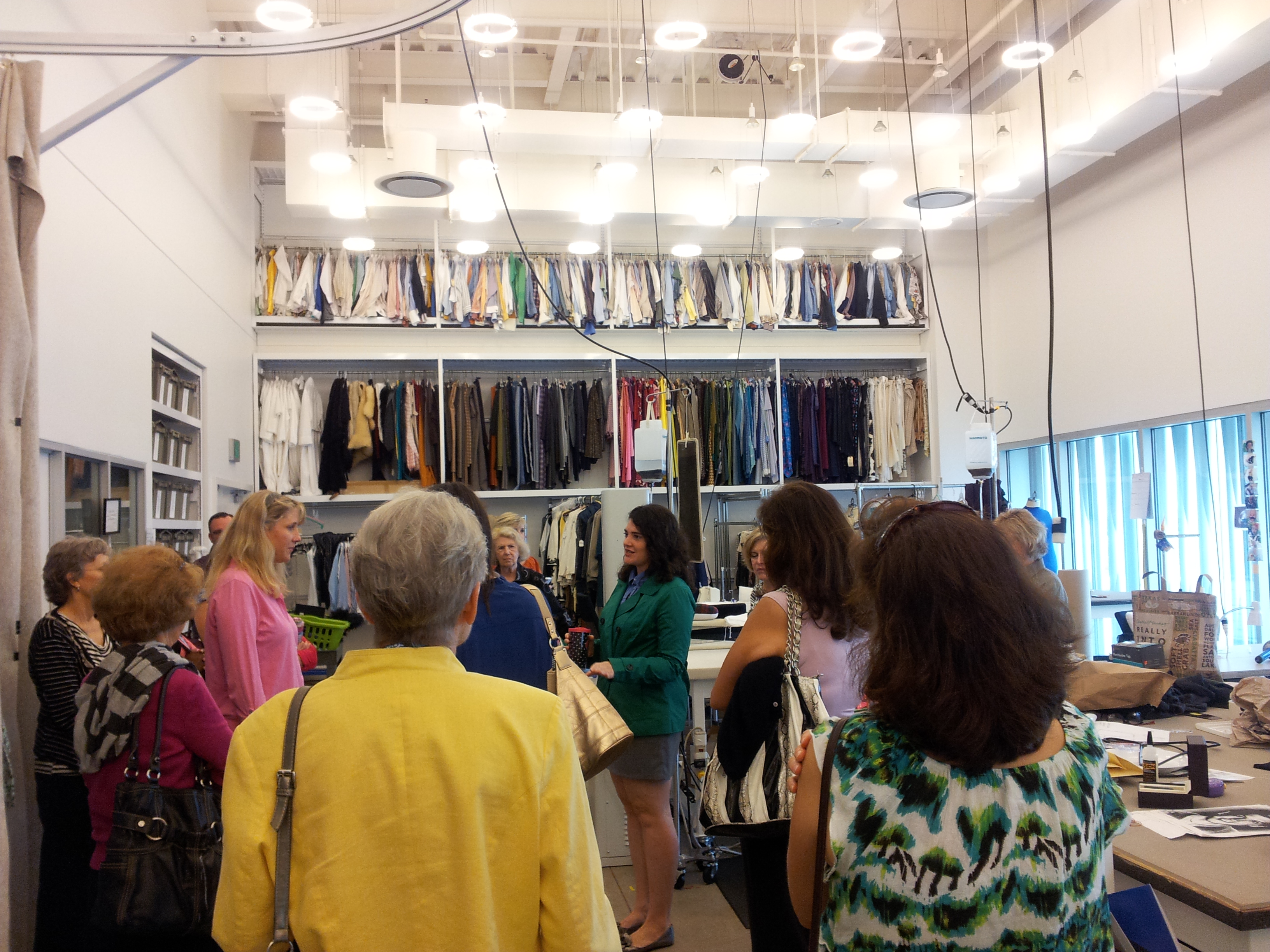
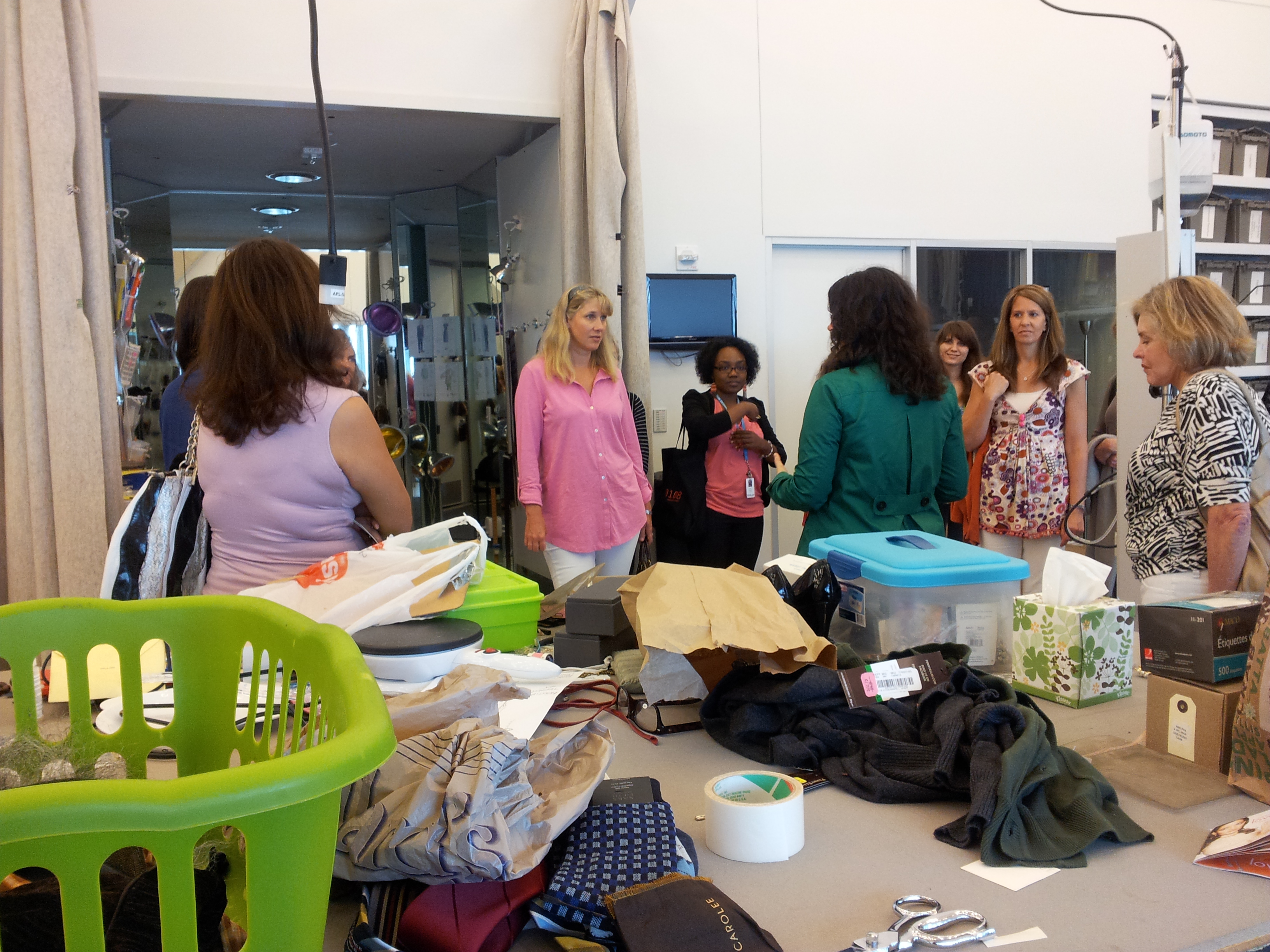
As the school year draws to a close, it is important for us to recognize the commitment and devotion of our wonderful Go van Gogh volunteers.  Every spring, we organize a special field trip or party to celebrate our volunteers.  Last Friday, we were fortunate to have a behind-the-scenes tour of the Wyly Theatre, led by Dallas Theater Center Director of Education and Community Enrichment Rachel Hull.  Rachel fascinated us with interesting facts about the Theatre and its innovative engineering and productions. Afterward, we walked over for a delicious lunch at The Commissary in One Arts Plaza.  We are lucky to have such delightful neighbors in the Arts District!

Standing in the wings onstage

In the costume room

THANK YOU, Go van Gogh volunteers, for another successful school year!

Melissa Nelson
Manager of Teaching in the Community

Teaching for Creativity: Inspiration from a Still Life

Recently, my colleague Amanda Batson and I spent some time in the DMA galleries and in the studio with a group of high school visual art students from Booker T. Washington High School for the Performing and Visual Arts.  This group visits the DMA often as part of a class that Charlotte Chambliss, BTW faculty, and I co-teach every other day during fourth period.  Often, I have heard this group of students remark on still life exercises and observational drawing in less than enthusiastic ways.  So, Amanda and I planned their museum visit with the following goals in mind:

  • Stir up an engaging conversation around a 17th-century Dutch still life painting, encouraging students to go beyond a descriptive and literal interpretation
  • Sketch an original still life inspired by metaphor and personification

The visit began with a trip into the galleries.  For about fifteen minutes (which could have gone longer), we viewed and discussed Still Life with Landscape using a conversational approach created by educator Dr. Terry Barrett.  First, we considered the following: “I see _____________.”  We went around the group once with each of the twenty participants stating something they saw, while being sure not to repeat something previously mentioned.  The majority of responses were purely descriptive and inventorial.  Because this painting is so rich with things to see, we went around the group again without any difficulty in seeing something new together.

Abraham Hendricksz van Beyeren, Still Life with Landscape, c. 1620-1690, oil on canvas, Dallas Museum of Art, The Karl and Esther Hoblitzelle Collection, gift of the Hoblitzelle Foundation, 1987.3

Second, we considered: “I see ______________ and it makes me think _______________.”  Each student in turn responded to these prompts, and this is where a conversation about the artwork began to unfold.  Our experience began to get a little more lively.  Students responded with observations that focused on the relationship between objects on the table and in the room.  Several crafted imaginative stories about a raucous party occurring in this scene and evidence of a quick departure among revelers. Ideas contentious to the storytelling threads emerged as well – something along these lines, “maybe this painter was really just painting a still life to show us how good he could paint this stuff.”  The looking and talking portion of the visit served as a great warm-up connection to an artwork, after which we traveled to the studio for a sketching exercise.

Two random objects were placed at each table seat, so that each student had his or her own still life. The pairs included items such as a glass jar and a washer, a piece of wood and a clothespin, a shell and a sponge, and so on.  We invited students to take a seat and add one item from their person to the compilation of objects.  They added cell phones, a wallet, glasses (not needed for seeing), hair barrettes, and a variety of pocket treasures.  For a short bit, we reflected upon and summarized together our experience looking at the Dutch still life painting.

Next step was to sketch the three objects in front of them using pencil, colored pencil, or pen. Additionally, Amanda passed to each student a prompt that added a twist to their composition.  This portion of the activity was borrowed from a previous C3 Artistic Encounter program with Magdalena Grohman and Thomas Feulmer. Prompts invited students to arrange and think about the objects in human-like ways:

  • These three objects are siblings.
  • Two of these objects are conspiring against the other.
  • Two of these objects are in a new relationship and one of them is introducing the other to the third object for the first time.

[slideshow]

After 20-25 minutes of sketching, we concluded with an opportunity for each student to share his or her sketch and thoughts about the how they applied the metaphorical prompts to the  still life objects.  The elaboration of compositions and their associated stories ranged far and wide, and often resulted in humor.

What ways have you made still-life assignments and observational drawing come to life?  Share your ideas with us and readers!

Nicole Stutzman
Director of Teaching Programs and Partnerships

The Google Art Project: Art Accessible to All

Most of us usually experience artworks from books, magazines, and by visiting our local museums and art galleries. There are countless artworks all over the world that most of us will not get an opportunity to see in person. Wouldn’t it be amazing if students in Dallas could take a field trip to the Museum of Modern Art in New York City? How about a trip to Florence, Italy to view The Birth of Venus in the Uffizi Gallery, or a trip to Hong Kong, China to visit the Hong Kong Heritage Museum?

Google has created a way to virtually visit these museums. Thanks to the Google Art Project, anyone with internet access can have a virtual tour of artworks, and gallery spaces in major art centers all over the world. Students in any part of the world can get online and experience artworks that they may otherwise not have access to.

Right now you may be thinking, “This sounds good, but what exactly is the Google Art Project, and how does it work?”  Here is a preview.
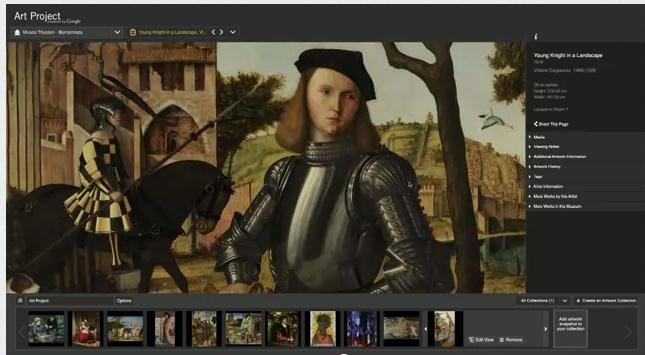
My first encounter with the Google Art Project took place about a year ago while taking a museum education class at the University of North Texas. My instructor Dr. Laura Evans approached a few of the students about the possibility of presenting on the Google Art Project at the 2011 Texas Art Education Association Conference in Galveston, TX. After doing some research on this project, Jessica Nelson, Nicole Newland, David Preusse, and I decided to work as a team under the leadership of Dr. Evans. Our presentation, Virtual Museum Field Trips: The Google Art Project was aimed at providing ways in which high school art teachers could incorporate the Google Art Project into their classrooms. Afterward, we received positive feedbacks from the teachers in attendance.

Currently, the Google Art Project features artworks and gallery spaces from selected collections worldwide. This project is relatively new and still developing.  Similar to the street view and navigation features in Google Maps, the Google Art Project provides an interior view and navigation of art galleries and museums. It is structured to emulate a viewer’s perspective within the space. You can easily navigate from one gallery space into the next, zoom in and out of artworks, and get more information on each artwork. Moreover, you can log in and create your own personal gallery collection of your favorite artworks.
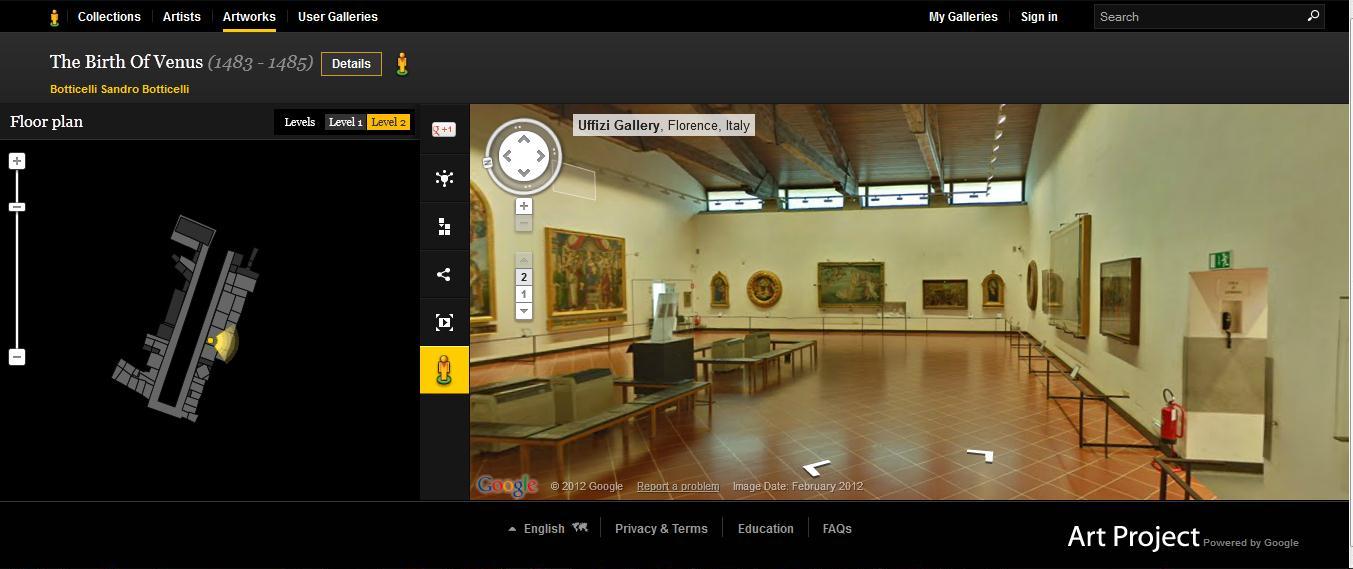
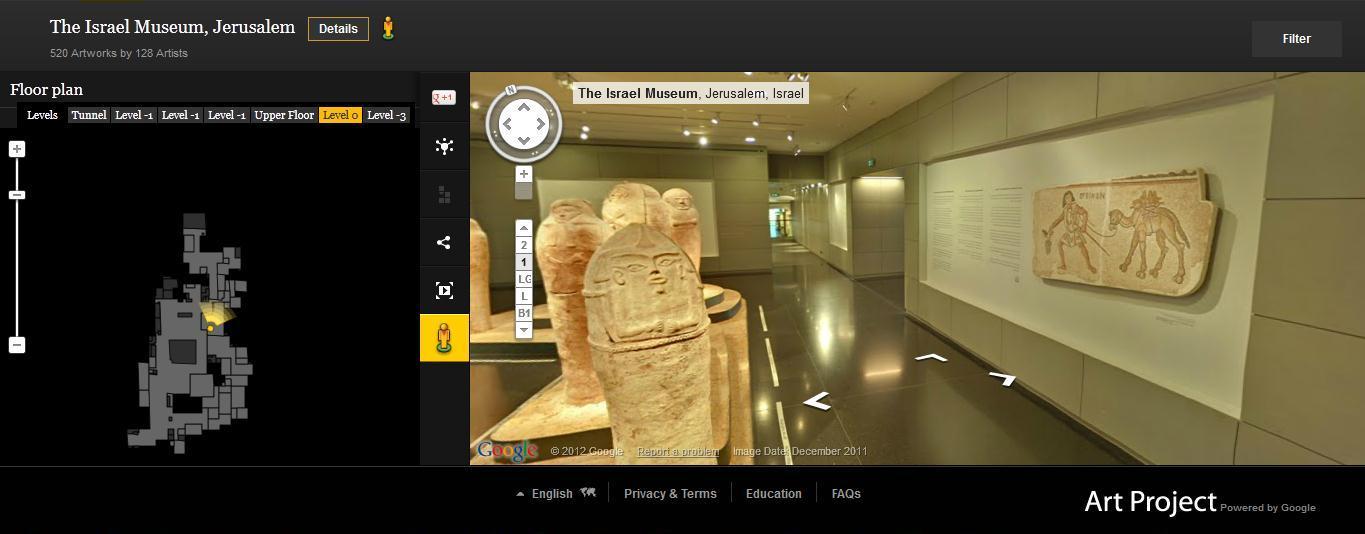
The Google Art Project is easy to use, and its structure encourages countless possibilities for art education activities in K-12 art classrooms. Some suggestions for activities include:

  • Comparisons – compare and contrast artworks in the same space or in different galleries.
  • Art critique activities – describe, interpret, and critique works of art.
  • Personal collections  – curate customized art collections for classroom projects.
  • Imaginative narratives – write stories inspired by artworks in the same gallery space.
  • Original artworks – create artworks inspired by a gallery space or by selected artworks in different museums.

Below is a summary of one of the art activities I created and presented during the TAEA conference.

Activity: Compare and Contrast: ARTexting
Grade: High school

Objective: Using the notion of texting, students create an informed conversation between two artworks in a gallery space. This ARTexting activity encourages students to make decisions and insightful observations as well as develop personal connections and individual creativity.

Outline:

  • Choose two artworks in the same gallery space that are displayed facing each other.
  • Imagine what these artworks would say if they could send text messages to each other.
  • Which artwork will send the first text?  How will the second artwork respond?
  • What interesting facts will they learn about each other?
  • Students should research basic facts about their selected artworks and write a possible conversation that the artworks could have via texting.
  • The dialogue should be fun and also informative.

Example
Museum: Uffizi Gallery, Florence Italy

Artworks:

Sample text dialogue:

Portinari: Hello Goddess of Love, what’s up?
Venus: Nothing much, I am just emerging from the sea. It’s so cold out here. You look warm over there with all those bright outfits!
Portinari: Lol. We have baby Jesus here. Some shepherds stopped by to check him out.
Venus: Ohh how fun! But why is he on the floor?
Portinari:
He is really humble – he was born in a manger
Venus: Oh I see. That must be his mom next to him. How cool!
Portinari: …

Venus: …

This activity was inspired by considering how the Google Art Project  could relate to high school students. The education link on the Google Art Project provides more ideas and examples of activities, suggestions, and videos from a variety of experts. Such resources can be useful to classroom teachers, students, museum educators, or anyone interested.
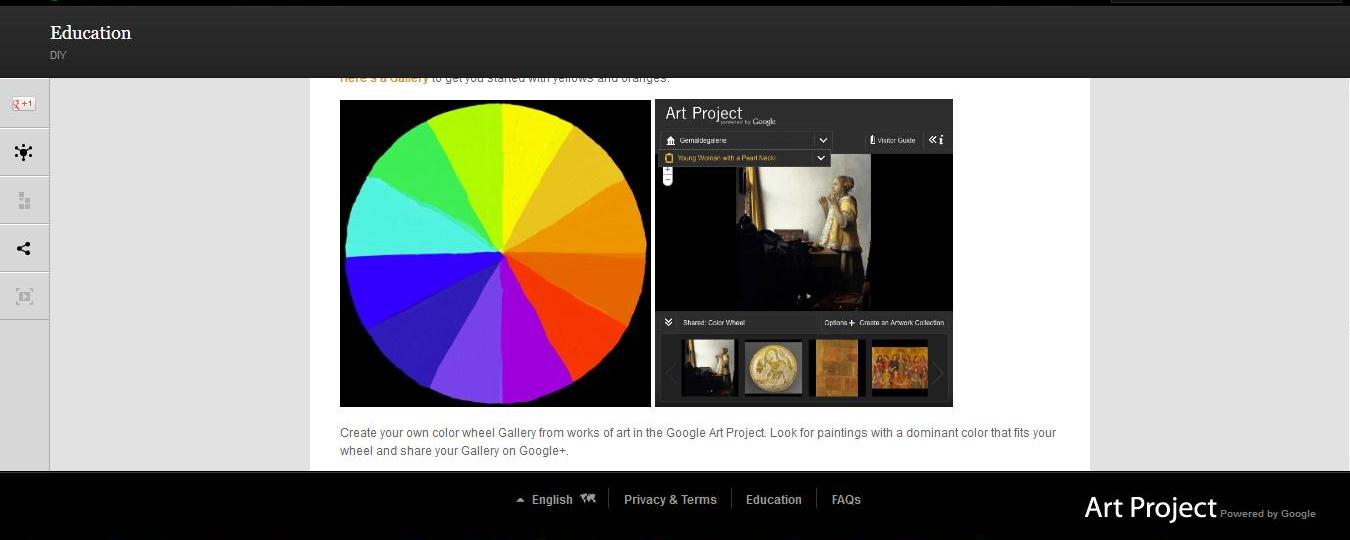
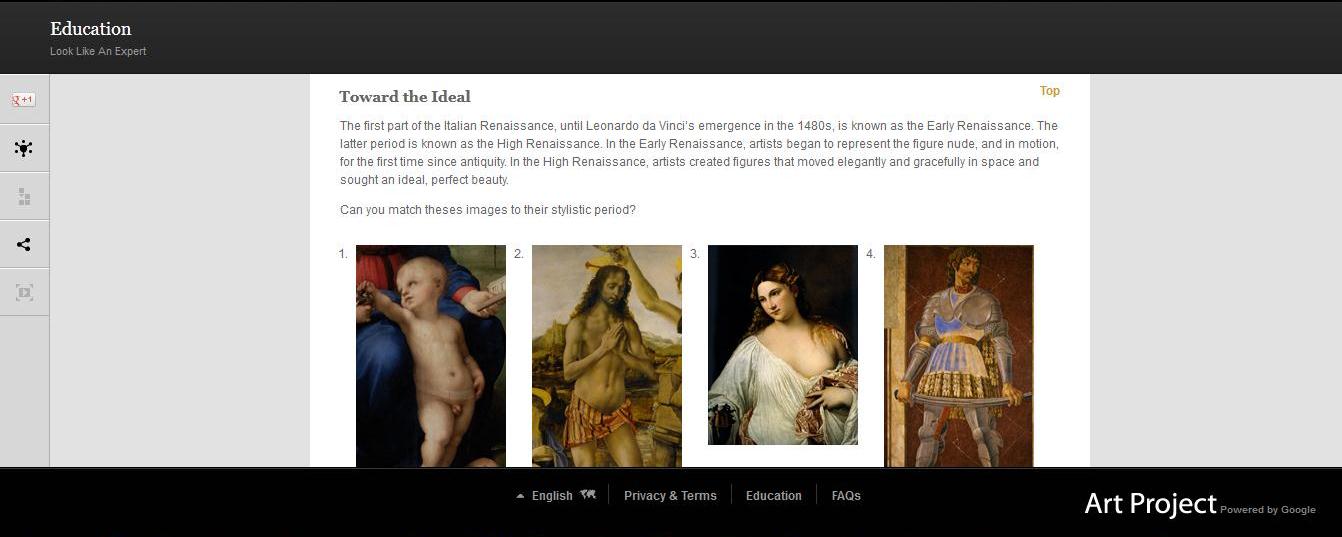
The zoom in feature is remarkable. Unlike being in a museum that has restrictions on how close you can get to artworks, the Google Art Project allows you to zoom in and experience every texture, form, or brushstroke of an artwork.
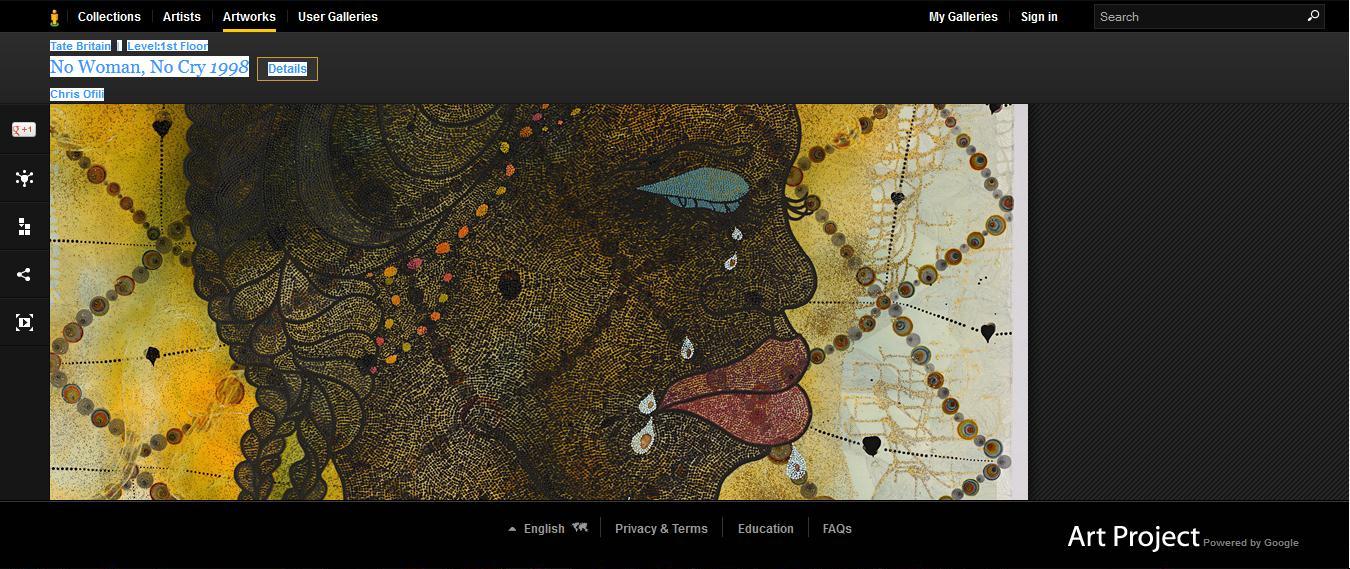
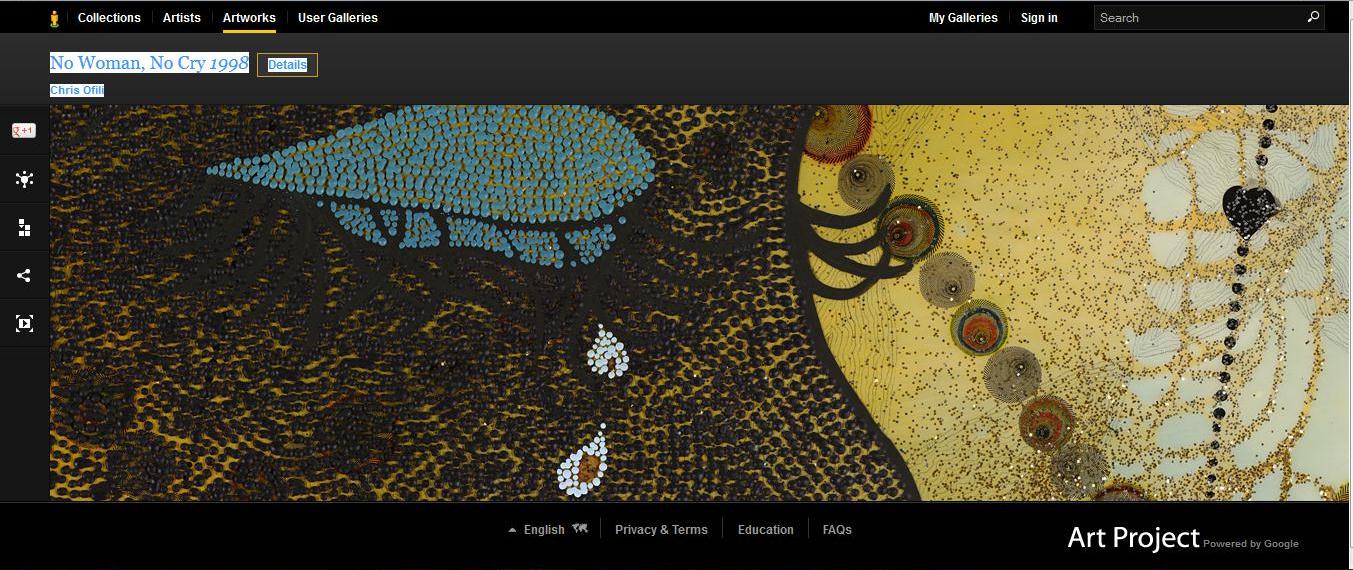
The Google Art Project is truly an innovative approach to making art available to the masses. It provides new ways to interact with artworks and exciting tools for art education. Moreover, it is free and available to anyone with internet access.  This means that a student in my home country of Cameroon can have access to artworks in the Metropolitan Museum of Art in New York City as well as artworks in the Frida Kahlo Museum in Mexico City. This Google initiative is certainly at the core of arts advocacy, as it creates cross-cultural connections by making the arts more accessible across the globe.

The Google Art Project makes art accessible to everyone. So, do not wait any longer – visit www.googleartproject.com and let your exploration begin!

Mary Nangah
Community Teaching Assistant

Friday Photos: Hot Mamas

To paraphrase one of my favorite movies–Father of the Bride Part 2–spring is in full bloom, and so are two of my co-workers.  For the first time in recent memory, we have not one, but two moms-to-be in the Teaching Programs and Partnerships department.  Loryn is expecting a girl in August and Melissa‘s baby boy is due in September.  To celebrate, this photo post spotlights some of the mothers in the DMA’s collection.  Congratulations to Loryn and Melissa, and happy Mother’s Day to all of you!

[slideshow]

Shannon Karol
Manager of Docent Programs and Gallery Teaching

If you would like to see more images of mothers in the collection, check out the DMA’s Mommy Dearest board on Pinterest.

How It's Used: Sacred Bronzes of India

Earlier this week, Loryn told us all about how sacred Indian bronze sculptures were made. Using the lost-wax process, each beautiful bronze sculpture was created as a one-of-a-kind work of art. Now that we know how they were made, I would like to explore how they were used.

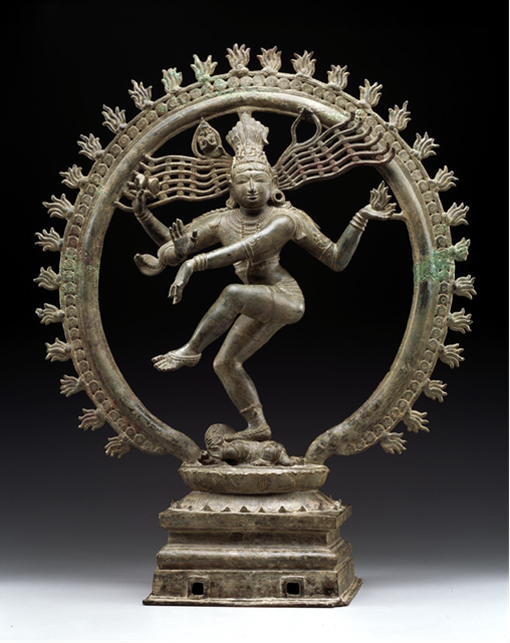
Shiva Nataraja, sculpture, bronze, Chola dynasty, 11th century, Dallas Museum of Art, gift of Mrs. Eugene McDermott, the Hamon Charitable Foundation, and an anonymous donor in honor of David T. Owsley, with additional funding from The Cecil and Ida Green Foundation and the Cecil and Ida Green Acquisition Fund, 2000.377

Shiva Nataraja, Chola dynasty, 11th century, Dallas Museum of Art, gift of Mrs. Eugene McDermott, the Hamon Charitable Foundation, and an anonymous donor in honor of David T. Owsley, with additional funding from The Cecil and Ida Green Foundation and the Cecil and Ida Green Acquisition Fund, 2000.377

.
As Loryn mentioned, many bronze sculptures were originally housed in Hindu temples. Each temple is dedicated to one particular god, and its primary function is to serve as the temporary home of that god. According to the Hindu belief system, an image of a god can be inhabited by the actual physical deity. This can only happen if the sculptor and priest have diligently followed the instructions of the sacred scriptures throughout the creation of the icon. This ability to invoke the actual presence of the god gives devotees the chance to interact with the deity directly. It is this interaction that lies at the heart of all Hindu worship, known as darshan, which means to see and be seen in return. This visual encounter, experienced by both devotee and deity, is the primary reason for temple visits.

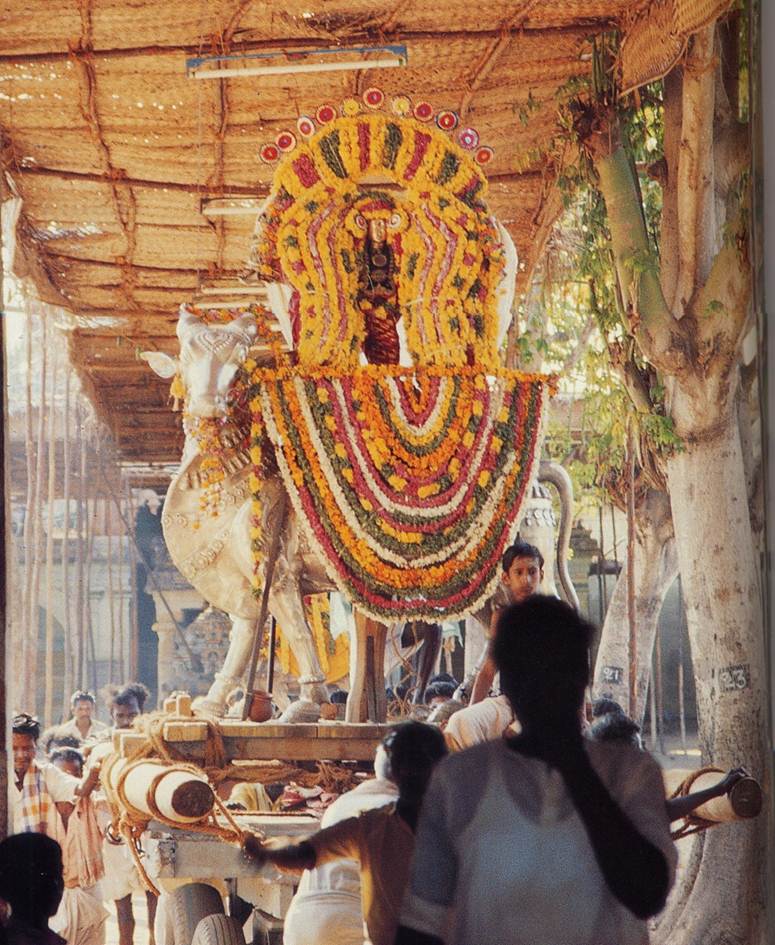
The god usually resides within a stone icon installed in the inner sanctuary of the temple. But in order to make himself accessible to everyone, he is brought outside the temple walls for processions. Special sculptures are created solely for use in processions, usually made of bronze. The god leaves the inner sanctuary and inhabits the bronze sculpture after intensive ritual purification.

Photograph by John Guy, Shiva on his silver mount Nandi, 1993. Guy, John. Indian Temple Sculpture. V&A Publications: London, 2007.

.
The DMA’s bronze Hindu sculpture Shiva Nataraja was one of these sacred sculptures made for processions. It’s easy to identify because of the holes at the bottom of the platform. During a procession, poles were inserted into these holes so that temple attendants could easily carry it through town. Shiva Nataraja would have been so richly adorned with clothes, jewelry, flowers, auspicious unguents and liquids, that oftentimes the eyes were the only visible feature. However the eyes were also the most important feature. As long as the eyes could be seen through the heap of endless offerings, darshan could still be experienced by all present. To this day, Hindu processions are still very lively public events that involve the entire community and attract pilgrims from far and wide. Engaging all five of the senses with incense, flowers, music, dancing, hymns, and mantras, everyone actively participates in the religious festivities.

I hope this helps spark your imagination during your next visual encounter with a Hindu deity!

Hannah Burney
McDermott Intern for Teaching Programs and Partnerships

How It's Made: Sacred Bronzes of India

When you enter the Southeastern Asian galleries located on the third floor of the Museum, an instant calm envelops you.  The gallery is full of stone and bronze figures choreographed in slow and quiet poses.  It’s almost like stumbling upon a yoga class, where each figure is in a tranquil pose and reaching for spiritual awareness. 

Image of the Southeastern Asian Galleries at the Dallas Museum of Art

I am most drawn to the bronze sculptures of the collection, and I’d like to share how they were made.  As with most metal sculptures throughout history, the sacred bronzes of India were made with the ancient technique of the lost-wax process.  The lost-wax process served as an integral part of the Hindu religion during the Chola dynasty, which reigned between the ninth and thirteenth centuries, due to the desire for portable images of deities.

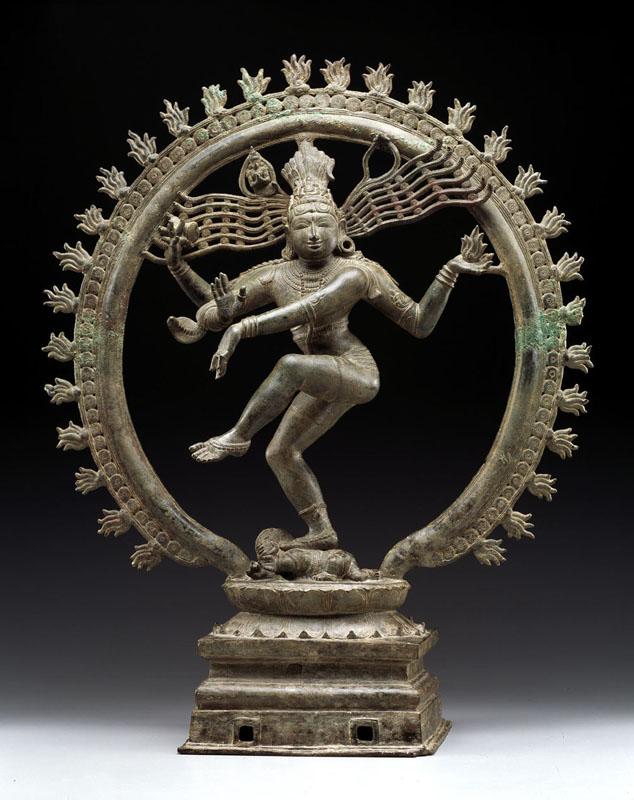
These bronze figures were created for worship and were housed in stone temples.  Oftentimes, they were removed from the temples for use in ceremonies, acting as processional gods to the people of India.  Our very own Shiva Nataraja is a perfect example of a processional bronze.   For more information on how these bronze objects were used in ceremonies, read Hannah’s blog post on Thursday.

Shiva Nataraja, Dallas Museum of Art

Shiva Nataraja, India, c. 1100, Dallas Museum of Art, gift of Mrs. Eugene McDermott, the Hamon Charitable Foundation, and an anonymous donor in honor of David T. Owsley, with additional funding from The Cecil and Ida Green Foundation and the Cecil and Ida Green Acquisition Fund

Lost-wax Process

The lost-wax process is a technique that seems to be as old as time.  It’s estimated that the earliest work created in this technique dates back to around 3500 B.C. in modern day Pakistan, and it is a common application for sculptors today.  One of the oldest works we have in the Museum dates back to 2000 B.C. and can be found in Silk Road installation on the third floor. 

The process begins with “prepared wax,” a mixture of hard beeswax and resin.  The sculptor gently heats the wax to create a malleable material for molding.  After an area of the object is finished, it is dipped into a cold basin of water to harden the wax.  This alternation of heating and cooling continues until the entire figure is assembled.   The sculptor will then go back and add details with wooden tools to finalize the figure. 

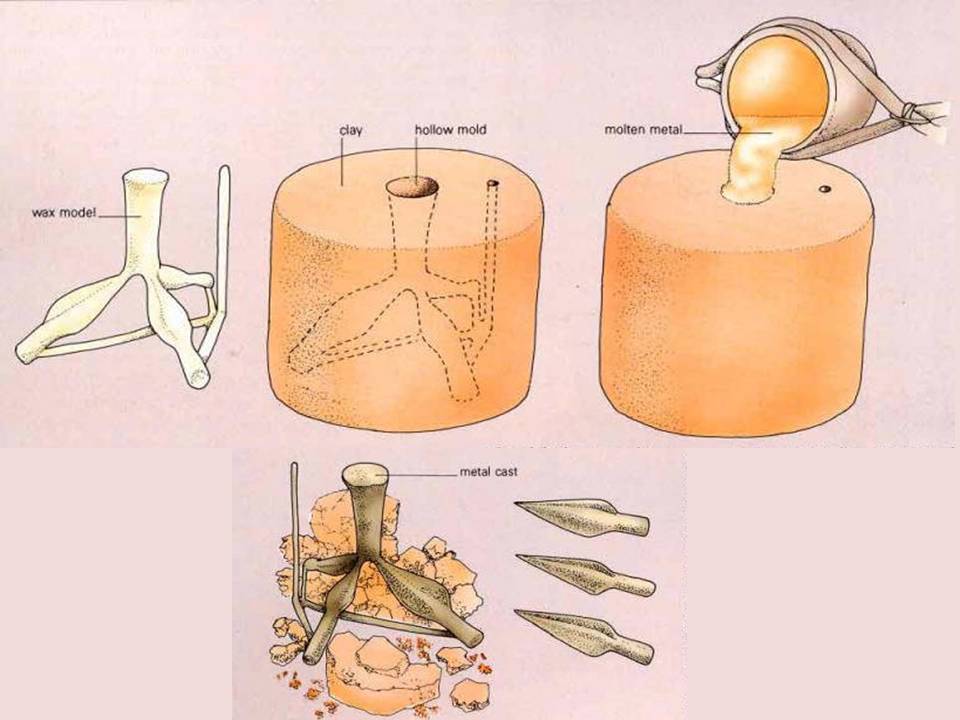
Once the object is ready for the mold, sprues (which are tubular forms of wax that allows liquid metal to flow from one end to another) are applied to the figure to ensure that the molten metal will reach all parts of the figure.  The sculptor then meticulously applies several layers of clay to build up a mold, leaving a small hole to allow for the burn-out process.  When the clay is bone-dry, the mold is fired to harden the clay and to burn-out the wax.  This method allows the wax to flow out, leaving a hollowed clay mold. 

Next, metalworkers melt a mixture of copper, lead, and tin (and in some cases, gold and silver too) in a crucible and then carefully pour the molten metal into the same hole the wax was released from.  Metal cools relatively fast, so if you have a large object, you have to make sure you have enough melted metal!  Once the metal is cooled, the clay shell is broken and the sculpture is revealed.  Every bronze sculpture is unique, as the clay molds cannot be reused.  To complete the work, the sculptor must cut off the sprues and sand the surface smooth, readying the object for the final application of polishing and wax.

Diagram of molds, courtesy of www.lost-waxprocess.com

I encourage you to stop by the Museum and observe these sacred bronzes of India.  You might find yourself appreciating the tranquil rhythm and balance of these forms, as well as how they were made!

Best regards,

Loryn Leonard
Coordinator of Museum Visits


Archives

Categories