Archive Page 167

Playful Looking

What if the goal in looking at an artwork during a gallery experience wasn’t to learn everything about the object, or to arrive at “right ideas” about its meaning? 

Interpretive Play, one of my favorite models of gallery teaching, is based on this idea.  During an Interpretive Play experience, groups of visitors are guided by educators to look closely and make observations, “playing” with various possible interpretations and ideas about the artwork. Educators summarize, repeat, and connect visitor observations, weaving information into the conversation only as it is relevant to the group’s responses.  The goal of the experience is to provide an opportunity for visitors to look, think, and wonder together, coming to a shared and unique understanding of the artwork.

Two of our wonderful interns, Jackie Lincoln, McDermott Education Intern for Family Experiences, and Haley Berkman, McDermott Curatorial Intern for Contemporary Art, led a gallery talk last Wednesday in the current Re-Seeing the Contemporary: Selected from the Collection based in Interpretive Play.   They had a large group of participants and facilitated some meaty, dynamic conversations.  Jackie, a frequent blogger on the We Art Family! The DMA Family blog has graciously agreed to share her insights about the gallery talk with us.

See Jackie’s comments below the slideshow of gallery photos and featured artworks.

[slideshow]

Haley and I are both planners by nature, so we spent a couple of weeks preparing for our gallery talk.  We tried to prepare for all scenarios, leaving nothing up to chance.

We started our discussion with the painting Portrait and a Dream by Jackson Pollock, thinking that visitors might feel more comfortable discussing a work by an artist who might be more familiar to them. It was about two minutes into this discussion that I realized that the content of the conversation was largely out of mine and Haley’s control, and that it was up to the visitors to determine the course of the talk. It was a frightening moment for me, acknowledging that something that we spent so much time preparing for was in the hands of other people, but then, I took a deep breath and started to listen to what visitors were saying about the works of art. Many of the participants made observations about the works that Haley and I had not noticed before or brought up ideas or associations that we would have come up with on our own. I found that by listening to others’ ideas, I was gaining greater insight into the works, and I hope that the participants felt the same way.

Leading a group through an interpretive play exercise was much harder than I thought it was going to be, but it was also very rewarding. It was challenging guiding people through a new kind of gallery experience—an experience where they are actively participating instead of passively receiving information. Creating an environment where everyone feels comfortable sharing their observations and then finding a way to connect those (sometimes conflicting) observations is not an easy task for the facilitator. It was also challenging deciding when was the appropriate time to step away from a work or move on to a new topic or idea. However, I feel like with practice that many of these issues could be ameliorated.

Overall, this act should enhance their experience with a work of art and will hopefully make it more meaningful to them.  It was interesting and inspiring to me that a single piece of artwork can mean so many different things to so many people, and I definitely plan on incorporating this technique into more of my classes in the future!

Jackie Lincoln
McDermott Intern for Family Experiences

Amy Copeland
Coordinator of Go van Gogh Outreach
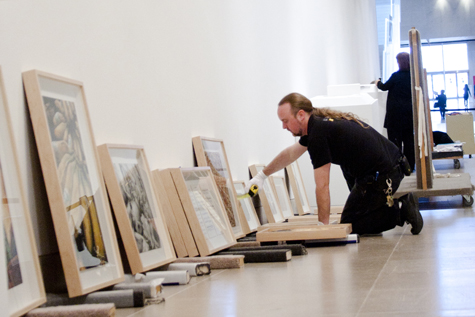
Seldom Scene: Installing Works by 2011’s Young Masters

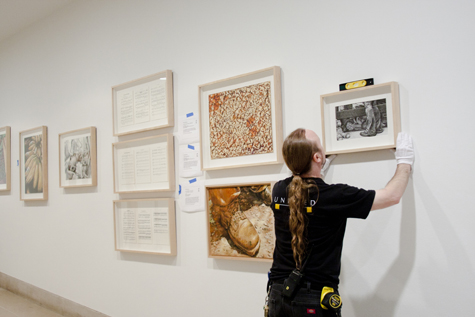
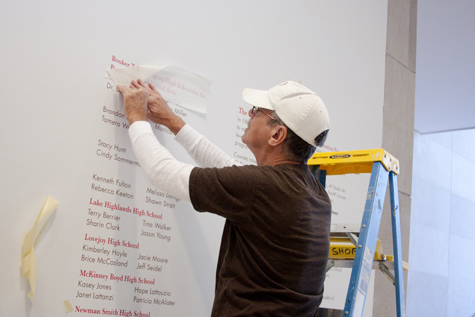
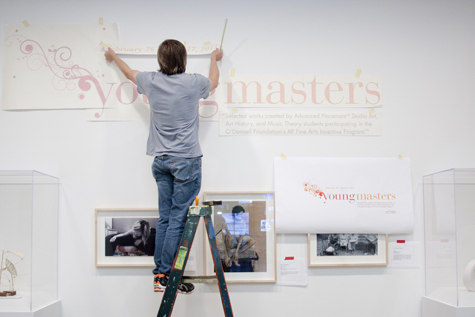
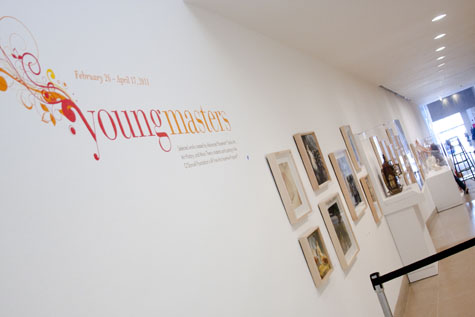
On Saturday we opened the Young Masters exhibition in our main Concourse. The exhibition features forty-eight selected works created by Advanced Placement® Studio Art, Art History, and Music Theory students from thirteen Dallas-area high schools participating in the AP Fine Arts Incentive Program. In a departure from the traditional studio art exhibition featuring original 2D and 3D works of art, this year the exhibition includes original essays written by AP Art History students in response to works in the DMA’s collections, as well as original four-minute compositions by AP Music Theory students. Here are a few images from last week’s installation:

Photography by Adam Gingrich, Dallas Museum of Art Marketing Assistant

Educator Resources: Three Excellent Online Resources from the DMA

As educators, we know you all are always looking for fantastic resources to benefit both you and your students in and outside the classroom.  However, these resources can be hard to come by, especially if you don’t know where to look.

So, we are beginning a series on Educator Resources to highlight some of the materials and opportunities available to you and your students.  This month, we will begin by talking about various online resources available through the Museum and accessible on our main web site

1. Teaching Materials

Under the “Educators” tab of the main website, select “Teaching Resources” and then “Teaching Materials.”  This portion of our website offers over thirty FREE downloadable “packets” of information, organized by theme, age level, or collection.  Some examples include Silver in America, A Looking Journey (4th grade), and Arts of the Americas.  These packets include introductory information, images of art objects, and classroom activities, along with bibliographies and printable materials. 

This portion of our online offerings is currently in a period of transition.  Through an Institute of Museum and Library Services (IMLS) grant, to be discussed here later this month by Nicole, the materials are being revamped to better suit teacher needs.  As we begin to add new and updated materials, the original materials and packets will still be online for your use.

2. Collections Online

Another fantastic resource to be found on the Museum web site are the Collections Online or Search Collections features.  Several of our staff are working tirelessly to present the over 20,000 objects within the DMA collection to online audiences.  Currently, over 6,300 works have been added to the online database and are searchable through the website.  When viewing these objects online, users have access to images, basic object information, and notes from the curators.  Objects can be sorted by collection area (i.e. African, Asian, etc.), artist, and object name.  Users can also create a FREE eMuseum account to group and save images in customizable packets.

3. DMA TV

Finally from the main website, you can access DMA TV.  This resource includes both videos and podcasts created by the Museum, ranging from interviews with curators and artists (i.e. this video interview with painter Luc Tuymans) to recordings of past lectures (i.e. Yale University Anthropology Professor, Michael D. Coe’s presentation: The True History of Chocolate). 

We hope that you will take the time to explore the many wonderful online resources the DMA has to offer and find ways to incorporate them into your lesson preparation or classroom teaching.  Don’t forget to check back in the coming months for posts about other educator resources, including online resources from other institutions, area adult learning opportunities, and local and national grants.

If you have any additional tips for your fellow educators, please leave a comment below!

Ashley Bruckbauer
McDermott Intern for Teaching Programs and Resources

Deep in the Heart of Texas

Are you ready for a picnic, fireworks, and to “remember the Alamo”?  It’s time to celebrate Texas Independence Day!

One hundred and seventy-five years ago, on March 2, 1836, Texas declared its independence from Mexico when Sam Houston and fifty-seven other men formed the Republic of Texas by signing the Texas Declaration of Independence. The Lone Star State’s triumphant struggle for independence ended a few days later at the siege of the Alamo. Among the approximately 250 brave men who died there were William R. Travis, Jim Bowie, and Davy Crockett.

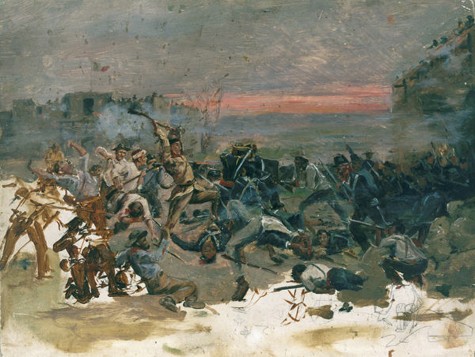
A sketch of this legendary battle by Robert Jenkins Onderdonk (father of the Texas impressionist painter Julian Onderdonk) is part of the DMA’s collections. This preliminary drawing depicts Crockett in the center wearing his trademark coonskin cap. He swings a flintlock overhead, about to club advancing Mexicans who have broken through the building’s south gate.

Robert Jenkins Onderdonk, American 1852-1917, "Sketch for 'Fall of the Alamo,'" , c. 1901, Oil and pencil on paper board, Dallas Museum of Art, gift of Eleanor Onderdonk, 1960.185

Davy Crockett was a celebrated 19th-century American folk hero, frontiersman, soldier, and politician. He moved from his native Tennessee to serve in the Texas revolution and died at the Battle of the Alamo. A notable work in the DMA’s collections is William Henry Huddle’s portrait of the courageous young hero who made the ultimate sacrifice for the young Texas Republic. Best known for painting scenes from the Texas war of independence, Huddle also completed a series of portraits of Texas governors. In the DMA’s painting, Huddle depicts the hero wearing his hunting clothes with his trusty rifle by his side. Although historians debate many of the details surrounding Crockett’s death, they all agree that he died on March 6, 1836, on the last day of the siege of the Alamo.

William Henry Huddle, American, 1847-1892, "Davy Crockett," 1889, Oil on masonite, Dallas Museum of Art, The Karl and Esther Hoblitzelle Collection, gift of the Hoblitzelle Foundation, 1987.47

The DMA owns some lovely images of this treasured building. One by Plano, Texas, artist Frank Klepper is quite different from Onderdonk’s combative scene. By depicting the building on a tranquil, starry night, Klepper turns the battleground into a hallowed shrine that is the pride of every Texan.

Klepper, The Alamo

Frank Klepper, American, 1890-1952, "The Alamo," early 1930s, Oil on canvas, Dallas Museum of Art, gift of the History Club, 1933.7

Martha MacLeod is the European and American Art Curatorial Administrative Assistant at the Dallas Museum of Art.

Friday Photos: Mystery Artwork

The Dallas Museum of Art education staff would like to thank you for participating in our Friday Photos: Mystery Artwork series. Our final artwork is……

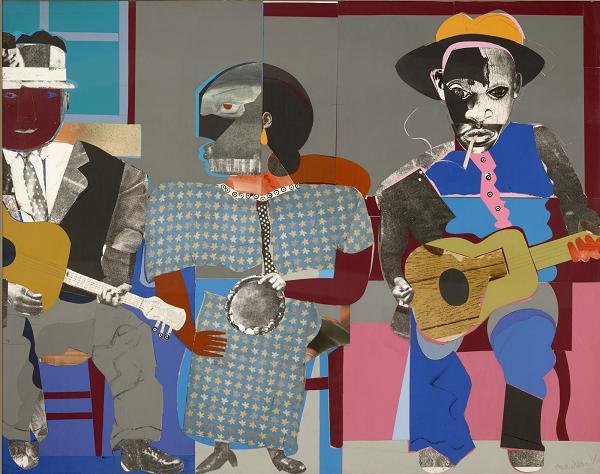
Romare Bearden, Soul Three, 1968

Dallas Museum of Art, General Acquisitions Fund and Roberta Coke Camp Fund
Dimensions: Framed dimensions: 57 x 69 x 3 in. (144.78 cm x 1 m 75.26 cm x 7.62 cm) Image dimensions: 44 x 55 1/2 in. (111.76 x 140.97 cm)
Medium: Paper and fabric collage on board

Learn more about Soul Three.
 
We encourage you to visit and explore our galleries. Please visit our web site to learn about the programs and events we offer for visitors of all ages.
 
Thanks,
Karen A. Colbert
Teaching Programs Intern

California (Day) Dreaming

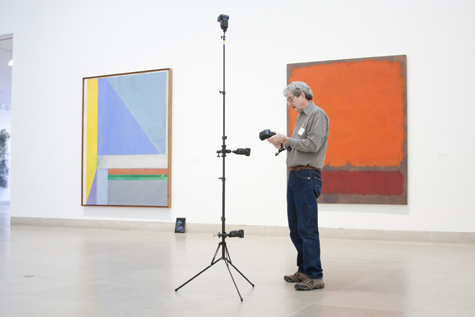
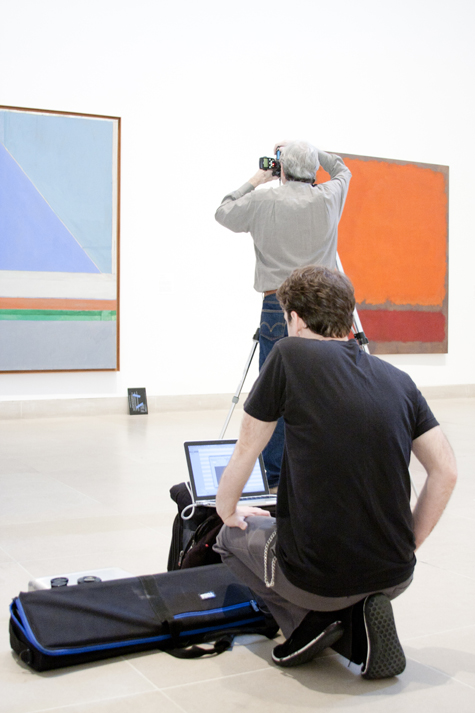
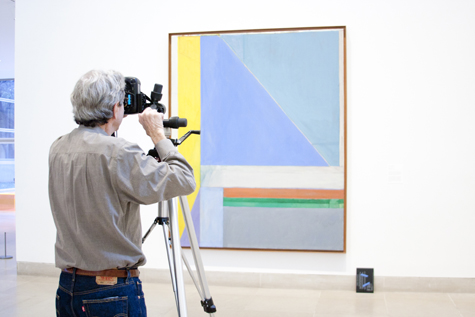
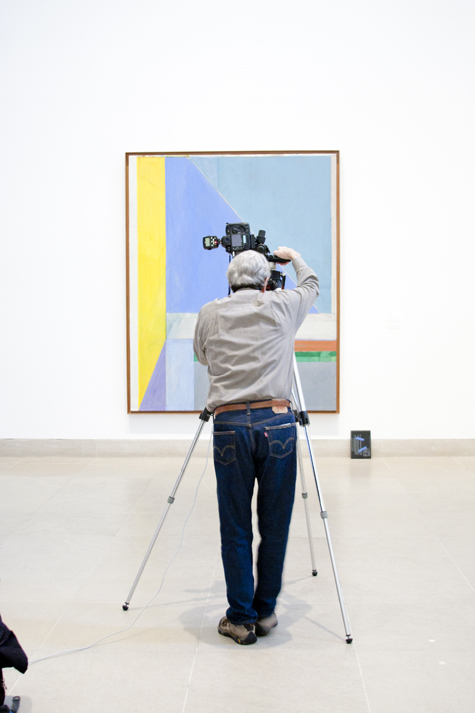
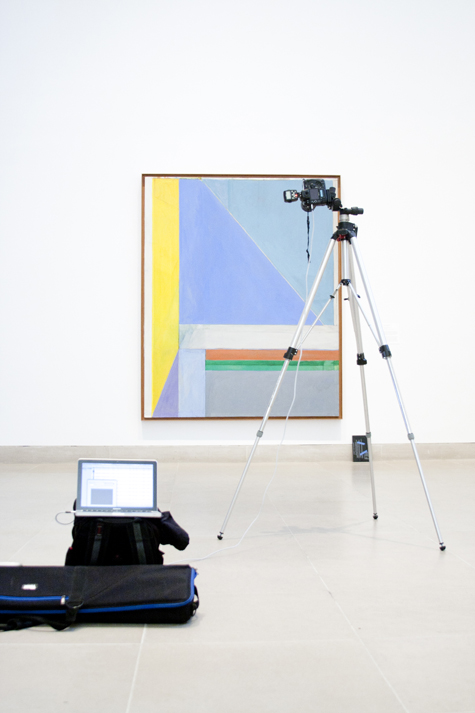
Although we’re closed on Mondays, yesterday the Barrel Vault was all lit up. That morning we hosted two special guests from The Richard Diebenkorn Foundation. The artist’s son-in-law, Richard Grant, who is also the foundation’s Executive Director, was here with a colleague to photograph our Ocean Park No. 29 for the Diebenkorn catalogue raisonné. This magnificent ab ex work, a highlight of the DMA’s collection, is now on view in our Re-Seeing the Contemporary exhibition.

Coming Soon: The Thaw Collection

It has been nearly twenty years since the Dallas Museum of Art hosted an exhibition of Native American art.  All of that will change on April 24th when Art of the American Indians: The Thaw Collection opens.  The exhibition features 135 works of art collected by Eugene and Clare Thaw, whose collection now resides at the Fennimore Art Museum in Cooperstown, New York.

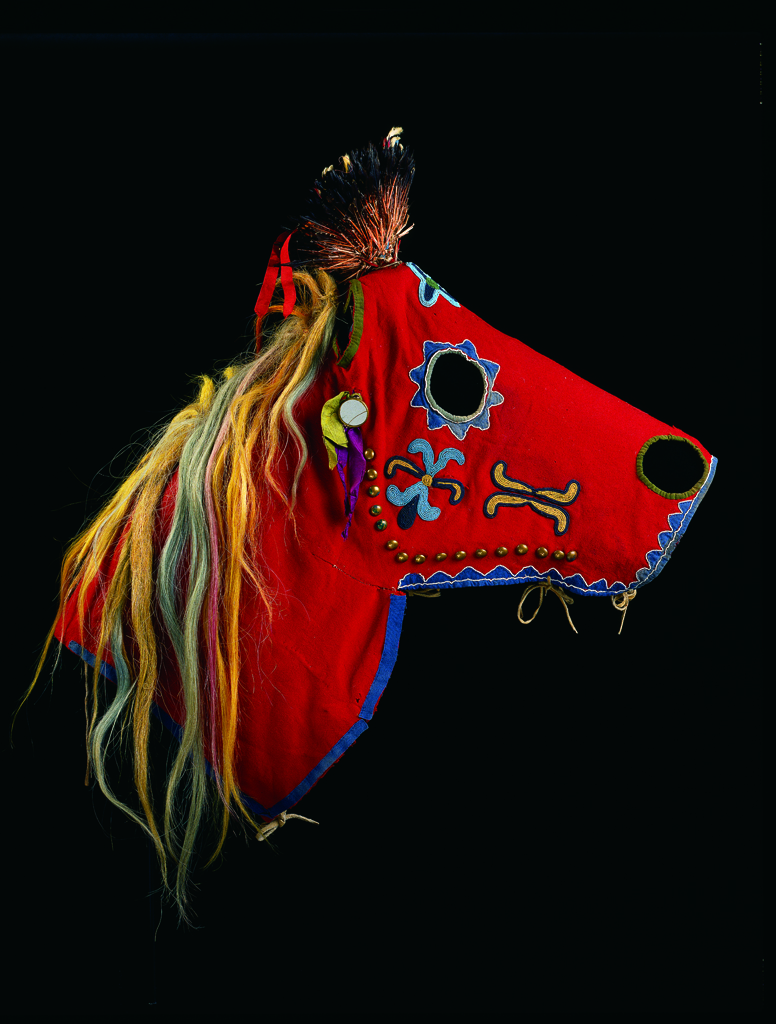
Art of the American Indians: The Thaw Collection will be arranged by geographic region, and will include works of art from the Northwest Coast, Woodlands, Plains, Southwest, Arctic, California, and Great Basin regions.  One of the artworks I am most excited to see in person is a horse mask made by the Nez Perce people.  I am intrigued by the bright colors and intricate beadwork designs, and I can’t wait to include the horse mask on our summer tours.  I’m also looking forward to learning more about the DMA’s collection of American Indian art through connections with the Thaw collection.

Horse Mask, c. 1875-1900, Nez Perce or Cayuse, Idaho, Oregon, or Eastern Washington, Thaw Collection, Fennimore Art Museum, photograph by John Bigelow Taylor

We have a very limited number of docent-guided visits to the exhibition available in the month of May.  If you are interested in bringing your students to see the exhibition before the end of the school year, submit an Online Visit Request Form today!   Students receive free admission to the exhibition when a visit is scheduled at least three weeks in advance.  We will include the exhibition on our summer tours and are creating a Go van Gogh Summer Library Program around the exhibition.  We look forward to sharing Art of the American Indians: The Thaw Collection with you and your students this spring!

Shannon Karol
Manager of Docent Programs and Gallery Teaching

Our Oscar Moment

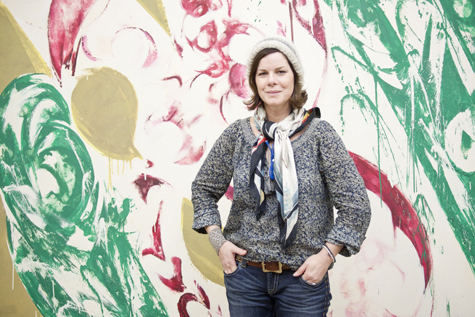
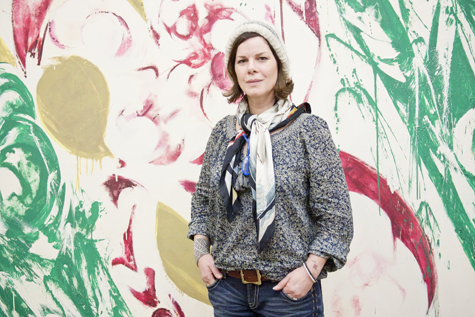
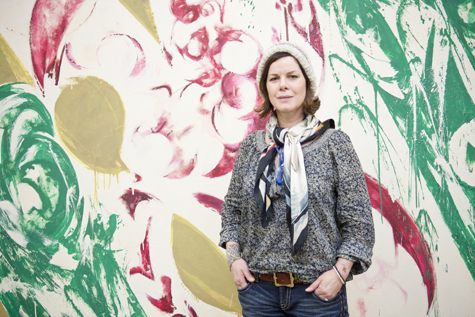
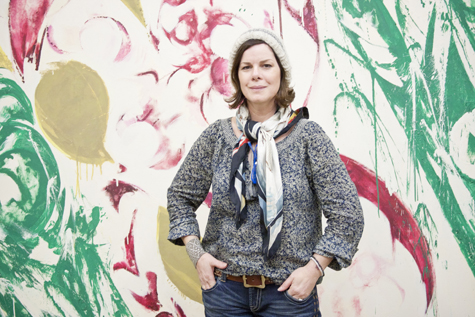
The day after the 83rd Annual Academy Awards, Oscar-winner Marcia Gay Harden poses in front of Pollination, the DMA’s magnificent painting by Lee Krasner, the artist Ms. Harden portrayed in the film Pollock and for which she won an Academy Award. In an instance of DMA synchronicity, we captured Ms. Harden after rehearsals for her performance tonight in the Arts & Letters Live program Texas Bound. On March 25, Arts & Letters Live will present an evening with art historian Gail Levin for her new biography on Krasner.

All of the fun. None of the cost.

The program Late Nights at the Dallas Museum of Art is full of activities and experiences for people of all ages. But did you know that there’s a way to enjoy them without having to pay Museum admission?

Volunteering at Late Nights isn’t your average charitable activity. Volunteers can choose from a wide array of programs they wish to help with, and they often get to participate. As a volunteer, you become a part of Late Nights on multiple levels as a facilitator, aide, and participant, and you can also explore the Late Night before or after your volunteering shift. You can get in on the action yourself, helping visitors create their own works of art in the Art Studio or encouraging visitors to think outside the box during a Creativity Challenge.

Many volunteers have said that the rewards that come with volunteering at Late Nights make the event more of a fun activity than actual work. Couples and families will volunteer together to participate in Late Nights in a different way, and more often than not, they come back again and again to volunteer. One volunteer put it this way, “I look forward to the beaming faces of the kids when you’ve applauded them for the project they’ve just completed. It’s really sweet to see the parents and children working so closely together. It’s also amazing to see what people can create with simple materials and their imagination.”

Volunteers receive free admission to Late Nights and also have the opportunity to meet up-and-coming or even nationally known artists who lead workshops or host programs. When you volunteer, you get a glimpse into all of the behind-the-scenes work that is involved in creating a fun and exciting Late Night. You’ll be amazed at how much collaboration and effort goes into each one of these events, and being a part of it can give you a great sense of accomplishment.

Volunteering at the Dallas Museum of Art helps you become an integral part of the Late Night experience. After all, where else can you help little ones wiggle into fun yoga poses and then race against the clock to create a work of art under pressure at the Space Bar? So if you’re looking for a unique way to experience the Museum, consider becoming a volunteer. It will provide you with a new perspective on Late Nights at the DMA.

For more information on volunteering, visit our volunteer page or contact Hadly Clark at 214-922-1311 to volunteer for Late Nights.

Friday Photos: Mystery Artwork

We have come to our second mystery artwork. Drumroll please, the answer is…. 


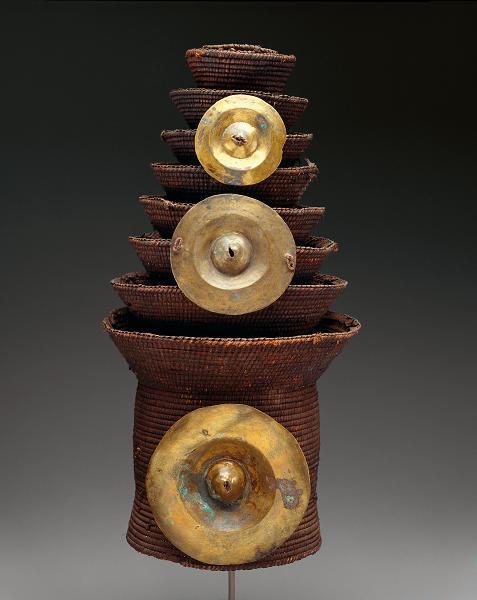
Tiered hat with brass discs (botolo)

 Date: 20th century
Dimensions: Overall: 25 x 10 x 9 3/4 in. (63.5 x 25.4 x 24.76 cm)
Medium: Coiled basketry (palm splints and fiber) and brass discs
Geographic location: Africa, Democratic Republic of the Congo
Culture: Ekonda peoples
Dallas Museum of Art, gift of the Friends of African and African-American Art

Learn more about the Tiered hat with brass discs (botolo)
 
In celebration of Black History Month, I present you with…

Mystery Artwork #3

 1. We were made from mixed media.
2. We were inspired by childhood memories.
3. Our creator was one of the great collage artists of the 20th century.
4.We are two-dimensional.
5. Our facial features resemble African masks.

What’s our name?

Start in  collections and begin your search.

Best Wishes,
Karen A. Colbert
Teaching Programs Intern


Archives

Categories