Last month we held Member Appreciation Weekend, a fun-filled celebration of YOU, our supporters, featuring scavenger hunts, art activities, discounts at the DMA store, members-only viewing hours, and more. Check out our recap slideshow and look forward to more member-exclusive events and benefits in 2021!
Archive for the 'Members' Category


The Making of “I WANNA STAY HERE WITH YOU FOREVER”
Published October 8, 2020 Members , works of art ClosedNow on view in the exhibition To Be Determined, artist Jeffrey Gibson’s commissioned sculpture I WANNA STAY HERE WITH YOU FOREVER references themes of struggle, resilience, indigenous aesthetics, and the body. A member of the Mississippi Band of Choctaw Indians and half Cherokee, Gibson draws on the cultural hybridity of his own Native and queer identities to reflect on the experiences of love, fear, care, and longing in this work, part of a series of beaded punching bag sculptures. Take a behind-the-scenes look at how this work was created in his studio, from initial mockup to finished piece.


DMA Member Exclusive: “Art + Design” Installation in Action
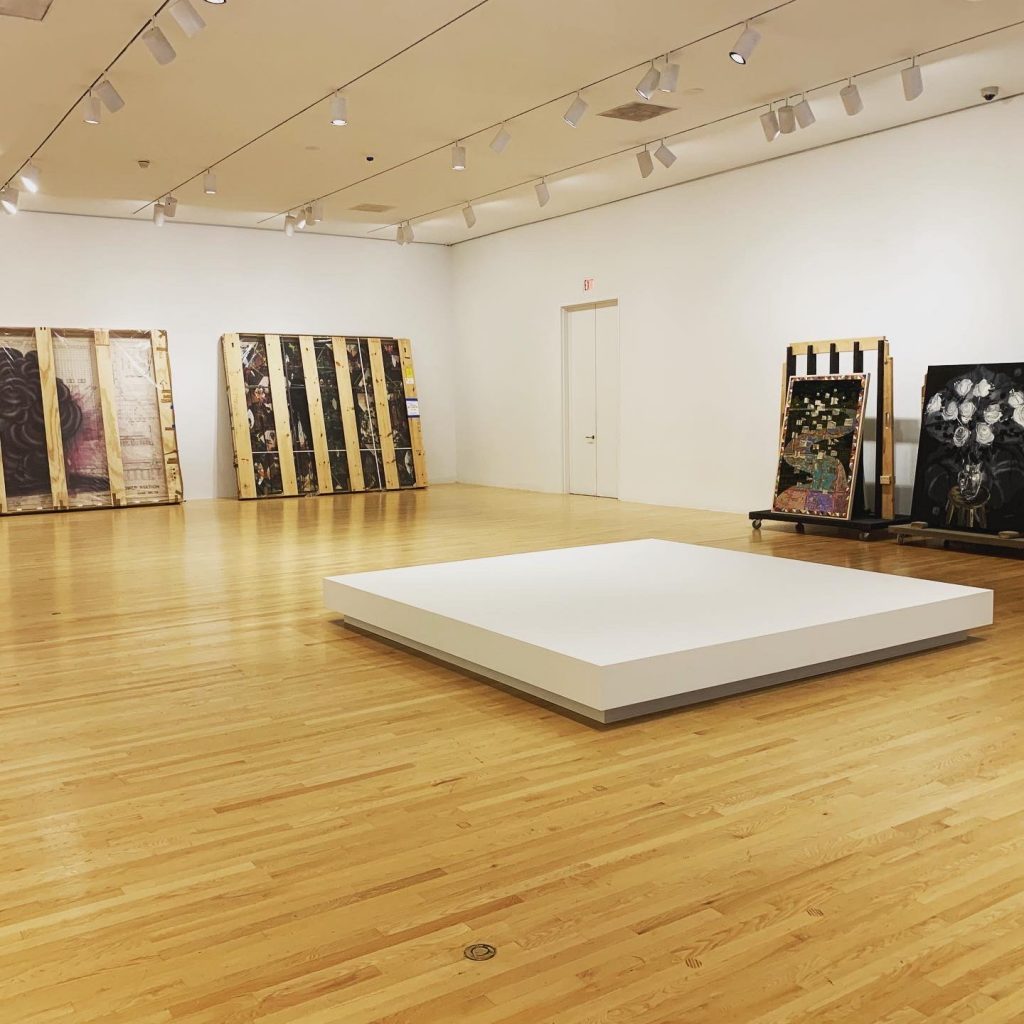
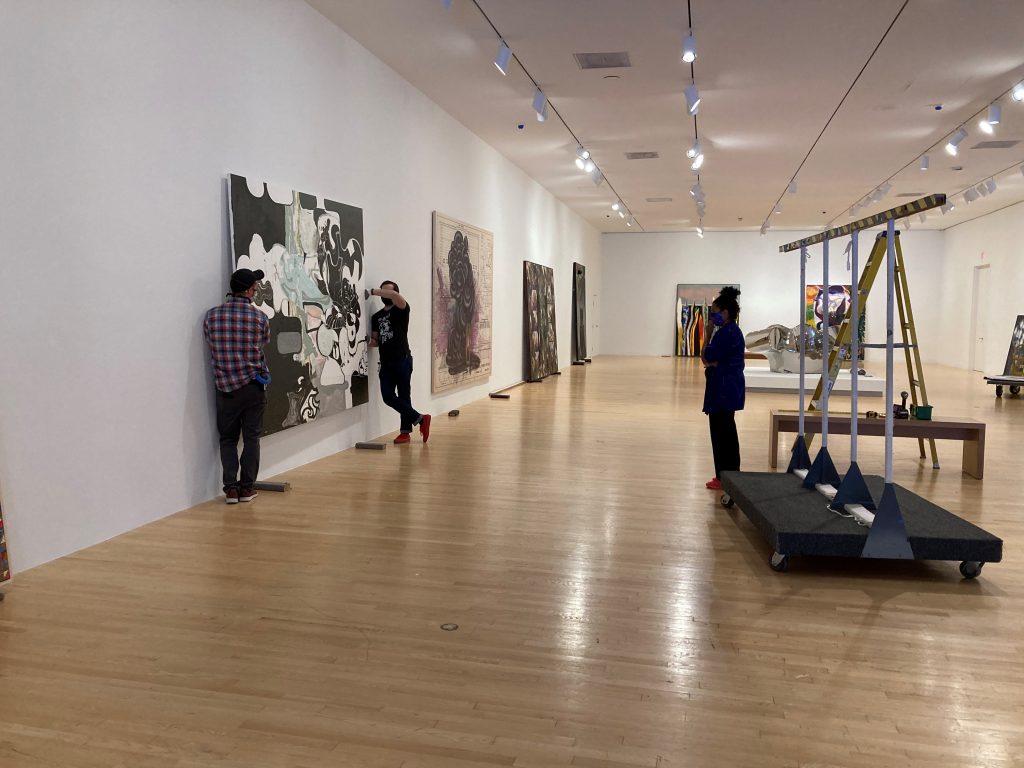
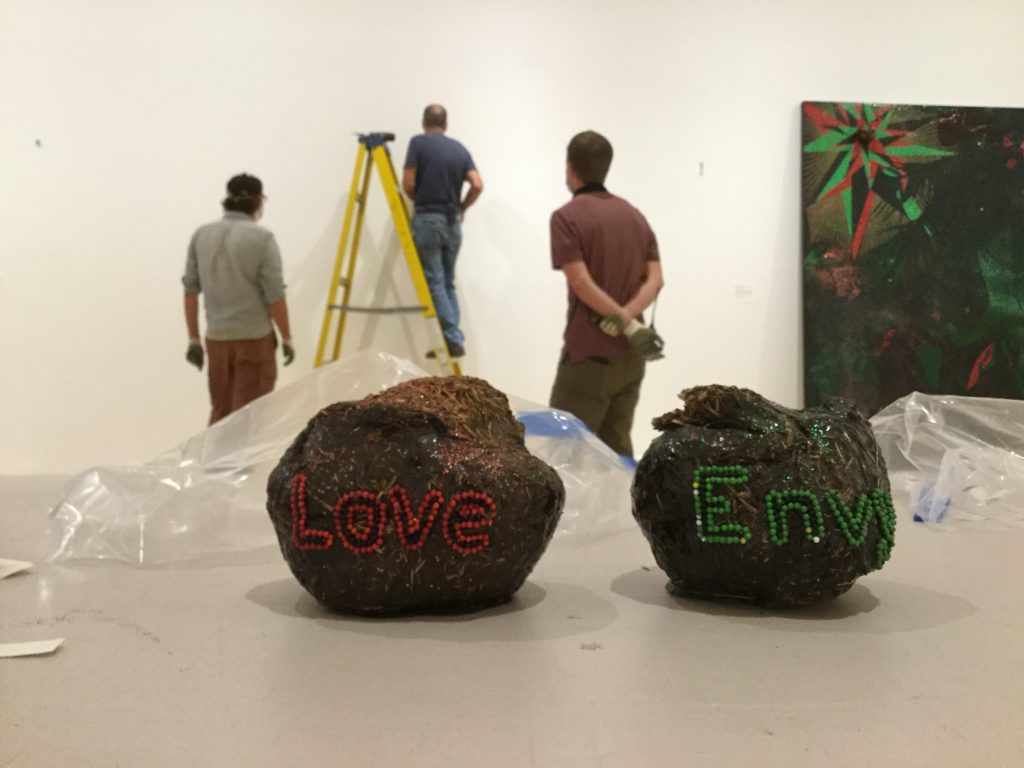
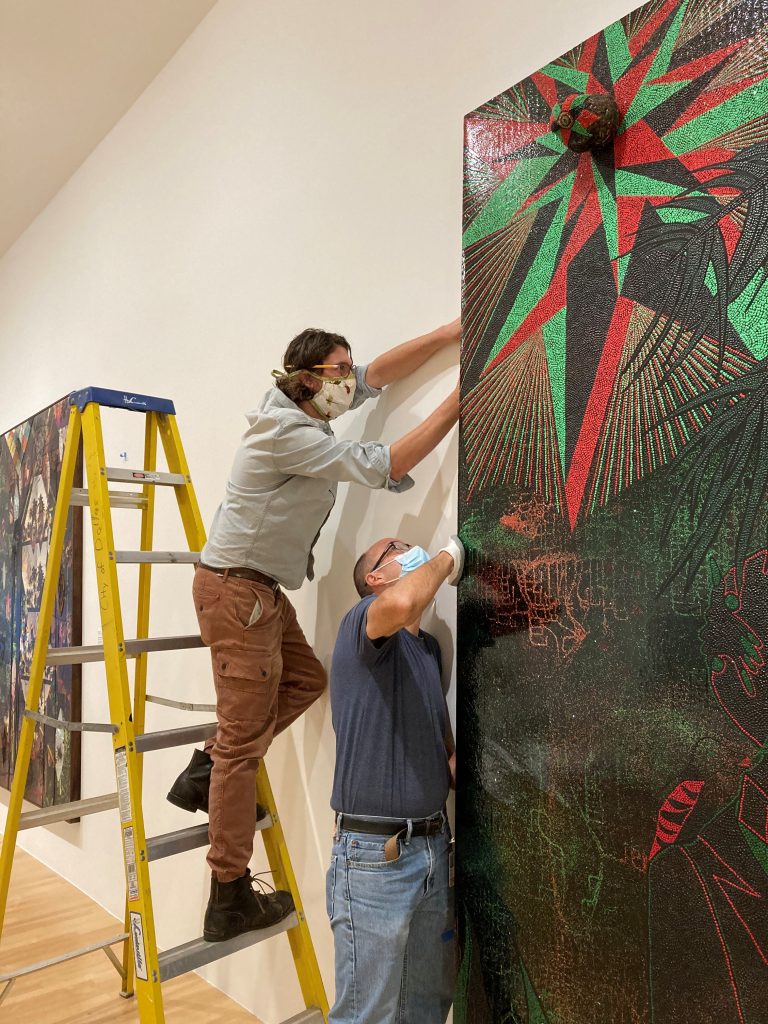
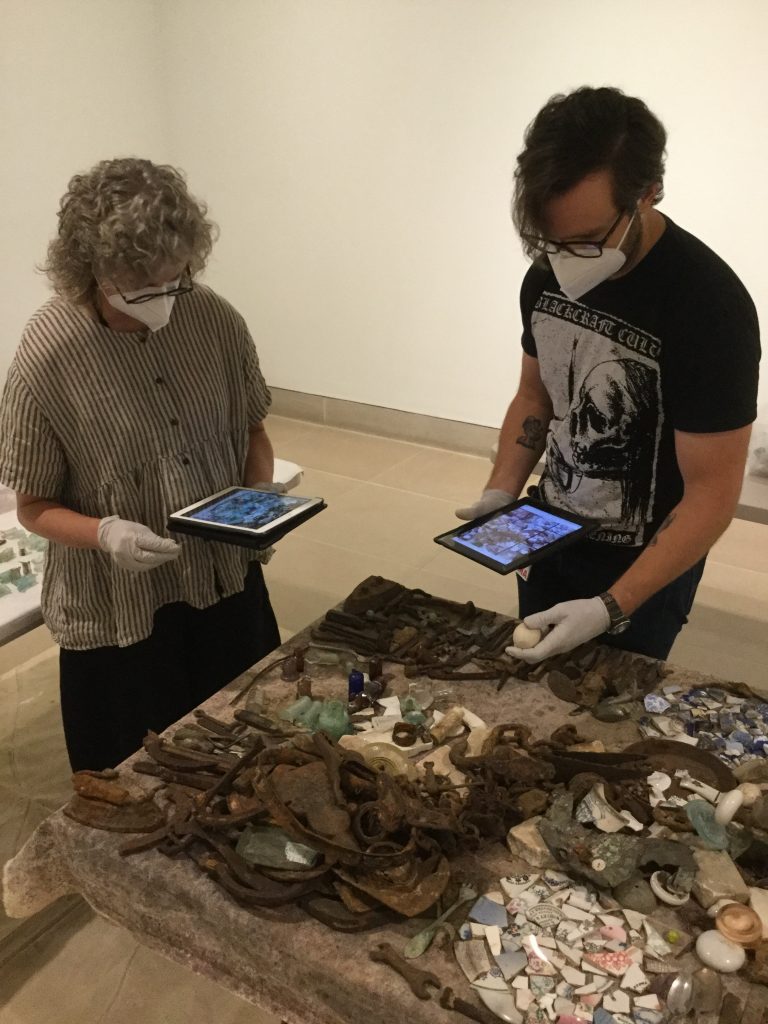
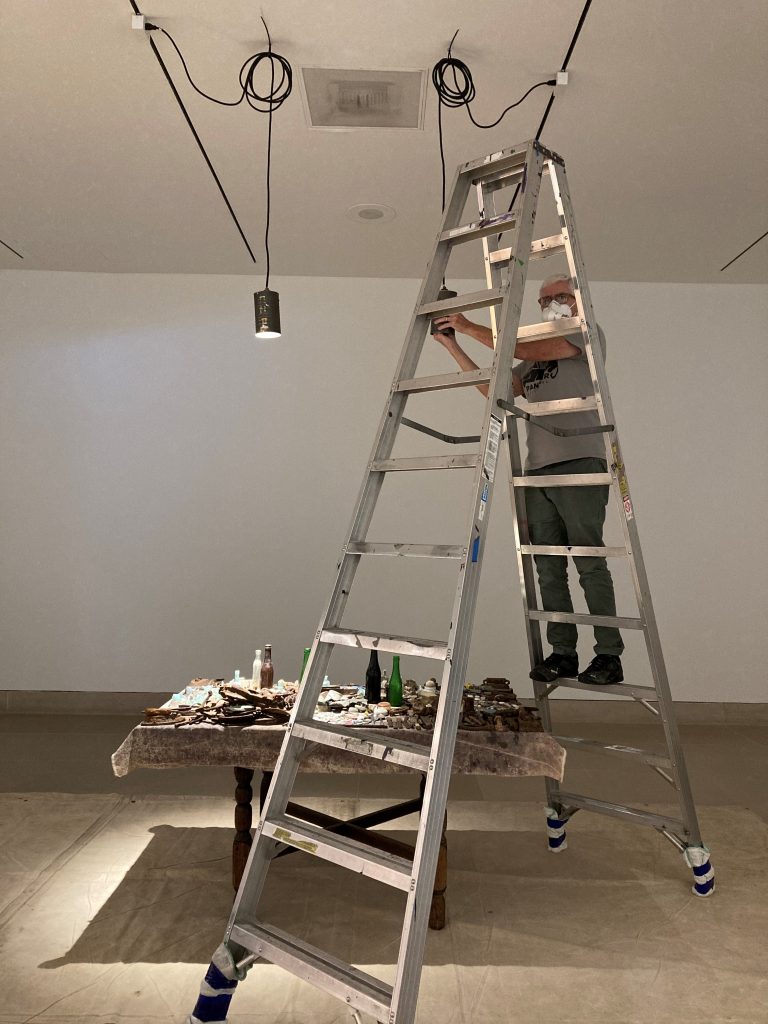
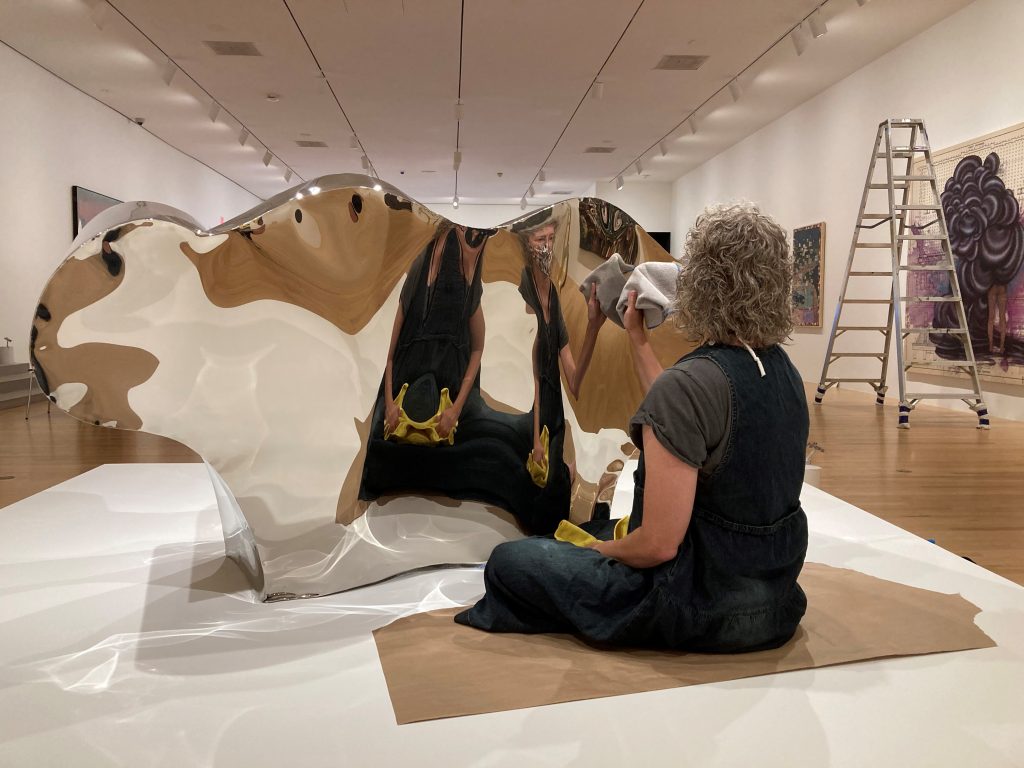
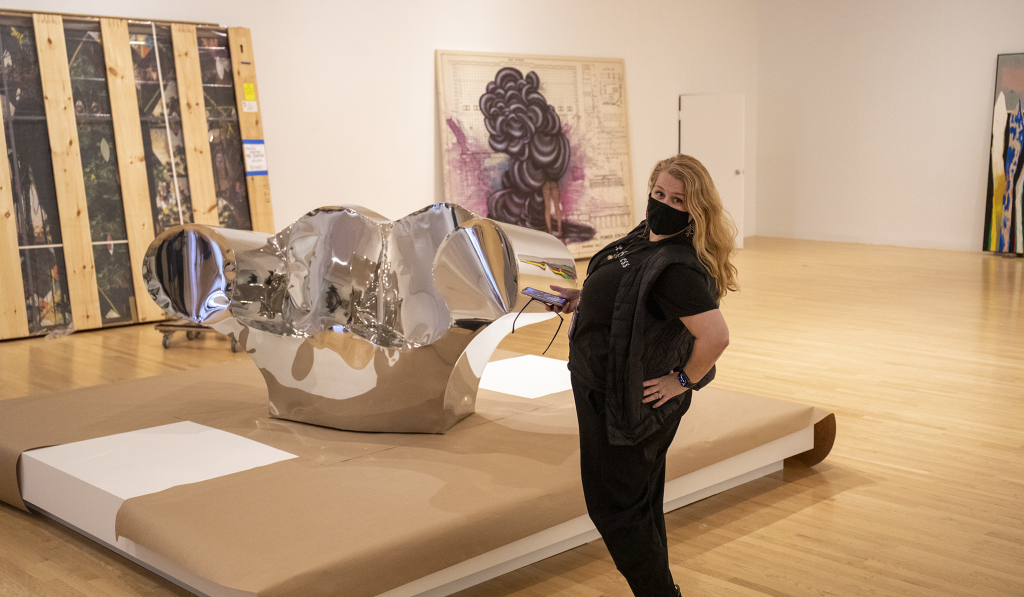
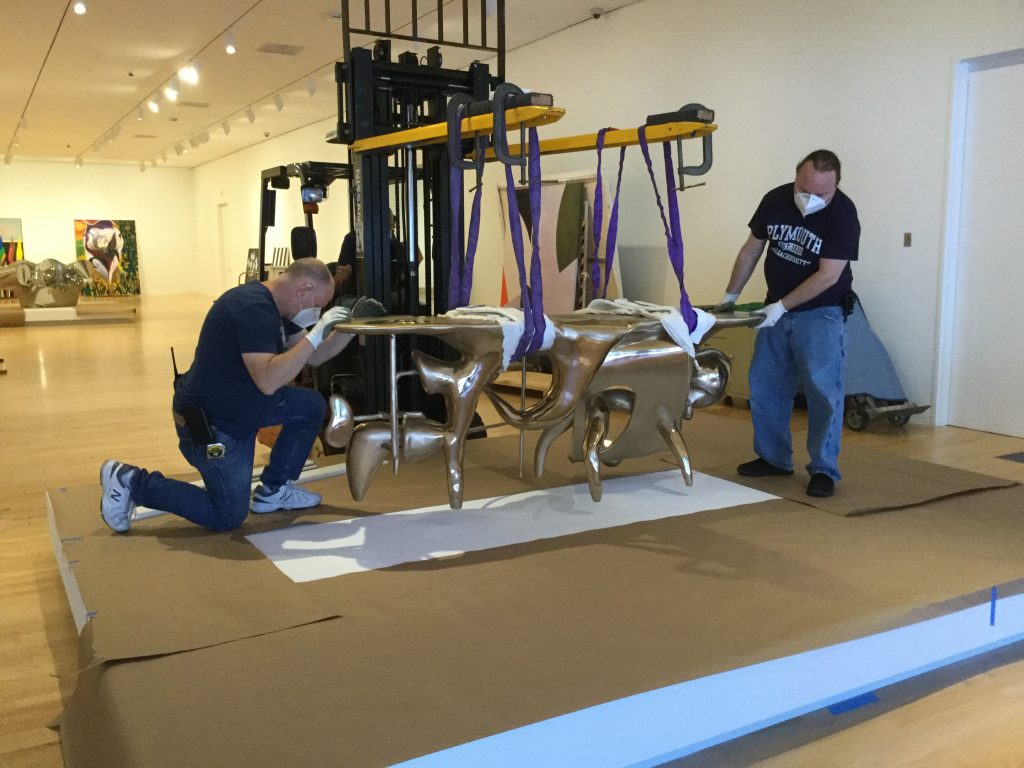
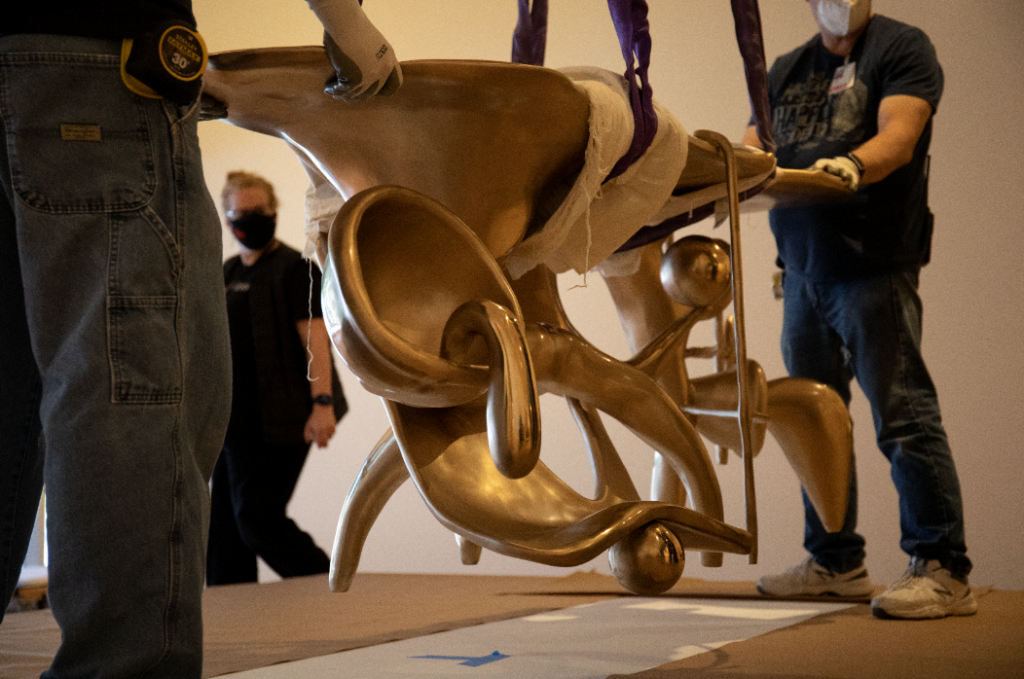
Published August 27, 2020 Members ClosedThe DMA’s dedicated preparators, registrars, conservators, and curators have worked passionately and carefully to bring Contemporary Art + Design: New Acquisitions to life! Check out these behind-the-scenes snapshots of what it was like to install the wide-ranging works in this show, now on view at the DMA.
Expanded for DMA Members: Interview with Chase Kahwinhut Earles
Published July 28, 2020 Creativity , Guest Blog Post , Members , People , works of art ClosedTags: Caddo, Caddo pottery, ceramic, Chase Kawinhut Earles, Dallas Museum of Art, DMA, Native American ceramics, pottery
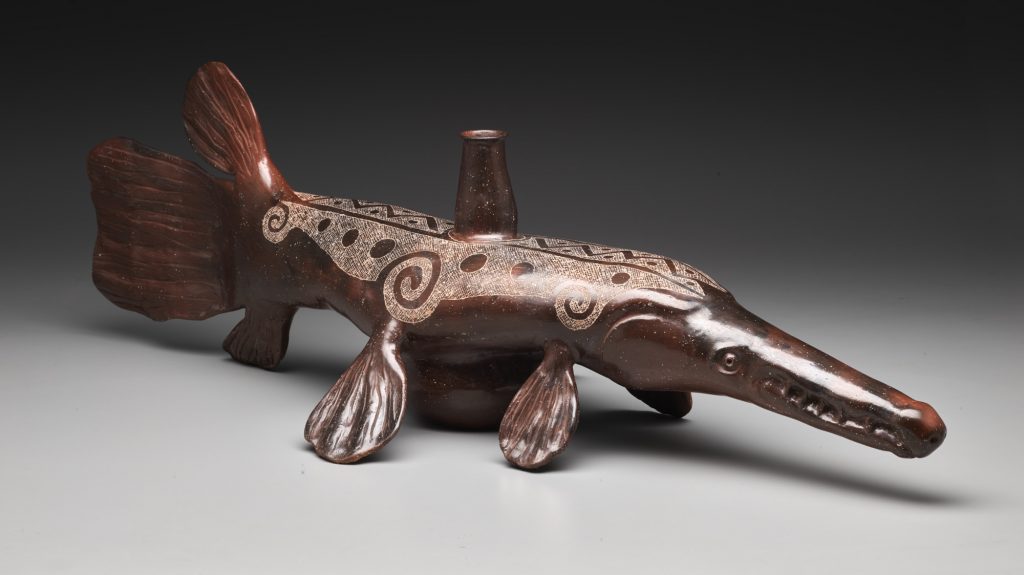
After recently acquiring a piece of Caddo pottery by Chase Kahwinhut Earles, we reached out to the artist to hear about his practice and process. Listen to his introductory message and read his Q&A conversation with Dr. Michelle Rich, The Ellen and Harry S. Parker III Assistant Curator of the Arts of the Americas at the DMA.
Chase: Kuha-ahat [Hello]. Kumbahkeehah Kahwinhut [My name is Kahwinhut]. Hello my name is Chase Kahwinhut Earles, and I’m a member of the Caddo Nation. I make traditional pottery and also contemporary pieces incorporating modern interpretations of our culture.

Michelle: Can you describe the process by which you make your pottery?
Chase: I make pottery the ancestral, or traditional, Caddo way. I dig the clay myself from the banks of different rivers, mostly the Red River between Texas and Oklahoma. I process it to dry it and break it down into usable material. I collect and crush freshwater mussel shell to mix with the clay as a temper, which helps strengthen it so the vessels survive through the pit-firing process. All of my pieces are hand built using the coil method. I don’t use a wheel. After a piece dries, I burnish it with smooth stones to make it shiny. There’s no glaze. Then I pit fire the vessels. The final step is to engrave the design into the carbonized surface of the pots.

Michelle: Pit firing is very different from kiln firing. Will you talk about that a little bit?
Chase: I fire my pots in a traditional pit fire. This is different than the modern kiln, which slowly heats the pottery until it gets to high temperatures. Our pit firing is started by stacking sticks and lighting an open ground fire. First, we heat the pottery near the fire to drive out moisture, and then they go right into the fire. I’ll add more wood, and the larger fire will get to a high enough temperature to vitrify the clay. You can see the pots start glowing! Sometimes things can go wrong, and if a pot gets overfired it will become fragile or might even spawl or crack. Large pieces, such as the Alligator Gar, can be fired in sections or with multiple fires.
Michelle: What inspired you to make Caddo pottery?
Chase: My parents took us to the Southwest when we were young. I loved and was inspired by the beautiful Pueblo pottery and wanted to make those beautiful pots. And I did learn how, but realized there was something not right about that, and I came to understand the difference between cultural appreciation and cultural appropriation. That pointed me in the right direction—to look at my own tribe. I mean, why wouldn’t I have? But I didn’t expect to find anything. Lo and behold, we have one of the biggest pottery traditions in the country, but not many people know about it! Then my purpose was obvious. I dove in, obsessively learning everything about our tribe, our pottery tradition, and our techniques. Jeri Redcorn, a Caddo elder who revived Caddo pottery, helped me get started.

Michelle: The words “contemporary” and “traditional” carry a lot of weight when describing Indigenous arts made in a customary fashion. Where do you situate your work?
Chase: The question of contemporary and traditional is complicated with Native American art, where these words are used to describe the difference between something that’s made in a modern manner or something that’s made exactly how we’ve made things forever. My work up to this point has been primarily trying to save our ancestral and traditional ways of making pottery, so it’s a very ancient style, method, and technique. The present-day definition of “contemporary” is that you’re a living artist. So, in fact, we can be contemporary and traditional at the same time—I’m a living artist producing fine art. But I thought it was important to learn and reestablish our ancestral way in order to have a base to move forward, evolve our work, contribute to Caddo culture, and develop a modern narrative.
Michelle: Are there any works in the DMA’s collection that resonate with you, and why?
Chase: The ancient Caddo pottery resonated with me. It’s always bittersweet seeing our ancient work in museums because these are cultural belongings. Caddo pottery is in museums all over the country, and also overseas. It was sought after and prized! It was a prolific tradition—I was once told by an archaeologist that there are probably between 60,000 to 80,000 Caddo pots in museums. But so few people know about Caddo pottery. Seeing it on view for the public to learn from makes me happy. Our history and our culture is not gone, and we, the Caddo people, are still here too.
Michelle: What does it mean to you to have the DMA acquire your work?
Chase: It means the world to me. When I set out to make pottery and art, specifically our tribal art, it was clear that not many people knew about the Caddo, even though we were once a huge, great society. And no one knew about the pottery, and the tradition kind of got forgotten. Having my work in institutions and museums like this is the ultimate goal—to share our beautiful artistic traditions with people and educate them about our identity, our culture, and our continued presence. So, on the scale of importance, it’s up there at the top!
Michelle: What do you envision to be the lasting impact of your ceramic practice?
Chase: When I first started, I had this grand vision to promote Caddo culture and pottery to everyone in the world, or at least to everyone in the country who is interested in Native art! I soon found out that is a daunting and overwhelming task for one person. So, I do my best. There are a couple of things I’m trying to accomplish now, one being to educate people about our tribe, our culture, our art, and our beautiful, unique pottery. It’s different than any other tribal pottery. The other goal is to show our young Caddo, and even the adults, that this is our cultural identity, and that they can do this. The young ones can grow up and produce Caddo pottery or our tribal arts and make something of themselves, and make a living doing it. I’m trying to carve a niche for our Caddo people, and to make it easier for others by having an established place in the art world.
Also, I can’t thank the DMA enough, especially for this opportunity. It goes a long way to educate people about the importance of Native American artwork in the context of American art. I applaud that effort and am very thankful for it.
We asked Mark Castro, the Jorge Baldor Curator of Latin American Art at the DMA, to dish his best Mexican cookbook recommendations that will bring some culture into your kitchen as we all cozy up at home. Here’s what he had to say to whet your appetites!
The Foodie
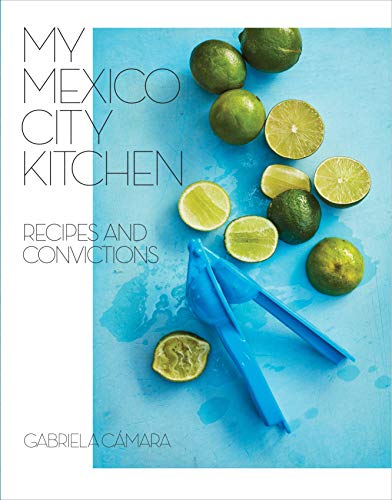
My Mexico City Kitchen: Recipes and Convictions
by Gabriela Cámara
Mark says: More than just a cookbook, Cámara explains her unique take on Mexican food and its contemporary significance. Whenever I’m in Mexico City I always make a point of stopping at Cámara’s restaurant Contramar, going strong for more than twenty years. My go-to meal—the famous tuna tostadas, red and green grilled snapper, and lemon and ricotta tart—are all in this lavishly illustrated book.
The Classic
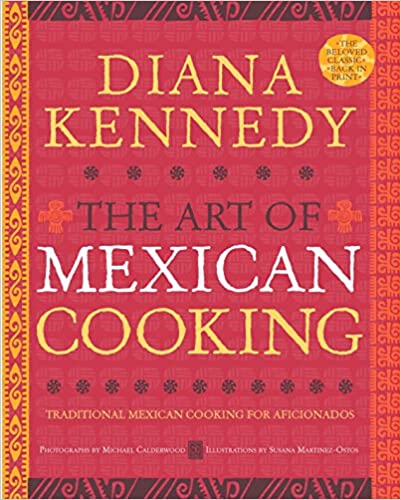
The Art of Mexican Cooking
by Diana Kennedy
Mark says: This was my first Mexican cookbook and I’ve heard the same from a lot of friends. First published in 1989, Kennedy’s book is still one of the most complete guides to traditional Mexican cooking. Beyond giving you great recipes for key dishes like pozole verde or mole negro, Kennedy shares important insights into their origins and their place within Mexican culture.
The Doorstop
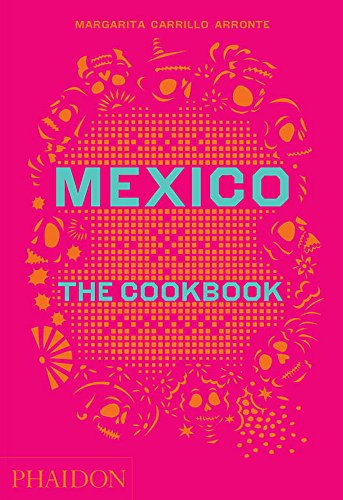
Mexico: The Cookbook
by Margarita Carrillo Arronte
Mark says: This book has got everything, from the typical to the obscure, and is something of an encyclopedia of recipes of Mexican cuisine. I turn to it whenever I’m trying to figure out how to make that awesome thing I ate one time at a restaurant—pato en pepita roja (duck in red pumpkin sauce)—or that treat I bought at the shop around the corner from my hotel—limones rellenos (stuffed candied limes).
The Streetwise
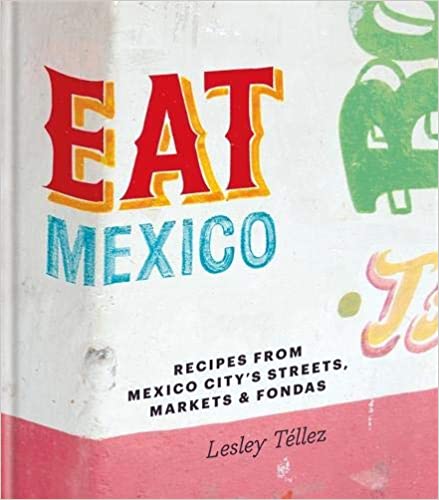
Eat Mexico: Recipes from Mexico City’s Streets, Markets & Fondas
by Lesley Téllez
Mark says: Perfect if you want to relive that delicious pambazo you ate on a street one day in Mexico City, or if you are cooking a meal for family and friends. My family loves the ‘Pasta with Ancho Chiles, Mushrooms and Garlic,” especially if you pair with it with a refreshing agua de Jamaica (hibiscus flower water).
The Art of Speakeasy
Published February 7, 2018 Fundraising , Members , Special Events ClosedTags: Dallas Museum of Art, DMA, speakeasy
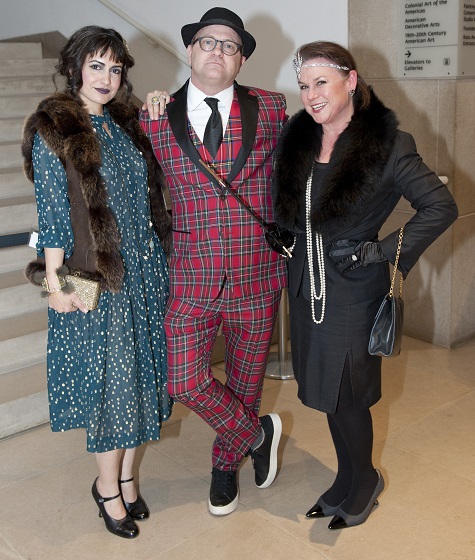
Get your party outfits ready in time for the second DMA Speakeasy, the most anticipated party in town, on Saturday, February 24. If you are gunning for first prize in the costume contest, look back on an Uncrated tutorial on how to become a Speakeasy Star.
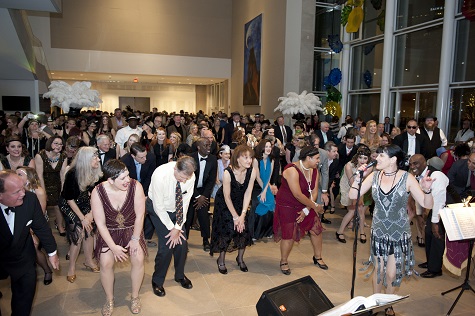
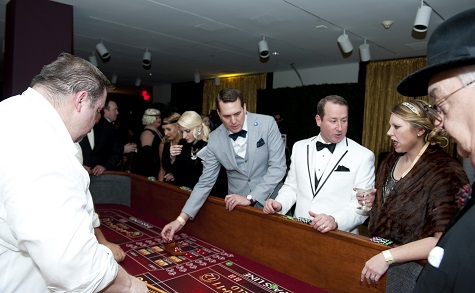
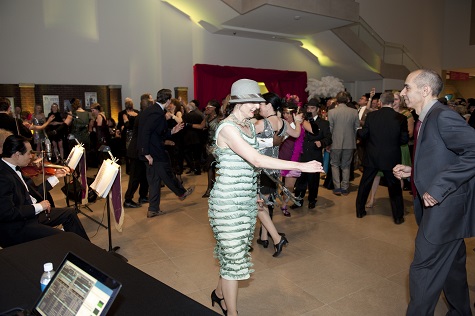
The evening kicks off with custom crafted cocktails from Dallas’ finest, the Singapore Swingers 18 piece orchestra, 1920s dance lessons, novelty gaming tables and admission to our amazing galleries. The vintage 1974 version of the Great Gatsby will be rolling on the big screen in Horchow Theater. Our guests will be attired in their finest 20s rags. A scavenger hunt is planed that will take our guests throughout our vast collection to “Track down the bootleggers”.
The night is capped off with fantastic raffle prizes; to include a package from the Joule Hotel; Two DMA Arts and Letters Live VIP Packages: one for Maria Shriver and one for Lidia Bastianich; Stock Your Bar Package compliments of ROXOR, NUE, and Title No 21; and a Five Course Tasting for four at Wolfgang Puck at Reunion Tower. Tickets are a throwback to the 20s at only on buck.
Tickets to this event are available to DMA Members starting at $70. All tickets include 2 drink tickets redeemable for your choice of our “bootleggers” crafted cocktails, live entertainment, dance instructions by the talented hoofers from The Rhythm Room, access to the gaming tables, tasty bites and photo booths.


Jennifer Harris is the Director of Special Events at the DMA
For a fun and creative idea this holiday season, give the gift of art with a DMA membership! Give friends and family an entire year of art, including access to all special exhibitions, exclusive members-only experiences, and so much more.
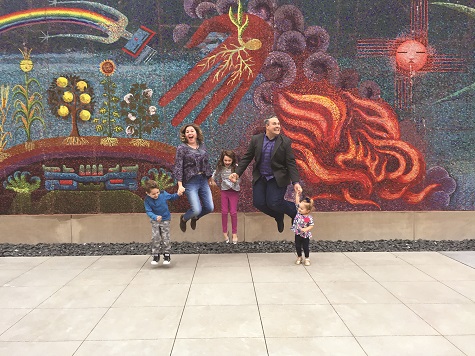
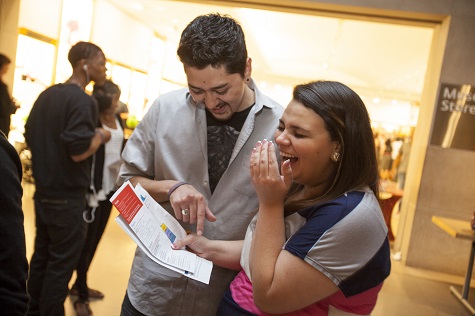
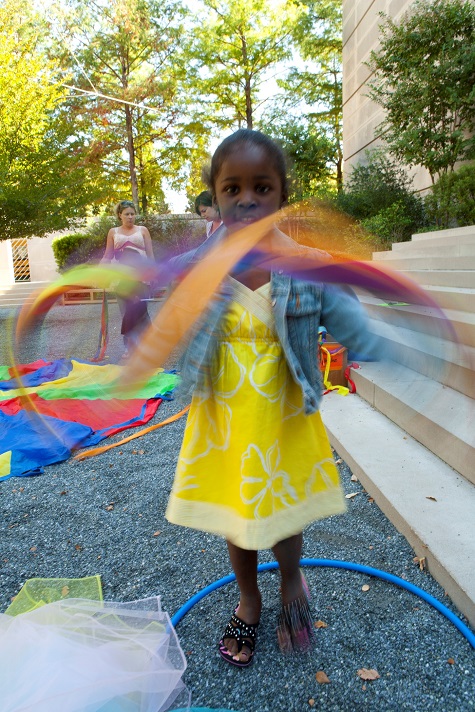
-
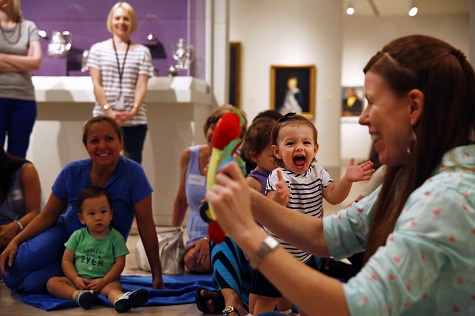
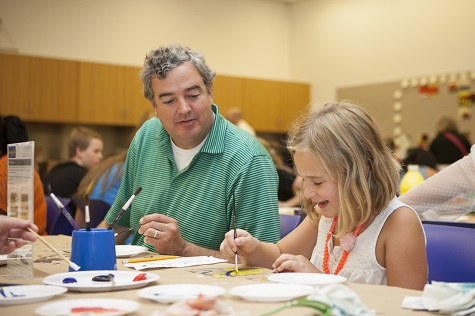
- Photos of the August 2015 Art Babies program.
-

- Photos of the DMA’s April Irving Penn Late Night. Images taken on Friday, April 15, 2016.

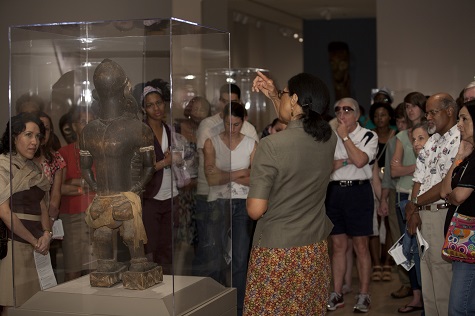

Membership benefits include:
- Free parking in the DMA garage
- Free admission to ticketed special exhibitions
- Exclusive Member Preview Days
- DMA Store discounts
- and more!
Learn something new, create fresh memories, and experience the love of art. This is one gift that will keep on giving all year long!
To give the gift of art to someone you love, call 214-922-1247 or email members@DMA.org today!
Ingrid Van Haastrecht is the Director of Membership Operations and Analysis at the DMA.
Finding Yourself at the DMA
Published May 8, 2017 Behind-the-Scenes , Center for Creative Connections , Collections , Contemporary Art , Members 1 CommentTags: A Texas Dozen, Center for Creative Connections, Cheerleading, Dallas Museum of Art, DMA, Geoff Winningham, photography, U.T. Cheerleaders, University of Texas
As an art museum educator, I live for the tales of visitors who have had meaningful, inspirational, life-changing experiences in museums—perhaps because it was exactly this kind of personal experience that propelled me down the career path I’ve taken. Working in the Center for Creative Connections (C3), a participatory educational space for visitors of all ages, I have the privilege of hearing these kinds of statements often; however, a few months back I was surprised to hear from a visitor who literally found herself in a photograph by Geoff Winningham currently on view in the C3.
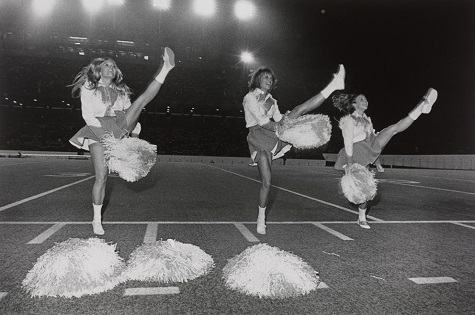
Geoff Winningham (artist), The Cronin Gallery (publisher), U.T. Cheerleaders, negative 1972, print 1976, gelatin silver print, Dallas Museum of Art, gift of Prestonwood National Bank 1981.36.6
During a Late Night event, Laura was walking through C3 with her husband when they both stopped dead in their tracks as they walked by the photograph. “I think that’s you,” her husband stated. “I know it’s me!” Laura exclaimed.
I had so many questions for her. What was it like seeing yourself in a work of art in a museum? Did you know this photograph existed or that you were being photographed at the time? Can you recall the other cheerleaders in the photograph? Luckily, Laura was happy to meet up to discuss her experience.
As you might imagine, Laura was quite surprised to see a photo of her college-age self in the Museum. As a University of Texas cheerleader, she was aware they were photographed in action from time to time—once her image ended up as part of the opening montage of ABC’s Wide World of Sports for a full year—but she never imagined she would make it into a work of art in the DMA’s collection. Laura is uniquely well versed in the DMA collection, but until recently she had never seen this photograph before. Not only is Laura a DMA Member, but she was also part of the PM Docent class for five years, starting with the charter class under the leadership of Gail Davitt.
Both the University of Texas and the Dallas Museum of Art have loomed large in Laura’s life, but she never imagined that the two worlds would collide. In fact, UT Cheer isn’t just a distant memory as Laura regularly attends the Cheer Reunions and keeps in touch with fellow cheerleaders, including some of those captured alongside her in Winningham’s photograph. In the image below, the woman on the far right is the same woman on the far left of the UT Cheerleaders photograph by Winningham.

Now that Laura knows of the existence of this photograph, she comes back to visit it from time to time. She was also keen to meet the photographer, Geoff Winningham, and looked him up immediately to learn more about him and his work. Fortunately, Winningham was at the DMA in April to lead a Gallery Talk about the series this photograph is part of—A Texas Dozen.

Jessica Fuentes is the Manager of Gallery Interpretation and the Center for Creative Connections at the DMA.
Cyber Monday
Published November 28, 2016 Members ClosedTags: Cyber Monday, Dallas Museum of Art, DMA, DMA Membership
Congratulations! You survived Black Friday 2016! But if you are like us, you might be spending this evening searching Cyber Monday deals to finish off your list.
Black Friday is the ultimate day to go shopping for all of the best deals, steals, and doorbusters, but it’s not for the faint-hearted. If you busted down the doors of all your favorite stores (or even if you didn’t), we would like you to enjoy 10% off a one-year DMA membership. This incredible Cyber Monday deal is only good until MIDNIGHT TONIGHT.
Experience 12 full months of exclusive DMA Member benefits, including:
Free parking in the Museum’s garage
Free admission to all special exhibitions
EXCLUSIVE exhibition Member Preview Days
And so much more!
Most importantly, no doors to bust down.

The Sum of All Parts
Published November 2, 2016 Behind-the-Scenes , Conservation , Members 2 CommentsTags: art conservation, Artifacts, Dallas Museum of Art, DMA, François Lepage
The DMA’s conservation team works on a variety of projects throughout the year. DMA Associate Conservator Laura Hartman shared insights on one fascinating project in the Fall issue of the DMA Member magazine, Artifacts.
François Lepage, Flowers in a Vase with Two Doves (detail), 1816–20, oil on canvas, Dallas Museum of Art, Munger Fund, 2016.23.M
In 1925, Dallas philanthropist Gertrude (Trudie) Terrell Munger endowed a fund for acquisitions to the Museum’s permanent collection. For over ninety years, the Munger Fund has been instrumental in the purchase of some of the DMA’s greatest treasures across its encyclopedic collection. These include Claude Monet’s The Seine at Lavacourt, Camille Pissarro’s Apple Picking at Eragny-sure-Epte, and the important old-master painting Basket of Flowers by Osias Beert the Elder. This spring, the Munger Fund acquired another world-class work: Flowers in a Vase with Two Doves, a beautifully preserved 19th-century painting by the Lyonnais artist François Lepage. The DMA’s conservation team examined it under the microscope to study the artist’s technique a bit closer.
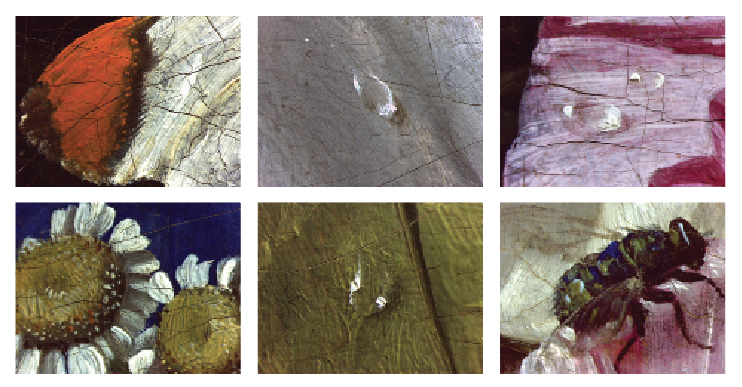
Exquisite in its highly polished finish and attention to detail, Flowers in a Vase with Two Doves is meticulously painted and beautifully preserved, making its examination both enjoyable and an important opportunity to see a work of art as intended by the artist. Lepage has been described as a methodical and slow painter, and it has been suggested that it took him four years to complete this work. At first glance, the surface appears smooth and highly refined, but when observed under magnification each meticulous brushstroke becomes evident, revealing a surprisingly free and painterly technique.
Droplets of water, for example, are expertly applied to petals and leaves to create a convincing optical effect. These droplets, when observed under magnification, reveal a somewhat abbreviated painting approach.
Lepage also used his brush to quite literally add texture, heightening the illusion of tactile effects. Tiny details reveal the use of linear and directive brushstrokes in dialogue with such small highlights as the textured dots found along the butterfly’s wing and at the center of the chamomile flowers.
Microscopic examination of works of art often reveals important and interesting perspectives not immediately visible to the naked eye. This type of study allows conservators to better care for each work of art, giving a fundamental look into an artist’s working techniques.
—Laura Hartman is the Associate Conservator at the DMA.