Archive Page 2


Nature and the Machine: Biocentrism in El Lissitzky’s Kestner Proun

The early 20th century was a time of accelerated transformation across fields, not unlike the present, and many viewed it as a time of new beginnings, not just politically but in technology, science, and the arts. Tumultuous change occurred with the rapid industrialization and mechanization of labor affecting, in turn, economics, science, and culture. This change also caused a growing philosophical division between nature and the machine to materialize; however, many artists, including Russian avant-garde artist El Lissitzky, saw an intrinsic connection between the two.
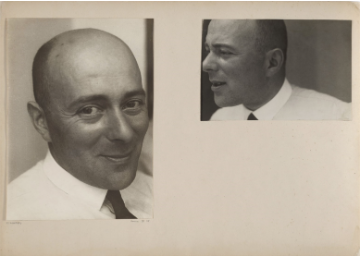
Image 1. El Lissitzky (1890–1941), Dessau, 1930/1932. Josef Albers. Gelatin silver prints mounted to board. Museum of Modern Art, New York.  

El Lissitzky (1890–1941) is one of the most influential and experimental Russian avant-garde artists of the early 20th century. His work as a designer, architect, photographer, and typographer explored the wider implications of the utility of art in everyday life. Within his extensive canon, Lissitzky’s most well known work is his Proun series, produced between 1919 and 1926. “Proun,” a term he invented that stands for the “project for the affirmation of the new,” is an amalgamation of visual elements from Suprematism, Constructivism, Futurism, and Cubism. An untiled plate from a collection of lithographs titled The First Kestner Portfolio (1923) [Image 2] is an example of this series and is currently on view in the DMA’s exhibition Movement: The Legacy of Kineticism. Abstract geometric forms weightlessly float within an altered perception of reality. Within the white space of infinity, a skeletal-like figure made up of crossed diagonals is strikingly architectural. Lissitzky’s work is often composed of a few neutral colors, reflecting a dynamic tension between two- and three-dimensional forms within the same space. Lissitzky viewed the Prouns as “the interchange station between painting and architecture,” which “goes beyond painting and the artists on the one hand and machine and the engineer on the other, and advances to the construction of space . . . [creating] a new, many faceted unity.”1 These works force the viewer to question their perception of reality, space, and time by processing multiple perspectives simultaneously.
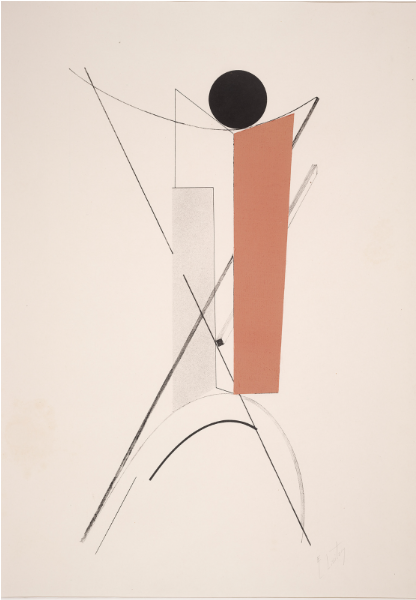
Image 2. First Kestner Portfolio Proun, 1923. El Lissitzky. Color lithograph. Dallas Museum of Art, Foundation for the Arts Collection, gift of Mrs. James H. Clark, 1991.359.8.FA. © Artists Rights Society (ARS), New York / VG Bild-Kunst, Bonn.

In 1923 there was a distinct change in the non-objective painting practices of Lissitzky, the result of which can be seen in another untitled lithograph within the Kestner Portfolio (1923) [Image 3]. Embracing the technological advancements of industrial mechanization, artists explored the connection between nature and the machine, and the possibilities of art within this relation. Lissitzky explored newfound ideas wherein nature and technology were interconnected, and the dialogue between the mechanical and organic is present in the Kestner Proun’s elemental form.
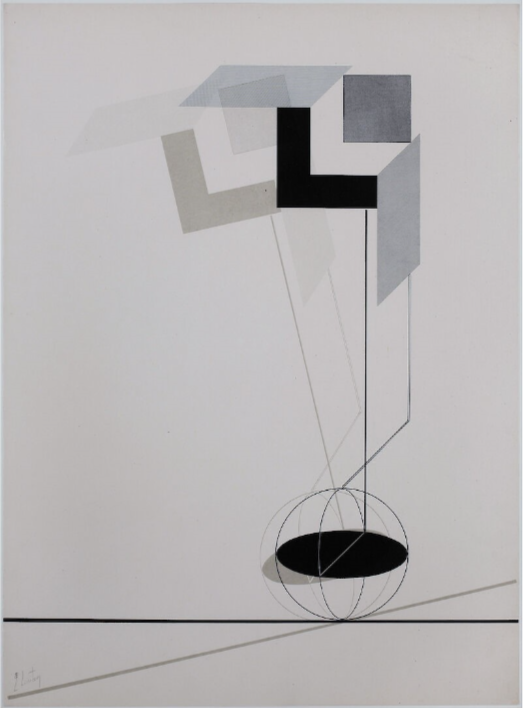
Image 3. Kestnermappe Proun. The First Kestner Portfolio, 1923. El Lissitzky. Color lithograph. Dallas Museum of Art, Foundation for the Arts Collection, gift of Mrs. James H. Clark, 1991.359.6.FA. © Artists Rights Society (ARS), New York / VG Bild-Kunst, Bonn. 

Lissitzky described the Kestner Proun as a “Schwingungskorper,” or oscillating body emphasizing its dynamic functionality. To create the illusion of movement within the Kestner Proun, Lissitzky distilled implied movement via a subtle use of diagonal lines, the layering of transparent elements, repetition of form, and organic spheres. Though simple in its building blocks, the components are interacting on a holistic level. This complex system reverberates a kinetic energy as Lissitzky captures a frozen temporal moment.

Lissitzky’s desire to construct forms through systems that are both mechanical and organic was inspired by the groundbreaking work of Austro-Hungarian microbiologist and popular science writer Raoul Heinrich Francé. Francé coined the word biotechnic, defining it as “the study of living and life-like systems, with the goal of discovering new principles, techniques and processes to be applied to man-made technology.”2 This methodology would later be called bionics. By the mid-1920s, scientists and laypeople alike read Francé’s writings on plants and soil microbiology, incorporating biocentrism into their own work. In addition to Lissitzky, Bauhaus founder Walter Gropius, Laszlo Maholy-Nagy, and Ludwig Mies van der Rohe also read Francé. Lissitzky’s letters reveal he contacted Francé in spring 1924, writing, “Thank you for Francé’s address. I will write to him when Nasci is ready and when I have read Bios [Francé’s book].”3[Image 4]
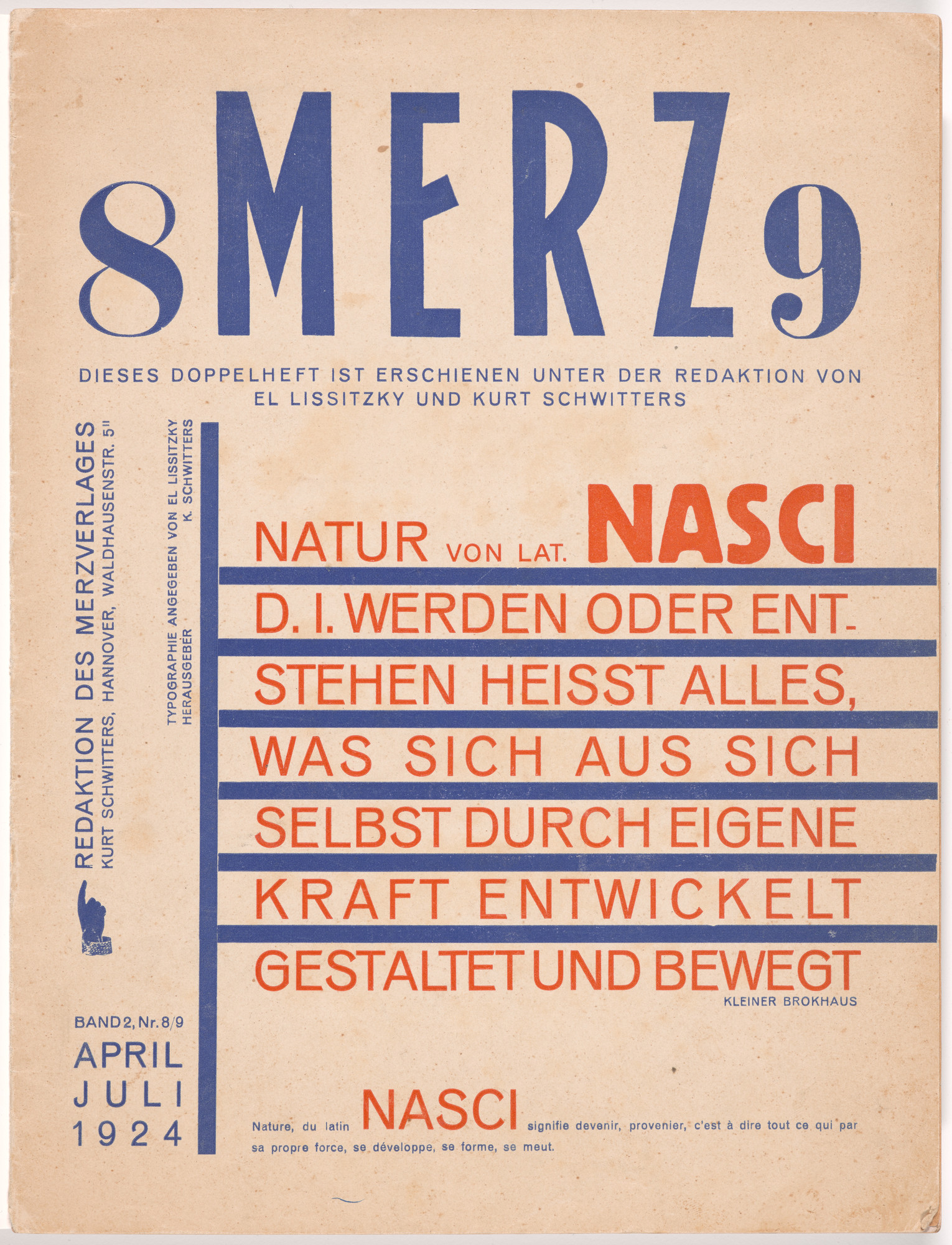
Image 4. El Lissitzky, Kurt Schwitters. Nasci. Mertz 8/9, April–July 1924, 1 vol.:ill.,:31 cm. Redaktion des Merzverlages, Kurt Schwitters. Hannover. Digitally accessed 2022. Yale University Library digital collection.  

Directly influenced by Francé, Lissitzky denounced the machine in the summer 1924 publication of Nasci in the journal Mertz, which he co-edited with Dada artist Kurt Schwitters. The word nasci translates to “nature.” Lissitzky energetically argued in Nasci against claims that the machine had surpassed nature, suggesting by contrast that the machine was, in essence, nature itself because natural organisms, namely humans, made them. [Image 5] To prove this, Lissitzky curated a portfolio of new artworks that reflect Francé’s form-making philosophy, including his own Kestnermappe Proun (1923).
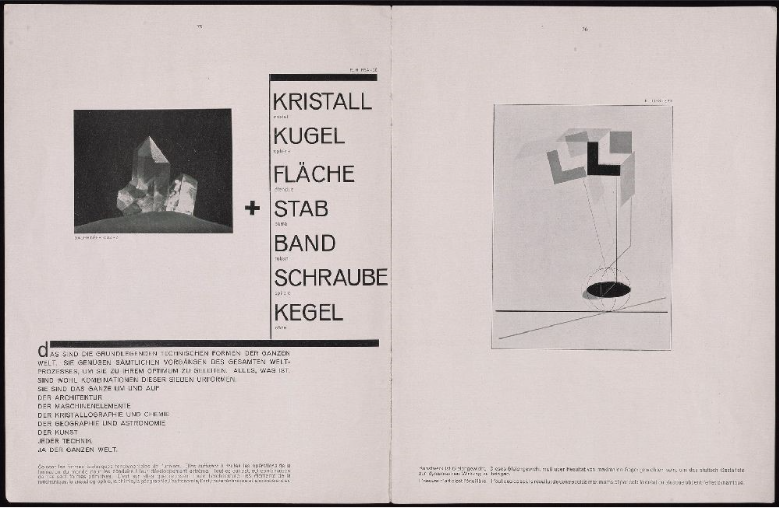
Image 5. El Lissitzky, Kurt Schwitters. Nasci. Mer 8/9, April–July 1924, 1 vol.:ill.,:31 cm. Redaktion des Merzverlages, Kurt Schwitters, Hannover. Digitally accessed 2022. Yale University Library digital collection.  

This clear declaration of the Kestner Proun as an example of biotechnical art strengthens the connection between Lissitzky’s bio-constructivist art with Francé’s concept of biotechnik. The elements within Kestner Proun, though simple in its building blocks, are interacting on a complex yet holistic level as they dynamically cross the white space of infinity. Creating a fully connected bio-mechanical system. The Proun now reflected a “frozen instantaneous picture of process, thus a work is a stopping-place on the road of becoming and not the fixed goal.”4 Lissitzky reconceptualized the creative process as an artistic machine reflecting nature as self-generating, embodying the evolutionary forces that proliferate organic forms. Here Lissitzky merges art, science, and design to create the unique collectivity that is biocentrism.

[1] Lissitzky-Küppers, Sophie. El Lissitzky: Life, Letters, Texts. Thames and Hudson Ltd, London. 1968, 347. 

[2] Roth, Rene Romain. Raoul H. Francé and the Doctrine of Life. AuthorHouse, 2000.  

[3]Lissitzky-Küppers, El Lissitzky: Life, Letters, Texts, 47.  

[4] Lissitzky-Küppers, El Lissitzky: Life, Letters, Texts, 351.

Ashley McKinney is the Edith O’Donnell Institute of Art History Research Assistant for Indigenous American Art at the DMA
Past, Present, Future: Ha Ilè Honors Indigenous Art 

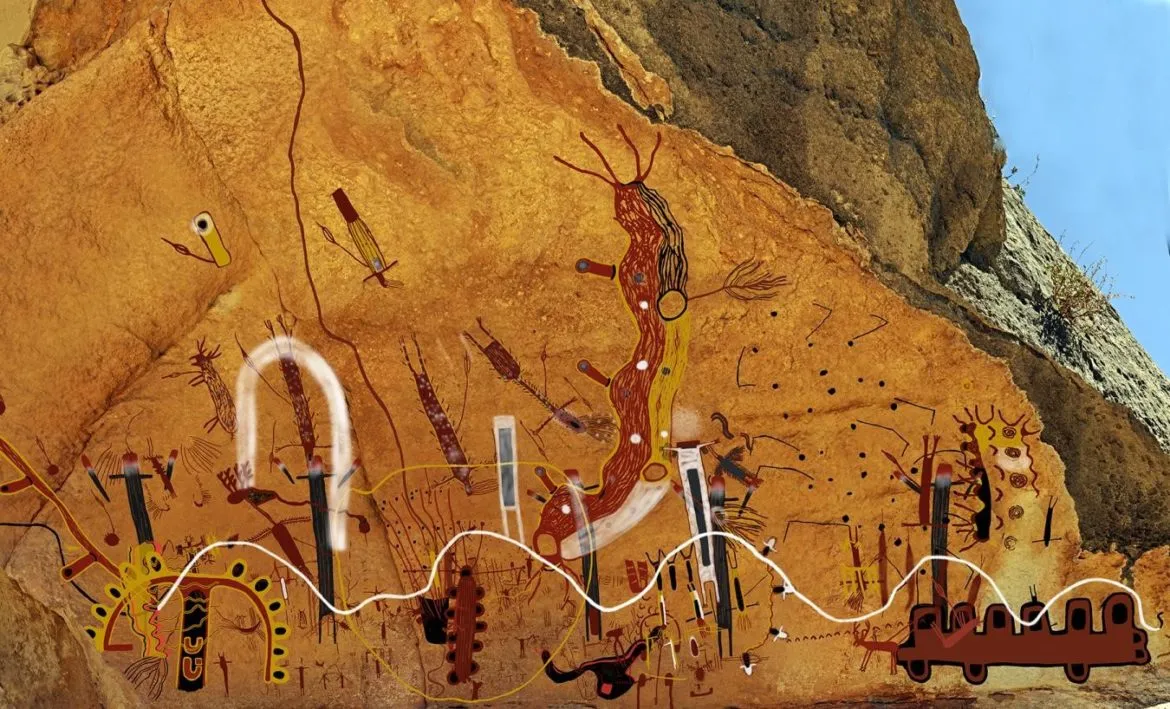
Artists Casey Koyczan and Eric Wagliardo each learned about rock art as many of us do—as a child or young adult in school, or out of an abundance of curiosity about the past, archaeology, or ancient art. But Koyczan, a Dene interdisciplinary artist from Yellowknife, Canada, says, “[I]t wasn’t until adulthood that I was able to experience them in person and fully realize their importance and spiritual meaning.” Also called petroglyphs (etched or pecked images) or pictographs (painted images), rock art has been created for thousands of years by people around the globe, from Australia to South Africa to Europe. Take, for example, the famous cave paintings at Lascaux and Chauvet, France, which include stunning depictions of horses, mammoths, bulls, and handprints. These are approximately 22,000 and 36,000 years old, respectively. Globally, the representations of humans, living and extinct animals, mythical beings, and abstract images portrayed in rock art can be an important part of the spiritual inheritance and identities of contemporary Indigenous peoples. 

Across North America, notable rock art sites were produced by ancestral Indigenous inhabitants at locations like Jeffers Petroglyphs in Minnesota (8,000 images in one place!); Newspaper Rock, Canyonlands National Park, Utah; and Petroglyphs Provincial Park, Vancouver Island, Canada. However, while researching this project, Texas-based artist Wagliardo was surprised to learn that petroglyphs and pictographs exist right here in Texas—a fact that might astonish many Texans. Pictographs at Hueco Tanks State Park east of El Paso and Seminole Canyon State Park near Comstock are among the most well known sites in the Lone Star State.  

Overlaid digital rendering on an image of the 4,000-year-old White Shaman Mural in the Lower Pecos Canyonlands of southwest Texas, thanks to Jessica Lee Hamlin, Executive Director of Shumla, and her colleagues. Credit: Courtesy Jessica Lee Hamlin. 
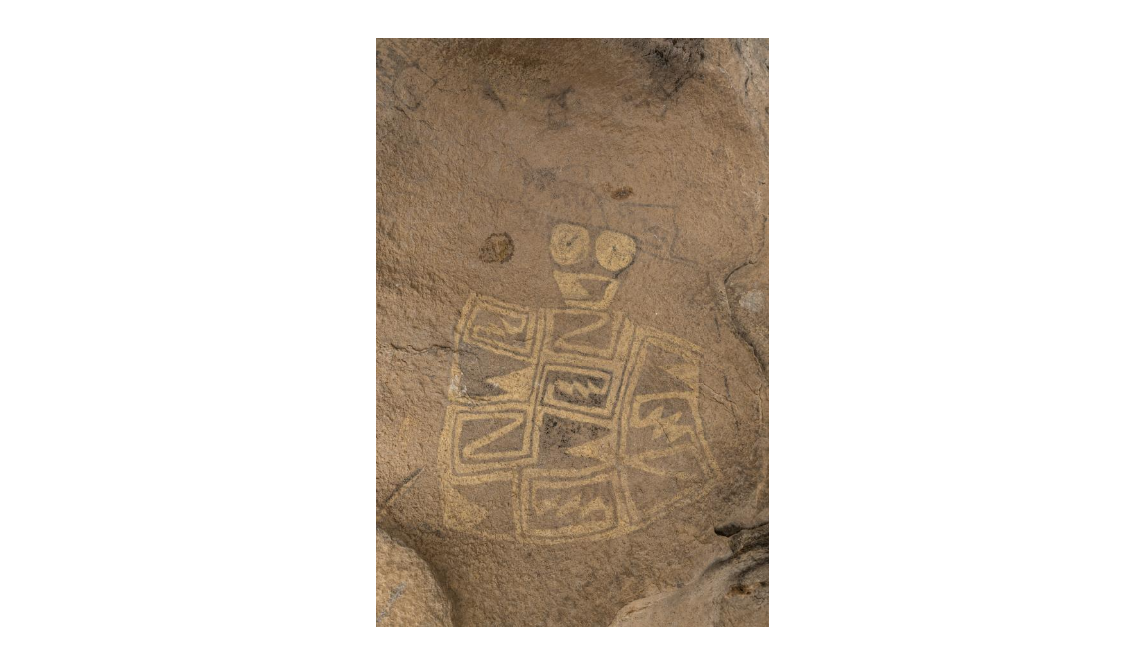
Close up of a petroglyph at Hueco Tanks State Historic Site near El Paso, Texas. Courtesy Library of Congress, Prints & Photographs Division, photograph by Carol M. Highsmith [LC-DIG-highsm-27441]. 

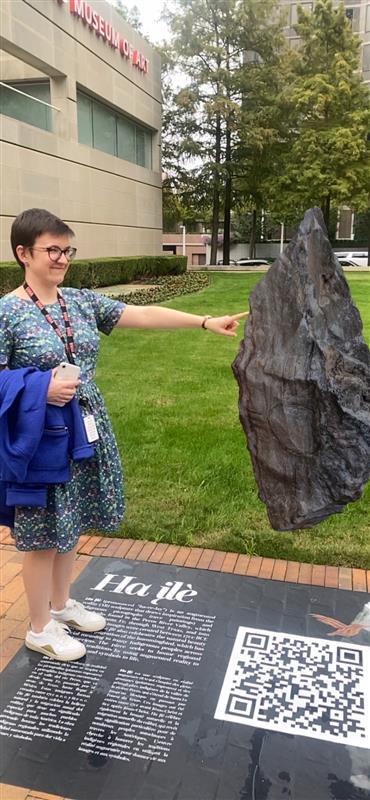
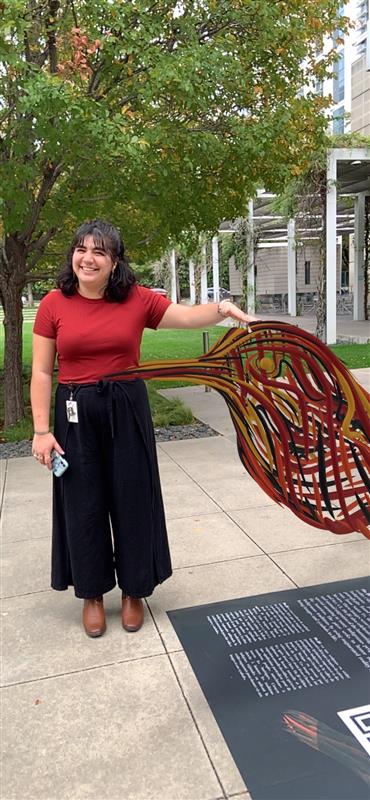
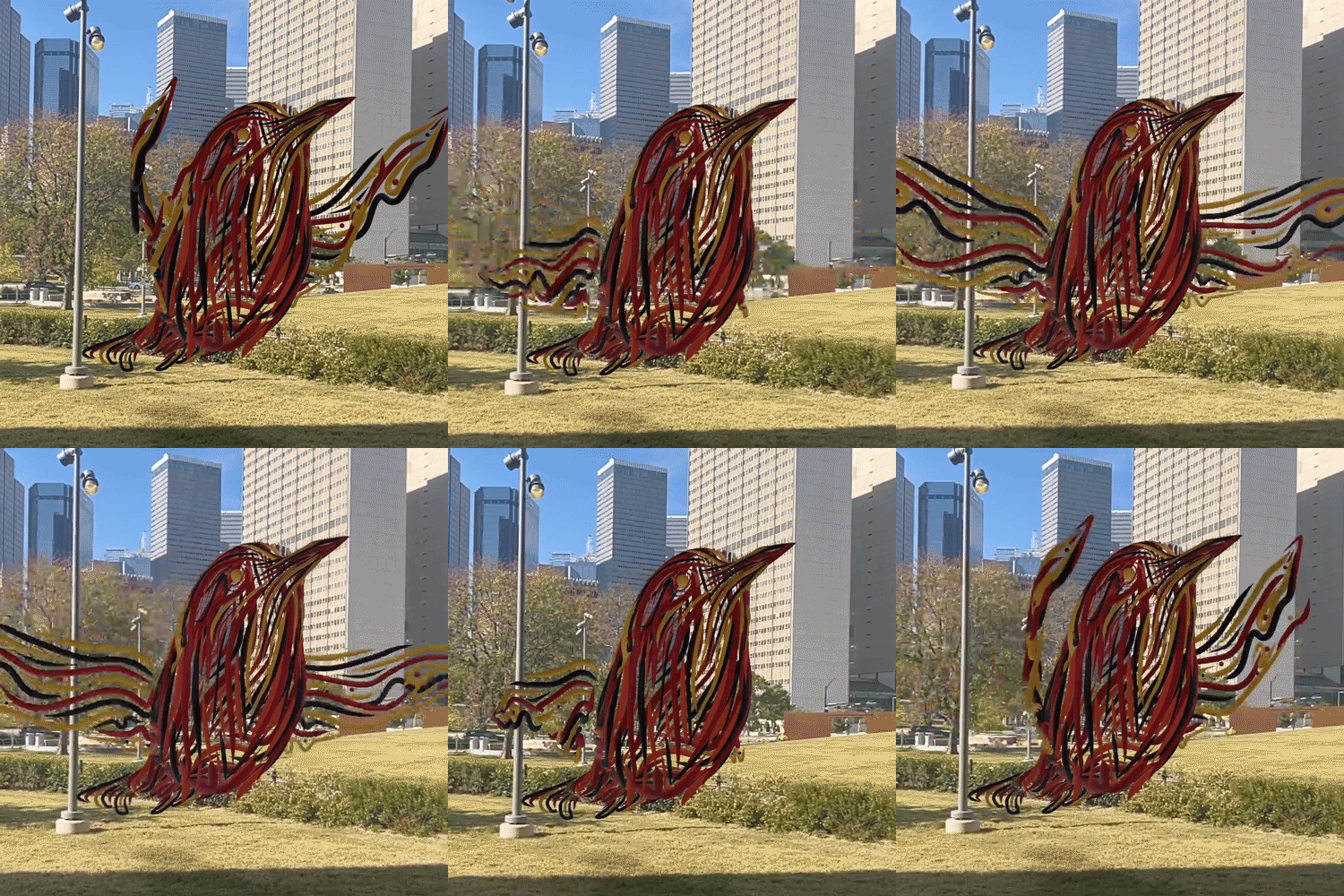
Ha Ilè (pronounced ha-ee-lay) is an augmented reality (AR) rock art installation created by Koyczan and Wagliardo. AR allows semi-realistic experiences of an object or environment that can be interacted with in a seemingly real or physical way. By scanning a QR code, DMA visitors can take part in a unique Ha Ilè experience at two building entrances—pictographs on rock at the Ross Avenue entrance, and a charismatic hummingbird at the entrance adjacent to Klyde Warren Park. Ha Ilè can also be experienced at other locations, including the AT&T Discovery District.  

Ellie Canning, McDermott Intern for Latin American Art, interacts with Ha Ilè Onyx at the DMA’s Ross Avenue Entrance. 

Representing one of the world’s oldest art forms using cutting-edge technology is an innovative approach—Koyczan and Wagliardo generated the rock forms through 3D scanning and produced the pictographs through artificial intelligence (AI) to portray rock art from North America and across the world; and, finally, the hummingbird is a computer-generated simulation of a three-dimensional image. Hummingbird motifs have been depicted throughout time across the Americas; Koyczan and Wagliardo discovered while working on Ha Ilè that they both cherish the beautiful and sometimes fierce migratory bird.  

Larger than life, the Ha Ilè hummingbird hovers near Curatorial Assistant Alicia Sandoval. 

Ha Ilè means future and past tense in the Dene language. Koyczan proposes that this work has the potential to exist for as long as the petroglyphs and pictographs that inspired it, and he feels “it relates heavily to Indigenous Futurisms and how humanity will view and experience artwork in the future.” Indigenous Futurisms is defined as a movement consisting of art, literature, and other media that express Indigenous perspectives of the future, past, and present, typically in the context of science fiction. Expressing a similar sentiment, Wagliardo is hopeful that “these pieces help people reconnect with the past and imagine an optimistic future where we as a society connect in a deeper, more meaningful way.”  

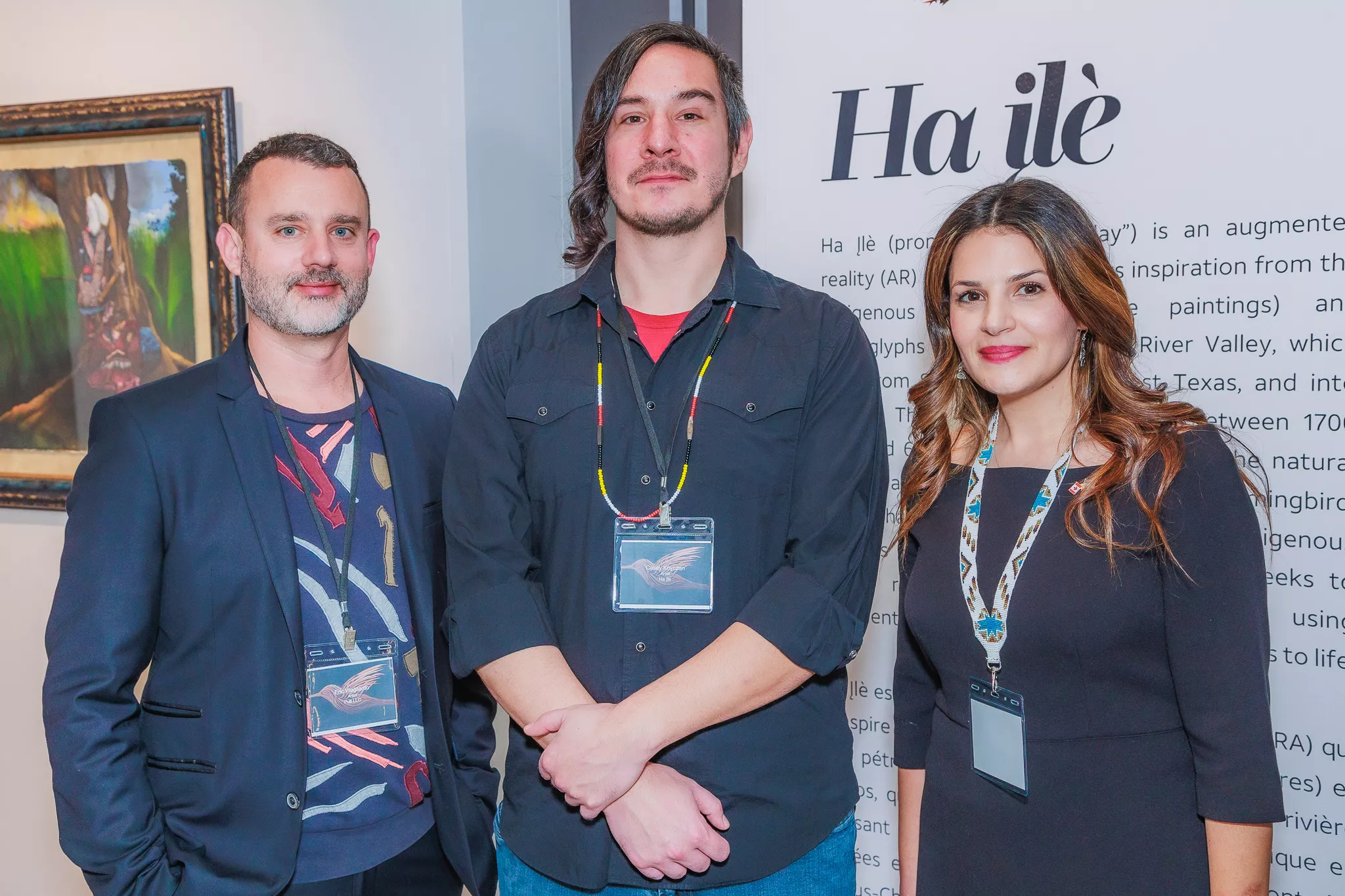
Individuals pictured (left to right): Eric Wagliardo, artist (USA) Casey Koyczan, artist (Canada), and Noëlla De Maina, Consul, Consulate General of Canada in Dallas at the Ha Ilè Launch Reception in honor of Native American Heritage Month in the AT&T Discovery District Media Lobby. Photo by Albert Y. from Ellum Studios. Courtesy of the Consulate General of Canada in Dallas, TX. 

Ha Ilè is on view at the DMA through January 31, 2023. To learn more about Texas rock art, please visit the Shumla Archaeological Research & Education Center https://shumla.org/ or the Texas State Historical Association https://www.tshaonline.org/handbook/entries/indian-rock-art

Ha Ile is courtesy of the Government of Canada; the Consulate General of Canada, Dallas; the City of Dallas, Office of Arts and Culture; and the Dallas Museum of Art. The Dallas Museum of Art is supported, in part, by the generosity of DMA Members and donors, the National Endowment for the Arts, the Texas Commission on the Arts, and the citizens of Dallas through the City of Dallas Office of Arts and Culture.  

Dr. Michelle Rich is The Ellen and Harry S. Parker III Assistant Curator of Indigenous American Art at the DMA.

A Conversation with Rashid Johnson  

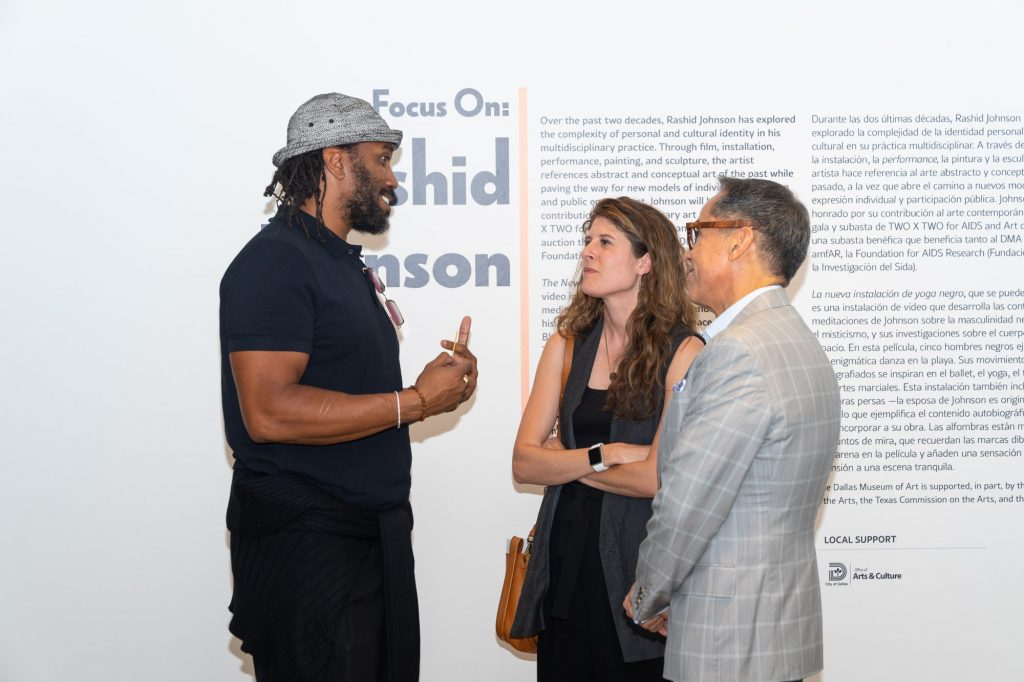
Pictured Left to Right: Artist Rashid Johnson; Dr. Anna Katherine Brodbeck, Hoffman Family Senior Curator of Contemporary Art; Dr. Agustín Arteaga, The Eugene McDermott Director

Rashid Johnson, this year’s TWO x TWO for AIDS and Art 2022 honoree and renowned multidisciplinary artist, gifted the DMA with his multimedia work, The New Black Yoga Installation. Featuring five men performing an enigmatic dance of ballet, yoga, tai chi and martial arts across a sun-soaked beach, the work explores the complexity of personal and cultural identity. Johnson’s ongoing meditations on black masculinity and mysticism are reflected through their choreographed dance movements. Rugs branded with crosshairs, a symbol that is etched into the sand in the video, are situated throughout the gallery, projecting the film’s combined sense of peace and foreboding into physical space.  

Below is an excerpt from a transcript of a conversation between Rashid Johnson and the DMA’s Hoffman Family Senior Curator of Contemporary Art, Dr. Anna Katherine Brodbeck, at The Warehouse in Dallas, Texas. This dialogue has been edited for length and clarity. 

Katherine: 

When I saw you yesterday at the Museum, you were saying it’s been probably eight or nine years since you’ve really interacted with the piece and seen it in person. I’m so happy to have this work on view and to discuss it with you for the first time because it’s a very layered and enigmatic work. Perhaps you could speak a little bit on how this work came about in your practice. 

Rashid: 

This film, The New Black Yoga, was born of a time when I was living with my wife, Sheree, in Berlin. And it was the first time I was living internationally. I was working on an exhibition and doing a residency. But, as anyone who’s familiar with my work knows about me, I’m an anxious person. And I was asking myself, how do I start to deal with this anxiety? My doctor said I should go do yoga. Since I was in Germany, all the yoga classes were in German. Apparently, that’s just how it works, right? [Laughs] I thought I would just follow what the other people did. 

And, apparently, that’s just not how a real yoga practice is formed [laughs]. And so, because of that my sense is to do something absurd and continue to follow a path. I found a male performer and made a film, and I called it Black Yoga. Now, this man knew nothing about yoga—I, too, knew nothing about yoga [laughs]—but he was interested in ballet. I had an 8mm camera and I said, “Let’s do it, let’s make up black yoga.” I just started giving him moves to do and we made this film called Black Yoga. And by expanding on that was born this film, which is executed using five characters called The New Black Yoga and shot on 16mm film. 

It’s this fun way to kind of revisit this idea of healing, or the creation of healing, using your own creative sensibility to invent a way to navigate complicated circumstances. And that’s how this film was born. That’s its origin story.  

Katherine: 

Thank you for that. I want to talk a little bit about the healing aspect of the piece. The installation that we have at the DMA has a series of branded rugs on the floor. Then you look at the film—it is a very serene film of beautiful movement on a beautiful beach at dusk—and there also appears to be crosshairs that are written into the sand. Then you notice that there are enigmatic runes that give a sense of mysticism but also of foreboding because it does appear that there are these crosshairs in the rugs. I wondered if you could talk a little bit about the kind of symbolism that you’re dealing with.  

Rashid: 

You know, throughout my practice I’ve built an iconography, or a series of symbols and signs, that reference either personal or collective experience—for example, the rugs through branding, but also on the beach, a kind of simple technique of drawing in the sand. And one that you mentioned, Katherine, is the crosshairs.  

I’m a child of the eighties. The day before yesterday, I went to see a play by an incredible playwright and screenwriter named Susan Laurie Parks—she happened to also write the script for a film that I made. But I was sitting behind Spike Lee. I love Spike Lee. I’m just a huge, huge fan of Spike Lee. 

I have to say that, early on, I was quite obsessed with his films. One of his early films is a film many of you have probably seen called Do the Right Thing. I was quite young when it came out. But, there’s a song in it by a band called Public Enemy, and the song is called Fight the Power. I fell in love with Public Enemy. I thought that they were so brilliant. It was this radical discourse but it was also urban music and it was philosophy. Chuck D, who was the lead singer for the band, was this activist and this really brilliant character. On the cover of their albums, they often had this kind of crosshair—a gun sight. I remember asking myself over the course of looking at that album, listening to the music, and seeing how they employed the symbol—who was that sight for? Was the gun being pointed at them? Were they in the crosshairs or were they projecting the crosshairs onto whoever they were battling against? I’ve borrowed this symbol a lot in my work through branding. 

Of course, Katherine, you mentioned there’s several rugs that lay on the floor. Well, my wife is Iranian and I always joke that my mother-in-law and I don’t have a ton in common. But she likes Persian rugs and I like Persian rugs. So I started using these things in my work—almost as a way of reflecting on this relationship that I was building with her, and these cultural signifiers and the possibility that cultural encampment, instincts, and signifiers can become global and employed in different ways and borrowed, sanctioned, and given agency in different languages. So I coated the floor in these Persian rugs and then I branded them with different symbols. I’m excited about how they become both legible and potentially mysterious, simultaneously.  

Focus On: Rashid Johnson 

The Dallas Museum of Art invites visitors to step into the artwork of renowned multidisciplinary artist Rashid Johnson in Focus On: Rashid Johnson, an installation showcasing Johnson’s multimedia work The New Black Yoga Installation. Gifted to the DMA by the artist in 2022, this installation combines a video projection and branded Persian rugs to create an experience that is, at once, intense and intimate. The film features five men performing an enigmatic dance of ballet, yoga, tai chi, and martial arts across a sun-soaked beach, exploring the complexity of personal and cultural identity. Their choreographed movements reflect Johnson’s ongoing meditations on Black masculinity and mysticism, as well as his investigations of the body in space. Rugs branded with crosshairs, a symbol that is etched into the sand in the video, are situated throughout the gallery, projecting the film’s combined sense of peace and foreboding into physical space. 

About Rashid Johnson 

Rashid Johnson’s practice encompasses a wide range of media, including sculpture, painting, drawing, filmmaking, and installation. Via a rich visual lexicon of coded symbolism and autobiographical materials, Johnson’s artwork conducts searing meditations on race and class, in addition to examining individual and shared cultural identities. The artist, who was born in Chicago in 1977, is perhaps best known for translating cultural experiences, most commonly that of Black Americans, through his unique visual language. Johnson was recognized as the 2022 honoree for his contributions to contemporary art at the 2022 TWO x TWO for AIDS and Art Gala and Auction, a charity auction that benefits both the DMA and amfAR, the Foundation for AIDS Research. 

Edited by Trey Burns, Multimedia Producer, and Ellee McMeans, Communications Manager  

Photos Trey Burns, Multimedia Producer

Under the Influence: What Inspired Picasso 

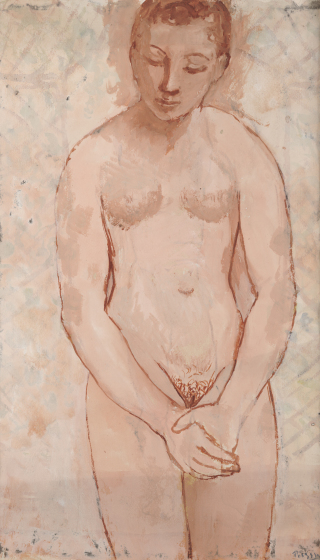
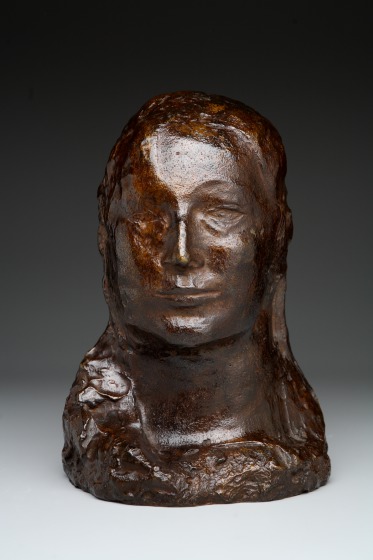
Pablo Picasso’s first financial success came in spring 1906, when he sold the entire inventory of his studio to art dealer Ambroise Vollard for the then large sum of 2,000 francs. This allowed him and his partner, Fernande Olivier, to travel to Barcelona and from there to the Pyrenean village of Gósol. In Spain, Picasso was a different person, Olivier remembered: “[A]s soon as he returned to his native Spain, and especially to its countryside, he was perfused with its calm and serenity. This made his works lighter, airier, less agonized.”1 It is not surprising then that in the almost three months the couple spent in Gósol, Picasso produced more than 300 paintings, drawings, and sculptures with Olivier as his main model. A significant change in his style announced itself during these months, influenced in part by the spare landscape and the region’s unique colors, but also by two exhibitions he had recently seen: the Jean-Auguste-Dominique Ingres retrospective at the 1905 Salon d’Automne, and a display of Iberian art at the Louvre from recent excavations in Andalusia. 

Picasso, Nude with Folded Hands, 1906. Gouache on paper, Dallas Museum of Art, The Eugene and Margaret McDermott Art Fund, Inc., bequest of Mrs. Eugene McDermott, 2019.67.19.McD
Picasso, Head of a Woman, Modeled 1905–1906, cast 1960. Bronze, Dallas Museum of Art, The Eugene and Margaret McDermott Art Fund, Inc., bequest of Mrs. Eugene McDermott, © Estate of Pablo Picasso / Artists Rights Society (ARS), New York, 2019.67.18.McD

A diamond pattern and the contours of a figure bleed through the thin paint of the pale pink background in Nude with Folded Hands. Only Olivier’s own ocher outlines set her apart from the nondescript, empty environment in which she is standing, giving the painting the effect of a bas-relief. Her voluptuous body seems awkwardly twisted at the waist and shoulders, her head is slightly bent down, and her almond-shaped eyes are closed. In its rigidity, the face evokes Iberian art, as well as a sculpture bust of Olivier, Head of a Woman, that Picasso made in the same year. Standing in front of her beholder, she is timidly folding her hands below her pudenda; however, her modesty is a false one, her hands revealing more than they hide, guiding the viewers gaze. Olivier often posed in the nude for Picasso, and while the young artist frequently made small drawings and caricatures of his sexual escapades, the studies and paintings of Olivier from 1906 stand out through their intimate eroticism, absent in his earlier works and in the following years. 

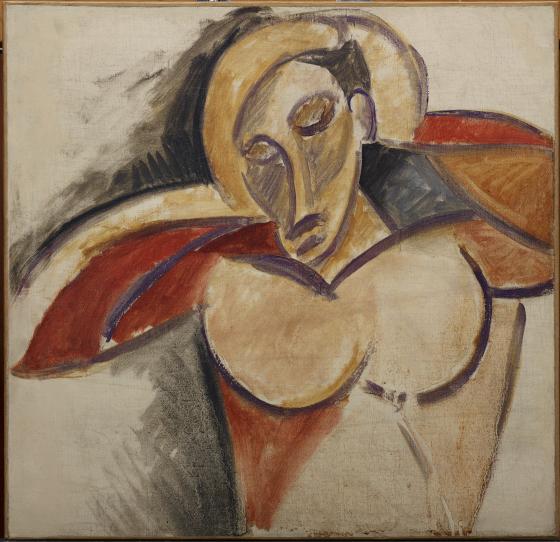
Picasso, Bust, 1907–1908. Oil on canvas, Dallas Museum of Art, Foundation for the Arts Collection, gift of Joshua L. Logan, Loula D. Lasker, Ruth and Nathan Cummings Art Foundation, Mr. and Mrs. Edward S. Marcus, Sarah Dorsey Hudson, Mrs. Alfred L. Bromberg, Henry Jacobus and an anonymous donor, by exchange, © Estate of Pablo Picasso / Artists Rights Society (ARS), New York, 1987.399.FA
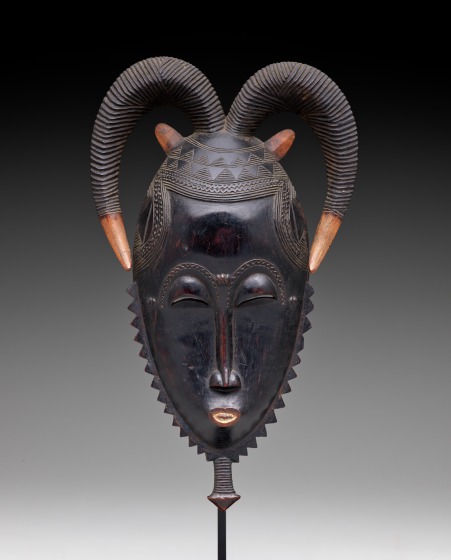
Yaure peoples, Je face mask, c. 1930-1952. Wood and pigment, Dallas Museum of Art, The Eugene and Margaret McDermott Art Fund, Inc., Image courtesy Dallas Museum of Art, 2018.7.McD

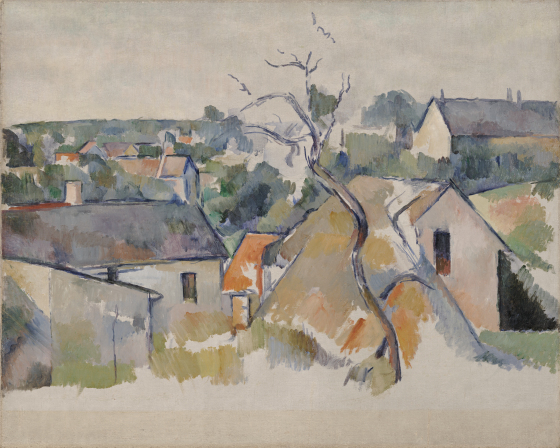
Bust, probably painted in the winter of 1907–08, looks fundamentally different from Nude with Folded Hands, and much had happened in the meantime. In spring or summer 1907, Picasso visited the Indigenous art and culture collection at the Musée du Trocadéro in Paris, which, though dusty and deserted, opened his eyes to a new influence: art from outside the Western canon, originating from European colonies in Africa and Oceania, leading him to finish his monumental painting Les Demoiselles d’Avignon (1907, MoMA). Finally, at the Salon d’Automne, he saw the retrospective dedicated to Paul Cézanne. These exhibitions greatly influenced Picasso’s artistic development and his quest for an escape from the confines of illusionistic art, established during the Renaissance. Picasso further explored the pictorial means of simplification, thus the muscular woman in Bust, lifting her arms above her head, pulling her hair into a bun, is reduced to outlines and shading that was achieved through isolated application of color and expressive brushstrokes, rather than through the traditional method of gradients from white to black. Her face, devoid of emotion, echoes the masks Picasso saw at the Trocadéro, which might have looked like the Je face mask from the Yaure peoples. The fragmented body is reduced to basic geometric shapes, with the contours opening so that the background and the foreground merged, as Picasso had observed in Cézanne’s work.  

Paul Cézanne, The Rooftops, About 1898. Oil on canvas, Dallas Museum of Art,
The Eugene and Margaret McDermott Art Fund, Inc., bequest of Mrs. Eugene McDermott, 2019.67.6.McD

Despite being celebrated as an inventor, Picasso never worked in an artistic vacuum. Trying to find a new language from 1906 onward, he was especially receptive to influences from outside the traditional Western canon, which makes these works compelling, even for the present-day beholder.  

[1] Fernande Olivier, Picasso und seine Freunde. Erinnerungen aus den Jahren 1905-1913, 1989, p. X. Translated from German by the author. 

Christine Burger, Curatorial Research Assistant for European Art 

One Way of Looking at a Mola

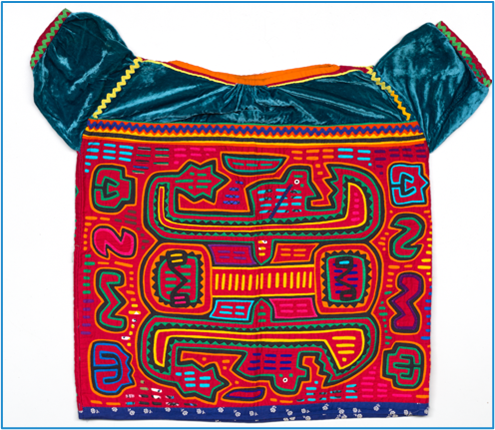
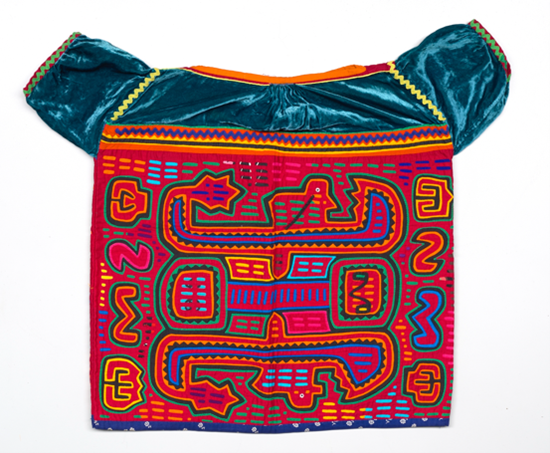
The Guna people live in an autonomous region of coastal Panama. The molaa blouse with appliqué panels on the front and back—is one of the most recognizable Guna art forms.  Guna women devote hours daily to making molas together while they converse about their craft. This social context of production reinforces a shared set of aesthetic principles, including symmetry, contrast, and evenly distributed detail.[1] Well-made molas are admired and copied by others.

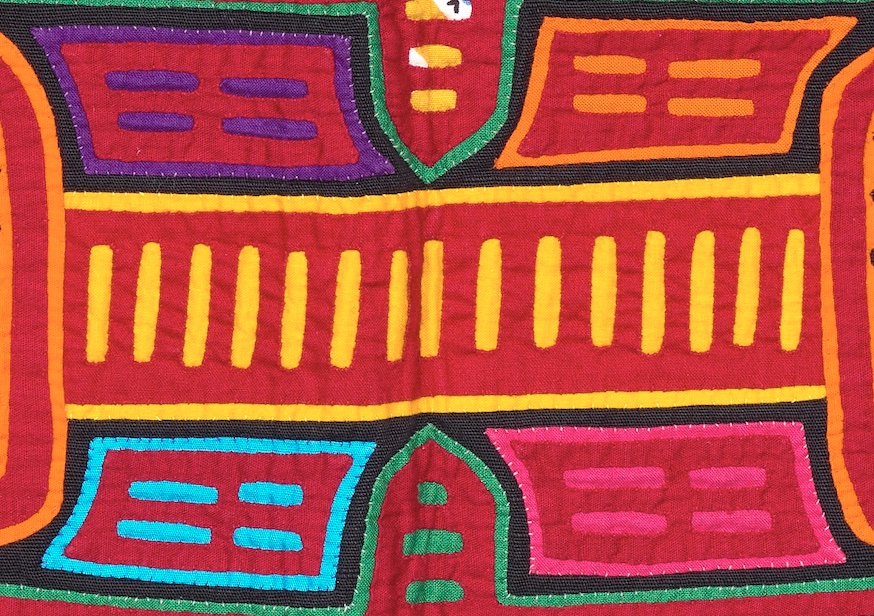
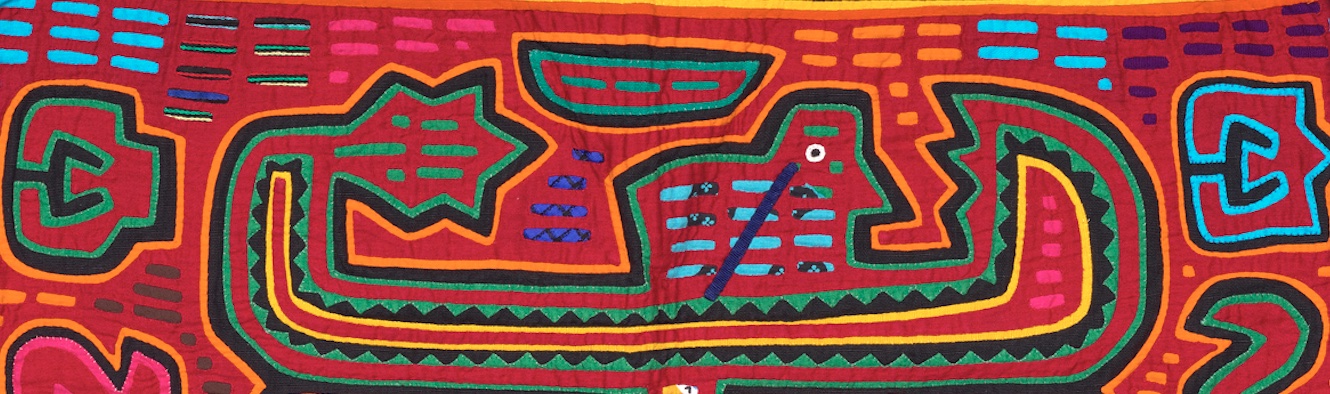
This brightly colored mola features birdlike figures rowing boats. Velvety sleeves and rick-rack trim elevate the sumptuous detail of the appliqué panels. There are many ways—cultural, historical, and economic—to approach these intricate works. For now, let’s look closer at this mola to understand its key aesthetic attributes.

Symmetry: Imagine drawing a line from the center of one side of either panel straight across to the other side. The top half and the bottom half of the panel would mirror each other—with minor variations on either side. You would discover the same effect if you drew a line down the center of the blouse. This mola is symmetrical in quarters.

Duality: This blouse features near identical panels on the front and back. Guna women often make molas in pairs. This practice, along with the symmetry that governs individual panels, relates to the Guna belief that every living being has a double.[2] However, Guna women are not wedded to cosmology. They are artists who explore aesthetic convention and respond to market conditions. Women sometimes tear apart blouses to sell individual molas, thus interrupting the ability of their objects to reflect the cultural value of duality.

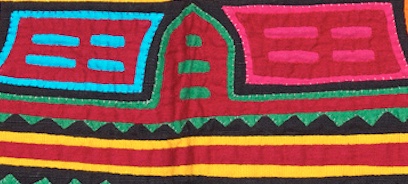
Stitches: Small, evenly spaced concealed stitches are also a hallmark of prized molas. While some stitches are visible in a close-up of this blouse, they are light in color, small, and evenly spaced and do not detract from the quality of the mola.

Contrast: Pay attention to the range of colors in this detail. Notice the red shapes over an area of blue and an area of green. Layers of bright contrasting colors articulate the shapes of this mola.

Filler motif: Guna women aim to create molas with little empty space. This technique leads to a cohesive composition while highlighting technical expertise. Guna artists have developed varieties of “filler motif”—small, simple repeated shapes—to cover spaces between main compositional elements. Filler motifs can be made from small circles, triangles, or, as we see here, slits called tas-tas.[3] The slits extend over the boats and figures to create an especially cohesive composition.

It can be tempting to interpret unattributed Indigenous art as a direct transmission of a unique—often exoticized— culture. While a cultural framework is key to interpreting Guna art forms, close looking reveals how women’s aesthetic choices also inform the production of molas.


[1] Mari Lyn Salvador  and Vernon Salvador, Yer dailege! Kuna women’s art. (Albuquerque, NM: Maxwell  Museum of Anthropology, University of New Mexico, 1978)

[2] Michel Perrin and Deke Dusinberre. Magnificent Molas: the Art of the Kuna Indians (Paris: Flammarion, 1999), 45.

[3] Diana Marks, Molas Dress, Identity, Culture ( Albuquerque: University of New Mexico Press, 2016)

Madeleine Aquilina, Michigan Summer Intern for Latin American Art, PhD Candidate in History of Art at University of Michigan


Archives

Categories