Archive Page 3


Behind-the-Scenes: The Making of Coastlines Soundscapes

Have you immersed yourself yet in the multi-sensory experience of Coastlines: Images of Land and Sea?  If not, let me tease you…

[youtube=http://www.youtube.com/watch?v=5MO-3rvalYU]

This is one of twelve individual sound designs created for works of art in the exhibition, and these individual sound designs represent only one layer of a three-part, synchronized sound installation. A global soundscape powered by two subwoofers is audible throughout the Coastlines exhibition and contains musical elements shaped by the natural sounds and rhythms of waves. Regional soundscapes emerge from ten ceiling-mounted speakers and respond to the thematic sections of the exhibition. The twelve local, or individual, soundscapes representing interpretations of selected works of art are delivered through Holosonics hyperdirectional speakers, which allow for a controlled design of the auditory space.  Now that I’ve geeked out on the technology of the sound installation, let me tell you a little more about the making of this sonic experience.

The Coastlines sound installation was created by graduate students and faculty in the Arts and Technology program at the University of Texas at Dallas, in collaboration with undergraduate students in the School of Information and Communication and Media Engineering at the Université du Sud Toulon-Var (USTV), in Toulon, France.  The project began in September 2009 with several planning meetings between UT Dallas and the Dallas Museum of Art focusing on exhibition themes and artworks, as well as technological possibilities. UT Dallas faculty and students presented a proof of concept demonstration in December 2009 for the multilayer sound design and use of hyperdirectional speakers. In January 2010, under the direction of UT Dallas professor Dr. Frank Dufour, students selected works of art in the Coastlines exhibition and began composing sonic interpretations for these works. Lead graduate students Michael Austin and Jason Barnett also began work on the conceptual and technical development of the overall multilayer sound design.
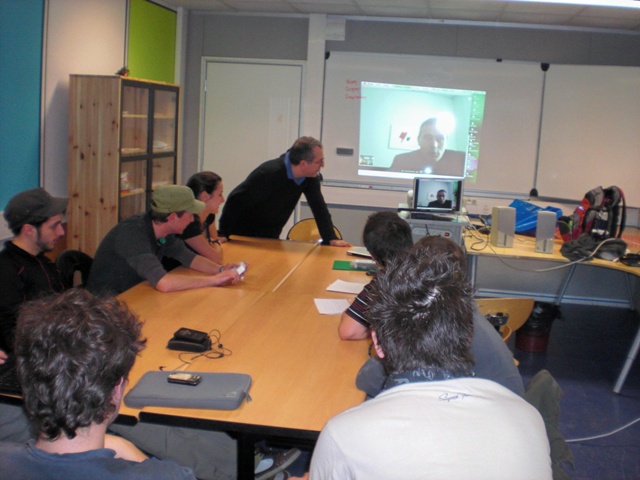
Professor Frank Dufour talks with French students via Skype.

Communications about the project between the creators occurred primarily through the Internet using Skype, a free web-based chat software, and a private social network that provided a forum for the exchange of ideas, images, and iterative sound designs.  The exchange was bilingual, encouraging each set of students to work through language barriers.  In addition, Michael Austin visited the USTV students in Toulon, France during project development to lead them in sound design workshops.  One of the workshops included collecting sounds from the harbor in Toulon, France.  Many of these were used in the individual sound designs created by students in Texas and France.
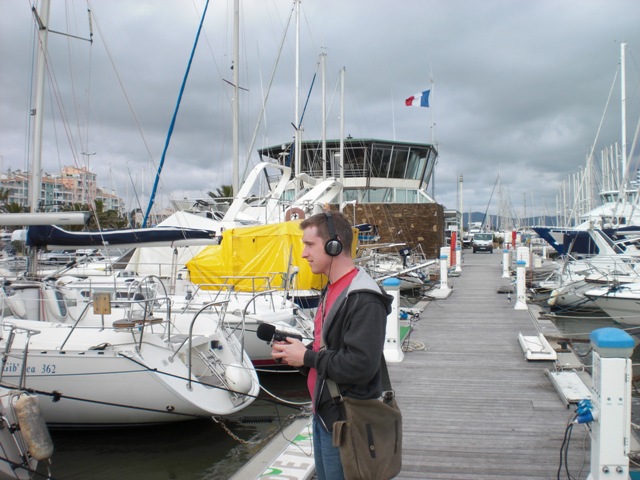
Michael collects sounds of the harbor in Toulon.
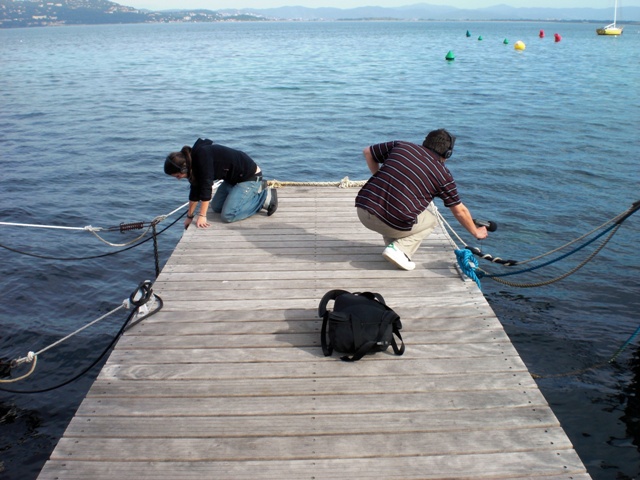
French students record the sound of water.

This project is an education initiative undertaken in part with the support of FRAME, the French Regional and American Museum Exchange. FRAME fosters exchanges between a group of American and French art museums committed to establishing long-term partnerships on common projects that make their respective resources available to a wider public. Several collaborating museums and universities involved with FRAME are focused on the relationship between music and art and support the work of young artists.

This Friday night at the Dallas Museum of Art Late Night you can support the work of young artists involved in the Coastlines sound design project.  Visit the exhibition, then stop into the Theater in the Center for Creative Connections at 8:30 p.m. to hear Dr. Dufour and students from UT Dallas share insights about the project and their process.

Nicole Stutzman
Director of Teaching Programs and Partnerships
Friday Photo…Uh, How About A Video?

It’s the end of a long week, and we all deserve a laugh.  I had the opportunity recently to revisit a series of video shorts that were created by a few oh-so-smart college students during a course led by my oh-so-smart colleague Molly Kysar.  I love these videos.  They are presented like commercials for a visit to the DMA and wonderfully represent our brand “Hundreds of Experiences.  Have one of your own!”   Enjoy the catchy tune and laugh hard.

[youtube=http://www.youtube.com/watch?v=oti97UrjaMQ]

Nicole Stutzman
Director of Teaching Programs and Partnerships
Charm City Conference Memoirs

So there I was nearly one week ago ending a week in Baltimore, Maryland by trekking through the galleries at the Walters Art Museum soaking up all the visual and mental goodness that the works of art would allow me.  Beautiful Barbizons.  This respite of art viewing was the perfect transition between the National Art Education Association (NAEA) Conference the week prior and another busy work week ahead of me.

Fortunately, several of my colleagues and I were able to attend the NAEA conference in Baltimore this year to share our work with others and learn from fellow educators in museums, schools, and universities.  It’s a great opportunity to reflect and recharge so that we can get back to doing that important work that we all do.

This year’s conference theme was Art Education and Social Justice.  Museum educators kicked off their exploration of this theme during a pre-conference session held on April 13.  Artist Joyce J. Scott, a native of Baltimore and a bit of spunky lady, entertained us with a keynote presentation of images and stories from her life and challenged us with the ideas in her art, which often confront head-on tough social issues.  She is an active member of her community and a teaching artist.  Joyce says she ‘teaches kids to be just with each other’, and she encourages us as museum educators to think about how museums are the perfect context for this kind of teaching and learning.  Think about all of the great issues that museums could address. In break-out sessions that followed the keynote, we heard from colleagues across the country who are actively working for change within their communities.  Art on Purpose and The Baltimore Museum of Art integrated exhibition artworks and ideas into experiential programs for children, homeless people, addicts, and immigrants.  In another session, educators from the Worcester Museum of Art questioned where social change fits into our day-to-day work and led a conversation about “Is Art Enough?”  How does social change fit into your world?  Can arts education impact social change?  What is the role of a museum?

At the conference, NAEA set up a studio for the presentation of current strategic planning initiatives for the organization.  Attendees were invited to participate in focus groups and also design-thinking exercises that contributed to a new vision for the association and perhaps, a re-envisioning of our field.  Other exciting announcements included a new study out about the impact of No Child Left Behind on arts education.  This nationwide study was initiated and compiled by F. Robert Sabol, PhD and is a must read!  Likewise, the NAEA Web site has information up about the National Assessment of Educational Progress (NAEP) and the Nation’s Arts Report Card.  My advocacy brain was on high alert by the end of the conference, and I came back to Dallas anxious to follow through on a few great ideas I heard at the conference about how to be a stronger advocate for the arts in my community.  The Philadelphia Museum of Art invites high level school district administrators and principals to hold meetings at the PMA.  In exchange for free meeting spaces in a beautiful art museum, PMA educators spend one hour with the group sharing about their work with students and teachers.  At The Museum of Contemporary Art, Los Angeles, educators are now working with parents to develop more advocates for the arts.

I’ll finish up with a list of selected highlights from the many sessions I attended throughout the week:

  • Artist Luba Lukova – graphic design and social justice
  • Dewey and Freire – a presentation about the influences of philosophical theory on our practice in the 21st century
  • The Whitney Museum of American Art presents: “How Working with Artists Changes What We Do and How We Do It” — on Friday, May 28 the U.S. Marines will do a weapons display in the Whitney Museum, a program suggested by artist Nina Berman to “open up” dialogue around her artwork.
  • Recreating Creativity – a panel presentation from college professors discussing creativity within various contexts: history, psychoanalysis, and philosophy
  • American Visionary Museum Director Rebecca Hoffberger delivering the keynote speech at the Museum Education Division luncheon – “Museums are at their very best when they are broadcasting inclusiveness.”  The number one educational goal of this institution: Expand the definition of a worthwhile life
  • Bumper stickers: Art Makes You Smart.  Stand Up for the Arts!
  • Rika Burnham and Elliott Kai-Kee focus on the museum educators’ struggles for interpretation – How do we use our own interpretations in our work in the galleries?

Nicole Stutzman
Director of Teaching Programs and Partnerships
(NAEA Museum Education Division Western Region Director)

Pablo Picasso said…

Every child is an artist.  The problem is how to remain an artist once we grow up.

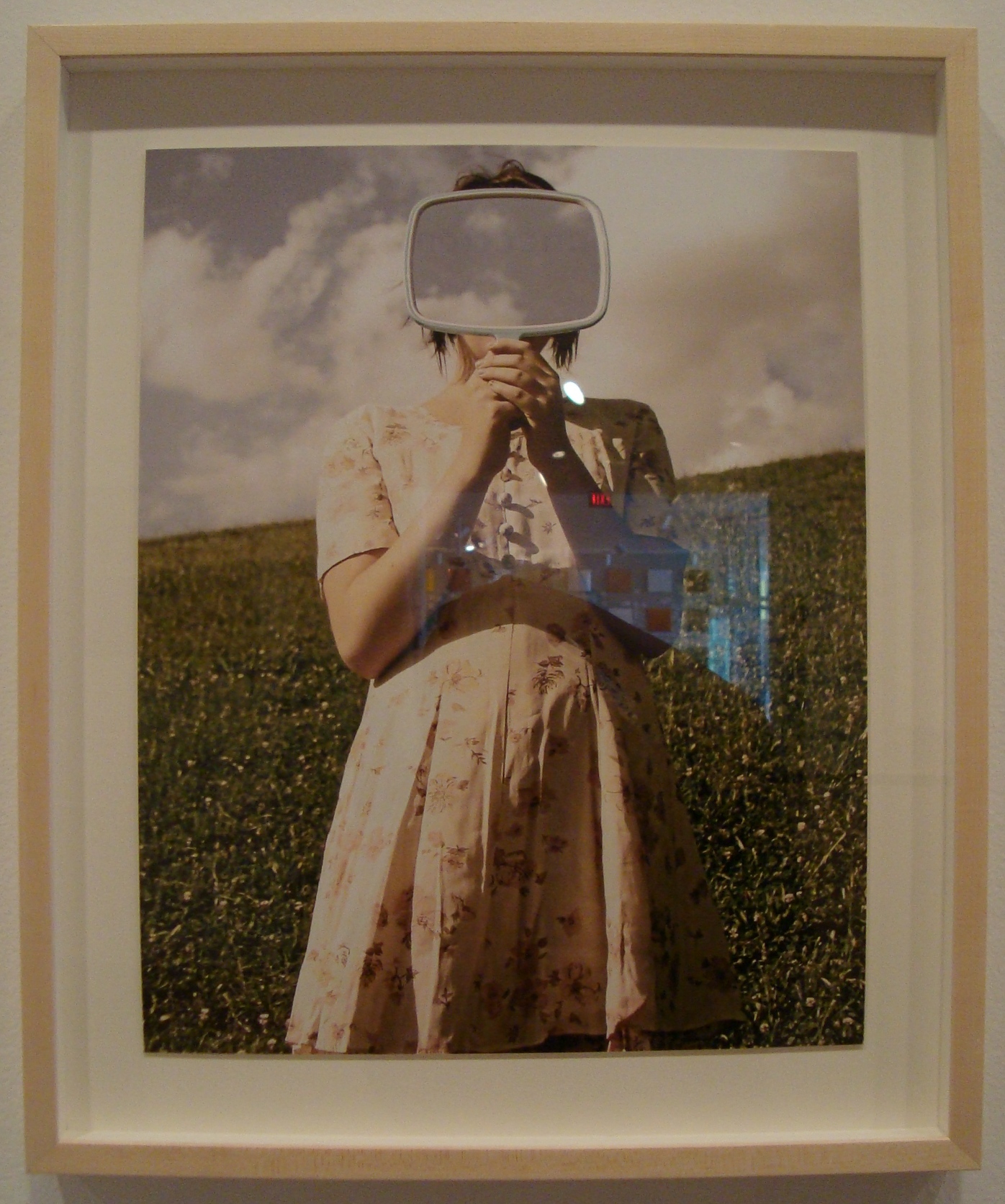
Best in Show - Looking Glass Self by Katy Wood

The halls and galleries of the DMA fill up this spring with two installations of creative work by young artists in the community.  Earlier this month, the Young Masters exhibition opened in the Dallas Museum of Art’s Concourse.  The exhibition features a selection of artworks created by Advanced Placement Art students from Dallas area high schools who participate in the O’Donnell Foundation AP Studio Arts Incentive Program.  The Incentive Program focuses on making Texas the strongest state in AP arts education and preparing students for life in the 21st century as critical thinkers with global perspectives.    A total 280 works were submitted for the juried exhibition, which included two rounds of judging.  The DMA’s own Jeffrey Grove, Senior Hoffman Family Curator of Contemporary Art, selected the final winners.  Katy Wood from Booker T. Washington High School took away top honors with her self-portrait Looking Glass Self, a color digital photograph. In her statement Katy says. “Psychology greatly influences my artwork.  In this piece, I explored a psychological theory called ‘looking-glass self’, in which one’s self can be reflected by the society and environment’s perceptions.”  Images by additional award winners are featured on the AP Arts Web site.

In April, the work of young artists from fourteen elementary, middle, and high schools in the Dallas area will be on display in conjunction with the exhibition Coastlines. These artists are part of the Young Artist’s Program, an education-based initiative presented with the Museum’s annual fundraising event the Art Ball.  Each year the Art Ball provides essential funding for the DMA’s exhibitions programs and gives students throughout Dallas an opportunity to make art in response to a unique theme derived from a DMA exhibition.  Inspired by images of coastal landscapes and the sea, many of the schools participating in the Young Artist’s Program this year are creating large-scale collaborative works that will fill gallery spaces on the first floor.  Works in all media will be on view to the public from April 15 to April 24, 2010, and the exhibition will be accompanied by a video documentation of students working.

Nicole Stutzman
Director of Teaching Programs and Partnerships
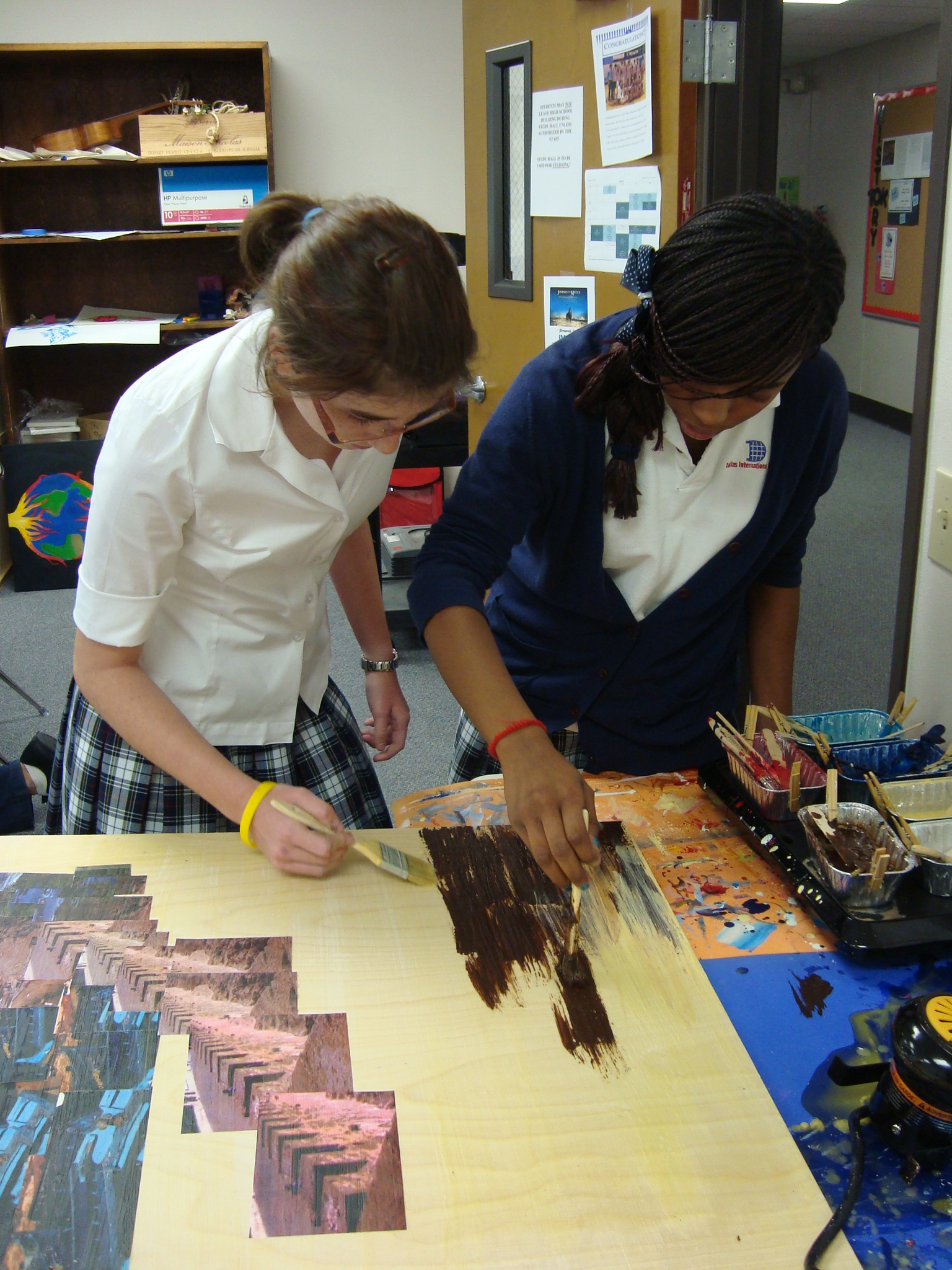
Students at the Dallas International School apply encaustic to their mixed media artwork about the Moroccan coast.

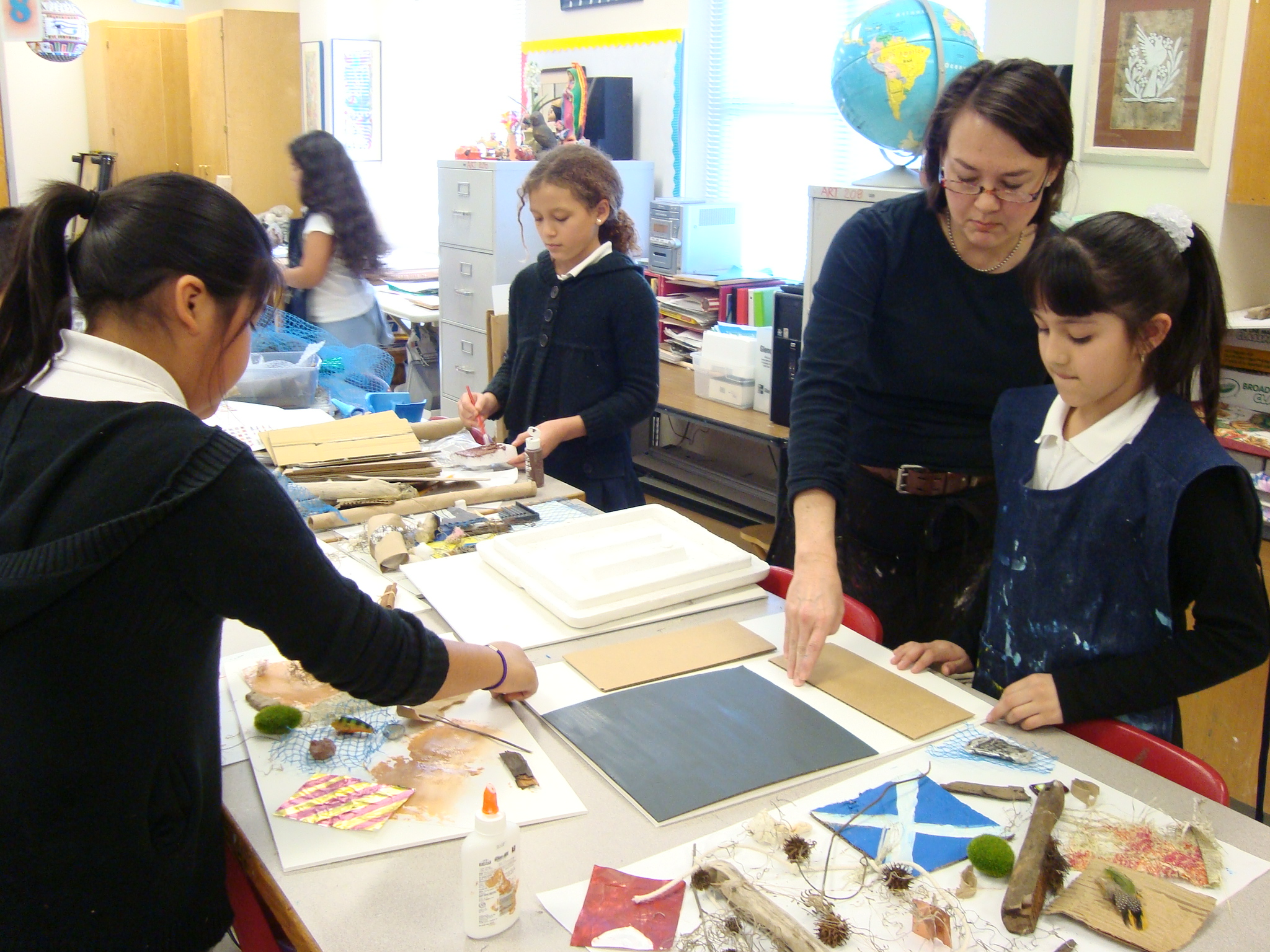
Eduardo Mata Elementary artists create mixed media nautical collages.

Looking Sharp in Those Navy Blazers!

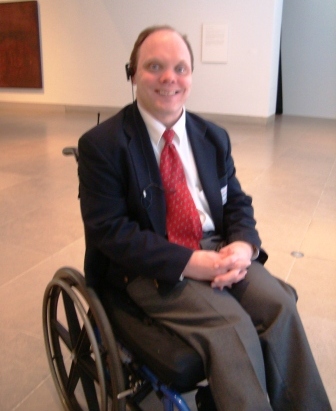
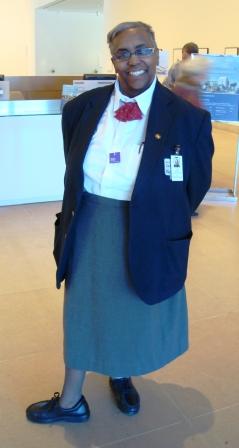
Gallery attendants are some of my favorite people!  They work hard and long, and are always excited to see me and any visitors that I might be bringing through the galleries.  Let’s honor them and the work they do!  I wish I could post pictures of them all.  Here are just a few to get to know.


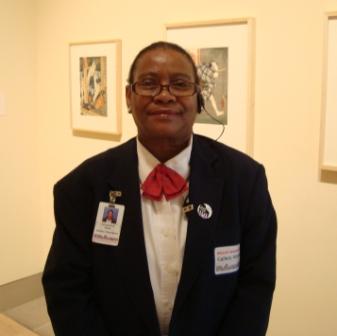
Clockwise from upper left:  Muli has worked at the DMA for 14 years!  She likes to cook when she has some free time.  Always smiling, Jacque, has graced the galleries for 9+ years and puts together 1000-piece jigsaw puzzles.  Mr. Ronald counts this year as his lucky thirteenth at the DMA and plays a mean Scrabble game.  Eugene has worked at the DMA for 7 months.  He’s a guitar player in a band and paints too!  Ornery Ethel, or “Dean” as everybody calls her, has been a part of the DMA family for 2 years.  She loves church and shopping.

Nicole Stutzman
Director of Teaching Programs and Partnerships
Here Come the Withers Wildcats!

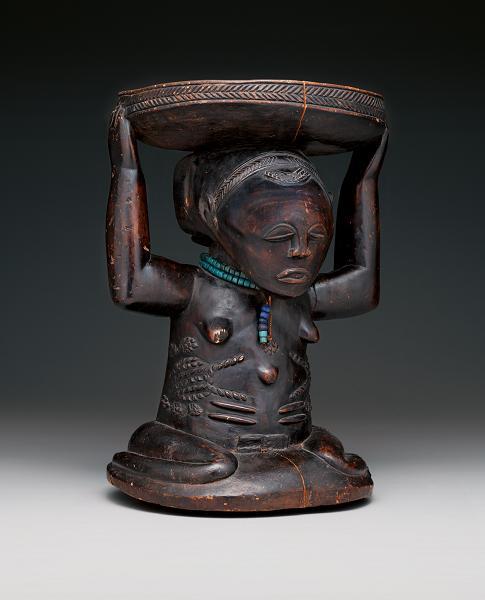
If you were to wander through the African galleries today or tomorrow, you might encounter a studious group of 5th graders and their teachers from Harry C. Withers elementary.  Clustered around works of art, the students will be sketching and talking about what they see, think, and feel in response to the art.  When looking at the Stool supported by kneeling female figure from the Luba peoples of the Democratic Republic of the Congo, the discussion may range in topic from the geometry and patterns they see to ideas about beauty and the significant role of women in the Luba culture to the king who sat on this stool.

Math teacher Debbie Hurley will likely be leading this discussion.  With a team of teachers, Debbie and the Withers 5th grade students have visited the DMA every year for the last 15 years!   I’ve seen her teach with the Stool many times in the galleries and learned much from her passionate approach to teaching and her ability to help students make connections between the art and their lives.   In 1995, Debbie was among a group of Dallas ISD teachers and DMA education staff who collaborated to create a teacher-led curriculum called “African Traditions” for the Museum’s Art of Looking school partnership program.  The Art of Looking partnership program is 17 years old this year.  A program for 4th – 6th grade students and teachers, the Art of Looking champions interdisciplinary approaches to works of art, guides students through deep looking experiences with art that help build creative and critical thinking skills, and fosters a connection between Dallas ISD schools and their hometown Museum.

The Art of Looking partnership program, more so the “African Traditions” experience, is so embedded in the Withers school culture that it defines what it means to be a 5th grader at Withers, and what it means to be a parent of a 5th grader (who come often as chaperones on Museum visits).

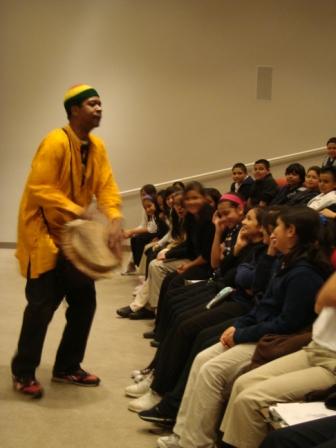
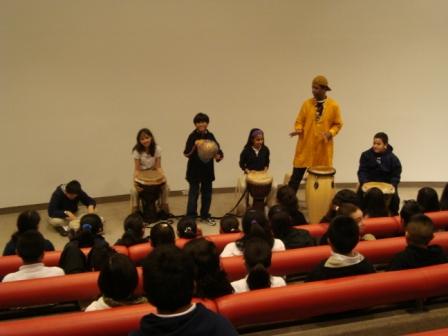
This week the Withers Wildcats make their 15th annual visit to the Museum and it will be an extra special one.  Following their Friday session in the galleries looking at art, students will join African drummer Leo Hassan for a hands-on experience with African drums.   I’ll be sure to post pictures late Friday – so come back for a look!

Nicole Stutzman
Director of Learning Partnerships with Schools and the Community

From Faxing to Blogging: A Few Reflective Moments

As many of us do with each new year, I will take an opportunity to reflect.  In this year’s case, we transitioned from one decade to another one. Since I began working at the Dallas Museum of Art in 1999 (exactly 10 years ago), I’ve decided to reflect on a collection of memorable Museum moments from the past decade. In keeping with the popular top 10-list approach, here is my list of moments — some BIG, some small.  In no particular order…

Educator Blog Goes Live! In September 2009, my colleagues and I entered the spacious blogosphere with our first entries for the Dallas Museum of Art Educator Blog.  This makes us one among the 133,000,000 blogs indexed by Technorati since 2002. Ten years ago faxes and snail mail were my primary form of communicating with teachers.  Now it’s email and social networks. Can you believe it?  Thanks for reading — we love to write for this blog!

A Centennial Celebration! In 2003, the DMA celebrated it’s 100th birthday. Based on an idea from one of the staff members, the Museum celebrated this momentous occasion by staying open for 100 straight hours!  Visitors young and old, big and small visited the Museum at all hours of the day and night for tours, yoga, birthday hat making, birthday cake, and much more.  Did you visit during the birthday celebration?  We also opened two amazing exhibitions that year.  100 Treasures for 100 Years was an exhibition featuring 100 masterworks from the Museum collection, which were organized by themes such as Mask, Opulence, and Transcendence.  That same year the DMA celebrated contemporary Texas art through the exhibition Come Forward: Emerging Art in Texas.

DISD 4th Graders Visit! During the 2007-2008 school year, the DMA initiated a partnership with DISD and Big Thought to bring every 4th grade student to the Museum.  Since the start of the program over 22,000 students have viewed works of art on docent-led tours at the DMA.  We look forward to a future time when every DISD graduate can say they have visited the DMA!

King Tutankhamun in the Big D! For 8 months spanning 2008 and 2009 Tut and his family’s treasures filled our galleries. The Boy King, as we referred to him around the halls, brought over 600,000 visitors to the DMA.  Tutankhamun and the Golden Age of the Pharoahs was the third in a series of royal world art exhibitions that the DMA welcomed in last decade.  In 2006 it was Lords of Creation: The Origins of Sacred Maya Kingship and in 2004 Splendors of China’s Forbidden City: The Glorious Reign of Emperor Qianlong.

Late Nights at the DMA! Based on the success of the 100-hour Centennial event, the Museum’s popular monthly Late Night celebration was born in 2004.  On the third Friday of each month, we stay open until midnight to welcome between 3,000 – 5,000 visitors.  I love Late Nights!   They transform the Museum and the experience of visiting a Museum.  People visit to come to have fun with friends, view art, make art, listen to music, attend talks and lectures, and watch performances.  The next Late Night is January 15.  Hope to see you there!

The Center for Creative Connections Opens! After several years of planning, the former Gateway Gallery was transformed into the new Center for Creative Connections, opening to the public in May 2008.  An interactive space designed to inspire visitors of all ages, the C3 is anchored in the DMA’s intent to connect with creativity and artists.  Look for programs and classes with artists throughout 2010!

New Kids on the Block! Did I make you look twice?  This one isn’t about the 80’s boy band.  The new kids I am talking about are the DMA’s neighbors to the East in the Dallas Arts District.  Do you remember the big parking lot where the Nasher used to be?  In 2003 the Nasher Sculpture Center, designed by architect Renzo Piano, opened to the public.  Our newest neighbors, the AT&T Performing Arts Center Winspear Opera House and the AT&T Performing Arts Center Wyly Theater, joined us this past fall to complete a vision for the Dallas Arts District that has been in the making since the 1970s.

Digitizing Educator Resources! 10 years ago the DMA said goodbye to slides and projectors, making the leap from paper teaching materials to digital resources for teachers and students.  I bet some of you still have those paper packets in your closets! We now have over 25 collections and exhibition-based online resource units available free to teachers near and far.  In partnership with UT Dallas, we also created an web-based learning game called DIG! The Maya Project.

Contemporary Collections Explode! In 2005, an unprecedented gift of modern and contemporary art was made to the DMA from several Dallas families including the Rachofsky, Hoffman, and Rose families.  In 2007, an exhibition featuring 300 of these artworks was held at the Museum.   Fast Forward: Contemporary Collections for the Dallas Museum of Art included work by artists Gerhard Richter, Matthew Barney, Vija Celmins, Joseph Cornell, Robert Ryman, and Lucio Fontana among others.

Go van Gogh Gets a New Look! For more than 30 years, Go van Gogh has traveled out to classrooms in the community delivering free art programs to elementary age students.  A new van and a new look were introduced in this decade to celebrate the dynamic nature of this education program and honor its long history!

What events, exhibitions, and experiences are among your top 10 at the DMA? Leave a comment and let us know!  We would love to hear from you and we look forward to more blogging in 2010.  Happy New Year!

Nicole Stutzman
Director of Learning Partnerships for Schools and the Community

It's a Whole New Media World

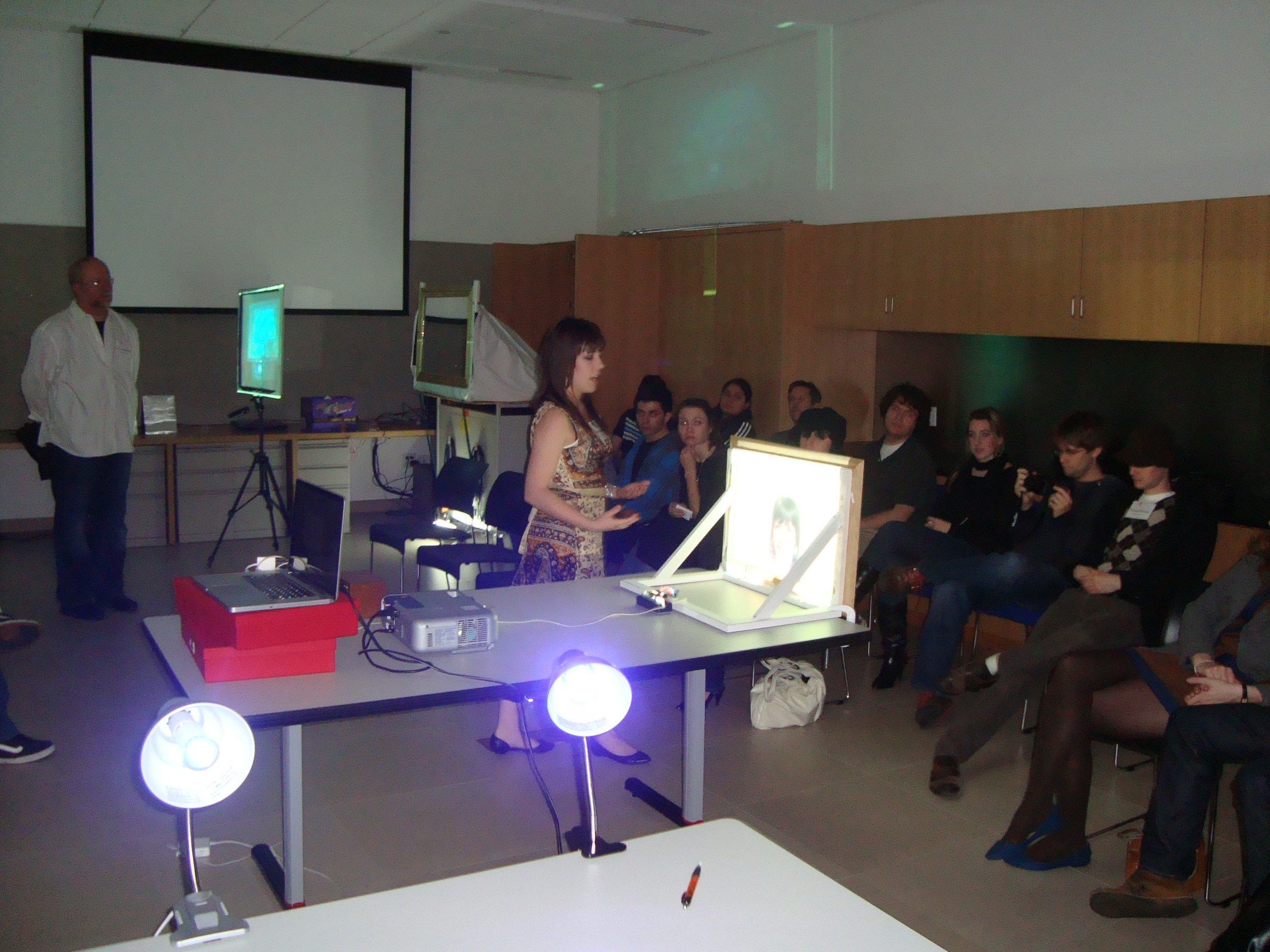
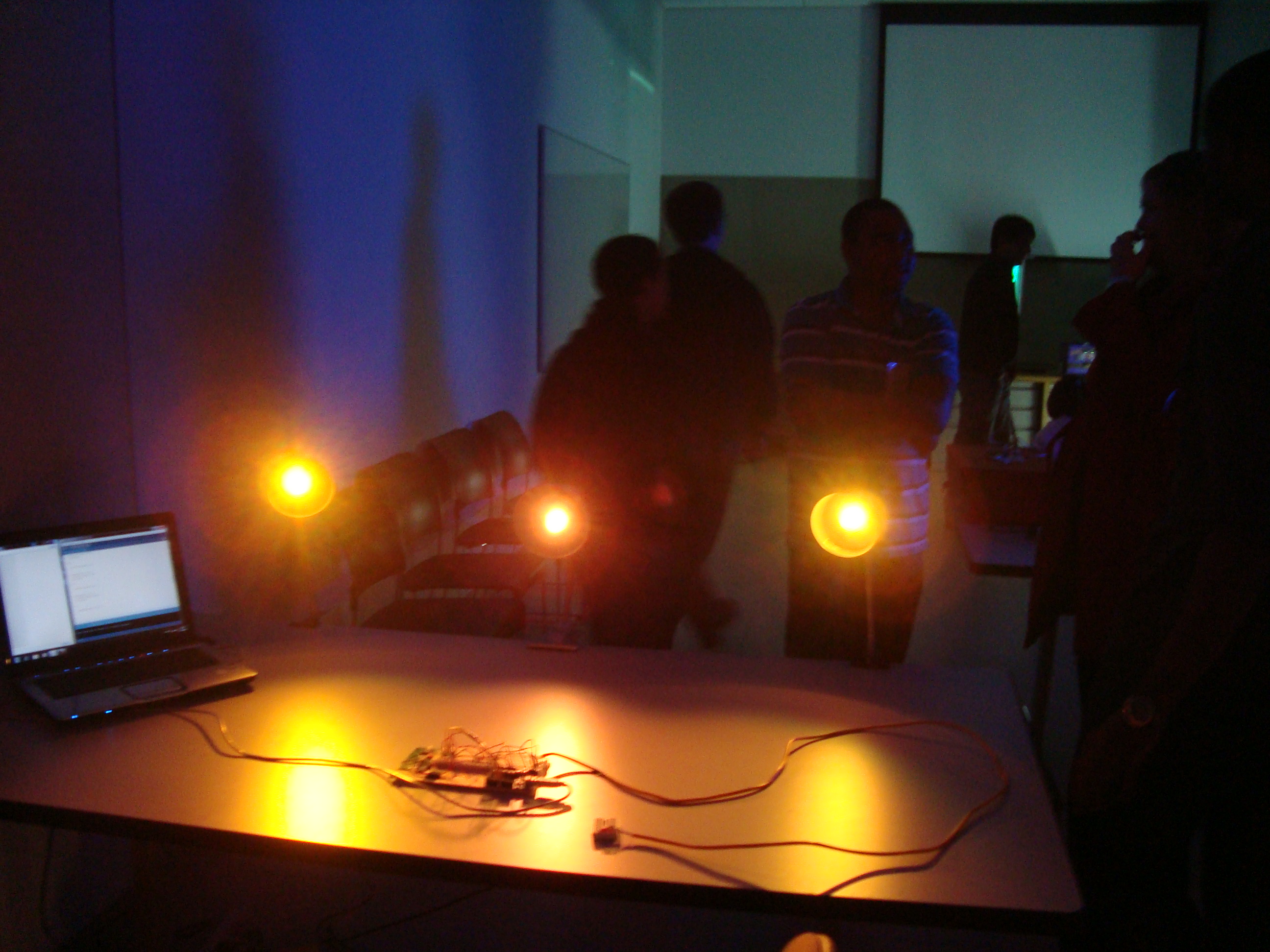
It is Saturday now.   I’m one day late with the weekly Friday Photos post.  But check out these cool photos from the Late Night last night.  New media art was presented in the Tech Lab by students from the University of North Texas School of Visual Art.  New Media mixes the materials and concepts of technology and art, emphasizing the experience of the viewer who plays an active role in the artwork.  Thanks to Lindsay Hooker for help capturing these images!

Nicole Stutzman
Director of Learning Partnerships with Schools and the Community

Late Night visitors enjoyed Christina Day's interactive self-portrait. Animated images of the artist projected on a lycra screen change when visitors touch the screen.

In the Mood is a work by Eric Flye. Heat sensors, LED lights, and a computer program calculate your temperature and your mood.

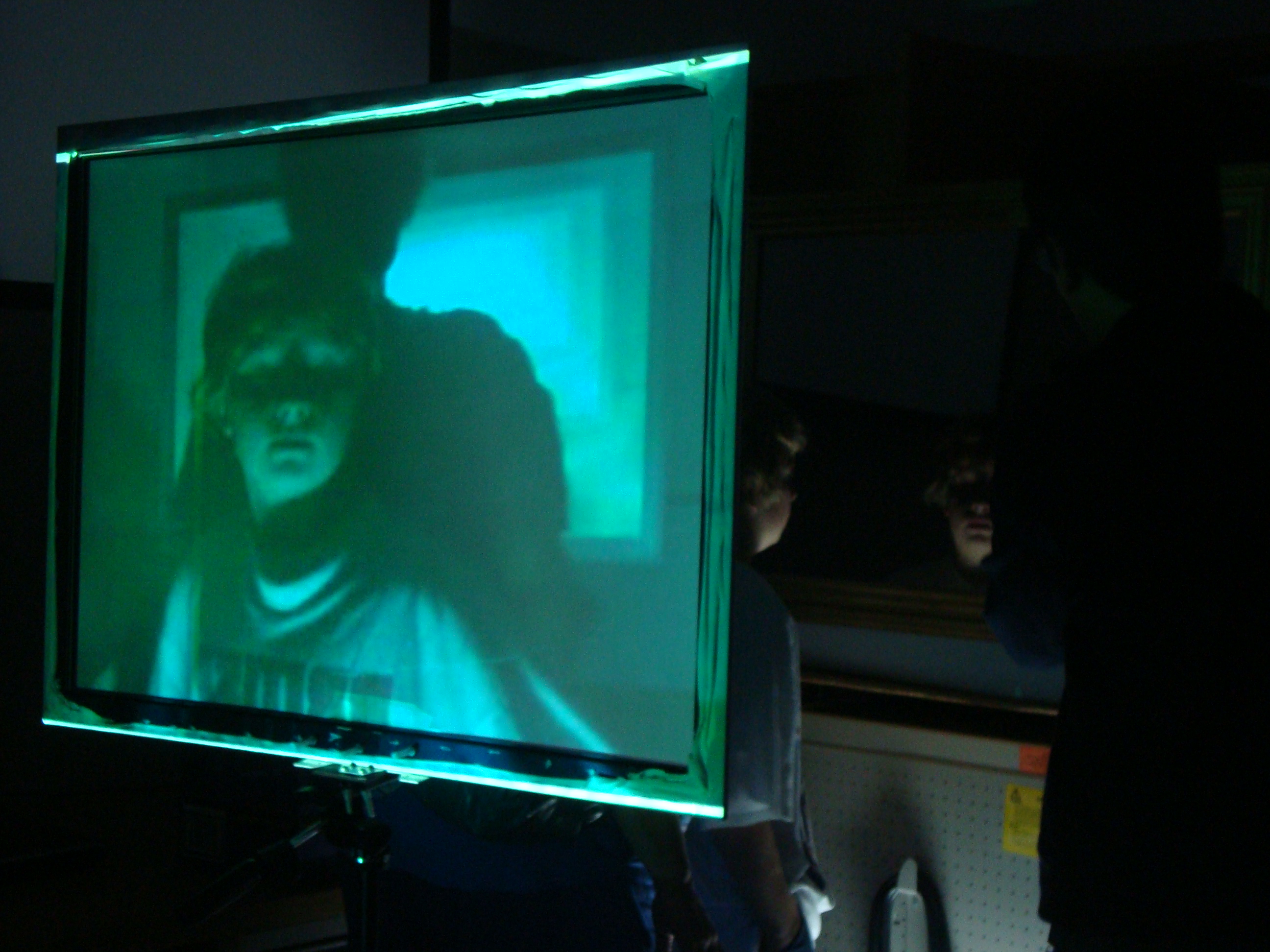
Arash Sabha played with ideas about time and infinity in his work, Revisited, which uses mirrors, motion sensors, and a video camera.

Connect: Teachers, Technology, and Art

Our work on a new grant project, Connect: Teachers, Technology, and Art, has officially begun!  Through the Institute for Museum and Library Services (IMLS) and their Museums for America grant program, the DMA was awarded $150,000 in October 2009 to begin redesigning online teaching materials.  Over the course of the next two years, we will work to create five new dynamic, web-based resource units that present the wealth of our collections in African and South Asian art.  How will we do it?  Thoughtfully, by connecting these three things:

Teachers: Results from a 2007 evaluation with 450 teachers, which focused on how teachers learn and teach with art, will inform the initial selection and organization of artwork images and information.  Staff will also collaborate closely with twenty teachers, who will help design and test the new teaching resources in their classrooms.  How do you currently use the Museum’s online teaching materials?  We welcome your comments!

Technology: Digital images, video, and audio, similar to those on DMAtv, will enliven the resources by providing extended information about works of art and cultures.  Imagine all of this packaged into custom units that are easy for teachers to access, search, and share with students.

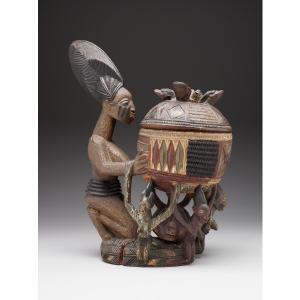
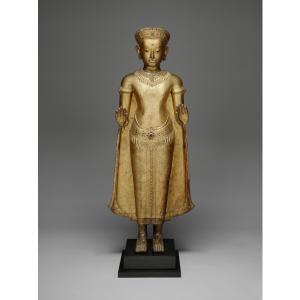
Art: Works of art from Africa and South Asia will be the focus for the five new resource units.  The units will reflect recent curatorial scholarship and upcoming catalogue publications for both collections.  They will also highlight artworks recently added to the collection, such as the olumeye from Nigeria and the Buddha Sakyamuni from Thailand.

2004_16_MCD~01

Kneeling female figure with bowl (olumeye)

2006_21

Buddha Sakyamuni

Grant work to tackle over the next two months includes taking inventory of great images, information, video, and audio content related to the African and South Asian artworks, as well as selecting ten teachers to begin collaborating with staff.  If you would like to hear more about the grant, please feel free to email us.  Also look for future progress reports on the Connect project here on the blog or delivered via the Educator Newsletter.

Nicole Stutzman
Director of Learning Partnerships with Schools and the Community
nstutzman@DallasMuseumofArt.org

Jenny Marvel
Manager of Learning Partnerships with Schools
jmarvel@DallasMuseumofArt.org

DMA Tech Lab 101

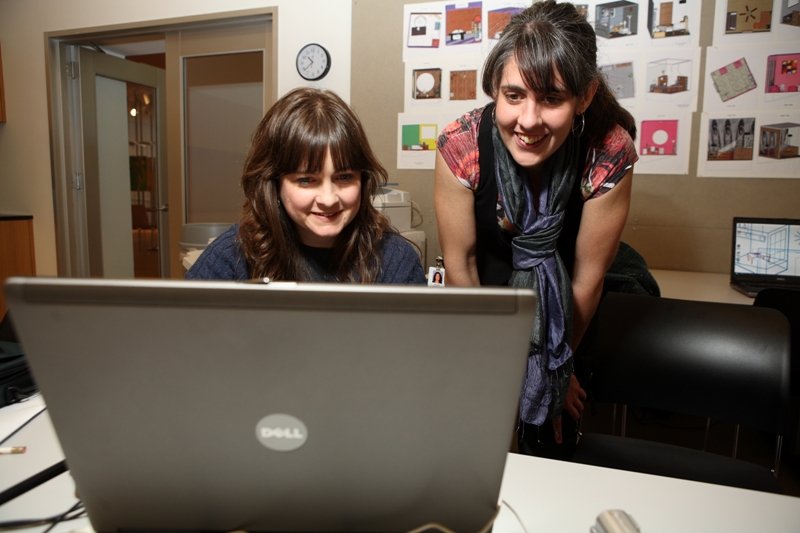
BloggingSeminar_02_2009_037 III invite you to make your way soon to the Tech Lab in the Center for Creative Connections at the Dallas Museum of Art for a new experience with art and technology.  On most days laptops await you and your students in an open lab setting.  You can research one of the many artworks and artists viewed in the Museum galleries.
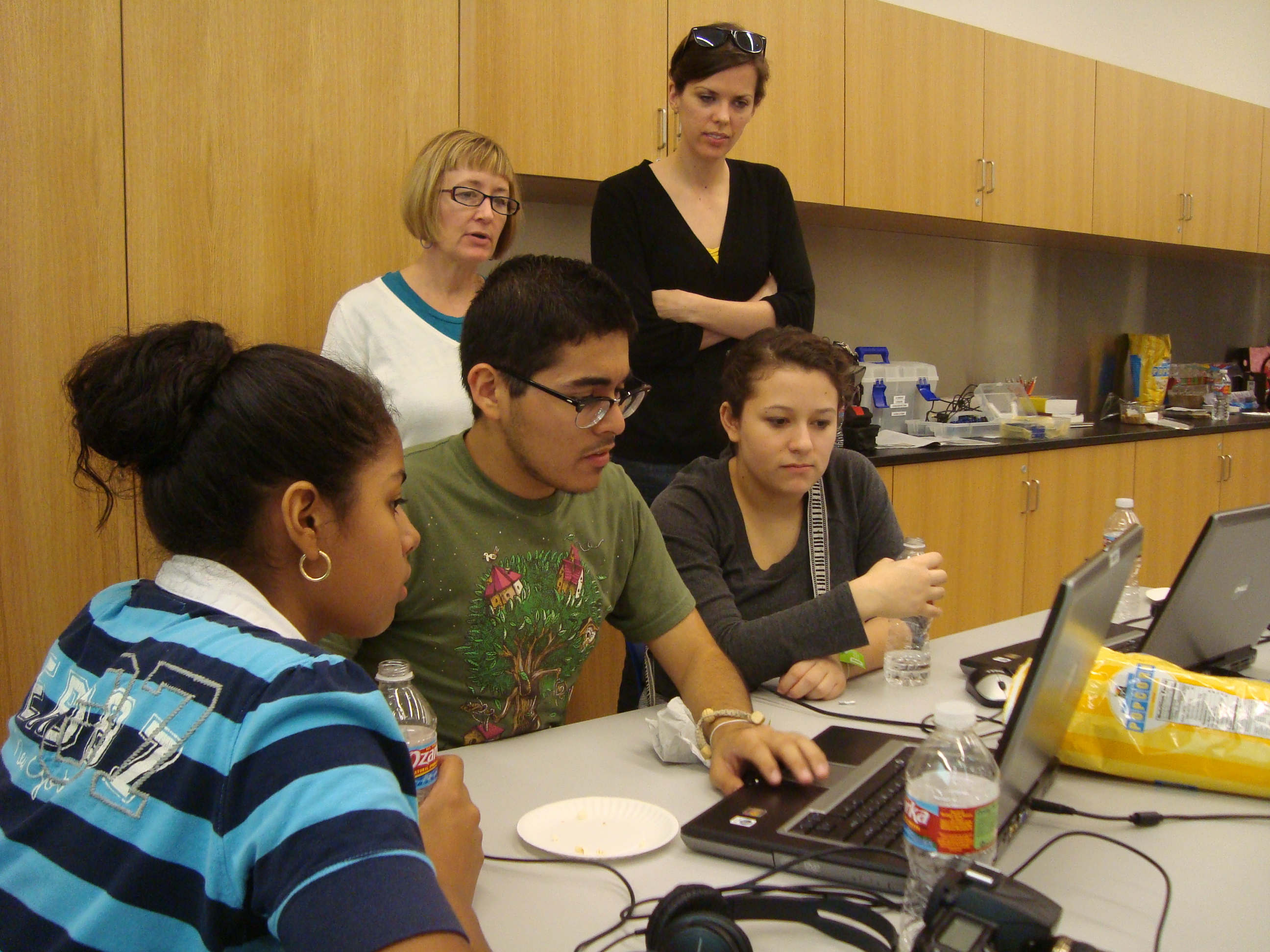
Workshops and special programs for all ages enliven the Tech Lab space on Thursday nights, Late Nights, and weekends.  This past Saturday, the  Booker T.  Washington DSC01561High  School video club met with  local painter and filmmaker,  Trayc  Claybrook.  The task  at  hand?  Make a one-  minute movie using the  theme “chairs”.  Inspired by  the design and film work  of Charles and Ray Eames,  the students ventured into  the galleries for filming and  initiated the editing process in the Lab.  Other workshop topics for families, kids, teens, and adults include stop-motion animation, podcasting, graphic design with Photoshop Elements, mini-documentary, and photography.  Workshops include time in the galleries connecting with works of art and time in the Tech Lab working creatively with technology tools to produce original work.  Check the Web site for workshop listings — a new calendar will be posted soon!

Drop by the Lab on the second Thursday of every month and every Late Night for hands-on Open Lab sessions with Technology experts.  Coming up at the November Late Night: University of North Texas art students present interactive art you can touch!

Nicole Stutzman
Director of Learning Partnerships with Schools and the Community


Archives

Categories