Have you ever wondered why Olympians are crowned with a wreath of leaves when receiving a medal? Well, you see, it was not always about going for the gold: in ancient times, victors were adorned with a crown of wild olive leaves (kotinos). Legend has it that Hercules (also known in Greek as Heracles or Herakles) was the creator of the Olympic Games, which at its inception solely consisted of a single tournament of foot racing. He dedicated the contest to the gods, and ornamented the winners with a wreath from an olive tree that grew behind the temple of Zeus in Olympia. Ever since, the wreath has been a symbol of the Olympic Games. After all, who needs a piece of precious metal when the pride of Olympus—and Greece’s divine hero—has given you some sacred flora to show off?
-
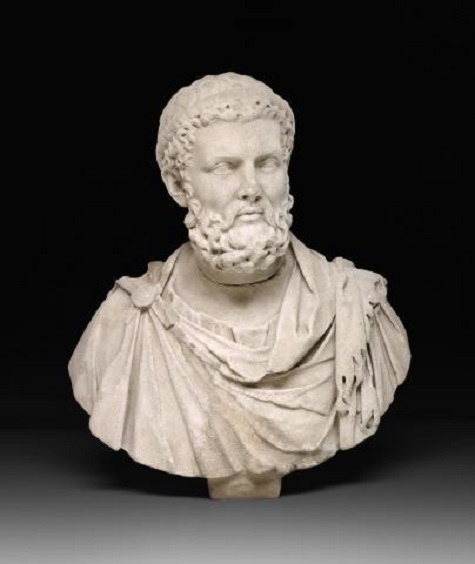
- Bust of Herakles, Lambert Sigisbert Adam, Roman, 1st-2nd century C.E., marble, Dallas Museum of Art, Cecil and Ida Green Acquisition Fund, gift of David T. Owsley via the Alvin and Lucy Owsley Foundations, and Wendover Fund, 2015.31
-

- Scarab with intaglio of Herakles stringing his bow, Greek, c. 600 B.C.E., rock crystal, Dallas Museum of Art, gift of Jerry L. Abramson in memory of Max and Celia Abramson, 2006.68.3
-
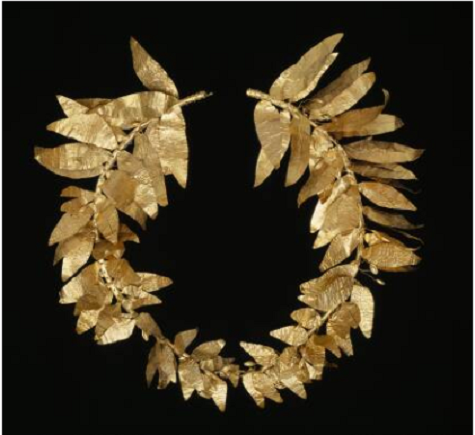
- Wreath, Greek, 4th century B.C.E., gold, Dallas Museum of Art, Museum League Purchase Funds, The Eugene and Margaret McDermott Art Fund, Inc., and Cecil H. and Ida M. Green in honor of Virginia Lucas Nick, 1991.75.55
Best of luck to all the athletes competing in Rio. May you be faster, higher, and stronger!
Julie Henley is the Communications and Marketing Coordinator at the DMA.