Archive Page 8

Celebrating Henry Ossawa Tanner

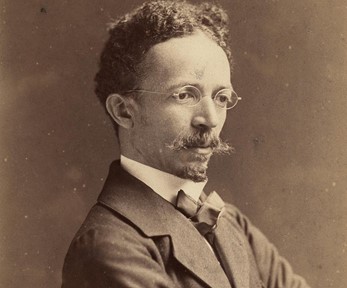
Henry Ossawa Tanner in 1907 by Frederick Gutekunst (1831–1917)

This month the DMA celebrates the acclaimed African American artist Henry Ossawa Tanner (1859–1937). Tanner’s intimate painting Christ and His Mother Studying the Scriptures is one of the cornerstones of our American collection. He rendered the lush, densely painted surface using a restricted palette predominated by shades of cool, luminous blue. The color became so synonymous with him that it earned the nickname “Tanner-blue.”
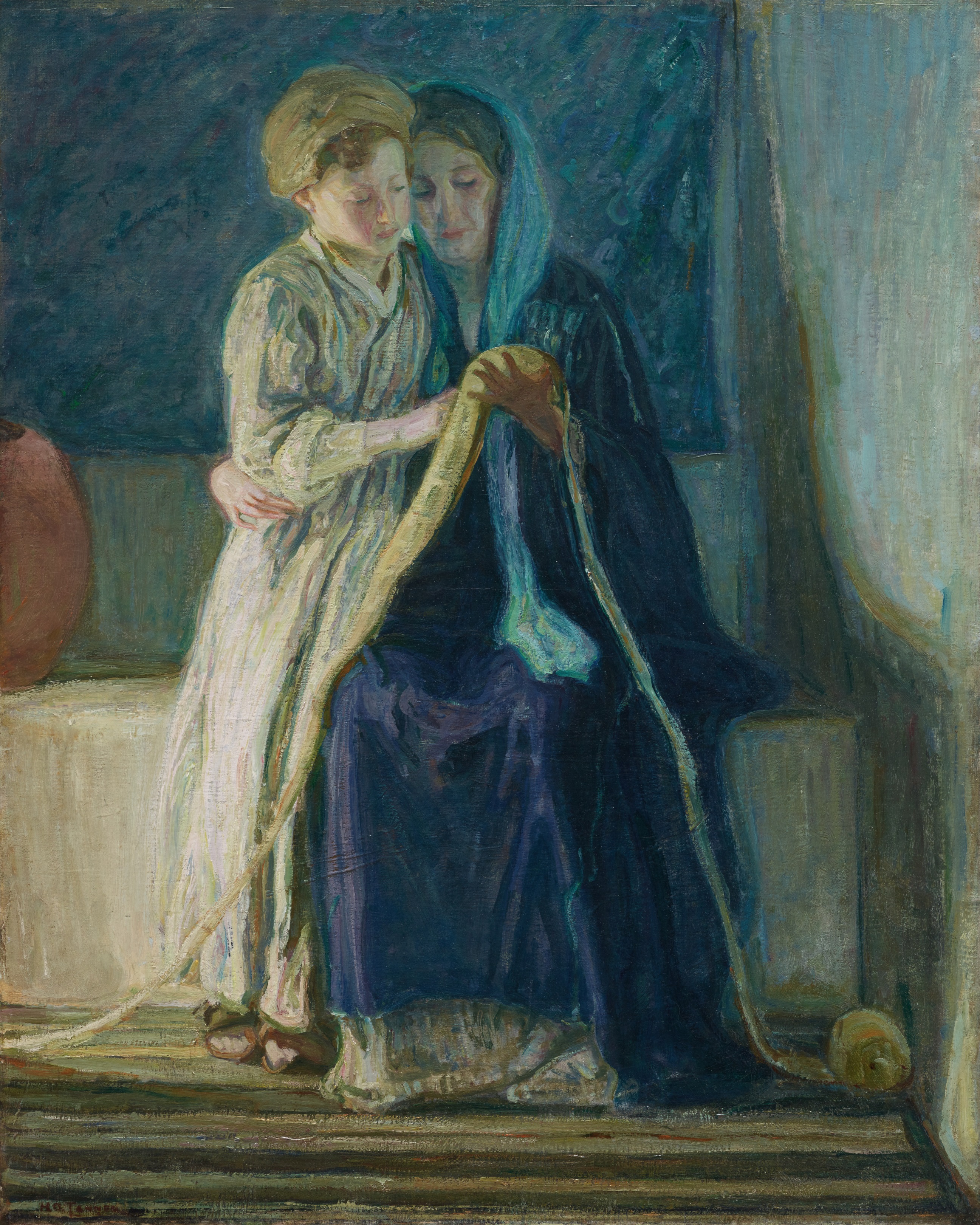
Henry Ossawa Tanner, Christ and His Mother Studying the Scriptures, 1908, oil on canvas, Dallas Museum of Art, Deaccession Funds, 1986.9

The artist’s wife, Jessie Olssen, an American opera singer living in Paris when they met, and their young son, Jesse, often served as his models. Two existing photographs (figs. 1 & 2) confirm they posed for him as he considered different arrangements for the DMA’s painting, and one (fig. 1) was the template. That they posed for this painting makes it simultaneously a meditative religious scene and a tender family portrait.
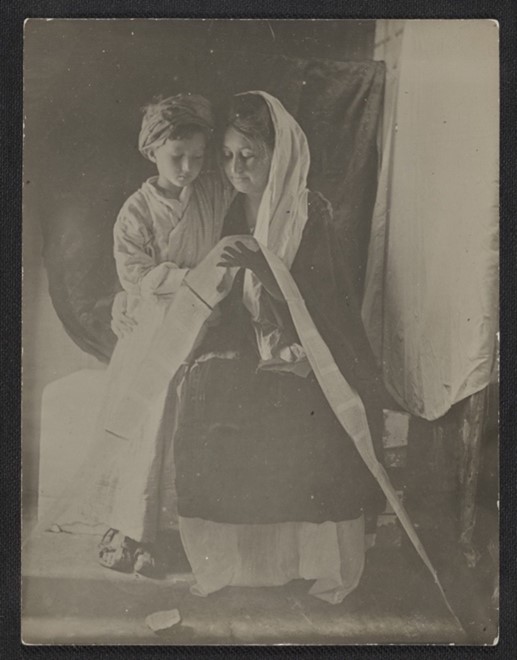
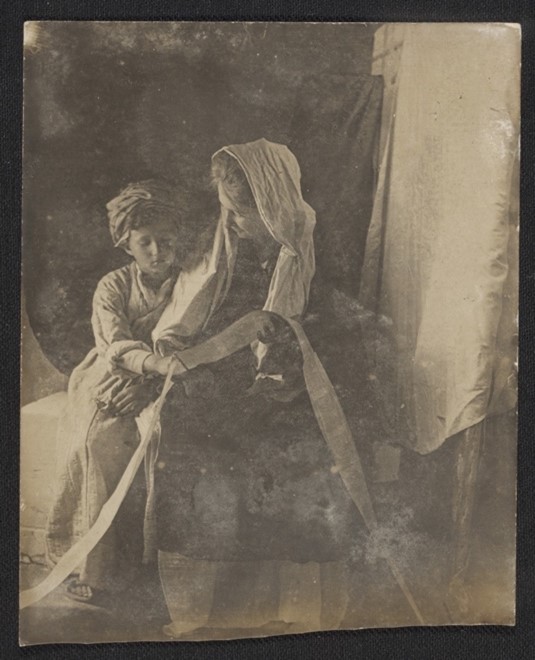
Fig. 1: Jessie Olssen Tanner and Jesse Ossawa Tanner posing for Henry Ossawa Tanner’s painting Christ and His Mother Studying the Scriptures, not after 1910. Henry Ossawa Tanner papers, 1860s–1978. Archives of American Art, Smithsonian Institution. Digital ID: 12359, public domain
Fig. 2: Jessie Olssen Tanner and Jesse Ossawa Tanner posing for Henry Ossawa Tanner’s painting Christ and His Mother Studying the Scriptures, not after 1910. Henry Ossawa Tanner papers, 1860s–1978. Archives of American Art, Smithsonian Institution. Digital ID: 12360, public domain

Tanner seems to have been so enamored with the composition that three years later he rendered a similar version, Christ Learning to Read. He made slight changes to the poses of Christ and Mary and experimented with an impressionistic application of a high-keyed pastel color palette to render light. Further, the painting’s structural frame and inner arcing spandrel reflect the influence of buildings he most likely saw during his many trips to Morocco.
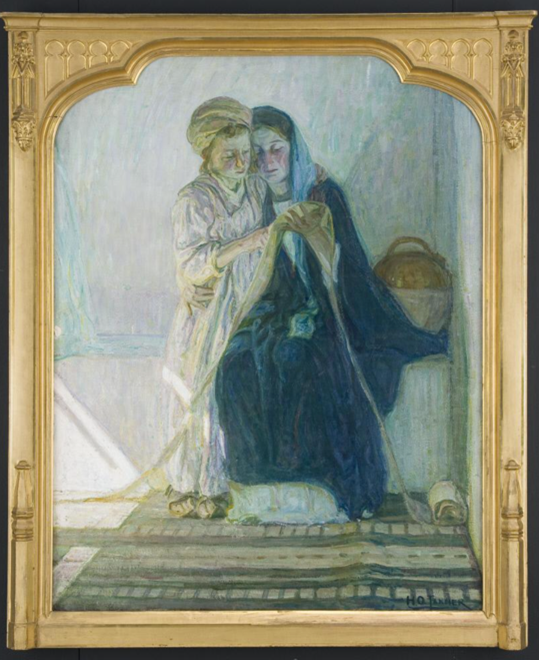
Henry Ossawa Tanner, Christ Learning to Read, about 1911, oil on canvas, Des Moines Art Center Permanent Collections; Gift of the Des Moines Association of Fine Arts, 1941.16, photo credit: Rich Sanders, Des Moines

Tanner’s decision to be a religious painter was deeply rooted in his family background. His father, Benjamin Tucker Tanner (1835–1923), was a bishop in the African Methodist Episcopal Church, and the artist’s childhood home was a well-known salon of Black culture in Philadelphia. Nevertheless, it is not surprising that his path to a successful career was filled with many obstacles. While he found studying at the Pennsylvania Academy of Fine Arts with Thomas Eakins intellectually fulfilling, the extreme racism he experienced from classmates was intolerable. Acknowledging that he “could not fight prejudice and paint at the same time,” Tanner left Philadelphia, briefly set up a photography studio in Georgia, and eventually lived out his life in Paris as an American expatriate. The city was culturally, socially, and artistically welcoming, while also providing him with the freedom and camaraderie unavailable to him in his segregated homeland. In Paris, the shy, serious-minded artist flourished and prospered. After a trip to Palestine, Tanner turned his focus toward painting biblical scenes and rarely strayed from this theme for the rest of his life.

Both the Dallas and Des Moines paintings, along with the two photographs discussed here, are emblematic of Tanner’s devotion to his faith and career, and all of them serve as affectionate double portraits in tribute to his wife and son. The Dallas Museum of Art is proud to display Christ and His Mother Studying the Scriptures, which is a masterpiece by this admired and accomplished American artist, in our galleries. We are always honored to celebrate Tanner’s life, legacy, and contribution to the canon of American art, and we are most especially pleased to do so during Black History Month.

Martha MacLeod is the Senior Curatorial Administrator and Curatorial Assistant for Decorative Arts and Design, Latin American Art, and American Art at the DMA.
Thurmond Townsend: A Dallas Artist to Know

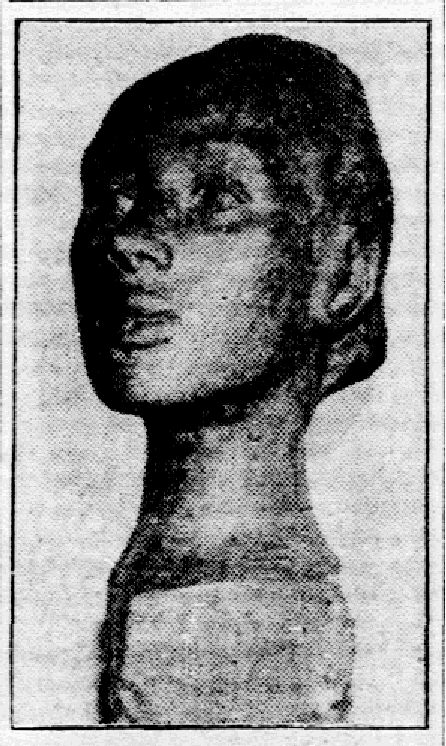
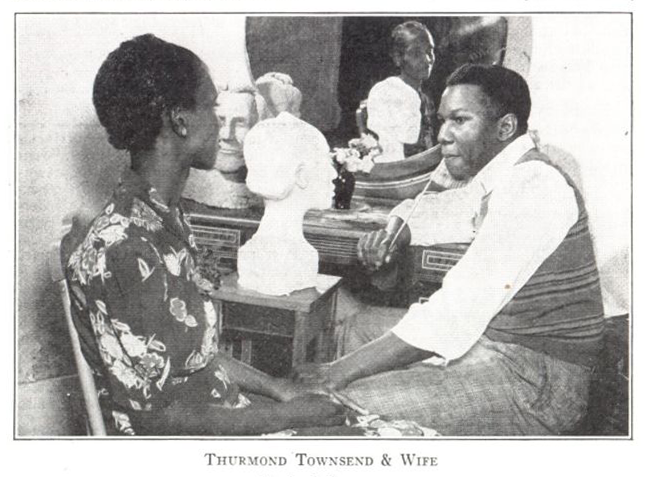
In early 1938, 26-year-old Thurmond Townsend was appraising his backyard and became intrigued by the now malleable mud, which had the consistency of clay. Though he had never tried modeling before, Townsend started working with the mud to create busts of George Washington and Abraham Lincoln from pictures. The two sculptures were going well… except for the ears. On his way home from work as a bus boy, Townsend stopped into the Dallas Art Institute and asked instructor Harry Lee Gibson how to sculpt ears.

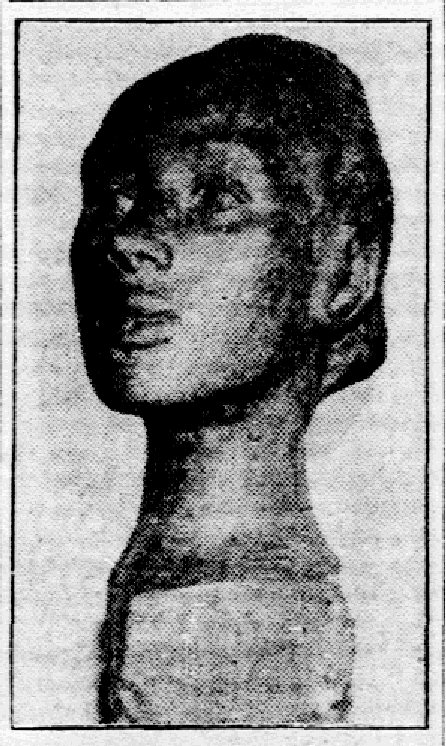
Taking Gibson’s advice that he try modeling from life, Townsend created a bust of his wife Marie. He entered this sculpture in the 9th Annual Dallas Allied Arts Exhibition (March 20-April 17, 1938). The Dallas Art Association, now DMA, started holding juried exhibitions for artists residing in Dallas and Dallas County in 1928 and did so annually through 1964.

Townsend’s mud Marie Townsend was not only accepted to the exhibition’s Sculpture and Crafts section, but was awarded a $25 prize sponsored by Karl Hoblitzelle, a DMFA Board member. Townsend’s sculpture was the first work by a Black artist accepted to the Dallas Allied Arts exhibition. This was notable enough at the time that TIME magazine reported on Townsend and his sculpture in the April 4, 1938 issue.

“Art: Marie in Mud,” TIME, April 4, 1938

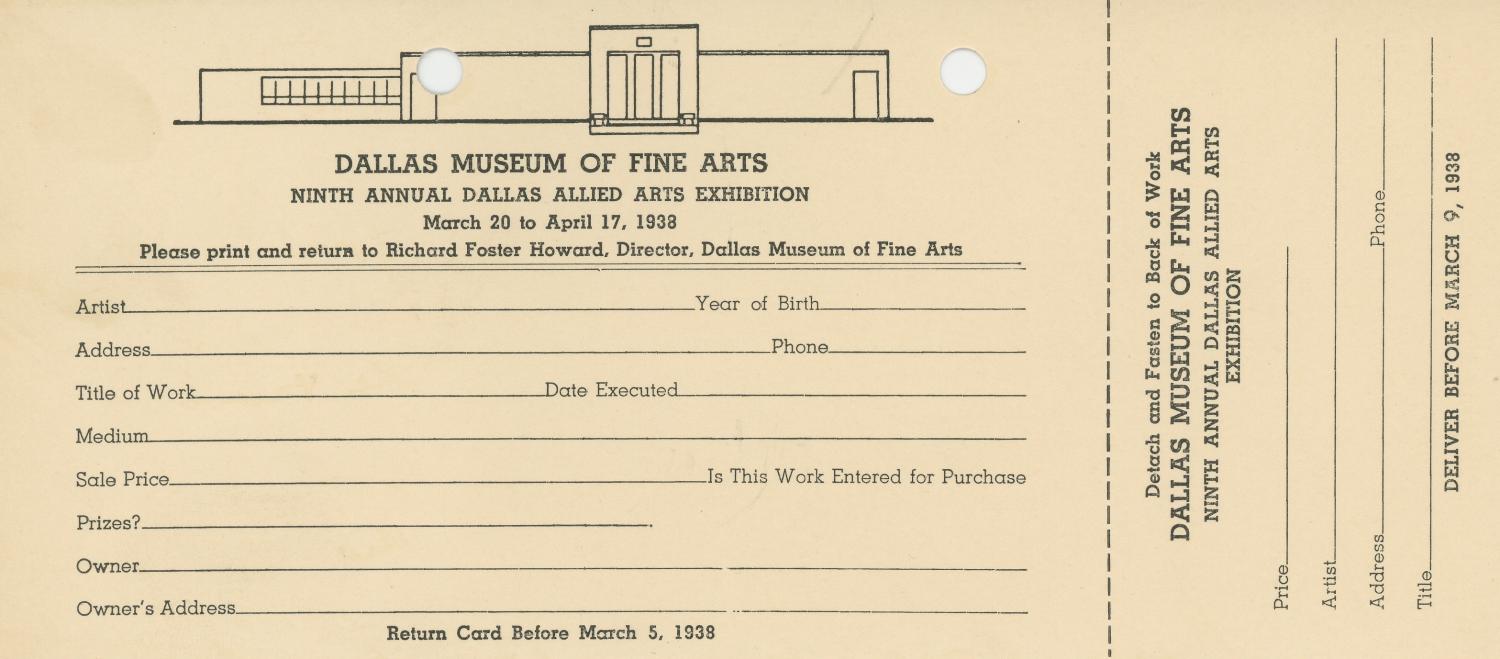
It should be stated that the eligibility rules in the exhibition prospectus did not limit entries by race and identification of race was not part of the information on the entry card required with each submission.

Entry Form for 9th Annual Dallas Allied Arts Exhibition

An interesting side note, the other sculpture award at the 1938 Allied Arts Exhibition went to Harry Lee Gibson, the Dallas Art Institute instructor who helped Townsend with his “ears” problem.

As the mud sculpture would crumble as it dried, Gibson made a plaster cast of the bust for the Townsends. The plaster cast would go on to be displayed at the Paul Laurence Dunbar branch of the Dallas Public Library.

The Dallas Morning News featured an image of Marie Townsend in its March 6, 1938 issue.

1938 continued to be a successful year for Townsend’s sculptures. His Self Portrait, a second mud sculpture, was selected for the juried Texas Section of the Golden Jubilee Exhibition for the 1938 State Fair of Texas. In her review of the DMFA State Fair exhibition, the Dallas Morning News’ Elisabeth Crocker calls Self Portrait “…amazing…” and goes on to describe the sculpture as an “…even more sensitively executed, life-size bust of himself” discounting any who thought his Allied Arts prize-winning Marie Townsend was a “flash in the pan.”

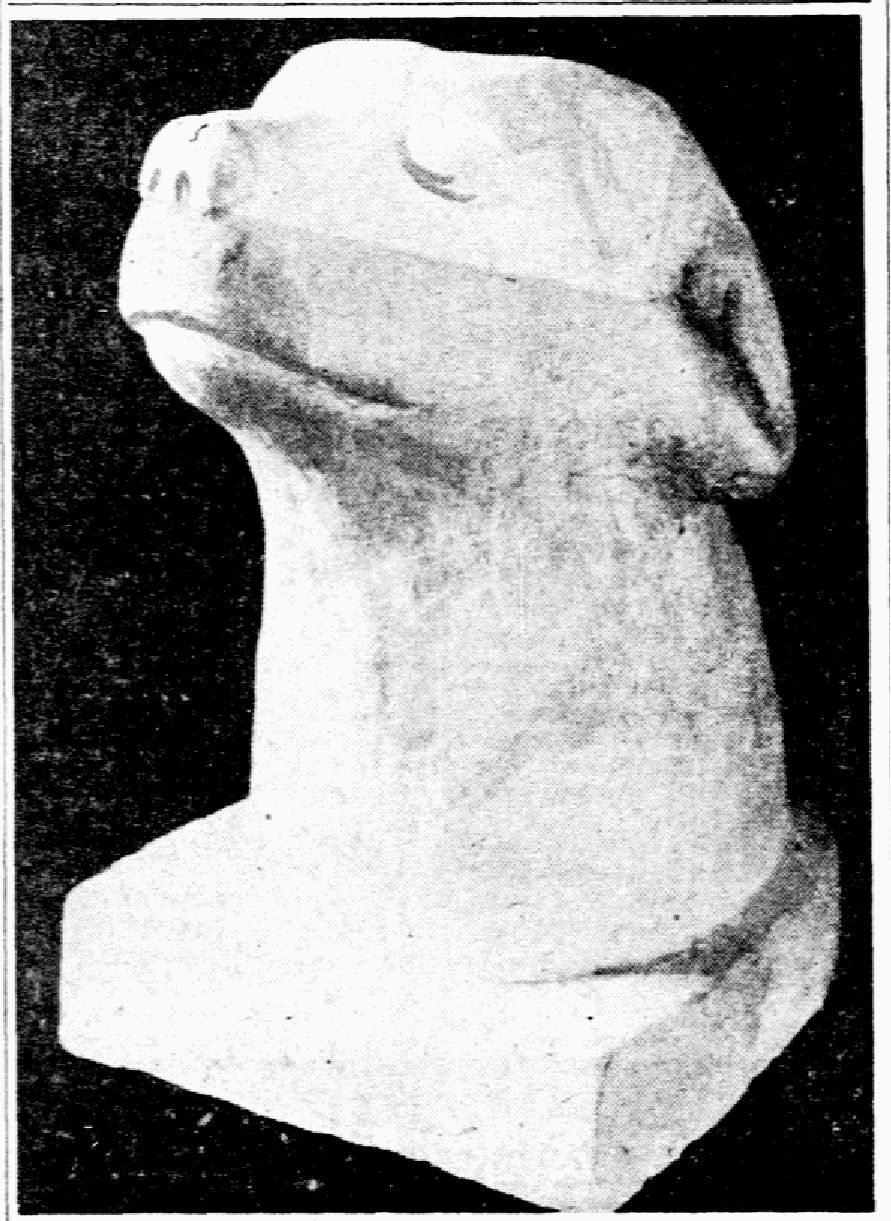
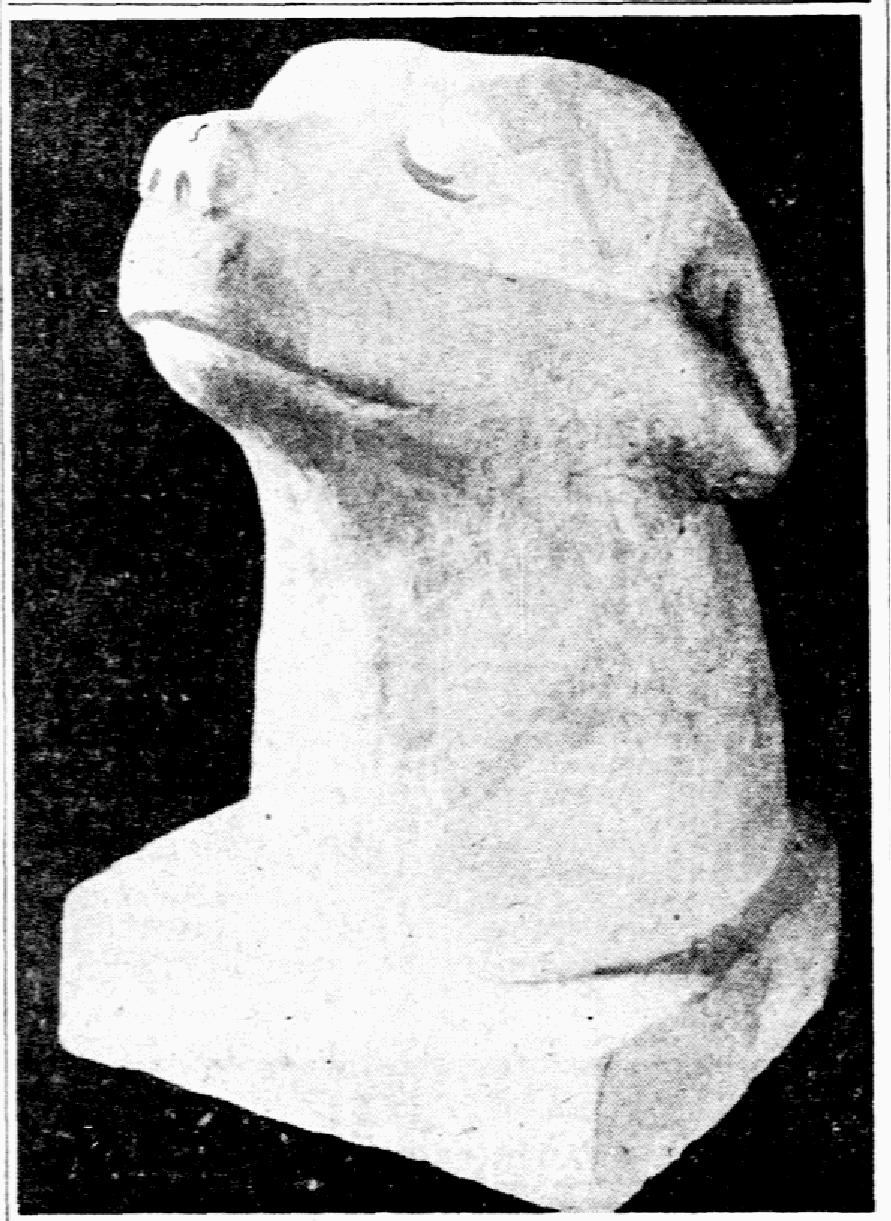
The Texas Section of the 1939 State Fair Art Exhibition was an invitational exhibition and Townsend was invited to submit a piece due to his selection for the 1938 Allied Arts exhibition. He submitted a sculpture titled Dog, that Crocker described as a “cunning dog’s head,” in her review of the show.

“Head of Dog,” Dallas Morning News, October 8, 1939

Townsend was awarded his second Allied Arts sculpture section win, a $25 prize sponsored by the Rush Company, for Girl Friend at the 12th Annual Allied Arts Exhibition in 1941.

The artist does not appear in any of the DMFA’s juried exhibitions after the early 1940s. The current location of the works mentioned here, or any other of his artworks is unknown. If you have any information on Townsend or his body of work, please let us know.

Thanks to former McDermott Intern Melinda Narro whose extensive research brought Thurmond Townsend’s story to our attention. Thanks also to Communications staff Jill Bernstein and Lillian Michel for additional research.

Hillary Bober is the Archivist at the Dallas Museum of Art.

Expanded for DMA Members: Thurmond Townsend: A Dallas Artist to Know

In early 1938, 26-year-old Thurmond Townsend was appraising his backyard and became intrigued by the now malleable mud, which had the consistency of clay. Though he had never tried modeling before, Townsend started working with the mud to create busts of George Washington and Abraham Lincoln from pictures. The two sculptures were going well… except for the ears. On his way home from work as a bus boy, Townsend stopped into the Dallas Art Institute and asked instructor Harry Lee Gibson how to sculpt ears.

Taking Gibson’s advice that he try modeling from life, Townsend created a bust of his wife Marie. He entered this sculpture in the 9th Annual Dallas Allied Arts Exhibition (March 20-April 17, 1938). The Dallas Art Association, now DMA, started holding juried exhibitions for artists residing in Dallas and Dallas County in 1928 and did so annually through 1964.

Townsend’s mud Marie Townsend was not only accepted to the exhibition’s Sculpture and Crafts section, but was awarded a $25 prize sponsored by Karl Hoblitzelle, a DMFA Board member. Townsend’s sculpture was the first work by a Black artist accepted to the Dallas Allied Arts exhibition. This was notable enough at the time that TIME Magazine reported on Townsend and his sculpture in the April 4, 1938 issue.

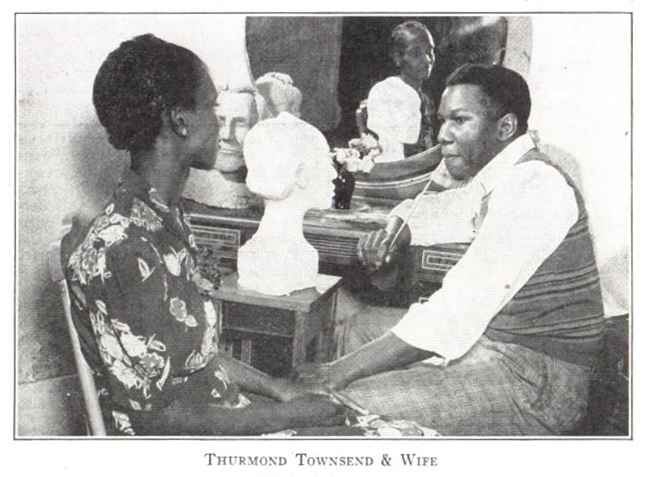
Artist Thurmond Townsend observes wife while he works on a sculpture of her
“Art: Marie in Mud,” TIME, April 4, 1938

It should be stated that the eligibility rules in the exhibition prospectus did not limit entries by race and identification of race was not part of the information on the entry card required with each submission.

Entry Form for 9th Annual Dallas Allied Arts Exhibition

An interesting side note, the other sculpture award at the 1938 Allied Arts Exhibition went to Harry Lee Gibson, the Dallas Art Institute instructor who helped Townsend with his “ears” problem.

As the mud sculpture would crumble as it dried, Gibson made a plaster cast of the bust for the Townsends. The plaster cast would go on to be displayed at the Paul Laurence Dunbar branch of the Dallas Public Library.

The Dallas Morning News featured an image of Marie Townsend in its March 6, 1938 issue.

1938 continued to be a successful year for Townsend’s sculptures. His Self Portrait, a second mud sculpture, was selected for the juried Texas Section of the Golden Jubilee Exhibition for the 1938 State Fair of Texas. In her review of the DMFA State Fair exhibition, the Dallas Morning News’ Elisabeth Crocker calls Self Portrait “…amazing…” and goes on to describe the sculpture as an “…even more sensitively executed, life-size bust of himself” discounting any who thought his Allied Arts prize-winning Marie Townsend was a “flash in the pan.”

The Texas Section of the 1939 State Fair Art Exhibition was an invitational exhibition and Townsend was invited to submit a piece due to his selection for the 1938 Allied Arts exhibition. He submitted a sculpture titled Dog, that Crocker described as a “cunning dog’s head,” in her review of the show.

“Head of Dog,” Dallas Morning News, October 8, 1939

Townsend was awarded his second Allied Arts sculpture section win, a $25 prize sponsored by the Rush Company, for Girl Friend at the 12th Annual Allied Arts Exhibition in 1941.

While Townsend was more well known in the press for his sculpture, he also tried his hand at oil painting. He submitted his first oil painting, a street scene titled Maple Avenue, for the First No-Jury Exhibition in May 1938.

The DMFA’s No-Jury exhibitions were open to anyone. Dallas artists could submit one original work for the exhibition with no fear of rejection because there was no selection. No-Jury exhibitions were held annually from 1938-1941 in conjunction with the Art Carnival. A significant purpose of the show was to provide an opportunity to young or inexperienced artists to get their work before the public. While some professional artists well-known through Allied Arts and Texas Annual exhibitions submitted work to the show, the No-Jury exhibitions were popular with students and dabblers. Interest in the exhibition and the quality of the artworks submitted varied over the 4 years the show was held. It was ultimately the decline of both interest and quality that ended the No-Jury exhibitions.

Townsend’s painting was ultimately recognized with an award as well. He returned to the subject of his wife Marie with an oil portrait submitted for the 13th Annual Allied Arts exhibition in 1942. Marie Townsend was awarded the prize of a frame sponsored by the Sherwin-Williams Company.

Townsend does not appear in any of the DMFA’s juried exhibitions after the early 1940s. The current location of the works mentioned here, or any other of his artworks is unknown. If you have any information on Townsend or his body of work, please let us know.

Thanks to former McDermott Intern Melinda Narro whose extensive research brought Thurmond Townsend’s story to our attention. Thanks also to Communications staff Jill Bernstein and Lillian Michel for additional research.

Hillary Bober is the Archivist at the Dallas Museum of Art.

Reflections with Chris Schanck

Ahead of Chris Schanck’s first major museum presentation, Curbed Vanity: A Contemporary Foil by Chris Schanck, we asked the artist a few questions about his formative years in Dallas, his artistic practice, and what he hopes visitors will reflect on when experiencing the exhibition. Read what he had to say and see Curbed Vanity, on view February 7 through August 29, 2021.

How was your high school experience at Booker T. formative for you as an artist?

“Good morning and welcome to Booker T. Washington High School for the Performing and Visual Arts, the most unique school in Dallas”—that’s how our principal, Dr. Watkins, addressed the student body over the PA system every morning; I can still hear the optimism in his voice. For a student like me, who often managed to find trouble, I am thankful for the patience and persistence that Dr. Watkins gave me—each day was a new day, a new chance. He gave me enough room to be creative and make mistakes, but he also helped me stay on the path.

Booker T. was the most critical educational experience of my life. My teachers offered me a sanctuary of stability and mentorship. Nancy Miller, Patsy Eldridge, Polly Disky, George Mosely, Charlotte Chambliss, Lolly Thompkins, Josephine Jones, and Sylvia Lincoln together gave me a strong fine arts foundation. 

My painting teacher, George Moseley, changed my life forever. Mr. Moseley is a great artist, an inspiring educator, and a trusted mentor. I, along with many of my peers, idealized him for the leadership he showed us in our youth. I know without a doubt that my life and career are forever indebted to him and those handful of teachers who helped me find the confidence to believe in myself.

What does having this show at the Dallas Museum of Art mean to you?

My high school was just down the street from the DMA and I visited countless times in those impressionable years. The Museum always had the familiar feeling of visiting a friend’s home; I felt welcomed and I knew my way around. At the same time, the DMA was my temple. It didn’t matter who I was in the Museum—everyone is equal before art.

The Museum was my gateway to art history. In one afternoon, I could visit with Aztec gods, Jackson Pollock, and Frida Kahlo—and I could start to see the connections and conversations between them all. I didn’t have a lot growing up, but the Museum and my high school gave me exactly what I needed. They showed me from a young age that art gives everything else meaning.

I’m grateful for the support of the Museum and the friends of the Museum. The DMA’s collection is the closest collection to my heart and to be a part of it is the greatest honor.

How does the transformation process of found objects into furniture inspire your artistic practice?

The found objects I work with have very disparate characteristics and I don’t have one specific method for grouping them. For each piece of work, I first build a simple structure and use that as an armature to explore the relationships between the objects and the material. The process of transforming the objects into form is driven by intuition and practical constraints. Many times, I’m following a hunch that two distinct things belong together, while other times I’m exploring rigid dimensional constraints between manufactured generic objects whose original intent is a mystery.

It feels like a collaborative effort between myself and the material—I have a notion of where to begin but the objects bring the project into focus.

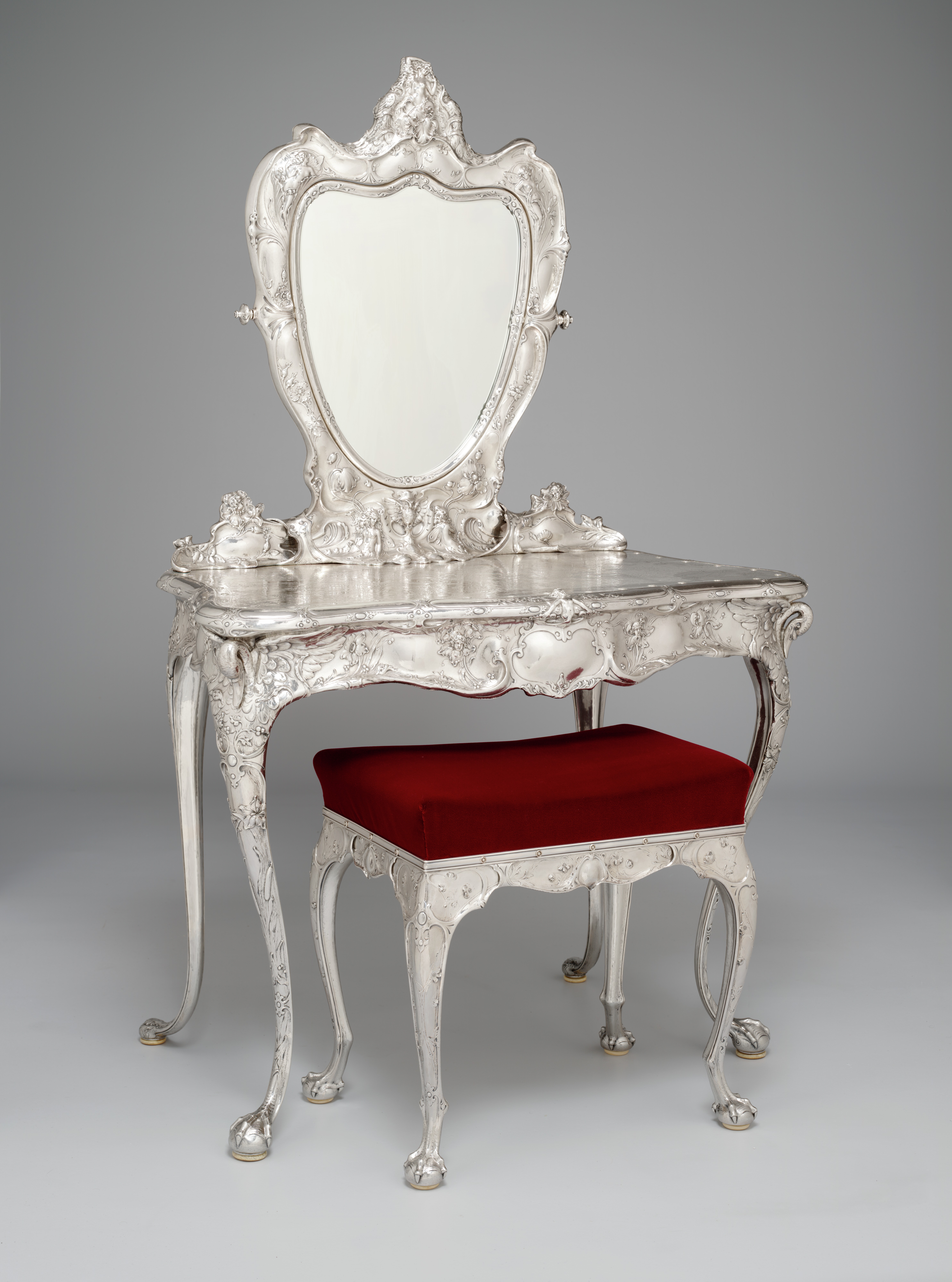
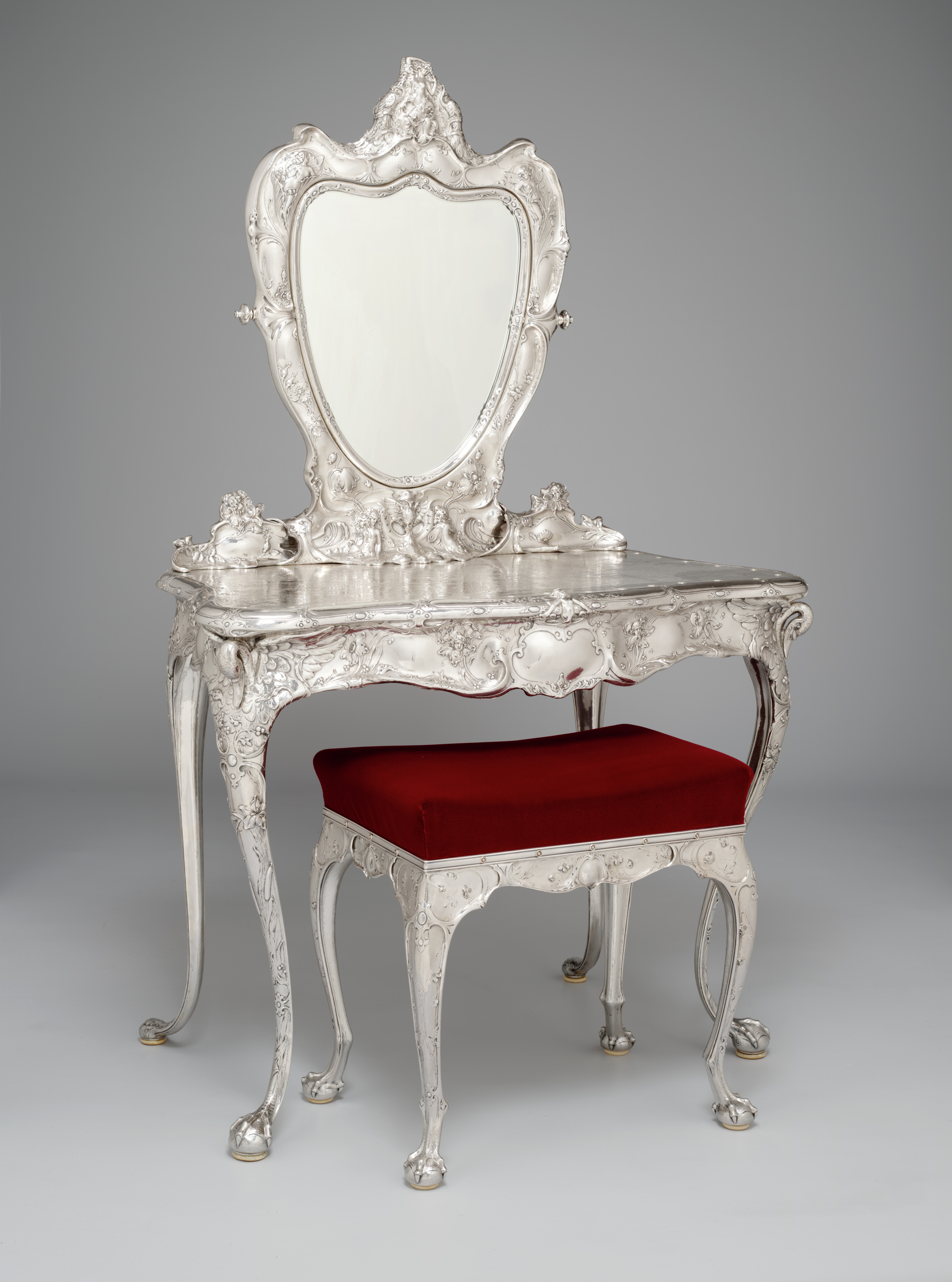
William C. Codman, Martelé dressing table and stool, 1899, silver, glass, fabric, and ivory, Dallas Museum of Art, The Eugene and Margaret McDermott Art Fund, Inc., in honor of Dr. Charles L. Venable, 2000.356.a–b.McD

What was your first encounter with the DMA’s Martelé dressing table like?

Like encountering the sword Excalibur; its presence is magical in form and reflectivity—it’s a formidable piece of work to talk to.

What experience do you want visitors to take away from Curbed Vanity?

I’d like them to know that I find my corner of the world inspiring and beautiful in it’s everyday characteristics. I hope the work inspires viewers to enjoy the subtle and unconventional beauty in their own communities.

Connections Across Collections: Repurposed Materials

Making the old new by transforming discarded objects into works of art is an integral part of contemporary artist Chris Schanck’s practice, as seen in his dressing table featured in the upcoming Curbed Vanity exhibition and made of found materials from the neighborhood surrounding his Detroit studio. We asked DMA curators what other artworks and objects in our collection feature repurposed materials. From personal mementos to wild animal horns, find out about these objects and what they’re made of.

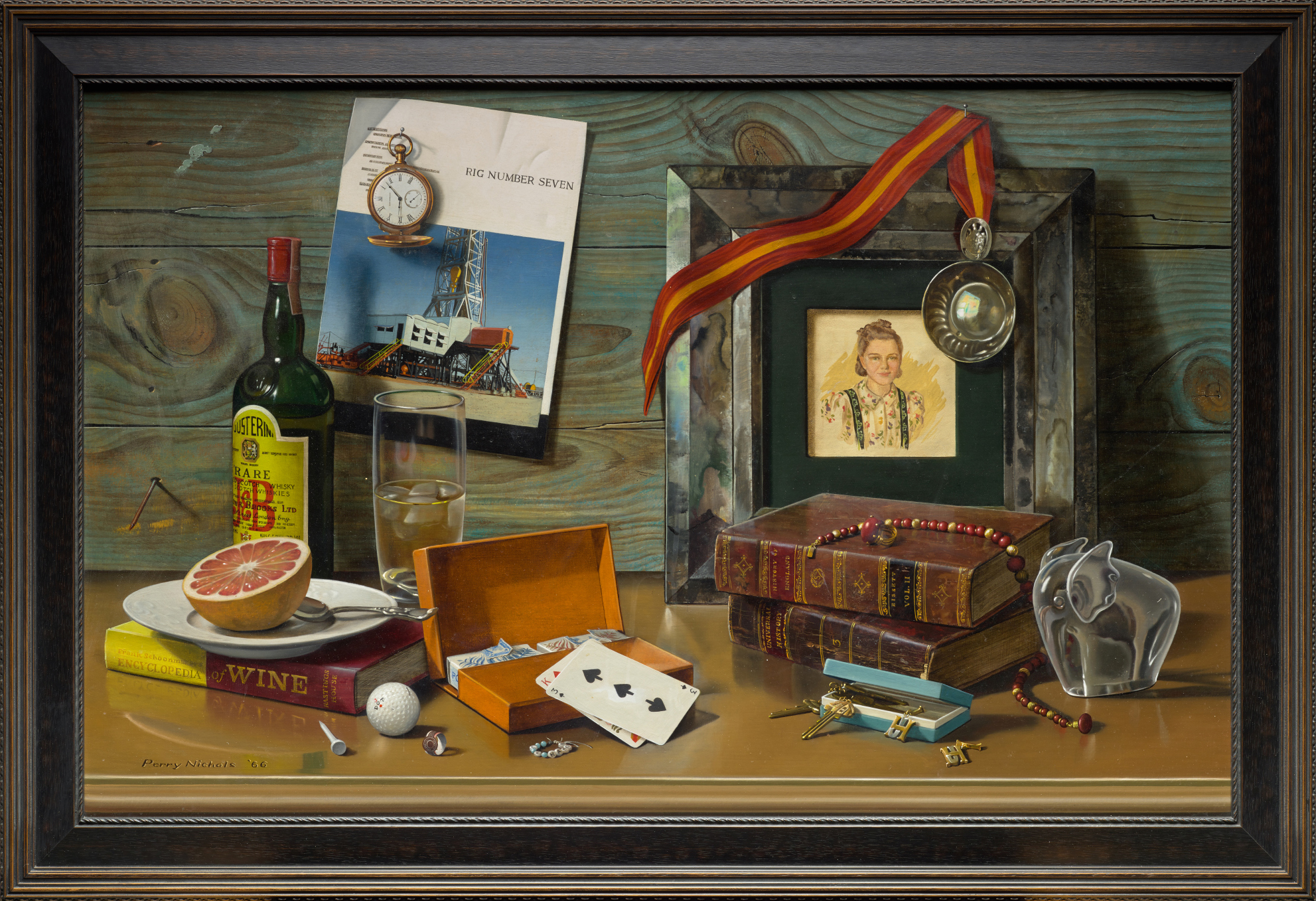
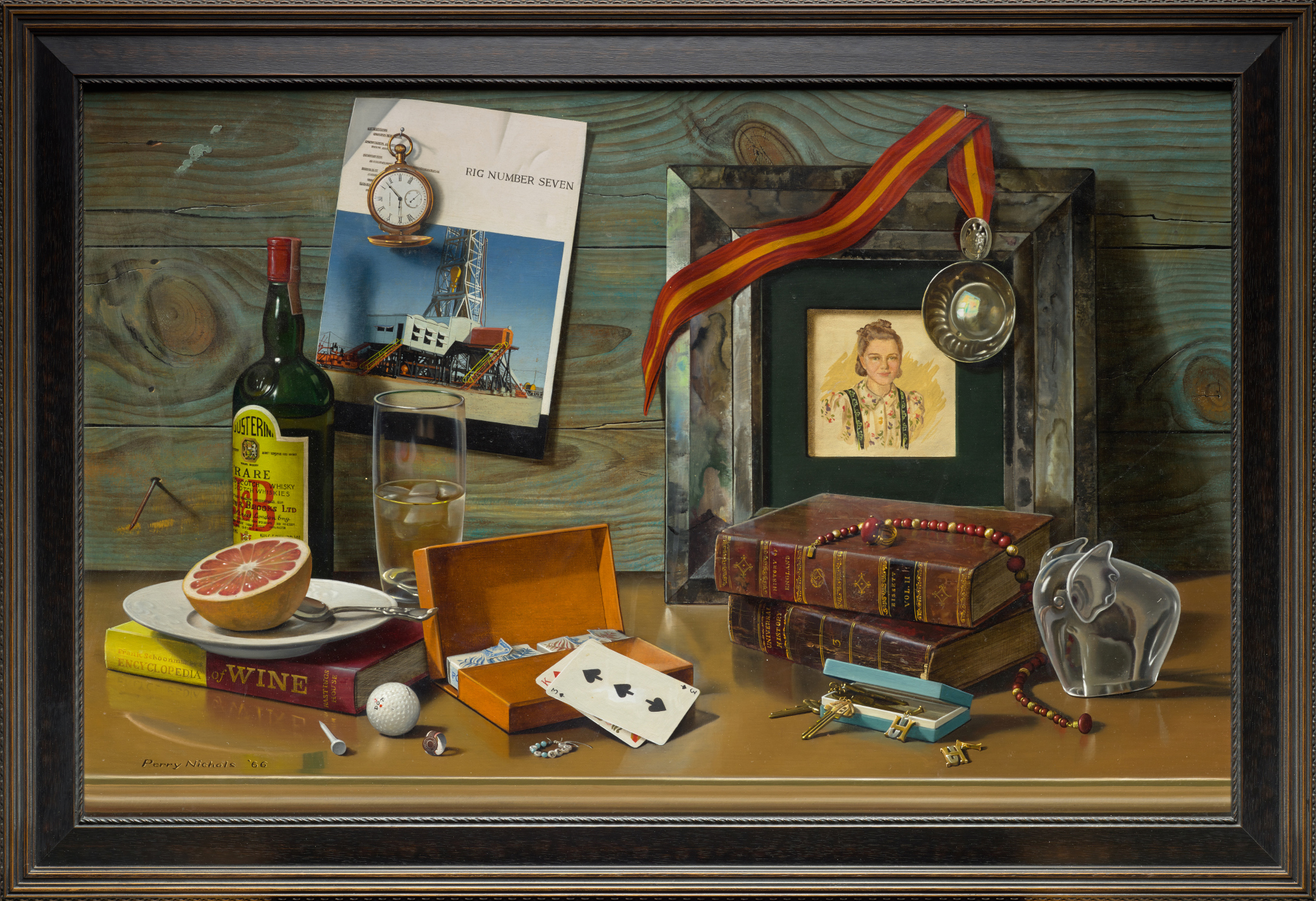
Perry Nichols, [The Desk Top of Jake Hamon], 1966, oil on canvas, Dallas Museum of Art, bequest of Carlos Nichols, 2017.37, © Perry Nichols

Sue Canterbury, The Pauline Gill Sullivan Curator of American Art 
“Dallas native Perry Nichols portrayed Jake Hamon by depicting objects and mementos that represented some of the sitter’s traits, hobbies, and interests. When the Hamons owned the painting, it hung over their mantle while the real-life items rested below.”

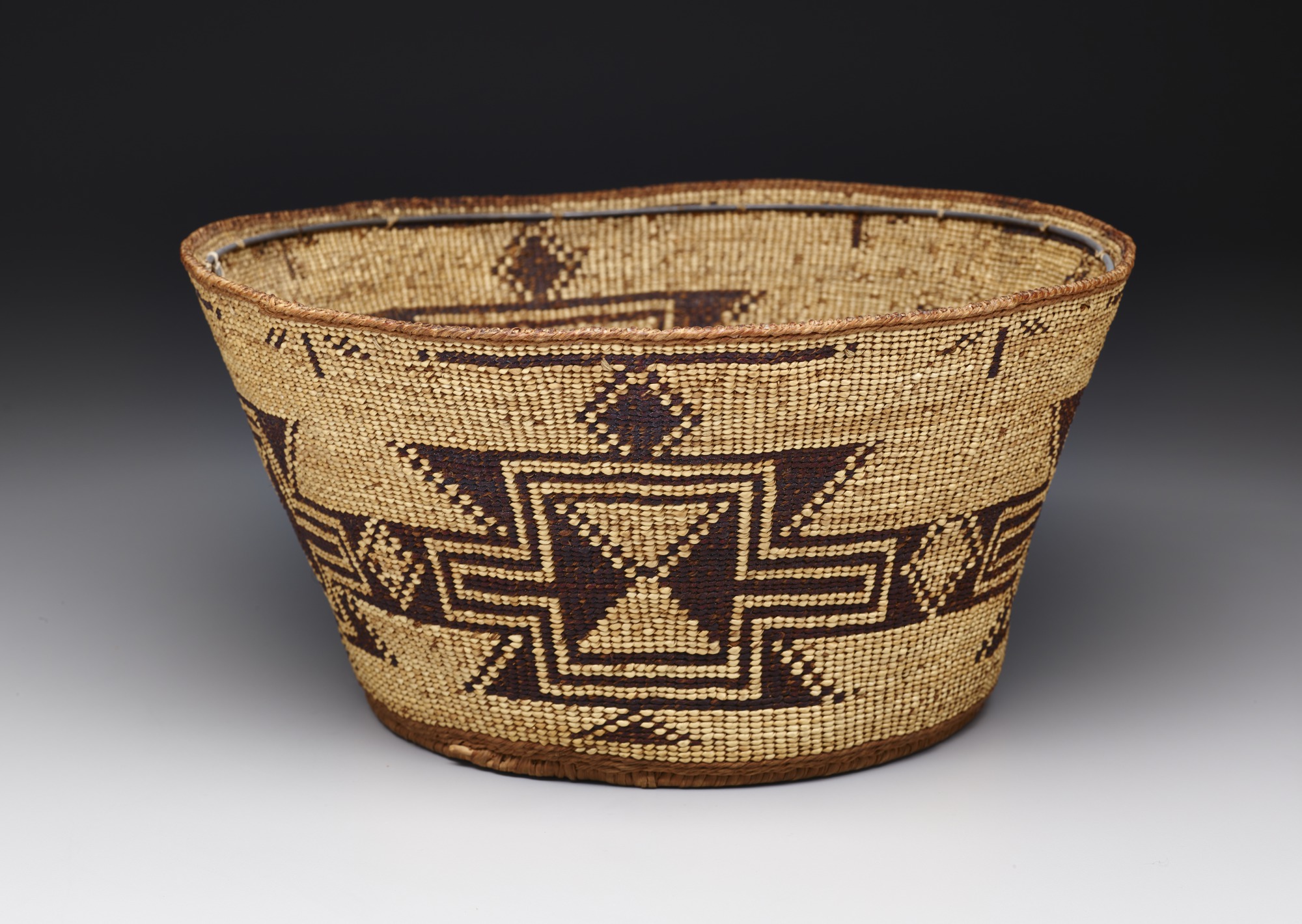
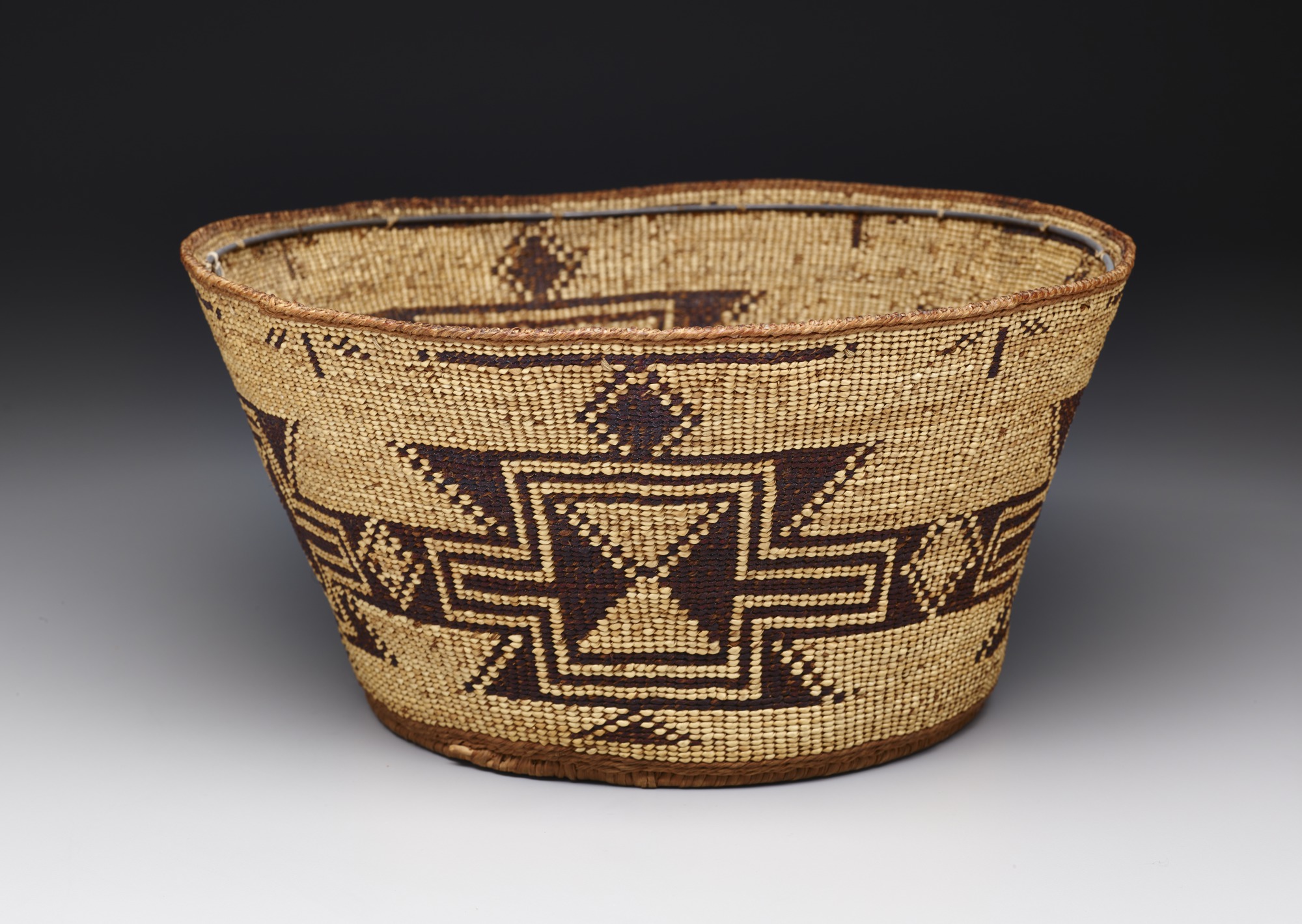
Ceremonial basket, California, Shasta basketweaver, 19th–20th century, Squaw grass and black mountain sedge, Dallas Museum of Art, gift of Mrs. Eugene M. Solow, 1954.130.1

Dr. Michelle Rich, Ellen and Harry S. Parker III Assistant Curator of Arts of the Americas
“Foraging for grasses in nature is a form of producing art with found materials. The Shasta artist who wove this beautiful basket took the time to harvest the bear grass (Xerophyllum tenax) and black alpine sedge (Carex nigricans) from the wilds of Northern California.”

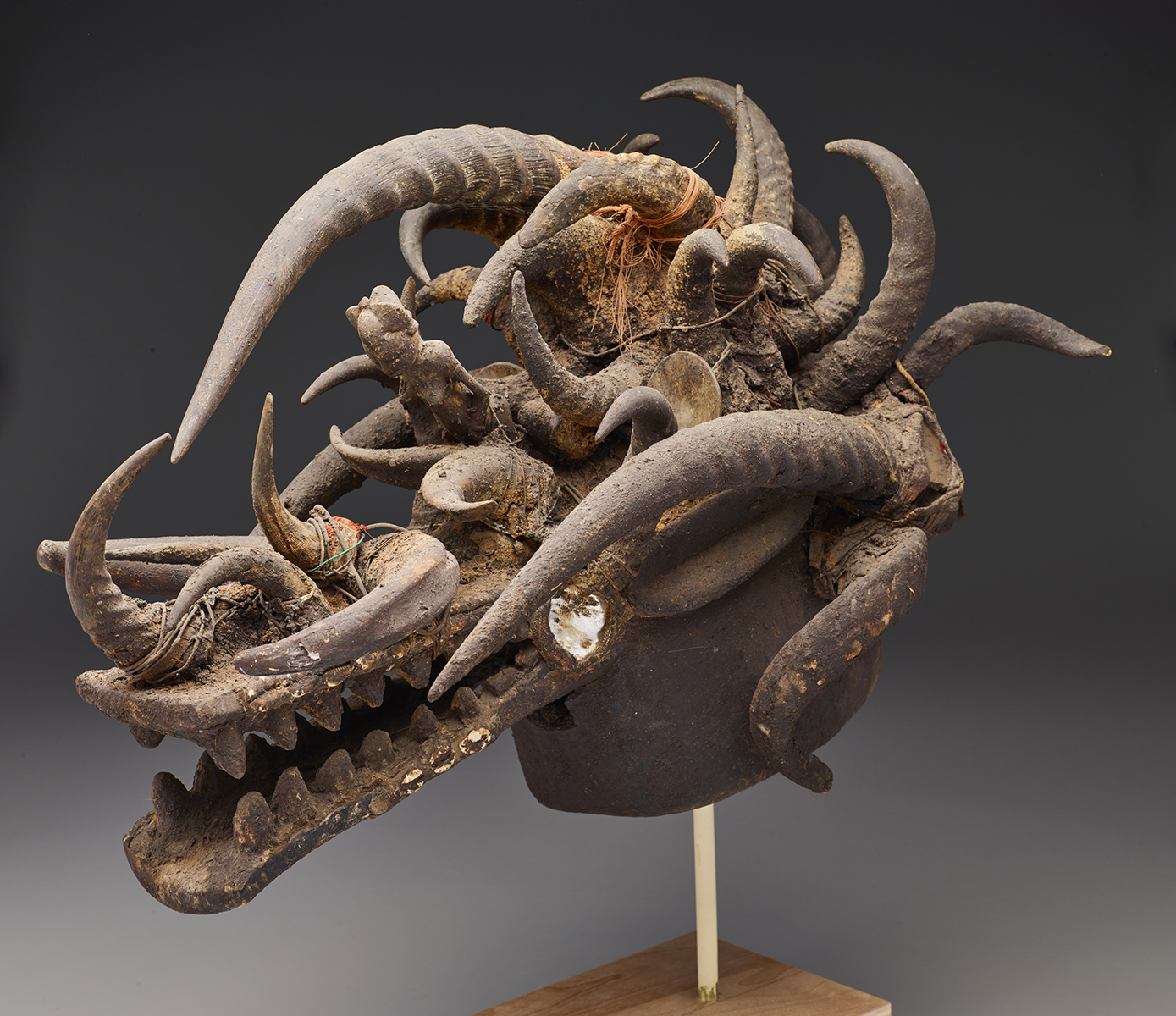
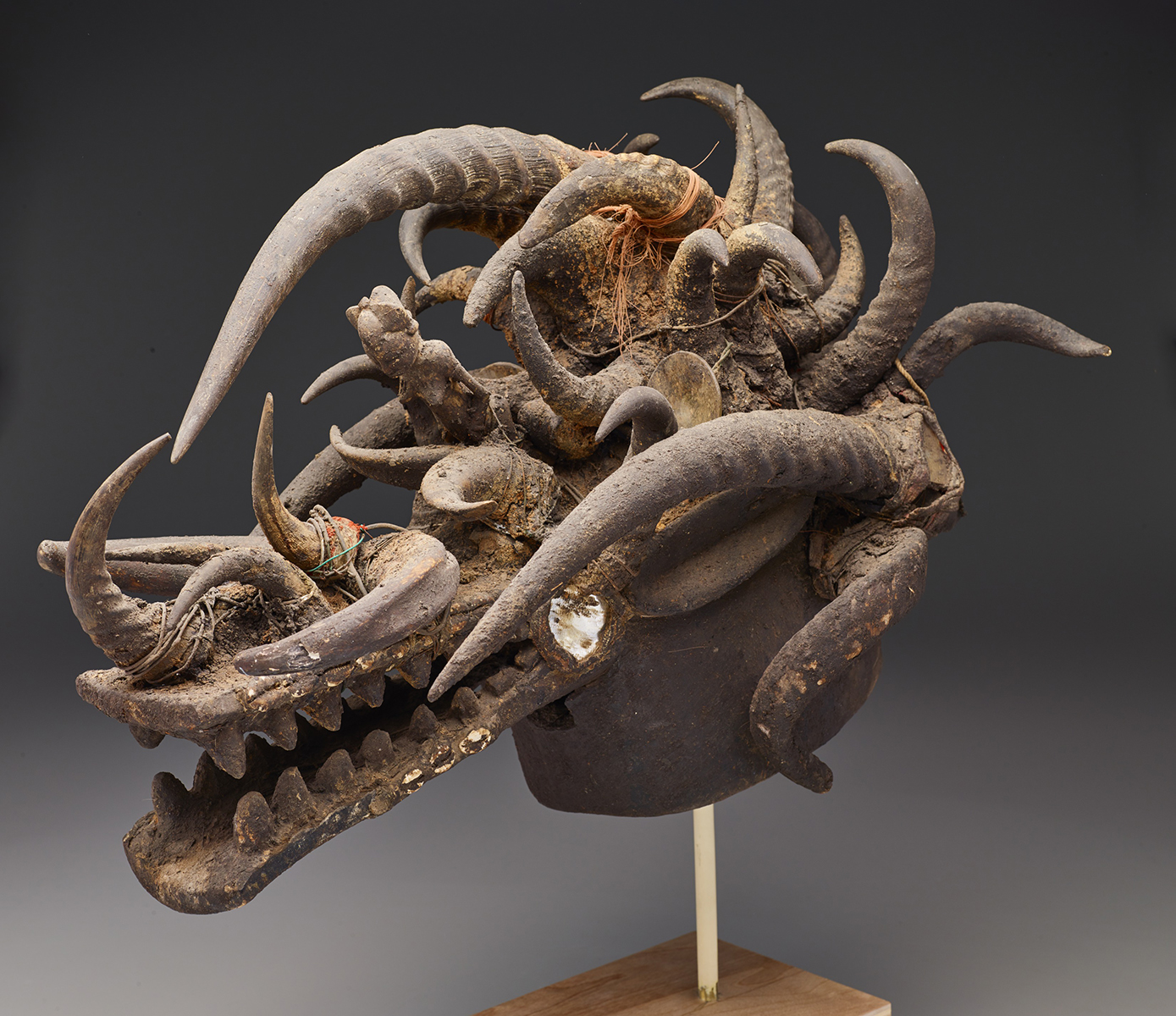
Helmet mask (komo), Mali and Côte d’Ivoire, Senufo sculptor, mid-20th century, wood, glass, animal horns, fiber, mirrors, iron, and other materials, Dallas Museum of Art, gift of David T. Owsley, 1997.24

Dr. Roslyn A. Walker, Senior Curator of the Arts of Africa, the Americas, and the Pacific and The Margaret McDermott Curator of African Art 
“Sharp horns, tusks, and zigzag teeth of wild animals; mirrors; cowrie shells; wine glasses; and sacred texts contribute to the fierce appearance and spiritual power of this helmet mask, as well as project the prominence of the Komo society member.”

Expanded for DMA Members: Connections Across Collections: Repurposed Materials

Making the old new by transforming discarded objects into works of art is an integral part of contemporary artist Chris Schanck’s practice, as seen in his dressing table featured in the upcoming Curbed Vanity exhibition and made of found materials from the neighborhood surrounding his Detroit studio. We asked DMA curators what other artworks and objects in our collection feature repurposed materials. From cabinet chairs to cowrie shells, find out about these objects and what they’re made of.

Perry Nichols, [The Desk Top of Jake Hamon], 1966, oil on canvas, Dallas Museum of Art, bequest of Carlos Nichols, 2017.37, © Perry Nichols

Sue Canterbury, The Pauline Gill Sullivan Curator of American Art 
“Dallas native Perry Nichols portrayed Jake Hamon by depicting objects and mementos that represented some of the sitter’s traits, hobbies, and interests. When the Hamons owned the painting, it hung over their mantle while the real-life items rested below.”

Helmet mask (komo), Mali and Côte d’Ivoire, Senufo sculptor, mid-20th century, wood, glass, animal horns, fiber, mirrors, iron, and other materials, Dallas Museum of Art, gift of David T. Owsley, 1997.24

Dr. Roslyn A. Walker, Senior Curator of the Arts of Africa, the Americas, and the Pacific, and The Margaret McDermott Curator of African Art 
“Sharp horns, tusks, and zigzag teeth of wild animals; mirrors; cowrie shells; wine glasses; and sacred texts contribute to the fierce appearance and spiritual power of this helmet mask, as well as project the prominence of the Komo society member.”

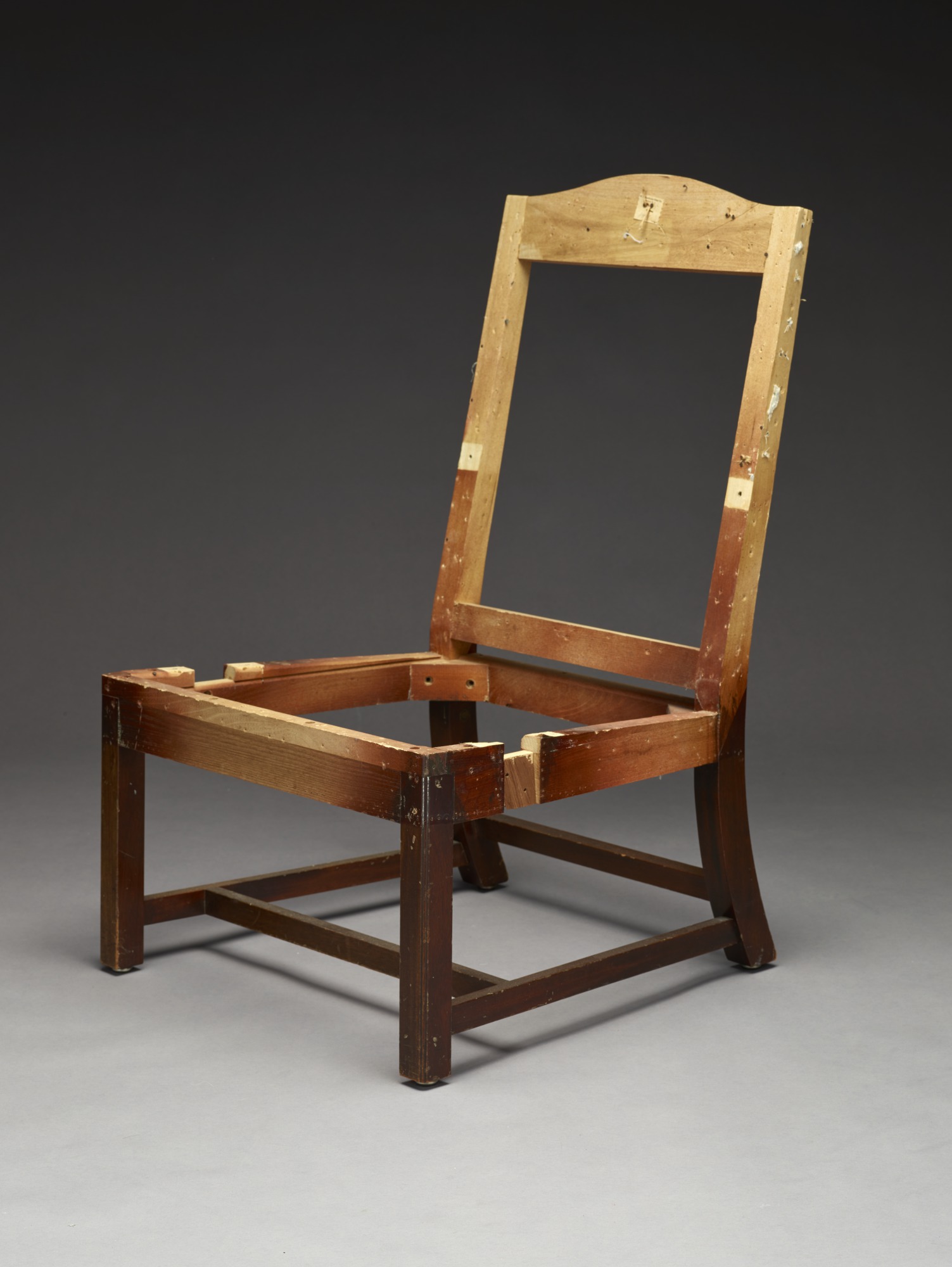
Danh Vo, Lot 20. Two Kennedy Administration Cabinet Room Chairs, 2013, mahogany and metal, Dallas Museum of Art, TWO x TWO for AIDS and Art Fund, 2014.12, © Danh Vo

Dr. Vivian Li, Lupe Murchison Curator of Contemporary Art 
“In Lot 20, Danh Vo disassembles and disperses two cabinet chairs once owned by Kennedy and his Secretary of Defense Robert S. McNamara, the primary architect of the Vietnam War, thus evoking the far-reaching losses made from the decisions of the chairs’ former occupants.”

Ceremonial basket, California, Shasta basketweaver, 19th–20th century, Squaw grass and black mountain sedge, Dallas Museum of Art, gift of Mrs. Eugene M. Solow, 1954.130.1

Dr. Michelle Rich, The Ellen and Harry S. Parker III Assistant Curator of Arts of the Americas
“Foraging for grasses in nature is a form of producing art with found materials. The Shasta artist who wove this beautiful basket took the time to harvest the bear grass (Xerophyllum tenax) and black alpine sedge (Carex nigricans) from the wilds of Northern California.”

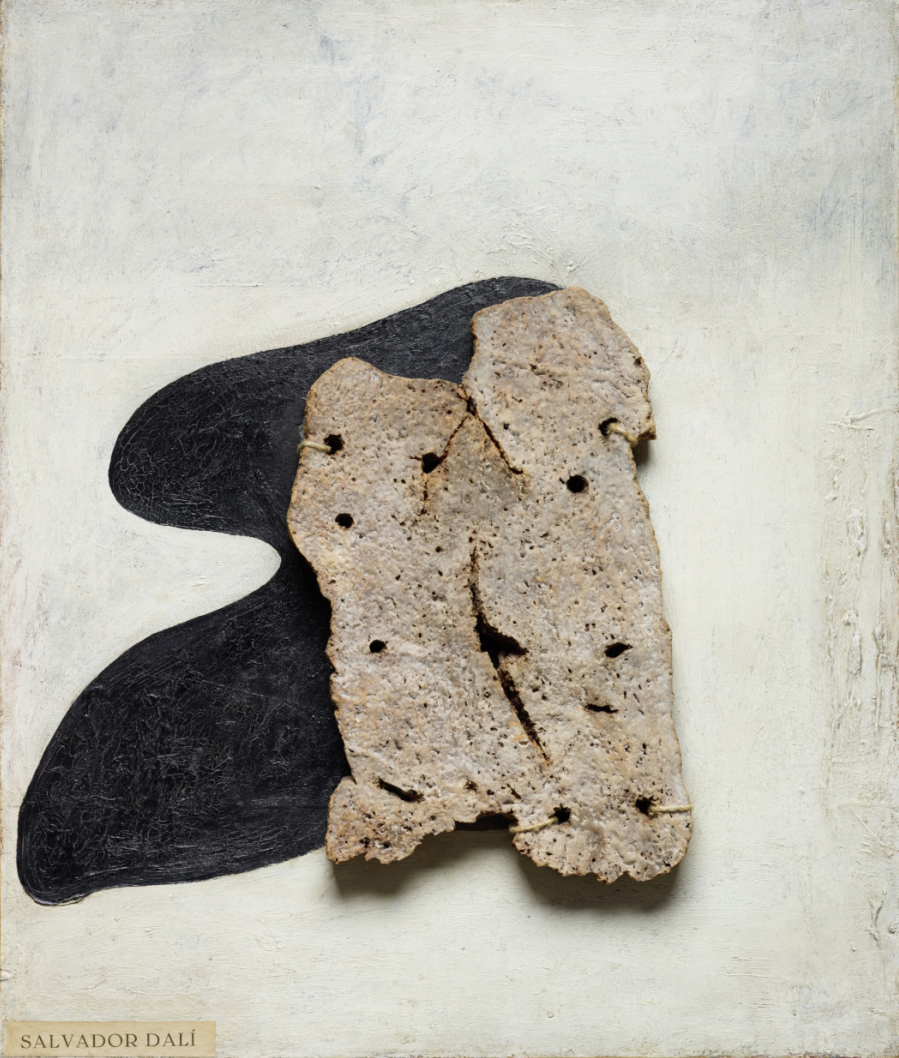
Salvador Dalí, Female Nude, 1928, oil, cork, cord, and collage on canvas, Dallas Museum of Art, bequest of William B. Jordan and Robert Dean Brownlee, 2019.72.78, © Salvador Dalí, Gala-Salvador Dalí Foundation/Artists Rights Society (ARS), New York

Dr. Nicole R. Myers, The Barbara Thomas Lemmon Senior Curator of European Art
“An extraordinary early work, Female Nude is a rare example of Dalí’s brief experimentation with found objects. Here, he affixed an anthropomorphic piece of cork to the canvas in order to evoke the form of a female nude, a playful effect completed by the painted shadow.”

Expanded for DMA Members: Reflections with Chris Schanck

Ahead of Chris Schanck’s first major museum presentation, Curbed Vanity: A Contemporary Foil by Chris Schanck, we asked the artist a few questions about his formative years in Dallas, his artistic practice, and what he hopes visitors will reflect on when experiencing the exhibition. Read what he had to say and see Curbed Vanity, on view February 7 through August 29, 2021.

How was your high school experience at Booker T. formative for you as an artist?

“Good morning and welcome to Booker T. Washington High School for the Performing and Visual Arts, the most unique school in Dallas”—that’s how our principal, Dr. Watkins, addressed the student body over the PA system every morning; I can still hear the optimism in his voice. For a student like me, who often managed to find trouble, I am thankful for the patience and persistence that Dr. Watkins gave me—each day was a new day, a new chance. He gave me enough room to be creative and make mistakes, but he also helped me stay on the path.

Booker T. was the most critical educational experience of my life. My teachers offered me a sanctuary of stability and mentorship. Nancy Miller, Patsy Eldridge, Polly Disky, George Mosely, Charlotte Chambliss, Lolly Thompkins, Josephine Jones, and Sylvia Lincoln together gave me a strong fine arts foundation. 

My painting teacher, George Moseley, changed my life forever. Mr. Moseley is a great artist, an inspiring educator, and a trusted mentor. I, along with many of my peers, idealized him for the leadership he showed us in our youth. I know without a doubt that my life and career are forever indebted to him and those handful of teachers who helped me find the confidence to believe in myself.

What does having this show at the Dallas Museum of Art mean to you?

My high school was just down the street from the DMA and I visited countless times in those impressionable years. The Museum always had the familiar feeling of visiting a friend’s home; I felt welcomed and I knew my way around. At the same time, the DMA was my temple. It didn’t matter who I was in the Museum—everyone is equal before art.

The Museum was my gateway to art history. In one afternoon, I could visit with Aztec gods, Jackson Pollock, and Frida Kahlo—and I could start to see the connections and conversations between them all. I didn’t have a lot growing up, but the Museum and my high school gave me exactly what I needed. They showed me from a young age that art gives everything else meaning.

I’m grateful for the support of the Museum and the friends of the Museum. The DMA’s collection is the closest collection to my heart and to be a part of it is the greatest honor.

When did you first start collecting discarded objects? What is the most memorable
object you’ve found?

When I was a child, my mother encouraged me to collect small stones as mementos when visiting special places like parks and cemeteries. My mother, a believer in the mystical and supernatural, taught me that objects can possess energy and a history from their past owner or caretaker. She influenced me to see objects in the material world as animated material that could keep a memory of its life cycle.

One doesn’t have to believe in the occult to see that a found object carries the markings and patina of its past. I collect the ordinary—a fallen tree branch, a broken chair leg, or a cracked piece of a taillight. The most memorable object I’ve found is a very sculptural piece of crumpled steel I found sitting near the railroad tracks. I haven’t managed to use it yet because it’s so powerful on its own. Ultimately, my whole collection is greater than the sum of its parts; it’s an archive of artifacts from my current community’s landscape.

How does the transformation process of found objects into furniture inspire your artistic practice?

The found objects I work with have very disparate characteristics and I don’t have one specific method for grouping them. For each piece of work, I first build a simple structure and use that as an armature to explore the relationships between the objects and the material. The process of transforming the objects into form is driven by intuition and practical constraints. Many times, I’m following a hunch that two distinct things belong together, while other times I’m exploring rigid dimensional constraints between manufactured generic objects whose original intent is a mystery.

It feels like a collaborative effort between myself and the material—I have a notion of where to begin but the objects bring the project into focus.

William C. Codman, Martelé dressing table and stool, 1899, silver, glass, fabric, and ivory, Dallas Museum of Art, The Eugene and Margaret McDermott Art Fund, Inc., in honor of Dr. Charles L. Venable, 2000.356.a–b.McD

What was your first encounter with the DMA’s Martelé dressing table like?

Like encountering the sword Excalibur; its presence is magical in form and reflectivity—it’s a formidable piece of work to talk to.

What experience do you want visitors to take away from Curbed Vanity?

I’d like them to know that I find my corner of the world inspiring and beautiful in it’s everyday characteristics. I hope the work inspires viewers to enjoy the subtle and unconventional beauty in their own communities.

Found and Foiled

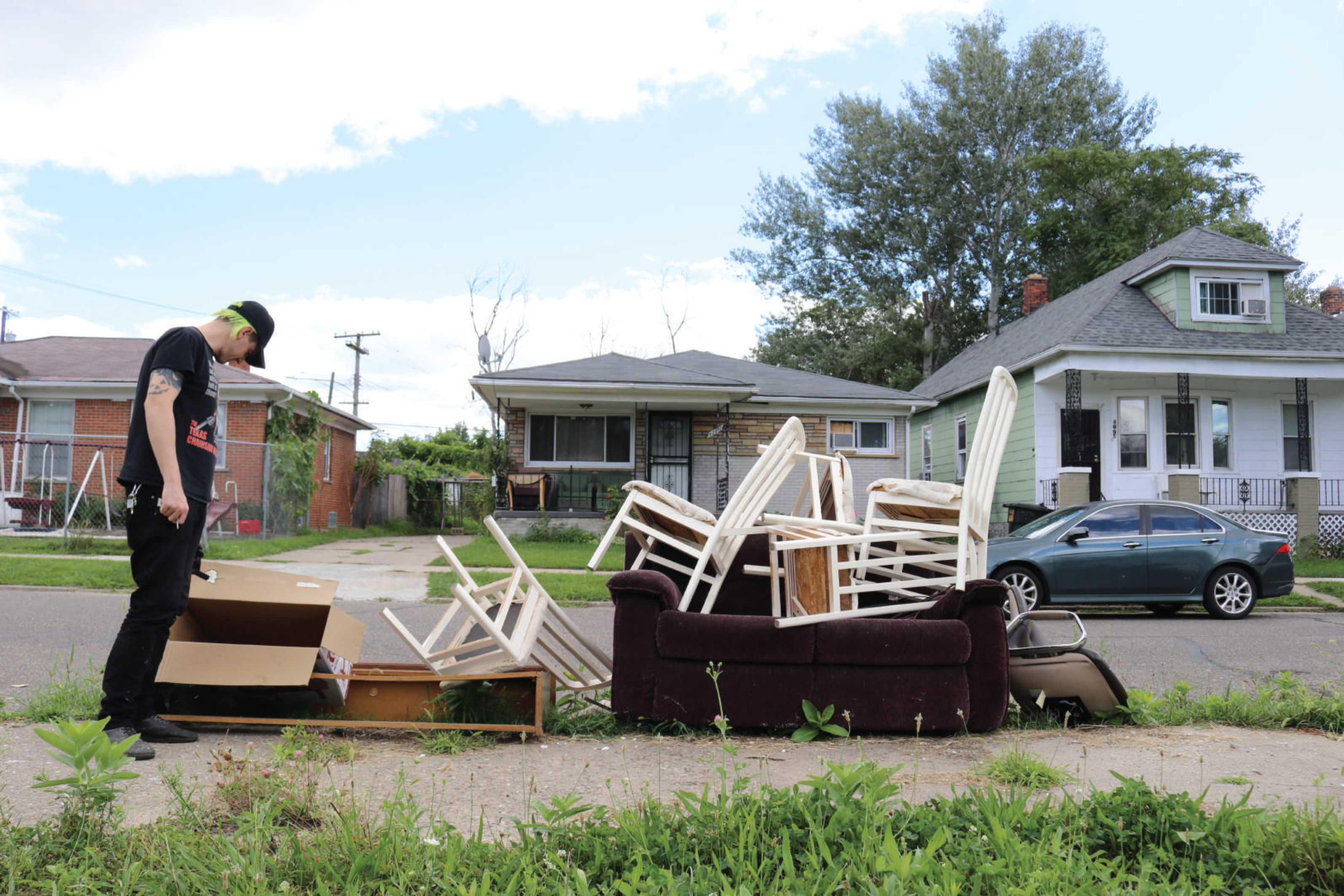
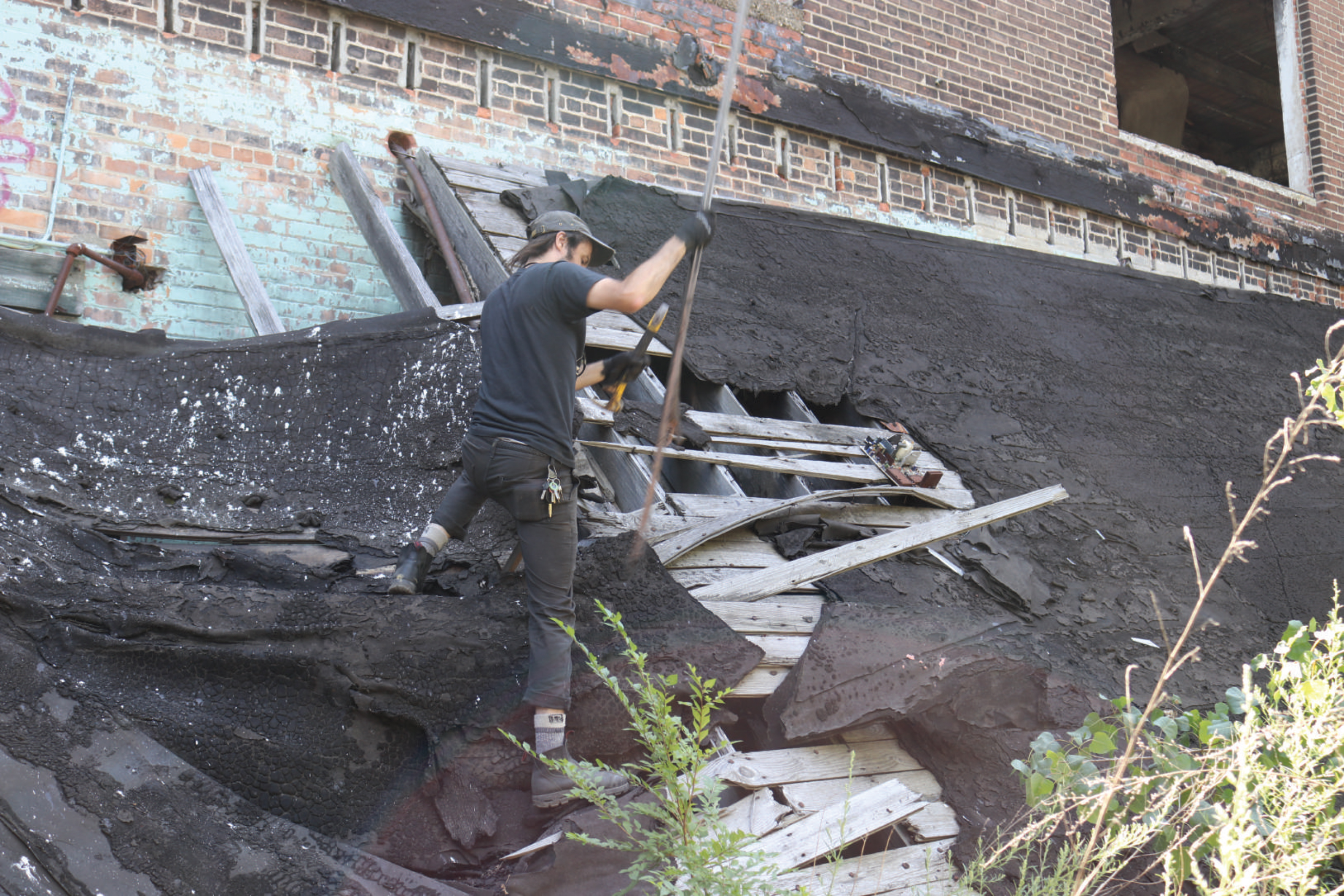
Chris Schanck is a Dallas-native artist whose first museum commission and solo museum presentation Curbed Vanity: A Contemporary Foil by Chris Schanck debuts at the DMA this winter. Schanck creates artworks from industrial and discarded objects he collects from outside. The artist then coats the materials in aluminum foil and resin—a reference to the Dallas aluminum factory where, along with his father, Schanck worked when he was young. Take a behind-the-scenes look at his process of collecting materials, as well as progress shots of how he transforms these objects into new pieces of furniture.

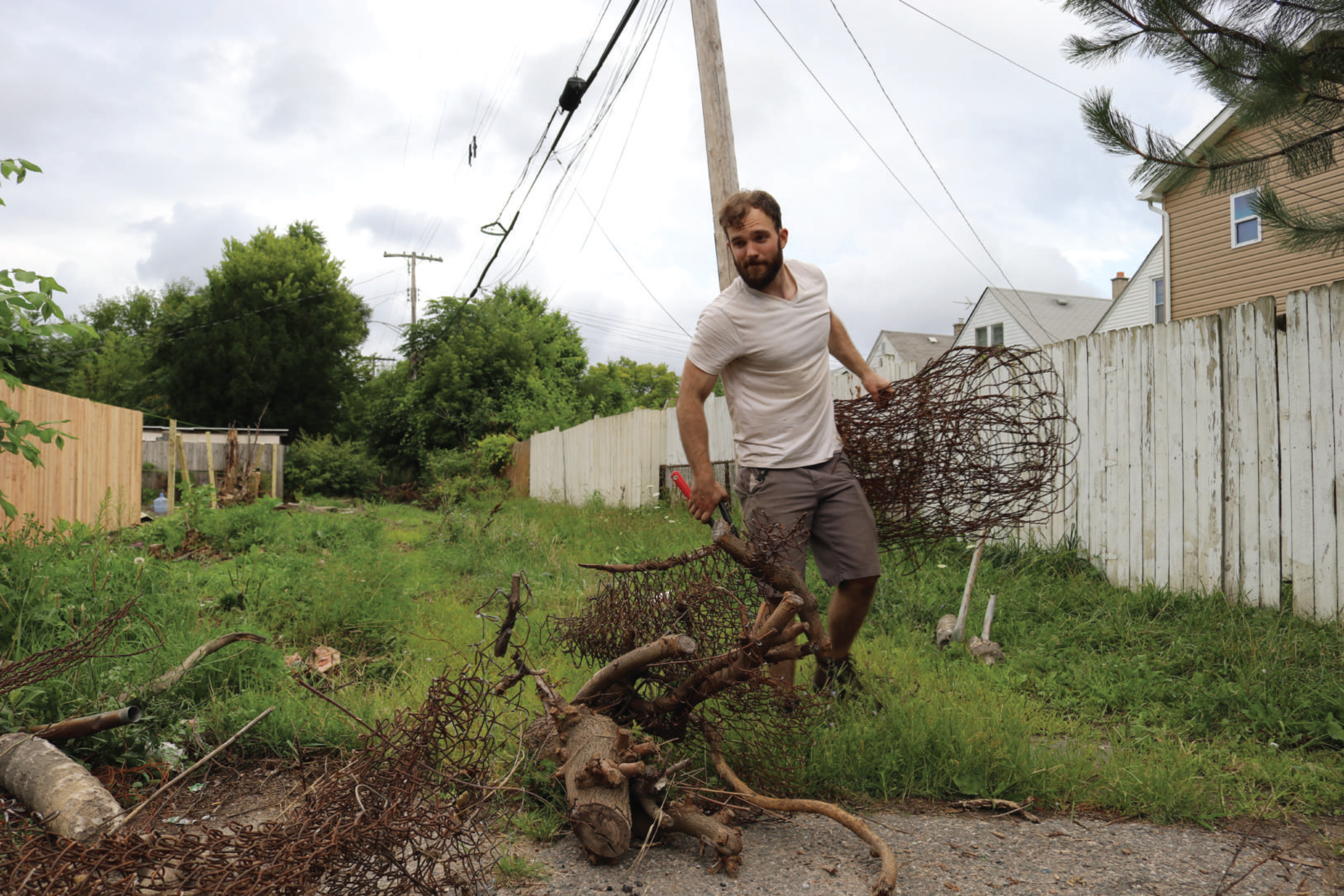
Chris and his team in his Detroit neighborhood inspecting furniture left on the curbsides
Chris gathering materials from an old house near his home in Detroit
Chris and his team collecting discarded construction materials from an abandoned lot in his Detroit neighborhood
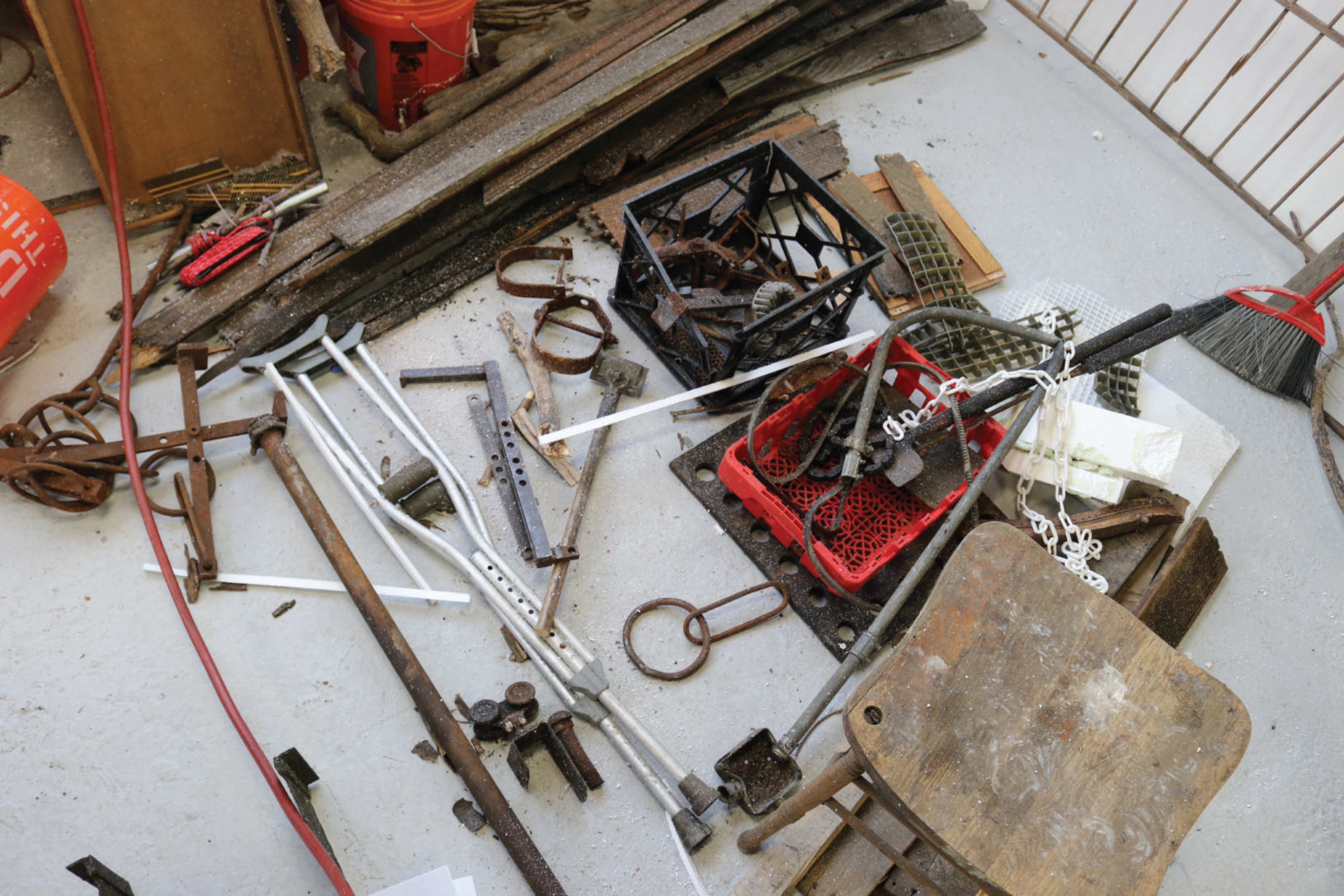
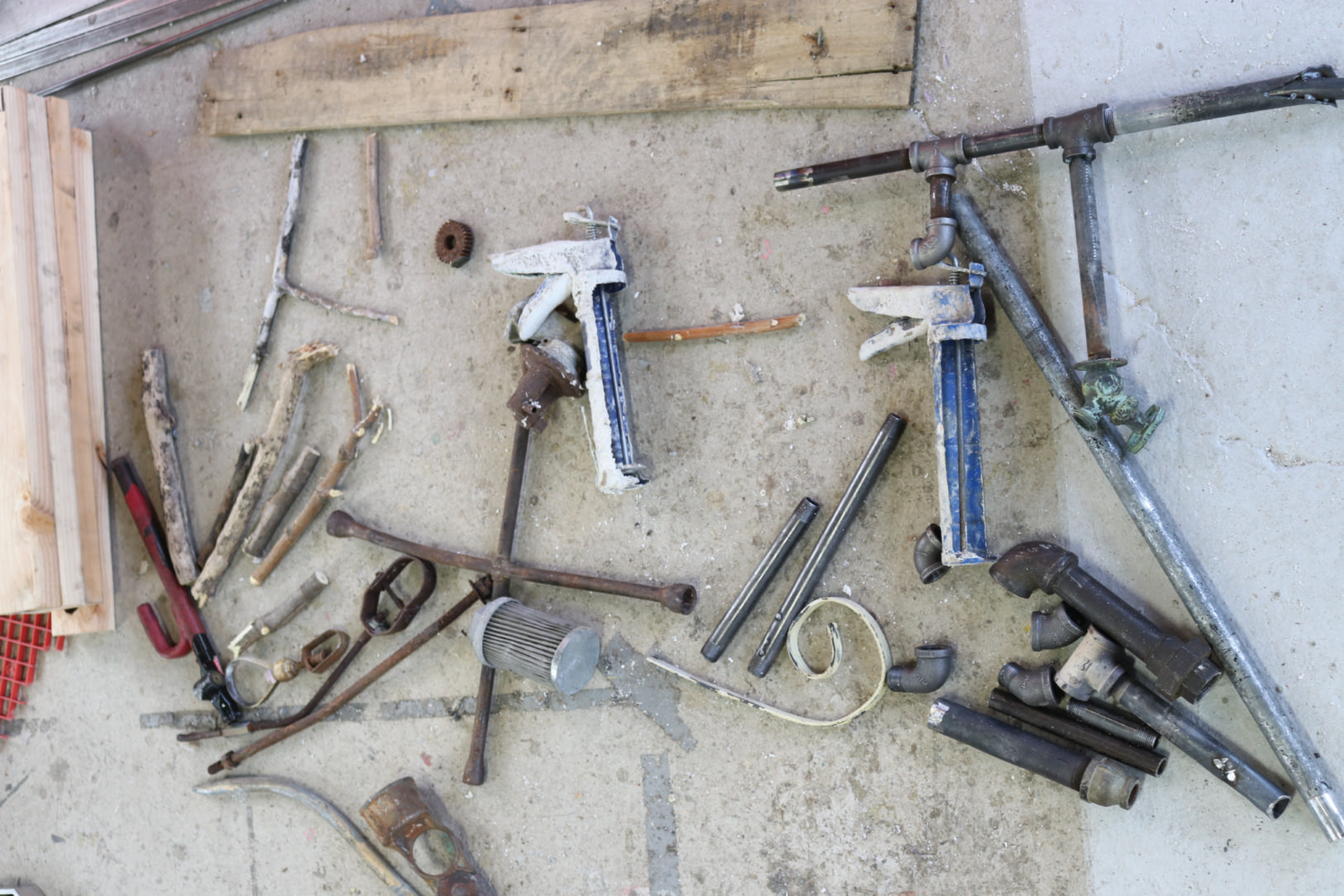
A collection of discarded objects and materials Chris found in his neighborhood
More discarded objects that Chris and his team found and cataloged back in the studio
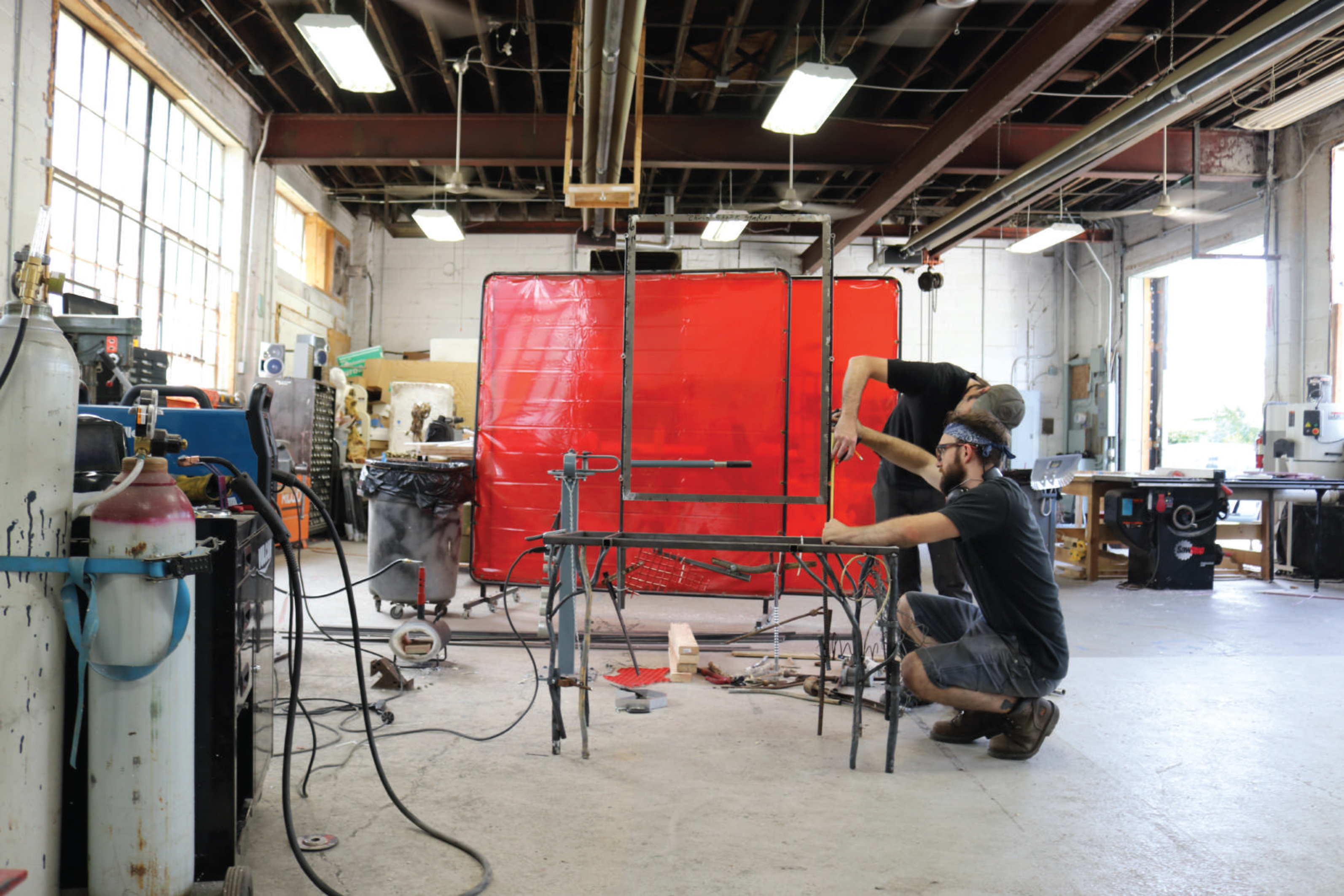
Chris and his assistants in his Detroit studio building the maquette, or skeleton, for Curbed Vanity.

Curbed Vanity in progress:

Chris Schanck, American, born 1975
Curbed Vanity, 2020
Mixed media, aluminum foil, and resin.
T44152.1-2

Member Appreciation Weekend Recap

Last month we held Member Appreciation Weekend, a fun-filled celebration of YOU, our supporters, featuring scavenger hunts, art activities, discounts at the DMA store, members-only viewing hours, and more. Check out our recap slideshow and look forward to more member-exclusive events and benefits in 2021!

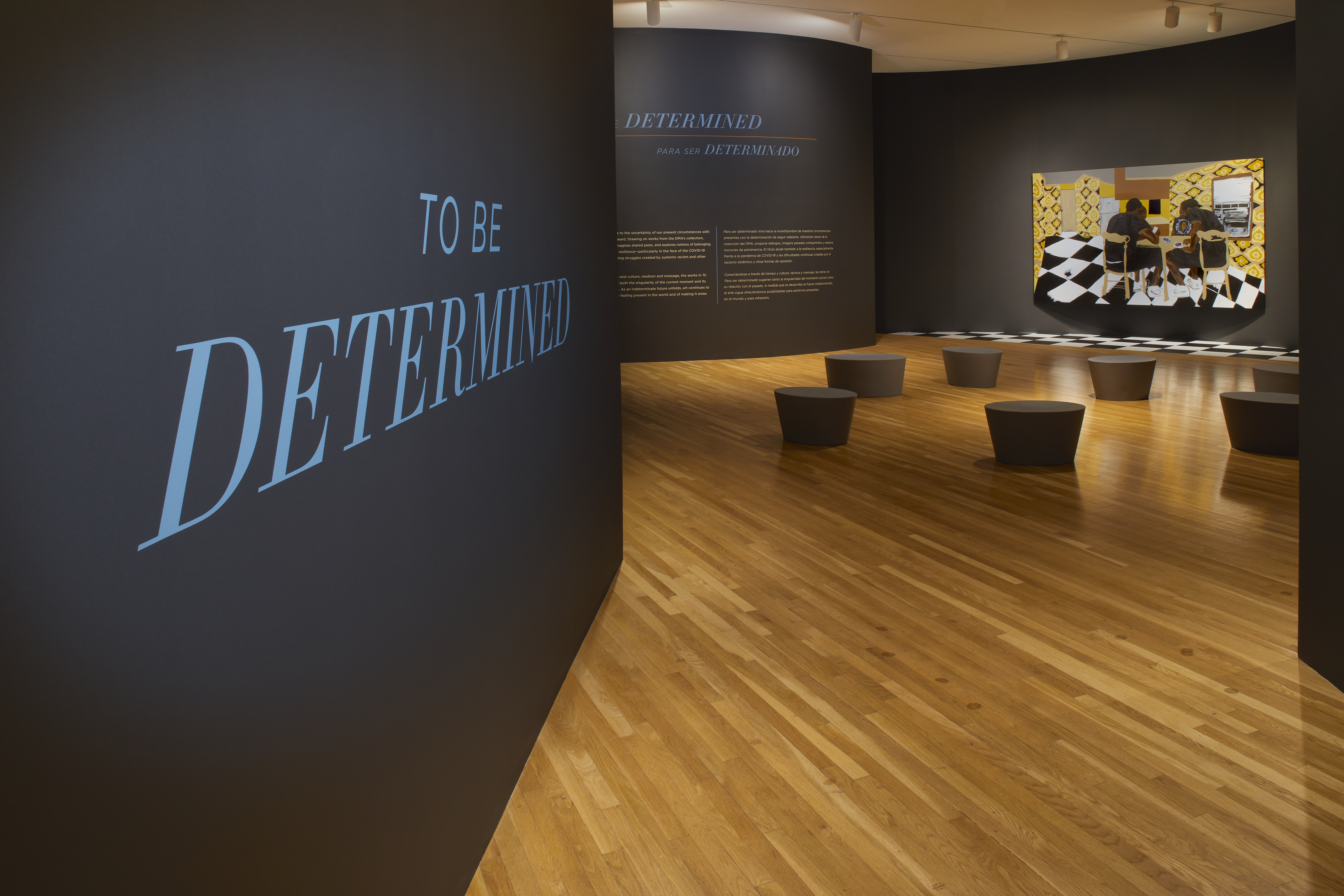
Staff Spotlight: “To Be Determined”

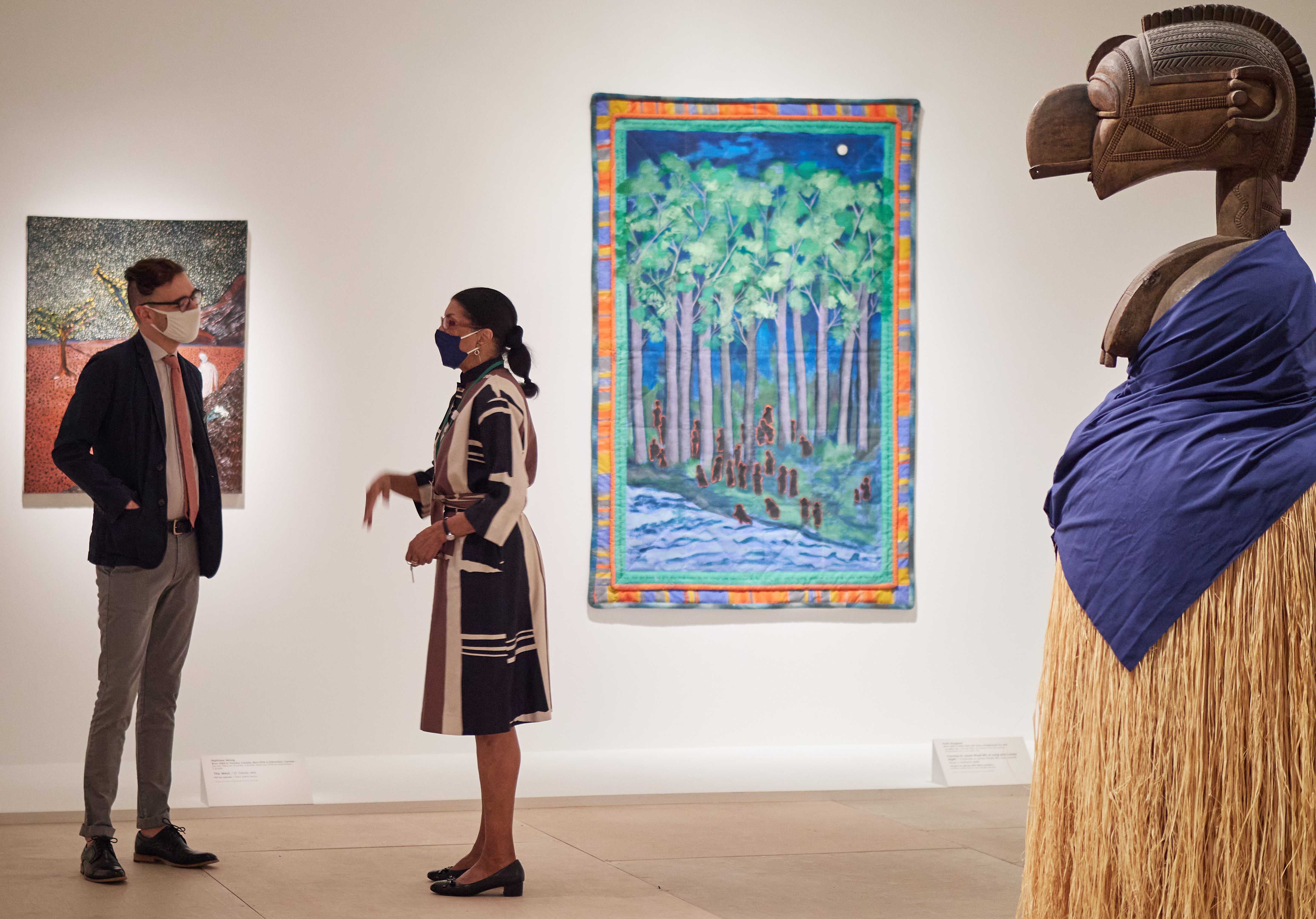
Organized through collaboration among the entire curatorial team over the DMA’s five-month closure, To Be Determined represents the power of art amidst uncertainty and invites viewers to uncover new and personal meanings in objects from the Museum’s vast collection.  

Staff from across the Museum share their inspiration and determination in bringing this exhibition to life:

Hayley Caldwell, Copy and Content Marketing Writer 
“In the context of bringing this exhibition to life, I was inspired by the many creative possibilities and meanings that each grouping of artworks can convey, and how the nature of the show is to embrace and give importance to the viewers’ own interpretations. I was and am determined to support this experience by fostering a digital space where viewers can make and discuss their own connections.” 

Jessie Carrillo, Manager of Adult Programs 
“In the context of bringing this exhibition to life, I was inspired by the passion DMA curators have for the collections they steward and the objects they selected. I was determined to capture this passion in a series of virtual curator spotlight talks with the goal of moving visitors to find something in the exhibition that speaks to them.” 

Lizz DeLera, Creative Director 
“The theme of this exhibition and the zeitgeist subject matter that the curatorial team put so much thought into spurred me on to be determined to showcase the works and the shared themes they represent. I did this by conceptualizing a resonating and experiential microsite to manifest with ‘chapters’ that speak to the common thread of what people are currently feeling and experiencing in these challenging times.” 

Tara Eaden, Operations Manager 
“In the context of bringing this exhibition to life, I was inspired by the Dallas Museum of Art’s strength and determination to preserve and continue to bring art alive despite the current times. I am still elated to witness the diversity and inclusion within the exhibition, as works from Dallas based artists Oshay Green and Jammie Holmes are on view. I was determined to ensure that the works of art were displayed in a space that is comfortable and pristine for a positive and memorable visitor experience.” 

Jaclyn Le, Senior Graphic Designer 
“In the context of bringing this exhibition to life, I was inspired by my colleagues’ shared passion to create an exhibition that encourages dialogue surrounding the current state of the world. I was determined to design a graphic identity that was delicate yet strong, embodying the idea of resiliency, and to create a color palette that was in harmony the wide range of works shown. Both have been implemented across both web and print platforms, and is successfully weaved into the exhibition’s microsite.” 

Brian Peterman, Lighting Preparator 
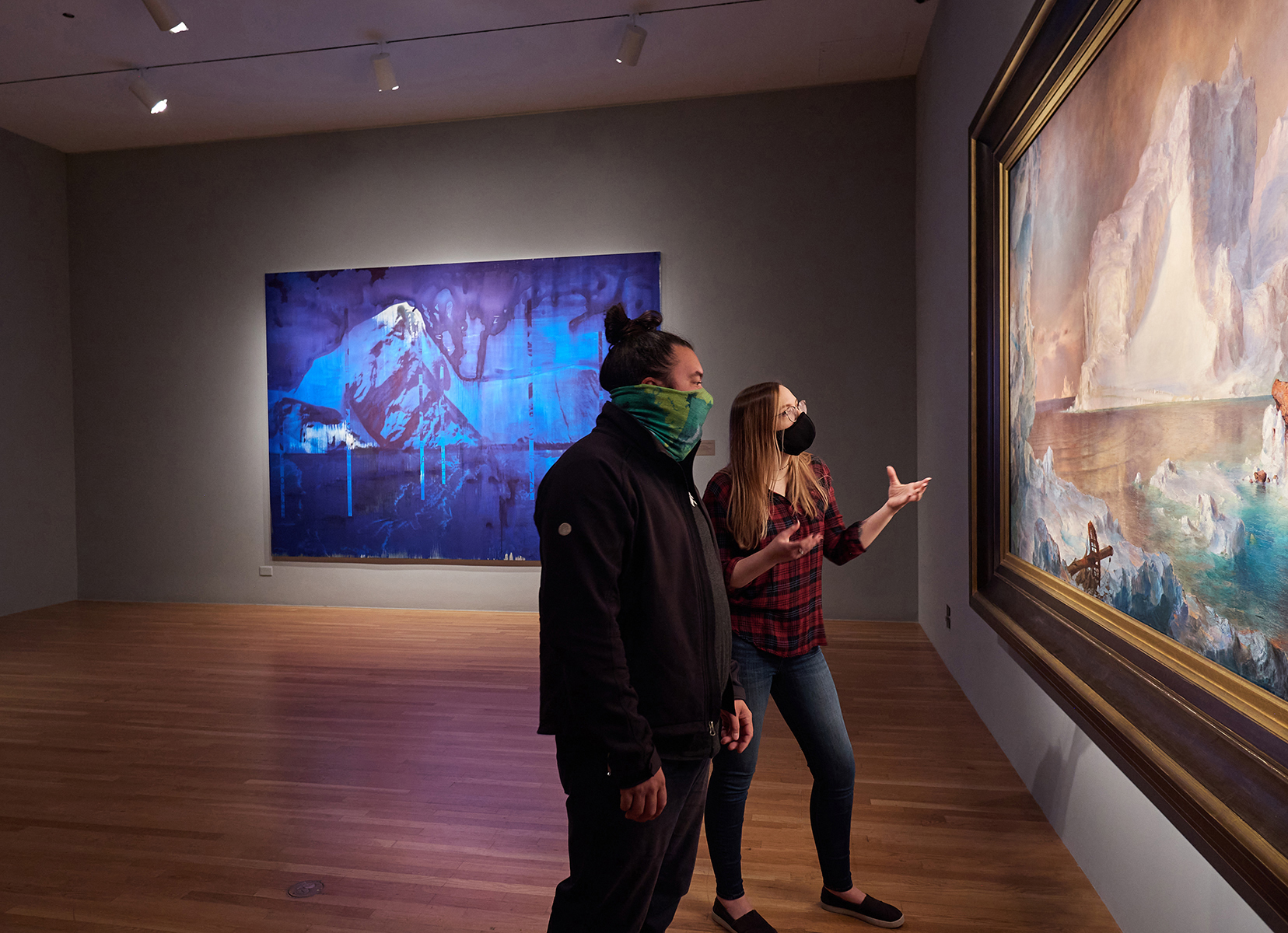
“I was inspired by the curators’ selections and the thought-provoking juxtapositions these created. I was determined to develop the dramatic lighting effects that they were seeking, with areas of concentrated light surrounded by deep shadow, such as in the gallery where Frederick Church’s The Icebergs and Lorna Simpson’s Blue Turned Temporal are quietly alone together. The show turned out beautifully, with a moody and introspective atmosphere that reflects the tone of the unusual times in which we’re living.” 

Claudia Sánchez, Associate Registrar for Exhibitions  
“In the context of bringing this exhibition to life, I was inspired by a personal need and yearning for the kind of kinship and camaraderie uniquely shared between colleagues and I was determined to be as accommodating and empathetic to fellow staff as a result of the collective challenges experienced due to new COVID rules and procedures. Despite the obstacles, our team safely and successfully installed the show and relished in the satisfaction of being onsite and feeling industrious again.” 


Archives

Categories