Archive for the 'Staff' Category


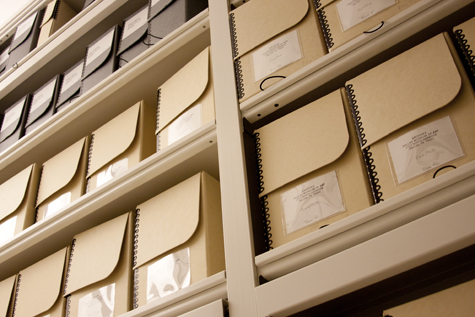
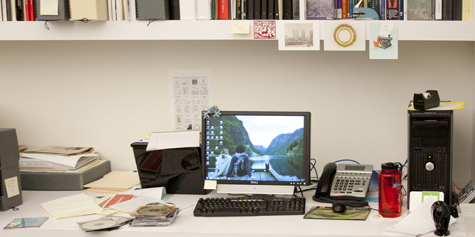
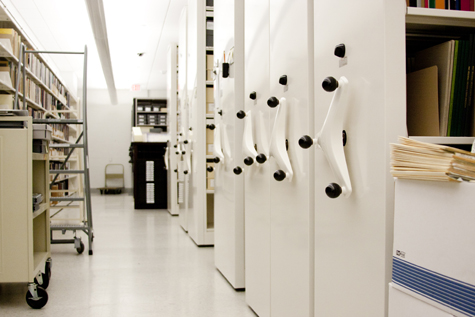
Behind Closed Doors: Archives

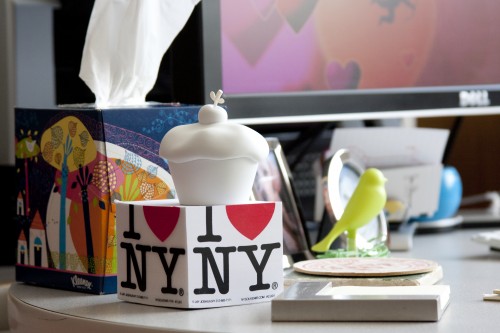
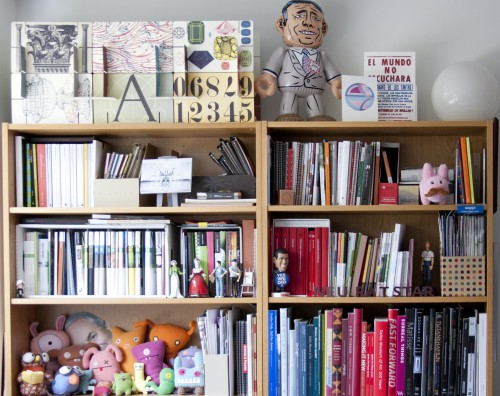
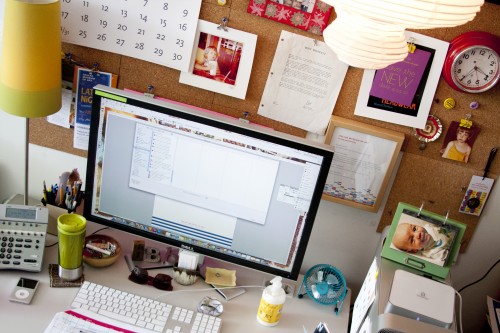
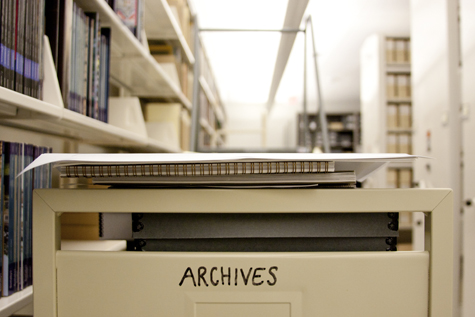
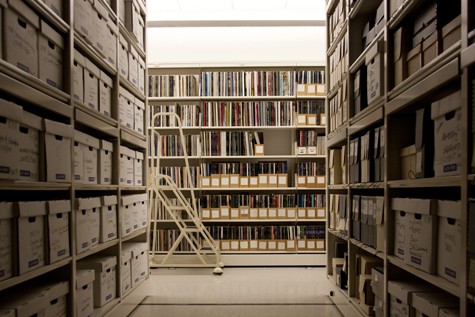
Go behind the Museum office doors and discover the various work spaces in the DMA. Each month we will share insight into a different department.

This month, Hillary Bober, Digital Archivist, shares her space with us.

Photography by Adam Gingrich, Marketing Assistant at the Dallas Museum of Art

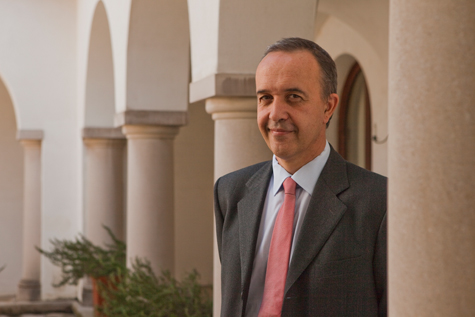
Meet Monsieur le Directeur de Transition

Late in the summer of 2009, when Olivier Meslay joined the DMA as the Senior Curator of European and American Art, he never imagined that two years later he would be the Interim Director. Yet, that is exactly what he was asked to be when Bonnie Pitman stepped down earlier this year. Honored by the appointment, Olivier gladly accepted this important responsibility.

Admired for his accomplishments as a curator, scholar, and professor, as well as for his humor and kindness, Olivier is the perfect person to lead the DMA during this transitional time, because, as they say in Texas, “this is not his first rodeo.” Before joining the DMA’s curatorial staff, he spent sixteen years at the Musée du Louvre. His credentials include graduating from some of the finest educational institutions in France, including the Institut National du Patrimoine, (the French State School for Curators), the Ecole du Louvre (where he was also a professor from 1997 to 2006), and the Sorbonne. Yet, Olivier is quite familiar with American museums; from 2000 through 2001 he was a fellow at the renowned Clark Art Institute in Williamstown, Massachusetts.

During his career at the Louvre, he held a number of senior positions, including curator of British, American, and Spanish painting. He curated several exhibitions, such as the innovative “Louvre Atlanta” project, a three-year collaboration with the High Museum of Art that presented seven shows drawn from the Louvre’s collections that attracted more than one million visitors. Other exhibitions over the course of his career reflect his expertise in British, Spanish, and American Art. A few of the most notable are William Hogarth, American Artists and the Louvre, and La collection de Sir Edmund Davis. He also played a pivotal role developing databases on the Louvre website that provide public access to the entire catalogue of American and British art in French museums. Beginning in 2006, he served as Chief Curator of Louvre Lens, a satellite of the noted Paris museum under development in northern France.

Olivier remained there until 2009, when he moved to Texas to assume his role as the DMA’s Senior Curator of European and American Art. Since leading that division, he curated José Guadalupe Posada: The Birth of Mexican Modernism, and, reflecting his eagerness to embrace his new home, Texas Sculpture. Olivier also spearheaded a complete reinstallation and reconfiguration of the Museum’s European galleries. Thanks to a recently completed project, of which he is most proud, almost the entire collection of the DMA is now available for viewing on our website. Olivier recognizes that this herculean effort came to fruition through the extraordinary efforts of many of his colleagues. His innovative spirit and dynamic leadership quickly made a difference at the DMA. Those qualities will help him lead us through the months ahead. In his spare time, Olivier, his wife, and their two sons have traveled to cities throughout our state, including Paris (Texas not France), El Paso, Laredo, Amarillo, and Midland. This thoughtful, intelligent Frenchman has not forgotten his heritage, but he has developed a keen interest in his new hometown. He has a deep appreciation for everything in Dallas, from its people, to its food, and, of course, its art museum.

Martha MacLeod is the Curatorial Administrative Assistant in the European and American Art Department at the Dallas Museum of Art.

Staff Profile: In the Sound Booth

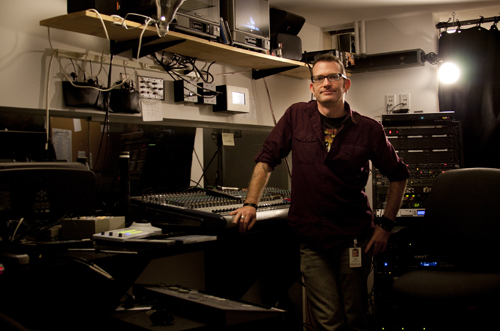
Uncrated tracked down Corbett Sparks, one of the DMA’s multimedia technicians, to talk about his job at the Museum. Corbett can frequently be spotted behind the sound board during Thursday Night Live and Late Nights in the Atrium and is also the “great Oz” in the Horchow Auditorium control booth.

Describe your job in fifty words or less.
I am a multimedia technician, which means I take care of any audio/video needs that come up at the Museum. I am also in charge of editing and cataloguing all recorded audio.

What might an average day entail?
I really don’t have average days—I don’t even have a regular schedule! The only consistent part of my week is Thursday night, where I run sound for jazz (Thursday Night Live). I also take care of all the atrium performances for Late Nights on the third Friday of every month. Other days I might be setting up a laptop and projector for a meeting or running the sound and light boards for a lecture in the Horchow Auditorium.

How would you describe the best part of your job and its biggest challenges?
Meeting the artists and performers that come through here and making sure their lecture/show goes off the way they want is my favorite part of this job. I am a people-pleaser and enjoy exceeding their expectations. My biggest challenge might be dealing with all the people that get me confused with the other tech, JD. We kind of look alike.

Growing up, what type of career did you envision yourself in? Did you think you’d work in an art museum?
I always knew I would work in a creative field. When I was younger, I wanted to either be a fine artist or movie director. That being said, I still don’t know if I am grown up yet.

What is your favorite work in the Museum’s collections?
Bill Viola’s, The Crossing. He was an early inspiration for me as an artist. My first introduction to his work was actually at the DMA. That piece was called The Sleep of Reason:

“A black-and-white monitor on a wooden chest shows a close-up view of a person sleeping. At random intervals, the lights cut out and the room is plunged into total darkness. Large color moving images momentarily appear on three walls and a loud disturbing sound of moaning and roaring fills the space — fires burn out of control through city buildings, fierce attack dogs lunge at the camera, violent ocean waves crash into shore, a provoked owl flies into a bright light. Just as suddenly, the images vanish, the lights come back on, and the room returns to normal.

This piece opened my high school eyes to what art could be—not just paintings and sculpture, but concepts and the use of technology to get those ideas across.

Is there a past exhibition that stands out in your mind as a favorite, or is there a particular upcoming show you’re looking forward to seeing?
I really enjoyed Fast Forward. I am also definitely looking forward to the Jean Paul Gaultier exhibition. I am intrigued by the use of the “Tony Ousler”-ish  projections on the mannequins and the general atmosphere surrounding them. Looks like fun!

Behind Closed Doors

Go behind the Museum office doors and discover the various work spaces in the DMA. Each month we will share insight into a different department.

This month, our in-house design team shares their space with us.

Photography by Adam Gingrich, Marketing Assistant at the Dallas Museum of Art

Living the Dream

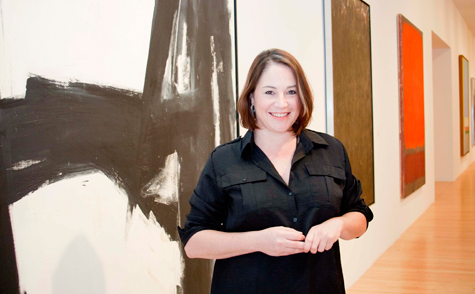
Uncrated tracked down the DMA’s Chair of Collections and Exhibitions, Tamara Wootton-Bonner, to talk about her job at the Museum. Tamara has the large responsibility of overseeing the Museum’s exhibitions, publications, collections, libraries, archives, and digital imaging departments, and as you will read below, she knew early on that she wanted to work in a museum.

Describe your job in fifty words or less.
I’m the Chair of Collections and Exhibitions and I oversee the exhibitions, publications, collections management, libraries, archives, and digital imaging departments. My main job is to make sure that our exhibitions, publications, and other key projects happen successfully (and are on time and within budget) and to keep everyone happy.

What might an average day entail?
Meetings and e-mails! Besides that, I have to take on a variety of roles: in a single day I might have to be a cheerleader, mom, taskmaster, accountant, lawyer, writer, editor, project manager, critic, negotiator, facilitator, logistician, bad guy, and, if I’m lucky, I get to look at art. The greatest days are working with designers and artists . . . on exhibitions, publications, building projects, etc. But I also have fun managing budgets, negotiating contracts, solving problems, and planning for the future.

How would you describe the best part of your job and its biggest challenges?
The best part of my job is working with lots of wonderful, creative people. It’s exciting to see ideas come to life and to know that you’ve been a part of it—whether it’s an exhibition, a publication, or something else. I love to watch an exhibition come together or smell a new book hot off the press.

The biggest challenge can be trying to do too much with too little. We are an ambitious bunch around here and almost everyone is a perfectionist.

Growing up, what type of career did you envision yourself in? Did you think you’d work in an art museum?
As a child I wanted to be an artist. I used to draw and paint all the time. But by the time I graduated from high school I knew I wanted to work in a museum. I started as a security guard at the Metropolitan Museum of Art in New York and now . . . here I am.

What is your favorite work in the Museum’s collection?
I have several—Franz Kline’s Slate Cross, the Indonesian tau tau, and the Olmec jade mask are among my absolute favorites. But it changes every day. Tatsuo Miyajima’s Counter Ground and the James Lee Byars works in the Silence and Time exhibition, on view now, are amazing.

Is there a past exhibition that stands out in your mind as a favorite, or is there a particular upcoming show you’re looking forward to seeing?
That’s easy—The Fashion World of Jean Paul Gaultier! It’s going to be phenomenal. We’ve never done a fashion exhibition, so it’s going to be a challenge. But it’s going to be an exciting challenge.
Archives

Categories