Archive for the 'Exhibitions' Category


Do-It-Yourself Stickley

“When we come to make things ourselves . . . we should not only find more pleasure in making them but we shall take more pleasure in possessing them.” —Gustav Stickley, The Craftsman, March 1905

Early 20th-century designer and businessman Gustav Stickley believed in the do-it-yourself movement. His magazine, The Craftsman, provided readers with step-by-step instructions on making household objects such as side tables, clocks, embroidered pillows, and even birdhouses.

In just a few months, the Dallas Museum of Art will host the exhibition Gustav Stickley and the American Arts & Crafts Movement. We’re inviting people to produce objects inspired by Stickley’s designs, document their process, and share their experience with the DMA. These videos and photographs will be displayed in the exhibition’s education space. Our deadline is January 5. Learn more about the DIY Stickley project on the DMA website.

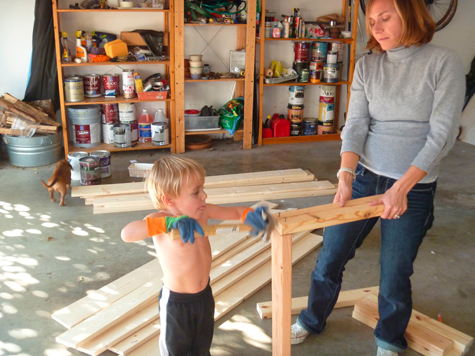
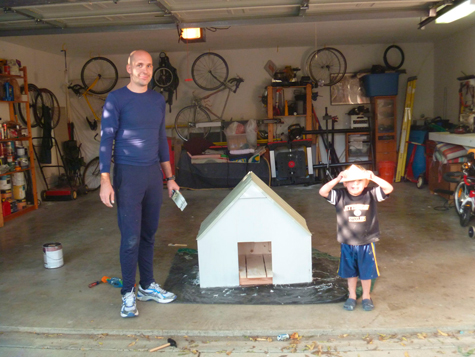
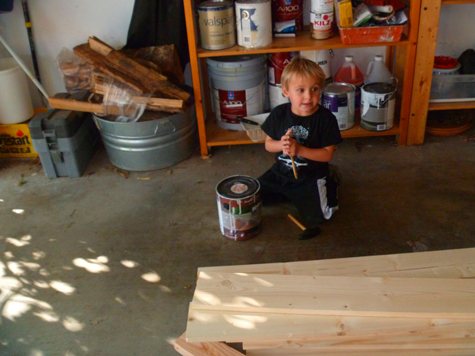
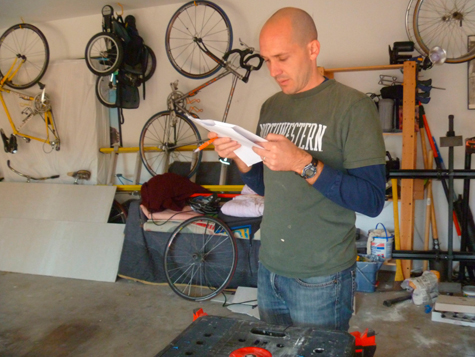
A few weeks ago, my husband, John, and I thought it would be fun to take up Stickley’s challenge and make one of his simpler designs with our kids, Aiden and Rowan.

After some debate, we decided to make the doghouse for our two dogs, Sampson and Beasley.

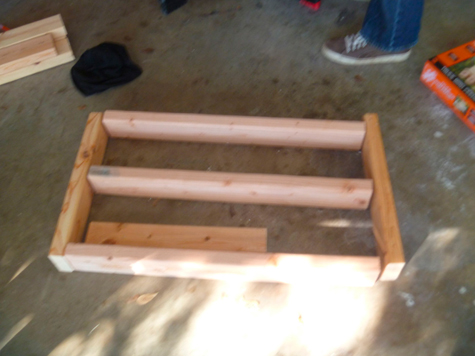
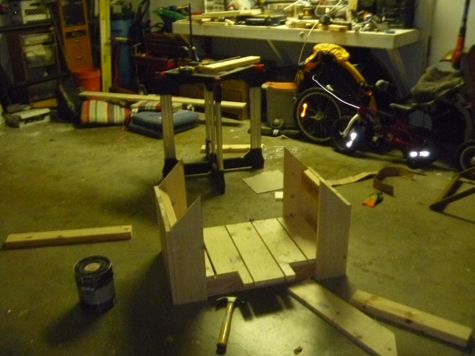
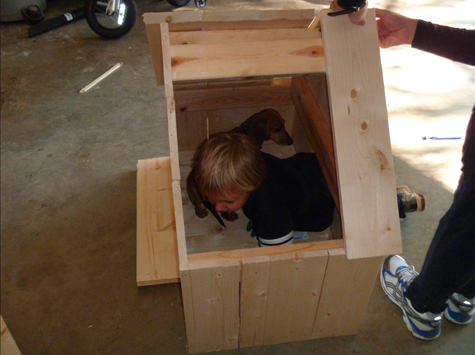
Building the structure moved along pretty quickly thanks to John and Aiden. By the end of day one, we had framed the structure and attached the walls and floors.


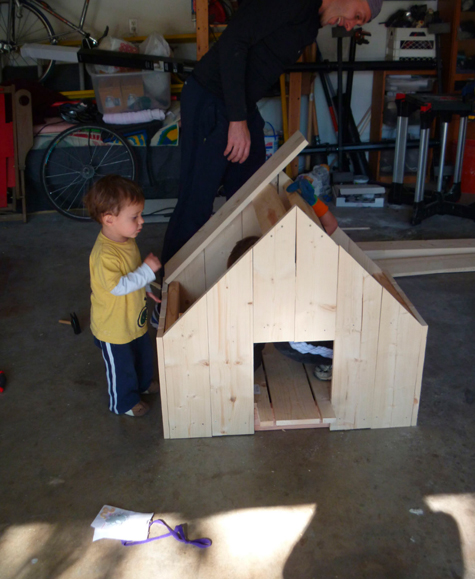
Day two included attaching the roof, painting, and trying to get the dogs to go inside the doghouse.

Apart from adjusting the measurements and the paint, we stayed close to Stickley’s original design. This was a fun weekend project for our family and a great way to make Stickley’s designs come to life in the 21st century.


Gustav Stickley and the American Arts & Crafts Movement will be on view at the Dallas Museum of Art from February 13 through May 8, 2011. To learn more about the do-it-yourself Stickley project and discover how you can participate, visit the DMA website.

Guest blogger Laura Bruck was formerly Manager of Gallery Interpretation at the Dallas Museum of Art and is currently an education consultant.

Insourced: Works by Dallas Museum of Art Staff

The much-anticipated Dallas Museum of Art staff art exhibition is fast approaching. Opening this weekend, the exhibition occurs every two years and is an opportunity for DMA employees to present their work to coworkers and general public. This year’s exhibition, Insourced: Works by Dallas Museum of Art Staff, features sixty-eight works by forty-three artists ranging from our new interns to a preparator who has been with the DMA for over thirty years. Staff members whose “day jobs” range from curators to gallery attendants are included.

The exhibition is unique because anyone who wants to participate can; even the title was selected by a staff vote. Insourced also has an acting curator–conceived and organized collaboratively by Collections and Exhibitions department staffers, the exhibition placement was decided by Erin Murphy, Contemporary Art Curatorial Administrative Assistant and Uncrated contributor. We posted a few “sneak peek” photos here, but please come by and see the works by our talented staff.

The exhibition is on view from December 5, 2010 through March 13, 2011 on Mezzanine 2 next to the Mildred R. and Frederick M. Mayer Library.


Joni Wilson is the Exhibitions Assistant at the Dallas Museum of Art

The Curator’s Perspective: Dr. Jeffrey Grove on Re-Seeing the Contemporary: Selected from the Collection

On October 15th, the DMA opened Re-Seeing the Contemporary: Selected from the Collection which highlights 60 works of art mindfully culled from our contemporary collections. The curator of the exhibition, Dr. Jeffrey Grove, sheds some light on the compelling nuances and powerful juxtapositions contained within the installation.

What’s your favorite object or room in the exhibition? Why?

Among my favorite rooms is the “Minimalist” room with a great sculpture by Larry Bell, a painting and prints by Brice Marden, two paintings by Robert Mangold, Sol Lewitt prints, a massive David Novros painting, and a luminous sculpture by Robert Irwin. This installation contradicts the notion that so-called minimal works are somehow cold and hard. It is a sensuous, vibrant, and thrilling space to occupy.

[slideshow]

What is it about this exhibition of works that caused you to conceive of it in these groupings?

The installation was envisioned in a roughly chronological sequence, with a desire to have each gallery encompass either a span of time, reflect select movements, or explore ideas expressed in radically different ways over many decades. This allows for some unlikely pairings and eccentric passages that nonetheless help us see some of these works in a new or perhaps unexpected ways.

What were the challenges for this exhibition?

Editing! We have so much great material and there is always a temptation to want to “over share.” How do you pull back, keep the focus, and tell clear stories? That is one of the exciting challenges of being a curator.

Jeffrey Grove is the Hoffman Family Senior Curator of Contemporary Art at the Dallas Museum of Art.

To hear more from Dr. Grove on the exhibition, join us for his Gallery Talk on November 10th at 12:15p.m. See you there!

Encountering Space in the New C3

Amy Copeland is the Coordinator of the Museum’s Go van Gogh outreach program to local elementary schools and a frequent blogger on the DMA Educator Blog. She has graciously agreed to share some of her experiences with the new exhibition in our Center for Creative Connections, aka C3. Last Saturday, more than 3,000 visitors helped us celebrate the opening of Encountering Space in the completely reconfigured C3 on National Museum Day. Stop by during Art in October, a monthlong celebration of the Dallas Arts District, for a chance to experience Encountering Space for yourself.

And now, here’s Amy . . .

One of my favorite things to do is poke around the Museum when exhibitions are being installed. I like seeing the bare walls pre-installation, and then watching as they get painted, and the vitrines begin to appear in the galleries, and objects are brought into the space, bringing it to life. I usually only catch glimpses of this process, but I’ve had a fun last few weeks walking through the Center for Creative Connections every day during the construction of the new Encountering Space exhibition. (My office is at the back of the space–lucky me!)

Below are pictures from the installation and a few from the opening day celebration last Saturday. They show just a fraction of this incredibly dynamic space, so I hope you’ll come explore it for yourself.

[slideshow]

Amy Copeland is the Coordinator of the Dallas Museum Art’s Go van Gogh outreach program

From Idea to Exhibition

There are few moments in a curator’s career more thrilling than the realization of a major exhibition project. While more modest exhibitions may take months of development, others require curators to commit years of their professional lives to researching the topic, seeking loans of works of art, and bringing together the necessary participants and funding to craft a touring exhibition and a substantial scholarly catalogue.

Following my organization of the DMA’s last major decorative arts exhibition, Modernism in American Silver: 20th-Century Design, in 2005, I began work in earnest on a topic that I had considered years earlier, that of the work of one of the leading figures of the American Arts and Crafts movement, Gustav Stickley (1858-1942). In recent decades, Stickley’s name had become nearly synonymous with the boldly functional Craftsman furniture more broadly known as “Mission furniture” (a term that he despised), and examples of his factory’s works had been included in major Arts and Crafts survey exhibitions in New York, Boston, Los Angeles, and elsewhere. Given this, I found it curious that no museum had yet undertaken a monographic study of Stickley’s production for a major touring exhibition. As I later discovered, some colleagues had pondered the topic but for various reasons were unable to pursue it. It was, for me, and for the DMA, an opportunity to forge another strong link between the Museum’s development of its 20th-century decorative arts and design collections and an exhibition idea that seemed to resonate with possibilities. Stickley, as an orchestrator of design and a proselytizer for the simple life – he even published a magazine, The Craftsman, to promote his progressive ideas – was far more than an owner of a furniture factory. In the first decade of the 20th century, he sought to change the way Americans thought about the home, machine-made goods, craft, and, ultimately, their lifestyle. The subject was about not only furniture as design but the very art of how one could, or in Stickley’s mind, should, live.
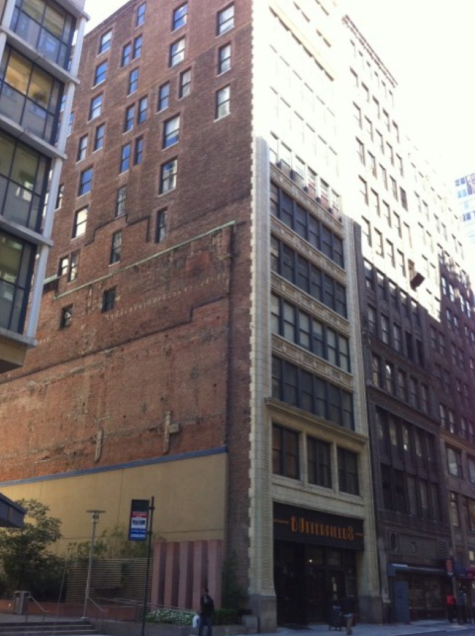
An appointment in Manhattan provided me with an opportunity to walk by Stickley’s Craftsman Building, which still stands right off of 5th Avenue and 38th Street (it’s now a restaurant and offices). He leased the entire 12-story structure in 1913 and used it as a headquarters and a department store. Furniture, garden supplies, household equipment, rugs, and a host of goods were sold here; there was even a “Craftsman Restaurant” on the top floor. What exactly was in a Craftsman fruit cocktail anyway?
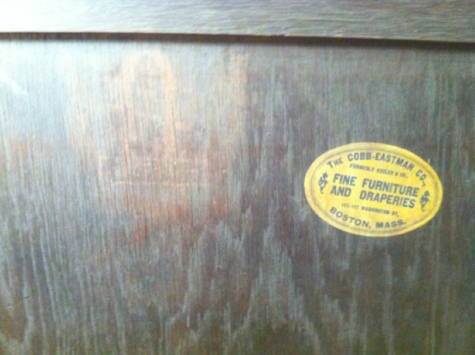
On the left, one can just barely make out the Stickley mark as a red decal on the back of this desk. A joiner’s compass (an archaic woodworker’s tool used to lay out circles) surrounds his borrowed motto “Als ik kan” (If I can) and below is a copy of his signature. While subtle differences in this mark can tell us what year this piece may have been made (this work is from 1903 or 1904), the paper label to the right is especially interesting to me – it indicates where the piece was originally sold. Surviving retailer tags such as this one are far rarer than Stickley’s own mark. Dallas had two retailers of Gustav Stickley’s Craftsman furniture between 1902 and 1916.
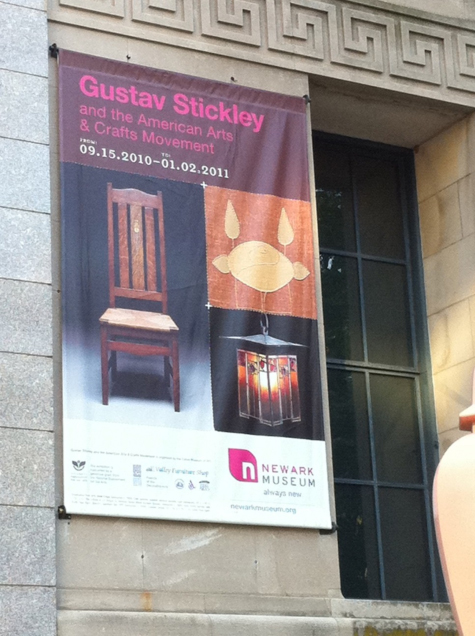
Stickley comes to Newark.

Five years later, on September 15, 2010, we celebrated the public opening of the exhibition Gustav Stickley and the American Arts & Crafts Movement at the Newark Museum. Although it is unusual to premiere an exhibition at a museum other than the organizing one, there was a happy synchronicity in that Craftsman Farms, once Stickley’s New Jersey home (and located a mere twenty minutes from Newark), is celebrating their centenary. The night before the public opening, lenders, colleagues, museum members, press, and other guests convened at the museum for the usual slate of honorific speeches, convivial chats, and a sneak peek at what would be revealed when the doors officially opened the following day. Arriving at this point required hundreds of hours of research into Stickley’s career, pouring over surviving business papers at Winterthur, examining original sales catalogues, advertisements, photographs, inventories, and other documents, and, with this information in mind, reviewing the actual pieces of furniture, metalware, textiles, and architectural drawings that are included in the exhibition. This research is the very heart of such exhibitions and associated catalogues and not only allows us to satisfy our curiosity as scholars – the why, when, and how these works were made and for whom – but also provides us with the knowledge for shaping a new and compelling story for our visitors and readers.
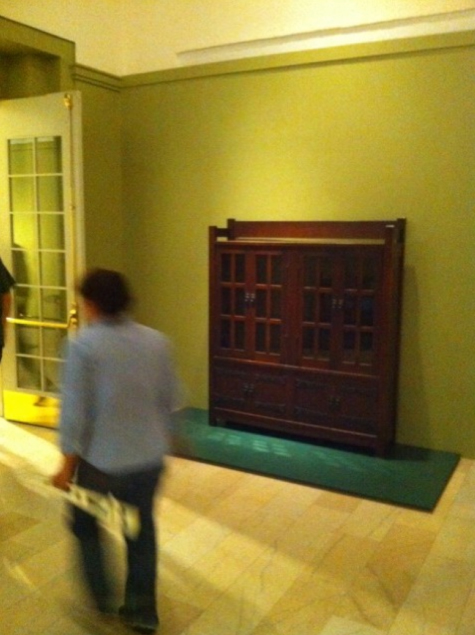
The Newark Museum’s staff never slowed down for a moment – preparing for an opening, especially one with large pieces of furniture and a recreation of an entire dining room, is not a simple matter. Each work must be handled with care, its condition well documented, labels written by the curator and placed by the preparation staff. That’s the condensed version. One of Stickley’s rectilinear oak bookcases from 1901 looms in the background, awaiting its public premiere.
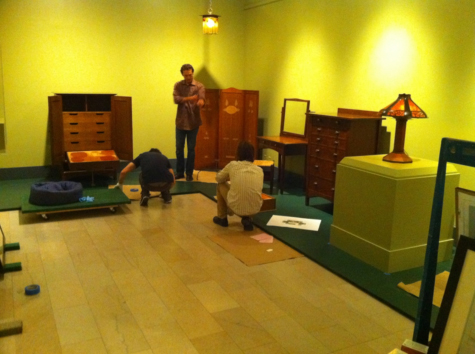
DMA registrar Brent Mitchell consults with Newark’s team as we prepare to install Stickley’s own chest of drawers (far left). The best laid plans must always be adjusted to accommodate those unexpected challenges.

After spending nearly two weeks supervising the installation of the exhibition with DMA registrar Brent Mitchell and the dedicated staff at the Newark Museum, including Ulysses Dietz, their curator of decorative arts, I at last felt a sense of relief and exhilaration as the last object was placed. The exhibition is done, at least for now – come February 13, 2011, the doors will open to the DMA’s presentation of Gustav Stickley and the American Arts & Crafts Movement.
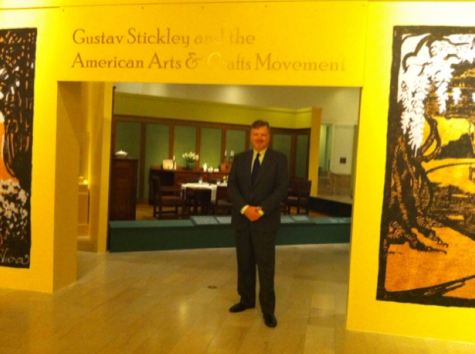
Done!
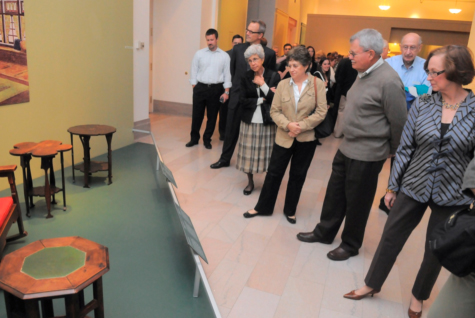
Opening night.

Kevin W. Tucker is the The Margot B. Perot Curator of Decorative Arts and Design at the Dallas Museum of Art.
Late Nights: Celebrating Mexico’s Bicentennial til the Midnight Hour

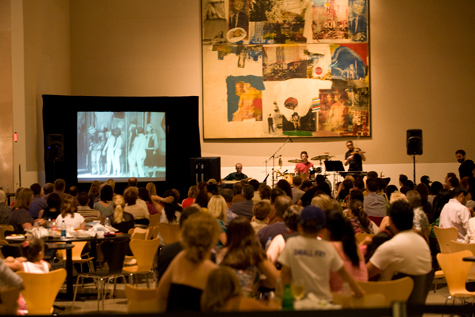
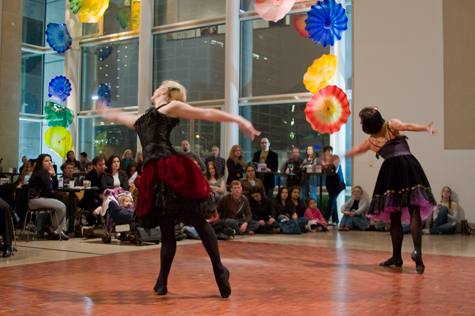
Late Nights at the Dallas Museum of Art take place on the third Friday of every month (except December) and can bring up to 5,000 visitors to the Museum in just one evening. With eleven Late Nights to plan each year, we are constantly brainstorming program ideas and themes.

The process starts with coming up with a theme for each Late Night month. These are usually decided a year in advance by looking at our upcoming exhibitions, works of art in our collection, or other special events and occasions like the Museum’s annual birthday celebration in January.

We have three Late Nights left in 2010 and each one will celebrate a different exhibition on view this fall. The next one, on September 17, focuses on our México 200 exhibitions: José Guadalupe Posada: The Birth of Mexican Modernism and Tierra y Gente: Modern Mexican Works on Paper. These two exhibits, which showcase Mexico’s long tradition of exquisite artistry, were planned as a way to commemorate the Mexican bicentennial.

Once the themes of each Late Night are chosen, the programming team decides which performers, speakers, and programs to schedule, making sure there is a mix of live music and performances, lectures, tours, films, family activities, Tech Lab programs, and other special events. Through our own research, recommendations from colleagues, and old-fashioned word-of-mouth, we choose the Late Night performers and speakers who we feel tie into the main theme of the evening while also offering something new and interesting for our visitors to experience. These special guests come from all across Texas, often from across the country, and once in a while, from abroad.

We also collaborate with other organizations in our North Texas community to present joint programs at Late Night. In September the acclaimed Mexican poet Homero Aridjis will be at the Museum to give a reading in both English and Spanish. This program is hosted in partnership with the Center for Translation Studies at UT Dallas.

We’ve just finished deciding on our themes for the 2011 Late Nights, and while we’ll keep them a secret for now, we hope to see you at one or maybe even all of them!

Stacey Lizotte is Head of Adult Programming and Multimedia Services.

Members Celebrate African Masks

Last Friday we posted to our blog that it takes several weeks to install an exhibition, and they are planned many months (if not years) in advance. Once the Museum’s membership department knows when exhibitions will open, we start scheduling our preview events.

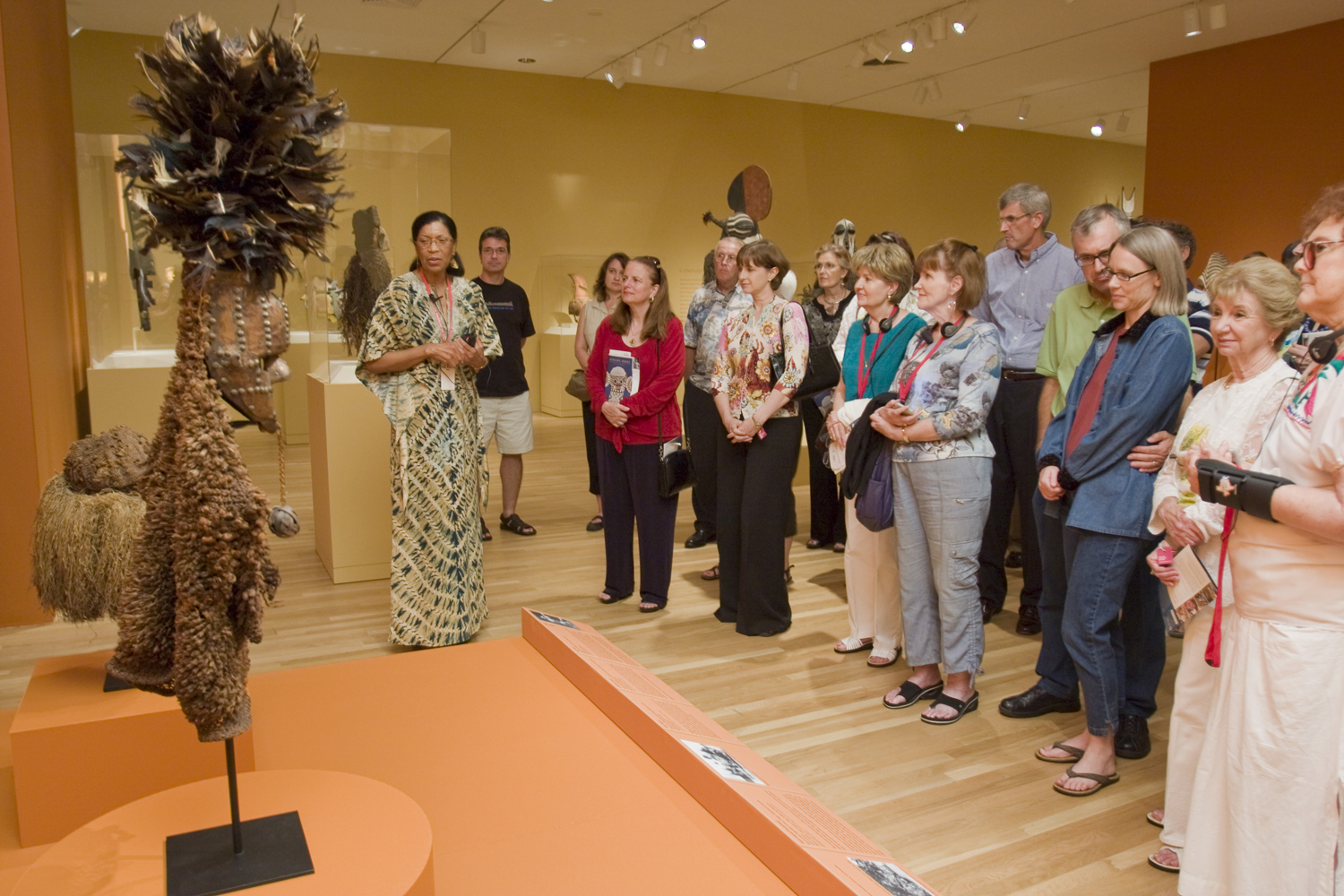
This past weekend was busy; we hosted three previews! Over 1,000 DMA members took the opportunity to tour African Masks: The Art of Disguise before opening day.

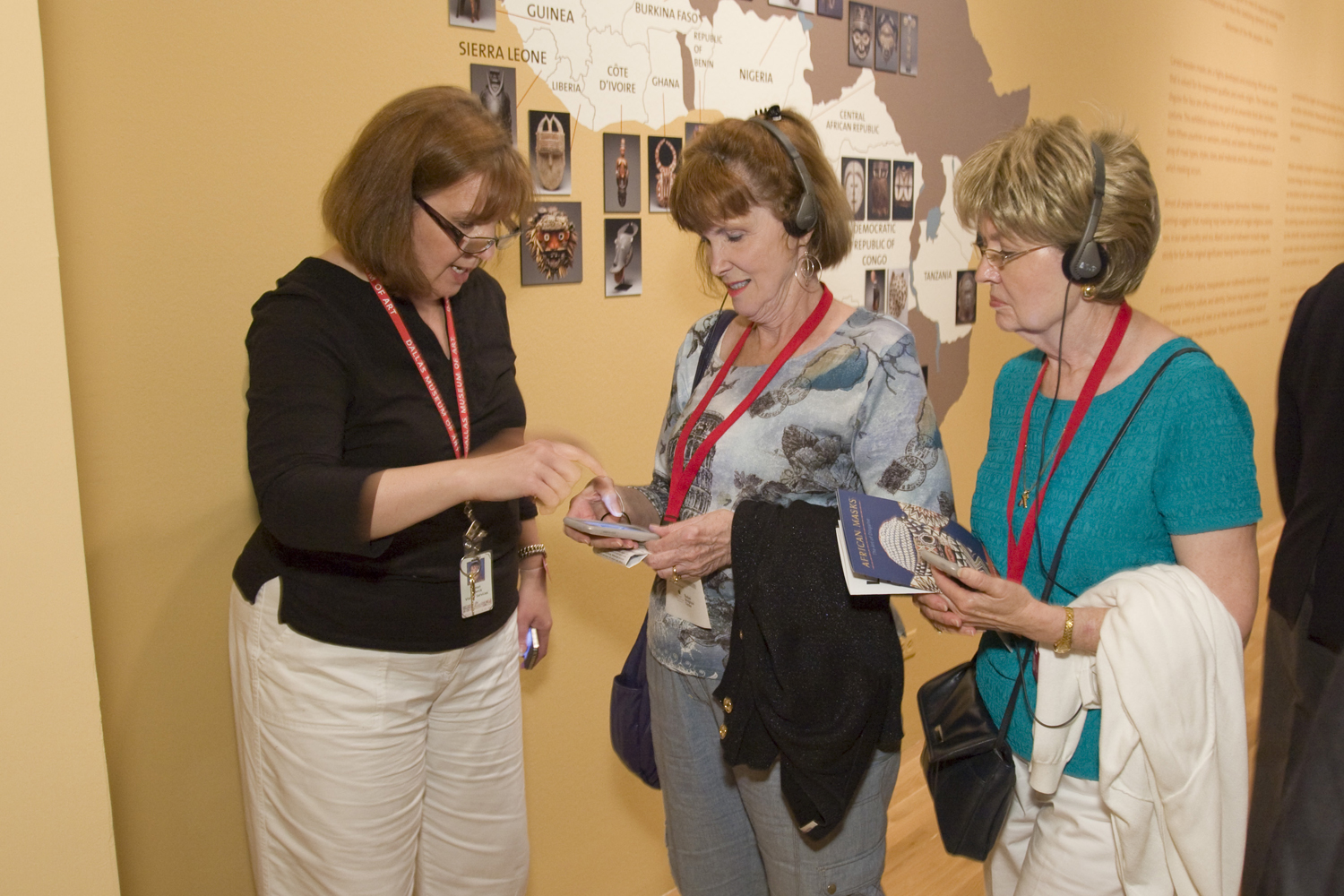
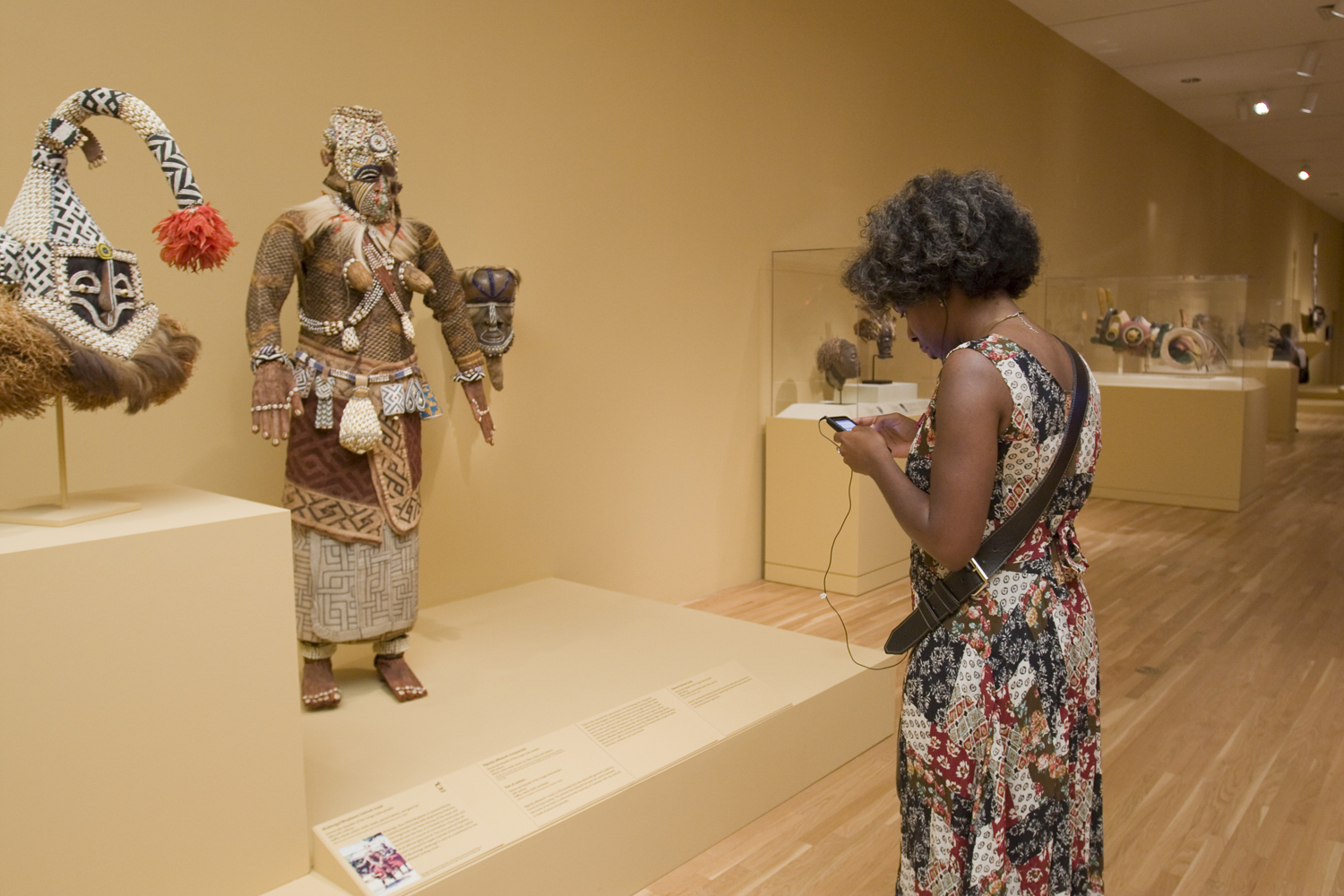
In addition to greeting members at the exhibition and assisting them with the new smARTphone tour, we hosted the first Members Lounge at Late Nights. Some of you may remember that when the we presented the King Tut exhibition, DMA members were able to take a break from the crowds in a separate lounge area. We decided to bring the concept back during Late Nights. If you are a member and plan to visit during the September Late Night, stop by the Members Lounge at Late Nights for a snack and some additional fun. And please be sure to say hello!

Installing African Masks: The Art of Disguise

[slideshow]

Welcome to the debut of “Uncrated,” the Dallas Museum of Art’s new blog!

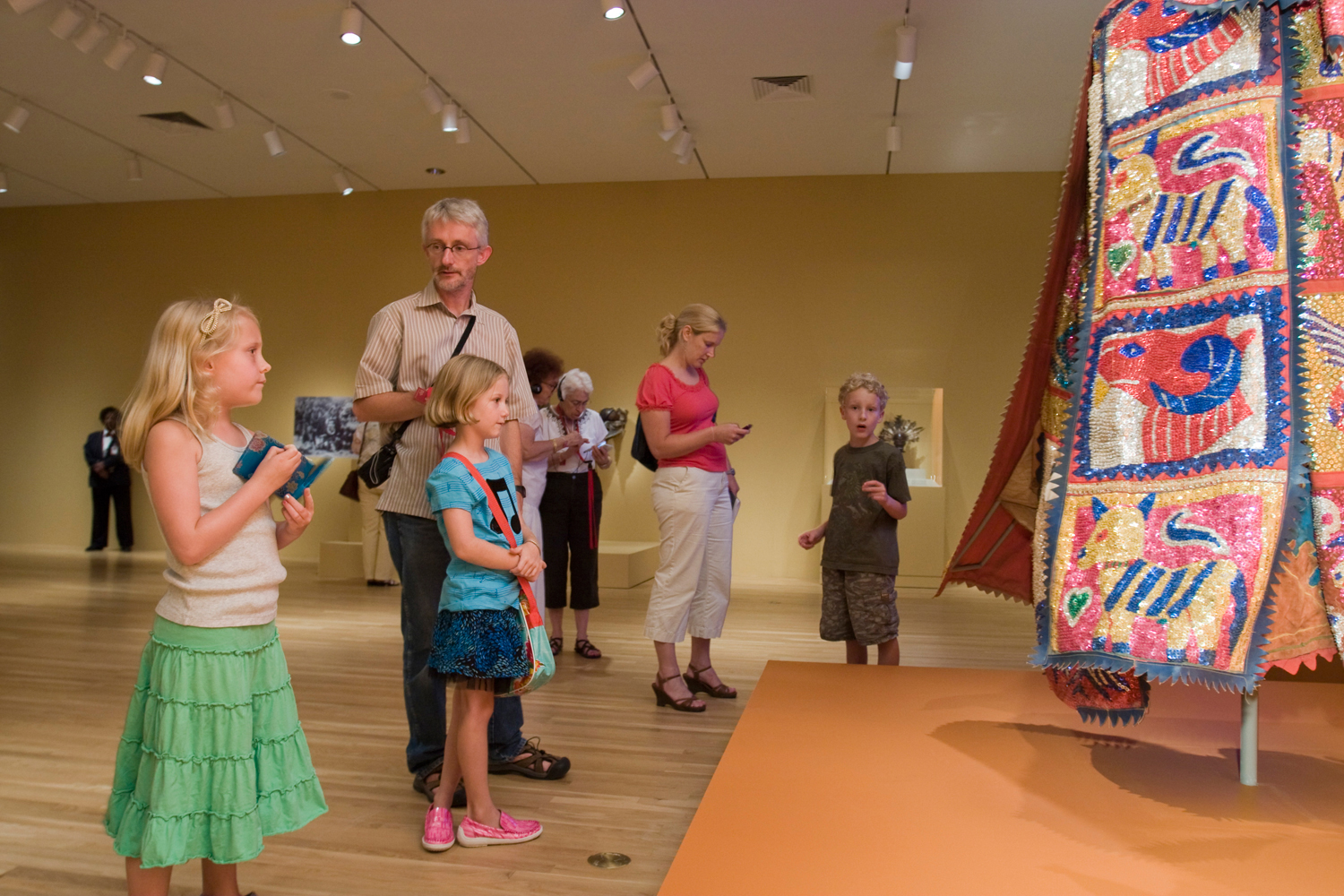
With the August 22 opening of African Masks: The Art of Disguise fast approaching, installation began the first week of August. Typically the installation of an exhibition takes about two weeks, but with the complex mounts, costumes, graphics and AV needs, this show will take a full three weeks to pull together. The exhibition will be on view in the same gallery previously occupied by The Lens of Impressionism: Photography and Painting Along the Normandy Coast, 1850-1874.  However, visitors will notice a significant difference in the look and feel from the previous show. Demo and construction began in June, drastically transforming the space into a large open gallery enveloped in warm oranges and yellows.


Archives

Categories