Archive for the 'Creativity' Category


Moments of Epiphany: Talking Creativity with an Educational Psychologist

We were lucky at our last Educator Reading Group to have Dr. Magdalena Grohman as a guest facilitator.  Dr. Grohman is an associate director of the Center for Values in Medicine, Science, and Technology, a lecturer at the School of Behavior and Brain Sciences at the University of Texas, Dallas, and a frequent DMA collaborator.

Dr. Grohman recommended an article from Educational Psychologist titled “Why Isn’t Creativity More Important to Educational Psychologists?  Potentials, Pitfalls, and Future Directions in Creativity Research.”  The reading invited us to reconsider beliefs and ”myths” we might hold about creativity: that creativity is something you either have or you don’t, that there is a singular type of creative person (and they are often outsiders), and that creativity is enhanced within a group.  The article also teased out a definition of creativity based on content analysis of peer-reviewed business, education, and psychology journals.

During our discussion, we thought through our own myths about creativity and the theory and practice of creativity both in our programs and jobs.  How do we talk to students in our programs and classes about creativity and their creative abilities? And how is that different from what they hear from teachers in school?  How do we structure brainstorming sessions, and work in large groups on creative projects?  

We also learned about the science of creativity.  Dr. Grohman, sharing her expertise, helped us look behind our mysterious moments of creative insight to find what’s in play cognitively, that networks of concepts in the memory get flexible (usually as we relax) and we connect remote ideas with one another, metaphorizing, and generating something new.  This cognitive picture of creativity complements the first-person accounts and understandings of creative process we know best—the things we hear artists and writers say to explain their moments of epiphany–that flashes of brilliance come from nowhere, and creativity is something beyond our control. (For more on this, see Elizabeth Gilbert’s excellent TED Talk about creative genius.)

One of the things Dr. Grohman does is provide people with tools and techniques to jump start creative thinking.  She led us in a quick activity after our conversation.  We split into pairs and were asked to make a joint drawing, based on a simple prompt.  As part of the activity we weren’t allowed to talk or in any way communicate with our partner about what we were drawing.  After each pair finished, Dr. Grohman sequenced our artworks, and asked us to create a story to link them together.  Illustrations from our activity and images of participants are in the slideshow below.

Amy Copeland
Coordinator of Go van Gogh Outreach

[slideshow]
First grade's smartest artists

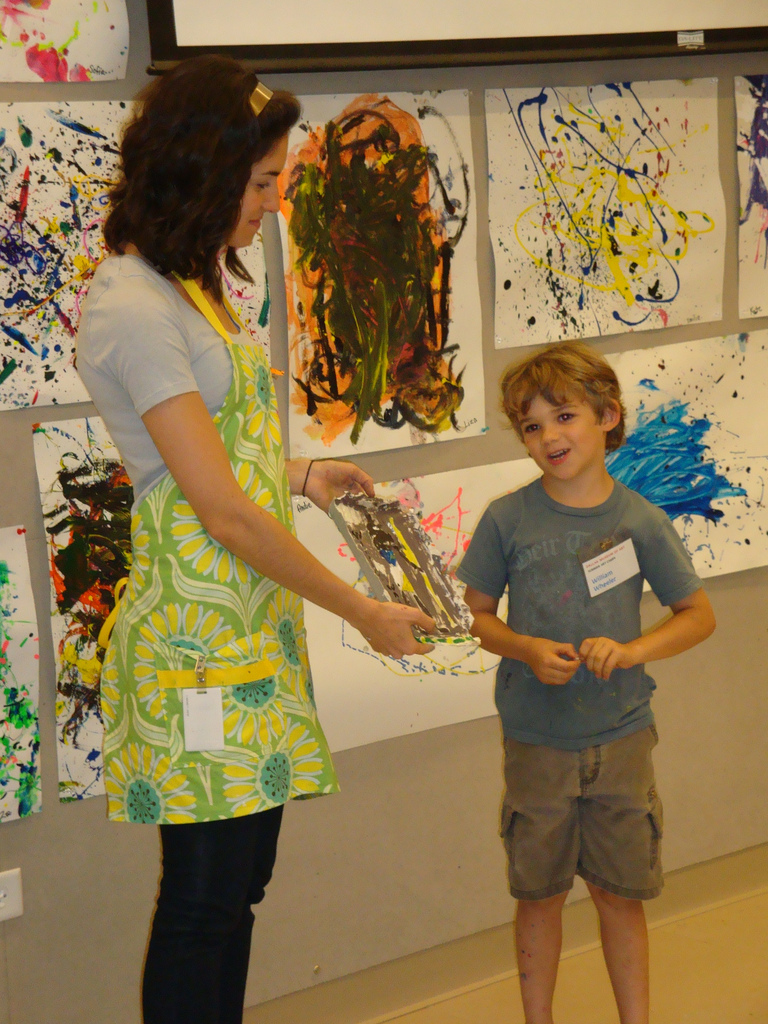
[slideshow]Last month, four volunteers and I piled into the Go van Gogh van and drove south of downtown to Rosemont Primary, a DISD PK-2 school in Oak Cliff.

While Rosemont Primary is just one of the many campuses we visit with the Go van Gogh outreach program, we have a special relationship with their first grade teachers.  Each year, we visit the first grade at Rosemont, presenting multiple programs in all eight classrooms and getting to know the students during our many visits.  Through the years, the first graders at Rosemont have played a larger role in the Go van Gogh program than they might realize; Go van Gogh staff often takes newly-developed curricula into their classrooms.  We test questions, gauge response during activities, and (most importantly) make sure that we’ve packaged an experience that’s fun, engaging, and relevant for the students.  Go van Gogh staff is grateful to our first grade friends at Rosemont for the smart observations, unexpected answers, and funny moments that have helped us refine curricula, ensuring that our programs are solid.

Needless to say, we were pretty excited to return to Rosemont last month with the Me & My World programMe & My World introduces first graders to people and places in art through stories and clues.  The program features four artworks, and our conversations range from talking about families while looking at Mary Cassatt’s Sleepy Baby to thinking about heroes while looking at our Greek Gold Wreath.  Students create an art activity inspired by another artwork in the program, Fernand Leger’s The Divers, drawing a picture on transparency film with a Sharpie, and layering it on top of a bright collage of shapes.

Photos from our fun morning at Rosemont, featuring the little artists and their creations, are above.

Enjoy!

Amy Copeland
Coordinator of Go van Gogh Outreach

Ordinary to Extraordinary: A Short Story about Chairs

“Success in your career begins in an ordinary classroom, in an ordinary chair.”
— Diana Maldonado, grade 11, Skyline High School (DISD)


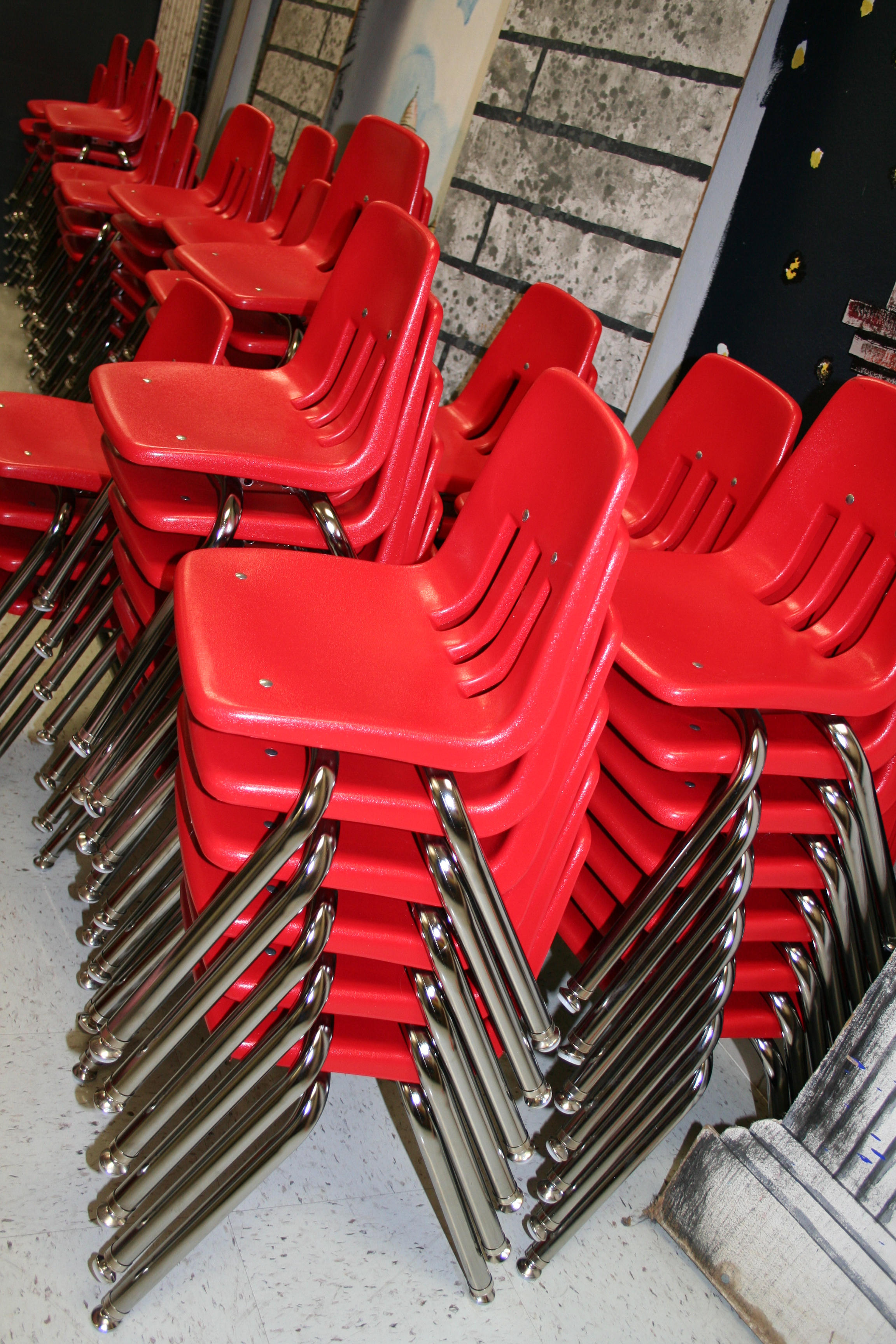
Standard-issue classroom chairs

It is a good thing to see the world from a different point of view every now and then.  We can stand and walk in someone else’s shoes, but what is it like to sit in someone else’s chair? What if the seat of this chair rises only fourteen inches above the ground?  I recently had the opportunity to take a seat in these small-size chairs while visiting pre-K and kindergarten classrooms at Dealey Montessori, Medrano Elementary, and Urban Park Elementary in DISD. Two 11th grade students from Skyline High School, Yvonne and Lauren, joined me during the visits to interview several young students who sit in fourteen-inch chairs every day at school.

For me, sitting in one of these chairs is a little bit magical.  The world is scaled down and tiny – chalkboards hang at a lower level, tables are shorter, and objects on the lowest bookshelf (which seem to require a further reach) are more colorful and interesting.  The chair-sitting experience  may also be magical for the students who sit in these small chairs every day as they get used to going to school, learn to write, and make new friends. Chairs are an important part of the school day.  They are a place to sit and rest, but also a place to participate in important and creative work.  Students shared with Lauren, Yvonne, and me various examples of the work they do in their chairs:

  • learning to read books
  • making a lion mask
  • practicing writing letters and words
  • drawing butterflies, ice cream cones, and hearts
  • singing with friends
  • painting
  • counting numbers

[slideshow]

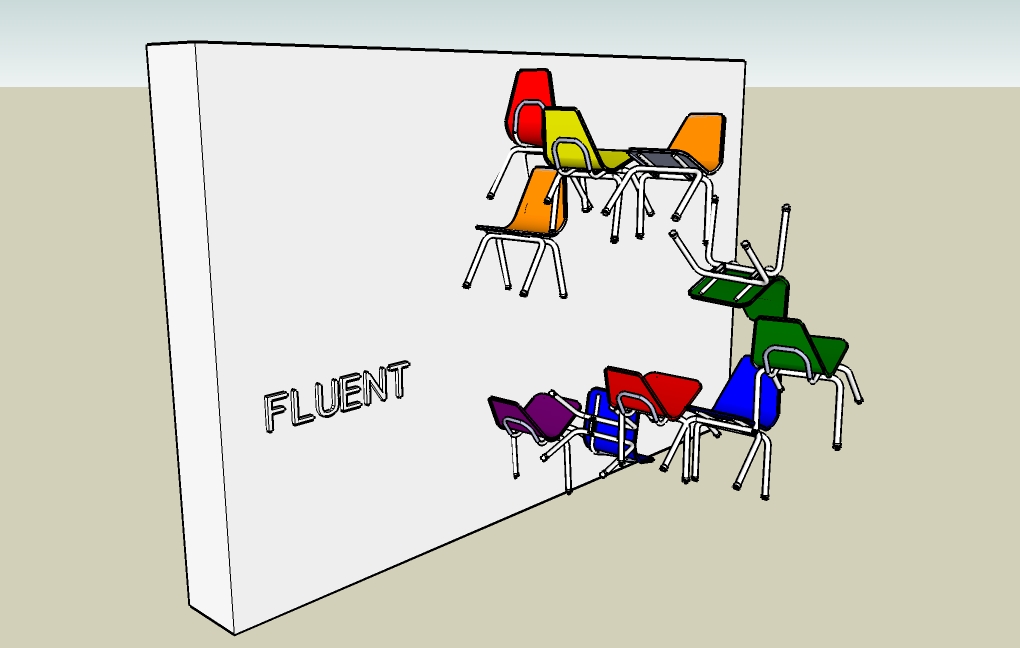
Our visits to schools are part of a larger partnership project between the Dallas Museum of Art and the Architecture Cluster at Skyline High School.  Lauren and Yvonne are just two among more than eighty Skyline Architecture Cluster students who created an amazing installation now on view in the Center for Creative Connections.  The installation, Sculpting Space: 299 Chairs, features fourteen-inch, standard-issue classroom chairs in all colors as the primary material.  The Skyline students have transformed ordinary chairs into extraordinary chair assemblages that sculpt the space of one gallery.  Museum visitors move through the space, walking under and around clusters of chairs.  Look for more information in the coming weeks about Skyline’s unique installation on the blog Uncrated.

Google Sketch-Up model for a chair assemblage that reflects the spatial concept, "fluent"

Early in the partnership project, Skyline students and their teachers, Peter Goldstein and Tom Cox, had the brilliant idea to get “used” chairs from three DISD elementary schools.  They were interested in chairs with stories to tell — marked-up with years of scratches and crayon scribbles.  The DMA purchased hundreds of new chairs, and then Skyline students swapped the new chairs for old chairs at Dealey, Medrano, and Urban Park.  As part of the process, the elementary school students were invited to draw their chairs, write about them, and think about all of the many things they do while seated in the classroom.  Video interviews with pre-K and kindergarten students about their chairs are included with the DMA installation.   Special thanks to the teachers, students, and staff at Dealey Montessori, Medrano Elementary, and Urban Park in DISD for being a part of this wonderful partnership!

“The one true connection we have made was with the chairs and when we were little kids.  They bring back memories of our childhood.  We also have a connection to the students who once sat in these chairs where they did their work, and colored and painted.”
Luis Garcia, grade 10, Skyline High School (DISD)


Nicole Stutzman
Director of Teaching Programs and Partnerships


My Creative Process

[slideshow]

The Dallas Museum of Art is currently exhibiting a staff art show called Insourced. This exhibition includes works of arts by staff members from all over the museum, such as gallery attendants, visitor services representatives, exhibition designers and interns. I am an art enthusiast and really enjoy looking at works of art, whether it’s a masterpiece, a graphic design, or an advertisement. I also enjoy looking at nature, people, and places for inspiration. I find that looking at a broad range of artworks as well as the things around me: 

  1. Inspires and influences my own art.
  2. Gives me a boost of confidence to create art.
  3. Allows me to be free to explore different mediums.

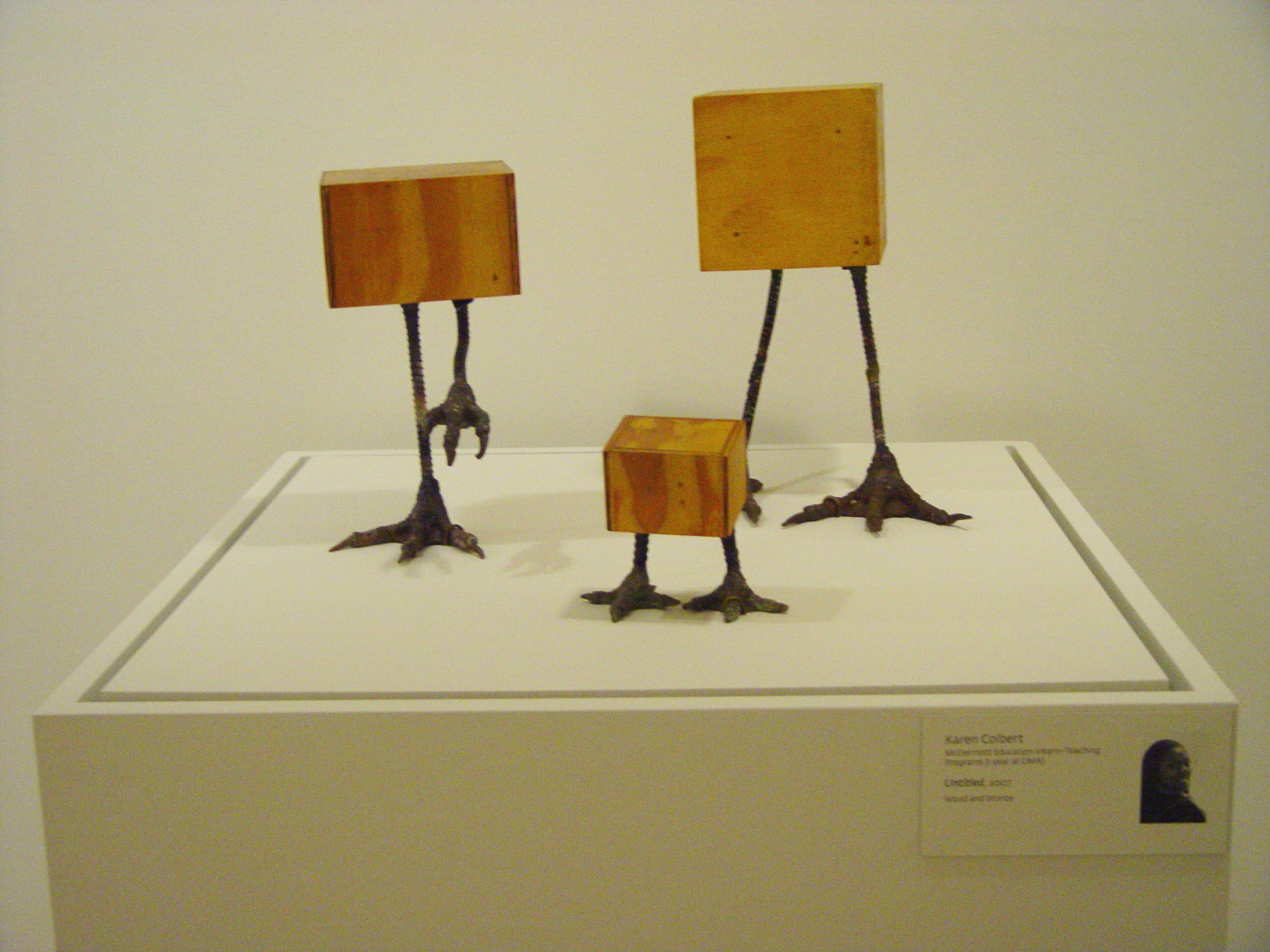
My two works of art, Untitled (2007) and Generations (2001), were inspired by observing things around me. Generations was created using two inexpensive materials: paper and charcoal. One night,  I decided to draw my mother, who was sitting on the couch. I grabbed my drawing board, newspaper print, and a box of charcoal sticks. I sat in front of her for about forty-five minutes. I think the essence of my mother, my grandmother and great-grandmother shines through in this portrait.

Untitled was inspired by a box of chicken from a fast food restuarant. I was drawn to the image of the chicken on the front of the box. I thought about the box growing legs and running around. Strange, you might think, but it was the beginning steps to my creation. First, I sketched and decided on the materials. I knew I wanted to pair wood and metal because I thought they were good match. Once I drew my sketches and had an idea of what I wanted to make, I created the objects.  I made the wooden boxes by gluing and nailing wood panlels together and creating a hollow form. I also used a mechanical disc sander to even out and smooth the sides and edges of the box. 

The bottom portion of the scultpture took more time to make. I used iron rods to make the legs. I first cut the rods into shorter pieces and then reattached them using a torch. Cutting and reattaching the rods gave them a sense of movement. The feet, which are my favorite, are made of bronze. They were created using the lost wax casting process. Once I had all my pieces made, it was time to combine them by using a hammer and  torch. I first assembled the legs and the feet using the torch. I inserted the rods into the feet and melted the sides in order to bond the two metals. Then, I torched and hammered the top of the rods in order to flatten them. Once they were flattened, I was able to nail them to the bottom of the boxes. For me, this work of art is a constant reminder that anything can be an inspiration.

Artists are inspired by people, places and things. So the next time you are walking, sitting, or standing, stop and observed the things around you. It could be the sky, a smile, or a box of chicken that could inspire you to create a work of art.
Karen A. Colbert
Teaching Programs Intern

Insourced: Works by Dallas Museum of Art Staff

Every two years, DMA staff are invited to showcase their artistic talents.  Below are some things that make Insourced: Works by Dallas Museum of Art Staff a unique exhibition:
  • It features sixty-eight works of art submitted by forty-three DMA employees.
  • Submissions came from a variety of departments, which include Accounting, Collections Management, Curatorial, Development and Membership, Education, Exhibitions, Information Technology, Libraries and Imaging Services, Marketing,  and Security and Operations.
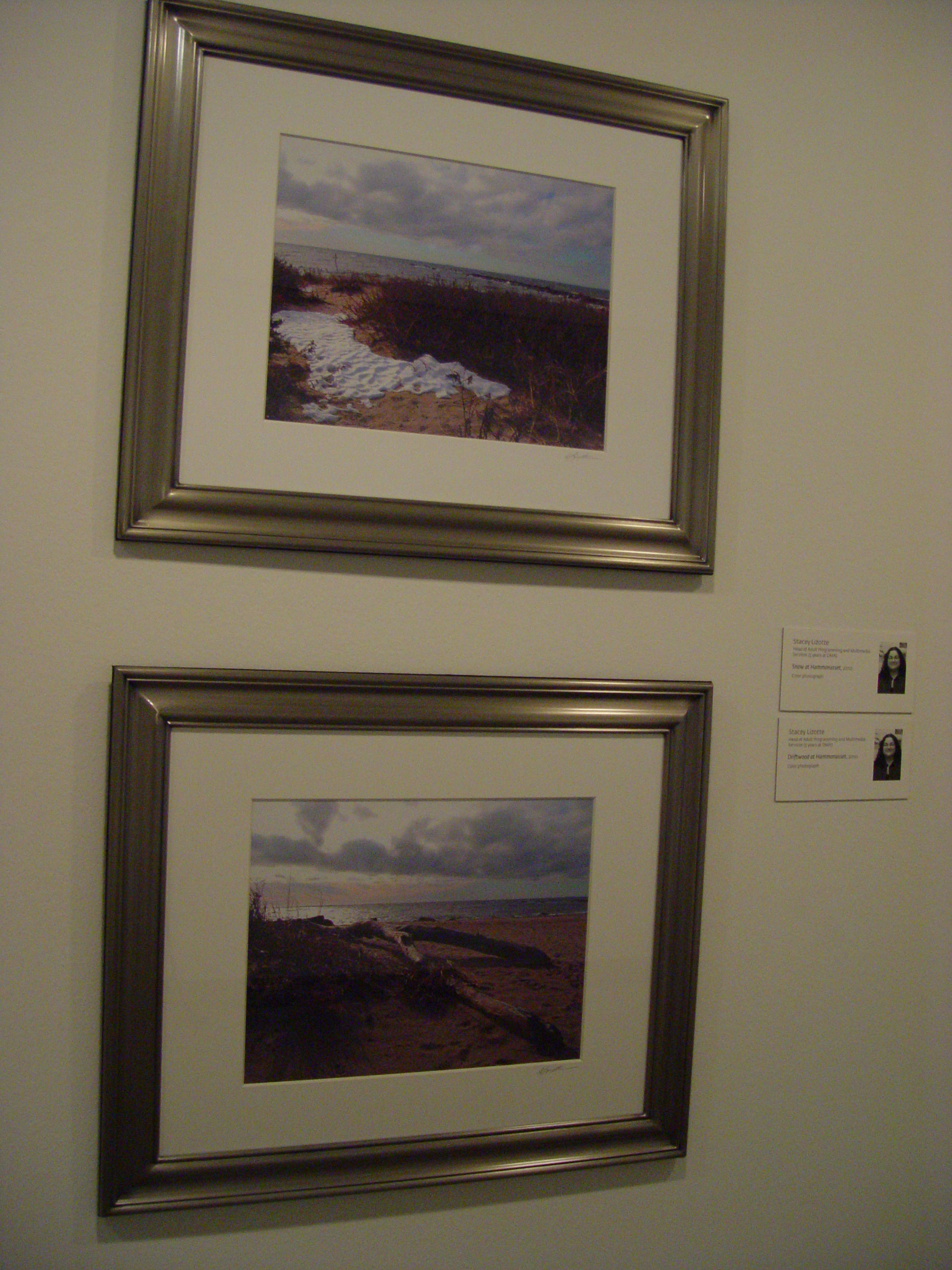
  • Artwork labels include a photograph of the artist, his/her position title at the DMA, and the number of years he/she has worked here.
  • The exhibition lets us see a new and, at times, previously unknown side of our colleagues.

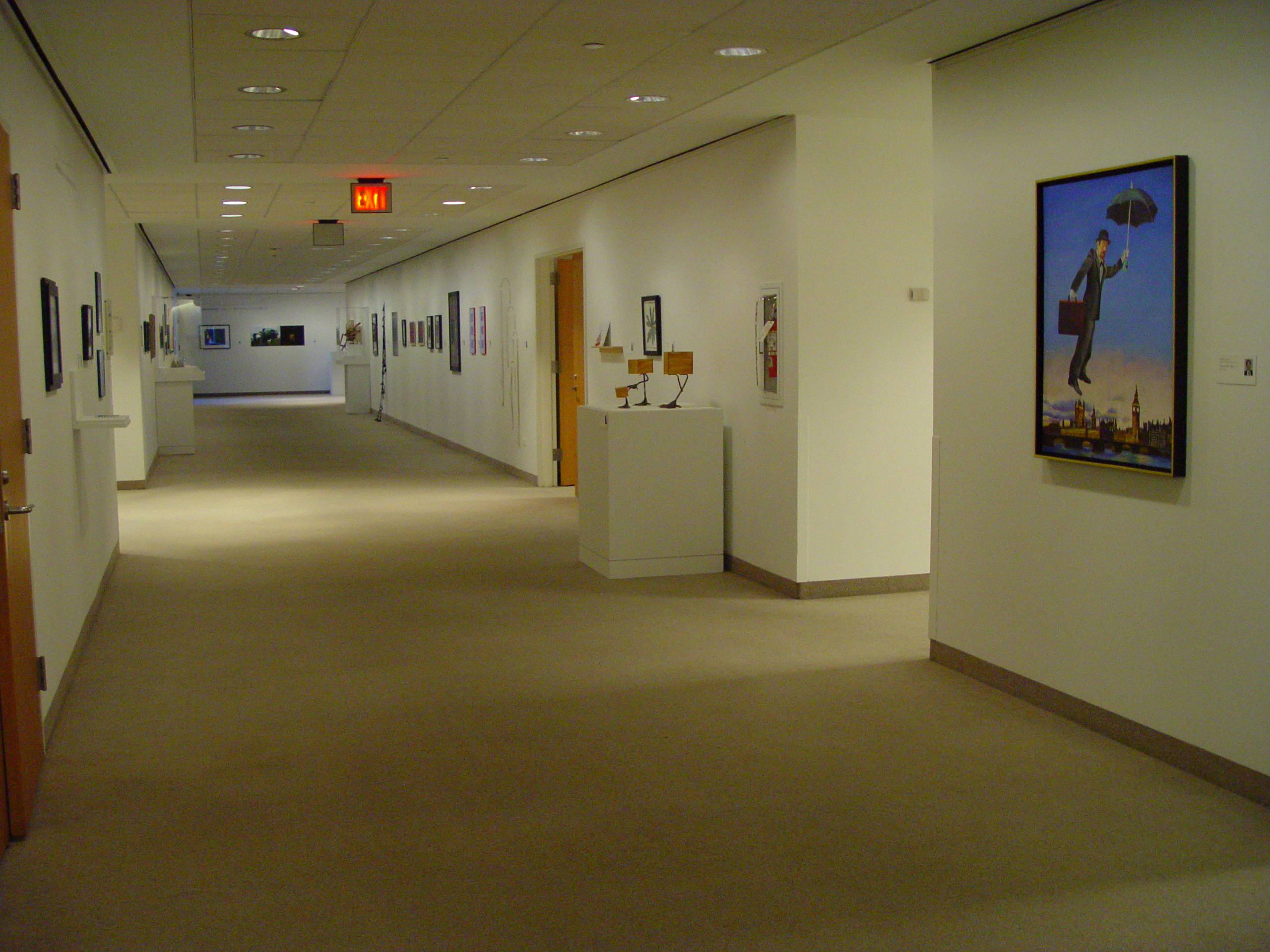
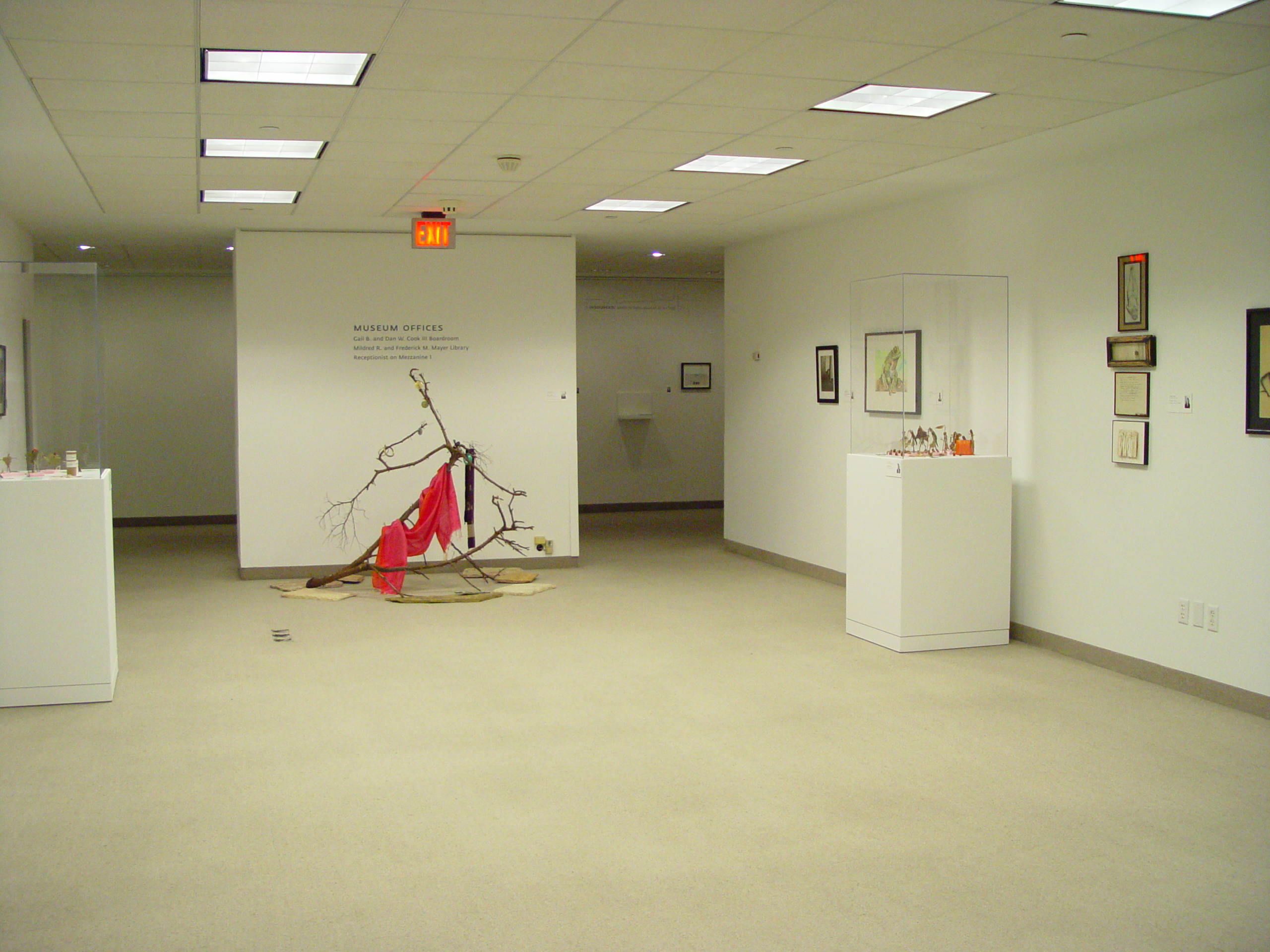
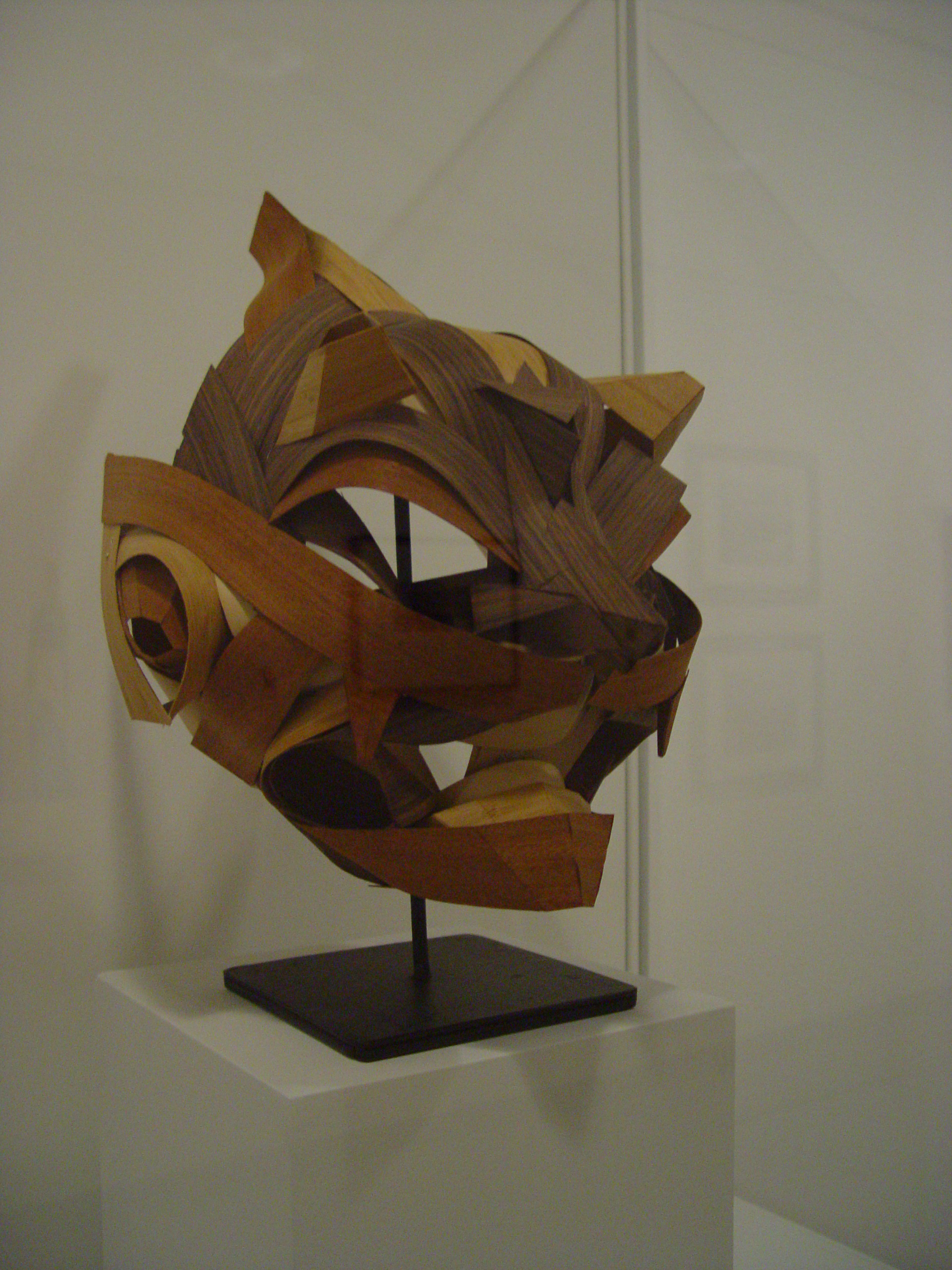
Below are images of the overall exhibition and a few artworks by DMA educators.  View Insourced: Works by Dallas Museum of Art staff on Mezzanine 2 next to the Mildred R. and Frederick M. Mayer Library through March 13, 2011.

Melissa Nelson
Manager of Teaching in the Community

One of two submissions by Teaching Programs McDermott Intern, Karen Colbert.

Untitled/Bring Back My Saturday Morning by J.C. Bigornia, Coordinator of Family Experiences

Snow at Hammonasset and Drfitwood at Hammonasset by Stacey Lizotte, Head of Adult Programming and Multimedia Services

"Rubbing Elbows" with Artists

[slideshow]

One of my most rewarding professional experiences occurred several years ago during the implementation of an NEA grant project.  Lynda Davis — dancer, professor, and choreographer — was a visiting artist at the Museum.   She flew in from Florida for two separate weeks during the year and led multiple workshops with high school students (dancers, musicians, visual artists, and actors) focused on improvisation and the creative process, with a nod to the interrelationships among the arts.  She liked to refer to this as the “arts rubbing up against each other.”

Each week Lynda visited was an inspiration for everyone who interacted with her.  Each week was also intense and, as the project manager, I wore many different hats: chauffeur, art historian, collaborator, gopher, and documentarian.  In the beginning, I knew nearly nothing about dance, nor had I thought much about the relationship between visual art and dance.  But by the end of the project (and perhaps even now), I hoped to be a dancer and choreographer in my next life.

This experience was my first real opportunity to figuratively “rub elbows” with a living artist.  My training and education was heavily focused on art history.  Most of the artists I studied were in books and in the past.  I welcomed the opportunity to make this experience with Lynda a significant part of my own creative development, observing closely and listening carefully, seeing the world through Lynda’s eyes for a brief time, catching a glimpse of where she drew inspiration, and looking for new connections between things in my world.  I carry this experience with me always, and it impacts my work.

Tell me about a time that you “rubbed elbows” with an artist?

If you’re looking for more opportunities to connect with artists, I invite you to visit the DMA.  Each year we work with hundreds of living artists of all art forms: dance, theater, visual arts, music, and literature, to present, perform, and celebrate the arts.  Consider the following opportunities and make a connection with an artist!

Experience Process
Programs with C3 visiting artists celebrate creativity and the artistic process. Join us for lively conversation and art-making projects during drop-in workshops.   Visiting artists during December and January include Teresa Rafidi, Annette Lawrence, and Brian Fridge.

Enjoy Youth
Annually, the Dallas Museum of Art celebrates the creativity of young artists in our community through the exhibitions Something Beautiful, Young Masters, and the Art Ball Young Artists Program.

Explore Many Art Forms
Artists of diverse disciplines join us for commissions and programming that celebrate the creative process and build bridges among various art forms.  2011 marks the 20th anniversary of Arts and Letters Live, our literary and performing arts series.  This season features over 60 artists and writers including Simon Schama, Annie Proulx, Carlos Fuentes, and more!

Embrace Contemporary Art
Exhibitions highlighting work by established and emerging national and international artists celebrate the art of our time.  At times these artists work with the Museum on the installation of their work, and they often participate in lectures or talks, which are open to the the public.  Big New Field: Artists in the Cowboy Stadium Art Program opens at the DMA in December and includes work by Trenton Doyle Hancock, Annette Lawrence, Olafur Eliasson, and Teresita Fernandez, as well as others.  Visit an exhibition of works by Mark Bradford in fall 2011!

Nicole Stutzman
Director of Teaching Programs and Partnerships

Community Connection: Eye-opening, Enlightening, and Fabulous

Some of our devoted Go van Gogh volunteers have participated for many years, so we design special workshops for them with the goal of making connections – with works of art, with fellow volunteers, and with personal teaching experiences – in fun and fresh ways.  These themed workshops often feature guest speakers, such as local artists or our colleagues in the education department.   

Our last workshop focused on the theme “PLAY”; you can view pictures from the workshop in our intern Karen’s photo post.  We invited Leticia Salinas, the 2009-2010 McDermott Intern for Family Experiences, to lead conversations and activities with volunteers in front of works of art entirely in Spanish.  Volunteers commented after the workshop that their experience with Leticia was “eye-opening”, “very valuable”, “helpful”, “enlightening”, and “fabulous”.

Leticia leads the Paint the Town DMA Summer Art Camp.

Tell us about your connection with the DMA.

I’ve been in Dallas for about ten years, and during college I visited the DMA every now and then and attended Late Nights.  Last year, I was the McDermott Intern in the Family Experiences department.  I continue to help during Late Nights and other special Family Experiences programs. 

What are you doing now?

I am a Special Education Bilingual Teaching Assistant at Thomas Elementary in Plano ISD.  I help teachers in classrooms with special education and/or bilingual students, primarily kindergarten through second grade. 

Describe your session with Go van Gogh volunteers.

I gave two tours in Spanish focusing on Jackson Pollock’s Cathedral and three hats in the African collection.  This helped volunteers put themselves in the position of ESL students and also showed them effective ways of teaching these learners.  Hopefully, the volunteers were able to gauge how these students feel and will be able to use that knowledge as a tool when they teach.  It was a really great experience, and I enjoyed it.  The volunteers were all very willing to participate even though it was a different language and they may have felt uncomfortable.

What do you consider important when working with ESL students, and how does this apply to teaching with works of art?

When working with ESL students, there has to be something more than language.  You have to be really creative and think of different ways to teach a subject.  This applies to all subjects.  I think art is a great way to teach ESL learners because they have a visual picture of what you’re talking about.  You can get creative and lead activities that are more hands-on and fun, playing with color and lines and movement.  All of those concepts are easy to teach to students who don’t speak English fluently.

Finish this sentence: In ten years, I’d like to be…

I hope to be at a place where I’m happy with my job and I love what I do, whether it be working in a museum or with kids or doing something totally different that I never thought I would do.  Hopefully, in ten years I’ll have it all figured out.

We [Heart] Office Supplies

Especially when we repurpose them as art materials!

Teachers, here’s a fun challenge to give your left brain a break (should you or your students need one after standardized testing).  This DMA Creativity Challenge, aka art-making activity where limited materials and time are provided, is guaranteed to flex your brain muscle and challenge your creativity. 

We [Heart] Office Supplies Challenge
The Challenge: To create a sculpture using only materials commonly found in office desk drawers. 

  • Begin by gathering materials.  Try combinations of the following to create your artwork: binder clips, post-it notes, rubber bands, file folders, paper clips.  Grab a pair of scissors, but leave the tape, glue/glue sticks in the desk drawer for more of a challenge.
  • Sketch out your ideas on blank paper.  
  • Give yourself a time limit.  The pictures below are artworks made over an hour’s time, but making sculptures in ten or fifteen minutes is just as fun.
  • Make a label for your sculpture: title it, date it, name the artist(s), and write a short creative description of it.
  • Display your artwork in the classroom or wherever else you keep your creations.

 Ready, go!

Amy Copeland
Coordinator of Go van Gogh Outreach

SLANT 45: Service Learning Adventures in North Texas

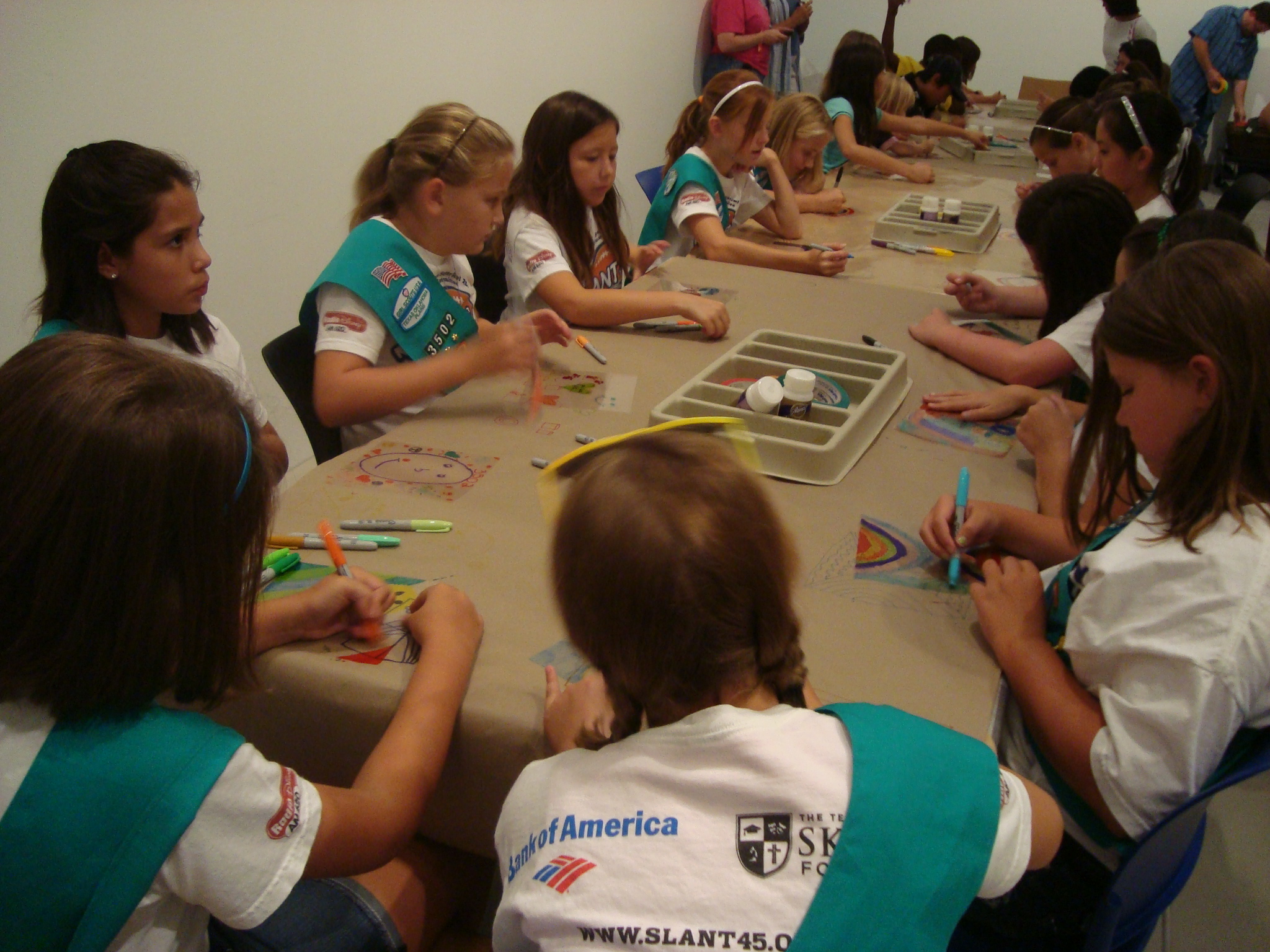
Volunteering and art make a great combination.  Add football and Super Bowl XLV to this combination and you get a power-packed project called SLANT 45.  In the football world, slant 45 references a specific play used by Daryl Johnston and Emmitt Smith when they played for the Dallas Cowboys.  Johnston, the North Texas Super Bowl XLV Host Committee, and Big Thought are giving slant new meaning in the Dallas-Fort Worth area with the SLANT 45 project, also known as Service Learning Adventures in North Texas. Sponsored by Bank of America and The Ted and Sharon Skokos Foundation, the project is an educational youth initiative promoting volunteer service in the community and providing participating youth with an opportunity to create unique artwork reflecting their service learning adventures.  It’s a great opportunity to encourage and recognize the champions of community service.  

The goal for the SLANT 45 community-wide service project is to involve at least 20,000 youth, logging in nearly 45,000 hours of volunteer work.  Wow!  After teams of youth complete their projects, the final step is the creation of a reflective artwork.  Selected works of art will be on view in the SLANT 45 Community Heroes Art Exhibition, which will be on display at various locations across North Texas before, during, and after Super Bowl XLV.

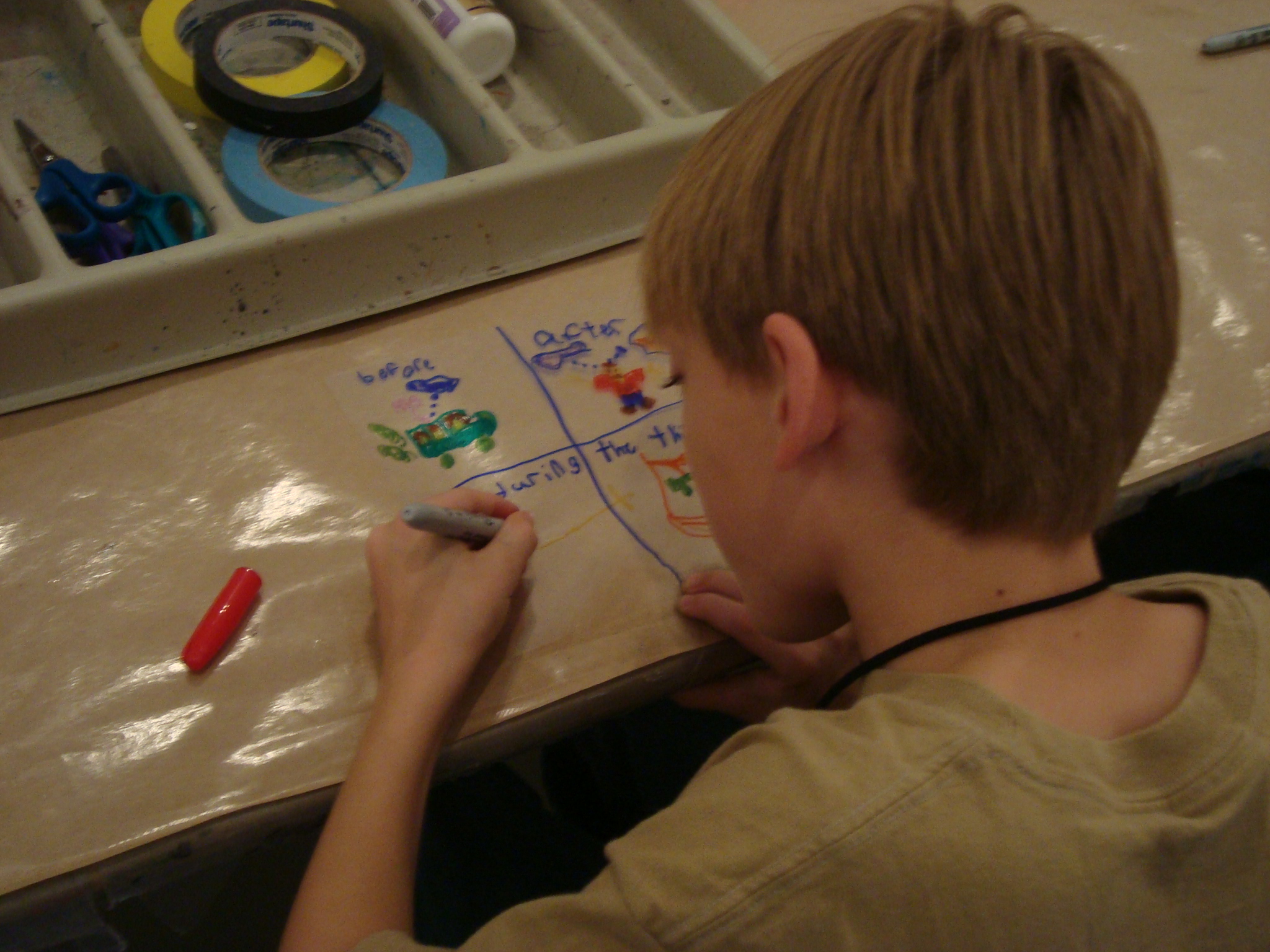
The Dallas Museum of Art is partnering with Big Thought and artists in the Dallas community to provide workshops for SLANT 45 participants.  A few North Texas youth participating in SLANT 45 visited the DMA recently to participate in a workshop with artist Sara Cardona.  Having recently completed their volunteer work at an animal shelter and a clothes closet, these boys and girls met with Sara to reflect on their projects and create works of art inspired by their service.  The youth created an artwork based on the idea of stained glass windows.  They drew words and images reflecting their community volunteer work on a transparent film, then backed the film with metallic paper, and then completed the work with a colorful frame.

More workshops are scheduled to occur at the DMA in September and October with artists Jill Foley, Adriana Martinez, Will Richey, and Ann Marie Newman.  Visit SLANT 45 for more information about how to register.

Nicole Stutzman
Director of Teaching Programs and Partnerships

Friday Photo Post: Art for Asthma

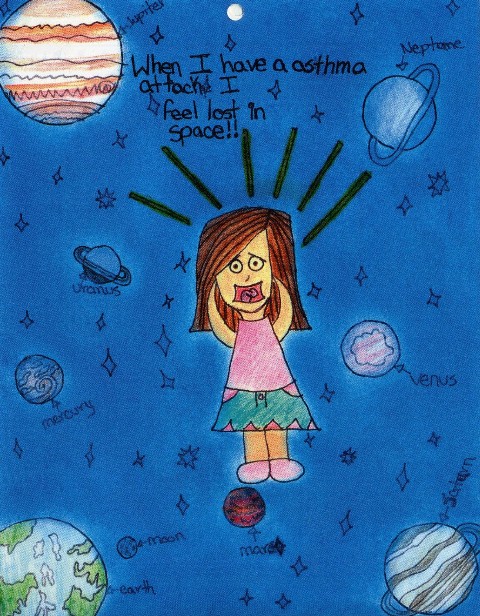
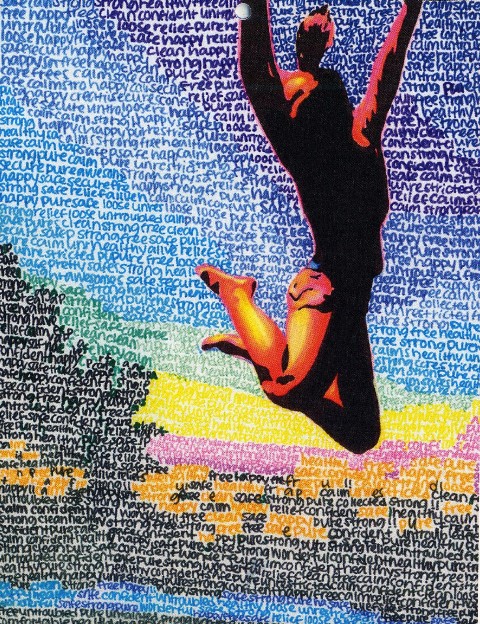
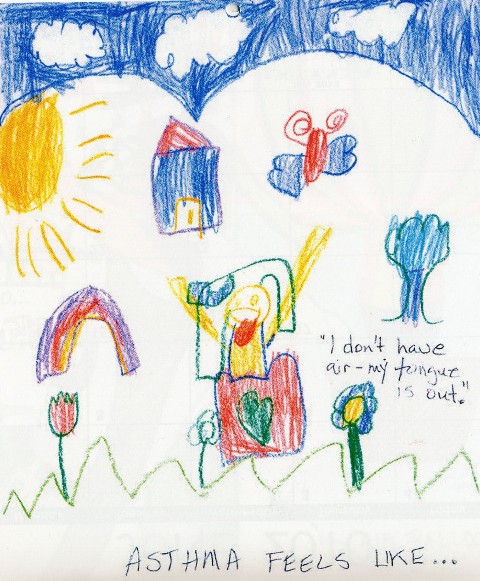
It’s time for the second annual Art for Asthma contest.  This fantastic contest, sponsored by Martha Foster Lung Care Center at Baylor University Medical Center at Dallas, invites children and teens to express through art how it feels to live with asthma.  Students in grades 1-12 are welcome to participate.  Contest guidelines can be accessed here.  Entries will be accepted now through October 8, 2010, and the awards ceremony will be held at the Dallas Museum of Art in early November.    View a few images below from the 2009 Art for Asthma contest.

Nicole Stutzman
Director of Teaching Programs and Partnerships

Artwork by Brenda Costilla, Grade 7

Artwork by Cooper Safford, Grade 11

Artwork by Audrey MBA, Grade 1


Archives

Categories