Archive for January, 2021

Reflections with Chris Schanck

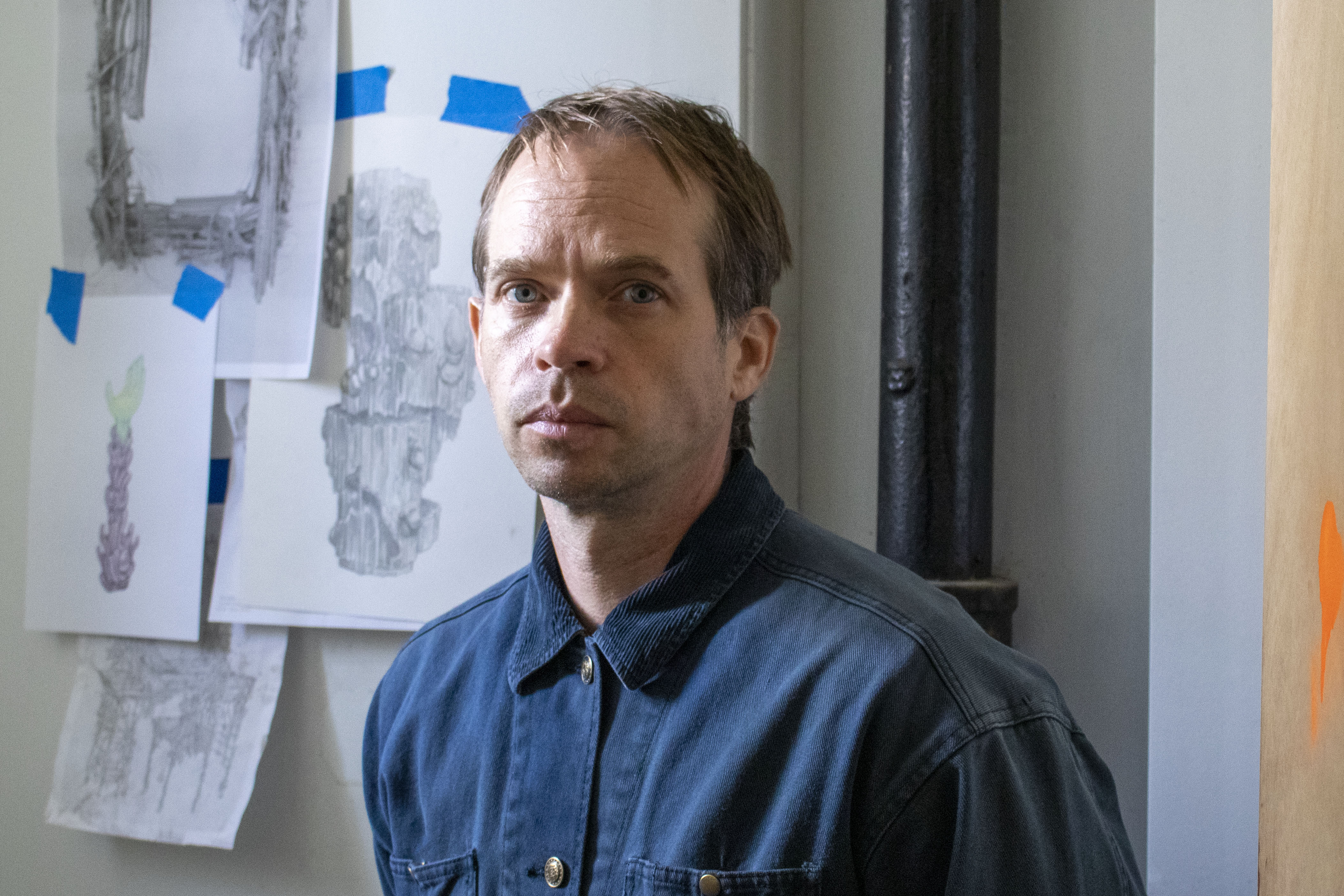
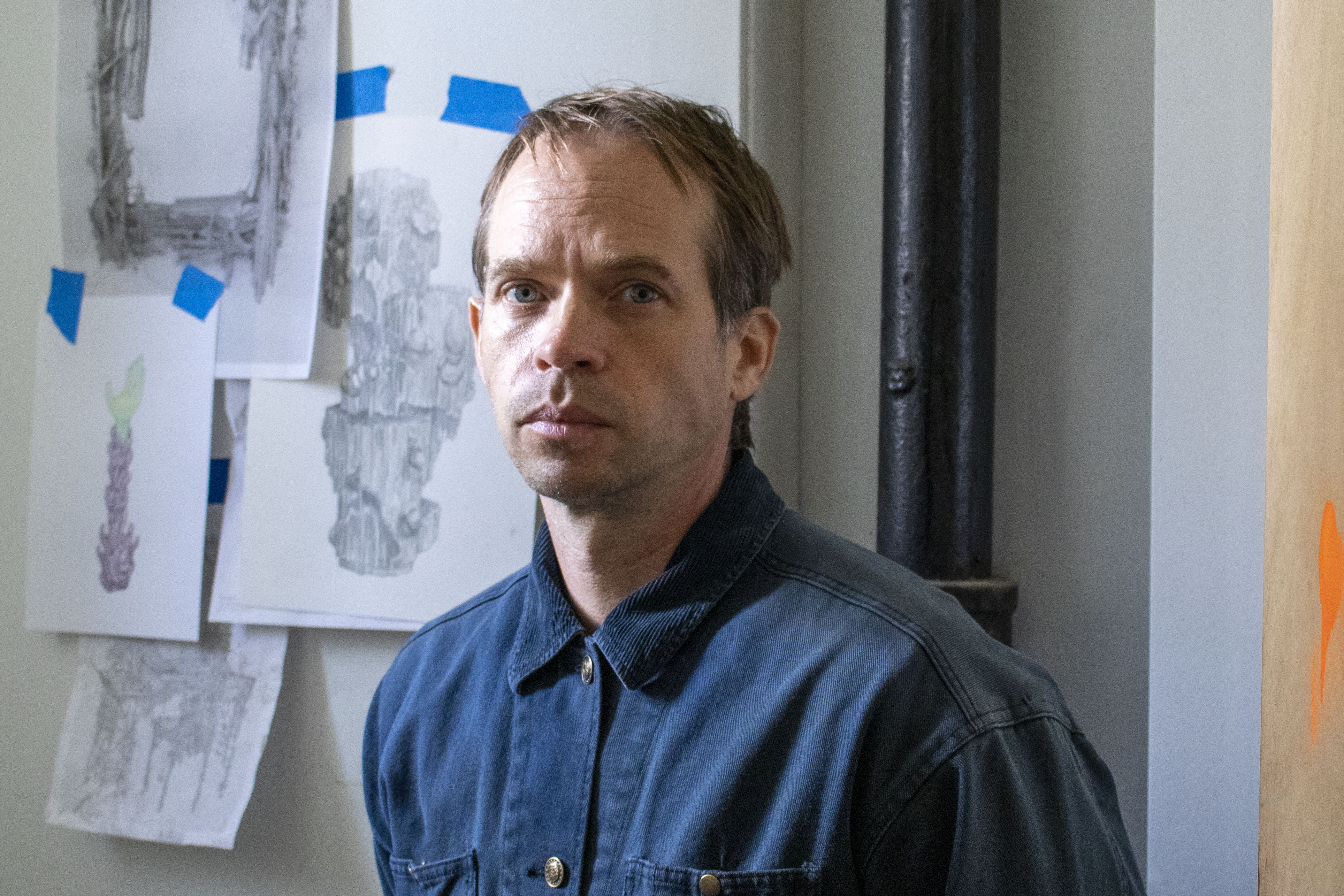
Ahead of Chris Schanck’s first major museum presentation, Curbed Vanity: A Contemporary Foil by Chris Schanck, we asked the artist a few questions about his formative years in Dallas, his artistic practice, and what he hopes visitors will reflect on when experiencing the exhibition. Read what he had to say and see Curbed Vanity, on view February 7 through August 29, 2021.

How was your high school experience at Booker T. formative for you as an artist?

“Good morning and welcome to Booker T. Washington High School for the Performing and Visual Arts, the most unique school in Dallas”—that’s how our principal, Dr. Watkins, addressed the student body over the PA system every morning; I can still hear the optimism in his voice. For a student like me, who often managed to find trouble, I am thankful for the patience and persistence that Dr. Watkins gave me—each day was a new day, a new chance. He gave me enough room to be creative and make mistakes, but he also helped me stay on the path.

Booker T. was the most critical educational experience of my life. My teachers offered me a sanctuary of stability and mentorship. Nancy Miller, Patsy Eldridge, Polly Disky, George Mosely, Charlotte Chambliss, Lolly Thompkins, Josephine Jones, and Sylvia Lincoln together gave me a strong fine arts foundation. 

My painting teacher, George Moseley, changed my life forever. Mr. Moseley is a great artist, an inspiring educator, and a trusted mentor. I, along with many of my peers, idealized him for the leadership he showed us in our youth. I know without a doubt that my life and career are forever indebted to him and those handful of teachers who helped me find the confidence to believe in myself.

What does having this show at the Dallas Museum of Art mean to you?

My high school was just down the street from the DMA and I visited countless times in those impressionable years. The Museum always had the familiar feeling of visiting a friend’s home; I felt welcomed and I knew my way around. At the same time, the DMA was my temple. It didn’t matter who I was in the Museum—everyone is equal before art.

The Museum was my gateway to art history. In one afternoon, I could visit with Aztec gods, Jackson Pollock, and Frida Kahlo—and I could start to see the connections and conversations between them all. I didn’t have a lot growing up, but the Museum and my high school gave me exactly what I needed. They showed me from a young age that art gives everything else meaning.

I’m grateful for the support of the Museum and the friends of the Museum. The DMA’s collection is the closest collection to my heart and to be a part of it is the greatest honor.

How does the transformation process of found objects into furniture inspire your artistic practice?

The found objects I work with have very disparate characteristics and I don’t have one specific method for grouping them. For each piece of work, I first build a simple structure and use that as an armature to explore the relationships between the objects and the material. The process of transforming the objects into form is driven by intuition and practical constraints. Many times, I’m following a hunch that two distinct things belong together, while other times I’m exploring rigid dimensional constraints between manufactured generic objects whose original intent is a mystery.

It feels like a collaborative effort between myself and the material—I have a notion of where to begin but the objects bring the project into focus.
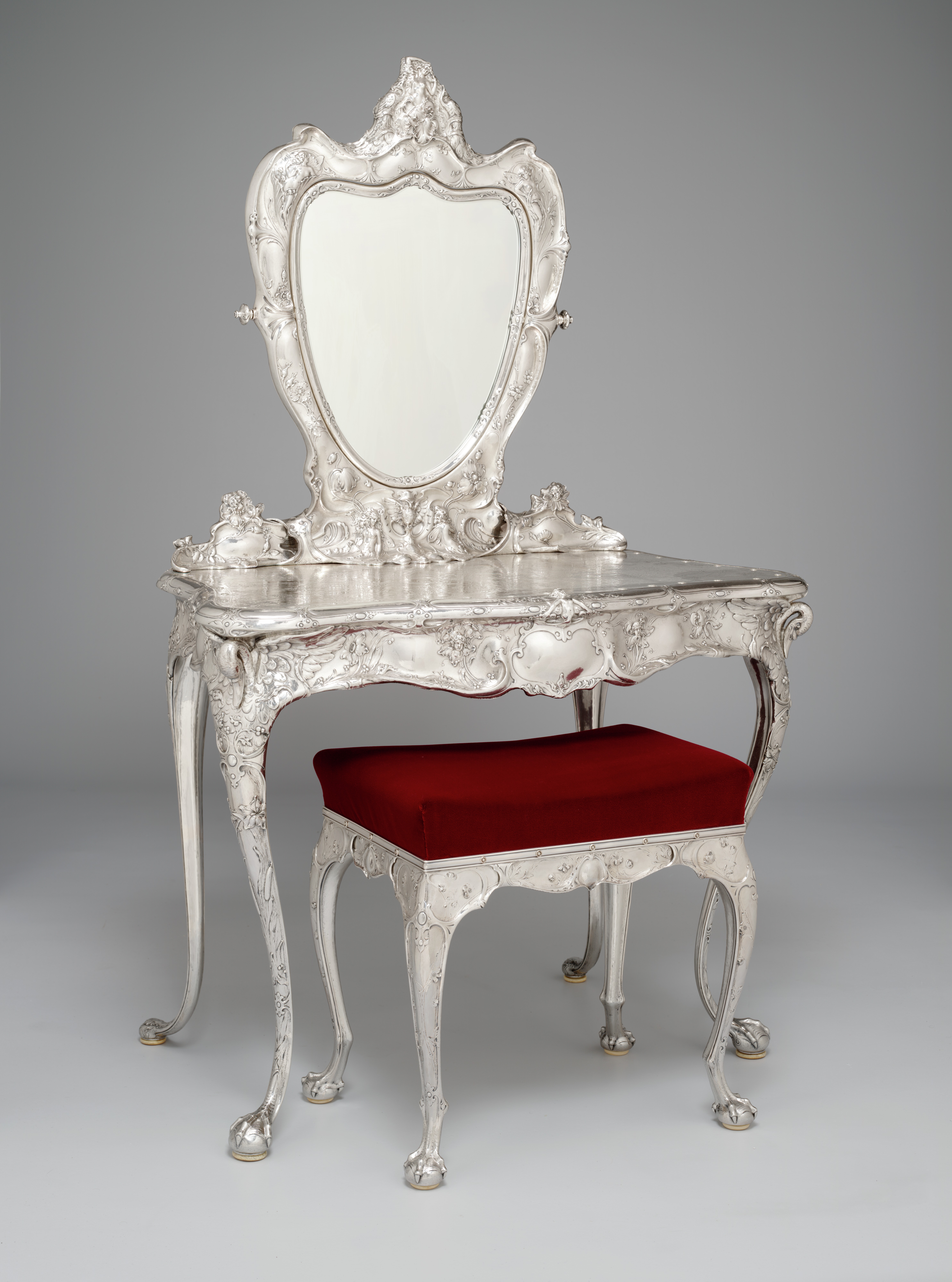
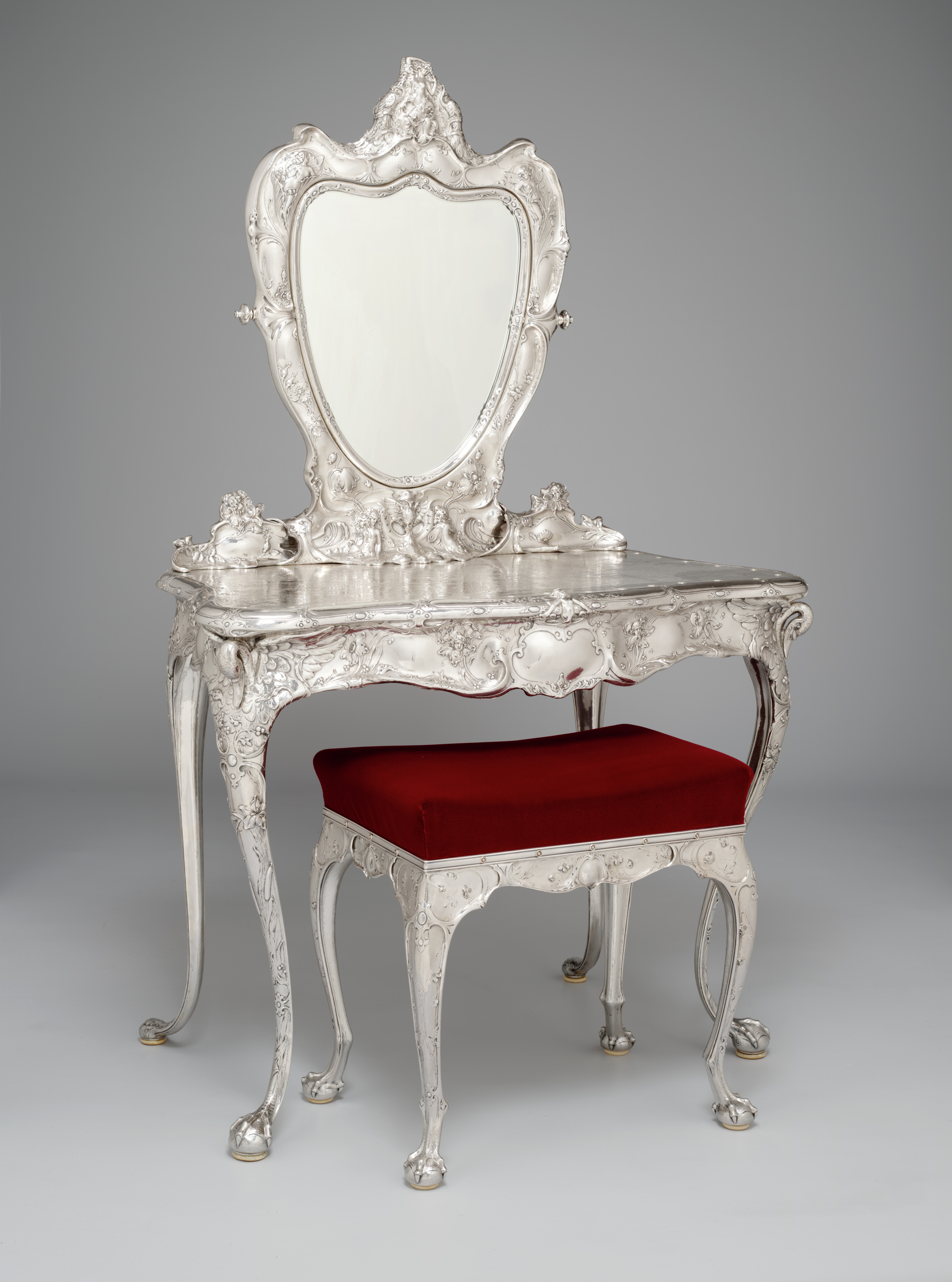
William C. Codman, Martelé dressing table and stool, 1899, silver, glass, fabric, and ivory, Dallas Museum of Art, The Eugene and Margaret McDermott Art Fund, Inc., in honor of Dr. Charles L. Venable, 2000.356.a–b.McD

What was your first encounter with the DMA’s Martelé dressing table like?

Like encountering the sword Excalibur; its presence is magical in form and reflectivity—it’s a formidable piece of work to talk to.

What experience do you want visitors to take away from Curbed Vanity?

I’d like them to know that I find my corner of the world inspiring and beautiful in it’s everyday characteristics. I hope the work inspires viewers to enjoy the subtle and unconventional beauty in their own communities.
Connections Across Collections: Repurposed Materials

Making the old new by transforming discarded objects into works of art is an integral part of contemporary artist Chris Schanck’s practice, as seen in his dressing table featured in the upcoming Curbed Vanity exhibition and made of found materials from the neighborhood surrounding his Detroit studio. We asked DMA curators what other artworks and objects in our collection feature repurposed materials. From personal mementos to wild animal horns, find out about these objects and what they’re made of.

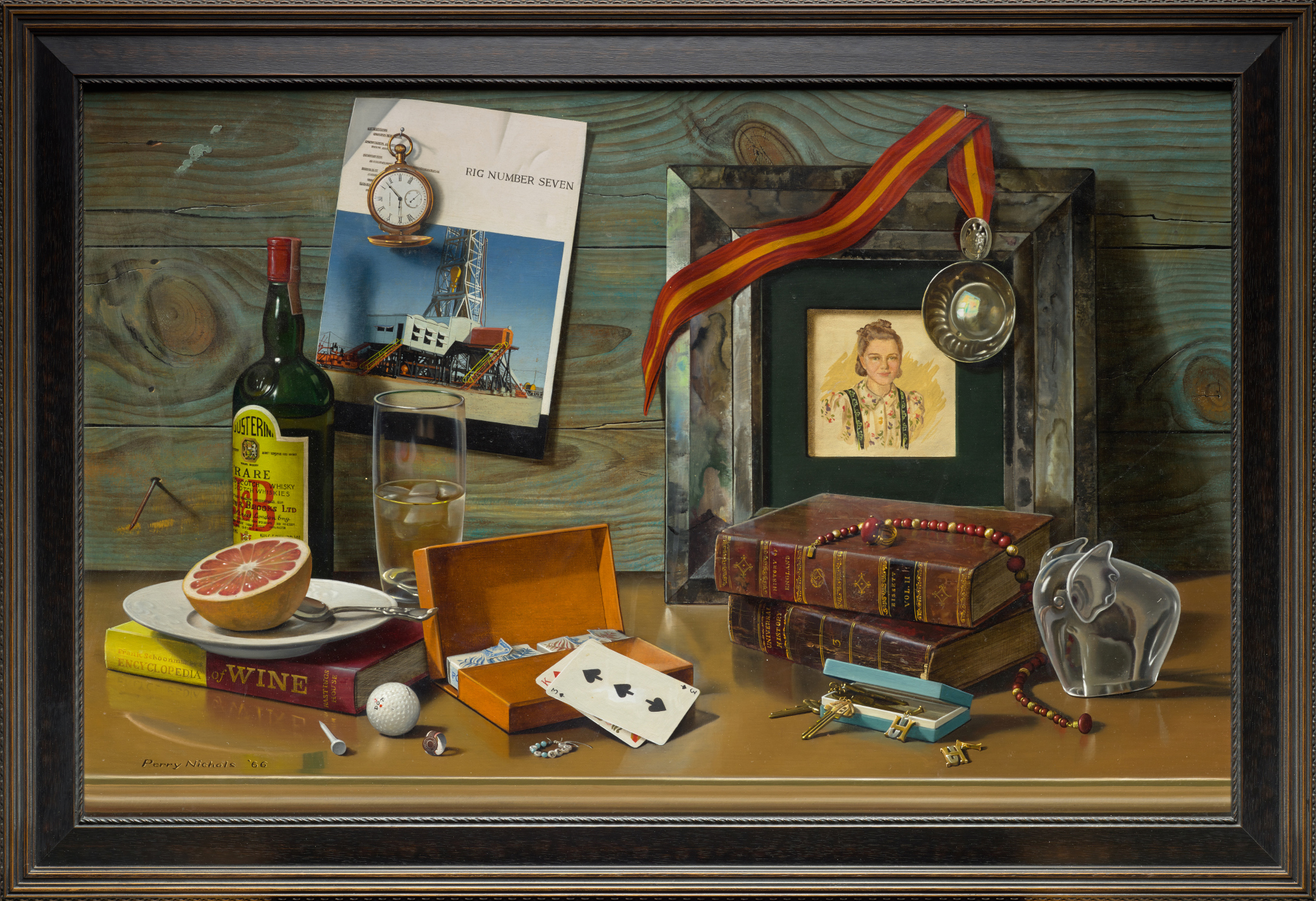
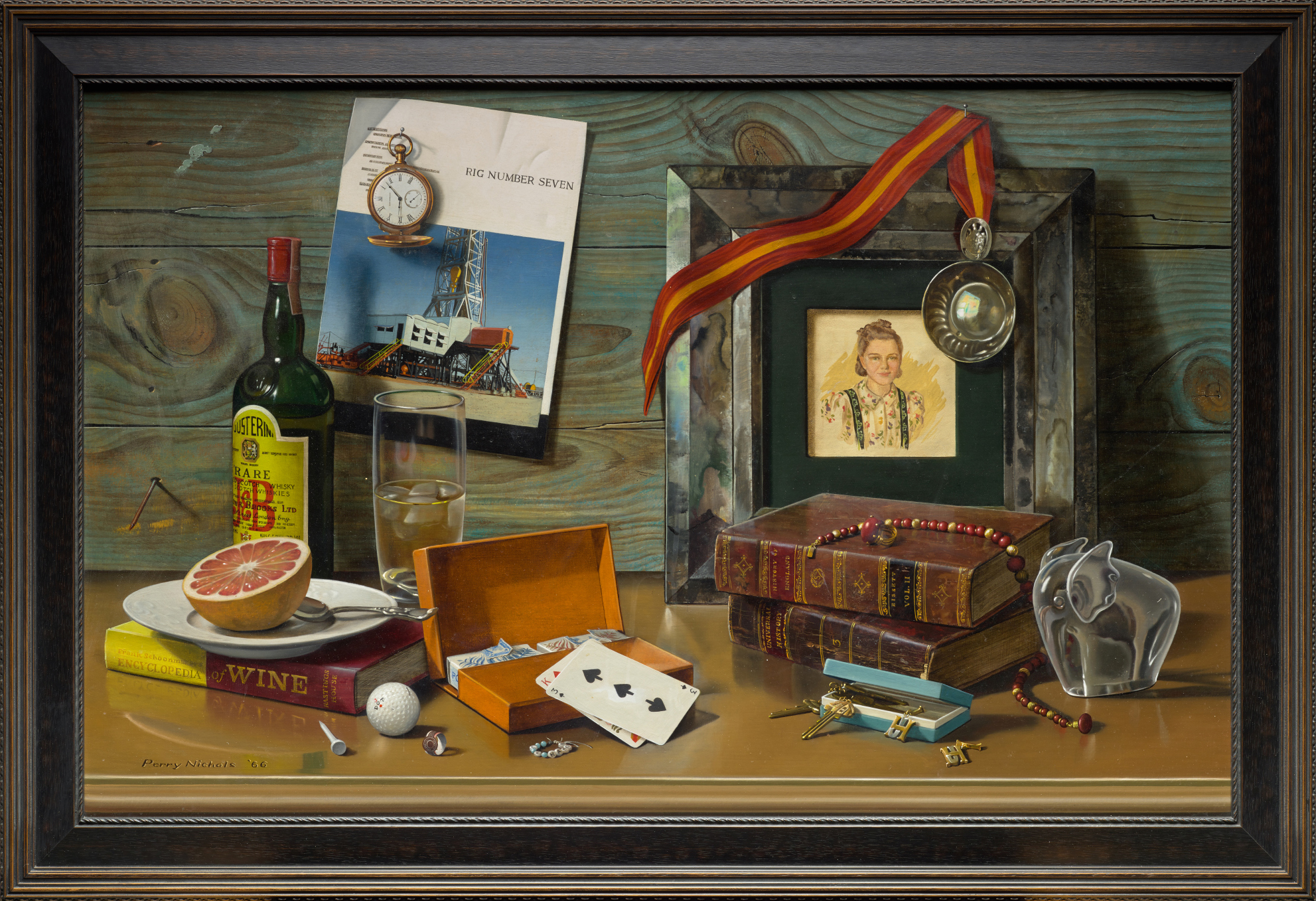
Perry Nichols, [The Desk Top of Jake Hamon], 1966, oil on canvas, Dallas Museum of Art, bequest of Carlos Nichols, 2017.37, © Perry Nichols

Sue Canterbury, The Pauline Gill Sullivan Curator of American Art 
“Dallas native Perry Nichols portrayed Jake Hamon by depicting objects and mementos that represented some of the sitter’s traits, hobbies, and interests. When the Hamons owned the painting, it hung over their mantle while the real-life items rested below.”

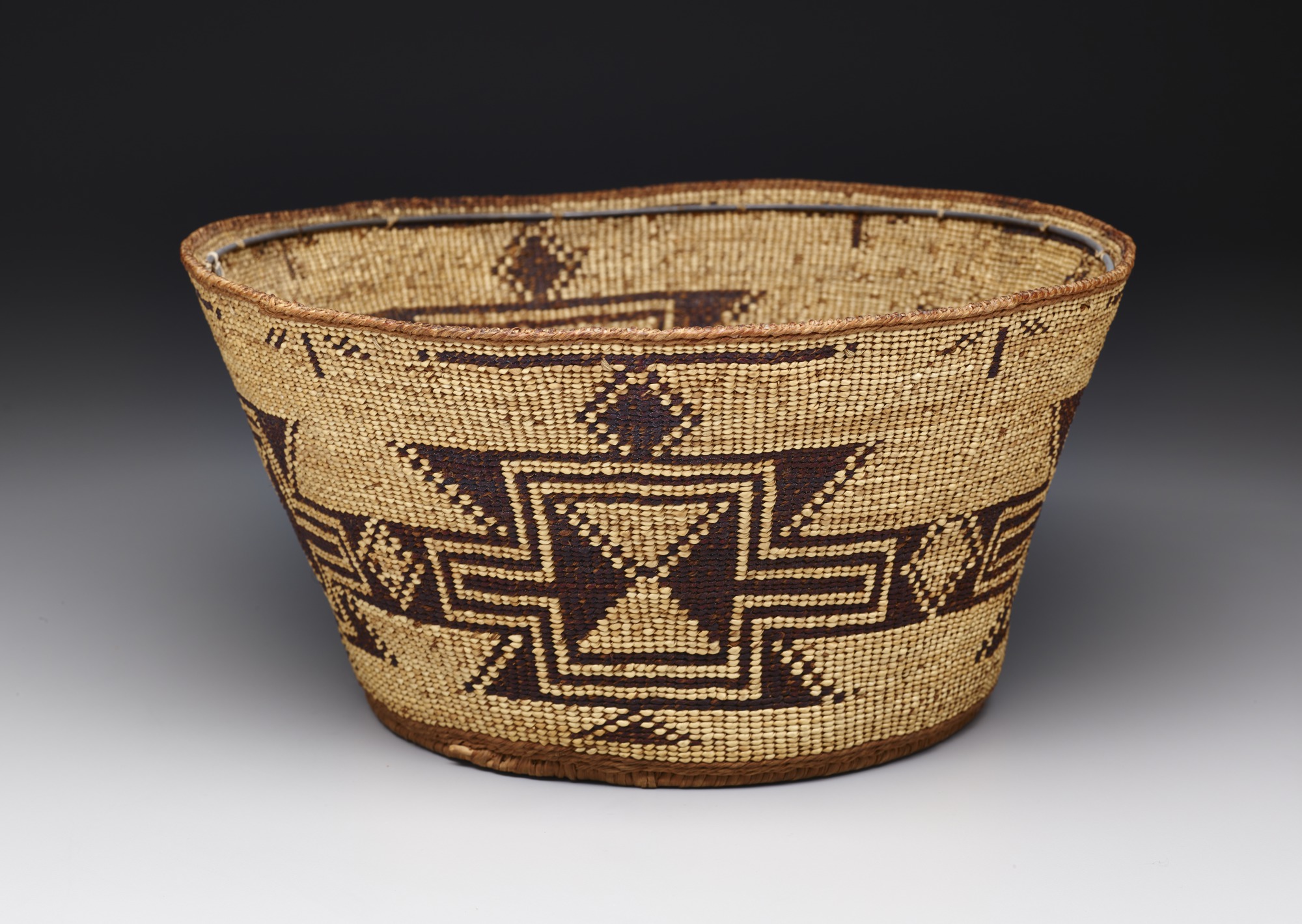
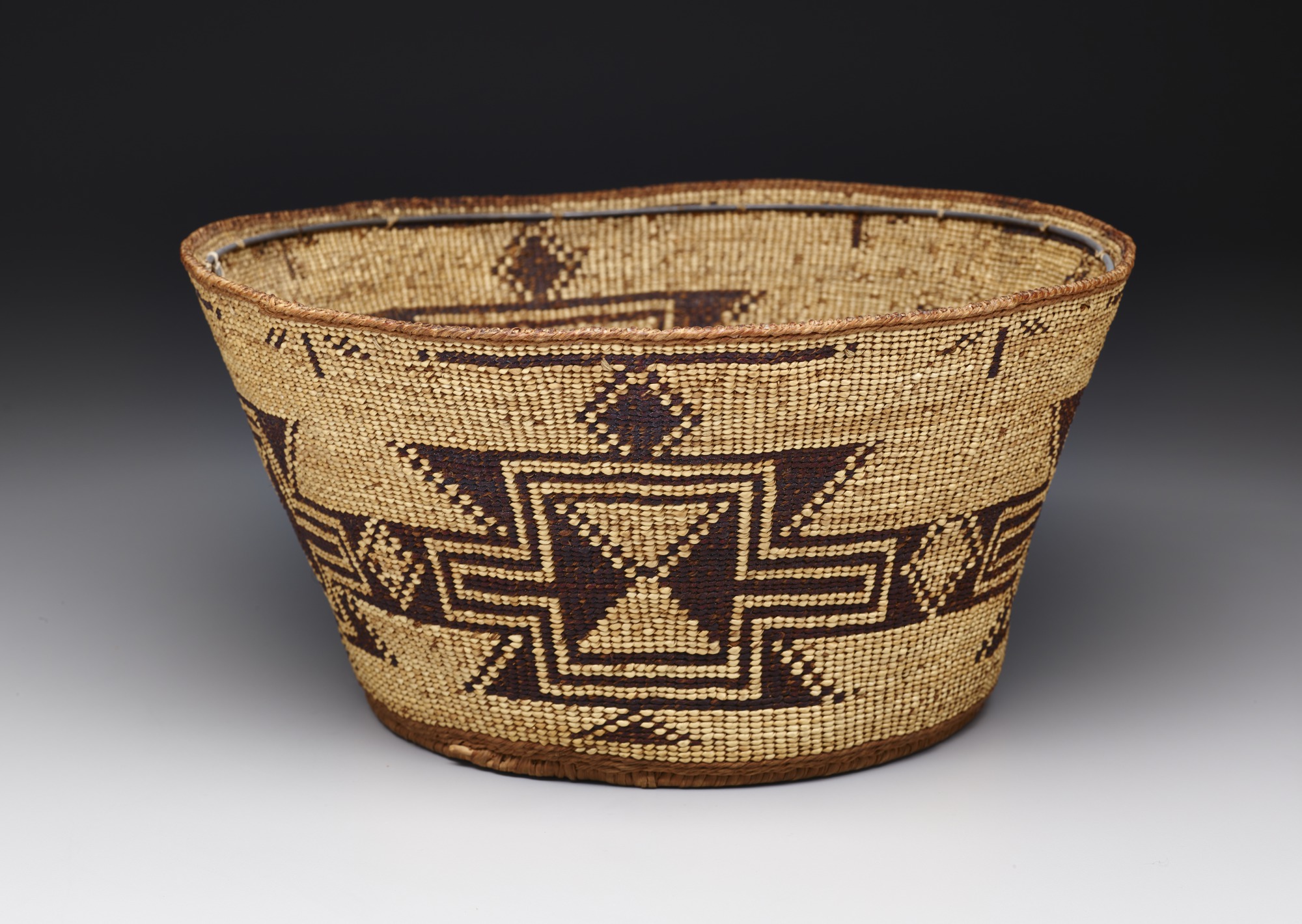
Ceremonial basket, California, Shasta basketweaver, 19th–20th century, Squaw grass and black mountain sedge, Dallas Museum of Art, gift of Mrs. Eugene M. Solow, 1954.130.1

Dr. Michelle Rich, Ellen and Harry S. Parker III Assistant Curator of Arts of the Americas
“Foraging for grasses in nature is a form of producing art with found materials. The Shasta artist who wove this beautiful basket took the time to harvest the bear grass (Xerophyllum tenax) and black alpine sedge (Carex nigricans) from the wilds of Northern California.”

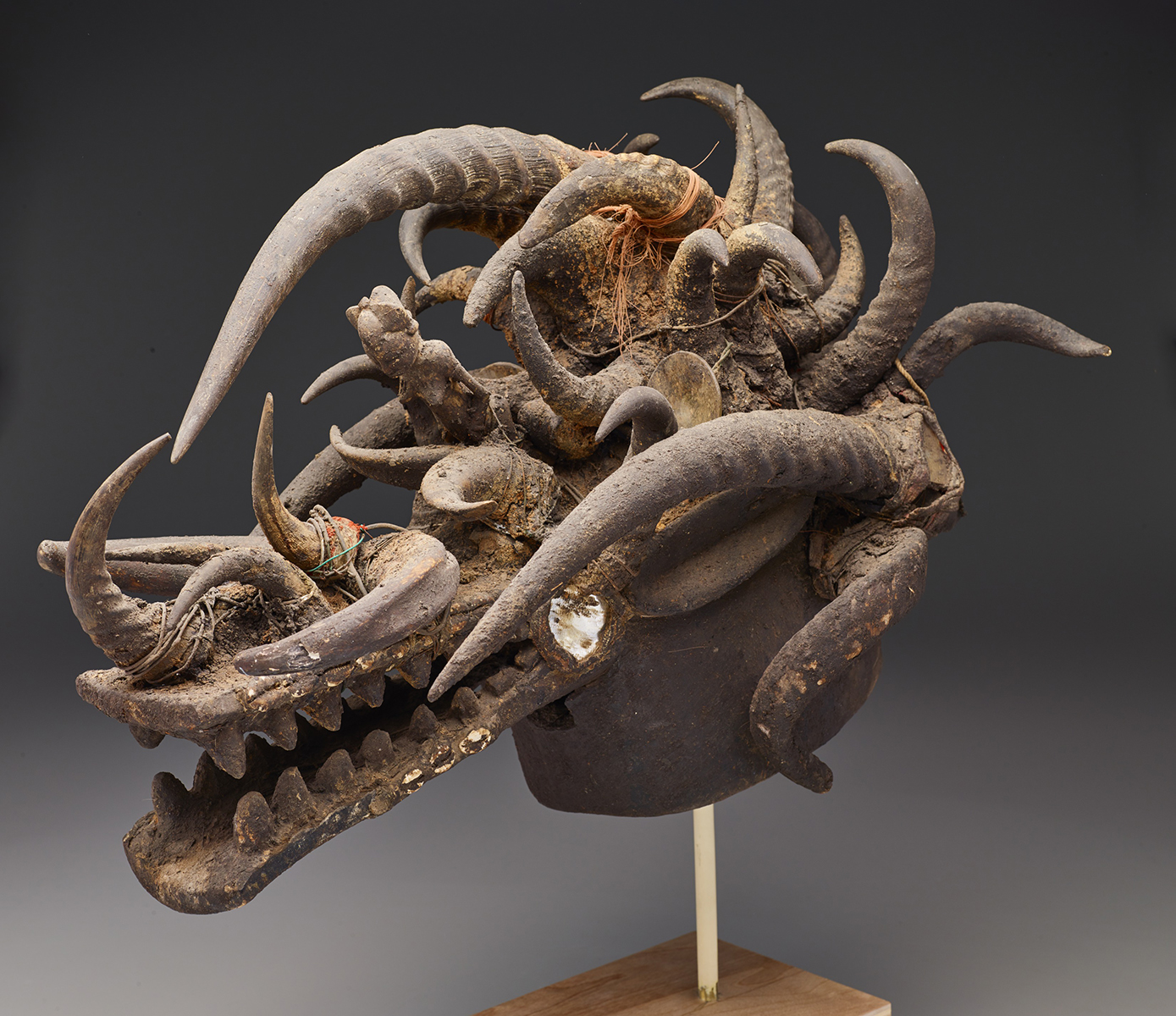
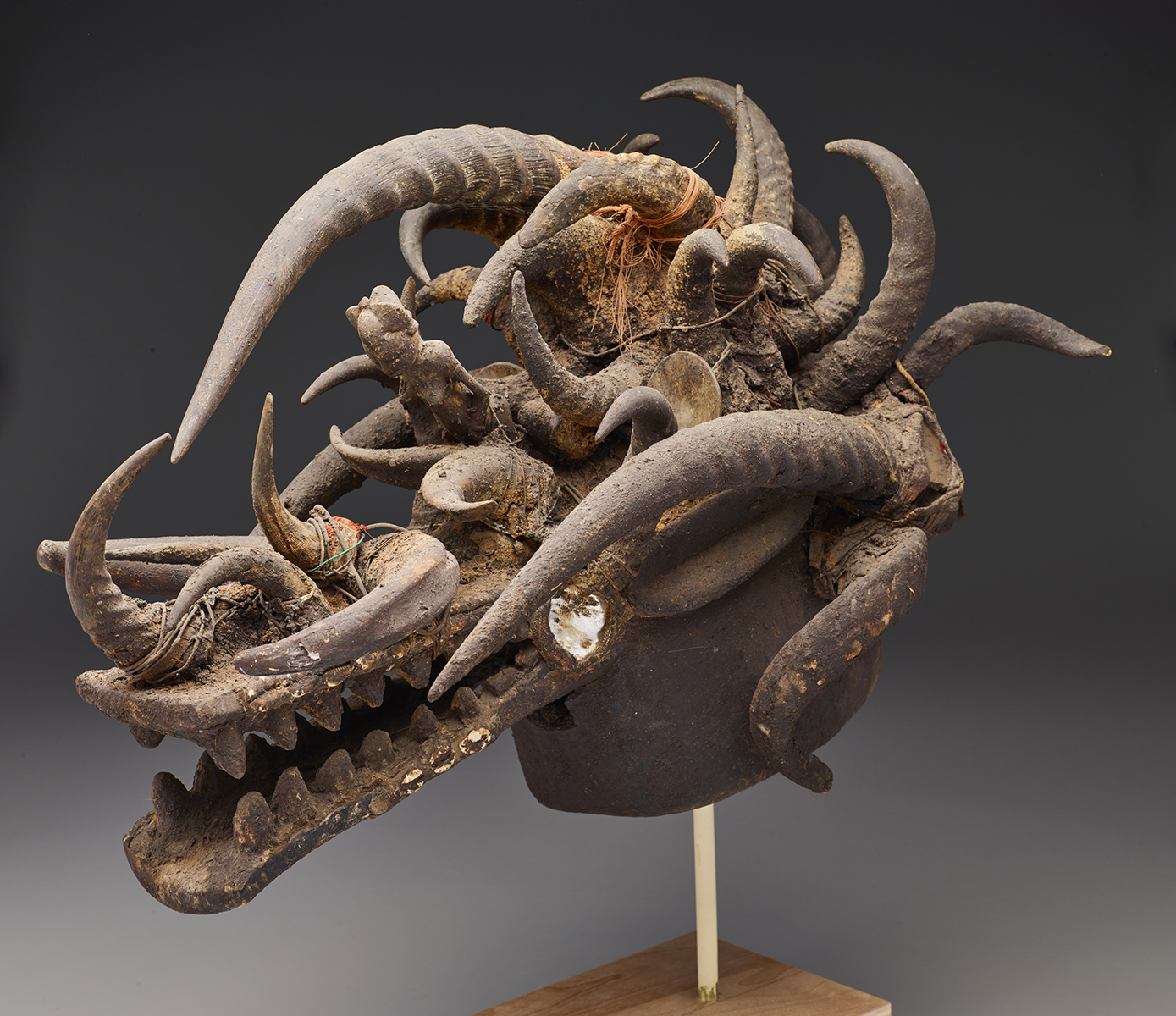
Helmet mask (komo), Mali and Côte d’Ivoire, Senufo sculptor, mid-20th century, wood, glass, animal horns, fiber, mirrors, iron, and other materials, Dallas Museum of Art, gift of David T. Owsley, 1997.24

Dr. Roslyn A. Walker, Senior Curator of the Arts of Africa, the Americas, and the Pacific and The Margaret McDermott Curator of African Art 
“Sharp horns, tusks, and zigzag teeth of wild animals; mirrors; cowrie shells; wine glasses; and sacred texts contribute to the fierce appearance and spiritual power of this helmet mask, as well as project the prominence of the Komo society member.”

Expanded for DMA Members: Connections Across Collections: Repurposed Materials

Making the old new by transforming discarded objects into works of art is an integral part of contemporary artist Chris Schanck’s practice, as seen in his dressing table featured in the upcoming Curbed Vanity exhibition and made of found materials from the neighborhood surrounding his Detroit studio. We asked DMA curators what other artworks and objects in our collection feature repurposed materials. From cabinet chairs to cowrie shells, find out about these objects and what they’re made of.

Perry Nichols, [The Desk Top of Jake Hamon], 1966, oil on canvas, Dallas Museum of Art, bequest of Carlos Nichols, 2017.37, © Perry Nichols

Sue Canterbury, The Pauline Gill Sullivan Curator of American Art 
“Dallas native Perry Nichols portrayed Jake Hamon by depicting objects and mementos that represented some of the sitter’s traits, hobbies, and interests. When the Hamons owned the painting, it hung over their mantle while the real-life items rested below.”

Helmet mask (komo), Mali and Côte d’Ivoire, Senufo sculptor, mid-20th century, wood, glass, animal horns, fiber, mirrors, iron, and other materials, Dallas Museum of Art, gift of David T. Owsley, 1997.24

Dr. Roslyn A. Walker, Senior Curator of the Arts of Africa, the Americas, and the Pacific, and The Margaret McDermott Curator of African Art 
“Sharp horns, tusks, and zigzag teeth of wild animals; mirrors; cowrie shells; wine glasses; and sacred texts contribute to the fierce appearance and spiritual power of this helmet mask, as well as project the prominence of the Komo society member.”

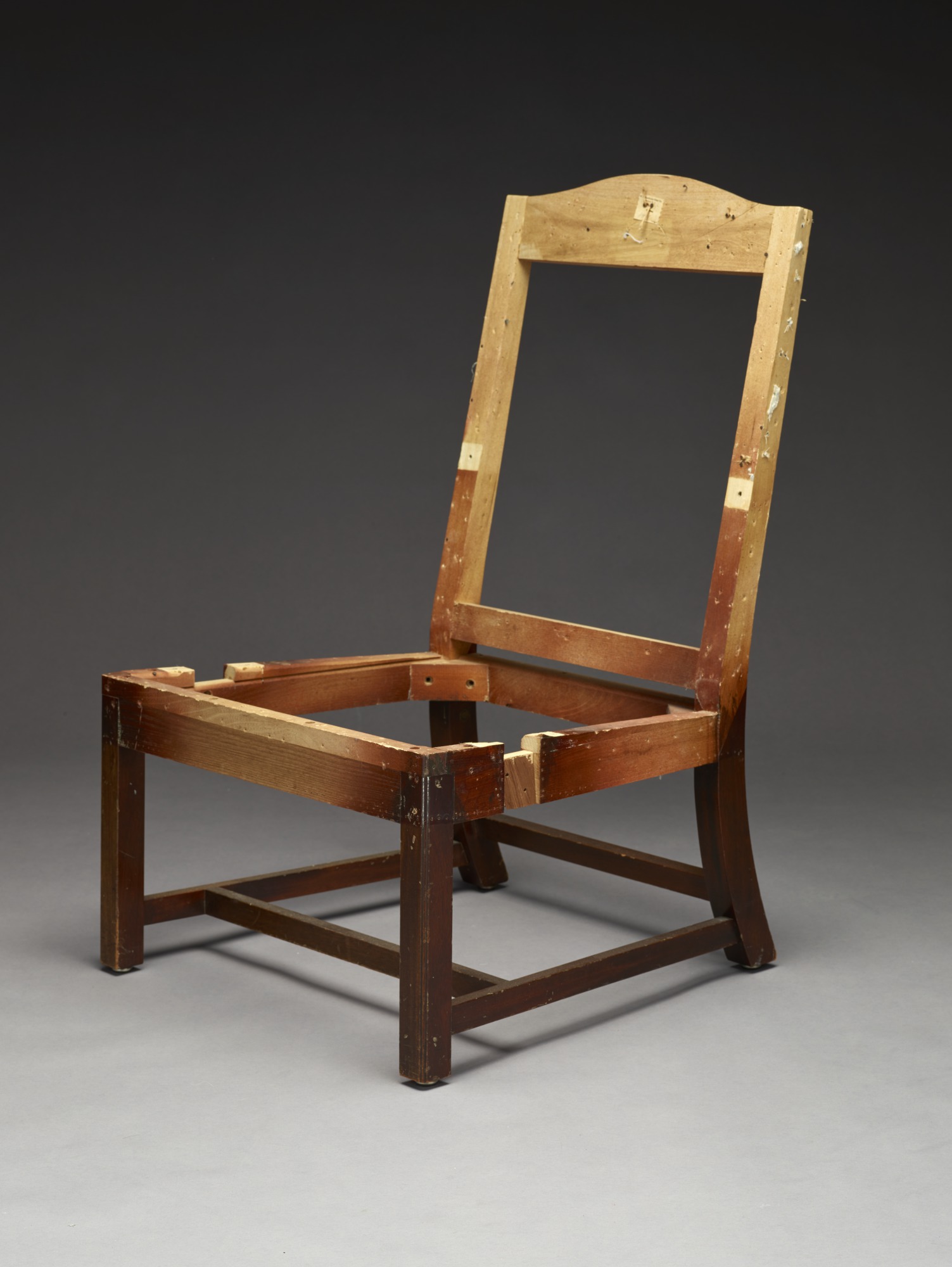
Danh Vo, Lot 20. Two Kennedy Administration Cabinet Room Chairs, 2013, mahogany and metal, Dallas Museum of Art, TWO x TWO for AIDS and Art Fund, 2014.12, © Danh Vo

Dr. Vivian Li, Lupe Murchison Curator of Contemporary Art 
“In Lot 20, Danh Vo disassembles and disperses two cabinet chairs once owned by Kennedy and his Secretary of Defense Robert S. McNamara, the primary architect of the Vietnam War, thus evoking the far-reaching losses made from the decisions of the chairs’ former occupants.”

Ceremonial basket, California, Shasta basketweaver, 19th–20th century, Squaw grass and black mountain sedge, Dallas Museum of Art, gift of Mrs. Eugene M. Solow, 1954.130.1

Dr. Michelle Rich, The Ellen and Harry S. Parker III Assistant Curator of Arts of the Americas
“Foraging for grasses in nature is a form of producing art with found materials. The Shasta artist who wove this beautiful basket took the time to harvest the bear grass (Xerophyllum tenax) and black alpine sedge (Carex nigricans) from the wilds of Northern California.”

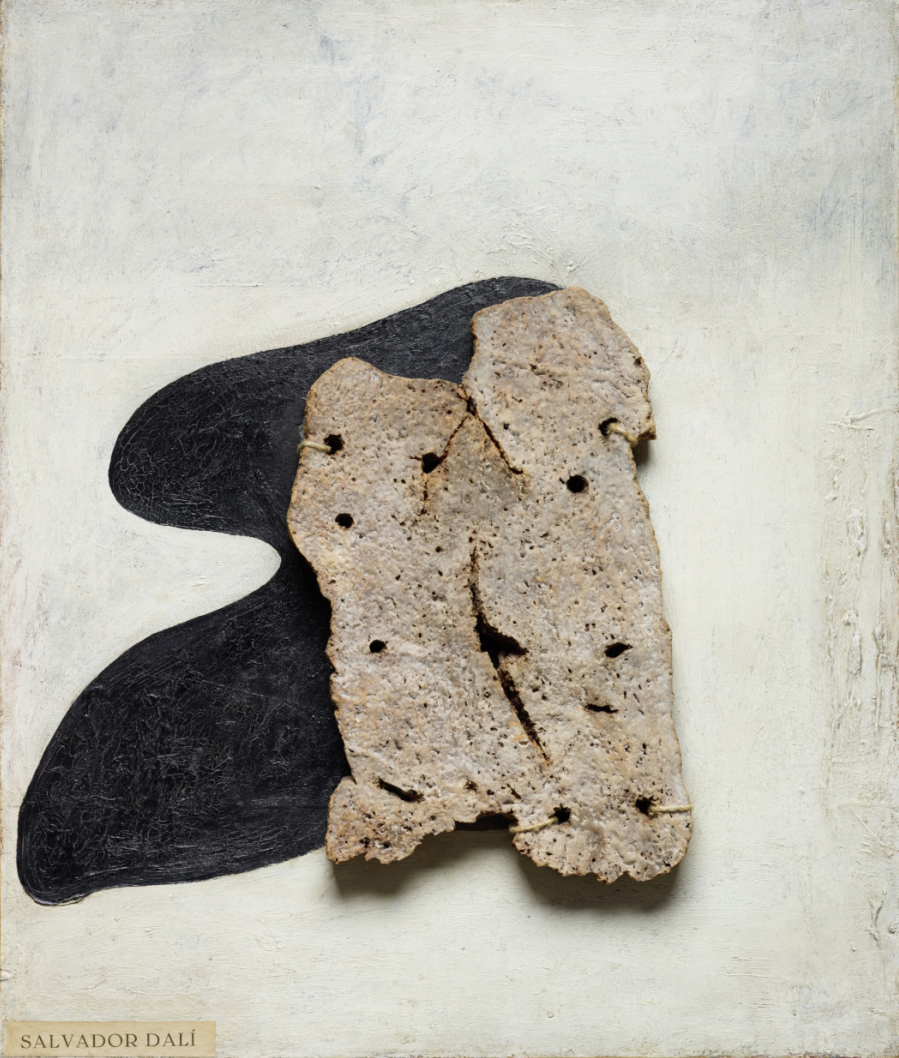
Salvador Dalí, Female Nude, 1928, oil, cork, cord, and collage on canvas, Dallas Museum of Art, bequest of William B. Jordan and Robert Dean Brownlee, 2019.72.78, © Salvador Dalí, Gala-Salvador Dalí Foundation/Artists Rights Society (ARS), New York

Dr. Nicole R. Myers, The Barbara Thomas Lemmon Senior Curator of European Art
“An extraordinary early work, Female Nude is a rare example of Dalí’s brief experimentation with found objects. Here, he affixed an anthropomorphic piece of cork to the canvas in order to evoke the form of a female nude, a playful effect completed by the painted shadow.”

Expanded for DMA Members: Reflections with Chris Schanck

Ahead of Chris Schanck’s first major museum presentation, Curbed Vanity: A Contemporary Foil by Chris Schanck, we asked the artist a few questions about his formative years in Dallas, his artistic practice, and what he hopes visitors will reflect on when experiencing the exhibition. Read what he had to say and see Curbed Vanity, on view February 7 through August 29, 2021.

How was your high school experience at Booker T. formative for you as an artist?

“Good morning and welcome to Booker T. Washington High School for the Performing and Visual Arts, the most unique school in Dallas”—that’s how our principal, Dr. Watkins, addressed the student body over the PA system every morning; I can still hear the optimism in his voice. For a student like me, who often managed to find trouble, I am thankful for the patience and persistence that Dr. Watkins gave me—each day was a new day, a new chance. He gave me enough room to be creative and make mistakes, but he also helped me stay on the path.

Booker T. was the most critical educational experience of my life. My teachers offered me a sanctuary of stability and mentorship. Nancy Miller, Patsy Eldridge, Polly Disky, George Mosely, Charlotte Chambliss, Lolly Thompkins, Josephine Jones, and Sylvia Lincoln together gave me a strong fine arts foundation. 

My painting teacher, George Moseley, changed my life forever. Mr. Moseley is a great artist, an inspiring educator, and a trusted mentor. I, along with many of my peers, idealized him for the leadership he showed us in our youth. I know without a doubt that my life and career are forever indebted to him and those handful of teachers who helped me find the confidence to believe in myself.

What does having this show at the Dallas Museum of Art mean to you?

My high school was just down the street from the DMA and I visited countless times in those impressionable years. The Museum always had the familiar feeling of visiting a friend’s home; I felt welcomed and I knew my way around. At the same time, the DMA was my temple. It didn’t matter who I was in the Museum—everyone is equal before art.

The Museum was my gateway to art history. In one afternoon, I could visit with Aztec gods, Jackson Pollock, and Frida Kahlo—and I could start to see the connections and conversations between them all. I didn’t have a lot growing up, but the Museum and my high school gave me exactly what I needed. They showed me from a young age that art gives everything else meaning.

I’m grateful for the support of the Museum and the friends of the Museum. The DMA’s collection is the closest collection to my heart and to be a part of it is the greatest honor.

When did you first start collecting discarded objects? What is the most memorable
object you’ve found?

When I was a child, my mother encouraged me to collect small stones as mementos when visiting special places like parks and cemeteries. My mother, a believer in the mystical and supernatural, taught me that objects can possess energy and a history from their past owner or caretaker. She influenced me to see objects in the material world as animated material that could keep a memory of its life cycle.

One doesn’t have to believe in the occult to see that a found object carries the markings and patina of its past. I collect the ordinary—a fallen tree branch, a broken chair leg, or a cracked piece of a taillight. The most memorable object I’ve found is a very sculptural piece of crumpled steel I found sitting near the railroad tracks. I haven’t managed to use it yet because it’s so powerful on its own. Ultimately, my whole collection is greater than the sum of its parts; it’s an archive of artifacts from my current community’s landscape.

How does the transformation process of found objects into furniture inspire your artistic practice?

The found objects I work with have very disparate characteristics and I don’t have one specific method for grouping them. For each piece of work, I first build a simple structure and use that as an armature to explore the relationships between the objects and the material. The process of transforming the objects into form is driven by intuition and practical constraints. Many times, I’m following a hunch that two distinct things belong together, while other times I’m exploring rigid dimensional constraints between manufactured generic objects whose original intent is a mystery.

It feels like a collaborative effort between myself and the material—I have a notion of where to begin but the objects bring the project into focus.

William C. Codman, Martelé dressing table and stool, 1899, silver, glass, fabric, and ivory, Dallas Museum of Art, The Eugene and Margaret McDermott Art Fund, Inc., in honor of Dr. Charles L. Venable, 2000.356.a–b.McD

What was your first encounter with the DMA’s Martelé dressing table like?

Like encountering the sword Excalibur; its presence is magical in form and reflectivity—it’s a formidable piece of work to talk to.

What experience do you want visitors to take away from Curbed Vanity?

I’d like them to know that I find my corner of the world inspiring and beautiful in it’s everyday characteristics. I hope the work inspires viewers to enjoy the subtle and unconventional beauty in their own communities.


Archives

Categories