Archive Page 3


Off the Wall: Where Does It End?

In our Center for Creative Connections we ask visitors to reflect on their responses to the spaces they encounter in art, as well as those they encounter in their everyday life.

For one work of art specifically, Lee Bontecou’s Untitled, we ask visitors to respond to one of three prompts:

  • To me, sharing space with this work of art feels like…
  • The words or pictures that come to mind when I look at this work of art are…
  • If this work of art was part of something larger, describe what it would be.

Untitled (35), Lee Bontecou, 1961

We have gotten a lot of great responses from visitors and want to share a few with you. Once a month we will have an “Off the Wall” post featuring three responses left by visitors.

Next time you are in the Center for Creative Connections add your contribution to the wall and maybe you will see it on Uncrated!

How to Win an Election

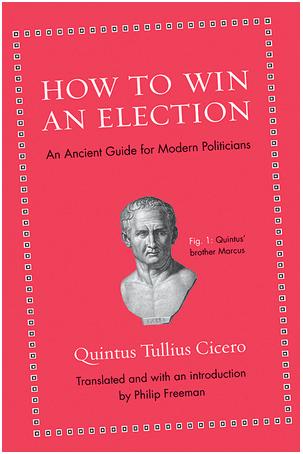
Election season is upon us! Join us at the Dallas Museum of Art on Thursday, October 25, at 7:30 p.m. for a lecture on the ancient Roman election of 64 B.C, when Marcus Cicero won the office of consul, the highest office in the land, with the help of his brother Quintus. Dr. Philip Freeman translated Quintus’ Latin text, How to Win an Election, written to guide Marcus to victory, and discovered the text to be as timely today as it was in ancient Rome. Uncrated caught up with him for a short Q&A and preview:

What piqued your interest in How to Win an Election?

I read the original in Latin back when I was a graduate student in Classics at Harvard. I was struck then by how timeless the advice in the letter was, so I’ve used it since then in my own undergraduate classes with positive responses from the students. A couple of years ago, I decided that it would be great if the general public could read this virtually unknown piece of ancient literature. I was thrilled when Princeton University Press agreed to publish and publicize it!

Does the advice really hold up for the modern-day election? Do you think your book should be required reading for those running for office?

It certainly holds up for today’s elections. Every time I read of a new scandal or technique from the presidential candidates, I think of Marcus Cicero and the election of 64 B.C. I do sometimes worry that modern candidates will apply the principles laid out in the letter, but I think most people running for office today know all the dirty tricks already!

Your work is rooted in the “dead” languages of the ancient world. What is the most difficult thing you have ever translated? And do you think anything is lost in translation?

Every translation is a compromise that loses something of the original. You can try to be painfully literal, but that misses the spirit of the original. You can try to just capture the broad meaning, but that won’t be accurate. I usually compromise and try to take a middle path. How to Win an Election is probably the hardest thing I’ve ever translated because I was struggling so hard to capture the flavor of the letter while staying true to the text.

We’re right around the corner from the next major presidential election. What are your thoughts on our current election process?

I’ve learned that nothing has really changed in 2,000 years. Politicians are still using the same techniques and making the same mistakes.

Any last minute advice you would give the candidates before November 6?

I think Cicero would say never take anything or anyone for granted. Even at the last minute, elections can change completely!

Dr. Philip Freeman is a Professor of Classics at Luther University in Decorah, Iowa. He has been interviewed by NPR’s All Things Considered and has talked on Roman politics across the country. He will lecture on Thursday, October 25, at 7:30 p.m. at the Dallas Museum of Art as part of the Boshell Family Lecture Series on Archaeology.

Liz Menz is Manager of Adult Programs at the Dallas Museum of Art.

Back Where It Started: Dallas Video Festival

Coming up in just ten short days, the Dallas Video Festival will launch its 25th Anniversary Festival here at the DMA. The festival will include screenings of feature-length works as well as shorts, animation, and other new media, “The Texas Show,” workshops, and more!
Recently, I spoke with Bart Weiss, DVF Artistic Director and all around “ video guy,” about the history of the festival.

So, the Video Festival is celebrating its 25th anniversary this year, back at its original home venue, the DMA. How did the Video Festival start and how did it happen to start at the DMA?

A dear and longtime friend of mine, John Held, Jr., was working on a program that was going to take place at the DMA called Video as a Creative Medium. It was a two-evening program; the first evening featured local video artists and the second evening featured video art from around the world, including works from Michael Smith and other up-and-coming video artists. It was a very successful program. Afterwards, I was chatting with John and Melissa Berry, the program manager at the DMA at the time, and just blurted out, “We should do this again next year, and for four days!” Thus the idea of the Video Festival was born.

I should also mention that on the first evening of the Video as a Creative Medium program, I met a lovely woman named Susan Teegarden, who is now my wife!

The Video Festival ran the first few years basically out of the DMA’s programming office and was not its own organization. Two of the founding board members of the official new organization, The Video Association of Dallas, were those very helpful and supportive DMA staffers–Melissa Berry and Sue Graze (the DMA’s contemporary art curator at the time).

What are a couple of your fondest memories of video festivals over the years?

Of course, I have many, many fond memories of past festivals, but one that really sticks out to me was one I could have never planned for. I cannot recall the exact year, but we had John Wylie Price participating in the festival. We were doing a program that included showing clips of the television show Amos ’n’ Andy. John was part of a conversation that debated whether this show was beneficial or damaging to the African American community since it often played upon stereotypes in the story lines.

We also had Steve Allen in town and he was going to be leading the program that was to follow Price’s. Allen attended Price’s program and instead of doing the schedule program, he ended up continuing the conversation with Price about how many communities–Jewish, African American, and others–often use humor to deal with the pain they experience as part of their history.

An absolutely incredible dialogue erupted and this moment is one that I think of often.

What can we expect at this year’s festival?

There are so many great things planned for this year’s festival–to pick out just a couple would be like looking down at your hands and deciding which finger on your hand was your favorite!

In general though, this year’s festival will feature many incredible Dallas filmmakers, who this year have made some of the greatest work of their lives. Some of these major local players whose work will be featured include (but are not limited to) Julia Dyer, Alan Govenar, Mark Birnbaum, and of course Allen and Cynthia Salzman Mondell, for whom we will hold a great tribute. All of this programming coming together so wonderfully is a statement to how important video art is, and doing the festival at the Museum makes it all the more powerful.

We hope to see you at the festival, September 27-30. For more details and to buy tickets and passes, visit the Dallas Video Festival’s website.

If you need further convincing to come check out the festival, here are a few pictures from Video Fests over the years.

[slideshow]

Denise Helbing is the Manager of Partner Programs at the Dallas Museum of Art.

iMuseum: iCame, iSaw, iDid

Next week our September Late Night will be our “iMuseum 2.0” event, where visitors can use technology to explore the DMA and participate in new, interactive programs. You will be able to text a work of art with your questions, listen to the winner of our Be Our Main Stage Act contest, go on a Choose Your Own Adventure tour, have conversations with our curators in the galleries, go on our Twitter Treasure Hunts, and more!

Here are just a few of the new programs we will be offering on September 21:

Text a Work of Art
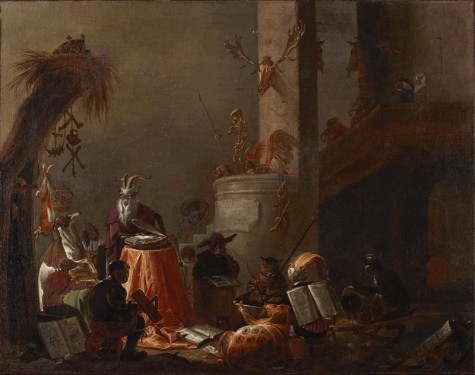
Do you sometimes wonder what a work of art is thinking or feeling? Well now you can find out when you text a work of art your question and get a response! There will be three works of art answering your questions throughout the night, including Cornelis Saftleven’s College of Animals, so start thinking of your questions.

Cornelis Saftleven, “College of Animals,” 1655, oil on canvas, Dallas Museum of Art, The Karl and Esther Hoblitzelle Collection, gift of the Hoblitzelle Foundation

Silent Soundtrack
Visitors will be able to check out a pair of headphones, provided by Austin Silent Disco, se -up with three different music channels. Each channel will have a soundtrack picked by DMA staff for a specific gallery. After you listen to our choices, we invite you to share your own ideas about the music you would choose to accompany a gallery or work of art.

Personal Tours
Check out a docent for a personal thirty-minute tour of two to three works in the DMA’s collection. Choose from themes like Love & Lust, Big & Small, Land & Sea, Work & Play, Secrets & Stories, Gods & Heroes, or Good & Bad. Docents will be available on a first-come, first-served basis.

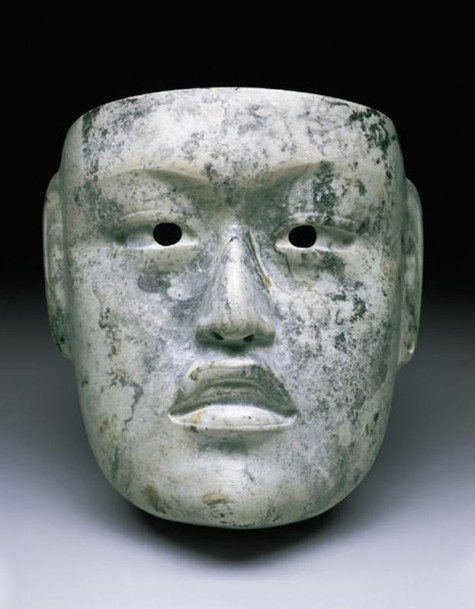
One of the works you will hear about on your personal tour.
Mask, Mexico, state of Veracruz, Rio Pesquero, Gulf Coast Olmec culture c. 900-500 B.C., jadeite, Dallas Museum of Art, gift of Mr. and Mrs. Eugene McDermott and The Eugene McDermott Foundation and Mr. and Mrs. Algur H. Meadows and the Meadows Foundation, Incorporated

Art Trivia
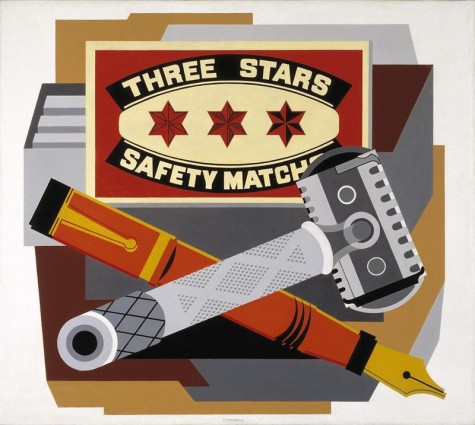
Do you know how many paintings by Gerald Murphy are in the DMA’s collection? If so, participate on your own or bring a group of friends and play as a team, in our Art Trivia contest. There will be several rounds and the winners of each round will win great prizes!

Gerald Murphy, “Razor,” 1924, oil on canvas, Dallas Museum of Art, Foundation for the Arts Collection, gift of the artist

Stacey Lizotte is Head of Adult Programming and Multimedia Services at the Dallas Museum of Art.
Off the Wall: Joyfull

In our Center for Creative Connections we ask visitors to reflect on their responses to the spaces they encounter in art, as well as those they encounter in their everyday life.

For one work of art specifically, Lee Bontecou’s Untitled, we ask visitors to respond to one of three prompts:

  • To me, sharing space with this work of art feels like…
  • The words or pictures that come to mind when I look at this work of art are…
  • If this work of art was part of something larger, describe what it would be.

Untitled (35), Lee Bontecou, 1961

We have gotten a lot of great responses from visitors and want to share a few with you. Once a month we will have an “Off the Wall” post featuring three responses left by visitors.

Next time you are in the Center for Creative Connections add your contribution to the wall and maybe you will see it on Uncrated!

Off the Wall: Audrey Hepburn

In our Center for Creative Connections we ask visitors to reflect on their responses to the spaces they encounter in art, as well as those they encounter in their everyday life.

For one work of art specifically, Lee Bontecou’s Untitled, we ask visitors to respond to one of three prompts:

    • To me, sharing space with this work of art feels like…
    • The words or pictures that come to mind when I look at this work of art are…
    • If this work of art was part of something larger, describe what it would be.

Untitled (35), Lee Bontecou, 1961

We have gotten a lot of great responses from visitors and want to share a few with you. Once a month we will have an “Off the Wall” post featuring three responses left by visitors.

Next time you are in the Center for Creative Connections add your contribution to the wall and maybe you will see it on Uncrated!

Urban Armor: Meet. Relate. Investigate.

Urban Armor is the Dallas Museum of Art’s unique, ongoing program for tweens and teens that offers students a chance to meet, relate, and investigate the world around them. Classes are designed in a way that the concept of identity is the heartbeat of each workshop. Urban Armor classes serve teens, who represent an often underserved age group in museums and are at a critical age of self-discovery.

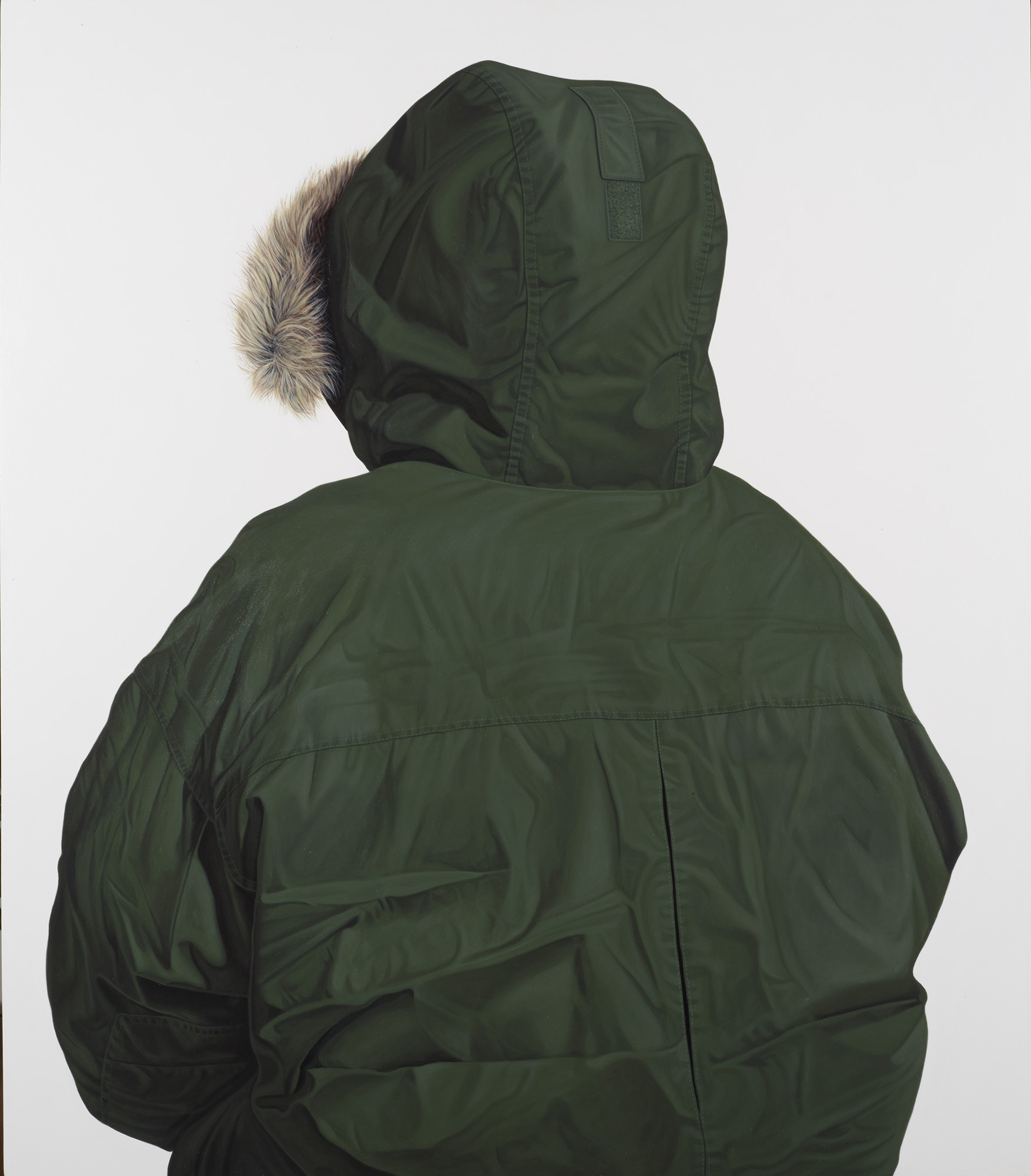
Untitled #21, Karel Funk, 2006, Acrylic on panel, Overall: 31 x 27 in. (78.74 x 68.58 cm), The Rachofsky Collection and the Dallas Museum of Art through the DMA/amfAR Benefit Auction Fund, 2010.28

Each workshop is built around the concept of identity. The name Urban Armor is inspired by the Karel Funk painting Untitled #21, currently on view in Variations on Theme: Contemporary Art 1950s-Present, and the notion that we clothe ourselves in physical layers of clothing to protect us in a literal sense against the elements but also as a metaphorical means of protection. It could be to guard ourselves against the scrutiny of others, attempting to fit in, or wanting acceptance. In a similar way, the different faces we present to others depending on the environment can be seen as figurative armor to serve the same purpose. Who are we underneath these layers? That question drives us to help support teens through the program and to facilitate transformative experiences with art that allow for personal expression. They also learn new techniques, meet artists and DMA staff, and develop social bonds through their interactions with each other.

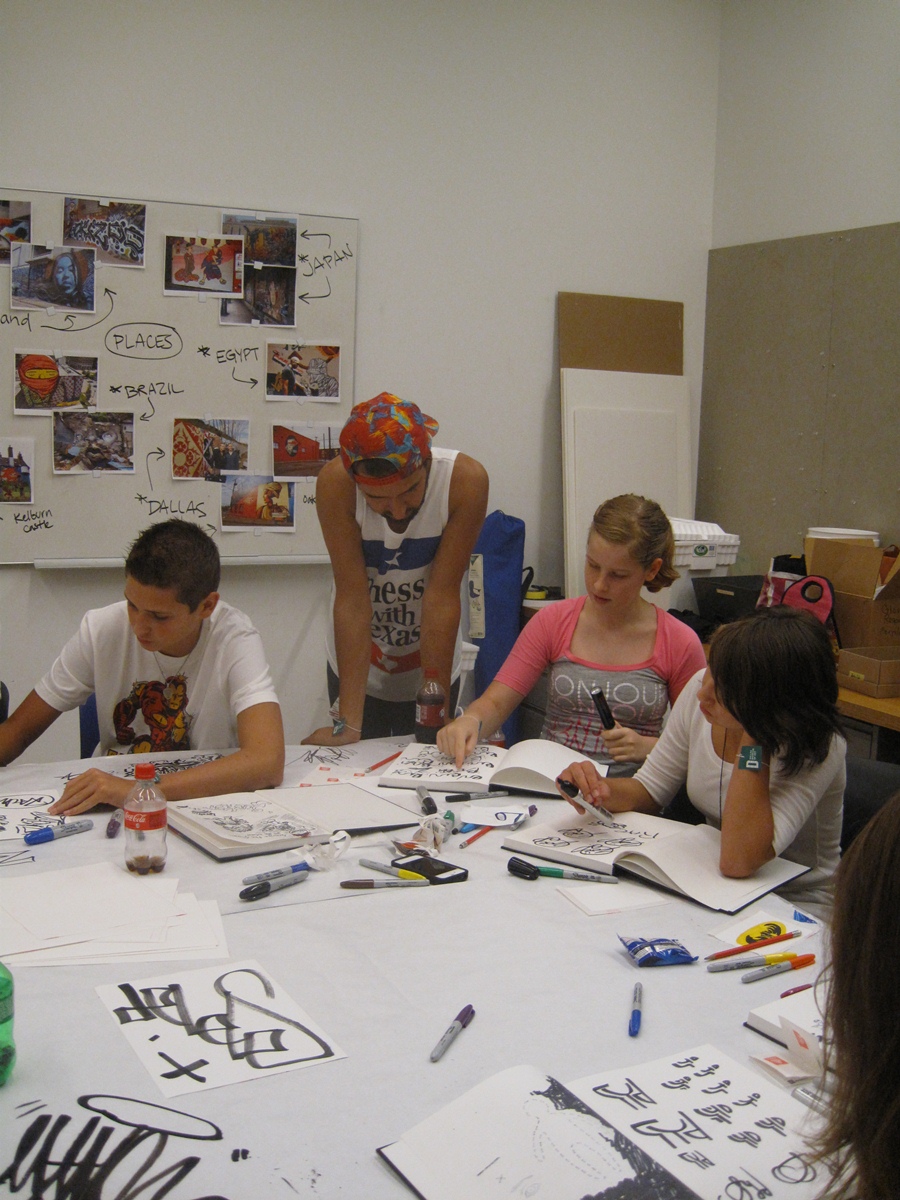
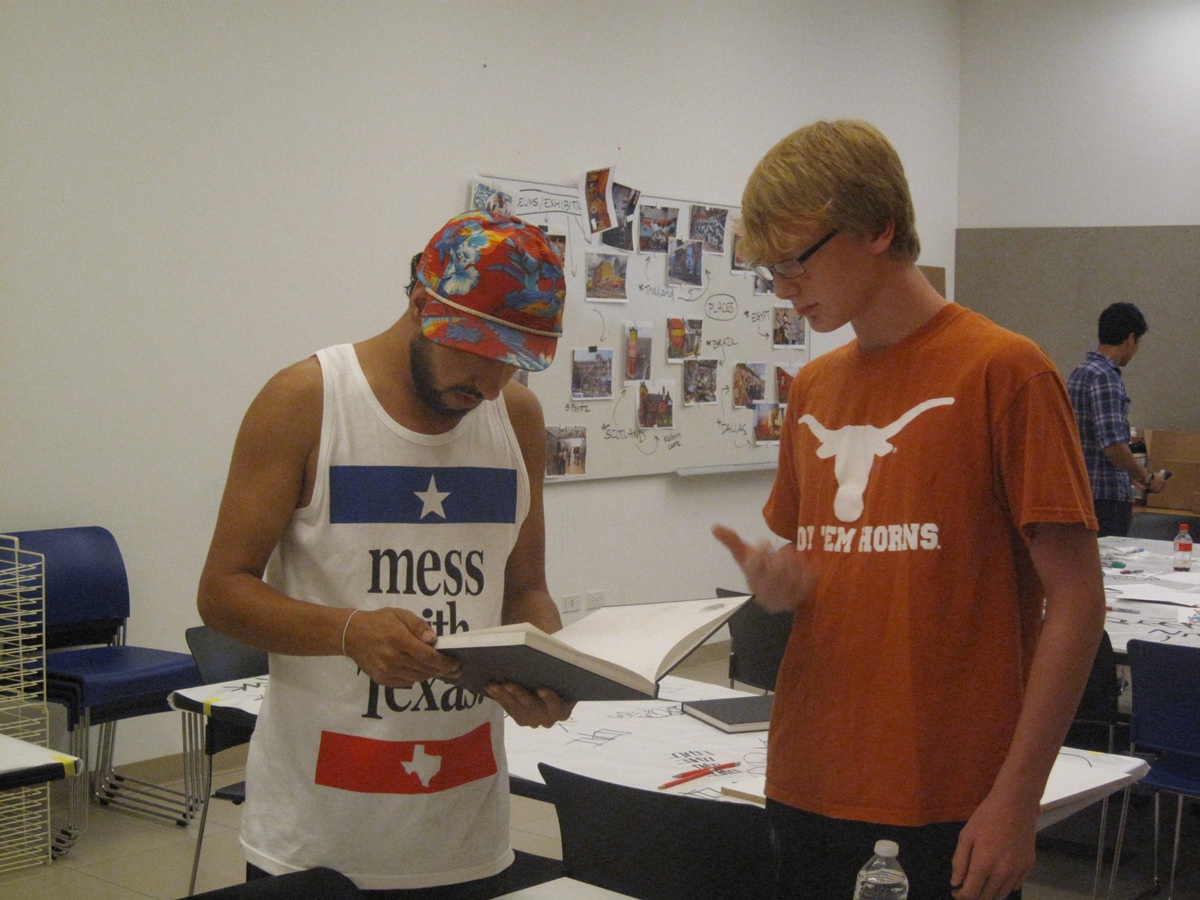
Teens participating in Urban Armor Street Art Camp with Isaac Davies

This year, Urban Armor launched its first exclusive teen summer camp in an effort to provide teens with a way to enhance their world and the space around them. Students encountered new forms of expression with the assistance of our Urban Armor teachers and guest artist Isaac Davies. They contributed to a large community “piece” on Ross Avenue Plaza, worked on their personal expression and self-statements in their sketchbooks and on their own painted panels, and explored how artists express themes of identity and space in artworks throughout the DMA’s collection.

Street Art Camp with Isaac Davies

Regardless of diverse opinions about street art, everyone can agree that it is a public way people are communicating or expressing themselves in our city. It is common now to see a tag, sticker, mural, or art bomb on any given street of Dallas. With heavy influences from artists like Keith Haring, Jean Michel Basquiat, Shepard Fairy, Banksy, and the many unnamed artists on every wall in town—it is important to recognize street art’s strong influence on our culture. For today’s generation, this is a prevalent force in their lives and a heavy part of their visual culture.

Watch participants from the summer camp Urban Armor: Street Art Camp and guest artist Isaac Davies as they demonstrate learned techniques from their camp experience tonight during Late Night at 7:00 p.m.

Amanda Batson is the Program Coordinator for the Center for Creative Connections and JC Bigornia is the Coordinator of Family Experiences.

Meet the DMA’s Teen Docents

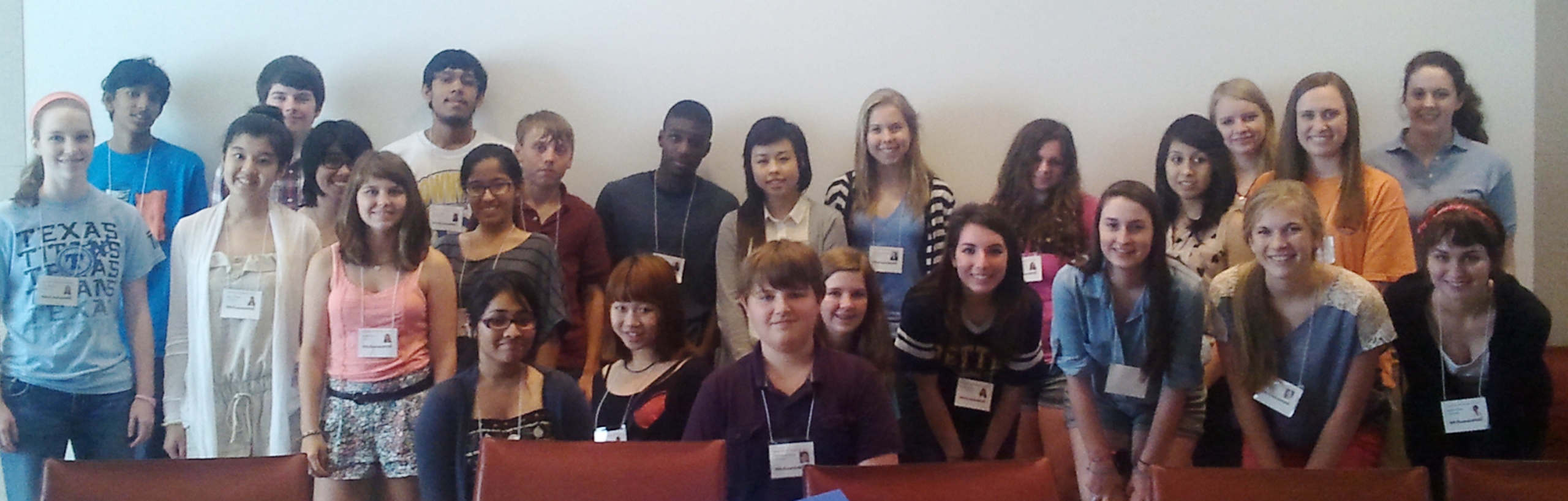
The 2012-2013 DMA Teen Docents.

If you have spent any time at the DMA this summer, you may have noticed teenagers in gray DMA T-shirts leading groups through the galleries. These aren’t just any teenagers, though—they are our dedicated DMA Teen Docents. The Teen Docent program has been going strong since 2001, and this summer we have our largest group ever. Thirty-one high school students are spending their summer vacation at the Museum, and we are thrilled to have them with us.

Our Teen Docents come from across the Metroplex, attending school at TAG Townview Magnet, Episcopal School of Dallas, Ursuline Academy, Greenhill School, Fulton School, Plano West, Plano Senior High, Cedar Hill Collegiate High, Jasper High, Vines High, Lovejoy High, Mesquite High, and Lake Highlands High. We even have one volunteer who lives in Bryant, Texas, but is spending the summer in Dallas so she can be a Teen Docent. Talk about dedication!

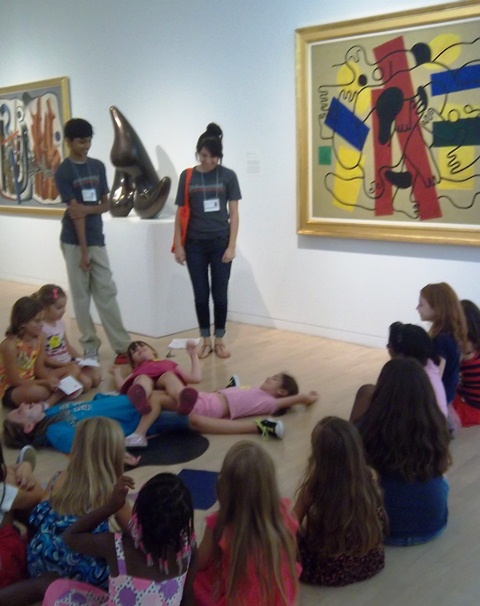
Teen Docents Sahil and Jennifer look on as students re-create Fernand Leger’s “The Divers.”

The requirements to be a Teen Docent are simple: you have to be in high school, you must be available to volunteer for a total of twelve hours over the summer, and you have to love talking about art with kids. Our Teen Docent application asks what our applicants hope to gain from their experience volunteering at the Museum. Their answers always astound me because their passion and excitement shine through. Here are just a few of their responses:

  • “I have always loved the DMA since the very first time I went in third grade, and I am SUPER excited to be a Teen Docent!”—Grace
  • “I want to be a Teen Docent so I can be the catalyst for learning in the Museum. I can rise to the challenge of engaging diverse audiences in creative ways. I can be the bridge between visitors and the Museum.”—Sahil
  • “I have grown up surrounding myself with art, with my first art class at age five. Ever since, I have gained a passion for art and to share this with other people would be great!”—Vickie
  • “I love having the opportunity to be at the DMA and get kids interested not just in art but simply looking at things in a different way and thinking about the world around them.”—Becky
  • “I really have a great time volunteering at the DMA. It’s one of my favorite places in Dallas and I love learning about the art and sharing that knowledge with future art enthusiasts!”—Sarah

Not only are the Teen Docents passionate, but they’re also really creative. Just look at what they made during a Creativity Challenge in June.

Teen Docent Jasmine helps a visitor write a postcard.

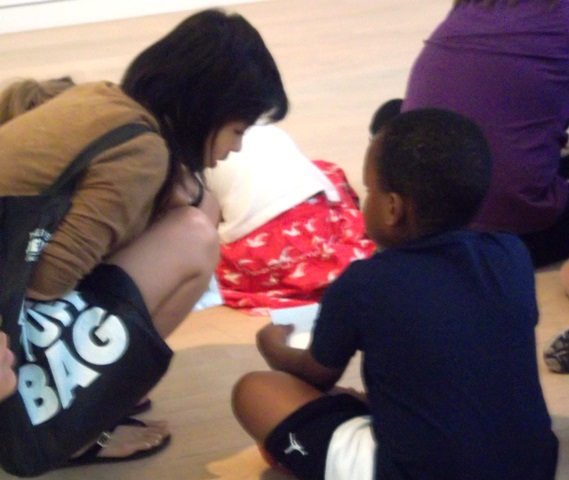
As the summer comes to a close, I want to publicly thank our Teen Docents for their hours of service to the DMA this year. Between leading tours, volunteering at Late Nights, and assisting in a myriad of roles on First Tuesdays, these teenagers go above and beyond when it comes to volunteering at the DMA.

Shannon Karol is Manager of Docent Programs and Gallery Teaching.

Going for Gold

If you’re anything like me, you will be spending the next few weeks glued to your television watching the 2012 Summer Olympics. The Olympic Games has this incredible ability to put our regular day-to-day life on hold in a way that no other event can. It is a time-honored event that has survived depressions, recessions, international conflicts, and wars and for two weeks every two years the many people in our world come together to celebrate their countries’ athletic abilities and successes while displaying enthusiastic patriotism that tends to dissipate in the weeks following the Closing Ceremonies.

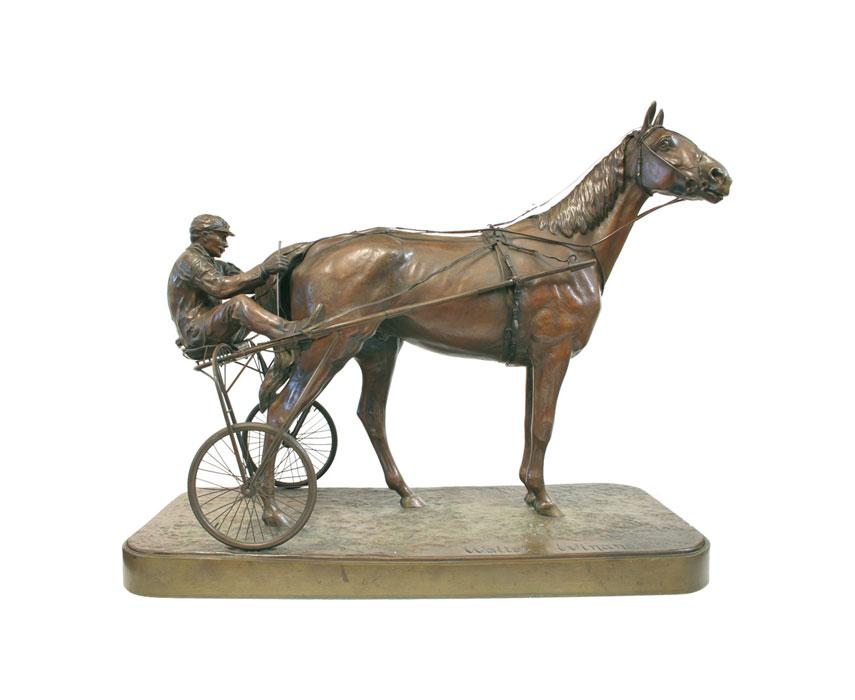
The Olympic Games is more than an international sporting event, however, since its inception, it has celebrated the arts as well. In the early years of the modern Games there was a regular art competition component. According to the founder, French Baron, Pierre de Coubertin, the ideal Olympians were men who were “educated in both mind and body” and he desired to combine both art and sport in the Olympic Games. From 1912 to 1952, medals were awarded for works of art inspired by sport in the categories of architecture, literature, music, painting, and sculpture. Only two competitors in those forty years achieved Olympic medals in both sport and art competitions, including American, Walter W. Winans for his sculpture, An American Trotter.

Walter Winans, “An American Trotter,” 1912, bronze, Collection: Idrottsmuseet i Malmö, Sweden.

The 1948 Summer Olympics in London marked the final year for the Olympic art competitions. The juried competitions ended because the participating artists were considered to be professionals, while Olympic athletes were required to be amateurs.

Although the medal events were abandoned, the Olympic Games still have an artistic component today through the Cultural Olympiad. This summer’s Games include extensive cultural offerings across the British Isles with the London 2012 Festival. Spectators at the games will also find themselves surrounded by art of all kinds; the Olympic Park has integrated a diverse range of commissioned art pieces into the British architecture and engineering of the Park.

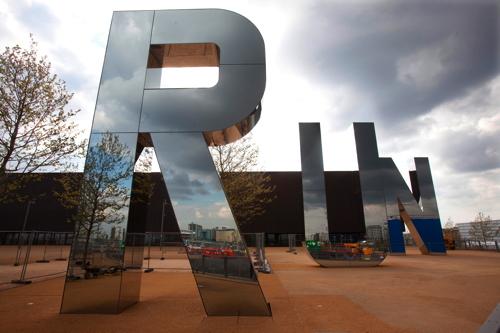
Monica Bonvicini, “Run,” 2012, glass and stainless steel, London.

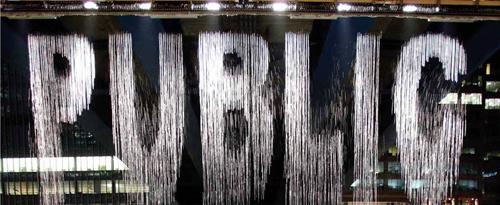
During the day, the letters of Monica Bonvicini’s Run act as mirrors, reflecting visitors and their surroundings. At night, they become transparent and glow thanks to internal LED lights. To view all of the commissioned pieces, visit Art in the Park’s page.

My favorite of the pieces is Julius Popp’s “bit.fall” waterfall installation.  Placed under a bridge over the Waterworks River, the waterfall uses a sophisticated pump system that recycles water from the river into the water sculpture.

Julius Popp, “bit.fall,” 2012, temporary installation in the Olympic Park.

Using software developed by Popp, the waterfall creates a continuous cascade of words that are widely used in live news feeds. One of the neat things about this technology is that the words are constantly changing.  No day is like the last.  The end result is a beautiful and spectacular visual experience. To get a better grasp on this work I consulted a short documentary on Popp. See it here on YouTube. 

After the Closing Ceremony on August 12, keep the Olympic spirit strong by reading Chris Cleave’s new novel, Gold. The bestselling author of Little Bee, Cleave’s new book focuses on two athletes and how they traverse the shifting sands of ambition, loyalty, and love on the eve of their last Olympics. On Tuesday, October 9, Chris Cleave will be appearing at the Dallas Museum of Art in a special Arts & Letters Live event. For more information and to purchase tickets, please visit our website.

Hayley Dyer is the Audience Relations Coordinator for Programming at the Dallas Museum of Art.
Off the Wall: BOOM

In our Center for Creative Connections we ask visitors to reflect on their responses to the spaces they encounter in art, as well as those they encounter in their everyday life.

For one work of art specifically, Lee Bontecou’s Untitled, we ask visitors to respond to one of three prompts:

  • To me, sharing space with this work of art feels like…
  • The words or pictures that come to mind when I look at this work of art are…
  • If this work of art was part of something larger, describe what it would be.

Untitled (35), Lee Bontecou, 1961

We have gotten a lot of great responses from visitors and want to share a few with you. Once a month we will have an “Off the Wall” post featuring three responses left by visitors.

Next time you are in the Center for Creative Connections add your contribution to the wall and maybe you will see it on Uncrated!


Archives

Categories