Archive Page 2


Art + Science = Whole Brain Fun

Remember when it was all the rage to call each other left- or right-brain dominant? While these references are still popularly used today, skepticism is growing among scientists as they learn more about the brain.

Strengths in logical, analytical, and verbal thinking have been associated with the left side of the brain, and creative and intuitive thinking have been associated with the right side. Scientific and mathematical types may be labeled “left-brainers,” while artists are considered “right-brainers.”

The reality is that there’s a bit more crisscross throughout the cranial wires. Both sides of our brains may actually tackle the same problem or idea, but each may approach a solution differently. Bottom line: Te brain aims to work efficiently and this means that most of the time the whole brain is working together. How is the health of your whole brain?

Join us for a day that engages and challenges the whole brain! On Saturday, April 12, the worlds of art and science deliberately cross over and mash up at the DMA’s first Art + Science Festival, held in partnership with the Perot Museum of Nature and Science. Here are a few highlights to stimulate your neurons:

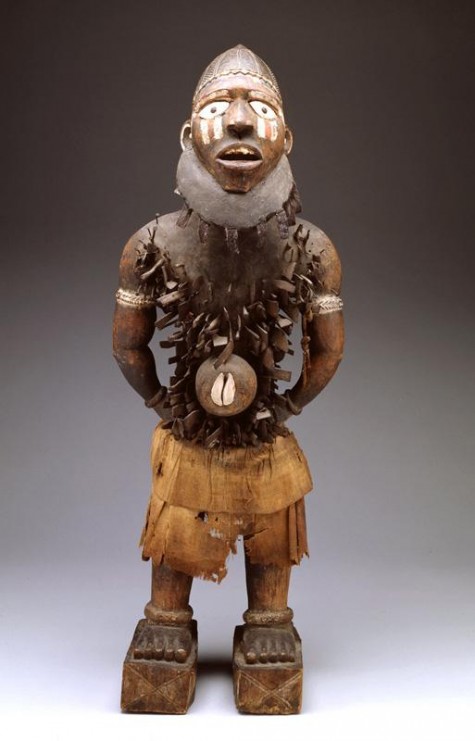
  • Stretch your mind during various 20-minute gallery talks with experts. Why might a curator use a CAT scan to learn more about an African sculpture? What can a facial recognition scientist reveal about a portrait?
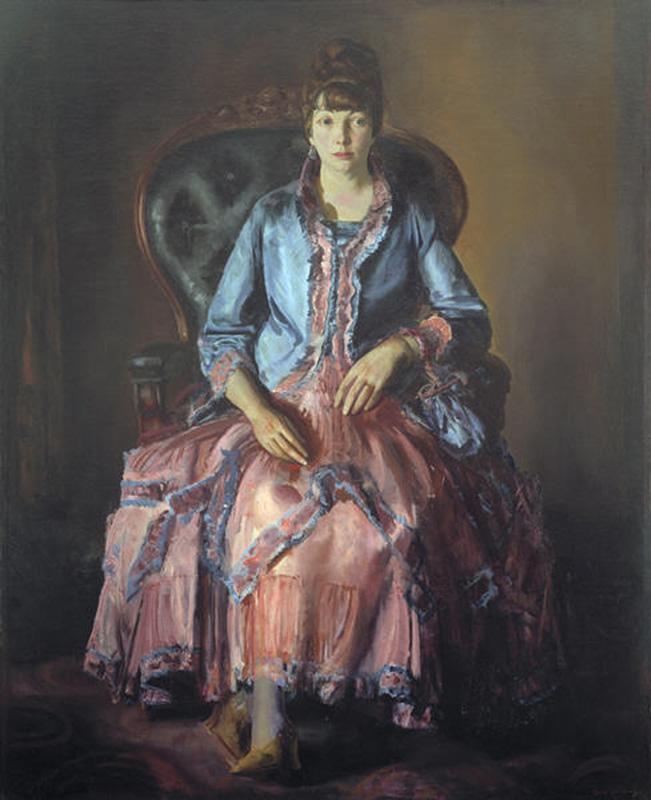
Emma_1956_58

Nkisi_1996'184'FA

  • Inspect art materials and the natural world up-close using DIY digital microscopes with the DMA/Perot Teen Advisory Council.
  • Sit in the Perot’s Portable Universe (only the coolest movable planetarium in town) for one of two featured presentations, The Sky at Night and The Search for Water. After the Portable Universe, marvel at the connections your brain makes as you gaze upon masterworks in two DMA exhibitions. Encounter the realm of the stars in Nur: Light in Art and Science from the Islamic World, which includes a collection of astrolabes (early astronomical computers), a celestial globe, and an astrological album. Alexandre Hogue: The Erosion Series takes an in-depth look at Hogue’s powerful images confronting the tragedies and environmental issues of the Dust Bowl era.
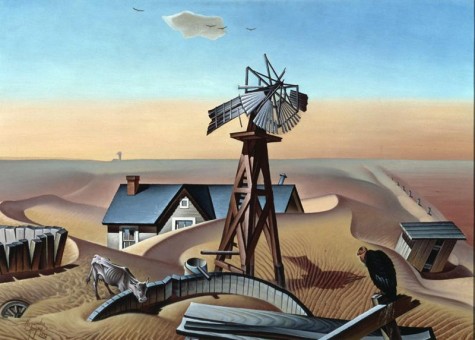
Drouth_Stricken_1945_6

  • Practice your mind-hand-eye coordination by making some art. Explore lines, shapes, and patterns through the creation of a string art installation with artist Amy Adelman.
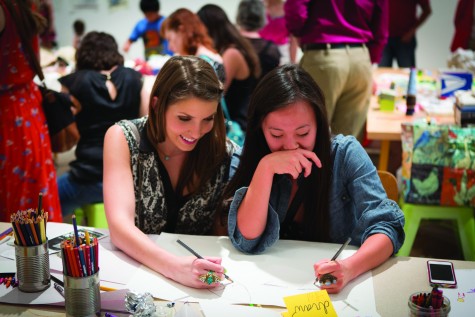
Late_Night_Available_Space_TF_07_19_2013_31

All of these experiences and more await you for FREE at the DMA’s Art + Science Festival on Saturday, April 12. Come for a visit and challenge your whole brain! All ages are invited.

Nicole Stutzman Forbes is Chair of Learning Initiatives and Dallas Museum of Art League Director of Education at the DMA.

Images:
George W. Bellows, Emma in a Purple Dress, 1920-1923, oil on canvas, Dallas Museum of Art, Dallas Art Association Purchase; Standing power figure (nkisi nkondi), late 19th-early 20th century, wood, iron, raffia, ceramic, pigment, kaolin, red camwood, resin, dirt, leaves, animal skin, and cowrie shell, Dallas Museum of Art, Foundation for the Arts Collection, gift of the McDermott Foundation; Alexandre Hogue, Drouth-Stricken Area, 1934, oil on canvas, Dallas Museum of Art, Dallas Art Association Purchase, (c) Olivia Hogue Marino & Amalia Hogue

Savor the Arts: A Kitchen Adventure

This Friday, cookbook author and professor of comparative literature Dr. Mary Ann Caws will be here to discuss her book The Modern Art Cookbook during our Savor the Arts Late Night event.

The-Modern-Art-Cookbook-by-Mary-Ann-Caws1

The Modern Art Cookbook is equal parts art historic document and recipe guide, illuminating the relationship between art and food. In preparation for this event, the DMA’s programming team decided to try some recipes from the book to see what they were like (and to test their kitchen skills).

Betsy Glickman, Manager of Adult Programming:
I have always been a fan of the “breakfast for dinner” concept, so I opted to tackle an egg-based dish from the book. Armed with a minimal set of ingredients—and an even more minimal set of cooking skills—I set aside an evening to bring Pablo Picasso’s Spanish Omelette to life in my kitchen. I originally thought the dish would resemble a traditional, half-plate-sized omelette, but as I laid out the ingredients (10 eggs, 4 potatoes, 2 onions, etc.), I realized this was going to be much larger.

Betsy_1

I began by peeling and slicing the potatoes and onions. I then tossed them into a large pan and sautéed them for about 15 minutes. While they were cooking, I beat the eggs in a large mixing bowl.

Once the potatoes and onions were beginning to brown, I drained them on some paper towels to help absorb the excess moisture. I then added them to the salad bowl along with a large helping of salt and pepper.

Next it was time to make the omelette. I pulled out the best nonstick pan I own, added some olive oil and medium heat, and poured in the contents to cook for several minutes.

Betsy_2

As the edges began to firm up, I realized the hardest part of the process was yet to come: I somehow had to flip this thing over. I snagged a plate for assistance, and, in a swift movement, transferred most of the contents to the plate and back into the pan. All in all, I’d give my flip an 8 out of 10.

Betsy_3

I cooked the omelette for another 2-3 minutes. The book instructed to leave the center a little runny, but, unfortunately, I overcooked it a bit. Even so, the end result was quite tasty. Viva el Spanish Omelette!

Betsy_4

Things I learned: It’s difficult to ruin an omelette, but there are endless ways to make it better. In the future, I may try adding tomatoes, peppers, and/or salsa to this recipe.

Stacey Lizotte, Head of Adult Programming and Multimedia Services:
I decided to make Brecht’s Favorite Potato Bread because I have always been interested in mastering a bread recipe (yeast and rising dough have always been a bit of a mystery to me). This recipe called for one cube of yeast, which I should have researched before picking this recipe. I tried finding a conversion from cubed yeast to dry yeast and was not successful, so I went with one packet of dried yeast for the recipe. Because dry yeast needs to be activated with water, I reduced the amount of oil recommended.

Stacey's Ingredients

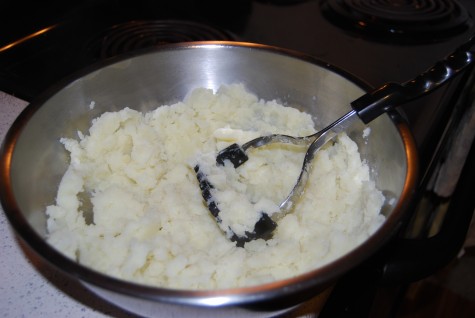
Even with that reduction, my dough was very wet. After adding an additional cup of flour it was still not the texture I thought it should be. But having little experience with bread, and thinking that the mashed potatoes probably added moisture, I thought maybe that was how it was supposed to be.

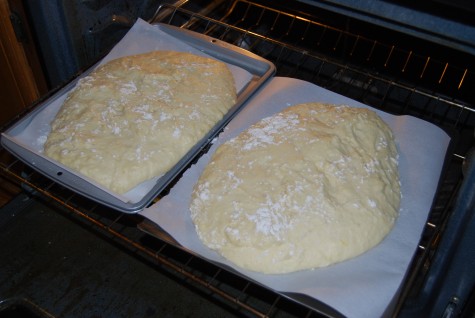
While the dough did rise, as you can see from the photos the dough did not hold its shape once formed into “loafs.”

Stacey's Recipe 4

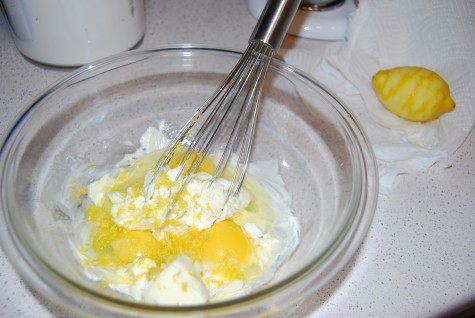
While the look of the bread left much to be desired, I found the flavor interesting, which I attribute to the lemon zest.

Things I learned: Yeast used to come in cubes. I will add lemon zest to any future bread dough recipes I try.

Liz Menz, Manager of Adult Programming:
The last time we all got together for a cooking blog, I went with soup, so this time I ventured into the realm of desserts. I decided to make Claude Monet’s Almond Cookies. The recipe is much like a shortbread recipe, so there were very few wet ingredients and (something I discovered halfway through) the dough required kneading.

photo 3

Combining the flour, confectioner’s sugar, ground almonds and lemon rind into a bowl with the eggs was the easy part. Realizing that the cubed butter was still needed, I figured out that my wooden spoon was not going to cut it, so kneading was the way to go!

photo 1

After some work (and one phone call to my mother), I realized I was doing this right, as the dough finally came together. It was on to rolling out the dough and cutting the cookies! I am a less-than-prepared baker and discovered that, in a pinch, a wine bottle doubles well as a rolling pin and wine glasses are the perfect size for cutting!

photo 4

After I sprinkled the cut cookies with sugar and sliced almonds, they went into the oven for about 20-25 minutes. They came out golden and yummy! The lemon rind really gave them a great flavor, and I decided that these cookies would be great with a cup of coffee and a book.

photo 2

Things I learned: Shortbread-type recipes are harder than they look, but worth it. Lemon rind is a great addition to cookies. Also, thanks Mom.

Don’t forget to join us on Friday as we savor the arts! And, for more fun food-inspired posts, peruse the Culinary Canvas section of our Canvas Blog.


Betsy Glickman is a manager of adult programming at the DMA.
Stacey Lizotte is head of adult programming and multimedia services at the DMA.
Liz Menz is a manager of adult programming at the DMA.

Having a Ball During DMA Spring Break

What do March Madness and the DMA have in common? If you are thinking that both are in Dallas, you are correct! This year’s NCAA Men’s Basketball Final Four and Championship games will be played right here in North Texas. But wait, there is SO much more! Here at the DMA we are celebrating Art Madness, our own version of the beloved tournament. DMA Friends picked an artsy Sweet Sixteen that you don’t need a ticket to enjoy, and we are now down to the Elite Eight. Works of art from the Museum’s collection are competing for your vote to determine which artwork is the ultimate champion. If you haven’t voted yet, it’s not too late to get in on the game.

Since basketball is on the brain here, it seemed only fitting that we spend our spring break elevating our game, and we’ve planned an action-packed week of Art Madness family fun for everyone! Enjoy story time in the galleries, family tours, art-making in the studio, family competitions and more all week long in our art and basketball mash-up. We will even have a real piece of the NCAA here at the Museum! Be sure to score a look at the NCAA Championship trophy in the Center for Creative Connections, on view March 11-16.

Can’t get enough of the Madness? Then take an overtime for fun and join us for a Family Block Party on March 14, when we’ll stay open until 9:00 p.m. Families can sketch in the galleries, take a tour of the Art Madness competitors, do some yoga in the galleries, enjoy a puppet show, design trading cards in the studio and more. Everyone will be a winner!

But don’t take our word for it. We asked a family of museum (and sports) experts to walk us through the spring break starting line-up.

b-ball storytime

Little B-ball enjoyed story time in the galleries, hearing favorite stories and looking at one of the Art Madness competitors.

b-ball tote

The entire family used the hands-on activities and games in the Art to Go Family Tote to explore color in some of their favorite paintings.

b-ball challenge

With art supplies, a healthy dose of imagination and their competitive streak, the B-ball family worked as a team to design a jersey for their Art Madness MVP in the daily Championship Challenge.

b-ball yoga 2

Mama B-ball thought yoga was very relaxing and loved finding peaceful inspiration in the art around her. (Little B-ball wasn’t quite as meditative.)

b-ball ventriloquist

Daddy B-ball couldn’t help but laugh at ventriloquist Nancy Worcester’s hilarious show in the Horchow Auditorium.

Their final conclusion: “Visiting the DMA is a slam dunk!”

Our analysis? Art + Basketball = A surefire hit for the entire family. We hope to see you here March 11-16!

Amanda Blake is the head of family, access, and school experiences at the DMA.
Leah Hanson is the manager of early learning programs at the DMA.

Sleeping with Art: Not in the Biblical Sense

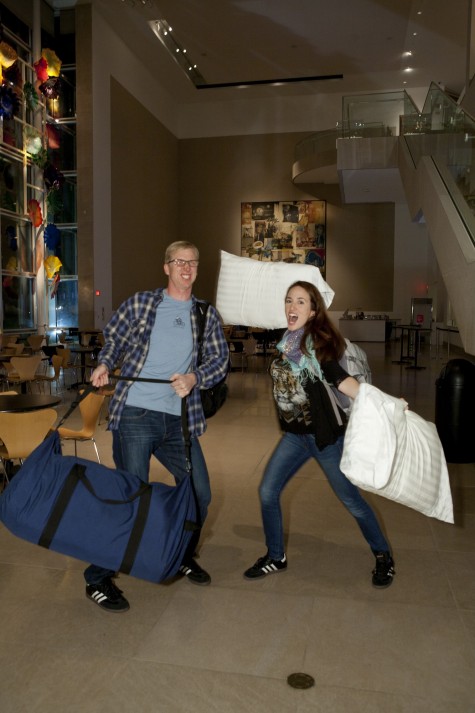
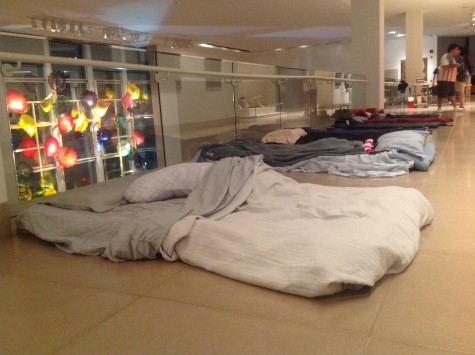
A year ago, before the launch of DMA Friends, we were brainstorming unique and fun rewards to offer. One idea we all jumped on was to hold a DMA Overnight at the Museum. We decided that this would be the “big reward” for DMA Friends to redeem, worth 100,000 points!

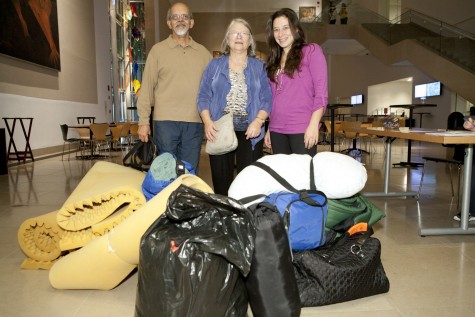
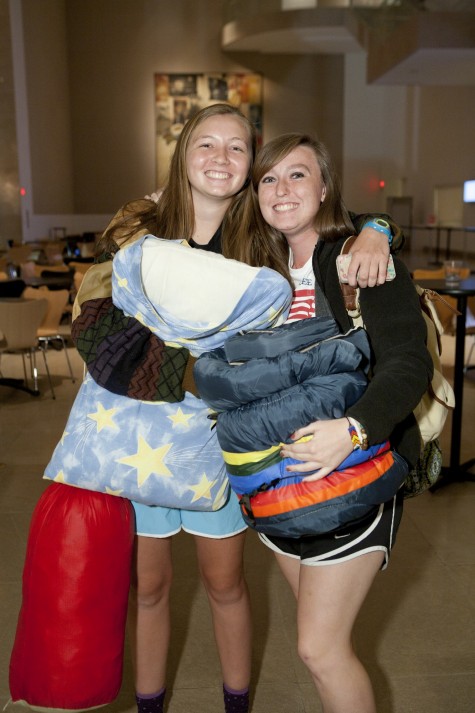
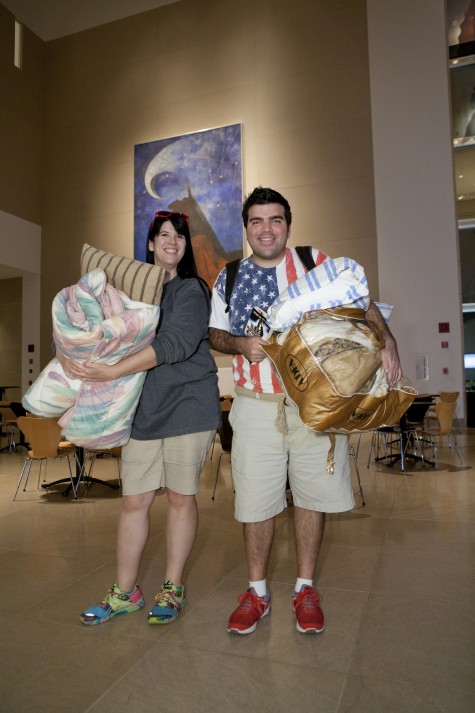
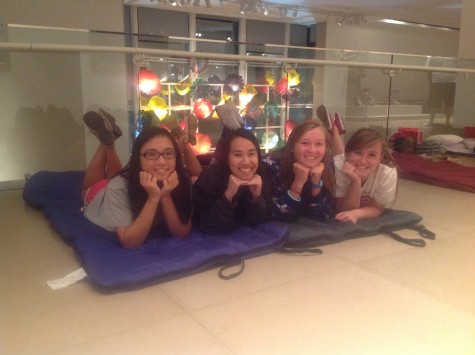
Ten months later, ten DMA Friends had earned enough points to redeem the reward. So on Friday, November 1, we hosted our first DMA Overnight!

The Overnight Crew!

The Overnight Crew!

We started planning for the DMA Overnight late this summer, and the question that we kept asking ourselves was “what are we going to do with our guests this evening?” Could they roam free for hours on end, should we pack the evening with activities, would they even want to sleep at some point or test their endurance by staying awake the entire night?

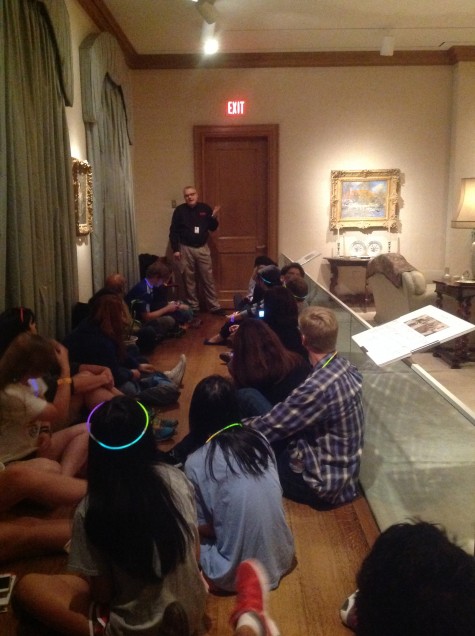
After researching other museums’ overnight programs, which were mostly nature and science museums, we put together a schedule that included an hour of free time, a curator-led tour, three different gallery activities, a midnight snack, an optional early sleep time, watching a film or playing games, and finally a time for “lights out,” when everyone had to be in their sleeping bags for the night (which ended up being close to 4 a.m.).

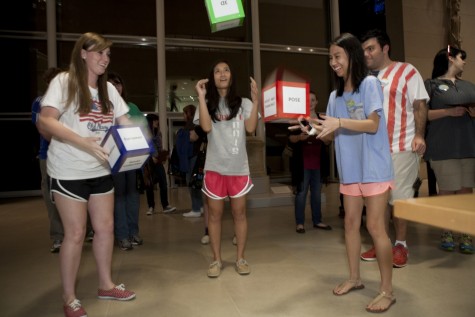
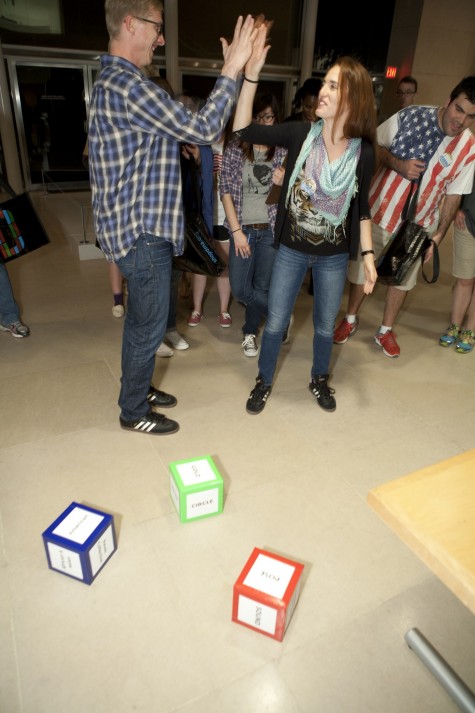
Knowing this group had done a lot at the DMA (they did earn 100,000 points after all!), we wanted them to have a new experience in the galleries, so we created a game for the DMA Overnight called Roll with It! This competitive dice game took the guests throughout the Museum as they searched for a work of art that matched the roll of the dice. One die gave a gallery location, one gave a feature that the work needed to include (red, 3D, animals), and one gave an action for the guests to do (pose, sketch, make a sound) in response to their chosen work of art. The team that completed the most rolls in 30 minutes won the game.

DMA Overnight by the numbers:

1,000,000 – points earned by 10 DMA Friends to attend the Overnight

23 – Friends

108 – glow sticks worn

3 – hand-made dice

10 – “art babies” created during the Creativity Challenge

1 – ghost story

5 – Friends who got up early to do yoga in the galleries

4 – average number of hours Friends slept during the DMA Overnight

Lights Out at the DMA

We were also excited to have Luke Darby from the Dallas Observer join us for the DMA Overnight. You can read about his experience here.

Stacey Lizotte is head of adult programming and multimedia services at the DMA, and designated RA of DMA Overnight.

Pop In to the Pop-Up Art Spot

Art Cart 3

On January 21, the Dallas Museum of Art introduced our new Pop-Up Art Spot, a place for free artistic activities in our galleries! Each week, the roaming Pop-Up Art Spot can be found in a different location, such as in the European art galleries on Level 2 or the Asian art galleries on Level 3. When you stretch your creativity muscles at the Pop-Up Art Spot, you can earn points and a badge through the DMA Friends program. Currently, we have three locations mapped out for our cart ,and each location has activities specifically designed to let visitors slow down and enjoy a new experience with works of art.

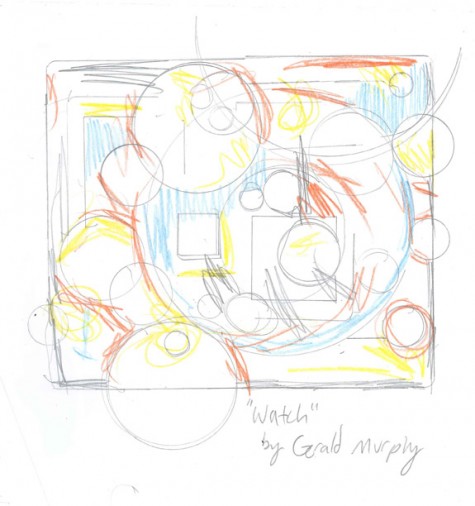
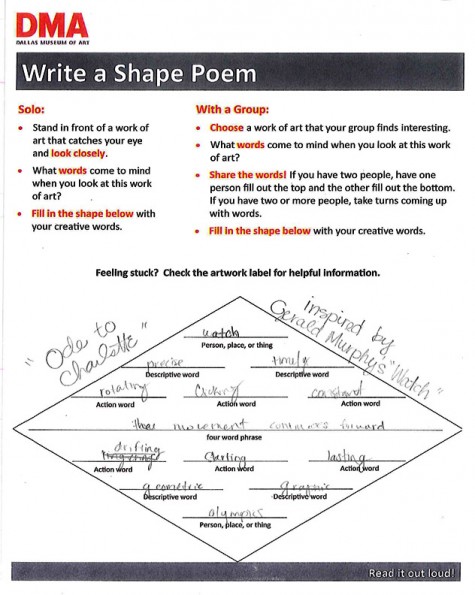
Here’s an example. When the cart pops up to the 20th-Century American Art Gallery, you can explore how artists use simple shapes to make complex compositions. Activities include using Shape Stencils to make a sketch inspired by Gerald Murphy’s Watch. Is sketching not your skill set? Have no fear! See below for more ideas.

When you join us on Level 3 near the entrance to the Asian art galleries, you will find a range of sketching and writing activities. Even the littlest visitors can look at the silver shrine and imagine themselves on top of an elephant. Or, if you are looking for something more challenging, take a Story Starter, find a work of art, and write a story about it. How will your story unfold from the introduction line that is provided?

Elephant Drawing

Elephant Drawing

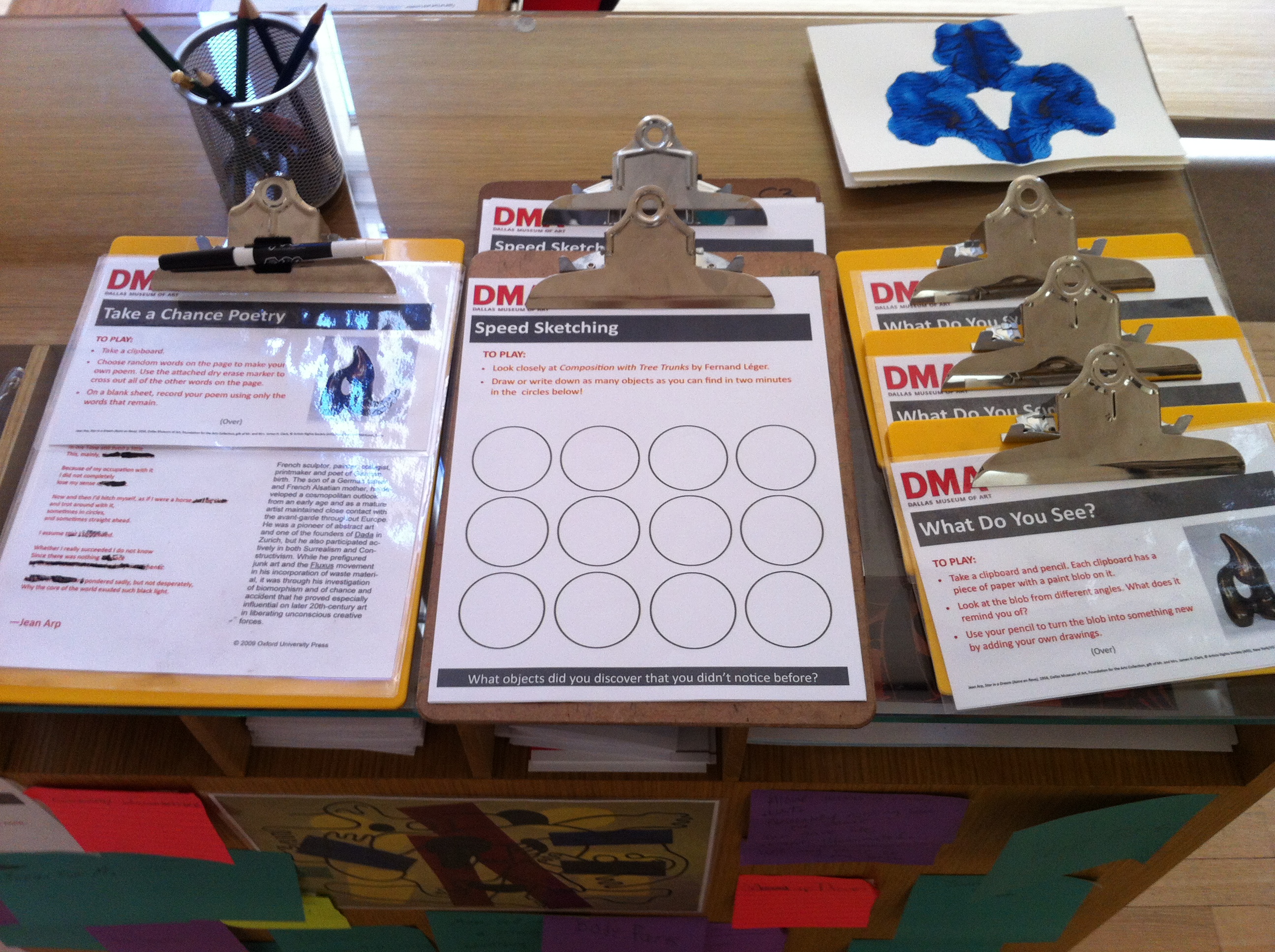
This week, you can find us on Level 2 in the 20th-Century European Art Gallery. There, you can choose from surrealist-inspired games and creativity games like Speed Sketching, Unusual Combinations, or Take a Chance PoetrySpeed Sketching is great for those with a competitive streak. Play the game and see who can draw the most details from a single painting in two minutes. Unusual Combinations is a great collaborative game where participants take turns contributing to a communal drawing; the end product is a fun surprise for all! Take a Chance Poetry is an easy way to write a poem using the words of an artist from our collection. Start with a poem, then simply black out words to create a new poem of your own.

The next time you visit the Dallas Museum of Art, look for a Pop-Up Art Spot to have a creative experience with works of art in our collection for free. You might walk away with a new perspective about a work of art, someone you’re with, or yourself!

Jessica Fuentes is the C3 Gallery Coordinator.

There’s No Place Like Home…Or a Museum That’s Open Until Midnight

Next week is Spring Break and we are offering a lot for families and visitors of all ages to do at the DMA.

We will kick-off the week with our WFAA Family First Day on Saturday, March 9. Then, throughout the week you can explore our galleries with self-guided tours, stop by the Art Cart, compete in games with your family, and more!

Stop by our new Art Cart in the Museum galleries.

Stop by our new Art Cart in the Museum galleries.

And to end the weeklong celebration, we invite you to join us for our annual Spring Break Block Party on Friday, March 15. We will be open until midnight for our Late Night event, as will our neighbors in the Arts District: the Crow Collection of Asian Art, the Klyde Warren Park, and the Nasher Sculpture Center.

Each year we program the March Late Night around a fun family theme, from Where the Wild Things Are to Alice in Wonderland and the world of Dr. Seuss. This year, staff debated between Mary Poppins and The Wizard of Oz, and after some nostalgic discussions and fun brainstorming meetings, we decided to go over the rainbow and follow the yellow brick road to the wonderful world of Oz.

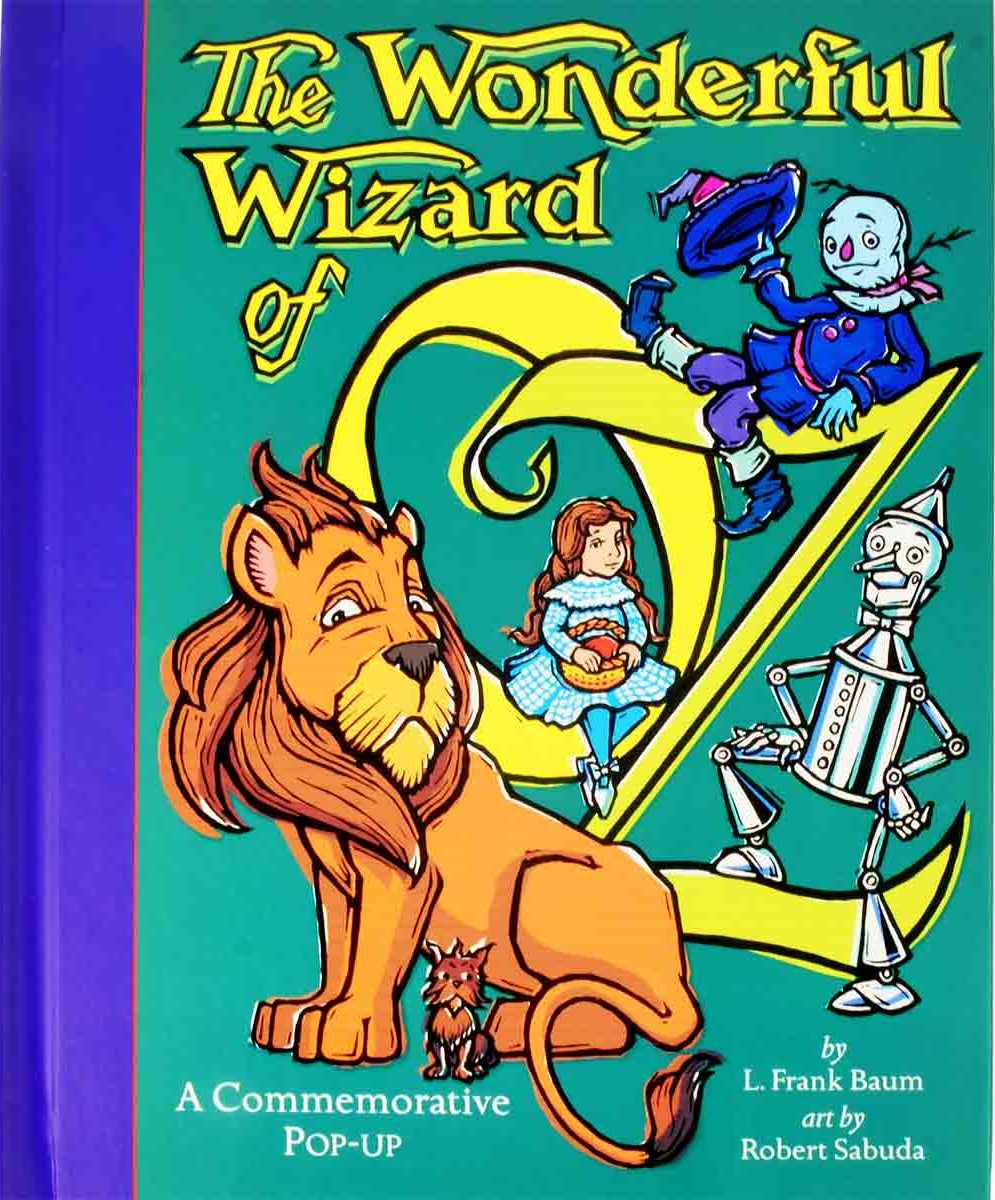
Don’t miss the “Prince of Pop-Ups,” Robert Sabuda, who will discuss his major feats of paper engineering, including his pop-up book The Wonderful Wizard of Oz.

Sabuda_Wizard of OZ

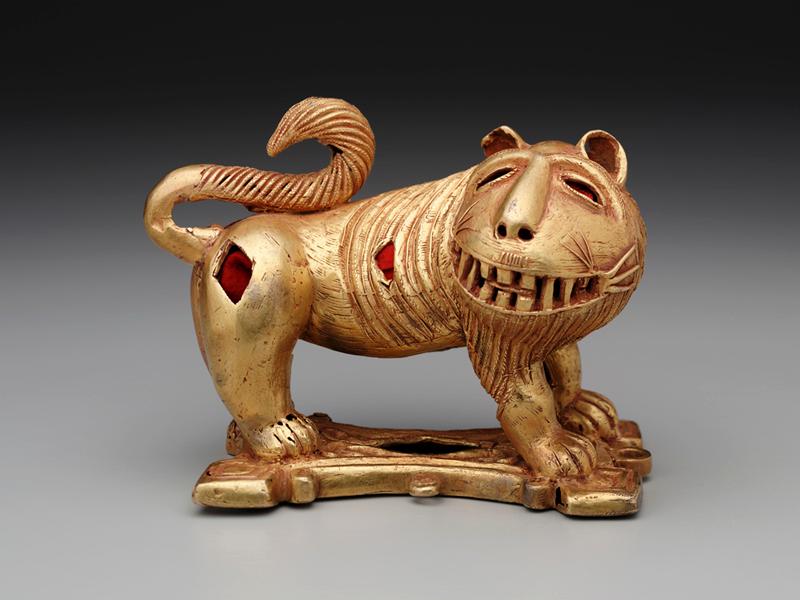
Families can explore the galleries with our Journey Through Oz Family Adventure to find courage, a heart, a brain, and a home. And if you stay late, you can take a tour that looks at the lions, tigers, and bears (oh my!) in our collection.

Sword ornament in the form of a lion, c. mid-20th century, Cast gold and felt, Dallas Museum of Art, The Eugene and Margaret McDermott Art Fund, Inc.

Sword ornament in the form of a lion, Ghana, Nsuta State, Asante peoples, c. mid-20th century, cast gold and felt, Dallas Museum of Art, The Eugene and Margaret McDermott Art Fund, Inc.

As for films, we decided we didn’t want to show the original Wizard of Oz but instead screen some interesting takes on the classic. So throughout the night you can watch Tom and Jerry’s take on the film as well as The Muppet’s version. And for adults we will screen the cult classic Return to Oz.

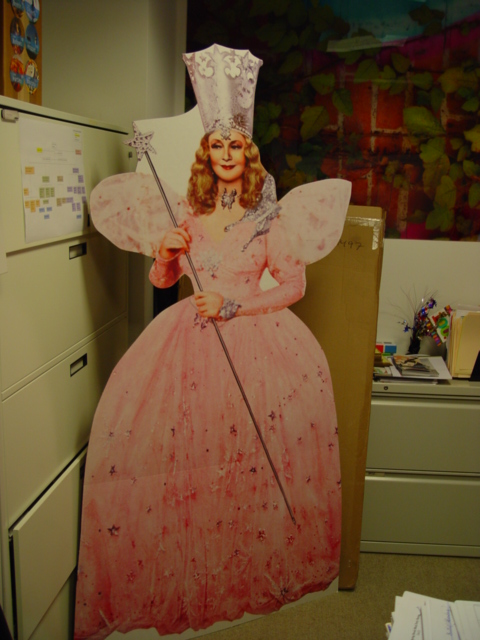
Don’t forget to bring your camera so you can take a photo with your friends and family in front of our Emerald City backdrop, accompanied by cardboard cut-out characters from The Wizard of Oz. Glinda the Good Witch is living in my office until the big day!

Glinda

And if you are a DMA Friend, come to Late Night dressed as your favorite Wizard of Oz character to earn the Midnight Masquerade Badge and 450 points! Not a DMA Friend? Be sure to sign up at the kiosks near the Visitor Services Desks when you arrive.

Stacey Lizotte is the Head of Adult Programming and Multimedia Services at the DMA.

DMA and DTC: Collaboration Inspired by Mark Rothko

The Dallas Museum of Art and its Arts District neighbor, Dallas Theater Center, are collaborating in an unprecedented way on the upcoming production of John Logan’s Tony Award-winning play Red, a bio-drama about iconic 20th-century artist Mark Rothko. Rothko once said, “I think of my pictures as dramas; the shapes in the pictures are the performers.”

Months ago, Joel Ferrell (DTC’s Associate Artistic Director and Director of Red) and Bob Lavallee (set designer) came to the DMA for a sneak peek at our Rothko painting currently in art storage so that they could examine the stretcher and the back of the canvas.

Joel Ferrell, Bob LaVallee, and Mark Leonard looking at the back of our Rothko painting currently in art storage.

Bob LaVvallee and Mark Leonard in art storage

Bob discussed his preliminary plans to turn the 9th floor of the Wyly Theatre into Rothko’s Bowery Studio. Joel mentioned that the actors portraying Rothko (Kieran Connolly) and his assistant Ken (Jordan Brodess) in Red will be priming and painting a canvas on stage to music in a “muscular dance,” and that “they wanted to get it right.” Joel and Bob peppered Mark Leonard (the DMA’s Chief Conservator) and Gabriel Ritter (the DMA’s Nancy and Tim Hanley Assistant Curator of Contemporary Art) with questions about Rothko’s use of materials, and great dialogue followed about the seriousness with which Rothko approached his art and creative process. On another visit, I helped production staff browse through books in the DMA’s Mayer Library to find the best photos of Rothko inside his studio in an effort to re-create it faithfully.
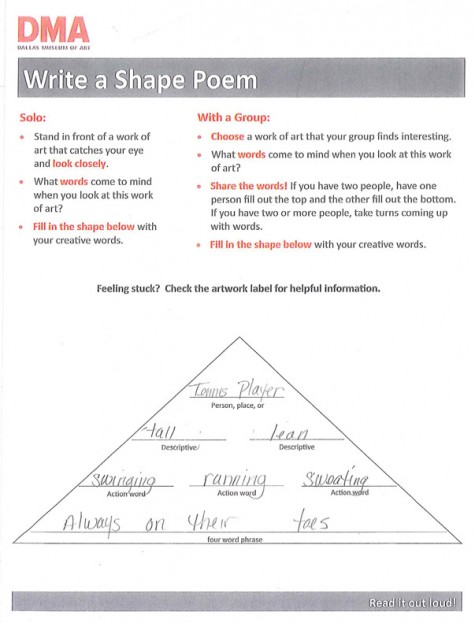
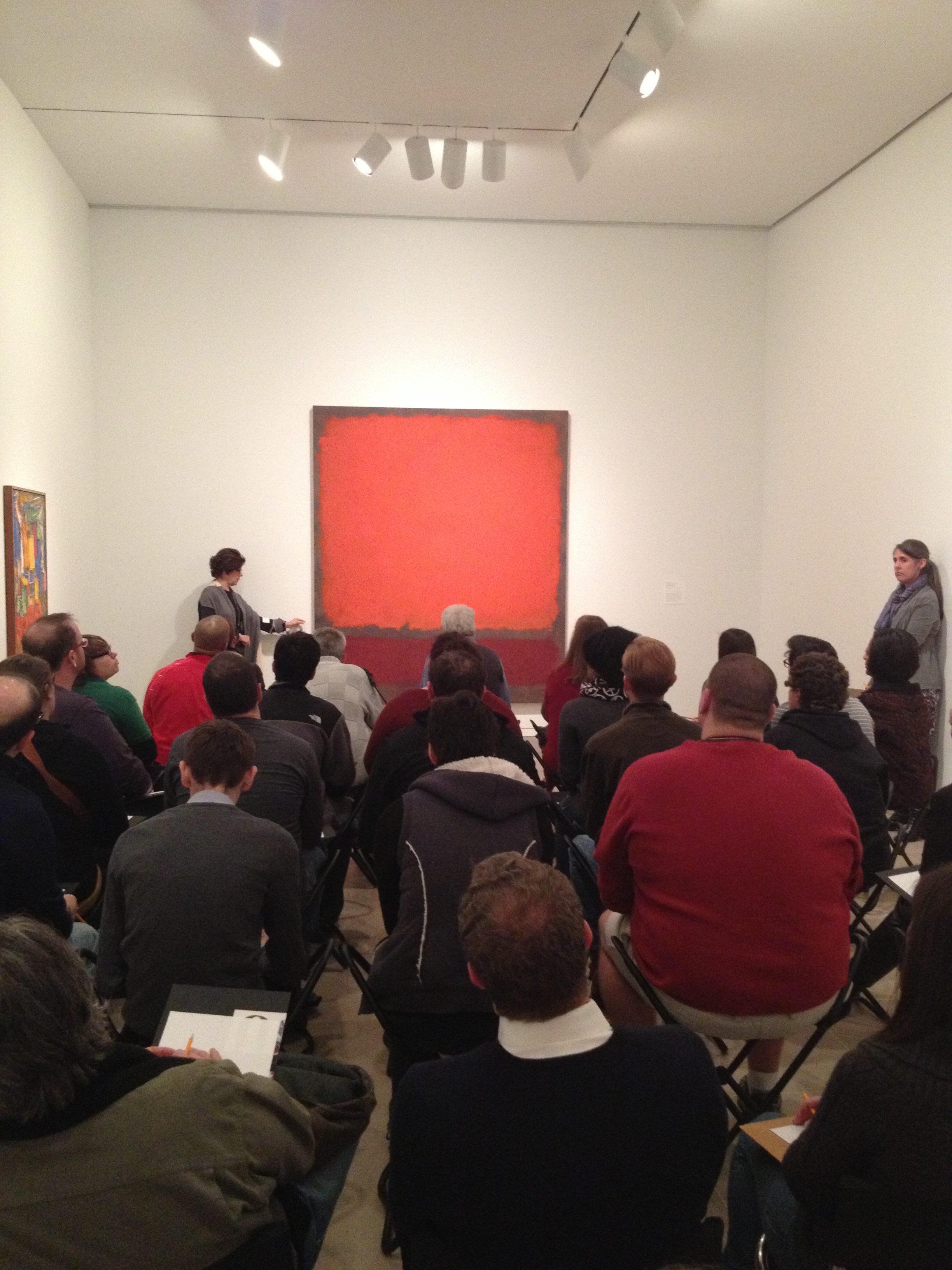
On January 16, the entire DTC staff, ranging from actors to production staff and administrators, joined DMA staff in an afternoon-long workshop. We immersed ourselves in the art of Mark Rothko through lively conversations with Carol Mancusi-Ungaro, who has written on Rothko’s techniques and directed the conservation of his Rothko Chapel paintings; by exploring works of art in the galleries with DMA staff by artists who came before and after Rothko; and through a sustained look and written reflection on Rothko’s painting Orange, Red and Red, which currently hangs in the South Concourse. We finished the afternoon by sharing our responses with each other, seeking to make meaning of what can seem to be an enigmatic painting.

Carol Mancusi-Ungaro discusses Rothko's painting technique with DTC and DMA staff.

Carol Mancusi-Ungaro discusses Rothko’s painting technique with DTC and DMA staff.

Many staff agreed that the longer you looked closely at Orange, Red and Red, the more it reveals to you and rewards you. DTC Brierley Resident Acting Company member and Master Teacher Christina Vela said, “The great masters don’t offer answers, they keep asking you questions; you’re forced to continue to struggle with them.” Bob Lavallee remarked that you have to be physically in the room with the work of art in order to really understand it (as opposed to looking at an image on a screen)–much like theater. Antay Bilgutay, Interim Director of Development, said, “Having the space and opportunity to take my time with a Rothko painting changed my perception of his work.”

Joel Ferrell shares his reactions with a DTC colleague.

Joel Ferrell shares his reactions with a DTC colleague.

We invite you to get your tickets soon to see Red, and then come to the DMA to spend time in front of this mesmerizing work of art. Imagine you are inside the world of this painting. You might ask yourself these questions:

What do you see around you?

What do you smell, hear, and taste?

What do you feel?

How might you describe this place to someone who isn’t here?

[youtube http://www.youtube.com/watch?v=NjPVrtySbPs&w=560&h=315]

One opportunity to do just that is to attend Red In-Depth on Saturday, February 23, a program that includes a matinee performance of Red, followed by time with staff in the galleries exploring the art of Rothko and his contemporaries. Two similar in-depth experiences will take place on February 19 and 27 with middle school and high school students.

Carolyn Bess is Director of Programming and Arts & Letters Live at the Dallas Museum of Art.

Spotlight on Raphael Parry

Many Dallasites know Raphael Parry for his extensive work in shaping the Dallas theater scene over the last thirty years. He currently serves as Executive and Artistic Director of Shakespeare Dallas, where he has directed or performed in over twenty-five Shakespearean productions. He also serves as a founder and Chief Artistic Officer of Project X: Theatre, a producing company that focuses on new play development. Raphael has been recognized by the Dallas Theatre League and the Dallas Theater Critics Forum with the Standing Ovation Award for his continued contributions to Dallas Theater.

What you may not know is that Raphael has deep ties to the Dallas Museum of Art, serving as Director and host of Arts & Letters Live’s Texas Bound series for almost two decades. The series showcases Texas-connected actors reading short fiction and essays by Texas-connected authors to a live audience. We like to say that it is “story time for adults.”

Raphael will reprise his role as Director and host again during the 2013 season of Texas Bound on February 11 and on May 6, when he will also participate as an actor.

We caught up with Raphael for a short Q&A about his involvement with Texas Bound.

Raphael Parry, Director and Host of Texas Bound series at the DMA

Raphael Parry, Director and host of the Texas Bound series at the DMA

How long have you been involved with Texas Bound?
My first season I was an actor reading a very short story—less than three minutes long. The next year, I was invited to serve as Director and host—that was 1995. I will be starting my 18th season this year.

What do you enjoy most about working with the series?
Getting to read a huge number of stories, as we search to select just the right ones for the series. It has really brought me a profound appreciation for the art of the short story. And our audience is so generous and eager to hear the readings. It is always a pleasure to take part in Texas Bound in performance.

Texas Bound rehearsal, 2012

Texas Bound rehearsal, 2012

Can you talk a little bit about the process of selecting the stories and casting them?
It starts with a huge collection of stories that have been sifted through after an open call for stories. Our Producer, Katie Hutton, reads through all the submissions and selects the ones that are candidates for Texas Bound. At this point, we have approximately eighty to one hundred stories that we can consider for the Texas Bound series. We meet twice weekly starting in the late summer and I read the stories out loud to Katie and her team. What works on paper can often not transfer to a successful story being read out loud. After reading each story, we discuss three to four potential actors that would be the right match for the story. After reading all of the stories over many weeks, we have a small collection of stories that are strong candidates. Then the real puzzle work begins. We have to find a combination of stories that add up to the right length for the evening and have some balance. We often use a meal as the metaphor for the evening: appetizer, main course, and dessert. We are looking to create a balance and flow.

What is your most memorable Texas Bound experience?
The most memorable experiences are when everything comes together: the actors, the stories, and the audience. There have been many evenings where the flow is fantastic, and we are all moving through the performance with each story and reading building on another. It is like floating on a cloud when it all clicks, and then it’s over—like an ephemeral dream it all dissolves and we are left with a great memory.

What story or stories are you most excited about this season?

'The Dangerous Animals Club' by Dallas native Stephen Tobolowsky

“The Dangerous Animals Club” by Dallas native Stephen Tobolowsky

All of the stories intrigue me, as we work so hard to find just the right ones. I am looking forward to hearing Stephen Tobolowsky read his essay “F.A.Q” from his book The Dangerous Animals Club. He has such an interesting voice, and his essays are so personal yet universal. Also, John Benjamin Hickey is reading Patricia Highsmith’s “A Curious Suicide”; it is a murder mystery with a unique tone. Those two are standouts from a stellar field of stories.
 

Stephen Tobolowsky will read on February 11th. photo credit Jim Britt.

Stephen Tobolowsky will read on February 11. Photo by Jim Britt.

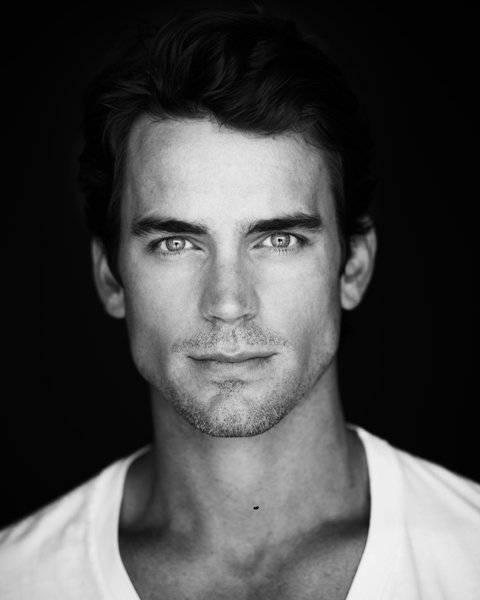
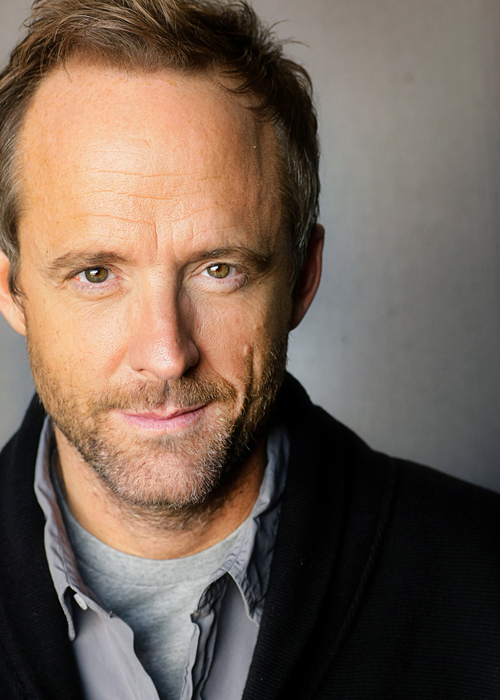
Several of the featured actors this season. Matt Bomer and Stephen Tobolowsky will read on February 11th.  John Benjamin Hickey will read on May 6th.

Matt Bomer will read on February 11.

Several of the featured actors this season. Matt Bomer and Stephen Tobolowsky will read on February 11th.  John Benjamin Hickey will read on May 6th.

John Benjamin Hickey will read on May 6.

Join us for the first Texas Bound of the season on Monday, February 11. For more information on this season of Texas Bound, visit our website. You can order tickets online or call 214-922-1818.

Katie Hutton is the Program Manager for Arts & Letters Live at the DMA and Producer of Texas Bound.

Feasting: From Ancient Mexico to Our Kitchens

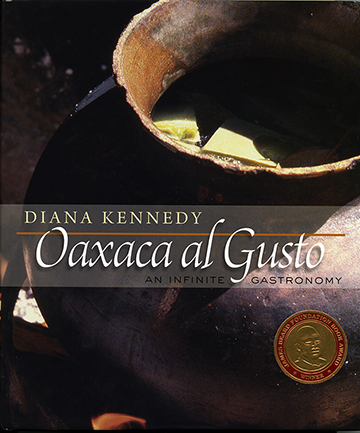
On Thursday, November 15, cookbook author Diana Kennedy, often called the Julia Child of Mexico, will be here to discuss her cookbook Oaxaca al Gusto: An Infinite Gastronomy, as well as the feasting traditions of ancient Mexico.

Oaxaca al Gusto: An Infinite Gastronomy is equal parts historic document and kitchen guide, focusing on the traditional cuisine of the Oaxaca region of Mexico. In preparation for this event, the DMA’s programming team decided to try some recipes from the book to see what they were like (and to test their kitchen skills).

Stacey Lizotte, Head of Adult Programming and Multimedia Services:

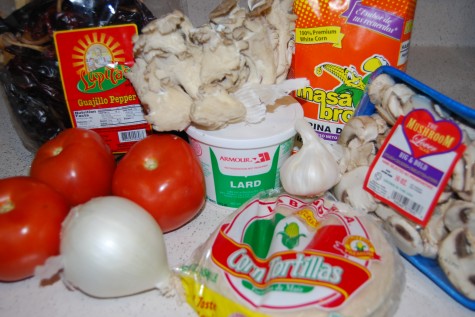
I decided to make Clavaria Mushrooms in Mole (Mole de hongos de curenito de venado) because I have always wanted to learn how to make a mole sauce. This recipe called for a few ingredients that I could not find in the four different grocery stores that I went to. I replaced the main ingredient, clavaria mushrooms, with a mix of regular button mushrooms and oyster mushrooms. I also could not find dried costeños chiles and instead went with dried gaujillo chiles.

Ingredients for Clavaria Mushrooms in Mole (Mole de hongos de curenito de venado)

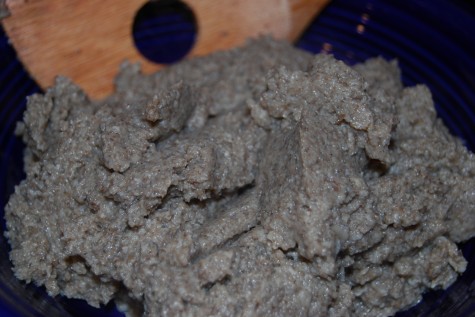
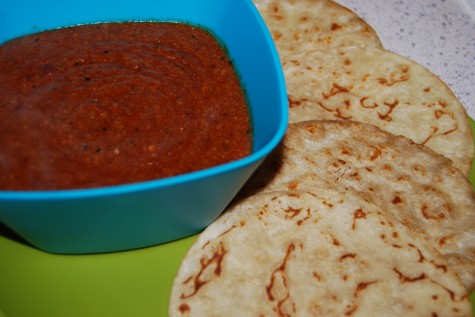
First you make a paste of the mushrooms and then add them to a pureed tomato, chile, garlic, onion, and spice mixture before frying in a skillet with lard over high heat. You then mix with masa to thicken the sauce. Traditionally, this dish is just served with corn tortillas.

Mushroom paste

I found the mole to be on the mild side and would serve it with a meat next time, either chicken or beef, in addition to the tortillas.

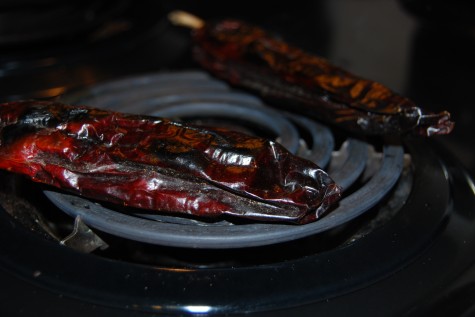
Things I learned: You can toast the chiles on an electric stove top burner if you don’t have a comal as recommended in the book. And, you will need a very large skillet for the last step, as this recipe makes a lot of mole.

Roasting chiles on electric stove

Clavaria Mushrooms in Mole (Mole de hongos de curenito de venado)

Liz Menz, Manager of Adult Programming:

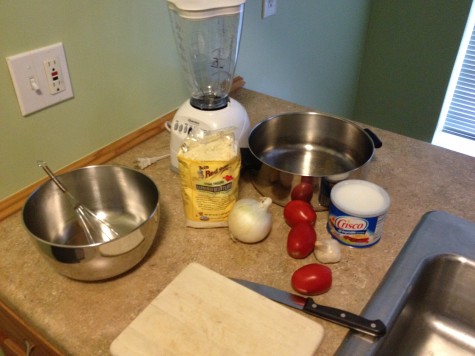
I am without question the least experienced cook of our team, so I chose to make a simpler recipe, Red Chickpea Soup (Molito de garbanzo rojo). After a pep talk from a few of my more kitchen-savvy friends and a deep breath, I gathered my ingredients and went to work. I did make one small change to the recipe and replaced the lard with Crisco to make it vegetarian friendly.

Ingredients for Red Chickpea Soup (Molito de garbanzo rojo)

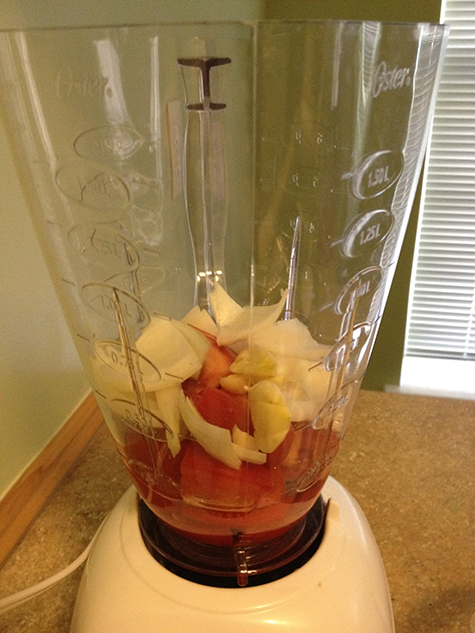
After whisking the chickpea powder/flour into water to get a smooth consistency, I turned to my blender to puree the onion, garlic, and tomatoes.

Tomato, onion, and garlic in blender to puree

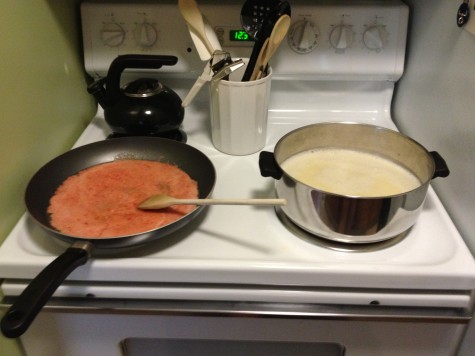
I added the chickpea mixture to boiling salted water and let it reduce for quite a while to get a thicker consistency for the soup. Meanwhile, the Crisco was melting in a larger skillet to fry and reduce the onion, garlic, and tomato puree. After the puree had reduced some, I added it to the pot with the chickpea base and whisked regularly as it reduced more. After letting it simmer for a while on low, the soup thickened up quite a bit.

Chickpea mixture and tomato puree reducing on stove

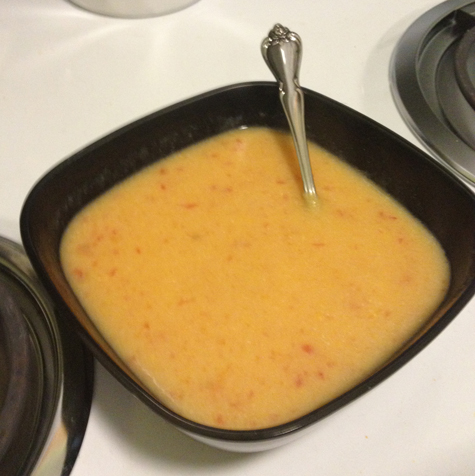
The soup was very tasty and, as I mwentioned to a co-worker afterwards, would also make a great base for veggies or meat for a heartier meal.

Things I learned: The puree mixture fries and reduces much quicker than I expected, whereas the soup reduced very slowly. Also, my Google app on my phone was just as important as my whisk–in fact, for this inexperienced cook, it was essential!

Red Chickpea Soup (Molito de garbanzo rojo)

Denise Helbing, Manager of Partner Programs:

I decided to finish off our departmental Oaxacan meal with dessert so I made Rice Pudding (Arroz con leche).

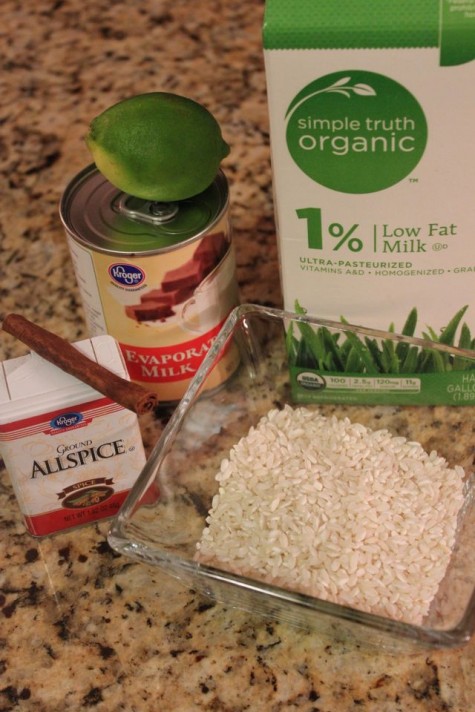
For this dish, you only need a few simple ingredients. The only “special” ingredient I didn’t already have was evaporated milk.

Ingredients for Rice Pudding (Arroz con leche)

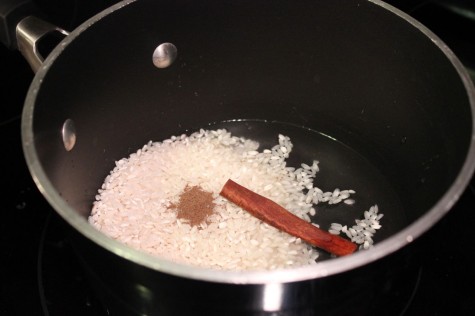
You just cook the rice in a bit of water with the spices first, then add the two milks and lime and cook slowly for about thirty0 minutes, stirring regularly.

Cooking all the ingredients

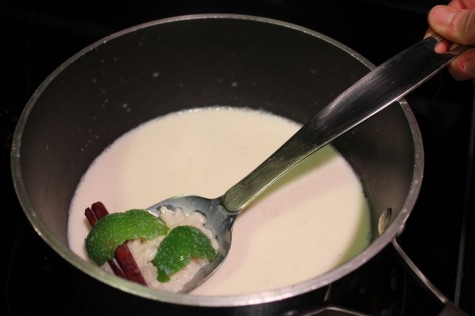
The unique aspect of this pudding, compared to other rice puddings I have made or eaten, was the addition of the lime rind during the cooking process. It combined nicely with the cinnamon and allspice and gave the pudding a distinct flavor.

Removing lime rind from milk

This recipe did not call for any sugar or sweetener (like honey or agave), and to me, rice pudding, in a dessert form, needs to be a little bit sweet, so I must make a confession; I added some simple syrup to my pudding at the end of cooking.

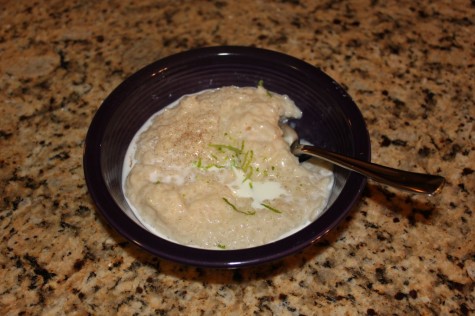
I served it as suggested with a bit of lime zest and cream (half and half) on top. My husband said it reminded him of decadent, rich Fruit Loops. And he likes Fruit Loops, so that was a compliment!

Rice Pudding (Arroz con leche)

Feasting in Ancient Mexio is part of our programming for the special exhibition The Legacy of the Plumed Serpent in Ancient Mexico. The exhibition will be on view through Sunday, November 25.

Music and Masterpieces

We are very excited about the upcoming launch of a new program, Music and Masterpieces, produced in partnership with the Dallas Opera, on Saturday, November 10.

We have worked closely with our Arts District neighbor the Dallas Opera on many programs and projects in the past. These have included the commission of the song cycle A Question of Light by writing duo Gene Scheer and Jake Heggie, which was inspired by works of art in the DMA’s collection in honor of our shared benefactor and art advocate Margaret McDermott; hosting several special opera season preview performances; and most recently hosting a recital by Laura Claycomb.

The success and positive response to  A Question of Light started us thinking: How can we connect the art of performance and music with the art in the galleries in a more meaningful way, and more often? After a fun brainstorming session between the DMA programming staff and the Opera’s Marketing and Education department, the idea for Music and Masterpieces was born. The DMA and the Dallas Opera will work together to choose a theme based on an area of the DMA’s collection or special exhibitions that will serve as inspiration for a performance and tour to be held on the same day. Through this pairing, visitors will gain a deeper understanding and appreciation of both of these art forms and the influences they have on one another within a shared theme, era, or culture.

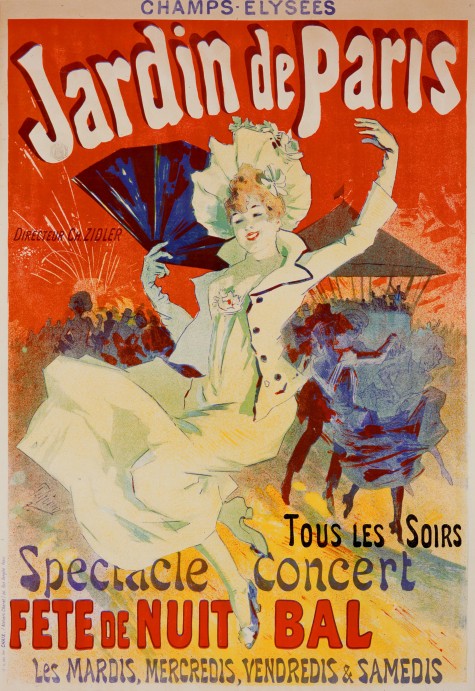
Jules Cheret, “Jardin de Paris”, 1890, color lithograph, Milwaukee Art Museum, Gift of Dr. and Mrs. Milton F. Gutglass, M1998.158, Photo by John R. Glembin, Milwaukee Art Museum

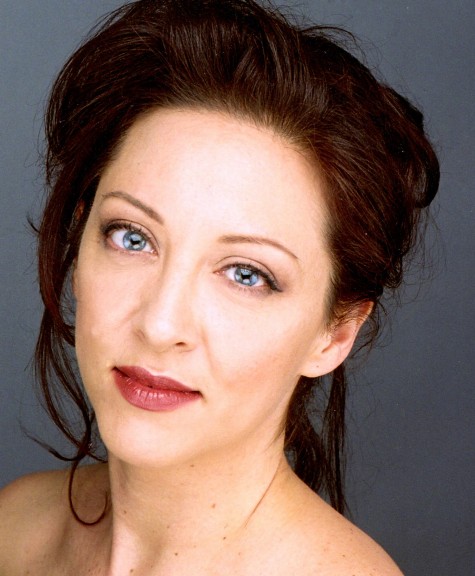
Next Saturday’s Music and Masterpieces program is inspired by the exhibition Posters of Paris: Toulouse-Lautrec and His Contemporaries. Nathalie Paulin*, a French-Canadian soprano, will perform music ranging from late 19th-century French opera to art songs and Parisian bistro chansons. A tour of the exhibition will follow the performance. The performance will start at 2:00 p.m, and the tour will begin at 3:00 p.m. Please arrive early as space on the tour is limited and on a first-come, first-served basis the day of the event. 

Nathalie Paulin

We have other Music and Masterpieces programs in the works as well. On January 27, 2013, we will feature Twyla Robinson*, soprano, with Charles Dillard* as accompanist. This program will be themed around the exhibition Difference? and will include music from the 20th century featuring strong feminine themes.

We hope to see you Saturday and at future Music and Masterpieces programs!

Denise Helbing is the Manager of Partner Programs at the Dallas Museum of Art.

*Artists subject to change


Archives

Categories