Archive Page 2


Food on the Move + Go van Gogh: A Meeting of the Vans!

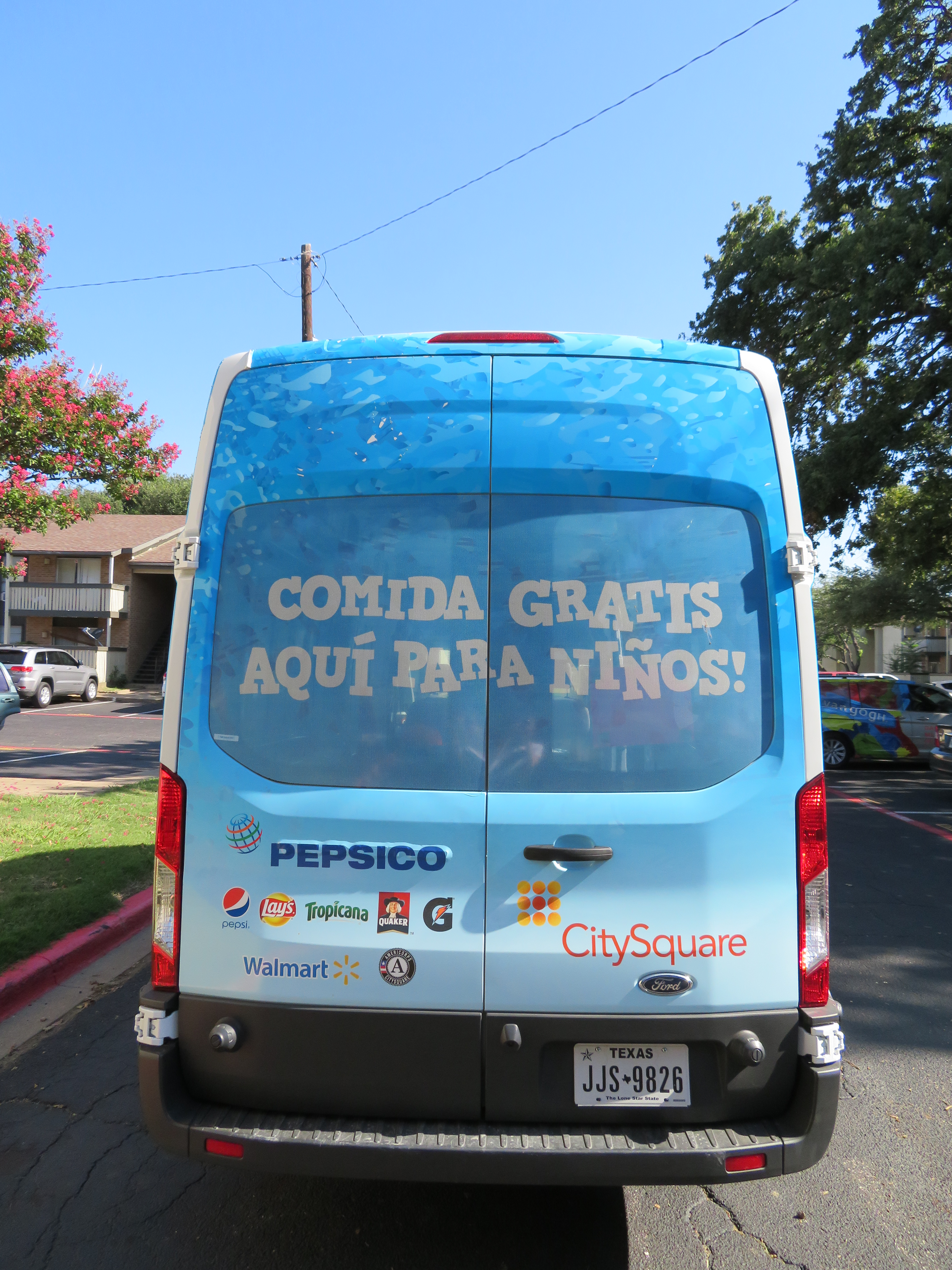
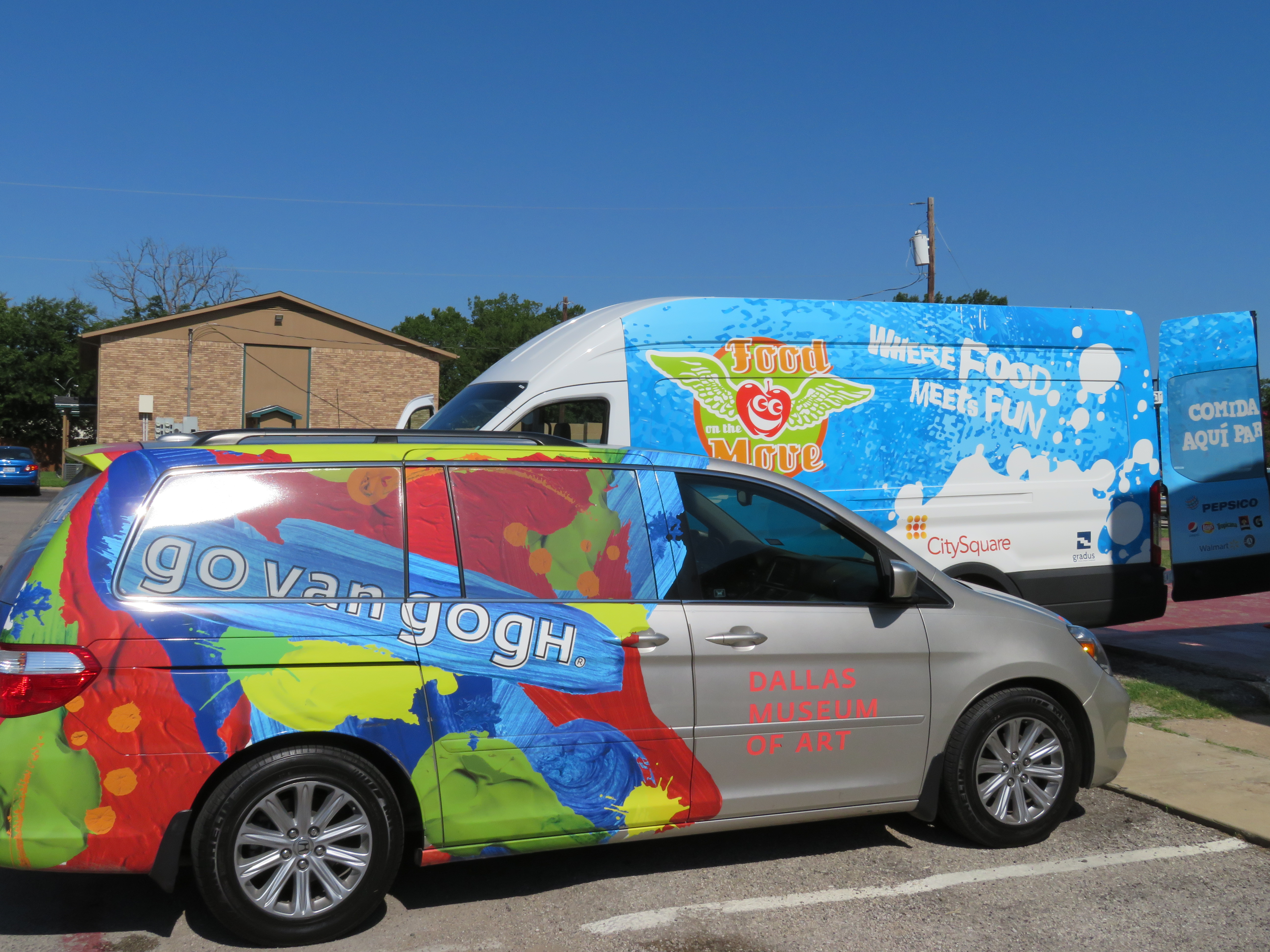
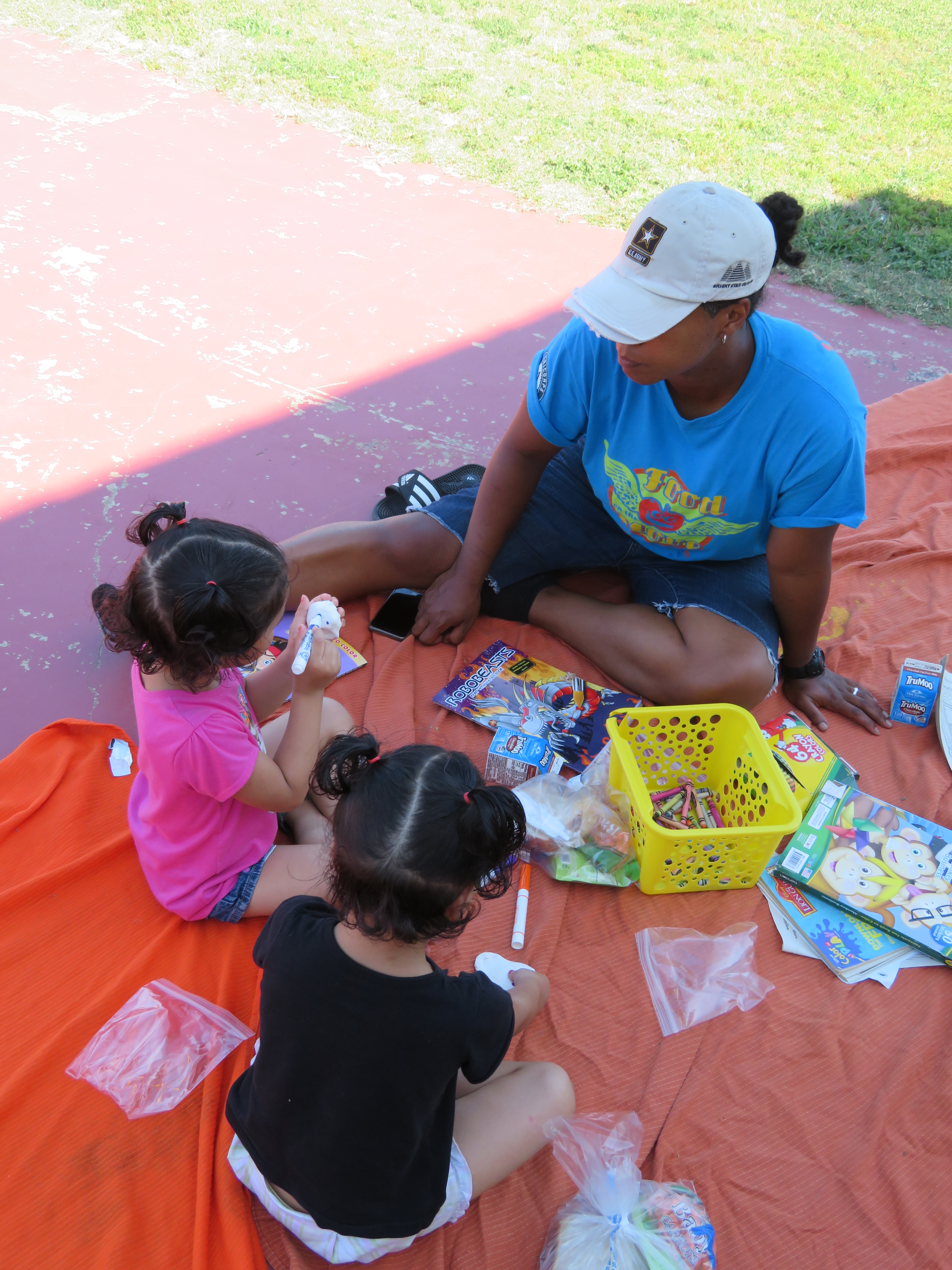
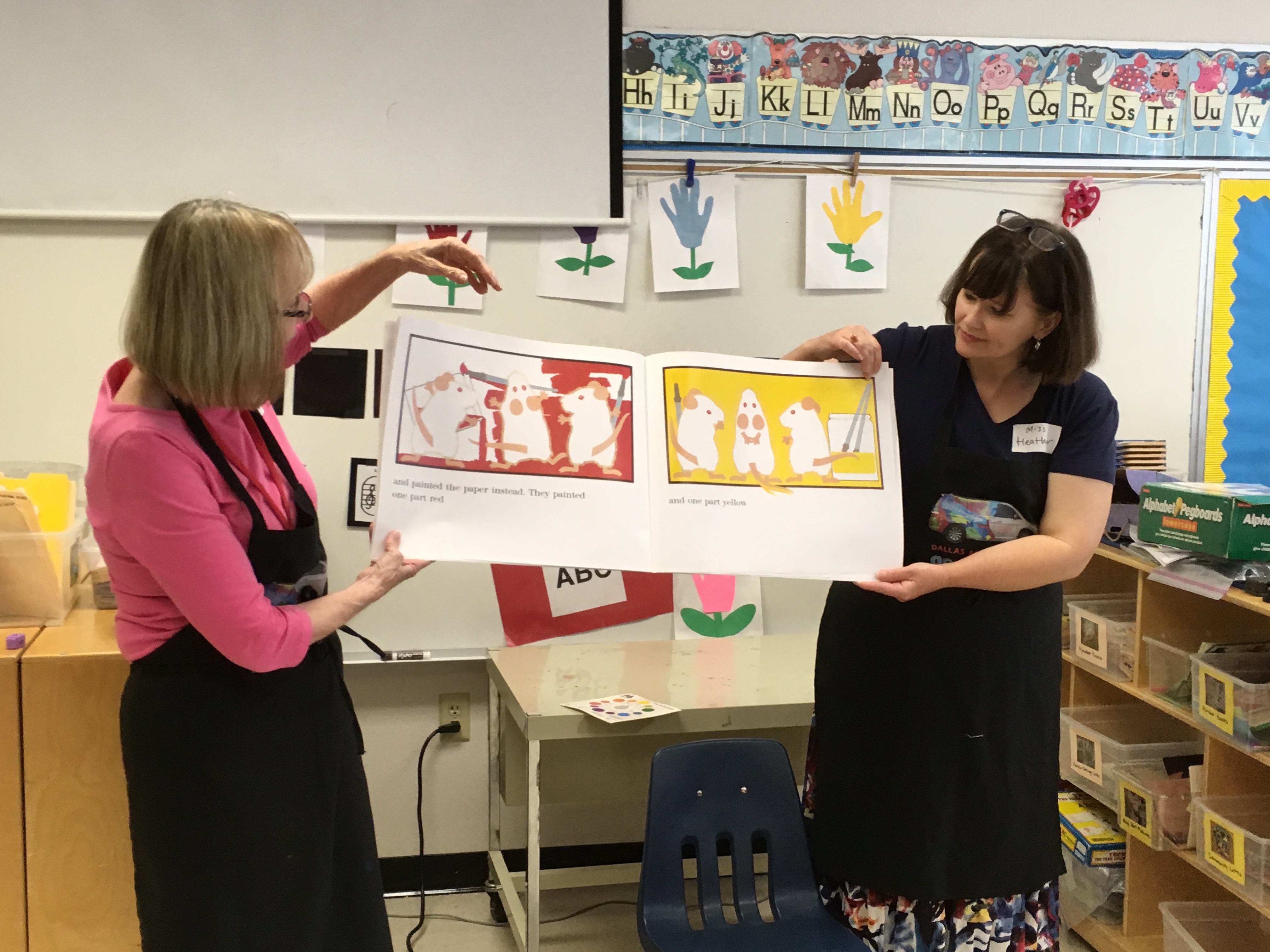
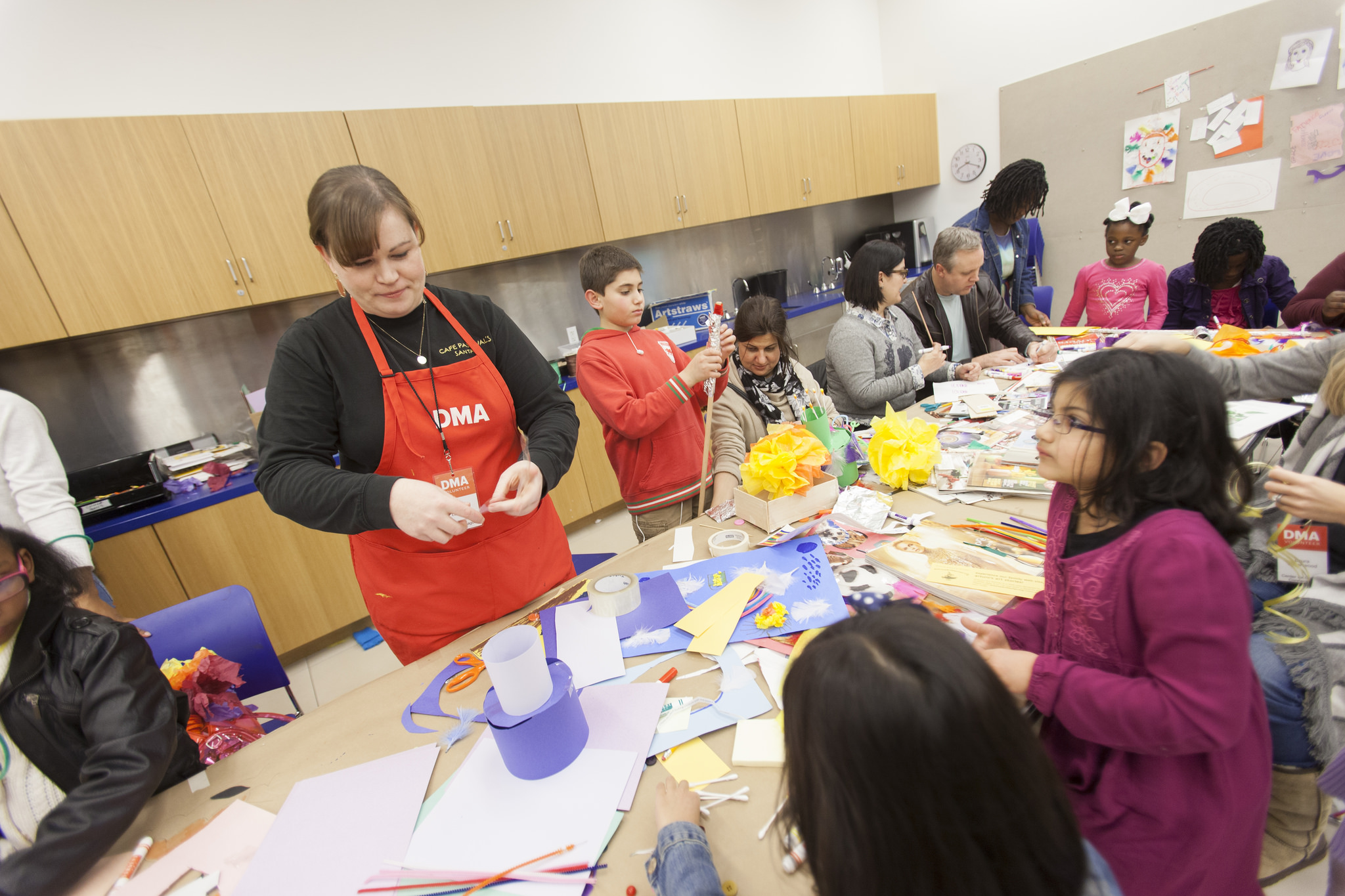
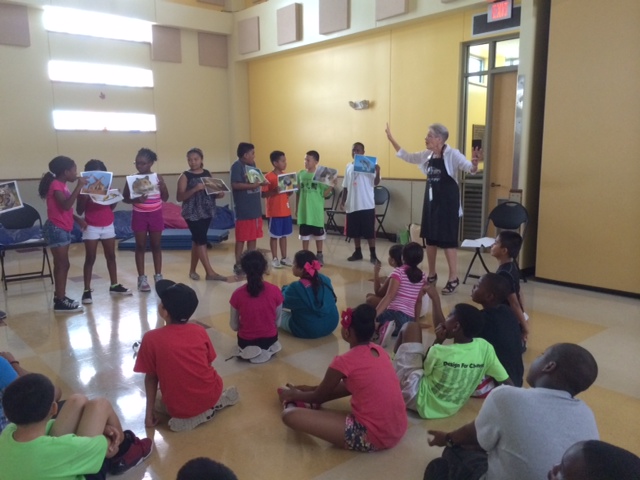
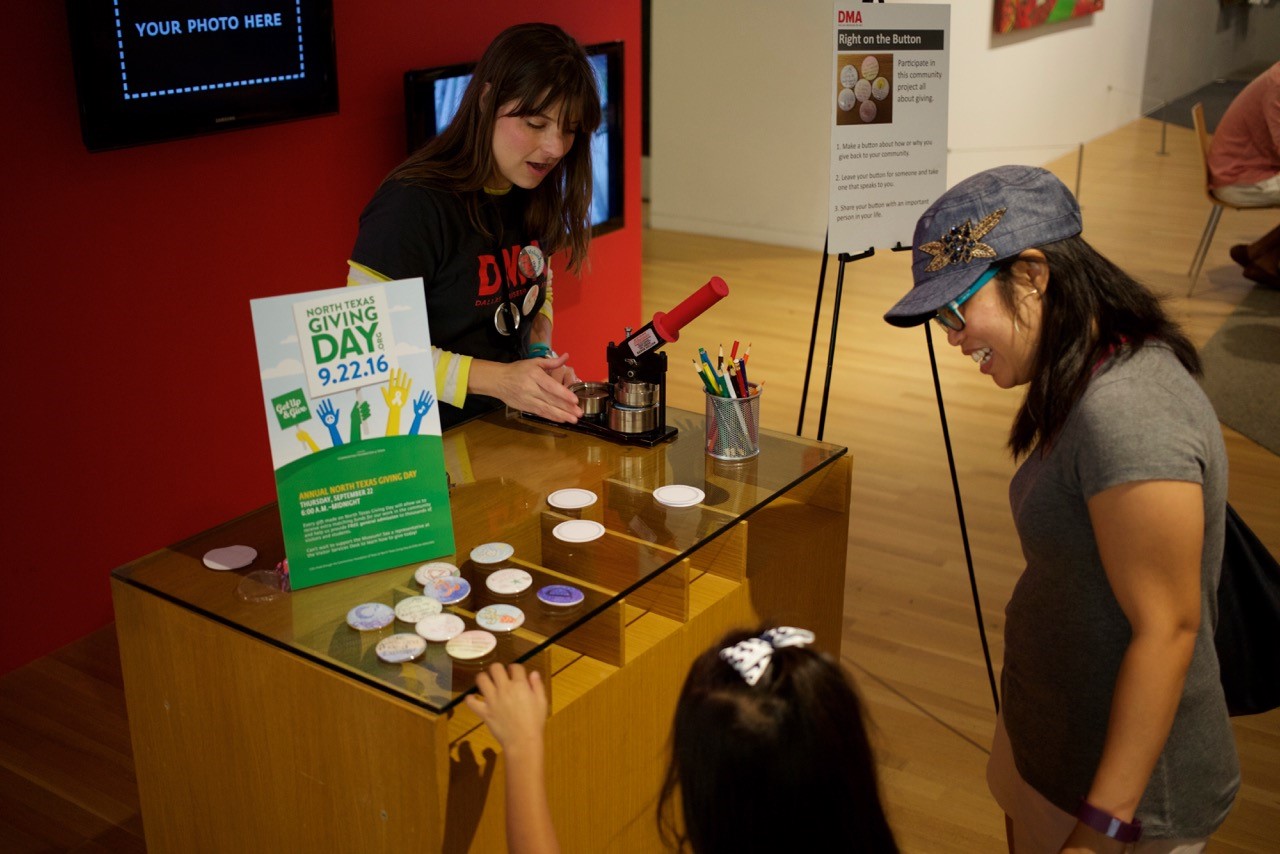
This week Go van Gogh staff, volunteers, and summer interns packed up the Go van Gogh van and spent a few days with our friends from Food on the Move. Food on the Move is a mobile meal program delivering free breakfasts and lunches to non-traditional sites like apartment complexes across the Metroplex. CitySquare’s AmeriCorps members pull out blankets and tables at each site, setup activities and games, and pass out meals from the back of their great big van.

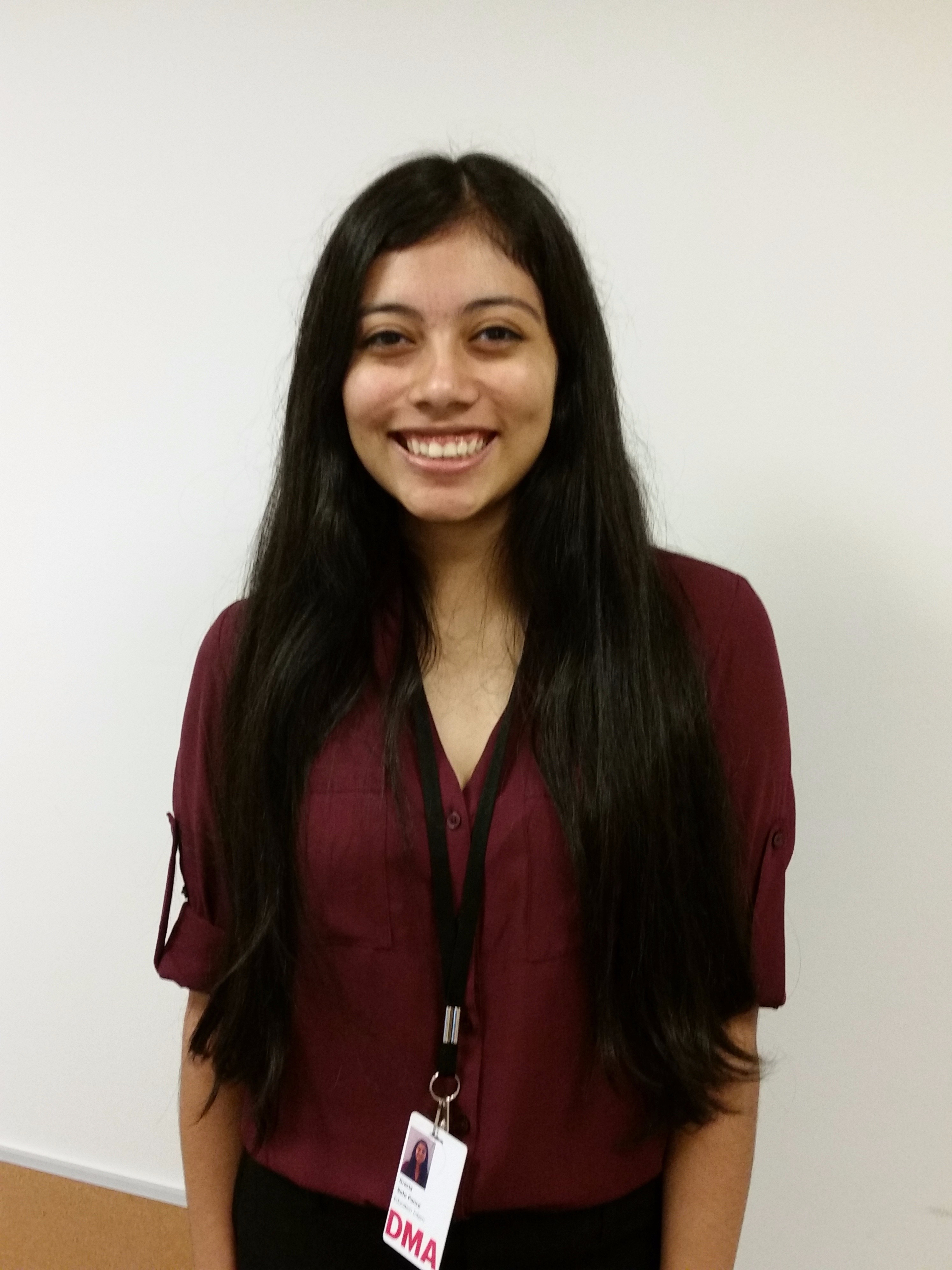
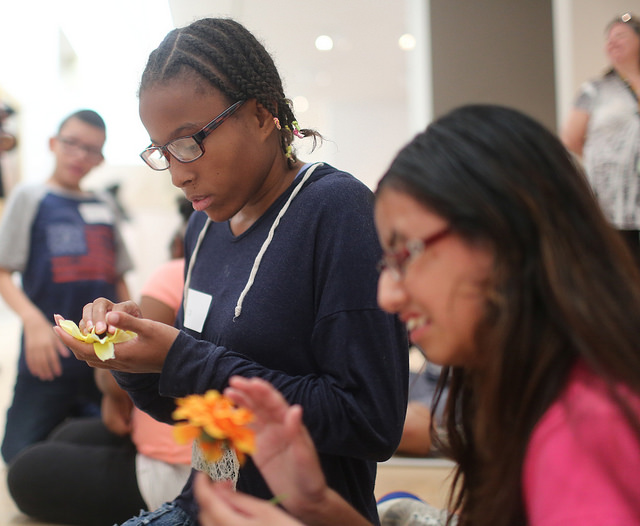
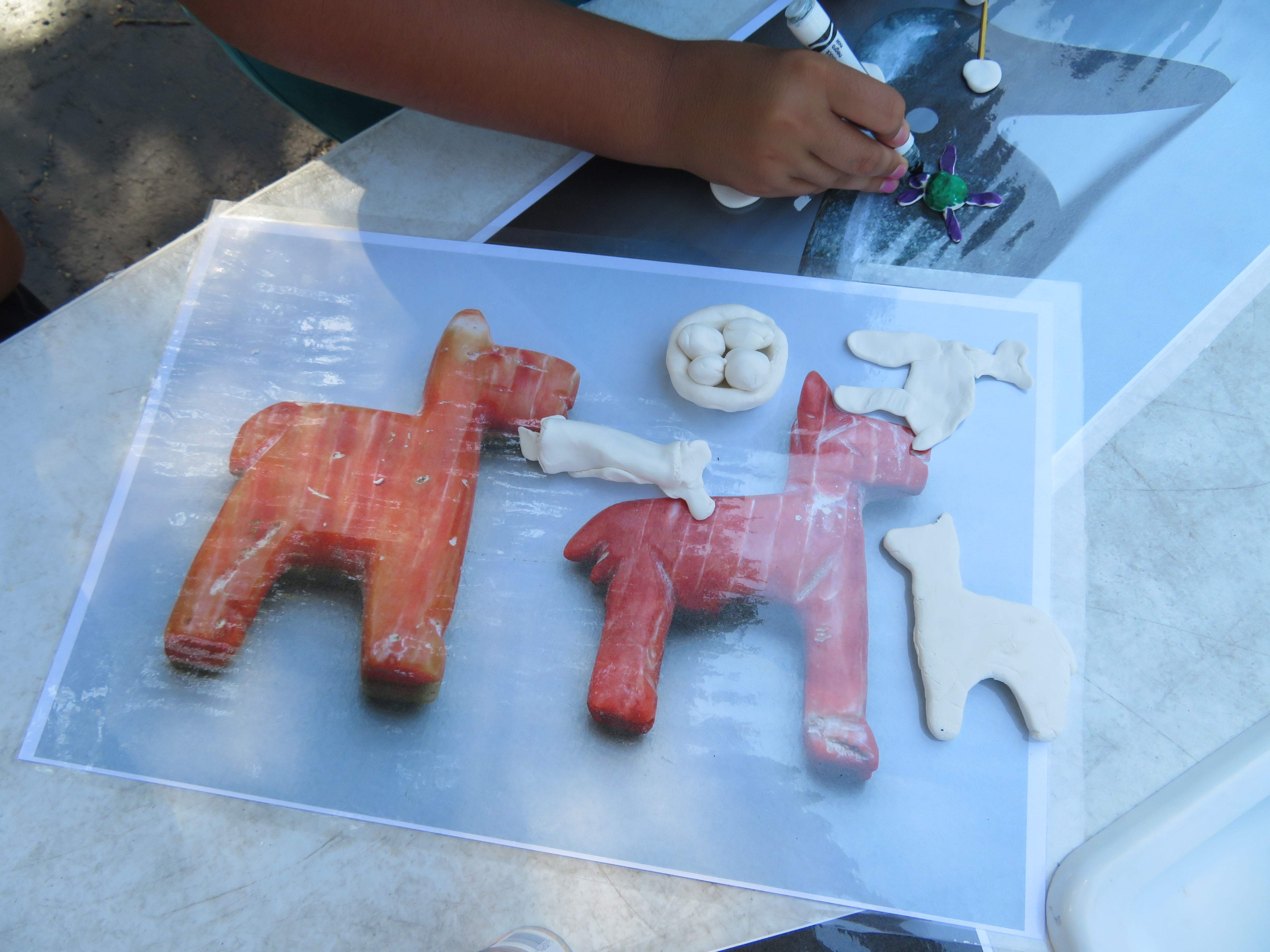
To this already rich program, we brought art activities developed by this year’s Mayor’s Intern Fellow, Grecia Soto. Inspired by objects in our Ancient American collection, Grecia developed an activity that had us making miniature sculptures out of Model Magic clay.

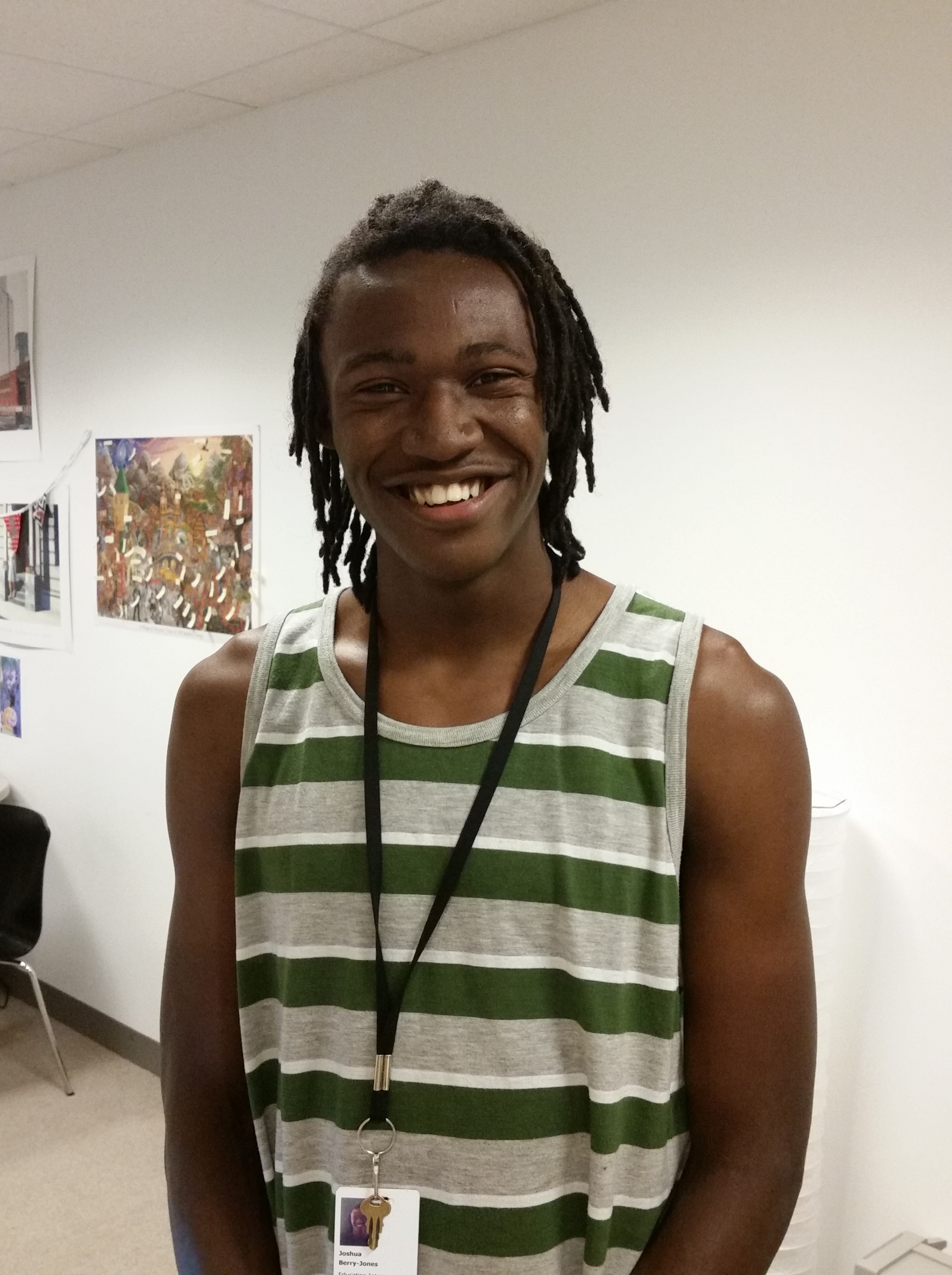
Imagine our surprise when we heard an old friend was sporting new wheels! Last summer, our Mayor’s Intern Fellow Joshua Berry-Jones developed our project for the then brand new CitySquare partnership. This summer, Josh has switched flashy outreach vehicles, and is an Americorps member working for CitySquare on Food on the Move!

Amy Copeland
Manager of Go van Gogh and Community Teaching Programs

Communication Through Portraiture

One of the best things about working in the Center for Creative Connections is getting to see all the hard work of redesigning the spaces come to life. Over the last few weeks, staff and visitors alike have watched some new faces pop up on our walls in the front gallery.


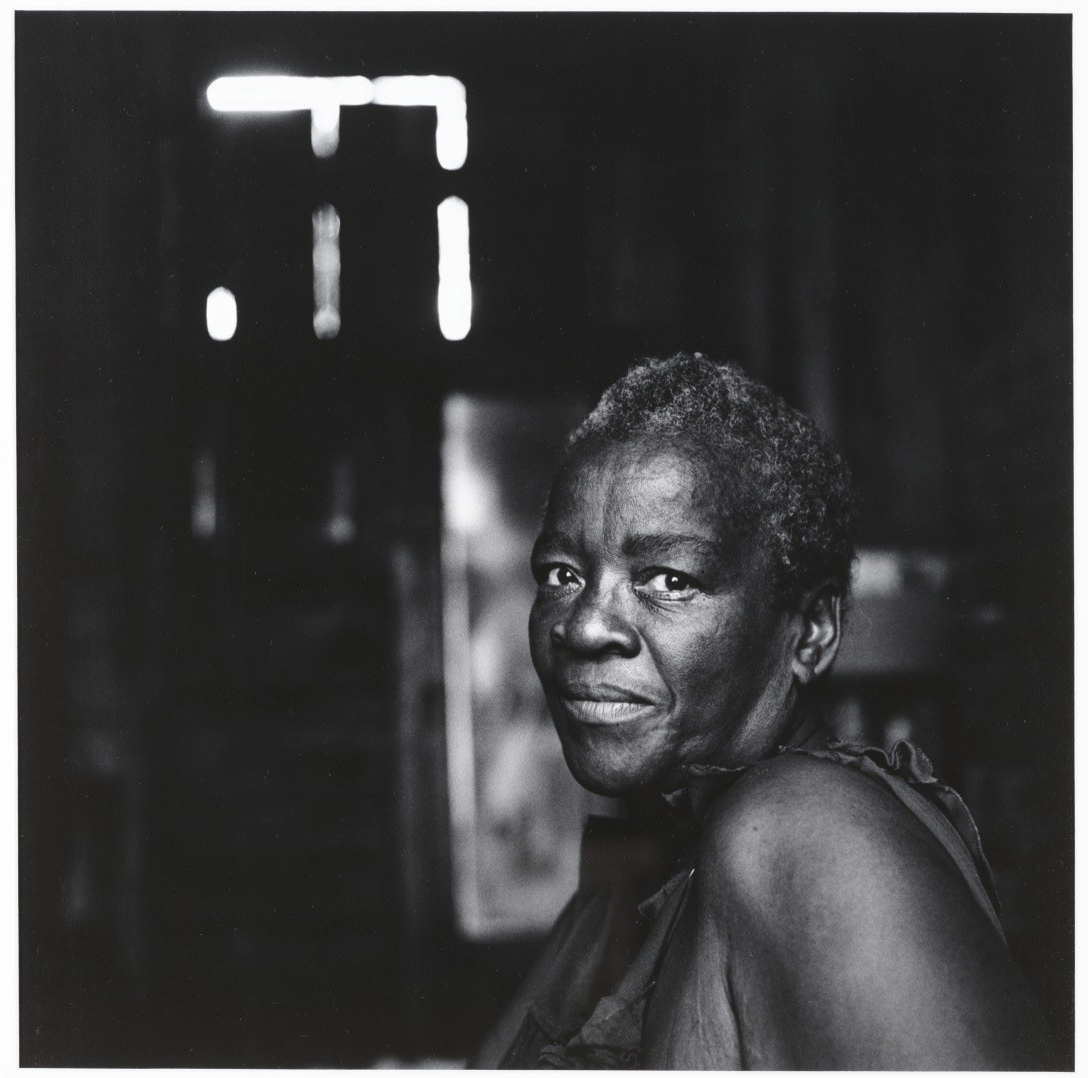
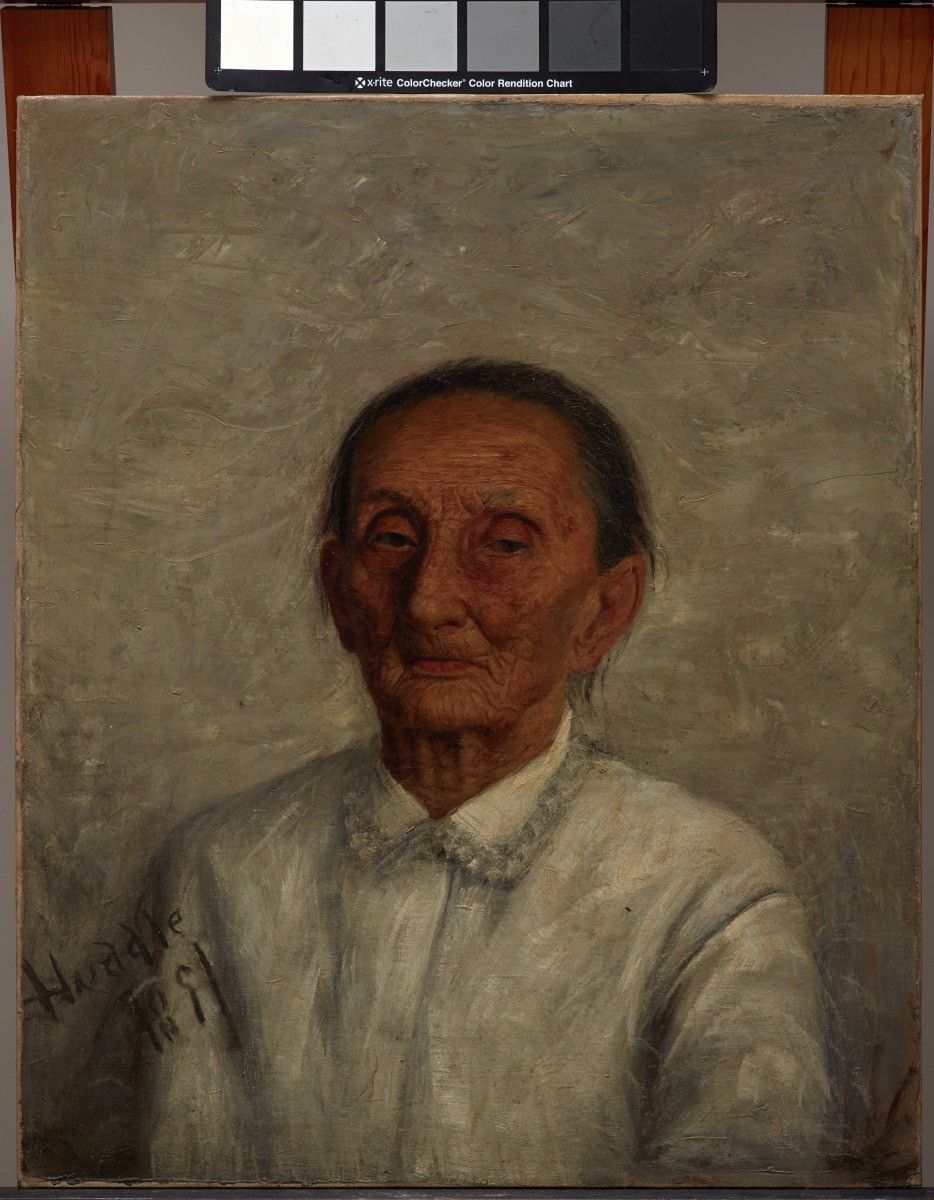
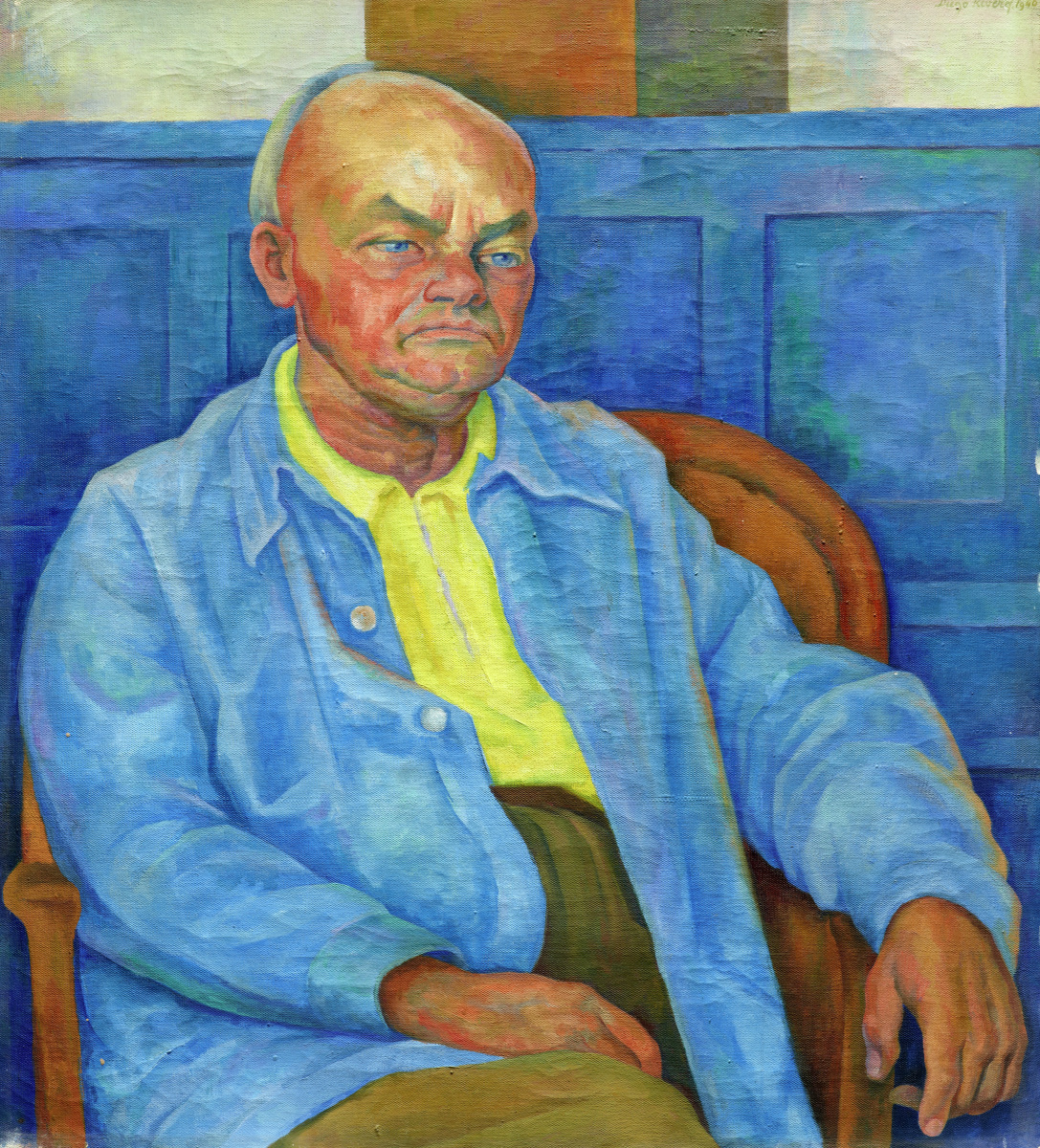
Today, technology makes it easy to snap hundreds of photos of ourselves on a front facing camera phone. But for centuries, portraiture has played an important role in how we study and interpret subjects through aspects like environments, surrounding props, clothing and even color and lighting. All of these things are visual clues shown to us by the artists to communicate an underlying narrative about the subject. Even the way an artist chooses to capture their sitter can reflect on their relationship with them. Observing Chuck Close’s “Phil/Fingerprint” from a distance, you might not realize that Close used his own fingerprints to create an intimate portrait of his close friend, composer Phillip Glass.

1981_46

Chuck Close, ‘Phil/Fingerprint’, 1981, Lithograph, Dallas Museum of Art, Mr. and Mrs. Jake L. Hamon Fund

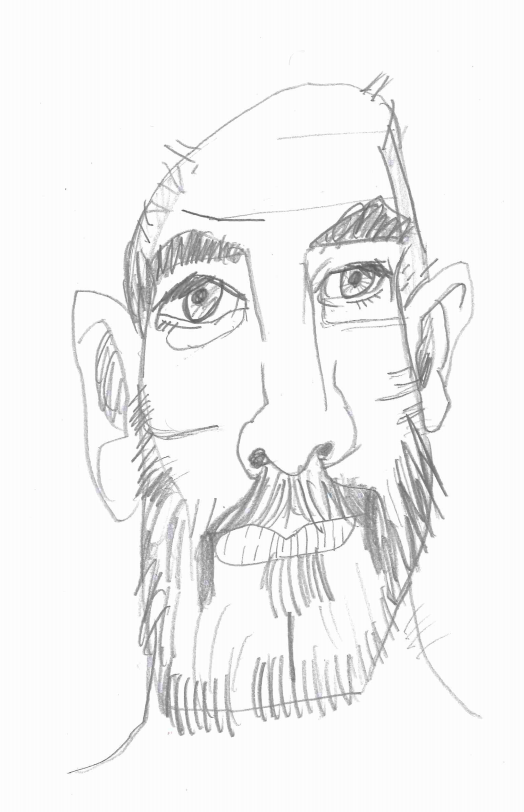
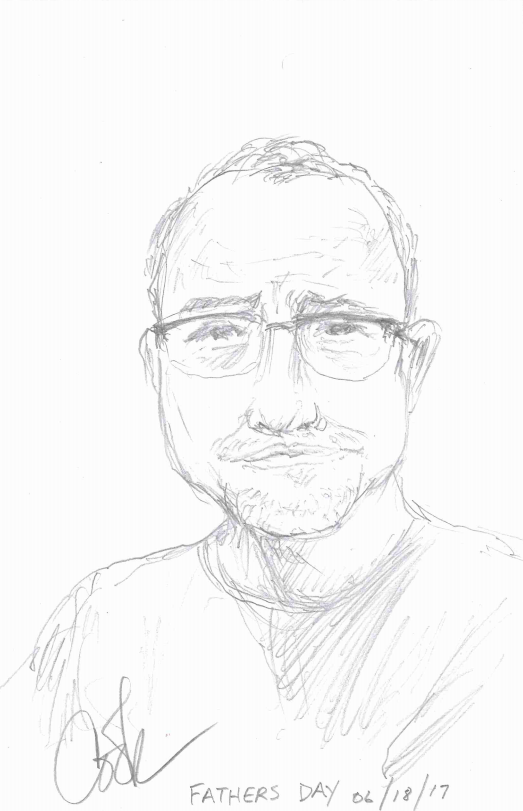
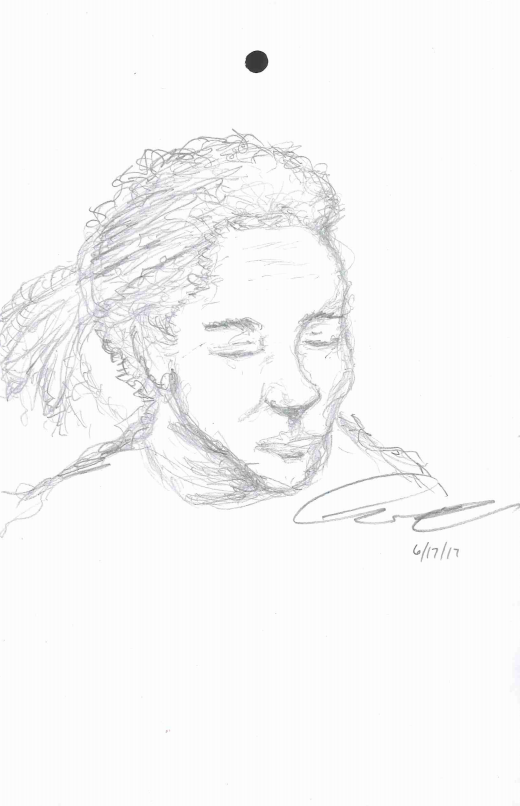
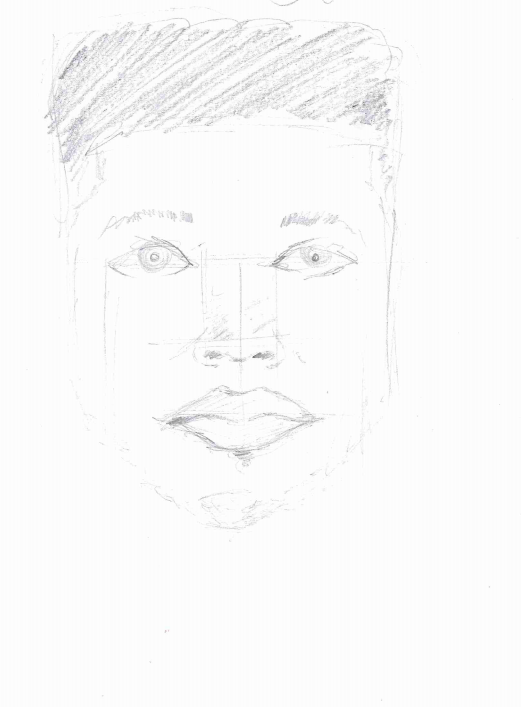
After viewing and reading more about all the artists and subjects that fill the gallery, we’re inviting visitors to put their own methods to the test when capturing a subject. We’ve been watching over the last few weeks how visitors have excitedly sat at one of our tables in the gallery to sketch themselves or a friend…

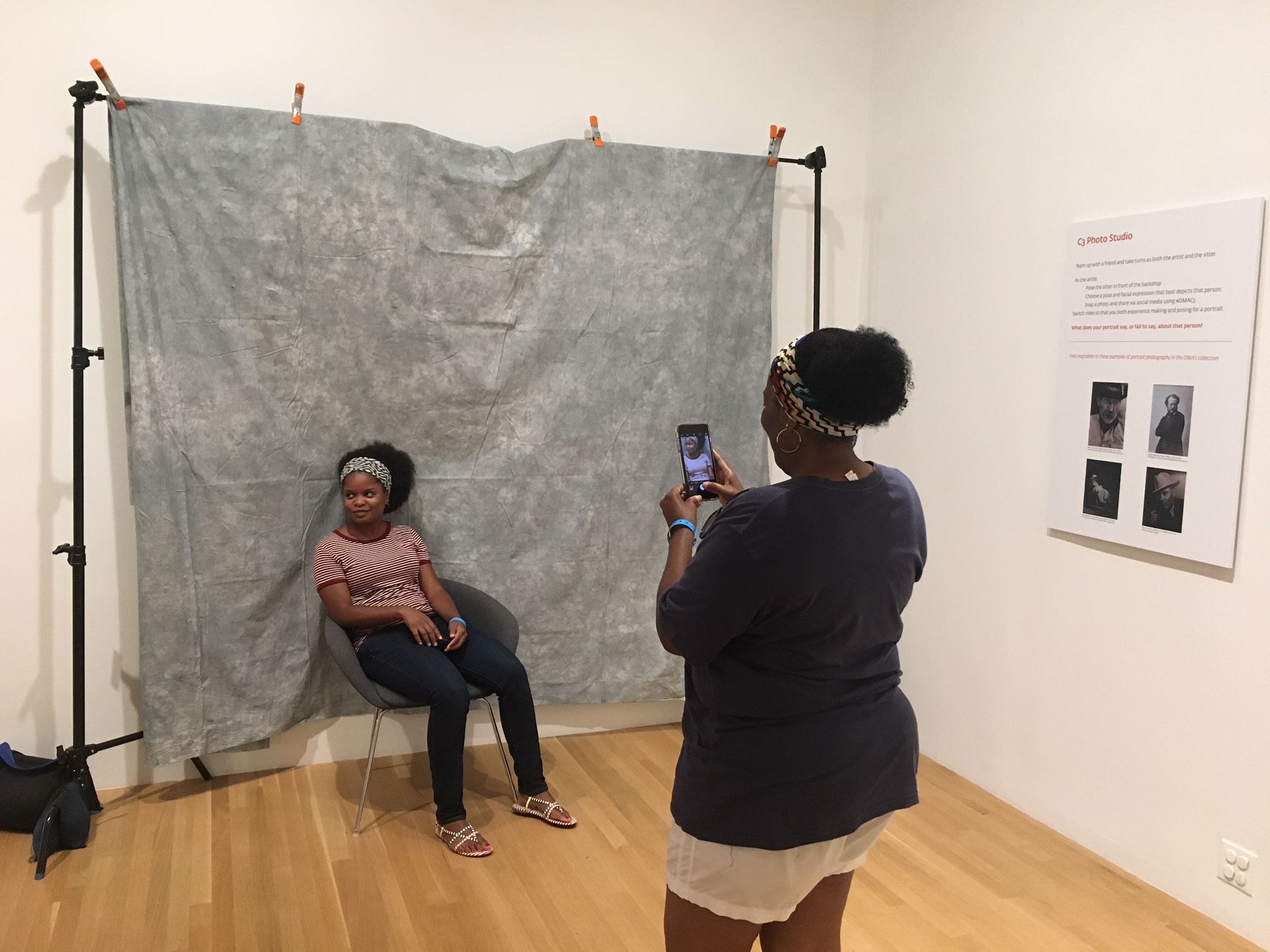
…or at the C3 Photo Studio to find the right pose for their own compelling portrait.

IMG_0084

Strike a pose when you stop by C3 on your next visit!

Kerry Butcher
Center for Creative Connections Coordinator

Friday Photos: What Did You Learn at Camp?

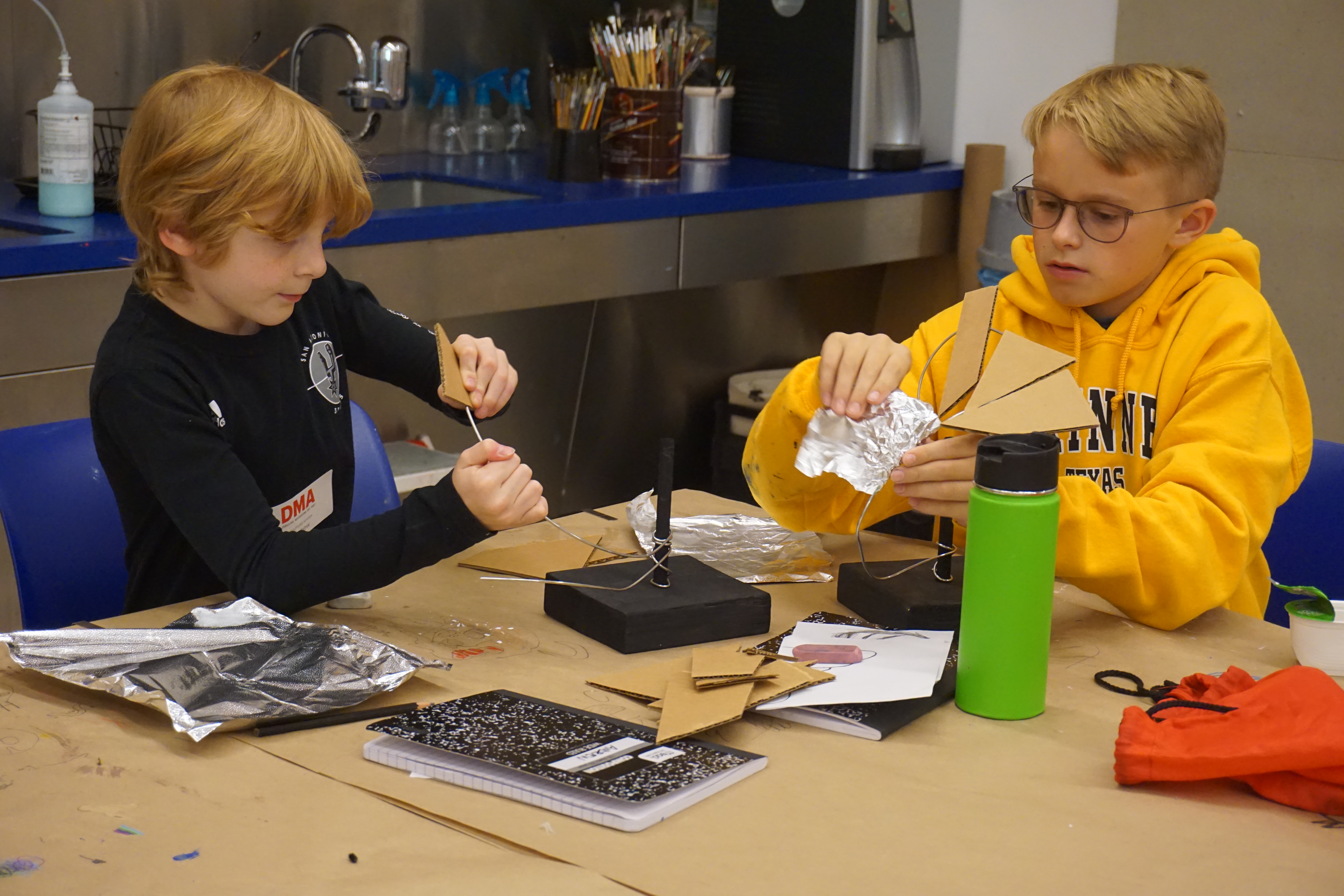
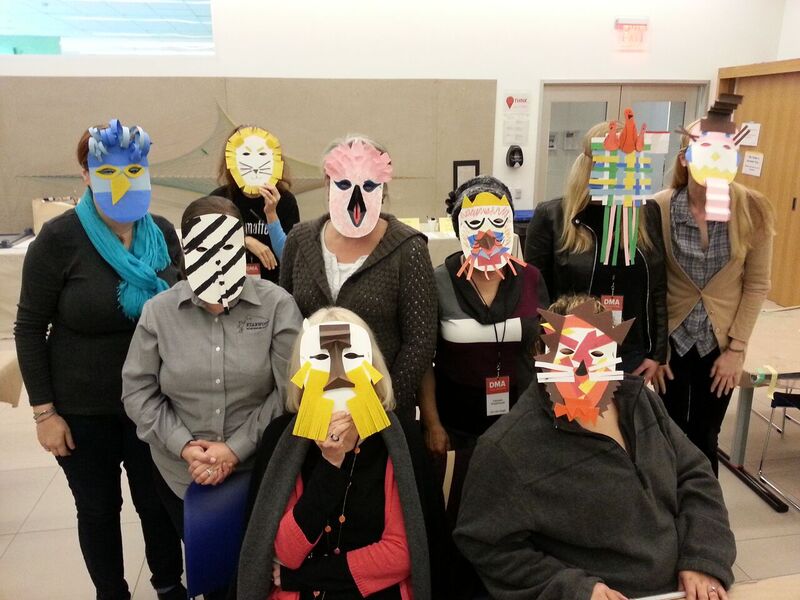
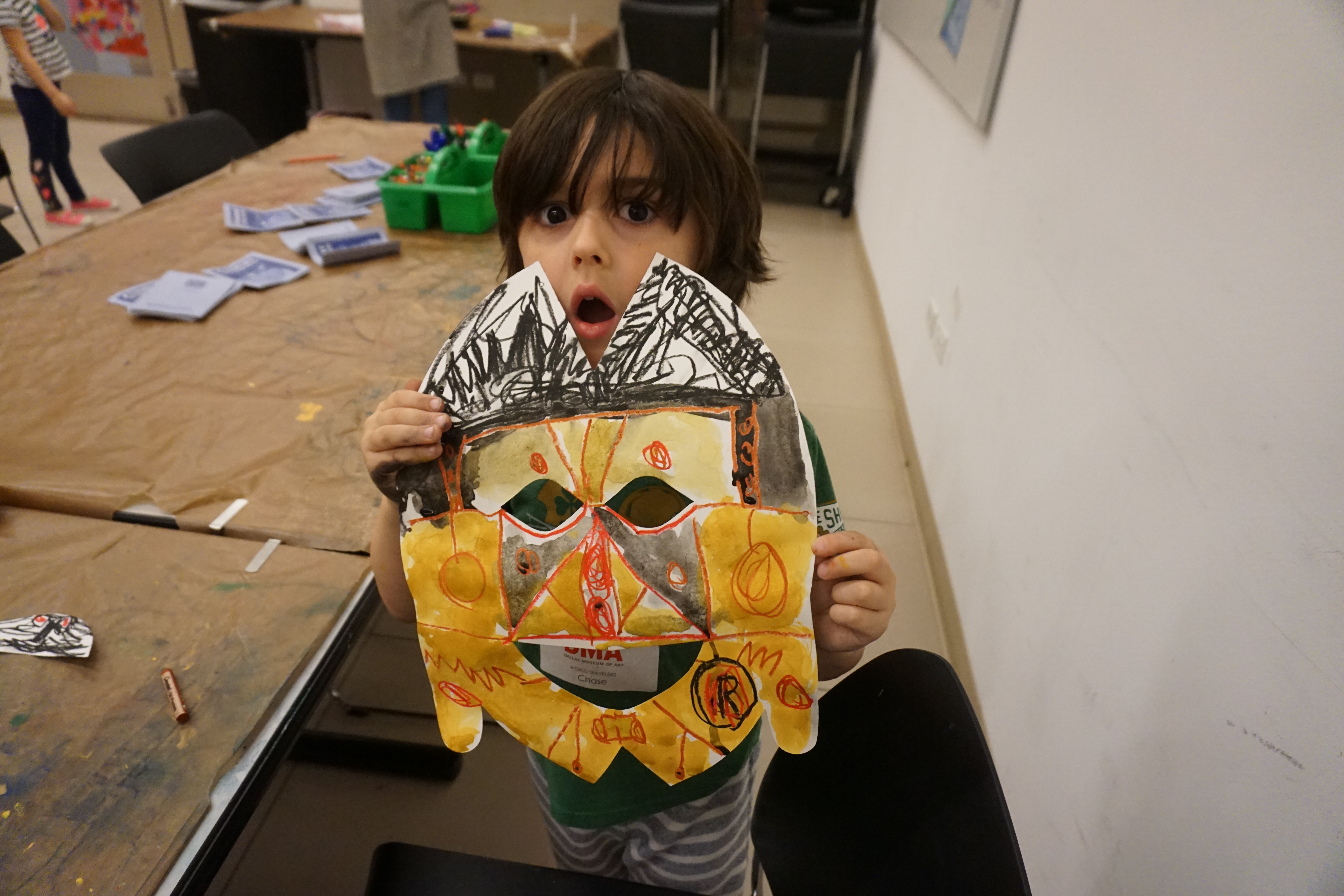
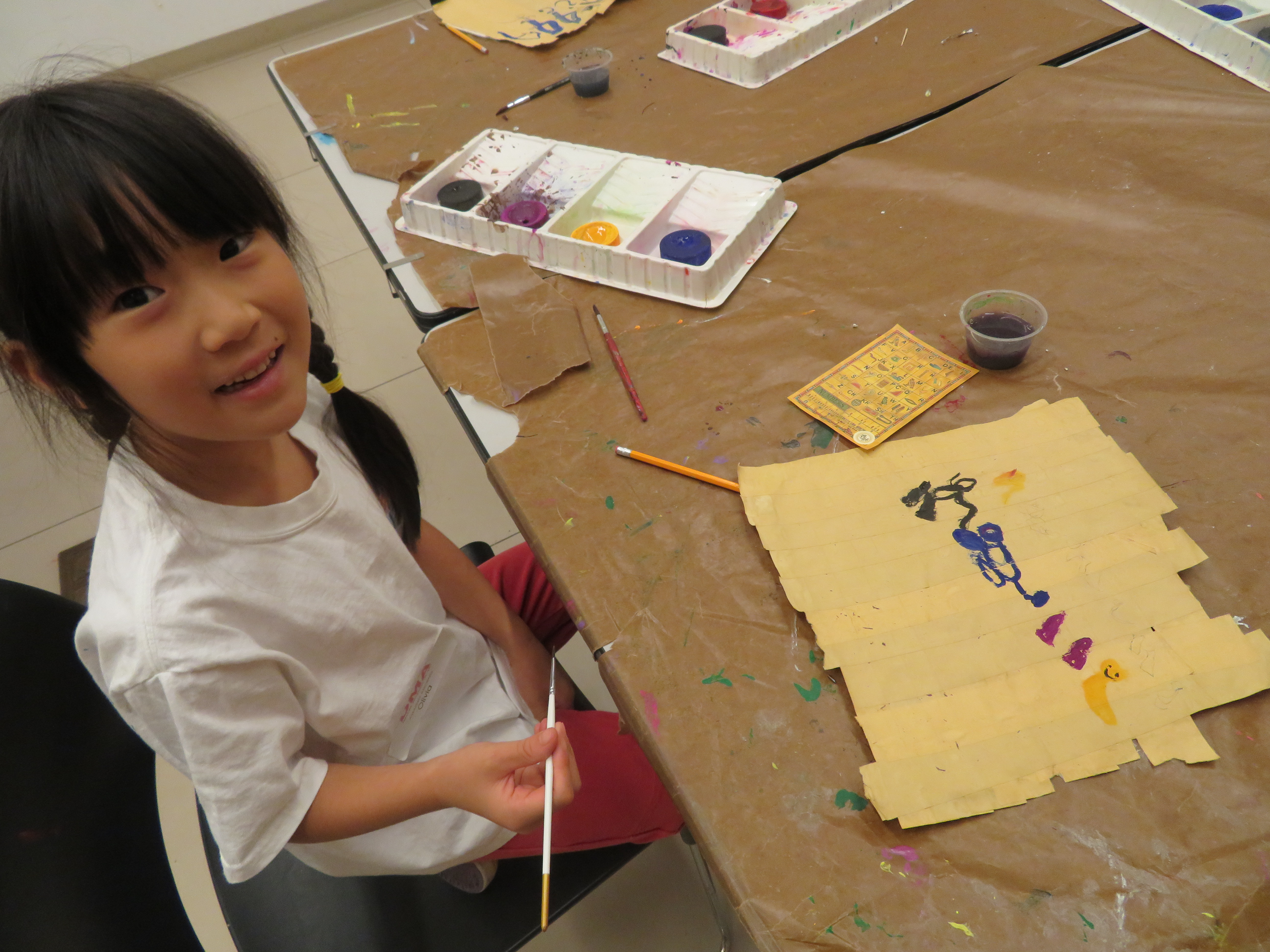
With 24 camps focusing on all areas of the DMA’s collection, our summer campers sure learn a lot! In any given week, campers might learn how to mix just the right color, why Picasso portraits look so funny, the secret to deciphering Egyptian hieroglyphics, and much, much more. The best part is that many of these camp lessons are also life lessons. Here are a few of our favorites:

Teamwork makes the dream work.

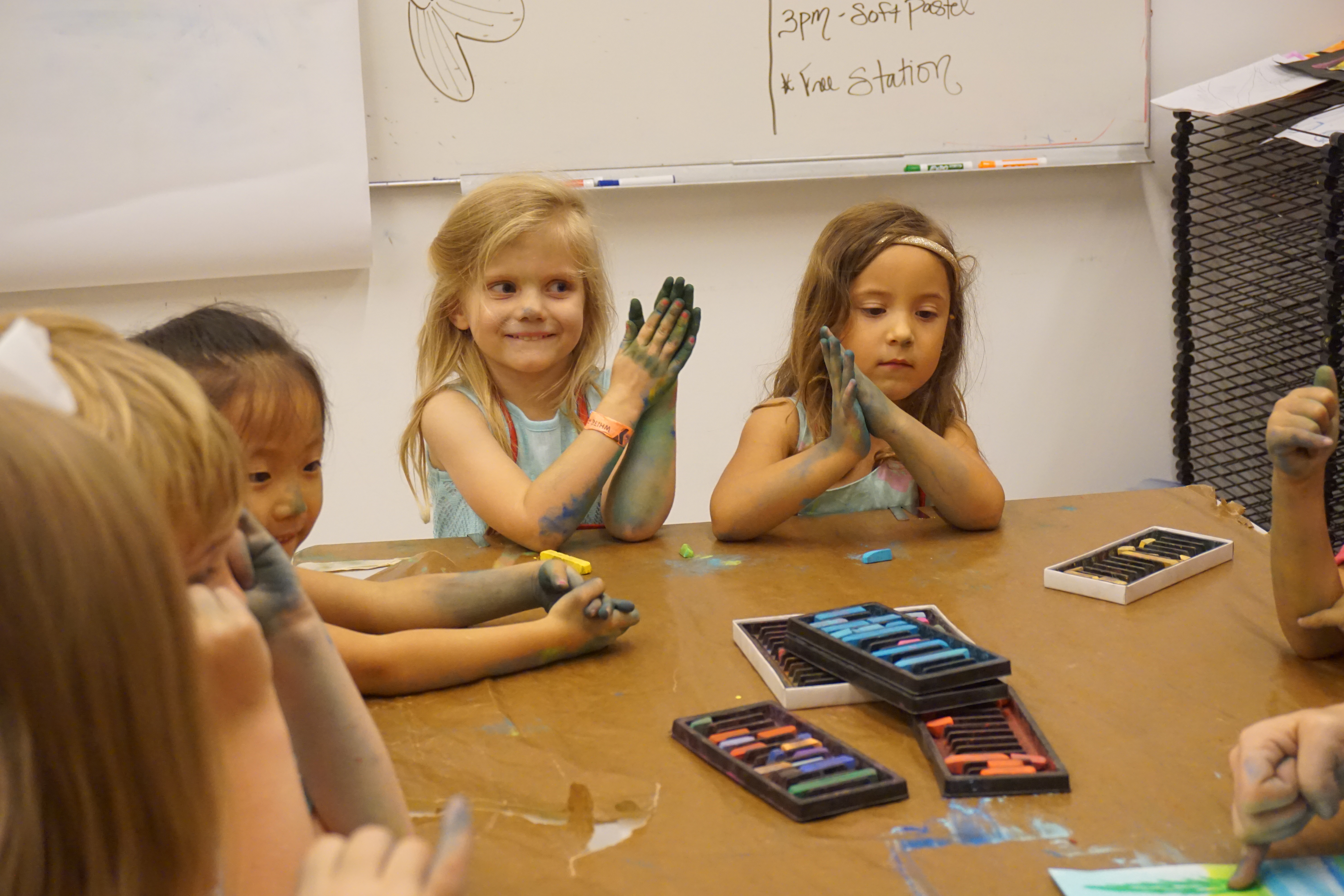
Art (and life) can get messy… and that’s okay!

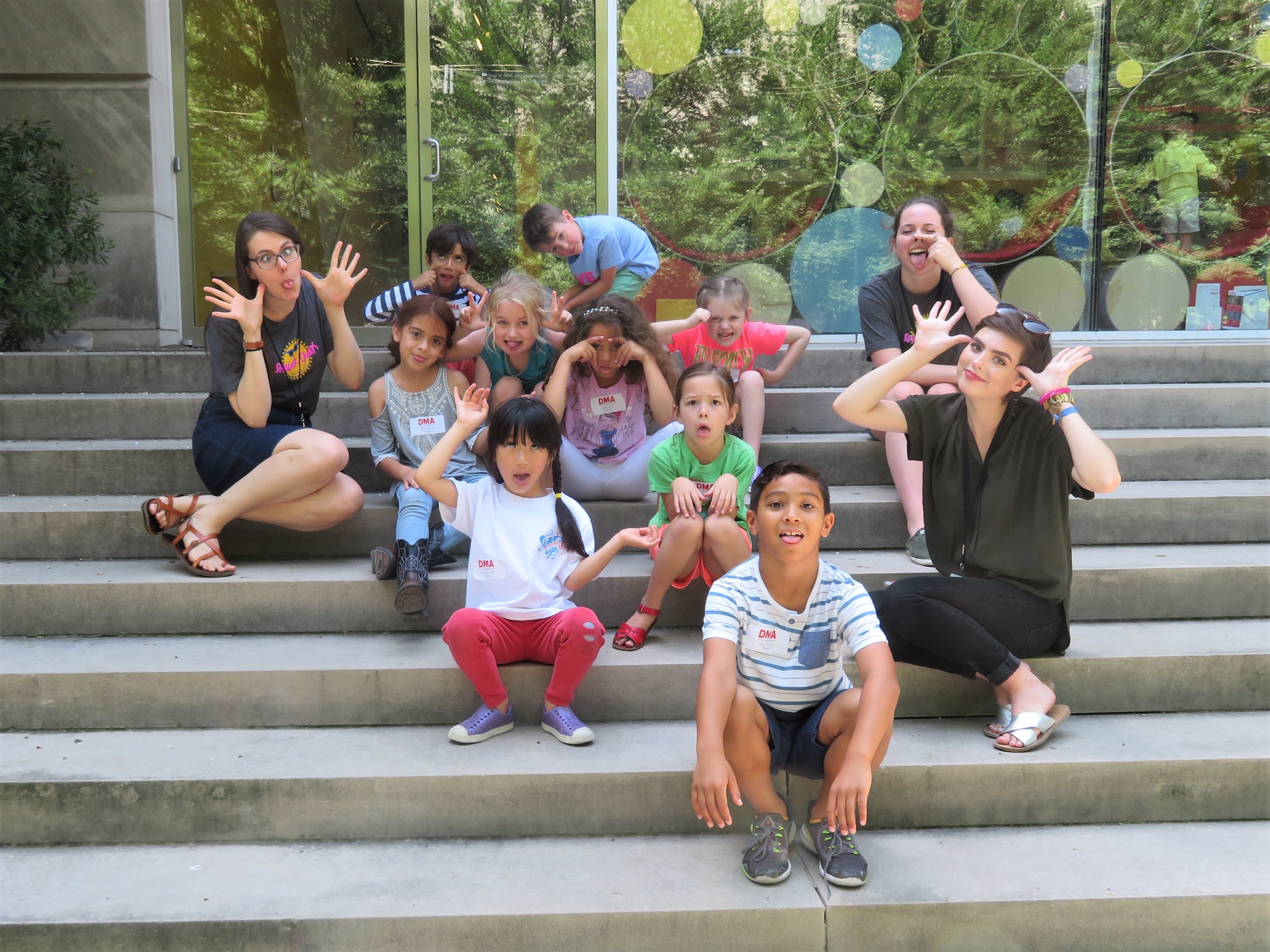
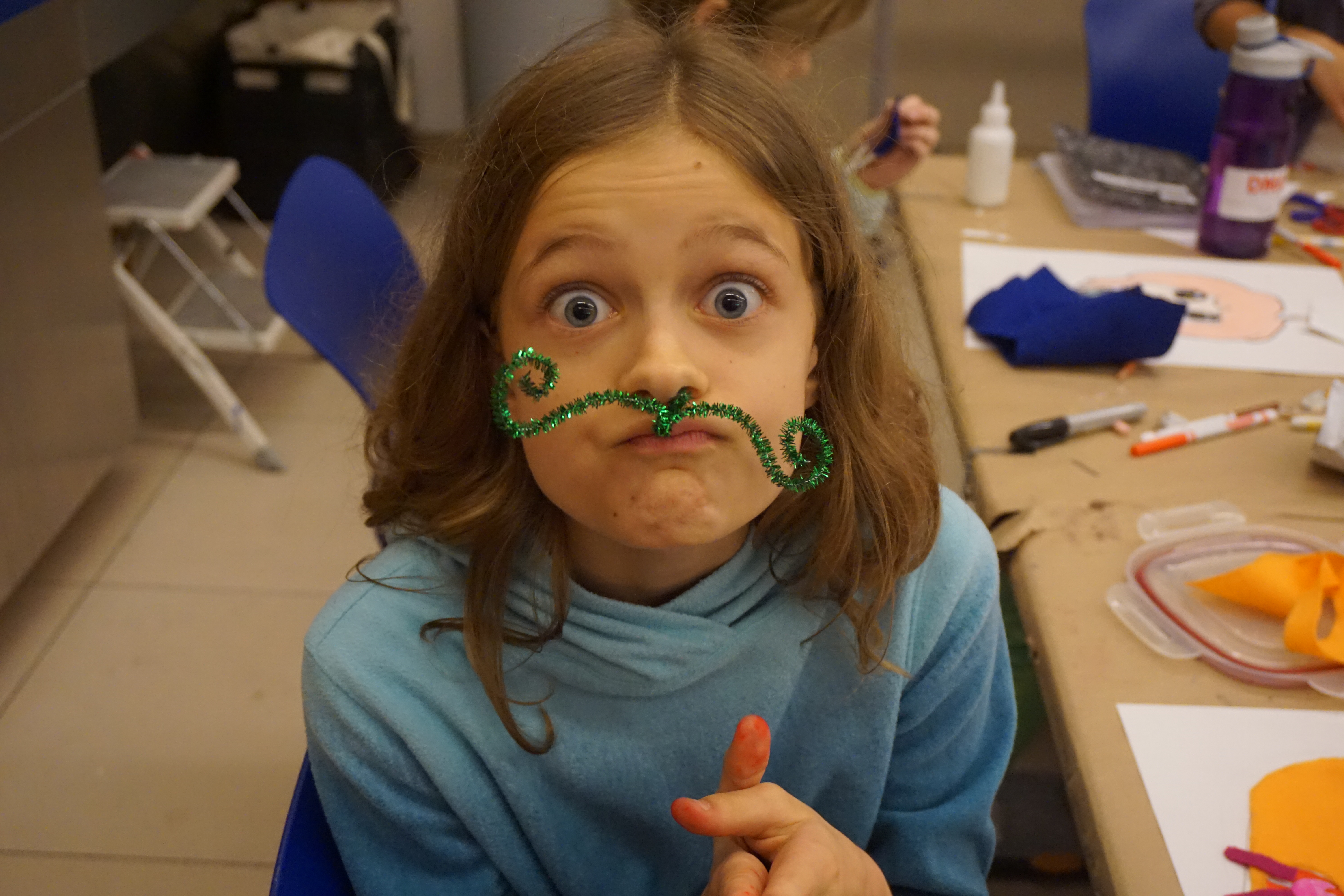
Funny faces are always in style.

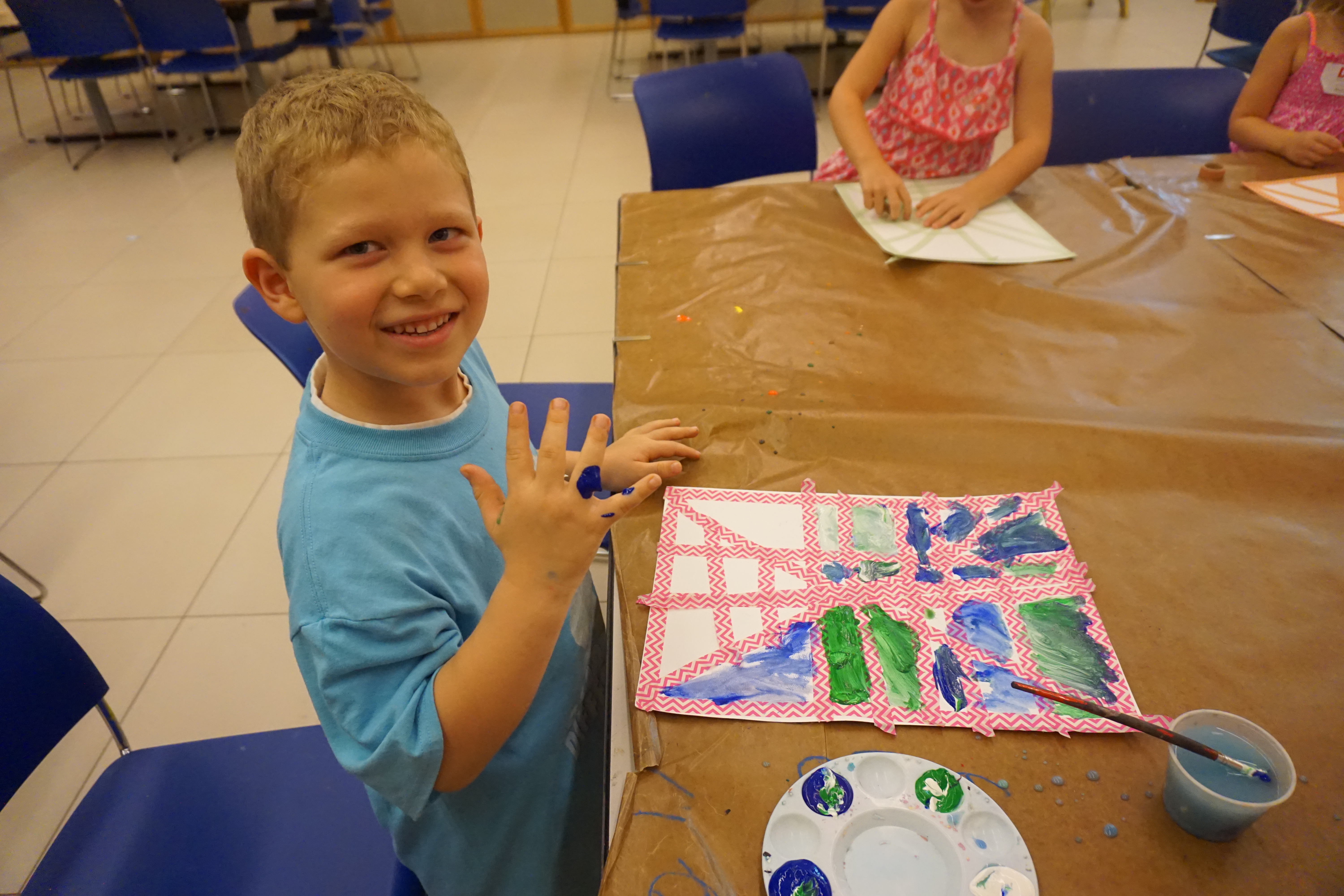
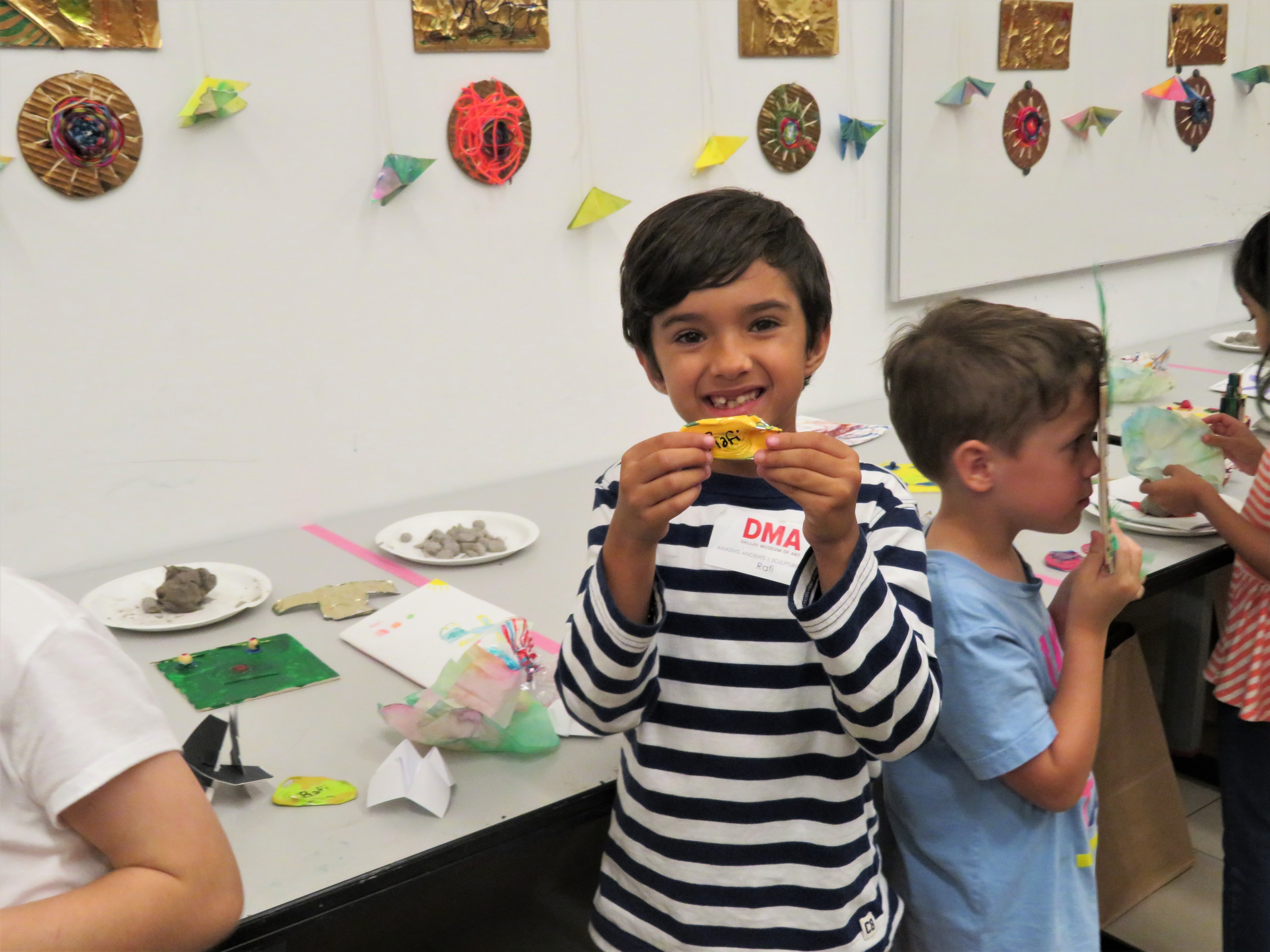
When you work hard, be proud of what you accomplish!

What lessons has camp (or art!) taught you?

For a list of all our available camps, click here. You can also keep up with the fun here on the blog and through the C3 Flickr page.

Jennifer Sheppard
Teaching Specialist


Friday Photos: Sending a Message

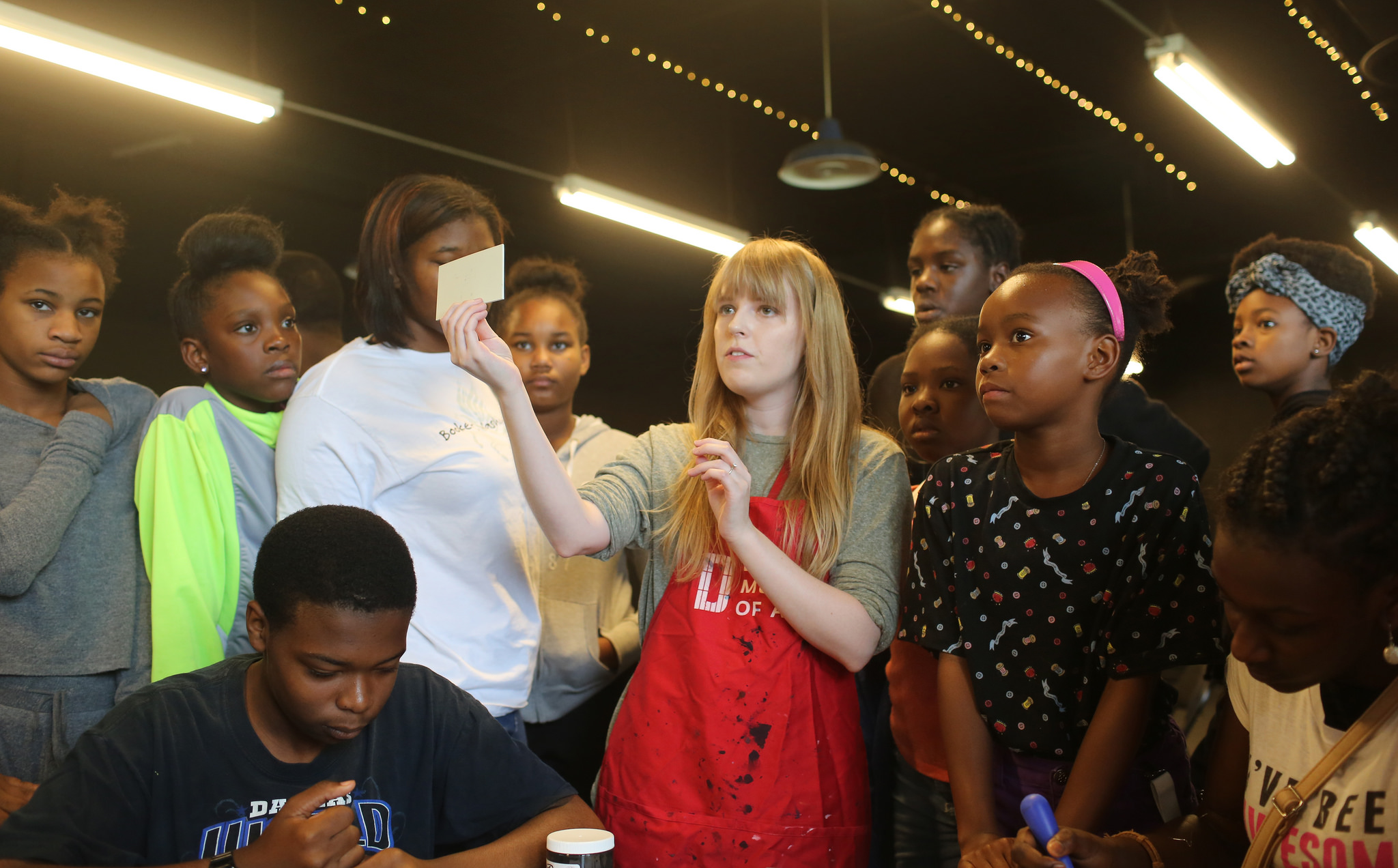
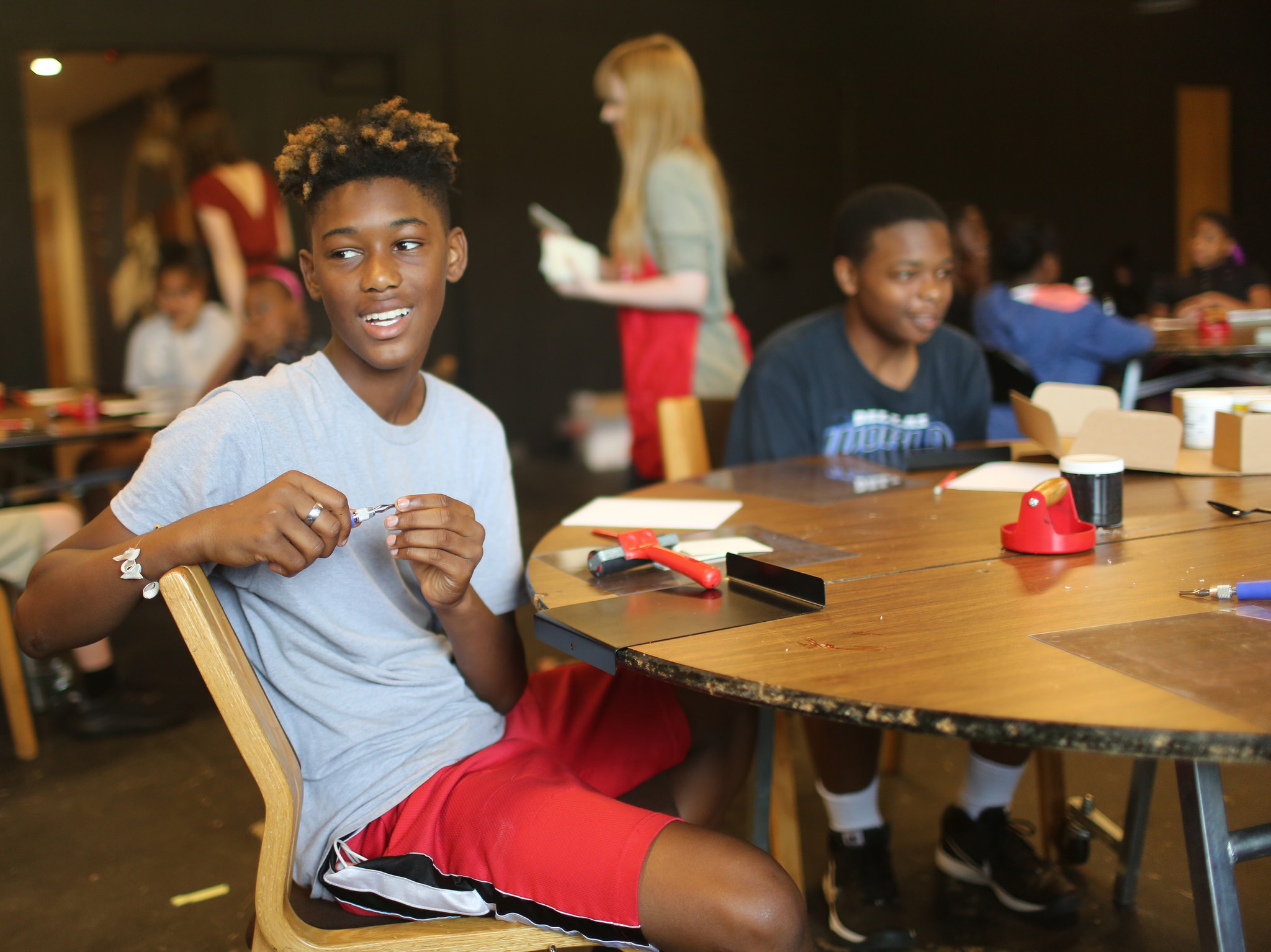
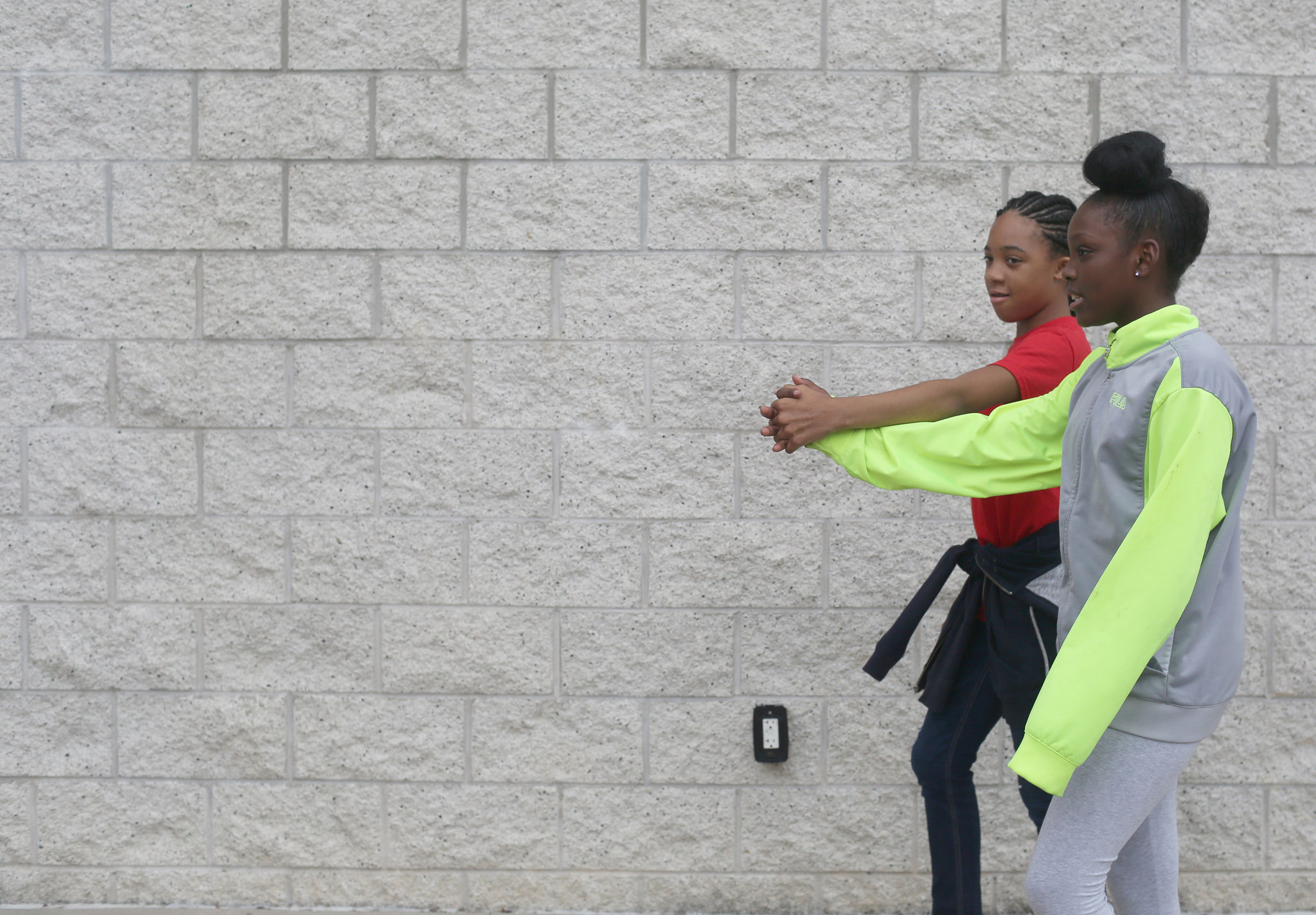
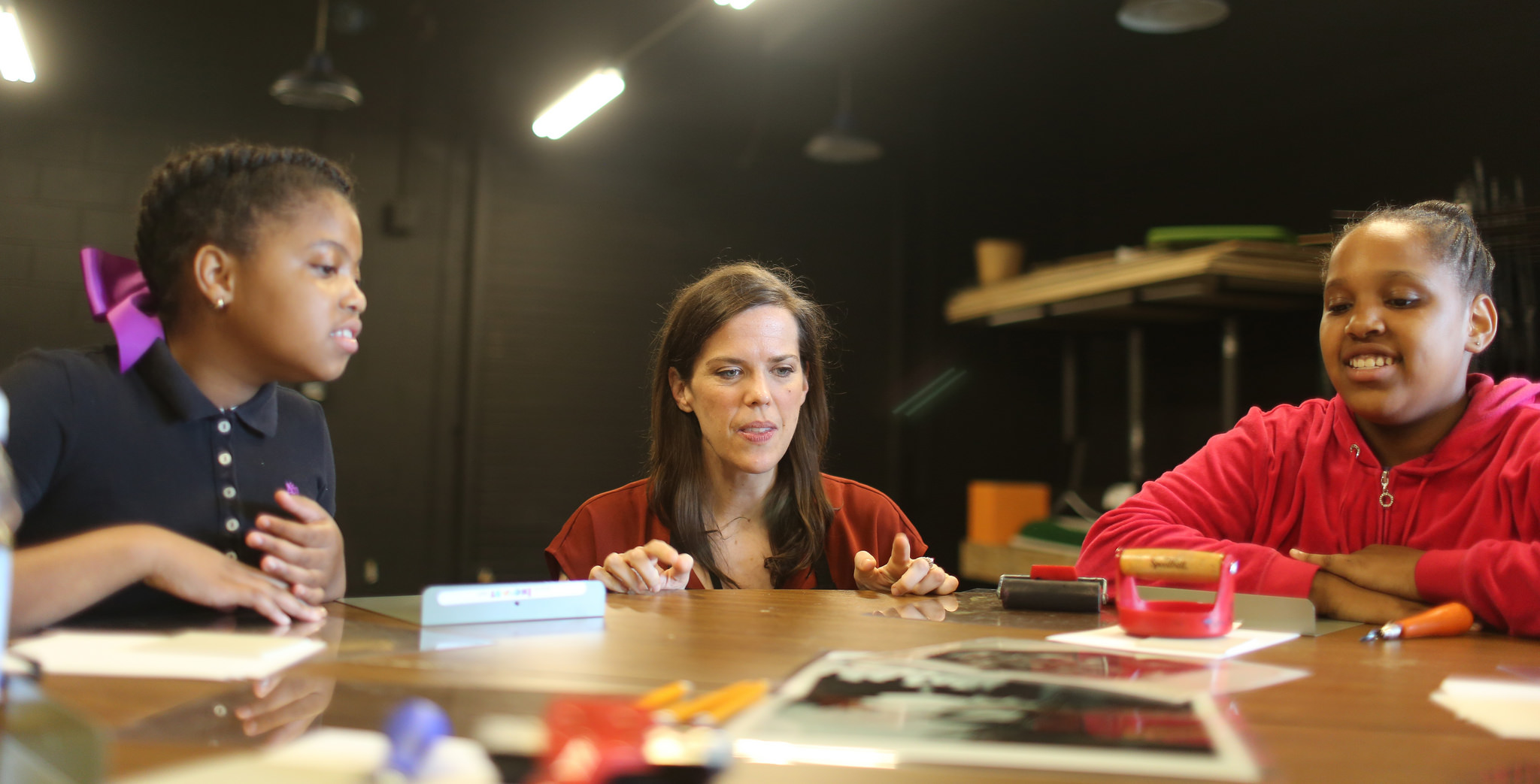
For the past several years, the DMA has collaborated with the South Dallas Cultural Center during Summer at the Center, a multi-week summer camp where students learn about African history through the arts. The teens at the center visited the DMA twice this summer. Together, we traced the Middle Passage and the Atlantic Slave Trade through art in Visions of America: Three Centuries of Prints from the National Gallery of Art, unpacking responses to this period of cruelty and injustice with artists like Kara Walker, Charles White, and Elizabeth Catlett. We also explored our Arts of Africa collection, where we investigated cultures that had a visible impact on American culture.

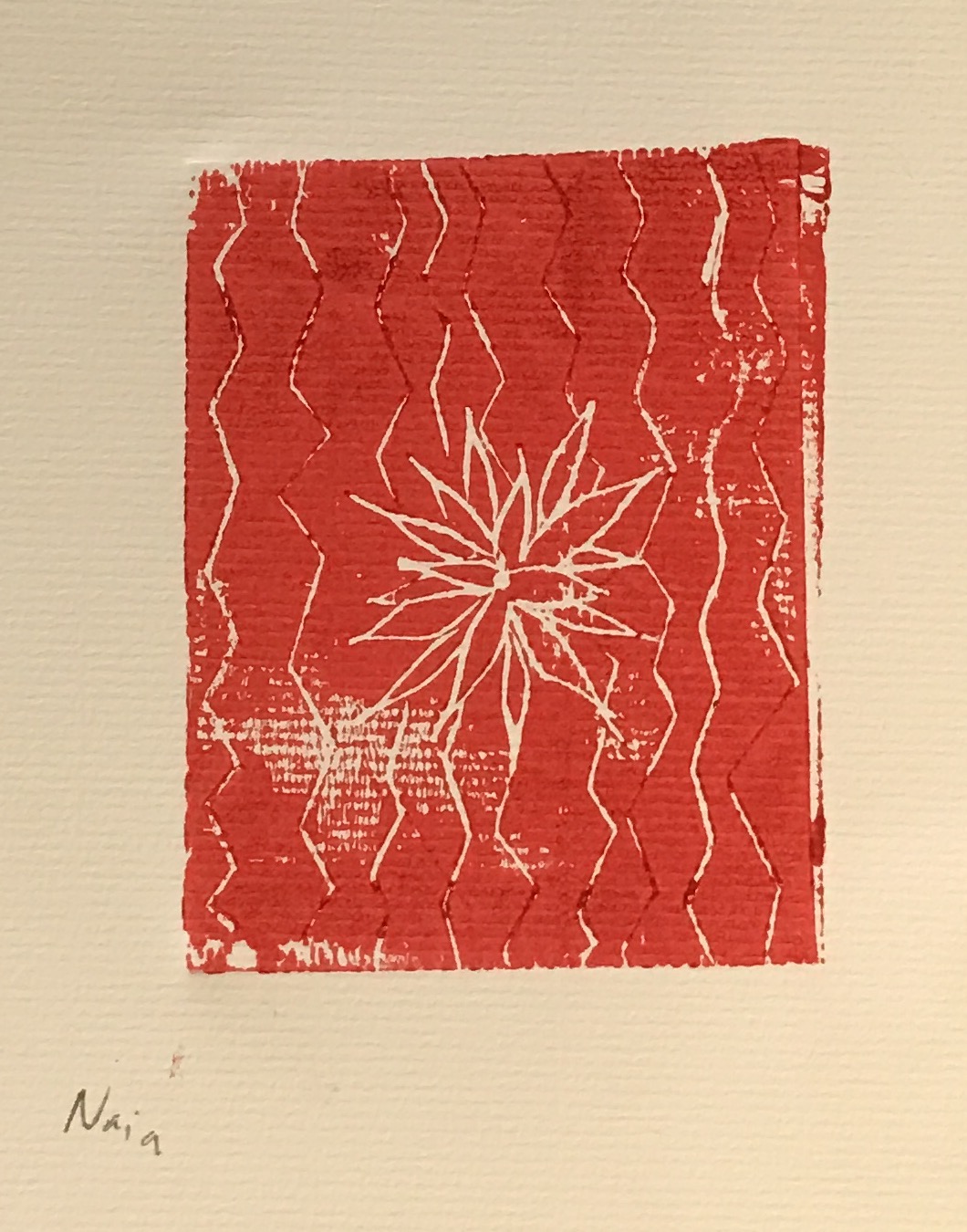
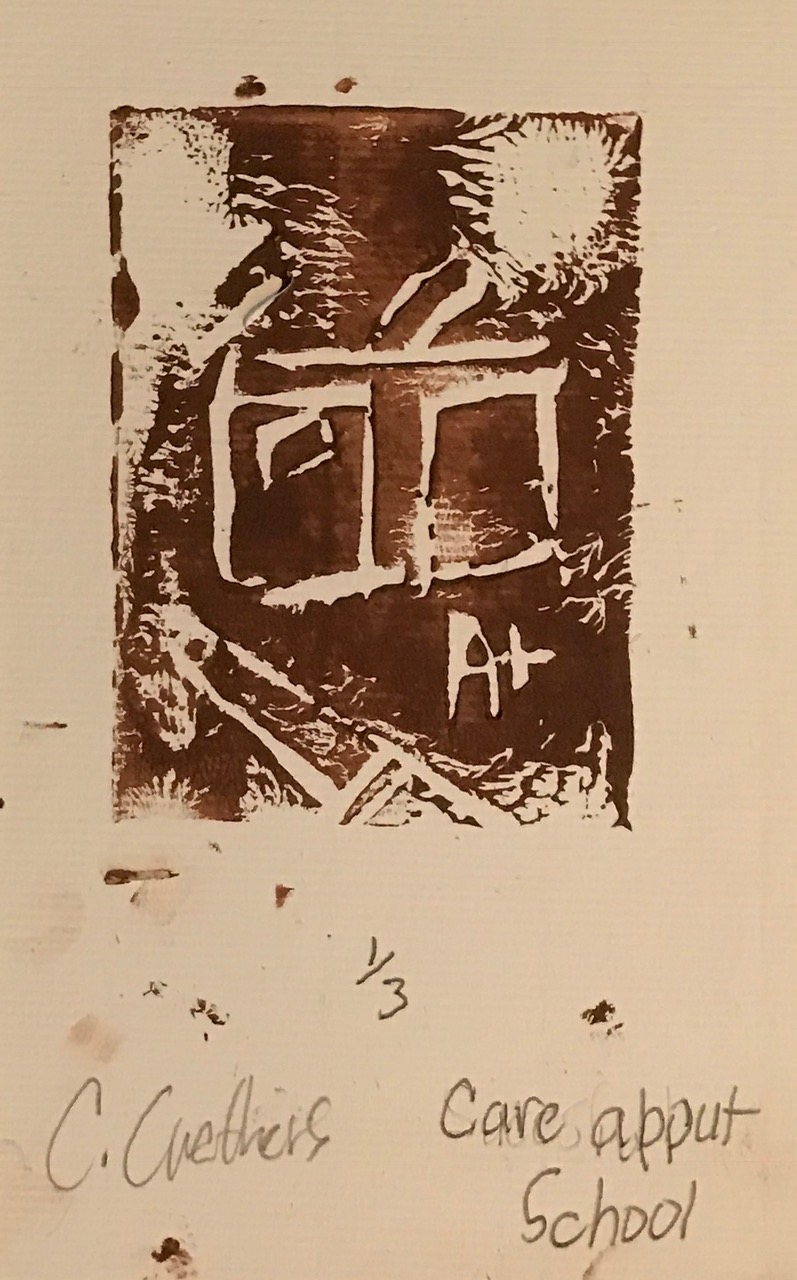
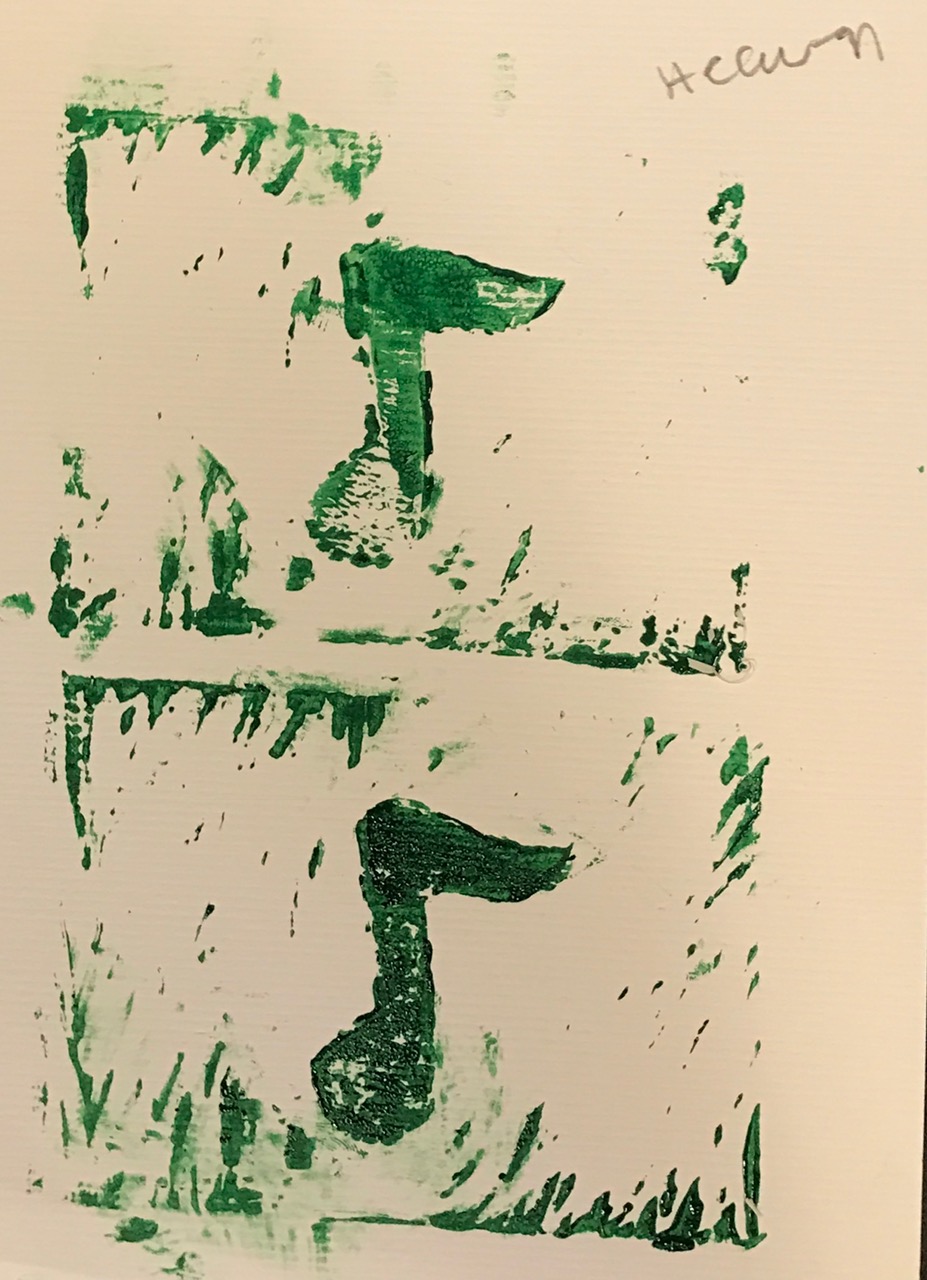
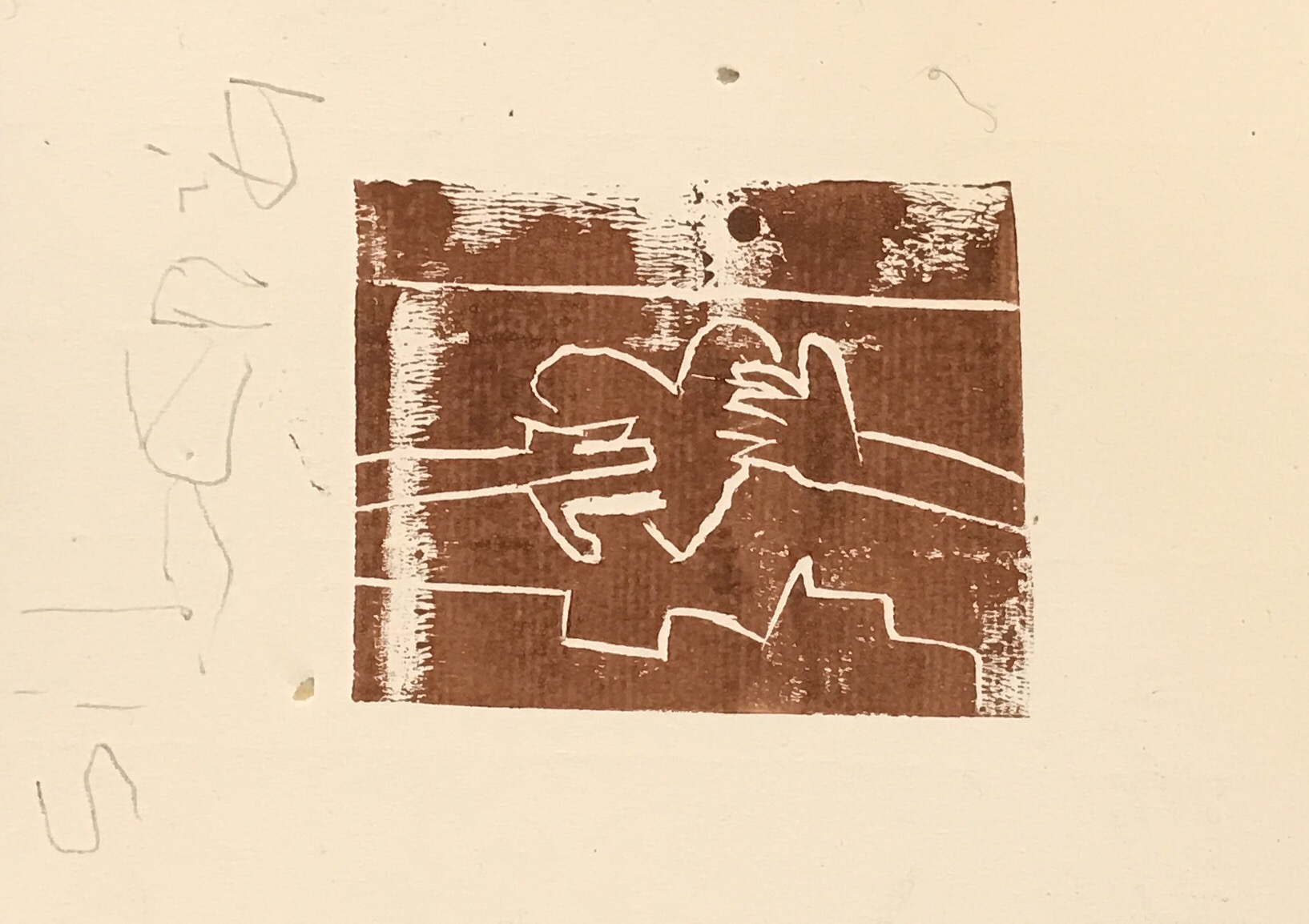
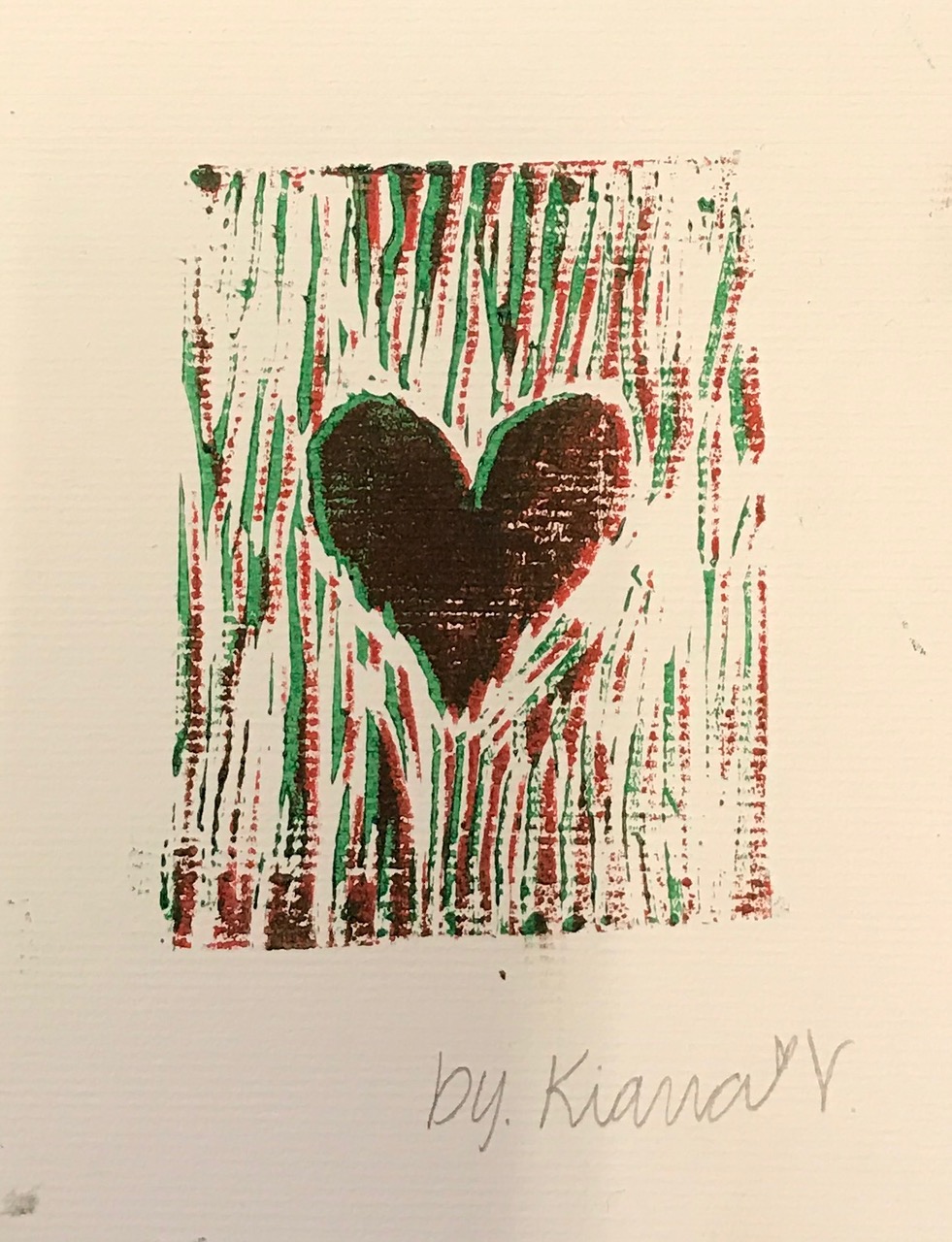
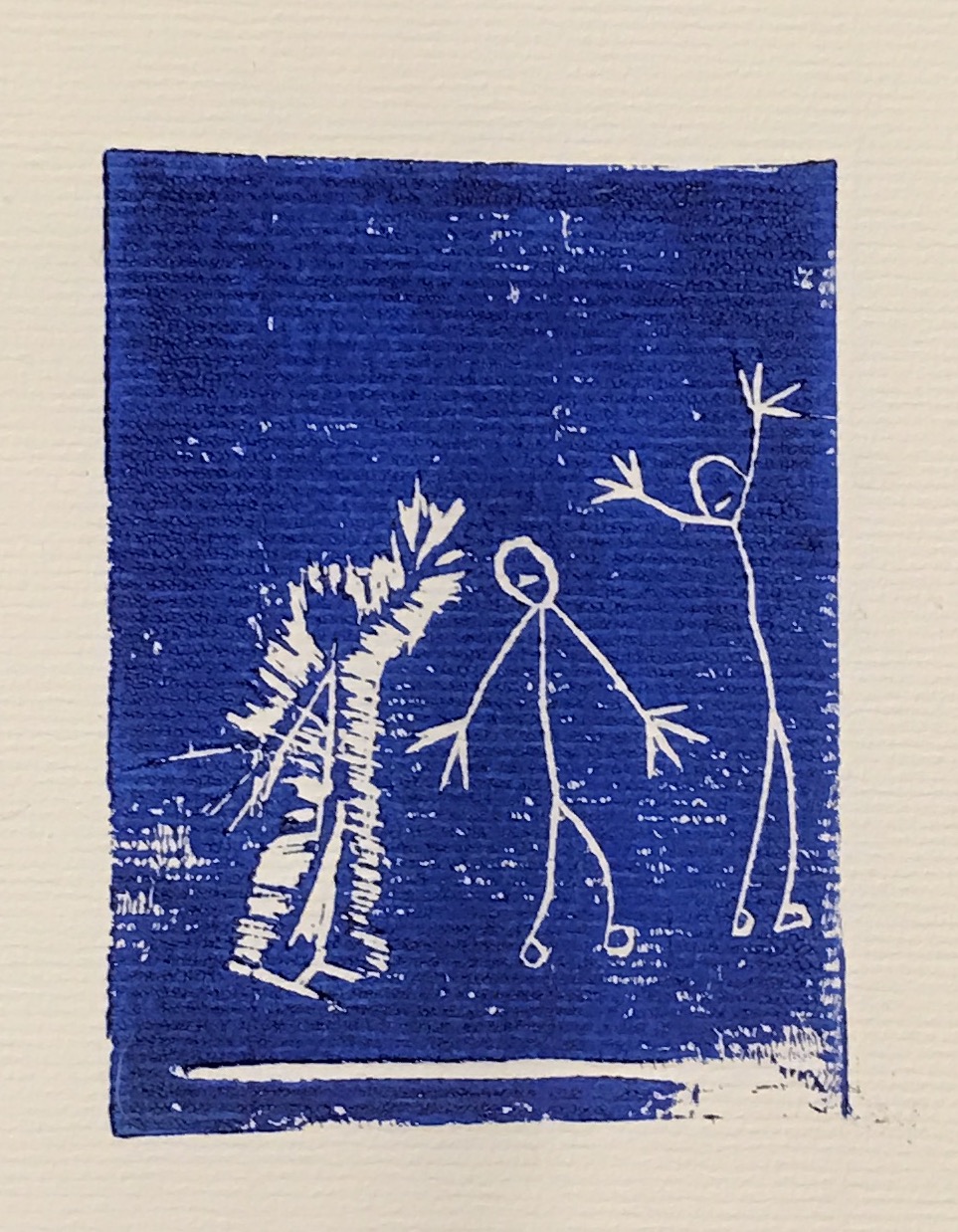
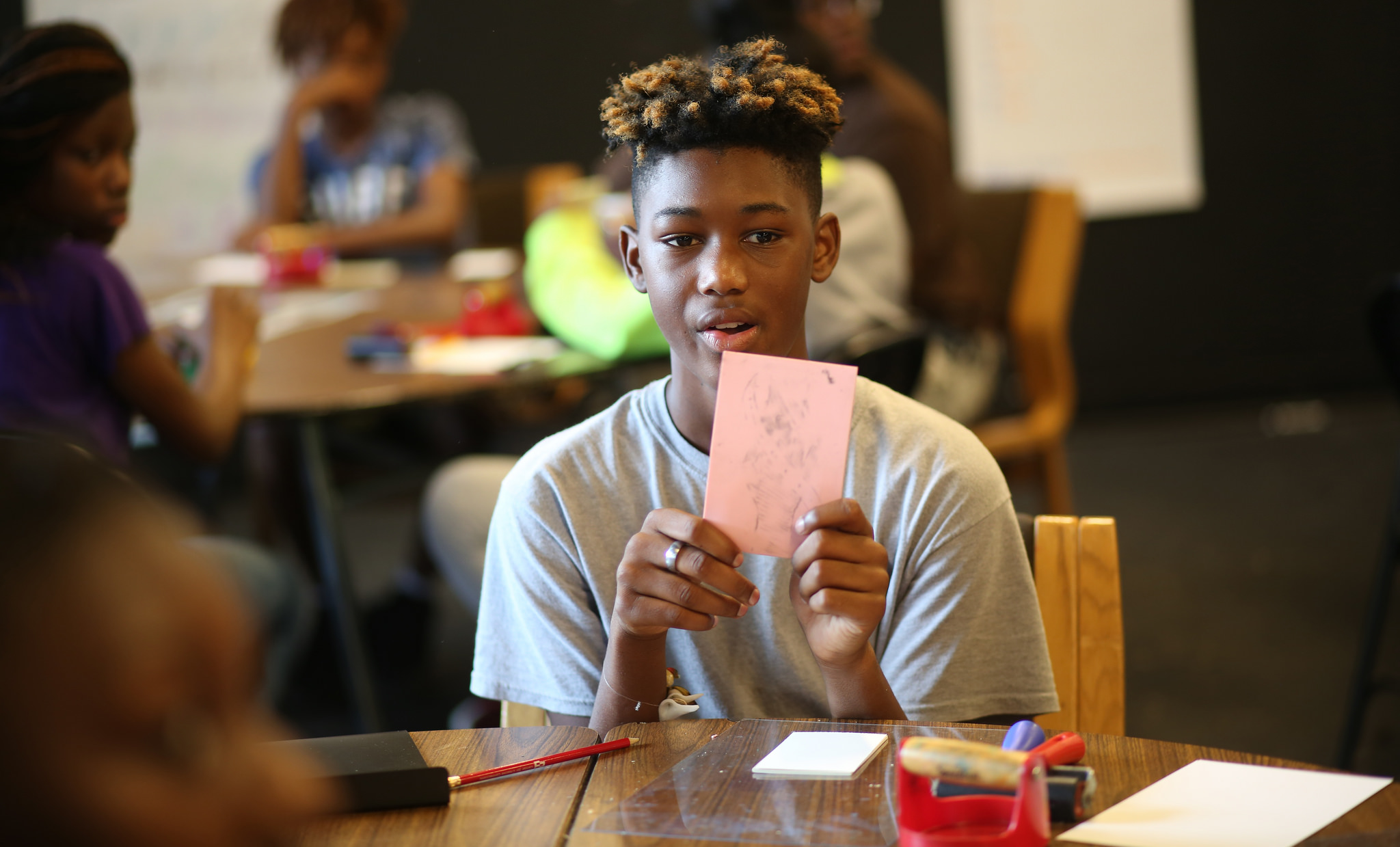
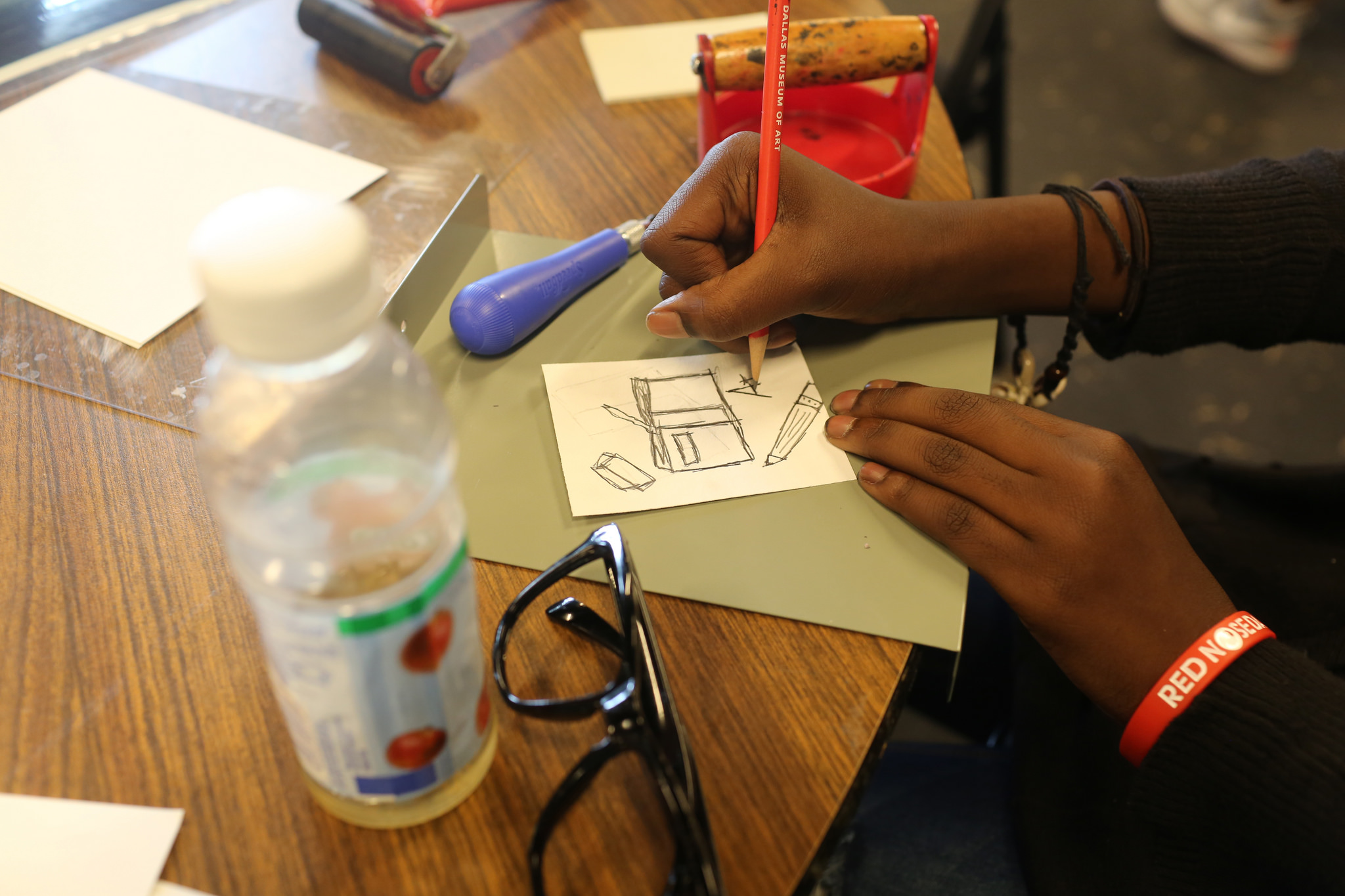
Because artists, and print-makers especially, use their work to spread ideas and messages through their art, we made prints about things that are important to us that we would like to share with the world. Here are a few highlights from the prints we made today, representing everything from music to community!

Our summer partnership with the South Dallas Cultural Center is one of the highlights of our year. As an educator, it’s amazing to work with a group of students that are so knowledgeable about history – especially parts of the world that I’m still learning new things about. I think they end up teaching me a lot more than I teach them!

See all of you next summer!

Jessica Thompson
Manager of Teen Programs

Prints Charming

With the opening of Visions of America: Three Centuries of Prints from the National Gallery of Art, we’re completely and utterly in love with a new Prints Charming—the art of printmaking! Printmaking is an artform that is easily accessible to even the youngest children. All you need is paper, some kind of ink or paint, and a surface that “holds onto” your print.

Here are some of our favorite ideas you can try at home!

Monoprinting

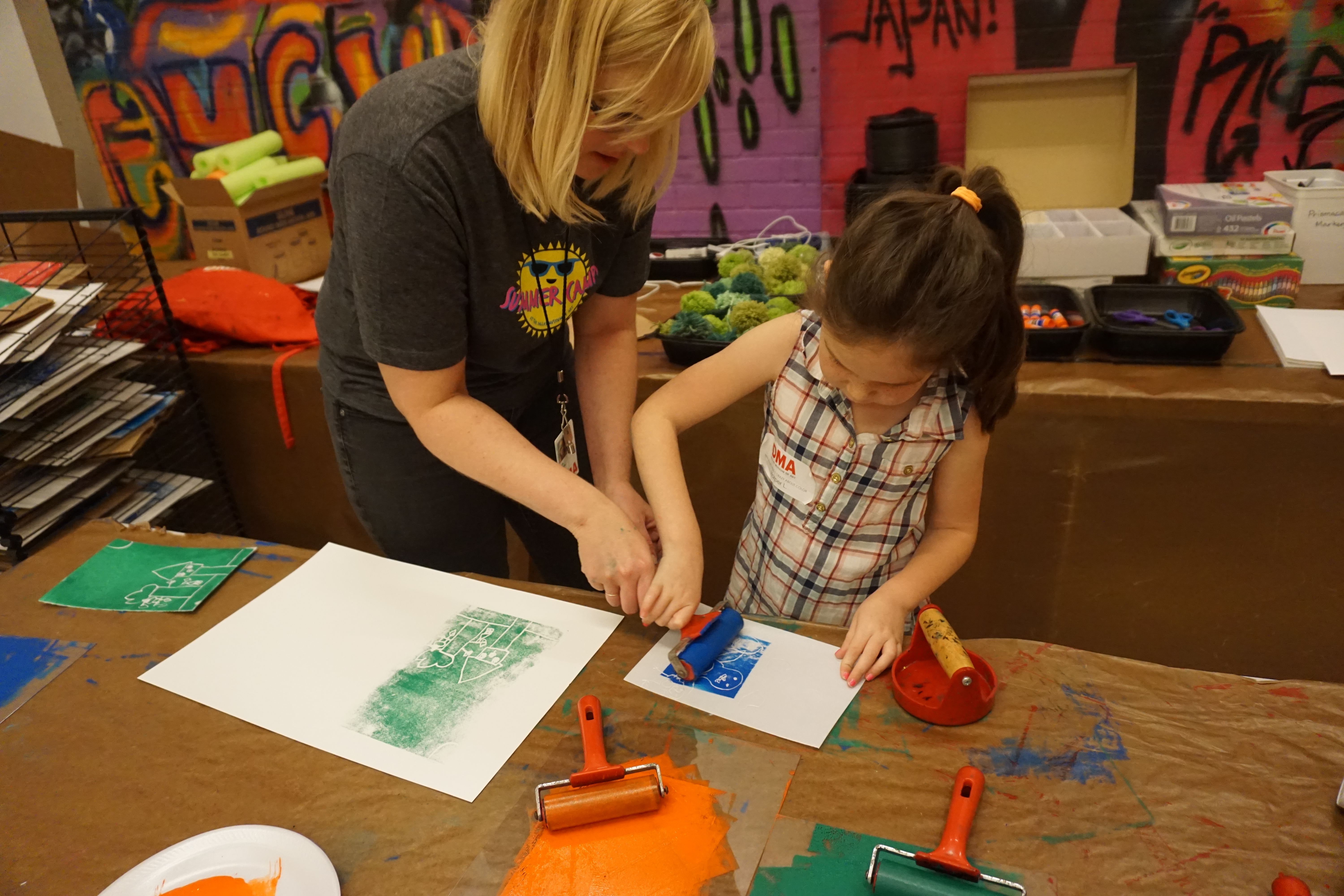
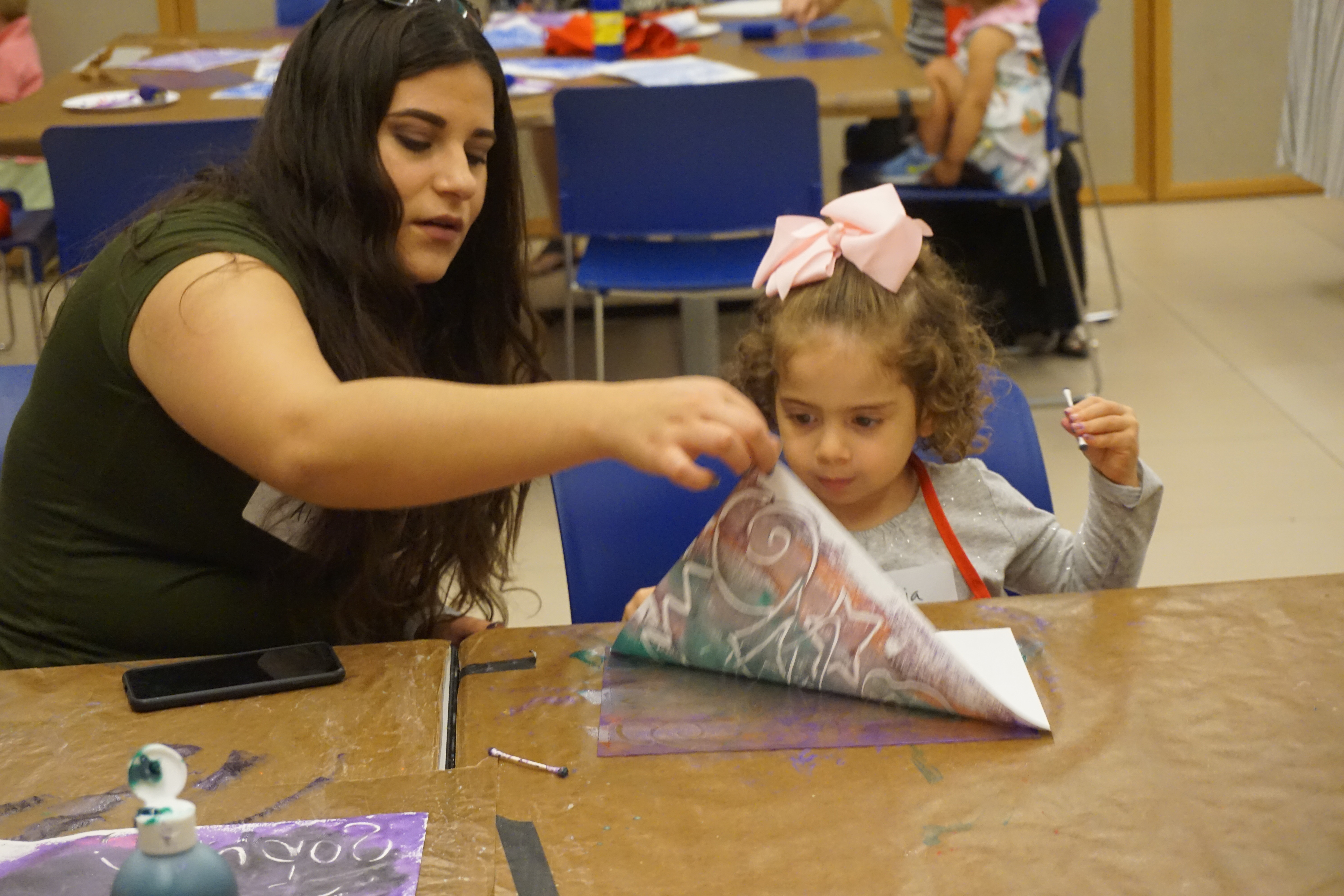
We tried monoprinting with the Toddler Art class, and the kids loved the “magic” that appeared before their eyes as their prints were lifted off the inked surface. All you need at home is a cookie sheet or even a piece of waxed paper taped to the table. Completely cover the cookie sheet or waxed paper with a layer of paint, and then have your child “draw” a design in the paint using a Q-tip. Gently press a piece of paper on top of the painted drawing, and watch the image transfer from the cookie sheet to the paper. Then do it all again!

Styrofoam Printing

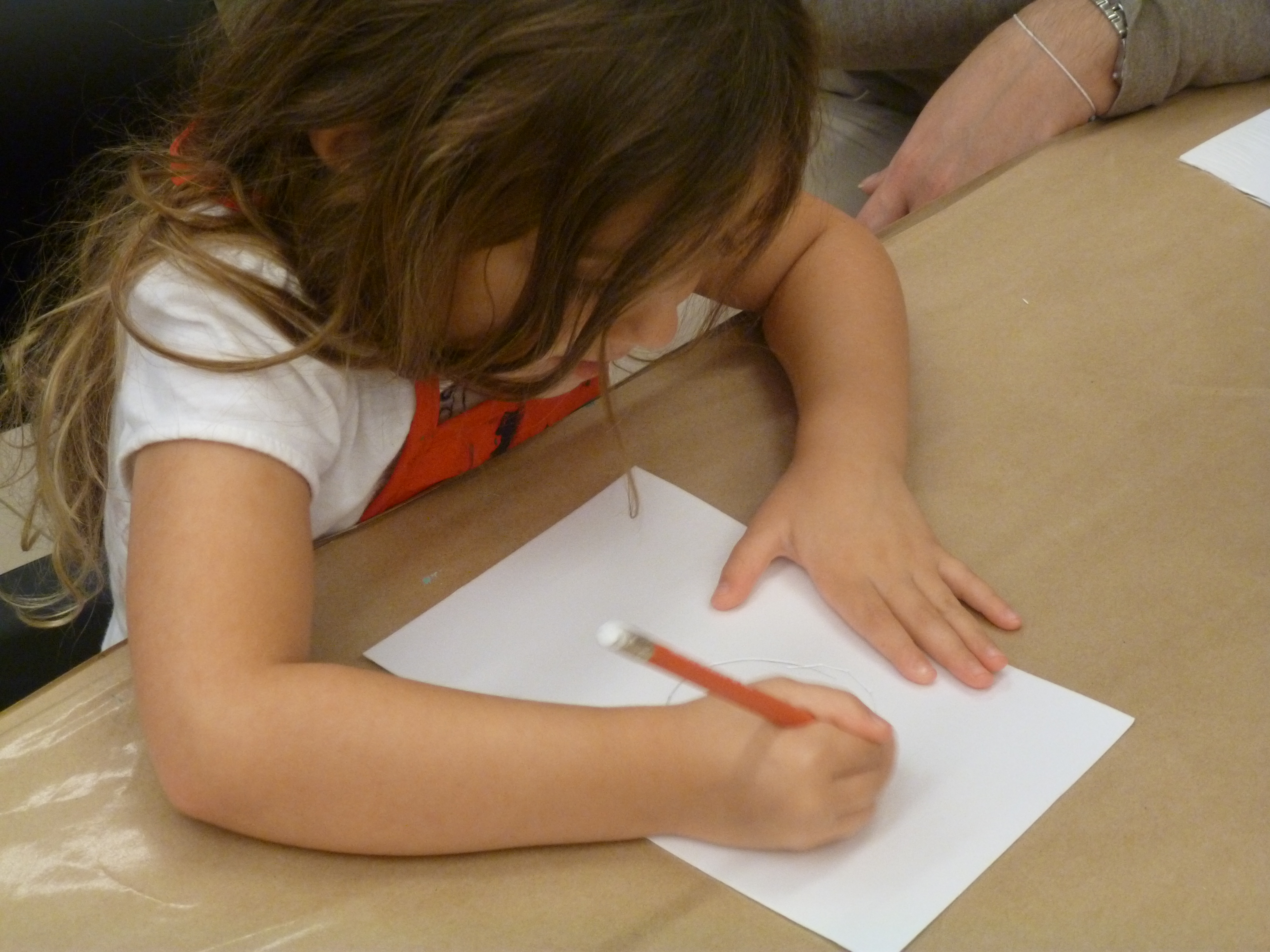
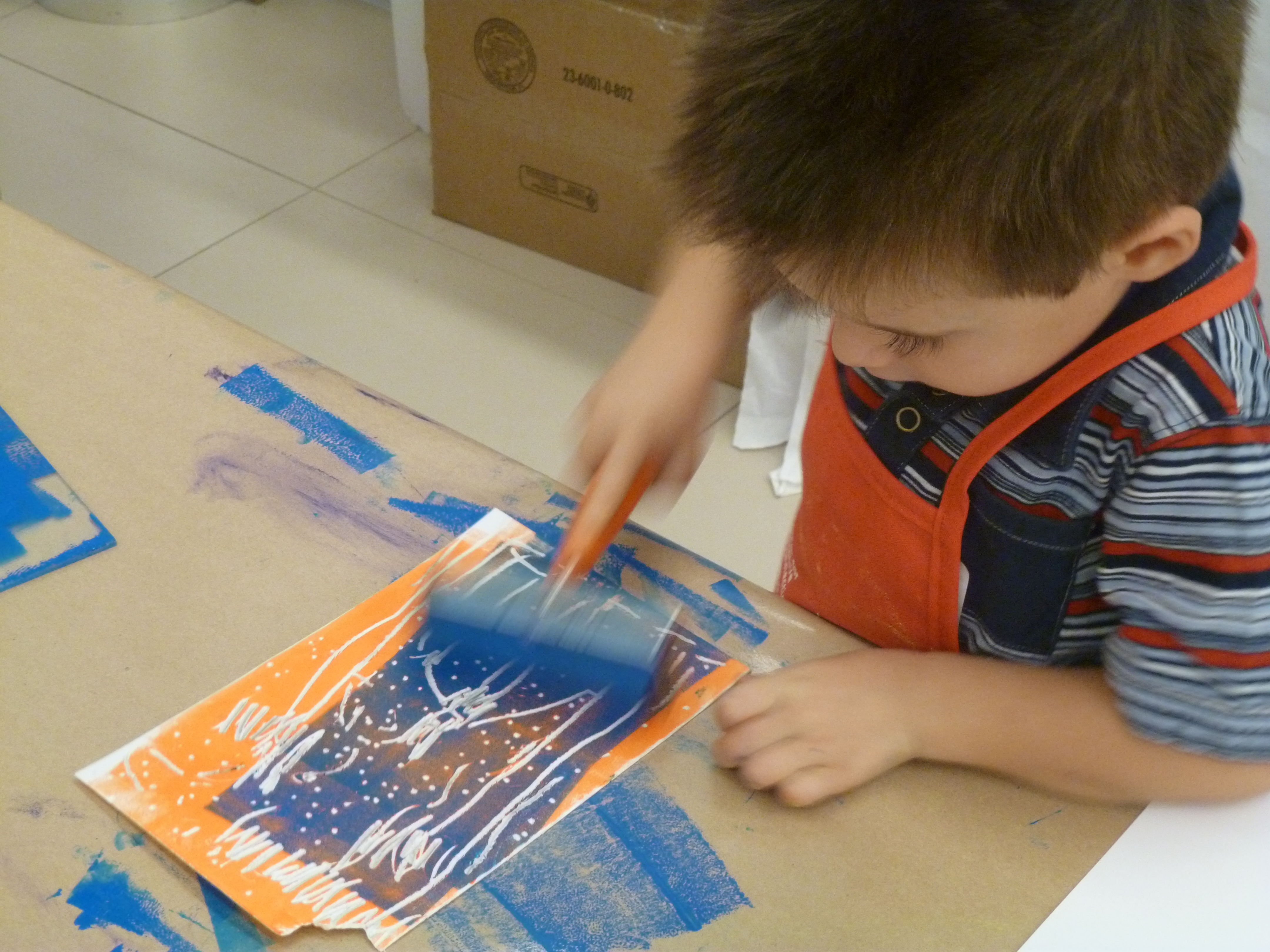
Styrofoam printing allows you to make multiple prints from a single image. For this process, any Styrofoam will do–a plate (with the ribbed edge trimmed off to create a flat surface), a recycled foam tray from a grocery purchase, or a sheet of foam purchased at a craft store. Children can draw their image into the foam using a dull pencil. Special Note: if they add any letters, numbers, or symbols into their drawings, they’ll need to write them backwards, as their image will be reversed when printed. Once the drawing is complete, cover the entire surface of the foam with ink or paint, then press the inked surface onto a piece of paper. For an extra challenge, older children can try to print layered images by drawing and printing in one color, then drawing additional details on a second sheet of foam, covering the sheet in a different color, and then printing onto the original piece of paper.
veggie printmaking

Fruit & Veggie Printing

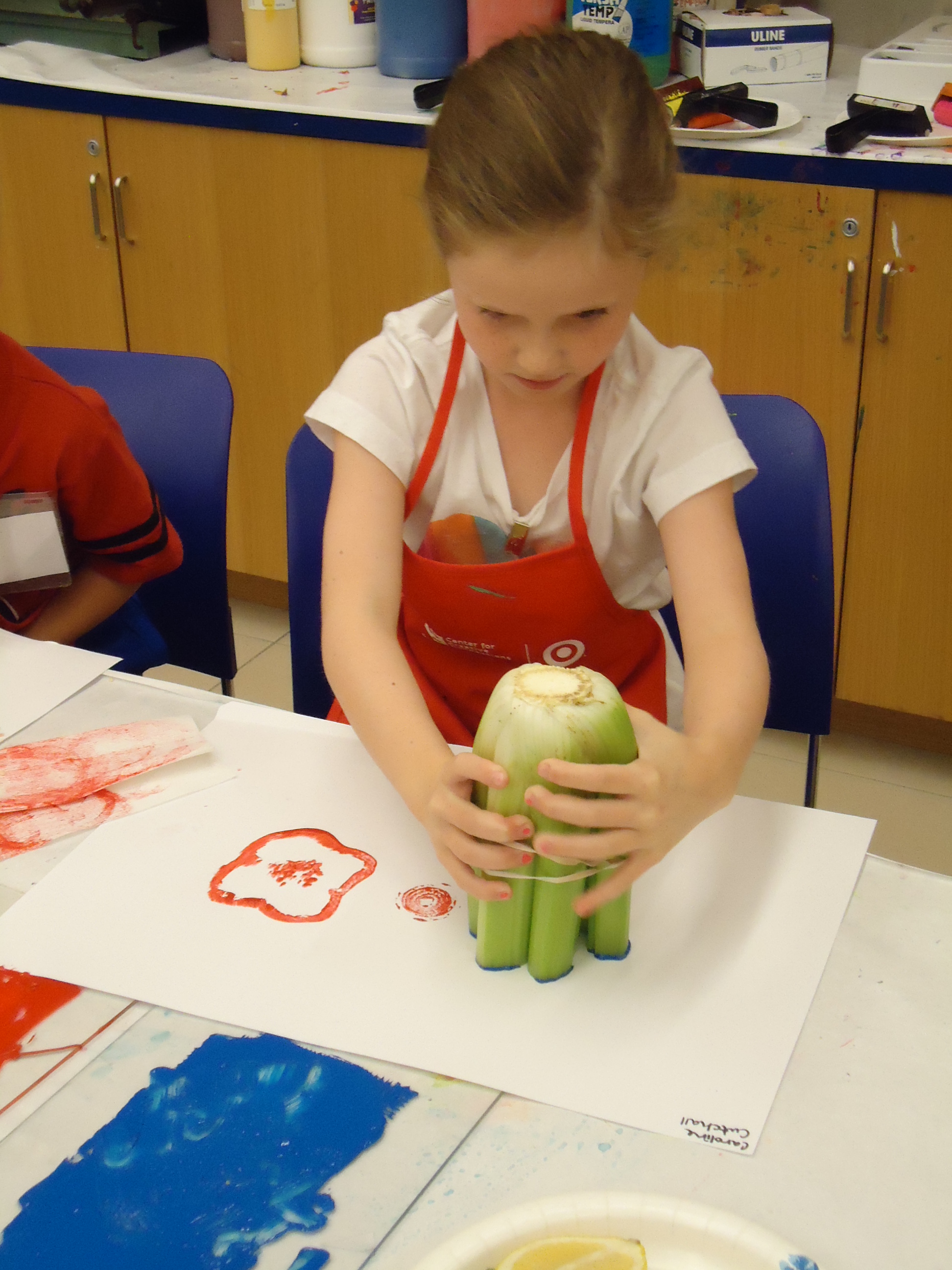
This is one of my most favorite printmaking projects to do with kids! Many children have probably done the classic stamping-with-an-apple project. But have you tried printing with celery, okra, or onions? Fruits and veggies have beautiful hidden patterns that make for really fun (and smelly!) printmaking. For this one, cut up fruits and veggies and have your child dip them into paint and then stamp onto paper. I experimented with cutting several of the produce–particularly apples, oranges, onions and bell peppers–both lengthwise and widthwise so that we could create different patterns with each.

For even more fun printmaking ideas, check out these posts on some of my favorite blogs:

Happy creating!

Leah Hanson
Manager of Family and Early Learning Programs
 

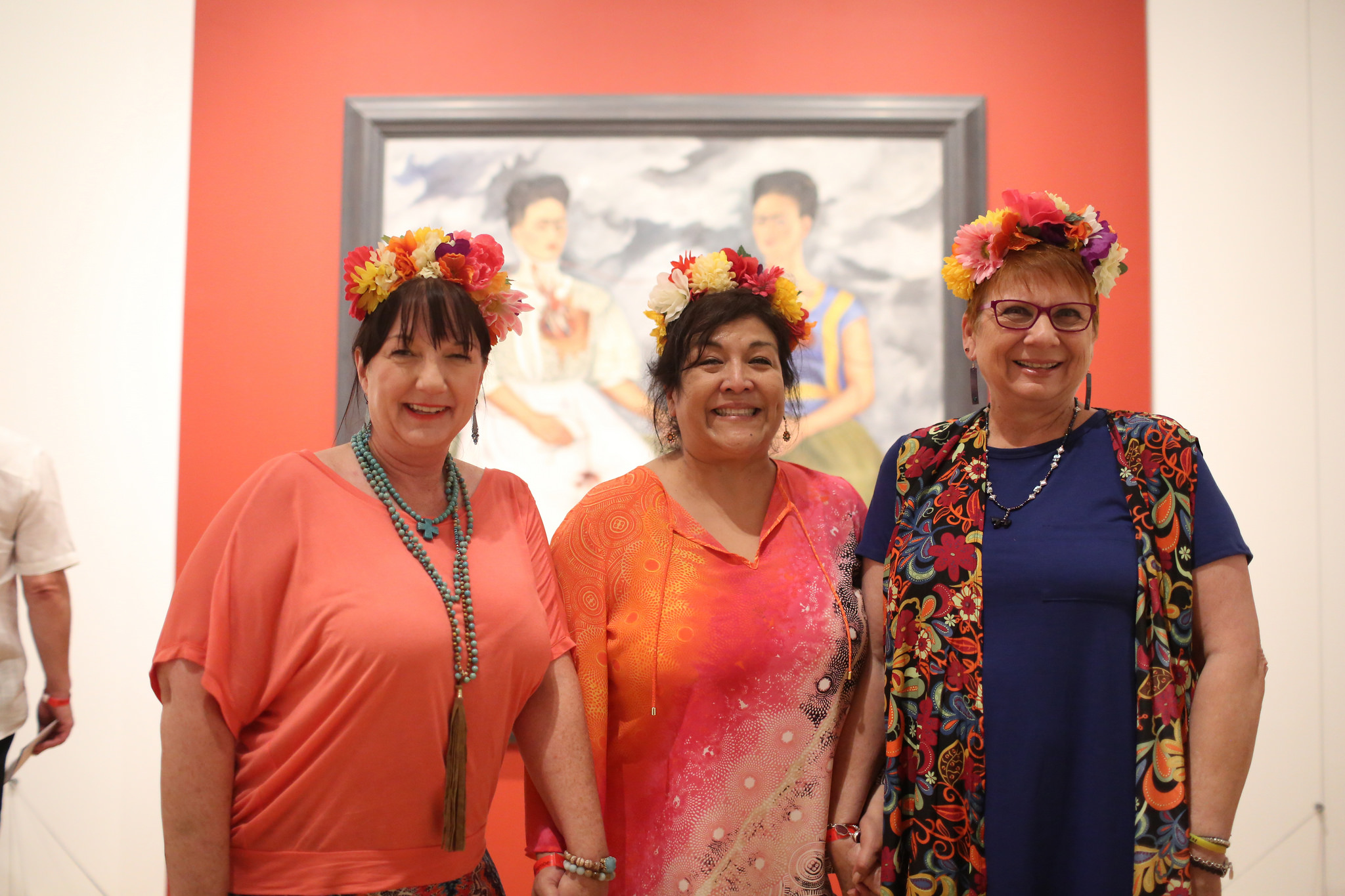
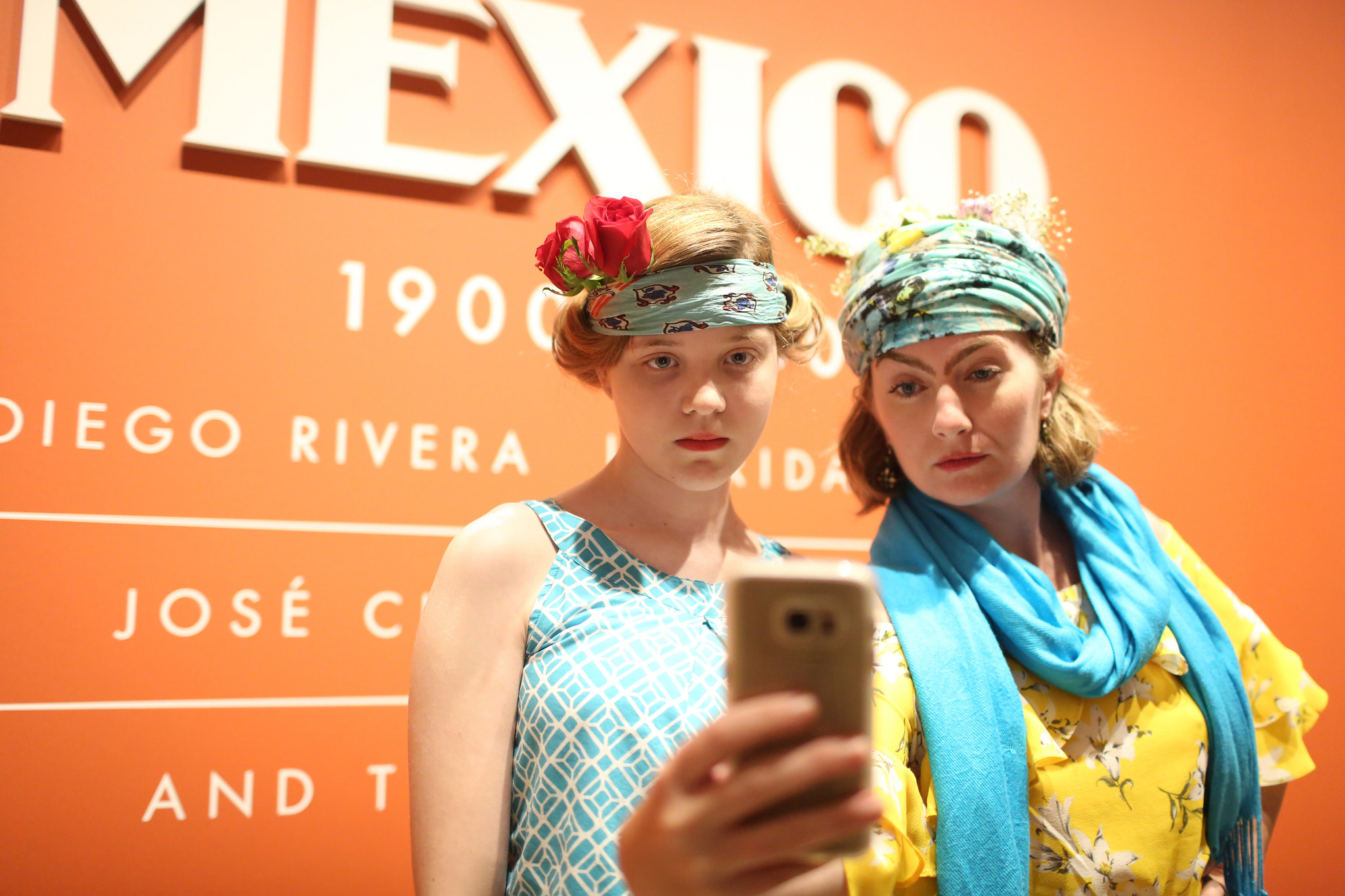
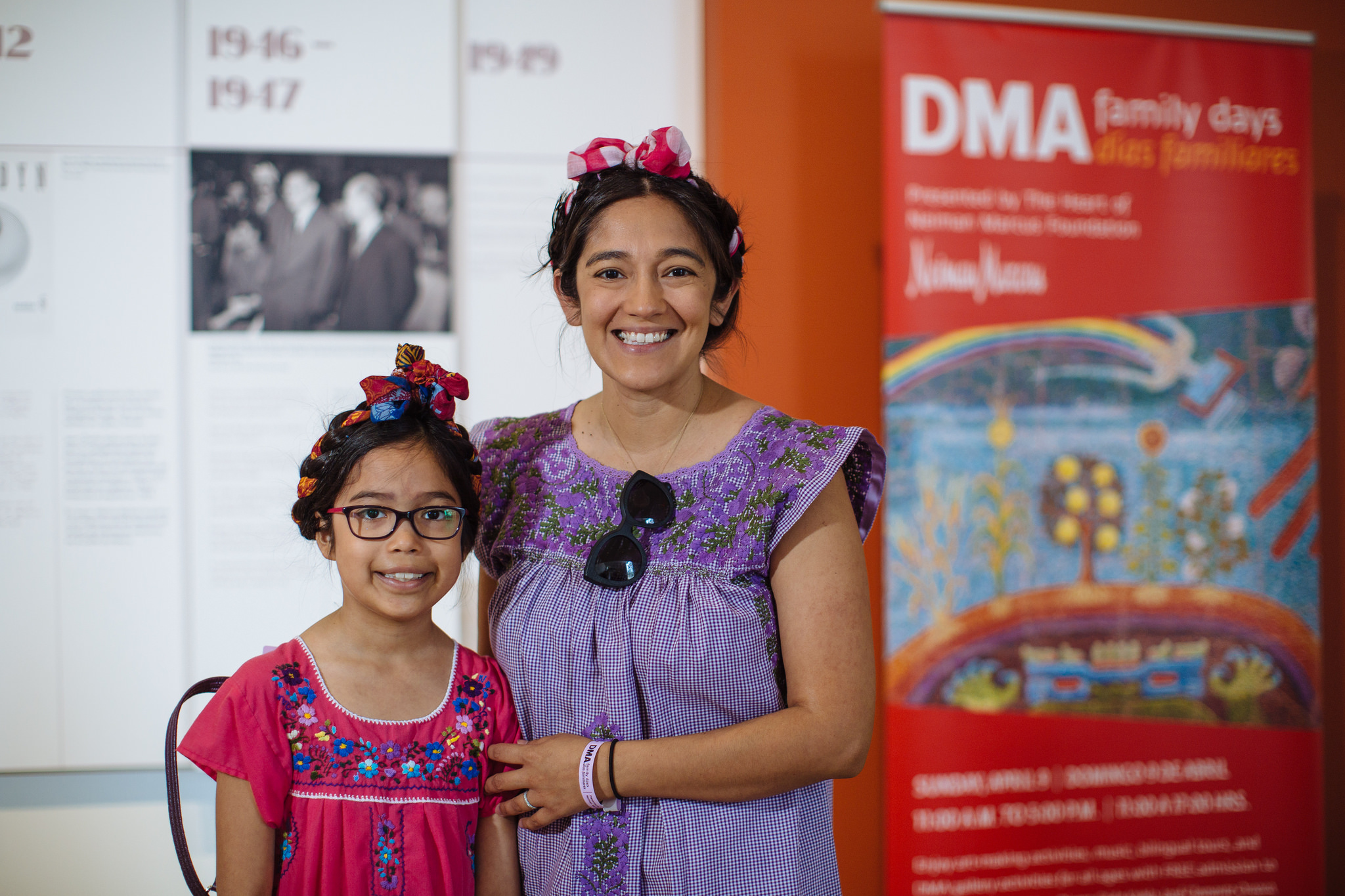
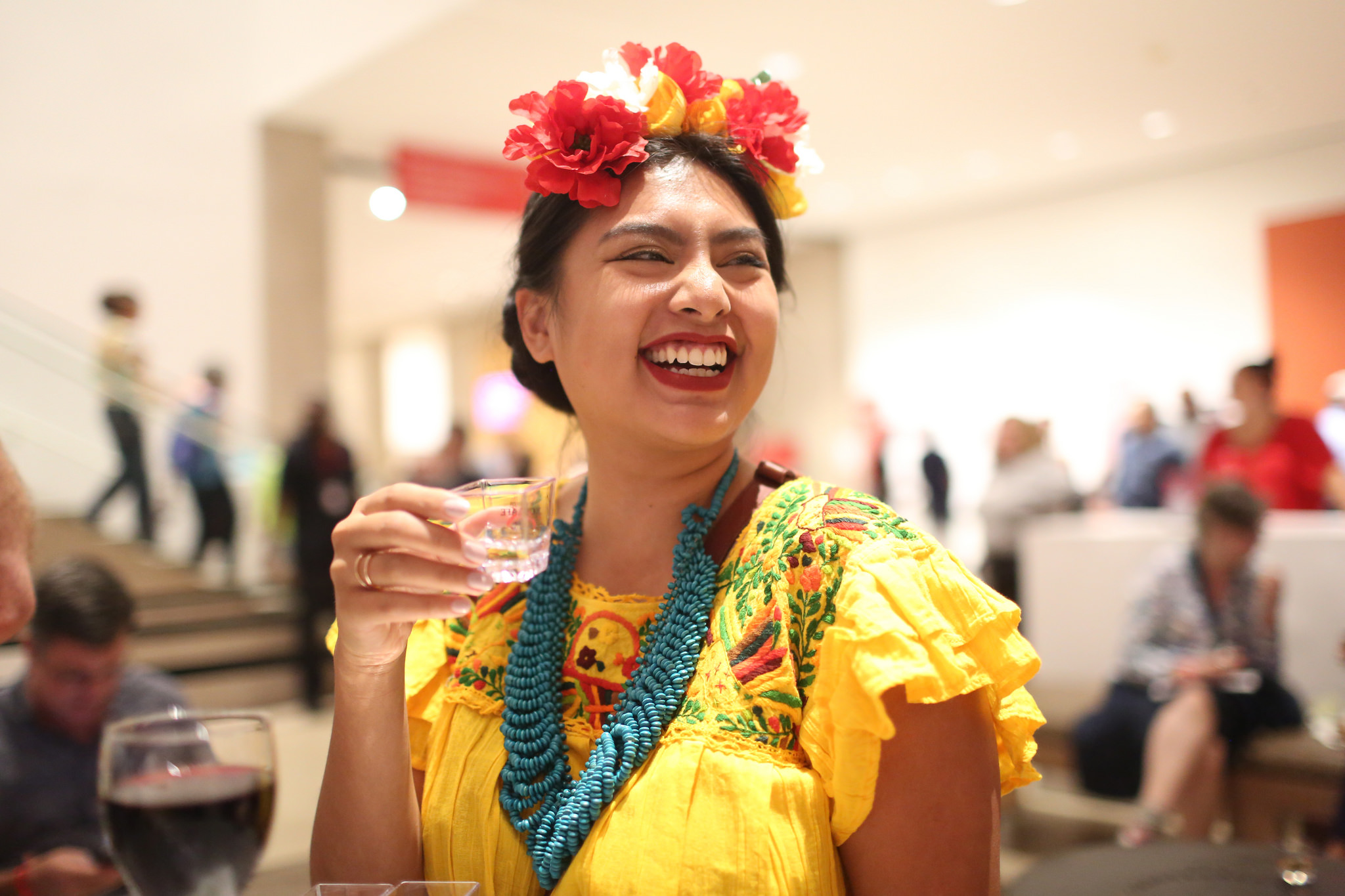
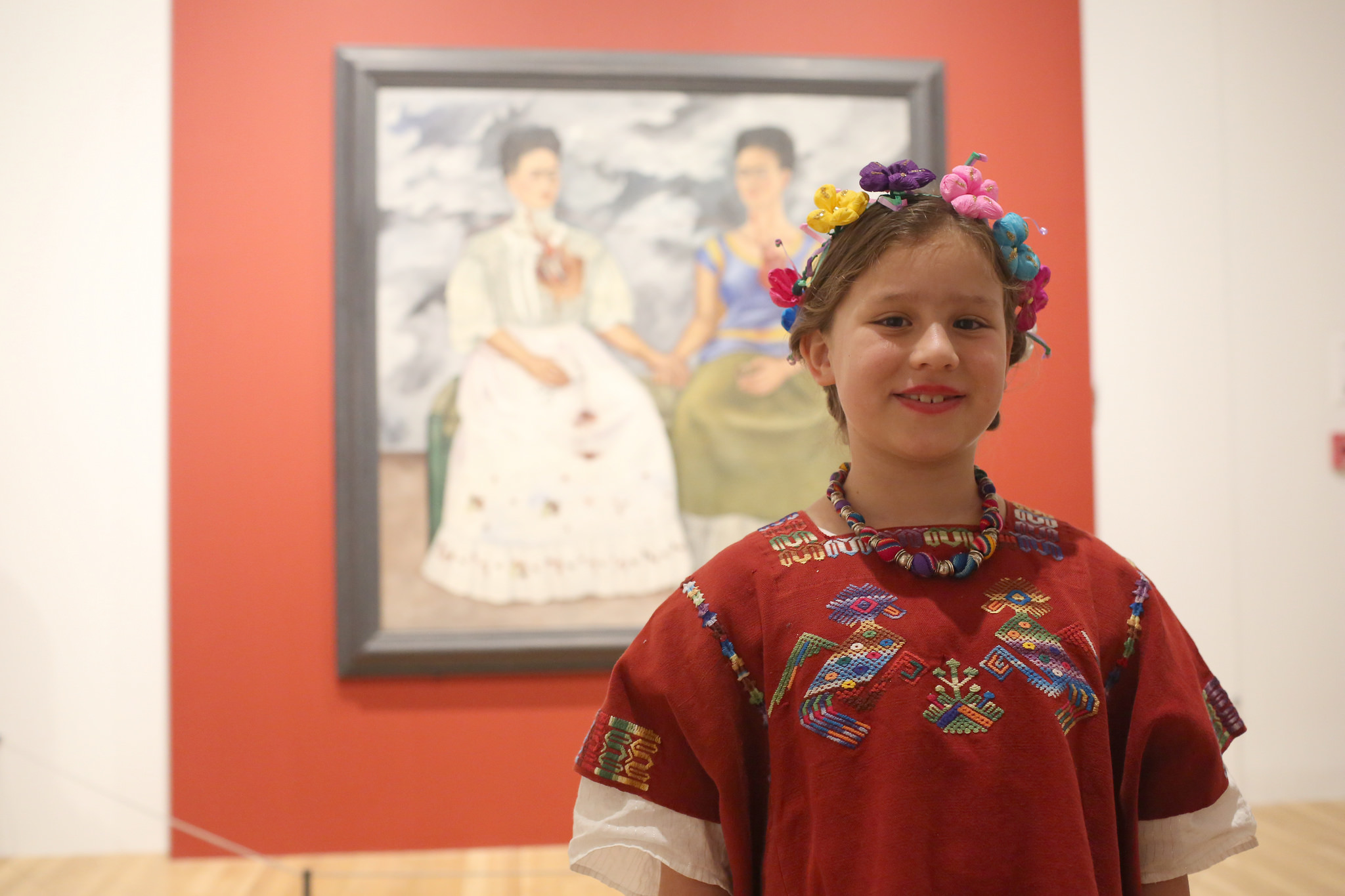
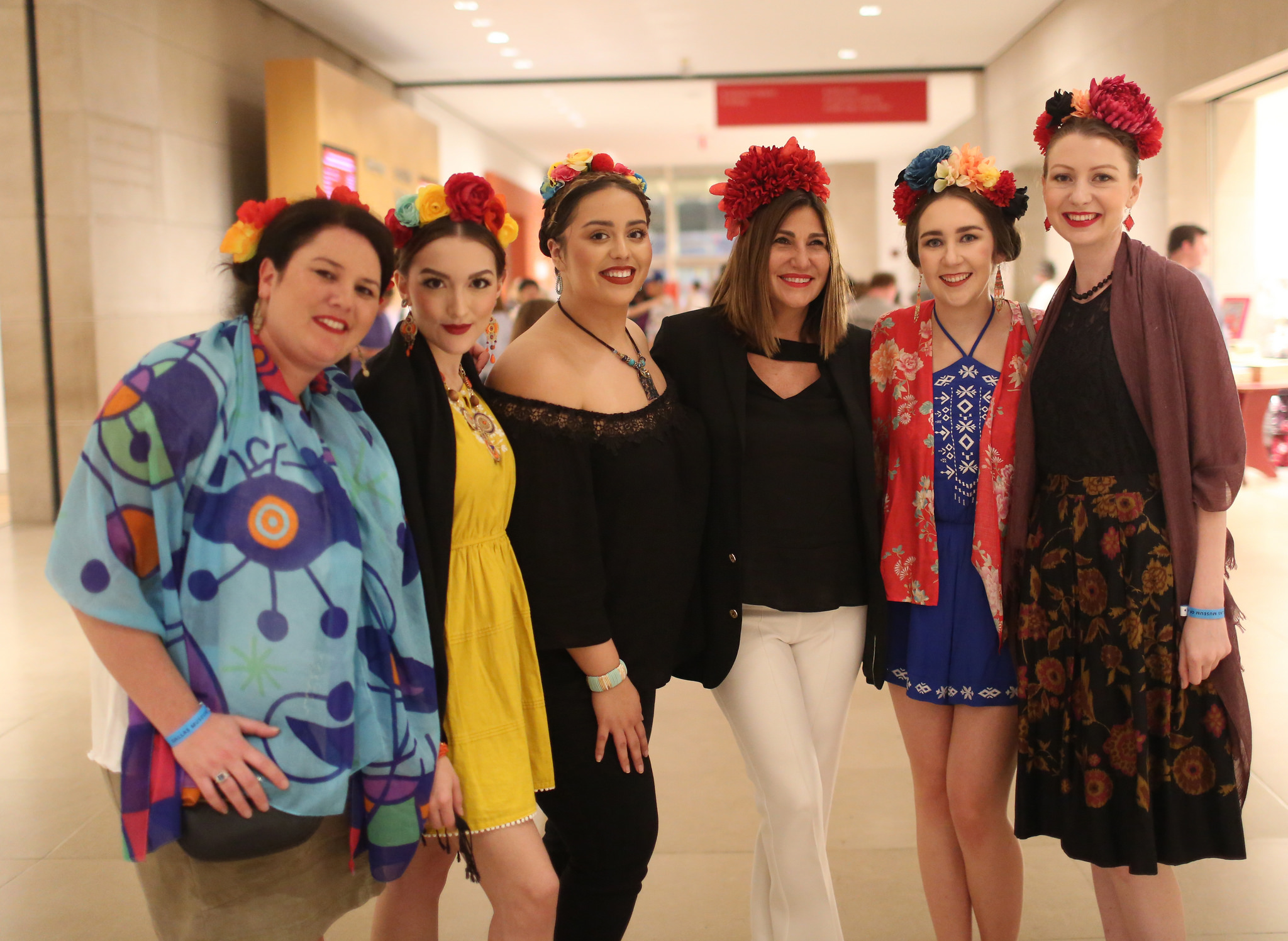
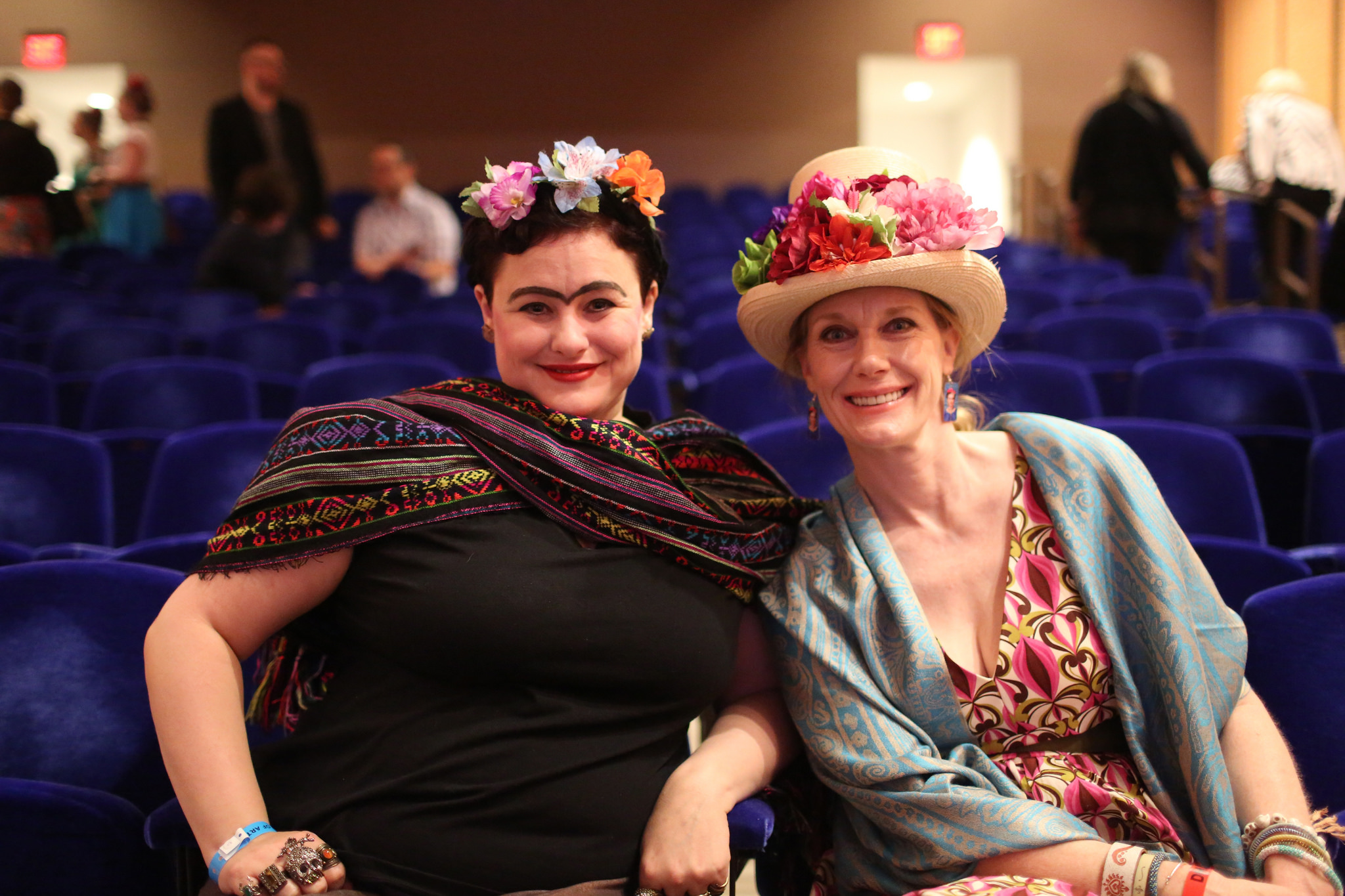
Friday Photos: Viva Frida!

Throughout the run of the México 1900-1950: Diego Rivera, Frida Kahlo, José Clemente Orozco, and the Avant-Garde, we’ve seen lots of visitors take inspiration from one of the most famous female artists of the 20th century. We’re hosting two exciting upcoming events where you can continue to celebrate the fabulous Frida Kahlo!

Do you want to learn more about Frida? Hayden Herrera, her biographer, will be speaking at the DMA Wednesday, June 28.

Do you want to be Frida? Celebrate her 110th birthday with us!

We hope to see you soon–unibrows and flowers optional!

Madeleine Fitzgerald
Audience Relations Coordinator

Volunteering is smART!

Center for Creative Connections volunteer

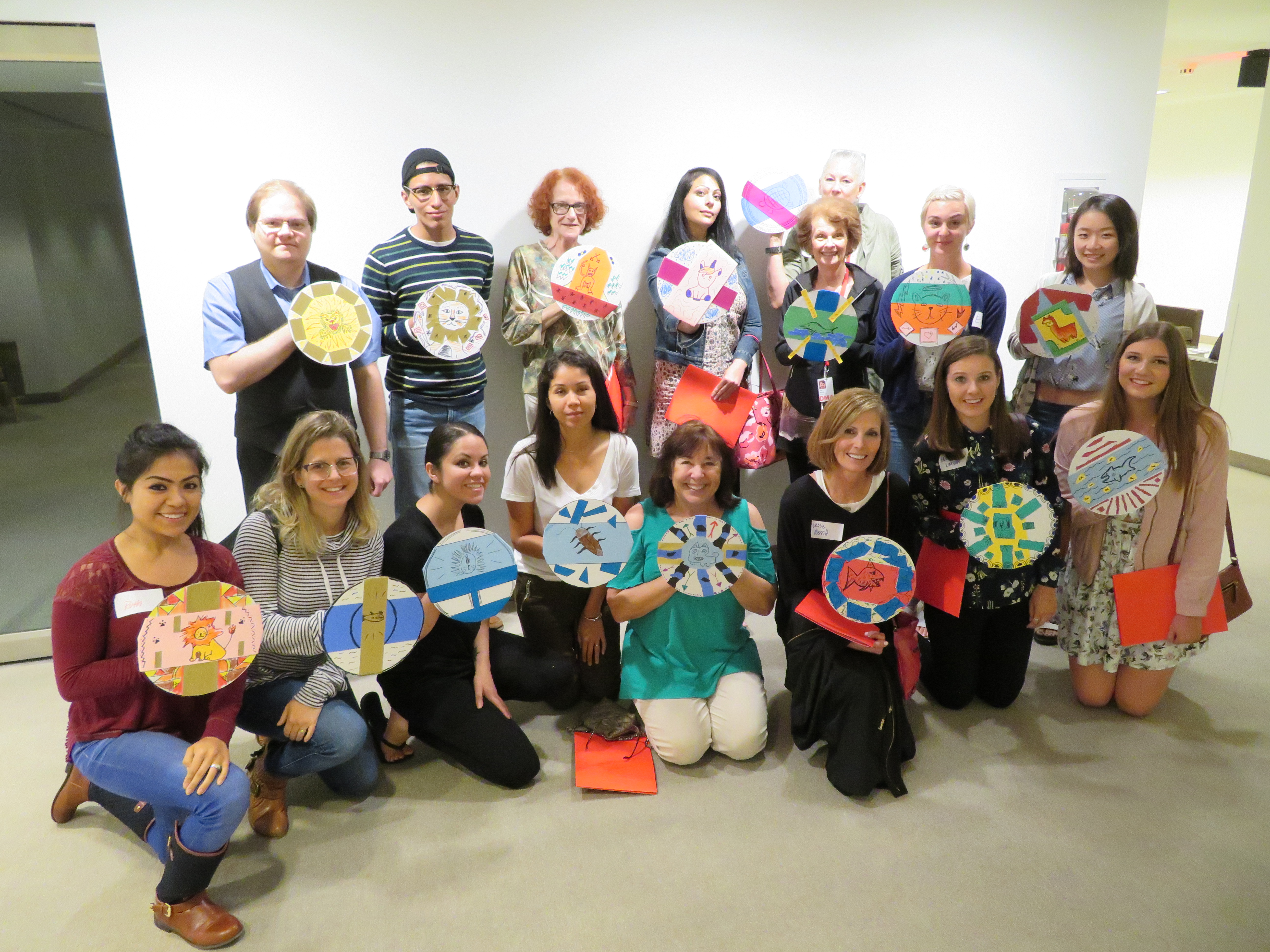
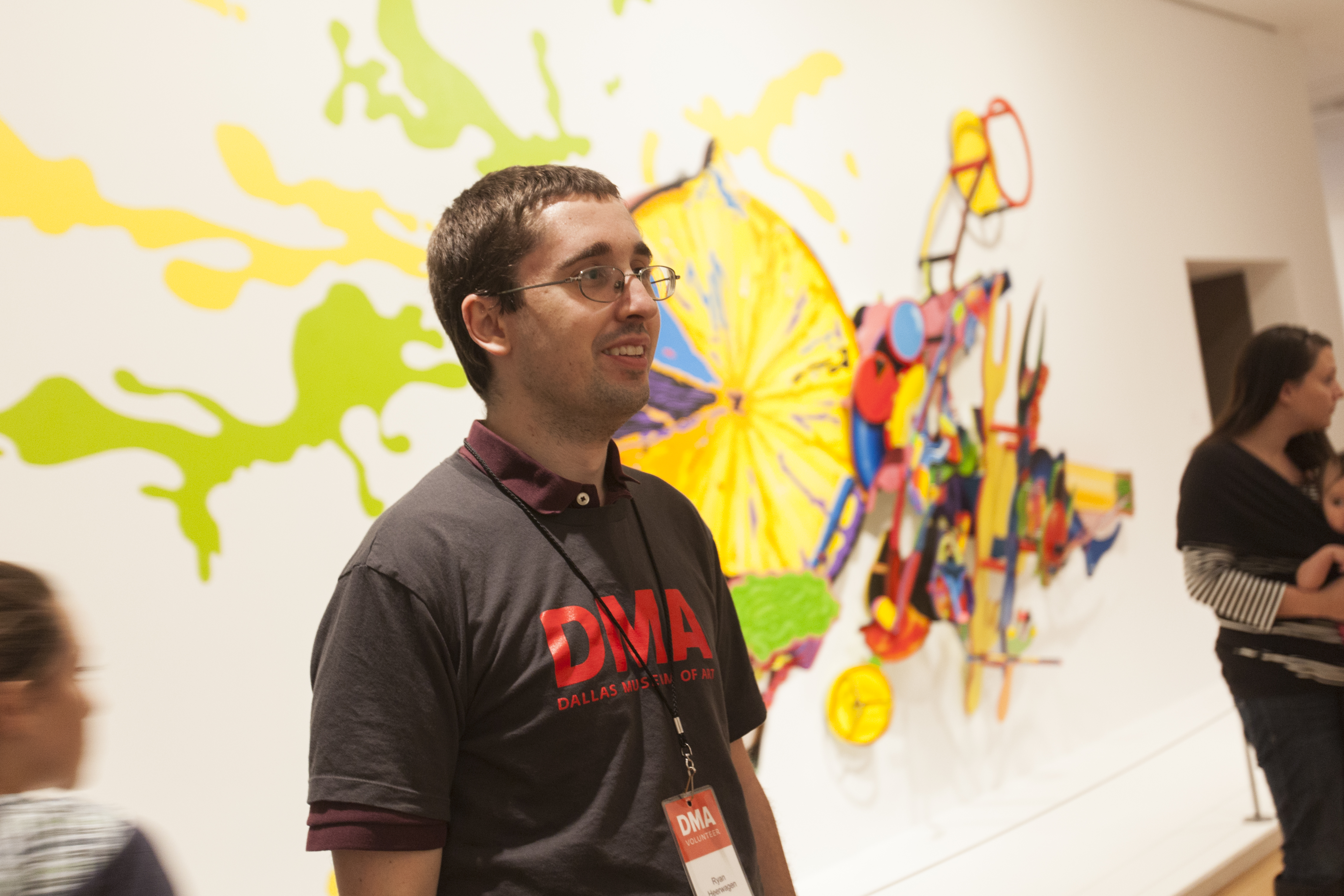
The DMA is fortunate to have a committed group of volunteers who are dedicated to ensuring our educational programs succeed. If you want to get more involved at the DMA, We are currently recruiting new volunteers for the Center for Creative Connections, Go van Gogh school outreach program, and the Arts & Letters Live speaker series. A formal background in art or art education is not required, we simply seek individuals who are passionate about serving the Dallas community! There is a volunteer opportunity for all interests, so read on for details about each opening.

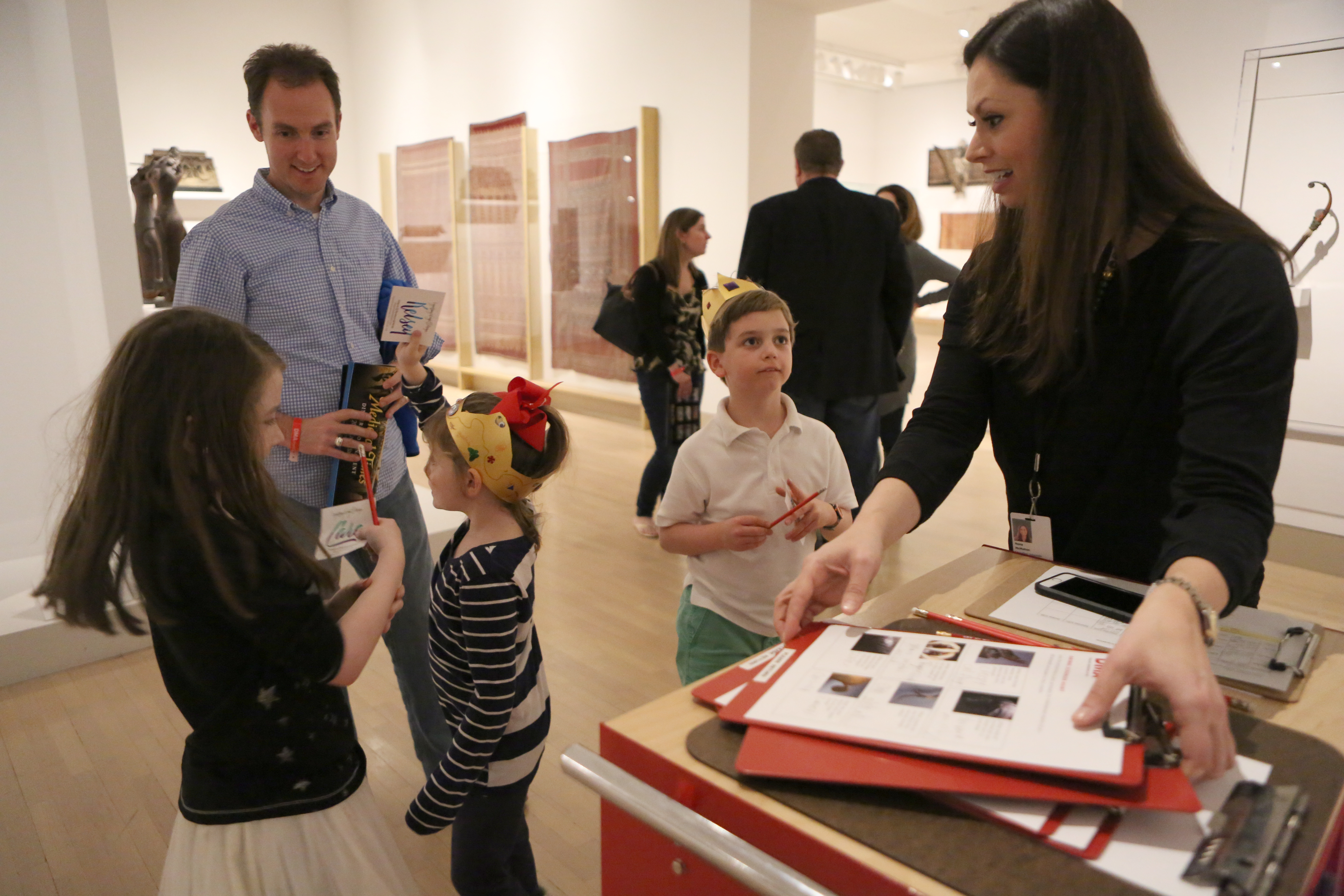
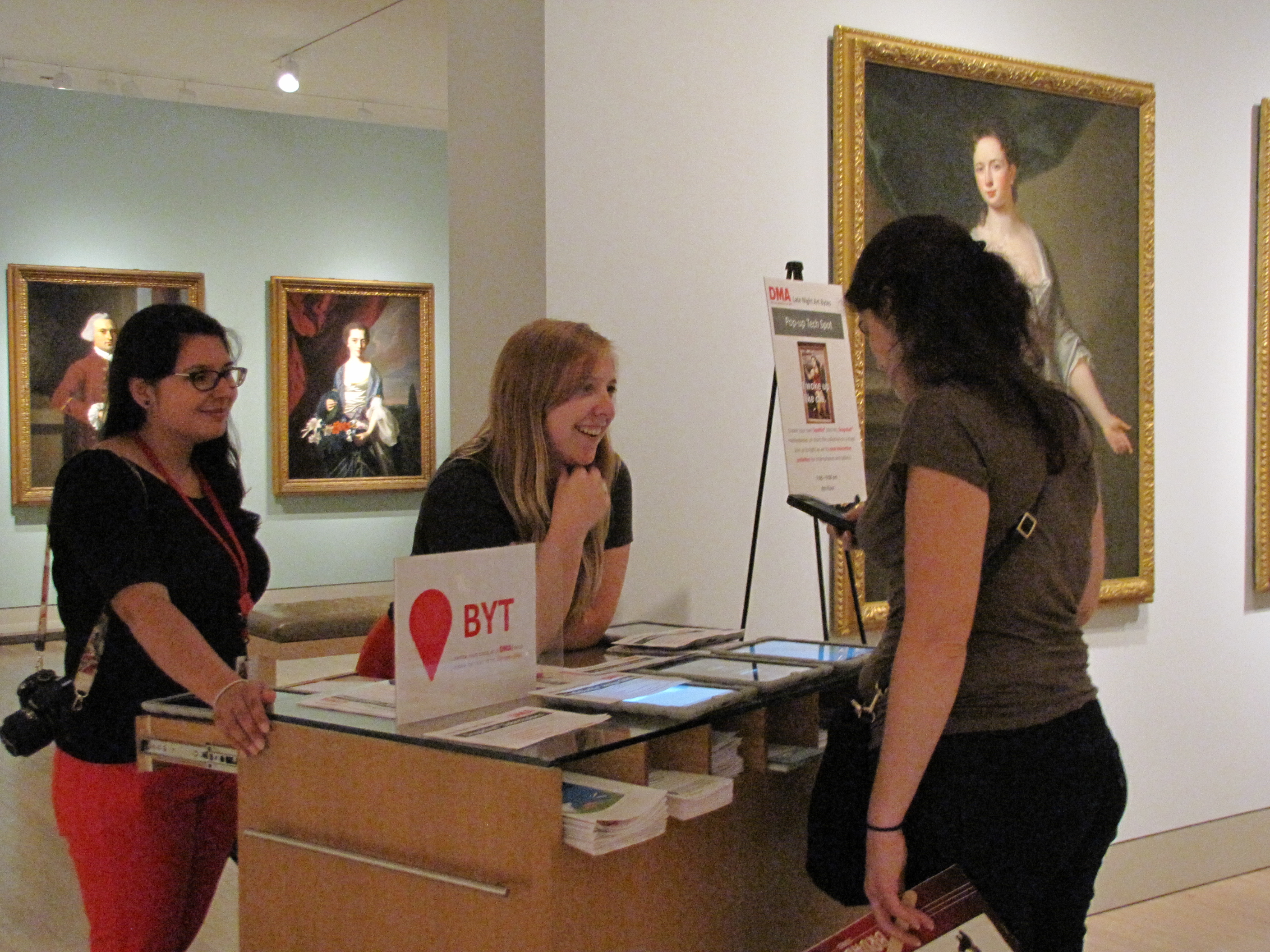
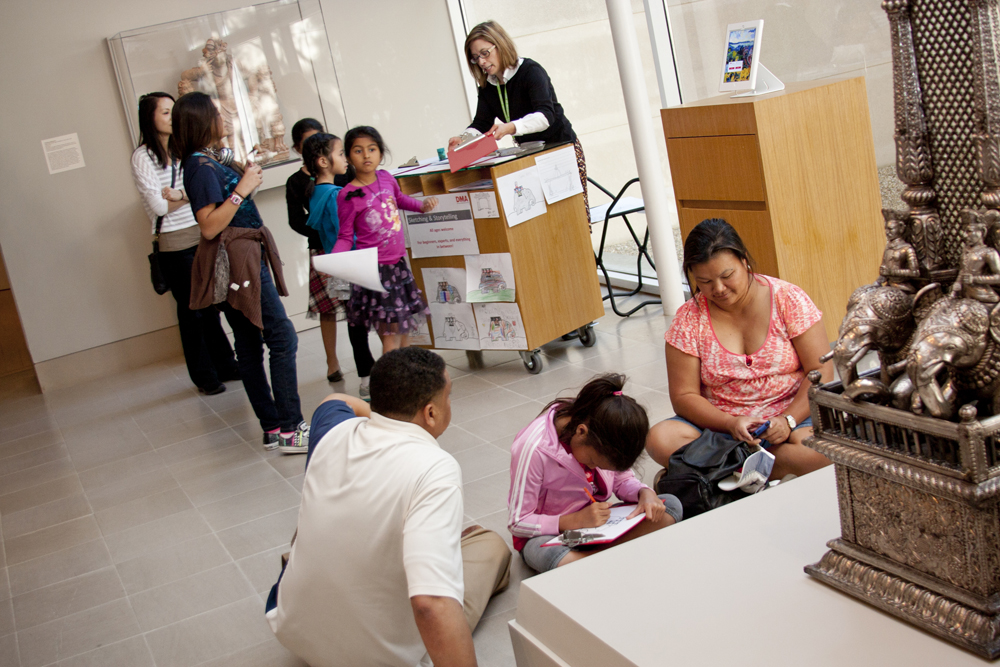
In the Center for Creative Connections, we seek volunteers who enjoy interacting with the public. C3 volunteers welcome and engage visitors in conversations about art and art making in the Art Spot. C3 volunteers also have the chance to take the  C3 experience to other galleries as a Pop-Up Art Spot facilitator. Volunteers are asked to serve two shifts per month, approximately seven hours, and must attend an orientation session.

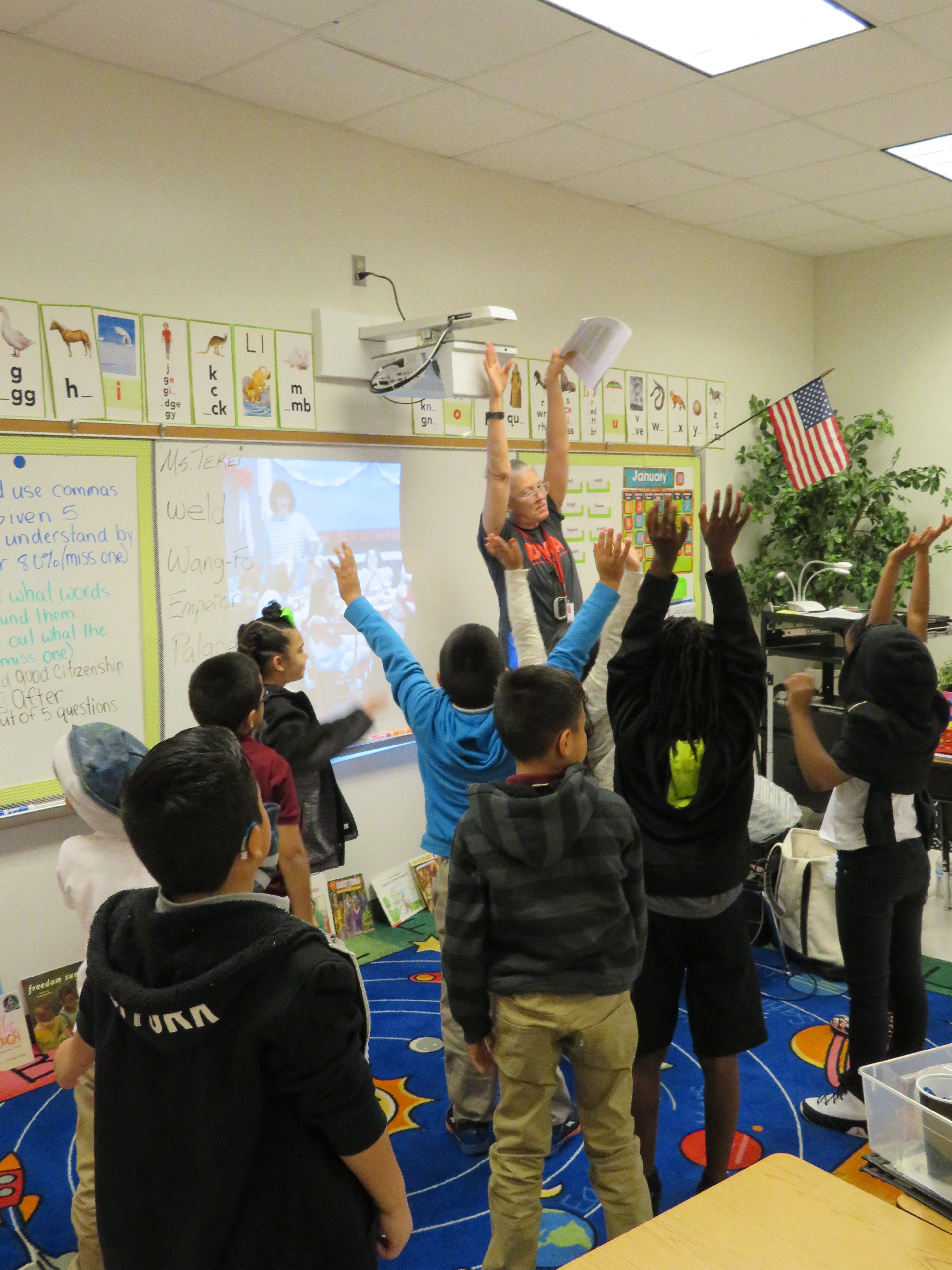
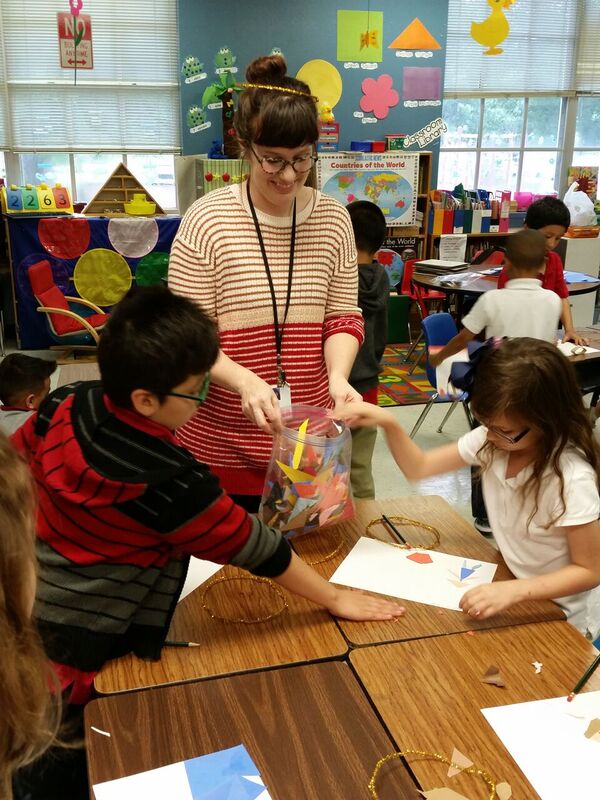
Go van Gogh volunteers help teach art programs in elementary classrooms across the city. They encourage students to look closely at works of art in the Museum’s collection and get involved in hands-on art making projects. Interested volunteers must be available to attend bi-monthly training sessions on Tuesday mornings and are asked to teach two weekday programs per month from late September to mid-May.

If you love literature, then becoming an Arts & Letters Live volunteer may be the choice for you! Arts & Letters Live volunteers support speaker events, including BooksmART programs for young readers, by serving as ticket takers, greeters, ushers, and book signing assistants. New volunteers will attend an orientation session in December before the the 2018 season begins.

Visit our Volunteer page for applications and additional information about each of these volunteer programs or email volunteers@dma.org with any questions. We hope you’ll join us!

Andi Orkin
Volunteer Coordinator for Programming

A Truly Touching Tour

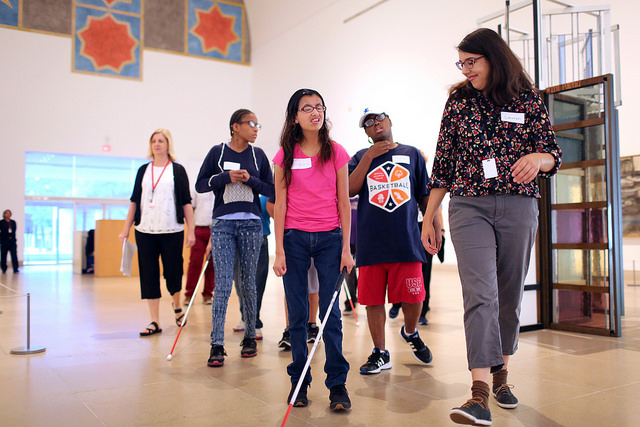
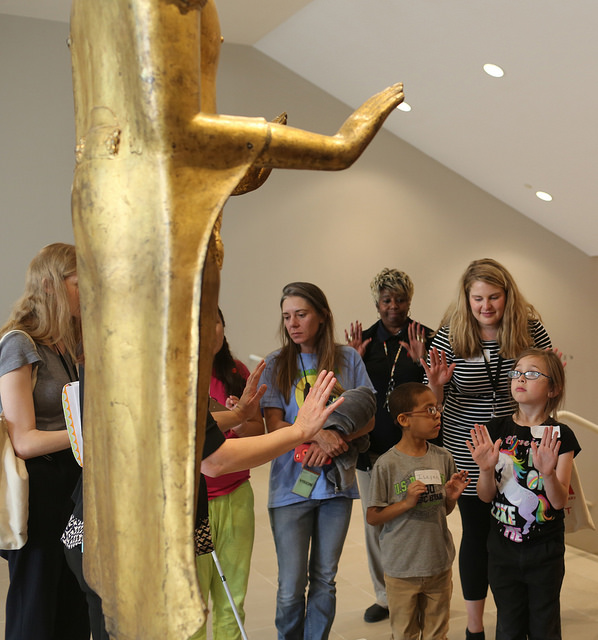
Let’s face itwhen brainstorming ideal field trip locations for a group of blind or visually impaired visitors, a visual arts museum probably wouldn’t be at the top of your list. One might assume that art museums don’t have much to offer visitors with impaired vision. However, when vision teachers from the Dallas Independent School District reached out to the DMA to request a tour in 2014, we were eager to create an unforgettable experience for their students. Each summer, the DMA has welcomed this group of students, whom we work hard to impress—challenging ourselves to bring the collection to life through multi-sensory experiences.

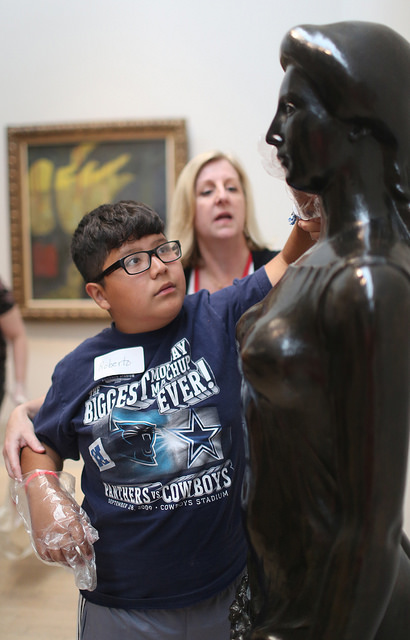
In past vision impairment tours, we have explored artworks in the Sculpture Garden through touch. But as any Texan knows, these surfaces can get pretty hot under the scorching Texas sun, making them uncomfortable to touch. This year, we were thrilled when our conservation team helped us identify several figurative sculptures inside the Museum that were suitable for touch. To help protect the sculptures, students and instructors wore thin gloves as we guided the students’ hands. We also explored the works of art through visual description, discussion, raised line drawings, scents, additional tactile objects, and by acting out poses.

Take a peek at some of our favorite moments of this year’s tour! We are already looking forward to next summer!

Click here for information about Art Beyond Sight programs or to request a tour for visitors who are blind or partially sighted.

Emily Wiskera
Manager of Access Programs
Friday Photos: C3 Art Spot

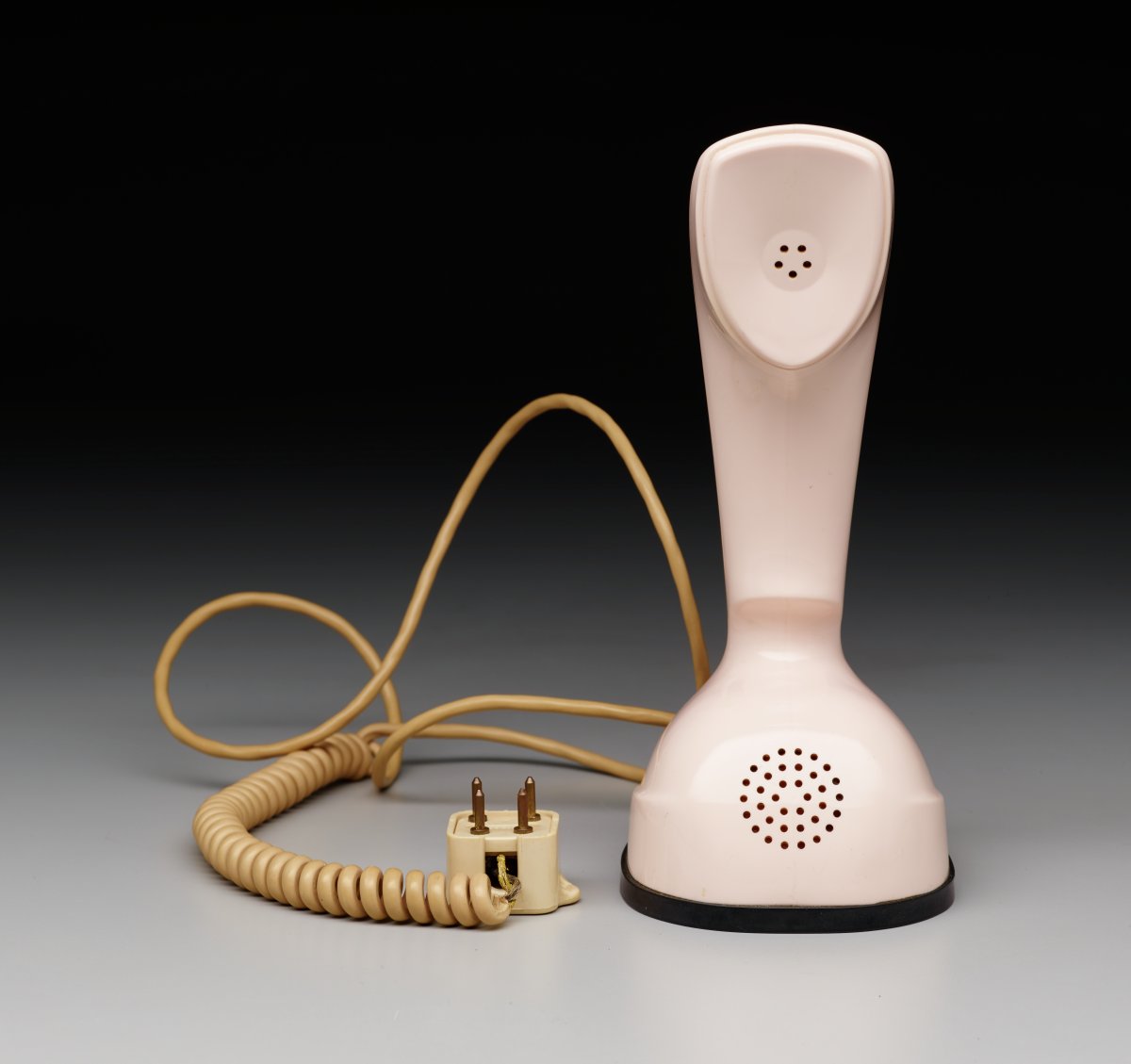
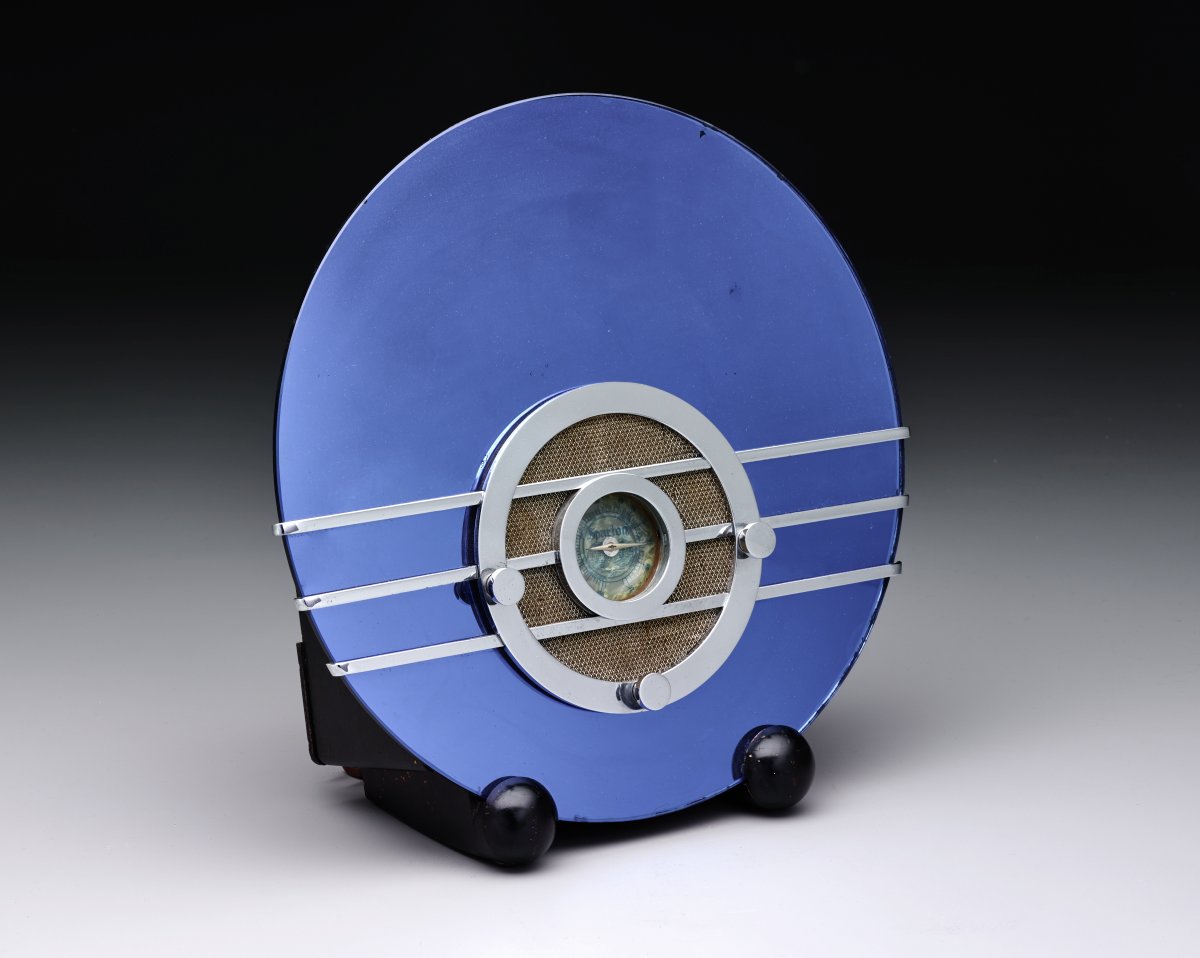
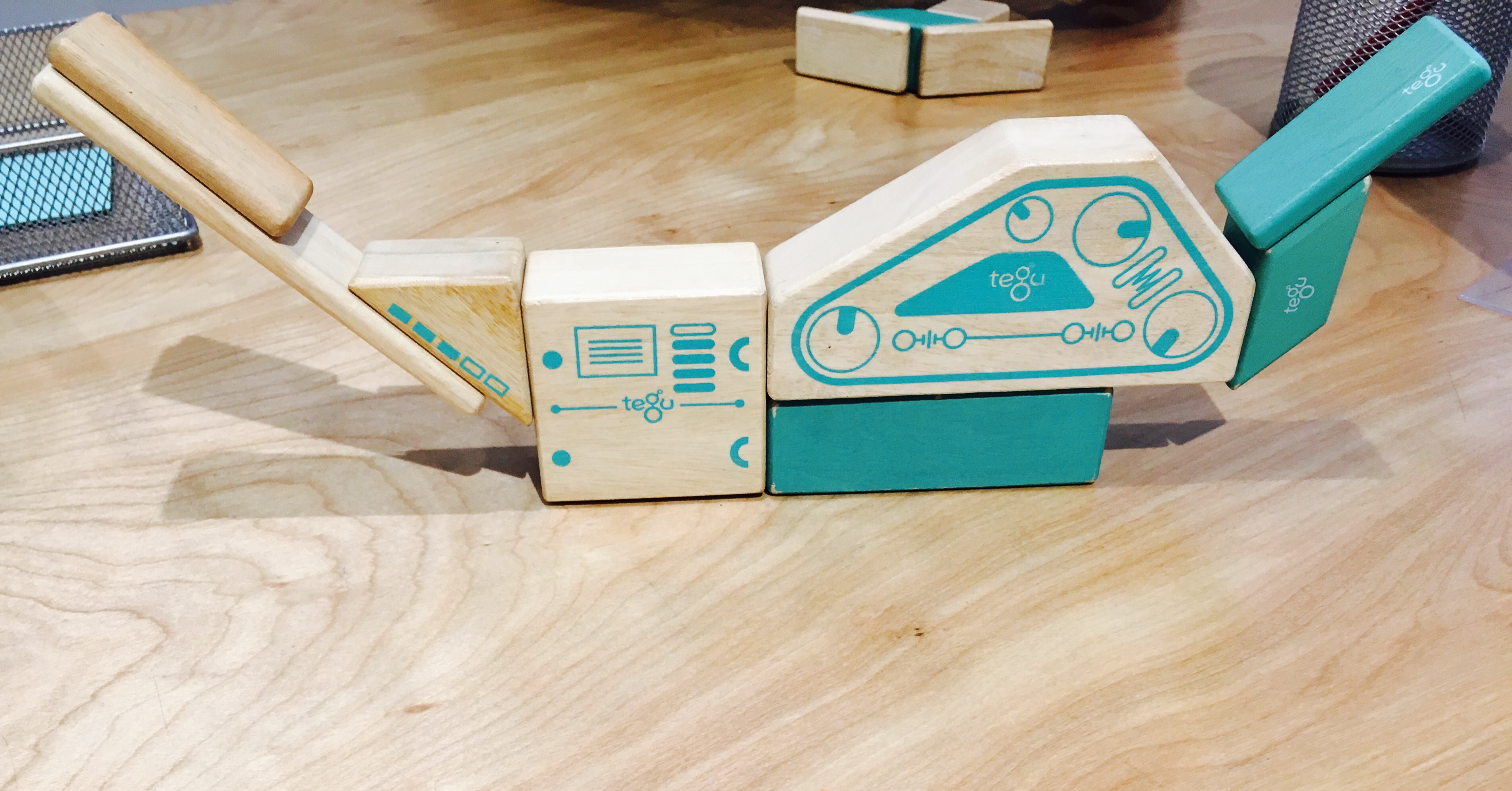
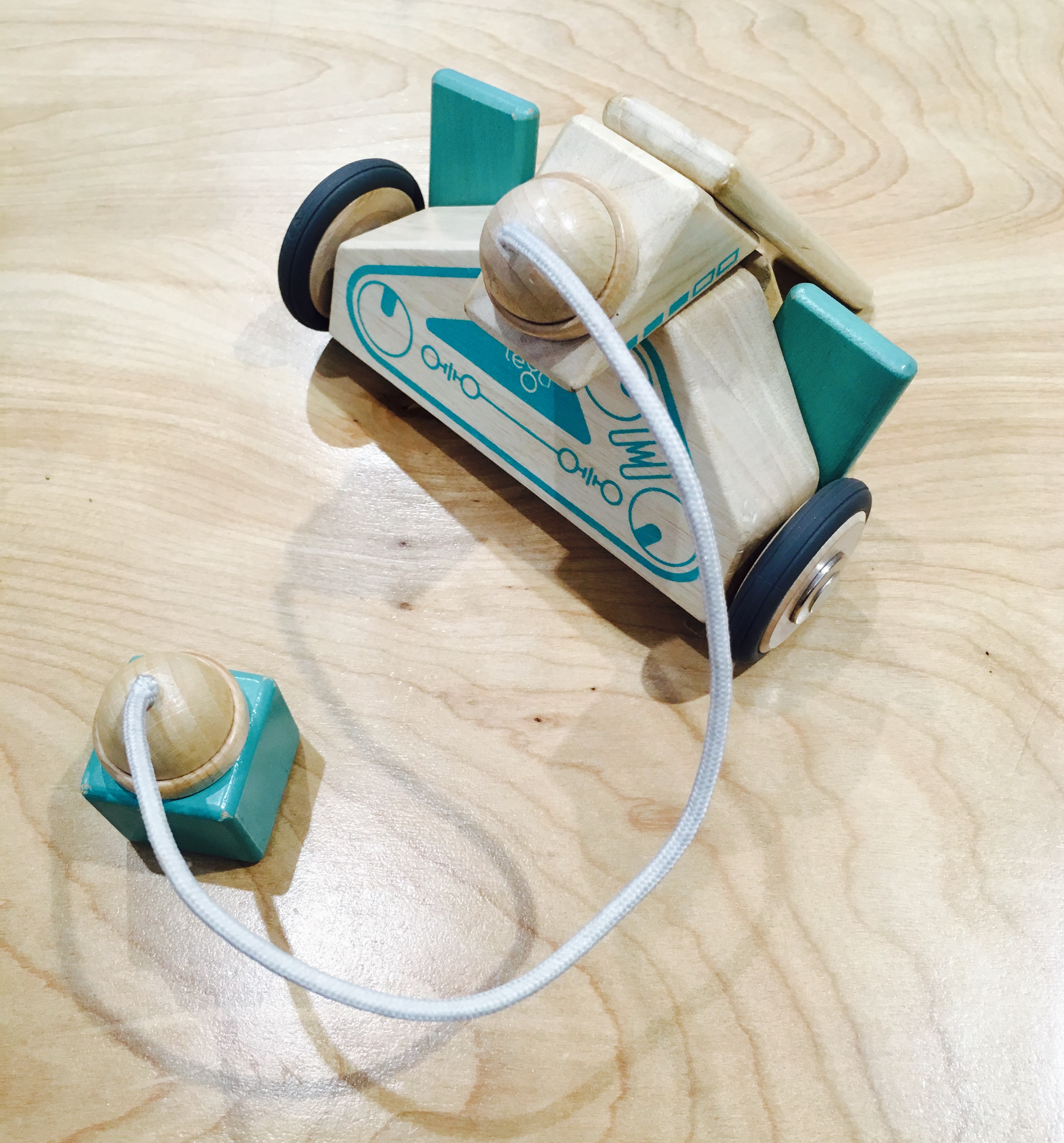
The Center for Creative Connections is undergoing some changes! Next week new works of art and new activities will be unveiled. One of those changes will be at the C3 Art Spot. For years, visitors have come to C3 and made small sculptures out of everyday materials like cardboard, plastic spoons, and twist ties.

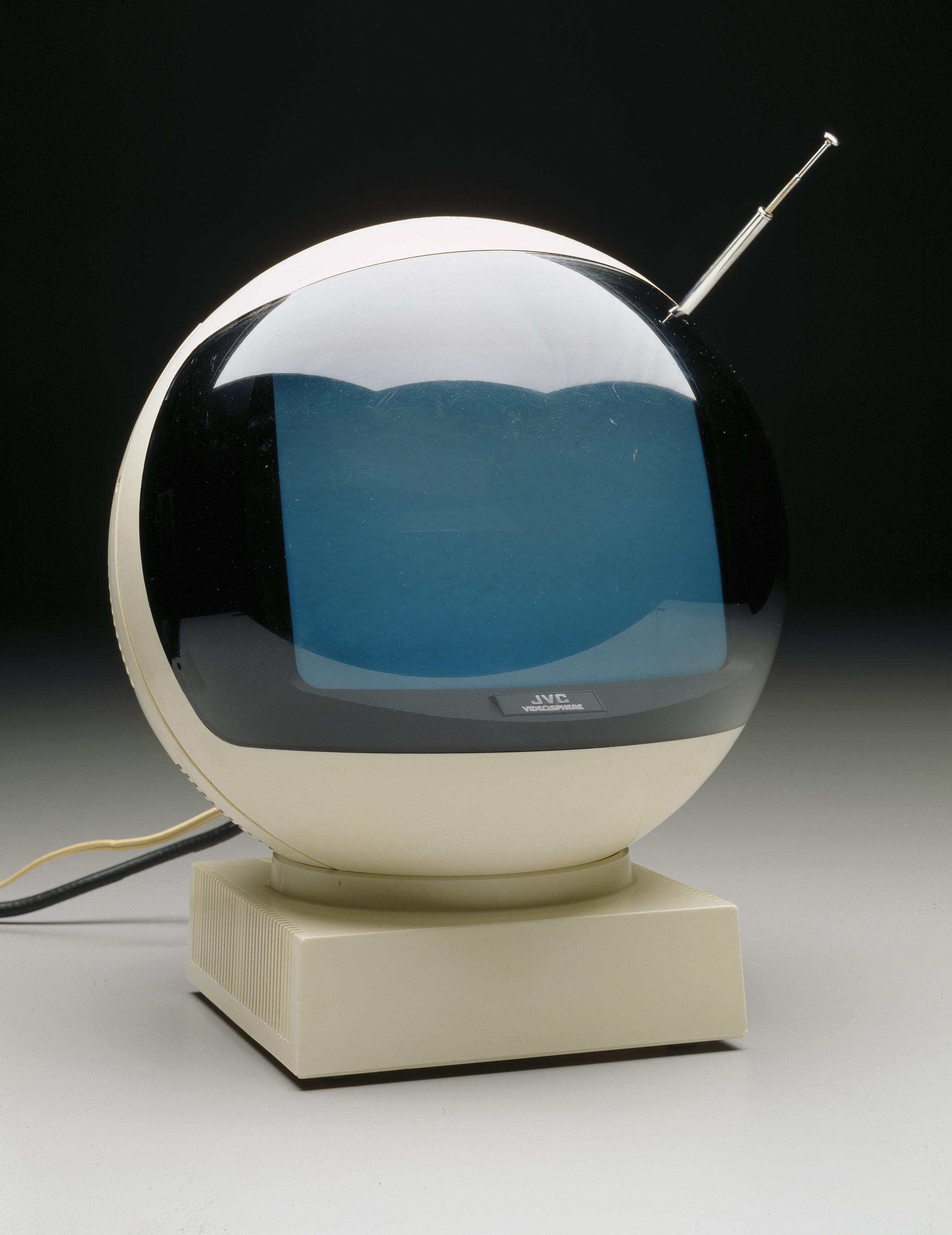
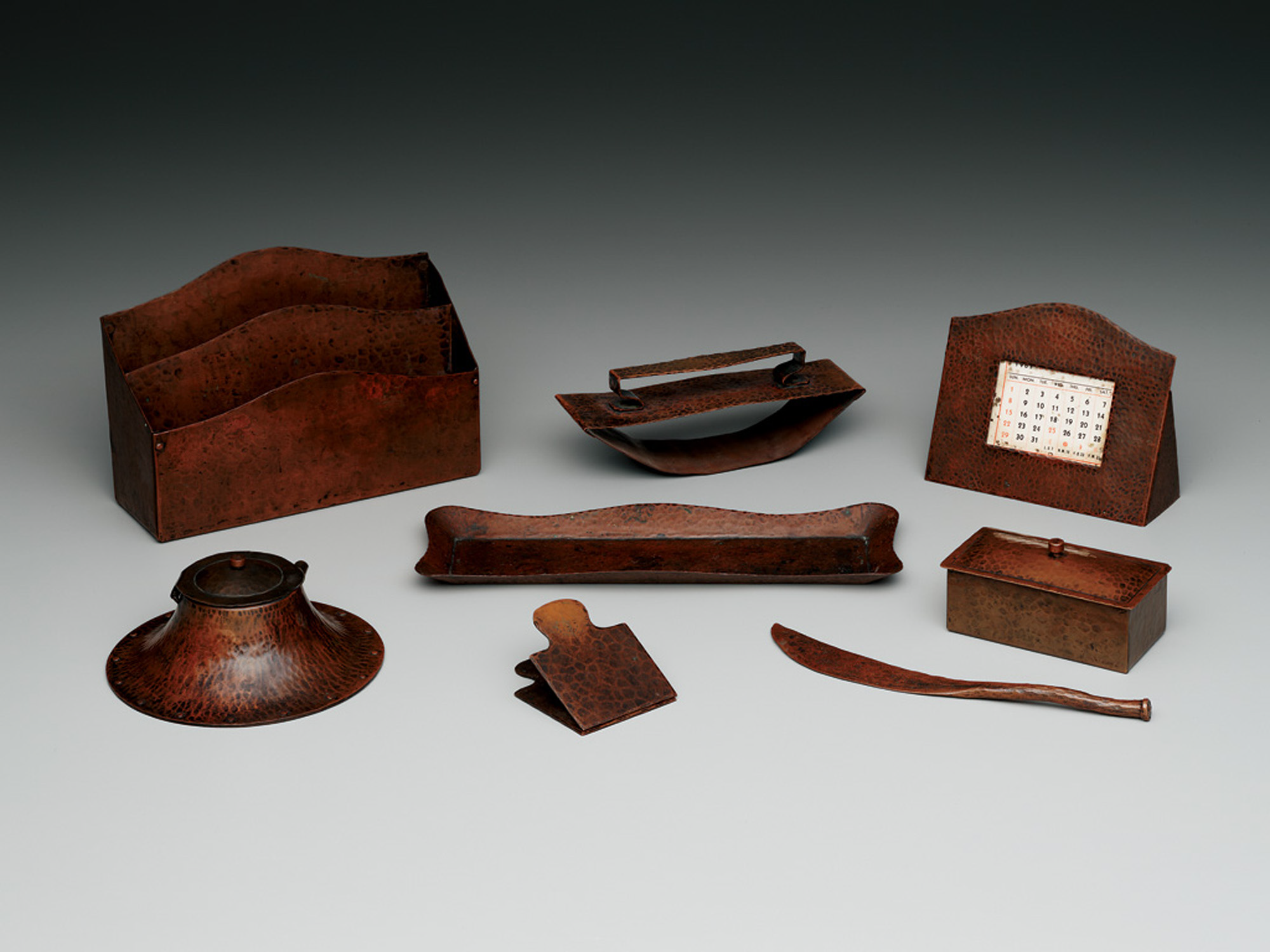
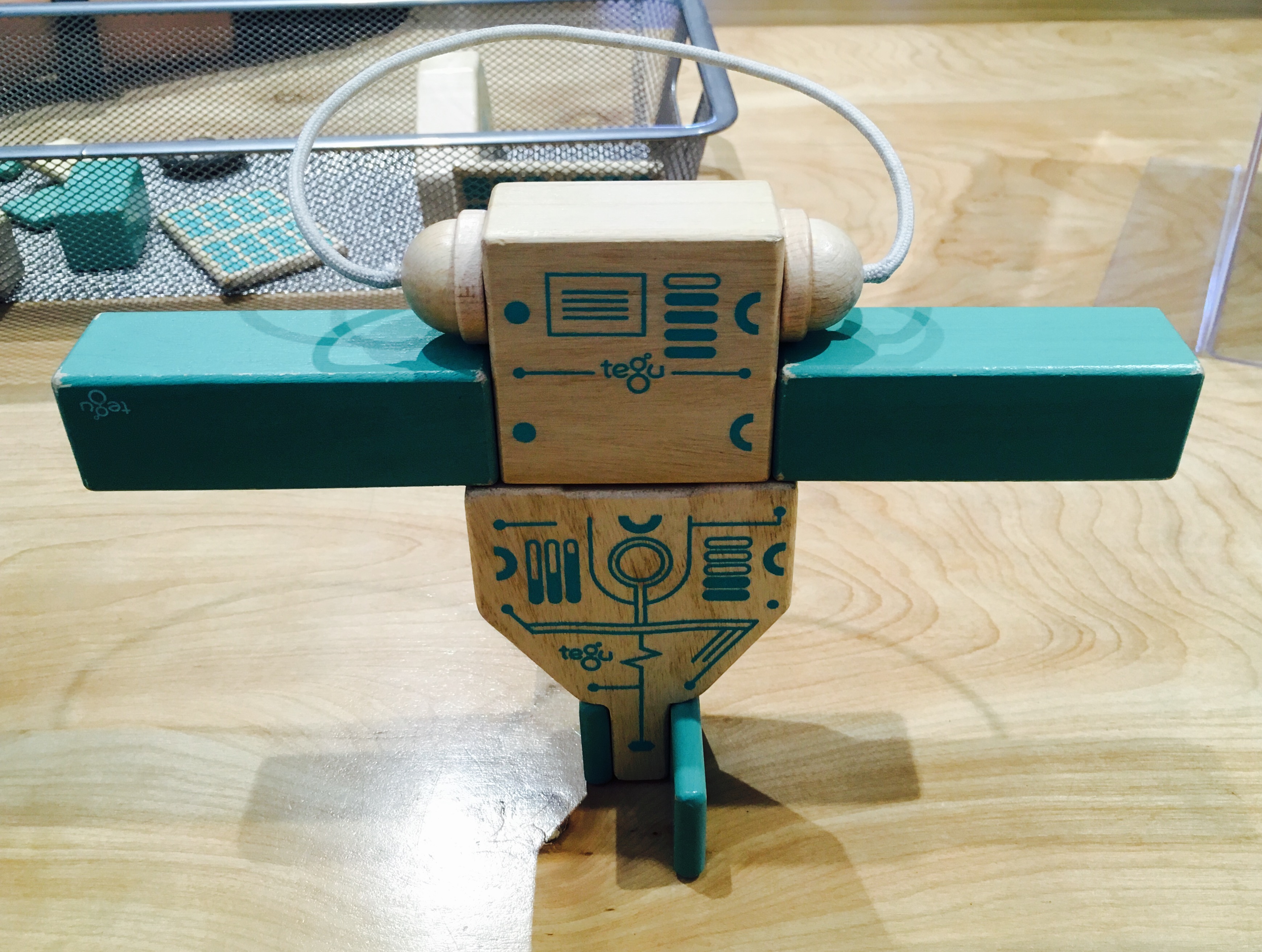
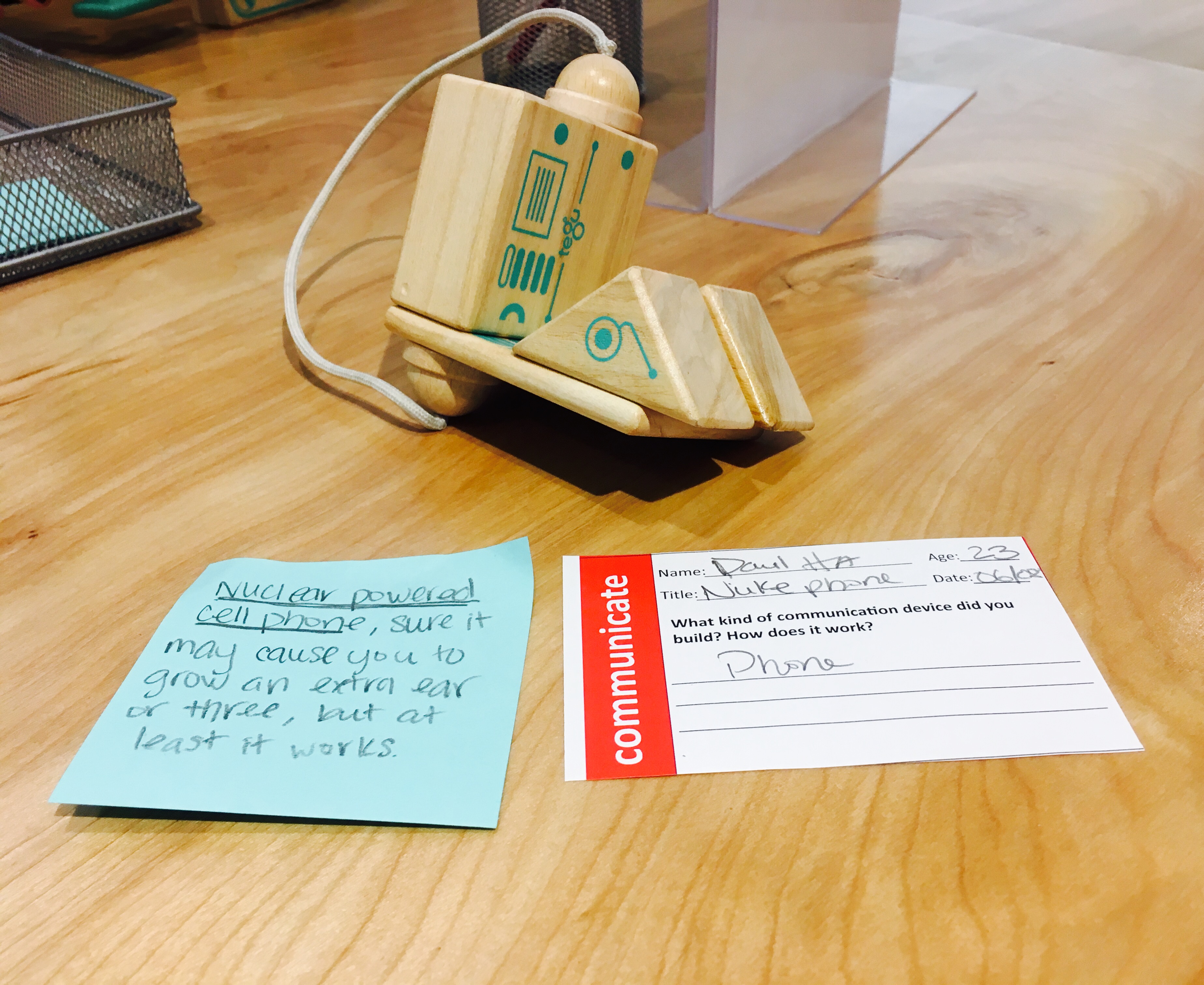
Starting next week, visitors to the C3 Art Spot can get inspired by these works of art from the permanent collection and use magnetic wooden blocks to imagine and build devices for communication. Check out these devices created by visitors and staff:

What will you make the next time you stop by the C3 Art Spot? We can’t wait to see!

Jessica Fuentes
Manager of Gallery Interpretation and the Center for Creative Connections

That’s a Wrap: 2016-2017 School Tours

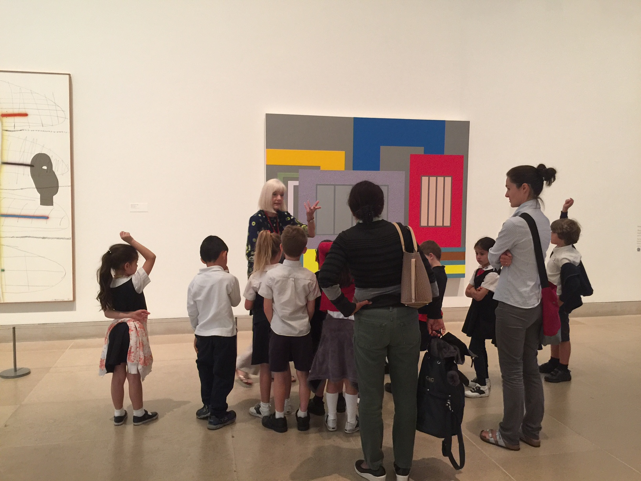
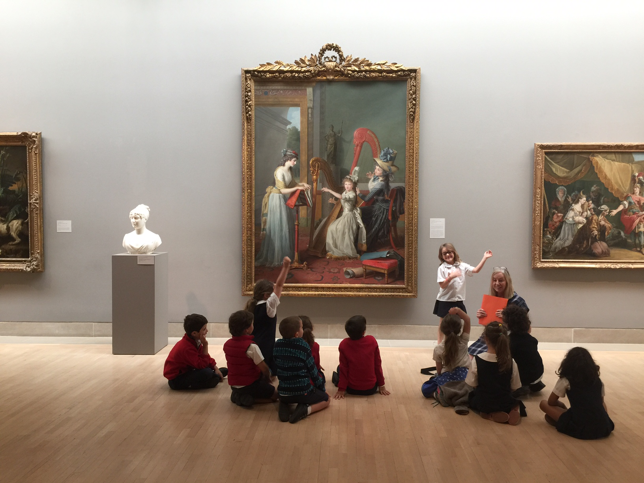
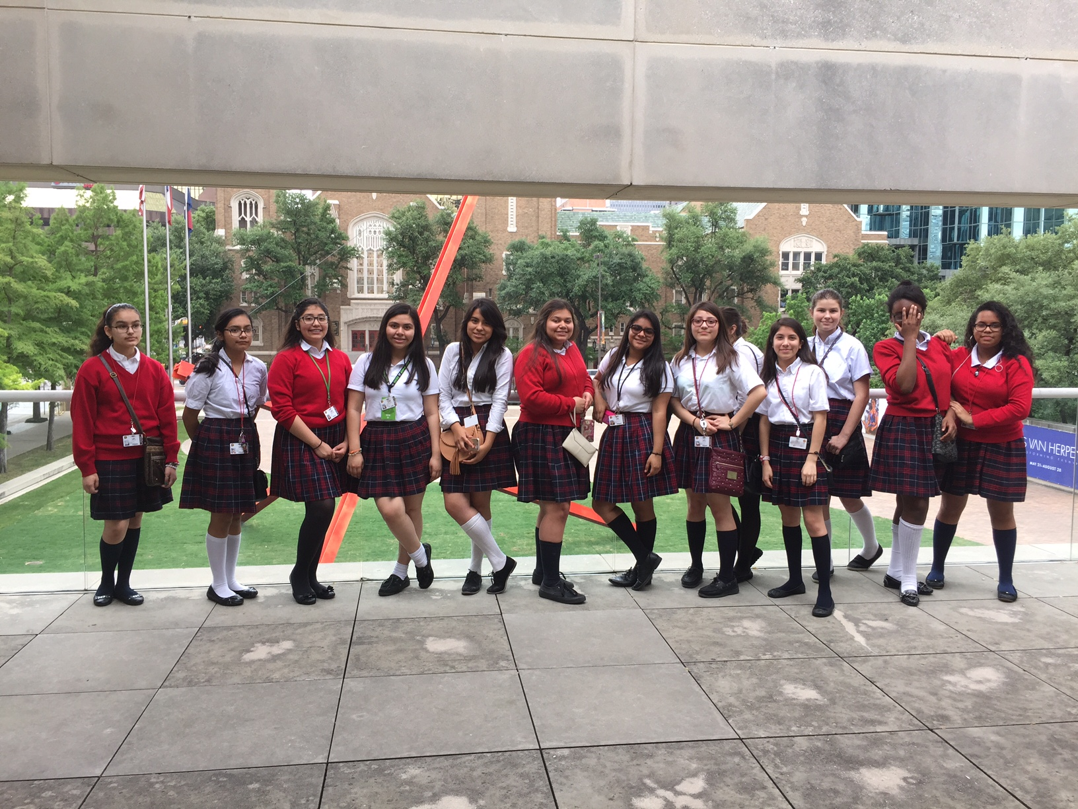
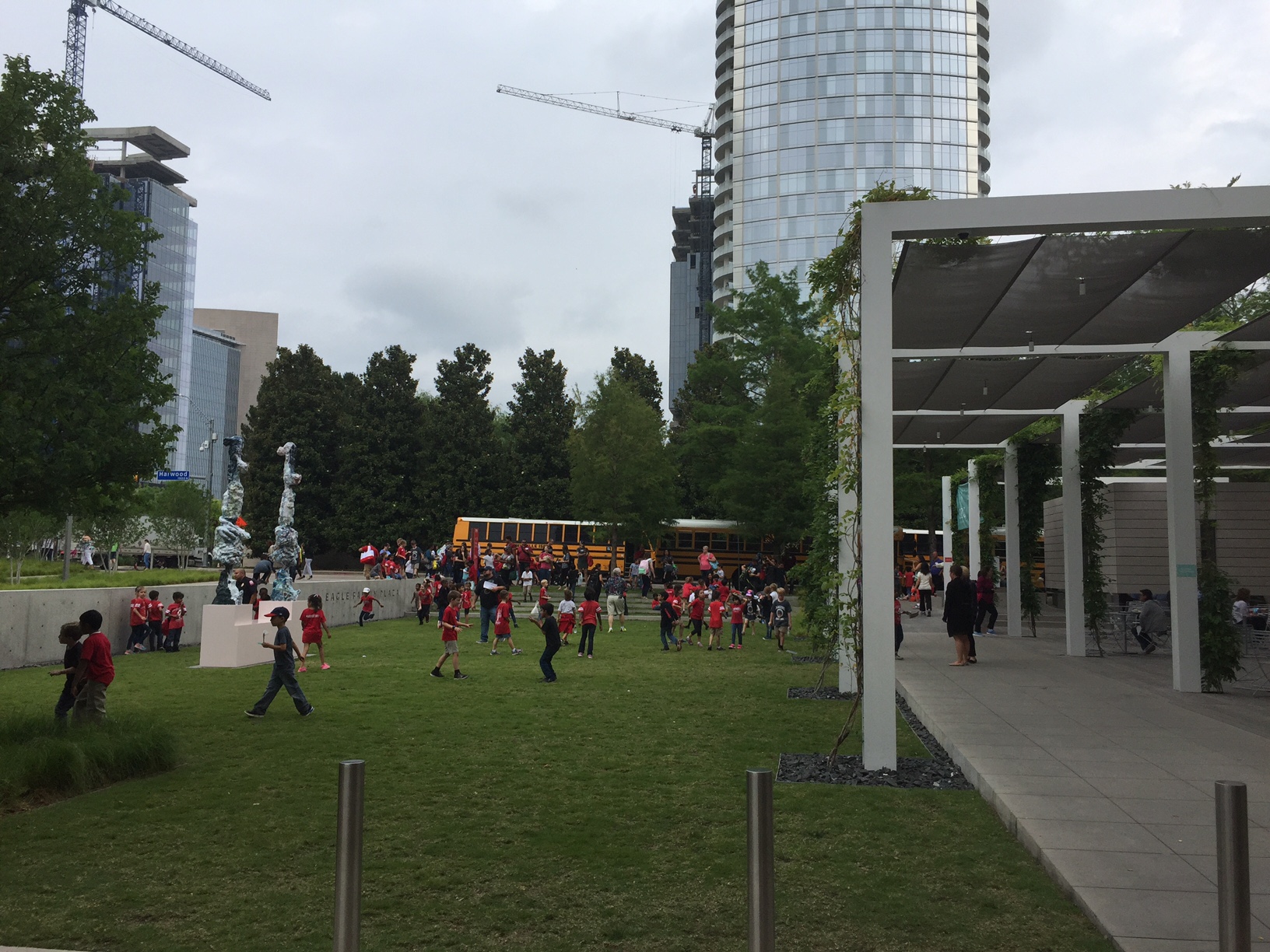
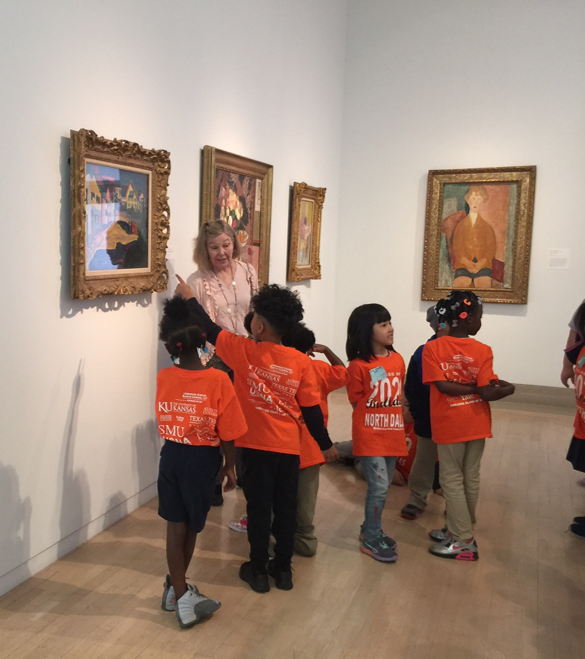
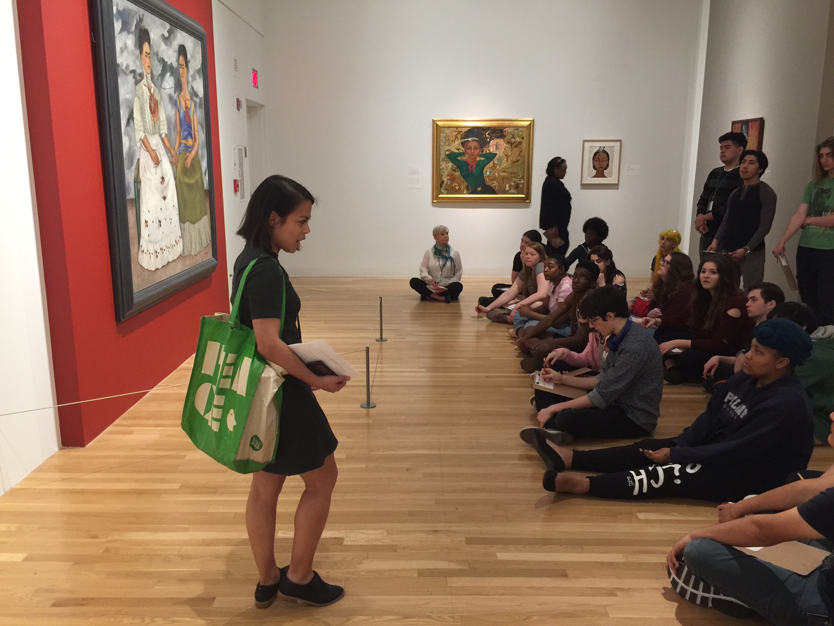
As the school year ends and our outstanding DMA docents take a well-deserved summer break, we want to celebrate another successful year of K-12 visits! The year’s been jam-packed with exciting exhibitions, new learning experiences (did you know we now offer a STEAM tour?), and, of course, a multitude of tours and programs geared to help visitors of all ages feel at home in the Museum and discover art. Let’s take a look at our stats for the year:

How many groups visited the Museum?

  • 1,284 Visits Scheduled
  • 720 Schools or Community Groups
  • 103 Independent School Districts from Texas, Oklahoma, Louisiana, Iowa, and Florida

How many students received docent-guided tours?

  • 36,495 K-12 students
  • Approximately 2,700 hours discussing works of art with students!

What were the most popular tours?

  • A Looking Journey: 17,343 4th graders; 1,166 hours in the gallery
  • Mesquite Week: 2,740 students: 118 hours
  • STEAM: 497 students; 33 hours
  • Stories in Art: 1,596 2-3rd graders; 110 hours
  • Collection Highlights: 2,550 students; 213 hours
  • Arts of the Americas: 4,361 5th graders; 293 hours

How many visitors toured special exhibitions?

What do our visitors say about their experience at the DMA?

“Our 5th graders really enjoyed their visit to the DMA. Our docents were great, and I even learned something new! The tour went well, we had enough time to explore on our own, and we ended up having lunch in the courtyard. It was a wonderful, new experience for them. Thank you!” – Founders Classical Academy, Oct. 28

“We had a wonderful time. All museum staff were friendly. Our docent was outstanding. She spoke directly to the kids, she was animated, energetic, enthusiastic and passionate. She made the tour very interesting. She has amazing storytelling skills. She pulled us all in with her soft spoken mannerism and entertained and educated us all with her knowledge.” – Bennett Elementary,  Jan. 11

“I wanted to take a moment and thank you and your staff for being so professional and hospitable during our Museum visit and tour on February 28th. All of the teachers had glowing reports of how well things went this year and how much our students enjoyed their time. These museum visits are the things our students will remember decades from now and are very impactful to them culturally and artistically. Our teachers and students also enjoyed having the time to walk through and enjoy the museum after the tour. Please pass my thanks and appreciation on to the docents and staff at your museum. PS We are already looking forward to next year!” – Maple Lawn Elementary, Feb. 28

Thank you to all our volunteers, staff, and visitors for an amazing school year!

Lindsay O’Connor
Manager of Docent and Teacher Programs
Madeleine Fitzgerald
Audience Relations Coordinator

Archives

Categories